 0086-138 3838 9622
Compound Feed Factory Investment in Uzbekistan
RICHI MACHINERY
Overview – A Real Expansion Story
This is a story about a compound feed factory investment in Uzbekistan that grew from 100,000 tons per year to 300,000 tons per year. The client already had a working factory—18,020 square meters of land, two production buildings, corn silos, warehouses, the basics. But demand from local poultry farms had outgrown their capacity. They were turning away orders. So they decided to expand.
We helped them plan a 40t/h compound feed factory investment that added 200,000 tons of annual capacity without building new buildings. Instead, we reconfigured their existing floor space, added 110 new pieces of equipment, and upgraded their material flow. The total investment was about $1.85 million USD. The payback period? Roughly 2.5 years at full production.
40T/H
capacity
$1.85 million
investment
Uzbekistan
location
Feed
project type
RICHI MACHINERY
Why Uzbekistan? The Market Makes Sense
Uzbekistan’s poultry industry has grown fast in the last five years. The government cut import tariffs on poultry equipment and feed ingredients. Domestic production of broiler meat went from 60,000 tons in 2018 to over 200,000 tons in 2023. That means feed demand has more than tripled.
But here’s the problem: most feed mills in Uzbekistan are small—5 to 15 tons per hour. They’re old. They break down. They can’t produce consistent quality. Large poultry farms in Tashkent, Samarkand, and Fergana have been importing feed from Kazakhstan and Russia.
The client saw this gap. He had been in the feed business for 12 years. He had relationships with corn and wheat suppliers in the Syr Darya region. He had a customer base of about 200 small farms. But he was losing bigger customers because he couldn’t guarantee volume.
His calculation was simple. At 100,000 tons per year, his production cost was about $220 per ton. At 300,000 tons per year, he could get it down to $190 per ton—mostly by spreading fixed costs (labor, utilities, building depreciation) over more tons. Imported feed from Kazakhstan cost about $250 per ton delivered to Tashkent. So he could sell at $230 per ton, undercut imports by 8%, and still make $40 per ton margin.
At 300,000 tons per year, that’s $12 million annual gross margin. Enough to pay back the expansion investment in 2.5 years.
RICHI MACHINERY
Before the Expansion – What the Client Already Had
The client’s existing factory was in the Jizzakh region, about 200 kilometers southwest of Tashkent. Good location—close to both raw material sources (grain from the Syr Darya valley) and customers (poultry farms near Samarkand).
Existing site:
| Item | Details |
|---|---|
| Total land | 18,020 m² (about 4.45 acres) |
| East plant production area | 2,000 m² |
| West plant production area | 570 m² |
| Raw material warehouse (east) | 12,535 m² |
| Raw material warehouse (west) | 4,005 m² |
| Finished product warehouse (east) | 5,850 m² |
| Finished product warehouse (west) | 3,840 m² |
| Corn silos | 2 units |
| Gas boilers | 2 units (2 t/h each) |
| Staff | 90 people |
| Existing annual output | ~100,000 tons (actually about 110,000 at peak) |
| Operating schedule | Two shifts, 8 hours per shift, 300 days/year |
The existing animal feed plant machinery was a mix of Chinese and local machines. Some were 15 years old. The two boilers were too small for 40 t/h—that was the first thing we identified. The material handling system (conveyors, elevators) was also undersized.
Existing product mix before expansion:
| Product | Form | Annual Output (tons) |
|---|---|---|
| Duck feed (pellet) | Pellet | 75,000 |
| Duck feed (mash) | Powder | 75,000 |
| Chicken feed (pellet) | Pellet | 45,000 |
| Chicken feed (mash) | Powder | 45,000 |
| Pig feed (pellet) | Pellet | 30,000 |
| Pig feed (mash) | Powder | 30,000 |
| Total | 300,000 |
Wait—that table shows 300,000 tons. Yes, that’s the target. The existing actual production was about 100,000 tons. The equipment was there for 300,000 tons on paper, but in reality, bottlenecks limited them to about 110,000 tons. The expansion was about removing those bottlenecks.
RICHI MACHINERY
What They Were Using – Raw Materials Before and After
The client’s raw material mix didn’t change much with the expansion. Just bigger volumes.
Raw materials (existing + expansion combined):
| Raw Material | Annual Usage (tons) | Form | Source |
|---|---|---|---|
| Corn (maize) | 218,875 | Grain (bulk) | Local farms, Syr Darya region |
| Soybean meal | 25,375 | Powder (bagged) | Imported via Kazakhstan |
| Cottonseed meal | 25,375 | Powder (bagged) | Local cotton gins |
| Wheat bran | 22,375 | Flaky (bagged) | Local flour mills |
| Vitamins | 1,148 | Powder (bagged) | Imported |
| Minerals | 2,918 | Powder (bagged) | Local mining byproduct |
| Vegetable oil | 81.5 | Liquid (tank) | Local processor |
The client also kept a small lab on-site. Not a big operation—just basic equipment for protein, moisture, and fat analysis. They tested every batch of incoming corn and soybean meal.
RICHI MACHINERY
The Expansion Equipment – What We Added
The client didn’t want to replace everything. Just add capacity where it was missing. We supplied 110 new pieces of equipment. Here’s the key stuff:
| Section | Equipment Added | Quantity |
| Intake & cleaning | Dust control fan | 2 units |
| Pulse bag filter | 2 units | |
| Receiving pit screen | 1 unit | |
| Drag chain conveyor | 1 unit | |
| Bucket elevator (48m) | 2 units | |
| Rotary pre-cleaner | 1 unit | |
| Magnetic drum | 1 unit | |
| Electric gate valve | 5 units | |
| Grinding | Discharge conveyor | 1 unit |
| Bucket elevator (48m) | 1 unit | |
| Permanent magnet | 1 unit | |
| Level sensor | 4 units | |
| Grinding bin | 1 unit | |
| Screw feeder | 1 unit | |
| Hammer mill feed grinder | 1 unit | |
| Suction hood | 1 unit | |
| Bucket elevator (36m) | 1 unit | |
| Air distributor | 1 unit | |
| Dust fan (3.6A) | 1 unit | |
| Pulse filter (21 bags) | 1 unit | |
| Byproduct handling | Receiving pit | 1 unit |
| Screw conveyor | 1 unit | |
| Bucket elevator (36m) | 1 unit | |
| Air distributor | 1 unit | |
| Rotary pre-cleaner | 1 unit | |
| Air distributor | 1 unit | |
| Permanent magnet | 1 unit | |
| Grinding bin | 1 unit | |
| Screw feeder | 1 unit | |
| Hammer mill (56×40) | 1 unit | |
| Suction hood | 1 unit | |
| Bucket elevator (36m) | 1 unit | |
| Air distributor (8-way) | 1 unit | |
| Dust collection (byproduct line) | Cyclone | 3 units |
| Airlock | 3 units | |
| Dust fan (4A) | 1 unit | |
| Combined pulse filter (28 bags) | 1 unit | |
| Batching & mixing | Level sensor | 9 units |
| Batching bins (1×1.5x4m) | 12 units | |
| Screw feeder (LSS.25) | 5 units | |
| Screw feeder (LSS.20) | 7 units | |
| Batch scale (1,000 kg) | 1 unit | |
| Pneumatic discharge gate | 1 unit | |
| Dust fan (2.8A) | 1 unit | |
| Pulse filter (15 bags) | 1 unit | |
| Additive hopper | 1 unit | |
| Ribbon mixer | 1 unit | |
| Oil spray system | 1 unit | |
| Post-mixing | Surge bin | 1 unit |
| Screw conveyor (LSS.25) | 1 unit | |
| Bucket elevator (48m) | 1 unit | |
| Vibrating screen (powder) | 1 unit | |
| Screw conveyor (LSS.25) | 1 unit | |
| Air diverter (3-way) | 1 unit | |
| Screw conveyor (LSS.25) | 1 unit | |
| Packaging | Level sensor | 2 units |
| Finished product bin | 1 unit | |
| Bagging scale (50 kg) | 1 unit | |
| Dust fan (2.8A) | 1 unit | |
| Pulse filter (15 bags) | 1 unit | |
| Total | 110 units |
The most expensive single item was the 112 kW hammer mill—about $28,000. The rest were smaller items: conveyors, elevators, filters, fans.
We didn’t supply new boilers. The client decided to keep his existing 2 t/h boilers and add two more 2 t/h units locally. Cheaper that way.
RICHI MACHINERY
The Factory Layout – Working With Existing Space
The client had two separate production buildings: East plant (2,000 m²) and West plant (570 m²). The expansion equipment went mostly into the East plant, which had higher ceilings (about 8 meters) and more floor space.
We didn’t change the building footprint. Instead, we reorganized the flow:
East plant (2,000 m²):
- North side (600 m²): New intake pit and pre-cleaning. Corn and wheat arrive by truck, dump into the pit, get cleaned, then go to the existing silos or the new grinding bins.
- Center (800 m²): Grinding and batching. The new 112 kW hammer mill sits here, next to the existing 88 kW mill. The batching bins (12 units) are arranged in two rows.
- South side (600 m²): Mixing and packaging. The new ribbon mixer and bagging scale are here. Finished product bags go to the existing warehouse.
West plant (570 m²):
- This building stayed mostly the same. It handles specialty products (premix and medicated feed). The expansion didn’t affect it much.
Raw material warehouse (12,535 m²):
- This is where bagged ingredients (soybean meal, cottonseed meal, bran) are stored. We added a small mezzanine for the new additive hopper and oil tank.
The client was nervous about moving material between buildings. We solved that with two new bucket elevators and a covered conveyor bridge. Not expensive—about $15,000 for the bridge—but it made the flow much smoother.
RICHI MACHINERY
Process Flow – How the Expanded Line Works
Here’s the real sequence after the expansion. We watched this run during commissioning.
Step 1 – Corn intake and cleaning
Trucks dump corn into the new intake pit (3 meters x 2 meters). A drag chain conveyor moves it to a bucket elevator (48m lift). The elevator drops it into the rotary pre-cleaner. The pre-cleaner removes corn cobs, husks, stones, and fines. The clean corn then goes to one of the two existing silos or directly to the grinding bin.
Dust control: A pulse bag filter at the intake pit captures about 95% of the dust. The client’s local inspector measured 25 mg/m³—well below Uzbekistan’s limit of 100 mg/m³.
Step 2 – Grinding
Corn from the silo or grinding bin feeds into the new 112 kW hammer mill through a screw feeder. The mill runs at 2,900 RPM. Target particle size: 500–700 microns for poultry feed, 800–1,000 microns for pig feed. The ground corn is pulled by a fan through a cyclone (which collects the fines) and into a bucket elevator.
The client also added a second grinding line for byproducts (cottonseed meal, bran). That’s a smaller 56×40 hammer mill (about 45 kW). It runs separately—usually during the night shift.
Step 3 – Batching
Ground corn and other ingredients are distributed to the 12 batching bins. The control system (a Chinese PLC, not fancy but reliable) weighs each ingredient in sequence. Corn first (largest volume), then soybean meal, then cottonseed meal, then bran, then minerals and vitamins.
Total batch size: 1,000 kg. Cycle time: about 4 minutes. That’s 15 batches per hour, or 15 tons per hour from the batching system. But the line has two batching systems (the existing one plus the new one), so total batching capacity is about 30 tons per hour. The remaining 10 tons per hour comes from pre-mixed ingredients that skip the batching step.
Step 4 – Mixing
The weighed batch drops into the new 1 m³ ribbon mixer. Mixing time: 3 minutes. The client’s quality control tested the mix uniformity—CV was 4.8%, which is acceptable for poultry feed (target is below 5%). For pig feed, they mix an extra minute to get CV below 4%.
Oil is added during mixing through a spray bar. The client uses vegetable oil (about 81 tons per year total). The oil tank (1,000 liters) sits on a small platform above the mixer.
Step 5 – Screening (powder feed)
For mash feed (no pelleting), the mixed material goes to a vibrating screen. The screen removes any large particles or clumps. The client sells about 150,000 tons of mash feed per year—mostly duck and chicken feed.
Step 6 – Pelleting (for pellet feed)
For pellet feed (about 150,000 tons per year), the mixed material goes to the existing ring die feed pellet machines (two 420-series units). The client didn’t buy new pellet mills for the expansion—the existing ones had enough capacity (about 20 tons per hour combined). But they did add a new cooler (SKLN.6) and a new sieve (SFJH130×2) to handle the increased volume.
The pelleting process uses steam from the boilers. The client added two more 2 t/h boilers (locally sourced) to bring total steam capacity to 8 t/h. That’s enough for 40 t/h of pellet feed.
Step 7 – Cooling and screening (pellet feed)
Hot pellets (75–85°C) drop into the counterflow cooler. A fan pulls ambient air through the pellet bed. Cooling time: about 10 minutes. Exit temperature: within 5°C of room temperature.
Then the pellets go to a rotary sieve. The sieve has two decks: top deck (6 mm) catches oversize, middle deck (2–4 mm) catches the product, bottom deck catches fines. Oversize goes back to the grinder. Fines go back to the mixer.
Step 8 – Packaging
Finished product (both mash and pellets) drops into the new bagging scale. The client uses 25 kg and 50 kg woven polypropylene bags. The scale fills, drops, and a sewing machine closes the bag. The bag then goes to a palletizer (existing, manual—no robot).
The client also added a bulk loading spout. About 30% of their output goes to large farms in bulk trucks. The rest goes in bags to smaller farms and distributors.
RICHI MACHINERY
Utilities – What the Expanded Line Consumes
The client tracked usage for the first month after the expansion (April 2024). Keep in mind this is for the entire animal feed processing plant, not just the new equipment.
| Utility | Daily Use (16-hour shift) | Annual (300 days) | Notes |
|---|---|---|---|
| Fresh water | 26.2 m³ | 7,860 m³ | Mostly boiler makeup + staff |
| – Boiler makeup | 16 m³/day | 4,800 m³ | Steam loss ~15% |
| – Staff (90 people) | 9 m³/day | 2,700 m³ | Toilets, showers, canteen |
| – Lab | 0.2 m³/day | 60 m³ | Glassware washing |
| – Landscape | 1 m³/day | 300 m³ | Dust control on roads |
| Electricity | 12,000 kWh/day | 3.6 million kWh/year | New equipment added about 2,500 kWh/day |
| Natural gas | 4,800 m³/day | 1.44 million m³/year | For four 2 t/h boilers |
The client’s electricity cost is about $0.05 per kWh (industrial rate in Uzbekistan). Gas is about $0.10 per m³. Total utility cost: about $2,500 per day, or $0.83 per ton of feed. Very low.
RICHI MACHINERY
Environmental Controls – Keeping It Clean
Uzbekistan’s environmental regulations are becoming stricter, especially around dust emissions. The client wanted to stay ahead of any future requirements.
We installed:
- Pulse bag filters at every major dust point: intake pit, pre-cleaner, hammer mills, batching bins, mixer, screens, bagging scale. Total of 12 filters.
- Cyclones on the hammer mill exhausts. These capture larger particles before the air goes to the bag filters. Extends bag life.
- Low-NOx burners on the boilers (existing, not new). The client already had these—they reduce NOx emissions by about 40% compared to standard burners.
- Septic tank for staff wastewater. The treated effluent goes to a drainage field on the client’s property. No discharge to any river or sewer.
The client also built a small dust collection shed near the intake pit. The collected dust (about 15 tons per year) goes back into the feed as filler. Zero waste.
RICHI MACHINERY
What Went Wrong – Because Something Always Does
We are not going to pretend the expansion was smooth. Here’s what actually happened.
Problem 1 – The new hammer mill tripped the main breaker
On the first test run, the 112 kW hammer mill started fine, but when it reached full load, the main breaker for the East plant tripped. The client’s electrician had underestimated the inrush current. We recalculated the load and found the existing 400A breaker was undersized. The client replaced it with a 630A breaker. Cost: $800. Downtime: 2 days.
Problem 2 – The bucket elevator belt slipped
The new 48m bucket elevator had a belt that kept slipping on the drive pulley. The client had tensioned it correctly, but the belt was too smooth. We sent a new belt with a rough top cover. That fixed it. Cost: $450 (we split it with the client).
Problem 3 – The oil spray system clogged
The vegetable oil they used had sediment. After three days, the spray nozzles clogged. The client hadn’t installed a filter on the oil line. We added a 50-mesh strainer and cleaned the nozzles. Cost: $120. Downtime: 4 hours.
Problem 4 – The bagging scale drifted
After two weeks, the new bagging scale was underfilling by 200–300 grams per bag. The client didn’t notice until a customer complained. We showed them how to recalibrate using a 50 kg test weight. Takes 10 minutes. Now they calibrate every Monday morning.
These are the kinds of problems you only discover by running real tons through the line. The client was patient. We fixed everything within the first month.
RICHI MACHINERY
Staff Training – What We Taught the Existing Team
The client already had 90 staff. Most of them knew how to run the old equipment. But the new equipment was different. We spent 12 days on-site training:
- Mill operators (4 people): How to adjust the new hammer mill (screen changes, hammer replacement, bearing lubrication). How to set the feed rate using the screw feeder speed control.
- Batch system operators (3 people): How to use the new PLC interface (the old one was a different brand). How to change recipes, adjust weights, and troubleshoot error codes.
- Maintenance team (5 people): How to replace bag filters (every 3 months). How to tension belts. How to clean cyclones. How to calibrate the bagging scale.
- Quality control (2 people): How to use the new moisture meter (handheld, $300 unit). How to test pellet durability using a Holmen tumbler.
The client’s production manager told me: “My guys thought they knew everything after 10 years of running the old line. Your training showed them how much they didn’t know.”
That’s why we don’t just ship equipment.
RICHI MACHINERY
Shipping and Logistics
All expansion equipment was shipped from Qingdao Port to Bandar Abbas Port, Iran. Why Iran? Uzbekistan is landlocked. The nearest major port is Bandar Abbas, about 1,500 kilometers from the Uzbek border.
Transit time: Qingdao to Bandar Abbas: about 25 days. Then overland by truck through Turkmenistan to Uzbekistan: another 10–14 days.
We packed everything in six 20-foot containers and two 40-foot flat racks (for the hammer mill and the bucket elevator sections).
The client handled customs clearance at Bandar Abbas. His freight forwarder had experience with transshipment to Central Asia. Total shipping cost: $32,000 including insurance. Customs duty in Uzbekistan: 5% under the CIS free trade agreement.
RICHI MACHINERY
Project Investment – What the Client Actually Paid (USD)
This is the expansion only—not the cost of the original feed preparation plant.
| Item | Cost (USD) | Notes |
|---|---|---|
| Equipment (FOB Qingdao) | $520,000 | 110 units as listed |
| Sea freight + insurance (Qingdao → Bandar Abbas) | $32,000 | 8 containers |
| Overland transport (Bandar Abbas → Jizzakh) | $18,000 | 1,500 km, border fees |
| Customs duty (Uzbekistan, 5%) | $26,000 | On CIF value |
| Local civil works (platforms, pits, conveyor bridge) | $65,000 | Concrete, steel, labor |
| Electrical installation | $45,000 | New panel, cables, 630A breaker |
| Boiler addition (2 units, 2 t/h each) | $60,000 | Locally sourced |
| Steam piping + insulation | $22,000 | Boilers to pellet mills |
| Installation supervision (our team, 25 days) | $35,000 | Flights, hotel, per diem (2 engineers) |
| Training + commissioning | $8,000 | Included in equipment price |
| Contingency | $35,000 | For electrical upgrade, belt, etc. |
| Total expansion investment | ~$1,850,000 |
The client financed this with a loan from a Uzbek bank ($1.2 million at 12% over 4 years) plus retained earnings ($650,000). His break-even point for the expansion: 180,000 tons of additional feed sold. At his current sales rate (about 1,000 tons per day), that’s 180 days. So roughly 6 months to break even on the expansion investment.
RICHI MACHINERY
What We Would Do Differently Next Time
After six months of operation, here’s what we’d change:
- Upgrade the electrical panel from the start. The client tried to save money by keeping the old panel. That caused the breaker trip and cost 2 days of downtime. A new 630A panel would have been $12,000—cheaper than the lost production.
- Add a metal detector before the hammer mill. The client had a small piece of metal damage the hammer mill screen. A $500 metal detector would have prevented it.
- Install a second bagging scale. The client runs two shifts, 16 hours per day. The single bagging scale is the bottleneck now. A second scale would cost about $15,000 and increase packaging capacity by 40%.
But overall? The plant is running at 38–42 tons per hour. The client is producing about 280,000 tons per year—not quite 300,000 yet, but close. He’s already signed supply agreements with two large poultry farms in Samarkand.
RICHI MACHINERY
Why a 40 t/h Compound Feed Factory Investment Makes Sense in Uzbekistan
Uzbekistan is one of the better markets in Central Asia for feed manufacturing. Here’s why.
First, raw materials are available. Uzbekistan grows about 3.5 million tons of corn annually. Wheat production is about 6 million tons. Cottonseed meal (a byproduct of cotton ginning) is abundant—about 1 million tons per year. That’s three major ingredients sourced locally.
Second, labor is affordable. The client pays his 90 workers about $250 per month each. That’s $270,000 per year in labor costs. For a factory producing $60 million worth of feed annually (at wholesale prices), labor is only 0.45% of revenue.
Third, the domestic market is growing fast. Uzbekistan’s poultry production grew 12% in 2023. The government wants to reach 500,000 tons of broiler meat by 2026—double the 2022 level. That means feed demand will double too. A 40 t/h complete feed mill plant positioned now will capture that growth.
Fourth, export potential to neighboring countries. Uzbekistan has free trade agreements with Kazakhstan, Kyrgyzstan, Tajikistan, and Afghanistan. The client is already talking to a distributor in Dushanbe about supplying feed to Tajik poultry farms.
Fifth, the government is supportive. The Uzbekistan Agricultural Development Program 2020–2025 includes subsidies for feed mill modernization (up to 20% of equipment cost). The client qualified for about $100,000 in subsidies—which he used to buy the new bagging scale and the oil spray system.
RICHI MACHINERY
Thinking About Your Own Expansion?
Maybe you’re reading this because you’re in a similar position. You have an existing feed mill. It’s running well. But you’re turning away orders. You need more capacity.
Here’s what I’d tell you.
First, don’t assume you need a new building. Most expansions can fit into existing floor space if you reorganize the flow. We’ve done this dozens of times—in Vietnam, Indonesia, Egypt, and now Uzbekistan.
Second, upgrade your utilities first. Boilers, electrical panels, and air compressors are often the hidden bottlenecks. Upgrade those before adding new processing equipment.
Third, keep your old equipment running during the expansion. Stage the installation so you don’t have to shut down for weeks. We did this expansion in three phases over four months. The client lost only 5 days of production total.
We’ve built over 200 feed mills in Central Asia and the Middle East. Uzbekistan is not new to us. We have a service partner in Tashkent who stocks common spare parts (hammer mill screens, bag filter bags, belts, bearings).
So if you’re planning a feed mill factory expansion—or a new plant from scratch—get in touch. Tell us your current capacity, your target capacity, and your building size. We’ll send you a proposal and a layout sketch.
We don’t just sell equipment. We help you grow your business. Let’s talk about your expansion.
● RICHI MACHINERY
RICHI Service

● Consulting
Customer Consultation
We want to have a deep understanding of your industrial process, to know your exact needs of feed, wood, biomass, fertilizer or other pellet processing.

● Design
Feed Pellet Plant Design
Based on your unique situation and industrial process, we will tailor complete pellet plant you need, and inform you of every additional detail that could facilitate operation, minimize total cost.
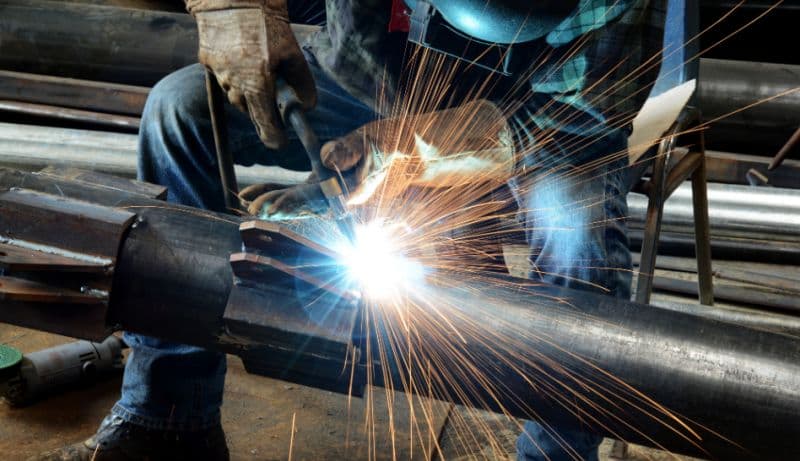
● Manufacturing
Equipment Manufacturing
The critical components of the of the complete pellet production line equipment are built in our own workshops in Asia. Additional equipment is manufactured by our worldwide network of reliable partners.
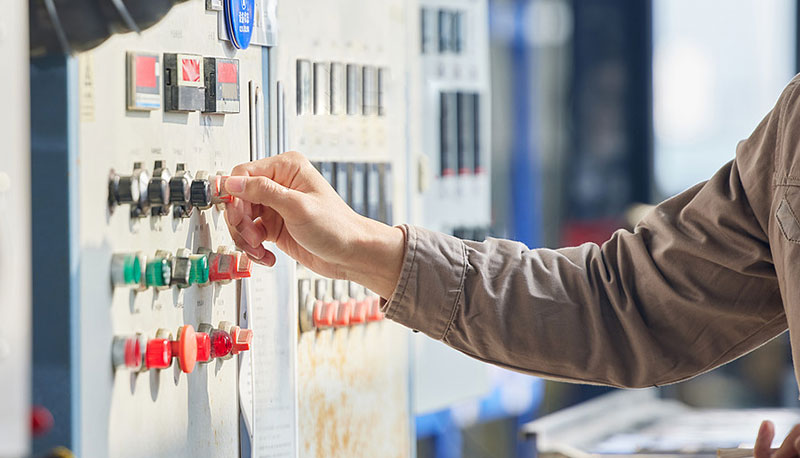
● Testing
Quality Inspection & Testing
Before leaving the factory, all equipment will be inspected by the quality inspection department. We can also provide customers with testing services from a single machine to a complete pellet plant system, and provide you with real actual data for “worry-free use.”

● Delivery
Equipment Delivery
In equipment boxing and packaging, we adopt professional packaging and modular solutions to ensure the safe and non-destructive delivery of pellet plant equipment.
● Installation
Installation & Commissioning
Whether you choose your own subcontractor for the erection phase or you want to install everything together with us, a Richi supervisor will be around to make sure everything is mounted in a safe and thorough way.

● Training
Staff Training
We provide comprehensive training for the technicians of each project. We can also continue to provide support for the technicians during latter project operation.
● After-sales
Project Follow-Up
When everything is up and running our Richiers will help you further whenever needed. We are ready to answer your call 24/7.We’ll also visit you regularly to learn about your needs.
Who we are
RICHI Machinery is one of the world’s leading suppliers of technology and services for the animal feed, aqua feed and pet food industries, also the largest pellet production line manufacturer in China.
Since 1995, RICHI’s vision to build a first-class enterprise, to foster first-class employees, and to make first-class contributions to society has never wavered.
In the past three decades, we have expanded our business to a wide range of areas, including animal feed mill equipment, aqua feed equipment, pet feed equipment, biomass pellet equipment, fertilizer equipment, cat litter equipment, municipal solid waste pellets equipment, etc.

1995
RICHI Established

2000+
Serving More Than 2000 Customers

120+
RICHI Employees

140+
Exported To 140 Countries