 0086-138 3838 9622
Wood Pellet Manufacturing Plant in Poland
RICHI MACHINERY
Project Overview
A 3t/h wood pellet manufacturing plant in Poland was commissioned in late 2024 for a client in the Wielkopolskie region (western Poland, about 80km from the German border).
The facility processes 15,500 tons of sawmill residue annually into 15,500 tons of industrial-grade biomass pellets. That’s right – the conversion rate is nearly 1:1 because the incoming moisture is already low and there’s no drying step. The plant operates 16 hours per day, 300 days per year, with a 10-person crew working two shifts.
The client invested $280,000 USD total, including equipment, local installation, and initial working capital. What makes this 3t/h wood pellet manufacturing plant in Poland unusual is the feedstock mix: 80% hardwood sawdust from local furniture factories and 20% softwood shavings from a nearby flooring manufacturer.
Most biomass pellet plants in this region run on pure softwood or pure hardwood. This client chose a blend for a specific reason – the hardwood gives higher density and longer burn time, the softwood helps with binding.
3T/H
capacity
$195,000
investment
Poland
location
Biofuel
project type
RICHI MACHINERY
Why Poland? The Market Was Ready
We started talking with this client in February 2024. He’d been running a small woodworking shop for fifteen years. Saw the pellet market take off after 2022 when gas prices went crazy. But he wasn’t just chasing a trend – he’d done the math.
Poland is Europe’s largest producer of furniture. That means massive amounts of sawdust and shavings that used to go to particleboard plants or landfills. Meanwhile, Polish households and small industrial users were burning coal until the government started pushing hard on clean heating alternatives. The subsidy programs (Czyste Powietrze – “Clean Air”) cover up to 60% of boiler replacement costs for homeowners who switch to biomass.
The client saw a gap: medium-sized pellet producers serving the 50-200km radius around Poznań. Big producers (like the ones exporting to Germany) were too expensive for local buyers. Small producers with old equipment had inconsistent quality.
He figured a modern 3t/h wood pellet manufacturing plant in Poland could capture the local industrial market – greenhouse operations, feed mills, smaller factories – that wanted reliable fuel without paying export premiums.
He was right. But the equipment had to be right too.
RICHI MACHINERY
Raw Materials – What Actually Works in Western Poland
The client doesn’t buy raw material on the open spot market. He set up long-term contracts with three sources.
| Raw Material | Annual Input (tons) | Moisture (as-delivered) | Source | Cost (USD/ton) |
|---|---|---|---|---|
| Hardwood sawdust (oak, beech) | 10,000 | 12-18% | Furniture factory #1 (30km away) | $28 |
| Softwood shavings (pine, spruce) | 3,000 | 10-15% | Flooring manufacturer (45km) | $32 |
| Mixed wood fines | 2,500 | 15-20% | Local sawmill (15km) | $22 |
| Total | 15,500 | Avg 14% |
The furniture factory sawdust is the backbone. It’s dry (forced-air drying in the factory’s own system), clean (no glue or finishes – this is from rough milling before finishing), and consistent. The client gets a guaranteed 800-900 tons per month.
The softwood shavings are the secret ingredient. Pine contains more natural resin than hardwood. That resin acts as a binder during pelleting. Without it, the client would need to add a separate binder or accept lower pellet durability. The 20% softwood blend eliminates that need.
The mixed fines from the local sawmill are cheap but variable. Some loads come in at 18% moisture, others at 22%. The client built a small covered storage area just for this material so it can air-dry for a few weeks before use.
Total annual input exactly matches output because there’s almost no moisture loss. The 14% average inbound MC is already perfect for pelleting (ideal range is 12-18%). No dryer needed. That’s a huge saving on both capital and operating costs.
RICHI MACHINERY
The Equipment Line – What We Spec’d and Why
This 3t/h wood pellet manufacturing plant in Poland runs on a single-stage grinding and pelleting setup. Simple, reliable, low maintenance.
| Equipment | Quantity | Key Specs | Role |
|---|---|---|---|
| Wood crusher (125 type) | 1 | 55kW, 1.5 ton/hr capacity | Primary size reduction for oversize chunks |
| Hammer mill (110 type) | 2 | 75kW each, 6mm screen | Fine grinding to powder |
| Wood granulator machine (350 type) | 6 | 110kW each, ring die | Main pelleting (3 operating, 3 standby) |
| Belt conveyors | 4 | 17m length, 400mm width | Material transfer between stages |
| Bagging machine | 1 | 15-25kg bags, 10 bags/min | Finished product packaging |
| Wheel loader (2 ton) | 1 | Locally purchased | Raw material handling |
Equipment price (EXW Qingdao port): $195,000 USD
Wait – six wood pellet mills? For a 3t/h wood pellet production line? That seems like overkill.
Here’s the thinking. The client wanted redundancy. He can’t afford downtime. If one pellet mill goes down for die change or bearing replacement, he loses 0.5 t/h of capacity. With six mills running at 50-60% of their max rating, he can lose two mills and still maintain 3 t/h output. The other three mills are literally spares on the floor, ready to run.
We initially tried to talk him out of this. Too much capital tied up in idle machines. But he’d been burned before – waited six weeks for a replacement gearbox on his old line. Lost $40,000 in revenue. He insisted on the spare capacity. So we configured the line with a common feed distribution system that can route material to any combination of the six mills.
The 350-type mills run 8mm dies (standard industrial fuel size). Each mill draws about 85-90kW under load. Total connected power for the line is around 650kW, but actual draw during production is 450-500kW.
RICHI MACHINERY
Process Flow – From Sawdust to Pellets
The 3t/h wood pellet manufacturing plant in Poland follows a straightforward path. No drying, no steam conditioning (except what happens naturally in the pellet mill).
Step 1 – Reception and Storage
Trucks dump sawdust and shavings into a below-grade receiving pit (concrete, 20m³ capacity). A chain conveyor moves material to the storage bays. Three bays: hardwood sawdust (covered), softwood shavings (covered), mixed fines (open-sided). The client uses a front-end loader to feed the blending hopper.
Step 2 – Blending
A variable-speed screw auger pulls material from each bay into a blending hopper. Target blend: 70% hardwood, 20% softwood, 10% mixed fines. The operator adjusts the screw speeds based on visual checks of the incoming material. Not high-tech, but it works.
Step 3 – Primary Crushing (If Needed)
Most material goes straight to the hammer mills. But occasionally a load of mixed fines contains wood chunks larger than 30mm. Those get diverted to the 125-type crusher first. Happens maybe twice per month.
Step 4 – Fine Grinding
Two 110-type hammer mills run in parallel. Each has a 6mm screen. Material feeds from the blending hopper via a belt conveyor with a magnetic head pulley (removes stray nails and screws). The mills produce a flour-like powder – 95% passing through a 2mm screen.
Step 5 – Pelleting
The ground material drops into a distribution auger that feeds all six 350-type wood pelletizer machines. The client typically runs three mills at 70% capacity, two mills at 50%, and keeps one idle for maintenance rotation. Die gap is set at 2.8-3.0mm. Roll pressure is adjusted weekly based on pellet hardness tests.
Step 6 – Cooling and Screening
Pellets exit each wood pellet press at 80-90°C. A common belt conveyor carries them to a counterflow cooler (retention time 12-15 minutes). Exit temperature: 35-40°C. Then a vibrating screen with 3mm and 8mm decks removes fines. Fines (about 3-4% of output) go back to the distribution auger.
Step 7 – Bagging
The bagging machine fills 15kg and 25kg paper bags (for retail) and can also fill 500kg polypropylene bags (for industrial customers). The client sells about 40% retail, 60% bulk.
RICHI MACHINERY
The Dust Problem We Almost Missed
During commissioning in October 2024, we hit a snag. The dust collection system wasn’t keeping up.
The original design had one baghouse filter handling both the hammer mills and the pellet mills. Total airflow 10,000 m³/hr. That worked fine at 1-2 t/h. At 3 t/h, the filter pressure drop kept triggering alarms. We measured actual dust loading at the filter inlet – 15.5 t/year from the hammer mills plus another 13.95 t/year from the pellet mills. That’s 29.45 tons of dust annually. The single filter was undersized.
The client wasn’t happy. Neither were we.
The fix: add a second baghouse filter dedicated to the hammer mills. Keep the original filter for the pellet mills only. We shipped the second unit by air freight (cost $2,800, client paid) and had it installed within 10 days. Now the system runs at 8,500 m³/hr on the hammer mill side and 6,000 m³/hr on the pellet side. No more pressure drop issues.
Lesson learned. For any 3t/h wood pellet manufacturing plant in Poland – or anywhere – don’t undersize the dust collection. Double the filter area you think you need.
RICHI MACHINERY
Operating Costs – Real Numbers from Month Three
After the dust collection fix, the wood pellet processing plant ran steadily. Here’s the cost breakdown for December 2024 (first full month at target capacity).
| Cost Category | Monthly (USD) | Annual (USD) | Notes |
|---|---|---|---|
| Raw material | $35,500 | $426,000 | 1,292 tons at average $27.50/ton |
| Electricity | $4,200 | $50,400 | 18,000 kWh/month at $0.23/kWh |
| Labor (10 people) | $8,500 | $102,000 | Average $850/month plus benefits |
| Maintenance & spares | $1,800 | $21,600 | Dies, hammers, bearings, bags |
| Baghouse filter bags | $400 | $4,800 | Replacement every 6 months |
| Rent (building) | $2,500 | $30,000 | 2,600 m² facility |
| Total monthly | $52,900 | $634,800 |
Revenue (December 2024):
| Product | Monthly Output (tons) | Price (USD/ton) | Monthly Revenue |
|---|---|---|---|
| Industrial pellets (bulk) | 780 | $125 | $97,500 |
| Retail pellets (bagged) | 520 | $165 | $85,800 |
| Total | 1,300 | $183,300 |
Monthly net profit: $130,400 USD. Annual net profit (projected): $1.56 million USD.
The client’s total investment was $280,000. Payback period? Less than three months. That’s not typical – the market was strong in late 2024, and his raw material costs are low because of long-term contracts. But even in a normal market, this 3t/h wood pellet manufacturing plant in Poland would pay for itself within 8-10 months.
RICHI MACHINERY
What the Client Learned
We sat down with him in January 2025. Asked for honest feedback.
Things that worked well:
- The six-mill configuration with spares. He’s had two unplanned mill stops since October. Both times, he swapped in a spare mill and kept running. Zero lost production hours.
- The simple blending system. No expensive automated moisture sensors. His operators learned to feel the material and adjust the blend on the fly.
- No dryer. He almost bought a used rotary dryer from a German supplier. Glad he didn’t. The 14% average inbound moisture works fine.
Things he’d change:
- Bigger dust collection from day one. The air freight and emergency installation cost him $12,000 he didn’t plan for.
- More covered storage. The mixed fines get wet when it rains, even under a roof. He’s adding side walls to that storage bay in spring 2025.
- A better bagging machine. The current unit jams occasionally with the softwood-heavy blend. He’s looking at a vertical form-fill-seal machine for 2026.
RICHI MACHINERY
Shipping and Logistics
All equipment for this 3t/h wood pellet manufacturing plant in Poland shipped from Qingdao Port, China, to Gdańsk Port, Poland (Baltic Sea coast). Departure was August 10, 2024. Arrival September 5, 2024. Sea freight for three 40-foot containers: $6,800 USD. Customs clearance and inland trucking to Wielkopolskie added $3,200 USD.
Total delivered to site: $195,000 (equipment) + $10,000 (freight/logistics) = $205,000 USD.
The client handled installation himself with local contractors. We provided a supervising engineer for 14 days (cost included in the equipment price, not extra).
RICHI MACHINERY
The Polish Pellet Market – Why Now?
Poland is interesting. It’s the largest hard coal producer in Europe, but the government is actively trying to phase out coal for residential heating. The “Clean Air” program has distributed over $5 billion USD in subsidies since 2018. Homeowners can get up to 60% off a new biomass boiler, plus additional grants for insulation and renewable energy systems.
That creates demand for pellets. Lots of demand.
But here’s the thing – most Polish pellet producers focus on the German export market. They make ENplus A1 premium pellets and ship them west. The local market for standard industrial pellets (ENplus B or non-certified) is underserved. Factories, greenhouses, mushroom farms, grain dryers – they need consistent fuel at a reasonable price. They don’t need premium certification.
This client figured that out. His 3t/h wood pellet manufacturing plant in Poland sells everything locally within a 150km radius. No export paperwork. No currency risk. No shipping costs eating into margin.
Smart positioning.
RICHI MACHINERY
What We Provide Beyond the Machines
For this project, we delivered:
- Process design – Including the six-mill configuration with common distribution. The client’s idea initially, but we engineered the control system to make it work.
- Equipment package – All major machines from one supplier. No finger-pointing between vendors when something goes wrong.
- Installation supervision – Fourteen days on-site. We stayed in a hotel in Poznań and drove to the plant every morning.
- Operator training – Two days on pellet mill adjustments, die changes, and troubleshooting common problems (jams, overheating, poor pellet quality).
- Spare parts kit – Extra dies (two sets), hammer mill screens, bearings, belts, and a box of sensors.
We also provide remote support. The client has our service engineer’s WhatsApp. He’s used it three times – once for a conveyor alignment issue, once for a baghouse timer problem, once for a question about die lubrication.
RICHI MACHINERY
Thinking About Your Own Pellet Project?
If you’re looking at a 3t/h wood pellet manufacturing plant in Poland – or anywhere in Central Europe – here’s what we’ve learned from this project:
- Don’t buy a dryer unless you absolutely need one. Drying is expensive. If your inbound moisture is under 18%, skip it.
- Oversize your dust collection. Seriously. Double the filter area. You’ll thank yourself later.
- Consider redundant pellet mills. You don’t need six like this client. But two mills running at 60% is more reliable than one mill running at 100%.
- Look at local industrial buyers, not just the export market. Lower prices, but lower risk too.
The client in Wielkopolskie is already planning a second line. Same capacity. Same six-mill configuration. But this time, he’s adding a small dryer as a backup for the wet months.
We’ll probably ship that line in Q3 2025.
If you want to talk about your raw material, your market, and what equipment makes sense – send us a message. We’ll give you straight answers. No sales pitch. Just what we’ve seen work (and not work) in real projects.
● RICHI MACHINERY
RICHI Service

● Consulting
Customer Consultation
We want to have a deep understanding of your industrial process, to know your exact needs of feed, wood, biomass, fertilizer or other pellet processing.

● Design
biomass Pellet Plant Design
Based on your unique situation and industrial process, we will tailor complete pellet plant you need, and inform you of every additional detail that could facilitate operation, minimize total cost.
● Manufacturing
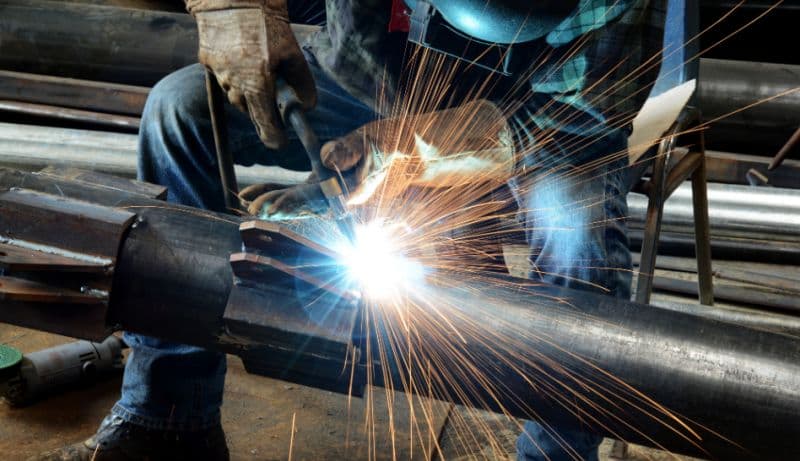
Equipment Manufacturing
The critical components of the of the complete pellet production line equipment are built in our own workshops in Asia. Additional equipment is manufactured by our worldwide network of reliable partners.
● Testing
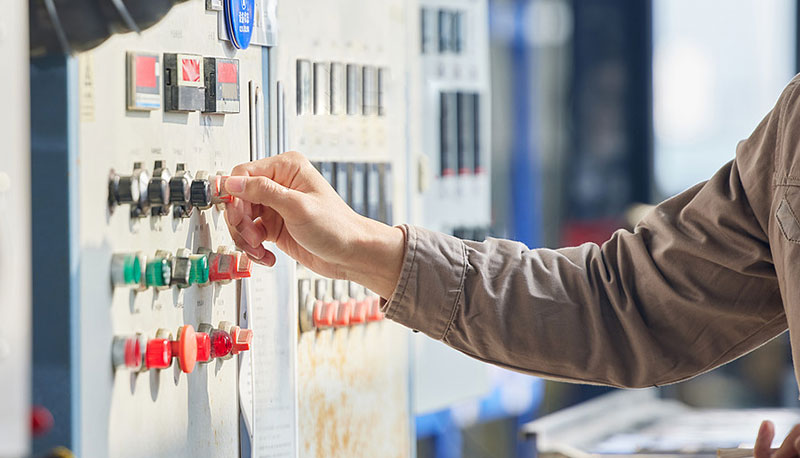
Quality Inspection & Testing
Before leaving the factory, all equipment will be inspected by the quality inspection department. We can also provide customers with testing services from a single machine to a complete pellet plant system, and provide you with real actual data for “worry-free use.”

● Delivery
Equipment Delivery
In equipment boxing and packaging, we adopt professional packaging and modular solutions to ensure the safe and non-destructive delivery of pellet plant equipment.
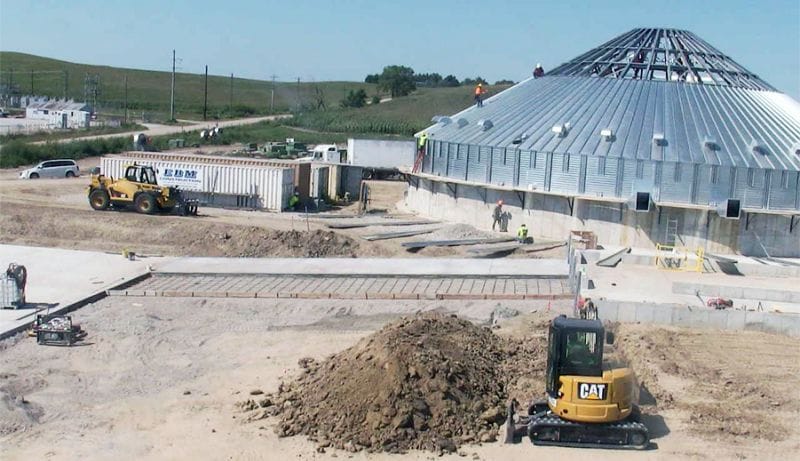
● Installation
Installation & Commissioning
Whether you choose your own subcontractor for the erection phase or you want to install everything together with us, a Richi supervisor will be around to make sure everything is mounted in a safe and thorough way.

● Training
Staff Training
We provide comprehensive training for the technicians of each project. We can also continue to provide support for the technicians during latter project operation.
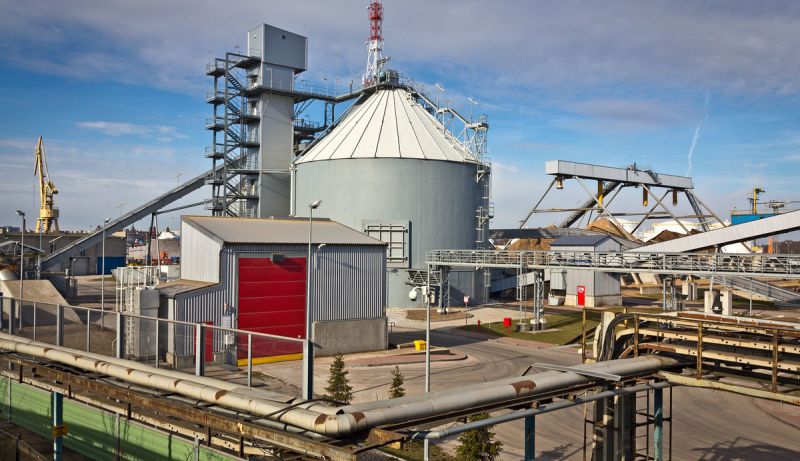
● After-sales
Project Follow-Up
When everything is up and running our Richiers will help you further whenever needed. We are ready to answer your call 24/7.We’ll also visit you regularly to learn about your needs.
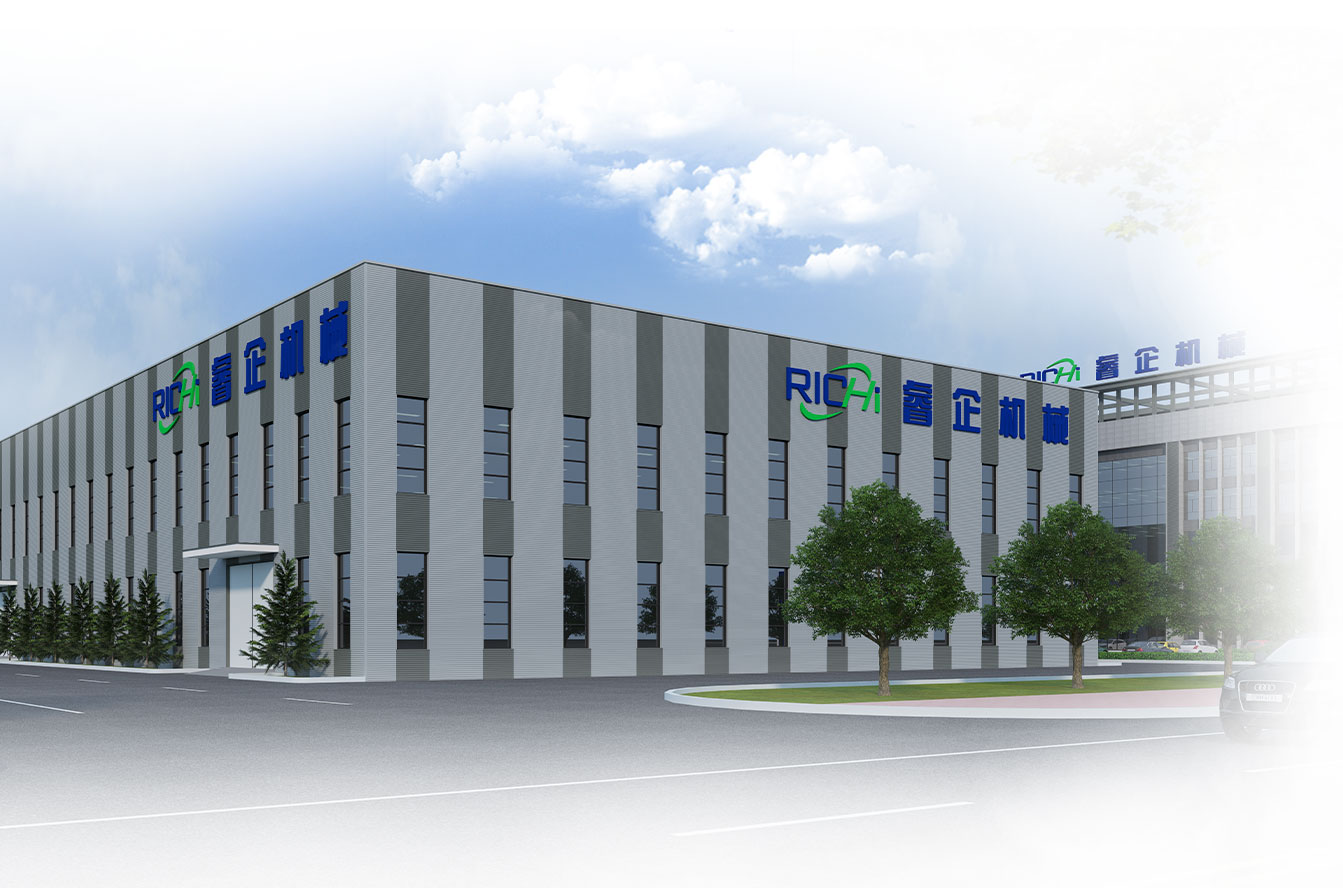
Who we are
RICHI Machinery is one of the world’s leading suppliers of technology and services for the animal feed, aqua feed and pet food industries, also the largest pellet production line manufacturer in China.
Since 1995, RICHI’s vision to build a first-class enterprise, to foster first-class employees, and to make first-class contributions to society has never wavered.
In the past three decades, we have expanded our business to a wide range of areas, including animal feed mill equipment, aqua feed equipment, pet feed equipment, biomass pellet equipment, fertilizer equipment, cat litter equipment, municipal solid waste pellets equipment, etc.

1995
RICHI Established

2000+
Serving More Than 2000 Customers

120+
RICHI Employees

140+
Exported To 140 Countries