 0086-138 3838 9622
Complete Pellet Line Project in Ghana
RICHI MACHINERY
Project Overview
A 2-2.5t/h complete pellet line project in Ghana was commissioned in late 2023 for a client in the Ashanti Region, approximately 25km north of Kumasi. The facility processes 12,004 tons of waste wood annually into 12,000 tons of biomass pellets for industrial boilers and commercial heating applications.
The plant operates two shifts per day, 8 hours per shift, 300 days per year (4,800 total operating hours), with 10 employees including operators and administrative staff. Total project investment was $142,000.
What makes this 2-2.5t/h complete pellet line project in Ghana noteworthy is its simplicity and completeness. The client did not want a phased installation or a minimalist starter line. He wanted a fully integrated system from day one: crushing, grinding, screening, pelleting, and bagging, with proper dust control and safety systems.
2-2.5T/H
capacity
$142,000
investment
Ghana
location
Biofuel
project type
RICHI MACHINERY
Project Background – Why Ghana, Why Now
The client had been operating a small timber trading business for seven years. He knew the wood industry in the Ashanti Region intimately. Ghana has a significant timber processing sector – teak, mahogany, wawa, and other species are harvested and milled locally. Each sawmill produces 50-200 tons of waste wood per month – offcuts, trimmings, edgings, and rejected boards. Most of this material is currently burned in the open or left to rot.
At the same time, Ghana’s industrial sector has been struggling with fuel costs. Diesel and heavy fuel oil prices have increased by 60-80% since 2020. Several cement plants, textile factories, and food processing facilities in the Kumasi area have expressed interest in biomass pellets as a lower-cost alternative.
The client saw an opportunity to aggregate waste wood from multiple sawmills and convert it into a standardized fuel product. He leased a 4,000m² facility in an existing industrial area, installed a 2-2.5t/h complete pellet line project in Ghana, and began production within eight months of signing the lease.
RICHI MACHINERY
Raw Materials – Single Feedstock, Multiple Sources
The client made a deliberate decision to use only waste wood as his raw material. No agricultural residues. No bark. No painted or treated wood. This simplifies quality control and ensures consistent pellet characteristics.
| Raw Material | Annual Input (tons) | Moisture (as-received) | Cost (USD/ton) | Source |
|---|---|---|---|---|
| Waste wood (offcuts, trimmings, edgings) | 12,004 | 12-18% | $18-22 | Six sawmills within 50km |
The client collects dry material only. He rejects loads that have been stored outside in the rain. In practice, most sawmills in Ghana store their waste wood under cover because they use some of it for their own boiler fuel. This means incoming moisture is consistently 12-18% – ideal for direct pelleting without drying.
Total input 12,004 tons, output 12,000 tons. The 4-ton difference accounts for dust collected (about 3.6 tons) and fine particles lost during screening (0.4 tons).
RICHI MACHINERY
Facility Layout – 4,000m² of Organized Space
The client leased an existing industrial building and modified it for the 2-2.5t/h complete pellet line project in Ghana.
| Area | Size (m²) | Function |
|---|---|---|
| Production workshop | 3,250 | Main processing: crusher, grinder, screen, pellet mills |
| Raw material storage | 175 | Covered area for incoming wood waste |
| Finished goods storage | 175 | Bagged pellets awaiting shipment |
| Canteen | 100 | Staff meals, 10 people |
| Dormitory | 150 | Staff accommodation, 6-8 beds |
| Office | 100 | Administration, sales, quality control |
| Toilet | 50 | Staff facilities |
| General waste storage | 20 | Non-hazardous solid waste |
| Hazardous waste storage | 5 | Used oil, lubricants, contaminated rags |
| Fire water tank | 80m³ | Emergency fire suppression |
| Containment basin | 100m³ | Emergency spill/runoff capture |
Total built area: approximately 4,000m². Ceiling height in the production area is 10m, which accommodates the equipment layout and allows for natural air circulation.
The client added an emergency containment basin after our recommendation. Ghana’s environmental agency (EPA) requires spill containment for any facility with significant fuel or lubricant storage. The basin is empty most of the time but provides 100m³ of capacity in case of a fire water runoff event.
RICHI MACHINERY
Equipment List – What Was Installed
| Equipment | Model/Spec | Quantity | Role |
|---|---|---|---|
| Wood pallet crusher | — | 1 | Initial size reduction of large boards |
| Wood chipper machine | — | 1 | Secondary reduction to 10-80mm chips |
| Wood Pellet Hammer mill | SFSP80-5 | 1 | Fine grinding to 12mm particles |
| Screen | — | 1 | Metal and contaminant removal |
| Wood Pellet Mill | 420 type | 1 | Main pelleting (three running, one spare) |
| Belt conveyor | 4080C | 4 | Material transfer between stages |
| Front-end loader | Tianyu 940 | 1 | Raw material handling |
| Forklift | CPC | 1 | Finished goods movement |
| Pulse baghouse filter | — | 1 | Dust collection, 8,000 m³/hr |
| Exhaust stack | 15m | 1 | Treated air discharge |
Equipment cost (delivered to site): $142,000 USD
The client purchased most equipment new from a single supplier to ensure compatibility. The four 420-type pellet mills are identical, allowing the client to keep one as a hot spare while the others run. Each mill is rated for 0.8-1.0 t/h on wood sawdust. Running three mills at 75-80% capacity yields 2.2-2.4 t/h sustained output.
RICHI MACHINERY
Process Flow – Seven Steps from Waste Wood to Pellets
Here is the actual process sequence for this 2-2.5t/h complete pellet line project in Ghana.
Step 1 – Chipping
Large waste wood boards and offcuts (some up to 2m long) are fed into the chipper. The chipper reduces them to 50-100mm chips. This step is semi-enclosed – the feed hopper is open for loading, but the cutting chamber is closed. Dust generation is minimal because the material is still large and heavy.
Step 2 – Crushing
Chipped material is loaded by front-end loader into the Weilong 3000 crusher. The crusher reduces chips to 10-80mm particles. This is the first major dust generation point. A collection hood above the crusher captures about 90% of the dust and directs it to the baghouse filter.
Step 3 – Screening
Crushed material moves by enclosed belt conveyor to a vibrating screen. The screen removes metal fragments (nails, staples, broken saw blades) and other dense contaminants. The client reports about 0.5 tons of metal scrap per month, which is sold to a local recycler. Screening also generates some dust – captured by a second collection hood.
Step 4 – Grinding
Screened material feeds into the SFSP80-5 hammer mill. This is a high-speed mill (3,000-3,600 RPM) with a 12mm screen. Output is a uniform wood powder. The mill is fully enclosed, but the air movement inside creates dust at the inlet and outlet. Both points are connected to the baghouse.
Step 5 – Pelleting
Ground material is distributed to operating 420-type wood pellet extruder machine. It has its own feed hopper and variable-speed screw feeder. The pelleting process uses friction heat (no external heating) to soften the lignin in the wood, which acts as a natural binder. Die size is 8mm for industrial fuel. Die compression ratio is 1:5 (40mm effective length). Pellet temperature at exit is 85-95°C.
Step 6 – Cooling
Pellets drop onto a common belt conveyor and are transported to the finished goods area. The client relies on natural cooling during conveyor travel and storage. No forced-air cooler is installed. This was a deliberate cost-saving decision. However, it means pellets must be stored for 24-48 hours before bagging to allow complete cooling. Bagging hot pellets would trap moisture and lead to mold.
Step 7 – Bagging
Cooled pellets are bagged manually. The client uses 25kg woven polypropylene bags (the same type used for rice and grain). Bags are sewn closed by hand and stacked on pallets. The client sells about 70% of production in bags, 30% in bulk to industrial customers who collect with their own trucks.
RICHI MACHINERY
Shipping and Logistics
All major equipment for this 2-2.5t/h complete pellet line project in Ghana shipped from Qingdao Port, China, to Tema Port, Ghana (the country’s largest port, about 25km east of Accra). Departure was July 15, 2023. Arrival was August 22, 2023. Sea freight for two 40-foot containers: $4,500 USD. Customs clearance in Tema added $1,800 USD. Inland trucking to Kumasi (about 270km north) added $1,200 USD.
Total delivery cost to site: $7,500 USD, included in the equipment price above.
RICHI MACHINERY
The Ghanaian Market for Biomass Pellets
Ghana’s biomass pellet market is small but growing. The country has:
- A well-established timber industry producing consistent wood waste
- Rising industrial fuel costs (diesel and heavy fuel oil)
- Government interest in renewable energy (though limited subsidies)
The client’s customers include:
- A cement plant in Kumasi (1,500 tons/year)
- Three textile factories in the Ashanti Region (2,000 tons/year combined)
- Two food processing facilities (1,000 tons/year combined)
- Retail customers in Kumasi and Accra (the remainder)
Export is not currently viable because logistics costs to Europe are too high. But the domestic market is large enough. The client is already planning to increase production to 15,000 tons/year in 2025 by adding a fifth pellet mill.
RICHI MACHINERY
Risk Considerations for Potential Investors
If you are considering a similar 2-2.5t/h complete pellet line project in Ghana, here are the specific risks the client identified:
Raw material availability. Waste wood is abundant in the Ashanti Region, but you need contracts with sawmills. Spot purchases are unreliable. The client has six-month rolling contracts with six sawmills. Without contracts, you risk running out of material.
Power reliability. Ghana’s grid is generally stable, but voltage sags occur. The client installed a voltage stabilizer ($2,000) on the pellet mill motors. Without it, the mills would trip offline during sags.
Skilled labor. Finding operators who understand mechanical systems is difficult. The client trained his own staff. Expect a 2-3 month training period before operators can run the line without supervision.
EPA compliance. Ghana’s EPA requires environmental permits for any facility processing more than 5,000 tons per year. The permit process takes 3-4 months. Factor this into your timeline.
RICHI MACHINERY
What We Provide (For Projects Like This)
For this 2-2.5t/h complete pellet line project in Ghana, we delivered:
- Complete equipment package including crusher, hammer mill, screen, four pellet mills, conveyors, and baghouse
- Installation supervision (our engineer spent 18 days in Kumasi)
- Operator training (5 days on-site)
- Spare parts kit: two spare dies, three sets of hammers, bearings, belts, and filter bags
- Remote support via WhatsApp and email
We also provided the client with a list of local suppliers for consumables (dies, bearings, lubricants) in Accra and Kumasi.
RICHI MACHINERY
Considering a Pellet Line in West Africa?
If you are looking at a 2-2.5t/h complete pellet line project in Ghana – or anywhere in West Africa – here is what this project demonstrates:
- Single feedstock simplifies operations. The client uses only waste wood. No blending, no moisture adjustment, no variable ash content.
- Dust collection is not optional. Ghana’s EPA enforces the rules. Budget for a baghouse.
- Spare capacity matters. Four mills with one spare cost more upfront but prevent production losses.
- Domestic demand is sufficient. You do not need to export. Ghana’s industrial sector will buy everything you can produce.
The client in Kumasi is already profitable. He is expanding. If you have access to wood waste and a facility with 4,000m² and 10m ceiling height, the model is replicable.
Contact us for a site assessment or equipment quote. We can provide references from this biomass pellet project upon request.
● RICHI MACHINERY
RICHI Service

● Consulting
Customer Consultation
We want to have a deep understanding of your industrial process, to know your exact needs of feed, wood, biomass, fertilizer or other pellet processing.
● Design
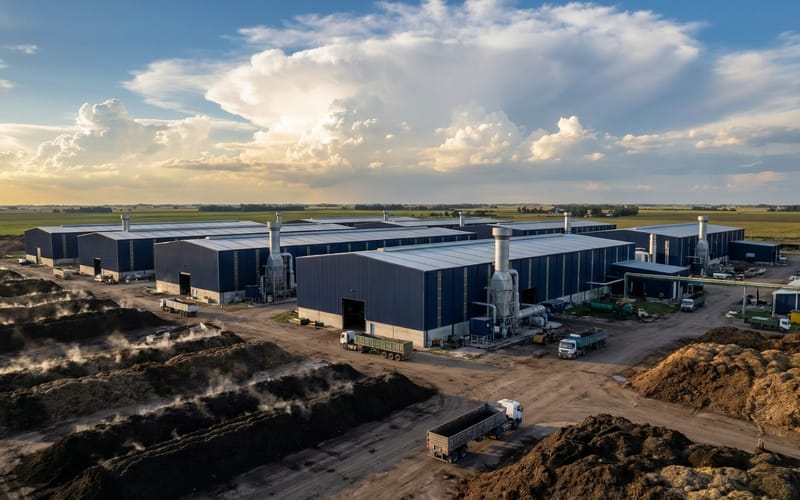
biomass Pellet Plant Design
Based on your unique situation and industrial process, we will tailor complete pellet plant you need, and inform you of every additional detail that could facilitate operation, minimize total cost.
● Manufacturing
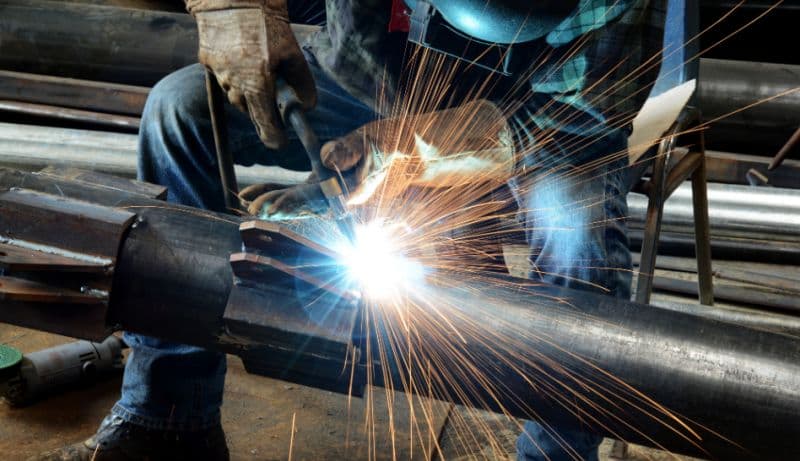
Equipment Manufacturing
The critical components of the of the complete pellet production line equipment are built in our own workshops in Asia. Additional equipment is manufactured by our worldwide network of reliable partners.
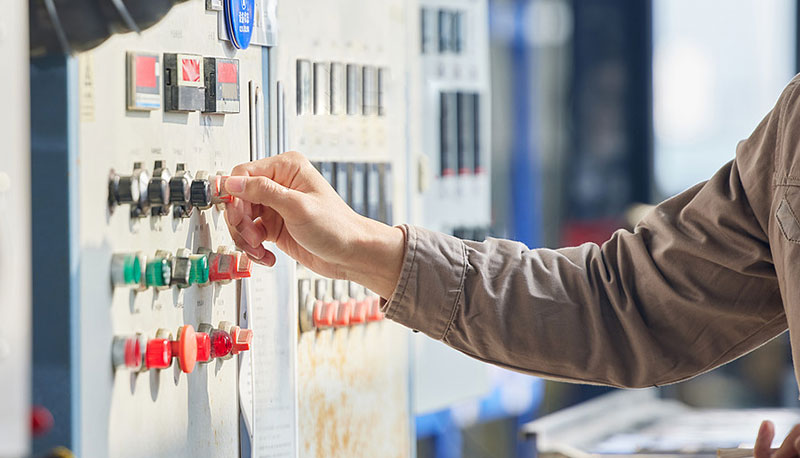
● Testing
Quality Inspection & Testing
Before leaving the factory, all equipment will be inspected by the quality inspection department. We can also provide customers with testing services from a single machine to a complete pellet plant system, and provide you with real actual data for “worry-free use.”

● Delivery
Equipment Delivery
In equipment boxing and packaging, we adopt professional packaging and modular solutions to ensure the safe and non-destructive delivery of pellet plant equipment.
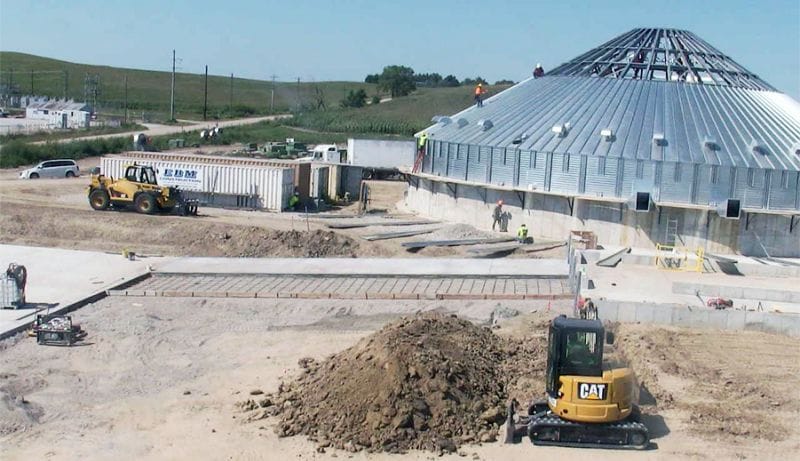
● Installation
Installation & Commissioning
Whether you choose your own subcontractor for the erection phase or you want to install everything together with us, a Richi supervisor will be around to make sure everything is mounted in a safe and thorough way.

● Training
Staff Training
We provide comprehensive training for the technicians of each project. We can also continue to provide support for the technicians during latter project operation.
● After-sales
Project Follow-Up
When everything is up and running our Richiers will help you further whenever needed. We are ready to answer your call 24/7.We’ll also visit you regularly to learn about your needs.
Who we are
RICHI Machinery is one of the world’s leading suppliers of technology and services for the animal feed, aqua feed and pet food industries, also the largest pellet production line manufacturer in China.
Since 1995, RICHI’s vision to build a first-class enterprise, to foster first-class employees, and to make first-class contributions to society has never wavered.
In the past three decades, we have expanded our business to a wide range of areas, including animal feed mill equipment, aqua feed equipment, pet feed equipment, biomass pellet equipment, fertilizer equipment, cat litter equipment, municipal solid waste pellets equipment, etc.

1995
RICHI Established

2000+
Serving More Than 2000 Customers

120+
RICHI Employees

140+
Exported To 140 Countries