 0086-138 3838 9622
Feed Plant Integrated Processing System in Peru
RICHI MACHINERY
Overview
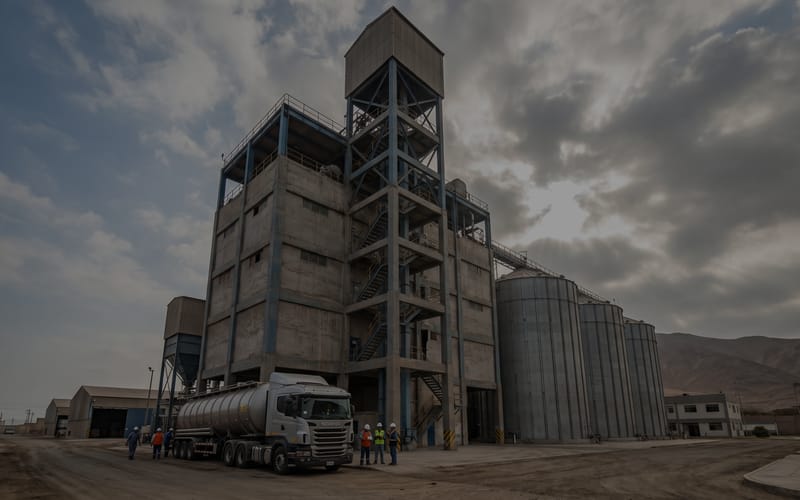
25T/H feed plant integrated processing system in Peru — this project represents a full-scale industrial feed mill designed for both livestock and ruminant feed production, with a total annual output of 120,000 tons. The facility integrates raw material storage, automated batching, grinding, mixing, pelleting, and packaging into one continuous feed pellet production line.
What makes this case slightly different is how tightly the system was built around raw material logistics and seasonal supply fluctuations. The plant was not just designed for output—it was designed to keep running when corn moisture shifts, when soybean meal quality varies, and when operators need flexibility between pig, poultry, and cattle feed formulas.
25T/H
capacity
$1.2 million
investment
Peru
location
Feed
project type
RICHI MACHINERY
A Few Words Before the Drawings Started
The client first reached out in March 2025. At that point, there was no finalized layout—just a basic idea:
“We need something around 20–30 tons per hour, but we don’t want a complicated system that breaks every week.”
By June 2025, after several rounds of raw material analysis and layout revisions, the contract was signed. Equipment manufacturing started in July, and shipment from Qingdao Port to Callao Port (Peru) was arranged in October. Installation followed toward the end of the year.
RICHI MACHINERY
Who Was Behind This Project?
This wasn’t a large multinational. The client was a regional agricultural investor group operating in northern Peru, already involved in grain trading and poultry farming.
Why build a plant like this?
- Increasing local demand for compound livestock feed
- Rising cost of importing finished feed
- Availability of corn and soybean meal supply chains
- Desire to control feed quality for their own farms
They weren’t looking for a “fancy factory.” They wanted something reliable, expandable, and not overly sensitive to operator skill level.
RICHI MACHINERY
Site and General Layout
The animal feed processing plant sits on approximately 4,760 m² of land. The layout wasn’t random—it follows material flow logic more than architectural symmetry.
Main Sections:
- Raw Material Workshop
- Main Production Building (5 floors + 1 underground level)
- Finished Product Warehouse
- Auxiliary Facilities
- Boiler House
- Office & Lab Building
One thing that came up early:
The site had a natural elevation difference. Instead of leveling everything (expensive), the design used multi-level platforms to assist gravity flow inside the pelletizing line.
RICHI MACHINERY
Product Plan
In this Feed Plant Integrated Processing System in Peru, before diving into machinery, the product mix defines everything.
| Product Type | Category | Annual Output (tons) | Production Line |
|---|---|---|---|
| Pig Feed | Livestock Feed | 80,000 | Line 1 |
| Poultry Feed (Chicken, Duck) | Livestock Feed | 20,000 | Line 1 |
| Cattle & Sheep Feed | Ruminant Feed | 20,000 | Line 2 |
| Total | — | 120,000 | 2 Lines |
The two animal feed production lines share some infrastructure but operate with different process priorities—especially in grinding and conditioning.
RICHI MACHINERY
Raw Materials
In Peru, supply is relatively stable, but moisture and impurity levels fluctuate more than expected.
| Raw Material | Annual Consumption (tons) | Max Storage (tons) | Storage Method |
|---|---|---|---|
| Corn | 53,000 | 4,500 | Silos |
| Soybean Meal | 45,000 | 1,000 | Silos |
| Cottonseed Meal | 5,900 | 200 | Warehouse |
| Rapeseed Meal | 1,500 | 200 | Warehouse |
| Wheat Bran | 9,500 | 500 | Warehouse |
| Fish Meal | 1,785 | 500 | Warehouse |
| Broken Rice | 350 | 100 | Warehouse |
| Flour | 39 | 10 | Warehouse |
| Soybean Oil | 50 | 10 | Storage Tank |
| Additives | 3,000 | 500 | Warehouse |
A small note from commissioning phase:
The first batches had inconsistent moisture due to corn variability. Adjustments were made in conditioning time rather than grinding size—this stabilized pellet quality quickly.
RICHI MACHINERY
Equipment Configuration
Below is a cleaned version of the actual animal feed plant machinery setup. No unnecessary model codes—just what matters operationally.
Ruminant Feed Line
| Process | Equipment | Quantity |
|---|---|---|
| Cleaning | Drum Sieve | 3 |
| Magnetic Separation | Magnetic Separator | 3 |
| Feeding | Feeder | 1 |
| Conveying | Chain Conveyor | 3 |
| Lifting | Bucket Elevator | 5 |
| Grinding | Hammer Mill | 1 |
| Mixing | Mixer | 1 |
| Batching | Electronic Scales | 2 |
| Pelleting | Animal Feed Pellet Mill | 1 |
| Cooling | Counterflow Cooler | 1 |
| Dust Collection | Pulse Dust Collector | 4 |
Livestock Feed Line
| Process | Equipment | Quantity |
|---|---|---|
| Cleaning | Drum Sieve | 4 |
| Magnetic Separation | Magnetic Separator | 4 |
| Feeding | Feeder | 1 |
| Conveying | Chain Conveyor | 5 |
| Lifting | Bucket Elevator | 7 |
| Grinding | Hammer Mill Feed Grinder | 2 |
| Mixing | Mixer | 1 |
| Batching | Electronic Scales | 3 |
| Pelleting | Livestock Feed Pellet Machine | 2 |
| Cooling | Counterflow Cooler | 2 |
| Dust Collection | Pulse Dust Collector | 4 |
Packaging & Utilities
| Section | Equipment | Quantity |
|---|---|---|
| Packaging | Automatic Bagging Machine | 3 |
| Air Supply | Air Compressor | 1 |
| Power | Transformer | 1 |
| Backup Power | Diesel Generator | 1 |
| Steam Supply | Gas Boiler (2t/h) | 2 |
| Weighing | Truck Scale | 1 |
RICHI MACHINERY
Complete Production Process
Below is the full process as implemented on-site. This is not simplified—this is how it actually runs.
① Raw Material Handling
The production materials are divided into:
- Granular materials: corn, wheat
- Powder materials: soybean meal, bran
- Micro-additives: vitamins, minerals
Granular and bulk materials are stored in vertical silos, while bagged materials are stored in the raw material warehouse.
This separation is important—it affects batching accuracy later.
② Cleaning and Magnetic Separation
Before entering the pelletizing line:
- Materials pass through drum screens to remove impurities such as stones, plastics, and debris
- Then pass through magnetic separators to remove metal particles
This step protects equipment and ensures feed safety.
Powder materials that do not require grinding are directly sent to batching bins.
③ Feeding System
- Ruminant line: 1 feeding inlet
- Livestock line: 2 feeding inlets
Materials are transferred via bucket elevators into either grinding bins or batching bins.
④ Grinding Process (Hammer Milling Stage)
Grinding is critical in this Feed Plant Integrated Processing System in Peru.
Configuration:
- 1 hammer mill for ruminant feed
- 2 hammer mills for livestock feed
Granular materials are fed into the grinding chamber via:
- Pneumatic gate control
- Impeller feeder for uniform feeding
Particle size is controlled by screen selection. A screen break detection point was reserved to prevent quality issues.
After grinding, materials are lifted and distributed into batching bins.
⑤ Batching and Mixing System
Ruminant line:
- 1 batching system
- 21 batching bins (including reserved bins for grass powder)
- 2 weighing scales
Livestock line:
- 1 batching system
- 28 batching bins
- multi-scale configuration (large, medium, small)
The batching process is fully automated:
- Formulas are entered into the control system
- Materials are weighed and discharged automatically
- Oil addition is controlled digitally
After batching, materials enter the mixer, then are conveyed to pelleting bins or finished bins.
⑥ Pelleting and Cooling
This is the core of the animal feed pellet plant.
- Materials are conditioned with saturated steam
- Steam is supplied by 2×2t/h natural gas boilers
Pellet mills:
- 3 feed mill pellet machines in total
- Different die sizes used depending on product
After pelleting:
- Pellets enter counterflow coolers
- Temperature is reduced to near ambient
- Moisture is stabilized
If required:
- Pellets are crushed or screened to achieve target size
⑦ Packaging System
- 3 automatic bagging machines
- Capacity:
- 600 bags/hour (pellets)
- 500 bags/hour (powder)
RICHI MACHINERY
Energy Consumption
| Resource | Annual Usage |
|---|---|
| Electricity | 12,000,000 kWh |
| Water | 16,000 m³ |
| Natural Gas | 1,087,200 m³ |
| Diesel | Minimal |
RICHI MACHINERY
Investment Overview
- Total Investment: ~$1.8 million
- Feed Pellet Production Line Equipment: ~$1.2 million
The investment was optimized by:
- Shared conveying systems
- Practical automation level
- Efficient vertical layout
RICHI MACHINERY
Real Commissioning Notes
Some things that don’t show in drawings:
- First few batches were either too wet or too dry
- Steam adjustment fixed most issues
- Operators needed more time on batching system than on machines
- Dust control worked well, but cleaning routines still matter
RICHI MACHINERY
Market Perspective in Peru
Feed demand is growing steadily, especially in:
- Poultry sector
- Dairy farming
- Regional livestock production
Local feed production still has gaps in quality consistency.
A well-designed complete feed mill plant like this can operate both for internal supply and commercial sales.
RICHI MACHINERY
Final Observation from This Project
This 25t/h Feed Plant Integrated Processing System in Peru works not because it is complex—but because it is balanced.
- Raw materials match process design
- Equipment matches operator capability
- Layout matches actual terrain
That’s usually where projects either succeed or fail.
If a similar feed mill factory is being considered, the first thing worth checking isn’t equipment—it’s raw material stability and product plan. The rest follows from there.
● RICHI MACHINERY
RICHI Service

● Consulting
Customer Consultation
We want to have a deep understanding of your industrial process, to know your exact needs of feed, wood, biomass, fertilizer or other pellet processing.

● Design
Feed Pellet Plant Design
Based on your unique situation and industrial process, we will tailor complete pellet plant you need, and inform you of every additional detail that could facilitate operation, minimize total cost.
● Manufacturing
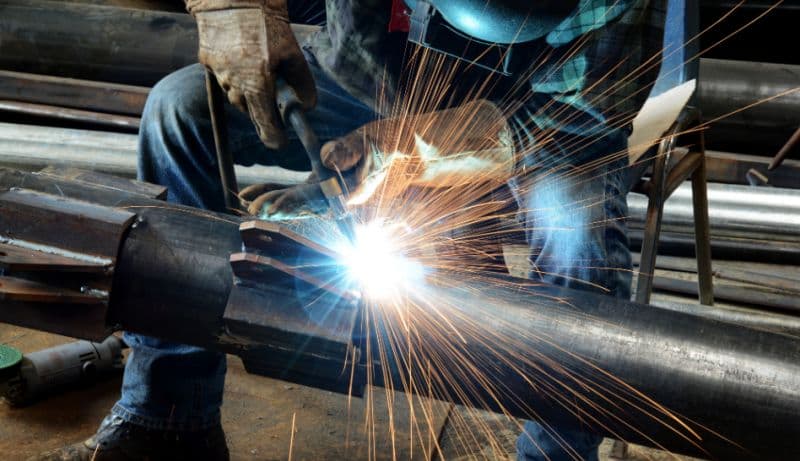
Equipment Manufacturing
The critical components of the of the complete pellet production line equipment are built in our own workshops in Asia. Additional equipment is manufactured by our worldwide network of reliable partners.
● Testing
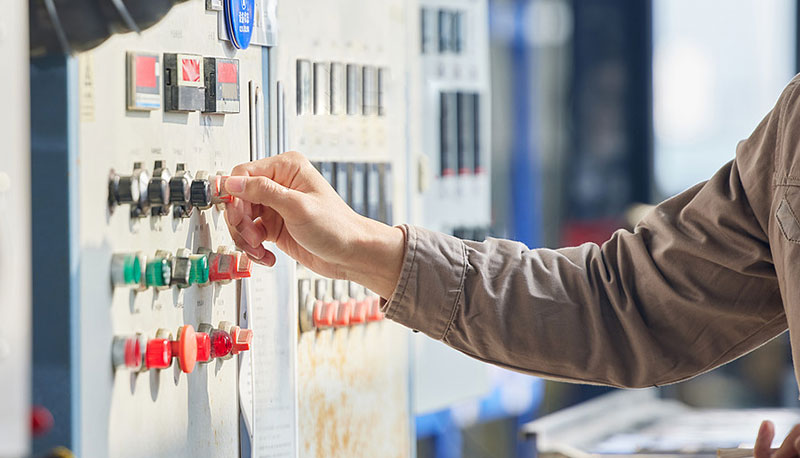
Quality Inspection & Testing
Before leaving the factory, all equipment will be inspected by the quality inspection department. We can also provide customers with testing services from a single machine to a complete pellet plant system, and provide you with real actual data for “worry-free use.”

● Delivery
Equipment Delivery
In equipment boxing and packaging, we adopt professional packaging and modular solutions to ensure the safe and non-destructive delivery of pellet plant equipment.
● Installation
Installation & Commissioning
Whether you choose your own subcontractor for the erection phase or you want to install everything together with us, a Richi supervisor will be around to make sure everything is mounted in a safe and thorough way.

● Training
Staff Training
We provide comprehensive training for the technicians of each project. We can also continue to provide support for the technicians during latter project operation.
● After-sales
Project Follow-Up
When everything is up and running our Richiers will help you further whenever needed. We are ready to answer your call 24/7.We’ll also visit you regularly to learn about your needs.
Who we are
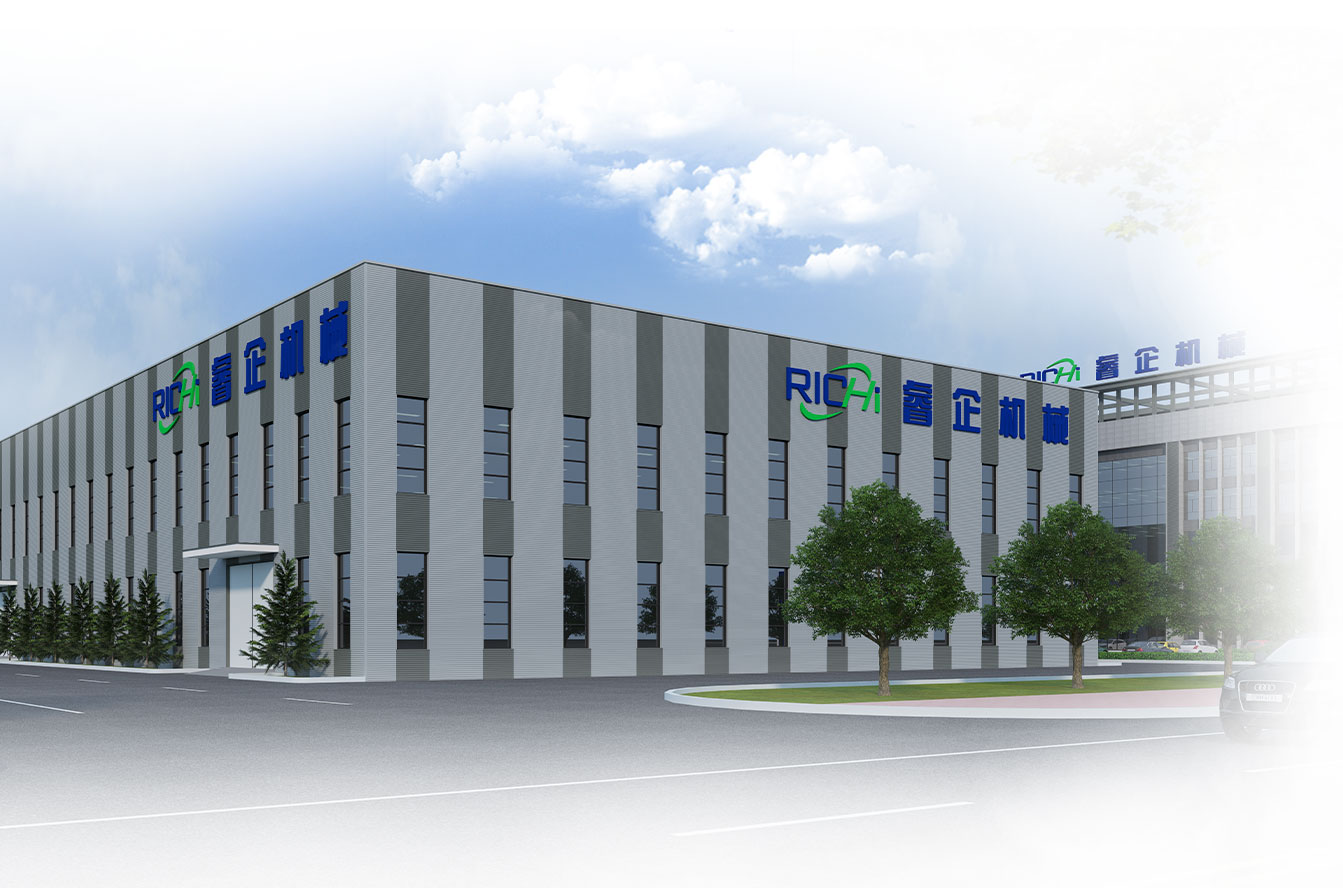
RICHI Machinery is one of the world’s leading suppliers of technology and services for the animal feed, aqua feed and pet food industries, also the largest pellet production line manufacturer in China.
Since 1995, RICHI’s vision to build a first-class enterprise, to foster first-class employees, and to make first-class contributions to society has never wavered.
In the past three decades, we have expanded our business to a wide range of areas, including animal feed mill equipment, aqua feed equipment, pet feed equipment, biomass pellet equipment, fertilizer equipment, cat litter equipment, municipal solid waste pellets equipment, etc.

1995
RICHI Established

2000+
Serving More Than 2000 Customers

120+
RICHI Employees

140+
Exported To 140 Countries