 0086-138 3838 9622
Aqua Fish Shrimp Eel Feed Production Line in Egypt
RICHI MACHINERY
project overview
We don’t normally write up every line we ship, but this one was different. The customer wasn’t just buying a 20t/h aqua fish shrimp eel feed production line. He was buying a solution to a problem that had already burned him twice with two different Chinese suppliers.
The headline is specific for a reason. It’s a 20t/h aqua fish shrimp eel feed production line in Egypt– but in reality, we configured it to handle a massive shift from his old business. He used to make 35,000 tons of eel feed. Now, he is going all in on shrimp and floating fish. Why? Margins. The eel market got crowded. Shrimp and tilapia? That’s where the volume is in Egypt right now.
This is not a theoretical case. Here are the real specs, the headaches we solved, and the numbers you actually care about.
20T/H
capacity
$1,850,000
investment
Egypt
location
Feed
project type
RICHI MACHINERY
Why Egypt?
Egypt is a fascinating market. You have the Nile Delta, a massive aquaculture industry growing at nearly 6-8% annually, and a government pushing for food self-sufficiency. The old way of feeding fish (raw, unprocessed waste) is dying. The new way is high-performance extruded feed.
This client owns a plot of land – 81,069 m2 total. He already had an old eel feed mill (just mixing and grinding). But he saw the trend. Shrimp farming is exploding along the Mediterranean coast, and tilapia farming in the Nile is becoming industrialized. He didn’t need a small pilot line. He needed industrial scale: 90,000 tons/year of pellets (sinking) and 20,000 tons/year of extruded (floating) feed.
That is a serious volume. It requires a serious line. Not just a machine, but a system.
RICHI MACHINERY
The Client’s Initial Problem (The “Real” Conversation)
When the client first called us, he didn’t ask for a “20t/h aqua fish shrimp eel feed production line.” He asked: “Why does my shrimp feed dissolve in 10 minutes? Why is my FCR (Feed Conversion Ratio) so high?”
His old fish feed production line had zero steam conditioning and poor die technology. The starch wasn’t gelatinized. For shrimp, that is a disaster. Shrimp are slow eaters. They graze. If the pellet doesn’t hold together for at least 2 hours, you are just polluting your own pond water.
For eel? Eel feed needs high stickiness and high water stability. For shrimp? We need fine particles, proper binding, and a specific sinking speed. For floating fish (tilapia/bass)? We need full expansion.
He needed three different outcomes from one machine. That is the engineering challenge.
RICHI MACHINERY
Our Solution: The 20t/h Multi-Functional Line
We didn’t just quote a standard extruder. We looked at his plant layout. He had space constraints. The new building (7-story working tower) was already designed, but the clearances were tight for a 20t/h capacity.
We designed a dual-line configuration inside the same footprint.
- Line A (90,000 tons per year – Pellets): Double-shaft paddle mixer -> Fine Grinder (SWFL-130) -> Fish Feed Pellet Mill -> Counterflow Cooler -> Crumblers.
- Line B (20,000 tons per year – Extruded): Double-shaft paddle mixer -> Ultra-fine grinder -> Twin-screw Extruder -> Belt Dryer -> Vacuum Coater.
The key was the steam system. We installed two 10t/h biomass boilers (one duty, one standby). Why biomass? Diesel is expensive in Egypt. Natural gas infrastructure doesn’t reach every industrial zone yet. Agricultural waste (rice straw, cotton stalks) is plentiful. He burns biomass pellets to make steam to make fish pellets. Full circle.
RICHI MACHINERY
Raw Materials & Local Sourcing
This is where a lot of foreign suppliers mess up. They design a line for US or Brazilian raw materials. Egypt has different specs.
The client’s main ingredients are:
- Soybean Meal: 20,000t/year. Mostly imported but available locally crushed.
- Fish Meal: 30,000t/year. High quality. He sources from local Red Sea catch remnants and imports from Peru.
- Wheat Flour: 20,000t/year. Used as a binder. Egyptian wheat has higher protein (13-14%) which is actually great for shrimp feed stability.
- Corn Starch: 10,000t/year. For the floating feed expansion.
- Peanut Meal: 10,000t/year. Cheaper protein source to keep costs down.
Challenge: The fish meal and peanut meal arrive with high moisture (up to 12%) and can be sticky during fine grinding. A standard screen would blind up in 20 minutes.
Our fix: We added a specific anti-clogging device to the SWFL-130 ultrafine grinders (12 units for the whole plant). We increased the screener surface area by 30% compared to our standard design. We also installed independent aspiration on each mill to pull the heat and moisture out immediately.
Here is the full consumption table we used for the mass balance:
| Raw Material | Annual Consumption (tons) | Function | Storage |
|---|---|---|---|
| Soybean Meal | 20,000 | Protein Base | Bulk in silos |
| Fish Meal | 30,000 | High-value Protein | Bagged in warehouse |
| Peanut Meal | 10,000 | Protein Filler | Bagged |
| Wheat Flour | 20,000 | Binder / Energy | Bulk |
| Starch | 10,000 | Expansion agent | Bagged |
| Self-made mix | 8,000 | Premix base | Bagged |
| Additives | 1,000 | Vitamins/Minerals | Bagged |
| Premix | 20,000 | Custom blend | Bagged |
| Biomass Pellets (Fuel) | 5,000 | Boiler fuel | Warehouse |
RICHI MACHINERY
The Equipment List (What We Actually Shipped)
We shipped exactly 68 main aqua feed mill equipment in 14 containers from Qingdao to Alexandria. Here is the core of the 20t/h aqua fish shrimp eel feed production line. No models listed (because nobody remembers the numbers), just the specs that matter.
| Section | Equipment Name | Qty | Key Spec / Feature |
| Cleaning | Cylinder Pre-cleaner | 14 | Removes stones and rope from bulk trucks |
| Permanent Magnetic Drum | 14 | 8000 Gauss, protects the hammer mills | |
| Grinding | Micro Grinder (SWFP66X) | 7 | For coarse grinding (800-1000 microns) |
| Ultra-fine Grinder (SWFL-130) | 20 | For shrimp feed (200-250 microns) | |
| Mixing | Double-shaft Paddle Mixer | 14 | 2 tons/batch, CV < 5% |
| Liquid Adding System | 2 | For fat and molasses | |
| Pelleting | Gear-driven Ring Die Feed Pellet Machine | 6 | 20t/h capacity, 110kW main motor |
| Conditioner | 6 | Long-term retention (3-4 minutes) for eel feed | |
| Extruding | Twin-screw Extruder | 6 | High-torque gearbox, specific for sinking/floating |
| Post-processing | Belt Dryer | 6 | 3-stage drying, moisture down to 10% |
| Vacuum Coater | 6 | For high-fat shrimp feed (up to 15% oil) | |
| Counterflow Cooler | 12 | 22×22 and 25×25 sizes | |
| Packaging | Auto Packing Scale (S-50) | 14 | 20kg and 5kg bags |
| Palletizing Robot (Kuka) | 7 | 1200 bags/hour |
RICHI MACHINERY
Process Deep Dive: Eel vs. Shrimp vs. Fish
A lot of people think “feed is feed.” It is not. The process for each is a knife-edge adjustment.
For the Shrimp Feed (Pelletizing technology):
The client wanted small pellets (1.2mm, 1.5mm, 2.0mm) that sink slowly and don’t disintegrate. The recipe is high in fish meal and wheat flour.
- The issue: High fish meal makes the feed “hard” to press.
- Our adjustment: We used a 3-layer conditioner. Steam injection in layers. We pushed the mash temperature to 95°C before it even hit the die. This pre-gelatinized the starch without destroying the amino acids.
- Result: Pellets with a PDI (Pellet Durability Index) of 98%. They lasted 3 hours in a water tank.
For the Eel Feed (Pelletizing + High fat):
Eel feed is different. It needs to be a paste-like pellet when wet. Very high stickiness.
- The issue: Standard dies create a hard pellet.
- Our adjustment: We used a “thin die” with a specific compression ratio (1:8 instead of 1:13). We also slowed the roll speed.
- Result: A softer, more doughy pellet that eels love.
For the Floating Fish Feed (Extrusion technology):
Tilapia and bass need floating feed to reduce waste.
- The issue: Starch content varies.
- Our adjustment: We ran the twin-screw extruder at a specific speed. The customer’s operator had to learn this. The first few tons were either too wet or sank like rocks. We spent 3 days on-site just tuning the screw profile and cutter knife speed.
- Result: 98% float for 30 minutes. Perfect.
Utilities & Energy Consumption
We don’t just sell the aqua feed production line; we sell the running cost. Here is what we calculated for him.
- Power: 1.6 million kWh/year total (expanded from 600k to 1.6M). The grid in his industrial zone is stable but prone to dips. We installed a soft starter on every motor over 45kW to prevent the whole plant from tripping.
- Water: The plant uses a closed-loop system. 1,780 tons/year for the boiler. 2 tons/day for the scrubber (which treats the dryer exhaust – it smells like fish meal, so we had to scrub it).
- Steam: 120 tons/day. This is the heart. No steam, no stable pellet.
- Fuel: 5,000 tons/year of biomass pellets. He buys them locally for $80/ton. Cheaper than diesel by a mile.
The Financial Reality Check (USD)
Let’s talk money. This is an Egyptian client. He is price sensitive but quality conscious. He has been burned by cheap lines before.
Total Equipment Cost (CIF Alexandria): $1,850,000 USD
This includes:
- All mechanical equipment (the list above).
- Control cabinets and cables (we used local cables to save shipping weight).
- The two 10t/h biomass boilers.
- 6 months of spare parts (dies, rollers, knives).
He spent another $500,000 locally on:
- Civil works (the 7-story tower and steel structures).
- Installation labor (we sent 3 supervisors; he provided 20 local fitters).
- Electrical installation (local contractor).
Total FIsh Feed Mill Project Investment: ~$2.35 Million USD.
Payback Calculation (rough, from his business plan):
- Raw material cost per ton: ~$350 USD.
- Market price for high-grade shrimp feed: ~$550 USD.
- Gross margin per ton: $200 USD.
- Annual production: 110,000 tons.
- Gross profit potential: $22 Million USD/year.
Obviously, he doesn’t pocket all that. There is overhead, distribution, taxes. But even at 10% net margin, he pays off the equipment in the first quarter. That is why this industry is hot.
RICHI MACHINERY
Installation & The “Sand” Problem
We shipped in January. The containers sat in Alexandria for 3 weeks due to customs clearance (always have a local broker). When we started the mechanical install in February, we hit a snag: dust.
Egyptian industrial zones are dusty. Sand got into the bearings of the bucket elevators before we even started them.
Our fix: We upgraded all the bearings to the “high-sealed” version on site. We also added compressed air purge lines to the control panels. A standard IP54 panel dies in a month there. We had to seal every single junction box.
RICHI MACHINERY
Training the Operators
This is the part that separates us from the “container-shippers.” We don’t just bolt it together and leave.
The client had 60 new staff (24/7 shifts, 300 days/year). They knew how to drive tractors, not how to read a PLC screen.
We spent 4 weeks on training.
- Week 1: Safety and raw material inspection. Showed them how to do the “hand squeeze test” for moisture.
- Week 2: The control room. Simulating jams. How to clear a die without killing the motor.
- Week 3: Maintenance. Die dressing. Roller adjustment. The guy running the pellet mill learned how to listen for the “cavitation” sound of a bad feed.
- Week 4: Recipe management. How to switch from 20% fish meal to 30% without changing the steam settings.
One anecdote: The trainee on the floating fish feed extruder machine panicked during a die blockage. Instead of stopping the feeder, he opened the main gate. Feed exploded everywhere. It took us 6 hours to clean the mash out of the dryer. We laughed about it later. It happens. Now he is the shift leader.
RICHI MACHINERY
Market Outlook: Why This Works in Egypt
You might wonder: Why build this in Egypt? Why not import feed from Turkey or Europe?
Three reasons:
- Transport costs: Feed is heavy. Hauling it across borders kills the margin. Local production always wins.
- Currency: The Egyptian Pound is volatile. If you can produce feed using local ingredients (wheat, corn, local fish meal), you are insulated from FX shocks. This client buys 80% of his ingredients in EGP.
- The Protein Gap: Egypt relies heavily on imports for meat. The government wants aquaculture to fill that gap. They are giving tax breaks for “modern agriculture” projects. A 20t/h aqua fish shrimp eel feed production line qualifies as “modern.”
The shrimp market alone is growing at 15% year over year. Most farms are still importing shrimp larvae from Thailand and feed from China. A reliable local supplier with high-quality sinking pellets will clean up.
RICHI MACHINERY
Why RICHI over the “Cheap Guys”?
We lost the first round of bidding to a lower-priced supplier. He bought a line from a trading company. It was a disaster. The extruder couldn’t hold pressure. The dryer had hot spots. The pellets burned on the outside but were raw inside.
When he came back to us, he didn’t ask for the price first. He asked: “Can you guarantee the retention time in the conditioner?”
Yes. We can. Because we do the math. We calculate the volume, the steam injection rate, and the shaft speed specifically for his altitude and his humidity.
We are not just selling a box. We are selling:
- Process design: We laid out the 7-story tower so gravity does 50% of the conveying work, saving him $50,000/year in electricity.
- Steam system engineering: Proper trapping, proper insulation. If you lose steam temperature, you lose pellet quality.
- Local support: We don’t have an office in Cairo yet (maybe next year), but we have a parts depot in Alexandria.
RICHI MACHINERY
The Bottom Line
This 20t/h aqua fish shrimp eel feed production line is running right now, producing 40 tons every 2 hours. The client just ordered a second line for 2025.
He started with eel. Then shrimp. Now he is talking about pet food.
If you are looking at the aquaculture market – whether you are in Egypt, Algeria, Saudi Arabia, or Nigeria – the math is the same. The demand is there. The local raw materials are there. The only missing piece is the engineering to put it together.
Looking for a 20t/h aqua fish shrimp eel feed production line? Stop looking at spec sheets. Look at the layout. Look at the steam system. Look at the fine grinder.
We design these lines for 24/7 operation. No breaks. No excuses.
Contact us with your raw material list and your target moisture. We will send you a layout in 48 hours.
● RICHI MACHINERY
RICHI Service

● Consulting
Customer Consultation
We want to have a deep understanding of your industrial process, to know your exact needs of feed, wood, biomass, fertilizer or other pellet processing.

● Design
biomass Pellet Plant Design
Based on your unique situation and industrial process, we will tailor complete pellet plant you need, and inform you of every additional detail that could facilitate operation, minimize total cost.
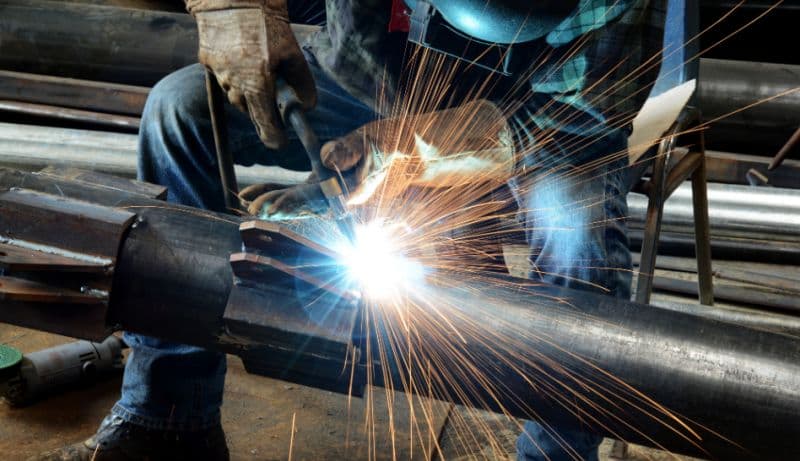
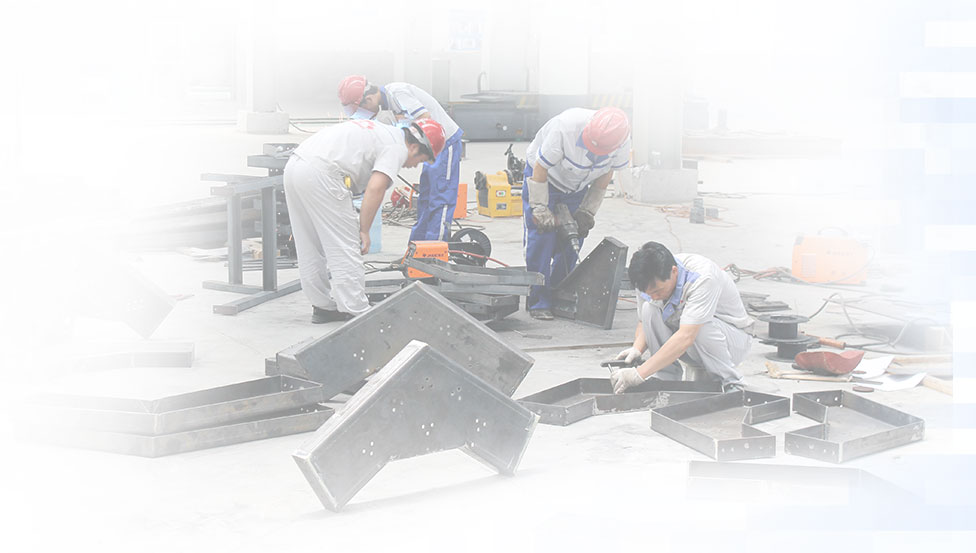
● Manufacturing
Equipment Manufacturing
The critical components of the of the complete pellet production line equipment are built in our own workshops in Asia. Additional equipment is manufactured by our worldwide network of reliable partners.
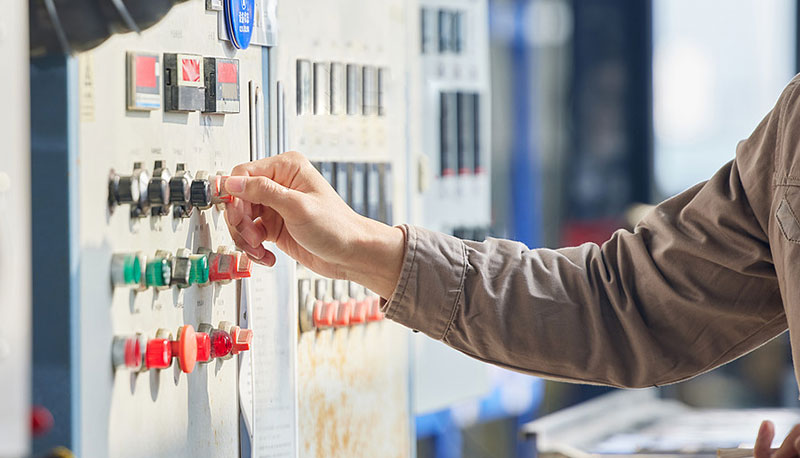
● Testing
Quality Inspection & Testing
Before leaving the factory, all equipment will be inspected by the quality inspection department. We can also provide customers with testing services from a single machine to a complete pellet plant system, and provide you with real actual data for “worry-free use.”

● Delivery
Equipment Delivery
In equipment boxing and packaging, we adopt professional packaging and modular solutions to ensure the safe and non-destructive delivery of pellet plant equipment.
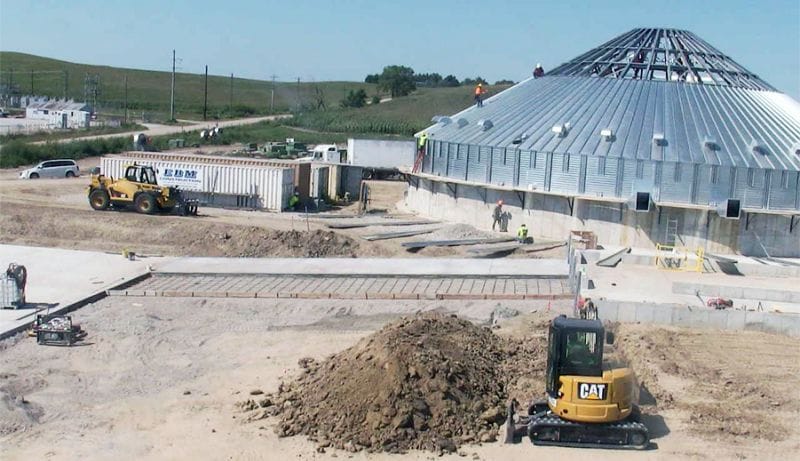
● Installation
Installation & Commissioning
Whether you choose your own subcontractor for the erection phase or you want to install everything together with us, a Richi supervisor will be around to make sure everything is mounted in a safe and thorough way.

● Training
Staff Training
We provide comprehensive training for the technicians of each project. We can also continue to provide support for the technicians during latter project operation.
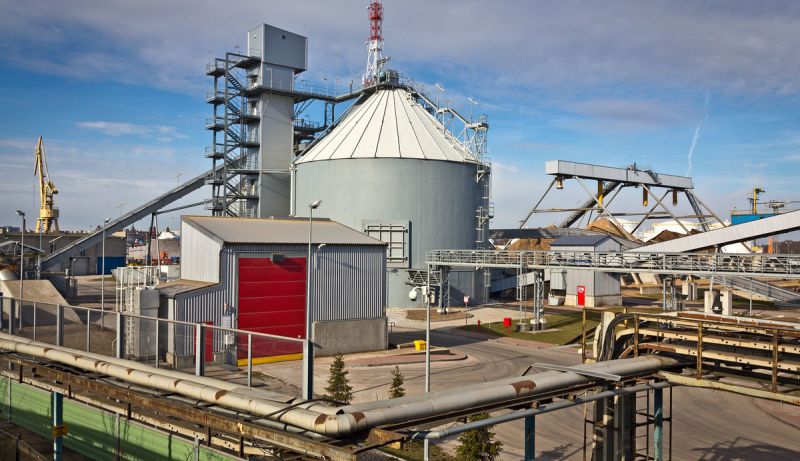
● After-sales
Project Follow-Up
When everything is up and running our Richiers will help you further whenever needed. We are ready to answer your call 24/7.We’ll also visit you regularly to learn about your needs.
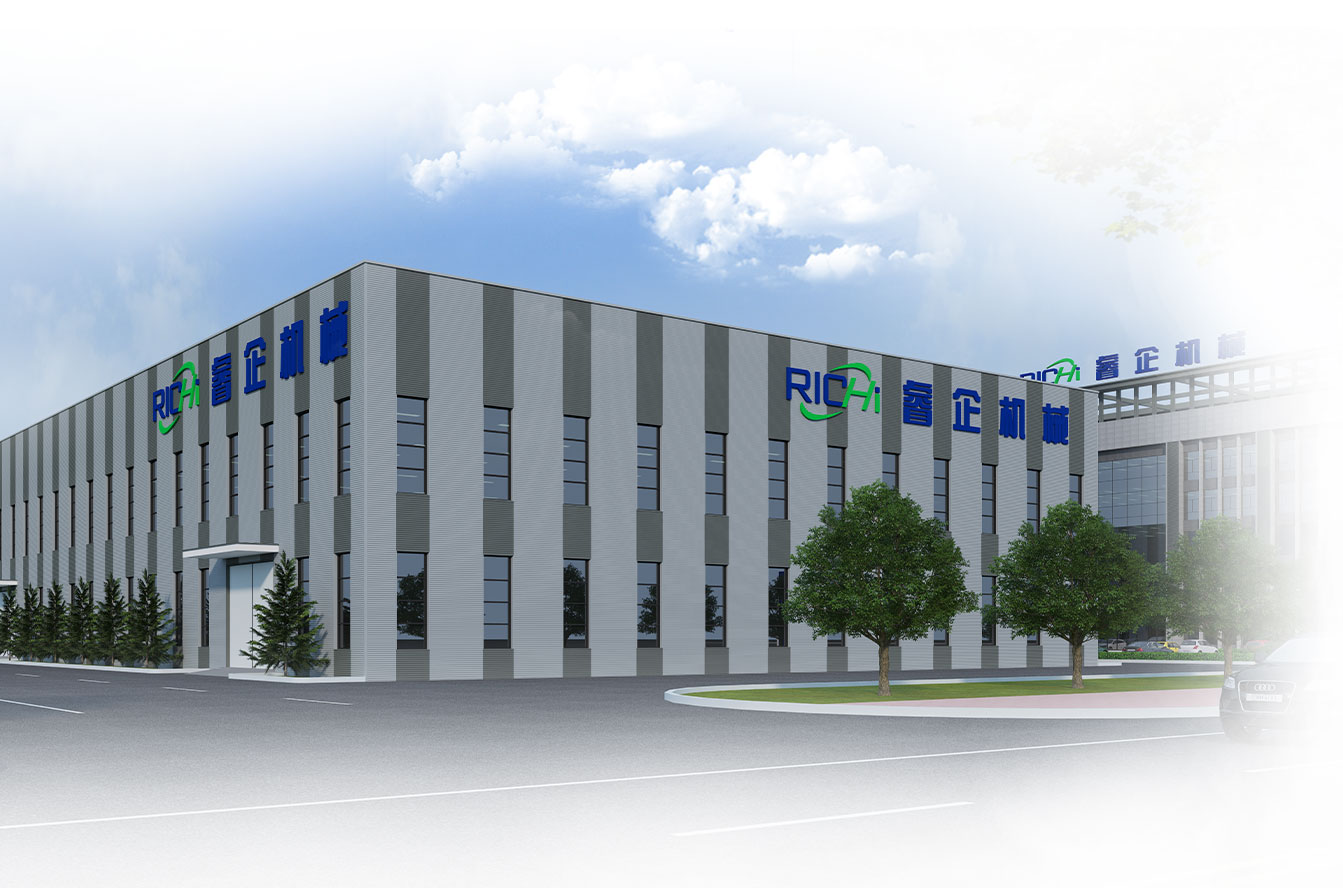
Who we are
RICHI Machinery is one of the world’s leading suppliers of technology and services for the animal feed, aqua feed and pet food industries, also the largest pellet production line manufacturer in China.
Since 1995, RICHI’s vision to build a first-class enterprise, to foster first-class employees, and to make first-class contributions to society has never wavered.
In the past three decades, we have expanded our business to a wide range of areas, including animal feed mill equipment, aqua feed equipment, pet feed equipment, biomass pellet equipment, fertilizer equipment, cat litter equipment, municipal solid waste pellets equipment, etc.

1995
RICHI Established

2000+
Serving More Than 2000 Customers

120+
RICHI Employees

140+
Exported To 140 Countries