0086-138 3838 9622
3 T/H agriculture biomass pellets line in Egypt
RICHI MACHINERY
Project overview
This agriculture biomass pellets line in Egypt was developed for an agricultural company processing dry wood residues, peanut shells and straw into fuel pellets. The supplied record dates the investment decision to June 2024 and gives a 20,000-tonne annual target. The reported project investment appears once in the overview card; no verified cost breakdown was supplied.
The project turns specified residues into a denser fuel for buyers whose combustion equipment can accept the actual blend. Agricultural ingredients change ash and combustion behaviour, so the product is not automatically equivalent to premium wood pellets. No carbon-neutrality, zero-emission or guaranteed economic-return claim is made.
3 T/H
capacity
US$210,000
investment
Egypt
location
Biofuel
project type
RICHI MACHINERY
Annual programme and operating basis
The biomass pellet production line uses existing workshop and office buildings, with process equipment and supporting services added for the residue blend. “New project” refers to the production activity, not a newly constructed factory shell. The dry-feed reference below has no main dryer, steam-conditioning system or routine process-water addition.
The source records 3,000 m² of land, 2,071 m² of buildings and a January 2025 commissioning date. It assigns ten staff and 7,200 scheduled hours over 300 days, which means round-the-clock operation on those days. At 3 T/H accepted output, the annual programme needs about 6,667 productive hours, leaving about 533 hours for interruptions. These are corrected engineering calculations, not verified operating logs; the stated 2.5-year payback is removed because its financial inputs were not supplied.
| Project item | Recorded / reference quantity | Boundary |
|---|---|---|
| Accepted fuel pellets | 20,000 tonnes/year | Annual programme |
| Net output | 3 T/H | Reference, not a measured test |
| Productive hours | About 6,667/year | Within 7,200 scheduled hours |
| Scheduled operation | 300 days ×24 hours | Continuous-shift staffing required |
| Source staffing | Ten people total | Coverage not established for round-the-clock duties |
| Land / buildings | 3,000 /2,071 m² | Separate quantities |
| Domestic water | 150 m³/year | Cleaning, services and initial firewater additional |
RICHI MACHINERY
Existing facilities and stock zones
The building and stock allocations below are retained as layout context. The raw and finished zones are inside the 2,000 m² workshop and are not additional buildings. Their usable storage capacities require bulk density, stack height, access and segregation checks.
| Facility / zone | Recorded area | Scope |
|---|---|---|
| Workshop | 2,000 m²; one floor | Existing building |
| Raw-material zone | 200 m² | Inside workshop |
| Finished-product zone | 200 m² | Inside workshop |
| Office | 50 m² | Existing administration space |
| Distribution room | 21 m² | Electrical-service building |
| Buildings total | 2,071 m² | Workshop +office +distribution |
| Remaining land | 929 m² | Before detailed access and service allocation |
| Dust / noise controls | Design not supplied | Local extraction, suitable protection and verified performance needed |
RICHI MACHINERY
Residue supply and material balance
The original ingredient entries total 20,060 tonnes: 16,610 wood, 2,300 peanut shells and 1,150 straw. This corresponds to about 83%, 11% and 6% by incoming mass, but is a purchasing plan rather than a proven fuel recipe. The reference balance below recalculates receipts at 12% incoming moisture, 10% final moisture and 1% external receiving reject.
| Original purchasing entry | Tonnes/year | Reference acceptance |
|---|---|---|
| Clean miscellaneous wood | 16,610 | Untreated; exclude coated/composite/contaminated timber |
| Peanut shells | 2,300 | Dry; minimize soil, stones and foreign matter |
| Straw | 1,150 | Identify crop and form; dry bales or chopped fibre |
| Original receipts total | 20,060 | Insufficient at selected balance assumptions |
| Recalculated receipts | 20,661.16 | 12% moisture; 1% external reject |
| Reference water | 150 m³/year | Personnel only |
| Source electricity budget | 2.8 million kWh/year | Not a measured operating result |
| Annual mass reference | Tonnes | Moisture / boundary |
|---|---|---|
| Incoming prepared residues | 20,661.16 | 12% wet-basis moisture |
| External receiving reject | 206.61 | 1% of incoming mass, same moisture assumed |
| Fresh accepted feed | 20,454.55 | 18,000 dry matter +2,454.55 water |
| Internal fines return | 400 | 2% of net pellets at 10% moisture |
| Gross press feed | 20,854.55 | About 3.13 T/H over productive hours |
| Gross cooled screened pellets | 20,400 | Includes circulating fines |
| Accepted product | 20,000 | 18,000 dry matter +2,000 water |
| Forming / cooling evaporation | 454.55 | No dryer or steam addition |
| External output total | 20,661.16 | 20,000 product +206.61 reject +454.55 water |
On these assumptions, the original 20,060 tonnes of receipts yield about 19,418 tonnes of product, leaving a shortfall of about 582 tonnes. Retaining the original supply proportions only as a procurement reference requires approximately 17,107.77 tonnes of wood, 2,368.93 tonnes of peanut shells and 1,184.46 tonnes of straw. Actual ingredient moisture, contaminants and blend performance must determine final purchase specifications.
A 12% incoming reference is not a guarantee that all field material needs no drying. Wet straw, recently cut wood or rain-soaked shells require a different preparation and heat balance. No thermal-drying fuel, wet washing or uncounted binder is included in the present route. Ash, chlorine, sulfur, nitrogen, energy value, durability and combustion behaviour require representative testing; this mixed agricultural product is not automatically premium wood fuel.
RICHI MACHINERY
Minimum equipment duties for the dry blend
One MZLH768 with a specified 315 kW main drive is the minimum reference press for 3 T/H accepted product. Gross press duty is about 3.13 T/H once internal fines and moisture removal are included. A smaller 3 T/H gross machine would not meet that net target. The three unidentified source presses are not retained as a mandatory purchase; the revised package remains subject to blend and die trials.
| Process duty | Minimum reference selection | Performance boundary |
|---|---|---|
| Wood primary reduction | One 55 kW chipper/reducer position | ≥3.2 T/H on specified wood; shell and straw bypass |
| Straw preparation | 22 kW fibre-preparation allowance | ≥0.3 T/H on accepted straw form; bale handling to confirm |
| Fine grinding | One 110 kW working position | ≥3.5 T/H on actual blend; initial 1–3 mm distribution |
| Blend dosing / transfer | Included in 30 kW conveyance allowance | Weighed recipe; actual density and flow checked |
| Pellet press | One MZLH768; specified 315 kW | 3 T/H net; about 3.13 T/H gross |
| Press feeding | 7.5 kW allowance | Stable anti-bridging feed |
| Active cooling | 22 kW package allowance | ≥3.5 T/H hot pellets |
| Screening / compatible return | 5.5 kW allowance | ≥3.5 T/H; 2% fines sizing assumption |
| Local dust extraction | 30 kW allowance | Matched circuits; source two-collector count is not a verified design |
| Bagging / closing | One 7.5 kW package allowance | ≥200 completed 25 kg bags/hour; 120/hour required |
| Compressed air | 11 kW allowance | Matched service duty |
| Controls / lighting | 7.5 kW | 623 kW total connected reference |
The smallest adequate main-machine arrangement is one selected press rather than three unidentified presses. The source PDJ and JL codes do not establish a matched capacity schedule, so the reference uses explicit duties. Final equipment, die and feeding arrangements must be confirmed on representative wood/shell/straw trials; they are not claimed as the actual delivered nameplates.
RICHI MACHINERY
Material-specific process route
The agriculture biomass pellets line in Egypt needs different preparation routes for wood, shells and straw before the common press. Confirm incoming moisture and foreign matter, prepare each material to the approved particle distribution, blend by weight, then pellet, cool, screen and pack. The reference is a dry-feed process, not a line capable of accepting unrestricted wet field residues.
1) Material-specific preparation
Clean wood offcuts pass through a chipper or primary reducer before fine grinding. Remove metal and other contaminants first. Peanut shells generally bypass wood chipping, while baled straw needs opening, twine removal and fibre-appropriate cutting. Suitable fine wood residue can bypass unnecessary reduction after inspection.
2) Fine grinding and blend control
The original instruction to feed 600 mm material directly to the press is incorrect. Use an initial 1–3 mm particle-distribution target and verify it by sieve analysis on the selected blend. Hammer-mill screen aperture is not the final particle size. Weigh wood, shells and straw to the approved recipe; the annual supply proportions do not alone establish uniform hourly blending.
3) Densification and moisture control
The biomass pellet mill receives a stable blend around the 12% reference moisture. Natural binding and die conditions must be tested; no binder, fragrance or liquid addition is included in this balance. A preliminary 6–10 mm pellet diameter range must be agreed with the fuel buyer. The highest-straw or most difficult blend determines the guaranteed throughput.
4) Cooling, grading and dispatch
Cool hot pellets actively, grade out fines and return only compatible clean material. Use a preliminary release temperature within 5°C above ambient and final moisture no more than 10%, confirmed for the actual climate and storage conditions. A 2% internal-fines allowance is used for sizing, not as a measured product test. Pack only after cooling and release checks.
At 25 kg per bag, the annual programme needs 800,000 bags, with 120 completed bags/hour at 3 T/H. A 200-bag/hour reference filling-and-closing route provides handling margin, subject to operator and pallet-movement trials. If bulk bags are selected instead, weighment, lifting and stock arrangements need their own configuration.
RICHI MACHINERY
Buildings, stock and vehicle access
1) Facility allocation
The reported land and building arithmetic closes: 2,000 m² workshop, 50 m² office and 21 m² distribution room total 2,071 m², leaving 929 m² before roads, loading, services, setbacks and any landscaping. The workshop is north of the site and the office west of it according to the supplied description; no verified site survey was provided.
The workshop is listed as 50 m ×40 m ×8 m high. Both 200 m² stock zones sit within it, leaving 1,600 m² for processing, handling, access and other internal duties. Equipment clearances, cooler height, duct routes and structural loads still need checking on actual drawings; the 8 m building height does not itself prove the full arrangement fits.
Egypt mixed-residue stock-turnover constraint: at an illustrative 0.2 tonnes/m³ loose density, two-metre average pile height and 60% floor use, the 200 m² raw zone holds about 48 tonnes. Reference receipts average about 69 tonnes per working day, so this is less than one day of buffer. Seasonal straw and shell purchases therefore need external supplier storage, more approved space or reliable staggered deliveries.
- Use the existing 2,000 m² workshop for separated preparation, pressing, finishing and stock duties.
- Treat the 50 m² office as administration space, without assuming staff accommodation.
- Check vehicle turning and unloading space against actual receipts and dispatch rather than assuming low traffic.
2) Layout checks still required
- Verify wind conditions and extraction outlets from actual site information; no unprovided wind map is treated as evidence.
- Assess noise at workstations and boundaries after selecting machinery and controls.
- Keep primary reduction, branch preparation and the press feed route connected with cleanable, guarded transfers.
- Separate pedestrian access from loaders, conveyors and finished-feed vehicles.
- Verify fire access, dust-system protection, maintenance space and stock limits before approving the compact layout.
The 200 m² finished zone has an illustrative geometric capacity of 156 tonnes at 0.65 tonnes/m³, two-metre height and 60% floor use, or about 2.3 average dispatch days. Actual bag stacking, floor ratings, quarantine and aisles can reduce that amount. Incoming and outgoing traffic each averages roughly three loaded trips per day at a 25-tonne payload; usable vehicle access must be demonstrated rather than inferred.
The listed main-building dimensions and floor areas are shown below. No additional staff accommodation is inferred from the source’s general phrase “living area”. The 50 m² office is an administration allocation, not a dormitory.
| Building | Dimensions / structure | Floor area m² |
|---|---|---|
| Workshop | 50 ×40 ×8 m; one-floor steel structure | 2,000 |
| Office | 10 ×5 ×3.5 m; one-floor steel structure | 50 |
| Distribution room | 7 ×3 ×3.5 m; one-floor steel structure | 21 |
| Total | Source dimensions and areas reconcile | 2,071 |
RICHI MACHINERY
Public works
(1) Power supply
Egypt pellet-line transformer duty check: preliminary connected load is 623 kW, including the 315 kW press, 55 kW wood-reduction allowance, 110 kW fine grinder, 22 kW fibre-preparation allowance and matched finishing services. A 250 kVA transformer provides only about 212.5 kW at 0.85 power factor, below the selected press main drive alone. A preliminary 1,000 kVA allocation gives about 850 kW at that factor; starting currents, simultaneous duties and utility approval require a full electrical study.
At an assumed 420–500 kW average productive demand over about 6,667 hours, production electricity is approximately 2.8–3.33 million kWh/year before non-production services. The source 2.8 million kWh lies at the low end of that reference, but is not a meter record. No main-dryer fuel or steam-boiler demand is included in this dry-feed configuration.
(2) Water supply
Municipal water serves personnel and separately assessed services. The source 150 m³/year equals 50 litres per person per working day for ten people over 300 days. That is a personnel planning allowance, not proof that continuous-shift welfare, cleaning and firewater needs are covered. At an explicit 80% domestic return factor, sanitary drainage is 120 m³/year. Identify the actual approved outlet; do not count it as zero wastewater merely because the material route is dry.
RICHI MACHINERY
Commercial checks for the Egyptian mixed-residue project
The business case depends on contracted fuel buyers and a consistent residue supply. Wood dominates the supplied procurement plan, so a general statement that Egypt has agricultural residues does not establish enough suitable wood for this particular plant. Evaluate fuel performance, logistics and price for the actual blend.
1. Buyers and fuel acceptance
(1) Buyer equipment and fuel requirements
- Qualify buyers whose boilers can handle the tested blend and ash characteristics.
- Compare useful heat cost with the buyer’s actual alternatives and delivery conditions.
(2) Applicable operating requirements
- Confirm local site, product and environmental obligations for the actual operation.
- Do not apply general renewable-energy targets as proof of a subsidy or carbon-neutral product.
(3) Delivered-market comparison
- Agree the exact buyer specification and acceptance tests before promising export sales.
- Use actual freight and inland delivery quotations for the named destination.
2. Supply contracts and seasonality
(1) Clean wood, shell and straw supply
- Contract for verified clean wood as well as agricultural residues.
- Check moisture, soil contamination and crop-specific straw properties rather than assuming unlimited low-cost feedstock.
(2) Seasonal stock and delivery planning
- Schedule deliveries and supplier stock against the small on-site buffer.
- Seasonal straw and peanut-shell collection require storage and working-capital planning.
3. Trials and service capacity
(1) Blend-based performance trials
- Trial the highest-fibre approved blend through preparation, pressing, cooling and packing together.
- Keep wear parts and maintenance access compatible with the annual running hours.
(2) Site services and funding scope
- Check the revised electrical duty and actual supply connection before equipment procurement.
- Use confirmed funding and quotations; no tax incentive or investment subsidy is assumed.
4. Delivered cost and customer fit
(1) Delivered cost and competition
- Compare delivered price and tested fuel quality against competing products.
- Include rejected loads, bags, electricity, wear parts and customer credit in the cost model.
(2) Customer fuel-handling fit
- Confirm hopper flow, combustion control and ash removal with the receiving plant.
- The intended fuel buyer may need equipment changes; no universal drop-in substitution is claimed.
5. Measured recovery and staffing
(1) Measured residue recovery
- Measure usable residue recovery and rejected contamination separately.
- No quantified carbon reduction or pollution-elimination claim is made without the appropriate assessment.
(2) Staffing and supplier relationships
- Ten people over three eight-hour shift periods is only about three people per shift before leave and relief.
- Verify cover for receiving, loaders, process control, packing, quality checks and maintenance; the source does not establish that staffing is sufficient.
6. Operating requirements and price sensitivity
(1) Requirements to confirm locally
- Confirm the actual applicable permits and connection requirements with the local competent parties.
- Do not include unverified policy benefits in project payback.
(2) Price and order sensitivity
- Test the cost model against residue-price, electricity-tariff and order-volume changes.
- Use firm offtake commitments and a realistic stock plan instead of assuming continuous sales.
For an agriculture biomass pellets line in Egypt, provide the incoming residue forms and moisture, proposed blend, buyer fuel limits, annual programme, stock requirements and electricity capacity. These inputs support a matched biomass pellet project assessment. Qingdao can serve as the equipment origin port; the Egyptian destination port should follow the confirmed inland location and freight route. No subsidy, fixed margin, guaranteed payback or automatic export acceptance is assumed.
● RICHI MACHINERY
RICHI Service

● Consulting
Customer Consultation
We want to have a deep understanding of your industrial process, to know your exact needs of feed, wood, biomass, fertilizer or other pellet processing.

● Design
biomass Pellets line Design
Based on your unique situation and industrial process, we will tailor complete pellet plant you need, and inform you of every additional detail that could facilitate operation, minimize total cost.
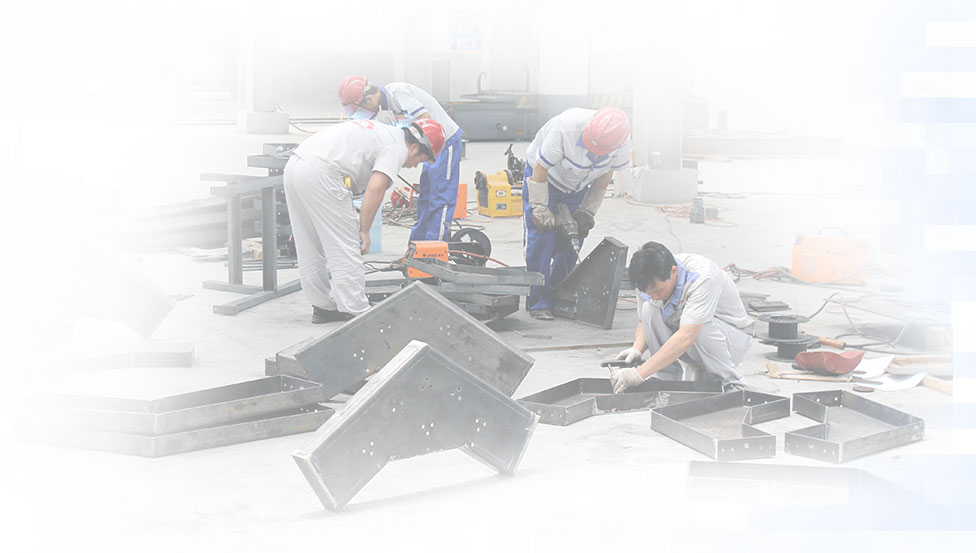
● Manufacturing
Equipment Manufacturing
The critical components of the of the complete pellet production line equipment are built in our own workshops in Asia. Additional equipment is manufactured by our worldwide network of reliable partners.

● Testing
Quality Inspection & Testing
Before leaving the factory, all equipment will be inspected by the quality inspection department. We can also provide customers with testing services from a single machine to a complete pellet plant system, and provide you with real actual data for “worry-free use.”

● Delivery
Equipment Delivery
In equipment boxing and packaging, we adopt professional packaging and modular solutions to ensure the safe and non-destructive delivery of biomass fuel pellet plant equipment.
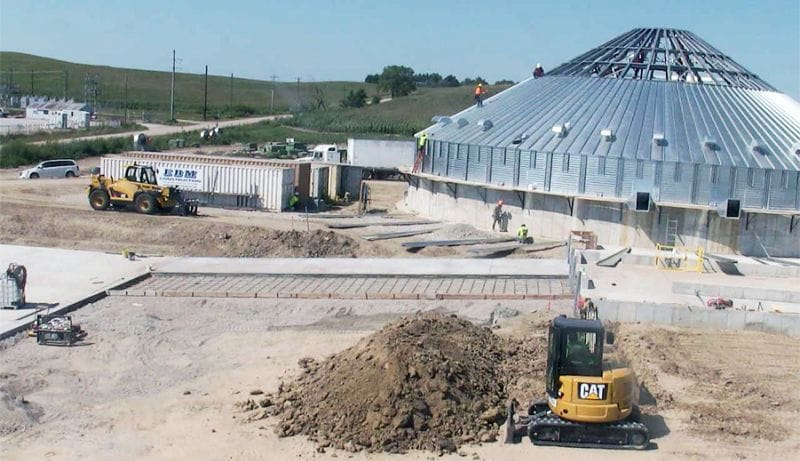
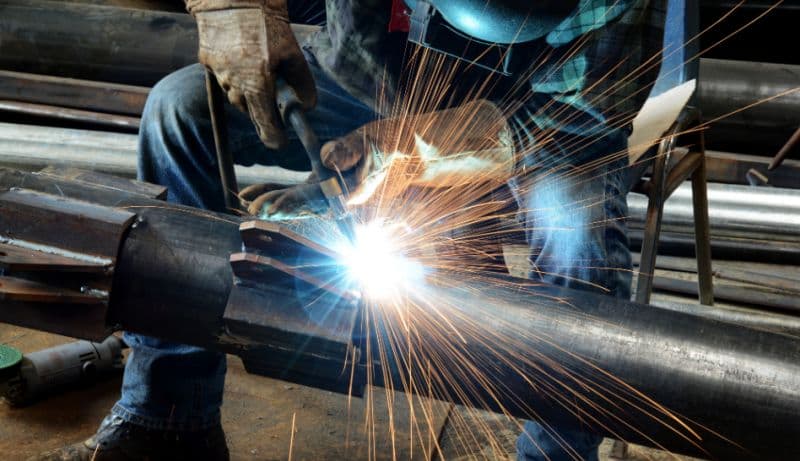
● Installation
Installation & Commissioning
Whether you choose your own subcontractor for the erection phase or you want to install everything together with us, a Richi supervisor will be around to make sure everything is mounted in a safe and thorough way.

● Training
Staff Training
We provide comprehensive training for the technicians of each agriculture biomass pellets line in Egypt project. We can also continue to provide support for the technicians during latter project operation.
● After-sales
Project Follow-Up
When everything is up and running our Richiers will help you further whenever needed. We are ready to answer your call 24/7.We’ll also visit you regularly to learn about your needs.
Who we are
RICHI Machinery is one of the world’s leading suppliers of technology and services for the animal feed, aqua feed and pet food industries, also the largest pellet production line manufacturer in China.
Since 1995, RICHI’s vision to build a first-class enterprise, to foster first-class employees, and to make first-class contributions to society has never wavered.
In the past three decades, we have expanded our business to a wide range of areas, including animal feed mill equipment, aqua feed equipment, pet feed equipment, biomass pellet equipment, fertilizer equipment, cat litter equipment, municipal solid waste pellets equipment, etc.

1995
RICHI Established

2000+
Serving More Than 2000 Customers

120+
RICHI Employees

140+
Exported To 140 Countries