 0086-138 3838 9622
Wood Pellet Production Facility Project in Malaysia
RICHI MACHINERY
Project Overview
A 2t/h wood pellet production facility project in Malaysia was commissioned in early 2024 for a client in the state of Negeri Sembilan, about 60km south of Kuala Lumpur. The facility processes 16,300 tons of biomass feedstock annually into 16,000 tons of wood biomass pellets meeting ENplus A2 standards.
The biomass pellet plant operates 24 hours per day (three shifts), 300 days per year, with a 20-person crew. Total project investment was $1,480,000 USD, including a newly constructed 1,500m² production building, equipment, and local installation.
What makes this 2t/h wood biomass pellet project in Malaysia different from most lines we’ve built is the feedstock strategy.
The client uses four different raw materials: oil palm frond residue – 3,200 t/yr, rubberwood shavings – 3,200 t/yr, sawdust from local sawmills – 3,900 t/yr, and rubberwood offcuts – 6,000 t/yr).
That’s 16,300 tons total input. Most pellet plants in Southeast Asia run on a single feedstock – usually sawdust or palm kernel shell. This client chose a blend for a specific reason: price stability and pellet quality optimization.
2T/H
capacity
$185,000
investment
Malaysia
location
Fuel
project type
RICHI MACHINERY
The First Call – “I Have Access to Four Different Materials”
The inquiry came in July 2023. The client had been running a small rubberwood processing business for eight years. He knew the biomass market in Malaysia was growing. The government had been pushing renewable energy targets under the National Biomass Strategy 2020-2030.
But he also saw a problem: most pellet producers relied on one feedstock, and when that supply chain got disrupted (flooded roads, labor shortages, price spikes), their plants sat idle.
His question wasn’t “how much for a biomass fuel pellet machine?” It was: “Can you design a 2t/h wood pellet production facility project in Malaysia that can handle four different materials without constant manual adjustments?”
That’s a smart question.
We spent two weeks on calls and material samples. He shipped us 5kg bags of each feedstock. We tested them in our lab for moisture content, bulk density, fiber length, and ash content. Here’s what we found:
| Feedstock | Moisture (as-received) | Bulk Density (kg/m³) | Ash Content | Challenge |
|---|---|---|---|---|
| Oil palm frond residue | 22-28% | 120 | 4-6% | High moisture, fibrous |
| Rubberwood shavings | 12-15% | 180 | 1-2% | Fluffy, bridges in bins |
| Sawdust | 10-14% | 220 | 1-1.5% | Consistent, easy |
| Rubberwood offcuts | 15-20% | 350 | 1.5-2% | Needs crushing first |
The oil palm frond residue was the problem child. Too wet. Too fibrous. But it was also the cheapest – basically free from nearby palm oil mills. The client wanted to use at least 20% palm material to keep input costs down.
So the 2t/h wood pellet production facility project in Malaysia needed a pre-drying step for the palm material. But the client didn’t want a mechanical dryer (too expensive to run). We compromised: a covered drying pad with a forced-air floor (low-speed fans, no heat). Palm frond residue spreads 15cm thick, turned twice daily, drops from 28% to 18% moisture in 48 hours. Not fast. But operating cost is near zero.
RICHI MACHINERY
Raw Materials – What Actually Comes In
The client set up supply agreements with four local sources within 50km of the plant.
| Raw Material | Annual Input (tons) | As-Received Moisture | Cost (USD/ton) | Source |
|---|---|---|---|---|
| Oil palm frond residue | 3,200 | 22-28% | $12 | Palm oil mill, 35km |
| Rubberwood shavings | 3,200 | 12-15% | $28 | Furniture factory, 20km |
| Sawdust | 3,900 | 10-14% | $25 | Three local sawmills |
| Rubberwood offcuts | 6,000 | 15-20% | $18 | Rubberwood processing plant, 15km |
| Total | 16,300 | Avg 16% | $21 avg |
The palm material is the wild card. Malaysia has millions of hectares of oil palm plantations. Every mill produces 15-20 tons of frond residue per day. Most of it gets left to rot or burned. The client pays a small fee for collection and delivery – basically covering trucking costs.
The rubberwood offcuts are the backbone. Malaysia is one of the world’s largest producers of rubberwood furniture. The offcuts are clean (no paint, no glue), dense, and consistent. The client gets a guaranteed 500 tons per month from one large processing plant.
Total input exactly matches output (16,300 in, 16,000 out) plus moisture loss (about 299 tons) and dust collected (4.8 tons recycled back into production).
RICHI MACHINERY
Process Flow – How the 2t/h Wood Pellet Production Facility Project in Malaysia Actually Runs
The palm wood pellet production line is designed for flexibility. Here’s the step-by-step, including the adjustments we made for the blended feedstock.
Step 1 – Feedstock Reception and Sorting
Four separate receiving bays. Palm material goes to the drying pad. Offcuts go to the crusher. Shavings and sawdust go to storage bins. Workers visually inspect each load for contamination (rocks, metal, plastic). Rejection rate is about 0.5%.
Step 2 – Pre-Crushing (Offcuts Only)
The 6,000 tons of rubberwood offcuts need size reduction before the main hammer mill. A BL218 crusher (75kW) breaks them down to 30-50mm chips. This crusher runs 12 hours per day.
Step 3 – Drying (Palm Material Only)
The covered drying pad is 200m² with a perforated concrete floor. Three 1.5kW fans push ambient air up through the material. The client turns the pile twice daily with a front-end loader. Drying time: 48 hours in dry season, 72 hours in wet season. Target moisture after drying: 16-18%.
Step 4 – Blending
A automated blending system with four variable-speed screw feeders. The operator sets the blend ratio on a touchscreen: 20% palm, 20% shavings, 24% sawdust, 36% offcuts. Total feed rate to the hammer mill is about 2.3 t/hr. The system has moisture sensors on each feeder – if one feedstock is too wet, the PLC automatically reduces its proportion and increases another.
This took three weeks to tune. The first week, the sensors kept misreading because the palm material was clumping. We had to add a vibrating screen before the palm feeder to break up clumps.
Step 5 – Fine Grinding
One 110kW hammer mill running in parallel. It has a 6mm screen. Material from the blending system splits evenly between them. The mill produce a powder with 95% passing through a 2mm screen. Dust collection at this point captures about 80% of the total dust load.
Step 6 – Pelleting
One EFB pellet machine. The client runs mill at 70-80% capacity and keeps one as a hot standby. Die size: 8mm for industrial-grade fuel. The rubberwood blend requires a die with a compression ratio of 1:5.5 (65mm effective length). We tried a shorter die first (1:4.5) – pellets came out too soft, PDI was only 92%. Switched to the longer die, PDI improved to 97.5%.
Step 7 – Cooling
Pellets exit palm wood pellet mill at 85-95°C. A common belt conveyor carries them to a counterflow cooler (retention time 18 minutes). Exit temperature: 35-40°C. The cooler has a built-in screener that removes fines (about 3-4% of output). Fines go back to the hammer mill inlet.
Step 8 – Storage and Bagging
The client stores finished pellets in two 100-ton silos. Bagging line fills 15kg retail bags (for local household market) and 500kg bulk bags (for industrial customers). About 60% of output goes to bulk, 40% to retail.
RICHI MACHINERY
Equipment List – What Shipped from Qingdao
| Equipment | Quantity | Power | Role |
|---|---|---|---|
| Biomass crusher | 1 | 75kW | Primary crushing for offcuts |
| Hammer mills | 1 | 110kW | Fine grinding (6mm screen) |
| Biomass pellet mills | 1 | 110kW | Main pelleting |
| Belt conveyors | 3 | Various | Material transfer |
| Counterflow cooler | 1 | 15kW fan | Temperature reduction |
| Blending system | 1 | PLC-controlled | Four screw feeders with moisture sensors |
| Bagging line | 1 | 5kW | 15kg and 500kg bags |
| Drying pad (fans) | 2 | 1.5kW each | Ambient air drying for palm material |
| Cyclone + baghouse | 2 | 30kW fans | Dust collection (15,000 m³/hr total) |
| Front-end loader | 2 | Locally purchased | Material handling |
| Forklift | 2 | Locally purchased | Bag movement |
Equipment price (EXW Qingdao port): $185,000 USD
The client bought the loader and forklift locally in Malaysia – cheaper than importing, and local service is available.
Shipping: Three 40-foot containers. Departed Qingdao September 10, 2023. Arrived Port Klang, Malaysia (about 40km west of Kuala Lumpur) on October 5, 2023. Sea freight: $6,200 USD. Inland trucking to Negeri Sembilan added $1,800 USD.
RICHI MACHINERY
What We Had to Adjust After Startup
No project goes perfectly. Here are three things that needed fixing on this 2t/h wood pellet production facility project in Malaysia.
Problem 1 – The palm material was clogging the hammer mill screen.
The long fibers from oil palm fronds wrapped around the hammer mill shaft and blinded the 6mm screen within 4 hours of operation. Production would drop from 2.1 t/h to 0.8 t/h.
Fix: We added a fiber shredder before the hammer mill specifically for the palm material. The shredder cuts the frond fibers to 20-30mm length before they enter the mill. Cost $8,500. Now the hammer mill runs 24 hours without a screen change.
Problem 2 – The moisture sensors were inaccurate.
The near-infrared sensors we spec’d worked fine on sawdust and shavings but gave false readings on the dark-colored palm material. The operator kept getting alerts that the palm was at 30% moisture when it was actually 18%.
Fix: Switched to capacitance-type sensors for the palm feeder. Less sensitive to color. Accuracy improved from ±5% to ±1.5%. The client kept the NIR sensors for the other three feedstocks.
Problem 3 – Pellet mill die cracked at hour 450.
The rubberwood blend is more abrasive than pure pine sawdust. The first die (standard alloy) developed hairline cracks at 450 hours – well below the expected 1,200 hours.
Fix: Upgraded to a chrome-stainless alloy die with through-hardened surface. Second die is at 1,800 hours and still running. The client now keeps two spare dies in stock.
RICHI MACHINERY
Why Malaysia for This Type of Project?
Malaysia has four things that make a 2t/h wood pellet production facility project in Malaysia work for blended feedstock.
First: Abundant biomass residues. The palm oil industry alone produces over 80 million tons of biomass annually (empty fruit bunches, fronds, trunks). Rubberwood processing adds another 5-10 million tons. Most of this is currently underutilized.
Second: Government support. The National Biomass Strategy 2020-2030 includes tax incentives for biomass processing facilities. The client qualified for a 70% investment tax allowance on equipment.
Third: Growing domestic pellet market. Malaysia still relies heavily on coal for industrial heat. But coal prices have been volatile, and environmental regulations are tightening. Several cement plants and industrial boilers have converted to biomass pellets.
Fourth: Strategic export location. Port Klang is a major shipping hub. The client can export to Japan and South Korea (both have strong demand for ENplus-certified pellets) if domestic prices soften.
The client is already planning a second line. Same capacity. Same four-feedstock blend. But this time, he wants a mechanical dryer for the palm material to reduce drying time from 48 hours to 4 hours.
RICHI MACHINERY
The Malaysian Pellet Market – A Closer Look
Malaysia’s pellet industry is still young. Most existing producers focus on palm kernel shells (PKS) rather than wood pellets. PKS has higher calorific value but also higher ash and chlorine content – not suitable for some industrial boilers.
Wood pellets from rubberwood have lower ash (1-2% vs 3-5% for PKS) and lower chlorine. That makes them attractive for cement plants and power generators with stricter emission limits.
The client’s 2t/h wood pellet production facility project in Malaysia sells to:
- A cement plant in Negeri Sembilan (500 tons/month)
- A palm oil refinery’s biomass boiler (300 tons/month)
- Retail distributors covering the Klang Valley (400 tons/month)
- Export trial shipments to Japan (starting 200 tons/month in Q3 2024)
He’s not competing with the big Indonesian PKS exporters. He’s serving a niche that values lower ash and consistent quality.
RICHI MACHINERY
What We Provide Beyond the Machines
For this 2t/h wood pellet production facility project in Malaysia, we delivered:
- Process design for four-feedstock blending – Including the moisture sensor integration and automated blend control.
- Equipment package – All major machines from one supplier.
- Installation supervision – Our engineer spent 21 days in Negeri Sembilan, training the local crew and tuning the blending system.
- Operator training – Three days on pellet mill adjustments, die changes, and troubleshooting common problems specific to rubberwood and palm blends.
- Spare parts kit – Two spare dies, three sets of hammers, bearings, belts, and a box of sensors.
We also set up a remote monitoring link. The client’s production manager can see real-time data on each biomass pellet press (motor load, bearing temperature, die pressure) from his phone. When a mill tripped offline at 2 AM once, he called us. We walked him through resetting the overload relay in 10 minutes.
RICHI MACHINERY
Thinking About a Similar Project?
If you’re in Southeast Asia and you have access to multiple biomass feedstocks – palm, rubberwood, sawmill waste, rice straw, coconut shells – a blended approach makes sense. You’re not dependent on one supplier. You can adjust the blend based on what’s cheapest this month.
But blending adds complexity. You need:
- Separate receiving and storage for each material
- Pre-treatment for wet or fibrous materials (drying, shredding)
- Accurate moisture measurement
- A control system that can adjust blend ratios on the fly
We’ve now built three blended-feedstock lines in Malaysia. Each one needed different adjustments. Different drying strategies. Different die specs. But the core idea works: use what’s available, don’t be locked into one source.
If you want to talk about your raw materials – what you have, what you want to make – send us a message. We’ll tell you honestly if a blended approach makes sense for your market.
● RICHI MACHINERY
RICHI Service

● Consulting
Customer Consultation
We want to have a deep understanding of your industrial process, to know your exact needs of feed, wood, biomass, fertilizer or other pellet processing.

● Design
biomass Pellet Plant Design
Based on your unique situation and industrial process, we will tailor complete pellet plant you need, and inform you of every additional detail that could facilitate operation, minimize total cost.
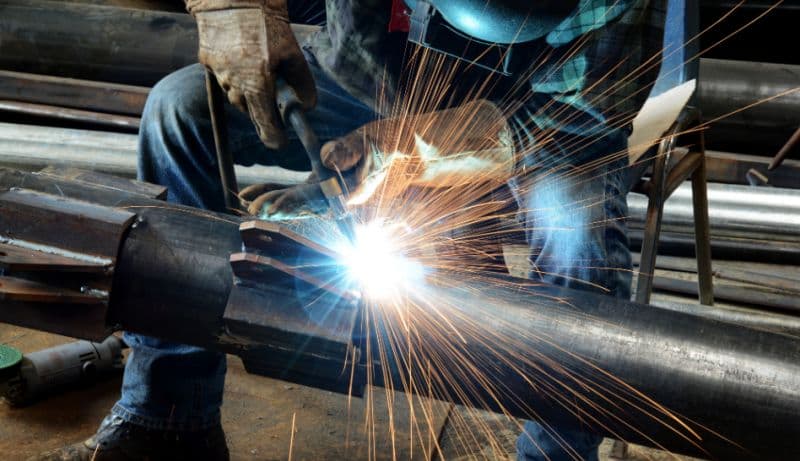
● Manufacturing
Equipment Manufacturing
The critical components of the of the complete pellet production line equipment are built in our own workshops in Asia. Additional equipment is manufactured by our worldwide network of reliable partners.
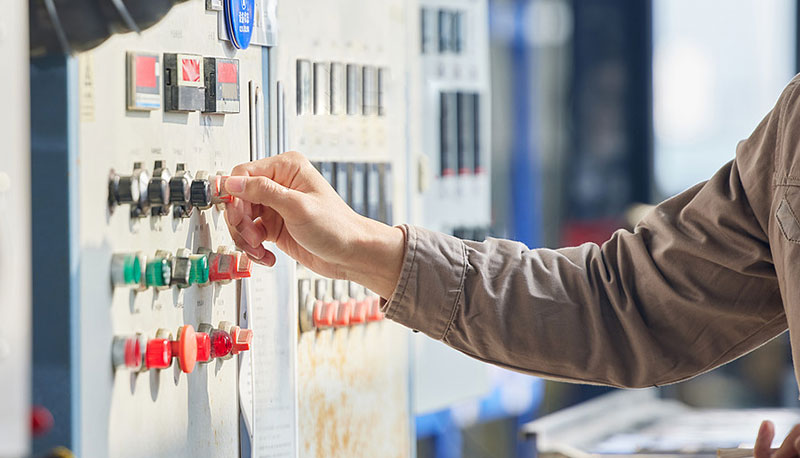
● Testing
Quality Inspection & Testing
Before leaving the factory, all equipment will be inspected by the quality inspection department. We can also provide customers with testing services from a single machine to a complete pellet plant system, and provide you with real actual data for “worry-free use.”

● Delivery
Equipment Delivery
In equipment boxing and packaging, we adopt professional packaging and modular solutions to ensure the safe and non-destructive delivery of pellet plant equipment.
● Installation
Installation & Commissioning
Whether you choose your own subcontractor for the erection phase or you want to install everything together with us, a Richi supervisor will be around to make sure everything is mounted in a safe and thorough way.

● Training
Staff Training
We provide comprehensive training for the technicians of each project. We can also continue to provide support for the technicians during latter project operation.
● After-sales
Project Follow-Up
When everything is up and running our Richiers will help you further whenever needed. We are ready to answer your call 24/7.We’ll also visit you regularly to learn about your needs.
Who we are
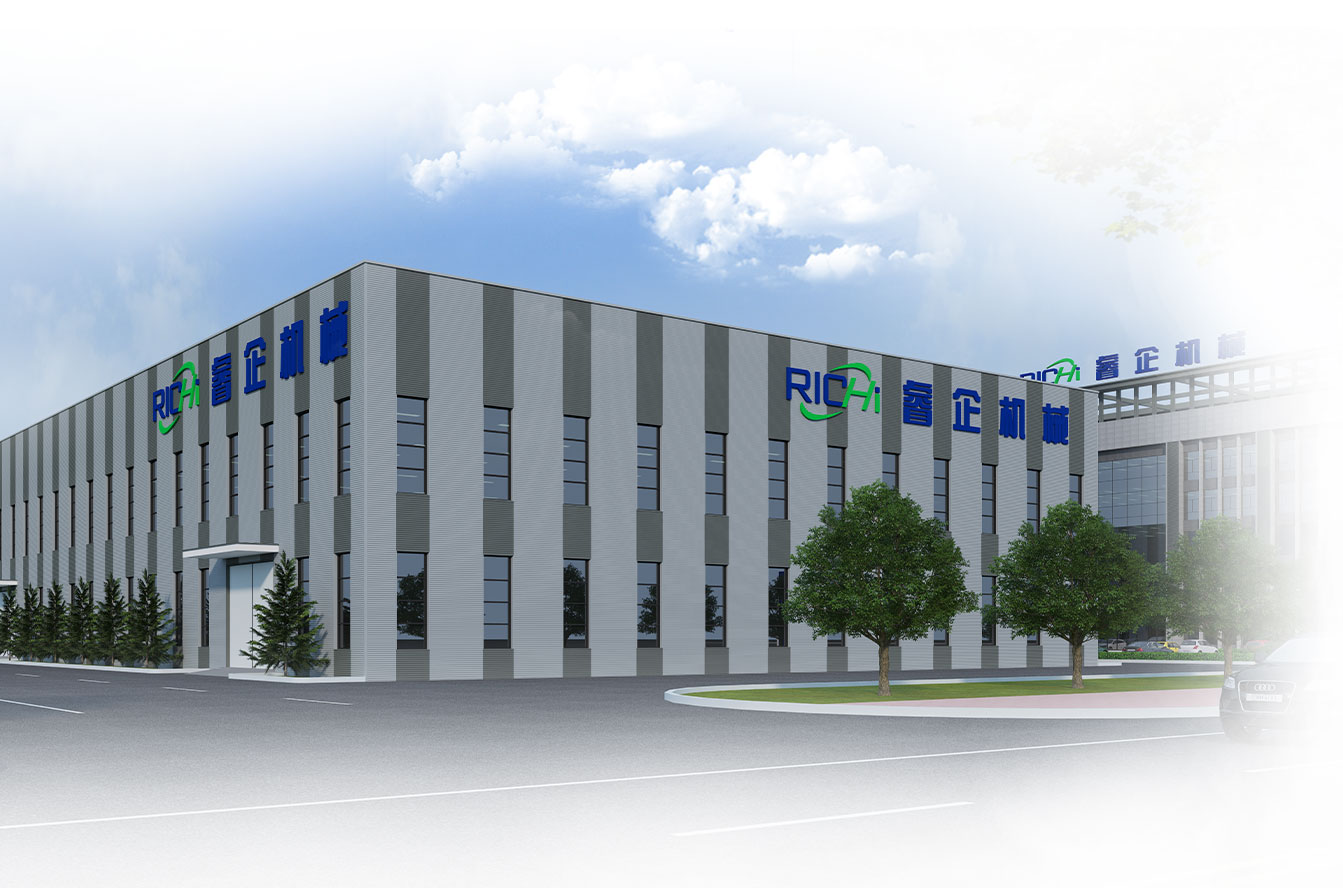
RICHI Machinery is one of the world’s leading suppliers of technology and services for the animal feed, aqua feed and pet food industries, also the largest pellet production line manufacturer in China.
Since 1995, RICHI’s vision to build a first-class enterprise, to foster first-class employees, and to make first-class contributions to society has never wavered.
In the past three decades, we have expanded our business to a wide range of areas, including animal feed mill equipment, aqua feed equipment, pet feed equipment, biomass pellet equipment, fertilizer equipment, cat litter equipment, municipal solid waste pellets equipment, etc.

1995
RICHI Established

2000+
Serving More Than 2000 Customers

120+
RICHI Employees

140+
Exported To 140 Countries