 0086-138 3838 9622
Industrial Fish Feed Factory in Ghana
RICHI MACHINERY
overview
This is a 20t/h industrial fish feed factory – but that number doesn’t tell you the most interesting part. The interesting part is that this whole operation fits on 3,333 square meters. That’s about 5 acres. And it runs with only 15 people.
The client is a Ghanaian entrepreneur who saw the same thing I’m seeing across West Africa: catfish farming is exploding, but nobody is making good floating feed locally. Everyone imports from China or Europe. Expensive, and often stale by the time it arrives.
He had a small plot of land near a major road, access to power, and a self-drilled well for water. That was it. No giant silos. No massive warehouse. Just enough space for one building and a dream.
We designed a 20t/h industrial fish feed factory that produces 50,000 tons of floating extruded fish feed annually – all on a single 8-hour shift, 300 days per year. Here’s how we did it, what we learned, and what it cost.
20T/H
capacity
$1.5 million
investment
Ghana
location
100+
project type
RICHI MACHINERY
The Client: First-Time Feed Mill Owner
The client wasn’t a feed manufacturer. He was a fish farmer. He had 20 ponds producing catfish for the Accra market. And he was tired of paying high prices for imported feed.
He told us: “I spend 70% of my operating costs on feed. If I make my own, I save 30%. And I can sell to my neighbors.”
He had saved about $300,000 USD from his fish farming operation. He needed a loan for the rest. His bank wanted a solid business plan and proven technology. That’s where we came in.
He chose Ghana for a few reasons:
- Stable economy (compared to some neighbors)
- Growing middle class eating more fish
- Government support for aquaculture (import tariffs on feed are high)
- Good port access (Tema Port)
The land was cheap – he bought 5 acres for about $50,000 USD. But it was tight. We had to design everything vertically. No spreading out.
RICHI MACHINERY
The Capacity Question: 20 Tons Per Hour, But Only 8 Hours Per Day
Here’s something unusual about this fish feed mill project. Most feed mills run 24/7. This one runs one shift per day, 8 hours, 300 days per year.
The math:
- 50,000 tons/year ÷ 300 days = 166.7 tons/day
- 166.7 tons/day ÷ 8 hours = 20.8 tons/hour
So the line needs to produce 20 tons every hour. That’s a 20t/h industrial fish feed factory in Ghana running at full tilt during the day, then shut down at night.
Why only one shift? Two reasons:
- Power. Ghana’s grid is okay but not great. Running at night is expensive (generator diesel). Daytime power is cheaper and more reliable.
- Labor. He wanted to keep his team small. 15 people total. One shift only.
We designed the fish feed production line for high throughput with minimal labor. Lots of automation. Conveyors instead of forklifts. Centralized control panel. One operator can run the whole line from a computer screen.
RICHI MACHINERY
The Building: 3,200m² on 3,333m² of Land
The client’s land was 3,333m². The building footprint is 3,200m². That means almost no space left over. The building is 100 meters long and 32 meters wide – one big rectangle.
Inside, we divided it into three zones:
Zone 1 – Raw material storage (about 1,000m²):
- Corn storage (20,000 tons/year – needs about 500 tons on hand at any time)
- Soybean meal storage (20,000 tons/year)
- Rice storage (8,000 tons/year)
- Other ingredients (2,000 tons/year – vitamins, minerals, binders)
Zone 2 – Production line (about 1,200m²):
- Receiving pit and bucket elevators
- Magnet, hammer mill feed grinder, fish feed extruders, cooler, screener, bagging scale
- Control room
Zone 3 – Finished goods storage (about 1,000m²):
- Bagged feed storage (25kg and 50kg bags)
- Pallet racking
- Truck loading area
Everything is packed tight. There’s no wasted space. We had to design the material handling carefully – too many turns and the line would jam.
RICHI MACHINERY
Raw Materials: Sourcing in Ghana
Ghana grows a lot of corn. It also grows some soybeans. But for a 20t/h industrial fish feed factory in Ghana, the client needs consistent supply.
Corn (20,000 tons/year):
Ghana produces about 2 million tons of corn annually, mostly in the Bono East and Ashanti regions. The client buys directly from farmers – cheaper than going through brokers. But the quality varies. We specified a receiving procedure:
- Moisture check: must be below 14%. If higher, reject or discount.
- Mold check: visual inspection. Any sign of aflatoxin, reject.
- Foreign material: screen out broken kernels and cob pieces.
Soybean Meal (20,000 tons/year):
This is harder. Ghana doesn’t crush enough soybeans locally. Most soybean meal comes from Argentina or Brazil via Tema Port. The client signed a contract with a local importer for 20,000 tons/year. Lead time is 4-6 weeks. He built a dedicated storage area for 1,000 tons of soybean meal – enough buffer for 2 months.
Rice (8,000 tons/year):
Ghana produces rice – not as much as corn, but enough. The client uses broken rice (cheaper than whole rice) as a starch source for the extruder. Rice expands well and binds the feed.
Other ingredients (2,000 tons/year):
This includes:
- Fish meal (imported from Mauritania or Peru) – about 500 tons/year
- Vitamins and minerals – about 100 tons/year
- Binders (bentonite, wheat middlings) – about 1,400 tons/year
Complete raw materials table:
| Raw Material | Annual Usage (tons) | Source | Storage |
|---|---|---|---|
| Corn | 20,000 | Local (farmers) | Bulk in warehouse |
| Soybean Meal | 20,000 | Imported (Brazil/Argentina) | Warehouse |
| Rice (broken) | 8,000 | Local (rice mills) | Warehouse |
| Fish Meal | 500 | Imported (Mauritania/Peru) | Warehouse (cool area) |
| Vitamins & Minerals | 100 | Imported | Warehouse (cold storage) |
| Binders & Fillers | 1,400 | Local + imported | Warehouse |
A note on fish meal: The client wanted to use only 500 tons/year. For a 50,000-ton fish feed line, that’s only 1% inclusion. That’s low. For catfish feed, 1-2% fish meal is enough – catfish are not as demanding as shrimp. But for higher-value species, he would need more. He told me he’ll add more fish meal later if customers demand it. Smart. Start cheap, then upgrade.
RICHI MACHINERY
Equipment: Compact and Efficient
For a 20t/h industrial fish feed factory in Ghana on a tight budget and tight footprint, we couldn’t overspec the equipment. We chose mid-range machines that can handle 20 tons/hour reliably.
Complete equipment list (no models, just specs):
| Station | Equipment | Qty | Key Spec |
|---|---|---|---|
| Receiving | Magnet | 1 | Removes iron |
| Grinding | Hammer Mill | 1 | 45kW motor, for corn and rice |
| Extrusion | Extruder | 4 | 110kW each |
| Cooling | Cooler | 1 | Patent cooling bin technology |
| Final Grinding | Finished Product Mill | 1 | 110kW motor |
| Screening | Screener | 1 | For grading |
| Bagging | Automatic Bagging Scale | 1 | 25kg and 50kg bags |
| Material Handling | Conveyors, Bucket Elevators | Several | Various lengths |
Why dry extruders? The client had no boiler. Wet extrusion requires steam. Dry extrusion uses friction and mechanical energy to heat the material. It’s simpler, cheaper, and requires less space. The downside? Lower capacity per machine. That’s why we needed four 110kW floating fish feed extruder machines instead of one big wet extruder. Four small machines gave him redundancy – if one breaks, he still runs at 75% capacity.
Why a finished product mill after extrusion? The client wanted powder, not pellets. He sells feed to catfish farmers who prefer powder (easier to mix with local ingredients). The extruder produces cylindrical pellets. The finished product mill grinds those pellets into a fine powder. Then the screener separates the powder from any oversized pieces.
RICHI MACHINERY
The Process: From Corn to Powdered Fish Feed
The process for this 20t/h industrial fish feed factory in Ghana is different from a standard pellet mill. Here’s the step-by-step.
Step 1: Receiving and Magneting
Raw materials arrive by truck. Corn, soybean meal, and rice are dumped into a receiving pit. A bucket elevator lifts them to the magnet. The magnet removes any iron nails or broken tool pieces. Without this step, the hammer mill would self-destruct.
Step 2: Grinding (First Pass)
The hammer mill (45kW) grinds the corn and rice to a medium consistency – about 500-800 microns. The soybean meal is already ground, so it bypasses this step.
Step 3: Extrusion
The ground material moves to four extruders. Each extruder has its own feeder. The operator sets the feed rate on a control panel. Inside the extruder, the material is heated by friction and mechanical shear. Temperature reaches 110-140°C. The starch gelatinizes. The material expands as it exits the die, forming cylindrical pellets.
Key detail: Dry extrusion is touchy. Too much feed and the extruder jams. Too little and the material burns. The client’s operator needed a week of practice to learn the sound of a properly loaded extruder. Too quiet? Starving. Too loud? Overloaded. Just right? A steady rumble.
Step 4: Cooling
The extruded pellets come out at 110-140°C. Too hot to handle. They drop into a cooling bin. A fan pulls air through the bin, dropping the temperature to ambient +5°C in about 10 minutes. The cooling bin uses patent technology – basically a vertical column with air inlets at the bottom.
Step 5: Finished Grinding
Cooled pellets drop into the finished product mill (110kW). This is a hammer mill with a fine screen – 1.5mm holes. It turns the pellets into powder.
Step 6: Screening
The powder moves to a screener. The screener has two decks. The top deck catches oversized particles (send them back to the mill). The middle deck catches the correct size powder (send to bagging). The bottom deck catches fines (too small – also send back to the mill).
Step 7: Bagging
The correct powder drops into a bagging scale. The scale automatically weighs 25kg or 50kg and drops the powder into a bag. An operator sews the bag closed and stacks it on a pallet.
Process flow diagram (simplified):
- Raw material receiving → 2. Magnet → 3. Hammer mill (coarse) → 4. Extruders (4 units) → 5. Cooler → 6. Hammer mill (fine) → 7. Screener → 8. Bagging scale → 9. Finished goods
Waste points:
- Dust from hammer mills (collected by baghouse)
- Oversized particles from screener (recycled to mill)
- Fines from screener (recycled to mill)
- Cooling air (exhausted, no treatment needed)
RICHI MACHINERY
Utilities: Minimal but Adequate
The client had limited utilities. Here’s what we designed.
Water (249 m³/year):
- Cooling system: 24 m³/year (recycled, drained twice per year)
- Domestic (15 people): 225 m³/year
- Source: Self-drilled well on property
Power (2 million kWh/year):
- Grid connection from local utility
- No backup generator initially – we recommended one. He bought a used 300KVA generator for $15,000.
No boiler. No steam. Dry extrusion only.
RICHI MACHINERY
Installation in Ghana (What We Learned)
Tema Port is efficient – better than Apapa in Lagos. The 3 containers cleared in 5 days.
What went wrong:
- The building. The client poured the floor before we arrived. It was not level. We had to shim every machine. That added 5 days.
- The power. The local grid voltage fluctuated between 200V and 240V. The extruder motors didn’t like that. We installed a voltage stabilizer – $8,000.
- The cooling fan. The client bought a local fan instead of the one we specified. It moved half the air. The feed didn’t cool properly. We replaced it with the correct fan.
What went right:
- The well. Water quality was good. No treatment needed.
- The local electrician. He understood three-phase power. That’s not always the case.
- The extruder training. The client’s operator picked it up fast. He was a mechanic before he became a fish farmer. Machines make sense to him.
RICHI MACHINERY
The First Production Run
The first day we started the line, the extruders kept jamming. The feed rate was too high. We backed off. Then the feed was too dry – the extruder temperature was too low. We adjusted the screw speed.
It took three days to dial in the recipe:
Final recipe for floating catfish feed (powder form):
- Corn: 40%
- Soybean meal: 40%
- Rice: 15%
- Fish meal: 2%
- Binders, vitamins, minerals: 3%
Extruder settings:
- Temperature: 125°C
- Screw speed: 450 RPM
- Feed rate: 5 tons per hour per extruder (total 20 t/h)
Quality results:
- Moisture: 11% (target was 10-12%)
- Protein: 28% (target was 28-30%)
- Floating test: Not applicable – product is powder, not pellets
- Particle size: 95% passed through 1.5mm screen
The client was happy. He loaded his first truck of feed the next week and delivered to his own fish farm.
RICHI MACHINERY
Training the Team (15 People)
The client hired 15 people:
- 1 plant manager (experienced in food processing)
- 3 operators (one per shift – but only one shift, so 3 operators rotating)
- 2 maintenance technicians
- 4 material handlers (receiving and loading)
- 5 bagging and stacking workers
We spent 2 weeks on training:
Week 1 – Safety and basics:
- Lockout/tagout procedures
- How to clear a jammed extruder (unplug first, then open)
- How to change hammer mill screens
Week 2 – Operations and maintenance:
- How to start the line (bottom to top – bagging first, then extruders, then grinding)
- How to stop the line (top to bottom – feeder first, then extruders, then bagging)
- How to change extruder dies (keep them lubricated)
- How to dress hammers (rotate them for even wear)
One mistake: The client didn’t buy enough spare extruder dies. The first set wore out after 2,000 tons. He had to air freight new dies – expensive. Now he keeps 4 sets in stock.
RICHI MACHINERY
Market Outlook: Fish Feed in Ghana
Why did this client invest almost $1 million in a 20t/h industrial fish feed factory? Because Ghana’s fish farming industry is growing fast.
The numbers:
- Ghana produces about 100,000 tons of farmed fish annually (mostly tilapia and catfish)
- Aquaculture is growing at 10-15% per year
- Current feed production in Ghana is about 60,000 tons/year
- The rest is imported from China, Europe, and South Africa
The opportunity:
The Ghanaian government has banned fish feed imports from some countries due to quality concerns. They want local production. They offer tax incentives for agricultural processing.
The client’s plan:
- Year 1: Sell feed to his own farm (500 tons) and local farmers (49,500 tons)
- Year 2: Add a second shift (16 hours/day) to double production
- Year 3: Add a wet extrusion line for floating pellets (higher margin)
He’s already talking about adding a fish meal plant to process local fish waste. That would close the loop.
RICHI MACHINERY
Why RICHI for This Project?
I’m not going to give you a sales pitch. I’ll just tell you what the client said after commissioning:
“The Chinese supplier I talked to before wanted to sell me a $4 million line with all the bells and whistles. RICHI asked me what I could afford. Then they designed a line that works within my budget and my space.”
We don’t just sell equipment. We solve problems. For this project, the problems were:
- Small land (5 acres)
- Small budget ($1.5 million total)
- Small team (15 people)
We solved all of them. The 20t/h industrial fish feed factory in Ghana is running, making money, and feeding fish.
RICHI MACHINERY
Thinking About Your Own Fish Feed Project?
Here’s my honest advice:
- Start with your market. Who will buy your feed? Fish farmers? Poultry farmers? How much will they pay? Don’t build a line until you have customers lined up.
- Be realistic about land. This client made it work on 5 acres, but it was tight. If you have more space, use it. Storage is always the bottleneck.
- Consider dry extrusion. If you don’t have a boiler and don’t want one, dry extrusion works. It’s simpler, cheaper, and requires less maintenance. But you’ll need multiple extruders to reach high capacity.
- Don’t forget the generator. Grid power is unreliable almost everywhere. Budget for a generator.
- Spare parts, spare parts, spare parts. The client learned this the hard way. Order extra extruder dies, hammer mill screens, and conveyor belts with your initial order.
If you’re looking at Ghana, or anywhere in West Africa, the market is ready. The fish are hungry. The farmers are tired of expensive imported feed.
Contact us. Send us your land size, your budget, and your target production. We’ll design a 20t/h industrial fish feed factory that fits your reality.
We’ve built them on 5 acres. We’ve built them with 15 people. We’ve built them without boilers.
Let’s build yours.
● RICHI MACHINERY
RICHI Service

● Consulting
Customer Consultation
We want to have a deep understanding of your industrial process, to know your exact needs of feed, wood, biomass, fertilizer or other pellet processing.

● Design
Fish feed Plant Design
Based on your unique situation and industrial process, we will tailor complete pellet plant you need, and inform you of every additional detail that could facilitate operation, minimize total cost.
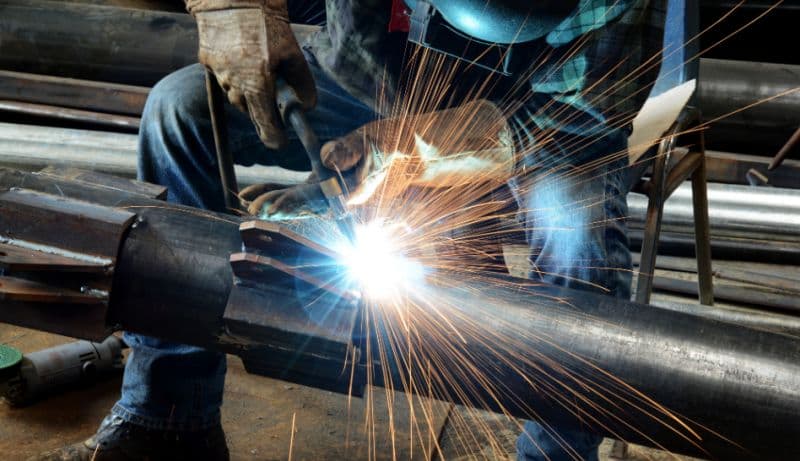
● Manufacturing
Equipment Manufacturing
The critical components of the of the complete pellet production line equipment are built in our own workshops in Asia. Additional equipment is manufactured by our worldwide network of reliable partners.
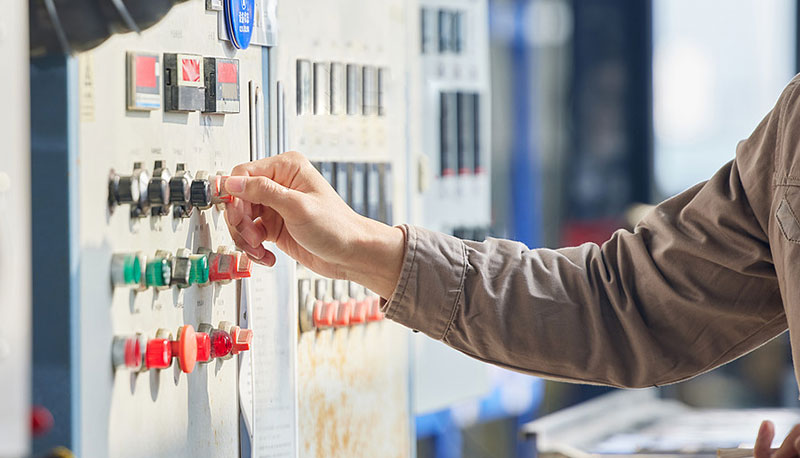
● Testing
Quality Inspection & Testing
Before leaving the factory, all equipment will be inspected by the quality inspection department. We can also provide customers with testing services from a single machine to a complete pellet plant system, and provide you with real actual data for “worry-free use.”

● Delivery
Equipment Delivery
In equipment boxing and packaging, we adopt professional packaging and modular solutions to ensure the safe and non-destructive delivery of pellet plant equipment.
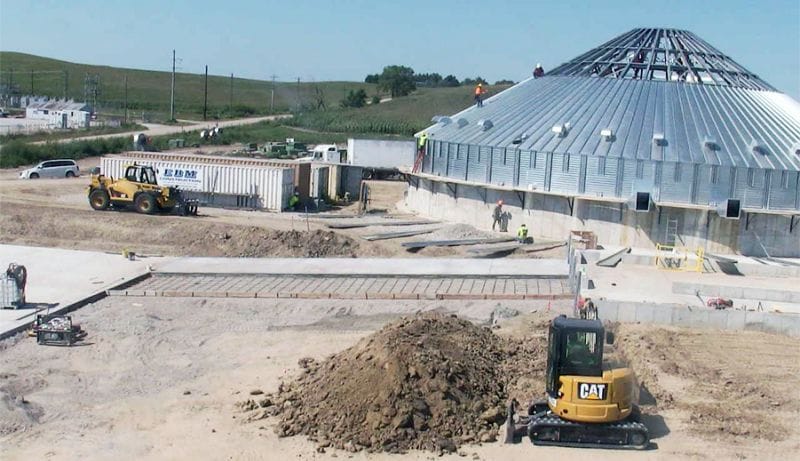
● Installation
Installation & Commissioning
Whether you choose your own subcontractor for the erection phase or you want to install everything together with us, a Richi supervisor will be around to make sure everything is mounted in a safe and thorough way.

● Training
Staff Training
We provide comprehensive training for the technicians of each project. We can also continue to provide support for the technicians during latter project operation.
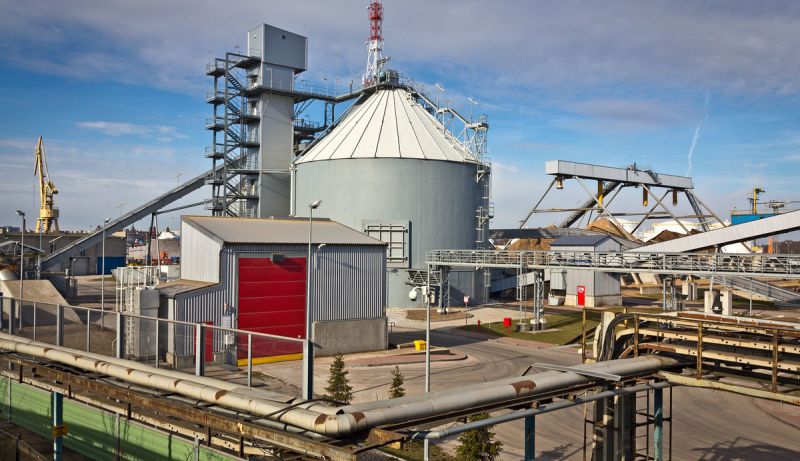
● After-sales
Project Follow-Up
When everything is up and running our Richiers will help you further whenever needed. We are ready to answer your call 24/7.We’ll also visit you regularly to learn about your needs.
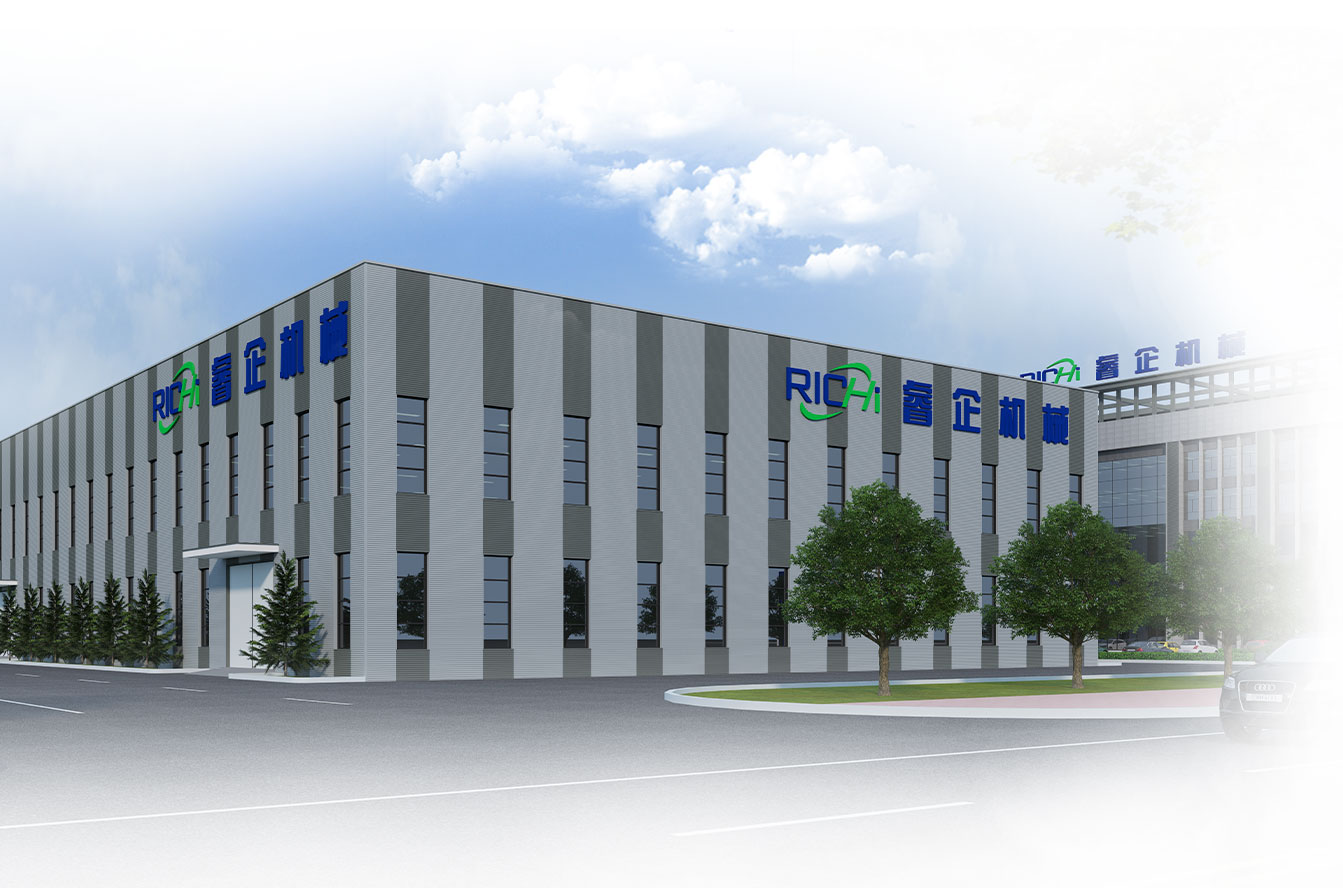
Who we are
RICHI Machinery is one of the world’s leading suppliers of technology and services for the animal feed, aqua feed and pet food industries, also the largest pellet production line manufacturer in China.
Since 1995, RICHI’s vision to build a first-class enterprise, to foster first-class employees, and to make first-class contributions to society has never wavered.
In the past three decades, we have expanded our business to a wide range of areas, including animal feed mill equipment, aqua feed equipment, pet feed equipment, biomass pellet equipment, fertilizer equipment, cat litter equipment, municipal solid waste pellets equipment, etc.

1995
RICHI Established

2000+
Serving More Than 2000 Customers

120+
RICHI Employees

140+
Exported To 140 Countries