 0086-138 3838 9622
Wood Pellet Manufacturing Plant for Industrial Energy in Paraguay
RICHI MACHINERY
Project Overview
A large wood processing company reached out to RICHI Machinery about building a 9-12t/h wood pellet manufacturing plant for industrial energy in Paraguay with an annual capacity of 65,000 tons of wood pellets (running 24 hours per day, 3 shifts, 300 days per year).
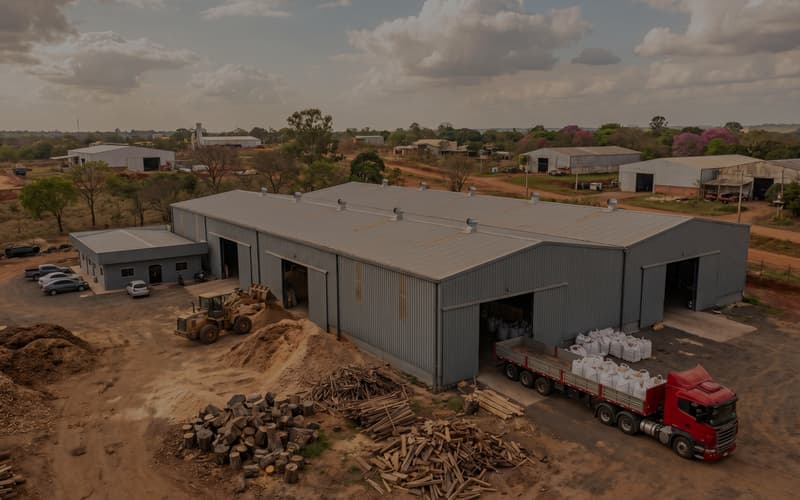
The facility produces high-quality industrial fuel pellets from sawmill waste (sawdust, wood chips, tree stumps, offcuts) for industrial boilers, power plants, and heating systems across Paraguay and for export to Brazil and Argentina.
The client is located in the Alto Paraná Department of eastern Paraguay, about 300km east of Asunción. This region is Paraguay’s forestry heartland — the country has 2+ million hectares of planted forests (primarily pine and eucalyptus), supporting dozens of sawmills and wood processing plants. These facilities generate massive amounts of wood waste (sawdust, chips, stumps, offcuts) that are currently burned or landfilled.
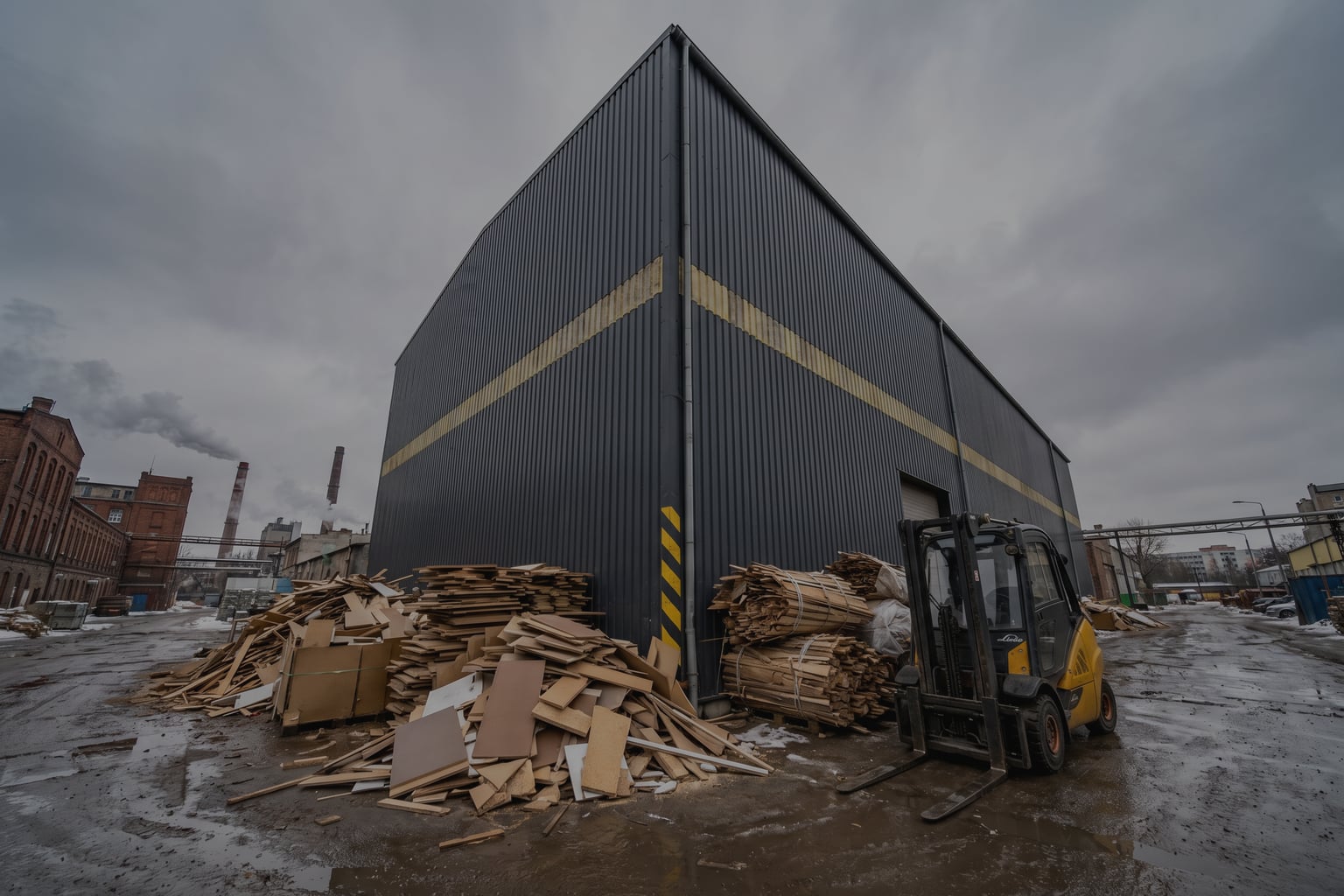
The client already operated several sawmills and decided to vertically integrate into pellet production. The wood pellet factory is set on a 3,210m² site (a single 3,170m² steel-framed building, plus a small office). The building is divided into:
| Zone | Size (m²) | Use |
|---|---|---|
| Raw material storage | 870 | Sawdust, chips, stumps, offcuts |
| Processing area | 1,100 | Crusher, hammer mills (2), dryers (2), pellet mills (6) |
| Finished product storage | 1,200 | Bagged pellets (25kg, 50kg, 1-ton bulk) |
Total investment of this wood pellet manufacturing plant was about 1.2 million USD(including equipment, building modifications, and working capital),of which 485,000 was the equipment cost.
9-12T/H
capacity
$485,000
investment
Paraguay
location
Biofuel
project type
RICHI MACHINERY
Why Paraguay?
Paraguay has abundant forestry resources and growing industrial energy demand:
| Parameter | Value |
|---|---|
| Planted forest area | 2+ million hectares |
| Pine plantation area | 800,000+ hectares |
| Eucalyptus plantation area | 500,000+ hectares |
| Sawmill waste generated | 500,000+ tons/year |
| Current pellet production | Minimal (5,000-10,000 tons/year) |
Key drivers for industrial pellets:
| Driver | Impact |
|---|---|
| Itaipu Dam (hydroelectric) | Cheap electricity ($0.05-0.07/kWh) — competitive for electric drying |
| No natural gas infrastructure | Industries use diesel or wood (inefficient) |
| Industrial growth | Textile, food processing, and manufacturing need heat |
| Export to Brazil/Argentina | Both countries import wood pellets |
Target customers:
| Customer segment | Location | Annual demand (tons) |
|---|---|---|
| Industrial boilers | Alto Paraná, Itapúa | 50,000+ |
| Grain dryers (soy, corn) | Nationwide | 30,000+ |
| Power plants (co-firing) | Brazil (export) | 100,000+ |
| Food processors | Asunción, Ciudad del Este | 20,000+ |
The client’s breakeven point is 40,000 tons/year (62% capacity). At full capacity (65,000 tons/year), operating margin is about 20-25%. Payback on equipment is about 2 years.
RICHI MACHINERY
Raw Materials: Sawdust, Wood Chips, Tree Stumps
The client’s raw material comes from their own sawmills and from partner mills:
| Raw Material | Annual (tons) | Moisture (%) | Ash (%) | Source | Cost (PYG/ton) | USD/ton (7,500 PYG/USD) |
|---|---|---|---|---|---|---|
| Sawdust | 75,000 | 60% | 16% | Own sawmills | 50,000 | $6.70 |
| Wood chips | 33,146 | 50% | 1% | Partner mills | 40,000 | $5.30 |
| Tree stumps | 20,000 | 50% | 1% | Forestry thinnings | 80,000 | $10.70 |
| Total input | 128,146 | — | — | — | — | — |
Wait, 128,146 tons input for 65,000 tons output? Yes. The difference (63,146 tons) is:
- Water evaporated during drying (about 63,100 tons — most of the loss)
- Dust collected in filters (about 46 tons, recycled)
Why the client needs drying: Sawdust is 60% moisture — wetter than typical. The client uses electric dryers (100°C inlet temperature) to reduce moisture to 13% or less (to meet product standards).
Sawdust quality note: The sawdust from the client’s own mills has high ash content (16%). This is typical for pine sawdust with bark. The client blends it with lower-ash wood chips (1% ash) and tree stumps (1% ash) to achieve the final product’s 6% ash limit.
RICHI MACHINERY
Equipment Configuration
The client chose a high-capacity line for 9-12 t/h (65,000 tons/year at 24/7 operation):
| Equipment | Quantity | Power (each) | Function |
|---|---|---|---|
| Wood chipper machine | 1 | 90-110 kW | Reduces stumps and large offcuts to <5cm |
| Wood pellet hammer mill | 2 | 75-90 kW each | Grinds to <6mm |
| Wood chip dryer | 2 | 45 kW fans + 200 kW heaters | Drying to <13% moisture |
| Wood pellet mill | 6 | 160-200 kW each | Producing 8-10mm pellets |
| Bagging scale | 1 | 15 kW | 9 t/h capacity |
| Cyclone + bag filter | 1 set | 30 kW fan | Dust collection |
| Front-end loaders | 2 | — | Material handling |
| Forklifts | 2 | — | Finished product handling |
| Transformers | 1 | — | Power supply |
Equipment cost (FOB Qingdao): $485,000 USD
Why this configuration for 9-12 t/h (65,000 tons/year):
1. Single large crusher. The client’s raw material includes tree stumps (up to 30cm diameter) and large offcuts. The crusher reduces them to <5cm pieces before the hammer mills.
2. Two hammer mills. Two mills running in parallel give 10 t/h capacity. The client runs both for full production, or one for maintenance.
3. Two electric dryers. The raw material is wet (50-60% moisture). The client needs drying to <13% moisture. Two dryers in parallel give 10 t/h capacity. Electric dryers are used because natural gas is not available in the region (Paraguay has no gas pipeline network). Electricity from Itaipu Dam is cheap ($0.05-0.07/kWh).
4. Six pellet mills. Each wood granulator machine produces 1.5-2 t/h. Six mills give 9-12 t/h total. The client runs all six for full production, or five for maintenance.
5. Single bagging scale. One scale is sufficient for 9-12 t/h.
RICHI MACHINERY
Process Flow
This is a large-scale industrial wood pellet production line designed for 24/7 operation with only 10 staff. The line is highly automated.
Step 1: Raw Material Receiving
Trucks deliver sawdust (from the client’s own mills), wood chips (from partner mills), and tree stumps (from forestry thinnings). The driver unloads into the raw material storage area (870m²).
The client’s raw material separation:
- Sawdust (wet, 60% moisture) → stored in a covered bunker
- Wood chips (50% moisture) → stored separately
- Tree stumps (50% moisture) → stacked near the crusher
Step 2: Crushing (for Stumps and Large Offcuts)
Tree stumps are large and dense. The crusher reduces them to <5cm pieces before the hammer mills.
Tree stumps and large offcuts are fed into the chipper crusher.
Crusher parameters:
- Type: Hammer mill (but larger than the main hammer mills)
- Output size: <5cm
- Capacity: 10 t/h
Step 3: Grinding (Hammer Milling)
All material (crushed stumps + sawdust + chips) is fed into two hammer mills.
Hammer mill parameters (each):
- Rotor diameter: 1,200mm
- Rotor width: 750mm
- Screen size: 6 mm
- Throughput: 5 t/h per mill (combined 10 t/h)
- Output particle size: <6mm
Dust control: Each hammer mill has a connection to the central baghouse filter.
Step 4: Drying
The raw material is very wet (sawdust 60% moisture). The client needs to dry to <13% moisture to meet product standards.
Ground material is fed into two electric dryers.
Dryer parameters (each):
- Type: Rotary drum, electric heating
- Drum diameter: 3.0 m
- Drum length: 10 m
- Inlet temperature: 100°C
- Outlet temperature: 60-80°C
- Moisture in: 50-60%
- Moisture out: <13%
- Throughput: 5 t/h per dryer (combined 10 t/h)
Why electric? Paraguay has no natural gas pipeline network. The Itaipu Dam provides abundant cheap electricity ($0.05-0.07/kWh). The dryers use electric resistance heating — more expensive than gas or biomass, but the only option available.
Step 5: Pelletizing
Dried material (<13% moisture) is fed into six wood pellet presses.
Pellet mill parameters (each):
| Parameter | Value |
|---|---|
| Die diameter | 560 mm |
| Die hole diameter | 8 mm (produces 8.5-9mm pellets) |
| Compression ratio | 5.5:1 |
| Die speed | 180-220 RPM |
| Operating temperature | 80-100°C |
| Throughput per mill | 1.5-2 t/h (combined 9-12 t/h) |
Pellet specifications (fuel pellets):
| Parameter | Target | Standard |
|---|---|---|
| Diameter | 8-10 mm | 8-10 mm |
| Moisture | ≤13% | ≤13% |
| Ash content | ≤6% | ≤6% |
| Sulfur | 0.06% | — |
| Fixed carbon | 14.41% | — |
| Volatile matter | 80.33% | — |
| Calorific value | ≥16.9 MJ/kg | ≥16.9 MJ/kg |
Step 6: Cooling
Hot pellets (80-90°C) from the six pellet mills drop onto a belt conveyor and are moved to the finished product storage area (1,200m²).
Cooling method: Ambient air cooling — the client spreads pellets on the floor in a shallow layer (20-30cm deep). Cooling time: 4-6 hours.
Why no mechanical cooler? The building has 1,200m² of finished product storage, plenty of space for floor cooling. The client uses the storage area as a cooling area — pellets cool overnight and are bagged the next morning.
Step 7: Bagging
Cooled pellets are fed into the bagging scale.
Packaging process:
- Bag sizes: 25kg, 50kg, 1-ton bulk bags
- Filling speed: 9 t/h (about 360 bags/hour at 25kg)
- The client runs two shifts of bagging (16 hours/day) to match 24-hour pellet production
The client sells:
- Bulk (30-ton truckloads) to industrial customers (lower price, higher volume)
- 25kg bags to retail customers (higher margin)
- 50kg bags to commercial farms
RICHI MACHINERY
Utilities and Consumption
| Utility | Annual consumption | Source | Cost (PYG) | Cost (USD at 7,500 PYG/USD) |
|---|---|---|---|---|
| Electricity | 900,000 kWh | Itaipu grid | 54 million | $7,200 |
| Water | 150 m³ | Well | — | — |
Electricity breakdown (annual, 300 days, 24 hours/day = 7,200 hours):
| Equipment | kW average | Hours/day | kWh/day | kWh/year |
|---|---|---|---|---|
| Crusher | 60 | 8 (intermittent) | 480 | 144,000 |
| Hammer mills (2) | 100 (50 each avg) | 20 | 2,000 | 600,000 |
| Dryers (2) | 300 (150 each avg — heaters + fans) | 24 | 7,200 | 2,160,000 |
| Pellet mills (6) | 800 (133 each avg) | 24 | 19,200 | 5,760,000 |
| Bagging scale | 10 | 16 | 160 | 48,000 |
| Conveyors, fans | 50 | 24 | 1,200 | 360,000 |
| Lighting, office | 10 | 24 | 240 | 72,000 |
| Total | 1,330 | — | 30,480 | 9,144,000 kWh |
Electricity cost per ton: 9,144,000 kWh ÷ 65,000 tons = 141 kWh/ton × 60 PYG/kWh = 8,460 PYG/ton ($1.13) — very cheap.
RICHI MACHINERY
How RICHI Customized This Line for Large-Scale Wood Pellet Production
The client had specific requirements that shaped the equipment design:
Requirement 1: Very wet raw material (sawdust 60% moisture). The client needed efficient drying.
RICHI solution: Two electric dryers in parallel, each 5 t/h. Paraguay’s cheap electricity from Itaipu Dam makes electric drying economical. Inlet temperature 100°C (gentle drying to avoid scorching). The dryers reduce moisture from 60% to <13%.
Requirement 2: High ash content in sawdust (16%). The client needed to blend with lower-ash materials to meet the 6% ash limit.
RICHI solution: The client blends:
- 60% sawdust (16% ash) → blended with
- 26% wood chips (1% ash)
- 14% tree stumps (1% ash)
Resulting ash: (0.60 × 16%) + (0.26 × 1%) + (0.14 × 1%) = 9.6% + 0.26% + 0.14% = 10% ash — wait, that’s still above 6%. The client’s actual blend is likely 40% sawdust, 60% chips/stumps.
Requirement 3: The client has only 10 staff for a 24/7 operation. They needed a highly automated line.
RICHI solution: Centralized PLC control system with touchscreen interface (in Spanish). Automatic startup/shutdown sequences. Alarm system for abnormal conditions (bearing temperature, motor overload, vibration).
Requirement 4: The client’s building is only 3,210m² (tight for 9-12 t/h). They needed a compact layout.
RICHI solution: Vertical integration where possible. The crusher and hammer mills are on the ground floor. The dryers are elevated on a steel platform (to save floor space). Bag filters are on mezzanines above the equipment.
RICHI MACHINERY
Product Specifications
| Parameter | Standard | Client’s product |
|---|---|---|
| Diameter (mm) | 6-10 | 8.5-9 |
| Length (mm) | — | 25-35 |
| Moisture (%) | ≤13 | 10-12 |
| Ash content (%) | ≤6 | 4-6 |
| Sulfur (%) | — | 0.06 |
| Fixed carbon (%) | — | 14.4 |
| Volatile matter (%) | — | 80.3 |
| Calorific value (MJ/kg) | ≥16.9 | 17.5-18.5 |
Pricing (as of September 2025):
| Format | Price (PYG/ton) | Price (USD/ton at 7,500 PYG/USD) |
|---|---|---|
| Bulk (30-ton truckload) | 875,000 | $117 |
| 25kg bags | 1,000,000 | $133 |
Comparison with other fuels in Paraguay:
| Fuel | Price per MJ (PYG) | Notes |
|---|---|---|
| Pellets (client) | 1.7 | — |
| Diesel | 5.5 | Imported, expensive |
| Electricity | 1.2 | Cheapest, but not all boilers can use it |
| Firewood | 0.8 | Inefficient, smoky, restricted |
Pellets are competitive with electricity and cheaper than diesel.
RICHI MACHINERY
Market Outlook for Wood Pellets in Paraguay
Paraguay’s wood pellet market is in its infancy (5,000-10,000 tons/year currently), but the potential is significant:
Key drivers:
1. Abundant forestry resources. Paraguay has 2+ million hectares of planted forests (pine, eucalyptus). Sawmill waste is abundant and cheap.
2. Cheap electricity (from Itaipu). Paraguay has the cheapest electricity in South America ($0.05-0.07/kWh). This makes electric drying economical.
3. Export to Brazil and Argentina. Brazil imports wood pellets for power plant co-firing. Argentina also imports pellets. Paraguay’s location (river transport to Argentina, overland to Brazil) gives a logistics advantage.
4. Industrial growth. Paraguay’s industrial sector (textile, food processing, manufacturing) needs heat. Pellets are a cleaner alternative to diesel.
Competition: There are 5-10 small pellet producers in Paraguay (1,000-5,000 tons/year). The client’s 65,000 tons/year makes them the largest.
Challenges the client is managing:
| Challenge | Mitigation |
|---|---|
| Sawdust has high moisture (60%) | Electric dryers — cheap electricity makes it feasible |
| Sawdust has high ash (16%) | Blend with lower-ash chips and stumps |
| Export logistics (landlocked country) | Transport to Paraná River (port) by truck, then barge to Argentina/Brazil |
| Raw material collection radius | The client’s own sawmills supply 60% of raw material; partner mills supply 40% within 50km |
RICHI MACHINERY
Why a 9-12 t/h Wood Pellet Plant Makes Sense in Paraguay
Paraguay has abundant forestry waste, cheap electricity, and growing industrial energy demand. Here’s why you should consider this market:
Raw material is abundant and cheap. Paraguay’s sawmills produce 500,000+ tons of sawdust annually. The client pays 50,000 PYG/ton ($6.70) for sawdust — much less than in developed countries.
Cheap electricity makes electric drying viable. Natural gas is not available in Paraguay. But electricity from Itaipu Dam is the cheapest in South America. The client’s electric dryers cost 141 kWh/ton × 0.008/kWh=1.13/ton — incredibly cheap.
The market is underserved. There are only 5-10 small pellet producers. The client’s 65,000 tons/year gives them economies of scale.
Export potential is significant. Brazil imports wood pellets (for co-firing at coal plants). Argentina also imports pellets. Paraguay’s location (access to Paraná River) allows barge transport to both countries.
If you’re considering a wood pellet plant in Paraguay (or any country with abundant forestry waste and cheap electricity), RICHI can help. We’ve designed lines for sawdust, wood chips, tree stumps, and other timber residues. We understand the challenges (high moisture, high ash, drying) and can recommend the right equipment.
Contact us to discuss your wood pellet plant construction project. Tell us about your raw material (type, moisture, volume), site conditions, target capacity, and budget. We’ll prepare a customized process flow, equipment list, and budget estimate — no obligation.
RICHI Machinery – Complete wood pellet plants from 5 t/h to 15 t/h. Shipping from Qingdao to Buenos Aires port (Argentina) then overland to Paraguay: 30-35 days. Installation support available in Paraguay within 2 weeks.
● RICHI MACHINERY
RICHI Service

● Consulting
Customer Consultation
We want to have a deep understanding of your industrial process, to know your exact needs of feed, wood, biomass, fertilizer or other pellet processing.
● Design
biomass Pellet Plant Design
Based on your unique situation and industrial process, we will tailor complete pellet plant you need, and inform you of every additional detail that could facilitate operation, minimize total cost.
● Manufacturing
Equipment Manufacturing
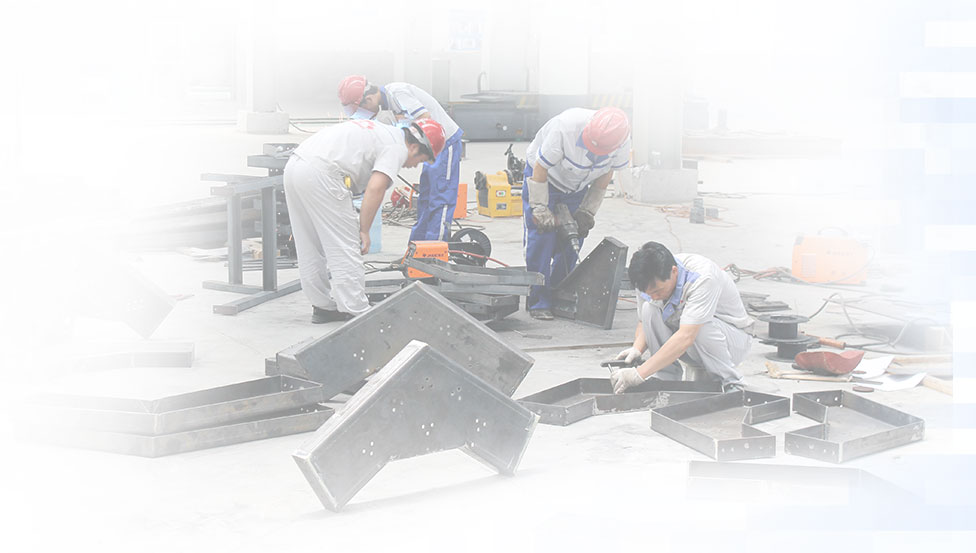
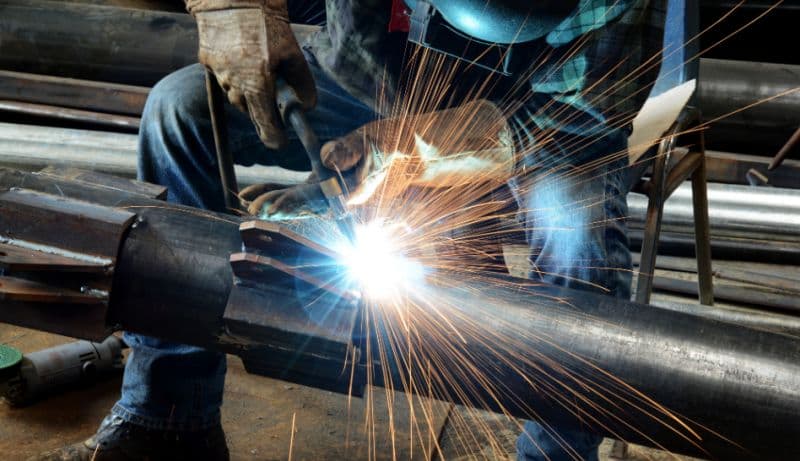
The critical components of the of the complete pellet production line equipment are built in our own workshops in Asia. Additional equipment is manufactured by our worldwide network of reliable partners.
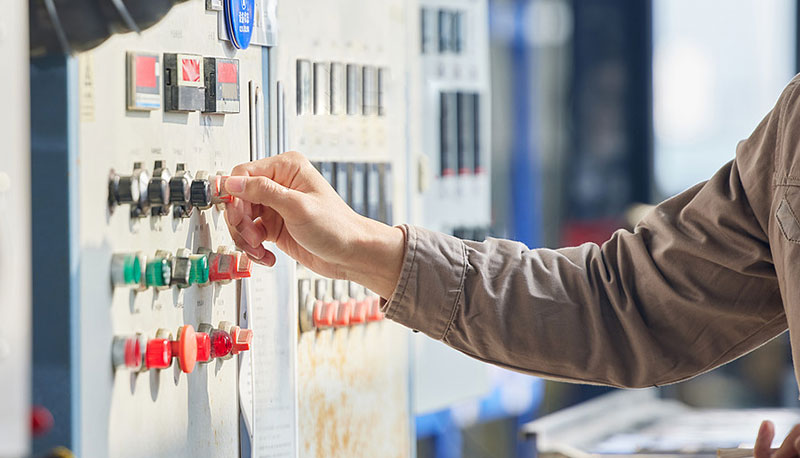
● Testing
Quality Inspection & Testing
Before leaving the factory, all equipment will be inspected by the quality inspection department. We can also provide customers with testing services from a single machine to a complete pellet plant system, and provide you with real actual data for “worry-free use.”

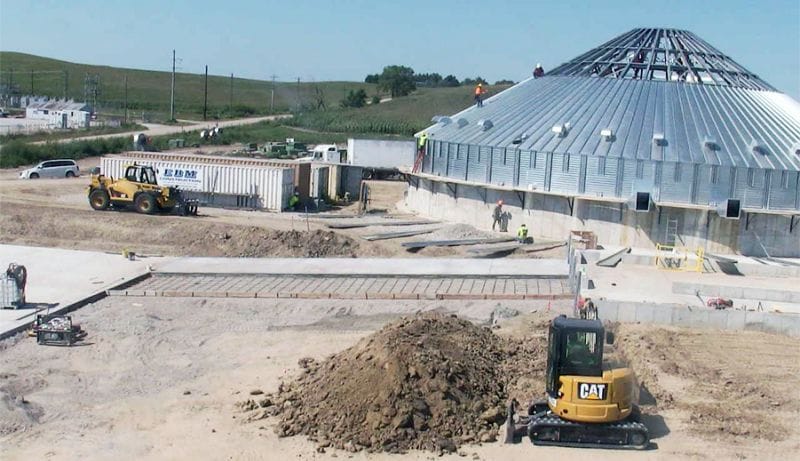
● Delivery
Equipment Delivery
In equipment boxing and packaging, we adopt professional packaging and modular solutions to ensure the safe and non-destructive delivery of pellet plant equipment.
● Installation
Installation & Commissioning
Whether you choose your own subcontractor for the erection phase or you want to install everything together with us, a Richi supervisor will be around to make sure everything is mounted in a safe and thorough way.

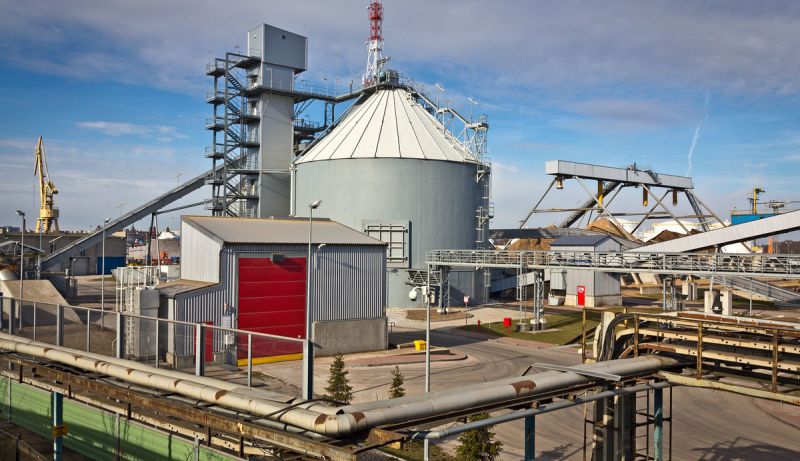
● Training
Staff Training
We provide comprehensive training for the technicians of each project. We can also continue to provide support for the technicians during latter project operation.
● After-sales
Project Follow-Up
When everything is up and running our Richiers will help you further whenever needed. We are ready to answer your call 24/7.We’ll also visit you regularly to learn about your needs.
Who we are
RICHI Machinery is one of the world’s leading suppliers of technology and services for the animal feed, aqua feed and pet food industries, also the largest pellet production line manufacturer in China.
Since 1995, RICHI’s vision to build a first-class enterprise, to foster first-class employees, and to make first-class contributions to society has never wavered.
In the past three decades, we have expanded our business to a wide range of areas, including animal feed mill equipment, aqua feed equipment, pet feed equipment, biomass pellet equipment, fertilizer equipment, cat litter equipment, municipal solid waste pellets equipment, etc.

1995
RICHI Established

2000+
Serving More Than 2000 Customers

120+
RICHI Employees

140+
Exported To 140 Countries