 0086-138 3838 9622
Wheat Straw Pellet Production Line in Ukraine
RICHI MACHINERY
The Phone Call That Started It All
Mid-February 2025. A cooperative in Vinnytsia Oblast, Ukraine, reached out. They had a problem – too much wheat straw.
Ukraine grows a lot of wheat. Like, a lot. Over 20 million tons annually. After harvest, the straw piles up. Some gets baled for animal bedding. Some gets tilled back in. But most? Burned right in the fields. The cooperative’s members were tired of the smoke, tired of losing organic matter, and tired of paying for natural gas to dry their grain.
They wanted a different solution: turn the straw into fuel pellets.
The math was simple. Each hectare of wheat produces about 4-5 tons of straw. The cooperative had 3,000 hectares under cultivation. That’s 12,000-15,000 tons of straw every single year. They only needed 8 tons per hour of pellet production to process 2,000 tons per month – running one shift, 8 hours a day, 250 days per year.
We quoted them an 8 t/h wheat straw pellet production line in March 2025. Contract signed in May. Equipment shipped from Qingdao in July. Commissioning finished in October – just before the new harvest.
This is how we made it work.
8T/H
capacity
$385,000
investment
Ukraine
location
Biofuel
project type
RICHI MACHINERY
Why Ukraine? The Straw Opportunity
Ukraine is called the breadbasket of Europe for a reason. The country produces roughly 25-30 million tons of wheat annually. That generates about 30-35 million tons of straw. Most of it is currently wasted.
Here’s what the cooperative told us during our first site visit:
- Local natural gas prices had tripled since 2022
- Burning straw in the fields was technically illegal but still common
- Some farmers had started importing coal from Poland – expensive and dirty
- There was no local pellet mill within 200 kilometers
They saw an opportunity. Pellets made from wheat straw could replace coal and natural gas for local greenhouses, grain dryers, and even residential heating. The calorific value of wheat straw pellets is about 15-17 MJ/kg – lower than wood pellets (18-19 MJ/kg) but still plenty for most industrial burners. And the feedstock cost? Almost nothing. Just the cost of baling and transport.
The cooperative already owned the land, the tractors, the balers. They just needed the straw pelletizing line to turn bales into a marketable product.
RICHI MACHINERY
First Visit: What We Actually Found
We sent two engineers to Vinnytsia in March 2025. The cooperative had already built a new building – 40 meters wide, 60 meters long, about 10 meters to the eaves. Steel frame, concrete floor. They planned to divide it into two sections: storage on one side, production on the other.
But there were issues we spotted right away:
Moisture control: Their baled straw was stored outside under tarps. Moisture content ranged from 12% in September to 25% in April. For pelleting, you want 12-15%. Above 18%, the pellet mill struggles – low output, poor durability, and the pellets can mold in storage.
Ash content: Wheat straw naturally has 5-8% ash. That’s higher than wood (0.5-2%). But their straw also had dirt from field harvesting – another 2-3% ash. Total ash would be 8-10% unless they cleaned it.
Length of straw: Their baler produced big square bales (1.2m x 0.9m x 2.4m). The straw strands were 20-30 cm long. Our hammer mill could handle that, but we needed a heavy-duty infeed system to avoid bridging.
We explained all this during the visit. No sugar-coating. The cooperative appreciated the honesty. They agreed to build a covered storage area (simple pole barn, $15,000) to keep bales dry. They also agreed to add a drum screener before the hammer mill to remove dirt and fines.
With those changes, the 8 t/h wheat straw pellet plant was feasible.
RICHI MACHINERY
Project Overview
| Parameter | Value |
|---|---|
| Project location | Vinnytsia Oblast, Ukraine (agricultural region, 200km southwest of Kyiv) |
| Plant capacity | 8 t/h (16,000-20,000 t/year, single shift, 250-300 days) |
| Main product | Wheat straw fuel pellets (6-8mm diameter) |
| Pellet standards | Moisture ≤13%, Ash ≤8%, Calorific value ≥15.9 MJ/kg |
| Plant area | 2,400 m² production building + 1,500 m² covered storage |
| Staff | 12 total (2 operators per shift, 4 logistics, 2 maintenance, 4 admin) |
| Operation hours | Single shift, 8 hours/day, 250 days/year (can expand to two shifts) |
| First inquiry | February 2025 |
| Contract signed | May 2025 |
| Equipment shipped | July 2025 (from Qingdao) |
| Commissioning completed | October 2025 |
Equipment investment: $385,000 USD (complete straw biomass pellet production line, FOB Qingdao).
Total project cost (including building, storage, local installation, electrical): $620,000 USD.
The cooperative funded this through a mix of EU agricultural grant (40%) and a local bank loan (60%) at 9% interest over 5 years.
RICHI MACHINERY
Raw Materials: Wheat Straw and Only Wheat Straw
Unlike some pellet plants that blend multiple feedstocks, this one runs on 100% wheat straw. The cooperative’s own fields supply everything.
The straw is harvested in July-August. After the combine harvests the grain, a separate baler follows behind, collecting the straw into 400-500 kg square bales. These are stacked in the field for 2-3 weeks to air-dry (Ukraine’s summer is hot and dry – moisture drops to 10-12% naturally). Then the bales are trucked to the plant’s covered storage.
| Raw material | Annual usage | Moisture at intake | Source |
|---|---|---|---|
| Wheat straw | 22,000 tons | 12-15% (summer harvest), 15-20% (if stored outside) | Cooperative’s own fields |
| Water (for conditioning) | 250 tons | – | Municipal supply |
| Electricity | 180,000 kWh | – | Grid |
Note: The plant uses 22,000 tons of straw to produce 20,000 tons of pellets – about 10% loss from moisture evaporation and dust collection.
One thing we learned during startup: Ukrainian wheat straw is tougher than Chinese wheat straw. The varieties grown in the black soil region have thicker stems and more lignin. That’s actually good for pellet durability – more natural binding.
But it requires more energy to grind. We upgraded the hammer mill from a 110kW to a 132kW motor during the design phase. That added $8,000 to the equipment cost but saved them from underpowered grinding.
RICHI MACHINERY
Equipment List: What We Supplied
The wheat straw pellet production line in Ukraine includes everything from bale breaking to bagging. No imported conveyors – we sourced local belts and motors where possible to keep costs down.
| Equipment | Qty | Function |
|---|---|---|
| Bale breaker / shredder | 2 | Tears apart square bales into loose straw |
| Screener drum (rotary) | 1 | Removes dirt, stones, and fines |
| Magnetic separator | 2 | Pulls out any metal (nails, wire from baling) |
| Hammer mill (132kW, 6mm screen) | 1 | Grinds straw to 3-5mm particles |
| Fan and cyclone | 1 | Pneumatic conveying of ground straw to bin |
| Ground straw storage bin (40 m³) | 1 | Surge capacity – about 8 tons |
| Screw feeder (variable speed) | 2 | Feeds mill at controlled rate |
| Conditioner (2.5m length, steam injection) | 1 | Adds moisture and heat before pelleting |
| Pellet mill (280kW ring die) | 1 | Main pelleting – 8-10 t/h with 8mm die |
| Counterflow cooler (15 m²) | 1 | Cools pellets from 85°C to room temp |
| Vibrating screener | 1 | Removes fines after cooling |
| Fines return system | 1 | Recycles fines back to conditioner |
| Bagging scale (50kg, manual) | 2 | Fills bags – 4-6 bags per minute each |
| Dust collection system (baghouse, 15,000 m³/h) | 1 | Captures dust at transfer points |
| Control panel (PLC, local manufacturer) | 1 | Controls all motors and interlocks |
We didn’t supply the boiler – the cooperative already had a 2 t/h biomass boiler for their grain dryer. They use their own pellets to run it. That’s the nice thing about fuel pellets: you can use part of your production to power the biomass pellet plant.
RICHI MACHINERY
Process Flow: From Bale to Bag
Here’s how the line actually runs. We’ve broken it into steps that the operators follow every shift.
Step 1 – Bale Breaking
Forklift moves bales from storage to the bale breaker. The breaker has two slow-speed shafts with teeth that tear the bale apart. No cutting – just tearing. This preserves hammer life. Output is loose straw with strand lengths of 10-20 cm.
Step 2 – Screening and Cleaning
Loose straw drops onto a vibrating conveyor and moves to the rotary drum screener. The drum has 10mm holes. Anything smaller (dirt, broken grain, fines) falls through and is discarded. Anything larger (stones, big clumps) is rejected at the end. Clean straw moves to the magnet.
Why screening matters: The cooperative’s fields had some stones. Without screening, those stones would destroy the hammer mill in a week.
Step 3 – Grinding
Clean straw enters the hammer mill. The mill has 48 hammers arranged in 4 rows. Rotor speed is 1,500 RPM. We use a 6mm screen for the first pass – this produces particles between 3-5mm. That’s the right size for wheat straw pellets. Too coarse, and the pellets fall apart. Too fine, and the mill draws too much power.
The ground material is sucked out by a fan and blown into a cyclone. The cyclone drops the material into the storage bin. Air from the cyclone goes to the dust collector.
Step 4 – Conditioning
From the storage bin, a screw feeder (variable speed) drops ground straw into the conditioner. The conditioner is a 2.5-meter-long tube with a rotating shaft and paddles. Steam from the boiler (at 4-5 bar, 150°C) is injected at the inlet. Water is also sprayed in. The target: raise temperature to 80-85°C and increase moisture from 12% to 17%.
Why condition? Wheat straw has less natural lignin than wood. Heating and moistening activates what lignin there is, making it act as a binder. Without conditioning, the pellets are too brittle.
Step 5 – Pelleting
Conditioned material drops into the biomass pellet mill. The mill has a ring die (8mm holes, 60mm effective thickness) and three rollers. Die speed is about 120 RPM. The compression ratio is 1:8 – that’s standard for straw. For wood, we use 1:6 or 1:7. Straw needs more compression because it’s less dense.
The pellets exit at 85-90°C. They’re soft at this point – almost like wet cardboard. They need cooling to harden.
Step 6 – Cooling
A bucket elevator lifts the hot pellets to the counterflow cooler. The cooler has a perforated floor. Ambient air is pulled upward through the pellet bed by a fan on top. Cooling takes about 15-20 minutes. The pellets exit at within 5°C of room temperature. At this point, they’re hard and durable.
Step 7 – Screening and Bagging
Cooled pellets pass over a vibrating screener with a 3mm mesh. Fines (broken pellets and dust) fall through and are returned to the conditioner. Overs (pellets longer than 40mm) are rejected – but that’s rare with a properly adjusted mill.
Good pellets go to two bagging scales. Each scale fills a 50kg woven poly bag. The operator sews the bag closed with a portable bag closer. Filled bags are stacked on pallets (40 bags per pallet) and moved to storage with a forklift.
RICHI MACHINERY
Quality Control: Meeting the Standards
The cooperative wanted to sell pellets to local greenhouses and grain dryers. Those customers expect certain quality standards. We set up simple QC checks:
| Parameter | Target | Test method |
|---|---|---|
| Pellet diameter | 8mm ±0.5mm | Caliper |
| Pellet length | 20-40mm | Ruler (random sample) |
| Moisture content | ≤13% | Moisture meter (grab sample every 2 hours) |
| Durability | ≥95% | Tumbling can test (home-built) |
| Ash content | ≤8% | Furnace test (sent to lab monthly) |
| Calorific value | ≥15.9 MJ/kg | Lab test quarterly |
The first week of production was rough. Moisture was all over the place – 11% one hour, 16% the next. We traced it to inconsistent steam supply. The boiler operator wasn’t monitoring pressure closely. Once we installed a pressure gauge in the control room and trained the operator to keep it between 4-5 bar, moisture stabilized.
Durability was another issue. Early pellets had a durability of 88-90% – too low. They broke apart during handling. We increased the compression ratio by changing the die (from 1:7 to 1:8.5) and increased conditioning temperature to 90°C. Durability jumped to 95-96%. Problem solved.
RICHI MACHINERY
What Went Wrong (Real Problems, Real Fixes)
I’m not going to pretend everything was perfect. Here are three actual problems we had during commissioning.
Problem 1: The bale breaker jammed constantly.
During the first test run, the bale breaker would run for 10 minutes then jam. The teeth were tearing the bale net wrap (plastic twine) and wrapping it around the shaft. We installed a manual net cutter before the breaker – operators cut the twine before feeding bales in. Cheap fix ($200 for cutters). No more jams.
Problem 2: The pellet mill vibrated badly at full load.
At 8 t/h, the mill shook so much that the operators were nervous. We checked alignment, die balance, roller gap – everything looked fine. Finally, we realized the concrete foundation wasn’t thick enough. The local contractor poured only 30cm of concrete instead of the specified 50cm. We had to shut down for two days, drill holes, and inject epoxy grout to fill voids. Then we added external mass (steel plates bolted to the foundation). Vibration dropped by 80%. Lesson learned: always supervise foundation work personally.
Problem 3: The cooler couldn’t keep up in hot weather.
August in Vinnytsia can hit 35°C. The cooler was designed for 25°C ambient. At 35°C, pellets came out at 45°C – too warm for bagging (they’d sweat and mold in storage). We added a second cooling fan (local purchase, $1,200) and increased the cooler bed depth from 300mm to 400mm. That did the trick. Pellets now exit at 32°C even on hot days.
The cooperative’s manager told us later: “I was nervous when we had problems. But your team stayed until everything worked. That’s what I paid for.”
RICHI MACHINERY
Staff Training: Teaching People Who’ve Never Made Pellets
None of the cooperative’s employees had ever worked in a pellet plant. They were farmers and mechanics. We trained them for two weeks:
Week 1 (classroom, at our training center in Qingdao):
- Raw material quality (what moisture is acceptable, how to test)
- Equipment operation (startup sequence, shutdown sequence, emergency stops)
- Safety (lockout/tagout, dust explosion prevention, hot work permits)
Week 2 (on-site in Ukraine, during commissioning):
- Running the line at 25%, 50%, 75%, and 100% capacity
- Changing dies and rollers (they practiced on a spare die)
- Troubleshooting common problems (mill stalling, poor pellet quality, cooler blockages)
- Basic maintenance (bearing greasing, belt tensioning, hammer rotation)
The operators picked it up faster than expected. By day 5 of on-site training, two of them could run the line without our supervision. We still provide remote support via WhatsApp – they send us photos of worn parts or error codes, and we reply within a few hours.
RICHI MACHINERY
Environmental and Regulatory Side
Ukraine has been tightening rules on field burning. Since 2020, burning straw in open fields carries fines of 1,000-2,000 UAH ($25-50) per incident. That’s not huge, but repeat offenses can lead to loss of agricultural subsidies. The cooperative saw this coming.
Their wheat straw pelletizing plant solves the burning problem. Every ton of pellets they make replaces about 0.5 tons of coal or 400 cubic meters of natural gas. They calculated their CO2 reduction: about 25,000 tons per year compared to burning coal. That’s significant enough to qualify for EU carbon credits under the new CBAM framework.
Wastewater? The plant has none. The only water used is in the conditioner – and that goes into the pellets, not down the drain. Domestic sewage from the staff toilet goes to a septic tank. No discharge to rivers.
Dust? The baghouse keeps stack emissions below 20 mg/m³ – well under Ukrainian limit of 50 mg/m³. The collected dust (about 1,000 tons per year) is returned to the conditioner. Nothing wasted.
RICHI MACHINERY
What the Cooperative Says Now
We called the manager six months after commissioning. Here’s what he told me (translated from Ukrainian):
“We’ve sold 7,000 tons so far. Our greenhouse customers love the pellets – they burn hot and leave less ash than coal. The local grain dryer switched from natural gas to our pellets last month. They’re saving 40% on fuel costs.
The line runs 8 hours a day, five days a week. We could easily run two shifts if demand grows. The RICHI team gave us a good machine. Not fancy, but reliable. When something breaks – and things do break – we can fix it ourselves because they trained us well.
Would I recommend this to other cooperatives? Yes. But only if you have consistent straw supply and a covered storage area. Don’t skip the storage.”
RICHI MACHINERY
Market Outlook for Straw Pellets in Ukraine
Ukraine has over 10 million hectares of wheat. Even if only 10% of that straw is collected for pellets, that’s 3-4 million tons of pellets annually – enough to replace 2 million tons of coal or 1.5 billion cubic meters of natural gas.
The government is starting to pay attention. In late 2025, they announced a program to subsidize 30% of biomass boiler costs for agricultural enterprises. That will drive demand for pellets.
The EU is also a potential export market. Ukraine has a free trade agreement with the EU. Polish and Hungarian pellet buyers are already looking at Ukrainian straw pellets. Transport is cheap – truck to the border, then rail to European customers. The cooperative is exploring this for 2027.
But the real opportunity is domestic. Ukrainian cities still rely on coal for district heating. That’s changing. Several cities have announced plans to convert to biomass by 2030. They’ll need a lot of pellets. Wheat straw is the obvious feedstock – it’s everywhere.
RICHI MACHINERY
Why RICHI for Your Straw Pellet Project
We’ve built straw pellet lines in Ukraine, Poland, Romania, and Kazakhstan. Every project is different because straw varies by region. French wheat straw is different from Ukrainian wheat straw. Kazakh straw is different from Polish straw.
Here’s what we bring that other suppliers don’t:
Process design based on your actual straw. We’ll test your straw samples in our lab. We’ll tell you the optimal hammer mill screen size, the right compression ratio for your die, and the conditioning temperature you need.
Realistic capacity guarantees. No overpromising. If we say 8 t/h, we mean 8 t/h of good pellets (moisture ≤13%, durability ≥95%) running 8 hours a day, not peak performance for 20 minutes.
Simple, maintainable equipment. We don’t overcomplicate things. Our machines use standard motors, standard bearings, standard belts. You can buy replacements locally in Ukraine – you don’t have to wait for parts from China.
Training that works. Your operators will leave our factory knowing how to change a die in 15 minutes. That’s a promise.
Fair pricing. Our 8 t/h straw pellet line costs about $385,000 FOB. European brands charge $600,000-800,000 for similar capacity. Are we as refined as a German machine? No. But we’re reliable, and we’re half the price.
RICHI MACHINERY
Shipping and Logistics
All equipment ships from Qingdao Port, China. For Ukraine, the nearest major port is Constanta, Romania (on the Black Sea). Shipping takes 25-30 days. From Constanta, equipment moves by truck or rail to Vinnytsia – about 3-4 days.
We provide all shipping documents (commercial invoice, packing list, bill of lading, certificate of origin). The cooperative handles customs clearance in Romania and Ukraine. We recommend hiring a local customs broker – it’s worth the $500 fee to avoid headaches.
RICHI MACHINERY
Final Thoughts: Is This the Right Line for You?
An 8 t/h wheat straw pellet production line in Ukraine makes sense if:
- You have consistent access to 15,000+ tons of straw per year within 50 km
- You have covered storage for at least 3 months of production (to get through winter)
- You have a buyer lined up – greenhouse, grain dryer, or district heating plant
- You have basic mechanical skills on staff (or are willing to learn)
It doesn’t make sense if:
- Your straw is always wet (above 18% moisture year-round)
- You only have 500 hectares of wheat (that’s 2,000 tons of straw – too small for 8 t/h)
- You want to export to Europe without understanding EU pellet standards (ENplus, etc.)
The cooperative in Vinnytsia checked all the boxes. Their line is profitable, reliable, and scalable. They’re already talking about adding a second line in 2027.
If you’re sitting on a pile of straw and paying for gas or coal, give us a call. Send us your straw samples. We’ll tell you exactly what you need – no overselling, no hidden costs.
RICHI Machinery – Straw Pellet Lines That Work.
● RICHI MACHINERY
RICHI Service

● Consulting
Customer Consultation
We want to have a deep understanding of your industrial process, to know your exact needs of feed, wood, biomass, fertilizer or other pellet processing.

● Design
biomass Pellet Plant Design
Based on your unique situation and industrial process, we will tailor complete pellet plant you need, and inform you of every additional detail that could facilitate operation, minimize total cost.
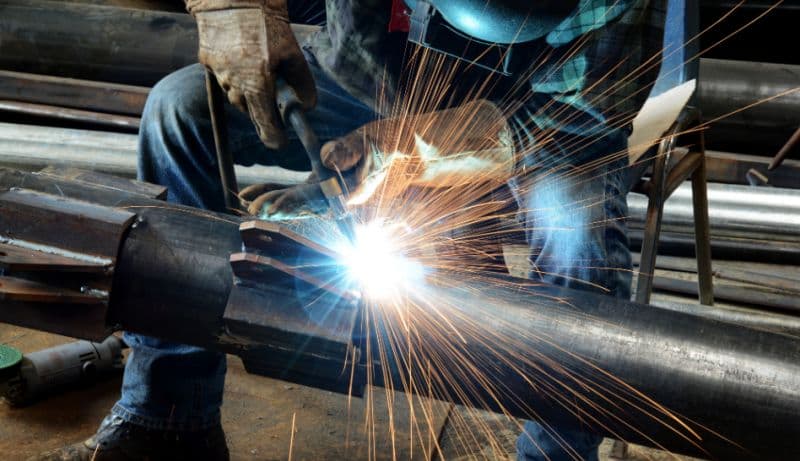
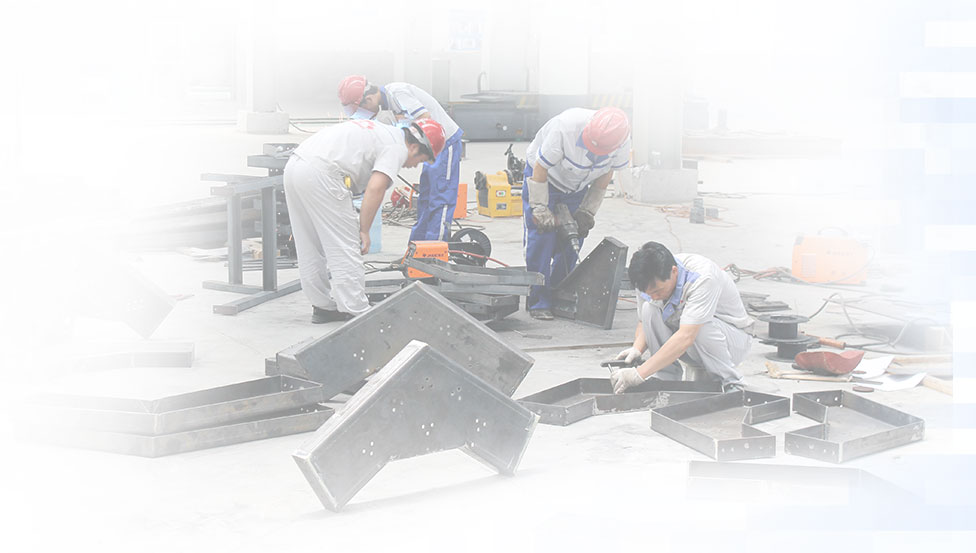
● Manufacturing
Equipment Manufacturing
The critical components of the of the complete pellet production line equipment are built in our own workshops in Asia. Additional equipment is manufactured by our worldwide network of reliable partners.
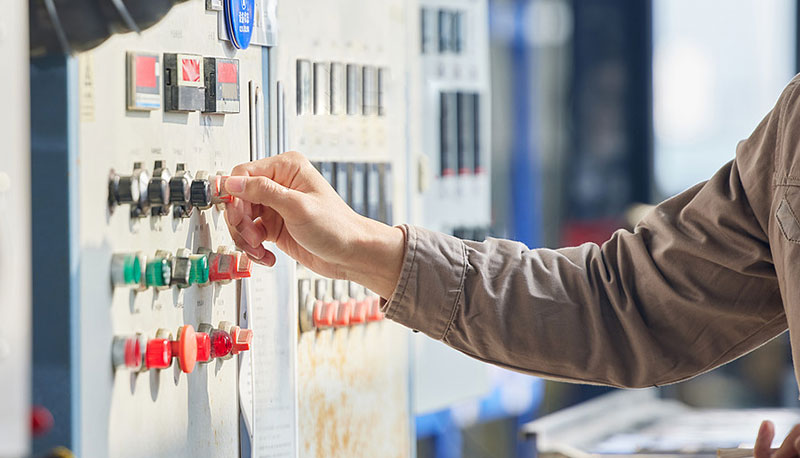
● Testing
Quality Inspection & Testing
Before leaving the factory, all equipment will be inspected by the quality inspection department. We can also provide customers with testing services from a single machine to a complete pellet plant system, and provide you with real actual data for “worry-free use.”

● Delivery
Equipment Delivery
In equipment boxing and packaging, we adopt professional packaging and modular solutions to ensure the safe and non-destructive delivery of pellet plant equipment.
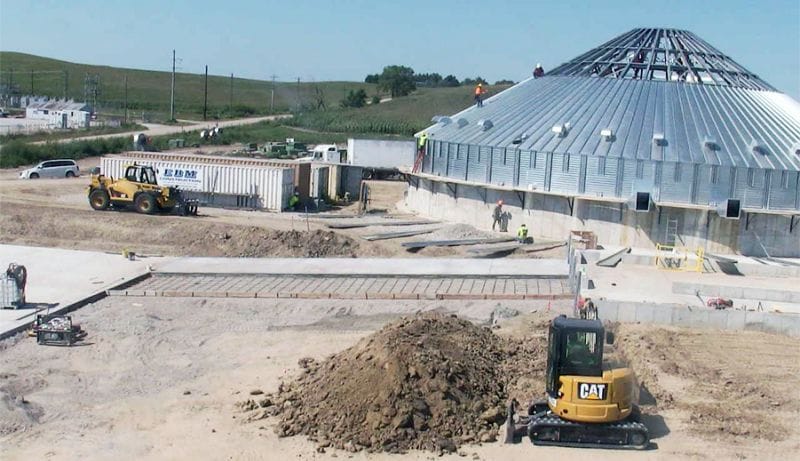
● Installation
Installation & Commissioning
Whether you choose your own subcontractor for the erection phase or you want to install everything together with us, a Richi supervisor will be around to make sure everything is mounted in a safe and thorough way.

● Training
Staff Training
We provide comprehensive training for the technicians of each project. We can also continue to provide support for the technicians during latter project operation.
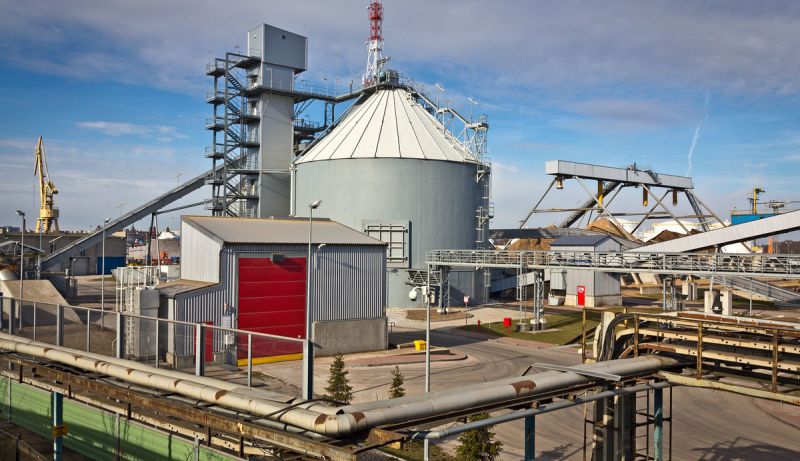
● After-sales
Project Follow-Up
When everything is up and running our Richiers will help you further whenever needed. We are ready to answer your call 24/7.We’ll also visit you regularly to learn about your needs.
Who we are
RICHI Machinery is one of the world’s leading suppliers of technology and services for the animal feed, aqua feed and pet food industries, also the largest pellet production line manufacturer in China.
Since 1995, RICHI’s vision to build a first-class enterprise, to foster first-class employees, and to make first-class contributions to society has never wavered.
In the past three decades, we have expanded our business to a wide range of areas, including animal feed mill equipment, aqua feed equipment, pet feed equipment, biomass pellet equipment, fertilizer equipment, cat litter equipment, municipal solid waste pellets equipment, etc.

1995
RICHI Established

2000+
Serving More Than 2000 Customers

120+
RICHI Employees

140+
Exported To 140 Countries