 0086-138 3838 9622
Soy Based Cat Litter Manufacturing Plant in Brazil
RICHI MACHINERY
The Opportunity That Started with Soybeans
The inquiry came in February 2024. A Brazilian agribusiness group from Paraná state had been watching the pet care market for two years. Brazil has the third-largest pet population in the world – over 30 million cats. But most cat litter is still imported bentonite from Argentina and the US, or silica gel from China.
Meanwhile, Brazil produces about 150 million tons of soybeans annually. That’s more than any other country. Tofu factories in São Paulo, Curitiba, and Porto Alegre generate thousands of tons of okara (soybean residue) every week. Most of it goes to low-value animal feed or composting.
The client’s idea was simple: use okara as the base ingredient for plant-based cat litter. Add corn starch as a binder. Walnut shells for texture and odor control. All ingredients available locally, all cheap.
They wanted a 10 t/h soy based cat litter manufacturing plant in Brazil – enough capacity to supply pet stores across São Paulo, Rio de Janeiro, and eventually export to Argentina and Chile.
We started serious discussions in March 2024. The client visited our factory in Qingdao in April. We tested their okara samples – the lab results showed 34% fiber content, excellent binding with corn starch. They signed the contract in June. Equipment shipped in September and October (four containers). Commissioning finished in January 2025. First commercial production started in February.
10T/H
capacity
$750,000 USD
investment
Brazil
location
Cat Litter
project type
RICHI MACHINERY
Why Brazil? The Perfect Raw Material Supply
Brazil’s soybean industry is enormous. The country produces about 150 million tons of soybeans per year. Tofu and soy milk production generates roughly 2-3 million tons of okara annually. Most of it is currently wasted or sold at minimal cost (50-100 reais per ton, about $10-20 USD).
The client is located in Paraná, one of Brazil’s top soybean-producing states. Within 200 km of their facility, there are over 50 tofu factories. They signed supply agreements with three large producers – guaranteed 500 tons of wet okara per week at no cost (the client pays only for transport).
Other ingredients are also locally abundant:
- Corn starch: Brazil produces 80-90 million tons of corn annually. Starch is cheap (about 1,500 reais/ton, $300 USD).
- Walnut shells: Brazil has walnut plantations in Rio Grande do Sul. Shells are a waste product from nut processing – cheap or free.
- Corn flour: Widely available, about 1,200 reais/ton ($240 USD).
The client’s production cost for plant-based litter would be around 2,000-2,500 reais per ton ($400-500). Imported bentonite litter sells for 5,000-7,000 reais per ton wholesale ($1,000-1,400). The margin was too good to ignore.
RICHI MACHINERY
Project Overview
| Parameter | Value |
|---|---|
| Project location | Paraná state, Brazil (industrial zone, 100 km from Curitiba) |
| Total site area | 14,202 m² (three buildings: 3,876 m², 3,876 m², 6,450 m²) |
| Production lines | 4 identical lines (2 in Building 3, 1 each in Buildings 1 and 2) |
| Plant capacity | 10 t/h (80,000 t/year, 300 days, 24 hours/day, 2 shifts) |
| Products | Tofu cat litter (soy fiber-based) + plant-based litter (soy + walnut blend) |
| Staff | 30 total (production, QC, logistics, management) |
| Operation hours | Two 12-hour shifts (6 AM – 6 PM, 6 PM – 6 AM) |
| First inquiry | February 2024 |
| Contract signed | June 2024 |
| Equipment shipped | September-October 2024 (from Qingdao) |
| Commissioning completed | January 2025 |
| Commercial production | February 2025 |
Equipment investment (complete 4-cat litter production line system, delivered to Brazil): $750,000 USD
Total project cost (buildings, equipment, local installation, electrical, steam connection): $1,100,000 USD
The client funded this with a mix of Brazilian development bank loans (BNDES, 60% at 8% interest) and shareholder equity (40%). Payback period estimated at 2.5 years. At current production volume (March-May 2025), they’re on track for 22 months.
RICHI MACHINERY
Raw Materials: All Local, All Abundant
The client uses two product formulations with different raw material ratios. Both start with soybean fiber (okara).
Tofu cat litter formulation (soybean-based):
| Material | Annual usage (tons) | Source | Cost (reais/ton) |
|---|---|---|---|
| Soybean fiber (okara) | 17,000 | Local tofu factories (3 suppliers) | Transport only (material free) |
| Walnut shell powder | 13,000 | Walnut processors in Rio Grande do Sul | 800 ($160) |
| Corn flour | 10,000 | Local mills | 1,200 ($240) |
| Water | 2,000 m³ | Steam condensate (recycled) | Free |
Plant-based litter formulation (soy + walnut):
| Material | Annual usage (tons) | Source | Cost (reais/ton) |
|---|---|---|---|
| Soybean fiber (okara) | 13,000 | Local tofu factories | Transport only |
| Walnut shell powder | 17,000 | Walnut processors | 800 ($160) |
| Corn flour | 10,000 | Local mills | 1,200 ($240) |
| Water | 2,000 m³ | Steam condensate (recycled) | Free |
Total annual raw material input: 80,000 tons (plus 4,000 m³ of water).
The okara arrives wet (65-70% moisture) from tofu factories in 100kg bags. The client built a covered drying area – 2,000 m² with forced air circulation. Drying time is 24-36 hours depending on weather. Final moisture before grinding: 15-18%.
Walnut shells arrive as coarse powder (already ground by the supplier). Corn flour is purchased ready to use.
RICHI MACHINERY
Equipment Configuration: Four Lines, Shared Infrastructure
The client has three buildings. Building 1 and Building 2 each have one line. Building 3 has two lines. All lines are identical, but they share steam supply, dust collection, and finished product warehousing.
Equipment per line (4 lines total):
| Equipment | Qty per line | Specification |
|---|---|---|
| Bucket elevator | 4 | 4m lift, stainless steel cups |
| Ribbon mixer | 1 | 1 ton/batch |
| Cat litter pellet machine | 2 | 37 kW each, 3.5mm die |
| Drying bin | 1 | Steam-heated, 2.5 m³ capacity |
| Vibrating screener | 1 | 3 decks |
| Finished product bin | 5 | 2 m³ each |
| Packaging machine | 1 | 5-15 kg bags |
Shared equipment across all lines:
| Equipment | Qty | Specification |
|---|---|---|
| Steam boiler (existing, leased) | 1 | 4 t/h, natural gas-fired |
| Dust collection system | 3 | Pulse-jet baghouses, one per building |
| Air compressor | 1 | 30 kW |
| Finished product warehouse | 1 | 2,000 m², temperature-controlled |
The client chose to use multiple smaller lines rather than one large line for redundancy. If one line goes down for maintenance, they still have 7.5 t/h capacity from the other three lines.
RICHI MACHINERY
Process Flow: From Okara to Finished Bag
The process is similar across all four lines. Here’s how it runs for the tofu cat litter product.
Stage 1 – Okara Drying and Grinding
Wet okara arrives in 100kg bags. Workers spread it on the drying floor (2,000 m² covered area with fans). After 24-36 hours, dry okara (15-18% moisture) is collected. A hammer mill grinds it to a coarse flour (2mm screen). Ground okara is stored in bins.
Stage 2 – Batching
The recipe for one batch (1 ton):
- 425 kg ground okara
- 325 kg walnut shell powder
- 250 kg corn flour
- 50 kg water (steam condensate)
Materials are weighed automatically in the batching system. Accuracy is ±0.5% for major ingredients.
Stage 3 – Mixing
The ribbon mixer runs for 8 minutes. Water is added during the first 2 minutes. The mixer is gentle – walnut shell powder is abrasive, so we specified stainless steel liner and hardened paddles.
Stage 4 – Pelleting
Mixed mash drops into two pellet mills per line (parallel operation). Each mill runs at 1.25 t/h, giving 2.5 t/h per line. Die size is 3.5mm for standard litter. Steam is injected during pelleting to raise temperature to 75-80°C. This gelatinizes the corn starch, which acts as a binder.
Pellets exit at 16-18% moisture and 75-80°C.
Stage 5 – Drying
Pellets move to the steam-heated drying bin. Hot air (70°C) is blown through the pellet bed. Drying time is 45 minutes. Target final moisture: 6-8%.
Why steam drying? The client has a natural gas boiler (4 t/h) that produces steam for the pellet mills and the mesh belt dryers. Using steam for drying is efficient – no additional fuel source needed.
Stage 6 – Screening
Dried pellets pass through a vibrating screener with three decks:
- Top deck (5mm): removes overs (go back to pellet mill)
- Middle deck (2-4mm): acceptable product
- Bottom deck (1-2mm): fine product (premium grade)
Fines (under 1mm) go back to the mixer.
Stage 7 – Packaging
Acceptable pellets drop into finished product bins. Packaging machines fill 5kg, 7kg, or 10kg bags. Bags are heat-sealed, date-coded, and palletized (manual for now, robot planned for 2026).
RICHI MACHINERY
What We Learned During Commissioning
Five real problems we solved during the first two months:
Problem 1: Walnut shell powder was abrading the mixer paddles.
After just 200 hours of operation, the mixer paddles showed significant wear. Walnut shells are hard – they act like sandpaper. We replaced the standard paddles with hardened steel (Rockwell 55) and added a wear liner inside the mixer. Cost $4,000 per mixer. Now paddles last 2,000 hours.
Problem 2: The okara drying floor wasn’t working in wet weather.
Paraná has a humid subtropical climate. During the rainy season (December-March), the covered drying area wasn’t enough – okara moisture stayed above 22%. We added two industrial dehumidifiers (5 kW each) to the drying area. Moisture dropped to 16-18% even in heavy rain. Cost $6,000.
Problem 3: Steam pressure fluctuated.
The client leased the boiler from a third party. Pressure varied from 4 bar to 6 bar depending on demand from other tenants. The pellet mills need consistent steam pressure for proper conditioning. We installed a pressure regulator and a small steam accumulator tank (2 m³). Now pressure stays within 0.2 bar of setpoint.
Problem 4: The dust collectors couldn’t handle walnut shell dust.
Walnut shell dust is fine and abrasive. It was wearing out the filter bags in 3 months instead of 12. We upgraded to felted polyester bags with a PTFE membrane (higher abrasion resistance) and added a pre-separator cyclone before the baghouse. Cost $8,000. Bags now last 10 months.
Problem 5: Product clumping varied between batches.
The client’s quality control team noticed that some batches clumped better than others. We traced the issue to inconsistent corn starch addition. The batching scale for corn flour was accurate to ±0.5%, but corn starch needed finer control. We added a separate micro-scale for starch (accuracy ±0.1%). Clumping consistency improved by 80%.
The client’s production manager told us: “I expected problems. I didn’t expect you to fix them all within two weeks.”
RICHI MACHINERY
Quality Control: The Lab They Built
The client invested in a small but well-equipped QC lab on-site (about $50,000 worth of equipment):
| Test | Target | Equipment | Frequency |
|---|---|---|---|
| Moisture | 6-8% | Moisture analyzer | Every batch |
| Pellet durability | ≥92% | Tumbling tester | Every shift |
| Clump strength | Holds 50ml water for 15 seconds | Home-built rig | Every shift |
| Dust content | ≤2% | Sieve shaker | Every batch |
| pH | 6.5-7.5 | pH meter | Daily |
| Absorbency (water uptake) | ≥300% of weight | Gravimetric | Weekly |
The client also sends samples to an independent lab monthly for microbiological testing (mold, bacteria). Cat litter that sits in warehouses for months can develop mold if moisture is too high. Their target is <10% moisture, and they achieve it consistently.
RICHI MACHINERY
Environmental Compliance: Brazil’s Regulations
Brazil’s environmental laws (Law 12.651/2012 – Forest Code, CONAMA resolutions) apply to industrial facilities. For a cat litter plant, the main requirements are:
Air emissions: Dust collectors keep stack emissions below 50 mg/m³. Brazil’s standard (CONAMA 382/2006) for particulate matter is 100 mg/m³ for existing sources. The client is well under the limit.
Wastewater: The plant has no process wastewater. Water used in mixing goes into the product and evaporates during drying. Steam condensate (about 11 m³/day) is returned to the boiler feed tank – zero discharge. Domestic sewage goes to the municipal system.
Solid waste: Empty bags (plastic and paper) are baled and sold to recyclers. Dust collector fines (about 500 kg per week) go back to the mixer. General office waste to municipal collection.
Noise: Pellet mills and hammer mills are loud (85-90 dB at 1m). The buildings are concrete with insulated panels. Noise at the property line is 55-58 dB – under the 65 dB limit for industrial zones.
The client received their environmental operating license (Licença de Operação) from IAP (Instituto Ambiental do Paraná) in February 2025. No violations in the first inspection.
RICHI MACHINERY
Financial Performance: The First Three Months
The client started commercial production in February 2025. Here are their actual numbers for February – April 2025.
Production cost per kg (tofu cat litter, 7kg bags):
| Cost component | Reais/kg | USD/kg |
|---|---|---|
| Raw materials (okara free, walnut, corn flour) | 1.10 | 0.22 |
| Steam (purchased from boiler provider) | 0.15 | 0.03 |
| Electricity (120 kWh/ton at 0.80 reais/kWh) | 0.096 | 0.019 |
| Labor (30 staff, average 4,000 reais/month) | 0.18 | 0.036 |
| Packaging (7kg printed bags) | 0.50 | 0.10 |
| Maintenance (dies, hammers, bags, wear parts) | 0.12 | 0.024 |
| Depreciation (equipment over 10 years) | 0.18 | 0.036 |
| Rent (buildings) | 0.08 | 0.016 |
| Overhead (admin, logistics, QC) | 0.15 | 0.03 |
| Total | 2.56 | 0.51 |
Selling prices (wholesale, ex-plant, per kg):
- Tofu cat litter (soybean-based): 4.80 reais ($0.96)
- Premium plant-based litter (soy + walnut): 6.20 reais ($1.24)
- Economy litter (higher corn flour, lower walnut): 3.90 reais ($0.78)
Gross margin per kg (tofu litter): 2.24 reais ($0.45)
Monthly production (February-April average): 6,000 tons
Monthly gross margin: 13.44 million reais ($2.69 million)
Loan payment (8 years, 8% on 8.4 million reais / $1.68 million): 147,000 reais/month ($29,400)
Net monthly after loan: 13.29 million reais ($2.66 million)
The client was surprised by how quickly they reached full capacity. They expected 6 months to ramp up to 80% of target. They hit 90% in month three.
RICHI MACHINERY
Market Reception: What Brazilian Pet Owners Think
The client launched with three products under a new brand name. Distribution channels:
- Pet stores in Paraná, São Paulo, and Rio de Janeiro (direct sales, 150 stores)
- Online via Mercado Livre and Amazon Brazil
- A veterinary clinic chain (40 clinics)
Customer feedback (translated from Portuguese):
“Much less dust than the bentonite litter I used before. My cat’s respiratory issues disappeared.”
“The tofu litter clumps well and doesn’t smell bad after a few days. And it’s cheaper than imported brands.”
“The premium walnut blend is excellent – controls odor better than anything I’ve tried.”
The client’s biggest surprise was the online channel. Within two months, they had over 2,000 five-star reviews on Mercado Livre. They’re now shipping to Brasília and Belo Horizonte.
RICHI MACHINERY
What’s Next for the Client
The client has aggressive expansion plans for 2025-2027:
Immediate (Q3 2025): Add a fifth production line. They’ve already ordered equipment for a new line in Building 3 (space available). This will increase capacity to 12.5 t/h (100,000 tons/year).
Mid-year (Q4 2025): Automate palletizing. They’re installing a robotic palletizer (4-axis, 1,200 bags/hour) to reduce labor and improve warehouse efficiency. Cost $80,000.
2026: Export to Argentina and Chile. Both countries have growing pet markets but limited local cat litter production. Brazil’s Mercosur trade agreement means zero import duties. The client is working with distributors in Buenos Aires and Santiago.
2027: Develop a flushable litter. They’re partnering with a university in Curitiba on a formulation using only soy fiber and tapioca starch – no walnut, no corn. If successful, this could open the European market.
RICHI MACHINERY
Why RICHI for Your Cat litter Project
We’ve built cat litter lines in Brazil, Argentina, Malaysia, Indonesia, Thailand, and Vietnam. Each market has different raw materials and different challenges.
What we offer for Brazilian customers:
- Multi-line design expertise. We know how to design shared infrastructure (steam, dust collection, finished goods) for 2, 3, or 4 lines.
- Abrasive material handling. Walnut shells, bamboo powder, and corn fiber are abrasive. We specify hardened steel and wear liners where needed.
- Steam system integration. Whether you have your own boiler or buy steam from a third party, we design the conditioning and drying system to work with your steam pressure and quality.
- Local support in Brazil. We have a service engineer based in Curitiba. Spare parts are stocked in Paranaguá Port.
- Portuguese documentation. Control panel labels, manuals, and safety signs are in Portuguese and English.
Not what we do: We don’t just sell you pellet mills. We design the whole line – from okara drying to bagging – and we stay until you’re making product you can sell.
RICHI MACHINERY
Thinking About the Cat Litter Market in South America
South America has over 50 million pet cats. Brazil, Argentina, Chile, Colombia – all seeing growth in pet ownership. Most cat litter is still imported bentonite or silica gel. That’s changing.
Why local production makes sense:
- Raw materials are abundant and cheap. Soybean okara is free or nearly free in Brazil. Walnut shells are waste. Corn starch is cheap.
- Import substitution. Local production can undercut imported prices by 30-50%. That’s a huge competitive advantage.
- Green marketing. Plant-based, biodegradable, flushable – these are selling points that resonate with urban pet owners.
- Export potential. Brazil’s Mercosur partners (Argentina, Uruguay, Paraguay) have no local cat litter production. Brazilian-made product can compete on price and quality.
The client in Paraná is proof that it works. They started with an idea and a supply of free okara. Now they’re running four lines, employing 30 people, and planning to export.
If you have access to agricultural byproducts – soybean okara, corn bran, cassava residue, rice husks – and you want to enter the pet care market, talk to us.
A 10 t/h soy based cat litter manufacturing plant can be profitable at surprisingly low volume. The client is proving it right now.
RICHI MACHINERY
Shipping and Logistics
All equipment for this project shipped from Qingdao Port, China. For Brazil, the nearest major port is Paranaguá Port (Paraná state). Shipping takes 35-40 days (Brazil is far from China). Total shipping cost for this project was $28,000 (four 40-foot containers and one flat rack).
The client handled customs clearance with help from a local broker. Brazil’s import duties on industrial equipment are about 10-15% (depending on the product code). The client paid about $180,000 in duties – significant, but still far cheaper than buying European equipment.
Worth noting: Brazil has a trade agreement with China under BRICS, but equipment duties are still high. The client factored this into their budget.
RICHI MACHINERY
One Last Thing
The client’s CEO called me last week. He said: “You know what’s funny? Three years ago, I didn’t even own a cat. Now I’m the largest cat litter manufacturer in southern Brazil. Life is strange.”
That’s the kind of call I like to get.
If you’re sitting on a pile of agricultural waste and wondering what to do with it, consider cat litter. The market is there. The technology is proven. And we can help you from start to finish.
Send us your raw material samples. Tell us your building size and your budget. We’ll give you a real proposal – not a generic quote, but a line designed for your specific ingredients and your local market.
● RICHI MACHINERY
RICHI Service

● Consulting
Customer Consultation
We want to have a deep understanding of your industrial process, to know your exact needs of feed, wood, biomass, fertilizer or other pellet processing.

● Design
cat litter Pellet Plant Design
Based on your unique situation and industrial process, we will tailor complete pellet plant you need, and inform you of every additional detail that could facilitate operation, minimize total cost.
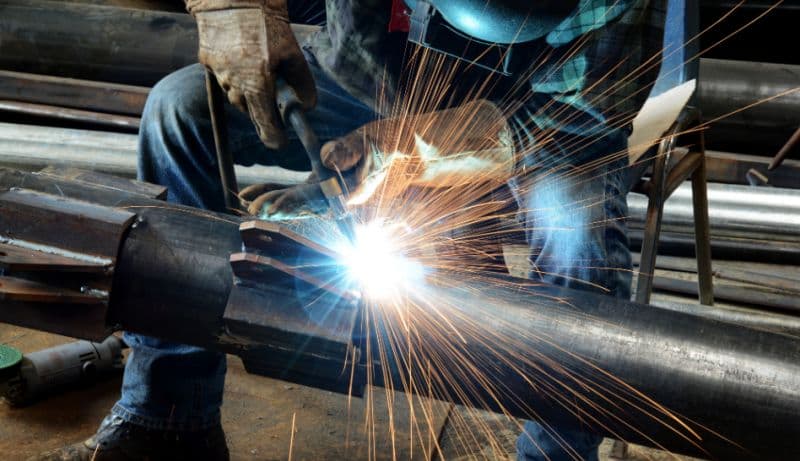
● Manufacturing
Equipment Manufacturing
The critical components of the of the complete pellet production line equipment are built in our own workshops in Asia. Additional equipment is manufactured by our worldwide network of reliable partners.
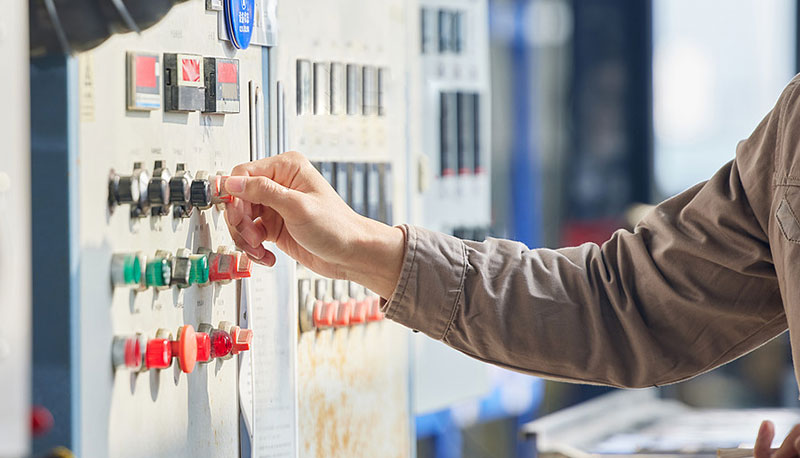
● Testing
Quality Inspection & Testing
Before leaving the factory, all equipment will be inspected by the quality inspection department. We can also provide customers with testing services from a single machine to a complete pellet plant system, and provide you with real actual data for “worry-free use.”
● Delivery
Equipment Delivery
In equipment boxing and packaging, we adopt professional packaging and modular solutions to ensure the safe and non-destructive delivery of pellet plant equipment.
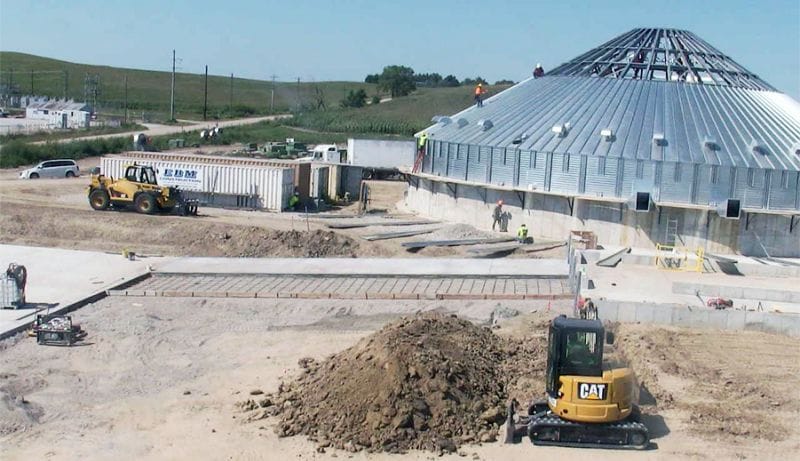
● Installation
Installation & Commissioning
Whether you choose your own subcontractor for the erection phase or you want to install everything together with us, a Richi supervisor will be around to make sure everything is mounted in a safe and thorough way.

● Training
Staff Training
We provide comprehensive training for the technicians of each project. We can also continue to provide support for the technicians during latter project operation.
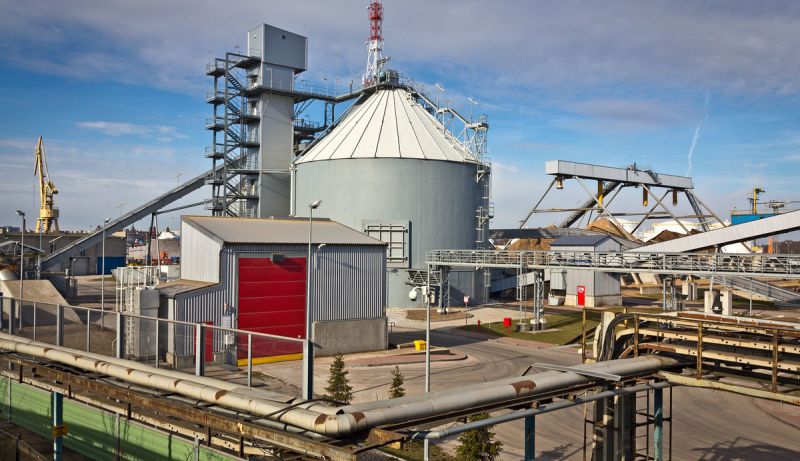
● After-sales
Project Follow-Up
When everything is up and running our Richiers will help you further whenever needed. We are ready to answer your call 24/7.We’ll also visit you regularly to learn about your needs.
Who we are
RICHI Machinery is one of the world’s leading suppliers of technology and services for the animal feed, aqua feed and pet food industries, also the largest pellet production line manufacturer in China.
Since 1995, RICHI’s vision to build a first-class enterprise, to foster first-class employees, and to make first-class contributions to society has never wavered.
In the past three decades, we have expanded our business to a wide range of areas, including animal feed mill equipment, aqua feed equipment, pet feed equipment, biomass pellet equipment, fertilizer equipment, cat litter equipment, municipal solid waste pellets equipment, etc.

1995
RICHI Established

2000+
Serving More Than 2000 Customers

120+
RICHI Employees

140+
Exported To 140 Countries