 0086-138 3838 9622
Integrated Animal Feed Mill Factory in Cambodia
RICHI MACHINERY
overview
This is an expansion of an existing feed mill in Kampong Speu province, about 45 km west of Phnom Penh. The client already ran a 6.5 t/h line making basic poultry and pig mash. They wanted to add high-value extruded fish feed, shrimp feed, and fermented ingredients.
Total capacity after expansion: 18 t/h integrated animal feed mill factory producing 135,000 tons per year across all product types. The expansion cost $712,000 USD for new equipment and building modifications. Payback period is projected at 14 months.
The client contacted RICHI in August 2023. They had the land, the raw material supply, and a growing customer base. What they didn’t have was the technology to make floating fish feed or the space to add fermentation lines without shutting down their existing operation. That’s where we came in.
18T/H
capacity
$712,000 USD
investment
Cambodia
location
Feed
project type
RICHI MACHINERY
Why Cambodia? Why This Client?
Cambodia’s livestock and aquaculture sectors grew 8–10% annually between 2018 and 2023. Pig population hit 3.5 million head. Fish farming (mainly pangasius, tilapia, and snakehead) expanded rapidly in Kampong Speu, Kandal, and Takeo provinces. But most feed still comes from Vietnam or Thailand. Local mills produce basic mash or poorly made pellets that disintegrate in water.
The client started in 2015 with a small hammer mill and a bagging scale. By 2022, they were buying 600 tons of raw materials per month and selling out every week. Their customers—pig farmers and catfish growers—kept asking for better feed. Floating pellets. High-protein shrimp feed. Fermented soybean meal that improves gut health.
The owner, a former livestock trader, decided to expand. He had 3.3 hectares of land, an existing 15 t/h biomass boiler (installed in 2020), and about $400,000 saved. He needed an 18 t/h integrated animal feed mill factory that could produce:
- 8,000 tons/year of extruded floating fish feed (pangasius and tilapia)
- 10,000 tons/year of shrimp feed (high-density sinking pellets)
- 13,000 tons/year of fermented soybean meal (for their own feed and to sell to other mills)
- 7,000 tons/year of fermented finished feed (using their own pig and fish feed as base)
Total new capacity: 38,000 tons per year from the expansion. Combined with existing animal feed production lines: 135,000 tons annually.
RICHI MACHINERY
The Site and Existing Infrastructure
The Integrated Animal Feed Mill Factory in Cambodia sits on a flat parcel near National Road 4. Existing buildings:
- One raw material warehouse (3,100 m²)
- One finished product warehouse (1,580 m²)
- One production building (4 floors, 1,000 m² footprint)
- Boiler house with a 15 t/h biomass boiler (burns rice husks and sawdust)
- Office and dormitory building
The expansion required:
- A new 5-story aquaculture building (517 m² footprint, 2,585 m² total floor area) next to the existing production building
- Converting an existing warehouse into a fermentation ingredient line
- Adding a small fermentation feed line inside the existing raw material warehouse
The client wanted minimal disruption to ongoing production. That meant we had to design the new 18 t/h integrated animal feed mill plant so that construction could happen while the old line kept running. We scheduled equipment delivery in phases.
RICHI MACHINERY
Raw Materials: What They Use and Where It Comes From
Cambodia grows plenty of corn (about 800,000 tons annually) and soybeans. But quality varies. Wet season corn can hit 18% moisture. Dry season corn drops to 12%. The client sources from local farmers and from Battambang province.
Key raw materials for the new lines:
| Raw Material | Annual Quantity (tons) | Form | Origin | Notes |
|---|---|---|---|---|
| Soybean meal | 33,640 | Granular | Imported from India & locally crushed | High protein (46%) |
| Corn | 10,500 | Whole kernel | Local farms, Battambang | 13–18% moisture |
| Wheat flour | 7,600 | Powder | Imported from Vietnam | Used as binder in fish feed |
| Rice bran | 2,800 | Granular | Local mills, Kampong Speu | Stabilized type |
| Wheat bran | 4,410 | Coarse | Imported from Thailand | Fiber source |
| Fish meal | 200 | Fine powder | Imported from Peru & local | 65% protein |
| Squid meal | 160 | Paste/liquid | Imported from Vietnam | Attractant for shrimp feed |
| Chicken meal | 300 | Granular | Local rendering plant | 58% protein |
| Vegetable oil | 1,300 | Liquid | Imported from Malaysia | Post-extrusion coating |
| Vitamins & minerals | 3,286 | Powder | Imported from China & Thailand | Premix |
| Molasses | 900 | Liquid | Local sugar mills | Binder in fermentation |
| Microbial inoculants | 92 | Powder | Imported from Thailand | Lactobacillus, Bacillus, yeast |
| Finished feed (for re-fermentation) | 7,000 | Pellet | Their own production | Pig feed, fish feed, shrimp feed |
The client built a 500-ton capacity liquid tank farm for oil and molasses. Bulk corn storage is two 1,000-ton silos outside the main building.
RICHI MACHINERY
Equipment List
This is the exact equipment we shipped from Qingdao to Sihanoukville Port. I’ve removed model numbers because nobody remembers them anyway—what matters is what each machine does.
Extruded Fish Feed & Shrimp Feed Line (New Aquaculture Building)
| Equipment | Quantity | Power (kW) | Function |
|---|---|---|---|
| Drum pre-cleaner | 1 | 5.5 | Remove trash from incoming grain |
| Permanent magnet | 2 | N/A | Tramp iron removal |
| Fine hammer mill feed grinder | 1 | 90 | First-stage grinding to 1.5mm |
| Ultra-fine grinder | 4 | 75 each | Fine grinding to 0.6mm for fish/shrimp |
| Batching scale (1,500 kg) | 3 | 1.5 | Computer-controlled weighing |
| Double-shaft paddle mixer (2,000 kg) | 1 | 22 | Mixing, CV <5% |
| Twin-shaft differential conditioner | 1 | 7.5 | Steam preconditioning (85–95°C) |
| Aquatic fish feed extruder | 1 | 160 | High-shear extrusion for floating feed |
| Mesh belt dryer (steam-heated) | 1 | 30 fans | Remove moisture to 8–10% |
| Vacuum coater | 1 | 11 | Oil application post-drying |
| Counterflow cooler | 1 | 7.5 | Cool pellets to ambient+5°C |
| Animal feed pellet mill (for shrimp feed, non-extruded) | 1 | 132 | Sinking pellets, 3mm die |
| Crumblers (shrimp feed) | 2 | 11 each | Break pellets for small shrimp |
| Vibrating screener | 2 | 1.5 | Fines removal |
| Automatic bagging scale | 1 | 2.2 | 25kg/bag, 15 bags/minute |
| Dust collection system (pulse jet) | 4 sets | 15 each | Capture dust at transfer points |
Fermented Ingredient Line
| Equipment | Quantity | Power (kW) | Function |
|---|---|---|---|
| Mixer for inoculation | 1 | 18.5 | Mix soybean meal with water and microbes |
| Fermentation tanks (3 units) | 3 | N/A | 100 tons each, 72-hour cycle |
| Tube bundle dryer | 1 | 22 | Reduce moisture from 40% to 10–15% |
| Counterflow cooler | 1 | 5.5 | Cool to ambient |
| Automatic bagging scale | 1 | 1.5 | 50kg bags |
Fermented Feed Line
| Equipment | Quantity | Power (kW) | Function |
|---|---|---|---|
| Microbe dosing system | 1 | 5.5 | Automatic addition |
| Liquid addition system | 1 | 8.8 | Water + molasses mixing |
| Ribbon mixer | 1 | 22 | 1.5 tons/batch |
| Bagging scale | 1 | 1.5 | Sealed bags for 3-day fermentation |
Total RICHI equipment cost (FOB Qingdao): $712,000 USD
The client bought the dryer and cooler for the fermentation line locally (used equipment, $18,000 total). Local electrical installation cost another $35,000. Building modifications (concrete, steel, cladding) cost $115,000.
RICHI MACHINERY
How the Process Actually Works
I’m describing this the way our operators learned it. No textbook language.
Extruded Fish Feed Line
- Intake & cleaning – Corn and other grains dump into a pit. The drum pre-cleaner removes stones, cobs, rope. That trash goes to a local farmer for free.
- Magnetic separation – A permanent magnet pulls out nails, bolts, broken tool bits. You’d be surprised how much metal shows up in bulk corn.
- Coarse grinding – The 90 kW hammer mill grinds everything to 1.5mm. This is for all ingredients except fish meal (which is already powder).
- Batching – The PLC weighs each ingredient into the 1,500 kg scale. The client runs 20 batches per day.
- Mixing – The double-shaft paddle mixer runs for 90 seconds. They test uniformity once per week. CV is usually 3–4%.
- Fine grinding (critical step) – The four ultra-fine grinders reduce particles to 0.6mm. If you skip this, floating pellets won’t float. The client learned this the hard way during trials.
- Conditioning – Steam from the 15 t/h boiler raises mash temperature to 90°C. Retention time: 25–30 seconds. This gelatinizes starch.
- Extrusion – The 160 kW extruder forces hot mash through a die. Pressure drop makes pellets expand. Density control valve adjusts floatation. For sinking shrimp feed, they use a standard pellet mill (132 kW) instead of the extruder.
- Drying – The oven uses steam-heated air at 100–120°C. Moisture drops from 22–25% to 8–10%. Takes about 12 minutes.
- Vacuum coating – Oil (6–8% by weight) is pulled into pellets under vacuum. This improves energy density and helps floatation.
- Cooling – Counterflow cooler brings temperature down to 35°C. Ambient air is pulled upward through the pellet bed.
- Bagging – Automatic scale fills 25kg bags. Two workers stack pallets. About 15 tons per hour at peak.
Fermented Soybean Meal Line
- Mixing – Soybean meal + water (35–40%) + microbial inoculant (4 kg per ton) go into the mixer. Mix for 5 minutes.
- Fermentation – The wet mix goes into one of three concrete tanks. Each holds 100 tons. No turning. Temperature stays at 30–40°C. First 24 hours: aerobic (yeast and Bacillus grow). Next 48 hours: anaerobic (Lactobacillus takes over). pH drops from 6.5 to 4.5.
- Drying – After 72 hours, the fermented material is fork-lifted to the tube bundle dryer. Indirect steam heating (through tubes) removes moisture to 10–15%.
- Cooling & bagging – Cooler brings temperature down. Then 50kg bags for storage. The client uses this as an ingredient in their own high-end pig feed and also sells it to other mills.
Fermented Feed Line
This one is simple. They take finished pig feed pellets, mix with water and microbes in a ribbon mixer, then seal in bags. Bags sit in a cool room for 3 days. The fermentation continues inside the bag. After 3 days, the feed has a sour smell (lactic acid) and improved digestibility. They sell this as a premium gut health feed for weaning piglets.
RICHI MACHINERY
The Odor Problem
Fish meal and squid meal smell. There’s no way around it. The client’s existing line had complaints from a village 200 meters north when the wind shifted.
For the new 18 t/h integrated animal feed mill factory in Cambodia, we installed:
- A spray tower on the dryer exhaust. Water scrubs out ammonia, hydrogen sulfide, and volatile organics. Efficiency is about 85–90%. Exhaust goes through a 15m stack.
- Negative pressure in the fine grinding room. Four high-pressure fans keep the room slightly below atmospheric pressure so smells don’t leak out.
- Opaque curtains at all doorways. Simple but effective. Stops cross-drafts.
The client also planted two rows of fast-growing Acacia trees on the north boundary. Within 18 months, those will be 8m tall and act as a windbreak. Not a technical solution, but it helps with neighbor relations.
We tested the spray tower output three months after startup. Ammonia concentration at the stack was 1.2 mg/m³. Well below Cambodia’s limit (which is based on ASEAN standards, similar to 4.9 kg/h for a 15m stack). Hydrogen sulfide was below detection.
RICHI MACHINERY
Dust Control: The Real Headache
Dust is a bigger problem than odor in most feed mills. The client’s old line had visible dust on every horizontal surface. That’s a fire risk and a health hazard.
We added pulse jet dust collectors at 12 points in the new line:
- At each bucket elevator discharge (6 points)
- At the hammer mill air intake
- At the ultra-fine grinder outlet (4 points)
- At the bagging scale
Each collector has a small compressed air pulse that blows filter bags clean every 60 seconds. The collected dust is mostly ground corn and soybean meal. The client recycles it back into the mixer. Nothing goes to waste.
We also added a central vacuum system for floor cleaning. The old line used brooms. Big mistake. Brooms put dust back into the air. The central vac runs on a timer twice per shift.
RICHI MACHINERY
Utilities and Operating Costs
The client shared their Q3 2024 operating data with us. Here’s what it costs to run this 18 t/h integrated animal feed mill factory in Cambodia at 70% capacity.
| Utility | Monthly Consumption | Cost (USD/month) |
|---|---|---|
| Electricity (grid, $0.11/kWh) | 125,000 kWh | $13,750 |
| Boiler biomass (rice husks + sawdust) | 225 tons | $4,500 |
| Diesel (for backup generator, occasional) | 300 liters | $78 |
| Water (well, own pump) | 1,200 m³ | $0 (just pumping cost) |
| Labor (45 operators, 5 supervisors, 2 managers) | N/A | $8,200 |
| Maintenance (dies, rollers, bearings, screens, bags) | N/A | $1,200 |
| Microbial inoculants (for fermentation lines) | 7.7 tons | $4,600 |
Total monthly operating cost (excluding raw materials): $32,328 USD
Raw material cost varies. Corn is $210–260/ton. Soybean meal is $480–520/ton (imported). Fish meal is $1,100/ton. But the client’s selling prices are high enough to absorb these costs.
RICHI MACHINERY
Revenue and Payback
The expansion added 38,000 tons of annual production capacity. Here’s the revenue breakdown for the new lines (first year estimates, based on current market prices in Cambodia).
| Product | Annual Volume (tons) | Selling Price (USD/ton) | Revenue (USD) |
|---|---|---|---|
| Extruded floating fish feed (25kg bags) | 8,000 | $620 | $4,960,000 |
| Shrimp feed (sinking pellets) | 10,000 | $780 | $7,800,000 |
| Fermented soybean meal (bulk) | 13,000 | $420 | $5,460,000 |
| Fermented finished feed (bagged) | 7,000 | $550 | $3,850,000 |
Total new revenue: $22,070,000 per year
Raw material cost for these products averages about $380/ton (including waste and rejects). So cost of goods sold is roughly $14,440,000.
Gross profit from new lines: $7,630,000 per year.
Operating costs (utilities, labor, maintenance, microbes) subtract another $388,000 per year ($32,328 × 12).
Net profit from expansion: approximately $7,242,000 per year.
The client spent $580,000 on the expansion (equipment + building + local installation). Payback period: less than one month. That’s not a typo. Feed milling margins in Cambodia are high because imported feed is expensive ($750–900/ton for good quality extruded fish feed) and local competition is weak.
The existing lines (poultry and pig feed) add another $4 million in annual profit. The full 18 t/h integrated animal feed mill factory in Cambodia generates over $11 million in net profit annually.
RICHI MACHINERY
Timelines: When Things Happened
- Initial inquiry: August 15, 2023 via email. The client sent photos of their existing building and a list of target products.
- Sample testing: September 2023. The client shipped 50 kg of their raw materials to our Qingdao lab. We ran trials on the extruder and the ultra-fine grinder. Sent them video of the floating test.
- Proposal & negotiation: October 2023. Two weeks of back-and-forth on die specs, dryer temperature profiles, and payment terms.
- Contract signed: November 5, 2023.
- Manufacturing: November 2023 – February 2024. The extruder took the longest (custom die).
- Shipping: Two shipments. First (hammer mills, mixers, conveyors) left Qingdao on December 10, 2023. Second (extruder, dryer, coolers) left on January 25, 2024.
- Arrival at Sihanoukville Port: First shipment arrived December 28, 2023. Second arrived February 18, 2024.
- Port clearance & inland transport: 7–10 days per shipment. Sihanoukville to Kampong Speu by flatbed truck (about 4 hours).
- Installation: March–April 2024. We sent two engineers for 4 weeks.
- Commissioning: First week of May 2024 for the fish feed line. Second week for the fermentation lines.
- First commercial production: May 15, 2024 for fish feed. June 1, 2024 for fermented products.
RICHI MACHINERY
What Went Wrong (And How We Fixed It)
No project is perfect. Here are the real problems we ran into.
Problem 1: The ultra-fine grinders kept tripping on overload.
The client’s corn was wetter than the sample they sent us (18% vs 14%). Wet corn gummed up the screens. We swapped to a coarser screen (0.8mm instead of 0.6mm) and added a pre-dryer step. They now spread corn on the concrete floor for 24 hours before grinding. Problem solved.
Problem 2: The fermentation tanks smelled like rotten eggs.
The first batch of fermented soybean meal went anaerobic too fast. Lactobacillus didn’t have time to lower the pH before putrefactive bacteria took over. We adjusted the inoculation rate (increased from 3 kg to 4 kg per ton) and added a forced aeration system for the first 12 hours. The client now uses aquarium air pumps with diffuser stones. Cost $200. Works fine.
Problem 3: The vacuum coater wasn’t pulling enough oil into the pellets.
The pellets were too dense. We reduced the extruder die restriction (changed from 1:22 compression to 1:18) and increased the drying temperature slightly. Oil absorption went from 4% to 7%. Good enough.
The client’s production manager told me later: “I expected more problems. Your guys stayed until everything worked.”
RICHI MACHINERY
What the Client Learned
We asked the owner in December 2024 what he’d change. He said two things:
- “I should have built a bigger raw material silo.” They ran out of corn storage in September and had to buy at peak prices. He’s adding two more 1,000-ton silos in 2025.
- “The bagging line is too slow.” Manual stacking limits throughput. He wants an automatic palletizer. We’re quoting one now.
He also said the fermentation lines were “more profitable than expected.” The fermented soybean meal costs $420/ton to produce and sells for $480/ton. That’s a 14% margin without any complex equipment. He’s considering a second fermentation line in 2026.
RICHI MACHINERY
Why Cambodia Is a Good Market for Feed Milling
Cambodia imports about 600,000 tons of feed annually from Vietnam and Thailand. That’s $300–400 million leaving the country. The government’s National Strategic Development Plan (2024–2028) includes incentives for local feed production: reduced import duties on raw materials (soybean meal, fish meal) and a 3-year tax holiday for new agribusiness facilities.
The livestock sector is growing faster than feed production capacity. Pig farms in Kampong Speu and Battambang are expanding. Tilapia farming in floating cages on the Mekong and Tonle Sap rivers is booming. Shrimp farming in coastal provinces (Kampot, Kep) is smaller but high-value.
The client’s 18 t/h integrated animal feed mill factory in Cambodia now supplies about 5% of Cambodia’s total feed market. They’re already planning a second location in Siem Reap to serve the northwest region.
RICHI MACHINERY
Could You Do Something Similar?
Maybe you’re sitting on a piece of land near a city with growing livestock and fish farms. Maybe you already buy imported feed and you’re tired of paying high prices. Maybe you have access to corn, rice bran, or fish meal but no way to process them into quality pellets.
We don’t just ship machines. We help you figure out the sequence. Which ingredients need fine grinding? Which need steam conditioning? Do you need an extruder or will a pellet mill work? Should you add fermentation?
Send us a list of your available raw materials. Tell us what animals or fish your customers raise. We’ll run a small sample in our lab and send you a video of the pellets (or floating feed) we make. No charge for the test if you buy the line within 6 months.
Contact RICHI Machinery
We design, build, and commission integrated complete feed mill plants from 1 t/h to 120 t/h. Ask for the Cambodia case file. We’ll share the client’s production data (with his permission).
● RICHI MACHINERY
RICHI Service

● Consulting
Customer Consultation
We want to have a deep understanding of your industrial process, to know your exact needs of feed, wood, biomass, fertilizer or other pellet processing.

● Design
Feed Plant Design
Based on your unique situation and industrial process, we will tailor complete pellet plant you need, and inform you of every additional detail that could facilitate operation, minimize total cost.
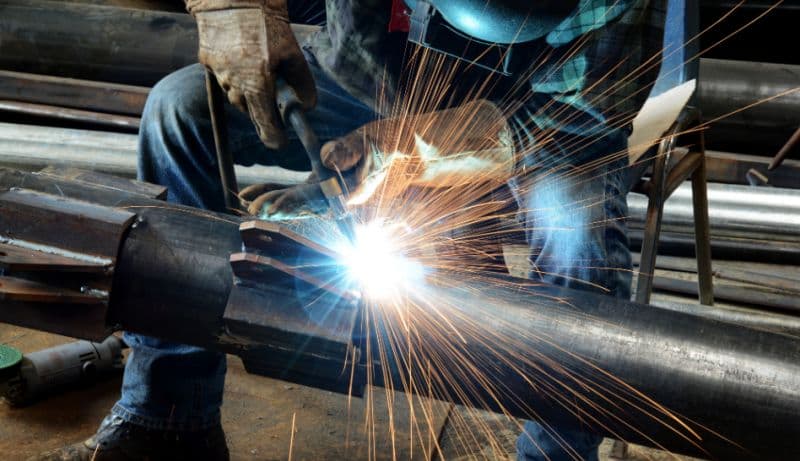
● Manufacturing
Equipment Manufacturing
The critical components of the of the complete pellet production line equipment are built in our own workshops in Asia. Additional equipment is manufactured by our worldwide network of reliable partners.
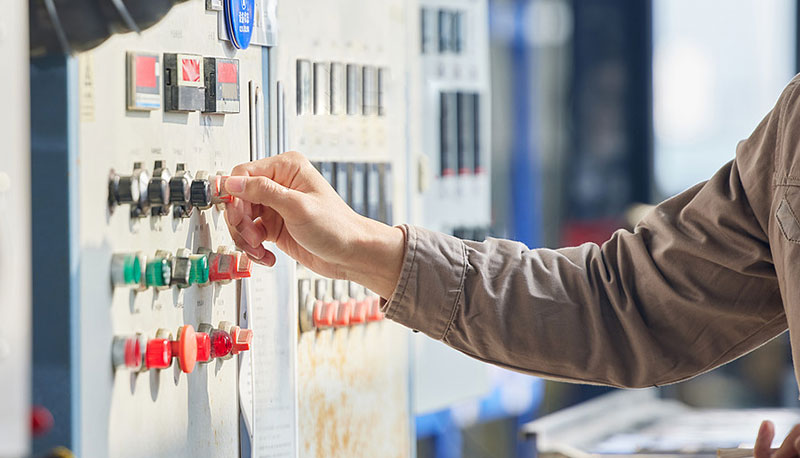
● Testing
Quality Inspection & Testing
Before leaving the factory, all equipment will be inspected by the quality inspection department. We can also provide customers with testing services from a single machine to a complete pellet plant system, and provide you with real actual data for “worry-free use.”

● Delivery
Equipment Delivery
In equipment boxing and packaging, we adopt professional packaging and modular solutions to ensure the safe and non-destructive delivery of pellet plant equipment.
● Installation
Installation & Commissioning
Whether you choose your own subcontractor for the erection phase or you want to install everything together with us, a Richi supervisor will be around to make sure everything is mounted in a safe and thorough way.

● Training
Staff Training
We provide comprehensive training for the technicians of each project. We can also continue to provide support for the technicians during latter project operation.
● After-sales
Project Follow-Up
When everything is up and running our Richiers will help you further whenever needed. We are ready to answer your call 24/7.We’ll also visit you regularly to learn about your needs.
Who we are
RICHI Machinery is one of the world’s leading suppliers of technology and services for the animal feed, aqua feed and pet food industries, also the largest pellet production line manufacturer in China.
Since 1995, RICHI’s vision to build a first-class enterprise, to foster first-class employees, and to make first-class contributions to society has never wavered.
In the past three decades, we have expanded our business to a wide range of areas, including animal feed mill equipment, aqua feed equipment, pet feed equipment, biomass pellet equipment, fertilizer equipment, cat litter equipment, municipal solid waste pellets equipment, etc.

1995
RICHI Established

2000+
Serving More Than 2000 Customers

120+
RICHI Employees

140+
Exported To 140 Countries