 0086-138 3838 9622
1–2 T/H small straw pellet plant in Tanzania
A Tanzanian agricultural company used its own factory site to establish a crop-straw fuel-pellet business. One main press served the seasonal production calendar, with straw preparation, controlled drying, cooling and manual packing arranged around a 2,500-tonne annual programme.
RICHI MACHINERY
A seasonal straw-fuel project with one main press
This small straw pellet plant in Tanzania entered production in April 2024. The agricultural company built it for 2,500 tonnes of fuel pellets annually. Its 1–2 T/H production class suited a single daytime shift and a concentrated 180-day working season.
The owner had an idle factory site available for the fuel-pellet operation. Reusing this space kept the project centred on straw handling and production equipment. RICHI arranged one pellet press with the preparation and finishing equipment needed for the company’s crop-residue supply.
Straw arrived in bulky, fibrous form, with receiving moisture between 20% and 30%. The practical challenge was preparing that material for a steady press feed. Bale opening, size reduction and moisture control came before the forming stage.
The project used one MZLH520 biomass pellet machine with a 132 kW main motor. Its 1.5–2 T/H machine capacity provided the required forming duty. A consistent supply of prepared straw let one machine serve the annual programme.
The project employed six people and operated one ten-hour shift on 180 working days each year. Production took place during the day, with no night shift. This gave the line 1,800 scheduled working hours annually.
| Annual operating measure | Calculated value | Production implication |
|---|---|---|
| Available line time | 1,800 hours | Ten hours for 180 days |
| Minimum average product rate | About 1,389 kg/hour | For 2,500 tonnes annually |
| At 1.5 T/H accepted product | About 1,667 hours | Annual programme running time |
| Remaining scheduled time | About 133 hours | Outside that running scenario |
The calendar required more than one tonne per hour of accepted fuel pellets. A 1.5 T/H finished-product operating point fitted the annual programme, while the main machine’s capacity allowed for the forming-stage material flow. Stoppages and finishing work used the remaining scheduled time.
1–2 T/H
production capacity
US$90,000
project investment
Tanzania
location
Straw fuel pellets
project type
RICHI MACHINERY
Using the company’s yard workshop and warehouse
The small straw pellet plant in Tanzania occupied the company’s 3,700 m² site. The production workshop covered 350 m², while an 800 m² material yard handled straw receiving and preparation. A 200 m² warehouse and 40 m² office supported the operation.
The workshop was on the south side of the site and the material yard on the west. The warehouse and office reused existing accommodation. The steel-structure workshop had a six-metre height, giving the production arrangement room for transfer and servicing access.
| Site component | Area | Project role |
|---|---|---|
| Whole company site | 3,700 m² | Existing project site |
| Production workshop | 350 m² | South-side processing |
| Material yard | 800 m² | West-side straw handling |
| Warehouse | 200 m² | Material and product holding |
| Office | 40 m² | Site administration |
RICHI MACHINERY
Straw receiving moisture and annual material use
The annual raw-material programme was 3,125 tonnes of crop straw for 2,500 tonnes of bagged fuel pellets. Receiving covered the straw’s moisture, bale condition and foreign material. Twine and unsuitable objects were removed before material entered the size-reduction equipment.
| Straw condition | Preparation route | Feed-control objective |
|---|---|---|
| Receiving moisture 20–30% | Check and separate lots | Identify drying duty |
| Wet material above 25% | Use the drying route | Remove excess moisture |
| Prepared feed at 14–16% | Supply controlled press feeding | Maintain forming condition |
| Material already at feed target | Bypass thermal drying | Avoid unnecessary heat treatment |
| Material or service | Annual provision | Basis |
|---|---|---|
| Crop straw | 3,125 tonnes | Gross incoming straw |
| Finished fuel pellets | 2,500 tonnes | Annual product programme |
| Electricity | 370,000 kWh | Production and site uses |
The annual figures gave a gross input-to-product ratio of 1.25 to one. Their 625-tonne difference covered the material account between receiving and finished bags, including water removal and net material withdrawals. Internal fines returned to production and were not added again to purchased straw.
RICHI MACHINERY
Fuel-pellet output and the production calendar
The finished product was straw-based biomass fuel for suitable pellet-burning equipment. The commercial specification covered pellet size, moisture, ash behaviour and handling strength. Straw identity remained part of the fuel description supplied to the buyer.
| Finished-product item | Project provision |
|---|---|
| Product type | Straw biomass fuel pellets |
| Annual programme | 2,500 tonnes |
| Production class | 1–2 T/H |
| Packing method | Manual weighing and bagging |
| Stock approach | Regular lot dispatch |
RICHI MACHINERY
A single forming machine with matched preparation
The main press was an MZLH520 with a 132 kW motor. The straw crusher prepared the feed, a rotary dryer handled the wet-material route, and the cooler served the formed pellets. Manual weighing and bagging followed cooling, matching the scale of this daytime operation.
| Preparation and forming equipment | Quantity | Duty |
|---|---|---|
| Forklift | 1 | Receive and stage straw |
| Process conveyors | 2 | Connect main transfers |
| Straw crusher | 1 | Prepare particles below 5 mm |
| Rotary drying package | 1 | Condition wetter straw |
| MZLH520 pellet machine | 1 | 132 kW main drive |
| Finishing or support duty | Quantity | Function |
|---|---|---|
| Pellet cooler | 1 | Cool formed product |
| Bag collectors | 2 | Serve straw process handling |
| Manual weighing and bagging | One station | Pack cooled pellets |
RICHI MACHINERY
How the straw moved from the yard to bagged fuel
Installation used the company’s existing site and accommodation. RICHI’s process arrangement connected the yard with the workshop, then carried prepared straw through forming and cooling to the packing point. The annual programme set the production duty for this route.
The raw-material yard gave the forklift a receiving and staging area outside the main processing space. Feed was admitted to the workshop in a controlled sequence, keeping bale movement separate from cooled-product handling and manual bagging.
The production sequence combined physical preparation with moisture control. Material meeting the press-feed condition followed the dry route; wetter material passed through drying before forming. Both routes supplied the same main press.
Receive open and inspect the straw
Delivered straw was unloaded in the material yard and opened for inspection. Bale ties and wrapping were removed before feeding. Storage and staging kept different moisture lots identifiable, so the operator could direct them to the appropriate preparation route.
Prepare the fibre before forming
The crusher reduced the straw to particles below the 5 mm preparation limit. Its feed arrangement controlled how loose fibres entered the grinding chamber. A collector served this stage, and the prepared material moved onward without another independently counted crushing line.
Dry the wetter material to the press-feed condition
The rotary drying package reduced moisture in the wetter prepared straw before forming. Its hot-air unit supplied heat, while controlled feeding and airflow governed material movement. Straw already at the selected 14–16% feed condition bypassed this thermal stage.
| Drying design calculation | Quantity | Calculation basis |
|---|---|---|
| Prepared-material output | 2,000 kg/hour | At 14% water |
| Wet inlet required | About 2,457 kg/hour | At 30% water |
| Water removal required | About 457 kg/hour | Constant non-water material |
| Selected evaporation duty | 500 kg/hour | Wet-material sizing point |
The dryer was sized by water removal as well as material throughput. The calculation linked the upper receiving moisture with the prepared-feed target. It described equipment duty at that condition, while the working mix of dry and wet lots determined how much straw used the dryer.
Feed one biomass pellet press
Prepared straw entered the straw pellet machine through controlled feeding. The ring die and rollers compressed it into fuel pellets. Feed rate, particle condition and moisture were managed together so the 132 kW press received a continuous, suitable material supply.
Cool the newly formed pellets
Newly formed pellets left the press at about 80–90°C and travelled to the cooler. Cooling removed heat before bagging and storage. The discharge arrangement separated loose material from accepted pellets, with suitable fines kept inside the production circuit.
Weigh bag and move product to storage
After cooling, the pellets were weighed and bagged manually. Bagged product moved to the warehouse and was dispatched in regular lots. The business used short finished-stock turnover rather than reserving its whole site for accumulated pellet inventory.
| Before product dispatch | Check | Production reason |
|---|---|---|
| Product temperature | Suitable for bag storage | Cool before enclosure |
| Pellet condition | Size integrity and loose fines | Match the fuel order |
| Fuel identity | Declare straw-based material | Suit the combustion application |
| Bagged quantity | Record packed lot weight | Reconcile annual product output |
RICHI MACHINERY
Keeping bale traffic and finished bags on clear routes
Receiving and internal handling
RICHI’s layout followed the actual direction of material movement. Forklift work connected the yard with workshop feeding; conveyors handled the selected process transfers. The press, cooler and bagging point formed the downstream production sequence.
Servicing access was kept around the crusher and press. This mattered on a small line because screen changes, die work and routine cleaning had to fit the same daytime calendar as production. Feed staging avoided relying on repeated manual carrying between machines.
Workshop and dispatch arrangement
The factory gate was on the north side, while the production workshop lay to the south. The material yard occupied the west side. These positions defined the route from receiving to production and then to stored, bagged fuel.
The 350 m² workshop was the processing area, rather than the area of the whole project. The separate yard and warehouse carried receiving and stock duties. This division kept the workshop focused on machinery, material transfer and the bagging point.
The biomass pellet production line followed a single connected processing route. Material passed forward through preparation, forming and cooling, while recoverable fines returned to the feed circuit. Return material remained part of the same straw account.
The packing point handled cooled pellets. Keeping this duty after cooling reduced the chance of enclosing hot product in bags. Finished lots were identified and moved to the warehouse ready for dispatch.
The material specification also protected the fuel description. Crop straw was sold as straw-based fuel, with the appropriate ash and combustion characteristics checked for its intended use. The product was not presented as a pure-wood grade.
The annual electricity provision was 370,000 kWh for production and site uses. On the 2,500-tonne product programme, this equalled 148 kWh per tonne. It was an annual operating provision; the hot-air system supplied the separate drying heat.
The completed arrangement linked a seasonal straw supply with one main forming machine and manual final packing. Its combination of yard space, moisture preparation and regular dispatch suited the agricultural company’s production scale.
For a small straw pellet plant in Tanzania, send RICHI the crop type, bale form, receiving moisture and annual fuel requirement. Include the working season and available buildings so we can match straw opening, drying, one correctly sized press and final handling to your production schedule.
● RICHI MACHINERY
RICHI Service

● Consulting
Customer Consultation
We want to have a deep understanding of your industrial process, to know your exact needs of feed, wood, biomass, fertilizer or other pellet processing.

● Design
small straw pellet plant Design
Based on your unique situation and industrial process, we will tailor complete pellet plant you need, and inform you of every additional detail that could facilitate operation, minimize total cost.

● Manufacturing
Equipment Manufacturing
The critical components of the of the complete pellet production line equipment are built in our own workshops in Asia. Additional equipment is manufactured by our worldwide network of reliable partners.

● Testing
Quality Inspection & Testing
Before leaving the factory, all equipment will be inspected by the quality inspection department. We can also provide customers with testing services from a single machine to a complete pellet plant system, and provide you with real actual data for “worry-free use.”

● Delivery
Equipment Delivery
In equipment boxing and packaging, we adopt professional packaging and modular solutions to ensure the safe and non-destructive delivery of biomass pellet plant equipment.
● Installation
Installation & Commissioning
Whether you choose your own subcontractor for the erection phase or you want to install everything together with us, a Richi supervisor will be around to make sure everything is mounted in a safe and thorough way.

● Training
Staff Training
We provide comprehensive training for the technicians of each small straw pellet plant in Tanzania project. We can also continue to provide support for the technicians during latter project operation.
● After-sales
Project Follow-Up
When everything is up and running our Richiers will help you further whenever needed. We are ready to answer your call 24/7.We’ll also visit you regularly to learn about your needs.
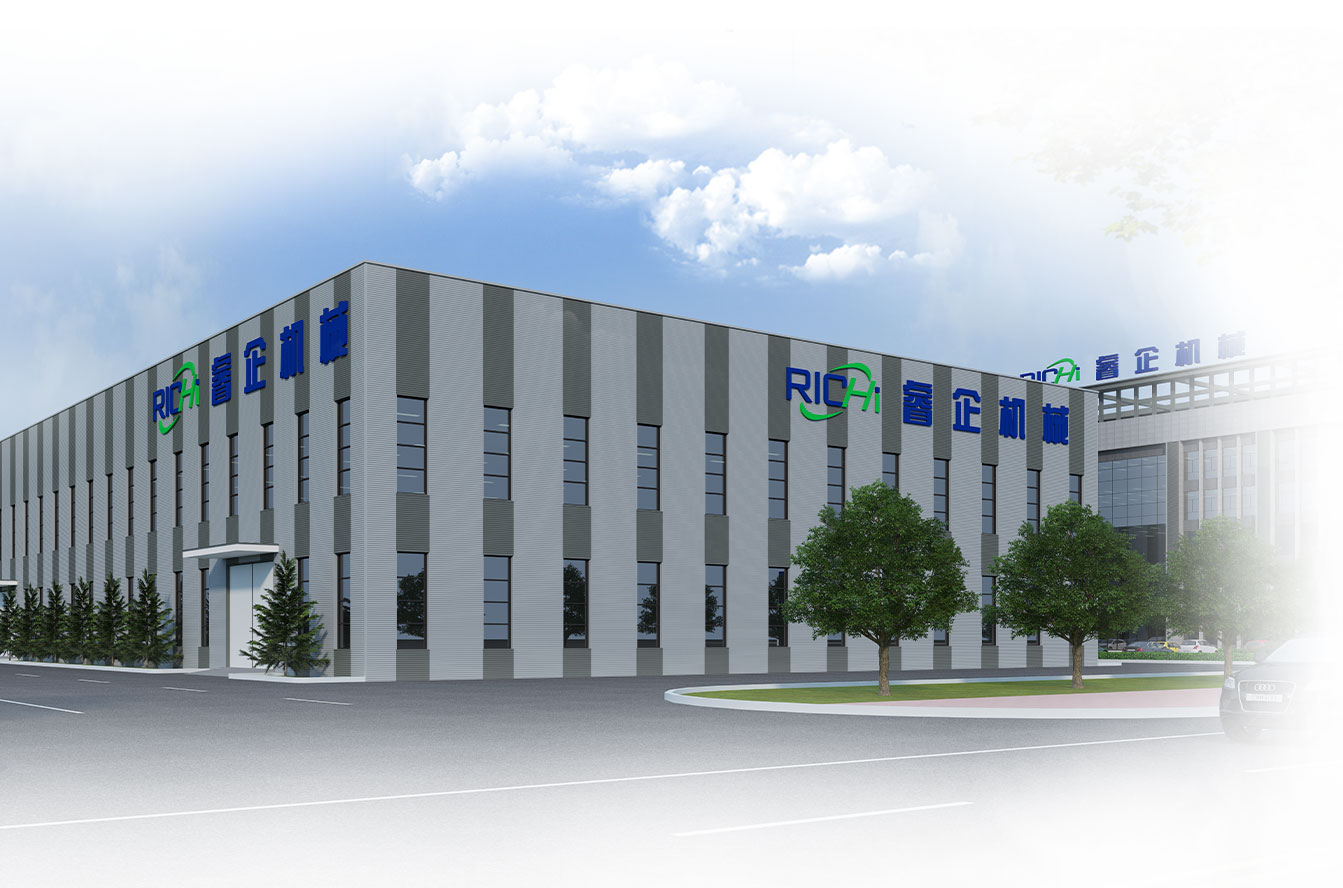
Who we are
RICHI Machinery is one of the world’s leading suppliers of technology and services for the animal feed, aqua feed and pet food industries, also the largest pellet production line manufacturer in China.
Since 1995, RICHI’s vision to build a first-class enterprise, to foster first-class employees, and to make first-class contributions to society has never wavered.
In the past three decades, we have expanded our business to a wide range of areas, including animal feed mill equipment, aqua feed equipment, pet feed equipment, biomass pellet equipment, fertilizer equipment, cat litter equipment, municipal solid waste pellets equipment, etc.

1995
RICHI Established

2000+
Serving More Than 2000 Customers

120+
RICHI Employees

140+
Exported To 140 Countries