 0086-138 3838 9622
0.8 T/H sawdust pellet plant in the UK

RICHI MACHINERY
A small factory with a defined fuel and sales account
An environmental technology company contracted with RICHI in October 2023 for this sawdust pellet plant in the UK. The project reused an idle factory to convert accepted local sawdust into fuel pellets. Its small scale makes wet-material deliveries, dryer fuel and bag handling important parts of the investment, not minor details outside the pellet-machine quotation.
The annual programme is 2,000 tonnes of cooled, screened pellets. For the engineering account, this total includes 60 tonnes allocated to the dryer furnace, leaving 1,940 tonnes for external sale. Five employees live locally and use the factory only during working hours; no overnight accommodation is included. The source lists 300 working days but no daily shift duration.
0.8 T/H
capacity
US$90,000
equipment budget
The UK
location
Fuel pellets
project type
RICHI MACHINERY
Existing space and the limits of the building record
The sawdust pellet plant in the UK uses an 800 m², single-storey production building with a listed height of 5 m. The source also identifies a 100 m² raw-material holding area and small office/service rooms. Keep these boundaries distinct when allocating equipment, stock, maintenance access and vehicle movements.
The southeast entrance serves deliveries and collection, while office space lies to the south and raw-material holding to the northeast. A compact route from receiving to drying, forming and finishing is useful, but building height and floor area alone do not establish that the dryer, ducts, platforms and lifting clearances fit.
The main building and service allowances are recorded below. Whether the external holding area overlaps another listed zone needs the actual property drawing; no overall plot area was provided.
| Source space | Listed size | Planning boundary |
|---|---|---|
| Production building | 800 m²; 5 m height | Shared equipment and stock envelope |
| Raw-material holding | 100 m²; 20 tonnes stated | Overlap and actual storage conditions need a plan |
| Utility room canteen office toilet | 4 × 5 m² | 20 m² combined service entries |
| Two rest rooms | 2 × 5 m² | 10 m² additional service entries |
| Service-room total | 30 m² | Check whether inside or outside the 800 m² |
| Transformer | 250 kVA | Source rating; starting study required |
The equipment budget is a machinery planning provision. It does not establish coverage of the existing building, local electrical work, dryer-exhaust installation, foundations, freight, fuel inventory or working stock. A 5 m roof height needs specific checks against the selected cooler, elevator and maintenance lifting arrangement.
RICHI MACHINERY
One press with matched drying and finishing
One sawdust Pellet Machine is sufficient for the 0.8 T/H accepted duty. The selected engineering configuration is an MZLH420 with a 90 kW main drive and a reference 1–1.2 T/H machine range. The smaller models in the established library cannot cover the calculated 0.83 T/H gross feed. This is a planning selection, not a verified delivery nameplate.
| Selected engineering item | Quantity | Required duty or drive allowance |
|---|---|---|
| MZLH420 main pellet press | 1 | 90 kW; about 0.834 T/H gross feed |
| Receiving screen | 1 position | Sawdust and agreed oversize split |
| Oversize reducer | 1 | ≥0.5 T/H selected fraction; 22 kW |
| Rotary dryer | 1 | ≥1.7 T/H feed; ≥750 kg/hour evaporation |
| Biomass hot-gas source | 1 | 0.9 MW fuel-input allowance |
| Active cooler | 1 | ≥1.2 T/H gross flow |
| Product screen | 1 | ≥1.2 T/H gross flow |
| Weighing and closure | 1 position | ≥80 completed 15 kg bags/hour |
| Dust control and conveying | Matched scope | Dry-collection design reference |
The oversize reducer need not run continuously with the press. At a demonstrated 0.5 T/H on the accepted pieces, roughly 182 tonnes/year takes about 364 operating hours. Prepared feed must meet an agreed particle distribution, with a preliminary sub-4 mm trial condition and control of long fibres. A new coarse-wood supply would change that scope.
RICHI MACHINERY
Incoming moisture changes procurement and furnace fuel
Incoming sawdust moisture was not provided. The reference below therefore uses an explicit 50% wet-basis condition, a 1% separated-material allowance and 10% finished moisture. These assumptions test the annual procurement and drying needs; they are not measurements from the customer’s supply. The reference accepts clean untreated sawdust and suitable untreated chips, with painted, glued, preservative-treated or unidentified wood segregated for assessment.
| Annual material or fuel | Source provision | Reference engineering account |
|---|---|---|
| Purchased wet sawdust | 3,500 tonnes | About 3,636.36 tonnes at 50% water |
| Larger pieces within receipts | 5% | About 181.82 tonnes; reprocessed internally |
| Separated material | Not defined | About 36.36 tonnes at reference moisture |
| Gross finished pellets | 2,000 tonnes | Includes 60 tonnes allocated internally |
| External pellet sales | Not separated | 1,940 tonnes in this reference |
| Self-produced dryer fuel | 60 tonnes | Included in gross pellet output |
| Additional purchased dry fuel | Not listed | About 328.64 tonnes before extra allowances |
At 50% incoming moisture and 1% separation, 3,500 tonnes supplies only 1,732.5 tonnes of usable dry matter, enough for about 1,925 tonnes of 10%-moisture pellets. The reference target therefore requires approximately 136 tonnes more wet material. The 1% separation is a design assumption, not an observed rejection rate; it is separate from the reusable 5% oversize.
| Annual pellet-process balance | Tonnes | Reference condition |
|---|---|---|
| External sawdust input | 3,636.36 | 50% water |
| Separated stream | 36.36 | 50% reference water |
| Accepted feed before drying | 3,600 | 1,800 tonnes dry matter |
| Fresh feed after drying | 2,045.45 | 12% water |
| Water removed in main dryer | 1,554.55 | External evaporation |
| Gross pellets | 2,000 | 10% water |
| Water removed in forming/cooling | 45.45 | Net finishing removal |
| Clean fines returned | 40 | Internal flow only |
The pellet-process boundary closes as 3,636.36 tonnes of incoming material = 36.36 tonnes separated + 2,000 tonnes gross pellets + 1,600 tonnes water removed. Accepted feed and finished pellets both contain 1,800 tonnes of dry matter. The separate furnace burns some finished pellets and purchased fuel; its combustion gases and ash are outside this pellet-process balance.
With assumed dryer fuel input of 4 MJ/kg of evaporated water, annual dryer heat is about 6,218 GJ. At an assumed dry-fuel lower heating value of 16 MJ/kg, this requires approximately 388.64 tonnes/year of fuel. The internal 60 tonnes supplies only 960 GJ; the balance requires about 328.64 tonnes of equivalent purchased fuel, plus start-up and other allowances.
The UK wet-sawdust furnace-fuel deficit is therefore an annual supply issue, not solved by fitting a larger press. Purchased fuel is also required for initial drying before enough pellets exist for internal use. If all 388.64 tonnes were taken from this same gross pellet programme instead, external sales would fall to about 1,611.36 tonnes.
About 5% of the received material was described as larger wood pieces and chips. At the original 3,500-tonne provision this is 175 tonnes/year. Under the revised reference procurement it becomes about 182 tonnes. This fraction is suitable oversize for reprocessing, not automatically a reject or an extra source of biomass.
RICHI MACHINERY
Fuel dimensions and the annual operating window
The sawdust pellet plant in the UK is planned around 6 mm or 8 mm pellets, with a 15–20 mm length setting for trials. The mass case uses 10% finished water. Fuel chemistry, durability, fines and the intended appliance need an agreed specification; the source boiler efficiency and steam-fuel figures are not pellet properties.
| Product or operating item | Reference value | Boundary |
|---|---|---|
| Diameter | 6 mm or 8 mm | Selected ring die |
| Length | 15–20 mm trial setting | Confirm measured distribution |
| Finished moisture | 10% wet basis | Annual mass-balance basis |
| Calorific value and ash | Buyer and test specific | No unsupported premium-fuel grade |
| Density | Measured bulk and particle values separately | Do not use particle density as stock density |
| Net production hours | 2,500 hours | 2,000 ÷ 0.8 |
| Selected equipment calendar | 2,700 hours | 300 nine-hour windows |
| Interruption allowance | 200 hours | About 93% utilisation required |
The nine-hour equipment window is a selected planning calendar, not a source shift record. At eight hours per day, even uninterrupted output is only 1,920 tonnes/year. At 90% utilisation of the selected nine-hour window, output is 1,944 tonnes, so the 2,000-tonne gross target still needs reliable operation or additional hours.
The source 4,100 heat-value entry lacked a unit, and boiler efficiency and fuel-per-tonne-of-steam figures describe a receiving heat system rather than pellet quality. They are not carried forward as measured pellet specifications. No domestic-stove suitability or certification is inferred from diameter and appearance.
RICHI MACHINERY
Wet sawdust to cooled and weighed pellets
The selected process is a small wet-sawdust wood pellet production line: inspect and classify the feed, reduce suitable oversize, dry to forming moisture, press, cool, screen and weigh. Accepted already-dry sawdust can bypass the thermal dryer when its properties meet the agreed feed condition.
Classify the feed and reduce the small oversize fraction
Provide a defined screen position before the coarse fraction reaches the size reducer. A normal conveyor belt is not itself a verified classifier. Select one reducer for at least 0.5 T/H of the agreed chips and small offcuts, with a 22 kW allowance; the pieces must fit its feed opening. Whole logs require a different front end. Compliant sawdust bypasses unnecessary grinding.
Dry against the measured water load
One enclosed rotary dryer handles accepted wet material. The reference needs about 1.44 T/H wet feed and 622 kg/hour evaporation at the 0.8 T/H finished rate. Specify at least 1.7 T/H feed and 750 kg/hour evaporation at the agreed condition. A 0.9 MW fuel-input allowance covers the rated water load on the stated heat assumption. The dryer exhaust carries gases, moisture and entrained fines; it does not intentionally carry all saleable sawdust into a water bath.
Press prepared sawdust through the ring die
A controlled feed auger supplies the selected wood pelletizer. Pressure and die friction form the pellets, and knives establish length; this is not described as electrically heated extrusion. Fresh prepared feed is approximately 0.818 T/H at 12% moisture. An assumed 2% clean-fines return adds 0.016 T/H, giving about 0.834 T/H total through the fuel pellet making machine.
Cool actively then screen
Use one active cooler and one product screen, each selected for at least 1.2 T/H gross flow. A preliminary release target within 5°C above ambient requires confirmation at the actual airflow and humidity. The holding bin receives cooled product; natural storage cooling is not used as proof of continuous line capacity. Meter eligible clean fines back to forming.
Weigh close and identify the bags
A 15 kg planning format needs about 54 filled bags/hour at 0.8 T/H. One assisted weighing-and-closure position specified for at least 80 completed bags/hour can cover that duty without adding a second packing line. Actual whole-bag dispatch reconciles net weights and carried stock. Keep the 60-tonne internal fuel allocation separate from customer orders.
Small UK pellet mill stock turnover
Annual reference sawdust receipts average about 12.12 tonnes per working day. The source 20-tonne raw stock would last about 1.65 working days. For illustration, 100 m² at 250 kg/m³ loose density, 2 m effective height and 40% floor utilisation holds 20 tonnes. Measure actual density and check containment and floor loads before adopting that quantity.
External pellet dispatch averages about 6.47 tonnes per working day, while internal fuel averages 0.20 tonne. Keep the saleable stock, furnace fuel and unsuitable materials identifiable. Seasonal receiving moisture can raise the dryer load even when the delivered tonnes and storage area stay unchanged.
RICHI MACHINERY
Transformer water and service boundaries
Power supply
The source includes a 250 kVA transformer. At an illustrative 0.85 power factor it corresponds to about 212.5 kW, above the 168.2 kW connected-load allowance below. This running-load comparison does not prove that the rural supply can start every motor together; verify voltage drop, starting sequence and network conditions.
| Connected-load group | kW | Planning allowance |
|---|---|---|
| Main pellet press | 90 | One selected drive |
| Oversize reduction | 22 | Intermittent duty |
| Dryer fan and drive | 22 | Thermal input stated separately |
| Active cooler | 5.5 | Product finishing |
| Screening | 1.5 | Classification and grading |
| Feeders and conveying | 8 | Matched route |
| Dry dust extraction | 11 | Stage-specific circuits |
| Weighing and closure | 2.2 | One assisted bagging position |
| Compressed air | 3 | Service demand |
| Lighting and controls | 3 | Production allowance |
| Total connected load | 168.2 | Engineering schedule |
At an assumed 95–120 kW average productive demand over 2,500 net hours, electricity is approximately 238,000–300,000 kWh/year before non-production use. This is a whole-process estimate, not the main-motor rating multiplied by every scheduled hour. The source 1 kWh/year is excluded as an invalid operating budget.
Personnel water and process drainage
Five non-resident staff at 50 litres per working day over 300 days use 75 m³/year, matching the source water allowance for personnel only. A provisional 25–50 m³ service allowance raises the reference to 100–125 m³ before any additional landscape or process demand. Construction water is a separate one-off account.
The reference exhaust design uses a dry particulate-control route suitable for dryer temperature and the selected combustion system. This is an engineering change from the source water-bath description, not a statement of installed equipment. If wet scrubbing is retained, recirculation, make-up, blowdown and sludge must be budgeted separately. Septic treatment alone is not proof that sanitary water may be used for irrigation.
Fire and pellet-storage interfaces
Coordinate wood-dust collection, hot-gas separation, spark and fire controls, dryer interlocks and access for cleaning with the actual equipment design. Keep bulk-pellet holding ventilated and address carbon-monoxide off-gassing and controlled entry. No existing fire approval or exhaust compliance is inferred from a generic safety description or a nominal stack height.
RICHI MACHINERY
Separate process dust combustion residues and drainage
The controls below distinguish reusable clean process fines from combustion ash, receiving rejects and any wet-treatment residues. Each has a different handling route; they are not all returned to the pellet recipe.
| Source or residue | Reference control | Boundary |
|---|---|---|
| Receiving and oversize handling | Covered transfer and local dust capture | Remove unsuitable timber and foreign matter |
| Dryer and furnace exhaust | Matched temperature-rated particulate and combustion design | No compliance claim from stack height alone |
| Press and clean transfers | Controlled dry extraction | Eligible clean fines can return |
| Cooling and stockholding | Controlled airflow and protected stock | Moisture release and storage atmosphere need attention |
| Combustion ash | Separate collection and destination | Not returned as pellet ingredient |
| Receiving rejects and contaminated dust | Segregated handling | Outside the clean-fines route |
| Any retained wet scrubber | Make-up blowdown and sludge account | Not included in the dry-reference water budget |
| Sanitary and cleaning water | Identified treatment and disposal | No automatic irrigation-reuse conclusion |
| Noise and vibration | Equipment supports maintenance and enclosure | Site-specific assessment |
For a similar sawdust pellet plant in the UK, provide a representative sawdust sample, seasonal moisture, the oversize fraction, available working hours and the required sales tonnage. Those details establish both pellet output and the fuel needed to dry the feed. The internal furnace allocation and external fuel supply should be agreed before comparing equipment prices.
● RICHI MACHINERY
RICHI Service

● Consulting
Customer Consultation
We want to have a deep understanding of your industrial process, to know your exact needs of feed, wood, biomass, fertilizer or other pellet processing.

● Design
sawdust Pellet Plant Design
Based on your unique situation and industrial process, we will tailor complete pellet plant you need, and inform you of every additional detail that could facilitate operation, minimize total cost.
● Manufacturing
Equipment Manufacturing
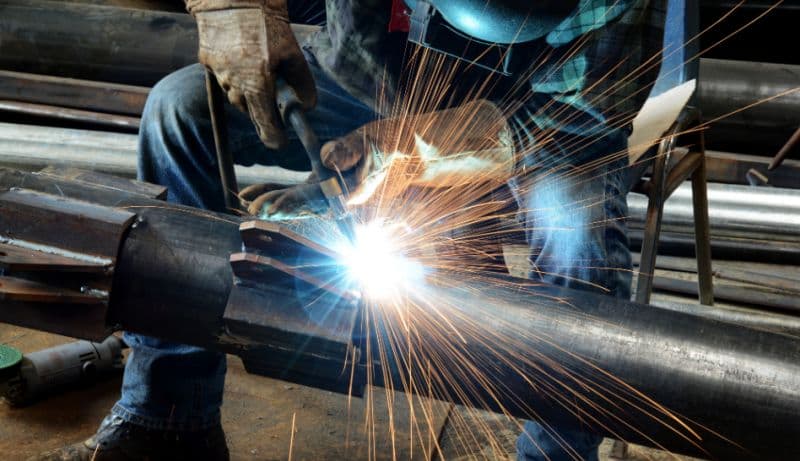
The critical components of the of the complete sawdust pellet production line equipment are built in our own workshops in Asia. Additional equipment is manufactured by our worldwide network of reliable partners.

● Testing
Quality Inspection & Testing
Before leaving the factory, all equipment will be inspected by the quality inspection department. We can also provide customers with testing services from a single machine to a complete pellet plant system, and provide you with real actual data for “worry-free use.”

● Delivery
Equipment Delivery
In equipment boxing and packaging, we adopt professional packaging and modular solutions to ensure the safe and non-destructive delivery of sawdust pellet plant equipment.
● Installation
Installation & Commissioning
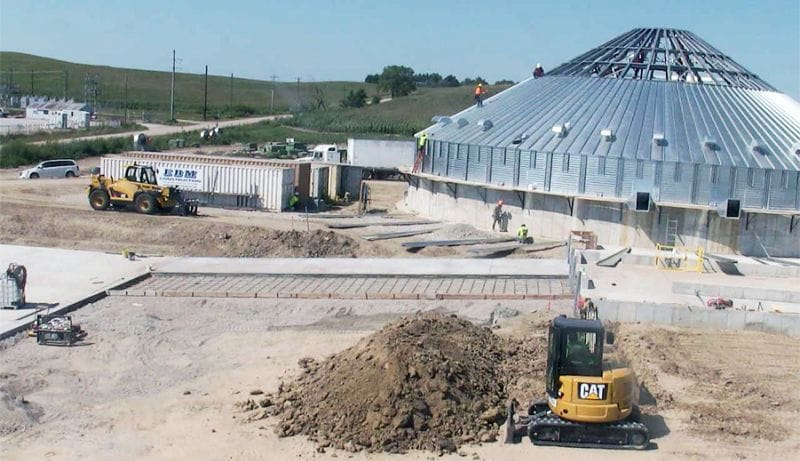
Whether you choose your own subcontractor for the erection phase or you want to install everything together with us, a Richi supervisor will be around to make sure everything is mounted in a safe and thorough way.

● Training
Staff Training
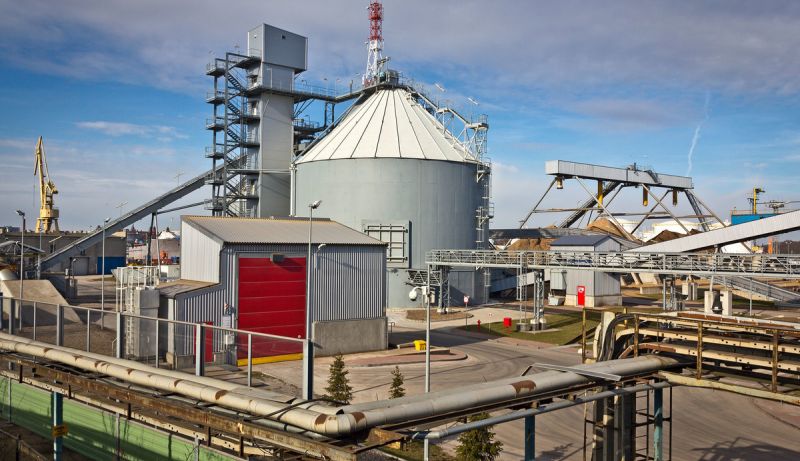
We provide comprehensive training for the technicians of each sawdust pellet plant in UK project. We can also continue to provide support for the technicians during latter project operation.
● After-sales
Project Follow-Up
When everything is up and running our Richiers will help you further whenever needed. We are ready to answer your call 24/7.We’ll also visit you regularly to learn about your needs.
Who we are
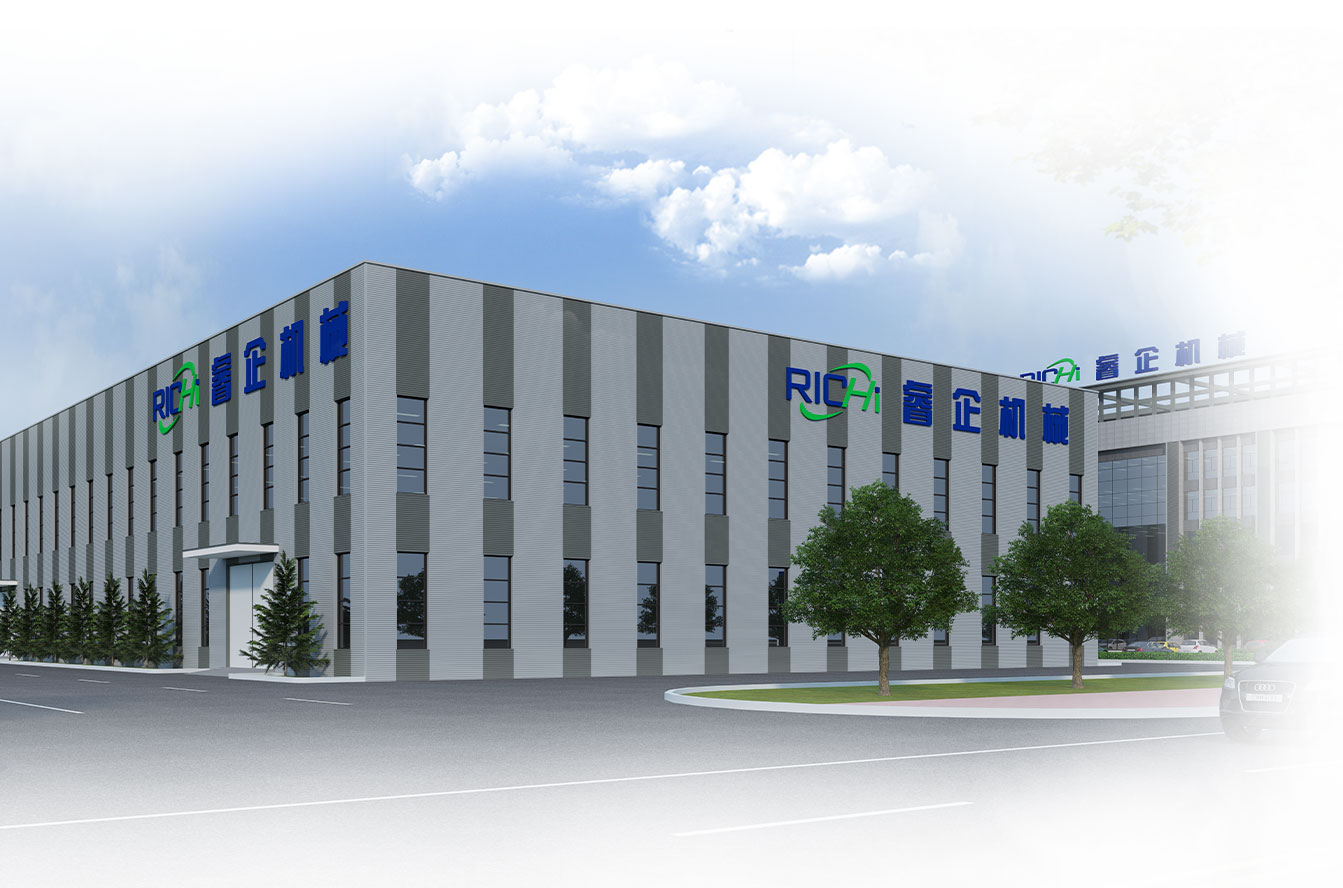
RICHI Machinery is one of the world’s leading suppliers of technology and services for the animal feed, aqua feed and pet food industries, also the largest pellet production line manufacturer in China.
Since 1995, RICHI’s vision to build a first-class enterprise, to foster first-class employees, and to make first-class contributions to society has never wavered.
In the past three decades, we have expanded our business to a wide range of areas, including animal feed mill equipment, aqua feed equipment, pet feed equipment, biomass pellet equipment, fertilizer equipment, cat litter equipment, municipal solid waste pellets equipment, etc.

1995
RICHI Established

2000+
Serving More Than 2000 Customers

120+
RICHI Employees

140+
Exported To 140 Countries