 0086-138 3838 9622
1.8 T/H rice husk pellet production line in Bangladesh
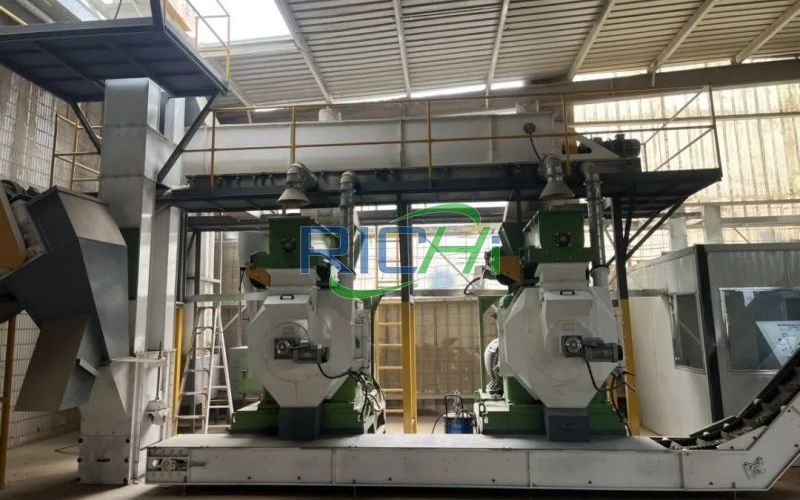
A rice mill began this rice husk pellet production line in Bangladesh in November 2023 to turn its own milling by-product into a handled fuel product. The annual programme is 8,000 tonnes of accepted pellets. RICHI’s engineering selection uses one matched press, with husk receiving, active cooling, screening and bag handling sized around it.
RICHI MACHINERY
Keep the rice mill’s husk stream identifiable
Rice husk, also called rice hull or paddy husk, behaves differently from sawdust. Its mineral-rich outer structure affects die wear and combustion ash. The product is therefore offered to fuel buyers with suitable handling and ash-removal equipment; compression alone does not make it a low-ash wood-pellet substitute or guarantee a boiler conversion.
The main commercial advantage is a short material route from rice milling to a saleable product. Keeping the incoming husk clean and dry avoids paying to transport unnecessary water and soil. RICHI also supplies separate rice-husk preparation routes for bedding and other agreed applications, with product-specific cleanliness and performance requirements.
The customer also selected a fine-grinding outlet for rice-husk powder. The engineering scope keeps that stream separate from fuel production. A rice husk powder grinding system in Bangladesh must follow the buyer’s particle-size and intended-use specification: reducing particle size does not remove silica or make husk nutritionally equivalent to rice bran.
The rice husk pellet plant operating window is 06:00–22:00 on 300 working days, giving 4,800 scheduled hours. At 1.8 T/H accepted output, fuel production needs about 4,444 productive hours, leaving about 356 hours. The staffing design covers two operating shifts with receiving, control and packing duties; shift relief and shared rice-mill services are assigned separately.
The biomass pellet production line package is defined by the fuel duty and the separate powder order. The supply agreement distinguishes the fuel-pellet package, the separately specified powder outlet, site services, installation and starting stock. That boundary lets the rice mill compare the offer with the actual buildings and utilities available on site.
1.8 T/H
capacity
US$64,000
investment
Bangladesh
location
Husk fuel
project type
RICHI MACHINERY
A compact pellet workshop inside the mill site
The site schedule uses a 2,740 m² plot allocation and 1,637.64 m² of listed building floor area. The operating footprint brings husk receiving close to the mill while separating released pellets, powder and maintenance activities. The shared rice-mill administration allocation is not additional pellet-processing floor space. At an illustrative 0.12 tonnes/m³ loose-husk density, two-metre average pile height and 60% floor use, the raw stores hold about 42 tonnes, roughly 1.5 days of average fuel-route receipts. Actual rice-mill transfer frequency and safe pile conditions determine the stock plan.
| Site /facility | Project allocation | Operating role |
|---|---|---|
| Plot | 2,740 m² | Land allocation; not workshop floor area |
| Pellet workshop | 400 m² | Receiving buffer, pressing and finishing route |
| Finished stores | 124.69 m² combined | Two stores; identify released product and lots |
| Raw stores | 289.59 m² combined | Three stores; clean dry husk and quarantine separation |
| Administration allocation | 823.36 m² | Shared rice-mill office facilities |
| Listed floor total | 1,637.64 m² | Workshop +stores +administration |
| Water /drainage | Personnel services and separate stormwater | Actual collection and treatment route designed for the site |
| Dust /noise | Source capture, suitable separation and isolation | No unmeasured emission-efficiency claim |
| Power /access | Shared-mill interfaces | Spare electrical capacity, loading and maintenance access checked |
RICHI MACHINERY
Track dry husk into pellets and powder separately
For this rice mill husk pellet plant in Bangladesh, the fuel route needs about 8,264 tonnes of clean incoming husk per year at the selected 12% moisture and rejection allowance. Supplier or internal-transfer weights are recorded separately from pellet sales. Any powder order requires additional husk allocation and is not hidden in the fuel balance.
| Annual fuel mass account | Tonnes | Moisture /boundary |
|---|---|---|
| Incoming husk requirement | 8,264.46 | 12% wet-basis moisture |
| External receiving reject | 82.64 | 1% of receipts at the same moisture |
| Fresh accepted husk | 8,181.82 | 7,200 dry matter +981.82 water |
| Internal compatible fines | 160 | 2% of net pellets at 10% moisture |
| Gross press feed | 8,341.82 | About 1.88 T/H during productive running |
| Gross cooled screened pellets | 8,160 | Includes fines circulating internally |
| Accepted fuel pellets | 8,000 | 7,200 dry matter +800 water |
| Forming/cooling evaporation | 181.82 | No main dryer or added steam in this base route |
| External outputs | 8,264.46 | 8,000 pellets +82.64 reject +181.82 water |
| Powder outlet | Separate material order | Additional receipt allocation; no uncounted coproduct |
RICHI MACHINERY
One press with a separate powder outlet
One MZLH520 ring-die press with a specified 132 kW main drive is the engineering selection for the rice husk pellet production line in Bangladesh. Gross press duty is about 1.88 T/H for 1.8 T/H accepted pellets. The selected die and actual husk trial establish the final capacity commitment; a second press is not required by this annual programme.
| Process duty | RICHI engineering selection | Capacity /power allowance |
|---|---|---|
| Receiving and protection | Screen, magnet and controlled bin | Remove debris; specify husk flow and bulk density |
| Press feed | 5.5 kW allowance | Stable anti-bridging metering |
| Pellet press | One MZLH520 Rice husk pellet machine; 132 kW | 1.8 T/H net; about 1.88 T/H gross |
| Active cooling | 7.5 kW package allowance | ≥2.2 T/H hot pellets |
| Grading /return | 3 kW screen allowance | ≥2.2 T/H; 2% compatible-fines sizing basis |
| Conveying | 7.5 kW combined allowance | Actual low-density husk flow |
| Local dust extraction | 11 kW allowance | Receiving, finishing and filling capture |
| Weighing /closing | One 3 kW completed-bag route | ≥60 ×50 kg bags/hour; 36/hour required |
| Compressed air /controls | 5.5 kW /3 kW | Matched production services |
| Fuel-route connected total | 178 kW | No dryer or main grinding duty included |
| Separate powder-mill design position | 37 kW mill +5.5 kW extraction allowance | Particle size and actual husk tests determine throughput; not included in fuel output |
| Combined connection allowance | 315 kVA preliminary | About 268 kW at 0.85 power factor; motor starts and shared loads checked |
RICHI MACHINERY
Power, water and operating cover
- Electricity: the fuel-route connected allowance is 178 kW. At an assumed 125–150 kW average productive load over about 4,444 hours, fuel-route electricity is approximately 556,000–667,000 kWh/year before non-production services. Powder milling is additional: multiply the separate mill/extraction average demand by its scheduled hours. No powder-running hours or sales volume are included in the fuel programme.
- Water: allow 120 m³/year for personnel services in the operating design, with cleaning, initial firewater and additional site services accounted for separately. The accepted dry-husk route has no routine process-water addition. Wet husk outside the agreed range needs a new preparation and moisture balance, not automatic passage through the no-dryer package.
- Drainage: at an 80% domestic return factor, the 120 m³ personnel allowance gives 96 m³/year sanitary flow. Keep sanitary water separate from stormwater and any material-area washwater. A septic tank or grease trap is a treatment component, not proof of an approved discharge or agricultural-reuse route.
RICHI MACHINERY
Control flow before the die and temperature after it
Collect and identify husk lots, screen foreign matter and protect the press with magnetic separation. Feed accepted material through a controlled anti-bridging hopper. The reference receives husk at 12% moisture and targets 10% finished pellets. Whole husk is trialled on the selected die; fine grinding is not imposed on the fuel route unless material tests show it is needed.
Cool pellets actively before final screening and packing. Use an initial release target within 5°C above ambient, with moisture and storage behaviour checked on the actual product. Compatible clean fines return under a controlled 2% sizing allowance. At 50 kg per bag, 1.8 T/H requires 36 completed bags/hour; the annual fuel programme is 160,000 bags. The 124.69 m² product stores hold about 90 tonnes at an illustrative 0.6 tonnes/m³ pellet density, two-metre height and 60% use, or roughly 3.4 dispatch days. Packaging and quarantine can reduce usable capacity.
RICHI MACHINERY
Sell the fuel specification and the powder specification separately
The project’s sales decision rests on two different customers: a fuel buyer accepting the tested husk pellet, and a powder buyer requiring an agreed material specification. RICHI separates the equipment and material accounts so a higher-value outlet is not assumed merely because a second product can be made.

Secure the feedstock allocation and fuel customer
The rice mill’s own husk stream is the starting supply, but usable receipts still depend on daily milling volume, moisture and contamination. Allocate enough dry husk to the 8,000-tonne fuel commitment before taking powder orders. Screen out soil, stones and metal; a collector returning unidentified dust can undo that segregation.
Fuel release should include moisture, ash, net calorific value, durability and fines, with sulfur, chlorine and other buyer limits where relevant. Actual husk analysis and the receiving boiler determine acceptance. No coal-replacement ratio, household-fuel suitability, emissions saving or premium certification is inferred from pellet shape.
Recover clean material without mixing reject streams
Keep clean recoverable fines separate from contaminated receiving rejects, maintenance waste and domestic refuse. Covered handling, suitable source extraction and controlled rework protect product identity. Combustion ash remains a downstream handling responsibility; forming pellets does not eliminate the husk’s mineral fraction.
Let the powder buyer define the grinding duty
For powder sales, agree a particle-size distribution and test method before selecting the mill and classifier. A finer target reduces throughput and increases dust-control duty. The powder branch therefore has its own capacity guarantee, collection system and raw-material allocation rather than borrowing the pellet press’s hourly rating.
If a feed manufacturer is the powder buyer, its intended use and approved ingredient specification must be established first. Rice hulls are high in structural fibre and silica and have limited feeding value. Grinding does not turn them into a general protein or energy ingredient; formulation and acceptance belong to the buyer’s qualified technical team.
To size a rice husk pellet production line in Bangladesh, give RICHI MACHIINERY two clear briefs: the fuel buyer’s requirements and the powder buyer’s particle-size request. With your daily husk receipts, moisture samples, working hours and site utilities, we can separate the equipment duties and quote the installation interfaces. Qingdao–Chattogram freight can be assessed with inland delivery to the mill.
● RICHI MACHINERY
RICHI Service

● Consulting
Customer Consultation
We want to have a deep understanding of your industrial process, to know your exact needs of feed, wood, biomass, fertilizer or other pellet processing.

● Design
rice husk Pellet line Design
Based on your unique situation and industrial process, we will tailor complete pellet plant you need, and inform you of every additional detail that could facilitate operation, minimize total cost.
● Manufacturing
Equipment Manufacturing
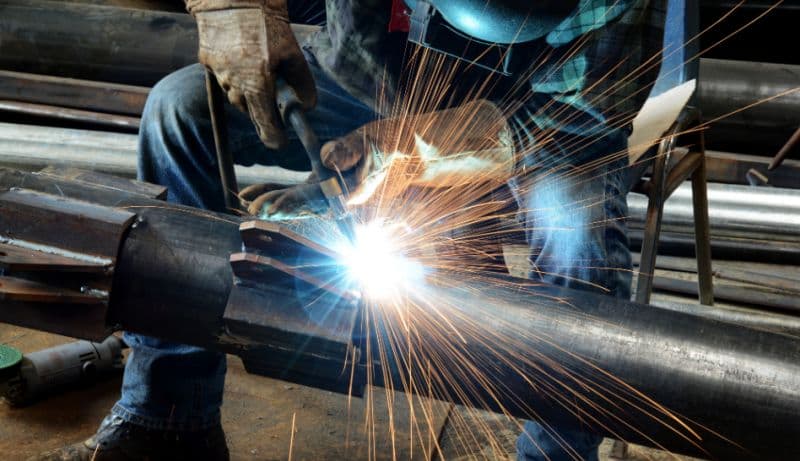
The critical components of the of the complete rice husk pellet production line equipment are built in our own workshops in Asia. Additional equipment is manufactured by our worldwide network of reliable partners.
● Testing
Quality Inspection & Testing
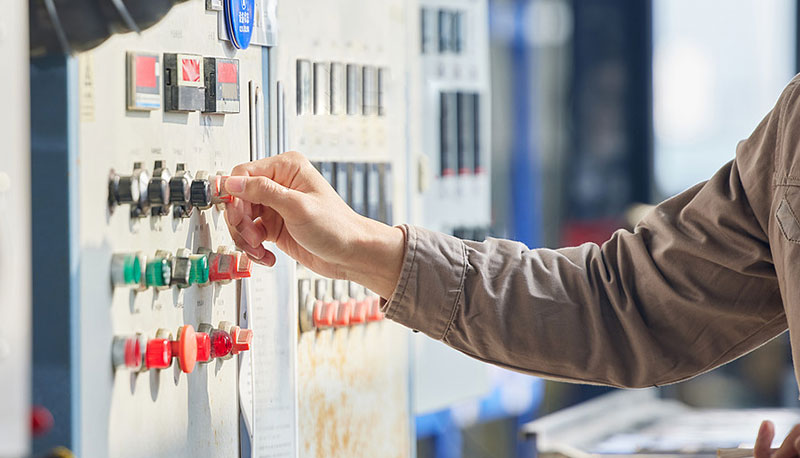
Before leaving the factory, all equipment will be inspected by the quality inspection department. We can also provide customers with testing services from a single machine to a complete pellet plant system, and provide you with real actual data for “worry-free use.”

● Delivery
Equipment Delivery
In equipment boxing and packaging, we adopt professional packaging and modular solutions to ensure the safe and non-destructive delivery of pellet plant equipment.
● Installation
Installation & Commissioning
Whether you choose your own subcontractor for the erection phase or you want to install everything together with us, a Richi supervisor will be around to make sure everything is mounted in a safe and thorough way.

● Training
Staff Training
We provide comprehensive training for the technicians of each rice husk pellet production line in Bangladesh project. We can also continue to provide support for the technicians during latter project operation.
● After-sales
Project Follow-Up
When everything is up and running our Richiers will help you further whenever needed. We are ready to answer your call 24/7.We’ll also visit you regularly to learn about your needs.
Who we are
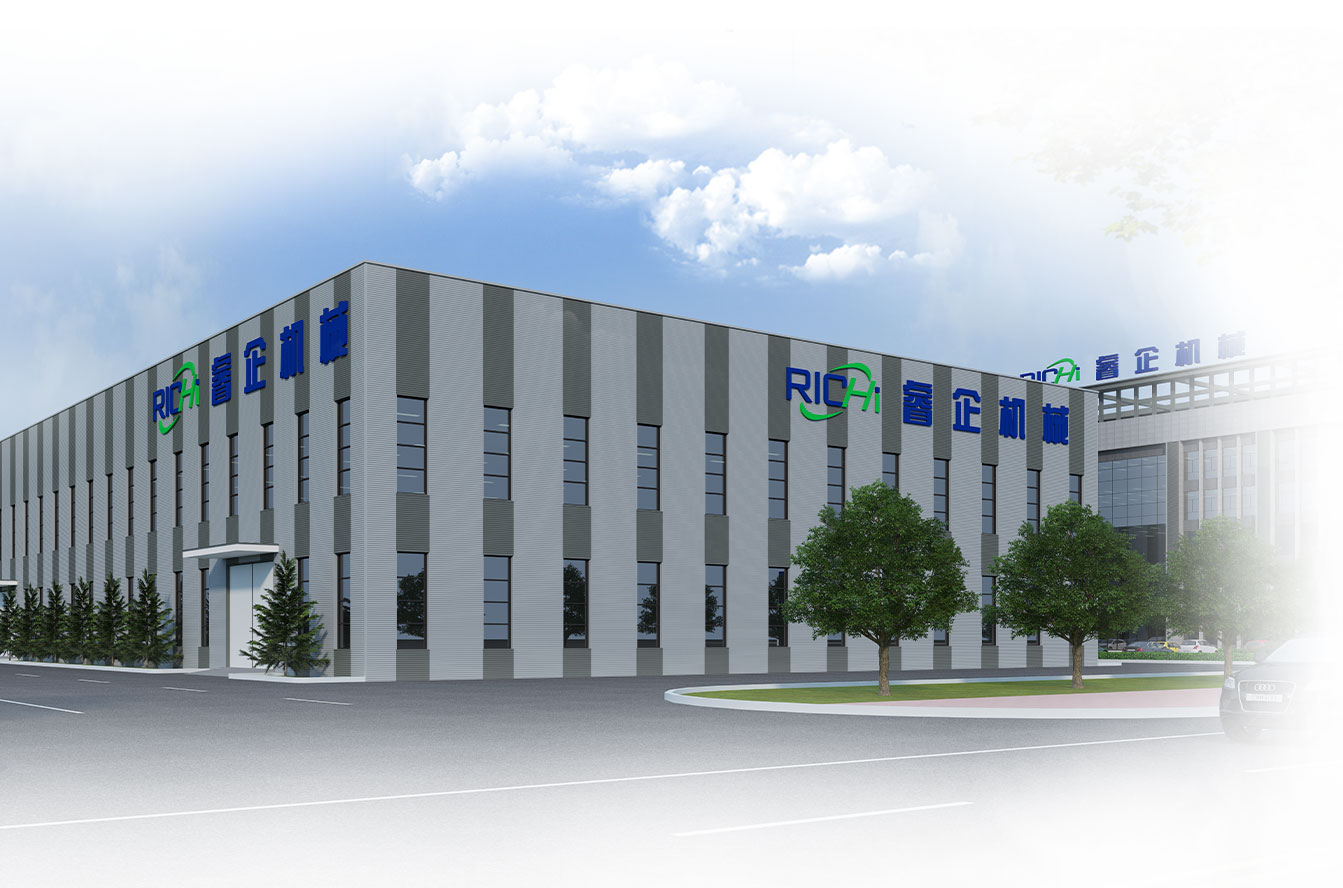
RICHI Machinery is one of the world’s leading suppliers of technology and services for the animal feed, aqua feed and pet food industries, also the largest pellet production line manufacturer in China.
Since 1995, RICHI’s vision to build a first-class enterprise, to foster first-class employees, and to make first-class contributions to society has never wavered.
In the past three decades, we have expanded our business to a wide range of areas, including animal feed mill equipment, aqua feed equipment, pet feed equipment, biomass pellet equipment, fertilizer equipment, cat litter equipment, municipal solid waste pellets equipment, etc.

1995
RICHI Established

2000+
Serving More Than 2000 Customers

120+
RICHI Employees

140+
Exported To 140 Countries