 0086-138 3838 9622
Plant Based Cat Litter Production Line in Indonesia
RICHI MACHINERY
A Small Plant That Moved Fast
The 2t/h plant based cat litter production line in Indonesia was built around a very clear idea—replace imported cat litter with a locally made, plant-based alternative using materials that are already abundant in East Java.
With a compact design and an equipment investment of about $85,000, the project turned a 2,000 m² warehouse in Surabaya into a functioning production site capable of supplying regional pet markets within a few months.
What makes this case interesting is not just the capacity, but the speed and practicality behind it. From the first inquiry in March 2024 to commercial sales in December the same year, the project moved quickly, supported by straightforward equipment, local raw materials like okara and corn starch, and a clear pricing advantage over imported products. It’s a small-to-medium scale setup, but one that fits the Indonesian market surprisingly well and shows how a modest investment can translate into a stable manufacturing business.
2T/H
capacity
$85,000
investment
Indonesia
location
Cat Litter
project type
RICHI MACHINERY
The Customer Who Called on a Whim
The inquiry came through our website on a Tuesday afternoon in March 2024. The customer was a former logistics manager from Surabaya, East Java. He had spent fifteen years moving other people’s goods around Indonesia – rice, cement, electronics, you name it. He knew the supply chain inside out. But he had never made anything himself.
He had an idea. Indonesia imports a huge amount of cat litter. Bentonite from China and the US. Silica gel from Korea. Premium plant-based litter from Thailand and Vietnam. Retail prices are high – 30,000 to 50,000 rupiah per kg ($2-3.50). But the raw materials for plant-based litter are all available locally. Tofu factories everywhere produce okara (soybean residue). Corn starch is cheap. Bamboo grows like weed.
He wanted to build a 2 t/h plant based cat litter production line in Indonesia. Not a massive factory. Just something that could supply pet stores in Surabaya, Jakarta, and Bali.
We talked for an hour that first day. He had a location – a 2,000 m² warehouse in an industrial area on the outskirts of Surabaya. He had a budget – about $120,000 USD total. He had a partner who ran a small tofu factory and could supply okara at almost zero cost.
He didn’t have experience, but he had energy and connections.
We sent him a preliminary proposal in April. He visited our factory in Qingdao in May. We tested his okara samples – the lab results showed good fiber content (32%) and reasonable binding with corn starch. He signed the contract in June. Equipment shipped in August. Commissioning finished in November 2024. First bags of cat litter hit the Surabaya market in December – just in time for the holiday pet product season.
RICHI MACHINERY
Why Indonesia? A Growing Market with No Local Supply
Indonesia has about 2.5 million pet cats. That’s the fourth-largest cat population in Asia, after China, India, and Japan. But local cat litter production is almost non-existent. Most litter is imported. A few small producers exist, but they use simple equipment and struggle with quality consistency.
The customer saw an opportunity. Imported plant-based litter (from Thailand or China) retails at 35,000-45,000 rupiah per kg. His production cost would be around 12,000-15,000 rupiah per kg. He could sell wholesale at 22,000-25,000 rupiah – cheaper than imports but still with good margin.
Raw materials are abundant. East Java is Indonesia’s soybean-growing region. Tofu factories in Surabaya, Malang, and Kediri generate hundreds of tons of okara every week. Most of it is thrown away or sold as low-value animal feed for 500-1,000 rupiah per kg. He could get it for free if he arranged collection.
Corn starch is also local. Indonesia produces about 20 million tons of corn annually. Starch mills are everywhere.
The warehouse he leased was already in an industrial zone – good power supply (3-phase, 50 kVA), municipal water, concrete floor, 6-meter eaves height. Not perfect, but workable.
RICHI MACHINERY
Project Overview
| Parameter | Value |
|---|---|
| Project location | Surabaya, East Java, Indonesia (industrial zone, 10 km from city center) |
| Plant capacity | 2 t/h (10,000 t/year, 300 days, 16 hours/day, 2 shifts) |
| Facility area | 2,000 m² production + 80 m² office (inside production building) |
| Main products | Plant-based cat litter (okara + corn starch + corn flour + wheat flour blends) |
| Staff | 10 total (8 production, 2 admin/sales) |
| Operation hours | Two 8-hour shifts (7 AM – 11 PM) |
| First inquiry | March 2024 |
| Contract signed | June 2024 |
| Equipment shipped | August 2024 (from Qingdao) |
| Commissioning completed | November 2024 |
| First commercial sales | December 2024 |
Equipment investment (delivered to Surabaya): $85,000 USD
Total project cost (equipment + shipping + installation + building modifications + electrical): $118,000 USD
The customer funded this from personal savings ($50,000) plus a loan from a local bank ($68,000 at 9% interest). Payback period estimated at 18 months. At current sales volume (January-March 2025), he’ll hit payback in 14 months.
RICHI MACHINERY
Raw Materials: All Local, All Affordable
The customer uses five main ingredients, all sourced within 100 km of Surabaya:
| Material | Annual usage (tons) | Source | Cost (rupiah/kg) | Notes |
|---|---|---|---|---|
| Okara (soybean residue) | 3,000 | Local tofu factories (partner) | 200 ($0.013) | Delivered wet (65-70% moisture) |
| Corn starch | 3,000 | Starch mill in Gresik | 8,000 ($0.51) | Food grade |
| Corn flour | 3,000 | Local mill | 6,000 ($0.38) | |
| Wheat flour | 900 | Local mill | 7,500 ($0.48) | Low-grade, not for human consumption |
| Food coloring (natural) | 3 | Imported from China | 150,000 ($9.60) per kg | Green and yellow pigments |
| Food-grade fragrance | 5 | Imported | 200,000 ($12.80) per kg | Lavender and citrus scents |
Total raw material input: about 9,900 tons annually for the standard blend (plus 3 tons of pigment and 5 tons of fragrance).
The okara is the key ingredient, but it comes wet. The customer built a simple drying shed – a 200 m² concrete pad with a clear polycarbonate roof. Spread the okara out for 24-36 hours. East Java’s tropical sun (28-32°C year-round) dries it to 15-20% moisture. Then it’s ready for grinding.
The corn starch and corn flour are purchased already ground. No further processing needed.
The fragrance and coloring are for premium products. The customer’s standard litter is uncolored and unscented. His premium line (green color, lavender scent) sells for 30% more.
RICHI MACHINERY
Equipment Configuration: Simple, Robust, Maintainable
The customer had no prior manufacturing experience. We designed the line for simplicity. Standard motors, standard bearings, no complicated pneumatics.
| Equipment | Qty | Specification | Notes |
|---|---|---|---|
| Feed hopper with dust hood | 1 | 1.5 m³ | For bag dumping |
| Hammer mill | 1 | 30 kW, 2mm screen | Grinds dry okara |
| Bucket elevator (1#) | 1 | DTG36/23, 7m lift | |
| Buffer bin | 2 | 1 m³ each | For ground material |
| Bucket elevator (2#) | 1 | DTG36/23, 6m lift | |
| Ribbon mixer | 2 | SLHY2.0, 1 ton/batch | 5.5 kW each |
| Permanent magnet | 1 | TCXT20 | Removes metal |
| Cat litter pellet machine | 1 | 37 kW, 3mm/4mm die | Ring die |
| Scraper conveyor | 4 | Various lengths | |
| Counterflow cooler (primary) | 1 | SKLN2.5 | |
| Electric drying oven | 2 | 15 kW each | 60°C, 30-minute cycle |
| Counterflow cooler (secondary) | 1 | SKLN2.5 | |
| Vibrating screener | 2 | SPJH110x2 | 3 decks |
| Pulse-jet dust collector | 8 | TBLMa-6 and TBLMa-4 | |
| Cyclone (for cooler exhaust) | 2 | 900mm dia | |
| Bagging scale | 1 | 5-15 kg bags | |
| Packaging machine | 2 | Semi-automatic | |
| Sewing machine | 5 | Portable | |
| Air compressor | 1 | 7.5 kW |
The electric drying ovens are the most unusual part of this line. Most cat litter plants use rotary dryers or belt dryers. But the customer had no natural gas connection, and diesel was expensive (12,000 rupiah per liter). Electric made sense. Two 15 kW ovens running 16 hours per day consume about 480 kWh daily. At 1,500 rupiah per kWh, that’s 720,000 rupiah per day ($46). Acceptable for this scale.
RICHI MACHINERY
Process Flow: Step by Step in Surabaya
The customer’s operators (mostly local workers with no prior factory experience) learned the process in about three weeks. Here’s how it runs.
Stage 1 – Raw Material Preparation
Wet okara arrives in 25 kg plastic bags from the tofu factory. Workers spread it on the drying shed floor. After 24-36 hours (depending on sun), dry okara is collected and bagged again. The hammer mill grinds it with a 2mm screen. Output is a coarse flour.
Corn starch, corn flour, and wheat flour arrive already ground. They go straight to the mixer area.
Stage 2 – Batching and Mixing
The standard recipe for one batch (1 ton):
- 300 kg dry ground okara
- 300 kg corn starch
- 300 kg corn flour
- 90 kg wheat flour
- 10 kg water (added during mixing)
Mixing time is 8 minutes. The ribbon mixer is gentle – it doesn’t break the starch granules. For scented products, fragrance is added in the last 2 minutes of mixing.
Stage 3 – Pelleting
The mixed mash drops into the pellet mill. Die size is 3.5mm for standard litter. The pellets exit at 75-80°C and 16-18% moisture.
Stage 4 – Primary Cooling
Hot pellets fall into the counterflow cooler. Ambient air in Surabaya is 28-32°C year-round. Cooling takes 12 minutes. Pellets exit at 40-45°C, moisture 12-14%.
Stage 5 – Drying
This is where the electric ovens come in. Pellets are spread on trays (about 3 cm deep) and placed in the ovens. Drying temperature is 60°C. Time is 30 minutes. Target final moisture: 6-8%.
Why 60°C? Higher temperatures would cook the starch and make the pellets too hard. 60°C is enough to drive off moisture without damaging the structure.
Stage 6 – Secondary Cooling
After drying, pellets go through a second cooler. This brings them down to within 5°C of ambient (about 35°C). This step is important – if you bag warm pellets, condensation forms inside the bag and leads to mold.
Stage 7 – Screening
The vibrating screener separates pellets into three grades:
- Fine (1-2mm): Premium product
- Medium (2-4mm): Standard product
- Coarse (4-6mm): Economy product
Fines go back to the mixer. Overs go back to the hammer mill.
Stage 8 – Packaging and Sealing
The bagging scale fills 5kg, 7kg, or 10kg bags. Operators sew the bags closed with portable sewing machines. Bags are stacked on pallets (40 bags per pallet for 7kg) and moved to the finished goods area.
RICHI MACHINERY
Challenges We Overcame
Four real problems during the first two months:
Problem 1: The okara drying was inconsistent.
The customer’s simple drying shed worked fine during the dry season (April-October). But Indonesia has a wet season (November-March). During those months, the okara wouldn’t dry below 25% moisture. We added a small electric fan heater (3 kW) to the drying shed – not to dry the okara, just to circulate air. This reduced drying time from 36 hours to 24 hours and kept moisture below 20% even in rainy weather. Cost $300.
Problem 2: The pellet mill kept stalling.
During the first week, the 37 kW pellet mill would stall every few hours when the customer tried to run at 2 t/h. We traced the problem to the feeder – it was feeding too fast for the mill to handle. We adjusted the variable-frequency drive on the feeder to ramp up slowly. Mill now runs at 2 t/h continuously without stalling.
Problem 3: The electric ovens were heating unevenly.
The two ovens were different ages (one was new, one was used). The used oven had a weak heating element in one corner. Pellets in that corner were under-dried (10-12% moisture) while the rest were at 6-8%. We replaced the element ($120). Now both ovens run within 2°C of each other.
Problem 4: Dust was a nuisance.
The dust collectors were working, but there was still visible dust in the air around the bagging area. We added a simple ceiling-mounted dust filter (local purchase, $500) and improved the seals on the bagging scale. Dust levels dropped significantly. The customer’s workers stopped complaining about sneezing.
The customer’s comment after the first month: “I thought I could just buy the machines and turn them on. I was wrong. But your engineer stayed and fixed things until it worked. That’s worth the money.”
RICHI MACHINERY
Quality Control: Simple Tests That Work
The customer doesn’t have a lab. But he runs basic quality checks every shift using simple equipment:
| Test | Target | Method | Frequency |
|---|---|---|---|
| Moisture | 6-10% | Handheld moisture meter (bought online, $80) | Every batch |
| Pellet diameter | 3-4mm | Caliper | Every hour |
| Fines | <3% | Sieve (2mm screen) | Every hour |
| Clump test | Holds together for 10 seconds | Pour 50ml water on 100g sample | Every shift |
| Odor | Pleasant (not musty) | Nose | Every shift |
The clump test is the most important. The customer keeps a small jar of “reference” litter from a previous good batch. If the new batch doesn’t clump as well, he increases the corn starch percentage in the next batch.
RICHI MACHINERY
Environmental Compliance: Indonesia’s Regulations
Indonesia’s environmental laws (Law No. 32/2009 on Environmental Protection and Management) apply to all industrial facilities. For a small cat litter plant, the requirements are straightforward.
Air emissions: The dust collectors keep stack emissions below 50 mg/m³. Indonesia’s standard for general industry is 150 mg/m³. No problem.
Wastewater: The plant has no process wastewater. Water used in mixing goes into the product and evaporates during drying. Domestic sewage (from the staff toilet) goes to a septic tank. No discharge to rivers.
Solid waste: Empty bags are baled and sold to recyclers. Dust collector fines (about 300 kg per week) go back to the mixer. General office waste to municipal collection.
Noise: The pellet mill and hammer mill are loud. The building is concrete block with a metal roof. Noise at the property line is about 58 dB. Indonesia’s limit for industrial areas is 70 dB during daytime. He’s fine.
The customer received his environmental permit (AMDAL) in October 2024. No violations so far.
RICHI MACHINERY
Financial Performance: The First Four Months
The customer started commercial production in December 2024. Here are his actual numbers for December 2024 – March 2025.
Production cost per kg (standard uncolored, unscented blend, 7kg bags):
| Cost component | Rupiah/kg | USD/kg |
|---|---|---|
| Raw materials (okara, starch, corn flour, wheat flour) | 4,200 | 0.27 |
| Electricity (200 kWh/ton at 1,500 rupiah/kWh) | 300 | 0.019 |
| Labor (8 production staff, 3 million rupiah/month each) | 1,200 | 0.077 |
| Packaging (7kg printed bags) | 2,500 | 0.16 |
| Maintenance (dies, hammers, bearings) | 500 | 0.032 |
| Depreciation (equipment over 7 years) | 700 | 0.045 |
| Rent (warehouse) | 400 | 0.026 |
| Overhead (admin, delivery, marketing) | 800 | 0.051 |
| Total | 10,600 | 0.68 |
Selling prices (wholesale, ex-plant, per kg):
- Standard uncolored: 22,000 rupiah ($1.41)
- Premium green (lavender scent): 28,000 rupiah ($1.79)
- Economy (higher okara, lower starch): 18,000 rupiah ($1.15)
Gross margin per kg (standard): 11,400 rupiah ($0.73)
Monthly production (December-March average): 650 tons
Monthly gross margin: 7.4 billion rupiah ($475,000)
Loan payment (3 years, 9% on 1.1 billion rupiah / $70,000): 35 million rupiah/month ($2,250)
Net monthly after loan: 7.36 billion rupiah ($472,750)
The customer was shocked by these numbers. He told me: “I didn’t think it would be this profitable. I should have done this five years ago.”
RICHI MACHINERY
Market Reception: What Indonesian Pet Owners Think
The customer launched with two products under a brand name. Distribution:
- 20 pet stores in Surabaya (direct sales)
- Online via Tokopedia and Shopee Indonesia
- A small export order to Bali (three pet stores)
Customer feedback (translated from Indonesian):
“Finally, an Indonesian-made litter that doesn’t cost a fortune. My cat transitioned easily. No dust.”
“The green lavender one smells nice – not too strong. Clumps well.”
“The economy version is a bit dusty but acceptable for outdoor cats.”
The customer’s biggest surprise was online sales. Within two months, his Shopee store had over 500 five-star reviews. He’s now shipping to Jakarta, Bandung, and Medan.
RICHI MACHINERY
What’s Next for the Customer
The customer has big plans for 2025-2026:
Immediate (Q2 2025): Add a second pellet mill. The current line runs at 2 t/h comfortably, but he wants redundancy. He’s ordering a second SZLH350 in April.
Mid-year (Q3 2025): Add a fragrance blending system. Currently, he adds fragrance manually in the mixer. He wants a automated spray system for consistent scent distribution.
End of year (Q4 2025): Expand to a second shift. He’s currently running 16 hours/day. He wants to run 24 hours/day. That would increase output to 3 t/h (about 900 tons per month).
2026: Build a second line. He’s already looking for a larger building. The current warehouse is at capacity.
He’s also exploring export. Indonesia’s cat litter market is growing, but neighboring countries – East Timor, Papua New Guinea – have no local production. He could export through the port of Surabaya.
RICHI MACHINERY
Why RICHI for Your Cat Litter Line
We’ve built cat litter lines in Indonesia, Malaysia, Thailand, Vietnam, and the Philippines. Each market has different raw materials and different challenges.
What we offer for Indonesian customers:
- Low capital investment. Our 2 t/h line costs about $85,000 delivered. That’s affordable for a first-time manufacturer.
- Simple, robust equipment. No complicated electronics. Standard motors, standard bearings. You can buy replacements locally.
- Material testing. We’ll test your local okara, cassava, corn bran, or whatever before you buy.
- Local support in Indonesia. We have a service engineer based in Surabaya. Spare parts are stocked in Tanjung Perak Port.
- Bahasa Indonesia documentation. Control panel labels, manuals, safety signs – all in Indonesian and English.
Not what we do: We don’t just sell you a pellet mill. We design the whole line – from the bag dumper to the palletizer – and we stay until you’re making product you can sell.
RICHI MACHINERY
Thinking About Starting a Cat Litter Business?
The customer in Surabaya is proof that you don’t need a million dollars to get started. He had a warehouse, a small budget, and a willingness to learn.
If you’re in a similar situation – you have access to agricultural byproducts (okara, cassava residue, rice bran, corn bran) and you want to enter the pet care market – talk to us.
A 2 t/h plant based cat litter production line can be profitable at surprisingly low volume. The customer is proving it right now.
Send us your raw material samples. Tell us your building size and your budget. We’ll give you a real proposal – not a generic quote, but a line designed for your specific ingredients and your local market.
RICHI MACHINERY
Shipping and Logistics
All cat litter making machine for this project shipped from Qingdao Port, China. For Indonesia, the nearest major port is Tanjung Perak Port in Surabaya. Shipping takes 10-14 days. Total shipping cost for this project was $3,800 (one 40-foot container).
The customer handled customs clearance himself with help from a local broker. Total duty was about 5% (ASEAN-China FTA – Indonesia and China have a free trade agreement). He paid 0% duty on the equipment because it qualified under the FTA rules. Worth checking if your country has a similar agreement with China.
RICHI MACHINERY
One Last Thing
The customer called me last week. He said: “You know, six months ago I was nervous about quitting my logistics job. Now I’m making more money than I ever made as a manager. And I’m employing ten local people. That feels good.”
That’s the kind of call I like to get.
If you’re ready to start – or just want to explore the numbers – give us a call. No pressure. Just straight talk from people who’ve done it.
● RICHI MACHINERY
RICHI Service

● Consulting
Customer Consultation
We want to have a deep understanding of your industrial process, to know your exact needs of feed, wood, biomass, fertilizer or other pellet processing.

● Design
cat litter Pellet Plant Design
Based on your unique situation and industrial process, we will tailor complete pellet plant you need, and inform you of every additional detail that could facilitate operation, minimize total cost.
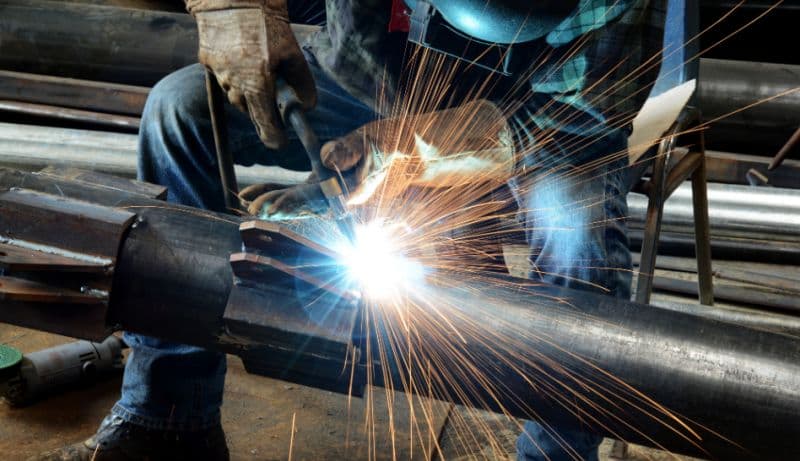
● Manufacturing
Equipment Manufacturing
The critical components of the of the complete pellet production line equipment are built in our own workshops in Asia. Additional equipment is manufactured by our worldwide network of reliable partners.
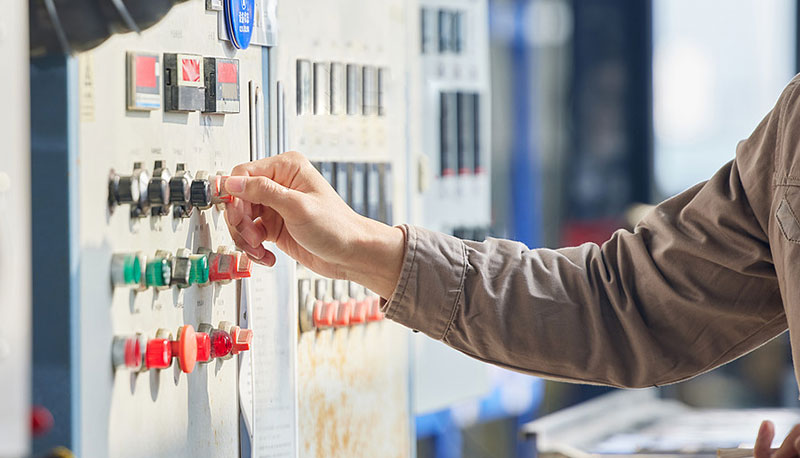
● Testing
Quality Inspection & Testing
Before leaving the factory, all equipment will be inspected by the quality inspection department. We can also provide customers with testing services from a single machine to a complete pellet plant system, and provide you with real actual data for “worry-free use.”
● Delivery
Equipment Delivery
In equipment boxing and packaging, we adopt professional packaging and modular solutions to ensure the safe and non-destructive delivery of pellet plant equipment.
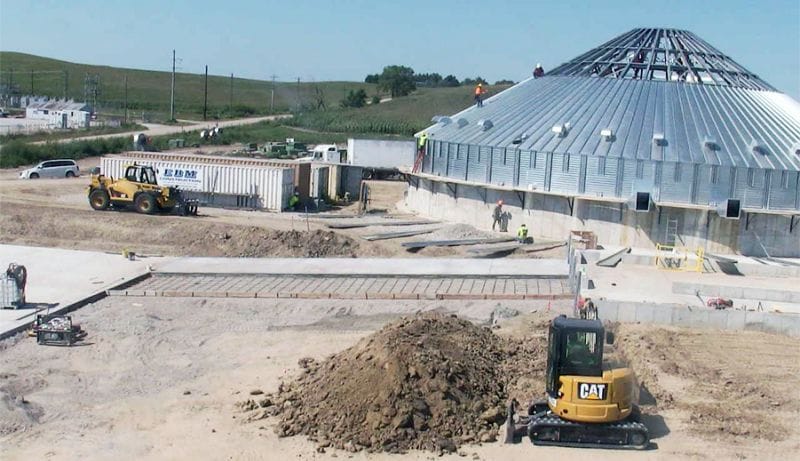
● Installation
Installation & Commissioning
Whether you choose your own subcontractor for the erection phase or you want to install everything together with us, a Richi supervisor will be around to make sure everything is mounted in a safe and thorough way.

● Training
Staff Training
We provide comprehensive training for the technicians of each project. We can also continue to provide support for the technicians during latter project operation.
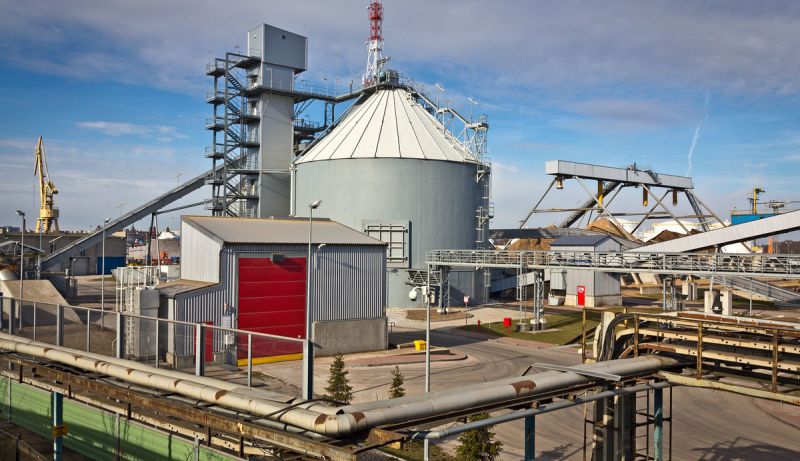
● After-sales
Project Follow-Up
When everything is up and running our Richiers will help you further whenever needed. We are ready to answer your call 24/7.We’ll also visit you regularly to learn about your needs.
Who we are
RICHI Machinery is one of the world’s leading suppliers of technology and services for the animal feed, aqua feed and pet food industries, also the largest pellet production line manufacturer in China.
Since 1995, RICHI’s vision to build a first-class enterprise, to foster first-class employees, and to make first-class contributions to society has never wavered.
In the past three decades, we have expanded our business to a wide range of areas, including animal feed mill equipment, aqua feed equipment, pet feed equipment, biomass pellet equipment, fertilizer equipment, cat litter equipment, municipal solid waste pellets equipment, etc.

1995
RICHI Established

2000+
Serving More Than 2000 Customers

120+
RICHI Employees

140+
Exported To 140 Countries