 0086-138 3838 9622
Pig Feed Processing Plant in USA
RICHI MACHINERY
overview
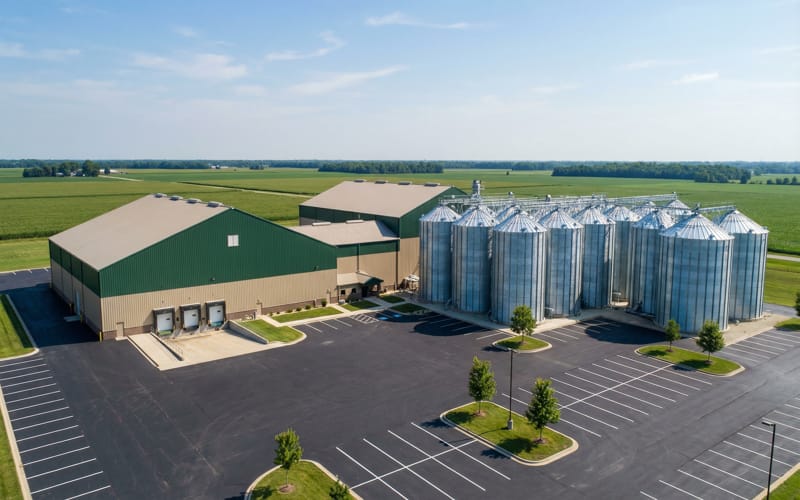
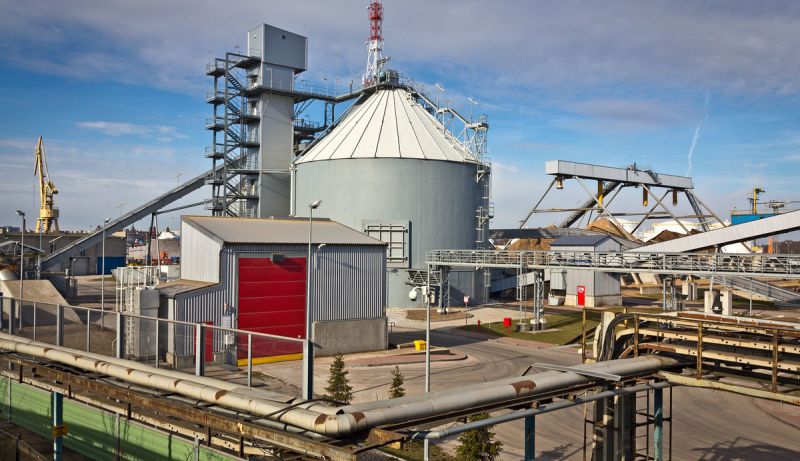
In late 2025, RICHI Machinery completed the engineering design, equipment manufacturing, and technical supervision for a state-of-the-art pig feed processing plant in USA, located in the heart of the Corn Belt region. This project represents a strategic investment in the American swine industry, designed to produce 240,000 tons annually of high-quality complete swine feed for integrated pork production operations across the Midwest.
The pig feed processing plant in USA was developed by a well-established family-owned pork producer that has been operating in the region for over four decades. With the consolidation trend in American agriculture and the increasing sophistication of swine nutrition requirements, the company recognized the need to bring feed production in-house to ensure consistent quality, traceability, and cost control across their growing network of contract growers and company-owned finishing barns.
Located strategically in an industrial zone with excellent access to both rail and highway transportation, this pig feed processing plant in USA occupies 39.08 acres (approximately 15.8 hectares) with total building area of 173,338 square feet (approximately 16,100 square meters). The facility operates 24 hours per day, 300 days per year, producing approximately 800 tons of finished feed daily to support swine operations throughout the region.
The total equipment investment for this pig feed mill in USA reached USD 3.2 million, representing a complete processing solution from raw material intake to automated loadout. The client’s total project investment, including land acquisition, building construction, and installation, amounted to approximately USD 6.5 million.
30-35T/H
capacity
$ 3.2 million
investment
USA
location
Feed
project type
RICHI MACHINERY
Project Background
The Investor Profile
The client behind this pig feed processing plant in USA represents the fourth generation of a farming family that transitioned from row-crop production to integrated swine operations in the 1980s. What began as a 200-sow farrow-to-finish operation has grown into a comprehensive pork production system encompassing 15,000 sows, contract grower networks across three counties, and annual marketings exceeding 350,000 finished pigs.
The decision to construct a centralized feed mill reflects the scale that modern American pork production requires. According to industry data, the North American swine feed market was valued at approximately $112.86 billion in 2025, with the U.S. representing the largest share of this market. With pork consumption continuing to grow and production efficiency becoming increasingly critical, the company recognized that controlling feed quality and cost would be essential for long-term competitiveness.
The company’s existing operations included multiple smaller feed mills that had been acquired or constructed over decades, ranging from 10,000 to 40,000 tons annual capacity each. These aging facilities suffered from high operating costs, inconsistent product quality, and inability to incorporate advanced nutrition technologies. The new pig feed processing plant in USA consolidates production into a single, efficient facility that replaces five older mills, reducing operating costs while improving quality control.
The U.S. Swine Industry Context
The United States is the world’s third-largest pork producer, with annual production exceeding 12 million metric tons. The industry has undergone significant consolidation over the past three decades, with larger, more specialized operations replacing traditional farrow-to-finish farms. This structural change has profound implications for feed manufacturing.
Key U.S. Swine Industry Indicators
| Indicator | Value | Source |
|---|---|---|
| Annual Pork Production | ~12.5 Million Metric Tons | USDA |
| Breeding Herd Size | ~6.2 Million Sows | USDA |
| Annual Pig Crop | ~130 Million Head | USDA |
| Feed-to-Pork Conversion Ratio | ~2.8:1 (Industry Average) | Industry Data |
| Complete Swine Feed Sales (2023) | $4.35 Billion | Industry Report |
The U.S. swine industry’s efficiency depends heavily on feed quality. Modern genetics require precise nutrition to express their genetic potential, and feed typically represents 65-70% of total pork production costs. This economic reality drove the investment in this pig feed processing plant in USA, as the company calculated that even a 2-3% improvement in feed efficiency would justify the capital investment within five years.
Why On-Farm Feed Manufacturing?
The decision to invest in a large-scale, centralized feed mill rather than continuing to purchase from commercial suppliers reflects several strategic considerations:
Quality Control: Commercial feed mills must serve diverse customers with varying requirements, leading to compromises in formulation and processing. This pig feed processing plant in USA allows the company to optimize formulations specifically for their genetics, facilities, and production goals.
Traceability and Food Safety: With increasing regulatory scrutiny and consumer demand for transparency, owning the feed supply chain provides complete visibility into ingredient sources and processing conditions. This aligns with broader industry trends toward supply chain transparency and regenerative agriculture practices gaining traction in the Midwest.
Cost Structure: By eliminating the commercial margin and optimizing logistics, the company projects feed cost savings of $8-12 per ton compared to purchased feed—representing approximately $2 million annual savings at full capacity.
Nutritional Innovation: In-house manufacturing enables rapid adoption of new nutritional technologies and formulation adjustments based on real-time performance data, providing competitive advantages impossible to achieve with commercial suppliers.
Facility Scale and Throughput
This pig feed processing plant in USA operates at a scale appropriate for serving a large integrated swine operation. The 240,000-ton annual capacity represents approximately 0.5% of total U.S. swine feed production, making it a substantial facility by regional standards.
Key Operational Parameters
| Parameter | Value |
|---|---|
| Operating Days per Year | 300 |
| Operating Hours per Day | 24 (Three Shifts) |
| Processing Rate (Design) | 33.3 Tons/Hour |
| Raw Material Receiving Capacity | 200 Tons/Hour (Rail + Truck) |
| Finished Product Loadout Capacity | 150 Tons/Hour |
| Feed Types Produced | Nursery, Grower, Finisher, Sow |
| Physical Forms | Mash (30%), Pellets (70%) |
| Staffing | 60 Total (Operations, Maintenance, QC, Management) |
RICHI MACHINERY
Facility Layout and Infrastructure
Site Selection and Layout Philosophy
The site for this pig feed processing plant in USA was selected after an extensive evaluation of potential locations across three counties. The chosen 39.08-acre property offers several strategic advantages:
- Rail Access: Direct connection to a Class I rail line enables economical receipt of corn, soybean meal, and other bulk ingredients from throughout the Midwest
- Highway Access: Proximity to a four-lane highway provides efficient truck access for both inbound ingredients and outbound finished feed
- Utility Availability: Existing industrial-grade electrical service and natural gas connections reduced infrastructure costs
- Labor Pool: Location within commuting distance of several communities provides access to qualified operators and maintenance personnel
The site layout reflects a logical flow from ingredient receipt through production to loadout, minimizing material handling distances and reducing operating costs.
Site Area Breakdown
| Area | Square Feet | Square Meters |
|---|---|---|
| Production Building | 46,546 | 4,325 |
| Raw Material Warehouse | 45,219 | 4,201 |
| Finished Product Warehouse | 38,889 | 3,613 |
| Raw Material Bulk Bins | 1,353 | 126 |
| Finished Product Bulk Bins | 1,540 | 143 |
| Administration Building | 31,834 | 2,958 |
| Receiving Shed | 4,120 | 383 |
| Gate House | 473 | 44 |
| Disinfection Facility | 1,968 | 183 |
| Fire Pump House | 1,968 | 183 |
| Access Roads & Maneuvering | 170,000 (approx.) | 15,800 (approx.) |
| Total Site | ~1,702,000 | ~158,200 |
Building Design and Construction
The main production building for this pig feed processing plant in USA is a five-story structure with total height of approximately 80 feet (24 meters). This vertical design allows gravity flow between processing stages, reducing conveying requirements and energy consumption.
Building Features
- Structure: Reinforced concrete foundations with structural steel frame
- Cladding: Insulated metal panels providing thermal efficiency and durability
- Flooring: Heavy-duty industrial concrete with hardener additives for wear resistance
- Lighting: LED throughout with motion sensors in low-traffic areas
- HVAC: Positive pressure ventilation in control rooms; tempered make-up air in production areas
- Dust Control: Integrated dust collection system with explosion venting
Storage Infrastructure
Raw material storage is a critical component of this pig feed processing plant in USA, providing operational flexibility and enabling volume purchasing.
Storage Capacity Summary
| Storage Type | Quantity | Unit Capacity | Total Capacity | Materials Stored |
|---|---|---|---|---|
| Grain Bins | 6 | 1,000 Tons | 6,000 Tons | Corn, Wheat |
| Raw Material Bulk Bins | 8 | Various | 2,400 Tons | Soybean Meal, Rice |
| Flat Storage | 1 | 6,000 Tons | 6,000 Tons | Corn (Emergency) |
| Liquid Tanks | 2 | 25,000 Gallons | 50,000 Gallons | Soybean Oil |
| Liquid Tanks | 2 | 15,000 Gallons | 30,000 Gallons | Molasses |
| Additive Warehouse | — | — | 800 Tons | Vitamins, Minerals, Premixes |
| Finished Product Bulk Bins | 8 | Various | 2,000 Tons | Pelleted & Mash Feeds |
| Finished Product Warehouse | 1 | 5,000 Tons | 5,000 Tons | Bagged Products |
This storage configuration provides approximately 30 days of operating capacity for major ingredients, allowing the facility to manage through harvest periods and transportation disruptions.
RICHI MACHINERY
Raw Materials and Formulation Strategy
Ingredient Sourcing in the U.S. Context
For this pig feed processing plant in USA, raw material sourcing reflects the abundance of agricultural commodities available in the American Midwest. The United States is the world’s largest corn producer and second-largest soybean producer, with annual corn production exceeding 380 million metric tons and soybean production of approximately 115 million metric tons -1.
Primary Ingredient Sources
| Ingredient | Annual Consumption | Primary Source | Typical Formulation Rate |
|---|---|---|---|
| Corn | 50,000 tons | Local Farmers (50-mile radius) | 40-60% |
| Soybean Meal | 60,000 tons | Regional Crushers | 20-30% |
| Wheat | 50,000 tons | Local Farmers / Regional Elevators | 10-20% |
| Wheat Middlings | 20,000 tons | Flour Mills (Regional) | 5-15% |
| Rice | 35,000 tons | Import / Regional Mills | 5-15% |
| Soybean Oil | 8,500 tons | Regional Crushers | 2-4% |
| Molasses | 3,200 tons | Sugar Refineries (Gulf Coast) | 1-2% |
| Additives | 25,100 tons | Various Suppliers | 5-10% |
Corn Sourcing and Quality
Corn represents the largest ingredient volume in swine diets, and sourcing high-quality corn is essential for this pig feed processing plant in USA. The facility is located in a region where average corn yields exceed 180 bushels per acre, with production from the surrounding area sufficient to supply the facility’s needs multiple times over.
Corn Specification Requirements
| Parameter | Target | Acceptable Range |
|---|---|---|
| Test Weight | 56 lb/bu | >54 lb/bu |
| Moisture | 15.0% | 14.0-15.5% |
| Broken Corn & Foreign Material | 2.0% | <3.0% |
| Damaged Kernels | 3.0% | <5.0% |
| Aflatoxin | <20 ppb | — |
| DON (Vomitoxin) | <1 ppm | — |
The facility’s grain receiving system includes automated sampling and analysis for each truckload, with rapid NIRS (Near Infrared Spectroscopy) testing for moisture, protein, and starch content. This data integrates with the formulation system, allowing adjustments based on actual ingredient quality.
Protein Ingredients
Soybean meal is the primary protein source for this pig feed processing plant in USA, with specifications based on extensive consultation with swine nutritionists:
- Protein Content: 46.5-48% (solvent extracted, dehulled)
- Fiber Content: <3.5%
- KOH Protein Solubility: 75-85% (indicator of proper processing)
- Urease Activity: 0.05-0.20 pH rise
The facility also incorporates wheat and rice as alternative energy sources that provide different starch characteristics and amino acid profiles compared to corn.
Molasses and Liquid Ingredients
Molasses deserves special attention in this pig feed processing plant in USA due to its functional properties. As a viscous liquid co-product of sugar refining, molasses serves multiple purposes:
- Palatability Enhancement: The sweet taste improves feed intake, particularly for weaned pigs
- Dust Control: Molasses binds fines, reducing dust during handling
- Pellet Binding: Improves pellet durability and reduces fines
- Energy Source: Provides readily available carbohydrates
The facility uses approximately 3,200 tons of molasses annually, stored in heated tanks to maintain fluidity. Before incorporation, molasses is diluted with water (approximately 1:1 ratio) to achieve optimal viscosity for spraying into mixers.
Additive Ingredients
Modern swine nutrition relies on precise inclusion of micro-ingredients. This pig feed processing plant in USA incorporates a wide range of additives:
- Vitamins: A, D, E, B-complex, biotin, niacin
- Minerals: Calcium, phosphorus, sodium, chloride, trace minerals (zinc, copper, manganese, selenium)
- Amino Acids: Lysine, methionine, threonine, tryptophan
- Enzymes: Phytase, xylanase, beta-glucanase
- Feed Additives: Acidifiers, probiotics, essential oils
Raw Material Consumption Summary
| Item | Annual Consumption | Unit | Storage Form | Typical Inclusion |
|---|---|---|---|---|
| Soybean Meal | 60,000 | t/a | Bulk (70 kg bags backup) | 20-30% |
| Wheat Middlings | 20,000 | t/a | Bulk (50 kg bags backup) | 5-15% |
| Wheat | 50,000 | t/a | Bulk (1,000 ton bins) | 10-20% |
| Corn | 50,000 | t/a | Bulk (1,000 ton bins) | 40-60% |
| Rice | 35,000 | t/a | Bulk (50 kg bags) | 5-15% |
| Soybean Oil | 8,500 | t/a | Bulk Tanks | 2-4% |
| Molasses | 3,200 | t/a | Bulk Tanks | 1-2% |
| Additives | 25,100 | t/a | Bags/Drums (25 kg) | 5-10% |
RICHI MACHINERY
Processing Equipment and Technology
Complete Equipment Inventory
The pig feed processing plant in USA incorporates 93 major pieces of processing equipment, representing RICHI’s latest technology for high-capacity swine feed manufacturing.
Major Equipment Summary by Process Section
| Section | Equipment Type | Quantity | Function |
| Receiving & Storage | Grain Bins | 6 | Whole grain storage |
| Raw Material Bulk Bins | 8 | Soybean meal, rice storage | |
| Flat Storage | 1 | Emergency corn storage | |
| Bucket Elevators | 15 | Vertical material transport | |
| Grinding | Hammer Mills | 6 | Particle size reduction |
| Extrusion | Extrusion Line | 1 | Corn extrusion for specialty feeds |
| Batching & Mixing | Batching Systems | 3 | Ingredient proportioning |
| Mixers | 5 | Homogeneous blending | |
| Pelletizing | Pellet Mills | 3 | Pelleted feed production |
| Cooling & Screening | Counterflow Coolers | 3 | Pellet temperature reduction |
| Packaging & Loadout | Finished Product Bins | 8 | Bulk feed storage |
| Flat Storage | 1 | Bagged product storage | |
| Packaging Machines | 6 | Bag filling and sealing | |
| Automated Loadout Systems | — | Bulk truck loading | |
| Support Equipment | Air Compressors | 2 | Pneumatic systems |
| Dust Collection Systems | Multiple | Emission control | |
| Magnets | Multiple | Ferrous metal removal | |
| Total Major Equipment | 93 |
Grinding System
The grinding system for this pig feed processing plant in USA comprises six hammer mills, providing both capacity and redundancy. Swine nutrition research has demonstrated that particle size significantly affects digestibility, with optimal ranges varying by age and production stage -3.
Grinding System Specifications
| Parameter | Value |
|---|---|
| Number of Mills | 6 |
| Screen Perforations | 3-6 mm (adjustable by product type) |
| Rotor Speed | 1,800 RPM |
| Grinding Mode | Under-sieve discharge with pneumatic assist |
The facility produces multiple grind sizes:
- Nursery Diets: Fine grind (400-600 microns) for maximum digestibility
- Grower/Finisher Diets: Medium grind (600-800 microns) balancing digestibility and flowability
- Sow Diets: Coarser grind (800-1,000 microns) for gut health
Extrusion Capability
An important feature of this pig feed processing plant in USA is the dedicated extrusion line for corn processing. While not all swine diets require extruded ingredients, certain applications benefit significantly:
- Nursery Diets: Extruded corn improves digestibility for weaned pigs with immature digestive systems
- Specialty Feeds: Extrusion can enhance energy availability and improve pellet quality
- Pathogen Reduction: Thermal processing reduces microbial loads in ingredients
The extrusion line operates at approximately 5 tons/hour, sufficient to meet the facility’s specialty feed requirements.
Batching and Mixing
The heart of this pig feed processing plant in USA is its automated batching and mixing system, comprising three independent batching lines feeding five mixers. This configuration provides:
- Production Flexibility: Different formulations can be produced simultaneously
- Redundancy: Maintenance on one line doesn’t halt production
- Segregation: Medicated and non-medicated feeds can be produced separately
Batching System Specifications
| Parameter | Value |
|---|---|
| Batching Accuracy | ±0.1% (major ingredients), ±0.01% (micro-ingredients) |
| Mixer Type | Double-shaft paddle |
| Mixing Time | 90-120 seconds (complete homogeneity) |
| Mixing Uniformity | CV <5% |
| Liquid Addition | Molasses (diluted), oil, water |
Pellet Mills
Three pig feed pellet machines handle the 70% of production that is pelleted. Each mill is equipped with:
- Conditioner: Steam addition for temperature and moisture control (60-70°C typical)
- Die: Size matched to product type (nursery: 3/16″, grower/finisher: 1/4″)
- Roller Adjustment: Automated gap control for consistent operation
Dust Collection System
Compliance with U.S. environmental regulations requires comprehensive dust control. This pig feed processing plant in USA incorporates multiple dust collection points:
| Emission Source | Control Equipment | Discharge Point |
|---|---|---|
| Grinding | Baghouse | 15m Stack |
| Extrusion/Cooling | Cyclone | 15m Stack |
| Pellet Cooling | Cyclone | 15m Stack |
| Bins/Batching/Packaging | Baghouse | 15m Stack |
| Receiving | Baghouse | 15m Stack |
| Grain Bins | Integrated Filters | Bin Top (≥15m) |
All collected dust is returned to the process stream at appropriate points, achieving zero particulate waste while recovering valuable feed material.
RICHI MACHINERY
Production Process and Quality Control
Process Flow Description
The pig feed processing plant in USA employs a comprehensive manufacturing process designed to produce consistent, high-quality swine feed meeting the nutritional requirements of pigs at all production stages.
Process Flow Summary
Ingredient Receiving → Storage → Cleaning/Grinding → Batching → Mixing → (Pellet Mill → Cooling → Screening) → Finished Product Storage → Loadout
Detailed Process Steps
Step 1: Magnetic Separation
All incoming grain passes through permanent magnets to remove ferrous contaminants that could damage processing equipment. This essential first step protects hammer mill screens, pellet mill dies, and downstream equipment from premature wear.
Step 2: Cleaning
Corn, wheat, and other grains pass through rotary drum screens to remove:
- Oversize Material: Stems, cobs, stones, and other field debris
- Undersize Material: Fine particles, broken kernels, weed seeds
Cleaned grain transfers to storage bins or directly to the grinding system.
Step 3: Grinding
Grain from storage bins is metered to the hammer mills through feeders controlling flow rate. Each of the six hammer mills operates with screens sized for the target particle size. Ground material is pneumatically conveyed to dedicated bins in the batching system.
Step 4: Extrusion (Specialty Products)
For products requiring extruded corn, whole corn is directed to the extrusion line. The extruder applies heat, pressure, and mechanical shear, cooking the corn before it is cooled and ground for incorporation into specialty feeds.
Step 5: Batching
The batching system operates under computer control, with each ingredient drawn from its storage bin according to the formulation stored in the system database. Key features:
- Major Ingredients: Corn, soybean meal, wheat, rice — batched into 3,000 kg scales
- Micro-Ingredients: Vitamins, minerals, amino acids — batched into 150 kg scales
- Liquid Ingredients: Oil and diluted molasses — metered directly into mixers
Step 6: Mixing
Batched ingredients discharge into one of five double-shaft paddle mixers, each with 2,000 kg capacity. Liquids are sprayed into the mixer during the mixing cycle. Total mixing time is 90-120 seconds, achieving coefficient of variation below 5%.
Step 7: Pellet Mill (70% of Production)
For pelleted products, mixed mash is conveyed to the pellet mill conditioners. Steam addition raises temperature to 60-70°C, conditioning the mash before extrusion through the pellet die. Hot pellets discharge to the cooler.
Step 8: Cooling
Pellets enter counterflow coolers where ambient air is drawn upward through the product bed. Cooling reduces pellet temperature to within 5°C of ambient while removing 3-4% moisture added during conditioning.
Step 9: Screening
Cooled pellets pass through rotary screens to remove fines and oversize particles. Fines are returned to the pellet mill, while on-spec product proceeds to finished storage.
Step 10: Finished Product Storage
Finished feed transfers to one of eight bulk bins (pelleted products) or to the finished product warehouse (mash products and bagged feed).
Step 11: Loadout
Bulk feed is loaded into pneumatic or gravity trailers for delivery to swine operations. Bagged feed is palletized and staged for truck loading.
Quality Control Program
The pig feed processing plant in USA operates a comprehensive quality control program aligned with feed safety standards and customer requirements.
Incoming Ingredient Testing
| Ingredient | Tests Performed | Frequency |
|---|---|---|
| Corn | Moisture, test weight, damage, aflatoxin | Every load |
| Soybean Meal | Protein, moisture, urease activity, KOH solubility | Every load |
| Wheat | Moisture, protein, test weight | Every load |
| Rice | Moisture, foreign material | Every load |
| Oil | Peroxide value, free fatty acids | Every truck |
| Molasses | Brix, pH | Every truck |
| Additives | Certificate of Analysis review | Every lot |
In-Process Testing
| Sample Point | Tests Performed | Frequency |
|---|---|---|
| Ground Grain | Particle size analysis | Every shift |
| Mash (Pre-Pellet) | Moisture, uniformity (salt test) | Every batch |
| Pellet Mill Discharge | Temperature, moisture | Hourly |
| Cooler Discharge | Temperature, moisture, pellet durability | Hourly |
Finished Product Specifications
| Parameter | Nursery | Grower | Finisher | Sow |
|---|---|---|---|---|
| Crude Protein (%) | 20-22 | 18-20 | 15-17 | 14-16 |
| Crude Fat (%) | 5-7 | 4-6 | 3-5 | 3-5 |
| Crude Fiber (%) | <4 | <5 | <6 | <8 |
| Calcium (%) | 0.8-1.0 | 0.7-0.9 | 0.6-0.8 | 0.9-1.1 |
| Phosphorus (%) | 0.7-0.8 | 0.6-0.7 | 0.5-0.6 | 0.7-0.8 |
| Pellet Durability Index | >95 | >92 | >90 | N/A |
RICHI MACHINERY
Environmental Management
U.S. Environmental Regulatory Framework
This pig feed processing plant in USA operates under federal and state environmental regulations that govern air emissions, wastewater, and solid waste management. The facility was designed to meet or exceed all applicable requirements.
Key Regulatory Requirements
| Regulation | Applicability | Compliance Approach |
|---|---|---|
| Clean Air Act | Particulate emissions | Baghouses, cyclones, enclosed transfer |
| NESHAP (40 CFR Part 63 Subpart DDDDDDD) | Prepared feeds manufacturing | Emission controls, monitoring, recordkeeping |
| State Air Quality Permits | Major source thresholds | Permit application, stack testing |
| Clean Water Act | Stormwater discharges | SWPPP, secondary containment |
| RCRA | Hazardous waste | Proper disposal, training |
Air Quality Management
The primary environmental impact of feed manufacturing is particulate emissions. This pig feed processing plant in USA controls emissions through:
- Baghouses on all major process exhausts (grinding, batching, packaging)
- Cyclones on cooling operations (extrusion, pellet cooling)
- Integrated filters on grain bin vents
- Enclosed conveying throughout the facility
- Negative pressure in production areas
Emissions Control Summary
| Emission Point | Control Device | Stack Height | Design Efficiency |
|---|---|---|---|
| Grinding | Baghouse | 15 m | >99% |
| Extrusion Cooling | Cyclone | 15 m | >95% |
| Pellet Cooling | Cyclone | 15 m | >95% |
| Bins/Batching/Packaging | Baghouse | 15 m | >99% |
| Receiving | Baghouse | 15 m | >99% |
Wastewater Management
This pig feed processing plant in USA generates no process wastewater. The only liquid effluents are:
- Sanitary Wastewater: From restrooms and break areas
- Kitchen Wastewater: From employee lunchroom (one meal per day)
These waste streams are combined, pass through a grease trap (for kitchen waste) and septic system, then discharge to the municipal sewer system for treatment at the local publicly owned treatment works. Total wastewater generation is approximately 2.4 m³/day (634 gallons/day).
Solid Waste Management
| Waste Type | Source | Annual Quantity | Management Method |
|---|---|---|---|
| Baghouse Dust | All dust collectors | Process-dependent | Returned to production |
| Ferrous Metals | Magnets | ~5 tons | Sold to recycler |
| Packaging Waste | Raw material bags | ~30 tons | Sold to recycler |
| General Waste | Offices, lunchroom | ~10 tons | Municipal collection |
Spill Prevention and Control
The facility maintains a Spill Prevention, Control, and Countermeasure (SPCC) Plan addressing:
- Oil Storage: Soybean oil and hydraulic oil storage areas with secondary containment
- Fuel Storage: Emergency generator fuel tank with containment
- Response Procedures: Spill kits, trained personnel, notification requirements
RICHI MACHINERY
Implementation and Commissioning
Project Timeline
| Phase | Duration | Key Activities |
|---|---|---|
| Feasibility & Planning | 6 Months | Site selection, capacity analysis, financial modeling |
| Contract Negotiation | 2 Months | Equipment selection, pricing, terms |
| Engineering Design | 4 Months | Layout, structural engineering, electrical design |
| Permitting | 6 Months | Local approvals, air permit, construction permits |
| Equipment Manufacturing | 8 Months | Fabrication at RICHI Qingdao, quality testing |
| Shipping | 6 Weeks | Ocean freight to Los Angeles, customs clearance |
| Site Civil Works | 6 Months | Site preparation, foundations, utilities |
| Building Construction | 8 Months | Structural steel, cladding, roofing |
| Equipment Installation | 5 Months | Mechanical installation, electrical, controls |
| Commissioning | 1 Month | Testing, tuning, operator training |
| Commercial Production | Ongoing | Ramp-up to full capacity |
Logistics and Shipping
All major equipment for this pig feed processing plant in USA was manufactured at RICHI’s Qingdao facility and shipped via containerized freight:
- Port of Loading: Qingdao Port, China
- Destination Port: Los Angeles / Long Beach Port Complex, USA
- Shipping Duration: Approximately 18-22 days
- Customs Clearance: Los Angeles (3-5 days typical)
- Inland Transport: Los Angeles to Midwest site (5-7 days by rail/truck)
The feed mill equipment was containerized in 32 containers (40-foot high-cube and flat-rack configurations), with detailed packing lists and shipping documentation to ensure smooth customs clearance through the Los Angeles/Long Beach port complex—the primary gateway for U.S. agricultural imports from Asia.
Installation and Commissioning
RICHI provided comprehensive technical support during installation and commissioning:
- On-Site Supervision: 8 weeks during mechanical installation
- Electrical & Controls: 3 weeks on-site during system startup
- Operator Training: Comprehensive 2-week program for all shifts
- Process Optimization: 2 weeks post-commissioning to optimize settings for local ingredients
The client’s maintenance team participated actively throughout installation, developing intimate knowledge of the equipment before assuming operational responsibility.
RICHI MACHINERY
Investment Outlook for Swine Feed Manufacturing in the United States
Market Fundamentals
The U.S. swine feed market represents one of the world’s largest and most sophisticated animal feed sectors. With annual complete swine feed sales of approximately $4.35 billion (2023) and projected growth to $4.65 billion by 2028, the market offers substantial opportunities for efficient producers.
U.S. Swine Industry Structure
| Segment | Characteristic |
|---|---|
| Herd Size | ~75 million head (total inventory) |
| Operations | ~60,000 farms (declining, consolidating) |
| Concentration | Top producers account for >30% of marketings |
| Geographic Concentration | Midwest (Iowa, Minnesota, North Carolina, Illinois) |
Competitive Advantages of On-Farm Manufacturing
For integrated pork producers, owning the feed manufacturing function offers compelling advantages:
Cost Control: Commercial feed margins typically range from $20-40 per ton, representing a significant cost that can be captured through vertical integration. At 240,000 tons annual production, this represents $4.8-9.6 million in potential savings.
Quality Assurance: Direct control over ingredient selection, processing parameters, and quality testing ensures consistent nutrition aligned with production goals. Recent research demonstrates that precise control over factors like particle size and pellet quality can improve feed efficiency by 3-5%.
Formulation Flexibility: In-house manufacturing enables rapid adjustment of formulations based on ingredient prices, pig performance data, and nutritional research without the lead times required by commercial suppliers.
Biosecurity: Control over the feed supply chain reduces disease introduction risks, an increasingly important consideration given the threat of foreign animal diseases.
Market Challenges
Despite attractive fundamentals, swine feed manufacturing in the U.S. faces several challenges:
Margin Pressure: Low commodity prices in 2025 have squeezed producer margins, with an estimated one-fifth of grain farmers experiencing negative cash flow. This creates pressure on feed costs throughout the supply chain.
Regulatory Complexity: Feed mills are subject to FDA regulations (Food Safety Modernization Act), EPA air quality requirements, and state environmental permits, requiring dedicated compliance resources.
Capital Intensity: Modern feed mills require substantial capital investment, with this project’s $16.5 million total cost representing a significant commitment even for established operations.
Technology Requirements: Keeping pace with advances in nutrition, processing technology, and data analytics requires ongoing investment and technical expertise.
Regional Opportunities
The success of this pig feed processing plant in USA suggests opportunities for similar facilities in other pork-producing regions:
- Iowa: The largest pork-producing state, with extensive swine infrastructure
- Minnesota: Significant swine production with strong cooperative tradition
- North Carolina: Major production region in the Southeast
- Illinois/Indiana/Ohio: Eastern Corn Belt with growing swine sectors
- Oklahoma/Texas: Emerging production regions in the Southern Plains
Each region presents unique characteristics, but the fundamental economics of integrated feed manufacturing remain attractive for operations of sufficient scale.
RICHI’s Commitment to U.S. Agriculture
RICHI Machinery brings decades of feed manufacturing technology experience to the U.S. market. Our equipment is specifically engineered for the demands of North American production, with:
- Heavy-duty construction suitable for 24/7 industrial operation
- Compliance with U.S. electrical and safety standards (UL, NEC)
- Energy-efficient designs reducing operating costs
- Precise control systems ensuring consistent product quality
- Comprehensive after-sales support through U.S.-based partners
- Process expertise developed through hundreds of installations worldwide
For U.S. pork producers considering feed manufacturing investments, RICHI offers:
- Complete feasibility analysis and project planning
- Customized equipment solutions meeting U.S. standards
- Installation supervision and commissioning support
- Operator training and ongoing technical assistance
- Process optimization services for maximum profitability
Future Outlook
The U.S. swine industry continues to evolve toward greater integration, specialization, and efficiency. Producers with sufficient scale to justify dedicated feed manufacturing facilities will increasingly capture the benefits of vertical integration:
- Cost Advantages: Capturing commercial margins and optimizing logistics
- Quality Benefits: Consistent nutrition tailored to specific genetics and facilities
- Risk Management: Reduced exposure to commercial supplier disruptions
- Sustainability: Potential for sourcing locally grown ingredients and reducing transportation
As the North American swine feed market continues its projected growth at 4.5% CAGR through 2033, efficient producers with modern manufacturing capabilities will be well-positioned to capture value throughout the pork production chain.
RICHI MACHINERY
starting pig feed processing plant in USA
This pig feed processing plant in USA represents a model for efficient, vertically integrated feed manufacturing in modern pork production. By consolidating production from multiple outdated facilities into a single, state-of-the-art plant, the client achieves:
- Economies of Scale: Reduced per-ton operating costs through high-volume production
- Quality Enhancement: Consistent, precisely formulated feeds optimized for specific production stages
- Operational Efficiency: Modern equipment and controls minimizing labor requirements
- Environmental Compliance: Comprehensive dust collection meeting all regulatory requirements
- Future Flexibility: Capacity to incorporate new ingredients and formulations as nutrition science advances
For pork producers considering similar investments, the key success factors demonstrated by this project include:
- Sufficient Scale: 240,000 tons annual capacity justifies the capital investment
- Strategic Location: Access to both raw materials and end-users
- Experienced Team: Workforce capable of operating sophisticated equipment
- Quality Focus: Comprehensive quality control throughout the process
- Regulatory Compliance: Proactive approach to environmental requirements
The U.S. swine industry will continue to consolidate and specialize, with feed manufacturing playing an increasingly strategic role in competitive pork production. Modern, efficient feed mills represent not just a cost center but a competitive advantage for producers who can leverage them effectively.
For more information about RICHI feed manufacturing systems or to discuss your specific project requirements in the United States or other markets, contact our international sales team. We welcome inquiries from pork producers, feed manufacturers, and agricultural investors seeking to evaluate the potential of integrated feed manufacturing in their operations.
● RICHI MACHINERY
RICHI Service

● Consulting
Customer Consultation
We want to have a deep understanding of your industrial process, to know your exact needs of feed, wood, biomass, fertilizer or other pellet processing.

● Design
Pig feed Plant Design
Based on your unique situation and industrial process, we will tailor complete pellet plant you need, and inform you of every additional detail that could facilitate operation, minimize total cost.
● Manufacturing
Equipment Manufacturing
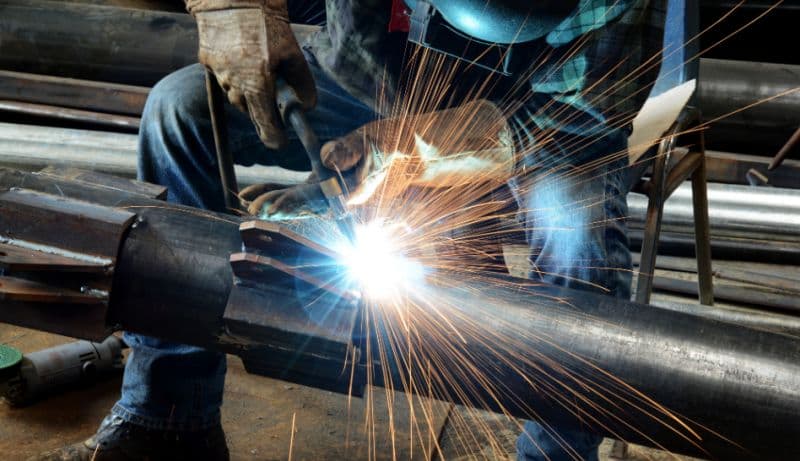
The critical components of the of the complete pellet production line equipment are built in our own workshops in Asia. Additional equipment is manufactured by our worldwide network of reliable partners.

● Testing
Quality Inspection & Testing
Before leaving the factory, all equipment will be inspected by the quality inspection department. We can also provide customers with testing services from a single machine to a complete pellet plant system, and provide you with real actual data for “worry-free use.”

● Delivery
Equipment Delivery
In equipment boxing and packaging, we adopt professional packaging and modular solutions to ensure the safe and non-destructive delivery of pellet plant equipment.
● Installation
Installation & Commissioning
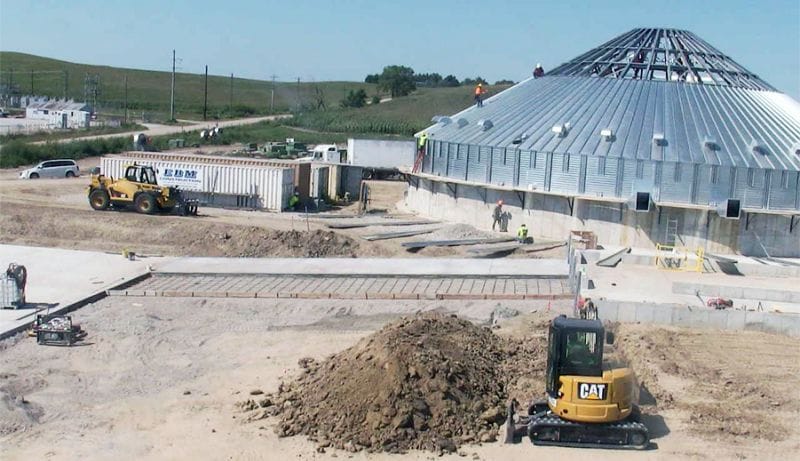
Whether you choose your own subcontractor for the erection phase or you want to install everything together with us, a Richi supervisor will be around to make sure everything is mounted in a safe and thorough way.

● Training
Staff Training
We provide comprehensive training for the technicians of each project. We can also continue to provide support for the technicians during latter project operation.
● After-sales
Project Follow-Up
When everything is up and running our Richiers will help you further whenever needed. We are ready to answer your call 24/7.We’ll also visit you regularly to learn about your needs.
Who we are
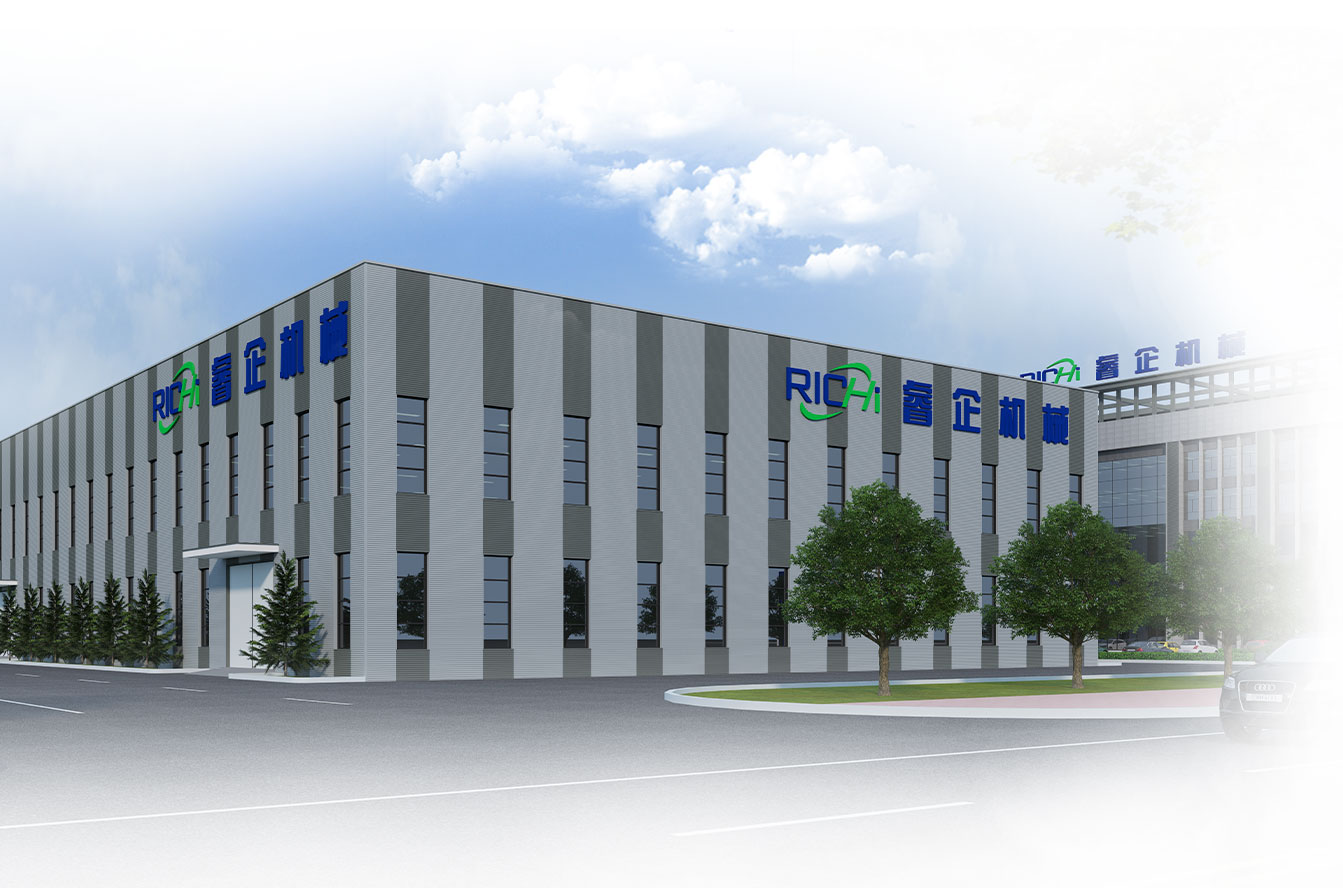
RICHI Machinery is one of the world’s leading suppliers of technology and services for the animal feed, aqua feed and pet food industries, also the largest pellet production line manufacturer in China.
Since 1995, RICHI’s vision to build a first-class enterprise, to foster first-class employees, and to make first-class contributions to society has never wavered.
In the past three decades, we have expanded our business to a wide range of areas, including animal feed mill equipment, aqua feed equipment, pet feed equipment, biomass pellet equipment, fertilizer equipment, cat litter equipment, municipal solid waste pellets equipment, etc.

1995
RICHI Established

2000+
Serving More Than 2000 Customers

120+
RICHI Employees

140+
Exported To 140 Countries