 0086-138 3838 9622
3–4 T/H Pet Food Processing Plant in Russia
An established pet food producer in Moscow replaced an ageing production line to support its cat and dog food business. RICHI’s 3–4 T/H pet food processing plant in Russia was completed within the existing factory, retaining the site’s supporting facilities. The project has an annual design capacity of 18,000 tonnes, with ingredient preparation, extrusion, drying, coating and packing linked in one production route.

RICHI MACHINERY
Replacing an Ageing Line for Two Product Families
The Russian pet food factory retrofit centred on the processing line rather than a new factory campus. The customer needed equipment for two distinct product families: dry cat food and dry dog food. That meant coordinating recipe control, grind quality, extrusion settings and post-dryer additions. The investment was directed toward replacing the old processing route while using the established premises and associated services.
The pet food production line operates within a 3–4 T/H finished-product range. The annual plan uses 300 working days and two eight-hour shifts, giving 4,800 scheduled hours. Producing 18,000 tonnes at 4 T/H requires 4,500 effective hours. At 3 T/H, the same volume needs 6,000 effective hours, so the annual target depends on the product mix, sustained upper-rate operation and an appropriate shift calendar.
A cat and dog kibble plant upgrade has to manage recipe differences through the entire process. Protein meals, cereal content, nutrient additions and coating requirements affect expansion, texture and drying. Cat and dog diets therefore follow separate formula records and product specifications. Changing a die or bag label is only one part of a controlled switch between the two product families.
The 300-hour difference between scheduled and effective time is a demanding operating allowance. Long production campaigns reduce repeated starts and clean-outs, while planned service prevents wear parts from setting the production calendar. The annual figure is a design capacity, not a claim that every recipe delivers the same hourly output. Product trials establish the working rate for each commercial diet.
3–4 T/H
Production Capacity
$520,000
Total Project Investment
Russia
Project Location
Pet Food
Finished Products
RICHI MACHINERY
Working Within the Existing Moscow Factory
The project occupies an existing Moscow site of 3,000 m², with a total gross building area of 2,932 m². Gross floor area includes upper floors and is different from building footprint. The replacement line uses the production workshop and associated storage and service facilities. Ingredient movement, clean-side finishing and equipment access are the practical layout priorities within this established building arrangement.
The dual-species dry pet food line processes purchased dry ingredients through a common equipment route, with separate recipes and production records. Finished food moves forward to coating and packing rather than crossing back through grain intake. The table below distinguishes the established site functions from engineering provisions for storage, staffing and services; those provisions connect working stocks, operator coverage and service duties to the production schedule.
| Facility / function | Project record or sizing basis | Role in the replacement |
|---|---|---|
| Location and site | Moscow; 3,000 m² land area | Existing factory retained for a processing-equipment replacement |
| Total gross floor area | 2,932 m² | Includes upper floors; not equal to footprint or usable production-room area |
| Processing workshop | Existing production building | Ingredient preparation, extrusion and drying arranged with maintenance and cleaning access |
| Storage and finishing | Existing raw-material and finished-product functions | Raw receiving separated from exposed post-dryer handling and packed-product release |
| Reference working stocks | 250 tonnes dry base; 40 tonnes fat; 180 tonnes finished food | About four, eight and three scheduled operating/dispatch days respectively at the reference annual product mix; storage layout checked against actual packaging |
| Boiler and water services | One 4 T/H gas-fired steam boiler listed for the project | Dryer heat exchange, direct conditioning steam and provision for seasonal building heat |
| Electrical reference | 710 kW connected engineering load; 1,000 kVA service reference | 850 kW active capacity at 0.85 power factor; starting, harmonics and actual service availability require electrical design |
| Staffing calculation | 22-person operating roster at 1,800 h/person/year | 39,600 staff-hours support seven active positions over 4,800 scheduled hours, leaving 6,000 h for relief, maintenance and support |
| Winter service allowance | 300 kW space-heating duty for 1,800 equivalent full-load hours | Engineering heat allowance supplied through steam-to-water exchange; actual building heat loss determines final demand |
| Environmental functions | Source extraction, controlled waste holding, suitable drainage and noise controls | Emission and discharge routes specified for the site; no automatic zero-emission or compliance claim |
| Investment basis | Fixed completed-project amount in the overview | Project-specific record; no second price or inferred cost breakdown |
RICHI MACHINERY
One Extruder With Coordinated Preparation and Finishing
One extruder remains the centre of this pet food processing plant in Russia. The project equipment route also includes mixing, milling, belt drying, batch coating, powder addition, cooling and bagging. The pet food factory electrical load and process duties are calculated at 4 T/H net product. Drive powers and process loads are engineering sizing values; final operating settings depend on the specific cat or dog formulation.
| Section / quantity | Engineering duty | Capacity relationship |
|---|---|---|
| Intake and protection / one set | Receiving point, coarse screen and magnets | Grain and meal routes matched to their incoming form; source extraction at tipping |
| Cereal reduction / one mill | 37 kW; at least 2.5 T/H on the cereal fraction | Weighted cereal load about 1,784 kg/h in the reference product mix |
| Premixing / one mixer | 1,000 kg working batch; 11 kW | Combines major ingredients before the complete-base fine-grinding stage |
| Fine grinding / one mill | 160 kW; at least 4.5 T/H at the agreed sieve distribution | Approximately 3,844 kg/h base demand; internal coarse return remains in the raw-side circuit |
| Final mixing / one mixer | 1,000 kg working batch; 18.5 kW; checked nutrient addition | Eight-minute complete cycle gives 7.5 T/H gross capacity; uniformity test establishes actual mixing time |
| Twin screw extruder / one | 200 kW main-drive sizing value; conditioner 22 kW; feeder 5.5 kW; cutter 4 kW | Approximately 4,634 kg/h conditioned input and 4,451 kg/h wet die discharge at 4 T/H net product |
| Mesh belt dryer / one | 1,000 kg/h evaporation; 55 kW fans and belt drives | Reference evaporation about 774 kg/h; steam-heated circulating air |
| Batch coater / one | 500 kg finished batch; 11 kW; independent fat and powder dosing | Five-minute complete cycle gives 6 T/H; no vacuum pump added to the base scope |
| Cooler and grading / one finishing route | Cooler 16.5 kW; screens 4.5 kW; handling duty at least 5 T/H | Screens cover raw-side control and clean-side grading as separate positions |
| Packing / one station | Ten complete 10 kg bags/min; 15 kW; coding and metal detection | 6 T/H gross bagging duty; includes closing, checking and bag removal |
| Steam and water / one service set | Project boiler 4 T/H; auxiliaries 11 kW; water treatment 5.5 kW; heating pumps 5 kW | Calculated normal steam generation about 1.88 T/H without building heat; winter design peak about 2.97 T/H |
| Transfers and other process services | Conveying/bins 30 kW; aspiration 22; liquids 7.5; compressed air 15 | Duty schedule coordinated with interlocks, access and ingredient segregation |
| Building and operating services | Ventilation 30 kW; lighting/controls 12 kW; forklift charging 12 kW | Total connected engineering schedule: 710 kW; not an annual metered-consumption claim |
RICHI MACHINERY
Reference Recipes Material Loads and Utilities
Dry pet food ingredient inventory should be tied to consumption and delivery frequency. The annual account below illustrates a 60% dog-food and 40% cat-food output mix, using separate reference base blends and common coating ratios. These are calculation examples, not the customer’s disclosed commercial recipes. Both blends total 100%; a nutritionist must determine nutrient adequacy from ingredient analyses, product testing and the intended life stage.
| Account / ingredient | Reference annual quantity | Formula or calculation condition |
|---|---|---|
| Finished cat and dog food | 18,000 tonnes | Illustrative mix: dog 10,800 tonnes and cat 7,200 tonnes; 4,500 effective hours at 4 T/H |
| Wheat | 5,189 tonnes | Dog base 34%; cat base 24% |
| Corn | 2,837 tonnes | Dog base 18%; cat base 14% |
| Poultry meal | 5,328 tonnes | Dog base 28%; cat base 35% |
| Fishmeal | 1,245 tonnes | Dog base 4%; cat base 12%; supplier quality and fat condition controlled |
| Soybean meal | 1,315 tonnes | Dog base 8%; cat base 7%; approved processed meal |
| Dried beet pulp | 519 tonnes | Dog and cat bases each 3% |
| Yeast | 346 tonnes | Dog and cat bases each 2% |
| Nutrient package | 519 tonnes | Dog and cat bases each 3%; separate species-specific formulations, not a universal premix rate |
| Accepted base / gross base receipts | 17,298 / 17,384 tonnes | Weighted accepted base at 12% moisture; 0.5% gross receiving rejection, approximately 87 tonnes |
| Coating fat / dry palatant | 1,440 / 180 tonnes | 8% and 1% of finished food; fat water negligible and dry palatant at 5% moisture |
| Conditioner water / direct steam | 2,827 / 727 tonnes | 27% conditioned moisture; approximately 20,852 tonnes conditioned feed |
| Wet die discharge / pre-dryer flash water | 20,029 / 823 tonnes | Die product at 24% moisture; flash water excluded from dryer evaporation |
| Dryer evaporation / total dry core | 3,483 / 16,545 tonnes | Core at 8% moisture; approximately 165 tonnes held core leaves 16,380 tonnes for coating |
| Finished-food water | 7.33% in the reference balance | Core plus coating fat and palatant; product specification and shelf-life testing govern release |
| Steam generation / condensate recovery | 9,532 / 7,925 tonnes | 4 MJ/kg evaporation; 2 MJ/kg usable indirect steam heat; winter heat included; 10% steam-service allowance and 90% indirect condensate recovery |
| New incoming water | Approximately 5,300 m³ | 2,827 recipe addition + 1,993 boiler raw supply + 330 domestic + 150 controlled washing, calculated without intermediate rounding |
| Wastewater collection | Approximately 785 m³ | 100 treatment reject + 286 boiler blowdown + 264 domestic + 135 washing; collection and discharge agreed for the site |
| Natural gas | Approximately 828,386 Nm³ | Steam generation including seasonal heat; 2.8 MJ/kg steam, 90% boiler efficiency and 35.8 MJ/Nm³ gas heating value |
| Electricity | Approximately 1.89–2.30 million kWh | 400–490 kW process × 4,500 h; 14 kW common × 4,800 h; 5 kW heating pumps × 1,800 h; 18,000 kWh charging |
| Solid separation and internal return | 87 tonnes intake separation; 165 tonnes held core | Neither is counted as saleable food; raw grinding oversize is internal circulation, with no extra purchase or sale credited |
RICHI MACHINERY
Twelve Steps From Ingredient Intake to Packed Kibble
The twelve processing steps below follow material from receiving to packed food. Raw-side dust collection is separated from post-dryer handling, while liquid fat and dry palatant are metered through different systems. The key transition is drying: cereal and protein ingredients receive their defined cooking treatment before finishing additions. Screening and release controls then keep held or unsuitable material separate from saleable product.
- Receiving and identification. Whole cereals and purchased meals enter through controlled intake points. Bag labels and receiving records preserve supplier and lot identity. Local extraction captures dust at tipping points; ingredient inspection addresses moisture, contamination and the risks specific to each material.
- Cleaning and metal separation. A coarse screen removes larger foreign material, while magnets protect the mills and extrusion equipment. Grain and fine protein meals require appropriate screen openings and flow paths. Screening does not replace supplier approval or analytical controls for contaminants that cannot be removed mechanically.
- Premixing and weighed batching. A 1,000 kg working batch combines the approved major ingredients. An eight-minute complete cycle provides 7.5 T/H gross capacity, above the approximately 3,844 kg/h base-blend load. Nutrient components are added through a checked small-ingredient point in the final mixing stage.
- Size reduction. A cereal mill handles the whole-grain fraction before one fine mill prepares the complete base. The engineering brief specifies at least 4.5 T/H of fine grinding, starting with 95% passing 250 µm. Recipe fat, fibre and particle distribution govern the achieved duty and grinding temperature.
- Meal classification and final mixing. A control sieve separates the coarse fraction for return within the raw-side grinding circuit. Final mixing distributes the nutrient package before cooking. This local oversize circulation is distinct from returning finished food: it is neither an additional purchased ingredient nor a saleable output.
- Preconditioning and extrusion. Metered meal, steam and water feed the pet food extruder machine. The reference balance uses 27% conditioner moisture and 24% wet kibble moisture after die flash-off. Initial size targets are 5–8 mm for cat kibble and 8–12 mm for dog kibble; each diet needs its own die, cut and cooking settings.
- Wet kibble transfer. A suitable takeaway conveyor feeds the dryer without excessive impact on the freshly expanded product. The upper output point produces approximately 4,451 kg/h of wet die discharge. Spreader adjustment distributes this load across the belt, limiting deep patches that would receive a different drying exposure.
- Controlled drying. The pet food dryer removes about 774 kg/h of water in the reference case, with a specified evaporation duty of 1,000 kg/h. Indirect steam heating and zoned airflow bring the uncoated core toward an 8% moisture target. Product sampling checks the centre as well as the surface.
- Fat coating and palatant dosing. Batch fat coating for pet kibble uses a 500 kg finished working batch and a five-minute complete cycle, giving 6 T/H gross coating capacity. At the upper line rate, fat dosing is 320 kg/h and powder dosing is 40 kg/h. The starting ratios are 8% fat and 1% dry palatant of saleable output.
- Cooling before final handling. The cooler brings coated product within 5°C of conditioned packing-room air. Cooler airflow, cleanliness and condensate prevention matter as much as discharge temperature. Grease mist and odour require an appropriate assessment; an enclosed machine is not evidence of zero emissions.
- Grading and product checks. Final screening separates loose fines before metal detection. Provisional product targets are 7–9% finished moisture, water activity no higher than 0.60 and loose fines no higher than 1% by the agreed test. Nutritional, microbiological and shelf-life checks remain part of product release.
- Bagging and controlled disposition. The pet food packing line with batch coding is sized for at least ten complete 10 kg bags per minute, or 6 T/H gross packing duty. Held product stays identified until assessed. Rework requires an approved identity, limit and treatment route; unidentified material is not automatically reground into the next batch.
RICHI MACHINERY
Making a Two-Product Factory Work Commercially
This project illustrates an investment route for an existing pet food manufacturer: replace the processing equipment around a defined product portfolio while retaining usable premises. The commercial value comes from supplying repeatable cat and dog diets in the required pack formats. Product qualification, production scheduling and ingredient purchasing have to progress together; a larger extruder alone cannot establish a dependable finished-food business.
- An established customer and a defined replacement task. The owner already operated in pet food manufacturing. Replacing the production route addressed an identifiable factory requirement, rather than relying on a general forecast of Russian market growth. Commercial evaluation should start with the operator’s own orders, margins and approved product range.
- Cat and dog products with separate commercial briefs. Their ingredient balance, nutrient specifications, kibble geometry and palatant can differ. Scheduling both on one line requires controlled product campaigns and separate release records. The equipment route supports that distinction without implying that one formula is suitable for both species.
- A process scope suited to the intended product. This pet feed mill case concerns extruded dry food. Canned diets, retorted pouches and semi-moist treats require different operations and product controls. Keeping the replacement scope focused makes the equipment interfaces, trial programme and operating requirements easier to define.
Pet food campaign changeover links production planning with cleaning, ingredient identity and packaging control. Before a new diet begins, the operator accounts for residual material, changes the approved recipe and confirms the correct coating ingredients and bag stock. First-off product is held for the required checks. A documented sequence prevents the previous campaign’s flavour, nutrient package or product code from carrying into the next release.
Traceability has a physical side as well as a database. Intermediate bins, held material, opened ingredient bags and finished pallets need clear identity and release status. Packaging artwork and machine-readable coding should be checked against the requirements applicable to the product and sales channel. The processing line can provide batch information, while the local operator manages registration, labelling and market-specific obligations.
For operators considering a similar replacement, the useful starting point is a product-by-product performance brief. Define which dog and cat diets matter most, their annual volumes, incoming ingredients and packing formats. Then check the existing building, utilities and handling equipment against that brief. RICHI can assess those interfaces and prepare a replacement scope that makes use of suitable existing assets.
Send RICHI your present equipment list, factory drawing, cat and dog food specifications, pack sizes and target annual volumes. We can assess a pet food processing plant in Russia around the actual replacement scope, identify reusable equipment and prepare a coordinated quotation. Include current steam and electrical service information so the proposal covers the dryer, coating and packing duties as well as the extruder.
RICHI MACHINERY
Five Decisions That Shape a Successful Line Replacement
- Define the product mix before promising annual volume. The 18,000-tonne design target requires 4,500 effective hours at 4 T/H within 4,800 scheduled hours. As a planning example, twenty four-hour campaign changes use 80 hours, leaving 220 hours for other interruptions. Lower recipe rates or longer stoppages require additional scheduled time.
- Check the existing property at its interfaces. Measure equipment access, floor loads, clear height, maintenance withdrawal space and clean-side handling routes. The recorded gross floor area does not establish how much usable production space is available. A replacement layout must be fitted to measured drawings before foundations or platforms are altered.
- Size the services with the food process. Steam demand for pet food drying is calculated from water removal, not finished-food tonnage alone. The reference peak at 1,000 kg/h evaporation is approximately 2.38 T/H generated steam before space heating, compared with the project’s single 4 T/H boiler.
- Connect product identity to packing and dispatch. Separate cat and dog labels, coating ingredients and held stock through the whole campaign. A 180-tonne finished inventory represents three average dispatch days at the annual design volume. The exact pallet pattern, stacking limit and pack mix determine the warehouse space needed.
- Quote a comparable replacement scope. The fixed investment shown above belongs to this completed project. A new quotation should identify retained equipment, supply boundaries, freight, local works and installation responsibilities. For a comparable Moscow installation, Qingdao dispatch via a Saint Petersburg cargo terminal is a receiving option, subject to current carrier and import conditions; the actual route is agreed for the named site.
● RICHI MACHINERY
RICHI Service

● Consulting
Customer Consultation
We want to have a deep understanding of your industrial process, to know your exact needs of feed, wood, biomass, fertilizer or other pellet processing.

● Design
biomass Pellet Plant Design
Based on your unique situation and industrial process, we will tailor complete pellet plant you need, and inform you of every additional detail that could facilitate operation, minimize total cost.
● Manufacturing
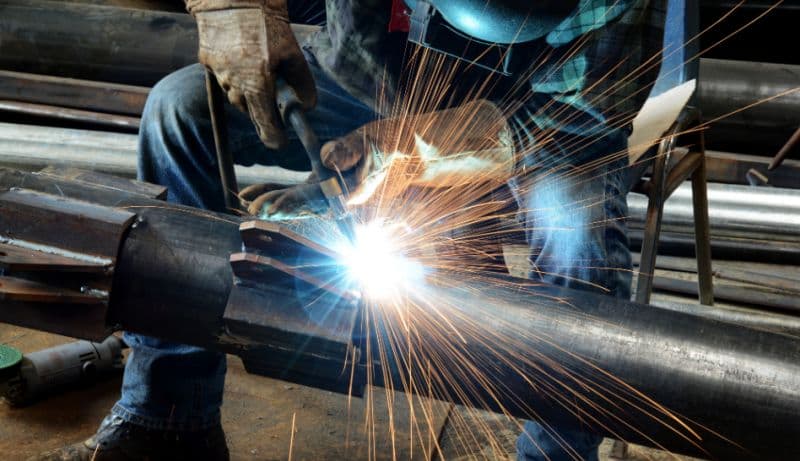
Equipment Manufacturing
The critical components of the of the complete pellet production line equipment are built in our own workshops in Asia. Additional equipment is manufactured by our worldwide network of reliable partners.

● Testing
Quality Inspection & Testing
Before leaving the factory, all equipment will be inspected by the quality inspection department. We can also provide customers with testing services from a single machine to a complete pellet plant system, and provide you with real actual data for “worry-free use.”

● Delivery
Equipment Delivery
In equipment boxing and packaging, we adopt professional packaging and modular solutions to ensure the safe and non-destructive delivery of pellet plant equipment.
● Installation
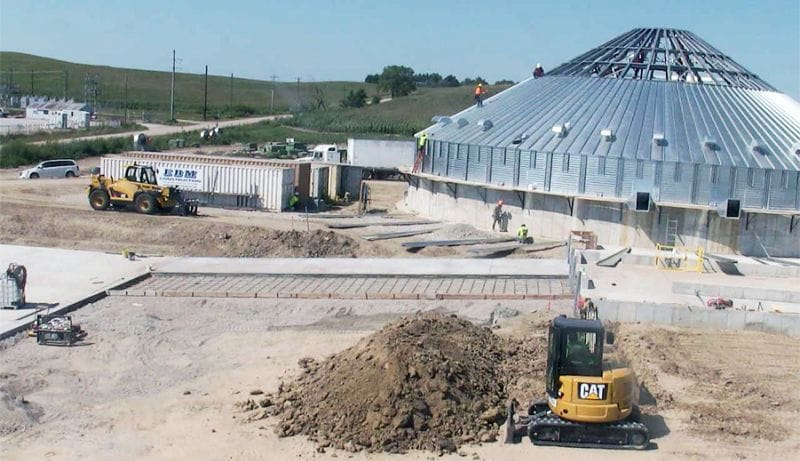
Installation & Commissioning
Whether you choose your own subcontractor for the erection phase or you want to install everything together with us, a Richi supervisor will be around to make sure everything is mounted in a safe and thorough way.

● Training
Staff Training
We provide comprehensive training for the technicians of each pet food processing plant in Russia project. We can also continue to provide support for the technicians during latter project operation.
● After-sales
Project Follow-Up
When everything is up and running our Richiers will help you further whenever needed. We are ready to answer your call 24/7.We’ll also visit you regularly to learn about your needs.
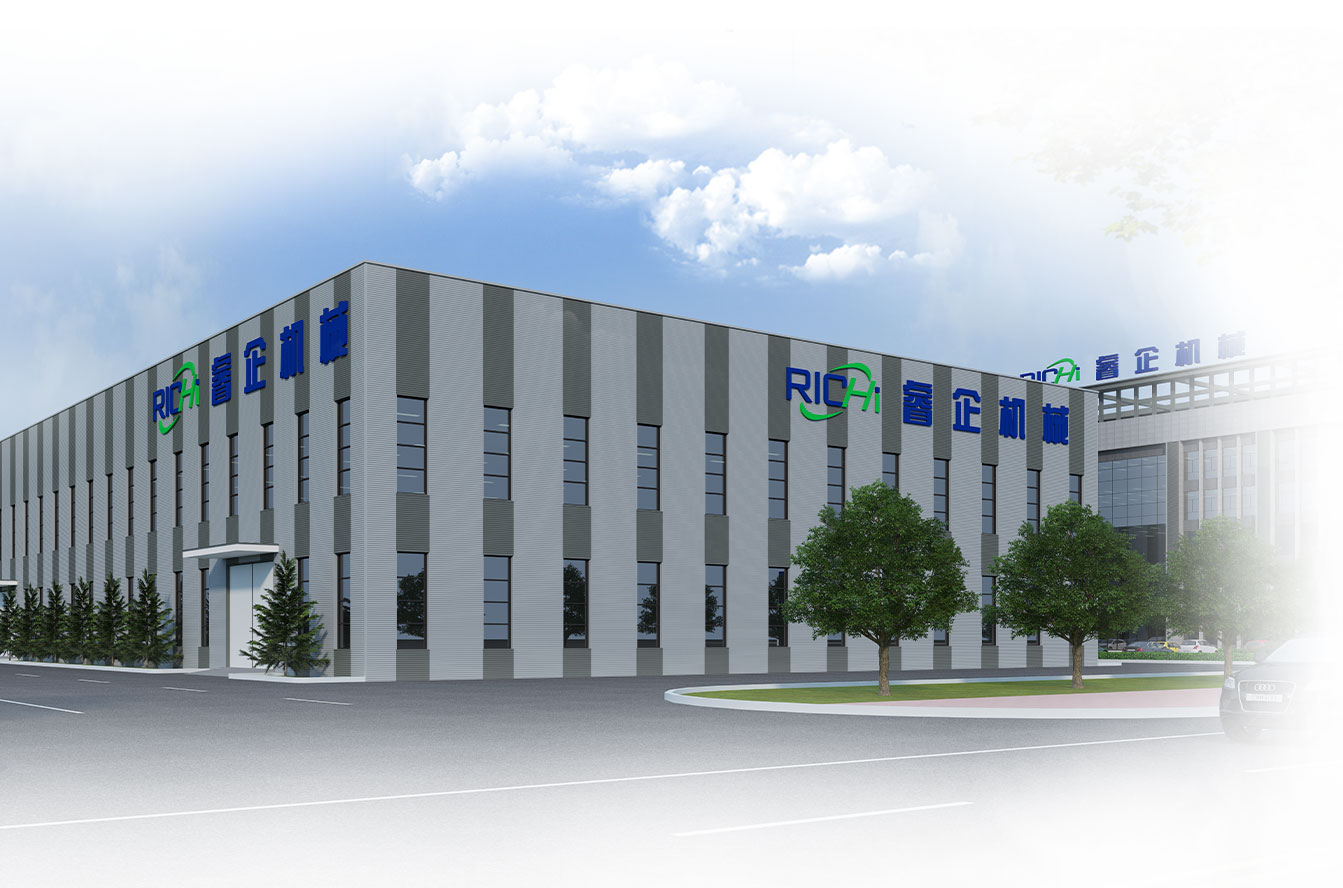
Who we are
RICHI Machinery is one of the world’s leading suppliers of technology and services for the animal feed, aqua feed and pet food industries, also the largest pellet production line manufacturer in China.
Since 1995, RICHI’s vision to build a first-class enterprise, to foster first-class employees, and to make first-class contributions to society has never wavered.
In the past three decades, we have expanded our business to a wide range of areas, including animal feed mill equipment, aqua feed equipment, pet feed equipment, biomass pellet equipment, fertilizer equipment, cat litter equipment, municipal solid waste pellets equipment, etc.

1995
RICHI Established

2000+
Serving More Than 2000 Customers

120+
RICHI Employees

140+
Exported To 140 Countries