

 0086-138 3838 9622

Pellet Making Machine In Pakistan
From biomass to feed and beyond, our pellet making machine in Pakistan powers diverse industries. For every granulation challenge, we deliver not just equipment, but complete, customized solutions that transform raw materials into profitable pellets. Your vision, our engineering excellence.


280+ Units
Over 280 Ring Die Pellet Machines Delivered
Pellet mills, from robust ring dies to complete systems, now operational across Pakistan.
35+ Projects
35+ Complete Pellet Plant Projects Built
Full pellet plants built from the ground up, handling the widest range of materials locally.
15+ Years
15+ Years On Ground
Over a decade and a half of direct partnership and technical support within Pakistan.
Spotlight Projects: Engineering Success Across Pakistan
Our portfolio spans the nation, delivering high-capacity solutions tailored to Pakistan’s diverse agro-industrial landscape. Below are key installations where our pellet making machine in Pakistan has become the core of profitable, sustainable operations.
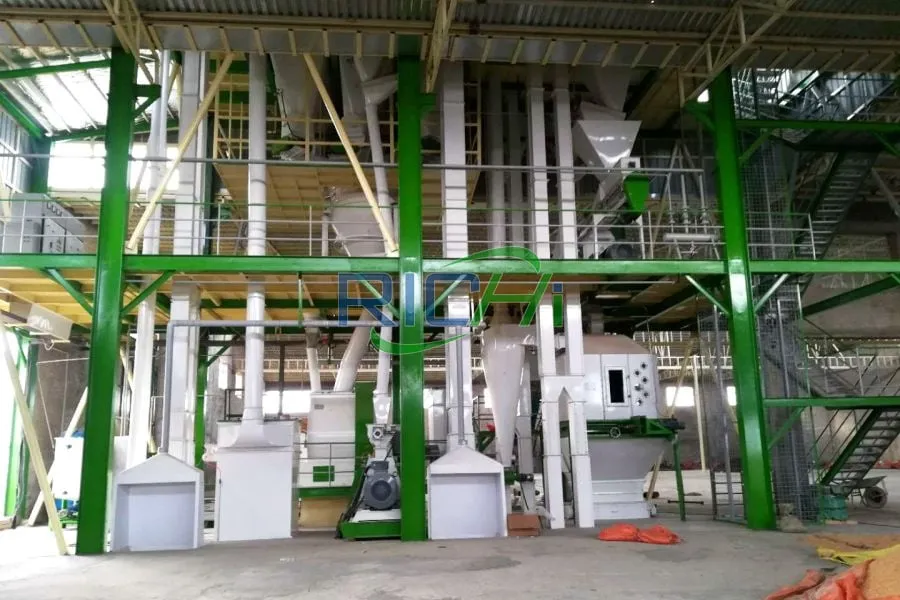
Punjab
10 t/h animal feed mill in pakistan
A leading agri-business conglomerate in Punjab sought to vertically integrate its operations by establishing a modern feed mill. The goal was to produce high-quality nutritive feed for their own dairy and poultry farms while also supplying the commercial market, reducing dependency on imported feed.
The heart of the line is our heavy-duty SZLH420 pellet mill in Pakistan, chosen for its stability and high output. The client’s raw materials are diverse, including maize (size: 12mm crushed, moisture: 14-15%), soybean meal, wheat bran, DDGS, and premixes.
- Process design: The process starts with ingredient receiving and cleaning, proceeds through hammer milling, precise batching and mixing, conditioning, pelleting (producing 3mm and 4mm diameter pellets), counter-flow cooling, screening, and automated bagging. The full line includes grinders, mixers, silos, conveyors, a boiler, and sophisticated electrical control systems.
- Investments: This was a major turnkey investment exceeding $250,000.

10T/H wood pellet machine in pakistan
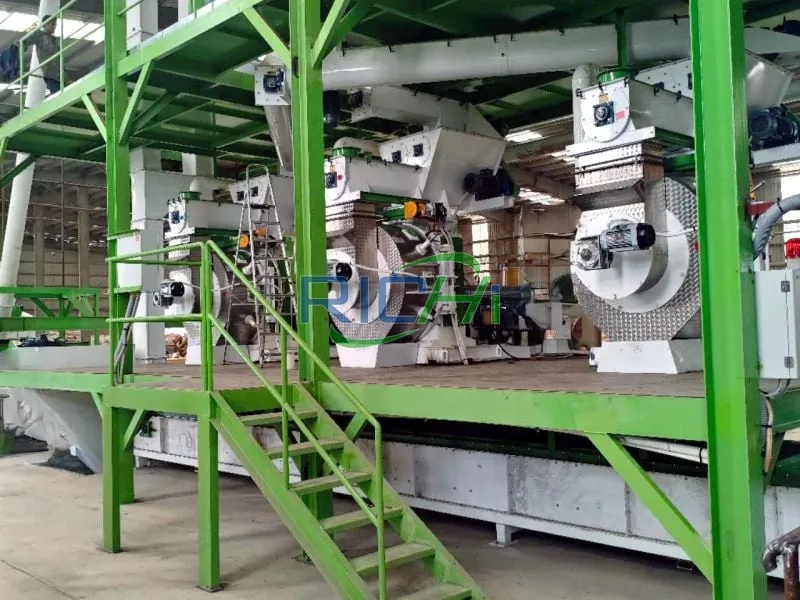
An energy company in Khyber Pakhtunkhwa aimed to address local deforestation and create a renewable fuel source by utilizing abundant pine and mixed wood waste from nearby timber industries. They targeted the industrial boiler fuel market.
To achieve the high tonnage, the plant is powered by four robust MZLH678 ring die pellet machines in Pakistan operating in parallel. Raw material is primarily sawdust and wood shavings (size: <5mm, initial moisture: 35-50%).
- Process design: The tailored process involves primary crushing, efficient rotary drum drying (reducing moisture to ~12%), secondary fine grinding, pelleting (producing 8mm diameter wood pellets), cooling, and packaging. Key auxiliary equipment includes hammer crushers, drum dryers, bucket elevators, and packing scales.
- Investment: As a large-scale biomass project, the total investment was around $850,000.
Khyber Pakhtunkhwa

Sindh
15T/H animal feed pellet machine in pakistan
A large-scale dairy farm operator in Sindh required a mega-facility to produce total mixed ration (TMR) pellets for their herd of thousands of cattle. The intent was to improve feed efficiency, milk yield, and feed storage logistics.
This high-capacity facility is centered on our industrial-grade SZLH508 pellet mill machine in Pakistan. Raw materials include alfalfa hay, corn silage (pre-processed), cottonseed cake, minerals, and molasses. The hay/straw is initially chopped (size: <80mm, moisture: variable).
- Process design: The process features specialized hay pre-cutting, grinding, proportional mixing with liquids, high-temperature conditioning with our pellet making machine in Pakistan, pelleting (producing 6mm and 8mm dense pellets), drying/cooling, and bulk storage handling. The line includes heavy-duty mixers, molasses blenders, and large coolers.
- Investment: Representing a strategic investment of approximately $520,000, we delivered a fully automated plant.
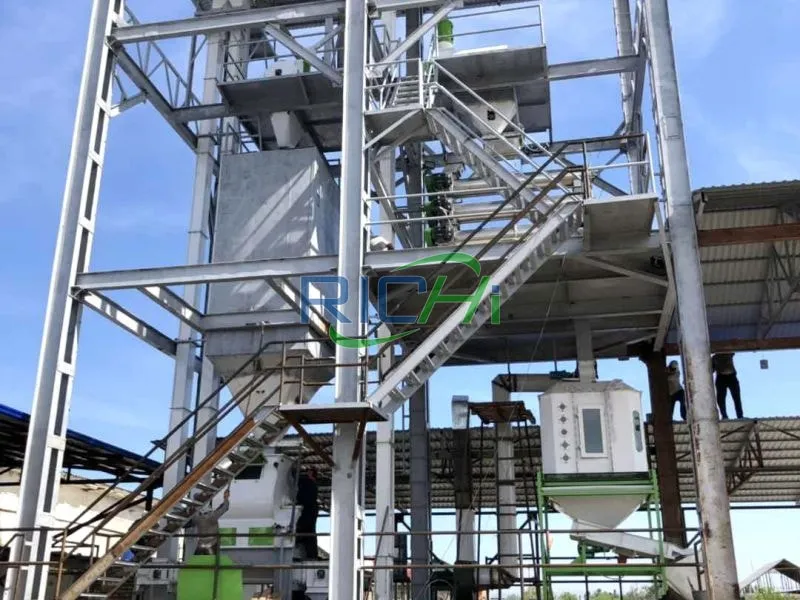
5T/H sinking fish & shrimp feed pellet machine in pakistan
An aquaculture enterprise on the coast of Balochistan needed to produce high-grade, water-stable sinking feed for their shrimp ponds and fish cages. The focus was on achieving superior pellet durability and nutritional retention to optimize growth rates.
The core of this specialized plant is our Triple-Pass Conditioner SZLH420 pellet mill in Pakistan, essential for prolonged starch gelatinization.
- Process design: Raw materials are a precise mix of fish meal, soybean meal, wheat flour, binders, and vitamins (all in powder form, moisture: 10-12%). The sophisticated process involves micro-grinding, twin-shaft paddle mixing, triple-stage steam conditioning, pelleting (producing 1.5mm to 3mm slow-sinking pellets), gentle drying in a belt dryer, oil coating, and cooling. Equipment highlights include ultra-fine grinders, conditioners, dryers, and vacuum coaters.
- Investment: This precision aquafeed project required an investment of about $360,000.
Balochistan
Our Extensive Portfolio: Tailored Solutions Nationwide
From compact operations to mid-scale plants, our expertise powers diverse pellet production across Pakistan. Each project is a testament to our commitment to delivering reliable and efficient machinery for local needs.
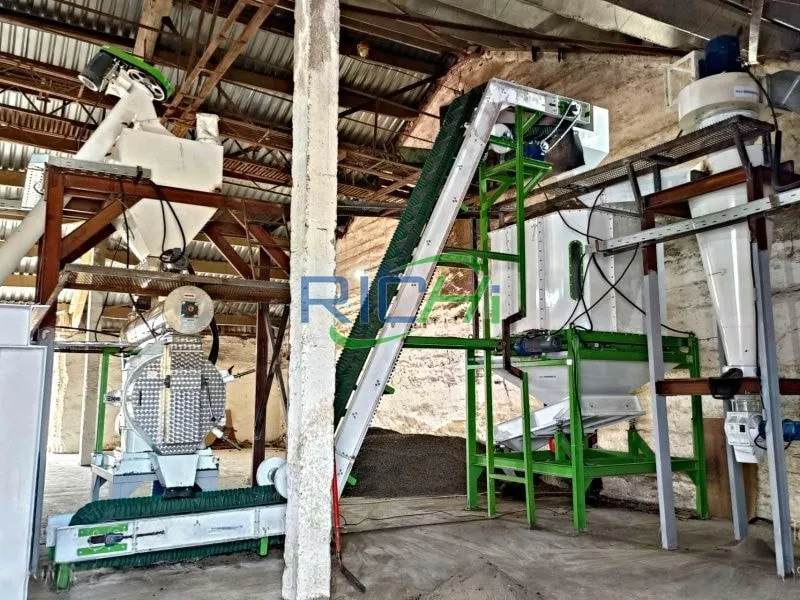
3-4 tons per hour straw pellet mill in pakistan project
A farming cooperative in Punjab turns abundant rice and wheat straw waste into clean-burning fuel pellets. Our pellet making machine in Pakistan provides a sustainable income stream while solving residue disposal issues.
Pellet Mill Model
CZLH678
Pellet Size
8mm

10-15 t/h chicken feed pellet mill in pakistan project
A major poultry integrator in Sindh needed high-volume production of nutritionally uniform feed. This automated line ensures precise formulation and hygiene for optimal flock health.
Pellet Mill Model
SZLH508
Pellet Size
3mm & 4.5mm

2 t/h wood pellet making machine pakistan project
A small enterprise in Khyber Pakhtunkhwa utilizes local woodshop sawdust to produce heating pellets for the local market, creating value from waste.
Pellet Mill Model
MZLH520
Pellet Size
6mm diameter
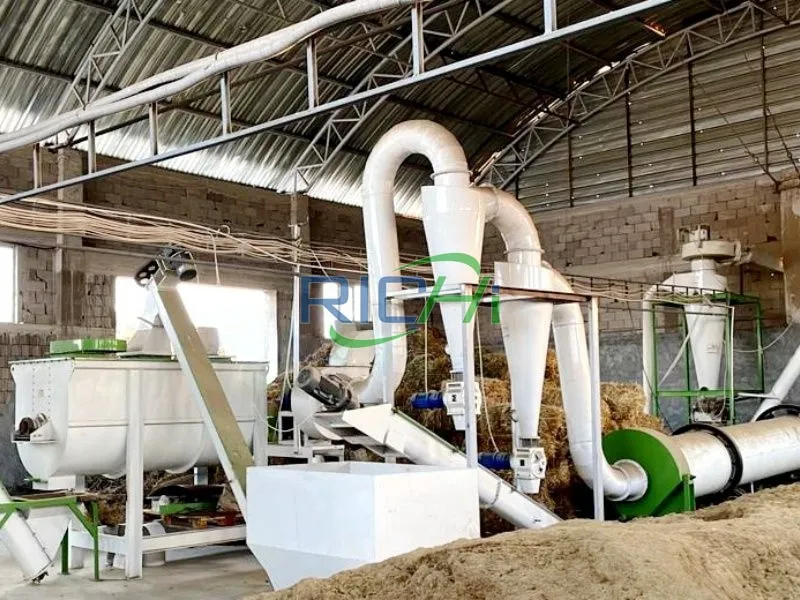
1 t/h wheat straw pellet machine pakistan project
An innovative farmer in Balochistan converts field waste into dense biomass pellets for sale to local brick kilns, offering an alternative to coal.
Pellet Mill Model
CZLH350
Pellet Size
8mm diameter

3-4 t/h cattle feed pellet machine pakistan project
A dairy farm in Punjab now produces its own high-energy Total Mixed Ration (TMR) pellets, significantly improving milk yield and feed management efficiency.
Pellet Mill Model
SZLH320
Pellet Size
6mm diameter
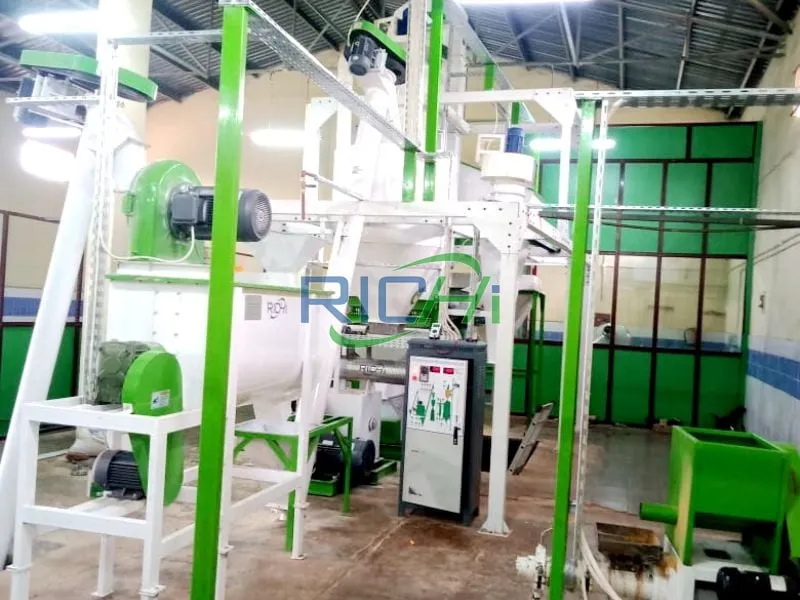
1-2 t/h broiler feed pellet machine pakistan project
A medium-scale poultry farm established its own feed unit to control quality and cost, producing highly digestible crumbles and pellets for fast growth cycles.
Pellet Mill Model
SZLH250
Pellet Size
2.5mm & 3mm

2 Tons rice husk pellet machine pakistan project
A rice mill owner in Punjab added value by pelleting surplus husks for industrial boiler fuel, turning a low-value byproduct into a profitable commodity.
Pellet Mill Model
MZLH520
Pellet Size
8mm diameter

3-4 t/h animal feed pellet making machine pakistan project
A diversified livestock company produces flexible feed batches for cattle, sheep, and goats using a single, versatile production line tailored for multiple formulas.
Pellet Mill Model
SZLH320
Pellet Size
4mm & 6mm
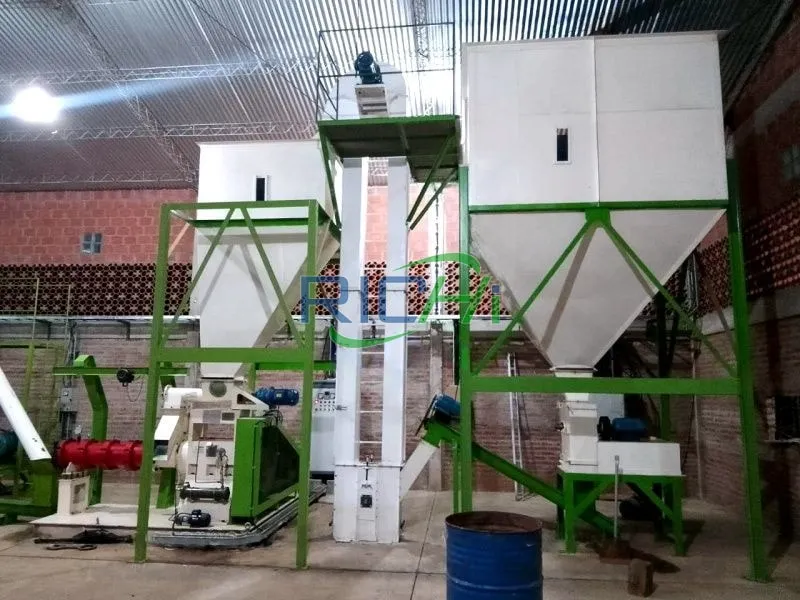
5 t/h animal feed production line pakistan project
This comprehensive plant serves multiple regional feed dealers, producing consistent, high-quality ruminant and poultry feed to support local agriculture.
Pellet Mill Model
SZLH350
Pellet Size
3mm to 8mm

5 t/h ring die pellet mill in pakistan for cow manure
A large dairy operation solves waste management by converting manure into high-value organic fertilizer pellets for sale to horticultural and crop farms.
Pellet Mill Model
FZLH350
Pellet Size
4mm & 6mm
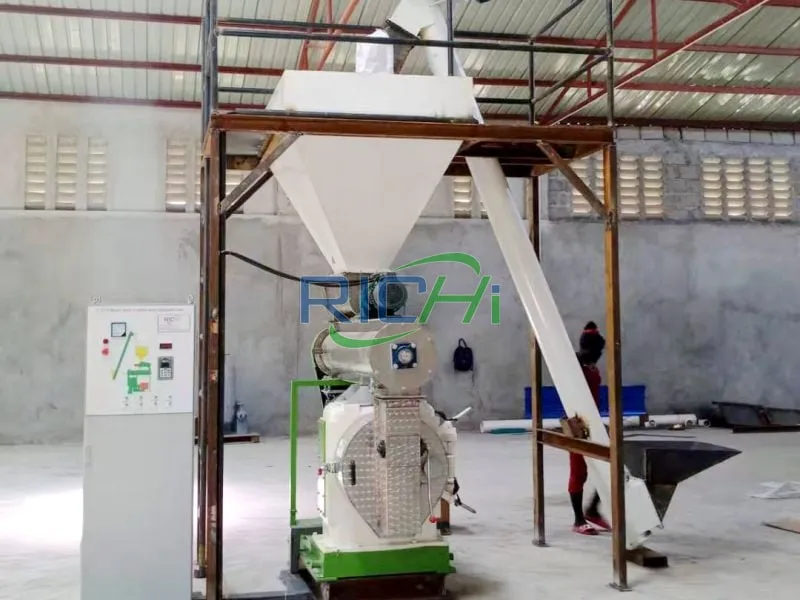
5 t/h dairy feed pellet mill pakistan project
Focused on high-nutrition dairy rations, this plant incorporates molasses and fat coating to produce dense, palatable pellets that enhance milk production.
Pellet Mill Model
SZLH350
Pellet Size
6mm diameter
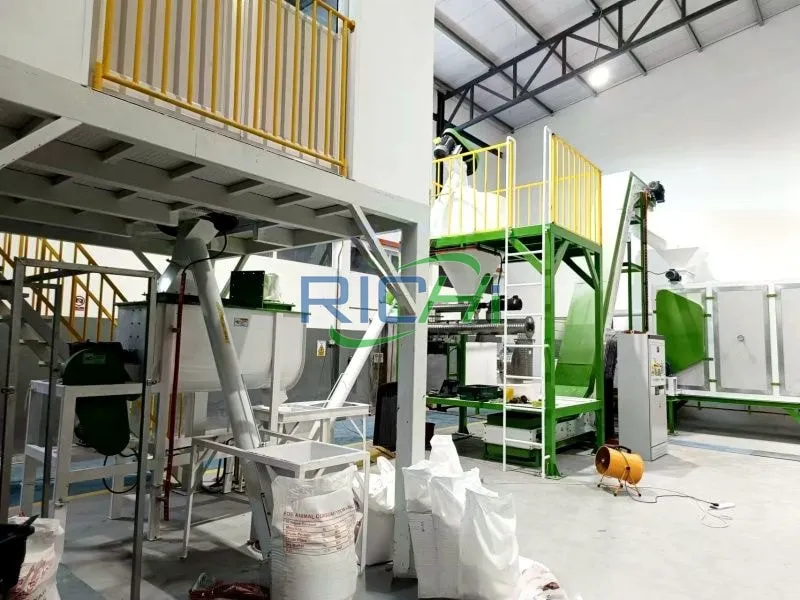
1 t/h goat feed pellet machine pakistan project
A specialized farm produces tailored pellet feed for its goat herd, ensuring balanced nutrition for meat and wool production in arid regions.
Pellet Mill Model
SZLH250
Pellet Size
3mm diameter
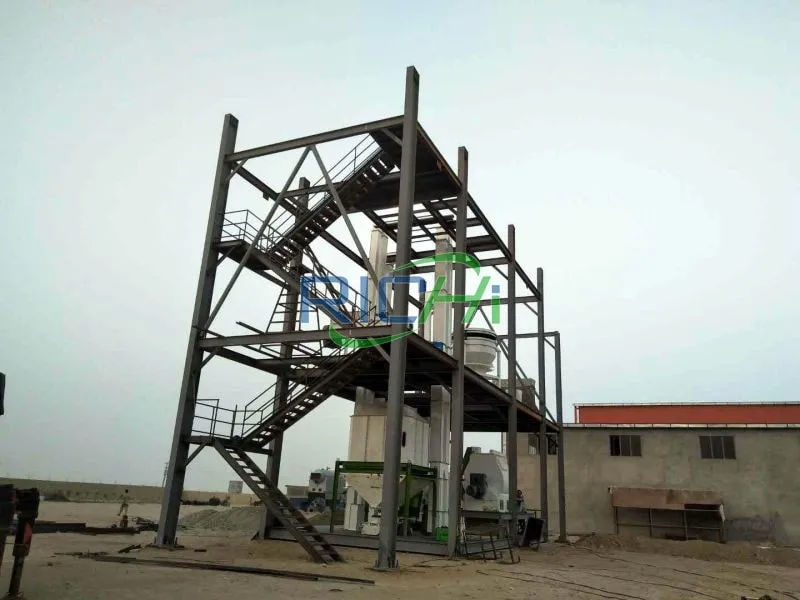
feed mill 5 tons per hour pakistan project
This reliable, medium-capacity plant is the backbone of a regional feed supplier, producing a wide range of standard and customized animal feeds.
Pellet Mill Model
SZLH350
Pellet Size
2.5mm to 8mm
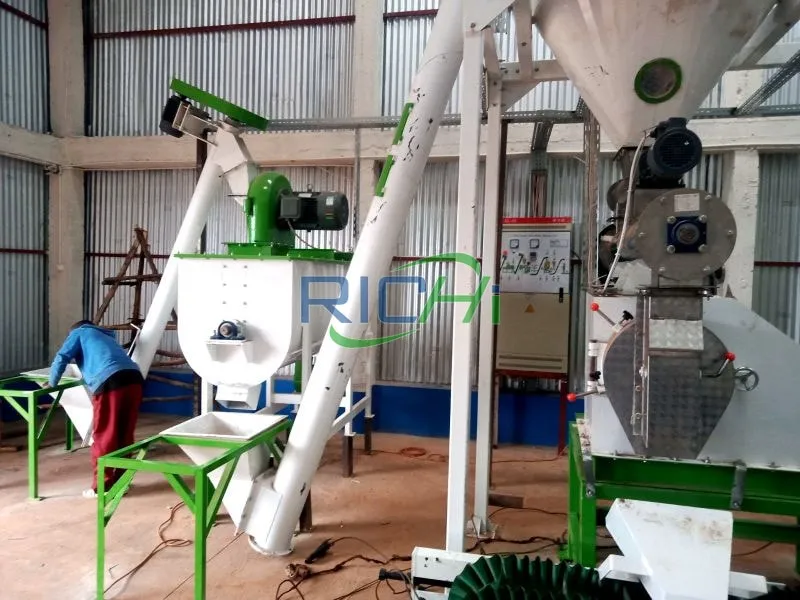
poultry pellet plant 1-2 tPH in pakistan project
Designed for starter, grower, and layer feeds, this compact plant gives a poultry business full control over its feed supply chain and quality.
Pellet Mill Model
SZLH250
Pellet Size
2.5mm & 4mm
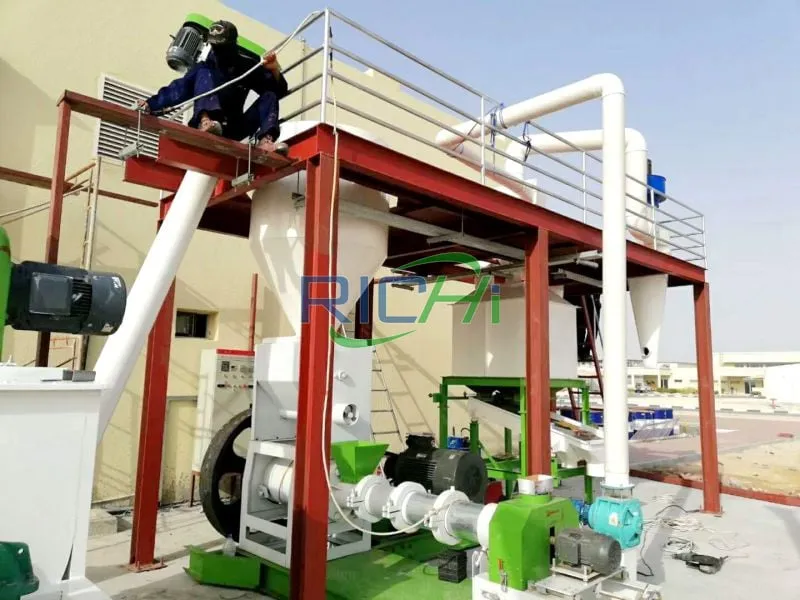
1 t/h aqua feed pellet line pakistan project
A pioneering trout and tilapia farm uses a dry extrusion pellet making machine in Pakistan to produce water-stable floating feed, reducing waste and improving FCR.
Extruder Model
DGP-160B
Pellet Size
2mm & 3mm
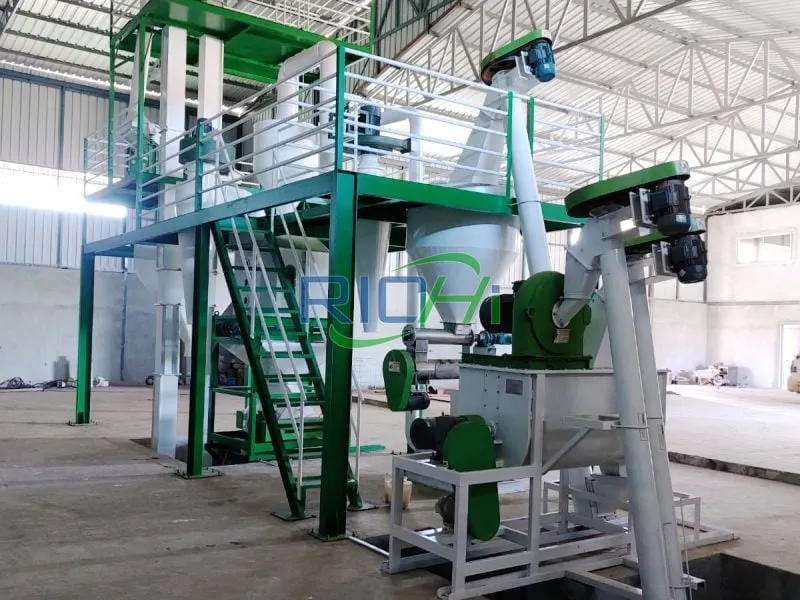
1-2 t/h sheep feed pellet mill pakistan project
Optimized for wool and mutton production, this line produces nutrient-fortified pellets that perform well in the pasture-supplement feeding systems of local shepherds.
Pellet Mill Model
SZLH250
Pellet Size
4mm
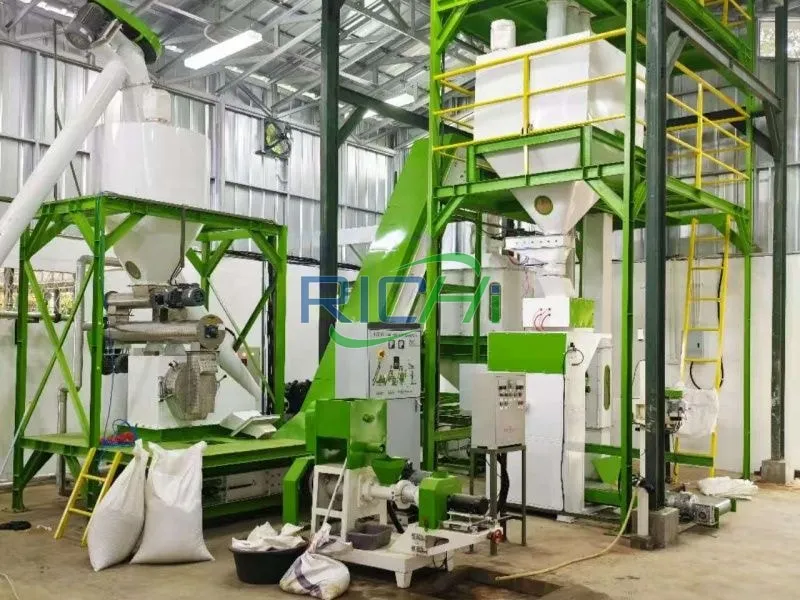
500 kg/h floating fish pellet machine in pakistan project
A small-scale fish farm utilizes a compact dry extruder for on-demand floating feed production, while a complementary pellet mill makes feed for the farm’s cattle.
Pellet Mill Model
DGP-120B & SZLH250
Pellet Size
1.5mm, 4mm
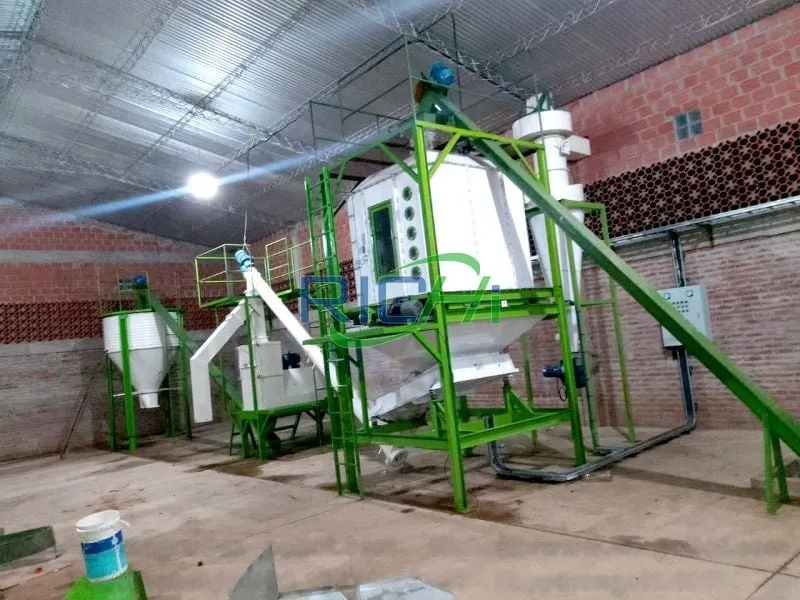
5 t/h livestock feed pellet machine pakistan project
This versatile line efficiently produces large volumes of feed for dairy, beef, and poultry, serving as a central feed hub for a large agricultural district.
Pellet Mill Model
SZLH350
Pellet Size
3mm to 8mm
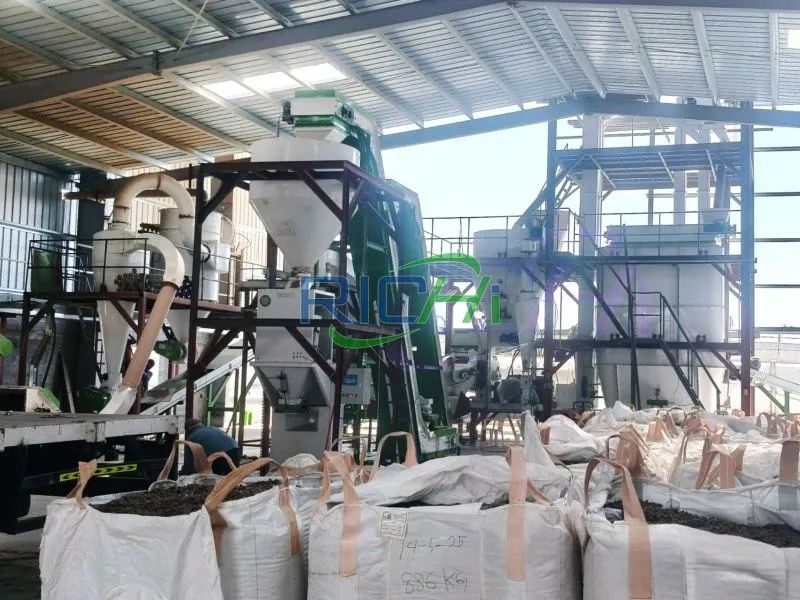
2-3 t/h biomass pellet machine in pakistan project
Processing agricultural wastes like bagasse and cotton stalks, this plant supplies renewable fuel pellets to small industries, promoting cleaner energy.
Pellet Mill Model
MZLH678
Pellet Size
8mm & 10mm
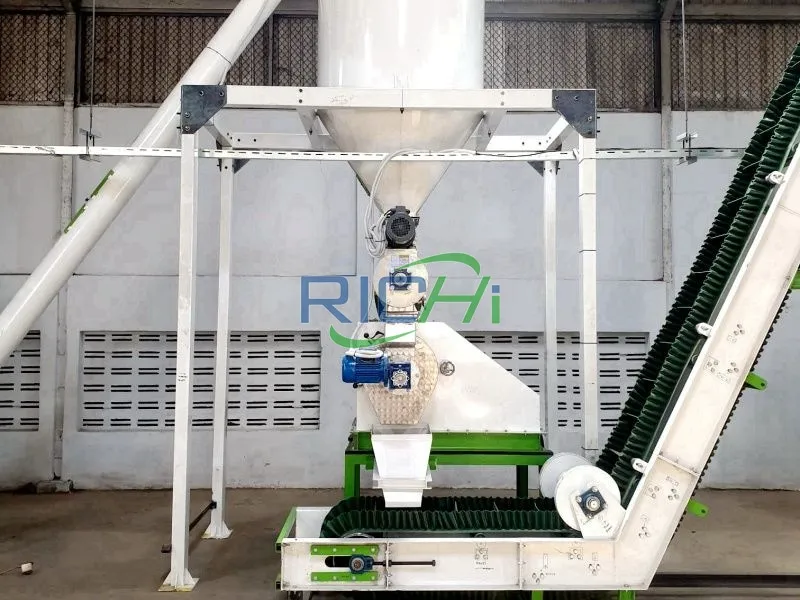
1-2 t/h poultry feed pellet machine in pakistan project
A reliable, entry-level plant enables a family-run poultry business to achieve self-sufficiency in feed production, ensuring consistent quality and cost savings.
Pellet Mill Model
SZLH250
Pellet Size
3mm & 4.5mm
See Our Machines in Action
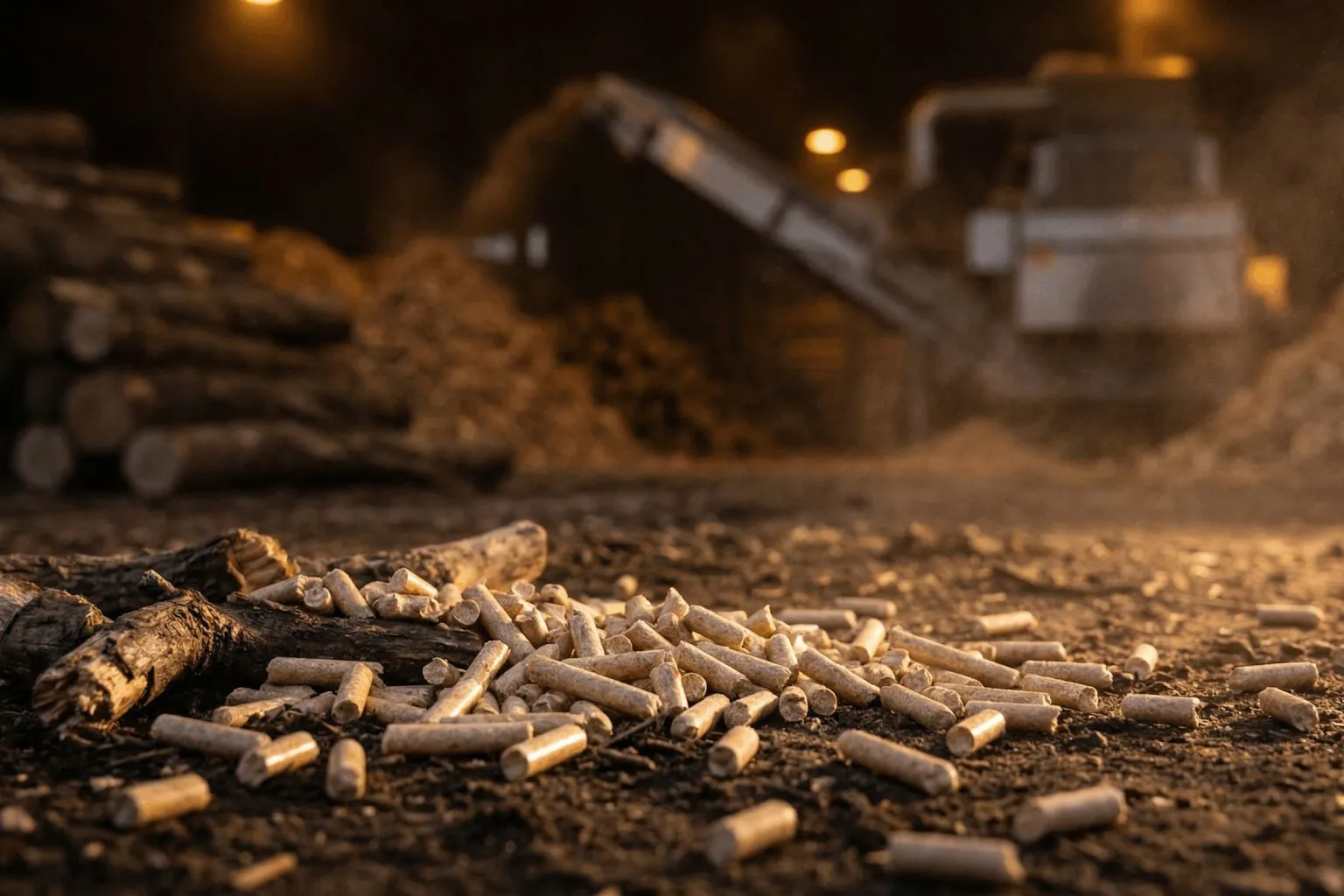
20T/H biomass wood pellet factory setup in pakistan
Witness one of Pakistan’s largest biomass pellet production lines in Punjab, designed to process mixed wood waste into industrial-grade fuel pellets. The video highlights the seamless operation of multiple high-capacity MZLH678 pellet making machines in Pakistan working in parallel, producing durable 8mm pellets. See the full system from raw material intake to final bagging.
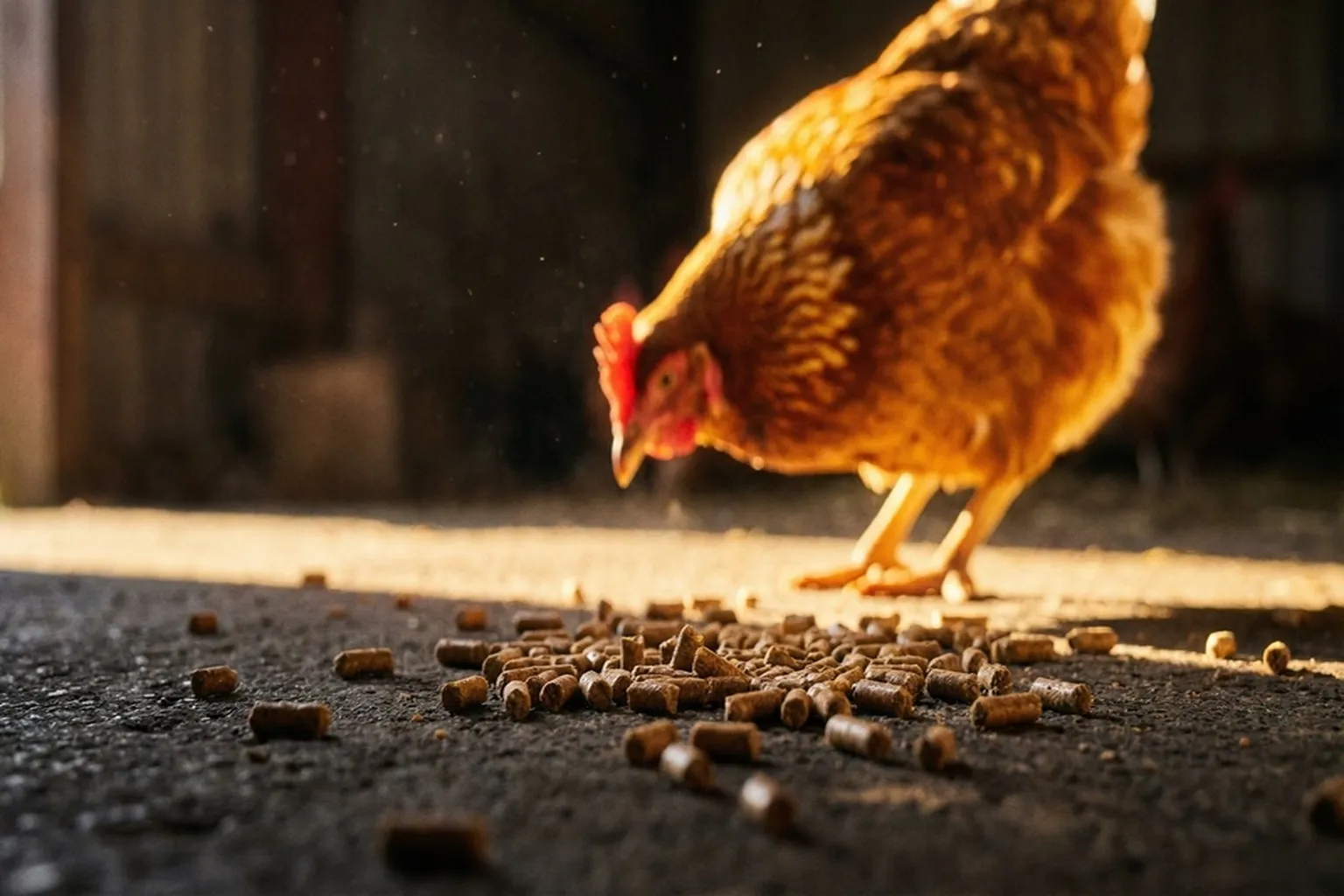
10T/H chicken feed mill turnkey project pakistan
This video tours a fully automated chicken feed mill plant in Sindh, supplying major poultry farms. The core of the operation is our robust SZLH678 chicken feed pellet machine in Pakistan, producing consistent 3mm and 4.5mm broiler and layer feed. Watch the complete process, from grinding and mixing to pelleting, cooling, and automated packaging.
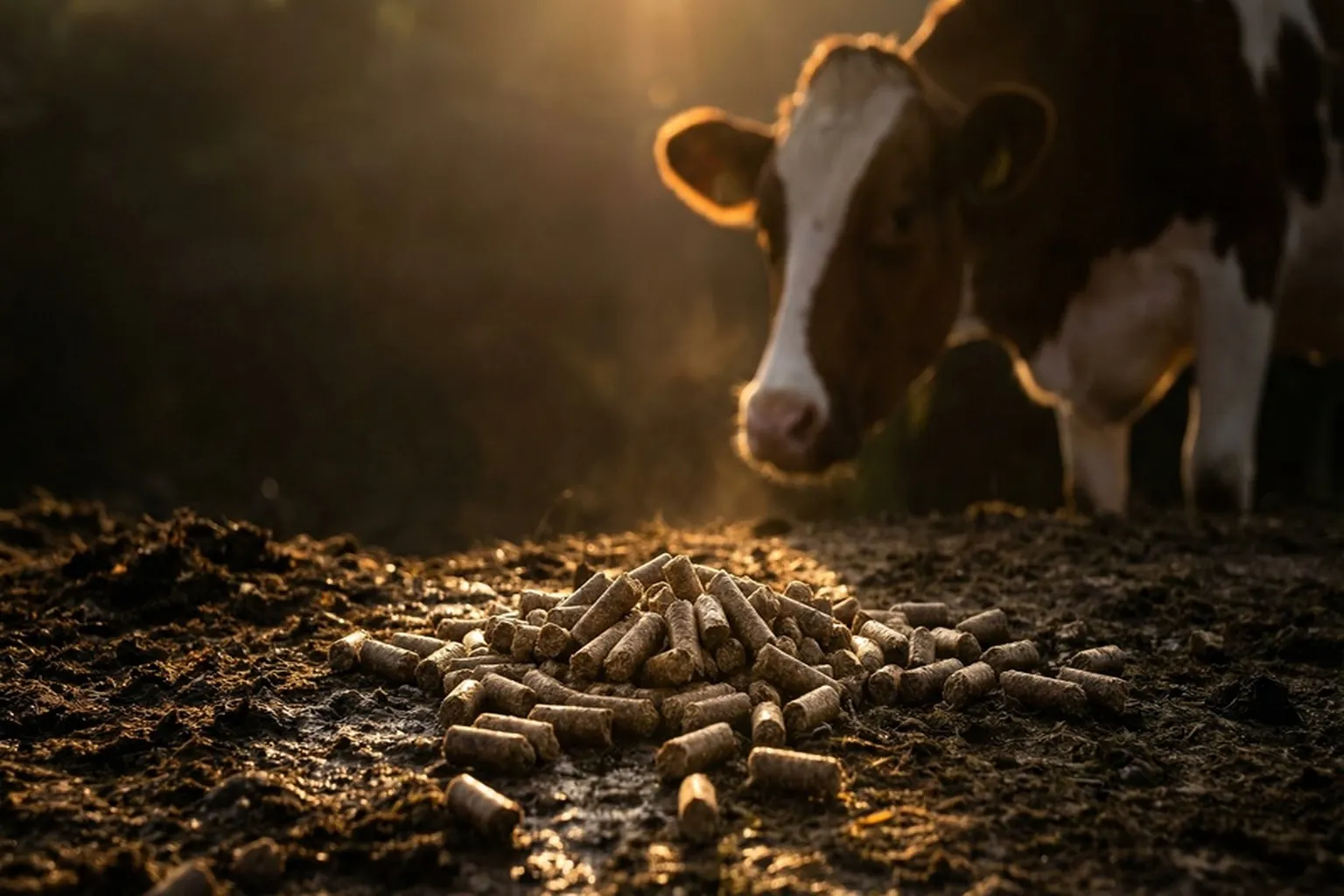
5T/H Complete Feed Pellet Plant in Pakistan
See how a large dairy farm in Punjab produces its own nutritious Total Mixed Ration (TMR). The footage focuses on the high-output SZLH508 cattle feed pellet machine in Pakistan creating uniform 6mm pellets that incorporate hay, silage, and concentrates. The video covers the entire line, including specialized hay pre-processing and molasses coating.
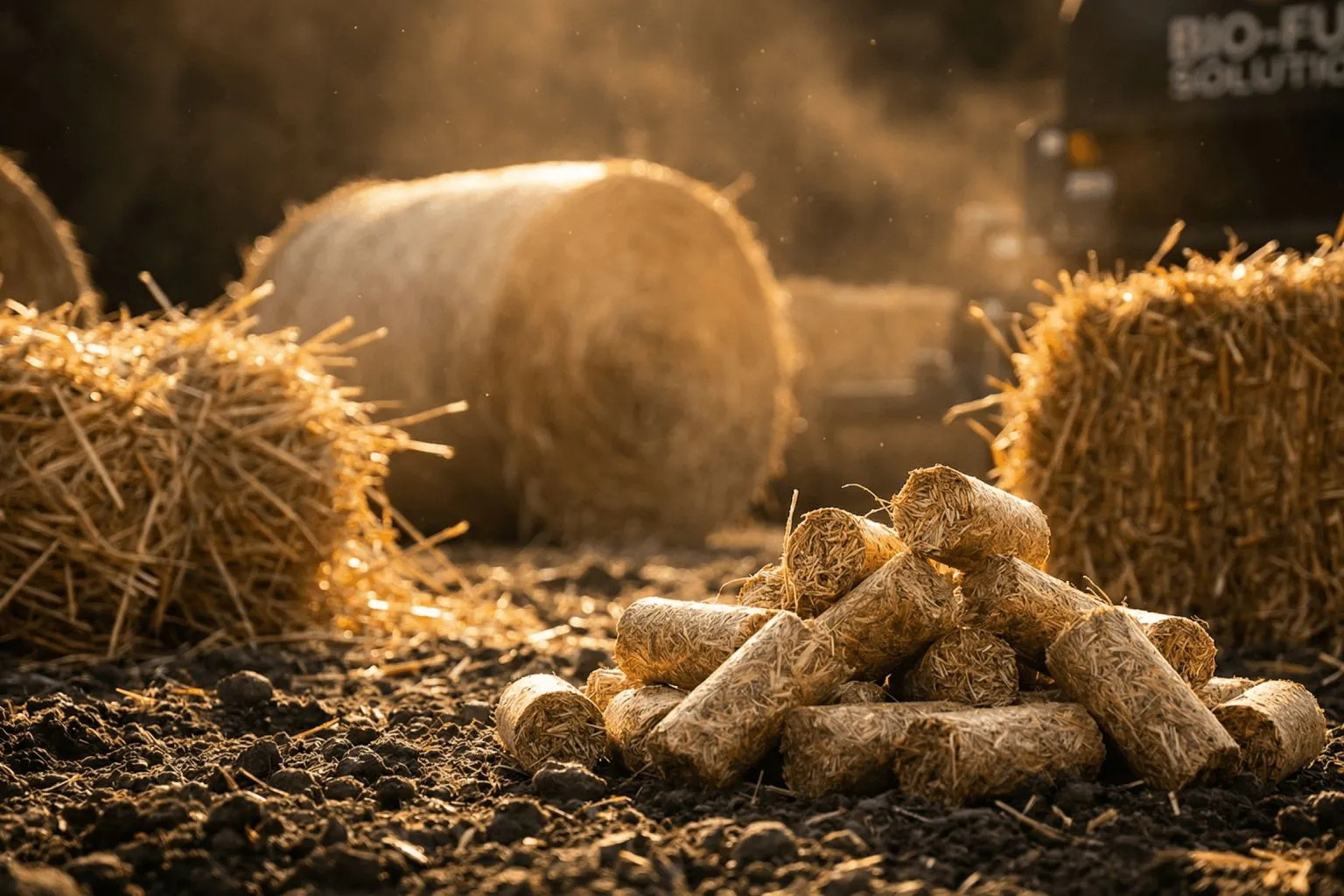
Pakistan 3-4 T/H Straw Pellet Production Line Project
This project video showcases a sustainable solution in rural Punjab, converting abundant rice straw into clean-burning fuel pellets. Watch our MZLH420 straw pellet mill in Pakistan effectively process this challenging fibrous material into dense 8mm pellets, highlighting the pre-cutting and drying stages crucial for success.
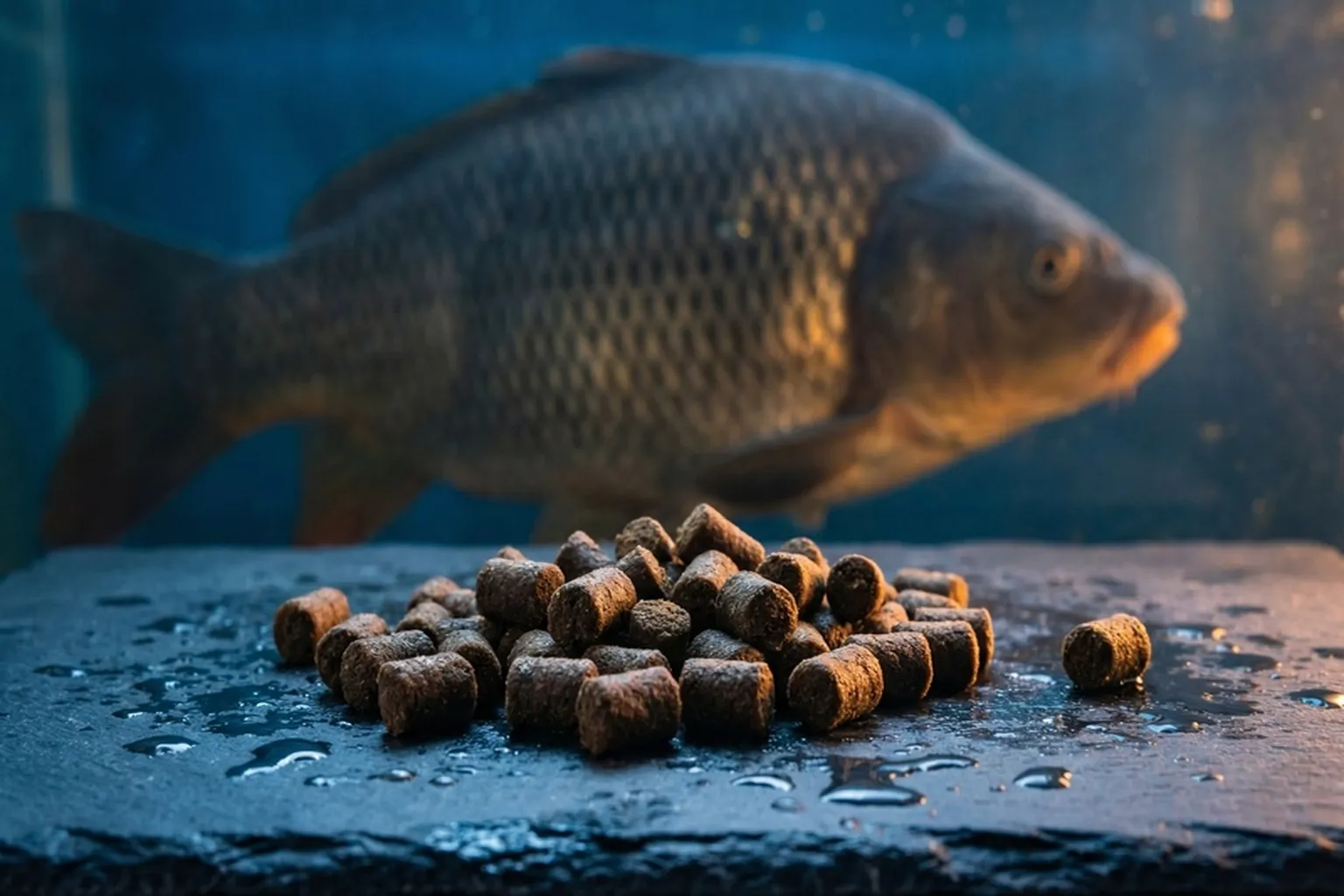
Pakistan 500KG/H Floating Fish Feed & 1T/H Poultry Feed Mill Project
This dual-operation video features a diversified farm in Khyber Pakhtunkhwa. See a compact dry floating fish feed extruder machine produce 2mm floating fish feed, alongside an SZLH250 pellet making machine in Pakistan manufacturing 4mm poultry feed. It perfectly illustrates our ability to provide integrated, multi-species feed solutions.
Building Trust Through Performance

Before partnering with this supplier, managing our agricultural waste was a constant cost and challenge. We invested in their biomass pellet making machine in Pakistan to process rice husk and wheat straw into fuel pellets. The MZLH420 mill has been exceptionally robust, handling our abrasive local materials with minimal downtime.
What truly set them apart was their commitment; their engineers spent weeks on-site in Punjab, not just installing the machine, but training our team and adapting the process to our specific raw material mix. Now, we have a profitable new product line supplying clean fuel to local industries.
Ahmed Raza
Operations Director, Agribusiness Processing Unit

Your Pellet Business Opportunity in Pakistan
Pakistan’s agro-industrial landscape offers immense potential for pellet-based value addition. From addressing energy needs to enhancing feed efficiency and managing waste, a well-chosen pellet making machine in Pakistan can be the cornerstone of a profitable and sustainable venture. Below is an analysis of key sectors where Ricihi Machinery’s technology is driving success.
Across all these sectors, the key is adaptable technology. Whether your raw material is fibrous, powdery, wet, or mixed, Ricihi Machinery designs the right process—from crushing, drying, and mixing to the core pellet making machine in Pakistan and finishing systems—to transform your specific materials into high-quality, market-ready pellets, powder, or expanded products.
WOOD PELLET PRODUCTION
WOOD PELLET SOLUTION
With rising energy costs and timber industry waste, wood pellets are becoming a viable alternative fuel for industrial boilers and home heating, especially in northern regions.

GRASS PELLET PRODUCTION
GRASS PELLET SOLUTION
Alfalfa and other nutrient-rich grasses can be pelleted into high-value animal feed or export-oriented products, optimizing the use of Pakistan’s pasture and cultivated forage.


STRAW PELLET PRODUCTION
STRAW PELLET SOLUTION
Abundant rice and wheat straw, often burned openly, can be transformed into clean-burning biomass fuel pellets, solving pollution and creating a new energy commodity.


RUMINANT FEED PELLET PRODUCTION
CATTLE FEED PELLET SOLUTION
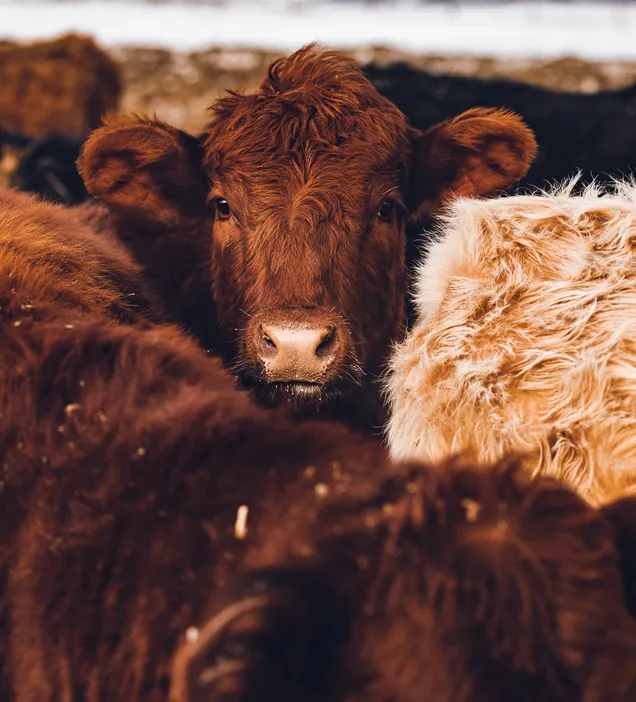
The large dairy and livestock sector demands high-density Total Mixed Ration (TMR) pellets to improve milk yield, animal health, and feed handling efficiency on farms.

POULTRY FEED PELLET PRODUCTION
POULTRY FEED PELLET SOLUTION
Pakistan’s booming poultry industry requires high-volume production of hygienic, nutritionally precise feed pellets and crumbles to ensure optimal growth rates and feed conversion.

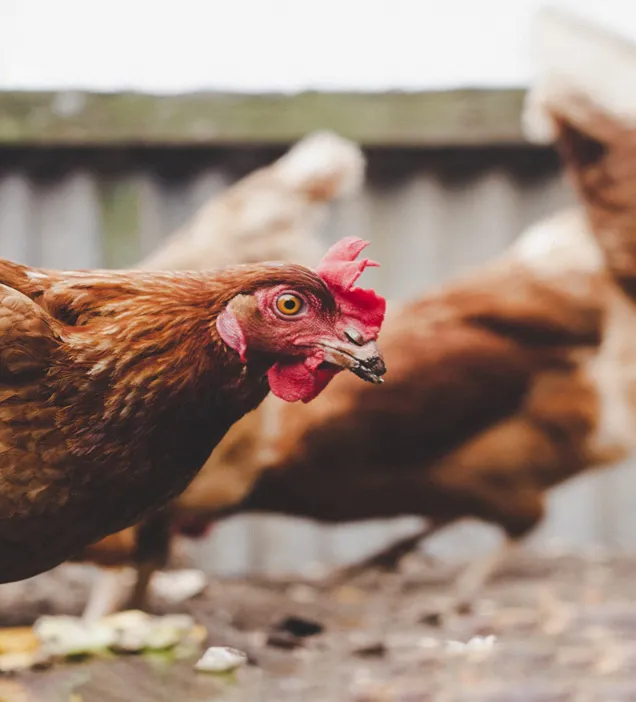
LIVESTOCK FEED PELLET PRODUCTION
LIVESTOCK FEED PELLET SOLUTION
A versatile feed pellet line can serve sheep, goat, and camel markets with customized formulations, supporting the diverse animal husbandry practices across the country.


FERTILIZER PELLET PRODUCTION
FERTILIZER PELLET SOLUTION
Pelletizing organic manure (poultry litter, cow dung) and NPK blends creates a premium, easy-to-apply product that improves soil health and fetches a higher market price.


FISH FEED PELLET PRODUCTION
FISH FEED PELLET SOLUTION
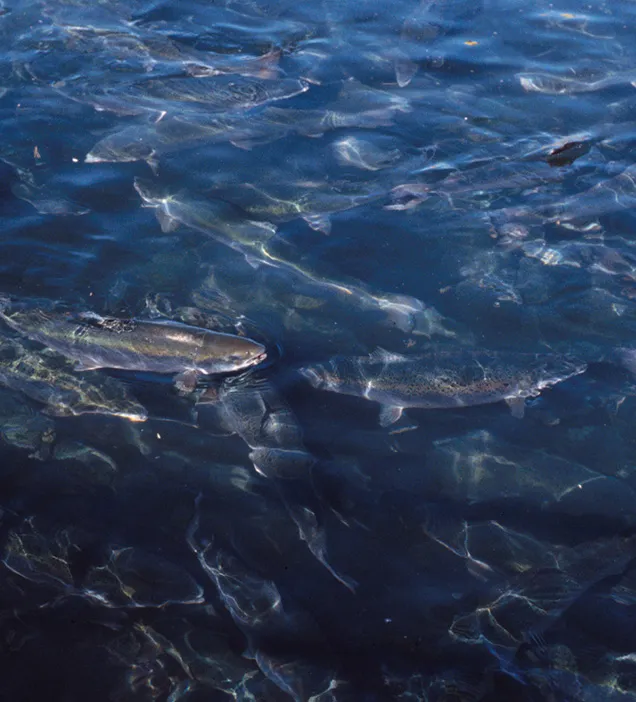
The growing aquaculture sector needs specialized floating or sinking feed pellets. Efficient production reduces reliance on expensive imports and supports local fish farming.

PET FOOD PELLET PRODUCTION
PET FOOD PELLET SOLUTION
The expanding urban middle class is driving demand for standardized, nutritious pet food pellets, representing a high-margin niche manufacturing opportunity.

cat litter PELLET PRODUCTION
cat litter PELLET SOLUTION
Using local absorbent materials like bentonite or processed biomass to produce clumping or non-clumping cat litter pellets taps into a growing pet care market.


paper PELLET PRODUCTION
paper PELLET SOLUTION
Recycling paper waste into fuel pellets for industrial heating or into biodegradable bedding pellets presents a smart urban waste management and valorization solution.


ANIMAL BEDDING PELLET PRODUCTION
ANIMAL BEDDING PELLET SOLUTION
Processing dried sawdust or shredded straw into highly absorbent bedding pellets for poultry and dairy farms improves animal welfare and waste management.

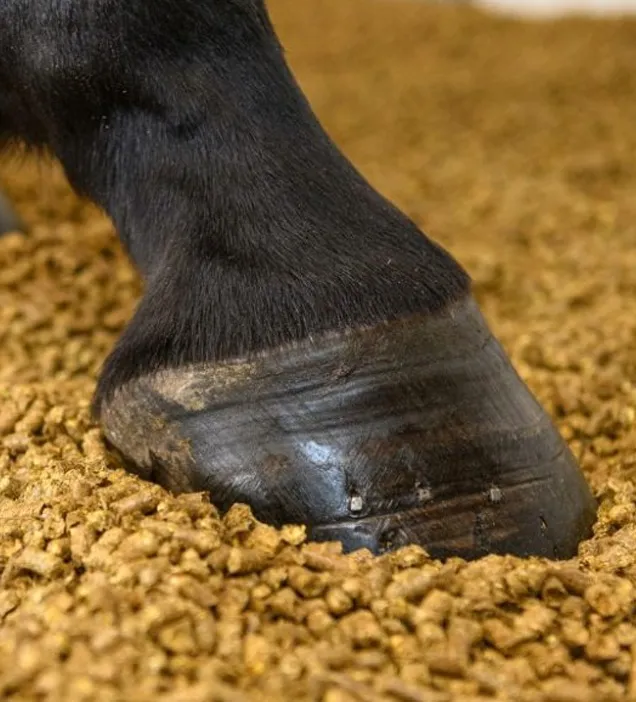
RDF PELLET PRODUCTION
RDF PELLET SOLUTION
Pelletizing selected municipal and industrial waste provides a stable alternative fuel for cement kilns and power plants, addressing waste disposal and energy recovery.

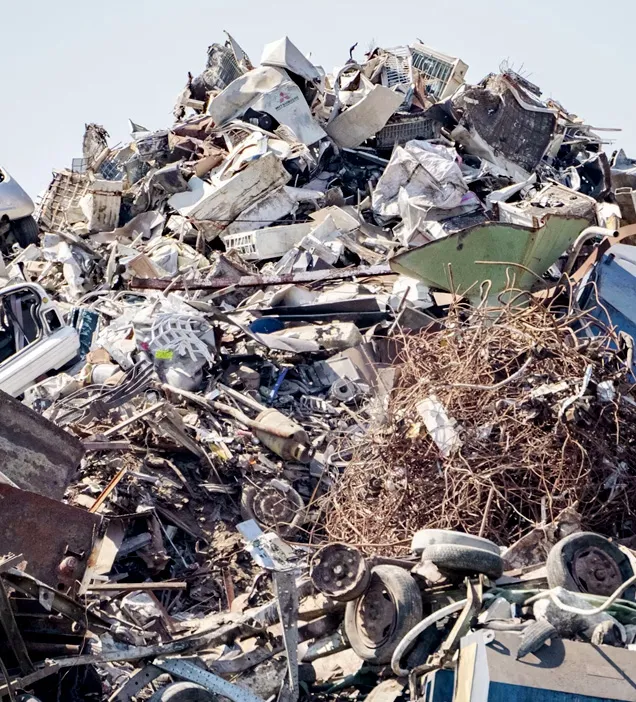
Raw grain puffing PRODUCTION
Raw grain puffing SOLUTION
Expanding grains like corn or rice for breakfast cereals, snacks, or feed ingredients adds significant value to local agricultural produce for both human and animal consumption.


Pyrolytic carbon PELLET PRODUCTION
Pyrolytic carbon PELLET SOLUTION
Converting agricultural residue into biochar and pelletizing it creates a potent soil amendment and carbon sequestration product, supporting sustainable agriculture.


Rat poison PELLET PRODUCTION
Rat poison PELLET SOLUTION
Manufacturing precise, weather-resistant bait pellets for agricultural and urban pest control meets a critical need for effective crop protection and public health.


solid waste PELLET PRODUCTION
solid waste PELLET SOLUTION
Diverse non-hazardous wastes can be homogenized and pelletized for controlled energy recovery or as alternative raw materials, turning a liability into a resource.


Our Bestselling Equipment for the Pakistani Market
Richi Machinery is more than a supplier; we are your engineering partner. The equipment below has been proven across Pakistan’s diverse industries, from the feed mills of Punjab to the biomass pellet making plants of KPK. Each machine is selected and optimized for local materials and conditions, forming the reliable backbone of successful pellet production lines nationwide.
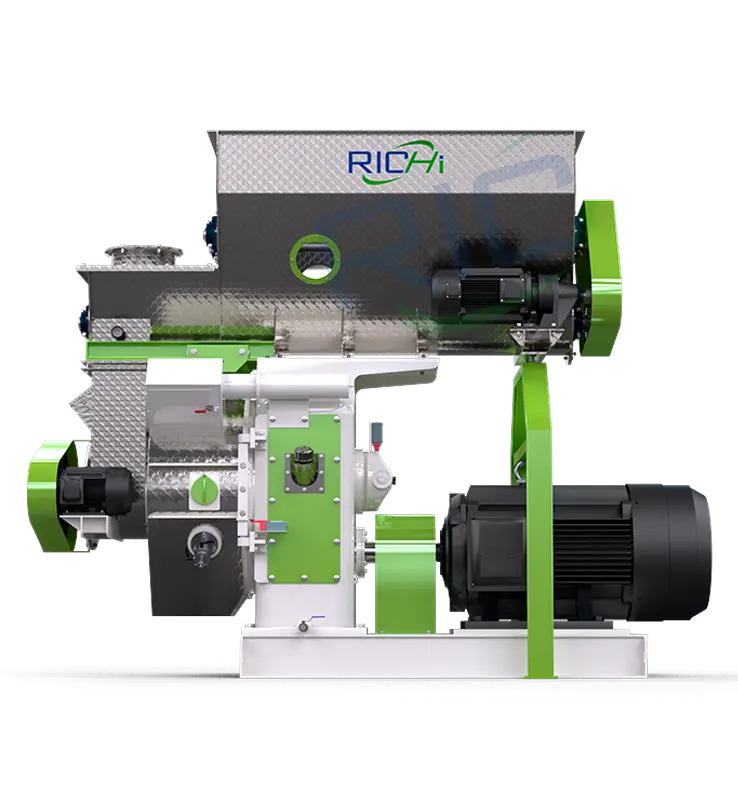
biomass pellet mill
Processing local wood waste, rice husk, and crop residues, our robust biomass pellet mills are at the core of Pakistan’s growing renewable energy sector, turning abundant agricultural by-products into valuable fuel.

grass pellet machine
Specifically engineered for Pakistan’s alfalfa and other forage grasses, this machine produces dense nutrient-rich pellets for the dairy feed and export markets, maximizing the value of cultivated and natural pastures.

feed mill pellet machine
The workhorse of Pakistan’s poultry and livestock industry, this reliable pellet making machine in Pakistan produces consistent, hygienic feed from local ingredients like maize, wheat bran, and soybean meal, ensuring optimal animal growth.
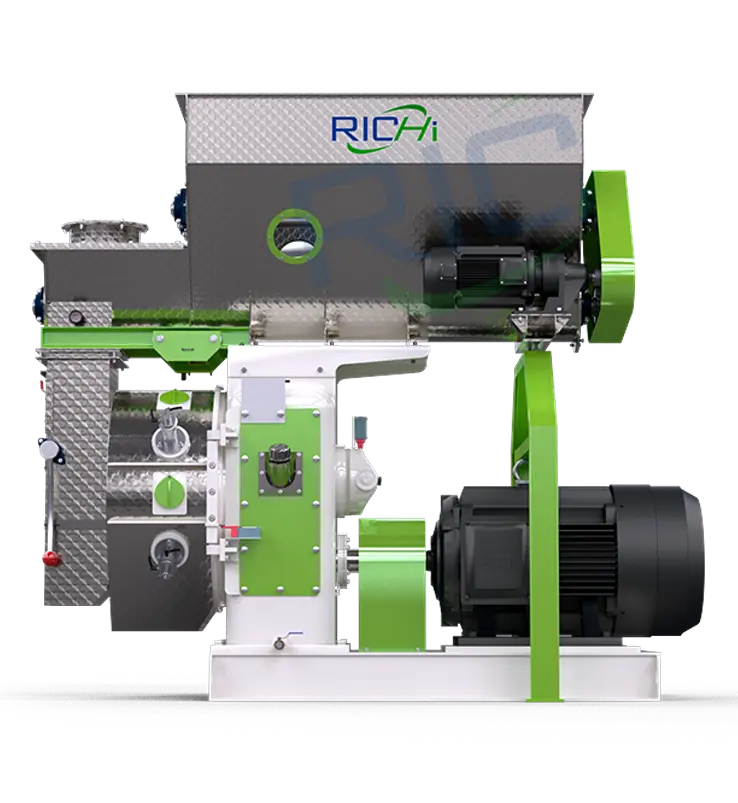
fertilizer granulator equipment
Transforming poultry litter, cow manure, and NPK blends into uniform, easy-to-apply organic and compound fertilizer pellets, this mill supports sustainable agriculture and helps farmers achieve better soil health and crop yields.

twin screw extruder
Essential for producing high-quality floating fish feed and pet food, this machine provides precise thermal and mechanical control, allowing Pakistani aquafeed and pet food manufacturers to create superior, digestible products.
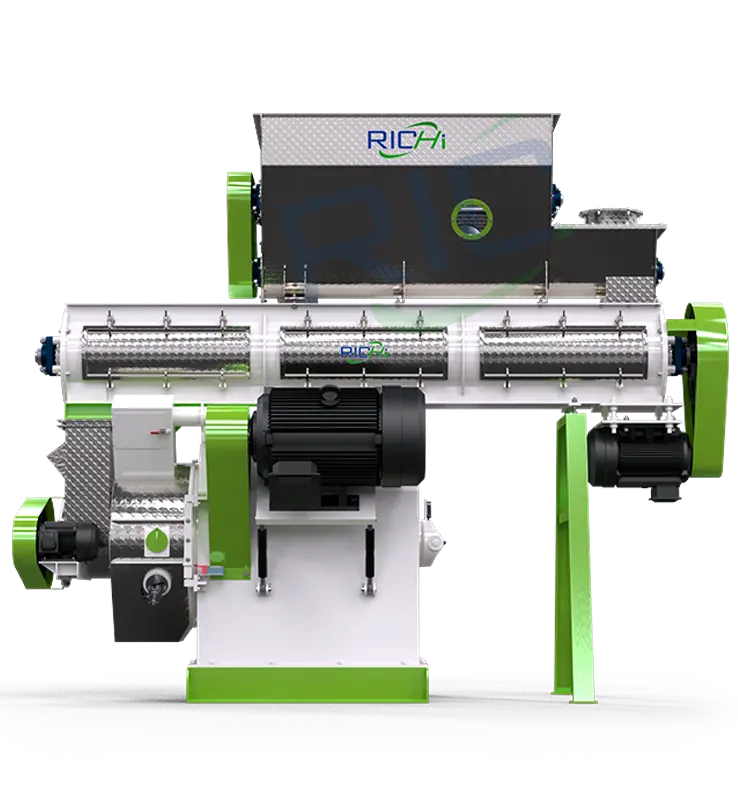
straw pellet machine
Designed to handle tough rice and wheat straw from Punjab’s farms, this machine converts problematic field waste into clean-burning solid fuel, providing an economical heating solution and reducing open-air burning.

shrimp feed pellet machine
Featuring specialized conditioning and die technology, this mill produces water-stable, slow-sinking feed pellets critical for Pakistan’s developing coastal and inland shrimp farming operations.

cat litter pellet machine
Utilizing local bentonite and processed biomass, this machine manufactures highly absorbent clumping and non-clumping cat litter pellets, catering to the country’s growing urban pet care market.
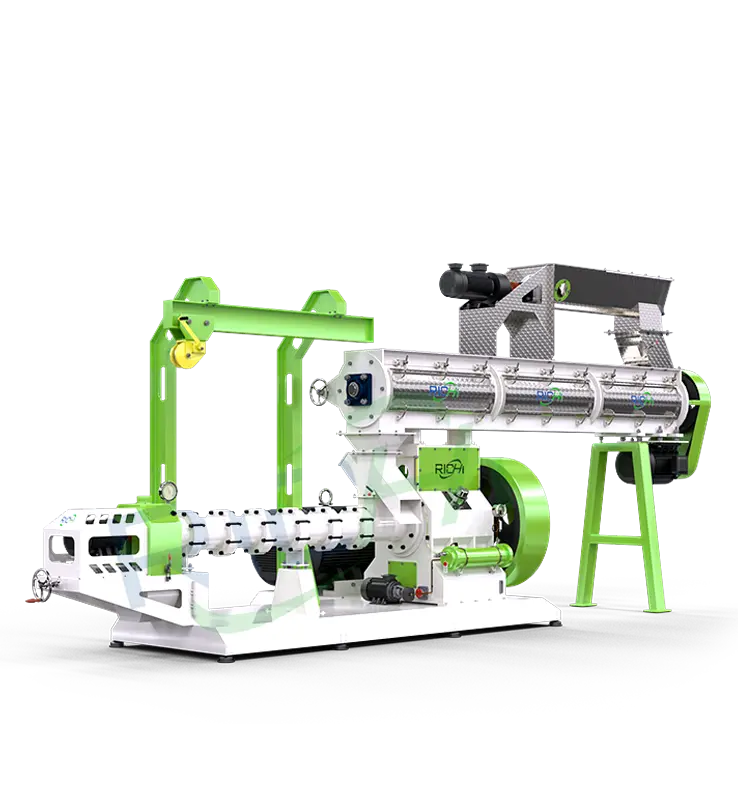
single screw extruder machine
A versatile and cost-effective solution for producing floating fish feed, expanded snacks, and textured vegetable protein, perfectly suited for small to medium-scale Pakistani enterprises.

Grain extruder machine
Adding value to local corn and rice by creating puffed grains for breakfast cereals, snacks, or high-digestibility feed ingredients, diversifying revenue streams for food and agri-processors.
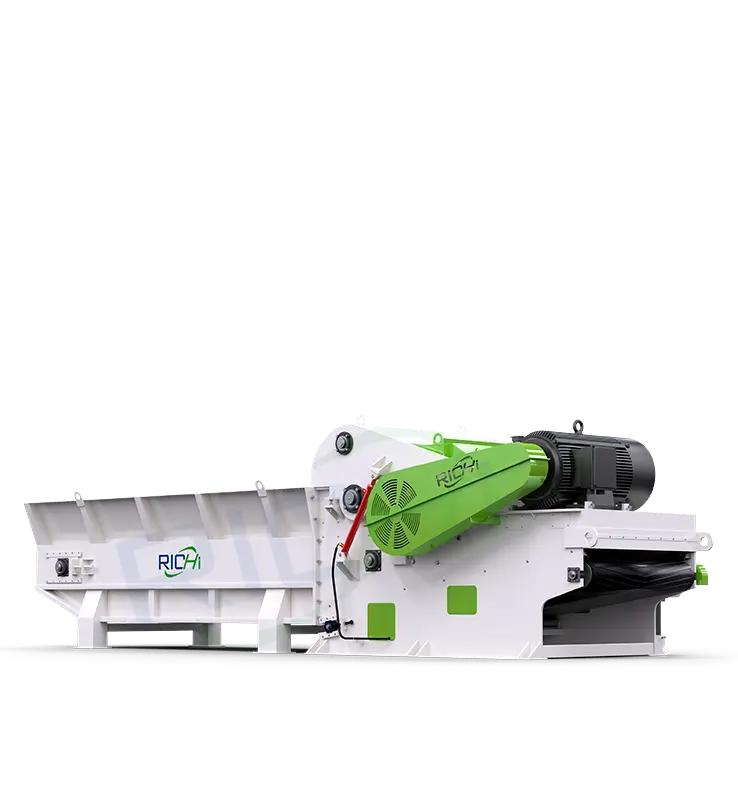
wood chipper machine
Pre-processing timber and orchard waste into uniform chips, this machine is the essential first step for efficient drying and pelletizing in biomass pellet manufacturing plants across Pakistan’s forested and agricultural regions.

shredder machine
Handling diverse materials like municipal waste, plastic lumps, and agricultural stalks, this machine prepares challenging feedstocks for RDF pellet production or recycling, supporting waste-to-value initiatives.

Rotary Drum Dryer
Critical for biomass processing, this dryer efficiently reduces moisture in sawdust, rice husk, and chicken manure—common materials in Pakistan—ensuring optimal conditions for the downstream pellet making machine in Pakistan.

bale crusher
Efficiently breaking apart dense hay and straw bales from Pakistani farms, this machine prepares fibrous material for size reduction, which is a vital pre-processing step for feed and fuel pellet lines.

hammer mill
A versatile grinder for animal feed and biomass, this mill efficiently pulverizes local corn, grains, and wood chips into the perfect particle size for mixing and pelleting, ensuring recipe consistency and pellet quality.

mesh belt dryer
Ideal for gentle, low-temperature drying of sensitive materials like fruits, vegetables, and certain aquafeeds, this dryer helps Pakistani processors add value to perishable agricultural products.

Feed mixer machine
Ensuring a perfectly homogenous blend of micro-ingredients, vitamins, and locally sourced macro-components, this mixer is fundamental to producing nutritionally balanced and consistent animal feed.

fertilizer crusher machine
Specifically designed for crushing caked and hardened organic fertilizers and raw materials common in Pakistan, this crusher prepares material for consistent granulation and quality final products.

grass straw crusher machine
Tackling tough alfalfa and rice straw, this heavy-duty crusher reduces fibrous material to a suitable length for efficient pelletizing in feed and fuel production, a common need on Pakistani farms.

vibrating screening machine
Used for both raw material cleaning and finished pellet sizing, this screen is essential for ensuring the purity of feed ingredients and the consistent, high-quality finish of pellets ready for the market.

storage silos
Providing critical storage for raw grains, meals, and finished pellets, these silos enable Pakistani processors to manage seasonal supply fluctuations, ensure production continuity, and maintain product quality.
Frequently Asked Questions
Planning a pellet production venture in Pakistan involves many practical considerations. Below, we address the most common questions from entrepreneurs and businesses across the country, covering everything from raw material suitability and machine selection to local compliance and support.
What are the technical specifications for the different pellet machines you sell to Pakistan?
+
A crucial step in planning your pellet plant is selecting the right press for your specific material and capacity goals. Below, we detail the core specifications for our most popular models exported to Pakistan. These machines form the reliable heart of countless successful operations across the country, from high-volume feed mill engineerings to specialized biomass pellet plants.
When selecting a pellet making machine in Pakistan, key parameters like motor power, die diameter, and output must align with your raw material characteristics and production targets. Our range is engineered to meet the diverse demands of the local market.
Feed Pellet Mill Series
Ideal for producing nutritious poultry, cattle, and aqua feed from locally available ingredients like maize, wheat bran, and oil cakes. This series is the backbone of Pakistan’s thriving livestock sector.
| Model | Main Motor (kW) | Feeder Motor (kW) | Conditioner Motor (kW) | Ring Die Inner Diameter (mm) | Pellet Diameter (mm) | Output (T/H) |
|---|---|---|---|---|---|---|
| SZLH250 | 22 | 1.1 | 1.5 | 250 | 2~12 | 1.0-1.5 |
| SZLH320 | 37 | 1.5 | 4 | 320 | 2~12 | 3-4 |
| SZLH350 | 55 | 1.5 | 4 | 350 | 2~12 | 5-6 |
| SZLH420 | 110 | 1.5 | 7.5 | 420 | 2~12 | 10-12 |
| SZLH508 | 160 | 1.5 | 7.5 | 508 | 2~12 | 15-16 |
| SZLH558 | 185 | 1.5 | 11 | 558 | 2~12 | 20-22 |
| SZLH678 | 250 | 1.5 | 11 | 673 | 2~12 | 30-33 |
| SZLH768 | 315 | 2.2 | 11 | 762 | 2~12 | 38-40 |
Whether you need a compact feed pellet machine for sale in Pakistan for a farm or a high-capacity model for a commercial mill, this series offers a scalable solution.
Wood Pellet Mill Series
Robustly built to handle abrasive materials like pine sawdust, mixed wood waste, and rice husks commonly processed in Pakistan’s biomass energy sector.
| Model | Main Motor (kW) | Bridge Breaker Feeder (kW) | Force Feeder (kW) | Ring Die Inner Diameter (mm) | Pellet Diameter (mm) | Output (T/H) |
|---|---|---|---|---|---|---|
| MZLH320 | 22 | 2.2 | 0.75 | 320 | 4~12 | 0.2-0.3 |
| MZLH350 | 37 | 2.2 | 0.75 | 350 | 4~12 | 0.3-0.5 |
| MZLH420 | 90 | 3 | 1.5 | 420 | 4~12 | 1.0-1.2 |
| MZLH520 | 132 | 3 | 1.5 | 520 | 4~12 | 1.5-2.0 |
| MZLH678 | 185 | 3 | 1.5 | 673 | 4~12 | 2.5-3.0 |
| MZLH768 | 250 | 4 | 1.5 | 762 | 4~12 | 3.0-4.0 |
Straw/Grass Pellet Mill Series
Specifically engineered with reinforced components for the high-fiber challenge of Pakistani rice/wheat straw and forage grasses like alfalfa.
| Model | Main Motor (kW) | Bridge Breaker Feeder (kW) | Force Feeder (kW) | Ring Die Inner Diameter (mm) | Pellet Diameter (mm) | Output (T/H) |
|---|---|---|---|---|---|---|
| CZLH320 | 22 | 2.2 | 0.75 | 320 | 4~12 | 0.5-0.6 |
| CZLH350 | 37 | 2.2 | 0.75 | 350 | 4~12 | 1.0-1.2 |
| CZLH420 | 90 | 3 | 1.5 | 420 | 4~12 | 1.8-2.0 |
| CZLH520 | 132 | 3 | 1.5 | 520 | 4~12 | 2.8-3.0 |
| CZLH678 | 185 | 3 | 1.5 | 673 | 4~12 | 4-5 |
| CZLH768 | 250 | 4 | 1.5 | 762 | 4~12 | 6-8 |
Cat Litter Pellet Mill Series
Designed for processing bentonite and other absorbent materials into consistent, low-dust clumping or non-clumping litter pellets.
| Model | Main Motor (kW) | Feeder Motor (kW) | Conditioner Motor (kW) | Ring Die Inner Diameter (mm) | Pellet Diameter (mm) | Output (T/H) |
|---|---|---|---|---|---|---|
| MSZLH250 | 22 | 1.1 | 1.5 | 250 | 2~12 | 1.0-1.5 |
| MSZLH320 | 37 | 1.5 | 4 | 320 | 2~12 | 3-4 |
| MSZLH350 | 55 | 1.5 | 4 | 350 | 2~12 | 5-6 |
| MSZLH420 | 110 | 1.5 | 7.5 | 420 | 2~12 | 10-12 |
| MSZLH508 | 160 | 1.5 | 7.5 | 508 | 2~12 | 15-16 |
| MSZLH558 | 185 | 1.5 | 11 | 558 | 2~12 | 20-22 |
| MSZLH678 | 250 | 1.5 | 11 | 673 | 2~12 | 30-33 |
| MSZLH768 | 315 | 2.2 | 11 | 762 | 2~12 | 38-40 |
Fertilizer Pellet Mill Series
Built to withstand the corrosive nature of organic materials like poultry litter, cow manure, and NPK blends, producing uniform fertilizer pellets.
| Model | Main Motor (kW) | Bridge Breaker Feeder (kW) | Force Feeder (kW) | Ring Die Inner Diameter (mm) | Pellet Diameter (mm) | Output (T/H) |
|---|---|---|---|---|---|---|
| FZLH250 | 22 | 2.2 | 0.75 | 250 | 4~12 | 1-1.5 |
| FZLH320 | 22 | 2.2 | 0.75 | 320 | 4~12 | 2-3 |
| FZLH350 | 37 | 2.2 | 0.75 | 350 | 4~12 | 3-5 |
| FZLH420 | 90 | 3 | 1.5 | 420 | 4~12 | 6-8 |
| FZLH520 | 132 | 3 | 1.5 | 520 | 4~12 | 9-12 |
| FZLH678 | 185 | 3 | 1.5 | 673 | 4~12 | 18-22 |
| FZLH768 | 250 | 4 | 1.5 | 762 | 4~12 | 22-26 |
The tables above represent our core series of pellet machine for sale in Pakistan. Please note, this is not an exhaustive list. Our engineering capability extends far beyond these standard models.
We specialize in customizing and configuring pellet mills—whether ring die or other types like flat die or extruders—to suit virtually any material (fibrous, abrasive, wet, dry) and application specific to your project in Pakistan. Contact us with your raw material details and production goals for a tailored technical proposal.
What is the price range for a pellet mill machine in Pakistan?
+
This is one of the most common and important questions we receive from Pakistani clients. The price of a pellet making machine in Pakistan is not a single figure but varies significantly based on the machine type, capacity, configuration, and the specific demands of your material.
Below, we provide transparent FOB Qingdao price ranges for our most popular single machine models to help you with initial budgeting. These ranges reflect standard configurations; customizations will affect the final cost.
Single Ring Die Feed Pellet Machine Price Ranges
Ideal for producing poultry, cattle, and aqua feed, these are among the most sought-after feed pellet machine price in Pakistan inquiries. Prices scale with capacity and motor power.
| Model & Capacity | Approx. FOB Price Range (USD) |
|---|---|
| SZLH250 (22KW): 1-2T/H | $6,500 – $9,000 |
| SZLH320 (37KW): 3-4T/H | $15,000 – $18,500 |
| SZLH350 (55KW): 5-6T/H | $26,000 – $32,000 |
| SZLH420 (110KW): 10T/H | $28,000 – $34,000 |
| SZLH508 (160KW): 15T/H | $38,000 – $47,000 |
| SZLH558 (185KW): 20T/H | $46,000 – $55,000 |
| SZLH678 (250KW): 30T/H | $61,000 – $74,000 |
| SZLH768 (315KW): 40T/H | $73,000 – $88,000 |
For a small feed pellet machine price in Pakistan, the entry-level SZLH250 model offers an excellent starting point for farms or starter feed mills.
Single Biomass Wood Pellet Machine Price Ranges
Built for durability to process abrasive materials like sawdust and rice husk, these prices define the wood pellet making machine price in Pakistan for clean energy projects.
| Model & Capacity | Approx. FOB Price Range (USD) |
|---|---|
| MZLH320 (22KW): 0.2-0.3T/H | $13,500 – $17,000 |
| MZLH350 (37KW): 0.3-0.5T/H | $18,000 – $23,000 |
| MZLH420 (90KW): 1-1.2T/H | $26,500 – $33,500 |
| MZLH520 (132KW): 1.5-2T/H | $40,000 – $50,500 |
| MZLH678 (200KW): 2.5-3T/H | $61,000 – $74,000 |
| MZLH768 (315KW): 3-4T/H | $73,000 – $88,000 |
Single Grass/Straw Pellet Machine Price Ranges
Engineered with reinforced components for tough, fibrous materials like rice straw and alfalfa, this series addresses a key pellet machine price in Pakistan query for the biomass and fodder sector.
| Model & Capacity | Approx. FOB Price Range (USD) |
|---|---|
| CZLH250 (22KW): 0.3-2T/H | $7,000 – $9,500 |
| CZLH320 (22KW): 0.5-4T/H | $17,500 – $22,000 |
| CZLH350 (37KW): 1-6T/H | $22,000 – $28,000 |
| CZLH420 (90KW): 2-10T/H | $28,000 – $34,000 |
| CZLH520 (132KW): 3-12T/H | $46,000 – $57,000 |
| CZLH678 (200KW): 4-20T/H | $67,000 – $82,000 |
| CZLH768 (315KW): 6-30T/H | $79,000 – $96,000 |
Understanding Price Variations for Smaller Models:
When researching a small pellet machine price in Pakistan, it’s important to look at the entry point for each category. For instance, a small animal feed pellet machine like the SZLH250 starts around $6,500 – $9,000, while a small biomass machine like the MZLH320 begins around $13,500 – $17,000. The higher starting point for biomass models reflects their heavier-duty construction for abrasive materials.
The tables above provide a clear guide to the pellet making machine price in Pakistan for our core series. However, it is crucial to understand that these are prices for single, standard-configuration machines and represent only a portion of our extensive catalog.
We manufacture and supply a much wider range of equipment, including specialized machines for fertilizer, cat litter, RDF, and more, each with its own pricing structure.
Furthermore, most clients require a complete production line, which includes auxiliary equipment like crushers, dryers, mixers, coolers, and packaging machines. The total project investment is tailored to your specific raw material, desired final product, automation level, and output goals.
To get an accurate and complete quotation, please contact our sales team with your detailed requirements. Tell us about your material, target capacity, and product specifications, and we will provide a customized solution and a transparent price for your project in Pakistan.
What is the price range for a complete feed or pellet production line in Pakistan?
+
This is a fundamental question for any serious investor. The total investment for a production line depends on the product type, target capacity, automation level, and specific configuration.
To help with your preliminary planning, we provide indicative FOB price ranges for several standard production lines we’ve successfully exported to Pakistan. Remember, the pellet making machine in Pakistan is the core, but a full line includes many other critical components.
Poultry & Livestock Feed Production Line Price Ranges
These lines are designed to produce high-quality mash and pellet feed from raw grains and meals. Investment scales significantly with capacity and complexity.
For Small Capacity (Flat Die System):
An integrated line including a hammer mill, horizontal mixer, and flat die pellet machine. Ideal for starter farms or small-scale operations.
- 1t/h Mash Feed + 0.2-0.3t/h Pellet Feed: $12,000 – $16,000
- 1t/h Mash Feed + 0.5-0.6t/h Pellet Feed: $13,500 – $17,500
- 1t/h Mash Feed + 0.8-1.0t/h Pellet Feed: $14,500 – $18,500
For Medium to Large Capacity (Ring Die System):
Complete, automated lines with weighing, grinding, mixing, pelleting, cooling, and packing systems. The broad range accounts for different levels of automation and equipment sourcing.
- 1-2t/h: $25,000 – $70,000
- 3-4t/h: $55,000 – $250,000
- 5-6t/h: $75,000 – $300,000
- 10t/h: $150,000 – $380,000
- 15t/h: $220,000 – $480,000
- 20t/h: $400,000 – $700,000
- 30t/h: $550,000 – $800,000
- 40t/h: $650,000 – $900,000
- 60t/h+: From $1,000,000
Aquafeed (Floating/Sinking) Production Line Price Ranges
These specialized lines use extrusion technology and are configured for high-stability fish and shrimp feed. They represent a higher investment due to the complex processing involved.
Single-Screw Extruder Complete Line:
- 200-400 kg/h: $55,000 – $90,000
- 500-600 kg/h: $65,000 – $115,000
- 800-1000 kg/h: $120,000 – $190,000
Twin-Screw Extruder Complete Line (Higher Precision & Versatility):
- 0.5-1.0 t/h: $140,000 – $230,000
- 1.5-2.0 t/h: $400,000 – $620,000
- 3.0-4.0 t/h: $500,000 – $720,000
- 5.0-6.0 t/h: $620,000 – $950,000
- 8.0-10.0 t/h: $800,000 – $1,400,000
Alfalfa/Grass/Straw Pellet Production Line Price Ranges
These lines are engineered to handle tough, fibrous materials common in Pakistan, transforming them into fuel or fodder pellets. They include specialized pre-processing like cutting, drying, and fine grinding.
- 0.3-2 t/h: $33,000 – $75,000
- 0.5-4 t/h: $70,000 – $240,000
- 1-6 t/h: $90,000 – $260,000
- 2-10 t/h: $170,000 – $470,000
- 3-12 t/h: $200,000 – $520,000
- 4-20 t/h: $280,000 – $720,000
Important Note on Pricing & Customization:
The price ranges above are for reference only and represent standard configurations for the main line types we supply. They are not fixed prices. The final cost of your pellet making machine in Pakistan and the complete plant is highly dynamic.
Key factors that influence the final price include:
- Raw Material Characteristics: Moisture, fiber content, and abrasiveness dictate the need for pre-dryers, special crushers, or reinforced pellet mill components.
- Final Product Specification: Pellet size, density, durability, and whether coating is required.
- Automation Level: From semi-automatic control to full PLC systems with automated batching and packaging.
- Auxiliary Equipment Scope: The inclusion and brand of dust collectors, chillers, boilers, packaging machines, and silos.
- Site-Specific Requirements: Civil work guidance, steel structure design, and installation services.
The tables showcase our primary production line types, but our capabilities are far more extensive. We design and build lines for fertilizer, biomass (wood, RDF), pet food, and other specialized pellets. Every project is unique.
To receive a detailed and accurate quotation tailored to your specific project in Pakistan, please contact us with your complete requirements. Share your raw material details, target capacity, desired final product, and any site-specific considerations. Our engineering team will then provide a professional layout and a transparent, comprehensive price proposal.
We have abundant wheat straw and cotton stalks in Punjab. What type of pellet making machine in Pakistan is best to process this mix into fuel pellets at a rate of 2-3 tons per hour?
+
For processing a mixed feed of wheat straw and cotton stalks at a target output of 2-3 tons per hour, we recommend a biomass-specific ring die pellet mill.
These materials are highly fibrous and abrasive, requiring a robust machine with features like a reinforced gearbox, high-compression rollers, and a specially designed force feeder system to ensure consistent material flow into the die. Our CZLH420 or CZLH520 models are ideally suited for this application.
The CZLH series is engineered precisely for tough agricultural residues common in Pakistan. For a 2-3 t/h output, the CZLH420 pellet mill in Pakistan would be the primary recommendation, with a main motor of 90kW.
A complete production line for this capacity would also include a heavy-duty straw crusher, a rotary drum dryer to reduce the inherent high moisture, a hammer mill for fine grinding, and the necessary cooling and screening equipment.
The investment for such a complete 2-3 t/h biomass line typically ranges between $170,000 to $400,000 FOB, depending on the level of automation and drying capacity required for your specific material moisture content. Our engineers can design a custom layout to optimize the process flow for your Punjab-based facility.
For a medium-scale poultry farm aiming to produce 5 tons per hour of broiler feed (3mm and 4.5mm pellets), what is the recommended feed pellet mill model and the approximate total line investment?
+
To reliably achieve 5 tons per hour of high-quality broiler feed, the recommended core feed pellet machine in Pakistan is our SZLH350 model. This ring die pellet mill, with a 55kW main motor and integral conditioner, is perfectly scaled for this output, providing excellent pelleting efficiency and durability for commercial feed production.
Producing both 3mm and 4.5mm pellets will require two corresponding ring dies, which can be swapped as needed.
The complete feed production line would encompass raw material receiving and cleaning (for maize, soybean meal, etc.), grinding with a hammer mill, precise batching and mixing in a horizontal feed mixer, conditioning and pelleting with the SZLH350, counter-flow cooling, screening to remove fines, and automated weighing and bagging.
For a complete, well-configured 5 t/h poultry broiler feed mill plant, the total investment typically falls within the range of $75,000 to $300,000 FOB.
The wide range accounts for choices in automation level, silo capacity, and auxiliary equipment brands. Richi Machinery provides a comprehensive process design to ensure your plant meets all hygiene and nutritional mixing standards.
Can your equipment handle the high-moisture chicken litter from our poultry sheds to produce organic fertilizer pellets, and what pre-drying system is necessary for a 3 t/h output?
+
Absolutely. Processing high-moisture chicken litter into premium organic fertilizer pellets is a common and successful application for our systems. The key is an integrated approach that starts with effective dewatering and drying.
For a 3 t/h pellet output line, a pre-drying stage is mandatory to reduce the moisture from as high as 60-70% down to an optimal 12-15% for pelletizing. We would typically recommend a large-scale rotary drum dryer powered by a biomass burner (which can use finished pellets or other biomass fuel) for this task due to its high capacity and robustness.
Following drying, the material is crushed and then pelleted using a specialized organic fertilizer pellet mill in Pakistan, such as our FZLH350 or FZLH420 models. These mills are built with anti-corrosion treatments and heavy-duty components to handle the abrasive and sometimes corrosive nature of organic fertilizers.
The complete line includes drying, crushing, mixing (for recipe formulation if needed), pelleting, cooling, screening, and coating/packaging. We provide complete engineering for such manure-to-fertilizer projects, ensuring efficient and odor-managed processing.
We want to set up a facility to process rice husk and sawdust into 8mm biomass pellets. What is the typical wood pellet machine price in Pakistan for a complete 1.5 t/h production line?
+
For a complete 1.5 t/h production line processing rice husk and sawdust into 8mm pellets, the core wood granulator machine in Pakistan would be our MZLH420 or MZLH520 model. The choice depends on the specific proportion and characteristics of your raw materials.
A full line includes several critical stages: raw material crushing (a hammer mill for sawdust, possibly a crusher for rice husk), drying (a rotary drum dryer is essential to achieve uniform moisture), fine grinding, pelleting, cooling, screening, and packing.
The total FOB price for such a 1.5 t/h complete pellet machine line typically ranges from $150,000 to $380,000. This range accounts for the capacity and type of dryer (a major cost component), the level of automation in the control system, and the choice of ancillary equipment. It’s crucial to note that the price of the single pellet mill is only one part of the total plant investment.
Richi Machinery specializes in providing tailored solutions, and we strongly advise a detailed consultation where we analyze your specific material mix to design the most cost-effective and efficient system for you.
What is the price range for a complete biomass pellet plant in Pakistan?
+
The investment for a biomass pellet mill line in Pakistan varies significantly based on capacity, raw material characteristics, and the level of automation desired. The core of any such plant is a robust pellet making machine in Pakistan, but the total system includes many other critical components.
Below is a general price range (FOB) for complete plant configurations based on output capacity. These ranges account for standard systems designed to process common Pakistani biomass materials like wood waste, rice husk, straw, and bagasse.
| Plant Capacity (T/H) | Approximate FOB Price Range (USD) |
|---|---|
| 0.2 – 0.3 T/H | $20,000 – $140,000 |
| 0.3 – 0.5 T/H | $28,000 – $160,000 |
| 1.0 – 1.2 T/H | $39,000 – $220,000 |
| 1.5 – 2.0 T/H | $56,000 – $270,000 |
| 2.5 – 3.0 T/H | $78,000 – $350,000 |
| 3.0 – 4.0 T/H | $95,000 – $430,000 |
| 5.0 – 6.0 T/H | $160,000 – $570,000 |
| 6.0 – 8.0 T/H | $190,000 – $690,000 |
| 10 – 12 T/H | $280,000 – $1,100,000 |
| 12 – 15 T/H | $470,000 – $1,430,000 |
| 20 – 24 T/H | $570,000 – $2,100,000 |
| Higher Capacity | Custom Quotation Required |
Important Note on Pricing & Customization:
The wide price ranges shown above reflect the fact that every biomass pellet mill plant is a custom-engineered project. The final cost is not determined by the pellet making machine in Pakistan alone but by the entire integrated system tailored to your specific conditions.
Key factors that cause the price to vary within each capacity range include:
- Raw Material Profile: The type (e.g., soft wood, hardwood, rice husk, straw), initial moisture content, and impurity level directly dictate the size and cost of pre-processing equipment like crushers, screens, and—most significantly—the drying system. A high-moisture material requires a larger, more expensive dryer.
- Plant Configuration & Automation: A basic line with manual controls and feeding will be at the lower end of the range. A fully automated plant with PLC control, pneumatic conveying, and automated packaging will be at the higher end.
- Equipment Quality & Specifications: The choice between standard and heavy-duty components, the inclusion of specific features like fire suppression in dryers, and the capacity of auxiliary systems (electrical, dust collection) all impact the price.
- Project Scope: Our quotation can cover everything from equipment supply to full turnkey services including plant layout, foundation drawings, installation supervision, and commissioning.
The capacity-based table provides a useful starting point for budgeting. However, to receive an accurate and detailed quotation, we need to understand your specific project: the exact raw material you will use, your target hourly output, available factory space, and desired automation level.
Please contact us with these details so our engineering team can design and price a biomass pellet plant that perfectly matches your needs and investment plan in Pakistan.
What is the price range for poultry feed machines and complete production lines in Pakistan?
+
What is the price range for poultry feed machines and complete production lines in Pakistan?
The cost of setting up a poultry feed operation in Pakistan depends entirely on whether you need a single pellet making machine in Pakistan to upgrade an existing setup, or a complete, new production line.
Poultry feed production requires precise formulation, hygienic processing, and durable pellets. Below, we break down the price ranges for both single machines and full lines based on our extensive export experience to the Pakistani market.
1. Single Poultry Feed Pellet Machine Price Ranges
This refers to the price of the core animal feed granulator in Pakistan itself, such as our SZLH series ring die pellet mills. These are standalone machines that can be integrated into an existing grinding and mixing setup.
| Capacity Range | Approximate FOB Price Range (USD) |
|---|---|
| 1 – 40 T/H | $7,500 – $85,000 |
Explanation: This wide range reflects the scaling of machinery. A small 1-2 T/H model like the SZLH250 starts at the lower end, ideal for a large farm or a small scale feed mill. The price increases with capacity and motor power, with a high-capacity 30-40 T/H SZLH768 model representing the upper end of the range for major commercial feed producers. The exact price within this bracket depends on the specific model you select based on your required hourly output.
2. Complete Poultry Feed Production Line Price Ranges
This is the investment for a full, integrated plant starting from raw material receiving to finished bagged feed. It includes all necessary feed mill equipment: cleaning, grinding, batching, mixing, pelleting, cooling, screening, and packaging systems.
| Capacity Range | Approximate FOB Price Range (USD) |
|---|---|
| 1 – 60 T/H | $30,000 – $1,100,000 |
| Higher Capacity (up to 120 T/H) | Custom Quotation Required |
Explanation:
The vast range for complete lines highlights how project scope defines cost. A 1-2 T/H basic line with minimal automation will be at the very low end. As capacity increases to 5-10 T/H, the price rises due to larger equipment, more silos, and enhanced conveying systems.
A 20-30 T/H fully automated plant with computerized batching, bulk storage, and advanced control systems will occupy the middle to upper range. The highest capacities (40-60 T/H+) represent large-scale industrial facilities requiring significant investment, reflected in the upper limit of the range.
Critical Factors Influencing the Final Price:
It is vital to understand that these are indicative ranges. The final quotation for your poultry feed pellet machine in Pakistan or complete plant will be customized based on:
- Raw Material List: The types and proportions of grains (corn, wheat), protein meals, and additives you use.
- Formula Complexity & Automation Level: The need for micro-ingredient dosing, liquid addition (fats, molasses), and PLC-controlled batching.
- Auxiliary Equipment Choice: The selection and capacity of hammer mills, mixers, counter-flow coolers, screens, and packaging machines.
- Structural and Civil Work: Requirements for silos, steel platforms, and electrical infrastructure.
Our poultry feed pellet mills are highly versatile and form the core of not just poultry feed preparation plants, but also cattle, sheep, and other livestock feed production systems. We engineer each line to ensure optimal nutrition, hygiene, and feed conversion ratios.
To move from a price range to a firm quote, please contact us with your specific production goals, available space, and desired level of automation. Our engineers will then design a tailored solution and provide a detailed, transparent cost breakdown for your project in Pakistan.
What is the price range for a hammer mill (drop-shaped type) in Pakistan?
+
A high-quality hammer mill is a foundational piece of equipment for both feed and biomass pellet production in Pakistan. Our SFSP series drop-shaped hammer mills are among our most exported grinding machines to the country, known for their efficiency, durability, and versatility in processing local materials like maize, wheat straw, rice husk, and wood chips.
The price varies significantly based on the model’s size, motor power, and intended application. Below is a detailed breakdown of our SFSP series models with their specifications and corresponding price ranges.
Drop-Shaped Hammer Mill Series – Models & Price Ranges
| Model | Rotor Dia. (mm) | Chamber Width (mm) | Power (kW) | Grain Output (T/H) | Grass/Straw Output (T/H) | Wood Chip Output (T/H) | Approx. FOB Price Range (USD) |
|---|---|---|---|---|---|---|---|
| SFSP56×40 | 560 | 400 | 37 | 3-5 | 0.8-1.0 | 0.5-0.6 | $4,000 – $7,000 |
| SFSP66×60 | 660 | 600 | 55 / 75 | 5-6 / 6-7 | 1.0-1.5 | 1.0-1.2 | $6,500 – $11,000 |
| SFSP66×80 | 660 | 800 | 75 / 90 | 8-10 | 2.0-2.5 | 2.0-2.5 | $9,000 – $15,000 |
| SFSP66×100 | 660 | 1000 | 110 / 132 | 10-12 / 15-17 | 3.0-4.0 | 3.0-4.0 | $13,000 – $20,000 |
| SFSP66×120 | 660 | 1200 | 160 / 185 | 20-22 | 5.0-6.0 | 4.0-5.0 | $18,000 – $28,000 |
| SFSP66×150 | 660 | 1500 | 220 | 25-27 / 30-32 / 40-50 | 7.0-8.0 | 5.0-6.0 / 7.0-8.0 | $25,000 – $40,000 |
Key Features & Application Guidance:
This series is engineered for high performance. The drop-shaped crushing chamber design disrupts material airflow for greater efficiency, increasing output by up to 25% compared to conventional designs. A key feature is the customizable screen (sieve); by changing the screen size, the final particle size can be adjusted within a range of 0.5mm to 20mm, making one machine suitable for various stages of processing.
- As a Feed Hammer Mill in Pakistan: For poultry and cattle feed pellet production lines, these mills excel at grinding grains and meals to a uniform fine powder (typically 1-3mm), which is critical for proper mixing and pelleting in your pellet making machine in Pakistan. Models like the SFSP66×80 or SFSP66×100 are popular choices for medium-scale animal feed mill plants.
- As a Wood Hammer Mill in Pakistan: In biomass pellet plants, it serves as the fine grinder after chipping and drying, processing wood chips into a consistent fibrous flour for pelletizing. The SFSP66×60 and SFSP66×80 are often used in smaller biomass lines.
- For General Grinding (Hammer Mill Grinder Pakistan): Its ability to handle diverse materials—from grains and oil cakes to straw and husks—makes it a versatile feed crusher machine in Pakistan for various agro-processing applications beyond pellet lines.
Why the Price Range Exists:
The price range for each model accounts for different motor power options (e.g., 75kW vs 90kW for the SFSP66×80) and specific customizations. The final cost is influenced by:
- Motor Power & Brand Selection: Choice of standard or premium efficiency motors.
- Screen Customization: Specific screen sizes or special materials (e.g., stainless steel for certain applications).
- Additional Features: Request for special dust collection connections, specific voltage motors (for Pakistan’s 380V/50Hz supply), or spare part packages.
Selecting the right model depends on your primary material and required hourly tonnage. We provide hammer mills in Pakistan suitable for all scales of operation, from small farms to large industrial plants. All machines are customizable to fit your specific production line layout and material characteristics.
To get an exact price and model recommendation, please inform us of the material you need to grind, your target particle size, and your required hourly capacity. Our technical team will then specify the optimal SFSP model and provide a precise quotation for your project.
What is the price range for a wood chipper/crusher machine in Pakistan?
+
A reliable wood chipper, often referred to as a wood crusher, is the essential first step for any serious biomass pellet plant in Pakistan. It processes raw logs, branches, and forestry/agricultural waste from local sources into uniform wood chips, which are then ready for drying and fine grinding before pelletizing.
The wood chipper machine price in Pakistan varies significantly based on the machine’s size, power, and capacity to handle different log diameters. Below is a detailed overview of our XPJ series drum chippers, which are specifically engineered for the demanding conditions of industrial biomass processing.
Drum Wood Chipper Series – Models & Specifications
| Model | Inlet Size (mm) | Max. Feed Diameter (mm) | Feeder Motor (kW) | Main Motor (kW) | Hydraulic Pump (kW) | Outlet Conveyor (kW) | Number of Flying Knives | Number of Bed Knives |
|---|---|---|---|---|---|---|---|---|
| XPJ500x230 | 500×230 | Φ230 | 4+3 | 75 | 0.75 | 1.5 | 2 | 1 |
| XPJ680x300 | 680×300 | Φ300 | 4+3 | 90 | 1.1 | 1.5 | 2 | 1 |
| XPJ500*500 | 500×500 | Φ500 | 4+3 | 110 | 1.5 | 2.2 | 6 | 2 |
| XPJ850*500 | 850×500 | Φ500 | 4+3 | 132 | 1.5 | 2.2 | 10 | 3 |
| XPJ1200*500 | 1200×500 | Φ500 | 5.5+4 | 200 | 1.5 | 2.2 | 14 | 3 |
| XPJ850*600 | 850×600 | Φ600 | 7.5+7.5 | 200 | 3 | 2.2 | 14 | 3 |
Function & Key Features:
The primary function of this wood crusher machine in Pakistan is to efficiently process logs, branches, and wood strips into consistent 20-40mm wood chips. The screen size can be customized to produce chips tailored for your specific downstream drying and grinding process. These industrial chippers are built for durability and high output, featuring:
- Heavy-Duty Construction: A welded body made from high-strength steel plate ensures stability and longevity.
- Premium Cutting System: Flying knives and bed knives are made from 6CrW2Si steel, hardened through quenching for exceptional hardness and wear resistance.
- Hydraulic Feeding System: This critical feature automatically adjusts the feed roller pressure based on log diameter, forcing material into the cutting chamber to prevent slippage and kickback, ensuring smooth and safe operation.
- Dynamic Balancing: The rotor is precision-balanced to minimize vibration and noise, extending the machine’s service life.
Price Range & Selection Guidance:
The wood chipper Pakistan price for these industrial models typically falls within a range of $16,000 to $100,000+ (FOB). The exact cost for your project depends on the model selected.
- Smaller Models (e.g., XPJ500x230): Ideal for smaller operations or lower-volume feedstock, starting from the lower end of the price range.
- Medium to Large Models (e.g., XPJ850x500, XPJ1200x500): Designed for continuous, high-volume processing in commercial pellet plants, representing the mid to upper price range.
Choosing the right model is crucial. You must match the chipper’s maximum feed diameter and power to the size and volume of your raw wood material. A properly sized chipper ensures a steady supply of chips for your entire pellet production line.
All our wood chippers are customizable based on specific needs. To receive an accurate wood chipper machine price in Pakistan for your operation, please contact us with details about your primary wood source (log diameter, type of wood) and your required hourly chip output. Our engineers will then recommend the optimal model and provide a detailed quotation.
What is the price range for a feed mixer machine in Pakistan?
+
A high-performance feed mixer is the heart of any quality assurance system in animal feed production. It ensures a perfectly homogenous blend of grains, protein meals, micro-ingredients, and liquids—a critical step before pelleting.
The feed mixer machine price in Pakistan varies widely based on the mixer type, batch capacity, construction material, and specific features. Richi Machinery exports a comprehensive range of mixers to suit every scale of operation in Pakistan’s feed industry. Below is a detailed breakdown of our popular series with their specifications and indicative price ranges.
Feed Mixer Models, Specifications & Price Ranges
1. SLHJ Series: Single Shaft Double Layer Paddle Mixer
Ideal for general feed, premix, and even viscous materials.
| Model | Motor Connection | Material | Power (kW) | Batch Capacity (kg) | Effective Volume (m³) | Approx. FOB Price Range (USD) |
|---|---|---|---|---|---|---|
| SLHJ1A | Direct | Carbon Steel | 11 | 500 | 1 | $4,000 – $6,500 |
| SLHJ1B | Direct | Stainless Steel | 11 | 500 | 1 | $6,000 – $9,000 |
| SLHJ2A | Direct | Carbon Steel | 22 | 1000 | 2 | $7,000 – $11,000 |
| SLHJ2B | Direct | Stainless Steel | 22 | 1000 | 2 | $10,000 – $15,000 |
| SLHJ3A | Direct | Carbon Steel | 30 | 1500 | 3 | $9,000 – $14,000 |
| SLHJ4A | Direct | Carbon Steel | 37 | 2000 | 4 | $12,000 – $18,000 |
| SLHJ6A | Direct | Carbon Steel | 55 | 3000 | 6 | $18,000 – $26,000 |
2. SLHSJ Series: Twin Shaft Paddle Mixer
Offers superior mixing efficiency and shorter cycle times for a thorough blend.
| Model | Motor Connection | Material | Power (kW) | Batch Capacity (kg) | Effective Volume (m³) | Approx. FOB Price Range (USD) |
|---|---|---|---|---|---|---|
| SLHSJ0.5A | Chain | Carbon Steel | 5.5 | 250 | 0.5 | $3,500 – $5,500 |
| SLHSJ0.5B | Chain | Stainless Steel | 5.5 | 250 | 0.5 | $5,500 – $8,000 |
| SLHSJ1.0A | Chain | Carbon Steel | 7.5 | 500 | 1 | $5,000 – $8,000 |
| SLHSJ1.0B | Chain | Stainless Steel | 7.5 | 500 | 1 | $8,000 – $12,000 |
| SLHSJ2.0A | Chain | Carbon Steel | 18.5 | 1000 | 2 | $9,000 – $14,000 |
| SLHSJ4.0A | Chain | Carbon Steel | 30 | 2000 | 4 | $15,000 – $22,000 |
3. SLHY Series: Single Shaft Double Ribbon Mixer (Horizontal)
The classic and reliable ribbon mixer in Pakistan, perfect for small to medium complete feed mill plants.
| Model | Power (kW) | Batch Capacity & Discharge Type | Effective Volume (m³) | Approx. FOB Price Range (USD) |
|---|---|---|---|---|
| SLHY0.5A | 4 | 250 kg (Manual) | 0.5 | $2,800 – $4,500 |
| SLHY1.0A | 7.5 | 500 kg (Manual) | 1 | $4,000 – $6,500 |
| SLHY1.0A | 7.5 | 500 kg (Pneumatic) | 1 | $4,500 – $7,000 |
| SLHY2.5L | 18.5 | 1000 kg (Pneumatic) | 2.5 | $8,000 – $12,000 |
| SLHY3.5L | 30 | 1500 kg (Pneumatic) | 3.5 | $11,000 – $17,000 |
| SLHY5.0L | 37 | 2000 kg (Pneumatic) | 5 | $15,000 – $23,000 |
| SLHY7.5L | 45 | 3000 kg (Pneumatic) | 7.5 | $20,000 – $30,000 |
4. STHJ Series: High-Speed Molasses Mixer
Specialized for uniformly coating feed with viscous liquids like molasses for ruminant feeds.
| Model | Material Option | Power (kW) | Output (T/H) | Approx. FOB Price Range (USD) |
|---|---|---|---|---|
| STHJ35x200A/B | Carbon / Stainless Steel | 30 | 15-20 | $13,000 – $19,000 |
| STHJ40x250A/B | Carbon / Stainless Steel | 37 | 20-25 | $16,000 – $23,000 |
| STHJ50x275A/B | Carbon / Stainless Steel | 45 | 25-30 | $20,000 – $28,000 |
5. ZGH Series: Drum Mixer
For small-batch premix or additive blending in lab or small feed mill settings.
| Model | Power (kW) | Batch Capacity (kg) | Approx. FOB Price Range (USD) |
|---|---|---|---|
| ZGH-100 | 2.2 | 100 | $1,500 – $3,000 |
| ZGH-200 | 2.2 | 200 | $2,000 – $3,800 |
| ZGH-300 | 3 | 300 | $2,800 – $4,500 |
| ZGH-500 | 3+4 | 500 | $3,800 – $6,000 |
Choosing the Right Animal Feed Mixing Equipment in Pakistan:
Selecting the correct feed mixer machine in Pakistan depends on your formula complexity, batch size, and need for liquid addition.
- For standard poultry/cattle feed: The SLHY ribbon mixer or SLHJ paddle mixer are excellent, cost-effective choices.
- For high-efficiency mixing and shorter cycles: The SLHSJ twin-shaft mixer is superior.
- For adding molasses to dairy feed: The STHJ high-speed mixer is essential.
- For premixes or small batches: The ZGH drum mixer offers a simple solution.
The vertical feed mixer price in Pakistan for our models varies as shown, with the final cost influenced by material choice (carbon steel vs. stainless steel), discharge mechanism (manual vs. pneumatic), and motor specifications. All our animal feed mixing equipment for Pakistan is customizable.
To determine the exact model and price for your commercial feed mill, please provide your required batch size, mixing cycle time, and whether you need to add liquids. Our team will then recommend the optimal mixer and provide a precise quotation.
What is the price range for a rotary drum dryer in Pakistan?
+
A rotary drum dryer is often the most critical and significant investment within a biomass pellet plant in Pakistan, as it directly determines the plant’s ability to process locally sourced, high-moisture materials like wood chips, sawdust, rice husk, and agricultural residues.
The rotary drum dryer in Pakistan price varies dramatically based on the dryer’s size, thermal capacity, and the level of integrated safety and control systems. Below is a detailed overview of our standard drum dryer models with their core specifications and corresponding investment ranges.
Rotary Drum Dryer Series – Models & Price Ranges
| Model | Diameter (m) | Length (m) | Number of Cylinders | Approx. FOB Price Range (USD) |
|---|---|---|---|---|
| φ0.6*6 | 0.6 | 6 | 1 | $15,000 – $35,000 |
| φ0.8*8 | 0.8 | 8 | 1 | $25,000 – $55,000 |
| φ1.2*12 | 1.2 | 12 | 1 | $45,000 – $90,000 |
| φ1.5*15 | 1.5 | 15 | 1 | $65,000 – $130,000 |
| φ1.8*18 | 1.8 | 18 | 1 | $85,000 – $160,000 |
| φ1.8*20 | 1.8 | 20 | 1 | $95,000 – $175,000 |
| φ1.8*36 | 1.8 | 36 | 1 | $140,000 – $260,000 |
| φ1.8123C | 1.8 | 12 | 3 | $110,000 – $200,000 |
| φ1.8243C | 1.8 | 24 | 3 | $150,000 – $280,000 |
Key Features & Application for Pakistan:
This biomass dryer machine in Pakistan is engineered to reduce moisture in high-humidity materials from levels as high as 50-60% down to a pelletizable 10-15%. Its versatility makes it the preferred choice for drying all forms of biomass, functioning efficiently as a dedicated wood chip dryer in Pakistan, as well as for sawdust, straw, and bagasse.
- Advanced Design: The drum features internally lifted flight plates that cascade the material through the stream of hot air, ensuring maximum heat transfer and uniform drying.
- Variable Speed Drive: The drum rotation speed is adjustable (3-12 rpm) via a frequency controller, allowing operators to fine-tune the retention time based on the initial moisture content of the specific feedstock.
- Integrated Safety System: A critical feature for safe biomass drying is the included spark detection and suppression system. This system, comprising detectors, alarms, and automatic water mist extinguishers, is essential for preventing fire hazards when processing dry, combustible materials.
- Robust Construction: It is built with cast steel riding rings and support rollers for smooth, stable operation under heavy thermal loads, ensuring long service life in demanding 24/7 industrial environments.
Understanding the Price Range:
The rotary drum dryer in Pakistan price range for each model is broad because the dryer is never a standalone machine. The final quotation is for a complete drying system, which typically includes:
- The rotary drum dryer itself.
- A hot air furnace (biomass-fired, gas-fired, or oil-fired—the choice significantly impacts cost).
- A high-temperature induced draft fan and cyclone/ bag filter for dust collection.
- The spark detection and fire suppression system.
- Conveyors for feeding wet material and discharging dry material.
- Thermal insulation and ducting.
Larger models (φ1.8* and triple-pass/3C models) command higher prices due to greater steel volume, heavier drives, and more complex construction. Triple-pass dryers (3C) offer superior thermal efficiency and a smaller footprint but at a higher initial cost.
Selecting the correct model is a calculated decision based on your raw material’s initial moisture, target final moisture, and required hourly throughput of dry material for your pellet line. We provide biomass dryer machines for Pakistan suitable for all scales, from pilot plants to large industrial facilities.
To receive an accurate price and system design, please contact us with your specific material type, wet and target moisture content, and required dry output per hour. Our engineers will calculate the necessary thermal load and recommend the optimal dryer model and heat source, providing you with a complete and tailored quotation.
Is the single-screw extruder suitable for making floating fish feed from local ingredients for a 500 kg/h operation, or do we need a twin-screw system?
+
For a 500 kg/h (0.5 t/h) floating fish feed operation using local ingredients, a single-screw extruder from Richi Machinery is generally a suitable and more cost-effective choice. Our single-screw extruders are engineered to produce high-quality floating aquafeed with excellent water stability.
They are less complex and have a lower initial investment compared to twin-screw systems, making them ideal for small to medium-scale aquaculture projects in Pakistan.
The process involves fine grinding of ingredients (fish meal, soybean meal, wheat flour), mixing, extrusion cooking in the single-screw extruder, drying in a multi-layer belt dryer, oil coating, and cooling. We would ensure the extruder die is configured for the desired pellet size (e.g., 2mm, 3mm).
A twin-screw extruder offers greater formulation flexibility, better control over density for slow-sinking feeds, and higher torque for difficult recipes, but it comes at a significantly higher capital cost. For a standard floating feed at 0.5 t/h, a single-screw system provides an excellent balance of performance and value.
Our dairy cooperative wants to produce TMR pellets incorporating alfalfa, corn silage, and concentrates. What capacity pellet mill is needed for 8-10 t/h, and how is molasses added?
+
For a dairy cooperative targeting an output of 8-10 tons per hour of TMR (Total Mixed Ration) pellets, we recommend the SZLH508 feed pellet machine in Pakistan. This model, with its 160kW main motor and large 508mm diameter ring die, is engineered for high-capacity, heavy-duty feed production and can handle the fibrous nature of alfalfa and silage when properly prepared.
The process requires specialized pre-treatment: long-stem alfalfa and silage must first be processed through a hay cutter or coarse crusher to reduce particle length before fine grinding and mixing. Molasses is a crucial binder and energy source in TMR pellets.
It is typically added during the mixing stage using a molasses blender, which evenly coats the dry ingredients with the viscous liquid. To ensure successful pelleting, the total moisture content after molasses addition must be carefully controlled. The conditioned mash is then pelleted, cooled, and screened.
Our engineers design complete TMR lines that integrate all these steps, ensuring a homogeneous, durable, and nutritious final pellet for your dairy herd.
What are the specific voltage and power stability requirements for your 15 t/h feed pellet plant equipment to run reliably in an industrial area of Karachi?
+
Our industrial-grade equipment, such as a 15 t/h feed production line centered on an SZLH508 pellet mill machine in Pakistan, is typically designed for a 3-phase, 380V, 50Hz power supply, which is the industrial standard in Pakistan.
The total connected load for such a complete plant will be substantial, often exceeding 400kW, factoring in the pellet mill main motor (160kW), grinders, mixers, conveyors, cooler fans, and control systems. The most critical requirement beyond voltage is power stability.
Voltage fluctuations and frequent power outages, common in some areas, can severely damage sensitive motor drives and PLC controls. We strongly recommend and can design the electrical system to incorporate necessary protections, such as voltage stabilizers, surge protectors, and an automatic changeover switch for a backup generator.
For a reliable operation in Karachi or any location, a consistent and clean power supply is essential. During the project planning phase, we provide detailed power load lists and layout guidance to help you prepare your electrical infrastructure accordingly.
What is the price range for a belt dryer machine in Pakistan?
+
What is the price range for a belt dryer machine in Pakistan?
A belt dryer (also known as a conveyor dryer or multi-tier dryer) is essential for gentle, uniform, and low-temperature drying of sensitive materials. In Pakistan, its primary application is in the aquafeed and food processing industries, where preserving nutritional value, color, and structure is critical.
The belt dryer machine in Pakistan price varies significantly based on the heating method, size, material of construction, and level of automation. Below is a detailed breakdown of our DHG and QHG series belt dryers, which are engineered for precision drying in demanding production environments.
Belt Dryer (Mesh Belt Dryer) Series – Models & Price Ranges
| Model | Heating Method | Total Power (Approx.) | Number of Belts | Belt Width (m) | Drying Area (㎡) | Approx. FOB Price Range (USD) |
|---|---|---|---|---|---|---|
| DHG-400 | Electric Heating | ~43 kW | 5 | 0.8 | 13 | $13,000 – $25,000 |
| DHG-500 | Electric Heating | ~55 kW | 5 | 1.0 | 21 | $18,000 – $35,000 |
| DHG-1000 | Electric Heating | ~78 kW | 5 | 1.2 | 43 | $30,000 – $60,000 |
| DHG-2000 | Electric Heating | ~140 kW | 5 | 1.6 | 58 | $45,000 – $85,000 |
| QHG-500 | Steam Heating | ~5.2 kW | 5 | 1.0 | 21 | $25,000 – $50,000 |
| QHG-1000 | Steam Heating | ~8.2 kW | 5 | 1.2 | 43 | $40,000 – $80,000 |
| QHG-2000 | Steam Heating | ~8.2 kW | 5 | 1.6 | 58 | $60,000 – $120,000 |
Key Features & Applications in Pakistan:
This precision industrial food dryer in Pakistan operates on a principle of controlled air recirculation and gradual temperature zones. Material is evenly spread on moving mesh belts, passing through multiple drying chambers.
- For Aquafeed Production: As a fish feed dryer in Pakistan, it is indispensable after the extruder. It gently reduces moisture from ~20% down to a stable 8-10% without damaging the pellet’s structure, which is crucial for optimal oil coating and preventing mold during storage.
- For Food Processing: As a fruit and vegetable dryer in Pakistan, it is perfect for drying herbs, fruits, and vegetables, preserving flavor, color, and nutrients through low-temperature, air-circulation drying.
- Efficient Design: The hot air recirculation system saves over 30% energy compared to single-pass dryers. Humidity is controlled by exhausting a portion of moist air and replenishing with dry air.
- Precision Control: Each drying zone features independent control over temperature, air flow, and conveyor speed. This allows for a customized drying curve (e.g., low inlet temperature, gradual heating, and cool-down at the exit) to prevent case-hardening and ensure uniform moisture removal with an error rate of less than 2%.
- Hygienic Construction: Models are available with full 304 stainless steel interior contact parts, which are corrosion-resistant and easy to clean, meeting food and feed safety standards.
Understanding the Price Range & Selection:
The belt dryer machine Pakistan price is influenced by several key factors:
- Heating Source: Electric heaters (DHG series) have a higher operational power cost but simpler installation. Steam heaters (QHG series) have a lower listed “power” as they use a steam boiler (not included in dryer price), resulting in lower running costs if steam is available, but a higher overall system investment.
- Construction Material: Standard carbon steel is more economical; full stainless steel construction increases the price substantially.
- Control System: Basic manual control vs. fully automated PLC control with touchscreen HMI and data logging.
- Customization: Belt length, number of tiers, and specific zone configurations can be customized, affecting the final price.
Choosing the right model depends on your material, required hourly throughput, and available utilities (electricity vs. steam). We provide belt dryers for Pakistan suitable for a wide range of precision drying tasks.
To get an accurate quotation for a belt dryer tailored to your needs—whether as a fish feed dryer, fruit dryer, or for other industrial applications—please contact us with your material type, initial and target moisture content, required hourly output, and preferred heat source. Our engineers will recommend the optimal model and configuration.
What is the price range for an automatic weighing and packing machine in Pakistan?
+
An automatic weighing and packing machine is the final, crucial step in a production line, ensuring your pellets or powder are sealed into professional, accurately weighed bags for storage and sale.
The automatic weighing packing machine in Pakistan price varies based on the model’s feeding mechanism, speed, material compatibility, and construction. Below is a detailed overview of our DCS series, which is specifically designed to handle the diverse packaging needs of Pakistan’s feed, fertilizer, and biomass industries, providing reliable and precise bagging solutions.
DCS Series Automatic Weighing & Packing Machine – Models & Price Ranges
| Model | Primary Use | Feeding Mechanism | Packing Speed (bags/min) | Power (kW) | Key Feature | Approx. FOB Price Range (USD) |
|---|---|---|---|---|---|---|
| DCS-50W | Pellets (e.g., Feed, Wood Pellets) | Gravity Feed | 2~3 | 0.55+0.37 | Basic, cost-effective for pellets | $5,000 – $9,000 |
| DCS-50K | Pellets (e.g., Feed, Wood Pellets) | Gravity Feed | 5~6 | 0.55+0.37 | Higher speed for pellets | $7,000 – $12,000 |
| DCS-50F | Powder (e.g., Fine Feed, Powder Fertilizer) | Screw Auger Feed | 6~8 | 1.5+0.55+0.37 | Designed for cohesive powders | $9,000 – $15,000 |
| DCS-50P | Pellets & Powder | Belt Feed | 6~8 | 1.5+0.55+0.37 | Versatile, gentle handling | $10,000 – $16,000 |
| DCS-50P*2 | Pellets & Powder | Dual Belt Feed | 10~12 | 1.5*2+0.55+0.37 | High-speed, dual-head system | $15,000 – $25,000 |
| DCS-50FB (Stainless Steel) | Premix, Special Feed | Screw Auger Feed | 6~8 | 1.5+0.55+0.37 | Full SS contact parts, hygienic | $12,000 – $20,000 |
Key Features & Application Guidance:
This series represents a complete feed bagging machine in Pakistan and more, capable of handling a wide range of materials from 10kg to 50kg bags with high precision.
- High Accuracy: All models achieve a static weighing accuracy of ≤ ± 0.1% and a dynamic accuracy of ≤ ± 0.2%, ensured by advanced load cells and an anti-vibration damping system. This is critical for ensuring fair trade and consistent bag weights, whether for animal feed or commercial wood pellets.
- Versatile Sealing Options: The system supports various bag sealing methods, including heat sealing for poly bags, sewing for woven bags, or a combination, making it a perfect wood pellet packaging machine in Pakistan as well as a feed packer.
- Intelligent Control: Operated by a PLC and a user-friendly touchscreen interface, it allows for easy setting of bag weight, batch count, and automatic compensation. The system stores multiple recipes for different products.
- Material-Specific Design: The choice of model is crucial. The gravity feed (DCS-50W/K) is ideal for free-flowing pellets like chicken feed or wood pellets. The screw auger feed (DCS-50F/FB) is necessary for fine, non-free-flowing powders. The belt feed (DCS-50P) offers a gentle solution for a mix of materials.
Why the Price Range Exists:
The automatic weighing packing machine Pakistan price for a specific model can vary within the range due to:
- Sealing Head Configuration: Choice of heat sealer, sewing machine, or a combination unit.
- Conveyor Length: Integration of inlet hoppers and finished bag conveyors.
- Customization: Special requirements for bag size, dust collection hoods, or specific electrical standards for Pakistan (220V/380V, 50Hz).
- Spare Parts Package: Inclusion of an initial set of wear parts like sewing needles, heat seal tapes, or augers.
Selecting the correct model is key to efficient end-of-line operations. Whether you need a reliable feed bagging machine, a high-speed wood pellet packaging machine, or a hygienic system for premixes, we have a model to match.
To determine the exact automatic bagging machine and price for your application, please inform us of the material you are packaging (pellet size/powder fineness), your target bags per hour, bag weight, and preferred sealing method. Our team will then recommend the optimal DCS model and provide a precise quotation tailored to your packaging line in Pakistan.
What is the price range for a feed grading sieve or vibrating screen in Pakistan?
+
What is the price range for a feed grading sieve or vibrating screen in Pakistan?
A grading sieve, or vibrating screen, is an essential piece of equipment in any pellet production line in Pakistan. Its primary function is to ensure the final product is clean, uniform, and free of fines or oversized particles before packaging. This directly impacts product quality and market value.
The feed grading sieve in Pakistan price varies depending on the screening principle, capacity, and number of decks. Below is a detailed comparison of our two main series—vibrating screens and rotary screens—along with their specifications and indicative price ranges.
Screening Equipment Models, Specifications & Price Ranges
1. SFJZ Series: Linear Vibrating Screen
Ideal for high-volume, efficient separation of pellets into two fractions (e.g., on-spec pellets vs. fines). It is a classic and reliable vibrating screen for pellet pakistan.
| Model | Power (kW) | Capacity (T/H) | Decks (C) | Approx. FOB Price Range (USD) |
|---|---|---|---|---|
| SFJZ63*1C/2C | 0.18 | 2~3 | 1 or 2 | $2,000 – $4,500 |
| SFJZ80*1C/2C | 0.18 | 5~10 | 1 or 2 | $2,800 – $5,500 |
| SFJZ100*1C/2C | 0.25 | 10~20 | 1 or 2 | $3,500 – $7,000 |
| SFJZ125*1C/2C | 0.55*2 | 20~30 | 1 or 2 | $5,000 – $9,000 |
| SFJZ150*2C | 0.55*2 | 40~50 | 2 | $7,000 – $12,000 |
2. SFJH Series: Rotary/Gyratory Screening Machine
Utilizes a gentle, horizontal gyratory motion, perfect for delicate pellets or for separating into three fractions (large, on-spec, fines). Excellent for final quality control.
| Model | Power (kW) | Capacity (T/H) | Decks (C) | Approx. FOB Price Range (USD) |
|---|---|---|---|---|
| SFJH80*2C | 1.5 | 3-6 | 2 | $3,800 – $6,500 |
| SFJH100*2C/3C | 2.2 | 4-8 | 2 or 3 | $4,500 – $8,000 |
| SFJH125*2C/3C | 4 | 8-15 | 2 or 3 | $6,000 – $10,000 |
| SFJH150*2C/3C | 5.5 | 15-20 | 2 or 3 | $8,000 – $14,000 |
| SFJH185*2C/3C | 5.5 | 30-40 | 2 or 3 | $10,000 – $18,000 |
Key Features & Application Guidance:
Choosing the right feed grading sieve in Pakistan depends on your material and process requirements.
- SFJZ Vibrating Screen: Features a linear vibrating motion with a 19° screen angle. It is highly efficient for high-capacity removal of fines from cooled pellets or for pre-cleaning raw materials. Its self-balancing drive ensures stable operation with minimal vibration transfer to the structure. It is the most common choice for final sizing in feed and biomass pellet lines.
- SFJH Rotary Screen: Operates with a horizontal gyratory (revolving) motion, causing material to spread evenly across the screen in a spiral pattern. This gentle action is less likely to cause pellet breakdown and is excellent for precise grading into multiple fractions (e.g., separating large broken pellets, on-spec pellets, and fines). It is often preferred for higher-value feeds like aquafeed or pet food.
Both series are designed with streamlined internal outlets to prevent material buildup and cross-contamination, and feature quick-release screen clamping mechanisms for fast screen changes to handle different pellet sizes.
Factors Influencing Price:
The price range for each model accounts for:
- Number of Decks (1C, 2C, 3C): More decks allow for more fractions but increase the cost.
- Screen Mesh Specifications: The type and size of the screen panels (e.g., perforated metal, wire mesh) can be customized, affecting price.
- Construction Material: Standard carbon steel or optional stainless steel contact parts for corrosive environments.
- Inlet/Outlet Configuration: Custom flanges or connections to fit your existing conveyor system.
Selecting the correct sieve is vital for product quality. Whether you need a high-capacity vibrating screen for pellet cleanup or a gentle rotary grader for premium products, we have the right model.
To receive an exact model recommendation and price, please provide your material type (e.g., chicken feed pellets, wood pellets), required hourly capacity, and whether you need to separate into two or three fractions. Our technical team will specify the optimal screening solution for your plant in Pakistan.
Can we use one pellet making machine in Pakistan to produce both cattle feed (6mm) and poultry feed (3mm) by just changing the ring die, or are other adjustments needed?
+
While the core pellet making machine in Pakistan, such as an SZLH series model, can be used for different feed types, switching from 6mm cattle feed to 3mm poultry feed involves more than just changing the ring die. The die itself must be swapped for one with the correct hole diameter and compression ratio.
Additionally, several critical adjustments are needed: The conditioning parameters (steam temperature and pressure) differ significantly between high-fiber cattle feed and high-starch poultry feed. The knife setting for cutting pellets must be adjusted. The formulation and grind size of the raw materials are also different; poultry feed requires a finer grind for better digestion and pellet quality.
While it is operationally possible, frequent switching between such different pellet types on a single machine is not ideal for high-volume, dedicated production as it leads to downtime and potential cross-contamination.
For operations requiring both products consistently, we often recommend separate dedicated production lines or a carefully planned batch schedule with thorough cleaning and recalibration procedures.
For processing municipal green waste and bagasse into RDF pellets, what type of shredder and dryer do you recommend as part of a 4-5 t/h system?
+
Processing mixed municipal green waste and bagasse into Refuse-Derived Fuel (RDF) pellets requires robust pre-processing equipment. For a 4-5 t/h system, we recommend a two-stage size reduction. First, a heavy-duty dual-shaft shear shredder (or “universal shredder”) is essential to break down the heterogeneous and bulky green waste into a more uniform size.
Following shredding, for bagasse and wet green waste, a high-capacity rotary drum dryer is non-negotiable to reduce moisture to a pelletizable level (typically below 15%). The dryer would likely be heated by a biomass-fired hot air furnace.
After drying, a secondary finer shredding or hammer milling may be needed before the material is fed into a large biomass pellet mill in Pakistan, such as the MZLH678, which is capable of handling the abrasive and variable feedstock.
The entire line must be designed with durability and ease of maintenance in mind to handle the challenging nature of MSW. Richi Machinery has experience in designing such waste-to-value systems and can provide a complete equipment list and layout.
What is the lead time for manufacturing and shipping a complete 20 t/h cattle feed production line from your factory in China to the port in Lahore?
+
The lead time for a complete 20 t/h cattle feed production line varies depending on the specific configuration and current production schedule. Generally, for a major turnkey project of this scale, the manufacturing period in our factory is approximately 3 to 4 months.
This covers the fabrication of all major equipment, including the SZLH678 pellet mill machine in Pakistan, large mixers, grinders, coolers, and the electrical control systems. Following manufacturing, sea freight shipping from Qingdao or Shanghai to the Port of Karachi typically takes 3 to 4 weeks. Inland transportation from Karachi to Lahore adds additional time.
Therefore, the total timeline from order confirmation to equipment arrival at the Lahore port can be 4 to 5.5 months. It is important to begin with detailed engineering and planning well in advance. We provide a detailed project schedule upon contract signing and maintain transparent communication throughout the manufacturing and shipping process.
We have mango and citrus orchard waste. Can this fibrous material be pelleted for fuel, and what is the expected output per hour from a mid-range machine?
+
Yes, pruning waste from mango and citrus orchards (branches, twigs) can be successfully processed into biomass fuel pellets, providing an excellent solution for waste management and energy generation.
The material is fibrous and may require more intensive pre-processing than softwood. The branches must first be chipped using a wood chipper, then dried, and finally ground into a consistent fiber size.
For a mid-range output, a pellet making machine in Pakistan like our MZLH420 is a strong candidate. However, the actual output per hour will be lower than with standard sawdust, due to the material’s density and fiber structure.
You could expect an output in the range of 0.8 to 1.2 tons per hour from the MZLH420 when processing this type of orchard waste, depending on its final moisture content and particle size after preparation.
The complete line must include efficient chipping, drying, and grinding stages to ensure successful pelleting. We can test your material sample in our lab to provide a more accurate output prediction and system design.
Does your company provide on-site installation and commissioning for a 10 t/h biomass pellet plant in Khyber Pakhtunkhwa, and what does that service include?
+
Yes, Richi Machinery provides comprehensive on-site installation supervision and commissioning services for projects like a 10 t/h biomass plant in Khyber Pakhtunkhwa. This is a crucial part of our turnkey project offering. Our service typically includes:
- Dispatch of experienced engineers to your site to supervise the installation of all equipment, ensuring it is aligned and assembled correctly according to our layouts.
- Mechanical and electrical commissioning, where we start up each machine individually and then the entire integrated system.
- Performance testing and tuning, where we run the plant with your actual raw materials, adjusting parameters on the pellet mill in Pakistan and other equipment to achieve the target output and pellet quality.
- Hands-on operation and maintenance training for your technical team. We provide detailed documentation and remain available for remote support post-commissioning. This service ensures your plant starts up smoothly and reaches its designed performance quickly.
What is the particle size requirement for maize and other grains before entering the feed pellet mill in a 6 t/h operation?
+
For optimal pelleting efficiency and pellet quality in a 6 t/h feed operation, maize and other grains should be ground to a fine and uniform particle size. The general rule is that at least 98% of the ground material should pass through a 3.0mm sieve, and a significant portion (around 70-80%) should pass through a 1.5mm sieve.
This fine grind ensures better starch gelatinization during conditioning, improves binding, creates a smoother pellet, and enhances animal digestibility. Achieving this requires a high-capacity, efficient hammer mill (or a series of mills) equipped with the appropriate screen size (e.g., 2.5mm or 3.0mm screens).
The grinding system must be sized to match the 6 t/h capacity of the overall line, accounting for the fact that grinding is a batch process preceding continuous mixing and pelleting.
Proper particle size reduction is a critical step that directly impacts the performance of the animal feed pellet press in Pakistan and the final product quality. Our designs always specify the appropriate grinding equipment to meet this standard.
For a small-scale operation making 1-2 tons per hour of goat and sheep feed pellets, what is the minimum space and power connection required?
+
For a small-scale 1-2 t/h goat and sheep feed pellet plant, the space and power requirements are moderate but must be planned. The core pellet machine in Pakistan for this capacity would be the SZLH250 or SZLH320 model. Space Requirement: A minimum covered area of approximately 15m x 10m (150 sq. m) is recommended to accommodate raw material storage, the production line (grinder, mixer, pellet mill, cooler), and finished product storage, arranged in a logical workflow. A height clearance of at least 4-5 meters is needed for equipment like the cooler and bucket elevators. Power Connection: The total connected load for such a line will be around 50kW to 80kW. This requires a stable 3-phase, 380V, 50Hz industrial power connection. It is advisable to have some spare capacity for future expansion. We provide detailed plant layout drawings during the design phase, which specify exact dimensions and power loads for all equipment, allowing you to prepare your facility accurately.
Are there any specific environmental permits or regulations in Pakistan we should be aware of before setting up a fertilizer pelletizing plant using animal manure?
+
While Richi Machinery provides the equipment and technical expertise, we always advise our clients to consult with local environmental authorities and legal experts in Pakistan for definitive permitting requirements. However, common considerations for a manure-based organic fertilizer production plant typically involve:
- Air Emissions: The drying process, if using a direct-fired dryer, may need to meet certain emission standards. We can provide indirect heating or recommend appropriate filtration.
- Odor Control: Processing manure can generate odors. Plant design should consider enclosed systems, biofilters, or strategic location relative to residential areas.
- Effluent/Wastewater: Any process water or leachate needs proper management.
- Product Registration: The finished fertilizer pellets may need to be registered and meet certain nutrient content standards with the relevant agricultural department.
We design our fertilizer production lines with environmental best practices in mind, such as enclosed conveying and efficient dust collection, to help you meet compliance goals. Due diligence on local regulations is a critical first step in your organic fertilizer production project planning.
What is the difference between your ring die pellet mill and a flat die machine for a farmer looking to make 1.5 t/h of feed for on-farm use?
+
For an on-farm feed production target of 1.5 t/h, the choice is significant. Our ring die feed pellet machine (e.g., SZLH250/320) and flat die pellet machine differ in design, performance, and application.
Flat Die Machine: Lower initial cost, simpler mechanical structure. Typically has a lower capacity and is better suited for small batches or very small farms. Pellet quality and durability can be lower, and die/roller life is shorter, especially with abrasive ingredients. It is less energy-efficient at this scale.
Ring Die Pellet Machine in Pakistan (e.g., SZLH250): Higher initial investment but significantly superior for 1.5 t/h continuous operation. Produces more durable and consistent pellets due to even pressure distribution. Offers higher efficiency (lower kWh per ton), longer die and roller life, and is designed for commercial durability.
For a steady 1.5 t/h demand, the ring die system is far more reliable, cost-effective in the long run due to lower wear part cost per ton, and produces a professional-grade feed. We would strongly recommend a small ring die system for this level of production.
We need a heavy-duty horizontal mixer that can handle 2-ton batches of feed with added liquids. Which model do you recommend for integration with a 5 t/h line?
+
For integration with a 5 t/h animal feed production line requiring 2-ton batches with liquid addition (like molasses or fat), we recommend our horizontal ribbon mixer model SLHY in the appropriate size, such as the SLHY-2. This mixer features a robust double-ribbon agitator that ensures rapid and thorough mixing of dry powders and grains.
For liquid addition, it is equipped with a spraying system that includes a liquid pump and spray nozzles mounted inside the mixing chamber, allowing for even distribution of liquids during the mixing cycle. The construction is heavy-duty with sealed bearings and a reliable discharge gate.
This model is designed for the harsh environment of an animal feed production plant and matches the batch cycle time required to keep a 5 t/h pellet line (using an SZLH350, for example) running continuously. We ensure the mixer’s discharge height aligns perfectly with the intake of your pellet mill feeder.
For processing wood logs and branches from our timber yard, what capacity wood chipper is needed to supply a 2.5 t/h wood pellet machine continuously?
+
To continuously supply a wood pellet press in Pakistan like the MZLH678 (rated 2.5-3.0 t/h) with raw material from logs and branches, you need a wood chipper with a matching or slightly higher output capacity to account for operational efficiency.
The chipper must process the raw logs into uniformly sized wood chips (typically 20-30mm in size) suitable for the subsequent drying and grinding stages. We would recommend a wood chipper with a capacity of at least 3 to 4 tons of chips per hour. The specific model depends on the maximum diameter of the logs you will process.
It is crucial that the chipper produces a clean, consistent chip without excessive fines or oversized pieces to ensure efficient drying and grinding. Proper sizing of this primary processing equipment is vital for the stable operation of the entire biomass pellet plant. Our engineers can specify the correct chipper model based on your log dimensions and required throughput.
What type of conveyor system is most suitable for handling hot pellets from the mill to the cooler in a high-dust feed mill environment?
+
For conveying hot, soft, and fragile pellets directly from the discharge of the pellet making machine in Pakistan to the cooler, a bucket elevator is the most common and suitable choice in a high-dust animal feed pellet plant environment.
Specifically, we recommend a heavy-duty, centrifugal discharge bucket elevator with robust construction. Key features for this application include:
- Sealed casing to contain dust and protect the product from contamination.
- Forged steel buckets with reinforced lips for durability.
- Belt or chain design suitable for the temperature (pellets are typically 70-90°C).
- Explosion-proof motors and electricals as a safety precaution in dusty environments.
The elevator is designed to handle the pellets gently enough to minimize breakage while moving them vertically to the top of the counter-flow cooler. We design the entire transfer system with appropriate hoods, dust aspiration points, and maintenance access to ensure safe and clean operation.
What is the price range for a counterflow pellet cooler in Pakistan?
+
What is the price range for a counterflow pellet cooler in Pakistan?
A counterflow pellet cooler is a non-negotiable component in any pellet production line in Pakistan. Directly following the pellet mill, it rapidly stabilizes hot, soft pellets by reducing their temperature and moisture content, which is essential for achieving durability, preventing mold, and enabling safe storage.
The counterflow pellet cooler in Pakistan price varies based on the cooling capacity (model size) and the type of discharge mechanism. Below is a detailed overview of our two main SKL series coolers—flap-type and vane-type—with their specifications and corresponding investment ranges.
Counterflow Pellet Cooler Models, Specifications & Price Ranges
1. SKLF Series: Flap-Type Counterflow Cooler
Utilizes a hydraulically controlled swinging flap discharge system for gentle, even pellet discharge. Ideal for a wide range of pellet types, especially where minimizing breakage is a priority.
| Model | Output Capacity (T/H) | Power (kW) | Cooling Time | Final Pellet Temp. | Approx. FOB Price Range (USD) |
|---|---|---|---|---|---|
| SKLF11*11 | 1-3 | 1.5 | 6-15 min | Ambient +3~5°C | $4,000 – $8,000 |
| SKLF14*14 | 3-5 | 1.5 | 6-15 min | Ambient +3~5°C | $5,500 – $10,000 |
| SKLF17*17 | 6-8 | 1.5 | 6-15 min | Ambient +3~5°C | $7,500 – $13,000 |
| SKLF20*20 | 8-13 | 1.5 | 6-15 min | Ambient +3~5°C | $9,500 – $16,000 |
| SKLF24*24 | 13-20 | 2.2 | 6-15 min | Ambient +3~5°C | $12,000 – $19,000 |
| SKLF28*28 | 25-30 | 2.2 | 6-15 min | Ambient +3~5°C | $15,000 – $23,000 |
| SKLF32*32 | 30-40 | 2.2 | 6-15 min | Ambient +3~5°C | $18,000 – $28,000 |
2. SKLY Series: Vane-Type (Rotary Valve) Counterflow Cooler
Employs a rotary vane discharger at the bottom. Known for its compact and robust design, providing a steady, controlled discharge of cooled pellets.
| Model | Output Capacity (T/H) | Power (kW) | Cooling Time | Final Pellet Temp. | Approx. FOB Price Range (USD) |
|---|---|---|---|---|---|
| SKLY11*11 | 1-3 | 1.5 | 6-15 min | Ambient +3~5°C | $4,200 – $8,500 |
| SKLY14*14 | 3-5 | 1.5 | 6-15 min | Ambient +3~5°C | $6,000 – $10,500 |
| SKLY17*17 | 6-8 | 1.5 | 6-15 min | Ambient +3~5°C | $8,000 – $13,500 |
| SKLY20*20 | 8-13 | 1.5 | 6-15 min | Ambient +3~5°C | $10,000 – $16,500 |
| SKLY24*24 | 13-20 | 2.2 | 6-15 min | Ambient +3~5°C | $12,500 – $19,500 |
| SKLY28*28 | 25-30 | 2.2 | 6-15 min | Ambient +3~5°C | $15,500 – $24,000 |
| SKLY32*32 | 30-40 | 2.2 | 6-15 min | Ambient +3~5°C | $19,000 – $29,000 |
Key Features & Selection Guidance:
This pellet cooler machine in Pakistan operates on the efficient counterflow principle: ambient air is drawn upward through a descending column of hot pellets. The coldest air meets the coolest pellets at the bottom, and the warmest air exits at the top after contacting the hottest pellets. This method maximizes heat and moisture removal while minimizing thermal shock and pellet cracking.
- Superior Cooling Effect: Both series are designed to cool pellets to within 3-5°C of the ambient temperature, which is critical for stability.
- Gentle Discharge: The SKLF’s hydraulic flap system minimizes pellet breakage. The SKLY’s rotary vane system offers a consistent seal and steady flow.
- Uniform Cooling: Features like a four-way adjustable distributor and an optional rotating spreader (on large models) ensure an even bed depth for uniform cooling across the entire cross-section.
- Hygienic & Durable Design: The upper section, including the airlock feeder, is often constructed from stainless steel to resist corrosion from hot, moist vapors. The octagonal cooling chamber reduces dead corners where material can stagnate.
Why the Price Range Exists:
The counterflow pellet cooler Pakistan price for a given capacity can vary due to:
- Discharge System Choice: Flap (SKLF) vs. Rotary Vane (SKLY).
- Material Upgrades: Standard carbon steel vs. partial or full stainless steel construction in critical areas.
- Level of Automation: Basic level control vs. advanced PLC integration with the main production line.
- Ancillary Equipment: Inclusion of specific air exhaust adapters, dust collection ports, or pre-assembled support structures.
Selecting the correct cooler is vital for final pellet quality. The model must be matched to the peak output of your pellet making machine in Pakistan.
To receive an exact model recommendation and price, please inform us of your pellet type (feed, wood, fertilizer), the maximum hourly output from your pellet mill, and your preference for the discharge mechanism. Our engineers will specify the optimal pellet cooler machine for your production line.
After the pellet mill, what cooling and screening equipment is essential for a 12 t/h poultry feed plant to ensure durable, dust-free final pellets?
+
After the pellet mill in Pakistan in a 12 t/h poultry feed plant, two essential pieces of equipment are the counter-flow cooler and the vibrating grading screen.
Counter-Flow Cooler:
This is critical for stabilizing the hot, moist pellets. Ambient air is drawn upward through a column of descending pellets, cooling them evenly without shocking the surface. For 12 t/h, we would specify a cooler like our SKLN series with appropriate capacity. Proper cooling reduces moisture by 3-4%, hardens the pellets, and prevents mold growth in storage.
Vibrating Grading Screen:
After cooling, pellets are passed over a vibrating screen with multiple decks. It performs two functions: It removes fine particles (fines) generated during handling and cooling, which can be recycled back to the mixer. It separates any over-sized or odd-shaped clusters. This ensures only uniform, dust-free, high-quality pellets proceed to the packing scale. Together, this post-pelleting equipment is vital for producing a professional, market-ready product.
60000 +
Backed by a 60,000 m² advanced production complex
140 +
Global footprint extends across 140+ international markets
2000 +
Over 2,000 successful pellet production system installations
2013
RICHI MANUFACTURE
Established in 1995, RICHI MACHINERY has grown from a medium-sized enterprise to become China’s largest pellet production line manufacturer. With two major manufacturing bases spanning hundreds of thousands of square meters, we specialize in custom pellet machines and complete plant solutions, handling every production stage in-house—from R&D to delivery.
Our vertically integrated facilities (including dedicated sections for production, testing, and logistics) ensure premium quality, environmental responsibility, and operational reliability for feed, biomass, and fertilizer industries worldwide. For nearly three decades, we’ve partnered with clients to enhance productivity, minimize risks, and achieve sustainable outcomes through innovative engineering.
Zhengzhou Headquarters
R&D, global operations and strategic management converge

Jiaozuo New Production Base (2025)
Featuring automated production lines and Industry 4.0 technologies

Kaifeng Original Complex (Since 1995)
Our manufacturing legacy began and quality traditions endure
Certifications & Patents
As a world-leading pellet equipment manufacturer, RICHI Machinery demonstrates its engineering prowess through internationally recognized certifications and proprietary innovations.
Our ISO quality management system, CE compliance, BV-certified production processes, GOST-R for Russian compliance, ATEX explosion-proof certification for EU safety standards, FDA registration for U.S. market access, and EHEDG hygienic design certification validate our commitment to global standards, while 50+ patented technologies in pellet mills, extruders and automation systems deliver unmatched performance.

When you choose RICHI, you’re selecting globally validated, future-proof pelletizing solutions backed by the industry’s most comprehensive certification portfolio.

01
Consultation
Our experts provide professional advice to understand your specific feed production requirements.

02
Design
We develop customized solutions with optimized layouts and equipment configurations for your project.

03
Manufacturing
All pelletizing equipment is precision-built using quality materials in our ISO-certified factories.
04
Shipping
We handle secure packaging and global logistics with reliable delivery timelines.

05
Installation
Our engineers supervise on-site assembly and commissioning for smooth operation.

06
Training
Comprehensive operator instruction ensures proper use and maintenance of equipment.

07
After-sales
Dedicated support team provides troubleshooting and technical assistance.
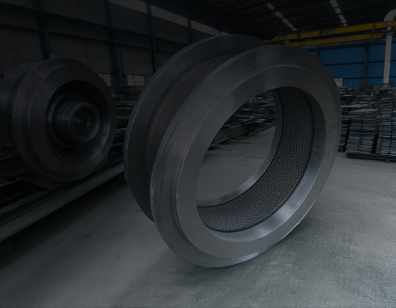
08
Spare Parts
Genuine components are available worldwide with fast delivery service.
