 0086-138 3838 9622
Landscaping Waste Pellet Production Line in Hungary
RICHI MACHINERY
Project Overview
The conversation that led to this 3t/h landscaping waste pellet production line in Hungary didn’t start with equipment selection. It started with a simple concern from the client: seasonal piles of landscaping waste were becoming difficult to manage, especially after pruning cycles in parks and municipal green zones.
Branches, leaves, mixed soil residues… all of these materials were being collected but not efficiently reused. Disposal costs were increasing year by year. During one of the early discussions, the client mentioned that they had already explored composting, but the end product was not stable enough for commercial use. That’s when the idea of densification—turning this loose waste into fuel pellets—became the focus.
The final configuration of this 3t/h green waste pellet production line in Hungary is essentially a compact RDF-oriented pelletizing system. It processes pre-treated landscaping waste into fuel rods, suitable for industrial boilers and co-firing applications. The line integrates crushing, drying, pelletizing, cooling, and packaging into a continuous flow, with a design capacity centered around 3 tons per hour of finished pellets.
What made this project slightly different from a standard biomass pellet plant is the variability of raw materials. Landscaping waste is not uniform. Some batches contain more leaves, others contain thicker branches or even traces of soil and moisture. So the process had to be flexible enough to handle inconsistent input while still maintaining stable output quality.
3T/H
capacity
USD 260,000
investment
Hungary
location
Fuel
project type
RICHI MACHINERY
Project Background
The client operates in central Hungary, where municipal green waste collection is relatively well organized but lacks efficient downstream utilization. Large volumes of pruned branches, park trimmings, and seasonal waste accumulate at collection sites.
Transporting this material directly to disposal facilities was costly. At the same time, the client was already familiar with basic material handling and wanted to invest in a system that could convert this waste into a standardized fuel product.
Instead of focusing on high-end biomass pellets from clean wood, the client specifically targeted landscaping waste, which is more mixed in composition but widely available at low cost.
The objective of this 3t/h landscaping waste pellet production line in Hungary can be summarized in practical terms:
- Reduce disposal pressure of municipal green waste
- Convert irregular waste streams into standardized fuel rods
- Supply local industrial users with alternative fuel
- Build a small-to-medium scale revenue stream based on waste recovery
RICHI MACHINERY
Raw Materials
Landscaping waste is not a single material, and that’s something we spent quite a bit of time aligning on during the design stage. The composition varies depending on the season and collection source.
In this 3t/h landscaping waste pellet production line in Hungary, the raw materials typically include:
- Tree branches and pruning residues
- Leaves and grass clippings
- Mixed green waste from parks
- Minor soil residues attached to roots
- Occasional wood fragments from maintenance activities
Below is a simplified raw material breakdown used for design estimation:
| Raw Material Type | Annual Supply (t) | Moisture Content | Notes |
|---|---|---|---|
| Branches & pruning waste | 4,500 | 20–35% | Main structural component |
| Leaves & grass waste | 2,000 | 30–60% | High moisture, seasonal |
| Mixed green waste | 1,200 | 25–50% | Variable composition |
| Soil residues | 300 | — | Removed partially during pre-treatment |
In practice, the biggest challenge is moisture control. Some batches arrive relatively dry, while others—especially after rainfall—contain much higher moisture content. This directly affects drying load later in the process.
RICHI MACHINERY
Process Flow
The process used in this landscaping waste pellet system follows a fairly straightforward RDF-style fuel preparation route, but with adjustments for green waste characteristics.
The actual workflow is:
- Raw material reception and unloading
Landscaping waste is delivered to the site and temporarily stored in a designated yard. Large impurities such as stones or metals are manually removed during unloading. - Primary crushing
The material is fed via enclosed conveyors into a primary crusher. Branches and bulky materials are reduced into smaller fragments. - Secondary crushing
After initial size reduction, material passes through a second crushing stage to achieve finer particle size suitable for drying and pelletizing. - Drying stage (rotary dryer system)
The crushed material is transported into a rotary dryer.
Operating temperature is maintained around 500–600°C in the hot air stream.- Heat source: natural gas hot air furnace
- Hot air is guided by an induced draft fan
- Internal lifting plates continuously lift and scatter the material
- Material moves in a spiral trajectory to increase heat exchange surface
- Pelletizing (fuel rod forming)
Dried material is conveyed into the pellet mill. Under mechanical pressure and friction, the material is compressed into dense fuel rods. The outlet temperature of pellets is typically around 80°C. At this stage, the pellets are still soft and require cooling before storage. - Cooling stage
Pellets are sent into a counterflow cooler. Ambient air is used to reduce temperature and stabilize the structure. - Storage and packaging
Cooled pellets are conveyed into a finished product silo, then packed into bulk bags (ton bags) for storage and transportation.
RICHI MACHINERY
Equipment Configuration
The equipment selection for this 3t/h landscaping waste pellet production line in Hungary was based on material characteristics and expected throughput stability.
| Section | Equipment | Function |
|---|---|---|
| Feeding | Belt conveyors (enclosed) | Transport raw materials |
| Chipping | Primary crusher | Coarse size reduction |
| Crushing | Secondary crusher | Fine particle preparation |
| Drying | Rotary dryer + hot air furnace | Moisture reduction |
| Pelletizing | Biomass pellet mill system | Fuel rod forming |
| Cooling | Counterflow cooler | Temperature reduction |
| Conveying | Screw & belt conveyors | Internal transport |
| Storage | Finished product silo | Buffer storage |
| Packaging | Bagging system | Final packing |
No overly complex automation was introduced. The client preferred a configuration that operators could manage without highly specialized training.
RICHI MACHINERY
Production Capacity and Operating Conditions
- Designed capacity: 3 tons/hour
- Working mode: 1–2 shifts per day depending on demand
- Annual production: approximately 20,000–25,000 tons
- Operation days: around 300 days/year
- Workforce: 6–10 operators per shift
The drying section is usually the bottleneck when moisture content is high. During early trial runs, operators noticed that wetter batches required slower feeding to maintain stable dryer performance.
RICHI MACHINERY
Utilities Consumption
| Item | Estimated Consumption |
|---|---|
| Electricity | ~180,000–250,000 kWh/year |
| Natural gas | Used for hot air furnace |
| Water | Minimal (mainly for domestic use and cleaning) |
RICHI MACHINERY
Consultation Timeline
- Initial inquiry: March 2024
- Raw material analysis and feasibility discussion: April 2024
- Process design and layout confirmation: May 2024
- Equipment contract signed: June 2024
- Manufacturing and assembly: July–September 2024
- Shipment: October 2024
- Installation and commissioning: November–December 2024
- Trial operation completed: Early 2025
These timelines are typical for a project of this scale, especially when layout adjustments are required to fit existing buildings.
RICHI MACHINERY
Investment Reference
The total equipment investment for this 3t/h landscaping waste pellet production line in Hungary is approximately:
USD 260,000
This includes crushing, drying, pelletizing, conveying, cooling, and auxiliary systems. Civil construction costs were relatively limited since the client utilized an existing facility.
RICHI MACHINERY
Shipping Arrangement
All equipment was shipped from Qingdao Port in China. For Hungary, goods typically arrive at:
- Port of Koper (Slovenia) or
- Port of Hamburg (Germany)
depending on logistics routing and inland transport planning.
RICHI MACHINERY
Engineering Notes from Site Experience
One thing that became clear during commissioning: landscaping waste behaves unpredictably in the dryer. Some batches that looked similar externally had very different moisture levels internally.
The first few trial runs were not perfectly stable. Operators had to adjust:
- Feed rate into the dryer
- Airflow intensity
- Pellet mill feeding consistency
After a short adjustment period, the system reached steady operation. That’s usually the phase where the plant starts to feel “alive” rather than theoretical.
RICHI MACHINERY
Market Perspective in Hungary
Hungary has a growing interest in alternative fuels, especially in industrial heating and small-scale energy applications. Landscaping waste is often underutilized, and converting it into RDF fuel rods provides a practical way to close the loop.
For a plant like this 3t/h landscaping waste pellet production line in Hungary, the advantages are quite straightforward:
- Low-cost raw material supply
- Stable municipal waste streams
- Growing demand for alternative fuel
- Relatively manageable investment scale
The real value is not just in the equipment, but in creating a system that can consistently process variable materials into something usable.
RICHI MACHINERY
A Note from Our Side
In projects like this, the equipment is only part of the equation. The real work often happens during process tuning—balancing moisture, adjusting airflow, and finding the right feeding rhythm.
That’s where experience matters. Over the years, we’ve worked on similar pelletizing systems handling different types of agricultural and municipal waste, and each project ends up slightly different once it moves from drawings to actual operation.
If someone is evaluating a similar biomass pellet production line project in Hungary, the most important step is usually not equipment selection at the beginning, but understanding the raw material conditions. Once that is clear, the rest of the system can be shaped accordingly.
● RICHI MACHINERY
RICHI Service

● Consulting
Customer Consultation
We want to have a deep understanding of your industrial process, to know your exact needs of feed, wood, biomass, fertilizer or other pellet processing.

● Design
biomass Pellet Plant Design
Based on your unique situation and industrial process, we will tailor complete pellet plant you need, and inform you of every additional detail that could facilitate operation, minimize total cost.
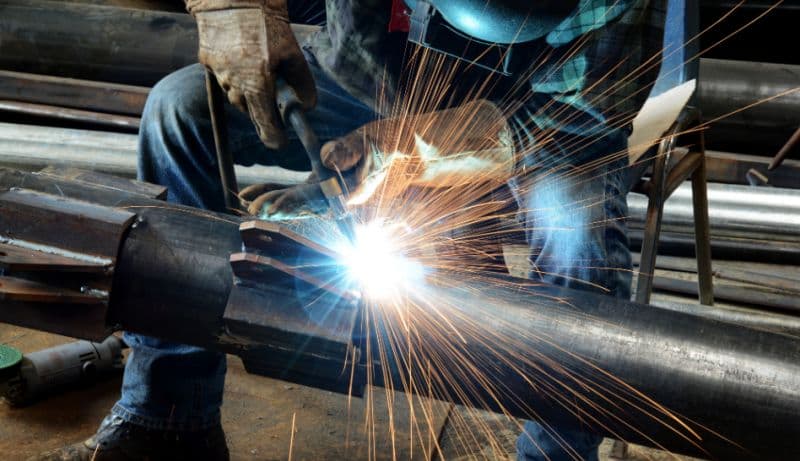
● Manufacturing
Equipment Manufacturing
The critical components of the of the complete pellet production line equipment are built in our own workshops in Asia. Additional equipment is manufactured by our worldwide network of reliable partners.
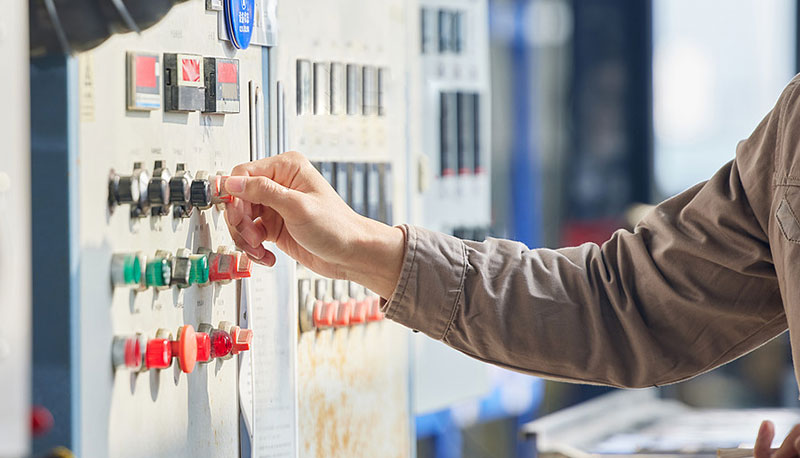
● Testing
Quality Inspection & Testing
Before leaving the factory, all equipment will be inspected by the quality inspection department. We can also provide customers with testing services from a single machine to a complete pellet plant system, and provide you with real actual data for “worry-free use.”

● Delivery
Equipment Delivery
In equipment boxing and packaging, we adopt professional packaging and modular solutions to ensure the safe and non-destructive delivery of pellet plant equipment.
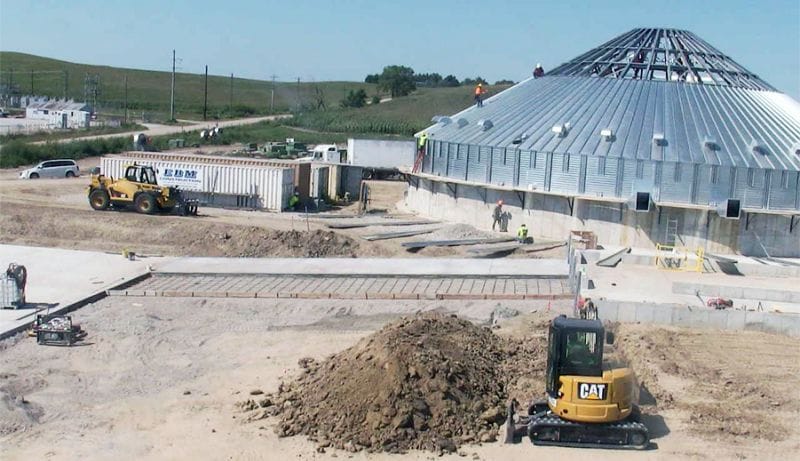
● Installation
Installation & Commissioning
Whether you choose your own subcontractor for the erection phase or you want to install everything together with us, a Richi supervisor will be around to make sure everything is mounted in a safe and thorough way.

● Training
Staff Training
We provide comprehensive training for the technicians of each project. We can also continue to provide support for the technicians during latter project operation.
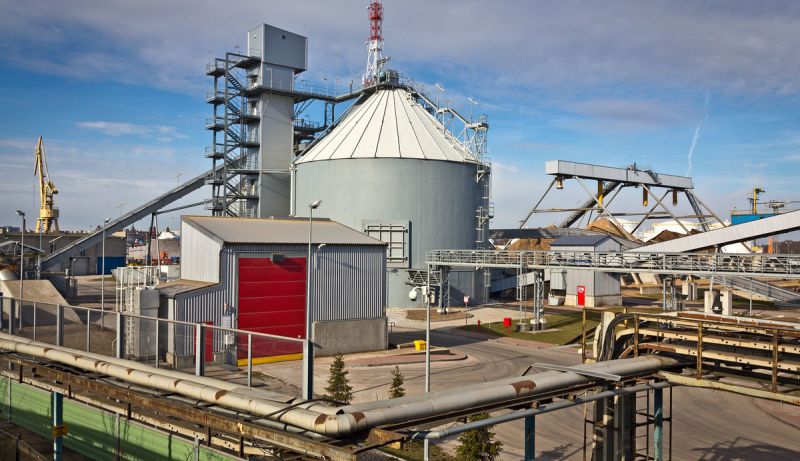
● After-sales
Project Follow-Up
When everything is up and running our Richiers will help you further whenever needed. We are ready to answer your call 24/7.We’ll also visit you regularly to learn about your needs.
Who we are
RICHI Machinery is one of the world’s leading suppliers of technology and services for the animal feed, aqua feed and pet food industries, also the largest pellet production line manufacturer in China.
Since 1995, RICHI’s vision to build a first-class enterprise, to foster first-class employees, and to make first-class contributions to society has never wavered.
In the past three decades, we have expanded our business to a wide range of areas, including animal feed mill equipment, aqua feed equipment, pet feed equipment, biomass pellet equipment, fertilizer equipment, cat litter equipment, municipal solid waste pellets equipment, etc.

1995
RICHI Established

2000+
Serving More Than 2000 Customers

120+
RICHI Employees

140+
Exported To 140 Countries