 0086-138 3838 9622
Integrated Wood and Rice Straw Pellet Processing Plant in Philippines

RICHI MACHINERY
overview
This page presents a detailed analysis of the development and implementation of a significant biomass pellet processing facility in Pampanga, a key agricultural and industrial province in the Philippines.
The integrated wood and rice straw pellet processing plant in Philippines project was initiated by a consortium of local agricultural investors seeking to address two pressing issues: the costly disposal of wood waste from the region’s burgeoning furniture industry and the environmentally detrimental practice of open-field burning of rice straw.
The strategic solution was to establish a plant capable of converting these abundant waste streams into high-density biomass pellets, serving both the domestic industrial energy market and the growing international demand for sustainable fuels.
The facility, constructed on a 2,576 m² greenfield site, represents a total investment of approximately $650,000 USD. It is equipped with complete pellet production line, enabling an annual output of 60,000 metric tons of pellets.
The core technology, supplied and engineered by RICHI Machinery, is specifically designed to handle the challenging characteristics of both wood scraps and fibrous rice straw without a dedicated drying system, leveraging the local climate and material properties. The plant operates a 16-hour shift, employing 20 people, and exemplifies a model of efficient, small-to-medium-scale industrial investment suitable for the Philippine context.
This page delves into the biomass pellet project‘s inception, the unique market opportunity in the Philippines, a thorough technical breakdown of the innovative processing line, a comprehensive environmental management plan tailored to local regulations, and a robust financial analysis.
The project demonstrates a compelling economic return, with a projected payback period of under two years, underscoring the viability of integrating diverse agricultural and industrial waste streams into a unified, profitable recycling operation. This case study serves as a testament to RICHI Machinery’s expertise in delivering customized, cost-effective solutions that align with both economic and environmental objectives in Southeast Asia.
12-15T/H
capacity
$650,000
investment
Philippines
location
Biofuel
project type
RICHI MACHINERY
Project Background and Strategic Rationale
The Philippine Context: A Convergence of Waste and Opportunity
The Philippines faces a dual challenge in its agricultural and industrial sectors. Central Luzon, particularly Pampanga, is a major rice-producing region, generating millions of tons of rice straw post-harvest. Traditionally, this straw is burned in the fields, contributing significantly to air pollution—a major concern in the region.
Simultaneously, the province hosts a vibrant furniture-making industry, renowned for its craftsmanship. This industry generates substantial volumes of wood off-cuts, sawdust, and other scrap wood, which often incur disposal costs for manufacturers.
Conversely, the country’s industrial sector, including food processing plants, ceramics manufacturers, and brick kilns, faces rising costs and supply uncertainties with traditional fossil fuels like coal and diesel. There is a clear and growing demand for a locally sourced, cost-stable, and cleaner-burning alternative. Biomass pellets present an ideal solution, and a plant located at the nexus of these waste generators and energy consumers holds a strategic advantage.
The Client’s Vision: Creating a Circular Economy Hub
The client is a group of forward-thinking Filipino investors with interests in agriculture, logistics, and real estate. They recognized the opportunity to create a “win-win-win” scenario: provide a paid disposal service for wood waste, offer farmers an alternative to burning rice straw by purchasing it, and produce a competitive fuel for local industry.
Their vision was to build a facility that was not merely a processing plant but a circular economy hub, adding value to waste streams and contributing to local environmental improvement. The decision to build a new facility from the ground up allowed for optimal layout and the incorporation of best practices in environmental control from the outset.
Project Objectives and Key Metrics
The integrated wood and rice straw pellet processing plant in Philippines project was established with clear, quantifiable goals:
- Production Capacity: To achieve an annual production target of 60,000 tons of biomass pellets.
- Raw Material Diversification: To sustainably process 50,010 tons of wood waste and 10,008 tons of rice straw annually.
- Operational Efficiency: To operate a single-shift system for optimal labor utilization and equipment maintenance.
- Environmental Stewardship: To eliminate a significant volume of open burning and provide a cleaner fuel alternative, contributing to improved local air quality.
RICHI MACHINERY
Project Overview and Specifications
This integrated wood and rice straw pellet processing plant in Philippines project is characterized by its efficient use of space, dual-line production setup, and focus on processing two distinct feedstocks without pre-drying.
Core Project Specifications:
- Project Type: Greenfield Construction of a Biomass Pellet Processing Plant.
- Location: Pampanga, Central Luzon, Philippines.
- Facility Footprint: 2,576 m² of newly constructed industrial buildings.
- Primary Raw Materials: Industrial Wood Waste and Rice Straw.
- Final Product: Standardized biomass pellets for industrial boiler fuel.
- Total Annual Output: 60,000 metric tons.
- Hourly Production Rate: Approximately 12-15 tons per hour per line.
- Total Investment: $450,000 USD.
- Key Technology Provider: RICHI Machinery.
Final Product Specifications:
The pellets conform to common industrial fuel standards, with key parameters as follows:
- Diameter: 8mm and 10mm.
- Moisture Content: < 15%.
- Ash Content: < 10%.
- Gross Calorific Value: ≥ 13.4 MJ/kg.
Operational Framework:
- Workforce: 10 employees per shift (operations, maintenance, logistics).
- Operating Schedule: 300 days per year, 16-hour two shifts.
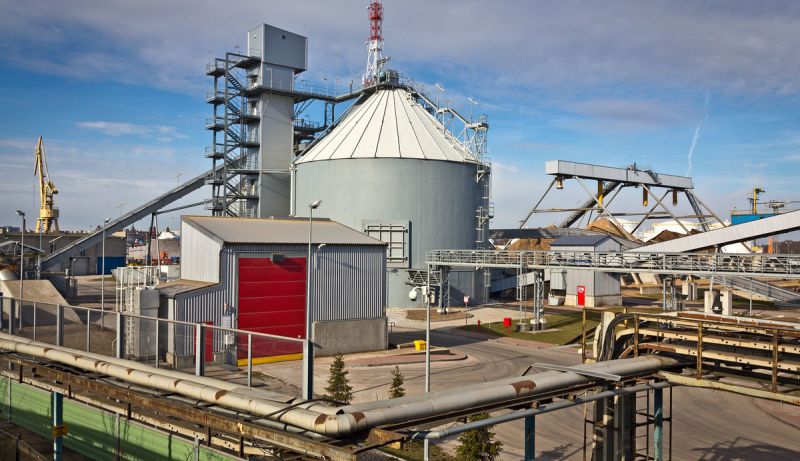
- Infrastructure: The site includes two production workshops, a raw material storage yard, a finished product warehouse, and a simple office block.
RICHI MACHINERY
Raw Material Analysis and Supply Chain
The integrated wood and rice straw pellet processing plant in Philippines project’s resilience is rooted in its ability to source and manage two different types of biomass, balancing their availability and cost throughout the year.
Primary Raw Materials
The wood straw pellet plant is designed to be flexible in its feedstock intake, which mitigates supply chain risks.
- Industrial Wood Waste: Sourced primarily from furniture factories and woodworking shops within a 50km radius. This material consists of off-cuts, shavings, and sawdust from various hardwoods and softwoods. It has a relatively low and consistent moisture content (around 15-25%) and excellent inherent binding properties due to its lignin content.
- Rice Straw: Sourced directly from local farms in Pampanga and neighboring provinces after the harvest season. Rice straw is highly fibrous, has a lower bulk density than wood, and can have a variable moisture content depending on weather conditions post-harvest. Its ash content is higher than pure wood, but it is a very low-cost or negative-cost feedstock.
The following table provides a detailed breakdown of the raw material consumption.
Table: Annual Raw Material Consumption Profile
| Raw Material | Annual Consumption (tons) | Initial Moisture Content | Key Characteristics & Handling |
|---|---|---|---|
| Industrial Wood Waste | 50,010 | 15-25% | Consistent quality, good binding properties. Stored in a covered yard to prevent rewetting. |
| Rice Straw | 10,008 | 20-40% (seasonal) | Fibrous, low density, seasonal availability. Balers are used to densify it for transport and storage. Stored in a separate, semi-covered area. |
Sourcing and Logistics
A key to profitability is minimizing feedstock cost. Wood waste is acquired through contracts with furniture makers, often turning a disposal cost for them into a small revenue stream. Rice straw is purchased from farmer cooperatives, providing them with an additional income source and an incentive to avoid burning.
The biomass pellet plant‘s location near major provincial roads ensures efficient trucking of materials. A key logistical innovation is the use of baling machines at the farm gate to densify the straw before transport, significantly reducing freight costs.
RICHI MACHINERY
Production Process and Technology Deep Dive
The production process designed by RICHI’s engineers is notably efficient as it eliminates the need for an energy-intensive drying step, which is a major operational cost in many fuel pellet plants.
Figure: Process Flow Diagram for the Wood and Rice Straw Pellet Plant
[Graphic showing: Wood Waste & Baled Straw -> Pre-Crushing (Shear Crusher) -> Secondary Crushing (Hammer Mill) -> Conditioning -> Pelletizing (Ring-Die Biomass Pellet Mill) -> Cooling -> Screening -> Packaging -> Warehousing.]
Stage 1: Pre-Crushing and Size Reduction
Given the initial size of the feedstock (large wood off-cuts and baled straw), a two-stage crushing process is employed.
- Shear Crushing (Pre-Crushing): Materials are first fed into a robust shear crusher (or “scissor crusher”). This equipment is ideal for breaking down large, irregularly shaped wood blocks and dense straw bales into smaller, more manageable pieces (50-100mm) through a shearing and tearing action, which is more energy-efficient than hammering for this initial stage.
- Hammer Milling (Fine Grinding): The pre-crushed material is then conveyed to a high-capacity hammer mill. Here, it is pulverized into a fine, consistent biomass powder with a particle size generally under 5mm. This uniformity is critical for the subsequent pelletizing process. This stage is a significant source of dust (G1), which is controlled by enclosing the equipment and connecting it to a centralized dust collection system.
Stage 2: Conditioning and Pelletizing
This is the core of the RICHI-designed innovation for this specific integrated wood and rice straw pellet processing plant in Philippines project.
- Conditioning: The crushed biomass powder is conditioned to achieve the optimal moisture content for pelletizing (around 12-15%). Instead of using a wood straw dryer, the process relies on the natural moisture of the wood waste and, if necessary, the controlled addition of small amounts of steam or water to the rice straw fraction. This bypasses the major capital and operational expense of a dryer, leveraging the fact that the sourced wood waste is already relatively dry.
- Pelletizing: The conditioned material is fed into RICHI’s heavy-duty ring-die straw wood pellet mills. The combination of high pressure (70-80 MPa) and friction-generated heat (80-95°C) within the die causes the natural lignin in the wood to plasticize, acting as a binder. For the rice straw, the mechanical interlocking under high pressure and the slight gelatinization of its starches ensure a durable pellet is formed. No external binders are used.
Stage 3: Cooling, Screening, and Packaging
- Cooling: The hot, soft pellets exiting the wood rice straw pellet making machine are conveyed to a counter-flow cooler. Ambient air is drawn through the pellet bed, cooling and hardening them. This process also stabilizes the pellets and reduces moisture content slightly.
- Screening: The cooled pellets pass over a vibrating screen to remove fines and undersized particles. These fines are automatically recycled back to the pellet mill as raw material, maximizing yield.
- Packaging: The finished pellets are packaged into 25kg bags for smaller industrial customers or 1-ton bulk bags for larger consumers, using semi-automatic weighing and bagging machines.
RICHI MACHINERY
Environmental Impact Assessment and Management
A thorough Environmental Compliance Certificate (ECC) was secured from the Philippine Department of Environment and Natural Resources (DENR), with a management plan integral to the plant’s design.
Air Quality Management
Controlling particulate matter (PM) emissions was the top priority. The strategies are summarized below:
Table: Air Emission Sources and Control Measures
| Emission Source | Pollutant | Control Technology | Result & Compliance |
|---|---|---|---|
| Crushing & Grinding | Particulate Matter (PM) | Enclosed hoods + Central Baghouse Filter (>99% efficiency) + 15m stack. | PM emissions < 150 mg/Nm³, compliant with DENR Administrative Order No. 2000-81. |
| Pelletizing | Particulate Matter (PM) | Dedicated Baghouse Filter on each pellet mill (>98% efficiency) + 15m stack. | PM emissions < 150 mg/Nm³. |
| Fugitive Dust (Storage, Transfer) | PM | Enclosed conveyors, water spray systems in storage areas, and windbreaks. | Minimized impact, meeting ambient air quality guidelines at the plant boundary. |
Water and Wastewater Management
The production process of this integrated wood and rice straw pellet processing plant in Philippines is designed to be water-efficient.
- Process Water: Minimal water is used, primarily for conditioning. There is no process wastewater.
- Domestic Wastewater: Wastewater from staff facilities is treated on-site using a septic tank and a subsurface seepage system, which is a common and approved method for small-scale industrial facilities in the Philippines. There is no surface water discharge.
Noise Control
The main noise sources are the crushers and hammer mills.
- Mitigation: Equipment is installed within well-constructed buildings that provide acoustic insulation. The foundation for high-vibration equipment like hammer mills uses vibration-damping pads.
- Result: Noise levels at the property boundary are maintained below 60 dB(A) during daytime, complying with the Philippine standards for industrial areas.
Solid Waste Management
The integrated wood and rice straw pellet processing plant in Philippines project operates on a near-zero-waste principle.
- Dust from Baghouses: This collected biomass powder is directly fed back into the pellet mill as a raw material.
- Packaging Waste: Plastic and paper waste from packaging materials are segregated and sold to local recycling facilities.
- Domestic Waste: Collected and disposed of by the municipal garbage collection service.
RICHI MACHINERY
Economic and Financial Analysis
The financial model demonstrates an exceptionally attractive investment, driven by very low feedstock costs and high operational efficiency.
Project Investment Breakdown (CAPEX)
The total project investment is $450,000 USD.
Table: Detailed Investment Cost Breakdown
| Cost Category | Amount (USD) | Notes |
|---|---|---|
| Land Acquisition & Site Preparation | $80,000 | Purchase of 2,576 m² of industrial land. |
| Civil Works & Building Construction | $150,000 | Construction of production halls, warehouse, and offices. |
| RICHI Pellet Production Line | $380,000 | Includes crushers, hammer mills, pellet mills, coolers, screens, and conveyors. |
| Auxiliary & Environmental Systems | $25,000 | Baghouse dust collectors, water spray system. |
| Installation & Commissioning | $10,000 | Supervised by RICHI engineers. |
| Working Capital (Initial) | $5,000 | For initial raw material purchases. |
| Total Project Investment | $650,000 |
Operational Cost Analysis (OPEX) – Annual
Table: Annual Operational Expenditure
| Cost Item | Annual Cost (USD) | Calculation Basis |
|---|---|---|
| Raw Materials (Wood & Straw) | $75,000 | Wood waste @ $1/ton (low cost due to being a waste product); Rice straw @ $5/ton. |
| Labor (10 employees) | $30,000 | Average annual salary in the region. |
| Utilities (Electricity) | $60,000 | Estimated consumption: ~100 kWh/ton. |
| Maintenance & Spares | $18,000 | ~10% of equipment value. |
| Packaging & Logistics | $150,000 | Bags and local transport. |
| Administration & Overheads | $20,000 | |
| Total Annual OPEX | $353,000 |
RICHI MACHINERY
Market Prospects for Biomass Pellets in the Philippines
The market for biomass pellets in the Philippines is poised for significant growth.
- Strong Domestic Demand: Philippine industries are actively seeking alternatives to expensive and volatile-priced imported coal and fuel oil. Biomass pellets offer a stable, locally sourced, and often cheaper option for process heat.
- Government Policy: The Philippine government’s push for cleaner energy and stricter regulations on emissions from industries creates a favorable policy environment for biomass adoption.
- Export Potential: While the initial focus is the domestic market, the proximity to major international shipping lanes offers future potential for export to markets like Japan and Korea.
- Social License to Operate: A business model that reduces agricultural burning and provides additional income to farmers enjoys strong community and governmental support.
RICHI MACHINERY
Conclusion and Recommendation
The integrated wood and rice straw pellet processing plant in Philippines is a paradigm of a successful circular economy project. It effectively transforms local environmental liabilities into a valuable economic asset, demonstrating that profitability and sustainability can be seamlessly integrated.
The project’s success hinged on a process design that was tailored to the specific local conditions—namely, the availability of pre-dried wood waste that eliminated the need for a capital-intensive drying system. RICHI Machinery‘s engineering team excelled in designing a robust and simple-to-operate line that could handle the mixed feedstock with high reliability. Our end-to-end service, from site layout advice to commissioning, ensured a smooth and rapid project rollout for the client.
This case study unequivocally proves that the Philippines offers a fertile ground for biomass pellet investments. The combination of abundant, low-cost waste materials, a strong domestic market, and straightforward regulatory frameworks makes it an ideal location. For entrepreneurs seeking a high-return, socially responsible business, partnering with an experienced equipment provider like RICHI Machinery is the key to success.
RICHI Machinery is a world-leading manufacturer of biomass pellet production lines. We specialize in creating customized solutions that maximize profitability based on local feedstock conditions. Our expertise spans from small-scale plants to large industrial facilities.
Contact RICHI Machinery today to discuss your project idea and receive a free, no-obligation feasibility study and equipment quotation.
● RICHI MACHINERY
RICHI Service

● Consulting
Customer Consultation
We want to have a deep understanding of your industrial process, to know your exact needs of feed, wood, biomass, fertilizer or other pellet processing.

● Design
biomass Pellet Plant Design
Based on your unique situation and industrial process, we will tailor complete pellet plant you need, and inform you of every additional detail that could facilitate operation, minimize total cost.
● Manufacturing
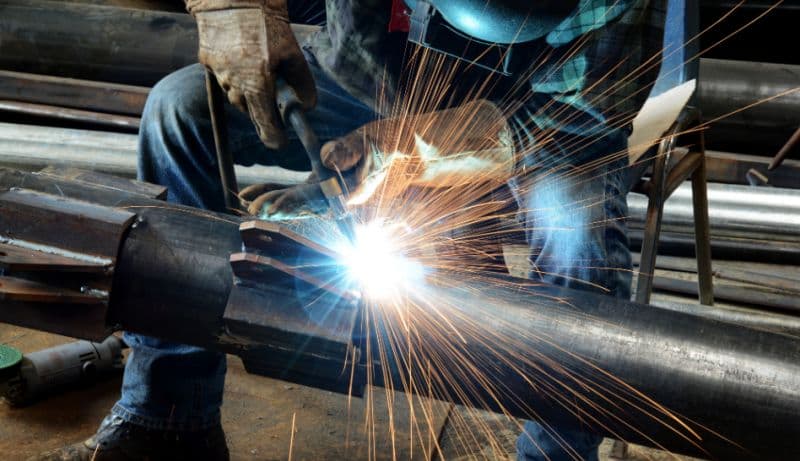
Equipment Manufacturing
The critical components of the of the complete pellet production line equipment are built in our own workshops in Asia. Additional equipment is manufactured by our worldwide network of reliable partners.
● Testing
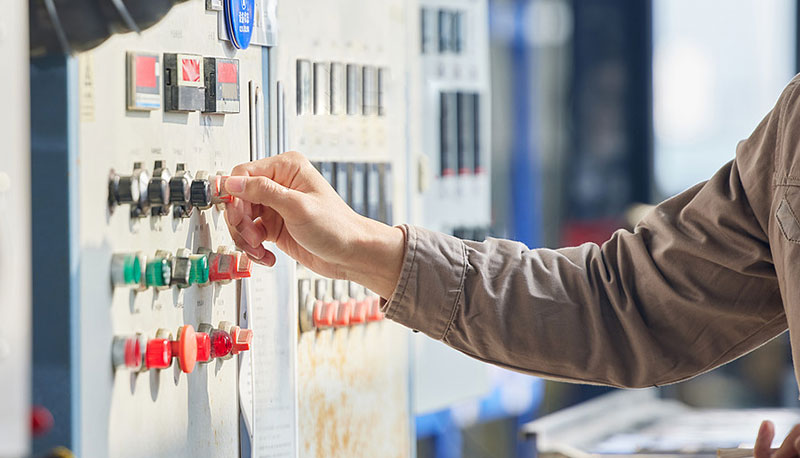
Quality Inspection & Testing
Before leaving the factory, all equipment will be inspected by the quality inspection department. We can also provide customers with testing services from a single machine to a complete pellet plant system, and provide you with real actual data for “worry-free use.”

● Delivery
Equipment Delivery
In equipment boxing and packaging, we adopt professional packaging and modular solutions to ensure the safe and non-destructive delivery of pellet plant equipment.
● Installation
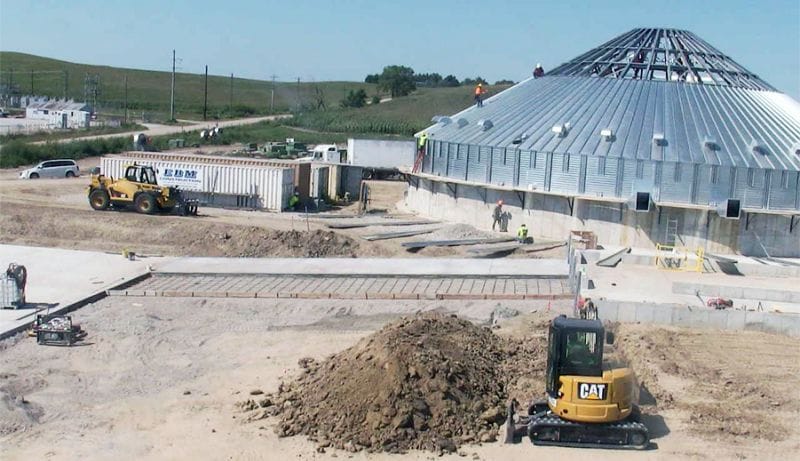
Installation & Commissioning
Whether you choose your own subcontractor for the erection phase or you want to install everything together with us, a Richi supervisor will be around to make sure everything is mounted in a safe and thorough way.

● Training
Staff Training
We provide comprehensive training for the technicians of each project. We can also continue to provide support for the technicians during latter project operation.
● After-sales
Project Follow-Up
When everything is up and running our Richiers will help you further whenever needed. We are ready to answer your call 24/7.We’ll also visit you regularly to learn about your needs.
Who we are
RICHI Machinery is one of the world’s leading suppliers of technology and services for the animal feed, aqua feed and pet food industries, also the largest pellet production line manufacturer in China.
Since 1995, RICHI’s vision to build a first-class enterprise, to foster first-class employees, and to make first-class contributions to society has never wavered.
In the past three decades, we have expanded our business to a wide range of areas, including animal feed mill equipment, aqua feed equipment, pet feed equipment, biomass pellet equipment, fertilizer equipment, cat litter equipment, municipal solid waste pellets equipment, etc.

1995
RICHI Established

2000+
Serving More Than 2000 Customers

120+
RICHI Employees

140+
Exported To 140 Countries