 0086-138 3838 9622
Eco Cat Litter Production Line in Malaysia
RICHI MACHINERY
The Opportunity That Started with a Google Search
November 2023. A Malaysian businessman in his early forties sent us an inquiry through our website. He had been running a small agricultural trading company in Johor for about twelve years. Buying and selling palm kernel expeller, rice bran, cassava chips – that kind of thing.
He noticed a trend. His customers who owned pet stores were complaining about imported cat litter prices. Bentonite litter from China and the US had jumped 40% in two years. Shipping costs, import duties, currency fluctuations – all hitting the final price.
Meanwhile, Malaysia produces millions of tons of agricultural waste every year. Rice husks, palm kernel meal, sawdust, tapioca starch residue. Most of it goes to low-value uses – animal feed, composting, or just landfill.
He connected the dots. Why not make cat litter locally? From agricultural byproducts that cost almost nothing?
We started talking in December 2023. By February 2024, he had committed to a 10 t/h eco cat litter production line in Malaysia. Contract signed in March. Equipment shipped from Qingdao in June. Commissioning finished in September 2024. First bags hit the market in October – just before the year-end pet product sales peak.
10T/H
capacity
$520,000
investment
Malaysia
location
Cat LItter
project type
RICHI MACHINERY
Why Malaysia? The Perfect Storm
Malaysia has three things going for it in the cat litter market:
1. Growing pet ownership. Malaysia has about 1.2 million pet cats. That’s up from 800,000 ten years ago. Urbanization is driving the trend – more people in apartments, more disposable income, more willingness to spend on premium pet products.
2. Raw material abundance. The client is in Johor, right next to the palm oil belt. Palm kernel meal is everywhere. Rice mills produce tons of rice bran. Tapioca starch factories generate waste fiber. These materials are cheap – sometimes free if you arrange collection.
3. Import substitution opportunity. Most cat litter in Malaysia is imported – bentonite from China and the US, silica gel from South Korea. Local production can undercut imported prices by 30-40% while offering a “green” marketing angle.
The client’s calculation was simple. Imported bentonite litter retails at RM 2.50-3.50 per kg (about $0.55-0.75). His production cost for plant-based litter would be around RM 1.00-1.20 per kg ($0.22-0.26). Even selling at wholesale prices, the margin was attractive.
RICHI MACHINERY
The Client’s Background
The client already had a small warehouse in an industrial park in Johor Bahru – 2,000 square meters, leased, with basic power and water. He had a staff of eight people handling his trading business. No manufacturing experience.
His initial plan was modest: start with one small line, maybe 2-3 t/h, test the market. But we sat down and ran the numbers. A 2 t/h line would produce about 10,000 tons per year. After deducting raw materials, labor, and overhead, the profit would be decent but not life-changing. A 10 t/h line would produce 50,000 tons per year – enough to supply a significant portion of the Malaysian market.
The client decided to go big. But he didn’t have $2 million for a full turnkey plant. So we designed a phased approach:
- Phase 1 (2024): One complete line at 5 t/h capacity (half of the full target). Equipment investment about $380,000.
- Phase 2 (2025): Second identical line, bringing total to 10 t/h. Additional investment $350,000 (shared infrastructure already in place).
This gave him room to grow without overcommitting upfront.
RICHI MACHINERY
Project Overview
| Parameter | Value |
|---|---|
| Project location | Johor Bahru, Johor, Malaysia (near the Second Link crossing to Singapore) |
| Plant capacity (Phase 1) | 5 t/h (25,000 t/year, 250 days, 16 hours/day) |
| Plant capacity (Phase 2) | 10 t/h (50,000 t/year) |
| Facility area | 2,000 m² production + 1,000 m² warehouse + 200 m² office |
| Main products | Plant-based cat litter (wheat bran, corn bran, cassava, bamboo fiber blends) |
| Staff (Phase 1) | 12 operators + 8 logistics/admin |
| Operation hours | Two 8-hour shifts (6 AM – 10 PM), 250 days/year |
| First inquiry | November 2023 |
| Contract signed | March 2024 |
| Equipment shipped | June 2024 (from Qingdao) |
| Commissioning completed | September 2024 |
| First commercial sales | October 2024 |
Equipment investment (Phase 1): $380,000 USD (delivered to Johor)
Total project cost (Phase 1, including local installation, electrical, commissioning): $520,000 USD
Phase 2 budget: $420,000 USD (second line, additional warehouse racking, second packaging machine)
The client funded Phase 1 with his own capital ($200,000) plus a bank loan ($320,000) at 6% interest (Malaysian SME rates are reasonable). Payback period estimated at 14 months.
RICHI MACHINERY
Raw Materials: Turning Waste into Gold
The client uses four main raw materials, all sourced locally within 100 km of Johor Bahru:
| Material | Annual usage (tons) | Source | Cost per ton (RM) | Notes |
|---|---|---|---|---|
| Wheat bran | 10,200 | Local flour mills (Johor, Malacca) | 250 | Byproduct of flour milling |
| Corn bran | 7,650 | Animal feed mills | 220 | Often mixed with other grains |
| Tapioca starch residue | 5,100 | Tapioca factories (Johor) | 180 | High starch content, good binder |
| Bamboo powder | 5,100 | Imported from China / local sawmills | 600 | For odor control and texture |
| Soybean residue (okara) | 20,400 | Tofu and soy milk plants (Singapore, Johor) | 150 | Moist, needs drying |
| Other additives (binder, color) | 2,550 | Various | 800 | Guar gum, natural pigments |
Total raw material input: about 51,000 tons annually for Phase 1 (half of the numbers above).
One challenge we didn’t anticipate: the okara (soybean residue) from Singapore tofu factories comes in at 70-75% moisture. The client initially planned to use it as-is, but that would have wrecked the pellet mill. We added a small rotary dryer (electric, 90 kW) just for okara. Dries it from 75% to 12% moisture in about 30 minutes. Cost $28,000 but made the ingredient usable.
The bamboo powder is the most expensive ingredient but also the most valuable for marketing. Malaysian cat owners associate bamboo with natural, eco-friendly products. The client’s premium litter line uses 15% bamboo powder and sells for RM 3.50/kg retail.
RICHI MACHINERY
Equipment Configuration: Designed for Plant-Based Materials
Plant-based cat litter is different from clay or silica gel litter. It’s lighter, more absorbent, and biodegradable. But it’s also more fragile. The cat litter making machine has to be gentle on the pellets.
Here’s what we supplied for the eco cat litter manufacturing line:
| Equipment | Qty | Specification | Notes |
|---|---|---|---|
| Feed hopper with dust hood | 2 | 2 m³ each | For manual bag dumping |
| Hammer mill (fine) | 1 | 55 kW, 1.5mm screen | Grinds wheat bran and corn bran |
| Hammer mill (coarse) | 1 | 37 kW, 3mm screen | For bamboo powder and dry okara |
| Bucket elevator (1#) | 2 | DTG36/23, 10m lift | Stainless steel cups |
| Mixer (ribbon type) | 4 | SLHY2.0, 2 tons/batch | 7.5 kW each |
| Bucket elevator (2#) | 2 | DTG36/23, 8m lift | |
| Permanent magnet | 2 | TCXT20 | 10,000 Gauss |
| Cat litter pellet machine | 2 | 110 kW, 4mm die | Ring die type |
| Scraper conveyor | 8 | Various lengths | For inter-stage transport |
| Counterflow cooler (primary) | 4 | SKLN2.5, 2.5 m² | Cools pellets after pelleting |
| Rotary drum dryer (electric) | 2 | 90 kW, 3m length | For final moisture reduction |
| Counterflow cooler (secondary) | 4 | SKLN2.5 | Second cooling after drying |
| Vibrating screener (primary) | 4 | SPJH110x2, 2 decks | Separates fines and overs |
| Vibrating screener (secondary) | 4 | SPJH110x2, 3 decks | Final grading |
| Dust collectors (pulse-jet) | 18 | Various sizes | TBLMa-6, TBLMa-4 |
| Packaging machine | 3 | 5-15 kg bags | Automatic filling, 8 bags/min |
| Air compressor | 2 | 15 kW, screw type | For pneumatic controls |
The dual cooling stages are unusual for cat litter. Most feed mills cool once after pelleting and that’s it. But plant-based cat litter holds moisture differently. Pellets come out of the pellet mill at 16-18% moisture.
After the first cooler, they’re at 12-14%. Then they go through the dryer (which brings moisture down to 6-8%) and then a second cooler brings them to room temperature. Without that second cooler, the hot, dry pellets would absorb moisture from the air as soon as they hit the bagging line.
RICHI MACHINERY
Process Flow: Step by Step
The client’s production manager (a young engineer he hired from a local feed mill) learned the process quickly. Here’s how it runs.
Stage 1 – Receiving and Grinding
Raw materials arrive in 20-25 kg bags (wheat bran, corn bran, bamboo powder, okara). Workers dump bags into two feed hoppers – one for coarse materials (bamboo, okara) and one for fine materials (bran). Dust hoods capture the dust at the dump point.
The coarse hammer mill (3mm screen) grinds bamboo and okara. The fine hammer mill (1.5mm screen) grinds the bran. Ground material is pneumatically conveyed to bins above the mixers.
Stage 2 – Batching and Mixing
The control system calls up a recipe. The client has five different formulas: standard wheat-based, corn-based, bamboo premium, okara economy, and a “clumping” formula with added guar gum.
Each batch is 2 tons. Mixing time is 6 minutes. The mixers are ribbon type – gentle enough to not break the bamboo fibers but thorough enough to distribute the binder evenly. Water is added during mixing (about 8% of batch weight) to bring moisture to 18-20% for pelleting.
Stage 3 – Pelleting
The mixed mash drops into a surge bin, then feeds into two pellet mills. Each mill runs at about 2.5 t/h, giving total 5 t/h. Die size is 4mm for standard litter, 3mm for premium (smaller pellets clump better).
The pellets exit at 80-85°C and 16-18% moisture. At this point, they’re still soft – like wet cardboard.
Stage 4 – Primary Cooling
Hot pellets fall into the first set of counterflow coolers. Ambient air (about 30°C in Johor) is pulled up through the pellet bed. Cooling time: 15 minutes. Exit temperature: 35-40°C. Moisture: 12-14%.
Stage 5 – Drying
This is the critical step. The client’s product needs to be dry (under 10% moisture) to prevent mold during storage and shipping. The rotary drum dryers (electric heating, 150°C air temperature) run for about 8-10 minutes. Outlet moisture: 6-8%.
Why electric? The industrial park didn’t have a natural gas line. Diesel would have been expensive. Electric made sense – Malaysian industrial electricity is about RM 0.35 per kWh ($0.07).
Stage 6 – Secondary Cooling
Hot, dry pellets come out of the dryer at 55-60°C. The second set of coolers brings them down to within 5°C of ambient (about 35°C in Johor’s tropical climate). This prevents condensation inside the bags.
Stage 7 – Screening and Grading
The product passes through two vibrating screeners. The first screener (2 decks) removes fines (which go back to the mixer) and overs (which go back to the hammer mill). The second screener (3 decks) separates pellets into three size grades:
- Fine (1-2mm): Sold as “rapid clumping” for kittens
- Medium (2-4mm): Standard litter
- Coarse (4-6mm): Economy litter (less dust, less clumping)
Stage 8 – Packaging
Each grade goes to a separate packaging machine. Most Malaysian pet stores want 5kg, 7kg, or 10kg bags. The automatic scales fill, heat-seal the bags, and date-code them. Palletizing is manual for now – the client plans to add a robot in Phase 2.
RICHI MACHINERY
What We Learned During Commissioning
Three problems that nearly derailed the Eco Cat Litter Production Line in Malaysia project:
Problem 1: The okara dryer kept tripping the breaker.
The 90 kW mesh belt dryer was drawing too much current at startup. The industrial park’s transformer (500 kVA) was shared with three other tenants. When the dryer started, voltage dropped by 15% and the breaker tripped. We installed a soft starter on the dryer motor. Startup current dropped from 400A to 150A. Problem solved. Cost $2,500.
Problem 2: Pellets were too dusty.
The client’s early samples had 8-10% fines (dust). That’s unacceptable for cat litter – owners hate dusty litter. We adjusted the binder addition (guar gum from 1% to 2%) and increased conditioning temperature from 75°C to 85°C. Fines dropped to 3-4%. Still not great. Then we added a de-dusting step after the final screener – a simple air aspirator that blows light dust off the pellets. Fines now under 1.5%.
Problem 3: Bamboo powder was bridging in the hopper.
Bamboo powder is light and fibrous. It didn’t flow well from the hopper to the mill. We installed a vibrator on the hopper cone and changed the screw feeder from a standard auger to a variable-pitch design. Flow improved by 80%.
The client was patient. He told us: “I’d rather fix problems now than have customers complain later.”
RICHI MACHINERY
Quality Control: What They Test
The client set up a small QC lab in the office area. Basic equipment – moisture meter, sieve shaker, pH meter, and a homemade clump test rig.
| Test | Target | Frequency | Method |
|---|---|---|---|
| Moisture content | 6-10% | Every hour | Moisture meter |
| Pellet durability | ≥92% | Every shift | Tumbling test (home-built) |
| Fines percentage | ≤2% | Every hour | Sieve analysis (2mm screen) |
| Clump strength | Holds together when wet | Daily | Simulated urine test |
| pH | 6.5-7.5 | Weekly | pH meter |
| Dust (airborne) | Low | Monthly | Simple settle plate |
The clump test is their own invention. They pour 50ml of water onto a 100g sample of litter, wait 10 seconds, then lift the clump with a spatula. Good litter holds together. Bad litter falls apart. Simple, effective.
RICHI MACHINERY
Environmental Compliance: Malaysia’s Regulations
Malaysia’s Environmental Quality Act 1974 (amended) applies to industrial facilities. For a cat litter plant, the main concerns are dust emissions and wastewater.
Air emissions: Dust collectors keep particulate below 50 mg/m³ – well under Malaysia’s standard of 120 mg/m³ for existing facilities. The exhaust stack is 15m high (local regulation requires 12m minimum for this capacity).
Wastewater: The plant has no process wastewater. The only water used goes into the product (evaporates during drying). Domestic sewage (toilets, washrooms) goes to the industrial park’s common septic system. No discharge to rivers.
Solid waste: Empty bags (plastic and paper) are baled and sold to recyclers (about RM 1,000 per month). Dust collector fines (about 500 kg per week) are returned to the mixer – nothing wasted. General office waste goes to municipal collection.
The client passed his DOE (Department of Environment) inspection in November 2024 with no violations. The inspector commented that the dust control was better than most feed mills he visited.
RICHI MACHINERY
Financial Performance: The Numbers After Four Months
The client started commercial production in October 2024. Here’s his actual performance for October 2024 – January 2025.
Production cost per kg (standard wheat-based litter, 7kg bags):
| Cost component | RM/kg | USD/kg |
|---|---|---|
| Raw materials (wheat bran, corn bran, binder) | 0.68 | 0.15 |
| Electricity (140 kWh/ton at RM 0.35/kWh) | 0.05 | 0.011 |
| Labor (12 operators, RM 2,500/month each) | 0.07 | 0.015 |
| Packaging (7kg bags, printed) | 0.18 | 0.04 |
| Maintenance (dies, hammers, bearings) | 0.04 | 0.009 |
| Depreciation (equipment over 8 years) | 0.08 | 0.018 |
| Rent (warehouse + office) | 0.03 | 0.007 |
| Overhead (admin, logistics) | 0.05 | 0.011 |
| Total | 1.18 | 0.26 |
Selling prices (wholesale, ex-plant, per kg):
- Standard wheat-based: RM 2.20 ($0.49)
- Premium bamboo blend: RM 3.00 ($0.66)
- Economy okara blend: RM 1.80 ($0.40)
Gross margin per kg (standard): RM 1.02 ($0.23)
Monthly production (October-January average): 1,800 tons
Monthly gross margin: RM 1.84 million ($408,000)
Loan payment (5 years, 6% on RM 1.5 million / $320,000): RM 29,000/month ($6,400)
Net monthly after loan: RM 1.81 million ($402,000)
At this rate, the client will recover his Phase 1 investment in about 10 months – faster than his 14-month estimate. He has already ordered the second mixer and second pellet mill for Phase 2.
RICHI MACHINERY
Market Reception: What Customers Are Saying
The client launched with three products under a brand name (not sharing the name here for privacy). Distribution channels:
- Pet stores in Johor, Malacca, and Singapore (direct sales)
- Online via Shopee and Lazada (Malaysia)
- A small export order to Brunei (December 2024)
Customer feedback from online reviews:
“Finally, a Malaysian-made litter that doesn’t cost a fortune. My cat transitioned easily from clay litter. Dust is minimal.”
“The bamboo blend smells nice – like fresh wood, not perfume. Clumps well.”
“Okara litter is cheap but a bit dusty. Fine for my outdoor cats.”
The client told me his biggest surprise was the Singapore market. Singapore pet owners are willing to pay premium prices for eco-friendly products. His bamboo blend sells for SGD 5.50 per 7kg bag (about RM 19 / $4.20) – three times the Malaysian price. He’s now looking for a distributor in Singapore.
RICHI MACHINERY
What’s Next for the Client
Phase 2 is already in motion. Equipment for the second line will ship in April 2025. By June 2025, the plant will be running at full 10 t/h capacity.
Planned additions:
- Second hammer mill line (dedicated to bamboo powder)
- Additional 1,000 m² warehouse space (adjacent building)
- Automatic palletizer (reducing labor by 4 people)
- ISO 9001 certification (for export to Singapore and Brunei)
The client is also exploring a new product: flushable cat litter. The current formula isn’t flushable (too much binder). But he’s working with a local university on a formulation using only tapioca starch and bamboo fiber. If successful, that could open the premium European market.
RICHI MACHINERY
Why RICHI for Your Cat Litter Project
We’ve built cat litter lines in Malaysia, Indonesia, Thailand, and Vietnam. Each market is different – raw material availability, humidity levels, packaging preferences. But the core process is similar.
What we offer:
- Material-specific design. Wheat bran behaves differently than cassava fiber. Bamboo powder behaves differently than okara. We test your materials in our lab before we design your line.
- Dual cooling/drying systems. Cat litter needs lower final moisture than animal feed. We know how to size dryers and coolers for tropical climates.
- Gentle handling. Plant-based pellets are fragile. Our elevators, conveyors, and mixers are designed to minimize breakage.
- Local support in Malaysia. We have a service engineer based in Johor (he trained at our Qingdao factory for 3 months). Spare parts are stocked in Port Klang.
- Bahasa Malaysia documentation. Control panel labels, manuals, and safety signs are in English and Bahasa Malaysia.
Not what we do: We don’t just sell you a pellet mill and disappear. We design the whole line – from the bag dumper to the palletizer. And we stay until you’re making good product.
RICHI MACHINERY
Thinking About the Cat Litter Market in Southeast Asia
The pet care market in Southeast Asia is growing at 10-15% annually. Thailand, Malaysia, Indonesia, Vietnam – all seeing rising pet ownership. Most cat litter is still imported. That’s changing.
Why local production makes sense:
- Raw materials are abundant and cheap. Agricultural waste that currently has low value can become high-value cat litter.
- Import substitution. Local production undercuts imported prices by 30-50%. That’s a huge competitive advantage.
- Green marketing. Plant-based, biodegradable, flushable – these are selling points that resonate with urban pet owners.
- Export potential. Singapore, Hong Kong, and the Middle East all import cat litter. Malaysian-made product can compete on price and quality.
The client in Johor is proof that it works. He started with a trading business and no manufacturing experience. Now he’s running a 5 t/h line and planning to double capacity.
If you’re sitting on a pile of agricultural waste – wheat bran, rice husks, cassava residue, okara – and wondering what to do with it, consider cat litter. The market is there. The technology is proven. And we can help you from start to finish.
RICHI MACHINERY
Shipping and Logistics
All equipment for this project shipped from Qingdao Port, China. For Malaysia, the nearest major port is Port Klang (near Kuala Lumpur). Shipping takes 10-14 days. From Port Klang, trucking to Johor Bahru takes about 4 hours. For Phase 1, we shipped one 40-foot HC container and one flat rack (for the dryer). Total shipping cost was $8,500.
For Phase 2, the client is consolidating equipment into two 40-foot containers to save on freight.
RICHI MACHINERY
One More Thing
The client called me last week. He said: “You know what’s funny? My biggest problem right now is not production. It’s keeping up with orders. I have customers calling every day asking for more stock.”
That’s a good problem to have.
If you’re considering a 10 t/h eco cat litter production line – or any size, really – give us a call. We’ll help you figure out the numbers, the materials, and the equipment. No pressure. Just straight talk.
● RICHI MACHINERY
RICHI Service

● Consulting
Customer Consultation
We want to have a deep understanding of your industrial process, to know your exact needs of feed, wood, biomass, fertilizer or other pellet processing.
● Design
cat litter Pellet Plant Design
Based on your unique situation and industrial process, we will tailor complete pellet plant you need, and inform you of every additional detail that could facilitate operation, minimize total cost.
● Manufacturing
Equipment Manufacturing
The critical components of the of the complete pellet production line equipment are built in our own workshops in Asia. Additional equipment is manufactured by our worldwide network of reliable partners.
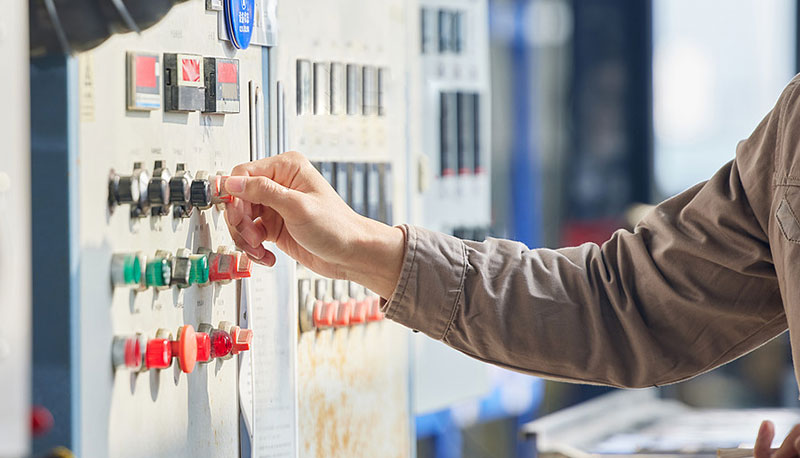
● Testing
Quality Inspection & Testing
Before leaving the factory, all equipment will be inspected by the quality inspection department. We can also provide customers with testing services from a single machine to a complete pellet plant system, and provide you with real actual data for “worry-free use.”
● Delivery
Equipment Delivery
In equipment boxing and packaging, we adopt professional packaging and modular solutions to ensure the safe and non-destructive delivery of pellet plant equipment.
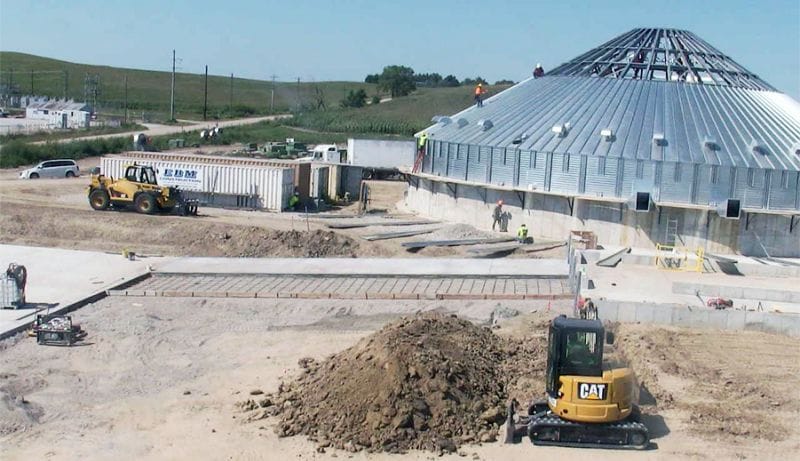
● Installation
Installation & Commissioning
Whether you choose your own subcontractor for the erection phase or you want to install everything together with us, a Richi supervisor will be around to make sure everything is mounted in a safe and thorough way.

● Training
Staff Training
We provide comprehensive training for the technicians of each project. We can also continue to provide support for the technicians during latter project operation.
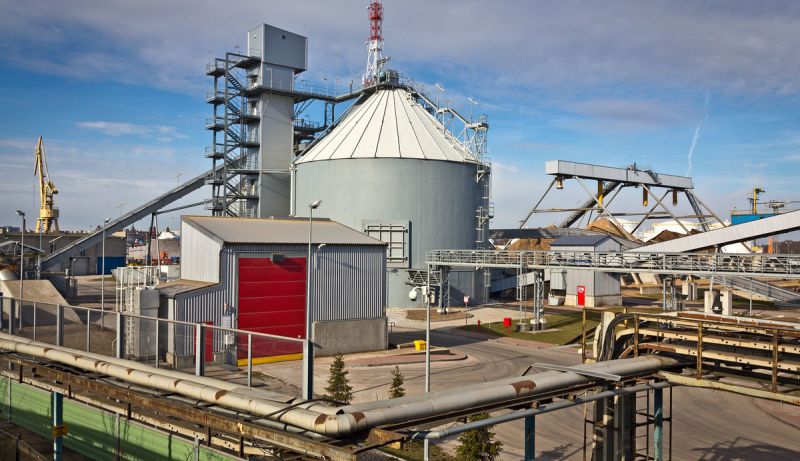
● After-sales
Project Follow-Up
When everything is up and running our Richiers will help you further whenever needed. We are ready to answer your call 24/7.We’ll also visit you regularly to learn about your needs.
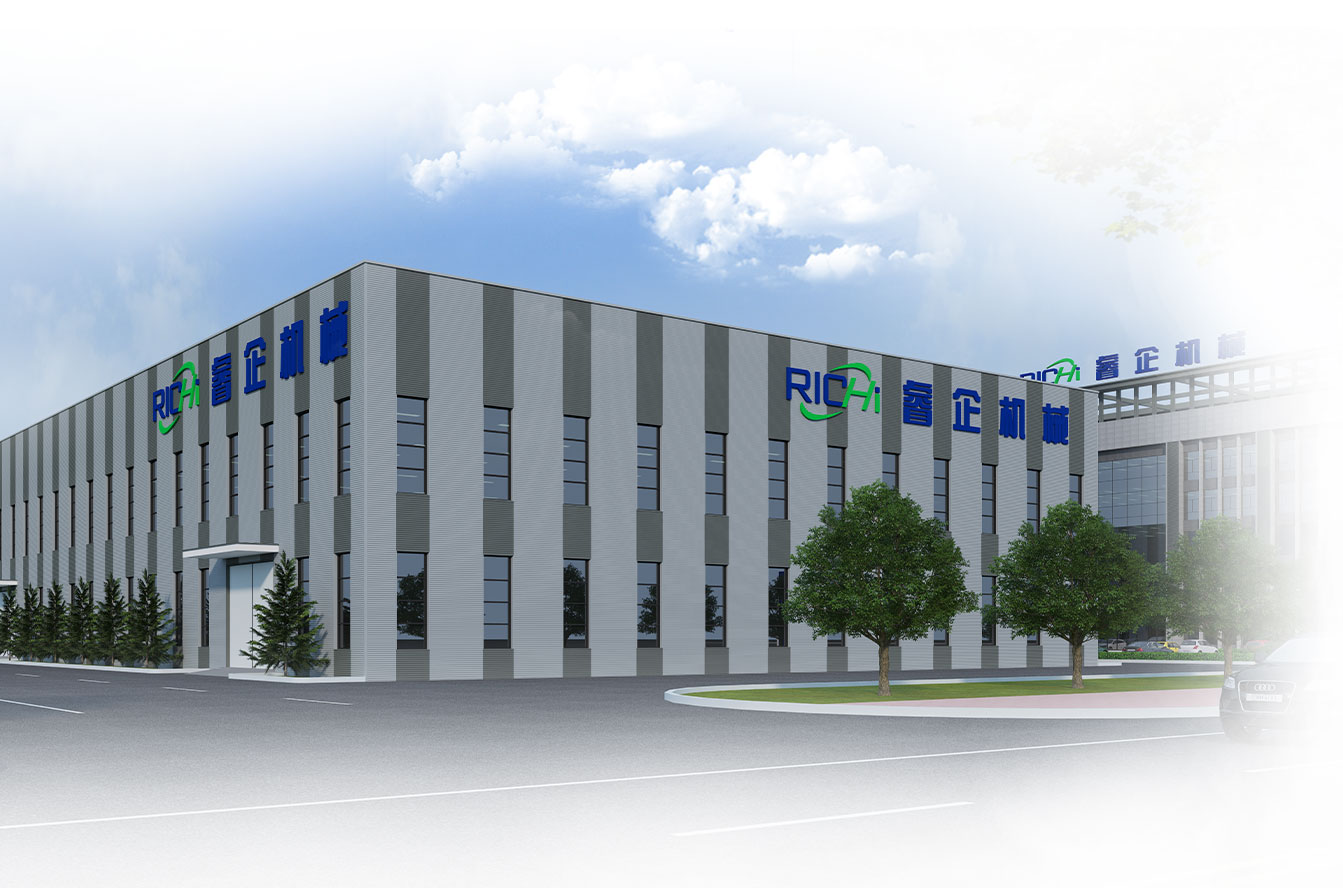
Who we are
RICHI Machinery is one of the world’s leading suppliers of technology and services for the animal feed, aqua feed and pet food industries, also the largest pellet production line manufacturer in China.
Since 1995, RICHI’s vision to build a first-class enterprise, to foster first-class employees, and to make first-class contributions to society has never wavered.
In the past three decades, we have expanded our business to a wide range of areas, including animal feed mill equipment, aqua feed equipment, pet feed equipment, biomass pellet equipment, fertilizer equipment, cat litter equipment, municipal solid waste pellets equipment, etc.

1995
RICHI Established

2000+
Serving More Than 2000 Customers

120+
RICHI Employees

140+
Exported To 140 Countries