 0086-138 3838 9622
Biomass Pellet Production Facility Setup in Austria
RICHI MACHINERY
Project Overview
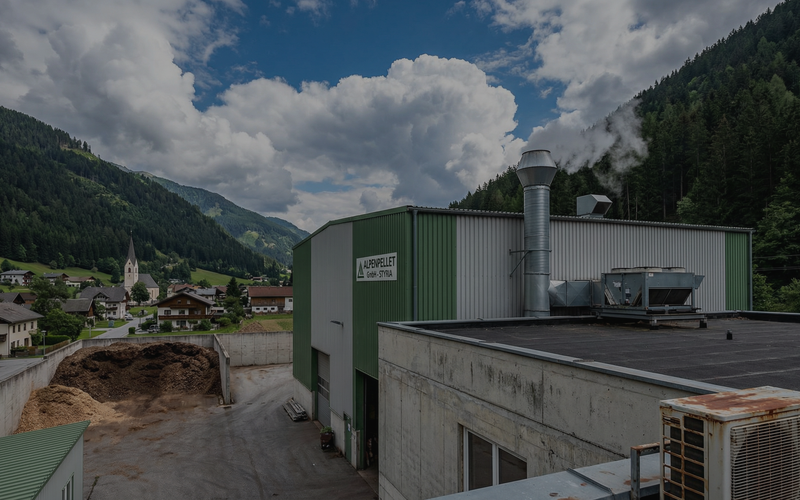
A 1.5-2t/h biomass pellet production facility setup in Austria was commissioned in early 2024 for a client in the Styria region, about 40km north of Graz. The facility processes 8,000 tons of biomass feedstock annually into 4,000 tons of ENplus A1 certified wood pellets for the Austrian and Southern European heating markets.
The biomass pellet plant operates one 8-hour shift per day, 300 days per year (2,400 total operating hours), with just 4 employees. Total investment was $115,000 USD.
What makes this 1.5-2t/h biomass pellet production facility setup in Austria particularly interesting is the equipment efficiency. The original design called for 4 biomass pellet mills. The client installed only 1. And that single mill produces the full output. The reason: the client’s raw material is pre-processed and uniform, allowing a single larger mill to run at optimal capacity. This simplified the line, reduced maintenance, and lowered capital costs.
1.5-2T/H
capacity
$115,000
investment
Austria
location
Biofuel
project type
RICHI MACHINERY
The First Call – “I Want Simple, Not Complex”
The client had been running a sawmill in Styria for twenty years. He had endless access to sawdust, bark, wood shavings, wood ends, peanut shells, offcuts, and planer shavings. He watched the Austrian pellet market grow steadily – Austria is Europe’s second-largest pellet producer after Germany.
He had a building (2,227m² total) on a 2,227m² site. He had a well for water, grid electricity, and existing infrastructure. He had saved about $450,000.
His question: “Can I set up a 1.5-2t/h biomass pellet production facility setup in Austria that uses just one pellet mill instead of four?”
We asked about his raw material. He explained that he already pre-processes his wood waste at the sawmill – chips are uniform size, moisture is consistent (12-15% after air drying). No crushing needed on site. No screening needed. Just drying (only 100 days/year in winter) and pelleting.
We told him yes. A single HL420 90kW pellet mill could produce 1.5-2 t/h with his uniform feedstock. The simplified design would save him $50,000 in equipment costs and reduce maintenance headaches.
RICHI MACHINERY
Raw Materials – Single Source, Consistent Quality
The client’s sawmill produces a consistent stream of biomass residues.
| Raw Material | Annual Input (tons) | As-Received Moisture | Cost (USD/ton) | Source |
|---|---|---|---|---|
| Sawdust, bark, shavings, ends, peanut shells, offcuts, planer shavings | 8,000 | 12-15% | $25 (internal transfer) | Client’s own sawmill |
The client does not pay external suppliers. This is waste from his own sawmill operation. The internal transfer cost covers handling and transportation.
Total input 8,000 tons, output 4,000 tons. The 4,000-ton difference accounts for:
- Moisture evaporation during drying (about 3,500 tons of water)
- Ash and fine particles (about 500 tons)
The client also uses about 80 tons of self-produced pellets and wood waste as fuel for the drying furnace during winter months.
RICHI MACHINERY
Why Only One Pellet Mill?
Most 1.5-2 t/h biomass pellet production lines use 2-4 smaller wood pellet mills. This client uses one.
The reasons:
- His raw material is uniform (no need for multiple mills to handle different feedstocks)
- He pre-processes at the sawmill (chips are consistent size)
- He uses a single larger mill (HL420, 90kW) that runs at optimal efficiency
- Lower maintenance (one set of dies, one set of bearings, one gearbox)
- Lower capital cost (one mill vs four)
The trade-off: No redundancy. If the single mill needs maintenance, the line stops. The client mitigates this by keeping spare parts on hand (an extra die, bearings, belts) and scheduling maintenance on weekends.
This 1.5-2t/h biomass pellet production facility setup in Austria proves that simpler can be better when raw material quality is consistent.
RICHI MACHINERY
Equipment List – Simplified Line
| Equipment | Quantity | Power | Function |
|---|---|---|---|
| Screening machine | 1 | 2.2kW | Remove oversized material |
| Dryer – airflow dryer, 1000mm×1500mm | 1 | 7.5kW + furnace | Moisture reduction (100 days/year) |
| Biomass wood pellet machine – MZLH420, 90kW | 1 | 90kW | Main pelleting (1.5-2 t/h) |
| Wheel loader | 1 | Diesel | Raw material handling |
| Cyclone separator | 1 | 3.7kW | Pre-dust collection |
| Baghouse filter | 1 | 5.5kW | Final dust collection |
| Exhaust stack | 15m | — | Treated air discharge |
The client bought the wheel loader locally in Austria – cheaper than importing, and local service is available.
Shipping: Two 40-foot containers. Departed Qingdao September 15, 2023. Arrived Port of Koper, Slovenia on October 28, 2023 (closest port to Styria). Sea freight: $4,200 USD. Rail freight from Koper to Graz (about 300km) added $1,800 USD and 3 days. Inland trucking to the site added $500 USD.
RICHI MACHINERY
Facility Layout – 2,227m² Total
The client’s site was 2,227m² with existing buildings.
| Area | Size (m²) | Function |
|---|---|---|
| Production workshop | 1,400 | Screening, drying, pelleting |
| Raw material stockpile | 690 | Wood waste storage |
| Office and living area | 137 | Admin, breaks |
RICHI MACHINERY
Process Flow – Four Steps, One Mill
Here’s how the 1.5-2t/h biomass pellet production facility setup in Austria actually runs.
Step 1 – Screening
Raw material is loaded into the screening machine via wheel loader. The screen removes oversized material (chunks larger than 10mm). Oversize material is used as fuel for the drying furnace.
Step 2 – Drying – Winter only
During winter (100 days/year), material passes through the airflow dryer. The dryer uses a biomass hot air furnace burning self-produced pellets and wood waste. Drying temperature: approximately 100°C. Inlet moisture: 15-18%. Outlet moisture: 10-12%.
The dryer exhaust passes through a cyclone separator and baghouse filter before the 15m stack.
Step 3 – Pelleting
Dried material is fed into the MZLH420 biomass fuel pellet machine. Single 90kW mill produces 1.5-2 t/h. Die size: 6mm and 8mm – the client switches depending on customer requirements.
The pelleting process uses friction heat to soften the lignin, which acts as a natural binder. No added binders or additives.
Step 4 – Bagging and storage
Pellets are bagged manually into 15kg paper bags (for retail) and 1,000kg bulk bags (for industrial). The client also sells pellets in bulk to local distributors.
RICHI MACHINERY
Emissions Compliance – Meeting Austrian Standards
Austria has strict emissions limits under the Austrian Clean Air Act (Immissionsschutzgesetz – IG-L). The client’s emissions:
Dryer exhaust (15m stack):
- Particulates: <15 mg/m³ (Austrian limit: 20 mg/m³)
- CO: <100 mg/m³ (limit: 200 mg/m³)
- NOx: <80 mg/m³ (limit: 150 mg/m³)
Process dust (fugitive):
- Total fugitive dust: <0.5 t/yr
- Settles inside workshop or on client’s property
The client also has ash from the dryer furnace – about 5 t/yr. Ash is given to local farmers for use as fertilizer.
RICHI MACHINERY
The Austrian Market for Wood Pellets
Austria is a mature pellet market. The country has:
- Over 200,000 pellet heating systems installed
- A well-established ENplus certification system
- Government subsidies for biomass heating (up to 30% of system cost)
- High consumer awareness of pellet quality
The client’s current customers:
- A pellet distributor in Graz (200 tons/month)
- Direct sales to households in Styria (100 tons/month)
- Industrial customers (the remainder)
The client plans to add a second pellet mill in 2025 to reach 3.5-4 t/h. He also plans to pursue ENplus A1 certification for export to Germany and Italy.
RICHI MACHINERY
What the Client Learned
We spoke with the client in July 2024, five months after startup. Here are his observations.
What worked well:
- The single mill configuration. “One mill, one set of problems. Less maintenance, less stress.”
- The pre-processed raw material. “No crusher, no screening. My sawmill does the work.”
- The simple drying system. “100 days per year is enough. The rest of the year, the sun does the work.”
What he would change:
- “I should have bought a moisture meter for the dryer.” He runs the dryer without measuring output moisture. Sometimes pellets are too dry (8% moisture) and crack. He’s ordering a meter ($300).
- “The manual bagging is slow.” He’s looking at a semi-automatic bagging scale ($6,000).
- “I need a spare die.” He has one die. If it cracks, the line stops. He’s ordering a spare.
RICHI MACHINERY
What We Provided
For this 1.5-2t/h biomass pellet production facility setup in Austria, we delivered:
- Process design – Simplified single-mill layout.
- Equipment package – Screen, dryer, pellet mill, cyclone, baghouse, stack.
- Installation supervision – Our engineer spent 10 days in Styria.
- Operator training – Two days on die changes, gap adjustments, and Austrian compliance requirements.
- Spare parts kit – One spare die, bearings, belts, and filter bags.
RICHI MACHINERY
Thinking About a Pellet Facility in Austria?
If you’re looking at a 1.5-2t/h biomass pellet production facility setup in Austria – or anywhere in Central Europe – here’s what we’ve learned from this biomass pellet project:
- Simple is better. One pellet mill at 1.5-2 t/h is easier to maintain than two mills at 0.75-1 t/h each.
- Pre-processed raw material is worth the investment. The client’s sawmill pre-processing eliminates the need for crushers and screens on the pellet line.
- Drying is seasonal. In Central Europe, you only need a dryer for 3-4 months per year. Design for part-time operation.
- Austrian customers pay for quality. ENplus A1 pellets sell for €380-420/ton ($410-455). Uncertified pellets sell for €180-220 ($195-240). Certification pays for itself.
- Ash is a valuable byproduct. The client gives ash to local farmers for free – builds goodwill and reduces waste disposal costs.
The client in Styria is already profitable and expanding. If you have access to consistent wood waste and a market for premium pellets, this model works.
Contact us for a site assessment or equipment quote. We can provide references from this project upon request.
● RICHI MACHINERY
RICHI Service

● Consulting
Customer Consultation
We want to have a deep understanding of your industrial process, to know your exact needs of feed, wood, biomass, fertilizer or other pellet processing.
● Design
biomass Pellet Plant Design
Based on your unique situation and industrial process, we will tailor complete pellet plant you need, and inform you of every additional detail that could facilitate operation, minimize total cost.
● Manufacturing
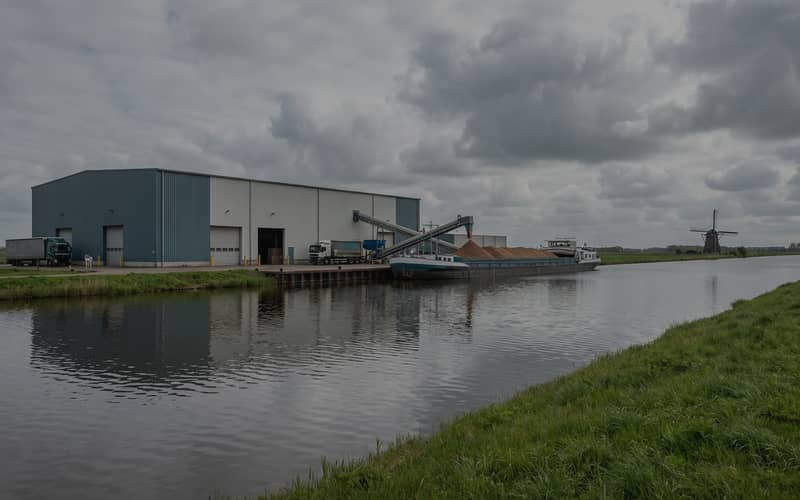
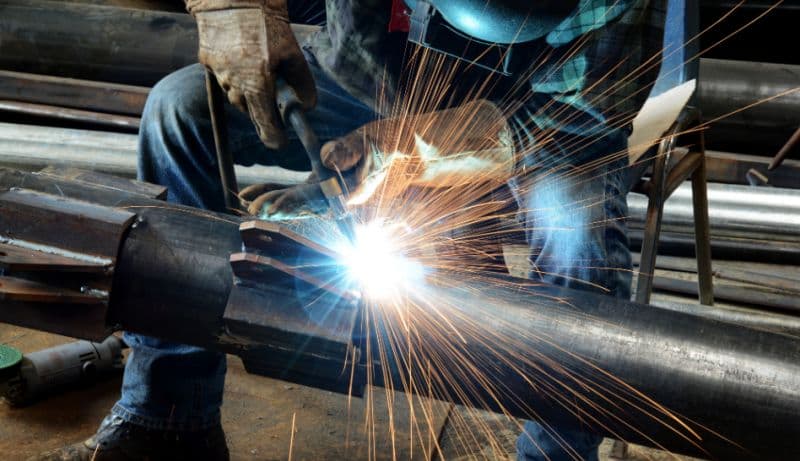
Equipment Manufacturing
The critical components of the of the complete pellet production line equipment are built in our own workshops in Asia. Additional equipment is manufactured by our worldwide network of reliable partners.
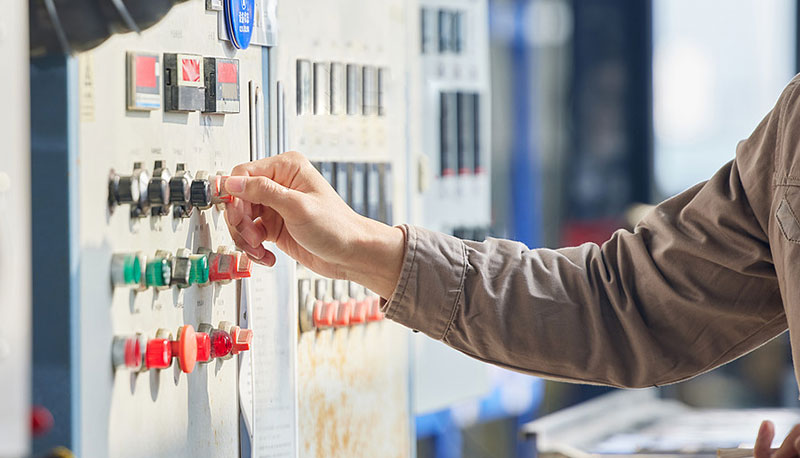
● Testing
Quality Inspection & Testing
Before leaving the factory, all equipment will be inspected by the quality inspection department. We can also provide customers with testing services from a single machine to a complete pellet plant system, and provide you with real actual data for “worry-free use.”

● Delivery
Equipment Delivery
In equipment boxing and packaging, we adopt professional packaging and modular solutions to ensure the safe and non-destructive delivery of pellet plant equipment.
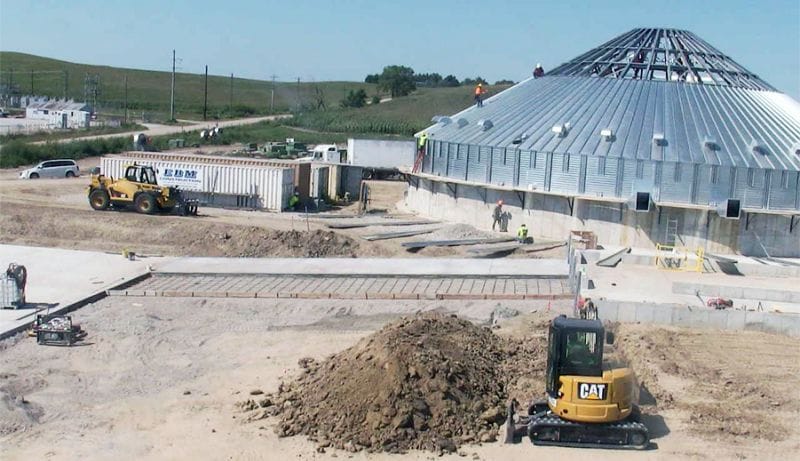
● Installation
Installation & Commissioning
Whether you choose your own subcontractor for the erection phase or you want to install everything together with us, a Richi supervisor will be around to make sure everything is mounted in a safe and thorough way.

● Training
Staff Training
We provide comprehensive training for the technicians of each project. We can also continue to provide support for the technicians during latter project operation.
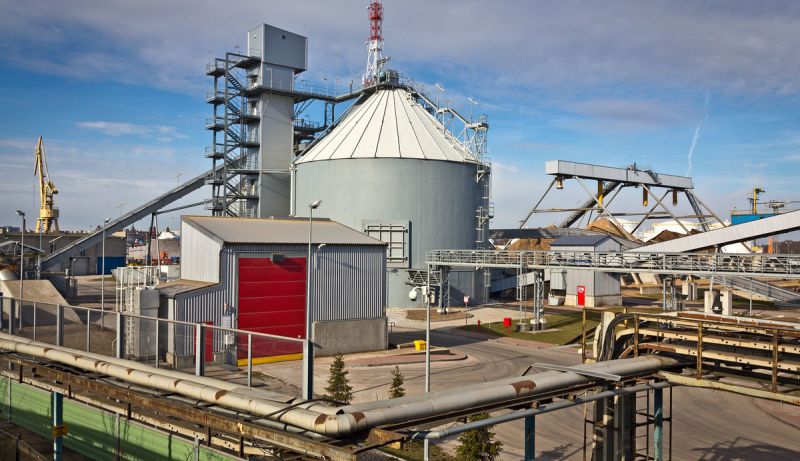
● After-sales
Project Follow-Up
When everything is up and running our Richiers will help you further whenever needed. We are ready to answer your call 24/7.We’ll also visit you regularly to learn about your needs.
Who we are
RICHI Machinery is one of the world’s leading suppliers of technology and services for the animal feed, aqua feed and pet food industries, also the largest pellet production line manufacturer in China.
Since 1995, RICHI’s vision to build a first-class enterprise, to foster first-class employees, and to make first-class contributions to society has never wavered.
In the past three decades, we have expanded our business to a wide range of areas, including animal feed mill equipment, aqua feed equipment, pet feed equipment, biomass pellet equipment, fertilizer equipment, cat litter equipment, municipal solid waste pellets equipment, etc.

1995
RICHI Established

2000+
Serving More Than 2000 Customers

120+
RICHI Employees

140+
Exported To 140 Countries