0086-138 3838 9622
Dog Food Processing Plant in Poland
Dog Food Processing Plant in Poland connects one twin-screw extruder with matched drying, coating and final cooling for a 5 t/h adult-kibble duty. A clear wet-to-finished balance and hygiene layout support a practical private-label production plan.
RICHI MACHINERY
Put the Finished Kibble at the Centre
Dog Food Processing Plant in Poland is planned for 5 t/h of finished adult dry kibble, using one twin-screw extrusion unit with a matched dryer, coating system and final cooler. The layout separates ingredient handling from product handling after the validated heat process.
The scope is designed for an operator adapting a suitable industrial building. It connects formulation, water addition, drying and packing into one capacity balance, so private-label discussions can focus on a defined product rather than an assortment of loosely matched machines.
5 T/H
capacity
USD 1,100,000
investment
Poland
location
Extrusion
project type
RICHI MACHINERY
Private-Label Buyers Need a Repeatable Product
A brand owner buying dry dog food needs more than an attractive kibble shape. It needs an agreed nutritional specification, consistent product, traceable ingredients and reliable packing. The Dog Food Processing Plant in Poland is structured around those buying requirements before the equipment list is finalized.
The base product is an adult dry kibble, approximately 8–14 mm in size, with an engineering final-moisture basis of 8%. Shape, density, coating and formula are qualified together. A product for puppies, small breeds or a special nutritional purpose needs its own formulation and process review.
For a Poland dry dog food factory, the description complete food must rest on an appropriate nutritional formulation and verification. A percentage recipe and an extruder cannot establish nutritional adequacy on their own. Ingredient analyses, applicable requirements and product testing inform the finished specification.
The pet food production line proposal therefore begins with the customer’s reference sample, ingredient plan and packaging needs. A private-label run with frequent recipe changes has a different operating pattern from a long campaign of one product. Production scheduling, cleanout and sample approval need to match that commercial model.
Poland is treated as the installation and supply-market setting, not as evidence of automatic regulatory approval. Feed and animal-derived ingredient requirements need review for the actual operator and products. No existing registration, certification, approved export destination or achieved factory performance is implied without supporting records.
The Dog Food Processing Plant in Poland offers a useful commercial distinction: its stated rate is finished coated product. The wet flow through the extruder is higher because it includes water later removed in the dryer. Those two numbers should not be mixed when a customer compares line capacities.
RICHI MACHINERY
Qualify the Ingredients Before Adjusting the Shape
The dry-ingredient procurement allowance is 28,800 tonnes annually at 10% moisture. An illustrative allocation is 45% cereals, 35% qualified processed protein meals, 15% starch and pulp ingredients, and 5% a formulation-specific mineral and additive package. It is a procurement framework, not a published complete-feed formula.
The Dog Food Processing Plant in Poland also allows 2,160 tonnes of post-dryer fat annually. That addition is tracked separately from the dry mixer blend. Its identity, nutritional role, storage conditions and application method require definition; a convenient coating flow does not make all oils interchangeable.
A Polish pet food extrusion plant needs approved and traceable sources, particularly for animal-derived ingredients. The actual ingredient category, processing status, supplier approvals and intended use determine the required documentation and handling. The base line does not receive unspecified raw animal by-products as though they were ordinary bagged flour.
Ingredient assessment includes particle-size needs, contaminants and the effect on processing. Starch availability, protein source and fat level influence expansion, density and die load. A recipe that produces a dense cylinder may behave differently from one designed for a porous coated kibble, even at the same feed rate.
For the Dog Food Processing Plant in Poland, formula approval and process approval are linked but separate decisions. A nutritionist establishes the diet. Trials establish whether the chosen mix can be ground, conditioned, extruded, dried and coated within the required product specification and production duty.
The base scope does not add freeze-dried inclusions after the validated heat step. Such additions require their own qualified supply and post-process contamination controls. They cannot be included simply as an attractive marketing ingredient without considering how they enter a hygienically controlled finished-product route.
The Dog Food Processing Plant in Poland should establish how the customer will judge a production sample. Kibble dimensions, density, coating level and physical integrity need agreed methods. Nutritional acceptance and sensory or palatability work are separate evaluations; a successful extrusion test cannot answer every commercial product question.
For a Poland adult dry kibble factory, packaging is also part of the product brief. Bag material, seal integrity and the intended shelf-life study need coordination with the finished product’s fat and moisture condition. The production line cannot guarantee long storage solely by reaching a target moisture number.
Customer approval is most useful when a retained reference represents normal production. The operator can compare later lots against that standard and investigate changes in ingredient or process conditions. This makes repeatability visible to a private-label buyer considering a continuing supply relationship.
RICHI MACHINERY
Follow the Water Through Extrusion
Grind and make the approved mix
One appropriately selected 110 kW fine-grinding circuit prepares the recipe to the trial-established particle-size requirement. A batch mixer combines the weighed ingredients. Two grinders or two mixers are not included unless the actual formula and scheduling demonstrate a need.
Condition and cook
The twin screw extruder is selected as one SPHS185×2 unit with a 200 kW main drive, within the user-confirmed 5–6 t/h equipment family. Its actual duty must be qualified with the intended formula. The calculated wet process flow is approximately 5.71 t/h, distinct from the finished 5 t/h product rate.
The Dog Food Processing Plant in Poland adds approximately 6,000 tonnes of process water annually, including the steam-and-water contribution to conditioning and extrusion. Starting from approximately 28,267 tonnes of accepted dry mix after losses, this gives about 34,267 tonnes through the wet process before post-dryer coating.
Dry to a measured release condition
The dryer removes approximately 6,427 tonnes of water annually, or 1.07 t/h over 6,000 productive hours. The planning selection provides at least 1.3 t/h water evaporation and an approximately 2 MW separate thermal allowance. Belt loading and residence time require trials with the actual kibble.
Dryer discharge before coating is approximately 27,840 tonnes annually. It contains the water that remains in the finished product, while the later fat application adds dry material. Its moisture basis therefore differs from the final coated product’s 8% target; both sampling locations must be clearly identified.
Coat while the product condition is suitable
One controlled coating system applies the specified fat to warm dried kibble under the selected process conditions. The base route places final cooling after coating. If a particular coating technology needs a different product temperature, its supplier requirement governs the detailed arrangement rather than an assumed universal sequence.
Cool and seal
The final cooler brings coated kibble to a suitable condition for screening and packing. Product should not be sealed while carrying excess heat or uneven moisture. Final release considers moisture, water activity and the agreed quality checks, rather than treating one average moisture reading as a complete storage validation.
The Dog Food Processing Plant in Poland dry-matter balance starts with 25,920 tonnes in purchased dry ingredients. An allowance of 480 tonnes dry matter covers rejected and processing material; 2,160 tonnes of coating fat then brings finished dry matter to 27,600 tonnes. That matches 30,000 tonnes of product at 8% moisture.
RICHI MACHINERY
Machines Chosen for This Formula and Duty
| Line function | Planning selection |
|---|---|
| Fine grinding | One 110 kW circuit |
| Extrusion | One SPHS185×2; 200 kW main drive |
| Wet extrusion flow | Approximately 5.71 t/h |
| Finished coated product | 5 t/h |
| Drying | At least 1.3 t/h water evaporation |
| Coating and final cooling | One matched route |
| Annual operating programme | 20 net hours daily; 300 days |
The Pet Food Extruder Machine is one part of the total capacity chain. Screw configuration, die opening, conditioning and formulation determine the operating point. The selection should be documented against a product trial and a continuous run, without converting an equipment-family range into a guaranteed rate for every dog food formula.
The Mesh Belt Dryer needs adequate surface loading, airflow and access for cleaning. A dryer described only by its product throughput leaves the main engineering question unanswered: how much water must it remove, from which kibble and under what thermal conditions?
For the Dog Food Processing Plant in Poland, one extruder, one dryer, one coater and one final cooler form the base route. Additional coaters or duplicate grinders would require a demonstrated process or scheduling reason. Their presence alone would not make the project more capable or more professional.
Packing is specified around the customer’s bag range and the full finished-product rate. A small-bag line may need a different machine from a large-bag line, even though both are described as pet food packing. Filling, sealing, checkweighing and downstream handling must be reviewed as one station.
The Poland dog kibble production line also needs buffer capacity that does not create excessive warm-product holding. Bins are selected for measured bulk density and product flow. Fragile kibble should not be repeatedly conveyed and dropped merely to fit a compact drawing.
RICHI MACHINERY
Keep the Clean Side Clean
The planning site allowance is 6,000 m², with 3,200 m² covered. The covered allocation is 900 m² ingredients, 1,100 m² processing, 850 m² finished goods, 200 m² utilities and 150 m² support. Detailed zoning must suit the actual property and the operator’s hygiene programme.
The pet feed mill layout separates raw-ingredient activity from post-process handling. People, tools, air movement and maintenance access need controlled routes. Passing a product through a heat process does not protect it from contamination introduced during coating, cooling, sampling or packing.
The Dog Food Processing Plant in Poland requires validation of its chosen thermal process for the product and hazards concerned. Temperature displays alone do not prove that every particle has received the necessary treatment. Monitoring, deviation handling and verification belong in the operating plan.
Electrical connected-load allowance is 750 kW, including extrusion, grinding, fans, conveying, packing and support drives. Average electrical demand is budgeted at 425 kW, giving approximately 2.55 million kWh annually, or 85 kWh per finished tonne. Dryer thermal energy is stated separately.
Total annual water allowance is approximately 8,500 m³, including 6,000 m³ process addition and supporting personnel, cleaning and steam-service needs. Actual boiler losses and condensate recovery affect the utility balance. Wet cleaning needs appropriate drainage and a controlled return to dry production.
For the Dog Food Processing Plant in Poland, quality control extends beyond pellet dimensions. Nutrient verification, moisture, water activity, physical quality and relevant microbiological testing support release. Claims about shelf life, hypoallergenic performance or nutritional benefits require their own evidence and are not supplied by the machine list.
RICHI MACHINERY
A Capital Plan With Clear Property Assumptions
The equipment budget is USD 1,200,000. The total project investment budget is USD 1,100,000. These planning amounts assume adaptation of a suitable available industrial building, including the defined extrusion, drying, coating and packing route with allowances for installation, services, commissioning and contingency.
The Dog Food Processing Plant in Poland budget does not include land purchase, an entirely new factory building or major external infrastructure. A property requiring substantial structural work or utility reinforcement needs a separate assessment. Applicable taxes, delivery terms and final local works are established before a firm commercial commitment.
Equipment comparisons need a common product and scope. A dry kibble line with validated cooking, adequate evaporation, hygienic finishing and matched packaging is different from an extruder-only offer. Conversely, duplicate equipment without a duty justification should not inflate the investment.
The Poland private label dog food plant should schedule commercial approval before ramping to its annual target. Reference samples, packaging tests and agreed product specifications reduce the risk of producing stock that the customer has not accepted. No automatic sales volume or return on investment is assumed.
Annual production is 30,000 tonnes at 5 t/h over 6,000 net hours. The Dog Food Processing Plant in Poland needs time outside those productive hours for sanitation, inspections, maintenance and changeovers. A high number of small private-label campaigns may reduce annual throughput compared with the base long-campaign schedule.
RICHI MACHINERY
People, Records and Product Changeovers
Planning headcount is 36: 18 production staff across three crews, eight warehouse staff, four quality staff, three maintenance staff and three coordinators. The roster must cover the extended operating window and clean-side duties. Staffing is finalized against actual automation and the number of product changes.
The pet food dryer settings form part of each production record, alongside ingredient lots, conditioning data, extrusion conditions, coating mass and final release results. Retained samples should represent the packed product. A sample taken before coating cannot answer every question about the customer’s finished bag.
The Dog Food Processing Plant in Poland needs a changeover plan for recipes and declared ingredients. Residual material in conveyors, bins and coating equipment can affect the next batch. Cleanout validation and campaign sequencing are especially relevant where customers make restricted-ingredient claims.
Maintenance release should verify that tools, fasteners and cleaning materials have been removed before production restarts. Access to the clean side needs the same discipline as access during normal operation. A well-kept machine can still introduce contamination if service procedures ignore product zoning.
For a Polish dry pet food manufacturing plant, customer confidence grows from records that connect the bag to its production lot. Clear coding, reliable pack weights and a workable complaint-investigation process show operational control. Broad claims of perfect quality do not replace those everyday systems.
The Dog Food Processing Plant in Poland can use a staged acceptance programme with one formula before extending the range. It first verifies ingredient preparation and wet-process stability, then water removal, coating and final packed quality. Continuous output is assessed only when all those stages are working together.
A Poland twin screw dog food line also needs an explicit responsibility list. The equipment supplier defines machinery and interfaces; the operator and its specialists establish product formulation, site approvals and the operating control programme. Clear responsibilities make the project easier to execute and review.
When customers request a new kibble shape or a different coating level, the change is assessed against extrusion, drying and packing. It may affect density, residence time or bag volume even if nominal tonnes remain unchanged. The proposal should show which product is the basis for the quoted duty.
RICHI MACHINERY
Discuss Your Adult Kibble Range
Send RICHI Machinery your target sample, ingredient plan and preferred bag sizes. We can scope the Dog Food Processing Plant in Poland around one tested extrusion duty, the required water removal and a practical hygiene layout. Ask for an animal feed production line proposal that connects finished output with utilities and packing. Your team can then evaluate the whole product route before committing to equipment.
● RICHI MACHINERY
RICHI Service

● Consulting
Customer Consultation
We want to have a deep understanding of your industrial process, to know your exact needs of feed, wood, biomass, fertilizer or other pellet processing.

● Design
animal Feed Pellet Design
Based on your unique situation and industrial process, we will tailor complete pellet plant you need, and inform you of every additional detail that could facilitate operation, minimize total cost.
● Manufacturing
Equipment Manufacturing
The critical components of the of the complete pellet production line equipment are built in our own workshops in Asia. Additional equipment is manufactured by our worldwide network of reliable partners.

● Testing
Quality Inspection & Testing
Before leaving the factory, all equipment will be inspected by the quality inspection department. We can also provide customers with testing services from a single machine to a complete pellet plant system, and provide you with real actual data for “worry-free use.”

● Delivery
Equipment Delivery
In equipment boxing and packaging, we adopt professional packaging and modular solutions to ensure the safe and non-destructive delivery of pellet plant equipment.
● Installation
Installation & Commissioning
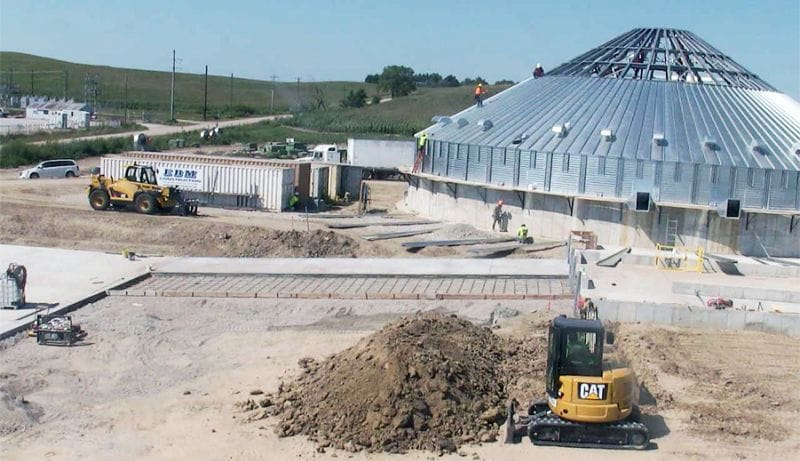
Whether you choose your own subcontractor for the erection phase or you want to install everything together with us, a Richi supervisor will be around to make sure everything is mounted in a safe and thorough way.

● Training
Staff Training
We provide comprehensive training for the technicians of each project. We can also continue to provide support for the technicians during latter project operation.
● After-sales
Project Follow-Up
When everything is up and running our Richiers will help you further whenever needed. We are ready to answer your call 24/7.We’ll also visit you regularly to learn about your needs.
Who we are
RICHI Machinery is one of the world’s leading suppliers of technology and services for the animal feed, aqua feed and pet food industries, also the largest pellet production line manufacturer in China.
Since 1995, RICHI’s vision to build a first-class enterprise, to foster first-class employees, and to make first-class contributions to society has never wavered.
In the past three decades, we have expanded our business to a wide range of areas, including animal feed mill equipment, aqua feed equipment, pet feed equipment, biomass pellet equipment, fertilizer equipment, cat litter equipment, municipal solid waste pellets equipment, etc.

1995
RICHI Established

2000+
Serving More Than 2000 Customers

120+
RICHI Employees

140+
Exported To 140 Countries