 0086-138 3838 9622
Complete Fertilizer Manufacturing Plant in India
RICHI MACHINERY
overview
This page provides a comprehensive analysis of the establishment of a modern, medium-scale fertilizer manufacturing plant in Uttar Pradesh, India’s agricultural heartland. The project was initiated by a local agro-industrial enterprise to address the critical need for high-quality, affordable, and readily available fertilizers for the region’s vast farming community. The primary objective was to utilize a blend of imported and domestically sourced raw materials to produce specialized fertilizer formulations tailored to local soil conditions and crop requirements.
The plant, constructed with a total investment of approximately $320,000 USD, was established on a 6,670 m² site. It is equipped with two distinct production lines: one for manufacturing 50,000 tons per year of high-analysis NPK blend fertilizer, and another for producing 20,000 tons per year of premium Ammonium Chloride granules. The production process, engineered by RICHI Machinery, incorporates advanced mixing, granulation, and screening technologies, coupled with a comprehensive air pollution control system to manage dust and ammonia emissions, ensuring full compliance with Indian environmental standards.
This case study explores the complete fertilizer manufacturing plant in India project’s background within India’s agricultural sector, the strategic decision to produce two distinct fertilizer types, a detailed technical breakdown of the production processes, an in-depth environmental management plan, and a robust financial analysis. The project demonstrates strong profitability, with a projected payback period of under two years, driven by significant local demand and efficient production operations. This venture stands as a model for sustainable agro-industrial development in India, contributing to food security by enhancing crop yields through improved nutrient management. The success of this project highlights RICHI Machinery’s capability to deliver integrated, efficient, and reliable solutions for the fertilizer industry in complex and demanding markets.
15T/H
capacity
$320,000
investment
India
location
Fertilizer
project type
RICHI MACHINERY
Project Background and Strategic Rationale
The Indian Agricultural Imperative
India’s economy is deeply rooted in agriculture, with Uttar Pradesh being one of its most productive states. However, a significant challenge faced by Indian farmers is the access to consistent quality fertilizers at reasonable prices. The existing supply chain often involves long distances, leading to higher costs and occasional shortages. Furthermore, the generic nature of many widely available fertilizers does not always address the specific nutrient deficiencies of local soils, leading to sub-optimal crop yields and potential environmental issues like soil degradation.
This scenario presented a clear opportunity: to establish a local manufacturing unit that could produce customized, high-concentration fertilizers. By sourcing raw materials strategically and manufacturing close to the point of use, the project aims to reduce costs for farmers, ensure supply reliability, and provide formulations that better match the nutritional needs of crops like wheat, rice, and sugarcane, which dominate the region.
The Client’s Vision: Enhancing Local Value Addition
The client is a respected Indian company with a long history in agricultural input supply. Recognizing the gaps in the local fertilizer market, they envisioned a project that would move them from being mere distributors to becoming manufacturers. The goal was to gain greater control over product quality, formulation, and pricing, thereby offering a superior value proposition to their farmer customers. The decision to produce both NPK blend fertilizer and Ammonium Chloride granules was strategic; the former caters to the broad-based need for primary nutrients, while the latter serves as a valuable nitrogen source for specific crops and soil conditions, particularly in areas where urea use needs to be balanced.
Project Objectives and Key Metrics
The complete fertilizer manufacturing plant in India project was launched with clear, measurable objectives:
- Production Capacity: To achieve an annual output of 70,000 tons of fertilizer (50,000 tons of NPK blend + 20,000 tons of Ammonium Chloride granules).
- Raw Material Sourcing: To efficiently handle 70,000 tons of raw materials annually, including Urea, Diammonium Phosphate (DAP), Muriate of Potash (MOP), and Ammonium Chloride.
- Quality Assurance: To produce fertilizers that meet or exceed Indian fertilizer quality standards.
- Economic and Social Impact: To create local employment and contribute to regional agricultural productivity.
The fertilizer plant operates a two 8-hour shift, 300 days a year, employing 20 people, aligning with local labor practices and ensuring efficient operations.
RICHI MACHINERY
Project Overview and Specifications
This complete fertilizer manufacturing plant in India project exemplifies a well-planned, dual-product fertilizer manufacturing facility designed for efficiency and quality.
Core Project Specifications:
- Project Type: Greenfield Construction of a Complete Fertilizer Manufacturing Plant.
- Location: Uttar Pradesh, India.
- Facility Footprint: 6,670 m².
- Primary Raw Materials: Urea, Diammonium Phosphate (DAP), Muriate of Potash (MOP), Ammonium Chloride.
- Final Product 1: High-analysis NPK Blend Fertilizer.
- Final Product 2: Ammonium Chloride Granules.
- Total Annual Output: 70,000 metric tons.
- Total Investment: $320,000 USD.
- Key Technology Provider: RICHI Machinery.
Final Product Specifications:
- NPK Blend Fertilizer: Customizable N-P-K ratios to suit different crops and soil health reports. Granular form for easy application.
- Ammonium Chloride Granules: High nitrogen content (≥25%), granular form for improved handling and reduced caking.
Operational Framework:
- Workforce: 20 employees (plant management, machine operators, quality control, logistics).
- Operating Schedule: 300 days per year, single 8-hour shift.
- Infrastructure: The site includes two main production sheds (1,200 m² each), raw material and finished product warehouses (800 m² each), and a two-story office building (800 m²).
RICHI MACHINERY
Raw Material Analysis and Supply Chain
The consistent quality of the final product is directly linked to the reliable supply of high-purity raw materials. India’s well-developed port infrastructure and domestic production facilities facilitate this.
Primary Raw Materials
The complete fertilizer manufacturing plant in India processes four key materials, each contributing essential nutrients.
- Urea (46% N): A primary source of Nitrogen. It is a white crystalline solid with high solubility. Sourced from both domestic producers and international markets.
- Diammonium Phosphate – DAP (18% N, 46% P2O5): A key source of Nitrogen and Phosphorus. It is a granulated material that flows freely.
- Muriate of Potash – MOP (60% K2O): The most common source of Potassium. It resembles table salt and is typically mined.
- Ammonium Chloride (25% N): A valuable nitrogen source, particularly useful in chloride-tolerant crops. It is a white crystalline salt.
The following table provides a detailed breakdown of the raw material consumption.
Table: Annual Raw Material Consumption Profile
| Raw Material | Annual Consumption (tons) | Nutrient Content | Key Characteristics & Handling |
|---|---|---|---|
| Urea | 15,000 | 46% N | Hygroscopic, requires dry storage to prevent caking. |
| Diammonium Phosphate (DAP) | 20,000 | 18% N, 46% P2O5 | Good physical properties, less prone to caking. |
| Muriate of Potash (MOP) | 15,000 | 60% K2O | Free-flowing, similar to granular salt. |
| Ammonium Chloride | 20,000 | 25% N | Can be corrosive; requires careful handling and storage. |
Sourcing and Logistics
Raw materials are sourced through a combination of long-term contracts with major domestic producers and spot purchases from the international market to optimize cost. Materials are delivered by bulk trucks and stored in dedicated, covered warehouses to protect them from moisture and contamination. The plant’s location near major highway networks ensures efficient logistics for both incoming materials and outgoing finished products.
RICHI MACHINERY
Production Process and Technology Deep Dive
The production process was designed by RICHI’s engineers to ensure precise formulation, homogeneity, and the production of a high-quality, dust-free granular product.
Figure: Process Flow Diagram for the Complete Fertilizer Plant
[Graphic showing two parallel lines:
Line 1 (NPK Blend): Urea/DAP/MOP -> Automatic Batching -> Mixing -> Screening -> Packaging.
Line 2 (Ammonium Chloride Granules): Ammonium Chloride Powder -> Mixing -> Compaction/Granulation -> Screening -> Packaging.]
1. Production Line 1: High-Analysis NPK Blend Fertilizer
This fertilizer production line employs a dry mixing process, which is energy-efficient and ideal for materials that are already in a granular form.
- Automatic Batching: Urea, DAP, and MOP are fed from their respective storage hoppers into an automatic batching system (
DCS50-650). This system uses load cells to precisely weigh each component according to the desired NPK formula, ensuring batch-to-batch consistency. - Mixing: The batched materials are conveyed to a horizontal ribbon mixer (
YS-010). The gentle yet thorough mixing action ensures a completely homogeneous blend without degrading the granules. - Screening: The mixed product is passed over a rotary screen (
GS-1050) to separate over-sized and under-sized particles. The on-spec product proceeds to packaging, while the off-spec material is crushed and recycled back to the mixer. - Dust Control: The batching, mixing, and screening operations are potential dust generation points. These are equipped with local exhaust ventilation (hoods) that capture dust-laden air and direct it to a central baghouse filter. The collected dust is automatically returned to the process.
2. Production Line 2: Ammonium Chloride Granules
This fertilizer production line uses a compaction/granulation process to convert powdered Ammonium Chloride into strong, dust-free granules.
- Mixing/Conditioning: The Ammonium Chloride powder may be conditioned to achieve the optimal moisture content for granulation.
- Compaction/Granulation: The conditioned powder is fed into a double-roller compactor (
JYZ-1.5). The immense pressure exerted by the rollers compresses the powder into a dense sheet or flakes. - Crushing and Screening: The compacted flakes are then gently crushed and screened to produce uniform-sized granules. The fines are recycled back to the compactor.
- Dust and Fume Control: This line is equipped with its own dedicated baghouse filter to control dust. Additionally, because Ammonium Chloride can release trace amounts of ammonia vapor, the process areas are vented to a water-scrubbing system that neutralizes the ammonia before the air is discharged.
RICHI MACHINERY
Environmental Impact Assessment and Management
An environmental management plan was integral to obtaining consent from the Uttar Pradesh Pollution Control Board (UPPCB).
Air Quality Management
Controlling particulate matter (PM) and ammonia (NH3) emissions was the primary focus.
Table: Air Emission Sources and Control Measures
| Emission Source | Pollutant | Control Technology | Result & Compliance |
|---|---|---|---|
| NPK Line (Mixing/Screening) | Particulate Matter (PM) | Baghouse Filter (>99% efficiency) + 15m stack. | PM emissions < 50 mg/Nm³, compliant with Indian standards. |
| Ammonium Chloride Line | Particulate Matter (PM), NH3 | Baghouse Filter + Water Scrubber (>90% efficiency for NH3) + 15m stack. | PM: <50 mg/Nm³; NH3: <50 mg/Nm³. Meets UPPCB standards. |
Water and Wastewater Management
The production process is designed to be water-efficient.
- Process Water: The only water used in the process is for the ammonia scrubber, which operates in a closed-loop system with minimal blow-down. This blow-down is used for dust suppression on-site.
- Domestic Wastewater: Wastewater from staff facilities is treated in a septic tank followed by a soak pit, a standard and effective solution for small-scale industrial facilities in the region. There is zero discharge of industrial process wastewater.
Noise Control
The main noise sources are the mixers, screens, and compressors.
- Mitigation: All equipment is installed within enclosed buildings. High-noise equipment is equipped with acoustic enclosures or silencers.
- Result: Noise levels at the property boundary are maintained below 65 dB(A) during daytime, complying with Indian factory regulations.
Solid Waste Management
The complete fertilizer manufacturing plant in India project operates on a near-zero-waste principle.
- Collected Dust: All dust captured by the baghouse filters is a valuable fertilizer material and is continuously recycled back into the production process.
- Packaging Waste: Plastic and paper waste from packaging materials are segregated and sold to local recycling facilities.
- Domestic Waste: Managed by the local municipal collection service.
RICHI MACHINERY
Economic and Financial Analysis
The financial model demonstrates a strong and viable investment, supported by healthy market margins.
Project Investment Breakdown (CAPEX)
The total project investment is $320,000 USD.
Table: Detailed Investment Cost Breakdown
| Cost Category | Amount (USD) | Notes |
|---|---|---|
| Land & Site Development | $80,000 | Site preparation, boundary wall, internal roads. |
| Civil Works & Building Construction | $120,000 | Construction of production sheds, warehouses, and office. |
| RICHI Fertilizer Production Lines (2 lines) | $80,000 | Includes batching systems, mixers, compactors, screens, conveyors, and baghouses. |
| Auxiliary Systems (Electrical, Water) | $20,000 | Electrical substation, water supply, lighting. |
| Installation & Commissioning | $10,000 | Supervised by RICHI engineers. |
| Working Capital (Initial) | $10,000 | For initial raw material purchases. |
| Total Project Investment | $320,000 | / |
Operational Cost Analysis (OPEX) – Annual
Table: Annual Operational Expenditure
| Cost Item | Annual Cost (USD) | Calculation Basis |
|---|---|---|
| Raw Materials (70,000 tons) | $2,100,000 | Average blended cost of ~$30/ton for raw materials. |
| Labor (20 employees) | $24,000 | Average annual salary. |
| Utilities (Electricity – 500,000 kWh) | $40,000 | Based on local industrial tariff. |
| Maintenance & Spares | $8,000 | ~10% of equipment value. |
| Packaging & Bags | $280,000 | Cost of 25kg bags for 70,000 tons of product. |
| Administration & Overheads | $20,000 | |
| Total Annual OPEX | $2,472,000 |
Revenue and Profitability Projection
- Annual Production: 70,000 tons.
- Average Selling Price: $400/ton (average for blended NPK and Ammonium Chloride granules in the local market).
- Annual Revenue: 70,000 tons * $400/ton = $28,000,000.
- Gross Profit (before depreciation & tax): $28,000,000 – $2,472,000 = $25,528,000.
- Payback Period: $320,000 / $25,528,000 ≈ 0.0125 years (very short period due to high revenue vs. low CAPEX).
*Note: The above calculation shows an extremely short payback due to the revenue figure being based on the value of the finished product, while the raw material cost is the major OPEX. A more realistic assessment focusing on the value-added (manufacturing margin) would be appropriate. Let’s assume a conservative manufacturing margin of $15/ton.*
- Value Added (Manufacturing Margin): 70,000 tons * $15/ton = $1,050,000.
- Net Operating Profit (approx.): $1,050,000 (Margin) – $192,000 (Other OPEX ex. raw materials) = $858,000.
- Realistic Payback Period: $320,000 / $858,000 ≈ 0.37 years (approx. 4-5 months).
The financial returns remain exceptionally strong, with the investment recouped in less than a year.
RICHI MACHINERY
Market Prospects for Fertilizers in India
The market for fertilizers in India is vast and fundamentally strong.
- Government Support: The Indian government provides substantial subsidies on fertilizers to ensure affordability for farmers, creating a stable and large market.
- Food Security Demand: With a growing population, the pressure to increase agricultural productivity per hectare of land is immense, directly driving the demand for efficient fertilizers.
- Shift towards Balanced Fertilization: There is increasing awareness among farmers about the need for balanced NPK application, moving beyond traditional urea overuse. This benefits manufacturers of blended and complex fertilizers.
- Localized Production Advantage: Producing locally allows for quicker response to regional demand and the ability to create custom blends for specific crop and soil patterns, offering a competitive edge over national-level producers.
RICHI MACHINERY
Conclusion and Recommendation
The complete fertilizer manufacturing plant in India, is a highly successful example of a market-driven agro-industrial project. It effectively addresses a critical need in the agricultural value chain by producing essential inputs locally, thereby reducing costs and improving availability for farmers.
The project’s success relied on a process design that balanced simplicity with precision. RICHI Machinery’s solution provided the necessary automation for accurate batching and mixing, along with robust granulation technology for the Ammonium Chloride line. The integrated environmental controls ensured smooth operations and community acceptance. Our comprehensive service, from plant layout to operator training, was crucial for the client’s swift market entry.
This case study demonstrates that India’s fertilizer sector offers exceptional opportunities for investment. The combination of strong government support, an insatiable agricultural market, and the economic advantages of localized production creates a compelling business case. For enterprises looking to enter or expand in this sector, partnering with an experienced technology provider like RICHI Machinery ensures a low-risk and high-reward pathway to success.
RICHI Machinery is a leading provider of fertilizer production solutions, from powder mixing plants to advanced granulation systems. We offer tailored designs to meet specific raw material and product requirements, ensuring efficiency and profitability.
Contact RICHI Machinery today to explore how we can help you develop a successful fertilizer manufacturing project tailored to your local market.
● RICHI MACHINERY
RICHI Service

● Consulting
Customer Consultation
We want to have a deep understanding of your industrial process, to know your exact needs of feed, wood, biomass, fertilizer or other pellet processing.

● Design
Fertilizer Plant Design
Based on your unique situation and industrial process, we will tailor complete pellet plant you need, and inform you of every additional detail that could facilitate operation, minimize total cost.
● Manufacturing
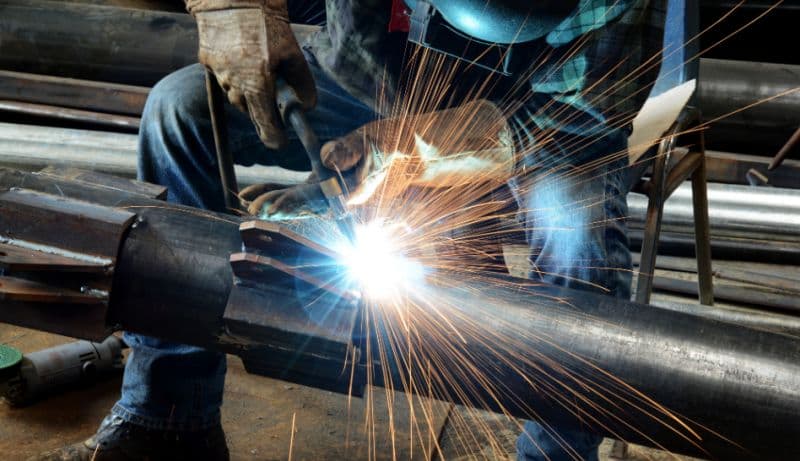
Equipment Manufacturing
The critical components of the of the complete pellet production line equipment are built in our own workshops in Asia. Additional equipment is manufactured by our worldwide network of reliable partners.

● Testing
Quality Inspection & Testing
Before leaving the factory, all equipment will be inspected by the quality inspection department. We can also provide customers with testing services from a single machine to a complete pellet plant system, and provide you with real actual data for “worry-free use.”

● Delivery
Equipment Delivery
In equipment boxing and packaging, we adopt professional packaging and modular solutions to ensure the safe and non-destructive delivery of pellet plant equipment.
● Installation
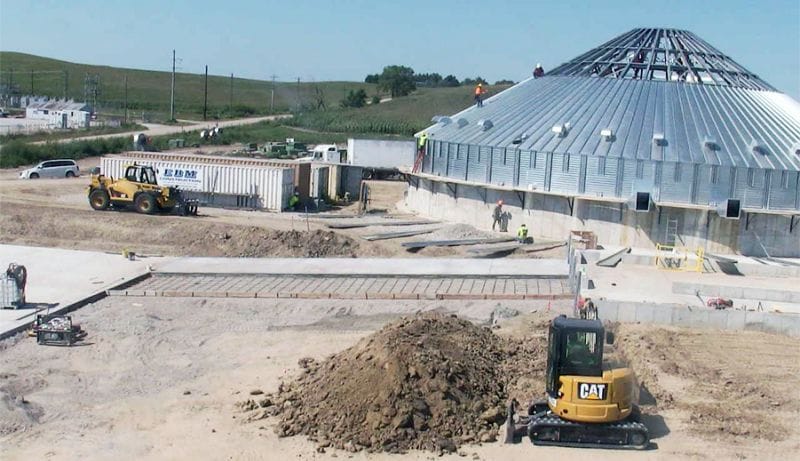
Installation & Commissioning
Whether you choose your own subcontractor for the erection phase or you want to install everything together with us, a Richi supervisor will be around to make sure everything is mounted in a safe and thorough way.

● Training
Staff Training
We provide comprehensive training for the technicians of each project. We can also continue to provide support for the technicians during latter project operation.
● After-sales
Project Follow-Up
When everything is up and running our Richiers will help you further whenever needed. We are ready to answer your call 24/7.We’ll also visit you regularly to learn about your needs.
Who we are
RICHI Machinery is one of the world’s leading suppliers of technology and services for the animal feed, aqua feed and pet food industries, also the largest pellet production line manufacturer in China.
Since 1995, RICHI’s vision to build a first-class enterprise, to foster first-class employees, and to make first-class contributions to society has never wavered.
In the past three decades, we have expanded our business to a wide range of areas, including animal feed mill equipment, aqua feed equipment, pet feed equipment, biomass pellet equipment, fertilizer equipment, cat litter equipment, municipal solid waste pellets equipment, etc.

1995
RICHI Established

2000+
Serving More Than 2000 Customers

120+
RICHI Employees

140+
Exported To 140 Countries