 0086-138 3838 9622
Chicken Feed Manufacturing Plant in Vietnam
RICHI MACHINERY
Overview
In late 2025, RICHI Machinery completed the equipment supply and technical commissioning support for a strategic expansion of a chicken feed manufacturing plant in Vietnam. This expansion project represents a targeted investment by an established Vietnamese feed producer to capture growing demand in the poultry sector, adding 35,000 tons of annual production capacity to bring the facility’s total output to 155,000 tons per year.
The chicken feed manufacturing plant in Vietnam is operated by a company with deep roots in the local agricultural community. Originally founded as a small trading operation supplying basic grains to family farms, the business has evolved over two decades into a respected regional feed manufacturer serving poultry operations across multiple provinces. The decision to expand reflects both the company’s successful track record and the remarkable growth trajectory of Vietnam’s poultry sector.
Vietnam’s animal feed market continues to expand despite some headwinds in other livestock segments. Total feed demand is projected to reach 28.3 million tons in 2025, growing to 29.2 million tons in 2026, with poultry and aquaculture leading the growth.
The poultry flock increased by 3.7% in the first nine months of 2025, contrasting sharply with declines in the swine sector due to African swine fever challenges. This structural shift toward poultry consumption—driven by both consumer preference and disease concerns—creates sustained demand for chicken feed.
This expansion of the chicken feed manufacturing plant in Vietnam adds 35,000 tons of annual capacity through a new production line housed in 900 square meters of new construction, including a 200-square-meter production workshop and 700 square meters of warehouse space, plus three new corn storage silos. The project adds 33 pieces of equipment, bringing the total to 65 major processing units across the facility.
The total equipment investment for this chicken feed manufacturing plant in Vietnam expansion reached USD 175,000, with total project investment of approximately USD 280,000 including civil works and installation. The project was completed with remarkable efficiency—from initial contract signing to commercial production in just 8 months—minimizing disruption to ongoing operations while rapidly adding needed capacity.
10-15T/H
capacity
USD 175,000
investment
Vietnam
location
Feed
project type
RICHI MACHINERY
Project Background
The Investor Profile
The client behind this chicken feed manufacturing plant in Vietnam expansion represents a second-generation family business that has grown alongside Vietnam’s agricultural modernization. Starting in the early 2000s as a small grain trader serving local livestock farmers, the company gradually built relationships with both suppliers and customers while accumulating operational expertise.
By 2020, the company operated a single poultry feed production line producing 120,000 tons annually, serving poultry operations within a 150-kilometer radius. Customer feedback consistently highlighted two themes: appreciation for the consistent quality and personalized service, and frustration that the company couldn’t supply all their needs due to capacity constraints. Many customers supplemented their purchases from the company with feed from other suppliers, complicating their inventory management and quality control.
The decision to expand reflects the classic entrepreneurial challenge: demand exceeding supply. Rather than turn away business or risk customer dissatisfaction, the owners committed to this chicken feed manufacturing plant in Vietnam expansion, adding 35,000 tons of capacity to better serve their growing customer base.
The Vietnamese Poultry Market Opportunity
Vietnam presents one of Southeast Asia’s most dynamic poultry markets. Several factors make this chicken feed manufacturing plant in Vietnam expansion particularly well-timed:
Market Size and Growth: Vietnam’s total feed demand reached approximately 28.3 million tons in 2025, with poultry representing a growing share. The poultry flock increased by 3.7% in 2025, while swine populations contracted due to African swine fever challenges.
Consumer Shifts: Falling hog prices coupled with lingering disease concerns have prompted Vietnamese consumers to turn to poultry meat. Although broiler prices have edged upward, stable supply and lower disease risks have made poultry the preferred choice.
Tourism Recovery: Vietnam welcomed more than 15.4 million international visitors in the first nine months of 2025, up 21.5% year-on-year. This surge has boosted demand for poultry meat, eggs, and processed poultry products throughout the hospitality sector.
Favorable Input Costs: Declines in the prices of key ingredients such as corn and DDGS have helped producers reduce costs, improving margins for feed manufacturers and their customers alike.
Why Expand Now?
The decision to proceed with this chicken feed manufacturing plant in Vietnam expansion reflected several strategic considerations:
Customer Demand: Existing customers consistently requested additional volume, and capacity constraints were limiting the company’s ability to grow with its best clients.
Operational Efficiency: Adding a second production line provides redundancy—if one line requires maintenance, the other can continue operating, reducing customer service disruptions.
Market Position: With Vietnam’s feed sector continuing to expand despite some market adjustments, maintaining market share requires keeping pace with demand growth.
Cost Efficiency: The expansion leverages existing infrastructure—land, utilities, management, and administrative systems—spreading fixed costs over larger production volume.
Facility Scale and Throughput
This chicken poultry feed manufacturing plant in Vietnam expansion adds 35,000 tons of annual capacity, bringing total facility output to 155,000 tons. At design capacity, the new line produces approximately 100 tons per day (8-hour shift, 350 days/year).
Key Operational Parameters
| Parameter | Value |
|---|---|
| Operating Days per Year | 350 |
| Production Shifts | 1 Shift (8 hours) |
| New Line Processing Rate | 12.5 Tons/Hour (Design) |
| Total Facility Capacity | 155,000 Tons/Year |
| Raw Material Consumption (New Line) | Corn: 20,895 t/a, Soybean Meal: 10,447.5 t/a, Rice Bran Meal: 3,482.5 t/a, Soybean Oil: 370.9 t/a |
| Power Consumption (New Line) | 200,000 kWh/Year |
| Water Consumption | No increase (process dry) |
| Staffing | 20 (Existing, reassigned) |
RICHI MACHINERY
Site Selection and Facility Layout
Site Context
The chicken feed manufacturing plant in Vietnam is located in an established industrial area with excellent access to raw material supply routes and major poultry-producing regions. The existing facility occupied approximately 4 acres, with sufficient undeveloped land to accommodate expansion without acquiring new property.
The location offers several strategic advantages:
- Raw Material Access: Proximity to major transportation routes ensures reliable inbound logistics for corn, soybean meal, and other ingredients. Vietnam imports significant quantities of feed ingredients—approximately 23.9 million tons annually—with corn imports reaching 12.5 million tons . Hai Phong port, approximately 120 kilometers away, handles substantial agricultural imports.
- Customer Proximity: The facility sits within reasonable distance of major poultry-producing regions, minimizing finished product transportation costs.
- Utility Availability: Existing electrical service had adequate capacity for the additional 200,000 kWh annual consumption, avoiding costly utility upgrades.
- Experienced Workforce: The existing 20-person team provides operational expertise for the new line without requiring additional hiring.
Expansion Layout
The chicken feed manufacturing plant in Vietnam expansion added several new elements to the existing facility:
New Production Building (200 m²): Located within existing raw material warehouse 2#, this space houses the new production line’s major equipment—elevators, mixers, and pellet mill. Careful layout planning maximized equipment density while maintaining maintenance access.
New Warehouse (700 m²): Constructed on previously undeveloped land adjacent to raw material warehouse2#, this facility provides additional storage for both raw materials and finished products. The increased warehouse capacity supports the higher throughput without requiring just-in-time deliveries.
Three New Corn Silos: Located on the western side of the property, these silos add dedicated corn storage capacity, allowing volume purchasing during harvest when prices are typically favorable.
The expanded layout maintains logical material flow: raw materials enter at one end, progress through processing, and exit as finished product at the opposite end, minimizing cross-traffic and material handling duplication.
Facility Area Breakdown (Post-Expansion)
| Area | Square Meters | Notes |
|---|---|---|
| Original Production Area | Existing | Existing production line |
| New Production Building (2#) | 200 | Within existing raw material warehouse2# |
| New Warehouse | 700 | Adjacent to raw material warehouse2# |
| New Corn Silos | 3 units | Western side of property |
| Total New Construction | 900 m² + 3 silos | |
| Total Site Area | ~5,500 m² | 1.35 Acres |
RICHI MACHINERY
Raw Materials and Formulation Strategy
Ingredient Sourcing in the Vietnamese Context
For this chicken feed manufacturing plant in Vietnam, raw material sourcing reflects the reality of Vietnam’s agricultural import dependence. While domestic corn production reaches approximately 4.1 million tons annually, total consumption of 16.05 million tons requires substantial imports—approximately 12.5 million tons from suppliers including Argentina (56%) and Brazil (22%).
Raw Material Consumption – New Line Only
| Ingredient | Annual Consumption (tons) | Source | Typical Inclusion |
|---|---|---|---|
| Corn | 20,895 | Domestic/Imported | 60-65% |
| Soybean Meal | 10,447.5 | Imported | 25-30% |
| Rice Bran Meal | 3,482.5 | Domestic (Mekong Delta) | 8-10% |
| Soybean Oil | 370.9 | Imported/Domestic | 1-2% |
Raw Material Quality Specifications
Corn Specifications
- Moisture: <14.5%
- Test Weight: >68 kg/hL
- Broken Kernels: <3%
- Foreign Material: <1%
- Aflatoxin: <20 ppb
Soybean Meal Specifications
- Protein: 43-46%
- Fiber: <7%
- Moisture: <12%
- Urease Activity: 0.05-0.20 pH rise
Rice Bran Meal
- Protein: 12-14%
- Fat: 12-15% (stabilized)
- Fiber: 8-12%
Formulation Approach
This chicken feed mill plant in Vietnam produces complete feeds for various poultry production stages. Formulations are optimized based on:
- Age/Production Stage: Starter, grower, finisher, and layer feeds with appropriate nutrient densities
- Ingredient Costs: Regular formula adjustments based on market prices for corn, soybean meal, and alternatives
- Performance Data: Continuous monitoring of customer results to refine formulations
- Seasonal Considerations: Adjustments for ambient temperature effects on feed intake
RICHI MACHINERY
Processing Equipment and Technology
Equipment Additions
The chicken feed manufacturing plant in Vietnam expansion added 33 pieces of major equipment, bringing the total to 65 units across the facility.
Expansion Equipment List
| Equipment Name | Model | Existing Quantity | New Quantity | Total After Expansion |
|---|---|---|---|---|
| Bucket Elevator | TG36/23 | 11 | 11 | 22 |
| Permanent Magnet | — | 3 | 3 | 6 |
| Drag Conveyor | TGSS30 | 2 | 2 | 4 |
| Variable Speed Screw | LSS16 | 3 | 3 | 6 |
| Horizontal Screw | LSS20C | 3 | 3 | 6 |
| Double-Shaft High-Efficiency Mixer | SJHJ1.0 | 1 | 2 | 3 |
| Single-Shaft Mixer | — | 1 | 1 | 2 |
| Chicken Feed Pellet Machine | SZLH35 | 1 | 1 | 2 |
| Crumblizer | SSLG15×1500 | 1 | 1 | 2 |
| Multi-Level Rotary Screen | SFJH100×2d | 1 | 1 | 2 |
| Counterflow Cooler | SKLN2.5 | 1 | 1 | 2 |
| Air Compressor | Z0.36/7 | 1 | 1 | 2 |
| Fan | 4-72-11 | 1 | 1 | 2 |
| Triple-Clean Screen | QLYF120/80 | 1 | 1 | 2 |
| Hammer Mill Feed Grinder | — | 1 | 1 | 2 |
| Total | 32 | 33 | 65 |
Key Equipment Features
Double-Shaft High-Efficiency Mixers (SJHJ1.0)
The new line includes two additional high-efficiency mixers, bringing total to three. These mixers feature:
- Mixing Time: 60-90 seconds for complete homogeneity
- Uniformity: Coefficient of variation <5%
- Liquid Addition: Spray nozzles for oil incorporation during mixing
Pellet Mill (SZLH35)
The added pellet mill provides redundancy and additional pelleting capacity:
- Die Size: 350 mm diameter
- Motor Power: 75 kW
- Capacity: 3-5 tons/hour depending on formulation
- Features: Variable speed feeder, high-strength gearbox
Counterflow Cooler (SKLN2.5)
Efficient cooling is essential for pellet quality and shelf life:
- Cooling Principle: Ambient air drawn upward through product bed
- Temperature Reduction: Hot pellets (75-85°C) to within 5°C of ambient
- Moisture Removal: 3-4% during cooling cycle
Dust Collection System
Environmental compliance is a key feature of this chicken feed manufacturing plant in Vietnam expansion. A single baghouse with 15-meter stack serves multiple collection points:
- Raw material intake points
- crushing operations
- Pellet cooling
- Packaging
All collected dust is returned to the process stream, achieving zero particulate waste while recovering valuable feed material.
Equipment Sourcing and Logistics
All equipment for this chicken feed manufacturing plant in Vietnam expansion was manufactured at RICHI’s Qingdao facility and shipped via containerized freight:
- Port of Loading: Qingdao Port, China
- Destination Port: Hai Phong Port, Vietnam
- Shipping Duration: Approximately 5-7 days
- Customs Clearance: Hai Phong (2-3 days typical)
- Inland Transport: Hai Phong to site (2-3 hours by truck)
Hai Phong is Vietnam’s primary northern port and a major gateway for agricultural and industrial imports, with excellent road connections to industrial zones throughout the north.
RICHI MACHINERY
Production Process and Quality Control
Process Flow Description
The chicken feed manufacturing plant in Vietnam employs separate processing streams for corn, soybean meal, and other ingredients, combining them at the mixing stage for optimal quality control.
Process Flow Summary
Corn Intake → Cleaning → Storage → Grinding → Ingredients → Mixing → (Pellet Mill → Cooling → Crumbling → Screening) → Packaging → Warehouse
Soybean Meal Intake → Grinding →Ingredients
Rice Bran Meal Intake →Ingredients
Oil → Direct to Mixer
Detailed Process Steps
Step 1: Corn Handling and Cleaning
Bulk corn arrives and is manually fed into the receiving hopper. A enclosed bucket elevator conveys corn to the triple-clean screen, which separates:
- Oversize Material: Stems, cobs, stones
- Undersize Material: Fines, broken kernels
Cleaned corn is conveyed to one of three new storage silos. During production, corn discharges by gravity to an enclosed drag conveyor, then to a bucket elevator feeding the grinding bin.
Step 2: Corn Grinding
Corn from the grinding bin flows through a variable-speed screw conveyor to the permanent magnet for ferrous metal removal, then enters the hammer mill. The mill reduces corn to optimal particle size for poultry nutrition—typically 600-800 microns for grower/finisher feeds. Ground corn is conveyed pneumatically to batching bins.
Step 3: Rice Bran Meal Handling
Bagged rice bran meal is manually fed into a receiving hopper, then conveyed via horizontal screw to a bucket elevator for batching bin delivery.
Step 4: Soybean Meal Handling and Grinding
Bagged soybean meal is manually fed into a receiving hopper, conveyed by bucket elevator to the grinding bin, then through a variable-speed screw and permanent magnet to the hammer mill. Ground soybean meal is conveyed to batching bins.
Step 5:Batching
Processed corn, soybean meal, and rice bran meal are accurately weighed by electronic scales before discharge to the double-shaft high-efficiency mixer. The batching system is computer-controlled, with formula stored in memory and adjusted as needed.
Step 6: Mixing with Oil Addition
Batched ingredients enter the mixer, and during the mixing cycle, soybean oil is sprayed through nozzles in the mixer cover. Total mixing time is 60-90 seconds, achieving complete homogeneity.
Step 7: Mash Feed Packaging
For mash feeds (approximately 30% of production), mixed material discharges to a surge bin, then to finished product packaging via automated bagging equipment.
Step 8: Pellet Mill Feed
For pelleted feeds (70% of production), mixed material is conveyed to the poultry feed pellet machine feed bin.
Step 9: Pelleting
Material flows by gravity to the pellet mill conditioner, where steam conditioning (60-70°C) prepares it for die compaction. The pellet mill forms cylindrical pellets at 75-85°C.
Step 10: Cooling
Hot pellets enter the counterflow cooler, where ambient air drawn upward reduces temperature and removes 3-4% moisture.
Step 11: Crumbling and Screening
Cooled pellets may pass through the crumbler for size reduction before entering the multi-level rotary screen. The screen separates:
- Oversize: Returned to crumbler
- Target Size: To finished product
- Fines: Returned to pellet mill
Step 12: Finished Product Packaging
Finished pellets convey to the packaging bin for automated bagging and warehouse storage.
Quality Control
The chicken feed manufacturing plant in Vietnam maintains quality through:
- Incoming Ingredient Testing: Moisture, protein, visual inspection
- In-Process Checks: Particle size, mixing uniformity, pellet durability
- Finished Product Analysis: Nutrient content, moisture, physical quality
Environmental Controls
The expansion includes comprehensive dust collection serving:
- Corn and soybean meal intake points
- Crushing operations
- Pellet cooling
- Packaging
Collected dust is returned to production, eliminating waste while recovering valuable nutrients.
Solid Waste Management
| Waste Type | Source | Management Method |
|---|---|---|
| Dust Collector Fines | All dust points | Returned to production |
| Iron Contaminants | Permanent magnets | Sold to recycler |
| Screen Cleanings | Triple-clean screen | Municipal collection |
RICHI MACHINERY
Implementation and Commissioning
Project Timeline
| Phase | Duration | Key Activities |
|---|---|---|
| Initial Inquiry | March 2025 | Technical discussions, capacity confirmation |
| Feasibility Study | April 2025 | Layout planning, equipment selection |
| Contract Signing | May 2025 | Equipment selection, pricing, terms |
| Engineering Design | May-June 2025 | Detailed layout, foundation drawings |
| Equipment Manufacturing | June-August 2025 | Fabrication at RICHI Qingdao |
| Shipping | August-September 2025 | Ocean freight to Hai Phong |
| Site Preparation | August-September 2025 | Foundation construction, utility connections |
| Equipment Installation | September-October 2025 | Mechanical installation |
| Commissioning | November 2025 | Testing, tuning, operator training |
| Commercial Production | December 2025 | Ramp-up to full capacity |
Installation and Commissioning Support
RICHI provided comprehensive technical support throughout the project:
- Remote Engineering Support: Detailed installation drawings and video guidance
- On-Site Supervision: 2 weeks during critical installation phases
- Commissioning Assistance: 1 week on-site during system startup
- Operator Training: Comprehensive program for existing staff
- Documentation: Complete Vietnamese-language manuals and maintenance guides
The client’s existing maintenance team participated actively throughout installation, developing intimate knowledge of the new equipment before assuming operational responsibility.
RICHI MACHINERY
Investment Analysis and Financial Projections
Capital Investment Breakdown
| Category | Amount (USD) | Percentage |
|---|---|---|
| Processing Equipment (FOB Qingdao) | 175,000 | 62.5% |
| Ocean Freight & Insurance | 15,000 | 5.4% |
| Import Duties & Taxes (Vietnam) | 25,000 | 8.9% |
| Site Civil Works & Building Construction | 45,000 | 16.1% |
| Installation & Mechanical (Local) | 12,000 | 4.3% |
| Electrical & Controls (Local) | 6,000 | 2.1% |
| Engineering & Supervision | 2,000 | 0.7% |
| Total Project Investment | 280,000 | 100% |
Operating Cost Analysis (New Line Annual)
| Cost Category | Amount (USD) | Per Ton (USD) |
|---|---|---|
| Raw Materials (All ingredients) | 8,750,000 | 250.00 |
| Utilities (Electricity) | 16,000 | 0.46 |
| Labor (Allocated from existing) | 35,000 | 1.00 |
| Maintenance & Spare Parts | 8,000 | 0.23 |
| Administration & Overhead | 15,000 | 0.43 |
| Depreciation (7-year straight line) | 40,000 | 1.14 |
| Total Operating Cost | 8,864,000 | 253.26 |
Note: Raw material costs based on Vietnamese market prices, which fluctuate with global commodity markets. Vietnam imports approximately 23.9 million tons of feed ingredients annually.
Revenue Projection (New Line)
| Product | Volume (Tons) | Price/Ton (USD) | Total (USD) |
|---|---|---|---|
| Chicken Feed (Mash & Pellets) | 35,000 | 315 | 11,025,000 |
| Total Revenue | 35,000 | 11,025,000 |
Financial Returns
| Metric | Value |
|---|---|
| Gross Profit | 2,161,000 USD |
| Gross Margin | 19.6% |
| EBITDA | 2,161,000 USD |
| Net Profit (Before Tax) | 2,121,000 USD |
| Payback Period | 1.8 Years |
| IRR (7-Year) | 35%+ |
| NPV (7-Year, 12% Discount) | 1,150,000 USD |
The exceptional returns reflect the expansion’s nature—leveraging existing infrastructure and customer relationships to add capacity with minimal incremental overhead. Most costs are variable (raw materials), while fixed costs are spread over larger volume.
RICHI MACHINERY
Investment Outlook for Chicken Feed Manufacturing in Vietnam
Market Fundamentals
The Vietnamese animal feed market presents one of Southeast Asia’s most significant opportunities for feed manufacturers. With total demand of approximately 28.3 million tons in 2025, growing to 29.2 million tons in 2026, the market offers substantial and expanding demand.
Vietnam Feed Market Indicators
| Indicator | Value | Trend |
|---|---|---|
| Total Feed Demand (2025) | 28.3 Million Tons | Growing |
| Total Feed Demand (2026 Projected) | 29.2 Million Tons | +3.2% |
| Poultry Population Growth | +3.7% (2025) | Strong |
| Feed Ingredient Imports | 23.9 Million Tons | Stable |
| Domestic Ingredient Supply | 5.3 Million Tons | Growing |
Poultry Sector Driving Demand
The poultry sector is a key growth driver for feed demand. Several factors support continued expansion:
Consumer Preference Shift: Falling hog prices and ongoing African swine fever concerns have prompted Vietnamese consumers to turn to poultry meat. Stable supply and lower disease risks make poultry the preferred choice.
Flock Expansion: Vietnam’s poultry flock increased by 3.7% in 2025, with farms maintaining strong biosecurity practices achieving stable production to meet growing demand.
Tourism Recovery: International visitor arrivals exceeded 15.4 million in the first nine months of 2025, up 21.5% year-on-year, boosting demand for poultry products in hotels and restaurants.
Favorable Input Costs: Declining prices for corn and DDGS have helped producers manage costs, with competitive ingredient prices easing production pressures for broiler and layer operations.
Raw Material Dynamics
Feed manufacturers in Vietnam must navigate a complex import-dependent environment:
Corn: Domestic production of 4.1 million tons meets only part of the 16.05 million tons consumed. Imports of approximately 12.5 million tons come primarily from Argentina (56%) and Brazil (22%).
Soybean Meal: Almost entirely imported, with suppliers from major soybean-producing countries serving the Vietnamese market.
Rice Bran: Vietnam’s status as a major rice producer provides domestic sourcing advantages for rice bran meal, used in this expansion at 3,482.5 tons annually.
To support domestic production, feed processing companies have implemented contract farming partnerships with corn farmers in the Central Highlands, providing technical training to improve yields and reduce post-harvest loss.
Competitive Advantages of Expansion
For existing feed manufacturers, expansion offers compelling advantages over greenfield development:
Infrastructure Leverage: Existing land, utilities, and buildings reduce capital requirements. This expansion achieved 35,000 tons additional capacity for just $280,000 total investment—approximately $8 per ton of annual capacity, compared to $30-50 per ton for new facilities.
Customer Base: Existing customer relationships provide immediate demand for additional volume, eliminating sales ramp-up risk.
Operational Expertise: Existing workforce provides technical capability without training costs.
Permitting Efficiency: Operating within an existing facility often simplifies regulatory compliance.
Regional Processing Opportunities
Vietnam’s feed manufacturing is concentrated in key regions:
- Red River Delta (North): Proximity to Hai Phong port and major poultry operations
- Mekong Delta (South): Rice bran availability and aquaculture integration
- Central Highlands: Contract farming initiatives with corn producers
- Southeast Region: Industrial development and port access
Each region presents unique characteristics, but the fundamental economics of serving growing poultry demand remain attractive.
Industry Investment Trends
Major players continue investing in Vietnamese feed manufacturing:
- Mavin Group broke ground on a 200,000 tons/year feed mill in Son La province (August 2025), part of a VND 350 billion complex designed to close the value chain from feed production to farming and processing.
- Aboitiz Foods launched a USD 45 million feed factory in Long An province with 300,000 tons/year capacity, their sixth facility in Vietnam, featuring technology from Bühler, Van Aarsen, and other global leaders.
- De Heus has expanded contract farming partnerships with corn farmers in the Central Highlands, offering technical training to increase domestic raw material utilization.
These investments reflect confidence in Vietnam’s feed sector despite short-term market adjustments.
Future Outlook
The Vietnamese poultry sector will continue to modernize and expand, with feed manufacturing playing an increasingly strategic role in competitive production:
Feed Conversion Focus: Feed represents the largest production cost, and improving feed efficiency directly impacts profitability. Feed manufacturers who can document performance improvements will command premium positions.
Biosecurity Integration: Disease control requires attention to feed safety, with thermal processing and contamination prevention becoming competitive differentiators.
Local Sourcing Initiatives: Contract farming programs linking feed companies with corn growers will expand, reducing import dependence while stabilizing rural incomes.
Export Potential: Vietnam’s animal feed exports grew 29% in the first eight months of 2025, with China remaining the largest market. This export growth, combined with strong domestic demand, highlights the growing importance of Vietnam’s feed industry in both domestic and international markets.
RICHI MACHINERY
start your chicken feed manufacturing plant in Vietnam
This chicken feed manufacturing plant in Vietnam expansion represents a model for efficient, low-risk capacity addition in a growing market. By leveraging existing infrastructure and customer relationships, the project achieves exceptional returns—sub-2-year payback with minimal execution risk.
Key success factors include:
- Infrastructure Leverage: Existing land, utilities, and buildings minimized capital requirements
- Customer Demand: Existing relationships provided immediate market for additional volume
- Operational Expertise: Experienced workforce eliminated training costs and learning curves
- Appropriate Scale: 35,000 tons matches demand without overbuilding
- Technology Selection: Proven equipment from RICHI ensures reliable operation
For existing feed manufacturers in Vietnam, expansion offers the most capital-efficient path to growth. The country’s poultry sector continues its robust expansion, with flock growth of 3.7% and total feed demand approaching 30 million tons annually. Feed manufacturers positioned to serve this growth efficiently will capture significant value in the years ahead.
RICHI Machinery brings decades of feed manufacturing technology experience to the Vietnamese market. Our equipment is specifically engineered for the demands of Southeast Asian production, with:
- Heavy-duty construction suitable for continuous operation
- Energy-efficient designs reducing operating costs
- Precise control systems ensuring consistent product quality
- Comprehensive after-sales support through local representatives
- Process expertise developed through hundreds of installations worldwide
For Vietnamese feed manufacturers considering expansion, RICHI offers:
- Complete feasibility analysis and project planning
- Customized equipment solutions matched to specific requirements
- Installation supervision and commissioning support
- Operator training and ongoing technical assistance
- Process optimization services for maximum profitability
For more information about RICHI feed manufacturing systems or to discuss your specific project requirements in Vietnam or other Southeast Asian markets, contact our international sales team. We welcome inquiries from feed manufacturers, poultry integrators, and agricultural investors seeking to evaluate the potential of feed manufacturing in their markets.
● RICHI MACHINERY
RICHI Service

● Consulting
Customer Consultation
We want to have a deep understanding of your industrial process, to know your exact needs of feed, wood, biomass, fertilizer or other pellet processing.

● Design
Feed Pellet Plant Design
Based on your unique situation and industrial process, we will tailor complete pellet plant you need, and inform you of every additional detail that could facilitate operation, minimize total cost.

● Manufacturing
Equipment Manufacturing
The critical components of the of the complete pellet production line equipment are built in our own workshops in Asia. Additional equipment is manufactured by our worldwide network of reliable partners.

● Testing
Quality Inspection & Testing
Before leaving the factory, all equipment will be inspected by the quality inspection department. We can also provide customers with testing services from a single machine to a complete pellet plant system, and provide you with real actual data for “worry-free use.”

● Delivery
Equipment Delivery
In equipment boxing and packaging, we adopt professional packaging and modular solutions to ensure the safe and non-destructive delivery of pellet plant equipment.
● Installation
Installation & Commissioning
Whether you choose your own subcontractor for the erection phase or you want to install everything together with us, a Richi supervisor will be around to make sure everything is mounted in a safe and thorough way.

● Training
Staff Training
We provide comprehensive training for the technicians of each project. We can also continue to provide support for the technicians during latter project operation.
● After-sales
Project Follow-Up
When everything is up and running our Richiers will help you further whenever needed. We are ready to answer your call 24/7.We’ll also visit you regularly to learn about your needs.
Who we are
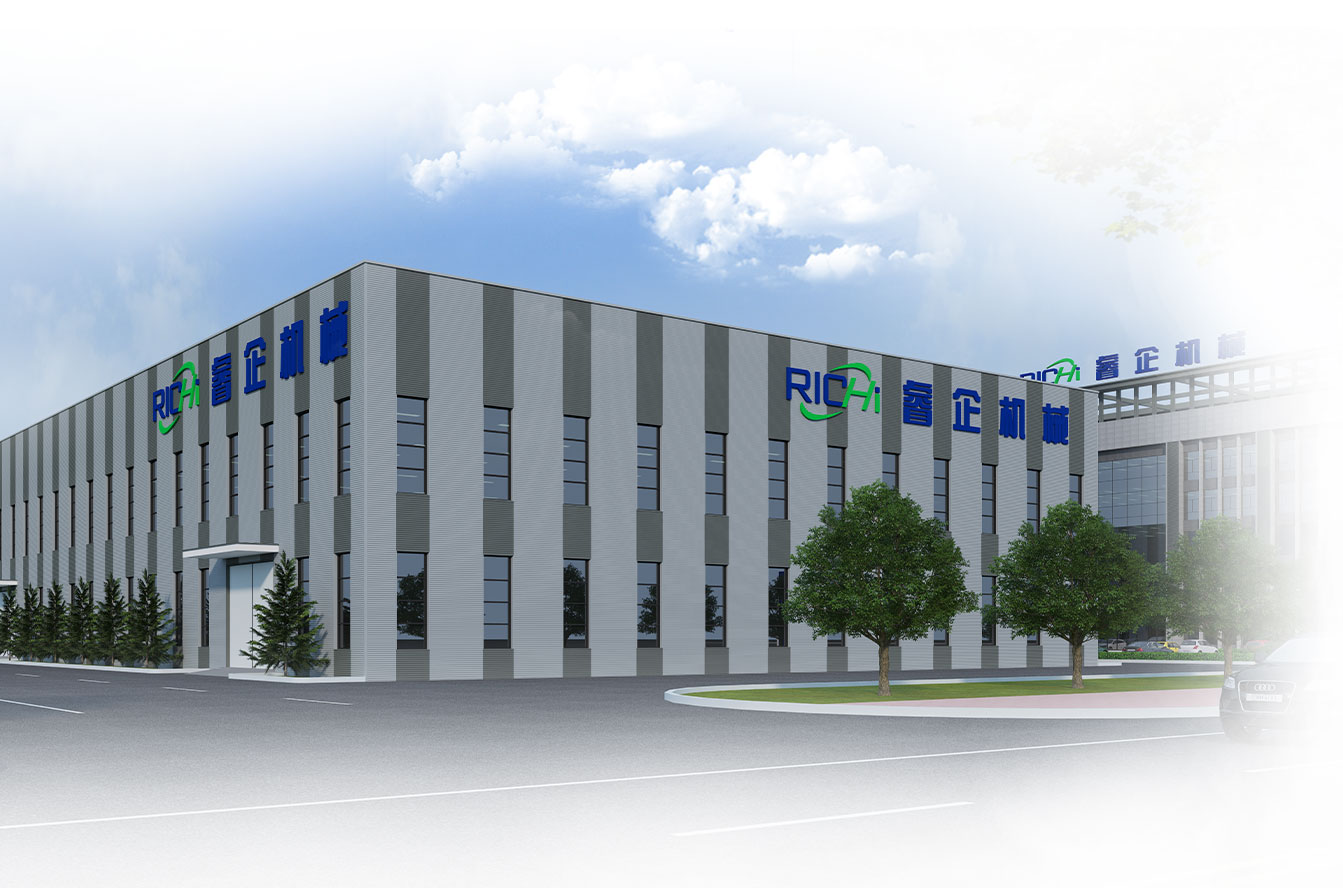
RICHI Machinery is one of the world’s leading suppliers of technology and services for the animal feed, aqua feed and pet food industries, also the largest pellet production line manufacturer in China.
Since 1995, RICHI’s vision to build a first-class enterprise, to foster first-class employees, and to make first-class contributions to society has never wavered.
In the past three decades, we have expanded our business to a wide range of areas, including animal feed mill equipment, aqua feed equipment, pet feed equipment, biomass pellet equipment, fertilizer equipment, cat litter equipment, municipal solid waste pellets equipment, etc.

1995
RICHI Established

2000+
Serving More Than 2000 Customers

120+
RICHI Employees

140+
Exported To 140 Countries