 0086-138 3838 9622
Cassava Residue and Animal Feces Organic Fertilizer Pellet Plant in Ghana
RICHI MACHINERY
overview
With the growing demand for sustainable agriculture in Ghana, local agribusinesses and livestock farms are seeking efficient ways to convert agricultural residues and animal manure into high-quality organic fertilizers. In this context, a cassava residue and animal feces organic fertilizer pellet plant in Ghana was proposed to utilize cassava processing residues and animal manures from nearby farms to produce environmentally friendly organic fertilizer pellets.
The project is designed as an expansion of an existing facility, targeting an annual output of 100,000 tons of organic fertilizer. The total land area covers 32 acres, with a combined building area of 7,500 m², including renovated structures (1,500 m²) and newly constructed production and auxiliary facilities (6,000 m²). The facility operates under a 16 hours per day, approximately 300 days per year, with a total labor force of 25 employees after the expansion.
The plant integrates modern fermentation technology with mechanized mixing, granulation, screening, and packaging processes. Wastewater and odor control systems are in place to minimize environmental impact.
| Project Parameter | Details |
|---|---|
| Project Name | Cassava Residue and Animal Feces Organic Fertilizer Pellet Plant Expansion Project |
| Location | Kumasi Metropolitan Area, Ghana |
| Construction Type | Expansion of existing facility |
| Total Investment | $850,000 |
| Land Area | 32 acres |
| Building Area | 7,500 m² (1,500 m² renovated + 6,000 m² new) |
| Annual Production Capacity | 100,000 tons |
| Labor | 25 employees |
| Working Hours | 8 hours/day, 300 days/year |
The investment includes the construction of fermentation pits, granulation workshops, auxiliary buildings, storage facilities, and basic infrastructure, such as water supply, electricity, and site hardening.
20T/H
capacity
$850,000
investment
Ghana
location
Fertilizer
project type
RICHI MACHINERY
Project Background
Ghana’s agricultural sector produces significant volumes of cassava, cocoa, and other crops, resulting in a large quantity of residues. Cassava processing generates substantial amounts of peelings and pulp residue, which are often underutilized. In parallel, local livestock operations produce manure that, if not properly managed, can cause pollution and odor issues.
To address these challenges, a consortium of local agribusiness investors and a cooperative of livestock farmers proposed a project to integrate cassava residue and animal feces into a cassava residue and animal feces organic fertilizer pellet plant in Ghana. The primary goal is to convert waste into value-added fertilizer products while reducing environmental pollution and supporting sustainable agriculture.
The client is a Ghana-based agricultural enterprise with extensive cassava and livestock operations. The project aims to utilize locally available raw materials—cassava residue, pig manure, cattle manure, and poultry litter—to produce organic fertilizers suitable for crop cultivation.
Project Objectives:
- Expand organic fertilizer production capacity from 10,000 tons/year to 100,000 tons/year.
- Maximize utilization of cassava residues and animal manures.
- Establish a modern, mechanized, and environmentally compliant production facility.
- Improve supply of organic fertilizers for local farmers and export markets.
RICHI MACHINERY
Construction Content and Scale
The plant expansion includes the renovation of 1,500 m² of existing production facilities and the construction of 6,000 m² of new production, auxiliary, and storage buildings. The total area of the project site is 32 acres. The new construction accommodates fermentation pits, granulation workshops, offices, and storage areas.
Project Components
| Engineering Category | Component | Construction Content & Scale | Remarks |
|---|---|---|---|
| Main Engineering | Mixing & Fermentation Area | 2,000 m², 1 floor; includes mixing, fermentation, crushing, and screening areas | Expansion & renovation |
| Main Engineering | Granulation Workshop | 2,000 m², 1 floor; for final pellet production | Expansion & renovation |
| Auxiliary Engineering | Office Building | 60 m², 1 floor | Renovation |
| Storage & Transportation | Raw Material Storage | 2000 m²; for cassava residue and animal manure | Existing facility |
| Storage & Transportation | Auxiliary Material Warehouse | 100 m²; for enzyme preparations and straw | Existing facility |
| Storage & Transportation | Finished Product Warehouse | 500 m²; for organic fertilizer pellets | Expansion & renovation |
| Storage & Transportation | Livestock Manure Transport | 1 suction truck for pig manure; no additional storage yard | Existing facility |
| Utilities | Water Supply | From on-site well | Existing facility |
| Utilities | Electricity Supply | Connected to local grid | Existing facility |
| Utilities | Drainage System | Rainwater and wastewater separation; washing water for fermentation; treated domestic sewage reused as fertilizer | New |
| Utilities | Road Hardening | Cement hardened to support internal transportation | Existing facility |
| Environmental Protection | Wastewater Treatment | Washing water enters fermentation pool; domestic sewage treated in septic tanks for fertilizer use | Existing facility |
| Environmental Protection | Air Pollution Control | Closed fermentation with micro-negative pressure extraction; dust from crushing collected via bag filter and vented through 15 m exhaust | New |
| Environmental Protection | Noise Control | Vibration damping and sound insulation of workshops | New |
| Environmental Protection | Solid Waste Management | Dust recovered for production; domestic waste handled by municipal services | Existing facility |
| Environmental Protection | Ecological Measures | Hardened roads and green coverage around plant | New |
RICHI MACHINERY
Products and Specifications
The plant produces high-quality organic fertilizer pellets. The expansion increases annual production from 10,000 tons to 100,000 tons. The product is bagged in 25 kg packages and meets international organic fertilizer standards.
| Product Name | Annual Production Before Expansion (t) | Annual Production After Expansion (t) | Packaging | Moisture Content | Standard |
|---|---|---|---|---|---|
| Organic Fertilizer | 10,000 | 100,000 | Bagged, 25 kg | ≤30% | NY/T525-2021 |
Quality Standards for Organic Fertilizer:
| Parameter | Standard |
|---|---|
| Organic Matter (%) | ≥30 |
| Total Nutrients (N+P₂O₅+K₂O, %) | ≥4.0 |
| Moisture (%) | ≤30 |
| pH | 5.5–8.5 |
| Total Arsenic (mg/kg) | ≤15 |
| Total Mercury (mg/kg) | ≤2 |
| Total Lead (mg/kg) | ≤50 |
| Total Cadmium (mg/kg) | ≤3 |
| Total Chromium (mg/kg) | ≤150 |
RICHI MACHINERY
Raw Materials and Energy Consumption
The cassava residue and animal feces organic fertilizer pellet plant in Ghana primarily relies on locally available cassava processing residues and animal manures. Straw and wood chips are also added to improve pellet structure and nutrient content.
Raw Materials Description
Cassava residue is a by-product from cassava processing plants, characterized by high organic content and 20% moisture. Manure types include cattle, pig, and poultry manures with moisture ranging from 60% to 70%. Potassium humate is included as a nutrient enhancer.
| Raw Material | Annual Use (t/a) | Packaging | Storage | Moisture Content | Remarks |
|---|---|---|---|---|---|
| Cassava Residue | 3,300 | Bagged | Production Workshop | 20% | Sourced from local cassava processing plants |
| Cattle Manure | 50,000 | Tanker | On-site | 60% | Purchased from nearby farms |
| Pig Manure | 20,000 | Tanker | On-site | 60% | Purchased from nearby farms |
| Chicken Manure | 20,000 | Tanker | On-site | 70% | Sourced from local poultry farms |
| Potassium Humate | 500 | Bagged | Warehouse | Solid | Purchased externally |
| Straw & Wood Chips | 5,000 | Bagged | On-site | 10% | Local agricultural residue |
| Water | 45,000 m³ | N/A | On-site Well | N/A | Production and cleaning use |
| Electricity | 50,000 kWh | N/A | Grid | N/A | Power for machinery |
RICHI MACHINERY
Main Equipment
The organic fertilizer production line includes modern equipment to support each production stage, selected to handle large volumes efficiently.
| Equipment | Model | Quantity Before Expansion | Quantity After Expansion | Change |
|---|---|---|---|---|
| Turning and Mixing Machine | FP2300 | 1 | 4 | +3 |
| Fertilizer Crusher | RY550 | 1 | 1 | 0 |
| Mixer | – | 1 | 1 | 0 |
| Sifter | – | 1 | 3 | +2 |
| Packaging Machine | – | 1 | 3 | +2 |
| Loader | LiuGong 30 | 1 | 1 | 0 |
RICHI MACHINERY
Water Supply and Drainage
The cassava residue and animal feces organic fertilizer pellet plant in Ghana uses on-site well water for production cleaning and limited domestic use.
- Domestic Water Use: 20 employees, 50 L/person/day → 1 m³/day (300 m³/year). Domestic wastewater treated in septic tanks and reused for fertilization.
- Suction Truck Cleaning Water: 0.5 m³/day → 150 m³/year. Wastewater enters fermentation pit.
| Water Use | Unit | Daily Water (m³/d) | Annual Water (m³/a) |
|---|---|---|---|
| Domestic Water | 50 L/person | 1.0 | 300 |
| Suction Truck Cleaning | 0.5 m³/day | 0.5 | 150 |
| Total | – | 1.5 | 450 |
Drainage is designed as rainwater and wastewater separation. Rainwater enters nearby drainage; cleaning water is reused for fermentation; domestic wastewater treated and reused.
RICHI MACHINERY
Labor and Work System
After expansion, 25 employees operate under a daytime work schedule, eight hours per day, approximately 300 days per year.
RICHI MACHINERY
Process Flow and Pollution Control
1. Operational Process
Mixing & Blending: Raw materials, including cassava residue and animal manures, are delivered by suction trucks, weighed, and mixed in turners. Moisture is controlled below 40%. Minor dust and odor are generated.
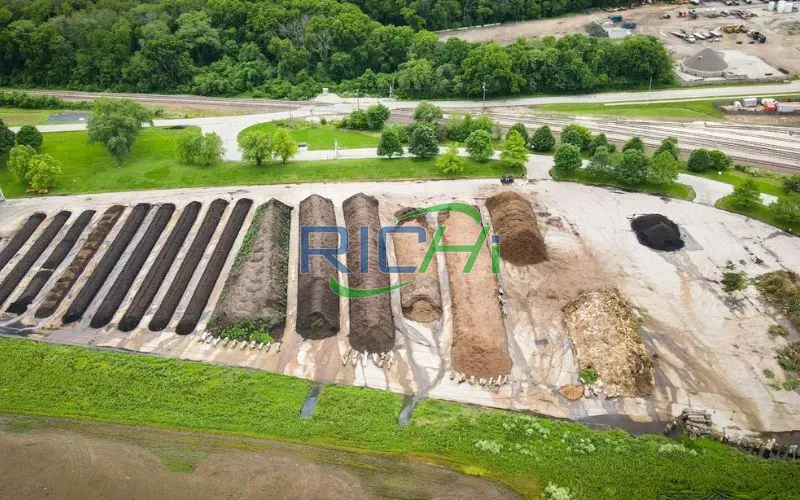
Composting & Fermentation: Mixed materials undergo aerobic composting in open piles with controlled turning and temperature (45–55°C) for approximately 20 days. Odor is mitigated via enclosed fermentation and micro-negative pressure exhaust.
Crushing & Screening: Fermented materials (~30% moisture) are conveyed to crushers and sieves to produce uniform organic fertilizer pellets. Dust is collected via bag filters.
Packaging & Storage: Finished products are bagged (25 kg) and stored in dedicated warehouses.
2. Pollution Control Measures
- Wastewater: Reused for fermentation; domestic wastewater treated in septic tanks.
- Odor: Fermentation pits are enclosed, and exhaust gases are treated with biofilters before venting.
- Dust: Bag filters on crushers and sieves; collected dust is reused in production.
- Noise: Machinery installed with vibration dampers; workshops insulated.
The organic fertilizer production project employs aerobic fermentation and granulation technology. Cassava residue and animal feces are mixed with straw or wood chips to adjust carbon-to-nitrogen ratio. Fermentation reduces pathogens and stabilizes nutrients. Granulation produces uniform pellets, which are then dried (if necessary) and screened. The process ensures high organic matter retention and nutrient content.
RICHI MACHINERY
Market and Investment Prospects in Ghana
Ghana’s agricultural sector is rapidly adopting organic fertilizers due to soil fertility concerns and government incentives for sustainable farming. The cassava residue and animal feces organic fertilizer pellet plant in Ghana offers several advantages:
- Utilizes abundant local residues, reducing waste disposal issues.
- Produces high-quality, standardized organic fertilizers for crops like maize, cocoa, cassava, and vegetables.
- Supports circular economy and environmental sustainability.
- Potential to supply both domestic and regional markets in West Africa.
Investment in such projects is attractive due to:
- Low raw material cost (cassava residue and animal manure readily available).
- Strong government support for organic fertilizer production.
- Growing demand among smallholder and commercial farmers.
RICHI Machinery provided professional consultation, equipment supply, installation guidance, and on-site training. Their advanced granulation and fermentation equipment ensures efficient, stable, and high-quality production. Clients can expect reliable operation, reduced labor, and high product consistency.
RICHI MACHINERY
Project Summary
The cassava residue and animal feces organic fertilizer pellet plant in Ghana demonstrates a successful integration of agricultural residue utilization, livestock waste management, and mechanized organic fertilizer production. With a production capacity of 100,000 tons/year, modern equipment, and strong environmental compliance, the project sets a benchmark for sustainable fertilizer manufacturing in West Africa.
The plant is equipped to handle cassava residue, cattle, pig, and chicken manures, with auxiliary straw and wood chips. The process ensures high organic matter retention, nutrient-rich pellets, and minimized environmental impact.
RICHI Machinery’s expertise in equipment manufacturing and project implementation guarantees clients a turnkey solution with reliable operation, making this plant an exemplary model for similar projects across Ghana and neighboring countries.
● RICHI MACHINERY
RICHI Service

● Consulting
Customer Consultation
We want to have a deep understanding of your industrial process, to know your exact needs of feed, wood, biomass, fertilizer or other pellet processing.

● Design
fertilizer Pellet Plant Design
Based on your unique situation and industrial process, we will tailor complete pellet plant you need, and inform you of every additional detail that could facilitate operation, minimize total cost.
● Manufacturing
Equipment Manufacturing
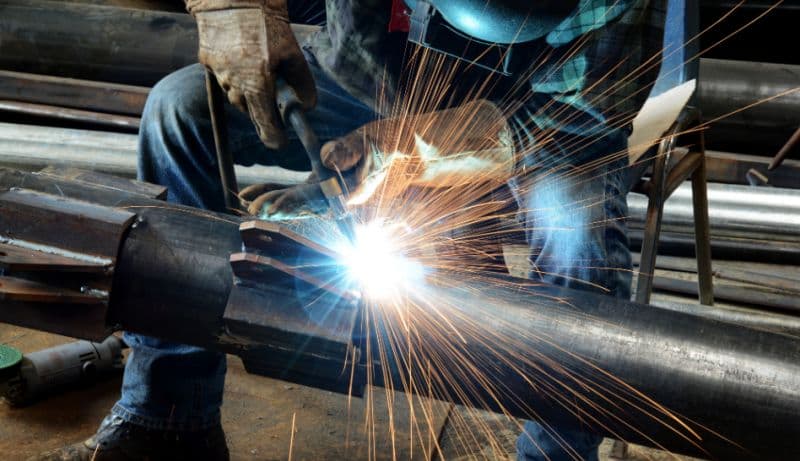
The critical components of the of the complete pellet production line equipment are built in our own workshops in Asia. Additional equipment is manufactured by our worldwide network of reliable partners.

● Testing
Quality Inspection & Testing
Before leaving the factory, all equipment will be inspected by the quality inspection department. We can also provide customers with testing services from a single machine to a complete pellet plant system, and provide you with real actual data for “worry-free use.”

● Delivery
Equipment Delivery
In equipment boxing and packaging, we adopt professional packaging and modular solutions to ensure the safe and non-destructive delivery of pellet plant equipment.
● Installation
Installation & Commissioning
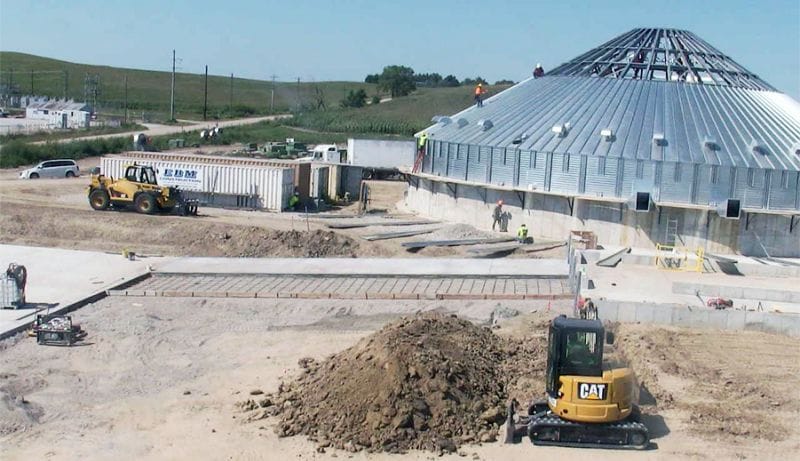
Whether you choose your own subcontractor for the erection phase or you want to install everything together with us, a Richi supervisor will be around to make sure everything is mounted in a safe and thorough way.

● Training
Staff Training
We provide comprehensive training for the technicians of each project. We can also continue to provide support for the technicians during latter project operation.
● After-sales
Project Follow-Up
When everything is up and running our Richiers will help you further whenever needed. We are ready to answer your call 24/7.We’ll also visit you regularly to learn about your needs.
Who we are
RICHI Machinery is one of the world’s leading suppliers of technology and services for the animal feed, aqua feed and pet food industries, also the largest pellet production line manufacturer in China.
Since 1995, RICHI’s vision to build a first-class enterprise, to foster first-class employees, and to make first-class contributions to society has never wavered.
In the past three decades, we have expanded our business to a wide range of areas, including animal feed mill equipment, aqua feed equipment, pet feed equipment, biomass pellet equipment, fertilizer equipment, cat litter equipment, municipal solid waste pellets equipment, etc.

1995
RICHI Established

2000+
Serving More Than 2000 Customers

120+
RICHI Employees

140+
Exported To 140 Countries