 0086-138 3838 9622
Biomass Pellet Processing System for Farm Waste in Cambodia
RICHI MACHINERY
Project Overview
A small agricultural supply company reached out to RICHI Machinery about building a 0.8-1t/h biomass pellet processing system for farm waste in Cambodia. The client operates out of a leased industrial facility in Battambang Province, about 300km northwest of Phnom Penh. The facility produces 2,000 tons of biomass pellets annually (running 8 hours per day, 300 days per year), using agricultural residues and wood processing waste from local farms and sawmills.
The client had been selling imported biomass pellets from Vietnam to local farmers and factories. The Vietnamese product was good quality but expensive—about 450,000 KHR per ton delivered ($110). Farmers in Battambang, one of Cambodia’s richest agricultural regions, were interested but couldn’t afford that price. The client realized there was a market for a lower-cost domestic product.
What makes this project interesting is the raw material mix and the site constraints. The client leases a portion of a former cement factory—an old facility that stopped operating in 2018. The site has 6,500m² total area, with a 3,700m² enclosed production building (10m ceiling height, steel frame with corrugated metal cladding). The building was in rough shape—leaky roof, cracked floor, no lighting—but the client got a very low rent (about $300 per month).
The client’s total equipment investment was about $72,500 (equipment plus site improvements). That’s a small budget, but adequate for a 0.8-1 t/h line. The client has 10 staff (no on-site accommodation, all local workers), operating a single shift.
0.8-1T/H
capacity
$72,500
investment
Cambodia
location
Biofuel
project type
RICHI MACHINERY
Why Cambodia? Why use Farm Waste
Cambodia’s economy is heavily agricultural. Rice is the main crop (about 11 million tons annually, producing roughly 2 million tons of rice straw and 1.5 million tons of rice husks). Other crops—corn, cassava, sugarcane, beans—add significant volumes of residue. Most of this material is currently:
- Burned in the field (illegal in many areas, but enforcement is weak). Field burning causes air pollution and public health issues, particularly in the dry season (November to April).
- Left to rot (produces methane, a potent greenhouse gas)
- Used as low-grade animal feed (rice straw, but nutritional value is poor)
Wood processing waste is also available. Cambodia has a growing furniture manufacturing sector (mainly in Phnom Penh and surrounding provinces), producing sawdust, offcuts, and trim. Much of this material is currently burned in uncontrolled piles or dumped.
The client’s market analysis:
| Customer segment | Annual pellet demand (estimated) | Current fuel | Price they pay |
|---|---|---|---|
| Rice mills (parboiling) | 8,000 tons | Rice husks (inefficient) | 200,000 KHR/ton for pellets |
| Dried fruit/food processors | 3,000 tons | LPG | 450,000 KHR/ton (imported) |
| Small factories (boilers) | 5,000 tons | Firewood | 300,000 KHR/ton equivalent |
| Household heating (dry season) | 2,000 tons | Charcoal | 400,000 KHR/ton equivalent |
| Total addressable | 18,000 tons | — | — |
Current domestic pellet production in Cambodia is minimal—maybe 1,000-2,000 tons per year from a few very small operations. The market gap is significant. The client’s target selling price is 320,000-350,000 KHR/ton ($78-85), about 25% below imported product.
RICHI MACHINERY
Raw Materials: What the Client Has Access To
The client sources raw material from within a 80km radius of Battambang:
Agricultural residues:
- Rice straw (from farmers after harvest)
- Rice husks (from rice mills—plentiful, but high ash content; the client limits rice husks to 30% of mix)
- Corn stalks (from corn-growing areas north of Battambang)
- Cassava stems (from cassava plantations)
- Coconut husks and shells (coconut plantations in western Battambang)
Wood processing waste:
- Wood trim and offcuts (sawmills, furniture factories)
- Sawdust (bagged, from woodworking shops)
- Tree branches and yard waste (municipal green waste from Battambang city)
Key constraint: The client cannot accept wood that has been painted, treated, or coated with adhesives. No old furniture, no construction waste with glue, no laminated panels. Suppliers sign contracts agreeing to this. The client visually inspects every load.
Raw material mix (annual):
| Raw Material | Annual (tons) | Moisture (%) | Source | Cost (KHR/ton) | USD/ton (4,100 KHR/USD) |
|---|---|---|---|---|---|
| Rice straw | 600 | 15-25% (sun-dried by farmers) | Local farms | 80,000 | $19.50 |
| Rice husks | 500 | 10-15% | Rice mills | 100,000 | $24.40 |
| Wood trim/offcuts | 500 | 20-30% | Sawmills | 120,000 | $29.30 |
| Sawdust | 300 | 20-25% | Woodworking shops | 150,000 | $36.60 |
| Corn stalks, cassava stems | 200 | 15-20% | Farms | 80,000 | $19.50 |
| Coconut husks/shells | 200 | 30-40% (needs drying) | Coconut plantations | 50,000 | $12.20 |
| Tree branches (yard waste) | 100 | 30-40% | Municipal collection | Free (they pay for disposal) | $0 (negative cost) |
| Total input | 2,400 | — | — | — | — |
Wait, 2,400 tons input for 2,000 tons output? Yes. The difference (about 400 tons) is water that evaporates during processing (no active drying—the client relies on sun-dried material and avoids high-moisture feedstocks). Also about 10-15 tons of dust captured in filters (recycled back into product), plus screen oversize and rejects (re-pelletized).
Moisture management is critical. The client’s target moisture for material entering the pellet mill is ≤18%. Material above 20% moisture does not pellet well (pellets are soft, crumbly, low durability). The client built a simple sun-drying area (concrete pad, 500m², with a polycarbonate roof) where wet material is spread out for 1-3 days. Battambang has about 200 sunny days per year. During the wet season (June-October), the client reduces production or buys drier material from other sources.
RICHI MACHINERY
The Site and Building
The client leases a portion of a former cement factory. The site is about 6,500m² total, with a 3,700m² enclosed production building. The building is steel frame with corrugated metal walls and roof, 10m to the eaves. Condition is fair—the roof had several leaks, which the client repaired before moving in.
Layout inside the production building (3,700m²):
| Zone | Area (m²) | Location | Use |
|---|---|---|---|
| Raw material storage 1 (incoming, needs drying) | 300 | West side | Material that needs sun drying or has high moisture |
| Raw material storage 2 (processed, ready for crushing) | 500 | Northeast of area 1 | Material that has been dried and is ready |
| Crushing area | ~200 | West-central | Crusher (YZPS-1600), feeds to conveyor |
| Grinding area | ~200 | Adjacent to crushing | Hammer mill (dust-tight, with cyclone + bag filter) |
| Pelletizing area | ~300 | East-central | Two pellet mills (YZZL850), bag filter for dust |
| Finished product storage | 500 | Southeast | Bagged pellets, 25kg bags, palletized |
| Office + small storage | 150 | South of building (attached separate structure) | Office, rest area, tool storage |
| Total used | 2,150 | — | Rest of building is aisle space and buffer |
Why the client chose this layout: The building has a loading door on the west side (truck access from the road) and a smaller door on the east side (finished goods dispatch). Material flows west to east: intake → drying area → crushing → grinding → pelletizing → finished goods → dispatch. No backtracking.
One limitation: The 10m ceiling height is adequate for the equipment but not for a tall silo. The client uses ground-level bins (2m high) for buffer storage, not silos. That’s fine for 1 t/h.
RICHI MACHINERY
Equipment Configuration
| Equipment | Quantity | Power | Notes |
|---|---|---|---|
| Primary crusher | 1 | 55kW | For wood trim, tree branches, coconut shells |
| Hammer mill (included with crusher feed) | 1 | — | Part of the size reduction system |
| Biomass granulator | 2 | 110kW each | Ring die type |
| Pulse bag filter (for grinding) | 1 | 7.5kW fan | Captures dust from hammer mill |
| Pulse bag filter (shared for pellet mills) | 1 | 5.5kW fan | Captures dust from both pellet mills |
| Bagging station (manual, semi-automatic scale) | 1 | 0.5kW | 25kg bags |
| Belt conveyors (enclosed, various lengths) | 3 | 3kW total | Material transport |
| Front-end loader | 1 | — | Used, client bought locally |
| Forklift | 1 | — | Used, client bought locally |
| Equipment cost (FOB Qingdao) | — | — | $72,500 |
Why two pellet mills instead of one larger one? The client considered a single 200-220kW mill (capable of 1-1.2 t/h). But the price difference was small—about $3,000. Two 110kW mills (each capable of 0.4-0.6 t/h, total 0.8-1.2 t/h) offer redundancy. If one mill is down for maintenance (die change, bearing replacement), the client still produces 0.4-0.6 t/h. For a small business, that’s valuable.
Why no dryer? The client uses sun drying only. Material with moisture >25% is spread on the concrete pad for 1-3 days (longer in the wet season). The client built a simple roof over the drying area (polycarbonate sheets on a steel frame, 500m²). The client reduces production or buys drier material during the wet season.
RICHI MACHINERY
Process Flow
This is a simple biomass pellet plant—no dryer, no cooler, minimal automation. That’s the point. For a first-time pellet producer with a small budget, keep it simple.
Step 1: Raw Material Receiving and Sorting
Trucks and pickups arrive at the site. The driver unloads onto the concrete yard near the raw material storage area.
Sorting is done manually (one worker, part-time). The worker removes:
- Stones and dirt (common in straw and husks)
- Metal (nails, screws—critical for the pellet mill)
- Plastic and other contamination
- Oversize material (branches >15cm diameter, long wood pieces)
Material that needs drying (moisture >25%) goes to the drying area (concrete pad with roof). The worker spreads it in a thin layer (10-15cm thick). Every day, the worker turns the material with a pitchfork (simple, cheap, effective). After 1-3 days (depending on sun and humidity), moisture drops to 15-20%. Acceptable.
Material that is already dry (moisture ≤20%) goes directly to the raw material storage area 1 (the “pre-crush” zone).
Step 2: Crushing
Don’t crush what doesn’t need crushing. But material that’s too long or thick won’t feed into the hammer mill.
The client uses a front-end loader to feed material from the raw material storage area into the crusher hopper (YZPS-1600).
What goes into the crusher:
- Wood trim and offcuts (length up to 1m, thickness up to 8cm)
- Tree branches (diameter up to 10cm)
- Coconut shells (hard, need pre-cracking)
- Corn stalks (whole plants, dry)
- Large wood pieces (from dismantled pallets, but only unpainted)
Crusher parameters:
- Rotor width: 1,600mm
- Hammers: 32 (replaceable)
- Rotor speed: 650-750 RPM
- Motor: 55kW
- Output target: 1-10cm pieces (the hammer mill will take it down further, but the crusher output should be reasonably uniform)
What does NOT go into the crusher:
- Sawdust (already small enough)
- Rice husks (already small enough—but they can be fed directly to the hammer mill or even directly to the biomass fuel pellet machine? No—rice husks alone won’t pellet well because they lack lignin. The client mixes rice husks with wood material so the total lignin content is sufficient.)
The crusher output drops onto an enclosed belt conveyor (with a magnetic head pulley to catch nails and staples—critical for waste wood). The conveyor feeds into the hammer mill.
Step 3: Grinding
All material (crusher output plus small material like sawdust and rice husks) feeds into the hammer mill.
The hammer mill is integrated with the crusher feed system—there’s no separate hammer mill unit; the size reduction is a single system. This saves cost and space.
Grinding target: Particle size 3-6mm. This is the sweet spot for pelletizing. Too coarse (>8mm) and the pellet mill struggles to pull material into the die holes. Too fine (<2mm) and the material is powdery, requiring higher energy to compress.
Step 4: Temporary Storage (Buffer)
Milled material drops into a small hopper (3m³ capacity, steel, cone bottom). This holds about 3 hours of production at 1 t/h.
Why a buffer hopper? The crusher and hammer mill run intermittently (the client loads material in batches). The pellet mills need continuous feed. The hopper smooths out the flow. The client’s operator refills the hopper from the storage area as needed—about every 2-3 hours.
The hopper has a level sensor (simple paddle type, about $50). A light on the control panel indicates “low level” (hopper is 20% full), “normal” (20-80%), and “full” (80-100%).
Step 5: Pelletizing
This is the most critical step. The client spent a week learning to adjust the die gap and knife length for different materials.
Milled material from the hopper drops onto a screw conveyor (variable speed) that feeds both pellet mills. The conveyor has two outlets with slide gates. The operator balances the flow to the two mills based on their current draw.
Pellet mill specifications (YZZL850, each):
| Parameter | Value |
|---|---|
| Die diameter | 850mm |
| Die thickness | 100mm |
| Die hole diameter | 8mm (produces 8.5-9mm pellets after expansion) |
| Compression ratio | 5:1 (standard for mixed wood and agricultural residues) |
| Rollers | 2 (each 220mm diameter) |
| Main motor | 110kW, 6-pole, 1,000 RPM at output |
| Die speed | 160-180 RPM |
| Operating temperature (die) | 70-90°C (depending on material) |
| Pellet temperature at exit | 70-85°C |
How the pellet mill works (briefly):
- Material falls into the feed port and spreads across the inside of the rotating die.
- The stationary rollers press the material against the die.
- Material is forced through the die holes under high pressure.
- Friction heats the material to 70-90°C. This softens the lignin naturally present in wood and plant fibers.
- Softened lignin acts as a binder.
- The continuous rod of pellets exits the die and is cut to length by a rotating knife.
No added binders. The mixed feedstock (wood provides lignin; agricultural residues have less but still sufficient) works fine when heated.
Pellet quality during trial runs:
| Property | Target | Actual (average) |
|---|---|---|
| Diameter | 6-10mm | 8.5-9.0mm |
| Length | 10-40mm | 20-35mm |
| Moisture (exiting mill) | 10-14% | 11-13% |
| Density (pellet) | >1,000 kg/m³ | 1,080 kg/m³ |
| Bulk density | 600-650 kg/m³ | 620 kg/m³ |
| Durability | >95% | 96-97% |
Knife adjustment: The knife distance from the die face is set to about 25mm for most materials. The pellet “squirt” expands as it exits, so actual cut length is about 15-20% longer than the gap. The client adjusts the knife for really hard materials (coconut shells) and soft materials (sawdust).
Step 6: Cooling
Hot pellets (70-85°C) fall onto a belt conveyor (open, not enclosed—the pellets are large enough that dust is minimal). The conveyor carries the pellets to the finished product storage area, where they are dropped into a pile on the floor (concrete, clean).
Why no mechanical cooler? A counterflow cooler would cost about $8,000 and add complexity. For a 1 t/h pellet mill line, natural cooling on the floor works fine. The pellets are spread in a layer about 30cm deep. After 4-6 hours, the center of the pile is at ambient temperature (25-35°C in Battambang). The client bags pellets the morning after production.
One trick the client learned: Don’t pile pellets while they’re still hot. If you pile them more than 1m deep, the center stays warm for 24+ hours, and moisture can condense inside the pile, leading to mold. The client spreads pellets in a thin layer (maximum 30cm depth) using the front-end loader. Simple, effective.
Step 7: Packaging
Cooled pellets are scooped (with the front-end loader) into a small hopper that feeds the bagging scale.
Bagging scale specifications:
- Type: Semi-automatic, manual bag placement
- Capacity: 6-8 bags per minute (25kg bags)
- Accuracy: ±100-150g (the client checks every 10th bag with a hanging scale)
- Bag types: 25kg woven poly bags (standard), occasionally 50kg for bulk customers
Packaging process:
- Operator hangs an empty bag on the filling spout.
- Presses a button.
- Scale fills to target (25kg or 50kg).
- Operator removes bag and sews it closed (portable bag closer, manual).
- Bags are stacked on pallets (40 bags per pallet for 25kg = 1,000kg per pallet).
- Pallets are moved to finished goods area with a hand pallet jack (the client has a forklift but uses it sparingly to save diesel).
The client sells pellets in:
- 25kg bags (retail to small farmers, village shops)
- 500kg bulk bags (“super sacks”, for regular customers—the client bought a few used ones for $5 each)
- Loose (tipper truck) for the largest customer (a rice mill that buys 5-10 tons at a time)
RICHI MACHINERY
Utility Requirements and Consumption
| Utility | Annual consumption | Source | Cost (KHR) | Cost (USD at 4,100 KHR/USD) |
|---|---|---|---|---|
| Electricity | 804,700 kWh | Electricite du Cambodge (EdC) | 282 million | $68,800 |
| Water | 150 m³ | Municipal supply | 600,000 | $146 |
| Diesel (loader + forklift) | 3,000 liters | Local station | 12 million | $2,930 |
Electricity breakdown (annual, 300 days, 8 hours/day):
| Equipment | kW average | Hours/day | kWh/day | kWh/year |
|---|---|---|---|---|
| Crusher | 35 | 4 (not continuous) | 140 | 42,000 |
| Hammer mill (integrated with crusher) | — | — | (included above) | — |
| Biomass pellet mills (2) | 160 (80 each average) | 8 | 1,280 | 384,000 |
| Fans (2 bag filters) | 13 | 8 | 104 | 31,200 |
| Conveyors, bagging scale | 5 | 8 | 40 | 12,000 |
| Lighting, office, phone charging | 2 | 8 | 16 | 4,800 |
| Total | — | — | 1,580 | 474,000 kWh |
The client’s actual consumption is about 474,000-500,000 kWh annually including the loader battery charging (the client uses an electric forklift? No—they use diesel. So the electricity consumption is just the production equipment.
RICHI MACHINERY
How RICHI Machinery Customized This Line for the Client’s Needs
The client had 3 specific requirements that shaped the equipment design:
Requirement 1: No on-site technical staff. The client has 10 workers, but none have prior experience with pellet mills. They are farm workers and general laborers.
RICHI solution: Simplified control panel with manual switches (no PLC, no touchscreen). Each machine has a red “STOP” button and a green “START” button. That’s it. We provided a 2-week on-site training program:
- Week 1: Basic safety, machine startup/shutdown, daily checks
- Week 2: Adjusting the pellet mill die gap, changing screens, troubleshooting common problems (die plugging, belt slipping, bearing overheating)
The client’s lead operator (a local mechanic) now handles basic maintenance. For major repairs (bearing replacement, die changes), the client calls a technician from Phnom Penh (about $50 per visit plus travel).
Requirement 2: Raw material moisture varies significantly (15-40%). The client cannot afford a mechanical dryer.
RICHI solution: Designed the process around sun drying. We provided a simple moisture meter (portable, 120)and trained the client′s staff to test every batch, Material>252,500. During the wet season (June-October), the client buys pre-dried material from other sources (rice mills with mechanical dryers, sawmills that kiln-dry their waste). The client adjusts production mix: more wood (lower moisture) in wet months, more agricultural residues (which are harvested dry) in dry months.
Requirement 3: The client wants to produce fuel pellets for local sale, not animal bedding. The specifications are different (fuel pellets need higher density, lower moisture). But the process is the same—just different target parameters.
RICHI solution: Same equipment, but different operating parameters:
- For fuel pellets: Die compression ratio 5:1 (standard), target moisture ≤12%, target density >1,050 kg/m³
- For bedding pellets (not currently produced): Die compression ratio 4:1, target moisture 10-14%, target density 950-1,050 kg/m³
The client’s current product (8.5-9mm diameter, 10-12% moisture, 1,080 kg/m³ density) meets Cambodia’s informal standard for fuel pellets (there is no national standard, so buyers use their own specifications).
RICHI MACHINERY
Product Quality and Market Positioning
The client’s pellets are sold to:
| Customer type | Volume (tons/year) | Price (KHR/ton) | Price (USD/ton) | Notes |
|---|---|---|---|---|
| Rice mill (parboiling) | 800 | 320,000 | $78 | Bulk (tipper truck), 10-15 ton loads |
| Dried fruit factory | 500 | 340,000 | $83 | 25kg bags |
| Small factories (boilers) | 400 | 330,000 | $80 | Mixed bag/bulk |
| Retail (shops, farmers) | 250 | 350,000 | $85 | 25kg bags, delivered within 50km |
| Total/Weighted average | 1,950 | ~333,000 | ~$81 | — |
Product specifications (client’s typical analysis):
| Parameter | Value | Test method |
|---|---|---|
| Diameter | 8.5-9.0 mm | Caliper (10 pellets) |
| Length | 20-35 mm | Caliper (50 pellets) |
| Moisture | 10-12% | Drying oven (105°C, 24 hours) |
| Density (pellet) | 1,080 kg/m³ | Water displacement |
| Bulk density | 620 kg/m³ | 1L cylinder, tapped |
| Ash content | 3-5% | 550°C for 4 hours (depends on rice husk content) |
| Lower heating value | 16.5-17.5 MJ/kg | Calculated from composition |
| Fines (passing 3mm screen) | <2% | Sieve test |
| Durability | 96-97% | Tumbler test (500 revolutions) |
Comparison with imported pellets from Vietnam:
| Parameter | Client’s product | Vietnamese imported |
|---|---|---|
| Price (delivered Battambang) | 333,000 KHR/ton ($81) | 450,000 KHR/ton ($110) |
| Moisture | 10-12% | 9-11% |
| Ash content | 3-5% | 2-3% |
| Heating value | 16.5-17.5 MJ/kg | 17.5-18.5 MJ/kg |
| Delivery time | 1-2 days (within 100km) | 7-14 days (from Vietnam) |
The client’s product is slightly lower quality (higher ash, lower heating value) but 26% cheaper. For most customers in Battambang, that’s a good trade-off. The rice mill customer tested both products and concluded that the client’s pellets are “good enough” at a much better price.
RICHI MACHINERY
Market Outlook for Biomass Pellets in Cambodia
Cambodia’s biomass pellet market is nascent but growing. The government’s energy strategy (Power Development Plan 2022-2040) encourages renewable energy, including biomass co-firing at coal plants (no coal plants in Cambodia—actually, there is a coal plant in Preah Sihanouk province, 350km south of Battambang). The main demand drivers are:
Industrial boilers. Textile factories (Phnom Penh, Kampong Speu) and food processors (Battambang, Siem Reap) need steam. Many use firewood or heavy fuel oil. Pellets are cleaner and more efficient.
Rice mills. Parboiling rice requires heat. Most rice mills burn rice husks directly in inefficient furnaces. Pelletized rice husks burn more cleanly and consistently, but rice husk pellets have high ash content (10-15%) and low heating value (13-14 MJ/kg). The client mixes rice husks with wood to improve quality.
Household heating. Cambodia has a cool season (November to February) with nighttime temperatures dropping to 15-18°C in the north. Not freezing, but many households use charcoal or wood for space heating. Pellets in a small stove are a cleaner alternative, but the market is small.
Export to Vietnam and Thailand. Both neighbors have larger pellet markets and higher prices. But export requires quality certification (ENplus, ISO 17225), which adds cost. The client is exploring this but hasn’t committed.
Challenges:
- Electricity cost. At 580 KHR/kWh ($0.14), Cambodia has some of the highest industrial electricity rates in Southeast Asia. That’s a significant operating cost for pellet production.
- Raw material logistics. Cambodia’s agricultural waste is distributed across the country, but collection is inefficient. Many farmers burn straw in the field because collecting and transporting it is not worth the low price. The client pays farmers 80,000 KHR/ton ($19.50) for rice straw—that’s about the breakeven point for farmers to bother collecting it.
- Policy uncertainty. The government talks about promoting renewables, but subsidies and regulations are inconsistent. The client is not relying on government support.
Opportunities:
- Low competition. Only 1-2 small producers in Battambang. The client is the only one making pellets from mixed agricultural residues.
- Growing awareness. Cambodian factory owners are learning about biomass pellets from trade associations and regional conferences. The client spends time educating potential customers.
- Carbon credits. Not currently a factor, but could be in the future. Cambodia’s voluntary carbon market is developing.
RICHI MACHINERY
Thinking About a Small Farm Waste Pellet System?
This project shows that a small-scale pellet line can work in a developing country context—if you keep costs low and operations simple.
What we learned from this project that might help you:
Skip the dryer. Sun drying is free. If you live in a sunny climate (most of the tropics and subtropics), you can dry material enough for pelletizing. The client in Battambang uses a simple roofed concrete pad. Material with 25-30% moisture dries to 18-20% in 2-3 days. That’s acceptable.
Two small biomass pellet machines are better than one large mill for a first project. Redundancy matters. When one mill needs a bearing replacement (it will happen), the client still produces half his output.
Don’t over-automate. The client’s control panel has START and STOP buttons. No PLC, no touchscreen, no remote monitoring. Simple is cheaper and easier to troubleshoot. The client’s mechanic can fix anything on this line with basic tools.
Work within your site constraints. The client’s building had a leaky roof, cracked floor, and no lighting. Instead of spending 20,000onanewbuilding,hespent5,000 on repairs. Good enough for a 1 t/h line.
Cambodia is a tough market for pellets right now. High electricity costs and low farmer incomes make profitability challenging. The client is barely breaking even. But he’s learning and improving. The market will grow as industrial customers switch from firewood and diesel.
RICHI MACHINERY
Considering a Small Pellet Line from Farm Waste?
Small biomass pellet projects like this one are our specialty. We don’t push expensive automation or oversized equipment.
What we need to know to help you:
- What farm waste is available within 50km of your site? (Type, moisture, seasonal availability)
- What’s your electricity cost (per kWh) and reliability?
- Do you have a building? (Minimum 300-500m² for 1 t/h)
- What’s your budget? (The Cambodian client spent $32,500 on equipment)
- Who will operate the line? (Do they have mechanical experience?)
Send us your answers. We’ll reply within 5 business days with a preliminary equipment list, layout sketch, and budget estimate. No obligation.
RICHI Machinery – Small biomass pellet production lines from 0.2 t/h to 2 t/h, designed for farm waste, agricultural residues, and wood processing byproducts. Simple, robust, affordable. Shipping from Qingdao to Sihanoukville port (Cambodia): 12-16 days. Installation support available in Cambodia within 1 week (our technician based in Phnom Penh).
● RICHI MACHINERY
RICHI Service

● Consulting
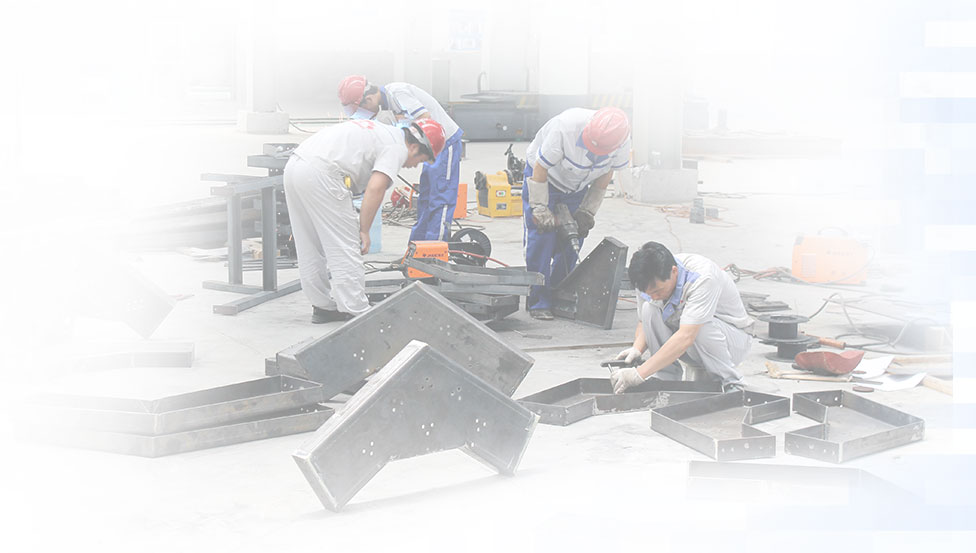
Customer Consultation
We want to have a deep understanding of your industrial process, to know your exact needs of feed, wood, biomass, fertilizer or other pellet processing.
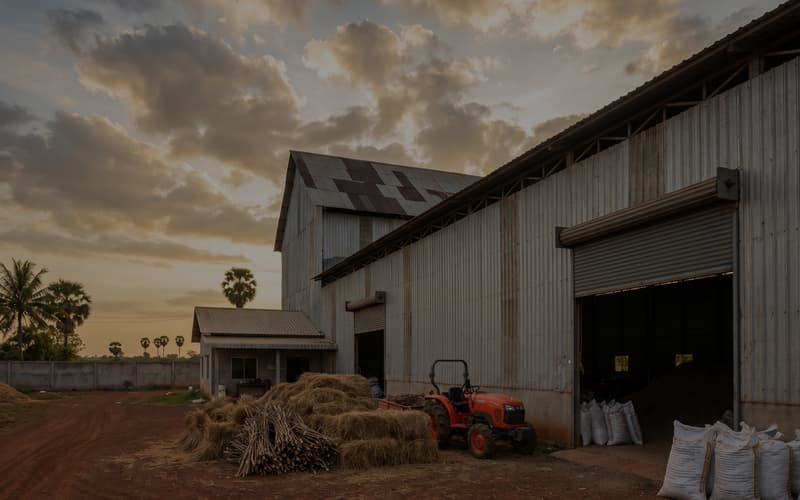
● Design
biomass Pellet Plant Design
Based on your unique situation and industrial process, we will tailor complete pellet plant you need, and inform you of every additional detail that could facilitate operation, minimize total cost.
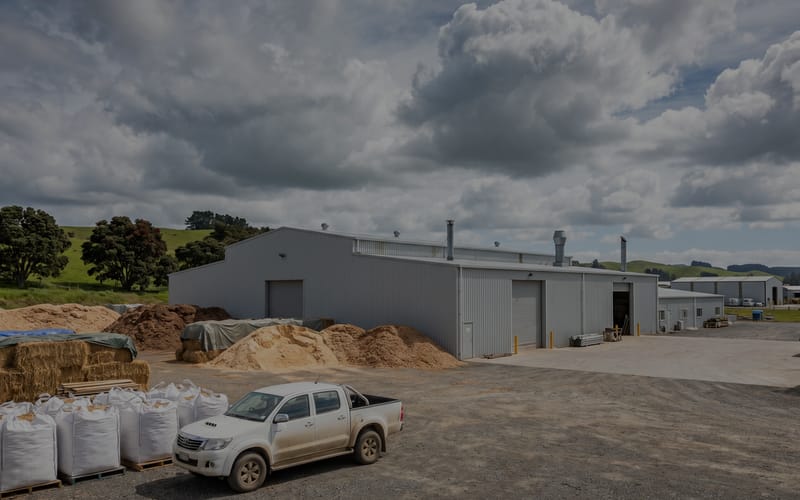
● Manufacturing
Equipment Manufacturing
The critical components of the of the complete pellet production line equipment are built in our own workshops in Asia. Additional equipment is manufactured by our worldwide network of reliable partners.
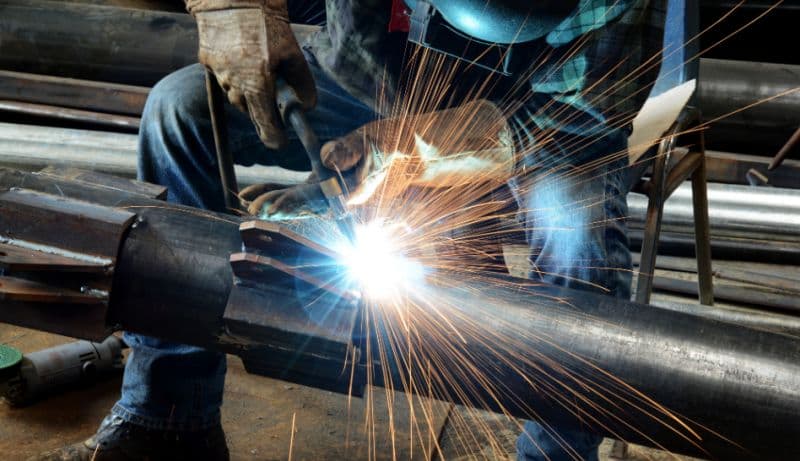
● Testing
Quality Inspection & Testing
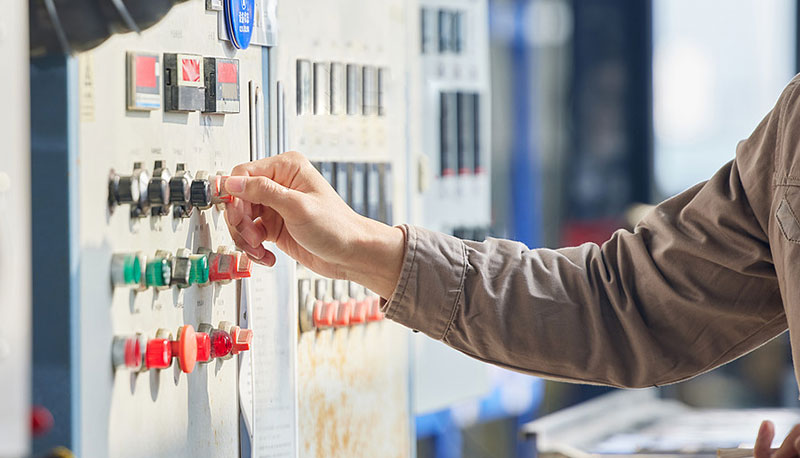
Before leaving the factory, all equipment will be inspected by the quality inspection department. We can also provide customers with testing services from a single machine to a complete pellet plant system, and provide you with real actual data for “worry-free use.”

● Delivery
Equipment Delivery
In equipment boxing and packaging, we adopt professional packaging and modular solutions to ensure the safe and non-destructive delivery of pellet plant equipment.
● Installation
Installation & Commissioning
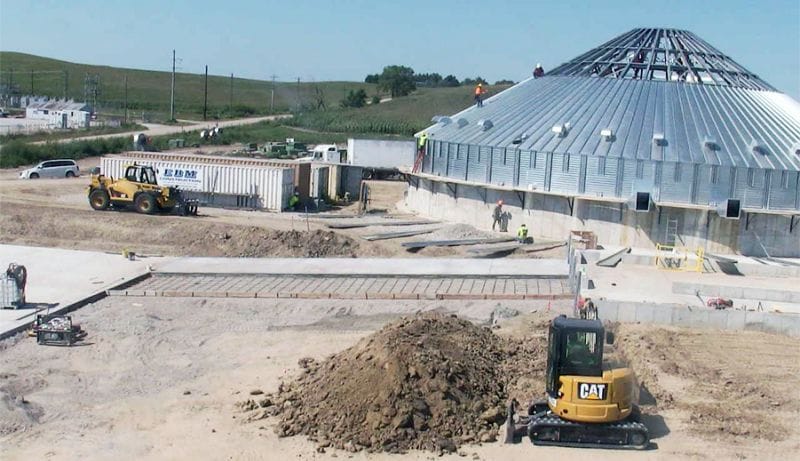
Whether you choose your own subcontractor for the erection phase or you want to install everything together with us, a Richi supervisor will be around to make sure everything is mounted in a safe and thorough way.

● Training
Staff Training
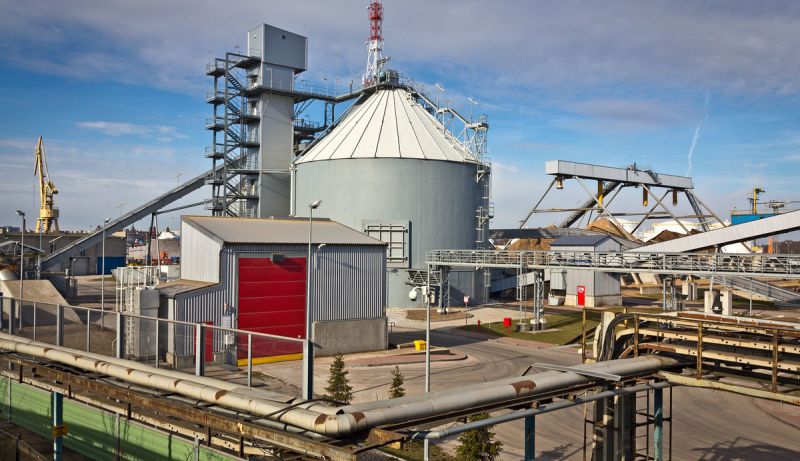
We provide comprehensive training for the technicians of each project. We can also continue to provide support for the technicians during latter project operation.
● After-sales
Project Follow-Up
When everything is up and running our Richiers will help you further whenever needed. We are ready to answer your call 24/7.We’ll also visit you regularly to learn about your needs.
Who we are
RICHI Machinery is one of the world’s leading suppliers of technology and services for the animal feed, aqua feed and pet food industries, also the largest pellet production line manufacturer in China.
Since 1995, RICHI’s vision to build a first-class enterprise, to foster first-class employees, and to make first-class contributions to society has never wavered.
In the past three decades, we have expanded our business to a wide range of areas, including animal feed mill equipment, aqua feed equipment, pet feed equipment, biomass pellet equipment, fertilizer equipment, cat litter equipment, municipal solid waste pellets equipment, etc.

1995
RICHI Established

2000+
Serving More Than 2000 Customers

120+
RICHI Employees

140+
Exported To 140 Countries