 0086-138 3838 9622
Biomass Pellet Plant for Mixed Agricultural Residues in Myanmar

RICHI MACHINERY
Project Overview
A client approached RICHI Machinery to build a 3-4t/h biomass pellet plant for mixed agricultural residues in Myanmar. The facility produces 8,000 tons of pellets annually (running 8 hours per day, 300 days per year). The pellets are used as fuel for industrial boilers, heating systems, and small power generation.
Myanmar has abundant agricultural waste. Rice is the main crop—about 14 million tons of paddy rice annually, producing roughly 3 million tons of rice husks. Add to that corn stalks, bean straw, wood processing waste, and bamboo scraps. Most of this material is currently burned in the fields or left to rot. The client saw an opportunity to convert this waste into a sellable product.
The plant is located in Bago Region, about 80km northeast of Yangon. Bago is a major rice-producing area, so raw material supply is reliable.
The site is an existing industrial property—a former brick factory that stopped operating in 2019. The client use a 900m² steel-framed production building (12m ceiling height) plus about 7,000m² of open yard for storing large raw materials like waste wood and tree trunks.
3-4T/H
capacity
$220,000
investment
Myanmar
location
Biofuel
project type
RICHI MACHINERY
Why Myanmar? Why Mixed Agricultural Residues?
Myanmar’s energy situation is complicated. The national grid is unreliable, and many industrial facilities run on diesel generators. Electricity costs for factories range from 120 to 150 kyat per kWh, which is about 0.06 to 0.07 US dollars, but blackouts happen daily in some regions. Diesel is expensive, at about 2,500 kyat per liter, or roughly 1.20 US dollars.
The client’s target customers are:
- Rice mills (there are hundreds in Bago Region). Rice mills produce husks as a byproduct, but many still use inefficient husk-fired furnaces. Pellets burn more cleanly and consistently.
- Textile factories in the Hlaingthaya and Shwelinban industrial zones. These factories need steam for dyeing and finishing. Most use fuel oil or coal. Pellets are about 40% cheaper per unit of energy.
- Poultry farms (for heating brooder houses in winter—yes, Myanmar has a cool season from November to February). Farmers currently use charcoal or LPG. Pellets are cheaper.
The client chose a biomass pellet plant that can handle mixed residues because no single feedstock is available year-round in sufficient quantity. Rice husks are abundant from December to March (post-harvest). Corn stalks are available from August to October. Wood waste is steady year-round but limited volume. A single-feedstock plant would have downtime. A mixed-feedstock plant runs continuously.
RICHI MACHINERY
Raw Material Sourcing
Within 100km of the plant, the client has secured supply agreements with:
- Rice mills (6 mills, total 1,800 tons of rice husks annually)
- Wood processing shops (sawmills in Bago and Taungoo, furniture factories in Yangon) for offcuts, sawdust, and trim
- Farmers (corn growers, bean growers) for stalks and straw
- Village collection points for waste wood (old fences, tree branches, bamboo)
The raw material mix for the first year:
| Raw Material | Annual (tons) | Moisture (as received) | Source distance | Cost (kyat/ton) |
|---|---|---|---|---|
| Wood mill offcuts | 2,000 | 15-30% | 50-100km | 45,000 |
| Furniture factory trim | 3,000 | <20% | 80km | 50,000 |
| Waste wood (village collection) | 2,000 | 40% (green) | 50km | 35,000 |
| Rice husks | 2,000 | 20% | 30-80km | 30,000 |
| Corn stalks, bean straw, bamboo | 1,000 | 20-40% | 50km | 25,000 |
| Total input | 10,000 | — | — | — |
Wait, 10,000 tons input for 8,000 tons output? Yes. The difference (about 2,000 tons) is water evaporated during drying (the client uses an electric dryer, so no combustion products added), plus about 20 tons of dust captured in bag filters (recycled back into the process), plus rejects and fines.
Important note on raw material quality: The client strictly prohibits any material that contains paint, adhesive, laminate, or other synthetic coatings. No old furniture, no construction waste with glue, no treated wood. All suppliers sign contracts with this clause. The client visually inspects every incoming load. Contaminated loads are rejected back to the supplier.
RICHI MACHINERY
The Site and Building
The property is a former brick factory that stopped operating in 2019. The original buildings were old and unsafe. The client demolished three old structures and built new ones within the approved blue line boundary.
Current layout:
| Area | Size | Construction | Use |
|---|---|---|---|
| Production building | 900m² | Steel frame, 12m ceiling | All processing equipment |
| Open yard (north, west, east) | 7,000m² | Hard-packed gravel | Storage for large raw material (logs, big wood pieces) |
| Raw material undercover | 700m² | Steel roof, open sides | Storage for smaller material (rice husks, sawdust, stalks) |
| Finished goods | 300m² | Inside production building | Bagged pellets, 25kg bags |
Production building layout (inside):
The building is divided into two main zones:
- North end: Raw material storage (700m²) for material that has been sorted but not yet processed
- South end: Processing equipment, arranged in sequence from west to east
Inside the processing area, the equipment follows the material flow:
| Position | Equipment |
|---|---|
| West side (near yard access) | Crusher, hammer mill, screener (stacked vertically) |
| Middle | Storage bin for milled material |
| East side | Dryer (electric rotary drum) |
| East side (adjacent) | Pellet mill |
| Northeast corner | Cooling silo (50 tons) |
| East wall | Packaging machine |
The client chose this layout because raw material comes in from the west yard. The shortest path is crusher → hammer mill → bin → dryer → pellet mill → silo → packaging. No back-and-forth movement.
One thing the client did right: He put the biomass pellet mill and packaging area near the finished goods storage (northeast corner). That’s where trucks load out. Short transport distance for finished goods.
RICHI MACHINERY
Equipment Configuration
| Equipment | Quantity | Power | Notes |
|---|---|---|---|
| Primary crusher | 1 | 75kW | PDJ1250*6 type, for material >10cm |
| Hammer mill | 1 | 90kW | YZ1300-500, with 8mm and 6mm interchangeable screens |
| Vibrating screener | 1 | — | Integrated under hammer mill, returns oversize |
| Permanent magnetic separators | 2 | — | RCYB type, on conveyor before crusher and after hammer mill |
| Rotary drum dryer | 1 | 45kW motor + 120kW electric heating | N20-480 type, 85-90°C outlet temperature |
| Storage bin (milled material) | 1 | — | 10m³, steel, cone bottom |
| Biomass pellet press | 1 | 250kW | MZLH type, ring die, 8mm die holes |
| Cooling silo | 1 | — | 50 tons, stainless steel, perforated for natural cooling |
| Automatic bagging scale | 1 | 3kW | 325ZJ type, 25kg bags, 8-10 bags/minute |
| Enclosed belt conveyors | 3 | Various | Dust-tight, with covers |
| Bucket elevators | 2 | 7.5kW each | For vertical lifts |
| Baghouse dust collectors | 2 | 15kW fans total | One for crushing/hammer mill, one for dryer/pellet mill |
| Air compressor | 1 | 15kW | For pneumatic controls and bag filter pulsing |
| Front-end loader | 1 | — | Client bought used locally |
| Forklift | 1 | — | Client bought used locally |
Why one large pellet mill instead of two smaller ones?
The client’s calculation: a single 250kW mill can do 3-4 t/h reliably. Two 125kW mills would cost about 35% more (two sets of bearings, two die assemblies, two motors, twice the maintenance).
The risk of downtime is higher with one mill, but the client accepted that risk in exchange for lower capital cost. He keeps spare parts (die, rollers, bearings) on site. A die change takes 2 hours. That’s acceptable for his operation.
Why an electric dryer instead of a combustion dryer?
The client considered a biomass-fired hot air furnace (using self-produced pellets). But Myanmar’s environmental regulations for biomass combustion are strict in Bago Region after complaints about smoke from rice husk burning. An electric dryer produces no combustion gases—just warm, clean air.
The higher electricity cost (about 30% more than gas-fired) is offset by simpler permitting and zero exhaust treatment requirements. Also, the client’s grid power in this industrial zone is relatively stable (outages 2-3 hours per week, manageable with a small generator for controls).
RICHI MACHINERY
Process Flow
Step 1: Raw Material Receiving and Sorting
Trucks and pickups arrive at the site. The driver unloads onto the open yard (for large material) or into the undercover area (for smaller material).
Sorting is done manually by two workers. They remove:
- Stones and dirt (common in rice husks and stalks)
- Metal (nails, screws, wire—detected visually and by magnetic separator later)
- Plastic bags and ties
- Painted or treated wood (rejected completely)
The client trained his workers to identify contaminated material. In the first month, about 8% of incoming loads were rejected. By the third month, suppliers learned what was acceptable and rejections dropped to 2%.
Step 2: Pre-Drying for Wet Material (Natural Method)
Some raw materials are too wet for direct processing:
- Green waste wood (40% moisture)
- Fresh corn stalks (35-40% moisture)
- Bamboo (fresh-cut, 45-50% moisture)
These are spread on the concrete pad in the yard for 2-5 days of sun drying, depending on weather. Myanmar’s dry season (November to May) has very low rainfall—excellent for sun drying. During the wet season (June to October), the client either buys drier material or reduces production.
Target moisture after sun drying: Below 25% for wood, below 20% for stalks.
Step 3: Crushing (For Oversized Material Only)
Material larger than about 10cm goes into the primary crusher:
- Wood offcuts
- Waste wood pieces
- Tree branches
- Bamboo sections
The crusher (75kW) uses a 1,250mm rotor with swinging hammers. It runs at 650-750 RPM. Output target: 3-5cm pieces.
Why 3-5cm? The hammer mill below operates most efficiently with feed size under 8cm. 3-5cm gives good throughput without wasting energy on over-crushing.
A magnetic separator on the conveyor before the crusher catches ferrous metals. This is critical because waste wood often contains nails and staples. One nail can damage a hammer mill screen (200replacement)orpunchholesinthedie(1,200 replacement).
Step 4: Hammer Milling and Screening
All material (crusher output plus smaller material that skipped the crusher) feeds into the hammer mill.
The hammer mill (90kW, YZ1300-500):
- Rotor width: 500mm
- Tip speed: about 85 m/s
- Screen size: Interchangeable (8mm for coarse, 6mm for fine)
- Throughput: 4-5 t/h on wood, 3-4 t/h on stalks and husks
Screening is integrated directly below the mill. A vibrating screen (with 8mm holes) separates:
- Oversize (>8mm): Returned to the hammer mill via a bucket elevator for re-grinding
- Acceptable (3-8mm): Falls through to the conveyor
- Fines (<3mm): Collected separately but mixed back in (fines are fine—they help binding in the pellet mill)
Particle size target: 3-8mm range. This is important. Too fine (<2mm) and the material flows too fast through the pellet mill, reducing die life. Too coarse (>10mm) and the pellet mill struggles to pull material into the die holes.
Step 5: Storage of Milled Material (Buffer)
Milled material drops into a 10m³ steel bin with a cone bottom (60° angle for good flow).
Why a buffer bin? The hammer mill runs continuously. The dryer and pellet mill need consistent feed. The bin smooths out fluctuations. It also allows the client to keep different material types separate if needed (e.g., running 100% rice husks for a specific customer order). The bin has a level sensor. When the bin is full, an indicator light tells the operator to pause the hammer mill.
Step 6: Drying
(This is the most energy-intensive step. The client chose electric drying for regulatory reasons, but it costs more to operate.)
Milled material from the storage bin is fed into the rotary drum dryer via a screw conveyor.
Dryer specifications:
- Type: Rotary drum, direct heating (electric)
- Drum dimensions: 2.0m diameter x 24m length
- Heating elements: 120kW electric resistance heaters
- Airflow: 20,000 m³/h (circulated)
- Drum rotation speed: 8-12 RPM
- Retention time: 8-12 minutes (adjustable)
- Outlet temperature: 85-90°C
- Inlet material moisture: 15-40% (depending on feedstock)
- Outlet material moisture: 10-12%
How the electric dryer works:
- Electric heating elements warm incoming air to 180-200°C.
- A blower forces this hot air into the rotating drum.
- The drum has internal flights (angled plates) that lift the material and cascade it through the hot air stream.
- Moisture evaporates and is carried out with the exhaust air.
- Exhaust air passes through a cyclone (removes coarse dust) then a bag filter (polishing) before being vented to atmosphere.
- The bag filter dust is returned to the dryer inlet.
Why 85-90°C outlet temperature? This is hot enough to dry material from 20-30% down to 10-12% in 10 minutes, but not so hot that the material ignites or the lignin starts softening prematurely (lignin softens at 70-100°C, so some softening happens in the dryer—that’s actually helpful for pelletizing).
Moisture monitoring: The client checks moisture every 30 minutes using a portable meter. The dryer operator adjusts feed rate based on readings. Too wet? Slow the feed. Too dry? Speed it up.
Step 7: Pelletizing
(The pellet mill is the heart of the line. But it’s also the most finicky. Temperature, moisture, and particle size all have to be in the right range.)
Dried material (10-12% moisture, 70-80°C temperature) is conveyed to the pellet mill inlet.
Pellet mill specifications (ring die type, 250kW):
| Parameter | Value |
|---|---|
| Die diameter | 700mm |
| Die thickness | 110mm |
| Die hole diameter | 8mm (produces 8.5-9mm pellets after expansion) |
| Compression ratio | 5.5:1 (suitable for mixed wood and agricultural residues) |
| Number of rollers | 2 (each 250mm diameter) |
| Roller material | Alloy steel with carbide surface |
| Main motor | 250kW, 6-pole, 1,000 RPM at output shaft |
| Die speed | 180-200 RPM |
| Operating temperature (die) | 90-110°C |
| Pellet temperature at exit | 85-95°C |
How the pellet mill works (briefly):
- Material falls into the feed port and spreads across the inside of the rotating die.
- The stationary rollers press the material against the die.
- Material is forced through the die holes under high pressure (about 150-200 MPa at the roller contact point).
- Friction heats the material to 90-110°C. This softens the lignin naturally present in wood and plant fibers.
- Softened lignin acts as a binder, holding the particles together.
- The continuous rod of pellets exits the die and is cut to length by a rotating knife.
No added binders. The natural lignin content in the mixed feedstock (wood provides lignin; rice husks and stalks have less lignin but still enough) is sufficient for binding when heated.
Pellet quality during trial runs:
| Property | Target | Actual (average) |
|---|---|---|
| Diameter | 8-10mm | 8.8mm |
| Length | 20-40mm | 25-35mm |
| Moisture | ≤13% | 10-11% (exiting mill) |
| Density (pellet) | >1,000 kg/m³ | 1,120 kg/m³ |
| Bulk density | 600-700 kg/m³ | 640 kg/m³ |
| Durability (tumbler test) | >97% | 98.2% |
Knife adjustment: The cutting knife distance from the die face is set to about 35mm. The pellets “squirt” out of the die and swell slightly before the knife cuts them. The actual cut length is about 25-35mm. The client adjusts the knife for each material type: shorter for rice husks (which are more brittle), longer for wood (which holds together better).
Step 8: Cooling
Hot pellets (85-95°C) are pneumatically conveyed (air velocity about 25 m/s) to the 50-ton cooling silo.
The cooling silo:
- Stainless steel construction (no rust contamination)
- 50 tons capacity (about 6.25 hours of production at 8 t/hour—but actual throughput is 3-4 t/h, so 12-16 hours of buffer)
- Perforated cone and perforated sidewalls
- A small fan (3kW) pushes ambient air up through the pellet bed when the silo is being filled
Cooling time: Pellets reach ambient temperature (25-32°C in Bago) after about 4-6 hours in the silo. The client typically lets pellets cool overnight before packaging. He runs a single shift (08:00-16:00), so pellets produced on Monday are packaged on Tuesday morning.
Moisture drop during cooling: Pellets exit the mill at 10-11% moisture. After cooling, moisture is 8-10%. The client’s spec (from the DB43/T 864-2014 standard they adopted) requires ≤13% moisture. He’s comfortably below that.
Why no mechanical cooler? A counterflow cooler would cost about $18,000 and require another 7.5kW motor plus a bucket elevator to lift pellets to the packaging line. The client calculated that silo cooling plus night-time storage works fine at 3-4 t/h. If he expands to 6-8 t/h later, he’ll add a mechanical cooler.
Step 9: Packaging
Cooled pellets are discharged from the silo onto a belt conveyor that feeds the automatic bagging scale.
Bagging scale specifications:
- Type: 325ZJ, semi-automatic
- Capacity: 8-10 bags per minute (25kg bags)
- Accuracy: ±100g
- Bag types: 25kg woven poly bags (standard), 50kg bags (on request)
Packaging process:
- Operator hangs an empty bag on the filling spout.
- Presses a button.
- Scale fills to 25kg target.
- Operator removes the bag and moves it to the sewing station.
- Bags are sewn closed with a portable bag closer (manual).
- Bags are stacked on pallets (45 bags per pallet for 25kg = 1,125kg per pallet).
- Pallet wrapped in stretch film, labeled, moved to finished goods area.
The client sells pellets mostly in 25kg bags to small industrial customers. A few larger customers (a textile factory, a rubber processing plant) buy in bulk (tipper trucks), but that’s less than 10% of volume.
RICHI MACHINERY
Utility Requirements and Consumption
| Utility | Requirement | Source | Cost |
|---|---|---|---|
| Electricity (grid) | 500,000 kWh/year | Myanmar Electric Power Enterprise | 75 kyat/kWh ($0.036) – industrial rate |
| Water | 120 m³/year | Municipal supply | Negligible |
| Lubricants | 3 liters/year (gear oil, grease) | Local supplier | Already accounted in maintenance |
Actual power consumption breakdown (per 8-hour shift):
| Equipment | kW average | Hours/day | kWh/day |
|---|---|---|---|
| Crusher | 55 | 4 | 220 |
| Hammer mill | 75 | 6 | 450 |
| Dryer (heating + blower + drum) | 165 (120+45) | 8 | 1,320 |
| Pellet mill | 210 (averaged, not full load all shift) | 8 | 1,680 |
| Conveyors, elevators, fans | 15 | 8 | 120 |
| Bagging scale, air compressor | 10 | 4 | 40 |
| Lighting, office | 2 | 8 | 16 |
| Total per day | — | — | 3,846 kWh |
Per ton: 3,846 kWh ÷ 27 tons/day (at 3.4 t/h × 8 hours) = about 142 kWh/ton.
Annual electricity cost: 500,000 kWh × 75 kyat = 37.5 million kyat (about $18,000 USD at 2,100 kyat/USD exchange rate—but the kyat has been volatile, so this is approximate).
The client installed a 50kVA diesel generator for backup during grid outages. He rarely needs it (outages in Bago industrial zone are 2-3 hours per week, mostly announced in advance), but the generator is there for critical equipment (the pellet mill, which takes 2 hours to cool down properly).
RICHI MACHINERY
Environmental Compliance
Myanmar’s environmental regulations are less developed than many countries, but Bago Region has its own rules. The client needed approvals from:
- Bago Region Government (land use permit for the brick factory conversion). This took 3 months and cost about 500,000 kyat ($240) in fees.
- Ministry of Natural Resources and Environmental Conservation (MONREC) for air emissions. The electric dryer simplified this—no combustion means no SO2, no NOx from the drying process.
- Local township office for noise and dust management.
Key compliance measures the client implemented:
| Aspect | Requirement (local) | Client’s achievement |
|---|---|---|
| Workplace dust | No specific limit, but “reasonable” | 20-25 mg/m³ at operator positions (measured with portable meter) |
| Stack particulate | 120 mg/m³ (MONREC guideline) | 25 mg/m³ |
| Noise (daytime) | 75 dB(A) at property line | 68 dB(A) |
| Noise (night) | Not enforced (single shift ends at 16:00) | N/A |
| Wastewater | No discharge from production (only sanitary) | Septic tank, emptied annually |
Solid waste management:
- Dust from bag filters (~15 tons/year) → recycled back into material stream
- Screen oversize and rejects (~5 tons/year) → re-pelletized
- Metal scrap from magnets (~2 tons/year) → sold to scrap dealer in Bago
- Empty lubricant drums → returned to supplier for refill
- Office/laboratory waste → municipal collection (50,000 kyat/year fee)
No hazardous waste. The client uses lubricants only for equipment maintenance, and used oil is collected by a licensed contractor (the same one who services his forklifts).
RICHI MACHINERY
How RICHI Machinery Customized This Line for the Client’s Needs
The client had several specific requirements that shaped the equipment selection and layout:
Requirement 1: Handle seven different raw material types (wood offcuts, furniture trim, waste wood, rice husks, corn stalks, bean straw, bamboo).
Our solution: Multiple feed points into the size reduction system. The crusher is positioned at the west yard entrance for large material. A separate manual feed hopper for small material (rice husks, sawdust) bypasses the crusher and goes directly to the hammer mill. The client can switch between material types without stopping the line.
Requirement 2: No combustion-based drying (due to local permitting concerns).
Our solution: Electric rotary drum dryer with 120kW heating capacity. This adds about 15,000toequipmentcostcomparedtoabiomasshotairfurnace,buteliminatestheneedforaflarestack,combustioncontrols,andexhaustscrubbingforcombustiongases.Theclientsavesabout10,000 in permit fees and 3 months of waiting time.
Requirement 3: Existing building has 12m ceiling height—enough for vertical stacking of equipment.
Our solution: Stacked arrangement of crusher (top), hammer mill (middle), and screener (bottom). Material flows by gravity from one stage to the next. This saved about 30 meters of conveyor and eliminated one bucket elevator. Total height from floor to top of crusher is 7.5m, well within the 12m ceiling.
Requirement 4: The client’s operators have no previous pellet production experience.
Our solution: Simplified control panel with manual override for all critical parameters. We provided a 2-week on-site training program (included in the contract) covering:
- Raw material sorting and moisture testing
- Adjusting hammer mill screen size and replacing screens
- Drying temperature control
- Pellet mill die and roller adjustment
- Daily and weekly maintenance schedules
- Troubleshooting common problems (die plugging, belt slipping, bearing overheating)
RICHI MACHINERY
Product Quality and Specifications
The client’s product meets the requirements of DB43/T 863-2014 (biomass成型燃料 for industrial use):
| Parameter | Standard requirement | Client’s product (wood mix) | Client’s product (rice husk mix) |
|---|---|---|---|
| Diameter (mm) | ≤25 | 8.5 | 8.5 |
| Length (mm) | ≤4× diameter | 25-35 | 25-35 |
| Density (kg/m³) | ≥1,000 | 1,120 | 1,050 |
| Moisture (%) | ≤13 | 8-10 | 9-11 |
| Ash content (%) | ≤6 | 2.5-3.5 | 5-6 |
| Lower heating value (MJ/kg) | ≥16.9 | 17.8-18.2 | 16.5-17.0 |
| Fines/powder content (%) | ≤5 | 2-3 | 3-4 |
| Sulfur content (%) | ≤0.2 | 0.05 | 0.08 |
| Chlorine content (%) | ≤0.8 | 0.05 | 0.15 |
The rice husk pellets have lower heating value (about 16.5-17.0 MJ/kg) because rice husks have higher ash content. The client sells these at a slightly lower price (about 5% discount) or to customers with less demanding boilers.
RICHI MACHINERY
Market Opportunity for Biomass Pellets in Myanmar
Myanmar’s energy mix is shifting. The government has been promoting renewable energy to reduce dependence on imported diesel and to manage the country’s deforestation problem (illegal logging for firewood is a major issue).
Current market for biomass pellets:
| Customer segment | Annual demand (estimated) | Current fuel | Pellet addressable market |
|---|---|---|---|
| Rice mills | 50,000+ tons | Rice husks (inefficient) | 20,000 tons |
| Textile factories | 30,000 tons | Fuel oil | 30,000 tons |
| Food processing | 15,000 tons | LPG, wood | 10,000 tons |
| Poultry farms | 5,000 tons | Charcoal | 5,000 tons |
| Total | 100,000+ tons | — | 65,000 tons |
Current domestic pellet production is only about 15,000-20,000 tons per year. The gap is significant.
Competition: Most existing pellet producers in Myanmar are very small (500-1,500 tons/year) using basic equipment. The client’s 8,000 tons/year facility is one of the larger ones. His cost per ton is about 15-20% lower than smaller competitors because of economies of scale.
Export potential: Thailand and China both import biomass pellets. From Yangon port, shipping to Bangkok is 3-4 days, to southern China about 7-10 days. But export requires ENplus certification or equivalent, which adds quality control costs. The client is focusing on the domestic market for now.
Risks the client is aware of:
- Currency volatility. The kyat has fluctuated between 1,700 and 3,500 per USD in recent years. The client bought equipment when the kyat was relatively strong (2,250). If the kyat weakens significantly, his imported spare parts (dies, screens, bearings) become more expensive.
- Power reliability. Grid outages still happen. The client installed a 50kVA generator for essential equipment, but running the whole plant on diesel during a long outage would be expensive (about 500,000 kyat per day in fuel). He’s considering adding a second generator in year two.
- Raw material competition. As more pellet plants start up, prices for rice husks and sawdust could rise. The client has locked in 2-year supply contracts with his main suppliers at fixed prices.
Why this biomass pellet project makes sense despite the risks:
The numbers work. Even with conservative assumptions (7,200 tons/year, 150,000 kyat/ton selling price), the gross profit is about 274 million kyat annually. That’s a 100% return on total investment in year one. Few industries offer that kind of return.
RICHI MACHINERY
Thinking About a Similar Project?
We’ve learned a few things from this Myanmar biomass pellet manufacturing plant project that might help you:
Electric drying is viable for small to medium lines if your electricity is cheap and stable. The client’s power cost (75 kyat/kWh ≈ 0.036) is low by global standards. Atthatrate, electric drying costs about 4.70 per ton. A biomass-fired dryer would save about 2 per ton in energy but add 10,000-15,000 in equipment cost and more complex permitting. Do the math for your location.
Multiple feedstock capability is worth the extra complexity. The client runs about 60% wood-based material and 40% agricultural residues. If wood prices spike, he can shift to more rice husks. If rice husks are scarce after harvest, he uses more wood. Flexibility reduces raw material risk.
Myanmar is a good market for pellet equipment right now. The regulatory environment is manageable. Labor is affordable (skilled operators at 120,000 kyat/month ≈ $55). Raw material is abundant. And demand for alternatives to diesel and firewood is growing.
Don’t underestimate local conditions. The client’s building had an uneven floor. The power supply needed upgrades. The yard needed drainage to keep raw material dry during monsoon season. We helped him address these during the design phase. A site visit is essential before finalizing any equipment list.
RICHI MACHINERY
Considering a Biomass Pellet Plant for Mixed Agricultural Residues?
Every project is different because every country has different raw materials, different energy costs, and different regulations.
What we need to know to help you:
- What agricultural residues are available within 100km of your site? (Type, annual volume, moisture, price)
- What’s your electricity cost (per kWh) and reliability (hours of outages per week)?
- Do you have access to waste wood? (Sawdust, offcuts, construction scrap—but only untreated)
- What’s your target market? (Industrial boilers, heating, power generation, export)
- Do you have an existing building? (Dimensions, ceiling height, floor condition)
- What’s your target output? (Our client does 8,000 tons/year on this line, but we have designs from 2,000 to 30,000 tons/year)
Send us your answers. We’ll reply within 7 business days with a preliminary process flow, equipment list, and budget estimate. No obligation. Just engineering.
RICHI Machinery – Biomass pellet production lines from 0.2 t/h to 90 t/h, designed for mixed agricultural residues and wood waste. Shipping from Qingdao to Yangon port (Myanmar): 10-14 days. Installation support available in Southeast Asia within 1 week.
● RICHI MACHINERY
RICHI Service

● Consulting
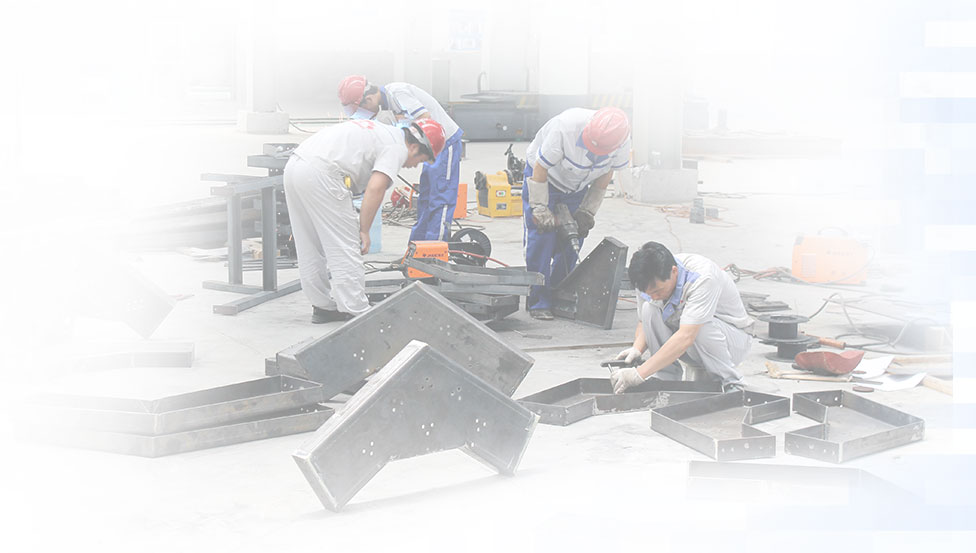
Customer Consultation
We want to have a deep understanding of your industrial process, to know your exact needs of feed, wood, biomass, fertilizer or other pellet processing.
● Design
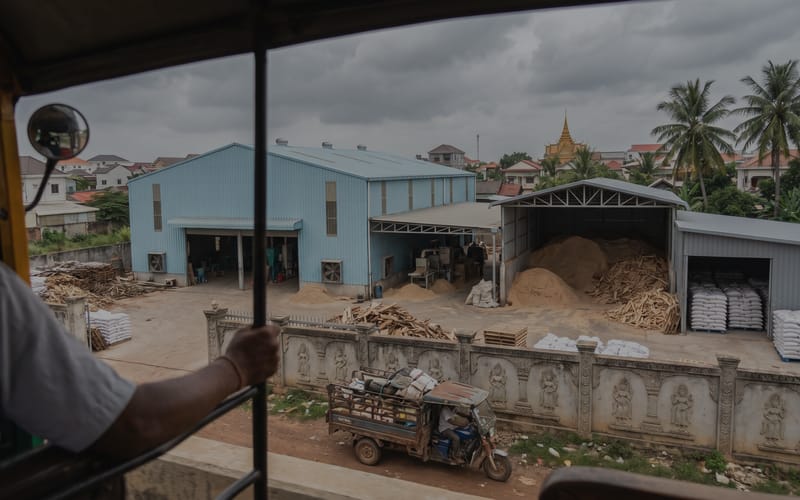
biomass Pellet Plant Design
Based on your unique situation and industrial process, we will tailor complete pellet plant you need, and inform you of every additional detail that could facilitate operation, minimize total cost.
● Manufacturing
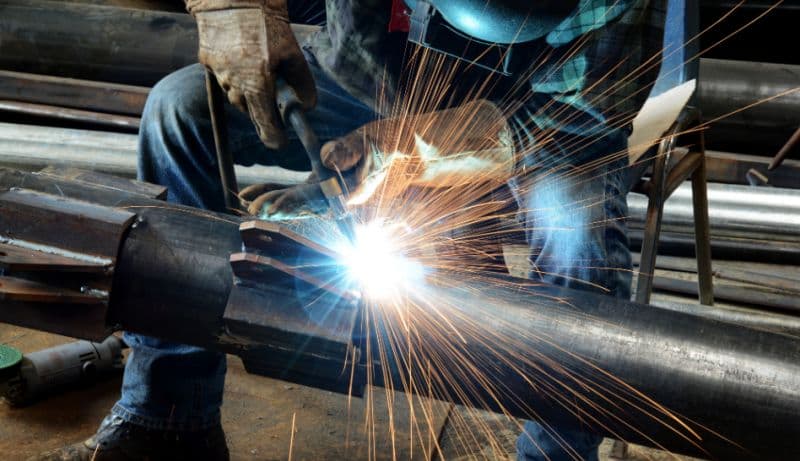
Equipment Manufacturing
The critical components of the of the complete pellet production line equipment are built in our own workshops in Asia. Additional equipment is manufactured by our worldwide network of reliable partners.
● Testing
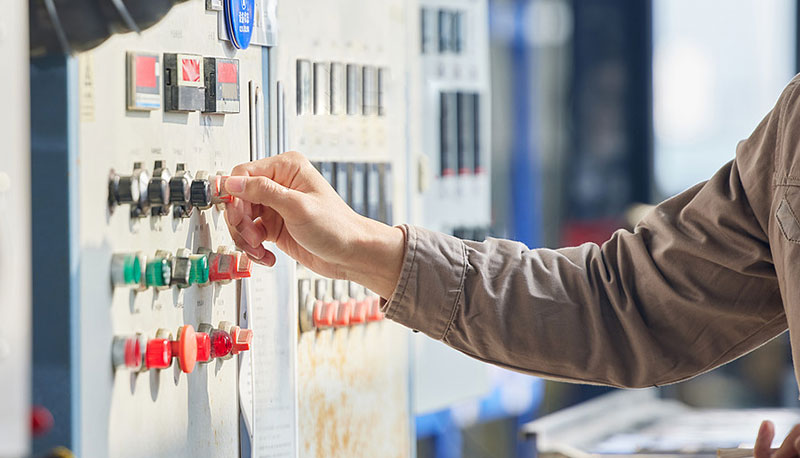
Quality Inspection & Testing
Before leaving the factory, all equipment will be inspected by the quality inspection department. We can also provide customers with testing services from a single machine to a complete pellet plant system, and provide you with real actual data for “worry-free use.”

● Delivery
Equipment Delivery
In equipment boxing and packaging, we adopt professional packaging and modular solutions to ensure the safe and non-destructive delivery of pellet plant equipment.
● Installation
Installation & Commissioning
Whether you choose your own subcontractor for the erection phase or you want to install everything together with us, a Richi supervisor will be around to make sure everything is mounted in a safe and thorough way.

● Training
Staff Training
We provide comprehensive training for the technicians of each project. We can also continue to provide support for the technicians during latter project operation.
● After-sales
Project Follow-Up
When everything is up and running our Richiers will help you further whenever needed. We are ready to answer your call 24/7.We’ll also visit you regularly to learn about your needs.
Who we are
RICHI Machinery is one of the world’s leading suppliers of technology and services for the animal feed, aqua feed and pet food industries, also the largest pellet production line manufacturer in China.
Since 1995, RICHI’s vision to build a first-class enterprise, to foster first-class employees, and to make first-class contributions to society has never wavered.
In the past three decades, we have expanded our business to a wide range of areas, including animal feed mill equipment, aqua feed equipment, pet feed equipment, biomass pellet equipment, fertilizer equipment, cat litter equipment, municipal solid waste pellets equipment, etc.

1995
RICHI Established

2000+
Serving More Than 2000 Customers

120+
RICHI Employees

140+
Exported To 140 Countries