

 0086-138 3838 9622
BIOMASS PELLET MAKING MACHINE

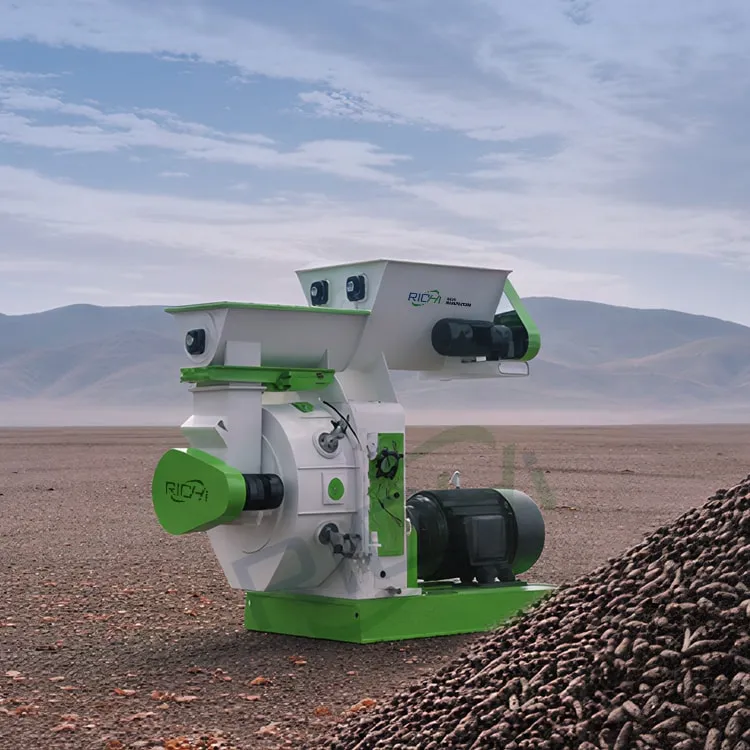
Your Engine for Diverse Pellet Production
Who uses our biomass pellet making machine? Our biomass pellet making machine is a versatile core for diverse industries. It serves pellet producers, biomass energy plants, feed mills, and environmental companies. From fuel and feed to soil remediation and industrial granules, it transforms various raw materials into high-value products. Our machines are already proven worldwide, powering projects across different sectors and applications. From fuel in Romania to feed in Argentina, our biomass pellet making machine delivers globally. It adapts to local materials, if you have raw materials, we have the pelleting solution.
Whether your goal is energy production, animal nutrition, soil improvement, or industrial recycling, this machine delivers. It’s the universal solution for converting diverse raw materials into valuable, market-ready pellets. Explore real-world projects below to see its global adaptability and impact across key industries.


Romania Project
Producing high-grade wood pellets from forestry residues in Romania. These pellets provide clean, efficient heating fuel.
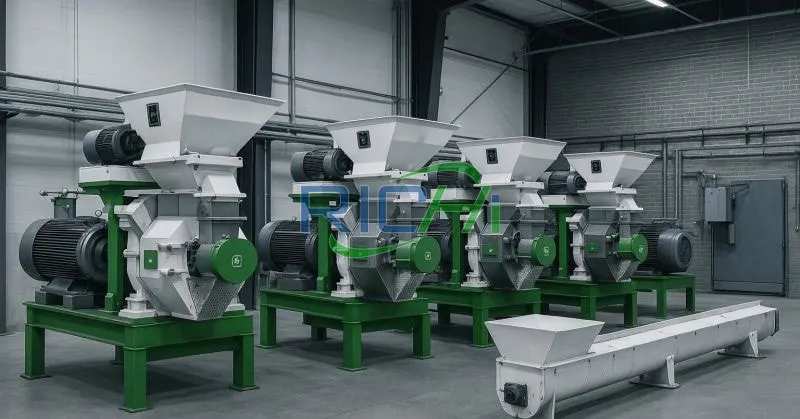
Malaysia Project
Compacting palm oil residues into biomass fuel in Malaysia. It utilizes abundant local agricultural by-products.
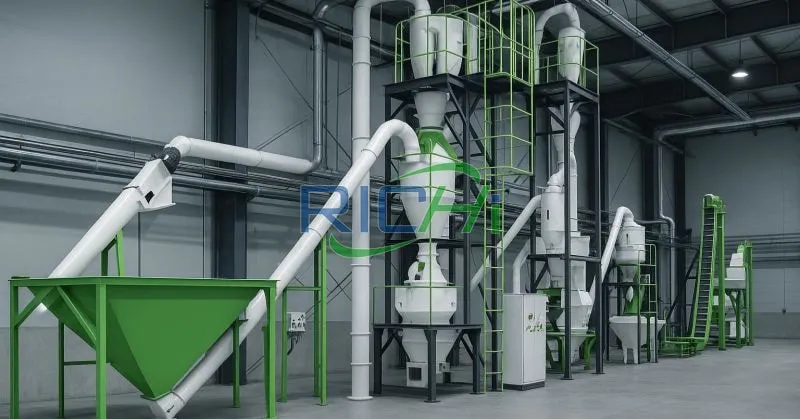
Argentina Project
Manufacturing protein-rich animal feed from alfalfa in Argentina. This supports the region’s large livestock industry.
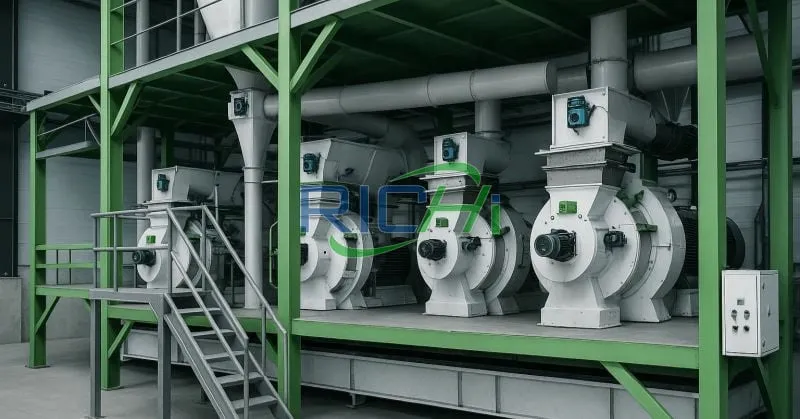
Bangladesh Project
Converting rice straw and husk into fuel pellets in Bangladesh. It offers a smart solution for crop residue.
Your Raw Materials, Our Pelleting Solution
Our biomass pellet making machine is engineered for remarkable material flexibility. It processes nearly any organic or dry blendable material into dense, uniform pellets. Feedstocks range from common agricultural residues to specialized industrial by-products.

Process Almost Any Material Into Pellets
The finished pellets serve countless purposes, from renewable fuel and animal bedding to soil enhancers and industrial adsorbents.

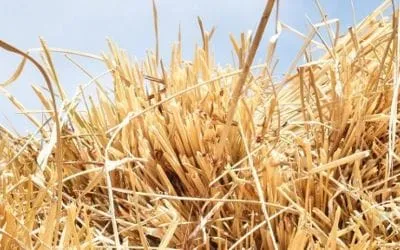
rice straw

peanuts shell
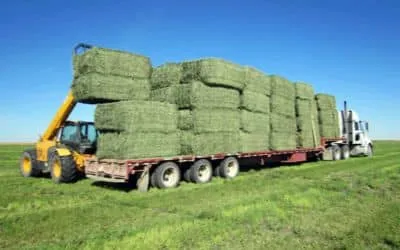
alfalfa

Sunflower shells
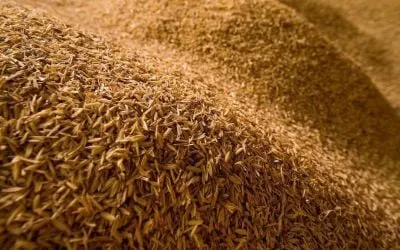
rice husk

palm waste
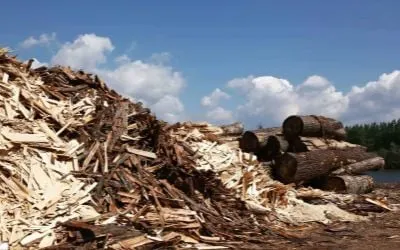
Logging waste

wood shavings

cotton stalks
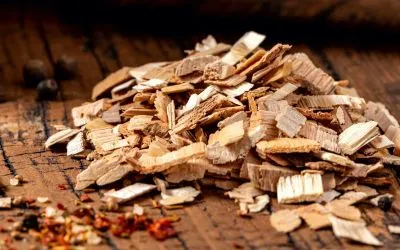
wood chips
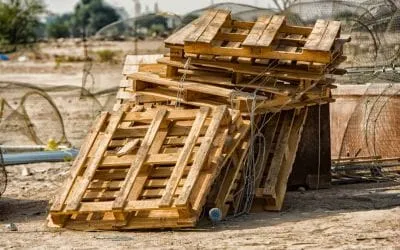
wood pallets
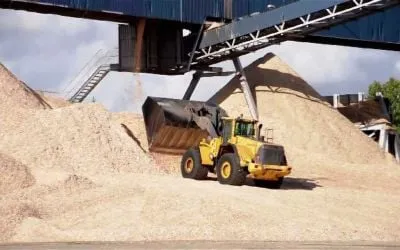
wood sawdust
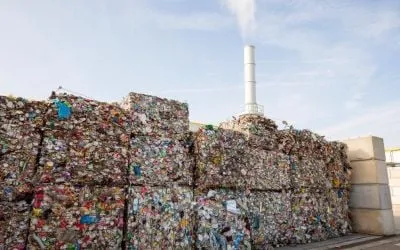
RDF
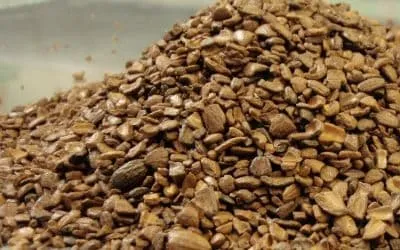
Olive by-products

leaves
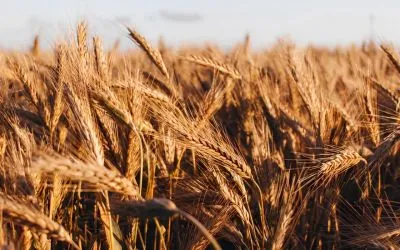
wheat straw
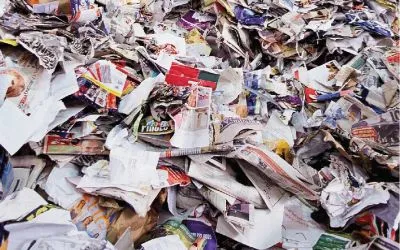
paper/cardboard

Cassava

hemp

coconut husk

Coffee residue
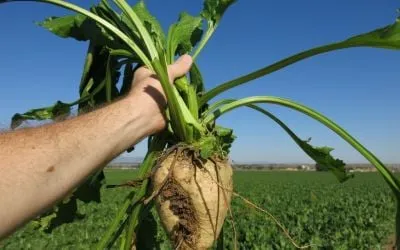
Sugar beet

Walnut shell

corn stalks

Sorghum

algae
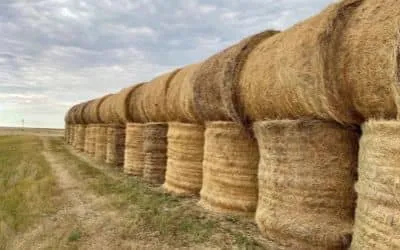
Hay Bale
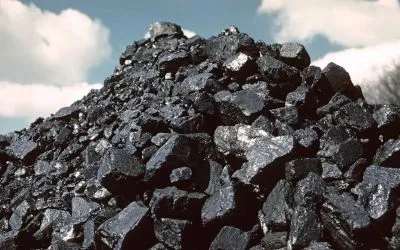
coal

Nappier Grass

waste tire

vine making waste

Cactus
Bentonite

miscanthus

Timonthy grass

Furniture Waste
The raw materials originate from farms, forests, factories, and urban centers. You can utilize wood chips, straw, husks, shells, and dedicated energy crops. It also handles municipal waste (RDF), industrial sludge (after pyrolysis), paper, cardboard, and even certain minerals like bentonite.
A single machine can process multiple materials, either blended or separately. This adaptability allows you to pivot based on local supply, creating pellets for fuel, feed, soil amendment, industrial compounds, and more.
Engineered for Reliability & High Output
At the heart of every efficient pellet line is a robust core. Our MZLH678 biomass pellet making machine is built with premium components and intelligent engineering. Each part is designed for strength, durability, and maximum productivity, ensuring your operation runs smoothly with minimal downtime. The technical advantages translate directly into higher yield, lower maintenance, and a superior return on your investment.
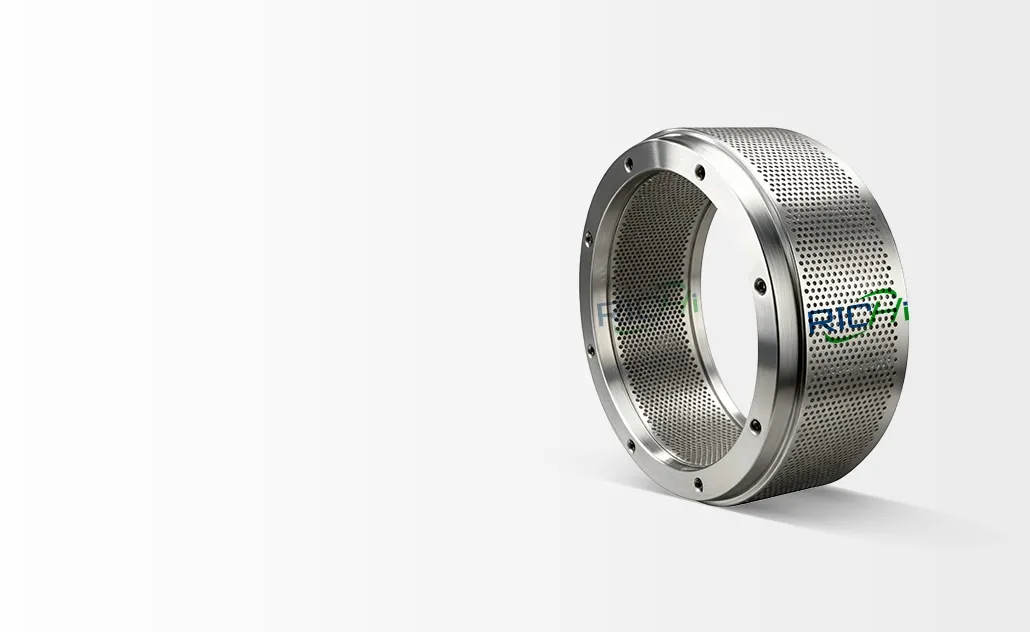
Innovative Ring Die Design
Manufactured from high-grade alloy steel and treated with advanced heat processes, this ring die resists cracking and extends service life.
The quick-release design allows for faster mold changes and cleaning, significantly reducing machine downtime and boosting overall operational efficiency..
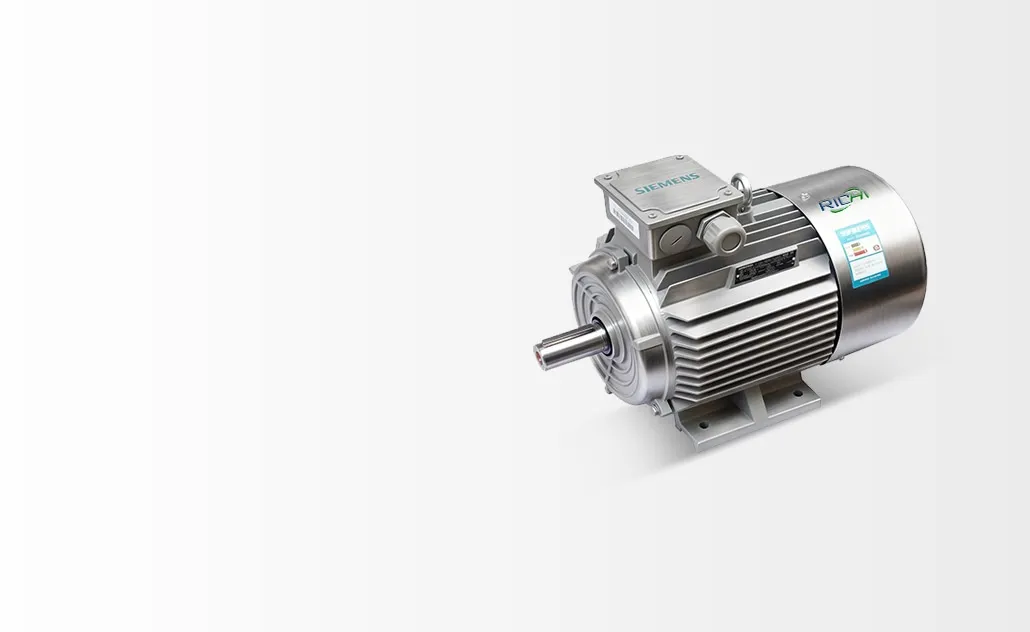
Premium Siemens Motor
The renowned Siemens motor provides exceptional torque and energy efficiency. Its robust construction ensures long-term operational stability under heavy loads.
This reliable power source is key to achieving the consistent 2.5-5.0 t/h output, reducing energy costs over time.
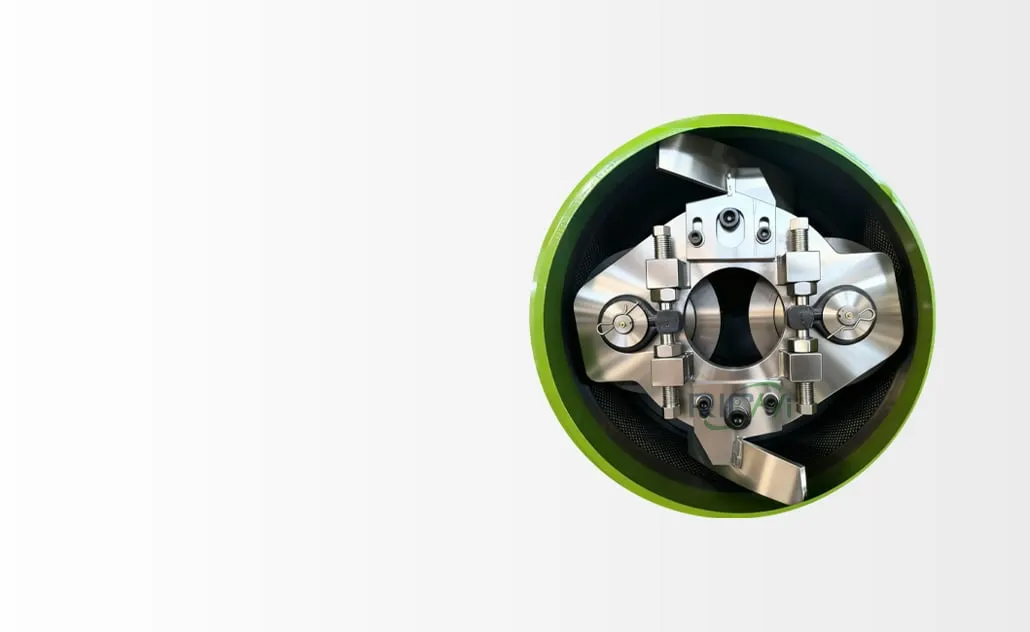
Adjustable Pellet Cutter
Positioned outside the ring die, these easy-to-adjust cutters slice the extruded pellets to your exact specification.
This ensures a consistent, professional-grade final product whether you are making short feed pellets or longer fuel pellets, ready for packaging or cooling.
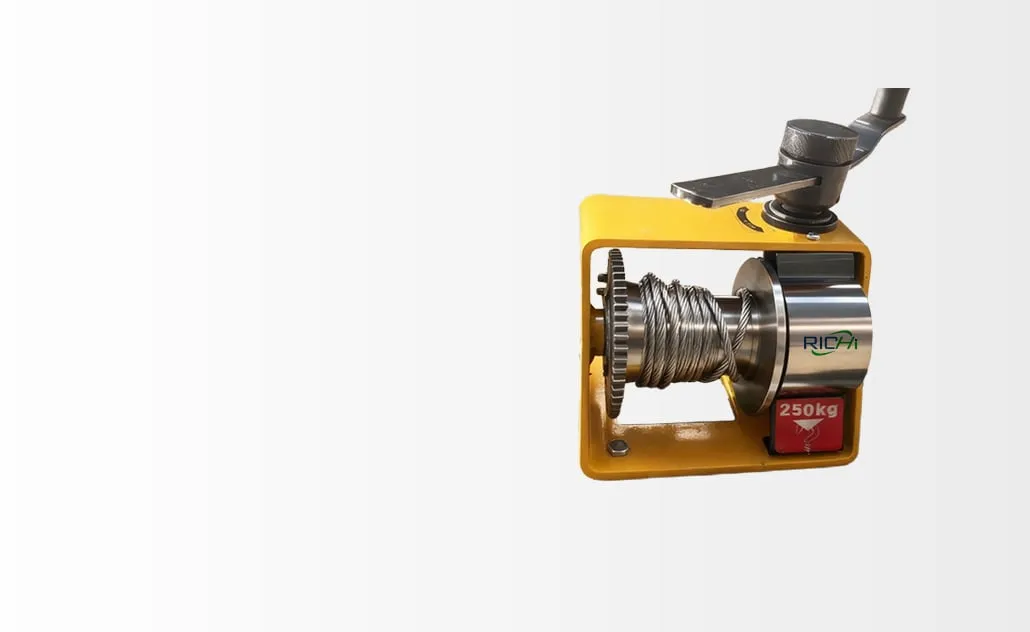
Dedicated Ring Die Hoist System
The heavy ring die can be safely and effortlessly installed or removed using this integrated hoist.
This ergonomic design enhances operator safety, reduces physical strain, and speeds up routine maintenance or die changes, keeping your production schedule on track.
High-Precision Gear Drive
This system actively breaks up material bridges or arches that form in the feed hopper.
By guaranteeing a smooth and steady supply of raw material to the conditioning chamber, it maintains optimal pressure and feed rate, which is crucial for stable pellet quality and machine productivity.
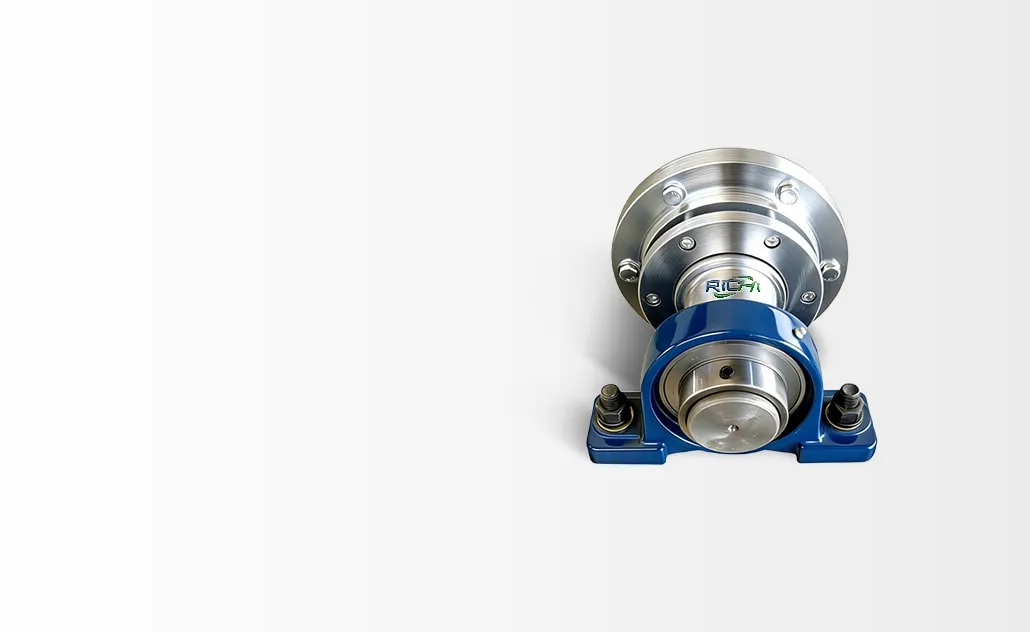
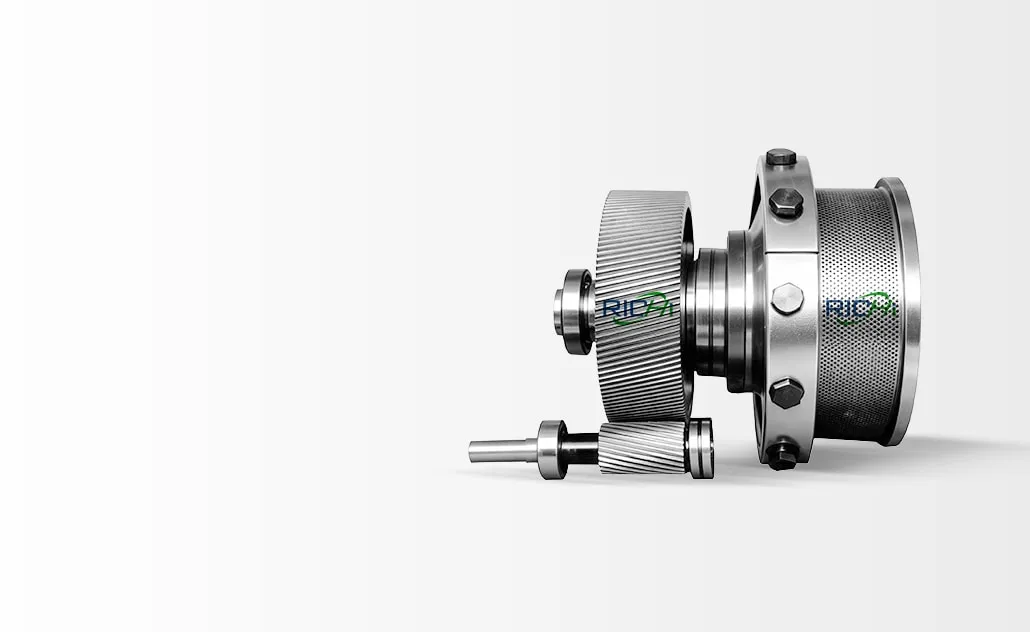
High-Precision Gear Drive System
This direct gear transmission system is over 15% more efficient, converting more motor power into effective pelleting force.
It handles high torque loads reliably, ensuring the rollers and die rotate in perfect sync for increased capacity and consistent pellet formation.

Heavy-Duty Ring Die Rollers
The rollers apply uniform pressure against the ring die, ensuring consistent pellet density.
Their design and premium bearings minimize slippage, directly contributing to the machine’s 15% higher capacity compared to belt-drive models. This balance reduces uneven wear.
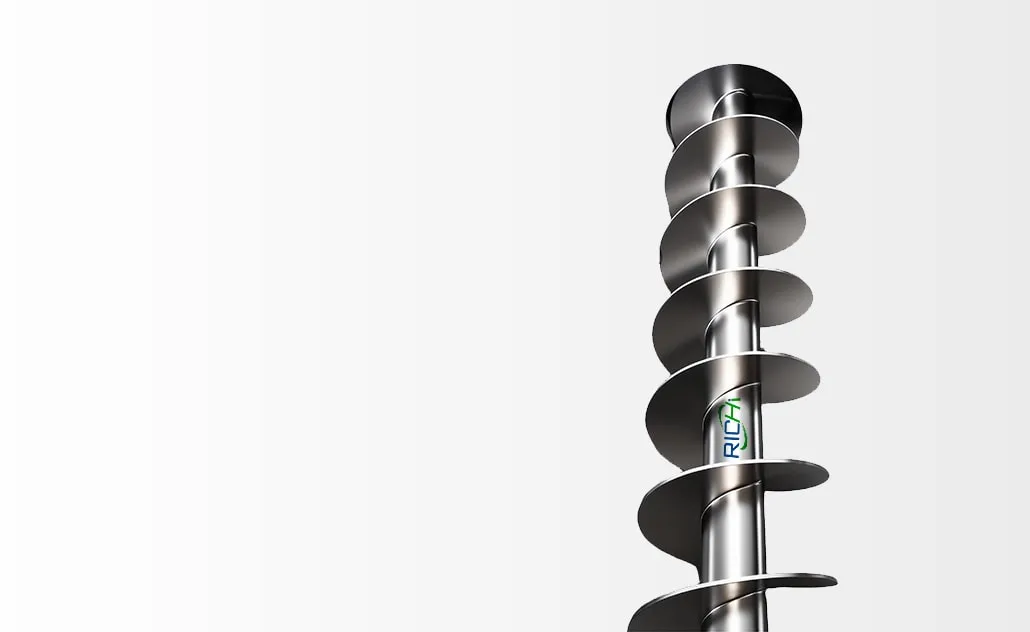
Spiral Feed Plate Design
This intelligent design feature solves the common problem of uneven lateral feeding.
It guarantees that both rollers receive an equal amount of material, resulting in balanced extrusion force, uniform wear on the die and rollers, and consistently high-quality pellets across the entire die face.








Core Advantages & Principle
Watch Our Biomass Pellet Machine Video
Our biomass pellet making machine operates on a proven ring-die principle. First, prepared raw material is fed into a conditioning chamber, then pressed through a rotating steel die by powerful rollers. This creates dense, uniform pellets cut to exact length.
Leading Ring-Die Pelleting Technology
Our core design is built on industry-leading ring-die technology. It combines a robust, high-capacity die with large-diameter gears for unbeatable strength. This engineered synergy is what makes our biofuel pellet machine capable of continuous, high-output production under demanding loads.
Intelligent Variable-Speed Drive
Experience optimal adaptation with a variable frequency drive system. This smart feature allows you to precisely adjust the ring die’s rotation speed. You can fine-tune the machine for different materials, from lightweight straw to dense wood, maximizing efficiency and pellet quality for every batch.
Exceptional Operational Stability & Longevity
We build machines for endurance. Key components are reinforced through specialized materials and heat treatment. This robust construction, combined with overload protection systems, shields the bio pellet machine from stress, ensuring reliable long-term performance and reduced lifecycle costs.
High Automation for Simplified Production
Our biomass pellet making machine offers a high degree of automation for consistent operation. This reduces manual labor and minimizes human error. The automated feeding, conditioning, and pelleting processes create a smooth workflow, ensuring stable pellet output and freeing up your team for other critical tasks.
Tailored Solutions & Customization Services
Go beyond standard models. We provide expert customization to match your specific needs. This includes tailoring the die hole size for your pellet diameter, customizing motor power, and configuring accessory systems like conveyors or coolers to create a perfect, turnkey pellet production solution for you.
Unmatched Material Versatility
Demonstrating true engineering capability, our machine boasts strong applicability. It is not limited to one feedstock; the design effectively handles the pelleting and molding of virtually all biomass raw materials. This flexibility allows you to diversify your product line and adapt to changing market supplies.
Technical Specifications: MZLH678 biomass Pellet making Machine
Review the detailed specifications of our flagship MZLH678 model below. This table provides the key technical parameters that define its robust performance and high-capacity output. For precise pricing or to discuss how these specs meet your project needs, please contact our team.
Capacity
2.5-5.0T/H
Main Motor Power
250KW
Forced Feeder Power
1.5KW
Broken Arch Feeder Power
3KW
Ring Die Diameter
673mm
Finished Pellet Diameter
4~12mm
Ring Die Material
42CrMo
Door of Pelleting Room
6mm /SUS304
Gear Box
HT250
Gear/Gear Shaft/Spindle
42CrMo
Main motor series
8P
Forced feeding
Worm gear reducer
Motor
Siemens
Oil seal
Germany/Taiwan
Overload mechanical protection
safety pin
Lubrication system
automatic oil injection
Explore Our Full Range of biomass Pellet making Machines
Our engineering expertise extends across a complete lineup. We offer biomass pellet making machines with single-unit outputs covering 0.2 to 8 T/H, suitable for pilot plants, mid-sized operations, and large industrial facilities. The ideal model for you depends on your specific raw material, formula, and final pellet application. To determine the exact capacity for your needs, please share your material details with our experts. In addition to the MZLH678, we provide these five proven models, which have been successfully deployed to clients in countries like Vietnam, Canada, Turkey, South Africa, and Australia.

MZLH320
Main Motor Power
22 kw
Broken Arch Feeder Power
2.2 kw
Forced Feeder Power
0.75 kw
Ring Die Inner Diameter
320 mm
Finished Pellet Diameter
4~12 mm
Capacity
0.2-0.6 T/H

MZLH350
Main Motor Power
37 kw
Broken Arch Feeder Power
2.2 kw
Forced Feeder Power
0.75 kw
Ring Die Inner Diameter
350 mm
Finished Pellet Diameter
4~12 mm
Capacity
0.3-1.2 T/H

MZLH420
Main Motor Power
90 kw
Broken Arch Feeder Power
3 kw
Forced Feeder Power
1.5 kw
Ring Die Inner Diameter
420 mm
Finished Pellet Diameter
4~12 mm
Capacity
1.0-2.0 T/H

MZLH520
Main Motor Power
132 kw
Broken Arch Feeder Power
3 kw
Forced Feeder Power
1.5 kw
Ring Die Inner Diameter
520 mm
Finished Pellet Diameter
4~12 mmm
Capacity
1.5-3.0 T/H

MZLH768
Main Motor Power
315 kw
Broken Arch Feeder Power
4 kw
Forced Feeder Power
1.5 kw
Ring Die Inner Diameter
762 mm
Finished Pellet Diameter
4~12 mm
Capacity
3.0-8.0 T/H
Mastering the Art of biomass Pelletization
Achieving optimal pellet quality and machine efficiency depends on mastering several interconnected process variables. Our expertise, built on thousands of global projects, allows us to guide you through these critical factors. Properly controlling them ensures stable production, high pellet density, and minimal wear on your biomass pellet making machine. The pelleting outcome is directly influenced by your feedstock’s characteristics and our machine’s settings. Understanding and adjusting for these variables is the difference between a good operation and a great one.
Raw Material
Particle Size
Feedstock
Moisture Content
Pelletizing
Temperature

Ring Die
Compression Ratio
These factors are interdependent. The ideal settings for your biomass pellet making machine are unique to your specific material mix and desired pellet. Our process engineers analyze all variables to recommend the perfect configuration for your success.
Global Success Stories

biomass pellet making machine in UK
A sustainable landscaping firm in Scotland needed a solution for their wood waste. Our compact, high-efficiency line processes arborist chips into premium wood pellets.

biomass pellet making machine in india
A renewable energy company in Punjab sought to utilize abundant local crop residues. We supplied a turnkey line producing 3.5 T/H of high-calorific fuel pellets.
USA

biomass pellet making machine in USA
Raw materials : Pine Sawdust & Wood Shavings
A mid-sized lumber mill in Oregon was burning its dry sawdust. We implemented a system to pelletize this residue into biochar feedstock and industrial fuel.
Expert Talk
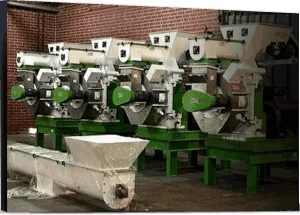
Russia
biomass pellet making machine in Russia
Raw materials : Sunflower Husk & Rye Straw
An agri-holding in Southern Russia leveraged its processing by-products. Our heavy-duty line converts sunflower husks and straw into dense fuel pellets for local district heating plants.
Inquire Now
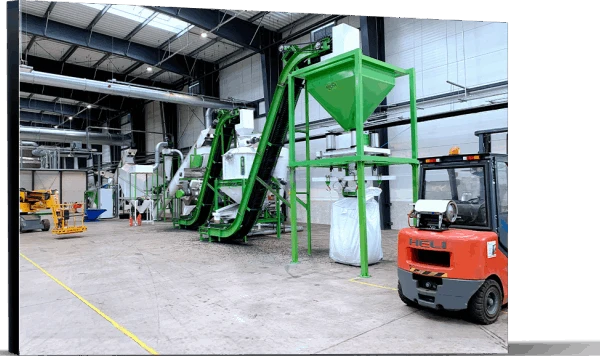
Indonesia
biomass pellet making machine in Indonesia
Raw materials : Palm Kernel Shell (PKS) & EFB Fibers
A palm oil plantation in Sumatra addressed the challenge of empty fruit bunches (EFB). Our specialized line processes EFB fibers and PKS into high-grade biomass fuel pellets for export.
Expert Talk
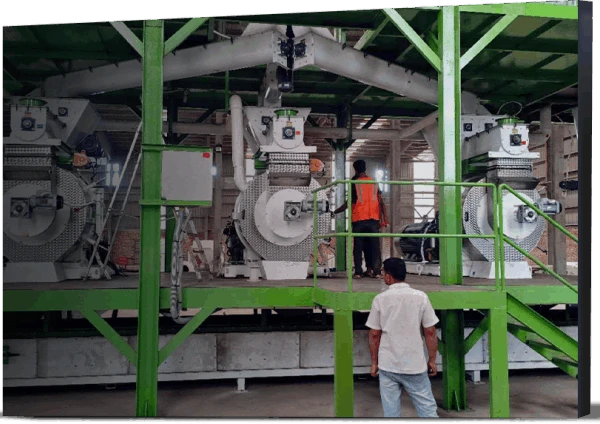
Brazil
biomass pellet making machine in Brazil
Raw materials : Sugarcane Bagasse & Napier Grass
An ethanol plant in São Paulo aimed to diversify its energy portfolio. We provided a solution to pelletize surplus bagasse and dedicated energy grass.
Inquire Now
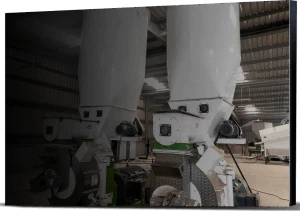
While our core biomass pellet making machine is designed for versatility, specific feedstocks often benefit from tailored engineering. We offer specialized configurations to optimize performance, yield, and pellet quality for unique materials. These adaptations address specific challenges like fiber content, abrasiveness, or natural binders.
Machines for Every Material
Browse by Your Primary Raw Material
Explore our range of specialized pellet mills, each engineered to excel with particular raw materials. From common agricultural residues to more unique industrial by-products, we have the right solution for your specific feedstock.

husk pellet machine
Forestry/Agricultural/Industrial/Urban Waste Pelletizer
Planning your biomass pellet operation requires a clear understanding of costs. The final price varies significantly based on your specific needs. Below, we address common questions about machine and production line pricing to help you build an accurate budget.
What is the price of the MZLH678 biomass pellet making machine?
+
The FOB cost for the MZLH678 model, a 200KW workhorse, ranges between $64,000 and $70,000. This covers the pelletizer, anti-arching feeder, forced feeder, and control cabinet. For perspective, the biomass pellet making machine price for a smaller MZLH420 starts around $26,000, while larger models like the MZLH768 can reach $85,000. The final biomass pellets making machine price is confirmed based on your selected options.
For reference, other models in our range are priced as follows:
- MZLH320 (22KW) : 2.5-5t/h & 15,000-18,000 $
- MZLH350 (37KW) : 0.3-1.2T/H & 18,000-25,000 $
- MZLH420: (90KW) : 2.5-5T/H & 26,000-32,000 $
- MZLH520 (132KW) : 2.5-5.0T/H & 43,000-50,000 $
- MZLH678 (200KW) : 2.5-5.0T/H & 64,000-70,000 $
- MZLH768 (315KW) : 3.0-8.0T/H & 75,000-85,000 $
- …
What is the total investment for a biomass pellet making line?
+
A complete plant investment is substantially higher than a single machine. The total biomass fuel pellet plant cost depends heavily on your raw material’s characteristics (moisture, shape, size) and the required auxiliary equipment (crusher, dryer, cooler, packaging). For reference, here are estimated FOB price ranges for standard plant capacities:
- 0.2-0.3 T/H: $20,000 – $140,000
- 1.0-1.2 T/H: $39,000 – $220,000
- 2.5-3.0 T/H: $78,000 – $350,000
- 5.0-6.0 T/H: $160,000 – $570,000
- 10-12 T/H: $280,000 – $1,100,000
- …
What factors cause the price range for the same capacity line?
+
The wide cost range for the same output stems from material-specific engineering. Wet, fibrous, or irregularly shaped feedstocks require more extensive preprocessing (e.g., heavy-duty drying, fine grinding). Simpler, dry materials like sawdust need a more basic system. Your final design and price are tailored after we analyze your material sample and project goals.
Why is there such a wide price range for plants with the same output?
+
The significant variance in cost for identical capacity stems from feedstock-specific engineering. Processing wet logs or long fibers requires expensive pre-processing stages like heavy-duty drying and fine grinding. Dry, uniform sawdust needs a simpler, lower-cost setup. Your final plant design and its associated cost are customized after a thorough analysis of your material sample.
Do you have local agents or distributors?
+
No, we operate as a direct manufacturer and exporter. All our biomass pellet making machines and complete lines are engineered, manufactured, and tested in our own factory. Equipment is shipped directly from our plant, ensuring quality control and providing you with the most competitive factory price without intermediary markups.
How does payment and shipping work for your equipment?
+
We require a deposit to begin manufacturing, with the balance due before shipment. All our biomass pellet making machines are built, tested, and shipped directly from our factory (FOB Qingdao). We handle export documentation, and you arrange the main freight. This direct-from-manufacturer approach ensures quality and provides you with the most competitive cost of biomass pellets making machine, with no distributor markups.
What is typically included in your machine’s FOB quote?
+
Our standard FOB quote for a core biomass pellets making machine includes the main pelletizer, the forced feeding system with anti-bridging, and an electric control cabinet. It covers standard packaging and delivery to the departure port. Auxiliary equipment (e.g., hammer mills, dryers), spare parts, international shipping, and local installation are quoted separately based on your full production line requirements.
What are the main ongoing costs after the initial investment?
+
Beyond the machine purchase, key operational costs include spare parts (like ring dies and rollers), routine maintenance, electrical power consumption, and labor. The durability of our core biomass pellet making machine is designed to minimize downtime and part replacement frequency, helping to control your long-term operating expenses and protect your investment’s return.
Understanding Investment & Cost Factors
Tailored Production Lines: From Concept to Operation
We provide far more than just a machine; we deliver complete, engineered solutions. Our service encompasses the full design, installation, and commissioning of turnkey biomass pellet lines, scaled from compact 0.5 T/H systems to large industrial 10+ T/H plants. Every line follows a core process of material preparation (cleaning, size reduction, drying), pelleting in our core biomass pellet making machine, cooling, screening, and packaging.
However, your unique raw material, space, and budget mean your process is custom-built, often integrating additional systems for mixing, impurity removal, dust control, and storage. We partner with you from initial consultation through manufacturing, installation, training, and lifelong after-sales support.


Biomass Pellet Mill
Select Your Production Scale Solution:
Explore our pre-engineered solutions for different output targets. Click a capacity below to view detailed layout and equipment specifications for each standard line configuration.

Material-Specific Line Solutions
The optimal production line varies significantly with your feedstock. Processing wood differs from processing straw or husks. We tailor each system based on your material’s initial form (dictating size reduction), moisture content (determining drying needs), available space, and budget. Some stages are essential for your material, others are optional for efficiency. Select your primary material type below to explore proven solutions.
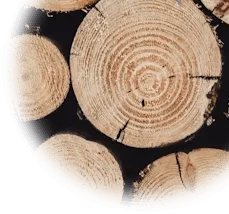
Wood Pellet Production Line
Designed for dense forestry and woodworking residues like sawdust, chips, and shavings. Our solutions often feature robust hammer mills, efficient drum dryers for consistent low moisture, and our heavy-duty biomass pellet making machine configured with high compression dies for durable, low-ash pellets.
Sawdust
Wood Chips
Forest Thinnings
Pallets
Wood Shavings
Bark

Straw Pellet Production Line
Tailored for light, bulky crop residues such as wheat, rice, and corn stalks. Solutions emphasize efficient collection, coarse shredding, high-capacity drying to reduce volume, and a forceful feeding system into the biomass pellet making machine to ensure stable production of low-density fuel pellets.
Wheat Straw
Rice Straw
Corn Stalk
Cotton Stalk
Barley Straw
Oat Straw

Husk Pellet Production Line
Built for hard, abrasive agricultural by-products like rice husk, coffee husk, and nut shells. Our lines incorporate wear-resistant crushing equipment, potentially abrasive-resistant pellet mill components, and process designs that manage the material’s low natural binding properties effectively.

Grass Pellet Production Line
Engineered for fibrous materials like alfalfa, napier grass, and pasture hay. Key elements include specialized fine-grinding, precise moisture conditioning, and a pellet mill optimized for fibrous binding to produce nutritious feed or biomass fuel pellets without excessive heat.
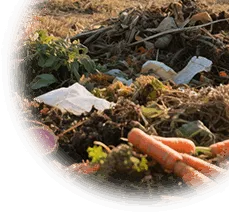
Agricultural Waste Pellet Line
A versatile category for mixed or variable farm residues. Solutions are highly customizable, often combining pre-processing for size and moisture uniformity with a flexible, easy-to-clean biomass pellet making machine capable of handling a blend of materials for fuel or soil amendment pellets.
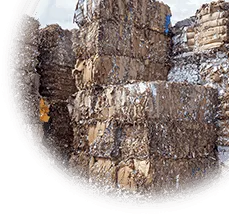
Industrial & Municipal Waste Pellet Line
For converting non-traditional waste streams like RDF, paper sludge, or cardboard into solid fuel. These complex lines focus on sorting, shredding, contaminant removal, and specialized conditioning to prepare the material for stable pelleting in a rugged biomass pellet making machine built for challenging feedstocks.
Biomass Pellet making Machine FAQs
From material suitability to plant setup, our clients have diverse questions. This section addresses the most common inquiries about our biomass pellet making machines and production lines, covering everything from specific feedstocks to large-scale project planning. Find insights based on our global experience.
Can your biomass pellet making machine process a blend of 50% sawdust and 50% rice husk?
+
Yes, absolutely. Our ring die biomass pellet making machine is specifically engineered to handle mixed feedstocks like this. The sawdust provides natural lignin for binding, while the abrasive rice husk requires a die with a higher compression ratio and hardened surfaces.
For such a blend, our engineers would recommend a specific die specification and possibly adjust the feeder speed to ensure uniform compression. We have supplied numerous lines to clients in Southeast Asia, such as for our biomass pellet making machine in Vietnam projects, that successfully run on similar mixed agricultural residues.
What is the minimum required particle size for making wood pellets with your machine?
+
For optimal pelleting of wood materials, we recommend a particle size where over 90% of the material passes through a 6mm screen, and a significant portion (around 20-30%) is fines below 1mm. This size distribution ensures efficient die filling, reduces energy consumption, and produces strong, smooth pellets.
The exact specification can be fine-tuned based on your wood type (hardwood vs. softwood) and the desired pellet density. Our team provides detailed grinding guidelines as part of our biomass pellet maker production system design.
Do I need a separate dryer for making alfalfa feed pellets?
+
For high-quality, durable alfalfa feed pellets, a dedicated dryer is almost always necessary. Alfalfa is typically baled at a moisture content of 15-20%, but for pelleting, it needs to be reduced to 12-14%.
A rotary drum dryer not only achieves this but also helps preserve the green color and nutrient content through controlled temperature drying. Our turnkey alfalfa pellet solutions from Richi Machinery always include dryer selection and integration.
What’s the ideal moisture content for pine wood chips before pelleting?
+
The ideal moisture content for pine or most wood materials entering our biomass pellet making machine is between 12% and 15%.
At this range, the natural lignin plasticizes effectively under the heat and pressure of the pelleting process, acting as a binder. Moisture outside this window can cause issues: too dry leads to poor binding and high wear; too wet produces soft pellets and can cause machine blockage. (Perhaps you would like to learn more about our: wood chip pellet machine)
Can your machine produce 8mm diameter pellets for cat litter?
+
Yes, producing 8mm diameter pellets for cat litter is a common application. We would supply a ring die with precisely sized 8mm holes and a compression ratio tailored to your base material (e.g., wood, paper, or plant fibers).
The key for cat litter pellets is achieving the right balance of density for low dust and high absorbency. We have configured biomass pellet making machines for cat litter production for clients in Europe and North America. (Perhaps you’d like to learn more about our: cat litter pellet machine.)
What’s the hourly output for processing pure wheat straw?
+
The output for pure wheat straw depends on the model. With our MZLH678 biomass pellet making machine, you can expect a production rate of 3.0 to 3.5 tons per hour for 8mm pellets. Straw is less dense than wood, so the volumetric feed rate is higher, but the final weight output is slightly lower compared to wood feedstocks. For an accurate figure, we test your specific straw sample in our facility.
Do you offer a biomass pellet making machine in Pakistan for rice straw?
+
Yes, Richi Machinery has extensive experience supplying biomass pellet making equipment for rice straw processing in Pakistan. Rice straw is fibrous and can be silica-rich. Our solution typically includes a robust shredder, a hammer mill for fine grinding, and a pellet mill configured with a high-compression die and forceful feeder system to ensure stable pellet formation from this challenging material. (Perhaps you would like to learn about more pelletizing projects we have completed in Pakistan: pellet making machine in Pakistan)
How much power is needed for a 2 T/H line using hardwood sawdust?
+
For a complete 2 T/H line processing hardwood sawdust, the total connected power will be approximately 250-300 kW. This includes the main pellet mill motor (around 132-160 kW), the hammer mill, conveyor systems, dryer, cooler, and fans.
The exact figure depends on the initial moisture of your sawdust. Our engineering team provides detailed power load calculations for every biomass pellet maker turnkey project.
Can the machine handle oily feedstocks like waste coffee grounds?
+
Yes, but with specific considerations. Waste coffee grounds have high oil and moisture content. They are often best blended with a drier, absorbent material like wood shavings (e.g., 30% grounds, 70% shavings).
Our machine can be configured with a specialized feeder to handle this sticky material, and we recommend using a die with a very effective release profile to prevent clogging. We have solutions for clients looking to valorize such organic waste streams.
What’s the difference in setup for making fuel pellets vs. animal bedding pellets?
+
The core biomass pellet making machine is similar, but the process parameters differ. Fuel pellets require higher density and durability, often needing higher compression and possibly steam conditioning for certain woods.
Animal bedding pellets (like for horses) prioritize high absorbency and low dust, which can be achieved with a slightly lower compression ratio and careful control of raw material moisture and fines content. We adjust the entire line configuration accordingly.
Is your biomass pellet making machine suitable for making biochar feedstock pellets?
+
Absolutely. Pelletizing biomass fines into uniform pellets before pyrolysis creates ideal biochar feedstock. Our machine compacts materials like wood dust, rice husk, or straw into dense, consistent pellets. This leads to more efficient carbonization, uniform biochar pellet size, and better marketability. We work with biochar producers globally to design these specialized feedstock preparation lines.
Can we use your machine to produce organic fertilizer pellets from chicken manure?
+
Yes, but pre-processing is critical. Chicken manure must be thoroughly composted and dried to a safe moisture level (below 15%) and consistent particle size before pelleting.
Our biomass pellet making machine can then form it into pellets using a die with large holes and a lower compression ratio to avoid caking. The entire system must be constructed with corrosion-resistant materials. We are a leading biomass pellet making equipment supplier for organic fertilizer projects. (Perhaps you would like to learn about our chicken manure pellet machine)
What pre-processing is needed for palm kernel shells before pelleting?
+
Palm Kernel Shells (PKS) are extremely hard and abrasive. They must be crushed into a fine powder (typically under 2mm) using a specialized vertical shaft impact crusher or a hammer mill with very durable hammers. The moisture should be below 12%.
Our pellet mill for PKS is equipped with a heavy-duty gearbox, wear-resistant alloy dies and rollers, and a forced feeder designed to handle this abrasive powder efficiently, a common setup for our biomass pellet making machine in Malaysia.
How do I adjust the pellet density for different markets?
+
Pellet density is primarily adjusted by changing the compression ratio of the ring die and the gap between the rollers and the die. A higher compression ratio (longer die channel) creates denser pellets. Our operators can make fine adjustments during production. For significant changes, we supply different dies. Our engineers will specify the ideal die based on your target market standards (e.g., ENplus for Europe).
What spare parts should I keep in stock for a 5 T/H wood pellet line?
+
We recommend keeping these key wear parts on hand: at least one spare ring die, a set of press rollers, a set of hammer mill hammers and screens, several feeder augers, and a supply of belts and bearings. For the core biomass pellet making machine, having spare rollers and seals minimizes downtime. Richi Machinery provides a recommended spare parts list and supports fast shipping worldwide for our biomass biomass pellet making equipment.
Can your system process wet cardboard for RDF pellets?
+
Processing wet cardboard is challenging but possible. It requires a heavy-duty shredder and a specialized high-shear mixer or conditioner to break down the fibers without forming balls. Often, blending it with a drier material like plastic film or dry wood helps. Our systems for RDF, designed as part of our biomass pellet maker industrial contractor services, are built to handle such heterogeneous and difficult waste streams.
What is the recommended die compression ratio for bamboo pellets?
+
Bamboo is fibrous and can be slippery. We typically recommend a die compression ratio between 1:7 and 1:9 for bamboo pellets, depending on its age and species. Younger bamboo may require higher compression. The die holes also need a specific taper and polish to ensure smooth release. We conduct material tests to determine the exact specification for successful bamboo pelleting.
Do you provide training for operating the biomass pellet making machine?
+
Yes, comprehensive training is a standard part of our service. Our engineers provide on-site training covering safe operation, daily maintenance, troubleshooting common issues, and how to adjust the machine for optimal performance with your specific material. We also provide detailed operation and maintenance manuals. This commitment to support is why we are a trusted biomass pellet making system supplier.
Is a cooler always necessary after the pellet mill?
+
For almost all applications, yes. Pellets exit the machine at 70-90°C and are soft. A counter-flow cooler rapidly reduces their temperature and moisture, hardening them for handling, storage, and transportation. It also prevents condensation in bags. The only exception might be for some immediate, on-site fuel use, but cooling is still recommended for safety and quality.
What’s the lifespan of the ring die when processing abrasive materials like rice husk?
+
When processing highly abrasive materials like rice husk, the lifespan of a standard die can be as short as 300-400 hours. However, Richi Machinery supplies ring dies made from high-chrome alloy steel and uses advanced surface hardening techniques. Our specialized “abrasion-resistant” dies for such applications can last 800-1,200 hours or more, significantly reducing your long-term operating costs for projects like a biomass pellet making machine in Bangladesh.
Can your machine in Vietnam handle mixed tropical agricultural waste?
+
Yes, our installed biomass pellet making machines in Vietnam are specifically configured for mixed tropical waste like bagasse, coffee husk, coconut fiber, and cassava stalk. The key is a flexible pre-processing line with versatile shredding and a robust mixing system to create a consistent blend. Our pellet mill is then set up with a die and roller configuration that can handle the variable fiber and silica content common in these materials.
How much floor space is needed for a 1 T/H complete plant?
+
A well-organized 1 T/H complete biomass pellet plant, including raw material storage, processing, pelleting, cooling, and bagging, typically requires a minimum of 800 to 1,200 square meters, depending on the layout and whether it’s single-story. Our engineers create optimized layout drawings to make the best use of your available space as part of our biomass pellet maker factory design service.
What safety features does your biomass pellet making machine have?
+
Our machines include multiple safety features: a shear pin or hydraulic coupling for drive overload protection, electrical interlocks on all guards, emergency stop buttons at key locations, and ammeters to monitor motor load. The gear transmission is fully enclosed in an oil bath for safety and longevity. We ensure our equipment meets or exceeds the safety standards of the destination country.
Can the pellet length be adjusted during production?
+
Yes, pellet length is easily adjusted by changing the position of the external adjustable cutters. By turning a handle, you can move the blades closer to or farther from the die surface, producing shorter or longer pellets without stopping production. This is a standard feature on all Richi Machinery biomass pellet making machines.
How do you prevent clogging when pelleting long fibrous materials like bagasse?
+
For fibrous materials like bagasse, we employ several strategies: a powerful, slow-speed feeder to push material consistently; a pre-conditioning step (sometimes with a small amount of steam or water) to soften fibers; and a ring die with specifically designed inlet patterns and hole geometry that guide the fibers into the compression channel without tangling. This expertise is crucial for our biomass pellet making machine in Brazil projects for bagasse.
What’s the energy consumption per ton for making hay pellets?
+
The total energy consumption for producing hay pellets, including grinding, conveying, and pelleting, typically ranges from 80 to 120 kWh per ton. The pelleting stage itself for hay usually consumes between 35-50 kWh/ton. The exact figure depends on the hay type, its initial moisture, and the fineness of grind. Our energy-efficient drive systems help minimize this cost.
Do you offer a biomass pellet making machine in Bangladesh for jute stick processing?
+
Yes, we have supplied equipment for jute stick pelleting in Bangladesh. Jute sticks are light and fibrous. The solution involves a two-stage crushing process to get a fine enough particle, and the pellet mill must be configured with a high-compression die to achieve sufficient density. We understand local materials and can design a cost-effective line for this specific agricultural residue.
Can the machine produce both 6mm and 10mm pellets with the same die?
+
No, a single ring die can only produce pellets of one specific diameter. The hole diameter is fixed. To switch between 6mm and 10mm pellets, you would need to change the ring die. This process is facilitated by our quick-release hoop system, which allows for a die change in a couple of hours. We can supply multiple dies for one machine to offer production flexibility.
What dust collection system do you recommend for a feed pellet plant?
+
For an animal feed pellet plant, we recommend a central pulse-jet baghouse dust collector. It’s efficient, meets strict hygiene standards, and the collected dust (which is often nutritious fines) can be recycled back into the mixer. Proper dust control is critical for operator safety, product quality, and equipment longevity in any biomass pellet making plant.
Is your equipment CE certified for export to Europe?
+
Yes, Richi Machinery’s core biomass pellet making machines and related electrical control systems are manufactured and tested to comply with CE machinery and low-voltage directives. We provide the necessary documentation and support to ensure smooth customs clearance and installation compliance in the EU, which has been key for our biomass pellet making machine Germany and Italy clients.
What are the main challenges in pelleting sunflower husks, and how does your machine address them?
+
Sunflower husks are light, abrasive, and have low natural binders. Challenges include low bulk density feeding, high die wear, and producing durable pellets.
Our machine addresses this with a forceful, volumetric feeder; a high-compression, wear-resistant die; and the option for a small amount of binder addition or blending with a material that has better binding properties. This is a common configuration for our biomass pellet making machine in Ukraine projects.
Can I get a turnkey biomass pellet making machine in Kenya for maize cob processing?
+
Absolutely. Richi Machinery can deliver a complete turnkey line for maize cob processing in Kenya. This includes cob crushers, hammer mills, dryers (if needed), the pellet mill with a die suited for the slightly oily and abrasive cob powder, a cooler, and a packing system.
We handle design, manufacturing, shipping, installation supervision, and commissioning—a complete biomass pellet maker turnkey manufacturer solution. (Perhaps you would like to learn more about our pelletizing projects in Kenya: pellet making machine in Kenya)
How does the process differ for making softwood vs. hardwood pellets?
+
Softwood (like pine) has more lignin and longer fibers, which bind easily. It often requires less compression and can be pelleted at slightly higher moisture. Hardwood (like oak) has shorter fibers and less lignin, often needing a slightly higher compression ratio and more precise moisture control (typically drier) to form durable pellets. Our engineers adjust the die specification and process parameters accordingly.
What’s the lead time for a 3 T/H complete production line?
+
The lead time for a standard 3 T/H complete production line is typically 60-90 days after receiving the deposit. This includes manufacturing of all custom equipment like the dryer, cooler, and conveyors, and the assembly and testing of the core biomass pellet making machine. Complex customizations or peak seasons may extend this slightly. We provide a detailed project timeline for each biomass pellet maker large scale project.
How often do the press rollers need to be replaced?
+
Press roller lifespan depends heavily on the material. For non-abrasive softwoods, they can last 800-1,000 hours. For very abrasive materials like rice husk or straw, they may need replacement every 400-600 hours. The key is to replace both rollers at the same time and before they are worn down to the shaft, as running over-worn rollers damages the expensive ring die. We provide clear wear limits in our manuals.
Can your machine process sawdust with high sand content?
+
High sand content is extremely abrasive and not recommended. It will rapidly wear out the die, rollers, and feeder components, making operation uneconomical. We strongly advise installing a pre-cleaning stage, such as a cyclone separator or vibrating screen, to remove sand and stones before the material enters the biomass pellet making machine. Protecting your capital investment is paramount.
What is the noise level of your biomass pellet making machine during operation?
+
Our biomass pellet making machines, with their enclosed gear drive and heavy-duty construction, typically operate at a sound pressure level of 80-85 dB(A) at one meter. This is within the range of standard industrial equipment. We recommend, and can supply, basic acoustic enclosures or simply advise on proper operator ear protection as part of a safe working environment.
Do you offer a warranty, and what does it cover?
+
Yes, Richi Machinery offers a standard 12-month warranty from the date of shipment for manufacturing defects on the biomass pellet making machine and all auxiliary equipment we supply. It covers parts replacement. It does not cover wear parts (dies, rollers, hammers, screens), improper operation, lack of maintenance, or consumables. We stand firmly behind the quality of our manufacturing.
Can you design a line that produces both feed and fuel pellets?
+
Yes, we design versatile lines capable of producing different pellet types. This requires a flexible formulation and mixing system, possibly two separate storage silos for different recipes, and a ring die pellet machine that can accommodate quick die changes (which our quick-release system enables). The cooler and packaging system would be common. Such multi-product lines maximize your market opportunities.
What’s the typical installation and commissioning time for a project?
+
For a standard turnkey line, the installation and mechanical commissioning by our engineers typically takes 4-6 weeks on site, depending on the line complexity and the preparedness of the local civil work and utilities. This includes equipment assembly, alignment, electrical connection supervision, dry running, and finally, production testing with your actual material—a crucial phase in our biomass pellet making line commissioning.
How do you ensure consistent pellet quality with variable raw materials?
+
Consistency starts with pre-processing to create a uniform feedstock size and moisture. Our systems often include online moisture meters and variable frequency drives (VFDs) on feeders and conditioners.
These allow the operator to make real-time adjustments based on the incoming material. The robust, consistent pressure of our ring die biomass pellet making machine then delivers uniform pellet density, even with some feedstock variation.
Can your biomass pellet making machine in Nigeria process elephant grass for fuel?
+
Yes, elephant grass (Napier grass) is an excellent fast-growing biomass for pellets. The process involves field chipping, drying from a high initial moisture, fine grinding, and then pelleting. Our machine is well-suited for this fibrous grass, needing a die with a good compression ratio to bind the fibers.
We provide full agronomy-to-pellet consulting for such dedicated energy crop projects in Africa. (Perhaps you would like to learn about more pelleting projects we have completed in Nigeria: pelleting machine in Nigeria)
What after-sales support do you provide in South America?
+
Our support for South American clients includes remote technical assistance via video call, a dedicated spare parts warehouse for common wear parts, and access to detailed online documentation and videos.
For major issues, we can dispatch engineers. We have strong logistics partners to ensure parts reach clients in countries like Chile, Argentina, and Brazil promptly, solidifying our role as a biomass pellet making equipment global supplier.
How do I calculate the total project ROI for a pellet plant?
+
The ROI calculation involves: Capital Costs (equipment, installation, building), Operating Costs (raw material, power, labor, maintenance, dies/rollers), and Revenue (pellet sales price x annual production).
Key factors are your local cost of raw material (often low or negative for waste) and the selling price of pellets in your target market.
Our team provides detailed financial modeling templates and case studies to help you build a realistic business plan, a service included in our biomass pellet maker production capacity planning.
Can you provide references for a similar project using my specific feedstock?
+
Certainly. Once we understand your specific feedstock (e.g., “olive pomace,” “waste paper,” “peanut shells”), our sales engineers can share relevant, anonymized case studies, including project location, capacity, and key challenges solved.
We have a vast portfolio from our work as a biomass pellet making machine engineering project partner across six continents. Connecting you with a satisfied client using a similar material is the best proof of our capability.
We plan to process oil palm fronds and empty fruit bunches in Malaysia. Which model of biomass pellet making machine is best suited for these high-fiber materials, and what is the expected output range?
+
For processing high-fiber materials like oil palm fronds (OPF) and empty fruit bunches (EFB) in Malaysia, the primary challenge is managing their long, tough fibers and often high initial moisture. A standard machine can easily clog. We recommend our MZLH678 or MZLH768 biomass pellet making machine for such applications.
These models are equipped with a heavy-duty forced feeder and a specially designed “bridge-breaker” pre-feeding system that actively tears apart the fibrous matting before it enters the conditioning chamber. Furthermore, we configure the ring die with a larger inlet angle and a moderate compression ratio (typically 1:6 to 1:7) to allow the fibers to align and compress without creating excessive back-pressure that leads to stalling.
For EFB and OPF that have been properly shredded and dried to below 15% moisture, the expected output range for the MZLH768 is between 3.0 to 8.0 tons per hour, depending on the specific fiber preparation and the blend ratio. Our engineers in Southeast Asia have extensive experience tuning these parameters for palm biomass.
For a project in Egypt aiming to utilize rice straw and cotton stalks, what are the key challenges in pelleting, and how does your biomass pellet making machine address issues like high silica content and low bulk density?
+
The key challenges with Egyptian rice straw and cotton stalks are indeed high silica (abrasiveness), low natural lignin (poor binding), and very low bulk density (handling and feeding issues). Our biomass pellet making machine addresses these comprehensively.
- First, for abrasion, we supply ring dies and rollers made from high-chrome alloy steel (e.g., X46Cr13) with deep surface hardening. This extends part life significantly compared to standard carbon steel.
- Second, for low binding, we design the process line to include a precise conditioning stage. Adding a small amount of steam (at 95-110°C) in our conditioner plasticizes the natural resins and hemicellulose, dramatically improving pellet durability without the need for expensive additives.
- Finally, for low bulk density, the entire feeding system from the silo to the pellet mill is designed with volumetric force feeders and crammers that prevent “bridging” and ensure a consistent, compressed feed into the die chamber, which is critical for stable operation with fluffy materials.
In Chile, we have abundant forest thinning residues and vineyard prunings. Can your biomass pellet making machine handle this mix of soft and hard woods, and what pre-processing steps are absolutely necessary?
+
Yes, our biomass pellet making machine is exceptionally well-suited for mixed woody biomass like forest thinnings (often softer woods like pine) and vineyard prunings (harder, older wood). The machine’s high-torque gear drive provides consistent power to compress the varying fiber density. The critical pre-processing steps are non-negotiable for a quality product:
- Size Reduction: Material must be chipped and then hammer-milled to a consistent particle size, ideally where over 90% passes through a 6mm screen. A uniform size ensures even compression and prevents voids in the pellet.
- Screening & Cleaning: A screen should remove fine sand and soil (common in vineyard waste) before milling to protect the hammer mill and pellet mill from excessive abrasion.
- Drying: The mix must be dried to a uniform moisture content of 12-15%. This is crucial as moisture variation between soft and hard woods will cause inconsistent pellet density and stability. Using a single rotary dryer for the blended stream is standard in our Chilean project designs.
We are in Tanzania looking at processing cashew nut shells and maize cobs. Are these materials too abrasive for a standard machine, and what specific wear protections does your pellet mill offer?
+
Cashew nut shells are notoriously abrasive, and maize cobs also contain gritty silica. They will rapidly wear out a standard, lightly-built machine. However, they are perfectly processable with a biomass pellet making machine built for the task, like our MZLH series. Our specific wear protections include:
- Abrasion-Resistant Ring Dies: We offer dies made from premium alloy steel (e.g., 40Cr) with a specialized dual-layer hardening process. The surface hardness can reach HRC 58-62, providing a long service life.
- Reinforced Press Rollers: Similarly, the rollers are forged from high-grade steel and surface-hardened. They are mounted on oversized, high-capacity bearings to withstand the constant high pressure needed for abrasive materials.
- Wear Liners: Critical areas inside the feeding and conditioning chamber, such as the feeder screw and conditioner paddles, can be lined with replaceable hardened steel or ceramic plates.
- We also recommend a slightly larger die hole diameter (e.g., 8mm instead of 6mm) for very abrasive materials, as it reduces the pressure and friction per unit area, extending die life while still producing a marketable pellet.
For a biomass pellet making machine in Senegal, what is the recommended process flow for converting invasive water hyacinth and peanut shells into stable fuel pellets?
+
For a project in Senegal using water hyacinth and peanut shells, the process flow must address two very different materials. Water hyacinth is wet, fibrous, and has high nitrogen content, while peanut shells are dry and abrasive. Our recommended flow is:
- Separate Pre-Drying: Water hyacinth must be field-dried or mechanically dewatered and then passed through a dedicated rotary dryer to reduce moisture from ~85% to below 15%. Peanut shells typically only need minor drying.
- Separate Size Reduction: Dry water hyacinth is fibrous and requires a shredder followed by a fine hammer mill. Peanut shells can be directly hammer-milled.
- Blending & Conditioning: The two materials are then blended in a defined ratio (e.g., 60% shells, 40% hyacinth). The peanut shells provide structure and calorific value, while the hyacinth acts as a natural binder. The blend is then conditioned with low-temperature steam to around 70°C to activate binders without degrading nutrients.
- Pelleting & Cooling: The conditioned blend is fed to the biomass pellet making machine. We would use a die with a compression ratio suited for mixed agro-waste (approx. 1:7). The pellets must then be properly cooled in a counter-flow cooler to harden them.
This engineered approach turns an invasive species and an agricultural byproduct into a consistent, high-value fuel.
In Myanmar, we primarily have rice husk and bamboo. What die compression ratio and motor power would you recommend for a biomass pellet making machine targeting 2 tons per hour with this blend?
+
For a blend of rice husk (abrasive, low binder) and bamboo (fibrous, moderate binder) targeting 2 T/H in Myanmar, the pelleting parameters need careful balancing. We would recommend a biomass pellet making machine model like our MZLH520 with a 132kW motor. This provides ample power reserve to handle the dense bamboo and the high friction of rice husk.
For the die, the compression ratio is key. A ratio that is too low won’t bind the rice husk, and one that’s too high will overheat the bamboo fibers. We typically suggest a compression ratio in the range of 1:7.5 to 1:8.5 for such a blend.
The exact figure is finalized after testing your specific sample ratio in our lab. The die holes would be made from the abrasion-resistant material mentioned earlier. With this setup, the MZLH520 can reliably achieve your 2 T/H target, with the actual output fine-tuned by the feeder speed and conditioning parameters.
Our company in Algeria has access to date palm waste and olive pomace. Can a single biomass pellet making machine process both, or do they require significantly different machine settings or pre-treatment?
+
A single, well-configured biomass pellet making machine from Richi Machinery can process both, but they require distinct pre-treatment and likely minor adjustment during changeover. Date palm waste (fronds, leaflets) is fibrous and may contain sand, requiring thorough cleaning, shredding, and drying.
Olive pomace (after oil extraction) is often a wet, pasty cake with high oil content. Its pre-treatment involves drying to below 12% moisture and possibly pelletizing with a carrier material like sawdust to absorb residual oil and prevent clogging.
The machine settings that would change are primarily the feeder speed (pomace may feed slower due to density) and the conditioning temperature (date palm may benefit from slightly higher steam).
The same die can often be used if a compatible compression ratio (e.g., 1:6.5 for fibrous/pasty blends) is selected. We design plants with this flexibility in mind, allowing producers to switch between locally available feedstocks seasonally.
For a biomass pellet making machine in Uzbekistan processing wheat straw and sunflower husk, what moisture content should we aim for before pelleting to ensure good quality and prevent die blockage??
+
For the blend of wheat straw and sunflower husk in Uzbekistan’s climate, achieving the correct moisture content before the material enters the biomass pellet making machine is the most critical factor for success.
We recommend a target moisture content of 12% to 14% for the blended and milled material just before the conditioner. Sunflower husk is dry and porous, while straw can hold moisture unevenly. Entering the pellet mill above 15% moisture significantly increases the risk of soft pellets, clogging in the die holes (especially with the fine particles from husks), and excessive wear due to lubricating effect loss.
Below 10%, the lack of moisture can prevent natural binders from activating, leading to crumbly pellets and high energy consumption. Our pellet plant designs for Central Asia always include precise moisture meters after the dryer and before the pellet mill to allow for real-time adjustments.
We are setting up a plant in Mozambique to process sugarcane bagasse and eucalyptus leaves. Does the high moisture and fiber content require a specialized feeder system on your pellet mill?
+
Absolutely. The combination of high-moisture, fluffy bagasse and light, fibrous eucalyptus leaves presents a major feeding challenge. A standard screw feeder will compress this material into an impenetrable plug, causing erratic feeding and machine jams.
For such applications, our biomass pellet making machine is equipped with a specialized dual-stage forced feeding system. The first stage is a low-speed, large-diameter auger designed to volumetrically move light material without compaction.
The second stage is a high-speed, short-feed “crammer” screw that positively forces the prepared material into the nip point between the rollers and the die.
This system, combined with adjustable paddles inside the feed hopper to break bridges, is essential for maintaining a consistent, high-pressure feed that transforms difficult fibrous materials into dense pellets. Without it, production stability and output would be severely compromised.
In Georgia, we have walnut shells and fruit tree prunings. What is the minimum required particle size for these hard materials to be successfully processed in your biomass pellet making machine?
+
For hard, dense materials like walnut shells and fruit tree prunings (e.g., apple, peach wood) in Georgia, achieving the correct particle size is paramount for pellet quality and machine protection. The minimum required particle size is not a single number but a distribution.
We recommend that 100% of the material passes through a 6mm screen after hammer milling, with the fine fraction (particles below 1mm) constituting between 15% and 25% of the total mix. The fines are crucial as they fill the voids between larger particles, leading to better compaction and stronger pellets.
Walnut shells, being exceptionally hard and abrasive, must be milled to this specification to prevent excessive wear on the die and rollers. Attempting to pellet larger pieces will result in poor pellet formation, high energy consumption, and accelerated wear on the biomass pellet making machine.
Our hammer mill recommendations for such hard materials always include high-carbon steel or tungsten carbide-tipped hammers.
We are in Tunisia with a lot of olive tree pruning waste and almond shells. Can your biomass pellet making machine handle this mix, and what is the expected energy consumption per ton for such dense materials?
+
Yes, our biomass pellet making machine is ideally suited for the dense, ligneous mix of olive tree prunings and almond shells common in Tunisia. Olive wood is hard and provides excellent natural binding lignin, while almond shells add calorific value but are abrasive. The machine’s high-torque gear drive and robust construction are designed for precisely this type of feedstock.
The expected total energy consumption for the pelleting stage alone (motor, feeder, conditioner) for such dense materials typically ranges from 35 to 50 kWh per metric ton, depending on the final moisture content and the specific hardness of the wood.
The total plant energy use, including grinding and conveying, would be higher. To optimize this, we configure the die with a compression ratio matched to the material’s density (often 1:8 or higher for hard woods) and ensure precise conditioning to reduce friction. This focus on efficiency is a key reason why our machines deliver a lower cost per ton in long-term operation.
For a project in Angola using coffee husk and hardwood sawdust, what specific die material and hole design do you recommend in the biomass pellet making machine to combat abrasion and ensure pellet durability?
+
For the abrasive coffee husk and hardwood sawdust blend in Angola, the die specification is critical for economic viability. We recommend a ring die made from high-chromium alloy steel, grade X46Cr13 (DIN 1.4034) or equivalent.
This material offers an optimal balance of high wear resistance (surface hardness up to HRC 60-62 after nitriding) and good toughness to resist cracking. Regarding hole design, we specify a “stair-step” or “multi-stage” compression profile rather than a straight hole.
This design gradually compresses the material, reducing shock loading and heat generation at the die entrance, which is where abrasive wear is most severe. The effective compression ratio would be around 1:7.5.
Furthermore, we apply a super-finish polish to the inner surface of the die holes to reduce friction and improve pellet release, which is especially helpful for the slightly oily coffee husk. This combination maximizes die life and pellet surface quality.
In Cameroon, we plan to process plantain peels and cocoa pod husks. These materials are wet and fibrous. What drying and grinding setup is essential upstream of your pellet mill to make them viable?
+
Processing wet, fibrous agro-waste like plantain peels and cocoa pod husks in Cameroon requires a robust and specific pre-processing line upstream of the biomass pellet making machine.
- Primary Size Reduction & Pressing: Fresh peels and husks should first go through a shredder or coarse crusher. Then, a screw press or dewatering press is essential to mechanically remove a significant portion of the free water, reducing volume and subsequent drying energy.
- Drying: The pressed material must then be dried in a rotary drum dryer. Due to the high fiber and sugar content, low-temperature drying (80-120°C) is preferable to avoid caramelization or burning. The dryer heat source can be a biomass furnace, potentially burning some of the finished pellets or other waste wood.
- Fine Grinding: Once dried to 12-15% moisture, the brittle material can be effectively ground in a heavy-duty hammer mill with a small screen size (e.g., 3-4mm) to create a flour-like consistency suitable for pelleting.
Without this dedicated drying and grinding setup, the wet material would simply smear and clog a standard pellet mill. Our engineering for West African projects always focuses on this cost-effective, mechanical dewatering first approach.
We have a mix of pineapple waste and coconut husk in the Philippines. What capacity biomass pellet making machine would you suggest for a target of 3.5 tons per hour, and can the machine switch between these two feedstocks easily?
+
For a target of 3.5 tons per hour with pineapple waste (high moisture, acidic) and coconut husk (coir – very fibrous) in the Philippines, we recommend the MZLH678 biomass pellet making machine with a 185-200kW motor.
This model provides the necessary power and torque to densify these challenging materials consistently. Achieving this output assumes the feedstock is properly prepared: pineapple waste must be dried and chopped, and coconut husk must be shredded and milled into coir pith.
Switching between these two feedstocks is possible but requires process adjustments. You would need to adjust the feeder speed (coconut coir is bulkier) and likely the conditioning parameters (pineapple may need less steam).
The same ring die can often be used if a mid-range compression ratio (e.g., 1:6.5) is chosen as a compromise. For frequent switching, we can integrate a simple control recipe system into the machine’s PLC to recall optimal settings for each material, minimizing downtime and product inconsistency.
Our operation in Rwanda focuses on avocado pits and tea waste. Are there any binding agents you recommend adding when using your biomass pellet making machine for these low-lignin materials?
+
Avocado pits (hard, oily) and tea waste (fine, low lignin) can indeed present binding challenges. While our biomass pellet making machine is designed to maximize natural binding through optimal pressure and temperature control, for such specific low-lignin materials, a small amount of binder can greatly enhance pellet durability and production stability. We typically recommend testing with natural, plant-based binders first.
- Starch (from cassava or corn) at 1-2% by weight is an excellent, low-cost option. It can be added dry during the mixing stage and gelatinizes during the conditioning process, acting as a strong glue.
- Lignosulfonate (a byproduct of the paper industry) at 1-3% is very effective, especially for hydrophobic materials like oily avocado pits. The key is to use our machine’s high-shear mixer/conditioner to ensure the binder is uniformly distributed before pelleting.
We can conduct lab trials at our facility with your sample to determine the most cost-effective binder type and dosage for your market requirements.
How does a ring die biomass pellet making machine actually form the pellets?
+
The pellet formation process in a high-quality ring die machine like ours is a precise and continuous mechanical operation. It can be broken down into three key stages that ensure consistent, high-density pellet production:
- Uniform Feeding & Distribution: Prepared and crushed material is first pushed into the machine by a forced feeding mechanism. Inside the die cover, a combination of centrifugal force from the rotating system and strategically placed feed scrapers works to distribute the material evenly. This is critical—it ensures an equal feed into the wedge-shaped compression zones formed between the two heavy-duty press rollers and the rotating ring die. An uneven feed is a common cause of roller and die wear, which our design effectively prevents.
- High-Pressure Compaction & Formation: This is where the core action happens. As the ring die rotates, the material is drawn into the narrow gap between the rollers and the die. Our machine utilizes a high-precision gear drive (not a belt) to deliver immense, consistent torque. This forces the rollers to press the material with tremendous pressure against the inner surface of the die. The material is progressively compacted and forced into the precisely machined holes of the ring die. The quality of this compaction—dictating pellet density and durability—relies entirely on the machine’s structural rigidity and power, which is a hallmark of our design.
- Extrusion & Cutting: The compression is continuous. Once the material is fully compacted within the die hole, it is extruded out the other side as a continuous, solid cylinder. An externally adjustable cutter then slices these extruded strands into pellets of your exact required length. The entire process, from feeding to cutting, is a synchronized operation that highlights the engineering behind a reliable biomass pellet making machine.
What sets our process apart is the engineering that supports it. The “strong extrusion” you read about isn’t just force—it’s controlled, stable force enabled by a heavy cast-iron base, a rigid gear transmission, and rollers mounted on oversized bearings.
This stability is why our biomass pellet making machine can maintain consistent quality whether running on wood, tough agricultural residues, or blended feedstocks, and why it delivers higher output with less downtime compared to lesser-built equipment.
The principle is standard, but the execution—where reliability and yield are determined—is where Richi Machinery’s expertise truly delivers value.
Can you provide real-world examples of projects using your MZLH678 biomass pellet making machine in different countries?
+
Absolutely. The versatility and high capacity of our flagship MZLH678 biomass pellet making machine is best demonstrated through our global project portfolio. We don’t just sell machines; we engineer solutions tailored to local raw material challenges and production goals. Here are several real-world examples that highlight our experience across diverse markets:
- Biomass Pellet Making Machine in Vietnam: A client processing wet corn straw waste selected the MZLH678. The key challenge was high moisture content. Our solution integrated a high-capacity dryer before the pellet mill. The line achieves an annual output of 6,500 tons with a total project investment of approximately $180,000 USD.
- Biomass Pellet Making Machine in India: For a project utilizing a blend of bamboo and rice husk, the abrasive nature of the feedstock was a primary concern. We supplied the MZLH678 equipped with a wear-resistant, high-chromium alloy ring die and configured the compression ratio specifically for this mix. The plant produces 10,000 tons annually with a project cost around $270,000 USD.
- Biomass Pellet Machine in the United States: A large-scale operation processing Miscanthus, hay, and flax straw required robust handling of fibrous materials. Our MZLH678-based system features a heavy-duty preconditioner and a specialized feeding mechanism to ensure consistent density. This major facility has an annual capacity of 50,000 tons, representing a project investment of about $550,000 USD.
- Biomass Pellet Making Machine in Argentina: Here, the client needed flexibility to process a variable mix of palm waste, straw, husk, and wood waste. We designed a flexible pre-processing and blending system feeding the MZLH678, which is known for handling inconsistent feedstock blends reliably. The line yields 35,000 tons per year with an investment of roughly $410,000 USD.
- Biomass Pellets Making Machine in Indonesia: Focused on abundant palm waste and sawdust, this project required equipment that could handle the fibrous EFB (Empty Fruit Bunch) and oily residues. Our engineered solution included specialized shredding and the MZLH678 pelletizer to produce 10,000 tons annually for the local energy market, at a project cost of $190,000 USD.
- Biomass Pellet Making Machine in Thailand: Processing peanut shells, straw, and rice husks demands a machine capable of handling both abrasive and low-binder materials. Our system for this client uses a tailored die specification and precise moisture control to produce durable pellets. The plant’s annual output is 55,000 tons, with a total investment of $470,000 USD.
- Biomass Pellet Making Machine in Canada: For a smaller operation using a mix of straw, hay, sawdust, and wood blocks/planks, the MZLH678 provided the perfect balance of power and efficiency. The line includes a primary shredder for the wood blocks. It produces 6,000 tons per year with a project cost of approximately $160,000 USD.
- Biomass Pellet Making Machine in Brazil: A project utilizing cotton stalk and sawdust needed to address the high silica content and varying fiber length of cotton stalks. Our solution included advanced grinding and the robust MZLH678 to achieve high pellet quality. This facility produces 30,000 tons annually, with an investment of about $585,000 USD.
These examples underscore a critical point: while the core biomass pellet making machine model is the same, the success of each project hinges on customized engineering. The project cost varies based on the required pre- and post-processing equipment (crushers, dryers, coolers) needed to prepare the specific local feedstock for optimal pelleting in our machine.
Our expertise lies in designing the entire system around the MZLH678 to ensure each client, regardless of location or material, achieves their target production and ROI. This global, material-specific experience is what makes Richi Machinery a trusted partner for turnkey pellet plant solutions.
Can you explain the complete process of a biomass pellet production plant and how your machine fits into it?
+
A complete biomass pellet production plant is an integrated system designed to transform raw, often heterogeneous biomass into uniform, market-ready pellets.
It’s far more than just a standalone biomass pellet making machine; it’s a coordinated sequence of processes where each stage is critical to final pellet quality and operational efficiency. Here’s a breakdown of the core stages and how our solutions are engineered for each:
1. Raw Material Preparation & Pre-Processing:
This foundational stage involves receiving, sizing, and conditioning the feedstock. Raw materials like straw, wood chips, sawdust, or agricultural residues (e.g., corn stalks, palm waste) are first reduced to a consistent particle size (typically 3-6mm) using crushers and hammer mills. Impurities like stones or metals are removed.
Crucially, the moisture content is adjusted to an optimal range (usually 12-18%). For wet materials like fresh sawdust or grass, this necessitates a drying system, which we integrate based on your specific feedstock’s initial humidity. Proper preparation here directly determines the stability and output of the entire line.
2. Pelleting – The Core of the Plant:
This is where our MZLH series ring die biomass pellet making machine serves as the heart of the operation. Prepared material is fed into the machine, where it is compressed under immense pressure by rollers forcing it through the holes of a rotating die. The friction generates heat (typically 70-95°C), which plasticizes natural binders like lignin in the material, forming solid, dense pellets as they are extruded.
The selection of the correct die (hole size, compression ratio) and the machine’s operational settings are paramount—this is where Richi Machinery’s expertise shines.
We don’t just supply a generic machine; we configure the biomass pellets making machine with the precise die specification, roller gap, and feeder speed required for your material to ensure optimal pellet density, durability, and energy efficiency.
3. Cooling:
Pellets exit the machine hot and soft. A counter-flow pellet cooler is essential to rapidly lower their temperature and remove excess moisture, hardening them for handling and storage. This step prevents condensation in bags and caking during storage. Our cooling systems are sized to match the output of the pellet mill, ensuring a smooth, continuous workflow.
4. Screening & Finishing:
The cooling process can generate some fines and broken pellets. A rotary screener or vibrating screen separates these out, recycling fines back to the mixer or pelleting stage and ensuring only whole, on-spec pellets move to packaging. This step guarantees a clean, professional final product that meets market standards for low dust content.
5. Packaging & Storage:
The finished pellets are conveyed to automated weighing and packaging systems for bagging (e.g., 15-25kg bags) or bulk loading into trucks or silos. We design this stage with moisture and dust control in mind to preserve pellet quality.
Why Partner with Richi Machinery for Your Complete Plant?
The description above outlines a standard process, but a successful plant requires customized engineering at every step. A line for dry pine sawdust differs vastly from one for wet, fibrous agricultural waste. Our strength lies in designing the entire system around the core biomass pellet making machine.
- Material-Specific Design: We analyze your exact feedstock to determine the necessary pre-processing (e.g., type of dryer, grinding fineness) and the ideal pellet mill configuration.
- Seamless Integration: We ensure all components—from the infeed conveyor to the packaging machine—are correctly sized and synchronized with the output of our biomass pellet making machine, preventing bottlenecks.
- Turnkey Responsibility: As a biomass pellet maker turnkey manufacturer, we handle the complete process: engineering, manufacturing, installation supervision, commissioning, and operator training. You get a single point of accountability and a plant optimized for your raw material and production goals from day one.
In essence, while the process stages are universal, the engineering behind them is not. Our deep experience across hundreds of global projects allows us to build a plant where the biomass pellet making machine operates at peak performance, delivering the yield, quality, and return on investment you require.
What equipment is needed in a complete biomass pellet production line system, and how do I know what’s right for my project?
+
A successful, efficient biomass pellet plant is a carefully integrated system, not just a collection of machines. Each piece of equipment plays a specific role in transforming raw biomass into a consistent, marketable pellet.
Here is a breakdown of the essential categories, their functions, and—most importantly—how Richi Machinery ensures they work in perfect harmony with our core biomass pellet making machine.
1. Size Reduction & Pre-Processing Equipment:
This is the first critical stage where raw material is prepared for pelleting. The type of equipment depends entirely on your feedstock’s initial form:
- Bale Breaker: For compacted materials like straw or hay bales, a breaker is essential to loosen and initially shred the material.
- Crusher/Chipper: For large wood blocks, logs, or cotton stalks, a powerful crusher or wood chipper machine reduces them to smaller chips (20-50mm).
- Hammer Mill: This is the workhorse for final size reduction. It grinds chips, crushed stalks, or smaller waste into a fine, consistent powder (1-6mm), which is crucial for smooth pelleting. We supply heavy-duty wood pellet hammer mills matched to the throughput of your biomass pellet making machine.
2. Conveying & Feeding Systems:
A network of belt conveyors, screw conveyors, and bucket elevators moves material seamlessly between processes. Proper selection prevents blockages and ensures a steady, controlled feed to the dryer and biomass pellet mill—a key factor in stable operation and pellet quality.
3. Drying Equipment (If Required):
Most raw materials require drying to achieve the ideal 12-15% moisture content for pelleting. A rotary drum dryer is the standard, using hot air from a biomass-fired furnace (burning your own waste) to efficiently reduce moisture. Determining if you need a dryer, and its size, is a fundamental part of our initial project analysis.
4. The Core: The Biomass Pellet Making Machine (Pellet Mill):
This is the heart of the plant. We specialize in high-output ring die biomass pellet making machines, which are the industry standard for commercial and industrial production.
Unlike flat die machines, our horizontal ring die pelletizers provide superior pressure, consistency, and durability for continuous operation. The MZLH series is our flagship, designed to be the reliable centerpiece that your entire plant is built around.
5. Cooling Equipment:
Pellets exit the mill at 70-95°C and are soft. A counter-flow pellet cooler machine is non-negotiable. It uses ambient air to rapidly cool and harden the pellets, stabilizing them for storage and preventing condensation. Our coolers are sized to match the output of the pellet mill.
6. Screening Equipment:
After cooling, a rotary or vibrating screener removes fines and broken pellets. This ensures a clean, premium final product and allows the recycled fines to be fed back into the process, maximizing yield.
7. Packaging & Storage:
Finally, an automatic weighing and bagging machine packages the pellets into bags for retail or wholesale. For large volumes, bulk loading systems fill trucks or silos directly.
Why Equipment Selection is More Than a Checklist:
The listed equipment is standard, but a high-performing plant is defined by customized engineering and seamless integration. This is where Richi Machinery’s expertise is critical:
- Holistic System Design: We don’t just sell individual machines; we design a complete biomass pellet maker production system. We size the hammer mill’s power based on your hardest material, specify the dryer’s capacity based on your wettest feedstock, and ensure every conveyor is synchronized. The goal is to create a balanced line where the biomass pellet making machine operates at its rated capacity without being starved or overwhelmed by upstream or downstream processes.
- Material-Driven Configuration: The “right” crusher for palm kernel shells is different from the one for pine straw. We select and configure each auxiliary component—especially the die specification and compression ratio of the pellet mill—based on rigorous analysis of your specific feedstock.
- Single-Source Responsibility: As a biomass pellet maker turnkey manufacturer, we provide and integrate all this equipment. This means you have one point of contact for the entire system, ensuring compatibility, simplifying maintenance, and guaranteeing that the performance of our MZLH biomass pellet making machine is fully supported by the surrounding plant we built for it.
In summary, while the equipment categories are universal, their selection, sizing, and integration are not.
Our role is to engineer a cohesive system where every component, from the initial bale breaker to the final bagger, is optimized to support the efficient and reliable operation of the core biomass pellet making machine, delivering the productivity and return on investment your project demands.
The price of biomass pellet machines varies so much. What are the real factors that determine the final cost?
+
This is an excellent and crucial question. The wide price range in the market reflects fundamental differences in quality, engineering, and long-term value, not just random pricing. Choosing based on price alone can be a costly mistake.
The final cost of a biomass pellet making machine is determined by several interlinked factors that directly impact its performance, durability, and your total cost of ownership. Here’s a detailed breakdown:
1. Core Engineering & Manufacturing Quality (The Foundation of Cost):
This is the most significant factor. A low-priced machine often uses lighter gauge steel, standard-grade bearings, and a simplified gearbox. Our MZLH series biomass pellet making machine, in contrast, is built on a heavy-duty, single-piece cast-iron base for unmatched vibration resistance and alignment stability.
We use high-precision, hardened alloy gears in an oil-bath transmission, not belt drives, delivering 15-20% more power efficiency and far greater torque for tough materials. This superior engineering ensures consistent pellet quality under high load, but it inherently costs more to manufacture.
2. Material & Component Specifications (Where Durability is Built):
The choice of materials dictates wear life and maintenance costs. Critical components like the ring die and press rollers are where we invest. We use high-chromium alloy steel and advanced heat treatment processes to create parts that resist abrasion from materials like rice husk or palm kernel shell, lasting several hundred hours longer than standard parts.
The motor, bearings, and electrical components are sourced from reputable international suppliers (e.g., Siemens, SKF) for reliability. A machine built with commercial-grade stainless steel in contact areas and premium alloys will logically have a higher biomass pellet machine price than one using basic carbon steel and generic parts.
3. Technical Sophistication & Control Systems (Driving Efficiency):
Basic machines offer manual controls. Higher-tier biomass pellet making equipment includes advanced features that enhance operability and yield. Our machines can be integrated with PLC control systems and touchscreen interfaces that allow operators to monitor motor load, adjust feeder speed, and troubleshoot issues remotely.
This level of automation reduces human error, optimizes production, and minimizes downtime. This technical investment translates into a higher initial cost but a much faster return on investment through sustained, efficient operation.
4. Brand Value & Comprehensive Service (The Hidden Investment):
A brand’s price reflects its accumulated expertise, reputation, and the scope of its support.
As an established biomass pellet making machine manufacturer, our price includes the value of engineer-led project design, on-site installation supervision, and comprehensive operator training. You are not just buying a machine; you are investing in a partnership.
This includes access to a global spare parts network and lifelong technical support. A cheaper, unknown brand often cannot provide this critical ecosystem, leaving you to manage complex integration and troubleshooting alone, which can lead to significant hidden costs and project delays.
5. Customization & Configuration (The Tailored Solution):
A standard, off-the-shelf machine is cheaper. A machine configured for your specific need has greater value. The final cost of biomass pellets making machine from Richi Machinery includes the engineering work to tailor it.
This means selecting the exact ring die compression ratio for your feedstock (e.g., a 1:8 ratio for hardwood vs. 1:6 for straw), configuring the motor power for your target output (e.g., 185kW for 3-5 t/h), and designing the feeding system for your material’s characteristics. This customization ensures the machine performs as promised in your real-world conditions.
In summary, the price is a reflection of the machine’s capability to be a profitable, low-downtime asset. When evaluating a biomass pellet making machine for sale, look beyond the sticker price. Consider the cost per ton of pellets produced over the machine’s lifespan, factoring in energy efficiency, part replacement frequency, and production stability.
A Richi Machinery machine represents an investment in precision engineering, durable materials, and full-spectrum support, designed to deliver the lowest total operating cost and the highest reliability for your pellet production business. This intrinsic value is what truly determines a fair and justified price.
What are the key factors to consider when choosing the right biomass pellet machine for my business?
+
Selecting the appropriate biomass pellet making machine is one of the most critical decisions for your project’s long-term success and profitability. It goes beyond simply comparing price tags; it’s about identifying the machine that will become a reliable, efficient, and profitable asset in your specific operation.
Based on our experience as a biomass pellet making equipment supplier to hundreds of clients globally, here is a structured framework to guide your decision:
1. Define Your Core Requirements with Precision:
Begin by analyzing your specific context, not just generic needs.
- Primary Feedstock: Be exact. Is it pure pine sawdust, mixed agricultural waste (e.g., 40% straw, 60% rice husk), or abrasive palm kernel shells? The material dictates the required machine strength, die specification, and wear resistance.
- Target Output & Growth Plan: Determine your needed hourly (e.g., 2.5 T/H) and annual tonnage. More importantly, choose a biomass pellet making machine from a manufacturer like Richi Machinery that offers a scalable model range, allowing you to upgrade without completely redesigning your plant.
- Final Pellet Specification: What is the required diameter (6mm, 8mm, 10mm?), density, and durability standard (e.g., ENplus for fuel, specific bulk density for feed)? This dictates the necessary pellet mill compression force and die design.
2. Evaluate Machine Construction & Technical Specifications (Look Beneath the Surface):
This is where price differentiation becomes clear. Scrutinize the engineering:
- Drive Train: Prefer a heavy-duty gear-driven transmission (like in our MZLH series) over a belt-drive system. Gears deliver more consistent torque, higher efficiency (~15% more), and handle variable loads from tough materials without slippage.
- Critical Components: Inquire about the material and hardening process of the ring die and press rollers. Our use of high-chromium alloy steel and specialized heat treatment extends part life by hundreds of hours when processing abrasive feedstocks.
- Structural Integrity: A machine built on a robust, single-piece cast-iron base ensures alignment under heavy load, reducing vibration and premature wear—a hallmark of durable biomass pellets making machine design.
3. Assess the Manufacturer’s Expertise and Support Ecosystem (The Hidden Value):
The machine is only as good as the company behind it.
- Project Engineering Capability: Can they only sell you a machine, or can they act as a biomass pellet maker turnkey manufacturer, designing the entire pre- and post-processing system around it? Our engineers provide material-specific flow designs to ensure your core machine performs optimally.
- Global References & Experience: Request case studies for projects using a similar feedstock. Our portfolio includes successful biomass pellet making machine in Vietnam for rice husk, in the USA for energy grasses, and in Indonesia for palm waste, demonstrating our adaptable expertise.
- After-Sales & Lifelong Support: Confirm the availability of a global spare parts network, detailed training, and responsive technical support. The lowest upfront cost is void if a breakdown halts production for weeks awaiting a spare part.
4. Conduct Due Diligence and Seek Objective Validation:
- Request a Material Test: A reputable manufacturer should be willing to test your actual feedstock sample in their facility (or provide video evidence of similar tests) to verify output and pellet quality before you commit.
- Analyze Total Cost of Ownership (TCO): Calculate cost per ton over 5 years, factoring in energy consumption, expected spare part costs (based on offered wear rates), and potential downtime. A robust, efficient machine often has a lower TCO despite a higher initial biomass pellet machine price.
- Consult with Existing Users: If possible, speak directly to the manufacturer’s current clients. Inquire about machine reliability, support responsiveness, and the accuracy of the manufacturer’s initial claims.
Conclusion: A Partnership, Not Just a Purchase
Choosing a biomass pellet making machine is ultimately about selecting a long-term technology partner. The right partner doesn’t just deliver a piece of equipment; they deliver a solution engineered for your success. They will help you avoid costly mismatches, ensure your plant runs smoothly from commissioning onward, and support you with upgrades as your business grows.
At Richi Machinery, we guide clients through this exact process. We start by deeply understanding your raw material and goals, then recommend a configured MZLH biomass pellet making machine and integrated plant design that aligns with your real-world production and financial objectives.
This consultative, engineering-focused approach is what maximizes your equipment’s value and secures your competitive advantage in the market.
What are the most important criteria for selecting a reliable manufacturer for a biomass pellet making machine?
+
Choosing the right manufacturer is arguably more critical than selecting the machine model itself. You are entering a long-term partnership that will determine the success, reliability, and profitability of your entire operation.
To avoid costly mistakes and ensure a smooth project, you must evaluate manufacturers beyond their sales brochures. Here are the key criteria for making an informed decision:
1. Scrutinize Technical Expertise and Engineering Capability (Beyond Sales Talk):
The first test is the quality of the technical dialogue. A reputable manufacturer will not simply quote a price but will engage in a detailed consultation about your specific needs.
- Material-Focused Design: Do their engineers ask for your raw material samples or detailed specifications (moisture, fiber content, abrasiveness)? At Richi Machinery, we begin every project with a material analysis. This allows us to recommend the correct biomass pellet making machine configuration—ring die compression ratio, roller design, feeder type—tailored to your feedstock, whether it’s bamboo, straw, or wood waste.
- Holistic Solution Design: Can they provide a complete biomass pellet maker production system design? A true manufacturer understands that the pellet mill is just the core; its performance depends entirely on proper pre-processing (drying, grinding) and post-processing (cooling, screening). We provide integrated plant layouts and equipment lists, proving we can act as your biomass pellet maker turnkey manufacturer, not just a parts vendor.
2. Investigate Manufacturing Scale, Quality, and Proven Track Record:
A manufacturer’s economic strength and history are direct indicators of reliability.
- Factory Audit & Production Scale: Whenever possible, visit the factory. Assess the scale of their manufacturing facilities, the quality of their welding and machining, and their in-house testing capabilities. Our factory showcases standardized production lines and a rigorous quality control process for every MZLH biomass pellet making machine.
- Global Project Portfolio (Ask for Specifics): Request detailed case studies relevant to your region and material. For instance, ask to see documentation for a biomass pellet making machine in Thailand processing peanut shells or a biomass pellet making machine in Argentina handling mixed agricultural waste. A manufacturer with verifiable, diverse global projects like ours has the tested experience to handle your unique challenges.
3. Evaluate the Depth and Scope of After-Sales Service (Your Long-Term Safety Net):
After-sales service is not an add-on; it is a fundamental part of the product.
- Pre-Sales Engineering Support: This includes detailed project planning and flow design.
- Commissioning & Training: Will they send experienced engineers to supervise installation, conduct commissioning with your actual material, and provide thorough operator training? We consider this standard.
- Lifelong Technical & Parts Support: Confirm the existence of a responsive, multilingual technical support team and a global spare parts network. The ability to quickly source a genuine ring die or gearbox component is crucial to minimizing downtime. Our commitment extends throughout the entire lifecycle of your biomass pellet making equipment.
4. Conduct Comparative Due Diligence:
- Request References: Speak directly to past clients, especially those with similar feedstocks or in your region (e.g., users of a biomass pellet making machine in Nigeria or Canada). Inquire about machine performance, durability, and the manufacturer’s responsiveness to issues.
- Analyze the Proposal Comprehensively: Compare not just the machine price, but the total value proposition. Does the proposal include a material-specific process flow diagram, detailed equipment specifications, and a clear warranty and service terms? A professional proposal reflects a professional company.
Conclusion: Selecting a Partner for the Long Haul
Ultimately, you are not just buying a biomass pellet making machine; you are investing in decades of engineering expertise, a robust support infrastructure, and a partner invested in your productivity. The right manufacturer will demonstrate this through a consultative approach, transparent evidence of past success, and a comprehensive service pledge.
Richi Machinery stands on these pillars. We invite clients to audit our facilities, connect with our global clientele, and test their materials in our pilot plant.
We build our reputation by ensuring that every biomass pellet making machine we deliver is the reliable heart of a well-designed, profitable production line, backed by a partnership that lasts. This holistic capability is the true mark of a manufacturer you can trust with your investment.
What is the future market outlook and potential for businesses that invest in processing biomass pellets?
+
The outlook for the biomass pellet industry is exceptionally strong and structurally supported by global macroeconomic trends, positioning it as a sustainable growth sector for decades to come. Investing in a modern biomass pellet making machine is not just about entering a current market; it’s about securing a role in the future circular and low-carbon economy. Here’s a detailed analysis of the prospects:
1. Powerful and Sustained Market Drivers:
The industry is propelled by irreversible global forces:
- Energy Security & Decarbonization Policies: Worldwide, governments are mandating a shift away from fossil fuels to meet climate targets. Biomass pellets provide a direct, drop-in renewable replacement for coal in power generation and industrial heating, creating massive, policy-driven demand in regions like the EU, UK, and parts of Asia.
- Circular Economy & Waste Valorization: There is increasing regulatory and social pressure to manage agricultural, forestry, and certain urban wastes responsibly. A biomass pellet making machine transforms these low or negative-cost liabilities into a high-value, marketable commodity. This turns waste streams—from rice husk in India to palm waste in Southeast Asia—into a revenue center.
- Economic Competitiveness: As fossil fuel prices remain volatile and carbon pricing mechanisms expand, the stable, renewable nature of biomass pellets enhances their economic attractiveness. The production technology, centered on efficient biomass pellets making machines, has matured, driving down processing costs and improving the return on investment for plant operators.
2. Expanding Applications and Product Diversification:
The potential extends far beyond traditional fuel pellets:
- Core Fuel Market Growth: The demand for industrial-grade wood pellets for co-firing and dedicated biomass power plants continues to rise. Simultaneously, the premium heating pellet market for residential and commercial use is expanding in North America and Europe.
- New Product Verticals: Modern pelletizing technology enables diverse high-value products. These include:
- Specialized Feed Pellets: For livestock, aquaculture, and pets.
- Absorbent Bedding Pellets: For animals like horses and poultry.
- Organic Fertilizer & Soil Amendment Pellets: Combining compost, biochar, and minerals.
- Industrial Pellets: For applications like cat litter, water filtration media (from biochar), and as a raw material in biochemical processes.
- This diversification allows producers to hedge market risks and tap into higher-margin niches, all using the same core pelleting technology.
3. The Critical Role of Advanced Technology & Strategic Partnership:
To capitalize on this bright future, the choice of equipment and partner is paramount. The prospects are best for those who invest in reliability and flexibility.
- Building a Competitive Foundation: Success depends on operating a plant with high uptime, low production cost per ton, and consistent pellet quality that meets market standards. This is only possible with a robust, well-engineered biomass pellet making machine designed for continuous industrial duty, like our MZLH series. Machines prone to breakdowns or inefficiency will erode profitability regardless of market demand.
- Future-Proofing Your Investment: The raw material base is evolving. A strategic partner like Richi Machinery provides biomass pellet making equipment that can process a wide spectrum of feedstocks. Our machines are designed to adapt, allowing you to pivot from processing pure sawdust today to blended agricultural residues or new biomass sources tomorrow without replacing your core capital asset.
- Access to Global Expertise: As a biomass pellet making system supplier with projects from North America to Southeast Asia, we provide more than a machine. We provide insight into evolving market standards, optimal product specifications for different regions, and engineering support to adapt your line for new opportunities, ensuring your business remains competitive as the industry evolves.
Conclusion: A Sector Ripe with Opportunity for the Well-Prepared
In summary, the prospects for biomass pellet processing are profoundly positive, driven by energy transition, environmental policy, and technological advancement. The key for entrepreneurs and investors is to approach this opportunity with a long-term, strategic mindset.
This means partnering with a manufacturer that offers not just a commodity machine, but a durable, high-performance biomass pellet making machine at the heart of a well-designed plant, backed by deep industry knowledge.
By doing so, you position your business not just to participate in the growing market, but to lead and adapt within it, maximizing the economic and environmental returns from this essential renewable resource.
Beyond basic heating, what are the major commercial and industrial application fields for biomass pellets?
+
Biomass pellets have evolved from a niche heating fuel into a versatile, high-demand commodity across multiple sectors of the modern economy.
Their application is defined by two powerful advantages: as a direct, carbon-neutral replacement for fossil fuels and as a uniform, efficient feedstock for advanced processes.
Understanding this broad landscape is key to recognizing the full business potential of investing in a high-quality biomass pellet making machine. Here is a detailed breakdown of the primary application fields:
1. Large-Scale Industrial Energy & Heat:
This is the highest-volume market, driven by global decarbonization mandates.
- Power Generation: Utilities and independent power producers use industrial-grade wood pellets for co-firing with coal (reducing emissions) or in dedicated biomass power plants. This creates massive, long-term offtake agreements for pellet producers.
- District Heating & Industrial Boilers: Pellets are used in large-scale boiler systems to provide steam and heat for factories, manufacturing plants, hospitals, universities, and entire communities, especially in Europe and North America. The consistency provided by a professional biomass pellets making machine is critical for automated feeding and efficient combustion in these systems.
2. Commercial & Residential Heating:
This premium market values consistency, low ash, and high calorific value.
- Pellet Stoves & Boilers: In regions with cold climates, automated pellet heating systems for homes, farms, greenhouses, and commercial buildings offer a convenient, clean, and cost-effective alternative to oil, propane, or electric heat. This market demands strict quality standards, which can only be met with precisely calibrated pelleting equipment.
3. Advanced Bioenergy and Biochemical Feedstock:
This represents the cutting-edge, high-value future of the industry.
- Gasification: Pellets are an ideal feedstock for gasifiers, which convert solid biomass into syngas. This gas can be used for:
- Combined Heat and Power (CHP): Generating electricity and heat on-site for industrial facilities.
- Bio-SNG (Synthetic Natural Gas): Upgraded to pipeline-quality renewable gas.
- Biochar & Carbon Sequestration: When pellets are pyrolyzed (heated in the absence of oxygen), they produce biochar—a stable form of carbon used for soil enhancement, water filtration, and as a carbon-negative product. Pelletizing biomass fines before pyrolysis creates a uniform feedstock that maximizes biochar yield and quality, a process we’ve engineered for several clients.
4. Agricultural and Animal Husbandry:
- Animal Feed: Pelletizing improves feed density, reduces waste, and allows for precise nutrient mixing. Our machines are configured with specific dies and conditioners for producing nutritious feed pellets from alfalfa, grasses, and other crops.
- Bedding Material: Absorbent pellets made from softwood or recycled paper provide superior, low-dust bedding for poultry, horses, and livestock, improving animal welfare and manure management.
5. Emerging Industrial and Environmental Uses:
- Absorbent Media: Pellets made from specific materials like biochar or corn cobs are used for oil spill cleanup, water purification, and as carrier materials in industrial processes.
- Soil Amendment & Fertilizer: Pelletized organic compost, manure, and biochar blends allow for easy application and slow-release nutrient delivery in agriculture and landscaping.
Implication for Investors and Producers:
The diversity of these applications means that a pellet plant is not tied to a single market. However, accessing these markets—especially the large-scale industrial and advanced feedstock sectors—requires producing pellets that meet stringent specifications for size, density, durability, and chemical composition.
This is where the engineering behind your biomass pellet making machine becomes the decisive factor. A Richi Machinery MZLH pellet mill is not just a machine; it’s a precision tool capable of being configured to produce pellets optimized for a specific end-use.
Whether you need high-durability, low-ash pellets for a power plant in the UK, consistent feed pellets for a dairy in Argentina, or uniform biochar feedstock for a carbon project in the US, our engineering team tailors the machine’s parameters—die design, compression, conditioning—to hit the exact target.
Therefore, the expanding application fields are not just a list of opportunities; they are a call for specialized, reliable production capability.
By investing in the right biomass pellet making equipment and partnering with an engineer like us, you position your operation to supply these growing and diversifying markets with a premium, specification-grade product, maximizing both your market access and your profitability.
60000 +
Backed by a 60,000 m² advanced production complex
140 +
Global footprint extends across 140+ international markets
2000 +
Over 2,000 successful pellet production system installations
2013
RICHI MANUFACTURE
Established in 1995, RICHI MACHINERY has grown from a medium-sized enterprise to become China’s largest pellet production line manufacturer. With two major manufacturing bases spanning hundreds of thousands of square meters, we specialize in custom pellet machines and complete plant solutions, handling every production stage in-house—from R&D to delivery.
Our vertically integrated facilities (including dedicated sections for production, testing, and logistics) ensure premium quality, environmental responsibility, and operational reliability for feed, biomass, and fertilizer industries worldwide. For nearly three decades, we’ve partnered with clients to enhance productivity, minimize risks, and achieve sustainable outcomes through innovative engineering.
Zhengzhou Headquarters
R&D, global operations and strategic management converge

Jiaozuo New Production Base (2025)
Featuring automated production lines and Industry 4.0 technologies

Kaifeng Original Complex (Since 1995)
Our manufacturing legacy began and quality traditions endure
Certifications & Patents
As a world-leading feed mill equipment manufacturer, RICHI Machinery demonstrates its engineering prowess through internationally recognized certifications and proprietary innovations.
Our ISO quality management system, CE compliance, BV-certified production processes, GOST-R for Russian compliance, ATEX explosion-proof certification for EU safety standards, FDA registration for U.S. market access, and EHEDG hygienic design certification validate our commitment to global standards, while 50+ patented technologies in pellet mills, extruders and automation systems deliver unmatched performance.

When you choose RICHI, you’re selecting globally validated, future-proof solutions backed by the industry’s most comprehensive certification portfolio.

01
Consultation
Our experts provide professional advice to understand your specific feed production requirements.

02
Design
We develop customized solutions with optimized layouts and equipment configurations for your project.

03
Manufacturing
All feed mill equipment is precision-built using quality materials in our ISO-certified factories.
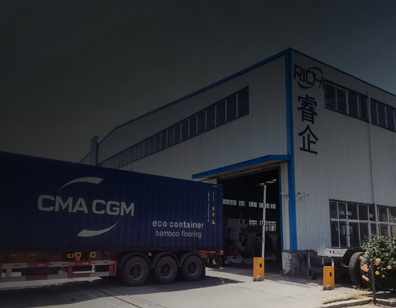
04
Shipping
We handle secure packaging and global logistics with reliable delivery timelines.

05
Installation
Our engineers supervise on-site assembly and commissioning for smooth operation.

06
Training
Comprehensive operator instruction ensures proper use and maintenance of equipment.

07
After-sales
Dedicated support team provides troubleshooting and technical assistance.
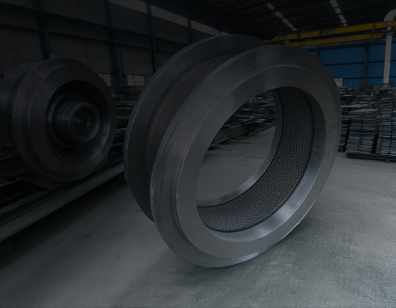
08
Spare Parts
Genuine components are available worldwide with fast delivery service.
