 0086-138 3838 9622
Bio Organic Fertilizer Factory In Argentina
RICHI MACHINERY
overview
This Bio Organic Fertilizer Factory In Argentina project began with an experienced agricultural inputs company seeking to integrate backward from distribution into full-scale production, recognizing an opportunity to capitalize on the country’s abundant domestic raw materials—livestock manure, crop residues, and leonardite—while insulating local farmers from volatile global fertilizer prices.
After two decades in the market importing conventional fertilizers and later moving into blending, the customer’s logic was compelling: with established customer relationships, warehouses, and market knowledge, why continue buying from overseas when they could manufacture competitively using local inputs?
The proposed 300,000-ton/year facility in Santa Fe represents a significant investment in Argentina’s agricultural self-sufficiency, with RICHI supplying $2.4 million in equipment including four solid fertilizer lines with disc granulators and two-stage dryers, plus two liquid lines with 1,000 m³ fermentation tanks.
The organic fertilizer production line will process 135,000 tons of composted manure and crop residues annually, incorporating humic acid from domestic mines and imported minerals for precise formulations, with key design features including zero-liquid discharge water recycling, comprehensive odor control systems, and automated PLC batching.
With Argentina importing most of its 4-5 million tons of annual fertilizer demand, this bio organic fertilizer factory in Argentina positions the customer to capture import substitution opportunities while potentially exporting to Uruguay, Paraguay, and southern Brazil, demonstrating how domestic raw material utilization combined with appropriate processing technology can create resilient agricultural supply chains.
40T/H
capacity
$2.4 million
investment
Argentina
location
Fertilizer
project type
RICHI MACHINERY
How This Conversation Started
The customer reached out through a referral from a Chilean fertilizer producer we’d worked with a couple years back. They’d been in the ag-input business for about twenty years — started with imported conventional fertilizers, built a distribution network across the Pampas region, and gradually moved into blending. Now they’re looking at full-scale production.
Argentina’s fertilizer market is unique in South America. The country has massive agricultural output — soy, corn, wheat, sunflowers — but domestic fertilizer production has historically been limited. Most NPK is imported. That creates opportunity, but also risk. When global prices spike or logistics get complicated (which happens), growers feel it.
The customer’s logic was straightforward: “We have the customer relationships. We have the warehouses. We know what farmers need. Why are we still buying from overseas suppliers when we could make it ourselves using local materials?”
They started looking at bio-organic fertilizers specifically because the raw materials are available domestically. Livestock manure (Argentina has a huge cattle industry), crop residues, sugarcane processing byproducts, even leonardite from mines in the south. They wanted a plant that could process these into high-quality products that could compete with imported synthetics.
The initial inquiry came by email: “We’re planning a 300,000 ton/year bio-organic fertilizer facility. Two product lines — solid and liquid. Can you provide a reference plant layout and equipment list?” We sent preliminary information, then scheduled a site visit to see their location and talk through the details.
RICHI MACHINERY
Site Assessment – What We Found
The site is about 18,000 m² in an industrial zone outside a mid-sized city in Santa Fe. Good location — close to major highways, rail access nearby, three-phase power at the boundary, municipal water. The customer already owned the land and had started basic site preparation.
We walked the property with their operations manager. The plan is to build approximately 14,300 m² of covered space:
Table 1 – Proposed Facility Layout
| Area | Size (m²) | Function |
|---|---|---|
| Production building | 2,880 | Solid fertilizer lines (4 lines) and liquid fertilizer lines (2 lines) |
| Raw material warehouse | 6,400 | Storage for bagged inputs, humates, minerals, packaging |
| Office building | 4,218 | Administration, sales, lab, employee facilities |
| Tool/maintenance shop | 866 | Equipment repair, spare parts storage |
| Roads and yard | ~3,800 | Truck access, turning radius, parking |
The production building is designed as a single large bay with clear spans to accommodate the equipment layout. We discussed separating the liquid and solid lines to avoid cross-contamination — dust from the solid line settling into liquid mixing tanks would be a problem. The customer agreed, so we’ll put a partition wall between the two areas.
The raw material warehouse is sized for about 2-3 months of inventory, which is reasonable given the seasonal nature of some inputs (manure availability fluctuates with livestock cycles). The office building is larger than we typically see — the customer plans to house their sales and technical support teams there, plus a small lab for quality testing.
One thing we noted: the site has good drainage and is above the flood plain, which matters in Santa Fe where heavy rains can be an issue. The customer had already done soil testing and confirmed the load-bearing capacity for heavy equipment.
RICHI MACHINERY
Production Concept – Two Lines, Multiple Products
The customer wants a facility that can produce both solid and liquid bio-organic fertilizers, with the flexibility to adjust formulations based on crop needs and raw material availability.
1. Solid Fertilizer Production (4 lines, 280,000 tons/year total)
The solid lines will produce two main products:
- Granular compound bio-fertilizer (140,000 tons/year)
Pelletized product with controlled particle size, suitable for broadcast application. Moisture content target is 19%. - Powder bio-organic fertilizer (140,000 tons/year)
Finer grind for blending or direct application. Same 19% moisture target.
The process for solid fertilizers follows a fairly standard sequence:
Raw material receiving
Pre-composted manure and crop residues arrive by truck (the customer has arrangements with local livestock operations and sugar mills). These are already fermented at the source, so there’s no composting on site — just storage. Other inputs (humic acid, bentonite, biomass ash) arrive bagged and go into the warehouse.
Batching and mixing
Materials are fed from hoppers into the mixing system. The customer wants automated proportioning — we discussed a system with weigh belts and PLC control to maintain consistent formulations. Water is added during mixing to achieve the right moisture for granulation.
Granulation
The lines use disc granulators (32 units total across the four lines). This is a well-proven technology for organic fertilizers — it’s gentle on the material, produces consistent spherical granules, and handles the moisture content well. Each granulator is fed by a dedicated distribution system.
Drying
After granulation, material goes through a two-stage drying process. Natural gas-fired burners provide hot air (combustion gases don’t contact the product directly — it’s indirect heating). Drying temperature is controlled around 100°C to prevent nutrient degradation. First-stage dryer is 2.4m diameter, second stage 2.2m.
Cooling
Dried granules go into a rotary cooler to bring temperature down before screening.
Screening and crushing
Material passes over screens. On-size product goes to packaging. Oversize goes to a crusher, then back to the granulation feed. Fines also get recycled.
Packaging
Finished product goes to automatic bagging lines (4 packers) with palletizing and stretch wrapping.
Emissions control
Each solid line has its own dedusting system: cyclones followed by bag filters and a bio-tower for odor control. Exhaust is through 15m stacks.
2. Liquid Fertilizer Production (2 lines, 20,000 tons/year total)
The liquid lines will produce:
- Water-soluble macro-nutrient fertilizer (10,000 tons/year)
- Amino-acid based liquid fertilizer (10,000 tons/year)
Fermentation
Liquid fertilizers start with liquid manure (digestate) delivered by tanker. This goes into fermentation tanks (1,000 m³ each). Other ingredients are added based on the target formulation: potassium nitrate, mono-potassium phosphate, urea, macro-element blends, amino acids, micronutrients (boron, iron, zinc), and a liquid carrier (mostly water with humic/fulvic acids).
Fermentation runs about 30 days. During this time, microbial activity breaks down complex organics and stabilizes the product. The tanks have built-in odor control (ionization systems) plus a shared bio-filter.
Quality adjustment
After fermentation, the liquid is checked for nutrient content and adjusted if needed. The customer plans to do basic testing on site (pH, density, solids content) with more detailed analysis sent to an external lab.
Packaging
Finished liquid goes to automatic filling lines for 20L containers (drums or jerrycans). The filling lines are rated for about 25 tons/hour.
Table 2 – Main Equipment Summary
| Production Unit | Equipment | Quantity | Notes |
| Solid line (x4) | Fertilizer granulator equipment FZLH | 32 | For pelletizing |
| Dryer HG-2400 (primary) | 4 | Natural gas indirect-fired | |
| Dryer HG-2200 (secondary) | 4 | ||
| Cooler LQ-2000 | 4 | Rotary type | |
| Screen FS-1800/1500 | 16 | For size classification | |
| Crusher Fs-600 | 4 | For oversize recycle | |
| Packing system | 4 | Automatic baggers | |
| Conveyors PS-600 | ~1,000 m | Belt conveyors | |
| Liquid line (x2) | Fermentation tank FJ-1000 | 2 | 1,000 m³ each |
| Liquid filler | 2 | Automatic, for 20L containers | |
| Common | Control systems | Various | PLC with recipe management |
| Dust collection | 4 systems | Cyclone + bag filter + bio-tower | |
| Odor control | 2 systems | Bio-filters for liquid line |
RICHI MACHINERY
Raw Materials – What’s Available Locally
One of the strengths of this project is raw material availability. Argentina has:
- Manure: Huge cattle industry, plus poultry and swine operations. The customer already has supply agreements with feedlots within 100km.
- Crop residues: Corn stover, wheat straw, sunflower stalks. These are usually available post-harvest.
- Humic substances: Leonardite deposits in several provinces. The customer is sourcing from a mine in Mendoza.
- Mineral inputs: Potassium nitrate, MAP, urea, micronutrients — these are imported, but the volumes are manageable.
- Biomass ash: From agricultural waste combustion (e.g., rice husk ash, sugarcane bagasse ash). Available from local processors.
Table 3 – Annual Raw Material Requirements (Proposed)
| Material | Annual Quantity (tons) | Form | Source |
|---|---|---|---|
| Composted manure/crop residues | 135,000 | Bulk, 35% moisture | Local livestock/sugar operations |
| Humic acid | 98,000 | Bagged powder | Domestic mining |
| Bentonite | 14,000 | Bagged powder | Domestic source |
| Biomass ash | 35,000 | Bulk, 20% moisture | Local processors |
| Liquid manure (digestate) | 9,300 | Liquid, tanker | Biogas operations |
| Potassium nitrate | 1,000 | Bagged crystals | Imported |
| Mono-potassium phosphate | 2,600 | Bagged crystals | Imported |
| Urea | 2,600 | Bagged granules | Imported |
| Macro-element blend | 500 | Bagged powder | Imported |
| Amino acids | 1,000 | Bagged powder | Imported |
| Micronutrients (B, Fe, Zn) | 400 | Bagged powder | Imported |
| Liquid carrier (humic/fulvic) | 2,600 | Liquid, drums | Domestic |
| Microbial inoculants | 1 | Bagged powder | Lab-cultured |
| Packaging (bags) | 6 million units | — | Local supplier |
The imported minerals are the cost-sensitive part. The customer is watching global prices closely and considering forward contracts to manage volatility.
RICHI MACHINERY
Utilities and Infrastructure
Water
Total water requirement is about 255 m³/day fresh water, plus 100 m³/day recirculated. Sources:
- Municipal supply (available, adequate pressure)
- Rainwater collection (the customer plans to add tankage for this)
- Process water recycle (from the bio-tower and floor washing)
The water balance works: process water (granulation) uses 452 m³/day including recycle and moisture from raw materials. Drying removes about 255 m³/day as vapor. Product retains about 197 m³/day. Wastewater from the bio-tower and floor washing (20 m³/day total) goes back to granulation — zero liquid discharge.
Power
Connected load is about 800 kW. Annual consumption estimated at 200,000 kWh. The site has a 1,000 kVA transformer — adequate for planned load.
Gas
Drying requires about 2.4 million m³/year of natural gas. The site is near a gas transmission line; connection is feasible. The customer is also looking at biogas from the liquid line as a supplement (the fermentation tanks produce some methane, though volumes are small).
Staffing
Total employees: 30
- Operations: 18 (6 per shift × 3 shifts)
- Maintenance: 4
- Quality/lab: 2
- Management/admin: 6
Three-shift operation maximizes equipment utilization — 270 days/year, 24 hours/day.
RICHI MACHINERY
Shipping and Logistics – Equipment Supply
If the organic fertilizer production project moves forward, all major equipment would be shipped from Qingdao to Buenos Aires. That’s the main port for industrial imports to Argentina. From Buenos Aires, it’s about 300 km by truck to the site in Santa Fe — good roads, straightforward logistics.
We discussed lead times: about 6-8 weeks for fabrication after order confirmation, 4-5 weeks shipping, then 8-10 weeks for installation and commissioning. Total project timeline about 6 months from order to production start, assuming site preparation is complete.
RICHI MACHINERY
Investment Estimate
The equipment portion is estimated at $2.4 million USD (FOB Qingdao). This includes:
- Four complete solid fertilizer lines (granulators, dryers, coolers, screens, crushers, conveyors, dust control)
- Two complete liquid fertilizer lines (fermentation tanks, mixers, filling equipment)
- Control systems and electrical integration
- Spare parts package
- Supervision of installation and commissioning
- Operator training
The customer will need additional budget for:
- Site preparation and foundations (already partly done)
- Building construction (they’re handling this locally)
- Utility connections
- Working capital for raw materials and finished goods inventory
- Permitting and legal costs
Total organic fertilizer production plant cost will be higher, but the equipment represents the core technology investment.
RICHI MACHINERY
Market Considerations – Why Argentina?
Argentina’s fertilizer market is about 4-5 million tons annually, with the majority imported. Domestic production has been growing, but there’s still significant opportunity for import substitution — especially for bio-organic products.
Several factors favor this project:
Raw material availability
Argentina produces massive quantities of agricultural residues and livestock manure. These are currently underutilized — some go back to fields, some are wasted. Processing them into high-value fertilizers makes economic and environmental sense.
Farmer economics
When global fertilizer prices spike (which they do, regularly), Argentine farmers get squeezed. Domestic production offers some insulation from those swings. Bio-organic fertilizers also tend to have lower price volatility than synthetic imports.
Export potential
Neighboring countries (Uruguay, Paraguay, southern Brazil) have similar cropping systems and limited domestic production. There’s potential to export once the domestic market is served.
Sustainability trends
European and North American buyers are increasingly asking about the carbon footprint of their food. Fertilizer inputs are part of that calculation. Bio-organic products can help Argentine farmers tell a better story.
RICHI MACHINERY
Observations and Recommendations
A few thoughts based on our site visit and discussions:
The raw material strategy is sound
Locking in supply agreements with local livestock and sugar operations is smart. The customer has already done this — they’re not guessing about availability. We suggested they also consider forward contracts for the imported minerals to manage price risk.
The two-product strategy makes sense
Solid fertilizers for broadcast application, liquid for fertigation and foliar use. They serve different markets and different application methods. Having both lines gives the customer flexibility to respond to changing demand.
Automation level is appropriate
For a plant this size, you want automated batching and process control. Manual operation at 40 tons/hour is too error-prone. The PLC system we proposed will maintain consistent formulations and provide batch traceability — important for quality claims.
Drying energy is a significant cost
Gas is relatively affordable in Argentina, but it’s still a major operating expense. We discussed options for heat recovery (preheating combustion air using cooler exhaust) and potential use of biomass fuel (e.g., crop residues) as a supplement. Both are worth investigating further.
Odor control is worth the investment
Even though the site is industrial, the customer is wise to invest in good odor control. It prevents complaints, maintains good community relations, and gives them flexibility if neighbors change. The bio-tower + ionization system is proven technology.
RICHI MACHINERY
Next Steps
The customer is reviewing the proposal and doing final feasibility work. Key items before a final decision:
- Confirm natural gas supply and pricing
- Finalize raw material contracts (especially the imported minerals)
- Complete environmental permitting (in progress)
- Arrange financing
We’ve agreed to provide additional information on:
- Specific power consumption estimates
- Drying efficiency data from similar installations
- References from other projects in South America
If they move forward, we’ll schedule a follow-up visit to finalize foundation drawings and electrical requirements.
RICHI MACHINERY
Final Thoughts
This is a solid project with good fundamentals. The customer knows the market, has access to raw materials, and is thinking realistically about the investment. The proposed plant (40 tons/hour, 300,000 tons/year) is large enough to be efficient but not so large that it’s risky.
The bio-organic fertilizer market in Argentina has room to grow. Domestic production can’t currently meet demand, and imports are expensive and subject to global volatility. A well-run facility with consistent quality should have no trouble finding customers.
If you’re considering something similar — whether in Argentina or elsewhere — the key questions are the same: Where will your raw materials come from? Who will buy your product? And can you produce at a cost that makes sense?
We’ve done fertilizer projects across South America, and every one is different because local conditions are different. But the fundamentals are the same: secure your inputs, design for your actual products, and build in enough flexibility to adjust as the market changes.
Interested in discussing a project?
If you’re looking at bio-organic fertilizer production and want to know whether your raw materials will work, we can run samples through our test facility. That’s how this Argentina project started — with samples of local manure, humates, and crop residues sent to our lab. We’ll give you honest answers about what works and what doesn’t. No point building a plant that can’t run on your local materials.
● RICHI MACHINERY
RICHI Service

● Consulting
Customer Consultation
We want to have a deep understanding of your industrial process, to know your exact needs of feed, wood, biomass, fertilizer or other pellet processing.

● Design
fertilizer Pellet Plant Design
Based on your unique situation and industrial process, we will tailor complete pellet plant you need, and inform you of every additional detail that could facilitate operation, minimize total cost.
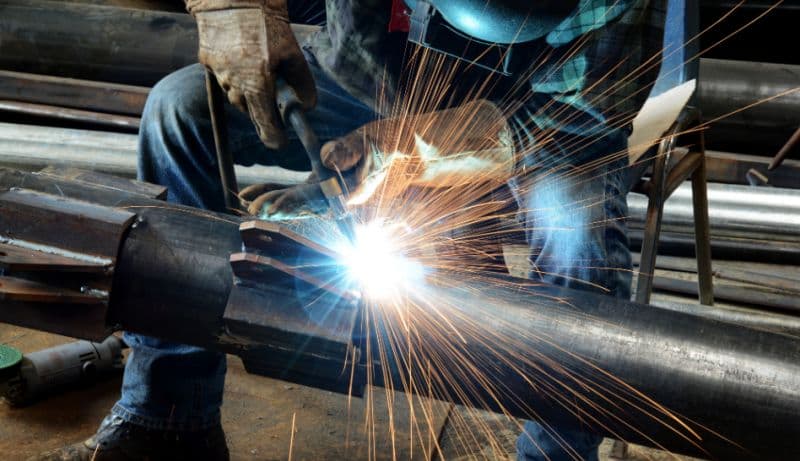
● Manufacturing
Equipment Manufacturing
The critical components of the of the complete pellet production line equipment are built in our own workshops in Asia. Additional equipment is manufactured by our worldwide network of reliable partners.
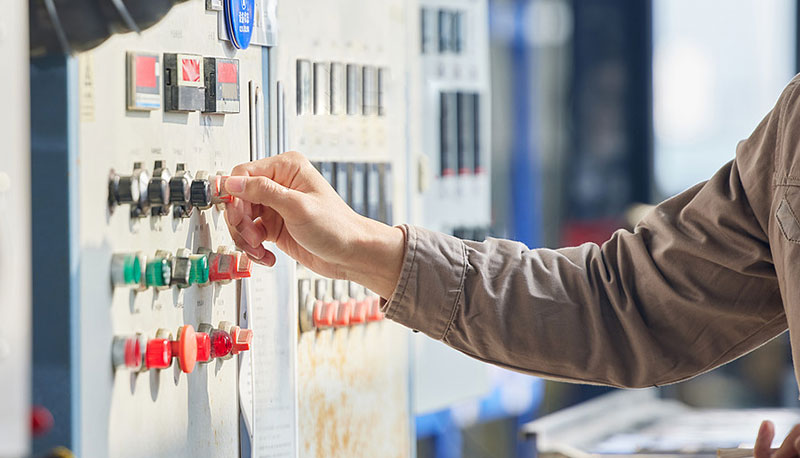
● Testing
Quality Inspection & Testing
Before leaving the factory, all equipment will be inspected by the quality inspection department. We can also provide customers with testing services from a single machine to a complete pellet plant system, and provide you with real actual data for “worry-free use.”
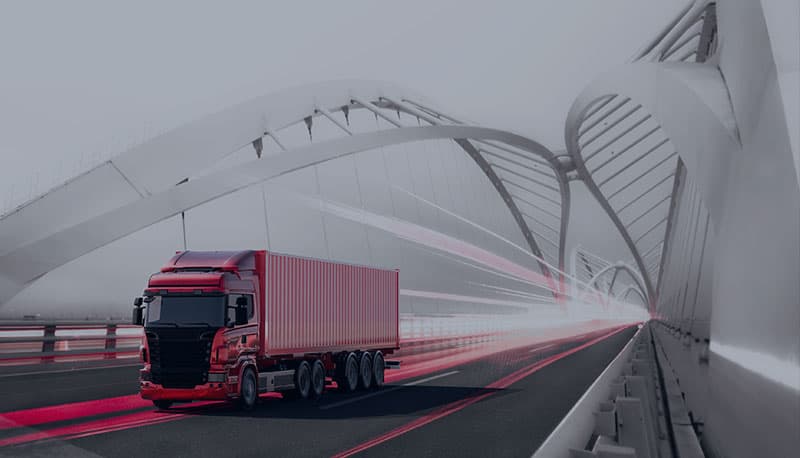
● Delivery
Equipment Delivery
In equipment boxing and packaging, we adopt professional packaging and modular solutions to ensure the safe and non-destructive delivery of pellet plant equipment.
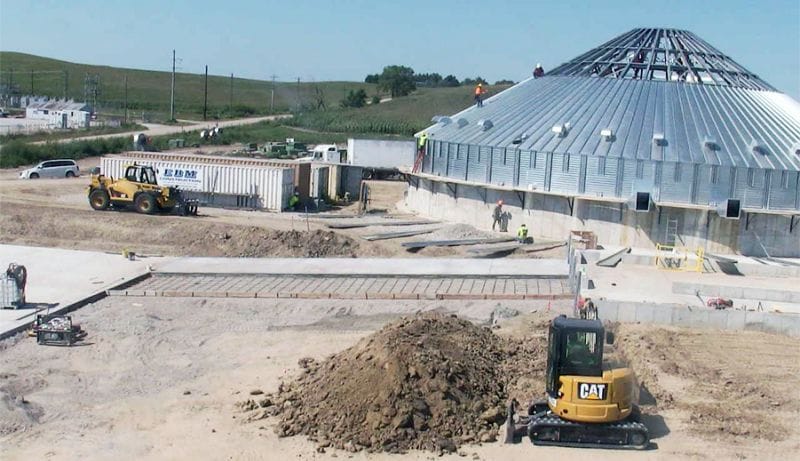
● Installation
Installation & Commissioning
Whether you choose your own subcontractor for the erection phase or you want to install everything together with us, a Richi supervisor will be around to make sure everything is mounted in a safe and thorough way.

● Training
Staff Training
We provide comprehensive training for the technicians of each project. We can also continue to provide support for the technicians during latter project operation.
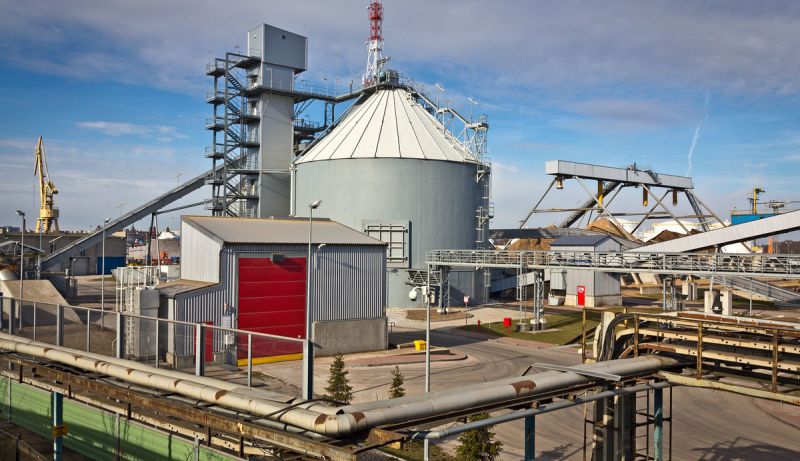
● After-sales
Project Follow-Up
When everything is up and running our Richiers will help you further whenever needed. We are ready to answer your call 24/7.We’ll also visit you regularly to learn about your needs.
Who we are
RICHI Machinery is one of the world’s leading suppliers of technology and services for the animal feed, aqua feed and pet food industries, also the largest pellet production line manufacturer in China.
Since 1995, RICHI’s vision to build a first-class enterprise, to foster first-class employees, and to make first-class contributions to society has never wavered.
In the past three decades, we have expanded our business to a wide range of areas, including animal feed mill equipment, aqua feed equipment, pet feed equipment, biomass pellet equipment, fertilizer equipment, cat litter equipment, municipal solid waste pellets equipment, etc.

1995
RICHI Established

2000+
Serving More Than 2000 Customers

120+
RICHI Employees

140+
Exported To 140 Countries