 0086-138 3838 9622
Organic Manure Production Plant In Peru
RICHI MACHINERY
overview
The customer started in 2018 as a small organic fertilizer producer, processing about 20,000 tons per year using mostly manual methods and basic equipment. They served local farmers in the coastal valleys — mostly vegetable and fruit growers looking for alternatives to imported synthetic fertilizers.
By 2024, demand had grown beyond their capacity. Peruvian agriculture has been shifting toward organic and sustainable practices, driven partly by export markets (Europe, US) and partly by domestic concerns about soil health. The customer’s existing customers were asking for more product, and new customers were calling. They needed to expand.
The original site was about 6,600 m² — enough for the initial operation but too tight for significant growth. They acquired adjacent land, bringing the total to 12,000 m². The plan: increase total production from 20,000 to 50,000 tons per year, and add a new product line — granular organic fertilizer — to complement their existing powder products.
They approached us mid-2024 after seeing one of our installations in Chile. The initial inquiry was straightforward: “We need to expand. Our current equipment is outdated. Can you provide a complete system for granulation, drying, and cooling, plus upgrades to our material handling?”
We sent preliminary information, then visited the site to assess the existing setup and discuss the expansion.
9-10 t/h
capacity
$380,000
investment
Peru
location
fertilizer
project type
RICHI MACHINERY
Site Assessment – Working with an Existing Facility
The site is in a semi-rural area — close enough to markets but far enough from residential areas to avoid complaints. The customer had already done basic site work: concrete hardstanding, enclosed buildings, proper drainage.
The existing facility included:
- Original buildings: About 6,600 m² total, including an 800 m² fermentation building, 600 m² production building, 400 m² raw material warehouse, 400 m² product warehouse, plus office and staff facilities.
- New construction: An additional 5,400 m², including a 2,000 m² primary mixing building, 2,600 m² curing building, and expanded product warehouse (now 1,900 m² total).
Table 1 – Facility Layout After Expansion
| Area | Size (m²) | Function |
|---|---|---|
| Primary mixing building | 2,000 | Initial blending of raw materials |
| Mixing building | 220 | Final mixing with additives |
| Fermentation building | 1,100 | Active composting/aeration |
| Curing building | 2,600 | Maturation and storage of compost |
| Production building | 800 | Crushing, granulation, drying, packaging |
| Raw material warehouse | 400 | Storage for bagged inputs |
| Product warehouse | 1,900 | Finished goods storage (two buildings) |
| Office | 630 | Administration, sales |
| Staff facilities | 1,050 | Housing, kitchen, dining for 20 staff |
| Roads/yard | ~1,800 | Access, truck maneuvering |
The layout of this organic fertilizer production line works well: raw materials come in at one end (primary mixing), move through fermentation and curing, then into production, and finally to finished goods. Minimal cross-traffic, logical flow.
One thing we noted during the site visit: the existing buildings were in good condition — concrete floors, steel frames, adequate height for equipment. That saved significant cost compared to building from scratch.
RICHI MACHINERY
Raw Materials – Sourcing in Peru
Peru has good availability of organic raw materials, especially in agricultural regions. The customer’s supply chain was already established:
Table 2 – Annual Raw Material Consumption (After Expansion)
| Material | Annual Quantity (tons) | Source | Notes |
|---|---|---|---|
| Livestock manure | 37,500 | Local poultry/swine farms | Mostly chicken litter, pig manure; 50% moisture |
| Mushroom compost | 10,000 | Local mushroom growers | Spent substrate, 30% moisture |
| Humic acid | 3,480 | Imported/domestic | 15% moisture, from leonardite |
| Rice bran | 4,550 | Local rice mills | 10% moisture |
| Additives (microbes, etc.) | 770 | Various | Includes microbial inoculants |
| Sulfuric acid (50%) | 20 | Local chemical supplier | For odor control |
| Sodium carbonate | 5 | Local chemical supplier | For pH adjustment |
| Lubricants | 0.5 | Local | Equipment maintenance |
| Diesel | 240 | Local fuel supplier | For dryer burner |
The manure comes from farms within 50 km — mostly poultry operations, some swine. The customer has long-term agreements with these suppliers, so quality is reasonably consistent. Manure arrives in sealed tankers (the customer invested in these specifically to control odor during transport).
Mushroom compost is a clever local sourcing choice. Peru has a growing mushroom industry, and spent substrate is often wasted. Here it provides additional organic matter and structure.
The humic acid is partly imported (from leonardite sources) and partly from local deposits — Peru has some humic material in the coastal regions, though quality varies.
The additives (microbial cultures) are the critical part. The customer works with an agricultural lab to maintain consistent microbial counts — essential for claiming “bio-organic” status.
RICHI MACHINERY
Production Process – Before and After
The original process was simple: mix raw materials, compost, cure, grind, bag. Output was powder only, about 20,000 tons/year.
The expanded facility adds:
- A granulation line (10,000 tons/year of granular product)
- Enhanced mixing and material handling
- Improved environmental controls
- Expanded curing capacity
1. Base Material Production (Powder)
This part of the process didn’t change fundamentally, but capacity increased:
Step 1 – Primary mixing
Manure, mushroom compost, and rice bran are blended in the primary mixing building using front-end loaders. This is rough blending — just getting materials combined before fermentation.
Step 2 – Final mixing
The rough blend is conveyed to the mixer, where humic acid and microbial additives are added. The mixer is a double-shaft continuous mixer with dust covers — much better control than the old batch mixer.
Step 3 – Fermentation
Mixed material goes to the fermentation building, where it’s stacked in windrows. Temperature is monitored — when it hits 60°C, they turn the piles using the windrow turner (STP8200). This aerates the pile, controls temperature, and speeds decomposition. Fermentation takes 7-10 days per batch, continuous operation.
Step 4 – Curing
After active fermentation, material moves to the curing building. This is essentially aging — letting the compost stabilize, killing any remaining weed seeds or pathogens, and allowing moisture to equalize. The curing building is large (2,600 m²) to provide buffer storage so production can continue even if finished product isn’t moving immediately.
Step 5 – Screening and grinding
Cured compost is screened. Oversize goes to a crusher, then back to the screen. Undersize (the finished powder) goes either to packaging (for powder product) or to the granulation line.
Step 6 – Powder packaging
Powder is packed in 25-40kg bags using an automatic packer (GTB-50F). Bags are palletized and stored in the product warehouse.
2. Granular Production (New Line)
This is the major addition — producing 10,000 tons/year of uniform granules.
Step 1 – Material preparation
Powder from the base process is conveyed to the granulation area. First it passes through a magnetic separator to remove any metal (tramp metal from handling equipment).
Step 2 – Conditioning
Water is added to bring moisture up to about 40% — necessary for good granule formation. This happens in a conditioning mixer.
Step 3 – Granulation
The conditioned material feeds into the fertilizer granulator equipment. This is a ring die pellet machine — gentle, good for organic materials, produces consistent spherical granules. The operator can adjust pan angle and speed to control particle size.
Step 4 – Drying
Wet granules go into the rotary dryer. The dryer is indirect-fired — hot air from the burner (diesel-fired, 800,000 kcal/h) passes through a heat exchanger so combustion gases never contact the fertilizer. This is important for organic products — direct contact with combustion products could affect microbial viability or introduce contaminants. Drying reduces moisture from 40% down to below 30%.
Step 5 – Cooling
Hot granules go through the cooler — ambient air pulled through the bed, reducing temperature to near-ambient.
Step 6 – Screening
Cooled granules are screened. On-size product goes to coating; fines go back to the granulator feed; oversize goes to a crusher and back to screening.
Step 7 – Coating
The coater applies a thin liquid coating to the granules — this helps prevent caking during storage and can also add additional nutrients or biologicals. The powder applicator can apply dry anti-caking agent if preferred.
Step 8 – Packaging
Finished granules go to the automatic packer) — 25-40kg bags, palletized, stored.
Table 3 – Key Equipment Added for Expansion
| Equipment | Model | Quantity | Function |
|---|---|---|---|
| Windrow turner | STP8200 | 1 | Aerates composting piles |
| Conveyors | B-500 | +6 | Additional material handling |
| Hammer mill | GTC-80V | 1 | Grinds oversize material |
| Magnetic separator | GYYB-60 | 1 | Removes tramp metal before granulation |
| Rotary screen | GTS-1560 | +1 | Additional screening capacity |
| Organic fertilizer granulator machine | GTZR-1240 | 1 | Forms granules from powder |
| Hot air furnace | GTRS-160 | 1 | 800,000 kcal/h, diesel-fired |
| Rotary dryer | GTRD-1212 | 1 | Reduces moisture from 40% to <30% |
| Rotary cooler | GTRC-1012 | 1 | Cools granules after drying |
| Cyclone collectors | ø1500 | 2 | Primary dust collection |
| Coater | GTBM-1.2×4.0 | 1 | Applies anti-caking coating |
| Powder applicator | GP-20 | 1 | Applies dry anti-caking agent |
| Granule packer | GTB-50K | 1 | Automatic bagging for granules |
| Finished product bin | — | 1 | Surge bin before packaging |
RICHI MACHINERY
Utilities and Staffing
Water: Total consumption about 2,150 m³/year, from municipal supply. The site has sufficient pressure and flow.
Power: 500,000 kWh/year, from the local grid. The customer installed a new transformer to handle the increased load.
Fuel: 240 tons/year of diesel for the dryer burner. The customer buys in bulk and stores in a small tank farm (bunded, compliant with local regulations).
Staff: 20 people total, all living on site (the facility includes staff housing). Two shifts per day, 330 days/year. This is common in rural Peru — workers often prefer to live on site rather than commute long distances.
RICHI MACHINERY
Shipping and Logistics – Equipment Supply
All equipment for the organic manure production plant in Peru was shipped from Qingdao to Callao, the main port for Lima. From Callao, it’s about 150 km by truck to the site — good roads, straightforward logistics.
We shipped in three containers: one 40ft HC for the granulator and dryers, one 40ft for conveyors and smaller equipment, and one 20ft for controls and spares. Total transit time about 35 days.
We sent a two-person commissioning team for six weeks. Most of the installation labor was local; we supervised and handled the critical alignments and startup training.
RICHI MACHINERY
Product Quality and Standards
The finished products meet the Chinese standard NY884-2012 (which the customer’s local certification body accepts as equivalent to international standards):
Table 4 – Product Specifications
| Parameter | Requirement | Typical Result |
|---|---|---|
| Viable bacteria count | ≥0.2 billion CFU/g | 0.3-0.5 billion |
| Organic matter (dry basis) | ≥40% | 45-50% |
| Moisture | ≤30% | 25-28% |
| pH | 5.5-8.5 | 6.5-7.5 |
| Coliform bacteria | ≤100 CFU/g | <30 |
| Helminth eggs mortality | ≥95% | >99% |
The granular product is about 3-5mm diameter, uniform, with good crush strength — it holds together during handling but breaks down in soil.
RICHI MACHINERY
Observations from the First Year
We visited the site about six months after commissioning to see how things were running. A few observations:
The granulator took some tuning
Organic materials aren’t as consistent as synthetic fertilizers. The first few batches varied in particle size. We spent a couple days adjusting pan angle, speed, and moisture addition. Once dialed in, it runs consistently, but it requires more operator attention than a synthetic fertilizer line.
The dryer is the bottleneck
At full production, the dryer runs near capacity. On wet days (high ambient humidity), drying efficiency drops. The customer is considering adding a second dryer if they expand further.
Odor control works
The neighbors haven’t complained. The enclosed buildings and scrubbers do their job. The customer is happy — they were worried about complaints with the expanded capacity.
Microbial counts are consistent
The customer tests every batch. With the controlled process and gentle drying (indirect heat, moderate temperatures), microbial viability stays high. That’s the key to selling “bio-organic” product at a premium.
The staff adapted well
The operators learned the new equipment quickly. The fact that they live on site helps — they’re invested in making the plant work.
RICHI MACHINERY
Market Context – Why This Works in Peru
Peru’s agriculture is diverse: coastal export crops (grapes, asparagus, avocados), highland traditional crops (potatoes, quinoa), and jungle regions (coffee, cacao). Organic and sustainable practices are growing in all segments.
Export drivers: European and US buyers increasingly require sustainability certifications. Fertilizer inputs are part of that calculation. Bio-organic products help Peruvian exporters meet those requirements.
Domestic drivers: Soil degradation is a real concern in intensively farmed areas. Farmers are seeing the benefits of organic matter — better water retention, improved structure, reduced input costs over time.
Supply dynamics: Peru imports most of its conventional fertilizers. When global prices spike (which happens), domestic producers have an advantage if they can source raw materials locally. This customer’s manure, mushroom compost, and rice bran are all domestic — insulating them from some of the price volatility.
The customer’s product mix (80% powder, 20% granules) reflects the market. Powder is cheaper to produce and works for many applications. Granules command a premium because they’re easier to handle and apply uniformly.
RICHI MACHINERY
Investment and Payback
The cost of this organic manure production plant in Peru about $380,000 USD (FOB Qingdao). This covered:
- Windrow turner
- Additional conveyors and screens
- Complete granulation line (granulator, dryer, cooler, coating system)
- Dust collection and emission controls
- Control system upgrades
- Spare parts
- Commissioning and training
The customer spent additional money on site preparation, building construction, and permitting. Total project cost was higher, but the equipment represents the core technology investment.
Payback is projected at about 3-4 years, based on:
- Increased production capacity (from 20,000 to 50,000 tons/year)
- Premium pricing for granular product (about 15-20% higher than powder)
- Improved efficiency from automated equipment (less labor per ton)
RICHI MACHINERY
What We’d Do Differently Next Time
A few lessons from this organic manure production plant in Peru project:
More upfront training on the granulator
We did a week of training, but it took another week of the customer experimenting to really dial it in. Next time we might schedule a follow-up visit after a month of operation.
Bigger dryer, maybe
The dryer is sized correctly for 10,000 tons/year, but if the customer expands further, they’ll need more capacity. If we’d known they might grow quickly, we might have upsized it initially.
Better dust collection at the mixer
The mixer is enclosed, but the feed points still generate some dust. We added hoods after startup, but it would have been cleaner to design them in from the start.
Spare parts planning
The customer is remote — it’s a day’s drive to Lima for parts. We should have emphasized keeping critical spares on site (belts, screens, bearings). They’ve since built up their inventory, but there were a few delays early on.
RICHI MACHINERY
Final Thoughts
This was a good project. The customer had a clear need, realistic expectations, and a solid existing operation. The expansion doubled their capacity and added a higher-value product line. The organic manure production plant in Peru is running well, the product is selling, and the customer is already talking about the next phase.
Peru has good fundamentals for organic fertilizer production: raw materials available, growing demand, supportive policies for sustainable agriculture. A well-run facility with consistent quality can find plenty of customers.
If you’re considering something similar — whether in Peru or elsewhere — the questions are the same: Where will your raw materials come from? Who will buy your product? And can you produce at a cost that makes sense?
We’ve done projects across South America, and every one is different because local conditions are different. But the fundamentals are the same: secure your inputs, design for your actual products, and build in enough flexibility to adjust as the market changes.
Interested in discussing a project?
If you’re looking at organic manure production and want to know whether your raw materials will work, we can run samples through our test facility. That’s how this Peru organic fertilizer production project started — with samples of local manure, mushroom compost, and rice bran sent to our lab. We’ll give you honest answers about what works and what doesn’t. No point building a plant that can’t run on your local materials.
● RICHI MACHINERY
RICHI Service

● Consulting
Customer Consultation
We want to have a deep understanding of your industrial process, to know your exact needs of feed, wood, biomass, fertilizer or other pellet processing.

● Design
fertilizer Pellet Plant Design
Based on your unique situation and industrial process, we will tailor complete pellet plant you need, and inform you of every additional detail that could facilitate operation, minimize total cost.
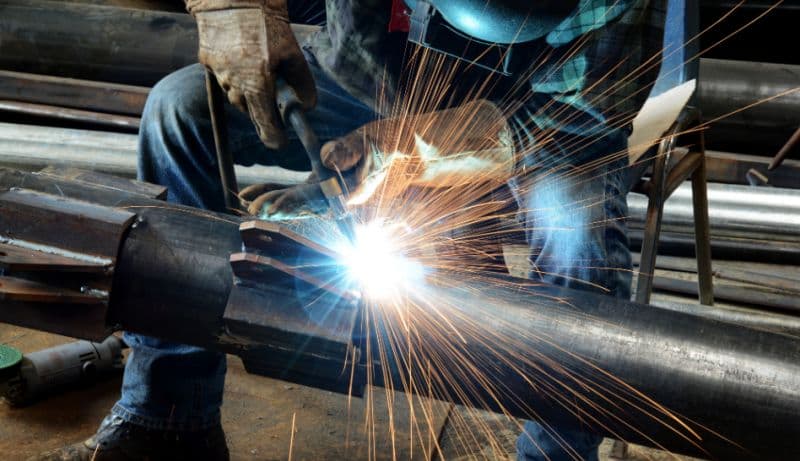
● Manufacturing
Equipment Manufacturing
The critical components of the of the complete pellet production line equipment are built in our own workshops in Asia. Additional equipment is manufactured by our worldwide network of reliable partners.
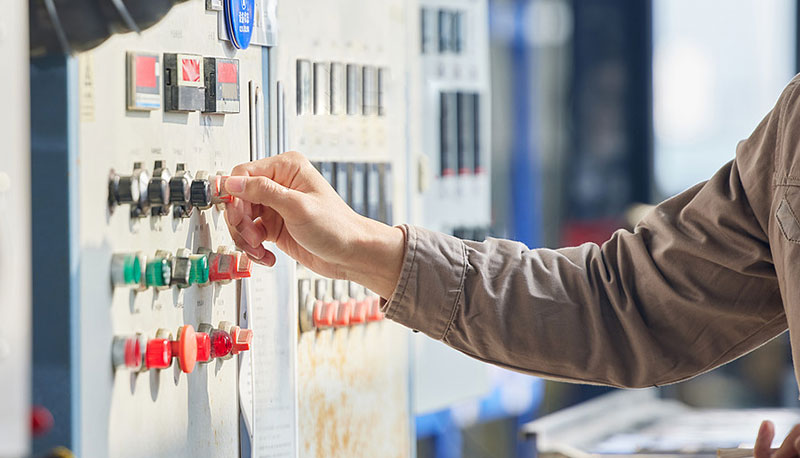
● Testing
Quality Inspection & Testing
Before leaving the factory, all equipment will be inspected by the quality inspection department. We can also provide customers with testing services from a single machine to a complete pellet plant system, and provide you with real actual data for “worry-free use.”

● Delivery
Equipment Delivery
In equipment boxing and packaging, we adopt professional packaging and modular solutions to ensure the safe and non-destructive delivery of pellet plant equipment.
● Installation
Installation & Commissioning
Whether you choose your own subcontractor for the erection phase or you want to install everything together with us, a Richi supervisor will be around to make sure everything is mounted in a safe and thorough way.

● Training
Staff Training
We provide comprehensive training for the technicians of each project. We can also continue to provide support for the technicians during latter project operation.
● After-sales
Project Follow-Up
When everything is up and running our Richiers will help you further whenever needed. We are ready to answer your call 24/7.We’ll also visit you regularly to learn about your needs.
Who we are
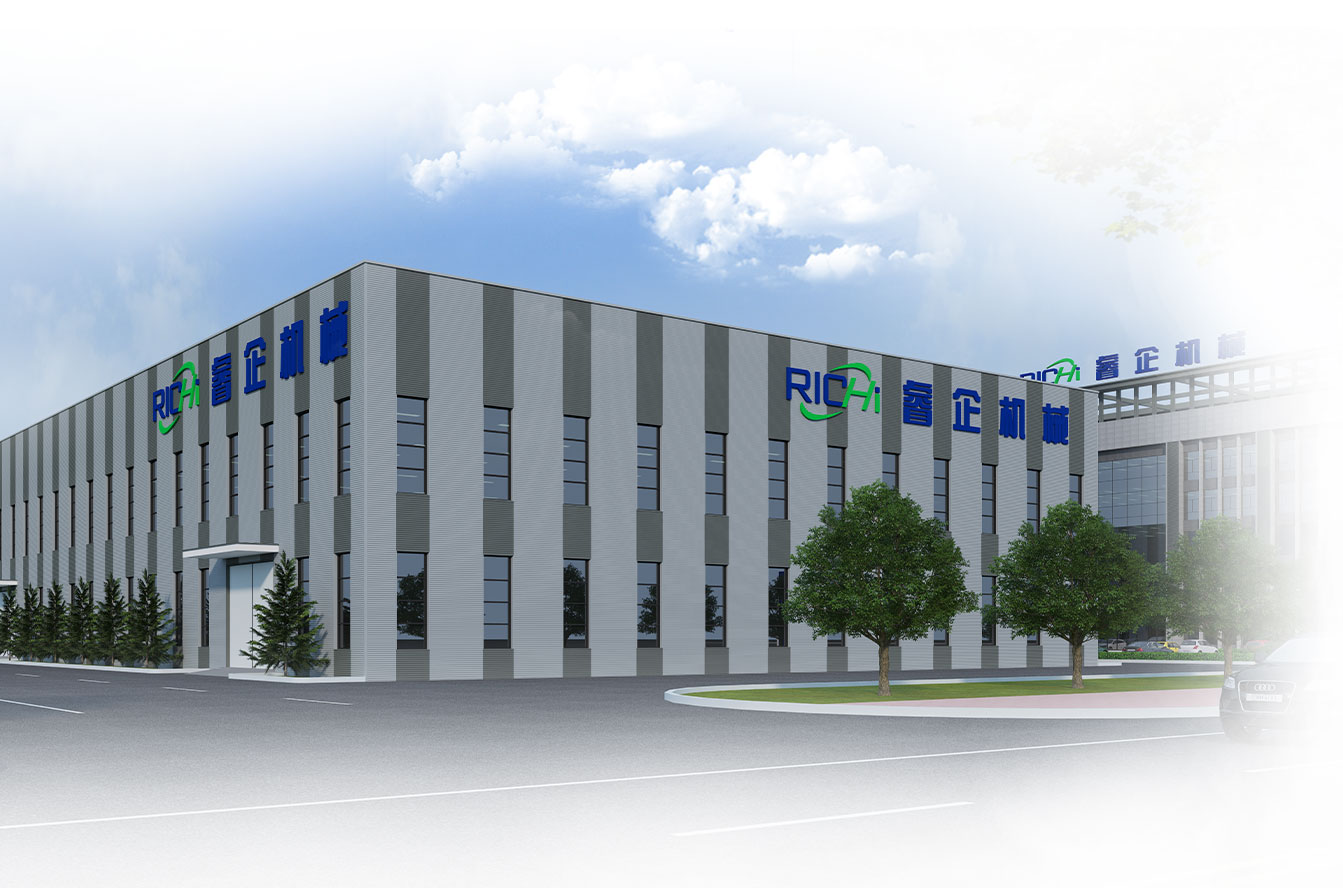
RICHI Machinery is one of the world’s leading suppliers of technology and services for the animal feed, aqua feed and pet food industries, also the largest pellet production line manufacturer in China.
Since 1995, RICHI’s vision to build a first-class enterprise, to foster first-class employees, and to make first-class contributions to society has never wavered.
In the past three decades, we have expanded our business to a wide range of areas, including animal feed mill equipment, aqua feed equipment, pet feed equipment, biomass pellet equipment, fertilizer equipment, cat litter equipment, municipal solid waste pellets equipment, etc.

1995
RICHI Established

2000+
Serving More Than 2000 Customers

120+
RICHI Employees

140+
Exported To 140 Countries