 0086-138 3838 9622
Automatic Premix Feed Production Line in Vietnam
RICHI MACHINERY
The Project That Kept Growing
Early 2023. A Vietnamese feed manufacturer contacted us. They had been making traditional aquafeed and livestock feed for about eight years. Decent business. But margins were getting tighter. Commodity feed prices were squeezed by rising corn and fishmeal costs.
They wanted to move up the value chain.
The plan started modestly: add a small premix line to serve their existing customers. But the more they looked at the market, the bigger the opportunity became. Vietnamese shrimp farmers were demanding better hatchery feeds. Pig producers wanted custom vitamin-mineral premixes. Even the veterinary sector was growing – the government was pushing for more domestic production of animal health products.
So the project expanded. What began as a simple line became a full-scale 15 t/h automatic premix feed production line in Vietnam – plus separate sections for aquafeed extrusion, solid and liquid veterinary drugs, and even herbal extracts.
We got involved in April 2023. The client had already bought land – 16,533 square meters in an industrial park near Ho Chi Minh City. They had building permits for a 4-story feed mill structure (about 10,200 m²) plus separate buildings for extraction and disinfectant. But they needed someone to design, equip, and commission the entire production side.
Contract signed in July 2023. Equipment shipped from Qingdao in November. Installation finished in May 2024. Commercial production started in June 2024 – just before Vietnam’s peak shrimp harvest season.
15T/H
capacity
$1,450,000
investment
Vietnam
location
Feed
project type
RICHI MACHINERY
Why Vietnam? The Premix Opportunity
Vietnam’s livestock and aquaculture sectors have grown fast – 5-7% annually for the past decade. But the feed industry is still fragmented. Most mills make basic grower/finisher feeds. Few produce high-quality premixes for hatcheries or specialized farms.
Here’s the gap the client saw:
- Shrimp hatcheries need micronized feeds with precise vitamin and mineral profiles. Most import these from Thailand or Taiwan.
- Pig breeders (Vietnam has about 25 million pigs) want custom premixes for different growth stages. Most buy generic blends.
- Aquafeed mills purchase premixes from foreign suppliers because local quality is inconsistent.
The client’s strategy was simple: build a premix feed manufacturing plant that could serve all three markets. The same equipment could produce premixes for shrimp, pigs, and poultry – just change the recipe. The 15 t/h capacity was sized for the domestic market within 300 km of Ho Chi Minh City. That covers the Mekong Delta (aquaculture) and the southeast region (pigs and poultry).
RICHI MACHINERY
Site Assessment: What We Had to Work With
The land was flat, well-drained, and close to the main highway to Ho Chi Minh City. Power and water were available from the industrial park. But the client’s building design needed adjustments.
Original plan: Four-story feed mill building with separate warehouses. We reviewed the drawings and suggested changes:
- Increase floor-to-floor height on the third floor (where the premix mixer would go) from 3.5m to 4.5m. Needed clearance for the 2-ton mixer and micro-ingredient scale.
- Add a dedicated mezzanine for the liquid addition system (oils, molasses, and liquid vitamins).
- Enlarge the receiving pit from 20m³ to 35m³ to handle bulk trucks of fishmeal and soybean meal.
- Move the laboratory from the fifth floor to the ground floor (easier sample handling from production).
The client agreed. Cost impact was about $85,000 – worth it for long-term operability.
RICHI MACHINERY
Project Overview
| Parameter | Value |
|---|---|
| Project location | Industrial park, Binh Duong Province, Vietnam (30 km from Ho Chi Minh City) |
| Total site area | 16,533 m² |
| Built area | 18,980 m² (feed mill building, extraction building, disinfectant building, warehouse, lab, offices) |
| Premix line capacity | 15 t/h (90,000 t/year, 250 days, 16 hours/day) |
| Other products | Extruded aquafeed, traditional Chinese medicine extracts, liquid and solid veterinary drugs |
| Total annual output (all products) | 90,000 tons (including 60,000 tons premix/feed additives + 30,000 tons other products) |
| Staff | 30 production, 12 QC/lab, 8 management/administration |
| Operation hours | Two 12-hour shifts (6 AM – 6 PM, 6 PM – 6 AM), 250 days/year |
| First inquiry | April 2023 |
| Contract signed | July 2023 |
| Equipment shipped | November 2023 (from Qingdao) |
| Commissioning completed | May 2024 |
| Commercial production | June 2024 |
Equipment investment (premix line only, delivered to site): $1,450,000 USD
Total animal feed factory project cost (all buildings, all lines, local installation, utilities): $4,200,000 USD
The client financed this with a combination of Vietnamese bank debt (60% at 11% interest) and shareholder equity (40%). Payback estimated at 2.5 years based on premix margins.
RICHI MACHINERY
Raw Materials: High-Value Ingredients Require Careful Handling
Premix production uses ingredients that are more expensive and more sensitive than standard feed. The client’s raw material list includes:
| Category | Ingredients | Annual usage (tons) | Storage notes |
|---|---|---|---|
| Protein meals | Imported fishmeal, Peruvian fishmeal, soybean meal, peanut meal, rapeseed meal | 40,000 | Temperature-controlled warehouse (fishmeal) |
| Grains | Wheat, barley, oats, high-gluten flour | 20,800 | Standard silos (6 units, 150 tons each) |
| Fats and oils | Imported fish oil, soybean oil, lecithin | 10,560 | Heated tanks (25°C for fish oil) |
| Functional additives | Krill meal, prebiotics, enzymes, nucleotides | 4,000 | Small bins, cool storage |
| Micronutrients | Vitamins (A, D3, E, K3, B complex), minerals (Zn, Cu, Mn, Se), amino acids (Lys, Met, Thr) | 550 | Dedicated micro-ingredient room with dehumidifier |
| Herbal extracts (for traditional Chinese medicine) | Various traditional Vietnamese herbs | 700 | Dried, stored in sealed containers |
| Chemicals (for disinfectants) | Benzalkonium chloride, glutaraldehyde, iodine, phosphoric acid, copper sulfate | 1,690 | Separate hazardous chemical warehouse |
Total raw material input: about 91,000 tons annually (Some go to traditional Chinese medicine and disinfectant lines, not just premixes).
One critical detail: fishmeal quality in Vietnam varies. The client imports high-grade Peruvian fishmeal (68% protein) for shrimp premixes but uses local fishmeal (55-60% protein) for pig and poultry premixes. We installed separate receiving lines for each to avoid cross-contamination.
RICHI MACHINERY
Equipment Configuration: A Line Designed for Flexibility
The premix feed processing linein Vietnam needed to handle both bulk ingredients (tons per hour) and micro-ingredients (grams per batch). That’s a wide range. We split the line into two parallel streams:
Stream 1 (major ingredients – 15 t/h):
- Receiving pit for bulk trucks (fishmeal, soybean meal)
- Bucket elevators (7 units, capacities from 20-50 t/h)
- Drum cleaners and magnets (5 units)
- Hammer mills (2 units, 110kW each, for grinding grains)
- Ultra-fine mill (1 unit, 75kW, for micronizing shrimp feed ingredients)
- Batching system with 26 bins (from 2 m³ to 50 m³)
- Main mixer (ribbon type, 2 tons/batch, 15kW)
Stream 2 (micro-ingredients – 1-2 t/h):
- Manual bag dumping station with dust collection
- Small-scale hammer mill (15kW)
- Micro-ingredient batching system (20 bins, 0.1-0.5 m³ each)
- Small mixer (1 ton/batch, 7.5kW)
The two streams feed into a common packaging line. This lets them run high-volume premixes (like pig grower premix) on Stream 1 while simultaneously running a small batch of shrimp hatchery premix on Stream 2.
Here’s the simplified equipment list (major items only):
| Equipment | Qty | Function |
|---|---|---|
| Receiving hopper (bulk) | 2 | For fishmeal and soybean meal trucks |
| Bucket elevator (various sizes) | 12 | Vertical transport between floors |
| Screw conveyor (TWLL25/TWLL20) | 33 | Horizontal transport, some with anti-bridge agitators |
| Drum pre-cleaner | 2 | Removes debris from grains |
| Permanent magnetic separator | 5 | Metal removal |
| Hammer mill (coarse, 110kW) | 2 | Grinds wheat, barley, oats to 500-800 microns |
| Ultra-fine mill (75kW) | 1 | Micronizes ingredients to 200-300 microns for shrimp feed |
| Pulse-jet dust collector (various sizes) | 12 | Captures dust at all transfer points |
| Main batching scale (2 tons) | 1 | For major ingredients |
| Secondary batching scale (500 kg) | 1 | For smaller inclusions |
| Micro-batching scale (50 kg) | 1 | For vitamins and minerals |
| Ribbon mixer (2 tons) | 1 | For high-volume premixes |
| Horizontal mixer (1 ton) | 1 | For small-batch specialty premixes |
| Surge bin (finished product) | 2 | Holds premix before packaging |
| Automatic bagging scale (20-50 kg) | 3 | Fills bags, 8-10 bags/min each |
| Conveyor and sewing system | 3 | Closes bags |
| Palletizing robot | 1 | Stacks bags on pallets |
The ultra-fine mill was a late addition. The client realized during process design that shrimp hatchery feeds require much finer particle sizes than pig or poultry feeds. We added it in the second equipment order – added $28,000 to the total but made the shrimp feed possible.
RICHI MACHINERY
How the 15 t/h Premix Line Actually Runs
Let me walk you through the production steps for a typical batch of shrimp hatchery premix (1 ton batch).
Step 1 – Raw material intake (ground floor)
A bulk truck of imported fishmeal arrives. The driver backs up to the receiving pit. The fishmeal drops through a grate into a screw conveyor. A bucket elevator lifts it to the fourth floor. Along the way, a magnet pulls out any metal (rare with Peruvian fishmeal, but we do it anyway).
Step 2 – Grinding and micronizing (third floor)
Most fishmeal is already fine (200-300 microns). But the client’s shrimp feed formula requires 150-micron particles for some ingredients. The ultra-fine mill runs those batches. For coarser grains (wheat, barley), the hammer mills do the job. Ground material drops into bins on the second floor.
Step 3 – Batching (second floor)
The control system calls up the recipe. For shrimp premix, the recipe has 22 ingredients. Major ingredients (fishmeal, wheat flour, krill meal) are weighed by the 2-ton scale. Minor ingredients (prebiotics, enzymes, minerals) go through the 500 kg scale. Micro-ingredients (vitamins, trace minerals) are weighed by the 50 kg scale – accurate to ±5 grams.
The client has a dedicated micro-ingredient room with air conditioning (22°C, dehumidified). Vitamins degrade quickly in Vietnam’s heat and humidity. This room was a $15,000 addition but critical for product quality.
Step 4 – Mixing (second floor)
Weighed ingredients drop into the ribbon mixer. Mixing time for premix is longer than for standard feed – 8 minutes instead of 4. Premix needs thorough distribution of micro-ingredients. The mixer has a liquid addition port – they add fish oil and lecithin during mixing (up to 5% by weight). After mixing, the batch drops to a surge bin on the first floor.
Step 5 – Packaging (first floor)
Premix is bagged in 25 kg multi-wall paper bags (for shrimp hatcheries) or 50 kg woven poly bags (for pig and poultry farms). The bagging scale fills, an operator sews the bag closed, and the palletizing robot stacks bags on pallets. Finished pallets are moved to the warehouse (2,000 m² capacity, temperature-controlled for vitamin stability).
Quality control checks every hour:
- Particle size (sieve analysis)
- Mix uniformity (salt or tracer method)
- Moisture content (≤10% for shrimp premix, ≤12% for others)
RICHI MACHINERY
Beyond Premix: The Integrated Facility
The client didn’t stop at premix. They wanted a one-stop shop for their customers – feed, premix, and veterinary products. So the facility includes:
Aquafeed extrusion line (4-6 t/h)
- Extruder (GPS128X2) for floating shrimp and fish feed
- Belt dryer (2x12m) with multi-zone temperature control
- Vacuum coater for oil addition (up to 30% fat for high-energy feeds)
- Separate quality control lab for aquafeed (water stability testing)
Traditional Chinese medicine extraction line
- Washing and cutting equipment for raw herbs
- 3-ton and 6-ton extraction tanks
- Evaporator and spray dryer for producing powders and granules
- Alcohol recovery system (they use ethanol for extraction)
Disinfectant and pesticide production
- Liquid line: blending tanks for iodine-based and glutaraldehyde-based disinfectants (used in shrimp ponds and poultry houses)
- Solid line: mixing and packaging for copper sulfate and zinc sulfate powders (for treating fungal infections in aquaculture)
This diversification makes sense for Vietnam. Shrimp farmers buy feed, premix, and disinfectants from the same supplier if the quality is good. The client is now a single-source provider.
RICHI MACHINERY
What Went Wrong (And How We Fixed It)
Three notable problems during commissioning:
Problem 1: The ultra-fine mill overheated.
The 75kW mill was running at 95% load for shrimp feed (150-micron target). Bearings were hitting 85°C. We added an external oil circulation system with a cooler. Bearing temp dropped to 65°C. The client also started pre-cooling the ingredients in the micro-ingredient room (24 hours at 15°C before grinding). That helped too.
Problem 2: Cross-contamination between premix and traditional Chinese medicine.
The same bucket elevator was being used for both lines (different shifts). Traces of herbal powders were showing up in premix samples. We installed a separate small elevator for the traditional Chinese medicine line – $12,000, but necessary. The client now runs a strict cleaning protocol between product changes.
Problem 3: Humidity in the warehouse.
Vietnam’s rainy season (May-November) means 80-90% humidity. Bags of premix were absorbing moisture – vitamin degradation accelerated. We installed two industrial dehumidifiers (total 6 kW) in the finished goods warehouse. Humidity now stays below 55%. Vitamin stability tests improved by 30%.
The client’s production manager told me: “The dehumidifiers cost money to run, but losing a batch of premix costs a lot more.”
RICHI MACHINERY
Quality Control: The Lab They Built
The client invested heavily in their laboratory – $200,000 worth of equipment. It’s on the ground floor with a dedicated sample pass-through from production.
Key lab equipment:
| Equipment | Purpose |
|---|---|
| High-performance liquid chromatograph (HPLC) | Vitamin analysis (A, D3, E, B complex) |
| UV-visible spectrophotometer | Mineral quantification (Cu, Zn, Fe) |
| Atomic absorption spectrophotometer | Trace mineral analysis (Se, Co) |
| Kjeldahl apparatus | Protein content |
| Soxhlet extractor | Fat content |
| Muffle furnace | Ash content |
| Moisture analyzer | Rapid moisture (10 minutes per sample) |
| Microscopes (2) | Particle size and foreign material |
| Stability chamber (40°C, 75% RH) | Accelerated shelf-life testing |
Every batch of premix is tested for vitamin content before release. The client runs a retained sample program – every batch is kept for 24 months in case of customer complaints.
RICHI MACHINERY
Financial Performance: Premix Economics
Premix is more profitable than standard feed. Here’s the client’s cost breakdown after 8 months of operation (June 2024 to January 2025).
Production cost per ton (shrimp hatchery premix, 25 kg bags):
| Cost component | USD/ton |
|---|---|
| Raw materials (high-grade fishmeal, krill meal, vitamins) | $620 |
| Packaging (multi-wall paper bags, inner liner) | $35 |
| Electricity (110 kWh/ton at $0.08/kWh) | $9 |
| Labor (2 operators per shift, QC, logistics) | $12 |
| Maintenance (dies, hammers, bearings, filters) | $6 |
| Depreciation (equipment over 10 years) | $18 |
| Overhead (rent, utilities, admin) | $15 |
| Total | $715 |
Selling price: Shrimp hatchery premix sells for $1,100-1,300 per ton in Vietnam (imported product is $1,500+). The client prices at $1,200/ton.
Gross margin per ton: $485
Annual production (premix only, not including traditional Chinese medicine or disinfectants): 60,000 tons
Annual gross margin: $29.1 million
Loan payment (5 years, 11% on $1.45 million equipment): $31,500/month
Net monthly after loan: $2.4 million – $0.03 million = $2.37 million
Yes, the margins are high. That’s why they made the shift from commodity feed to premix.
The client is already planning to add a second packaging line and a third mixer in 2026.
RICHI MACHINERY
Environmental Compliance: Vietnam’s Regulations
Vietnam’s environmental laws (Law on Environmental Protection 2020, Decree 08/2022) require industrial facilities to meet strict discharge standards.
Wastewater:
- Domestic sewage (toilets, kitchen) – septic tank + aerobic treatment
- Equipment washdown – captured and sent to on-site treatment plant (capacity 50 m³/day)
- Laboratory waste (chemicals, solvents) – collected as hazardous waste, not discharged
The treatment plant uses a process: equalization → coagulation → sedimentation → activated sludge → sand filter. Effluent meets QCVN 40:2011/BTNMT (Column A) – Vietnam’s industrial wastewater standard.
Air emissions:
- Dust collectors keep particulate below 50 mg/m³ (standard is 200 mg/m³ for existing facilities)
- Steam generator (natural gas) – exhaust through 8m stack, NOx below 200 ppm
- Disinfectant line – activated carbon adsorber for VOC control (benzalkonium chloride and glutaraldehyde vapors)
Solid waste:
- General waste (paper, plastic, scrap) – recycled locally
- Hazardous waste (chemical containers, lab waste, expired vitamins) – contracted to licensed hauler (Dong Nai Environment Company)
- Food waste (cafeteria) – composted on-site for landscaping
The client passed their first environmental inspection in August 2024 with no violations.
RICHI MACHINERY
Training: Teaching Vietnamese Operators to Make Premix
Premix production requires more precision than standard feed. The client sent 6 operators and 2 QC staff to our training center in Qingdao for 2 weeks.
Topics covered:
- Micro-ingredient handling (avoiding segregation, proper scooping technique)
- Mixer validation (how to test mix uniformity – they now do the salt tracer test daily)
- Vitamin stability (storage temperature, humidity control, first-expiry-first-out)
- Clean-in-place procedures (how to clean the ribbon mixer between product changes)
- Equipment troubleshooting (what to do when the bagging scale drifts or the dust collector pulses too frequently)
The QC team also spent 3 days at a Vietnamese reference lab learning HPLC method validation for vitamin analysis.
By the end of training, the operators could change the ultra-fine mill’s classifier wheel (a delicate job) in under 30 minutes.
RICHI MACHINERY
Market Outlook for Premix in Vietnam
Vietnam’s feed industry is evolving. Three trends are driving premix demand:
1. Shrimp sector intensification. Vietnam is the third-largest shrimp exporter globally (after India and Ecuador). Hatcheries are moving from extensive to intensive systems. Intensive hatcheries require high-quality premix – they can’t afford vitamin deficiencies that cause deformities.
2. Pig industry restructuring. African Swine Fever hit Vietnam hard in 2019-2020. Many small farms closed. The remaining farms are larger and more professional. They want custom premixes, not generic blends.
3. Government support for domestic production. Vietnam imports about 40% of its feed ingredients. The government’s “National Program on Aquaculture Feed” (2021-2030) encourages domestic production of premix and functional feeds. Import tariffs on finished premix are 15-20% but only 3-5% on raw ingredients. That favors local manufacturing.
The client is well-positioned. Their facility is 30 km from Ho Chi Minh City – the commercial hub. The Mekong Delta (where most shrimp farms are) is a 3-hour truck drive. They’re also close to Cai Mep Port for potential exports to Cambodia and Laos.
RICHI MACHINERY
Why RICHI for Your Premix Project
We’ve built premix lines in Vietnam, Thailand, Indonesia, and the Philippines. Each project is different because vitamin and mineral handling requirements vary by country (humidity is the enemy).
What we bring:
- Micro-ingredient expertise. We know how to design bins, screws, and scales that handle 2-gram increments accurately.
- Temperature and humidity control. We’ll design your vitamin handling room, your warehouse dehumidification, and your QC sample storage.
- Local support in Vietnam. We have a service office in Ho Chi Minh City (District 9). Spare parts are in-country. Response time is 24 hours.
- Integration with other lines. We’ve built complete feed mill plants, premix plants, and veterinary drug lines that share facilities. We know how to avoid cross-contamination.
- Vietnamese-language documentation. All manuals, control panel labels, and safety signs are in Vietnamese and English.
Not what we do: We don’t just sell you a mixer and a scale. We design the whole system – from the truck receiving pit to the palletizer.
RICHI MACHINERY
Thinking About Adding Premix to Your Product Line?
Premix is a different business than commodity feed. The margins are better, but the quality requirements are higher. You need:
- A clean, dry, temperature-controlled environment
- Accurate weighing (grams, not kilograms)
- Skilled operators who understand vitamin degradation
- A lab that can test vitamin content
If you have those things – or you’re willing to build them – talk to us.
Send us your product list and your target market. We’ll design a premix feed production line that fits your building and your budget. We’ve done 1 t/h lines for small scale feed mills and 30 t/h animal feed production lines for multinationals. The 15 t/h size is a sweet spot for mid-sized Vietnamese producers.
Shipping: All premix feed mill equipment ships from Qingdao Port, China. For Vietnam, the nearest major port is Cai Mep Port (Ba Ria-Vung Tau province). Shipping takes 5-7 days. From Cai Mep, trucking to Binh Duong or Ho Chi Minh City takes 2-3 hours. We handle all export documentation.
RICHI MACHINERY
Final Words from the Client
I spoke with the client’s general director last month. He said:
“We looked at used equipment from China. Cheap, but no support. We looked at European equipment. Good, but too expensive. RICHI was the middle ground – good quality, fair price, and they actually showed up to help us start up. The first month was hard. The dehumidifier problem, the mill overheating. But their engineer stayed until we were running at 12 t/h consistently. Now we’re at 15 t/h. Our shrimp hatchery customers say our premix is as good as Thai product. That’s what matters.”
If you’re ready to move up the value chain, give us a call.
● RICHI MACHINERY
RICHI Service

● Consulting
Customer Consultation
We want to have a deep understanding of your industrial process, to know your exact needs of feed, wood, biomass, fertilizer or other pellet processing.

● Design
Animal feed Plant Design
Based on your unique situation and industrial process, we will tailor complete pellet plant you need, and inform you of every additional detail that could facilitate operation, minimize total cost.
● Manufacturing
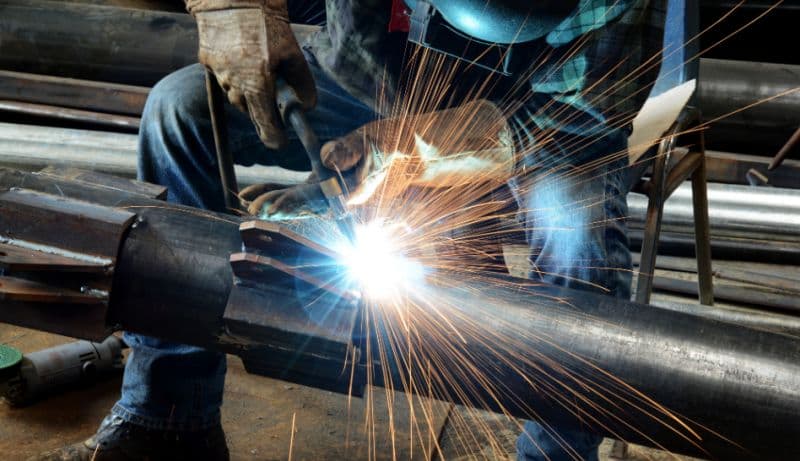
Equipment Manufacturing
The critical components of the of the complete pellet production line equipment are built in our own workshops in Asia. Additional equipment is manufactured by our worldwide network of reliable partners.
● Testing
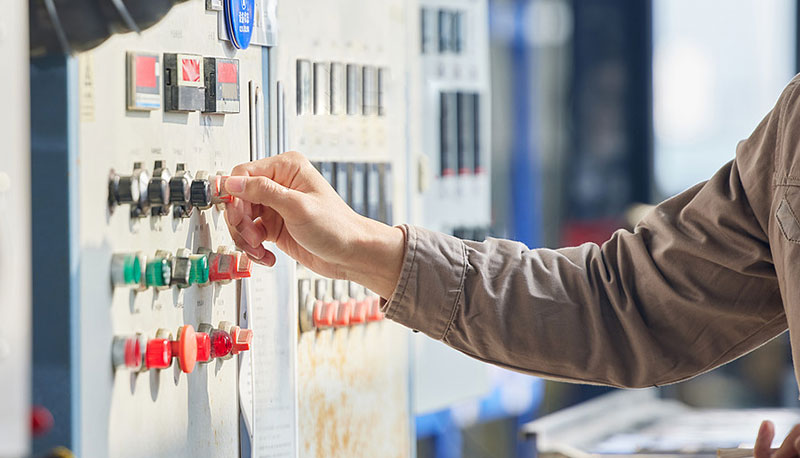
Quality Inspection & Testing
Before leaving the factory, all equipment will be inspected by the quality inspection department. We can also provide customers with testing services from a single machine to a complete pellet plant system, and provide you with real actual data for “worry-free use.”

● Delivery
Equipment Delivery
In equipment boxing and packaging, we adopt professional packaging and modular solutions to ensure the safe and non-destructive delivery of pellet plant equipment.
● Installation
Installation & Commissioning
Whether you choose your own subcontractor for the erection phase or you want to install everything together with us, a Richi supervisor will be around to make sure everything is mounted in a safe and thorough way.

● Training
Staff Training
We provide comprehensive training for the technicians of each project. We can also continue to provide support for the technicians during latter project operation.
● After-sales
Project Follow-Up
When everything is up and running our Richiers will help you further whenever needed. We are ready to answer your call 24/7.We’ll also visit you regularly to learn about your needs.
Who we are
RICHI Machinery is one of the world’s leading suppliers of technology and services for the animal feed, aqua feed and pet food industries, also the largest pellet production line manufacturer in China.
Since 1995, RICHI’s vision to build a first-class enterprise, to foster first-class employees, and to make first-class contributions to society has never wavered.
In the past three decades, we have expanded our business to a wide range of areas, including animal feed mill equipment, aqua feed equipment, pet feed equipment, biomass pellet equipment, fertilizer equipment, cat litter equipment, municipal solid waste pellets equipment, etc.

1995
RICHI Established

2000+
Serving More Than 2000 Customers

120+
RICHI Employees

140+
Exported To 140 Countries