

 0086-138 3838 9622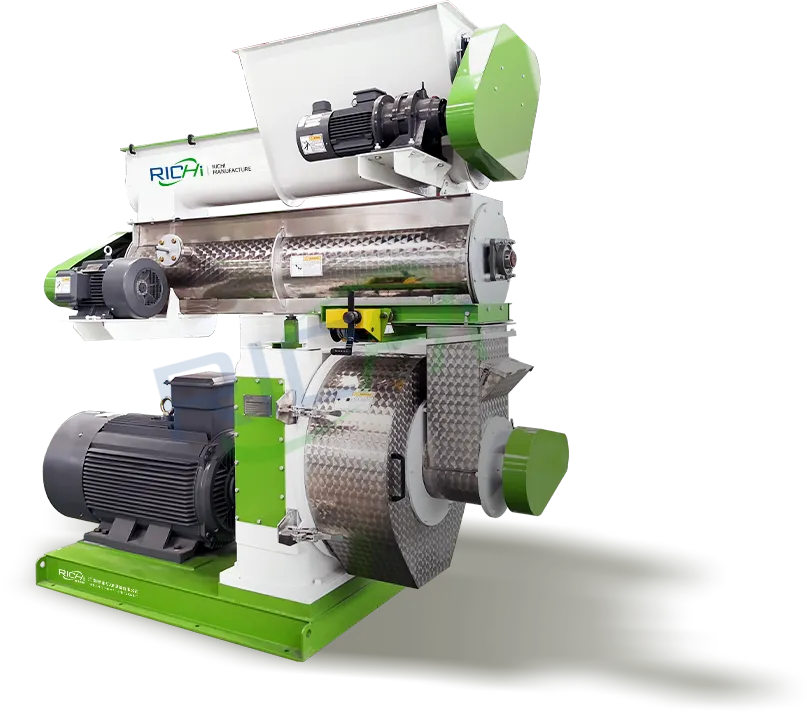
ANIMAL FEED PELLET PRESS
Meet the SZLH350 Animal Feed Pellet Press — engineered for reliable, high-performance feed production. Built for small to medium commercial operations, this ring die pellet mill delivers a consistent output of 5-6 tons per hour. Experience long service life, higher yield, and lower energy consumption in every pellet. Turn powdered material into premium feed, efficiently and steadily.
Pellet Size: 2~12mm
Price: $27,000 – $32,000
Model
SZLH350
Production Capacity
5-6T/H
VVersatile Pelleting for Every Operation
The RICHI SZLH350 animal feed pellet press is engineered to transform wet mash into durable, nutritious pellets for a wide range of agricultural and commercial applications. From integrated feed mills to on-site farm production, this robust machine supports operations of all scales. With its ability to produce pellets ranging from 2 to 12mm in diameter, it meets the precise dietary requirements of various animal species, making it an indispensable asset for feed manufacturers and large-scale farming enterprises alike.
Built for high reliability and minimal maintenance, these machines are tailored to process distinct feed types, ensuring optimal nutrition and pellet quality. Below are the core classifications designed to match your production focus.
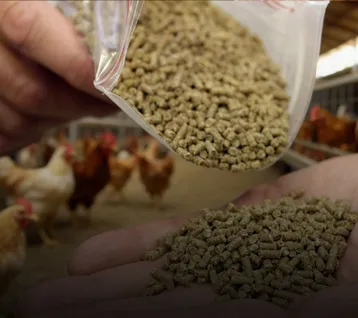
Ideal for producing high-energy feed for chickens, layers, and turkeys with precise pellet size and hardness.
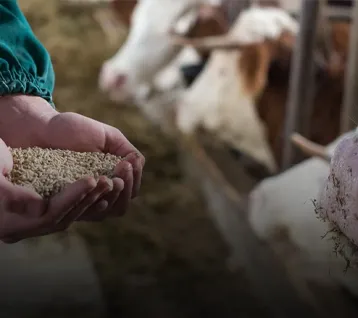
Delivers robust pellets for cattle, swine, and sheep, supporting rumen health and efficient weight gain.
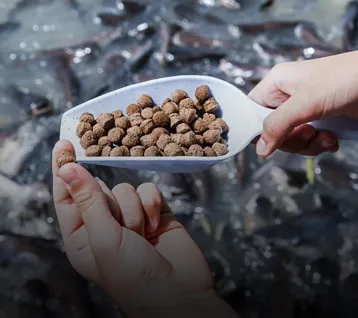
Specializes in creating water-stable, nutrient-dense floating or sinking pellets for fish and shrimp farming.
Precision Conditioning for Premium Pellets
At RICHI, we build versatility into the core of every SZLH350 animal feed pellet press. Our modular conditioning system lets you choose the exact level of processing your feed formula requires. This technical flexibility ensures optimal nutrition and pellet quality for every animal type, showcasing our strength as a manufacturer capable of covering the entire spectrum of feed production needs.
Beyond our standard configurations, we offer customized conditioners. This means you can specify variations in length, diameter, internal paddle design, and steam injection points. This customization allows us to perfectly match the SZLH350 animal feed pellet press to your unique raw material composition and desired pellet characteristics. We work with you to engineer the ideal conditioning process.

Single-Layer Conditioner Pellet Press
Ideal for standard livestock and poultry feed production, this is our most widely used configuration. The standard, extended-length single-layer conditioner efficiently gelatinizes starches for durable pellets. To process fibrous materials or feeds containing grass, a forced feeder can be added. This reliable setup is the perfect choice for animal feed mill plants and farms focused on cost-effective production of common animal feeds.

Dual-Layer Conditioner Pellet Press
Engineered for higher-grade feeds requiring superior digestibility. This system features a two-stage, large-diameter conditioning cylinder. It provides longer, more controlled steam penetration for enhanced cooking. It excels at producing premium poultry and livestock pellets, as well as standard sinking fish feed. Choose this model if you aim to improve feed conversion ratios and produce more valuable diets for your customers.

Triple-Layer Conditioner Pellet Press
Our premium solution for the most demanding aquatic feed formulas. The three-stage conditioning process ensures maximum starch gelatinization and protein denaturation. This is critical for creating highly water-stable, floating or slow-sinking pellets for shrimp and high-value fish. Designed for specialized aquafeed manufacturers, this configuration delivers the extensive heat and moisture treatment needed for superior pellet integrity and nutrient retention.
Versatile Raw Material Processing for Superior Feed
The performance of your feed begins with the quality of its ingredients. The RICHI SZLH350 animal feed pellet press is engineered to handle a comprehensive range of raw materials, transforming them into dense, nutritious pellets. This versatility allows for the creation of balanced formulas across all animal sectors. In addition to core ingredient categories, our robust machine is also well-suited for processing fresh materials like green forages and fermented silages, demonstrating our capability to support diverse and complex feed production needs.
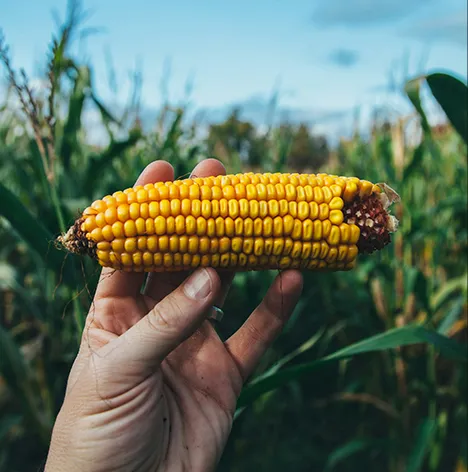
Energy Ingredients
These ingredients, such as corn, barley, and wheat, provide the essential carbohydrates for animal vitality. Our pellet press ensures these starchy materials are properly cooked and bonded for optimal energy release.

Protein Ingredients
Soybean meal, fish meal, and rapeseed meal supply critical amino acids for growth and development. The conditioning process in our machine enhances protein digestibility in the final pellet.

Roughages Ingredients
Fibrous materials like alfalfa, straw, and hulls add necessary bulk and support digestive health. Equipped with options like forced feeders, our press effectively incorporates these challenging ingredients.

Feed Additives
Vitamins, minerals, enzymes, and other micro-ingredients ensure complete nutritional profiles. The pelleting process uniformly disperses these vital components throughout the feed mix.
See Our Feed Pellet Press in Action
Performance is best proven in real-world operations. Below, we showcase four global projects where the SZLH350 animal feed pellet press delivers high-output, reliable pellet production. These videos demonstrate our machine’s robust operation across different feed types and client requirements. Watch to see firsthand how our engineering excellence translates into tangible results for feed producers worldwide.
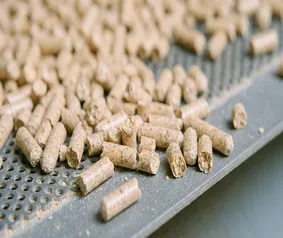

Peru chicken feed pellet press project
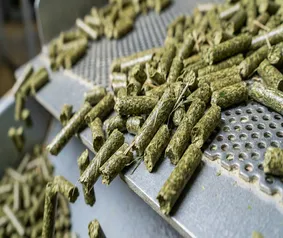
Argentina cattle feed pellet press project
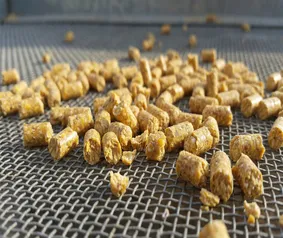
South Africa poultry feed pellet press project

Uzbekistan animal feed pellet press project
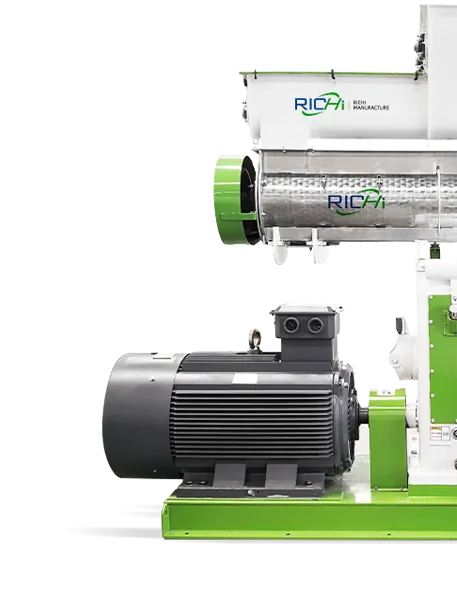
Core Components & Design
The superior performance of the RICHI SZLH350 animal feed pellet press stems from its robust engineering and high-precision components. Built upon an evolved European design foundation, every structural element is optimized for higher output, remarkable stability, and significantly lower long-term operating costs compared to conventional belt-driven machines. Discover the technical advantages built into the core of this industry-leading pellet mill.
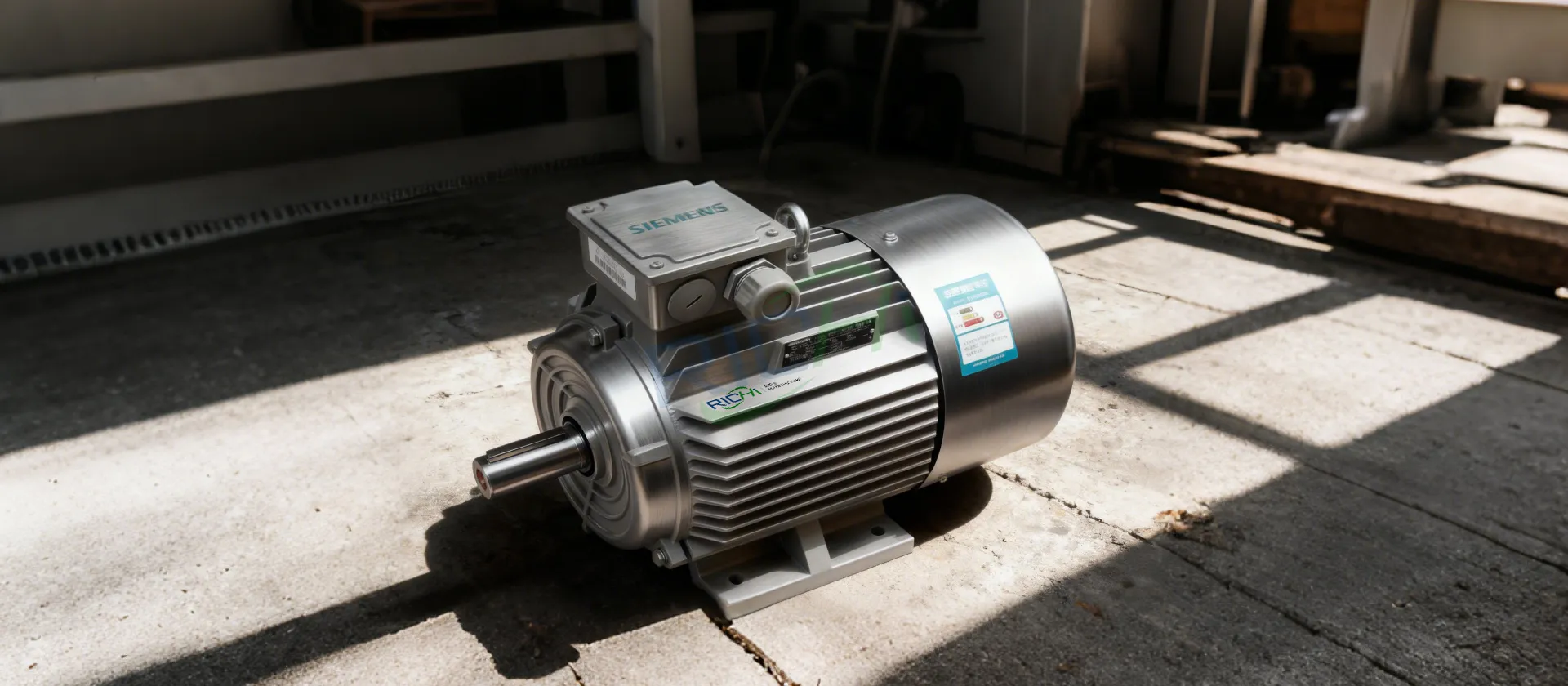
We power reliability from the start. The integration of a high-efficiency Siemens motor ensures exceptional torque, consistent power delivery, and superior energy management. This partnership guarantees a high starting point for the entire pelleting process, providing the strong, stable foundation required for continuous 5-6 t/h production with outstanding overload resistance.
Premium Drive Motor
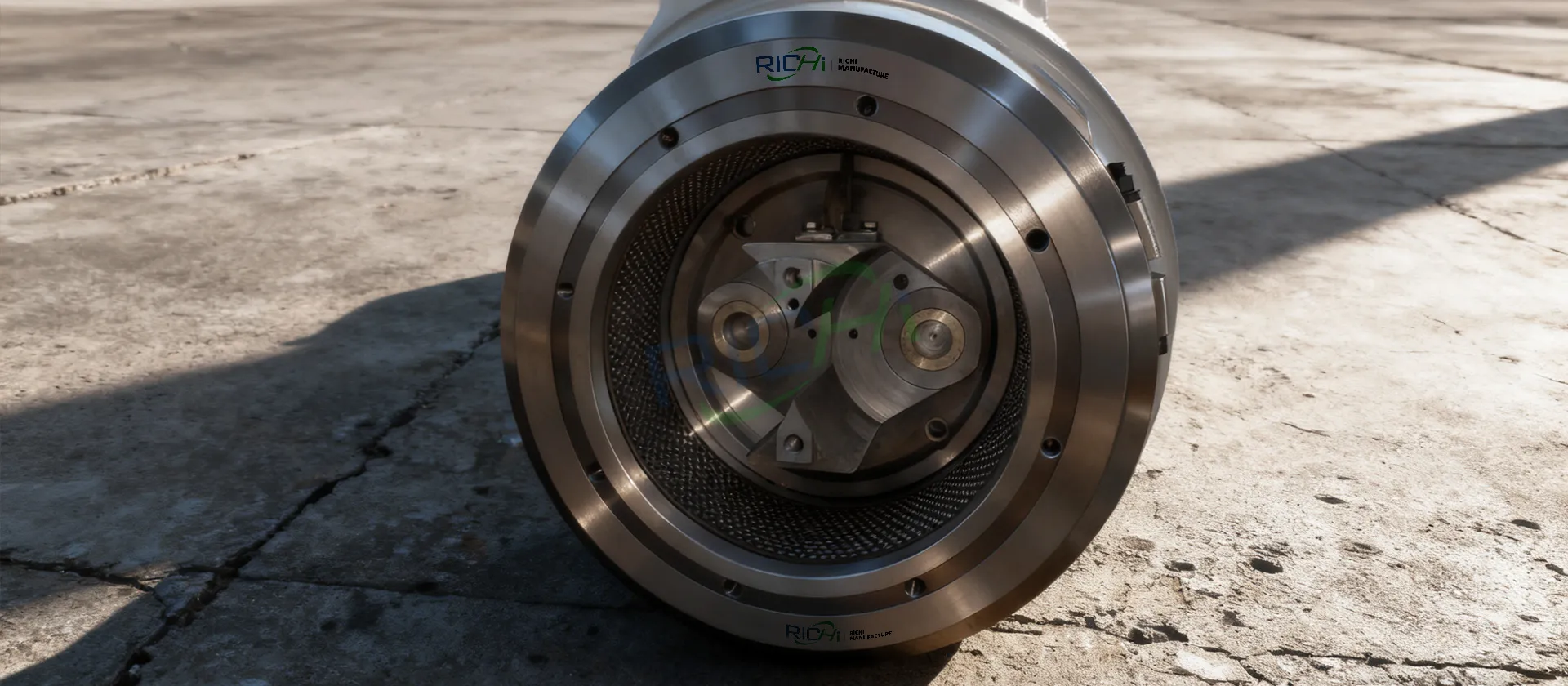
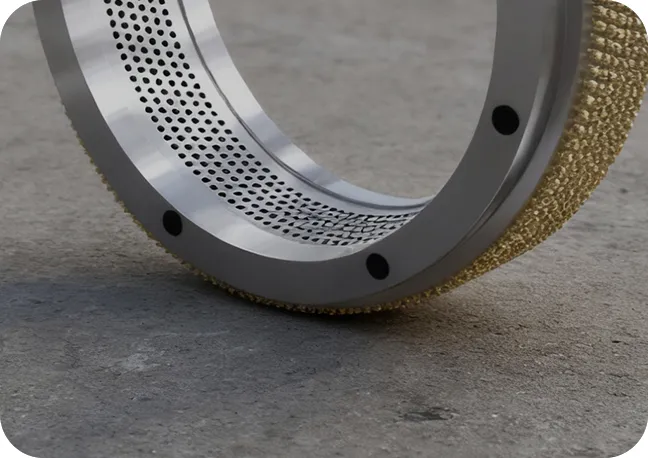
The synergy between the hardened alloy ring die and the synchronized pressure rollers is critical. The rear-bearing supported main shaft ensures perfect parallelism and eliminates vibration, allowing this assembly to operate under high pressure with unwavering stability. This design directly translates to higher production capacity, consistent pellet density, and extended component life.
Durable Ring Die & Pressure Roller Assembly
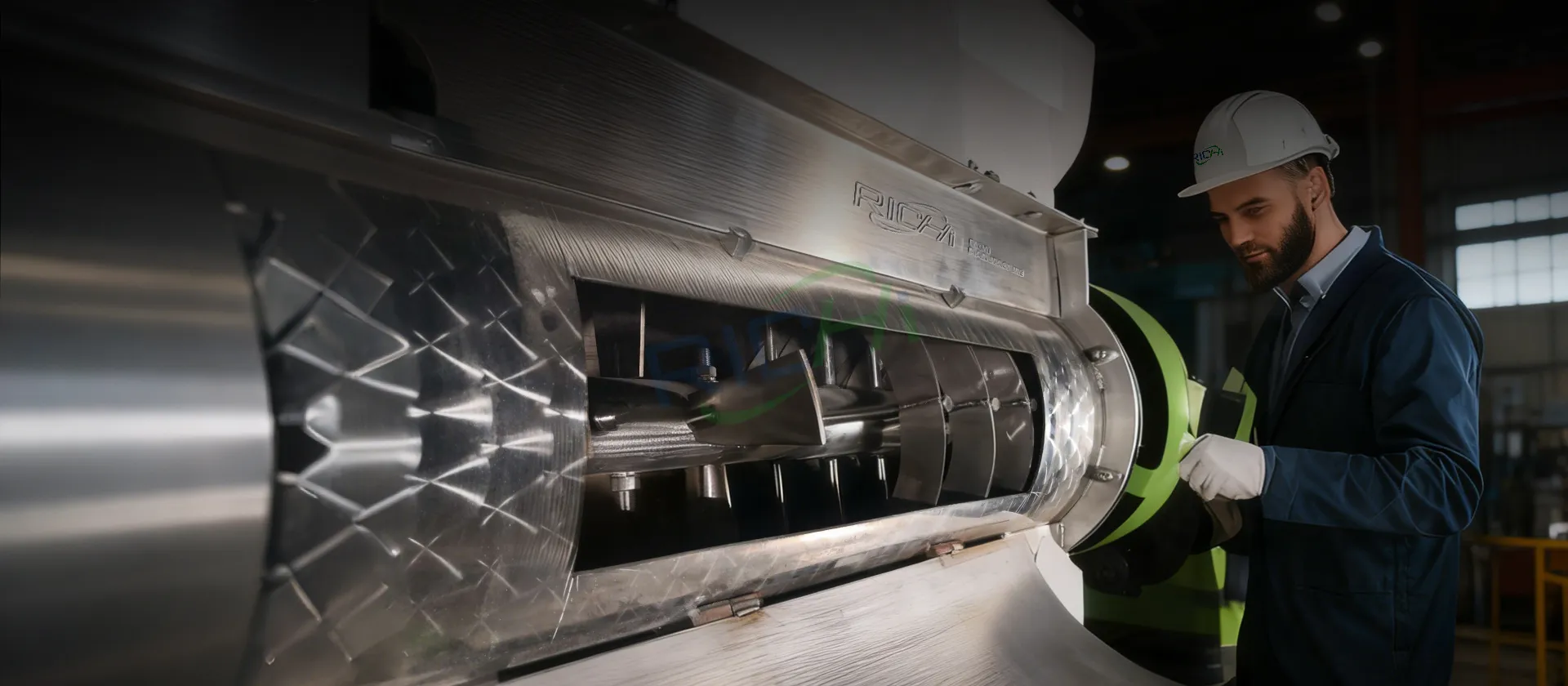
Our conditioning chamber is engineered for superior starch gelatinization. It features a 15% larger volume than standard models and is equipped with welded paddle heads that accelerate steam and material fusion. Available in single, double, or triple-layer configurations, this customizable system allows precise thermal treatment for everything from standard livestock feed to high-quality aquatic pellets.
Enhanced Conditioner with Customization

This is the heart of our innovation. The SZLH350 pioneered gear-driven technology in China, moving beyond outdated belt drives. Utilizing hardened gear surfaces and precision grinding, this system delivers a direct power transfer that boosts output by 15-20%. Engineered for a service life of up to 15 years, it ensures smooth operation, minimal power loss, and drastically reduces daily maintenance burdens.
High-Precision Gear Drive System
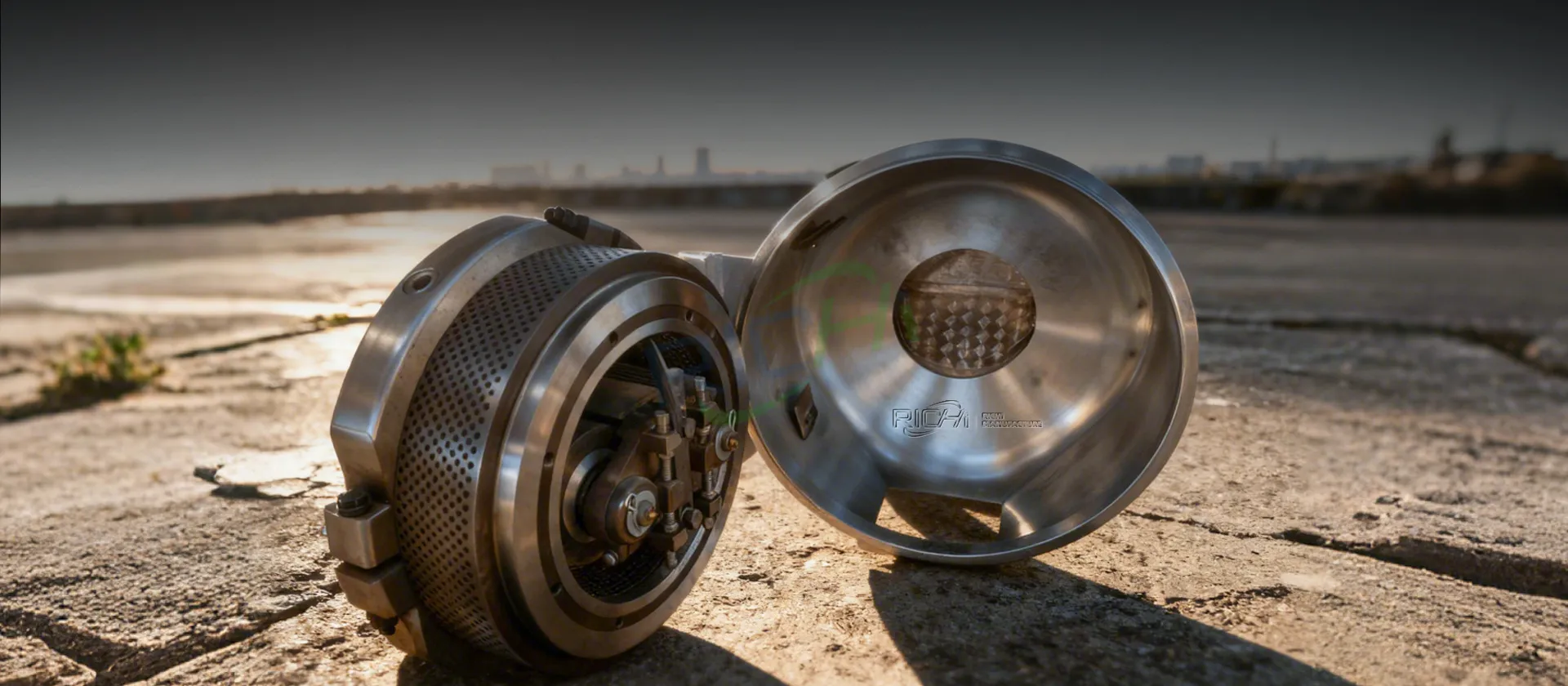
Positioned for optimal efficiency, our adjustable cutter provides clean, precise cuts to achieve your exact pellet length specification. Its robust design and easy-access adjustment mechanism allow for quick changes without disrupting production flow, ensuring uniform pellet size across all batches for improved feed presentation and handling.
Precision Pellet Cutter
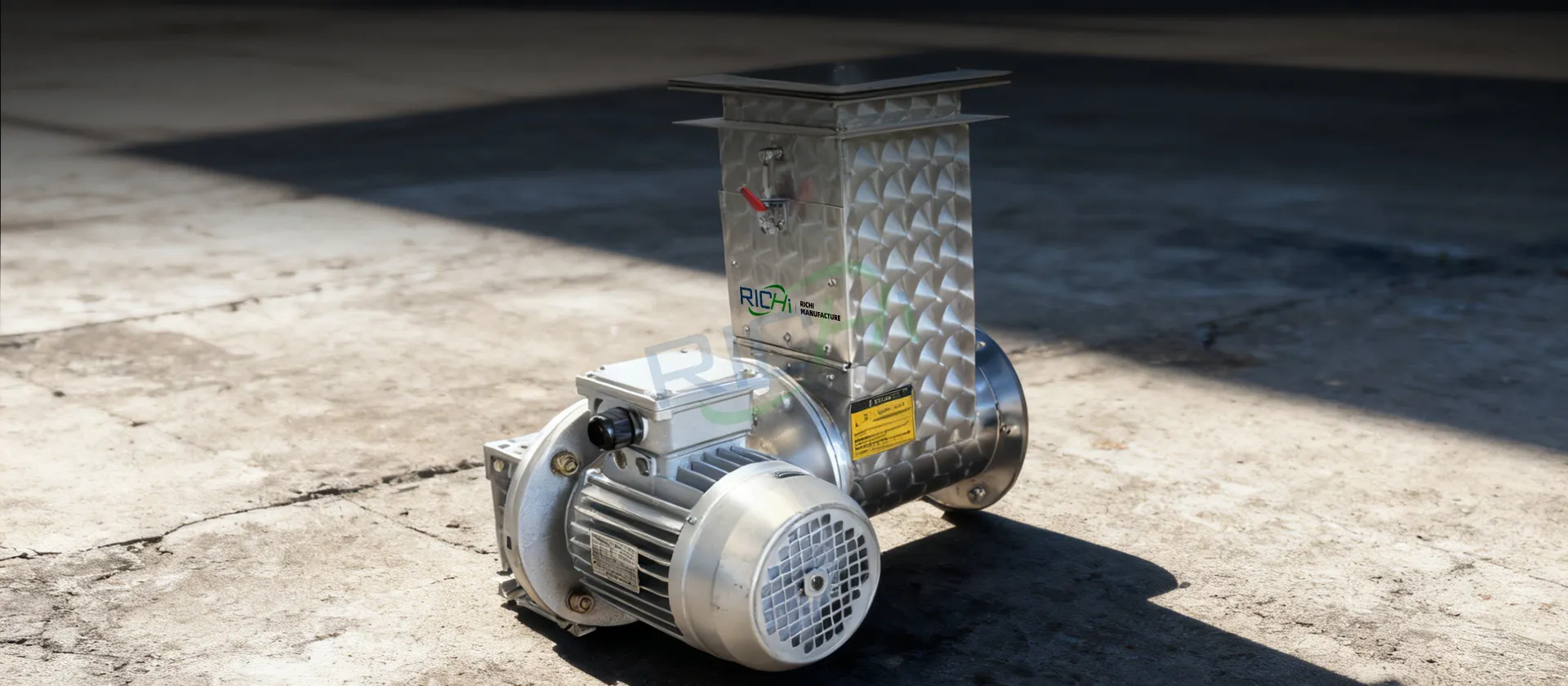
The feeder employs a uniquely designed “O-type” cylinder and a variable frequency drive (VFD) motor. This combination not only improves feeding uniformity but also effectively prevents steam from rising back into the feed hopper. The VFD allows for infinitely variable speed control, enabling precise, real-time adjustment of feed rate to perfectly synchronize with the main press for optimal throughput and conditioning.
Advanced Feeder System
Key Advantages of Our animal feed Pellet Press
OThe RICHI SZLH350 animal feed pellet press is engineered to deliver more than just high output. It combines proven gear-drive technology with intelligent features designed for operational ease, stability, and long-term value. From its versatile pellet size range to systems that reduce labor, this machine is built to be a reliable cornerstone of your feed pellet production line.
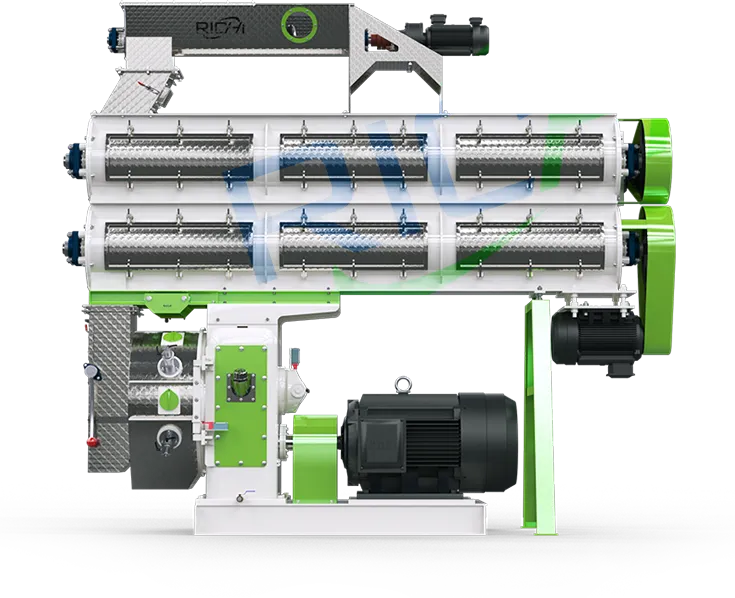
Unmatched Drive Stability & Efficiency
Our two-motor timing gear drive system delivers high torque with remarkably low noise levels. This core design ensures smooth, stable operation that directly translates to uniform pellet quality and consistent 5-6 t/h output. The optimized power-to-area ratio of the ring die maximizes production efficiency for a superior return on investment.
Advanced Automation for Labor Savings
The SZLH350 integrates systems that streamline operation and cut costs. The hydraulic system allows for quick, precise die changes and roller adjustments. Combined with the automatic lubrication system and the die & roller lifting device, these features significantly reduce manual labor, downtime, and associated operational expenses.
Flexible Customization to Match Your Needs
We build versatility into every machine. Beyond standard models, we offer tailored solutions including stainless steel conditioners for specific feed types, optional on-site touchscreen control systems, and CE-standard designs for global markets. Our expertise allows for customization of components like the feeder, conditioner configuration, and control interfaces to perfectly suit your production formula and facility requirements.
Precision Engineering for Wide-Range Application
Engineered to process a broad spectrum of feed, this animal feed pellet press reliably produces pellets from 2.0mm to 12.0mm in diameter. This flexibility, supported by a precisely calibrated steam system and durable ring die & roller assembly, ensures you can meet varied nutritional and physical specifications for poultry, livestock, and aquaculture feed with one robust machine.
How It Works: The Pelletizing Process
The modulated crushed material is fed evenly into the two pressing areas in the ring die, that is, the wedge-shaped space formed by the two rollers and the ring die, through the chute through the die cover by gravity, the centrifugal force generated by the rotation of the ring die, and the action of the feeding scraper.
Under the strong extrusion of the ring die and the roller, the material is gradually compacted, squeezed into the die hole of the ring die and formed in the die hole.
Since the extrusion of the material between the die and the roller is continuous, the formed material is continuously discharged from the die hole in a columnar shape and then cut into pellets of the required length by the cutter.
Detailed Specifications & Model Options
Review the complete technical parameters for the SZLH350 animal feed pellet press below. This specification sheet provides clear data to help you verify its compatibility with your production requirements. As a leading manufacturer, we also offer a full range of ring die feed pellet machines. If the SZLH350’s 5-6 t/h capacity doesn’t match your needs, explore seven other available models for higher or lower output by clicking on your preferred option.

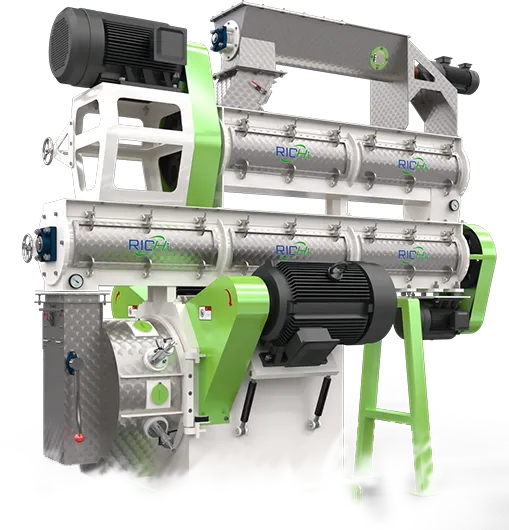
PARAMETERS OF SZLH350 (5-6T/H)
Main motor power
55kW
Feeder power
1.1kW
Conditioner power
4kW
Ring die inner diameter
350mm
Finished pellet diameter
2-12mm
Precision Parameters for Different Feed Types
As feed production specialists, we understand that each animal requires a unique pellet. That’s why the SZLH350 animal feed pellet press is engineered to achieve precise processing parameters for various feed formulas. Below are the recommended production configurations for five common feed types. These settings are based on extensive field experience and are designed to help you maximize pellet quality and nutritional value for your specific application.
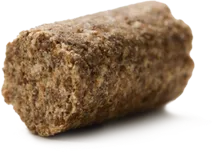
Chicken Feed Pelletizing Parameters
Our SZLH350 animal feed pellet press is highly efficient for poultry operations. With a capacity of 5-7 t/h, it processes finely ground material (2.0-3.0mm) into pellets sized 2-4mm in diameter. A higher ring die compression ratio (1:10-1:13) and a conditioning temperature of around 150°C for 60-120 seconds ensure optimal starch gelatinization. We recommend a one or two-layer conditioner to achieve durable, high-energy pellets that promote excellent feed conversion.
Cattle & Sheep Feed Pelletizing Parameters
For durable cattle feed, the SZLH350 cattle feed pellet press is configured for robustness. Operating at 6-8 t/h, it handles coarser materials (3-5mm) to produce larger pellets (6-12mm). A moderate compression ratio (1:6-1:9) and shorter conditioning time (30-60s) at 150°C are used. A single-layer conditioner is typically sufficient to create the firm, slow-digesting pellets needed for rumen health and extended feeding periods.
Pig Feed Pelletizing Parameters
This machine excels in producing consistent pig feed. The SZLH350 pig feed pellet press delivers 6-7 t/h, using finely ground mash (2-3mm) to form 2-4mm diameter pellets. A lower compression ratio (1:3.5-1:5) helps maintain pellet integrity without excessive hardness. Conditioning at 150°C for 60-120 seconds with a one or two-layer system is key to improving palatability and nutrient digestibility for all swine growth stages.
Sinking Fish Feed Pelletizing Parameters
For high-quality sinking aquaculture feed, process control is critical. The SZLH350 sinking fish feed pellet press operates at a lower capacity of 3-3.5 t/h to allow for meticulous processing of ultra-fine materials (1.0-2.0mm) into 2-6mm pellets. A high compression ratio (1:16-1:18) and extended conditioning (90-180s) at 150°C in a two or three-layer system are essential. This ensures maximum water stability, preventing nutrient leaching and maintaining pellet integrity underwater.
Shrimp Feed Pelletizing Parameters
Producing specialized shrimp feed demands the utmost precision. Our shrimp feed pellet press operates at 0.5-0.7 t/h for this application, processing ultra-fine flour (95% ≥80 mesh) into micro-pellets (1.2-2.0mm). The highest compression ratio (1:20-1:25) and longest conditioning time (120-180s) at 150°C in a three-layer system are utilized. This process creates the highly expanded, floating, and water-stable pellets crucial for shrimp health and farm management.
Global Projects: Proven Performance Worldwide
Our experience extends across all major continents, where we have successfully delivered not just standalone machines, but complete, turnkey animal feed production lines. The following projects highlight the versatility of our SZLH350 animal feed pellet press, serving a diverse range of clients—from large commercial mills to specialized farms—and processing an extensive variety of feed types at different production scales.
animal feed pellet press in Ecuador


A major feed manufacturer integrated our pellet press into their commercial production line. It processes corn and soybean meal to produce 3-4mm pellets for broilers and layers.
Feed type: Poultry & Livestock feed
Pellet size: 3-4mm
animal feed pellet press in Vietnam

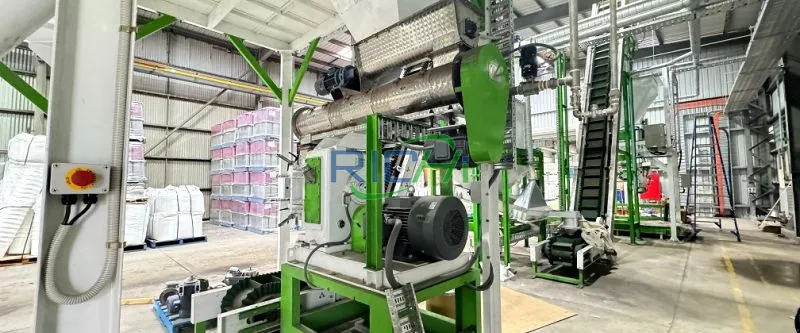
Feed type: Pig feed
Pellet size: 3-4mm
animal feed pellet press in Uzbekistan

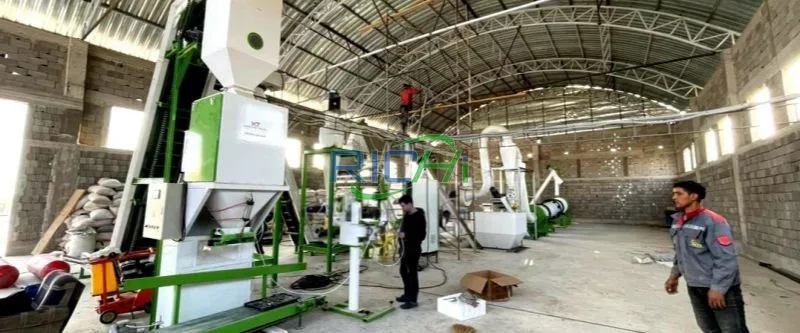
Feed type: Cattle Grass pellets
Pellet size: 6-8mm
A forage company utilizes our press to transform local alfalfa and grasses into compact feed. The machine produces durable 6-8mm pellets for the ruminant sector.
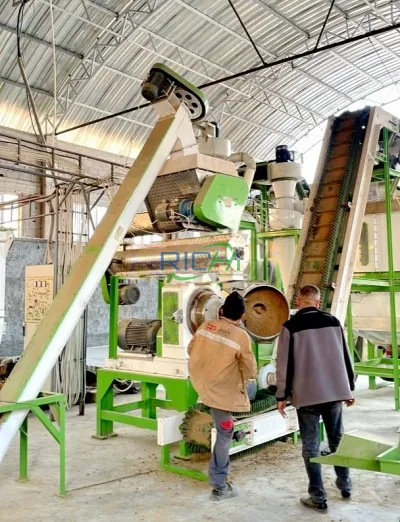

animal feed pellet press in Turkey
Feed type: Dairy cattle feed
Pellet size: 4-6mm
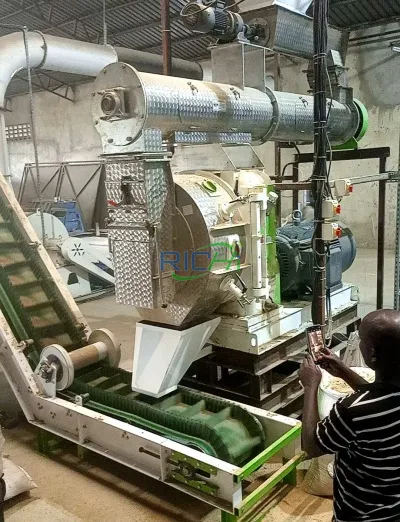

animal feed pellet press in kenya
Feed type: Chicken feed
Pellet size: 3-4mm
animal feed pellet press in Philippines

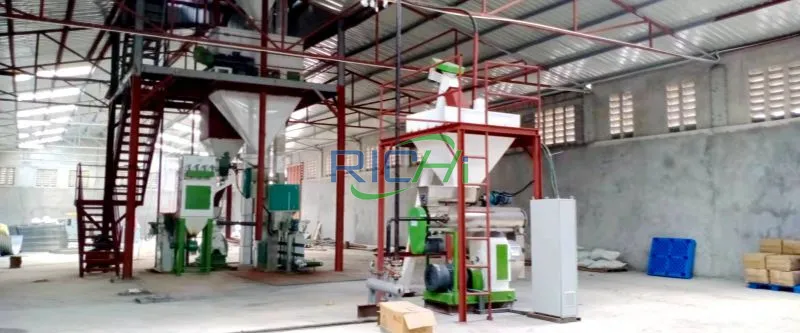
This large-scale farm operates its own feed mill to ensure supply. Our equipment processes a standard poultry formula into uniform 2.5-3.5mm crumbles for their chicks.
Feed type: Poultry feed
Pellet size: 2.5-3.5mm
animal feed pellet press in Senegal

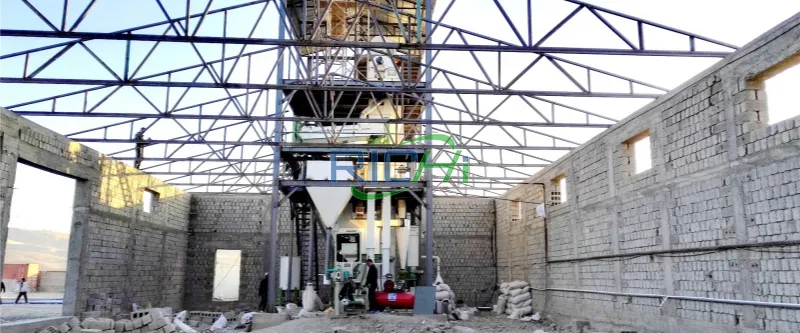
Feed type: poultry & livestock feed
Pellet size: 2-5mm
Trusted by Industry Leaders



















As a professional manufacturer, we provide more than a single animal feed pellet press. We engineer complete solutions, from initial design to commissioning of full feed milling lines—including hammer mills, mixers, coolers, and packaging systems. Our expertise ensures you get a production line that is efficient, reliable, and tailored to your specific output goals and feed formulations.
What Our Global Clients Say
Our commitment to engineering excellence, reliable animal feed plant machinery, and tailored project support has earned the trust of feed producers around the world. The feedback below from four diverse markets demonstrates how our solutions deliver tangible results, adapting to specific local materials, production goals, and operational challenges.

South Africa Client
Feed type: cattle feed
Pellet size: 6-8mm
As a farm cooperative, we needed a robust solution to process our local maize and sunflower meal. RICHI’s team designed a compact line that perfectly fits our shed. The cattle feed pellet machine is exceptionally durable, handling our abrasive materials with minimal downtime, which is crucial for our remote location.

Indonesia Client
Feed type: Poultry feed
Pellet size: 3-4mm
Our focus is on efficient, cost-effective poultry feed for the local market. The SZLH350 pellet mill’s consistency in producing uniform pellets from our cassava and rice bran mix has significantly improved our feed quality. Their engineers provided excellent training for our operational team.

France Client
Feed type: Horse feed
Pellet size: 8-10mm
For our high-value equine nutrition business, pellet integrity and precise conditioning are non-negotiable. RICHI’s customized conditioning system allows us to process delicate ingredients like molasses and oils without compromising pellet structure. The machine’s precision matches our high standards.

Oman Client
Feed type: Camel/Livestock feed
Pellet size: 4-6mm
Facing a harsh climate, we required a system for producing concentrated camel and livestock feed with limited water use. RICHI proposed a complete line with exceptional dust control and heat management. The feed pellet press’s stability in our high-ambient temperature environment has been outstanding.
Matching Pellet Size to Animal Nutrition
Selecting the correct pellet diameter is crucial for animal feed intake, growth efficiency, and minimizing waste. Different species and life stages require specific sizes. The versatility of our SZLH350 animal feed pellet press allows for precise production across this spectrum. Below is a technical guide on common pellet sizes, their applications, and key considerations for optimal machine configuration.

01.
1.5mm Pellets
Ideal for Starter feed for chicks, juvenile fish, and shrimp.
This ultra-fine size demands high precision. Producing it requires a specialized ring die with a high compression ratio and fine, hardened holes.
A multi-layer conditioner is essential for thorough starch gelatinization to ensure pellet durability and water stability in aquatic feeds.
02.
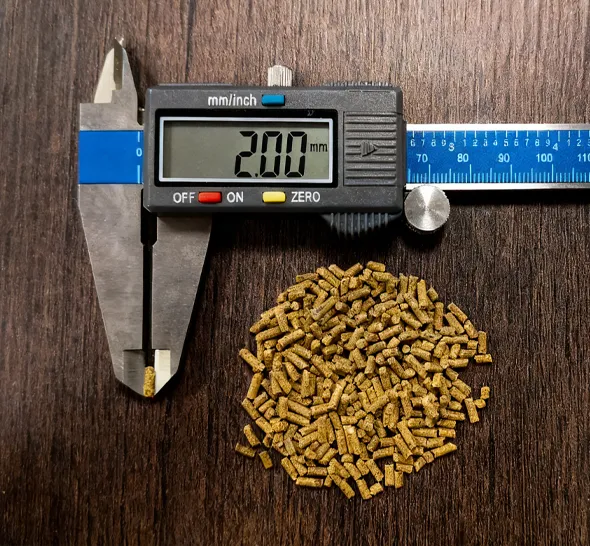
2mm Pellets
Ideal for Broiler starter feed and small fish species.
This size demands a balance between durability and digestibility. Configure the machine with a ring die
The animal feed pellet press must operate with stable feeder speed to prevent die clogging and ensure uniform pellet quality.

03.
3mm Pellets
Ideal for Poultry grower feed, piglet diets, and some sinking fish feed.
This is a highly common size, requiring a robust and versatile setup. A standard single or double-layer conditioner provides sufficient cooking.
The ring die compression ratio should be optimized for the specific protein and fiber content to achieve pellets that are durable yet palatable.
04.
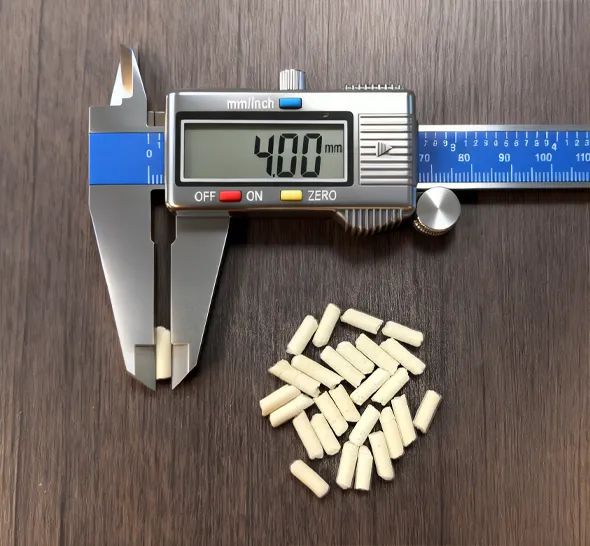
4mm Pellets
Ideal for Layer hen feed, finishing pig feed, and standard poultry rations.
For high-volume production of this size, machine stability is paramount. A ring die with a balanced compression ratio ensures efficient output without excessive power consumption.
Consistent steam addition in the conditioner is critical for optimal pellet hardness and reduced fines.
05
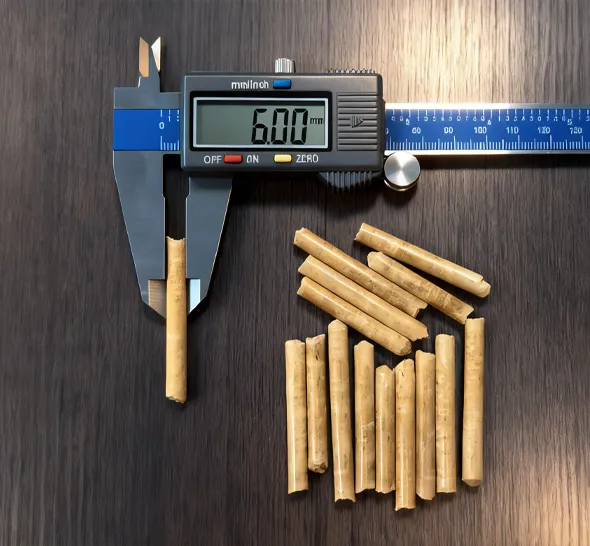
6mm Pellets
Ideal for Cattle feed, sheep feed, and larger sinking fish feed.
Larger pellets handle more fibrous ingredients. The animal feed pellet press needs strong roller pressure and a die with a lower compression ratio to allow material to flow through larger holes efficiently.
A robust gear drive system is essential to maintain torque.
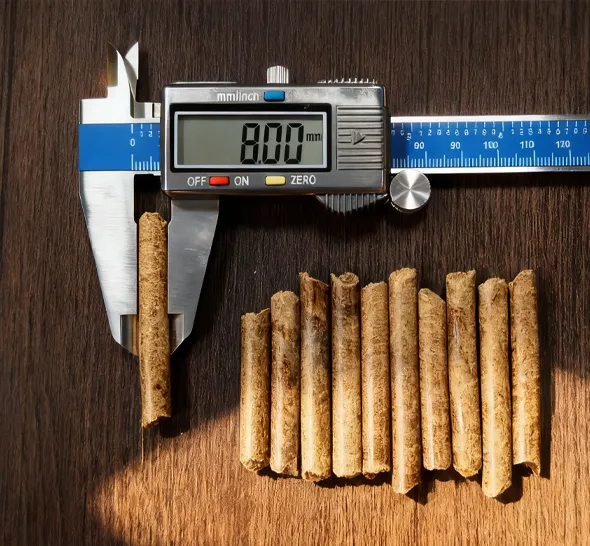
06.
8mm Pellets
Ideal for Dairy cattle, beef cattle, and horse feed.
Producing these durable pellets requires significant mechanical force. The machine must be equipped with heavy-duty rollers and a thick, wear-resistant ring die.
Conditioning focuses more on hydration than high heat to prepare fibrous materials for compaction without sacrificing throughput.
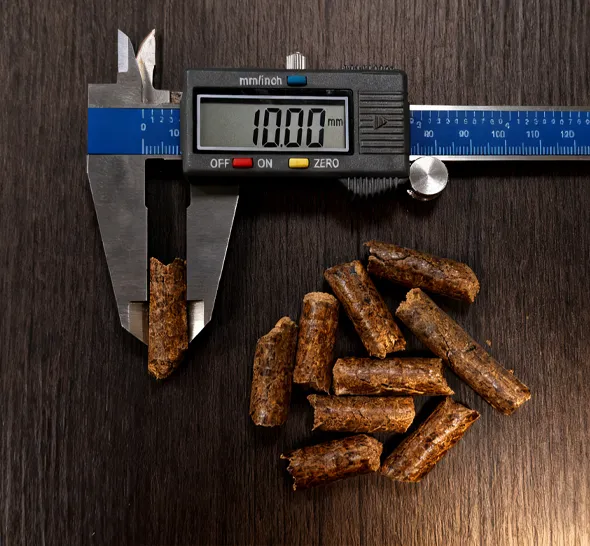
07.
10mm Pellets
Ideal for Adult cattle and other large livestock requiring slow consumption.
This size represents the upper practical limit for standard ring die presses.
It demands a powerful drive motor, a specifically designed large-aperture die, and careful control of feedstock grind size to ensure smooth extrusion and prevent blockages, showcasing the heavy-duty capability of the press.
Tailored Feed Milling Solutions
A successful feed operation requires more than just a high-quality pellet press; it demands a fully integrated production line engineered for your specific goals. We specialize in designing and delivering complete, customized feed milling solutions. Your unique combination of raw materials, target pellet specifications, nutritional formula, available facility space, and investment plan dictates a distinct process flow.
Our service encompasses the entire lifecycle of your project—from initial consultation and process design to manufacturing, installation, commissioning, operator training, and lifelong after-sales support with genuine spare parts. We build systems, not just sell machines. From raw material intake to finished pellet bagging, we provide a cohesive, turnkey solution.
Our expertise lies in harmonizing each process stage—grinding, mixing, conditioning, pelleting, cooling, and crumbling—into a single, efficient system tailored to your exact output, quality, and operational requirements.
Silo
Cleaning
Grinding
Mixing
Batching
Pelleting
Cooling
Screening
Packaging
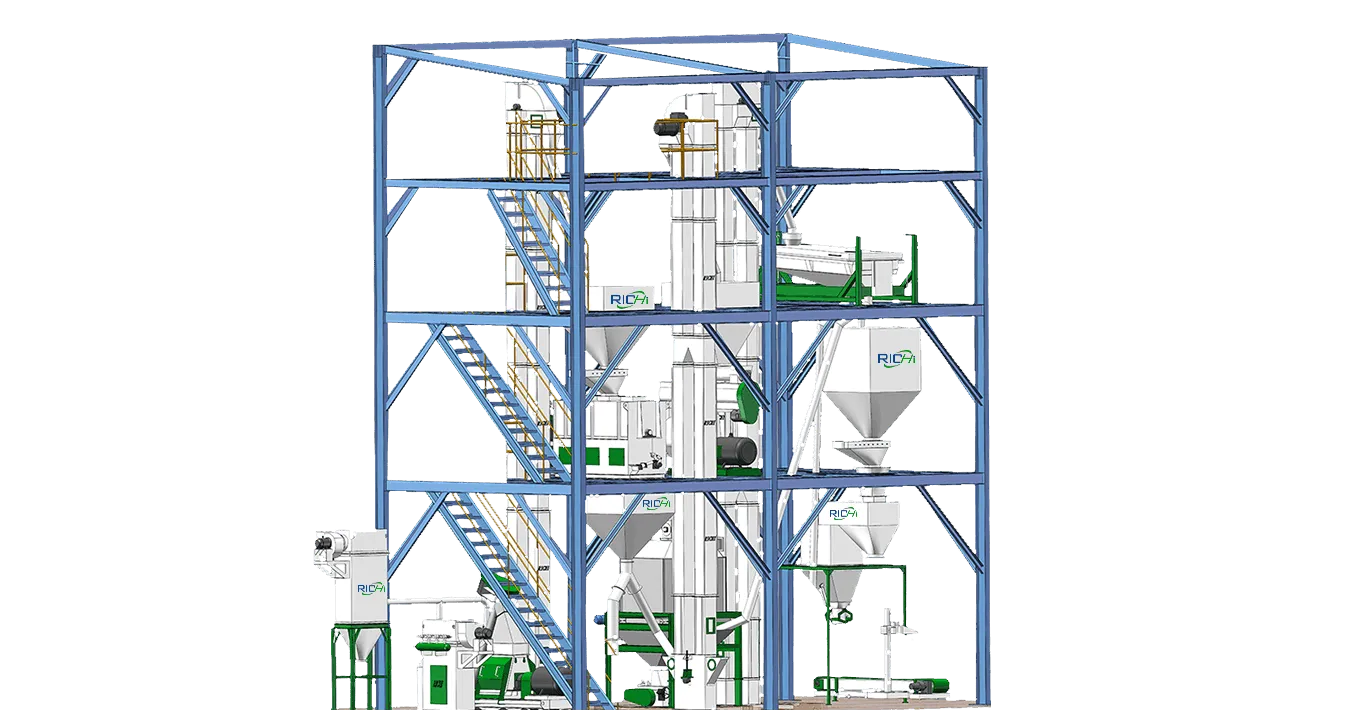

Pelletizing System
This is where your formulated
mash transforms into
high-quality, durable
feed pellets.

Complete Feed Processing Ecosystem

storage silo equipment
01
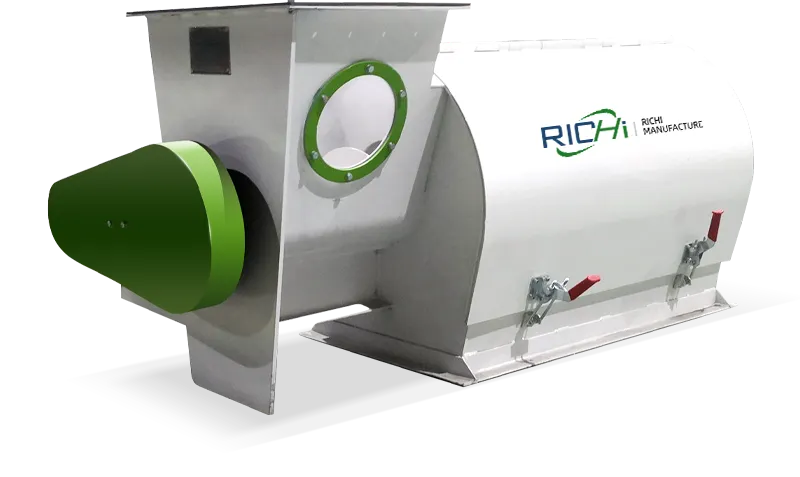
cleaning equipment
02
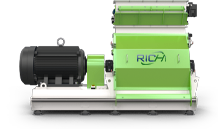
grinding equipment
03
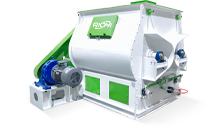
mixing equipment
04
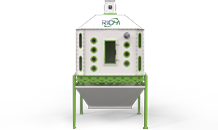
cooling equipment
05
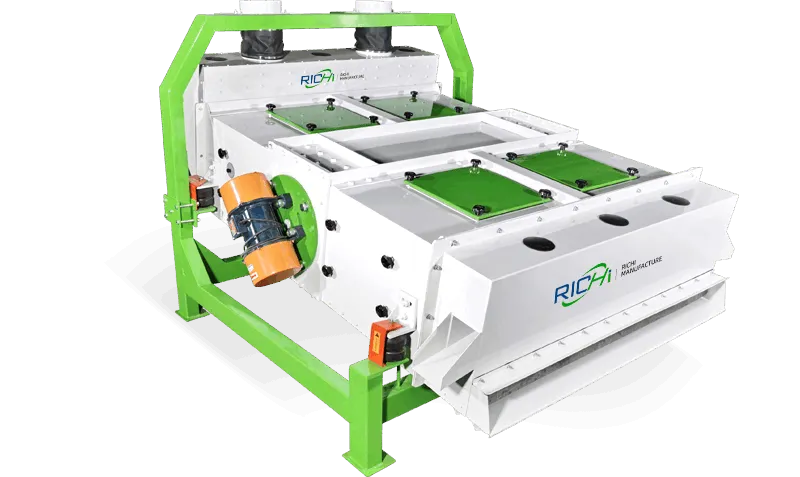
screening equipment
06

packaging equipment
07
Achieving optimal efficiency and pellet quality depends on a seamlessly integrated production line where every component performs in harmony. As your professional feed production partner, we provide the complete suite of equipment required to transform raw materials into finished feed.
We go beyond supplying individual machines; we offer expert system design and equipment selection based on your specific formula, capacity, and automation level, ensuring each stage—from raw material intake to final packaging—is optimized. Our comprehensive portfolio includes all necessary supporting equipment for a complete feed mill plant, we engineer the complete workflow, ensuring compatibility and peak performance across all units.
Targeted Solutions for Every Feed Type
A one-size-fits-all approach does not work in modern feed production. Different animals have unique nutritional and physical pellet requirements. Leveraging our extensive expertise, we have developed specialized standard solutions for the most common feed categories. Each integrates the ideal type of animal feed pellet press—from ring die to extruder—within a precisely engineered process flow to maximize nutritional value, pellet quality, and operational efficiency for your specific focus.

Poultry Feed
We recommend a high-capacity ring die pellet mill for poultry feed, paired with a one or two-layer conditioner for optimal starch cooking. Our standard line typically includes a hammer mill, batch mixer, conditioner, pellet mill, cooler, and crumbler (for starter feeds).
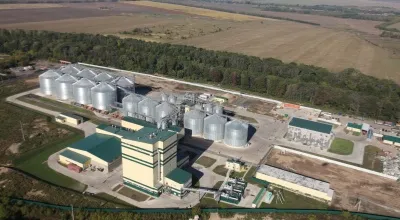
Ready to build your high-efficiency poultry feed plant?
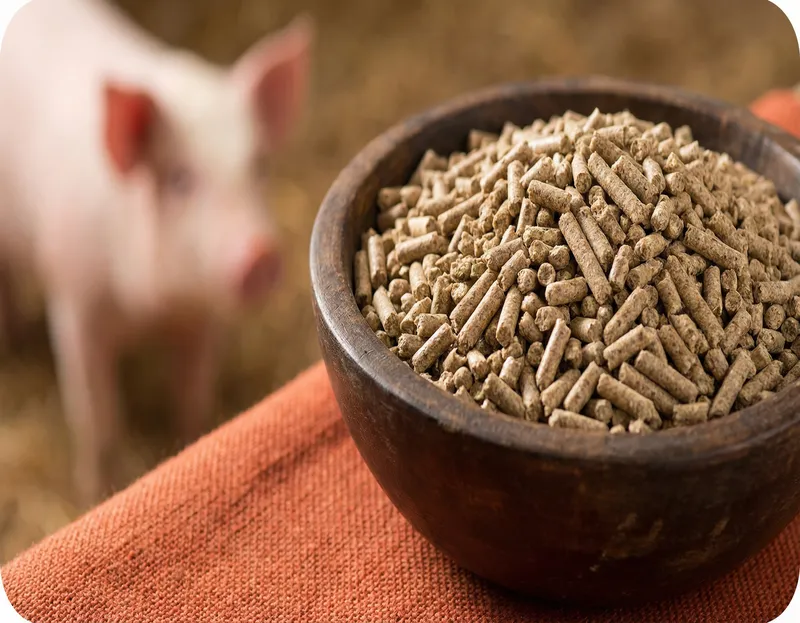
Pig Feed
Our solution centers on a versatile ring die pig feed pellet machine capable of producing a range of pellet sizes for different growth stages. The process includes grinding, mixing, precise fat-coating conditioning, pelleting, and cooling.
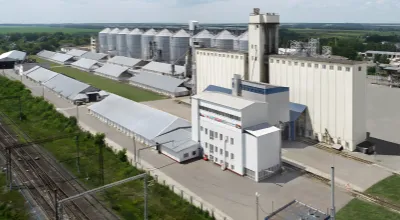
Discover the complete swine nutrition production system.

Cattle Feed
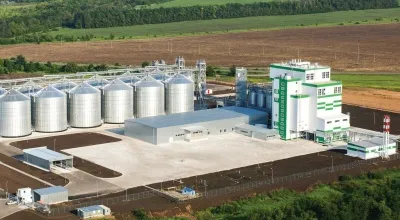
For robust ruminant feed, we configure a heavy-duty pellet mill with a lower compression ratio die. The line is built to handle fibrous materials and includes a coarse grinder, mixer, conditioner, pellet mill, and cooler.
Explore our robust solutions for large-scale ruminant feed.
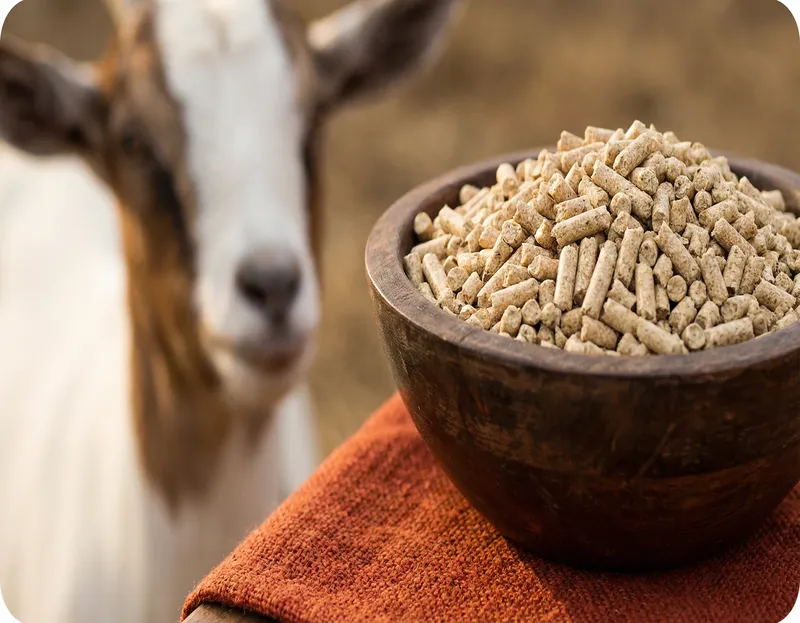
Sheep & Goat Feed
Similar to cattle feed but scaled for smaller pellet sizes and varied ingredients. The system features a standard goat feed pellet making machine, along with grinding, mixing, and cooling equipment, tailored for co-operative or farm use.
Optimize your small ruminant operation with our tailored line.
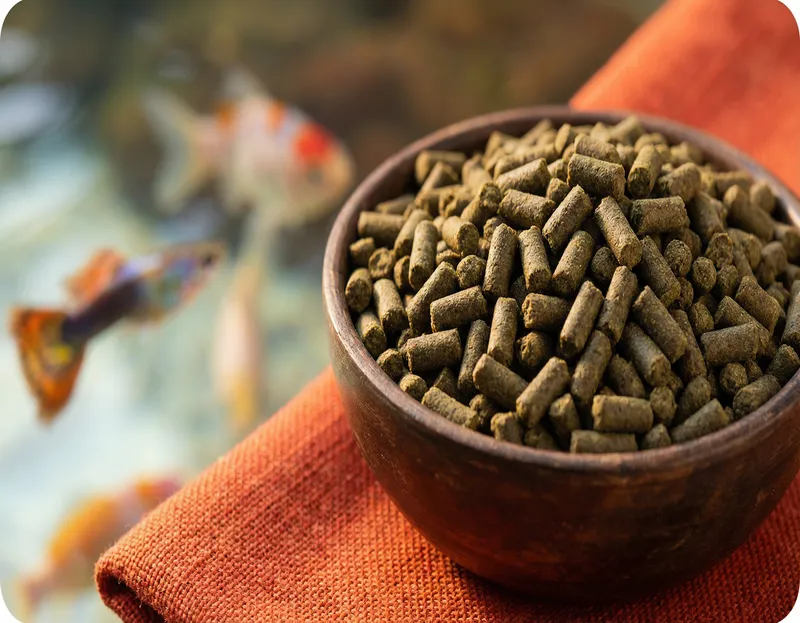
Sinking Fish Feed
This solution utilizes a specialized ring die fish feed pellet making machine with multi-layer, long-retention conditioning for water stability. The complete line includes fine grinding, super mixing, conditioning, pelleting, and drying.
Launch your reliable aquafeed production with our proven setup.

Shrimp Feed
The most demanding process requires a shrimp feed pellet machine for superior floatability and stability. Our system integrates ultra-fine grinding, precise slurry mixing, pelleting, drying, and oil coating.
Advanced extrusion technology for high-value aquaculture.

Engineer a high-stability shrimp feed production facility.
Your Questions, Expert Answers
Selecting the right feed production equipment involves careful consideration. Below, we address the most frequent and practical questions our customers have about integrating a 5-6 t/h ring die animal feed pellet press into their operations. These insights are drawn from real conversations with farms, feed mills, and agri-businesses worldwide.
What is the animal feed pellet press?
+
Determining the investment for an animal feed pellet press is a critical step in planning your feed production operation. A common question we receive is, “How much does a feed pellet press cost?” The answer depends entirely on your specific requirements for capacity, durability, and functionality. At Richi Machinery, we engineer a comprehensive range of presses to suit diverse operations, from family farms to industrial feed mills. Below is a detailed breakdown to provide clarity on pricing structures.
The cost of a robust, industrial-grade animal feed pellet press is influenced by its designed throughput, motor power, construction quality, and included features. There is no single price, but rather a spectrum that aligns with production scale. As a general guide, our machines range from smaller, farm-focused models to high-output systems for continuous commercial production.
For clients requiring a reliable mid-capacity machine, such as our popular SZLH350 model with a 55KW motor and an output of 5-6 tons per hour, the investment typically falls within the range of $26,000 to $33,000. This animal feed pellet press is an excellent balance of power and efficiency for growing feed mills and sizable livestock farms.
However, to make an informed decision, it’s essential to view this model within our full product spectrum. We offer a graduated series of machines to match your exact needs:
- For smaller-scale operations or start-ups, our SZLH250 (22KW) model, with a capacity of 2-3 t/h, represents an accessible entry point, with pricing generally between $6,500 and $9,500.
- A step up, the SZLH320 (37KW) model, producing 3-4 t/h, is priced in the range of $14,000 to $19,000.
- For higher throughput, the SZLH420 (110KW) model, capable of 8-12 t/h, has an investment range of $28,000 to $34,000.
- For commercial mill operations, larger models include:
- SZLH508 (160KW): 14-16 t/h | $39,000 – $47,000
- SZLH558 (185KW): 18-22 t/h | $47,000 – $54,000
- SZLH678 (250KW): 28-32 t/h | $64,000 – $72,000
- SZLH768 (315KW): 38-42 t/h | $77,000 – $85,000
It is important to note that the figures above represent our core, standard models of the animal feed pellet press. They are not exhaustive. We provide a complete range of pellet mills suitable for all types of animal feed processing.
The final price for your operation can be affected by several customization factors, including the choice of a single or dual-motor drive, specific ring die and roller alloys for your recipe, advanced conditioning systems, the inclusion of an integrated liquid coater, or special safety and automation features.
Therefore, obtaining an accurate quotation requires a discussion about your project. We encourage you to share your detailed requirements with us—including your target capacity, raw material composition, desired pellet size, and available facility space. This allows our engineering team to recommend the most cost-effective and efficient animal feed pellet press configuration for you.
To receive a tailored quote and detailed technical proposal, please contact our sales team directly with your specific needs. We are here to help you build a profitable and sustainable feed production line.
We are a mid-sized pig farm looking to produce our own feed. Is the 5-6 t/h capacity suitable for us, or is it overkill?
+
This is an excellent question we often get from progressive farms. A 5-6 t/h animal feed pellet press is more than just suitable; it’s a strategic investment for a mid-sized pig farm aiming for self-sufficiency and growth. While your immediate daily consumption might be lower, this capacity allows you to produce a week’s or month’s supply in efficient, concentrated batches. This frees up management time and optimizes labor.
Crucially, it provides built-in scalability. You can produce feed for additional stock, create specialized rations for different growth stages simultaneously, or even produce a surplus for sale to neighboring farms, creating a new revenue stream. At Richi Machinery, we don’t just sell a pellet press; we design a compact, efficient feed production line tailored to your barn layout and operational flow, ensuring the capacity is an asset, not overkill.
What’s the main difference between your gear-driven press and a cheaper belt-driven model for making poultry feed?
+
The core difference lies in power transmission, durability, and total cost of ownership. A belt-driven pellet press relies on friction, which leads to inevitable slippage, especially under high load or when processing dense formulations. This slippage directly translates to lost power, inconsistent pellet quality, and higher energy costs.
Our gear-driven animal feed pellet press utilizes a heavy-duty, precision-engineered gearbox that directly transfers motor power to the main shaft with near-perfect efficiency. This means more of your electricity is used for pelleting, not lost as heat and noise.
For poultry feed, which often includes fibrous ingredients, this results in up to 20% higher stable output, harder and more durable pellets, and the ability to run continuously without performance decay. While the initial investment is higher, the long-term savings on energy, maintenance, and downtime make the Richi Machinery gear-driven system the profoundly more cost-effective and reliable choice.
We currently buy feed but want to switch to using our own grain (corn, wheat) and local protein meals. Can your press handle farm-mixed formulas?
+
Absolutely, and this is where our expertise truly shines. The ability to process farm-sourced and variable recipes is a key strength of a well-engineered pellet press. The challenge with custom formulas is achieving the right pellet durability and stability, as binding properties change with ingredient composition.
Our animal feed pellet press is designed for this versatility. The conditioning system is precisely adjustable for steam addition, time, and temperature to properly gelatinize starches from your corn and wheat. More importantly, our engineering team will work with you to select the optimal ring die specifications—compression ratio, hole pattern, and effective thickness—specifically for your unique blend of grains and local protein meals.
This custom configuration ensures your pellets are strong enough to withstand handling and storage without costly fines, turning your local ingredients into premium, professional-grade feed.
For making sinking fish feed, what special configurations does your standard press need?
+
Producing high-quality sinking aquatic feed requires specific process parameters to achieve water stability. It goes beyond just a standard press. For sinking fish feed, we recommend a configuration that includes a twin-shaft paddle conditioner or a two-layer conditioner paired with our high-torque animal feed pellet press.
This setup provides extended retention time (often 90-120 seconds) under optimal steam conditions to fully cook and super-gelatinize the starch, which is critical for binding and water resistance. The press itself must be equipped with a high-compression ring die, specifically designed for aqua feed, to create a very dense pellet microstructure.
Furthermore, we integrate a variable-frequency drive for precise control of the feeder and conditioner to fine-tune this delicate process. Richi Machinery has extensive experience in aqua feed lines and will provide the exact system configuration, including die specs and process guidelines, for your target species.
How quickly can we change the pellet size, for example, from 3mm broiler feed to 8mm cattle feed?
+
Changing pellet sizes requires changing the ring die, which houses the holes of a specific diameter. The speed of this changeover is a critical factor in operational flexibility. Our animal feed pellet press is designed for efficient serviceability. It features a robust but user-friendly hydraulic system that facilitates the safe removal and installation of the heavy ring die.
With our design and proper operator training, the entire die swapping process can typically be completed in 60-90 minutes, significantly reducing non-productive downtime compared to older or manual systems. For operations that require frequent size changes, we can advise on best practices and tooling to streamline this process even further.
What is the power consumption (kW per ton) of this pellet mill when running typical chicken feed?
+
Power consumption is a key operational cost, and efficiency varies dramatically between machines. While a precise figure depends on your specific formula, die selection, and conditioning, our gear-driven animal feed pellet press is engineered for optimal energy efficiency. On a standard poultry feed formulation with proper steam conditioning, you can expect a power consumption in the range of 18-25 kWh per ton of pellets produced.
his is generally 10-15% more efficient than comparable belt-driven or less advanced models due to the direct power transmission and optimized drive train. Our technical team can provide more detailed estimates based on a review of your intended配方, helping you calculate your exact operating cost advantage.
We have issues with steam condensation in our current feeder. How does your machine prevent this?
+
Steam backflow and condensation in the feeder is a common problem that causes material clumping, bridging, and inconsistent feed flow into the conditioner. Our animal feed pellet press addresses this with a specifically designed feeder system. It incorporates an “O-type” or arch-breaking feeder design that creates a consistent, positive material seal at the outlet.
This seal acts as a barrier, effectively preventing the escape of steam from the conditioner back into the feeder housing. By keeping the feeder environment dry and the material flowing freely, we eliminate bridging issues and ensure a steady, uniform mass of material enters the conditioning chamber. This is a critical detail for stable operation and consistent pellet quality.
Can this press handle high-fat recipes or those with added liquid molasses?
+
Yes, it can be expertly configured to do so. High levels of fat or liquid additives like molasses can cause slippage inside the die if not managed correctly, reducing output and pellet quality. The solution lies in precise process integration. For such recipes, Richi Machinery customizes the liquid addition system.
We position fat or molasses injectors directly into the conditioner, where the intense mixing action coats each particle uniformly before it enters the animal feed pellet press. This ensures the binding agents in the formula are activated and the lubricating fats are distributed evenly, preventing slippage.
We may also recommend a slightly different die specification to accommodate the altered frictional properties. Our process engineers will help you balance the formula and machine settings for perfect results.
What kind of after-sales support and spare parts availability do you offer globally?
+
At Richi Machinery, we consider our support to be a core part of the product. We maintain a global service network with agents in key agricultural regions and have strategically located spare parts warehouses to ensure rapid response. For your animal feed pellet press, critical wear parts like ring dies, rollers, and conditioner shafts are standardized and kept in stock.
We provide comprehensive operation and maintenance manuals, schematic diagrams, and parts lists. Beyond parts, we offer multi-channel support: remote diagnostics via phone or video, on-site technician dispatch when needed, and detailed training for your maintenance team. Our goal is to minimize your downtime and maximize your equipment’s lifespan.
What is the typical lifespan of the critical wear parts (ring die and rollers) when producing standard livestock feed?
+
Lifespan is measured in production tonnage, not just time, and varies significantly with formula abrasiveness (e.g., high mineral content reduces life). For standard poultry or swine feed with normal abrasiveness, you can expect a high-quality alloy steel ring die from Richi Machinery to produce between 2,500 to 4,000 tons before needing replacement. The matched rollers typically last for the life of 2-3 dies.
We use specially forged and heat-treated alloys to ensure this longevity. Our manuals include guidance on monitoring wear and rotating die/roller positions to extend service life even further. Using our genuine, perfectly matched wear parts is crucial for maintaining peak performance.
Could you share some specific examples of animal feed pellet press projects and their typical costs to help us understand the global application and investment range?
+
Certainly. Providing real-world project examples is an excellent way to illustrate the versatility, global reach, and tailored nature of our solutions. It’s crucial to understand that the term “project cost” reflects the total investment for a complete, functional production line centered around our animal feed pellet press, not just the standalone machine.
This cost varies significantly based on the required ancillary equipment (hammer mills, mixers, coolers, conveyors), the level of automation, local installation factors, and the specific pellet specifications. Our SZLH350 model is a particularly popular choice for mid-capacity projects worldwide due to its optimal balance of output (5-7 t/h), reliability, and value.
Below is a curated snapshot of recent projects, demonstrating how the same core animal feed pellet press model is integrated into different systems to meet diverse client needs across continents. Note the variation in pellet size, which corresponds to different target animal species, from poultry to ruminants.
- France: For a client seeking an animal feed pellet press for sale for poultry and rabbit feed, we configured an SZLH350-based line producing 2-4mm pellets. The complete project cost was approximately $25,000 USD, focusing on a compact, efficient setup.
- Moldova: A large-scale commercial feed mill project required a high-capacity line featuring multiple units. The selection of the SZLH350 animal feed pellet press for producing 3-5mm pellets was part of a comprehensive system with advanced automation, resulting in a total project cost of around $270,000 USD.
- Russia: For a regional farm cooperative, we supplied a key SZLH350 poultry feed pellet press as part of a line for 2-4mm poultry feed. The streamlined project cost was approximately $17,160 USD.
- Uzbekistan: An integrated livestock operation needed a versatile line capable of producing a wide range of pellet sizes (2-8mm) for different livestock. The SZLH350-based livestock feed pellet press system was engineered for this flexibility, with a project cost of about $160,000 USD.
- Nigeria: A feed mill serving poultry and aquaculture markets required a robust SZLH350 feed pellet press system capable of producing pellets from 2mm to 10mm. The complete plant investment was $184,500 USD.
- Gambia: For a project targeting poultry and small ruminants, the SZLH350 animal pellet press was configured to produce pellets from 1.5mm to 6mm. The total line cost was $231,820 USD.
- Paraguay: A sophisticated feed production facility selected the SZLH350 for high-precision 2-3mm broiler feed. The advanced, automated line represented an investment of $259,070 USD.
- Bolivia: For a dairy and cattle feed producer, we engineered a line around the SZLH350 feed pellet press to produce durable 2-6mm pellets, with a total project cost of $240,000 USD.
Critical Insight on Cost Variation:
The wide range in “project cost”—from tens of thousands to over a quarter-million dollars for systems using the same core SZLH350 animal feed pellet press—underscores a fundamental point at Richi Machinery: We do not just sell machines; we engineer solutions. The cost difference is attributed to the custom-designed periphery.
A $25,000 poultry feed mill project typically includes the essential pellet mill with basic conditioning and control, suitable for a farm upgrading from mash to pellets. A $270,000 project represents a full-scale commercial mill with pre-grinding, precision batching, high-spec conditioning, post-pellet cooling, crumbling, screening, and full PLC automation.
Therefore, the selection of the animal feed pellet press is just the first step. The final investment is determined by your specific production goals, desired automation level, feedstock, and finished product requirements. Our engineers excel at designing the most cost-effective and efficient line configuration to match your exact budget and output targets, ensuring you get a system that delivers maximum return on investment.
To receive a meaningful and accurate quotation for your project, please contact us with your detailed requirements, including target capacity, raw materials, species, and desired level of automation. We will provide a customized equipment list and a transparent project proposal.
Can you detail the key technical configuration and material specifications of the SZLH350 animal feed pellet press to illustrate its build quality and reliability?
+
Absolutely. The performance, durability, and overall value of an animal feed pellet press are fundamentally determined by its internal engineering and material selection. At Richi Machinery, we believe in transparency and building machines that endure the demands of continuous feed production.
The configuration of our SZLH350 model is a deliberate combination of premium materials and robust design principles, which is why it serves as the dependable core of so many successful feed mills worldwide. Here is a breakdown of its critical specifications:
- Ring Die & Sanitary Components: The heart of the pelletizing process, the ring die, is crafted from high-grade stainless steel for superior wear resistance and consistent pellet formation across various abrasive formulas. To ensure hygiene and longevity in corrosive environments, the door cover of the granulation chamber is constructed from 6mm thick SUS304 stainless steel, and the feed chute is made from 3mm SUS304. This focus on stainless steel in key contact areas prevents contamination, resists rust, and simplifies cleaning—a crucial factor for maintaining feed safety and quality.
- Power Transmission & Gearbox: The gearbox housing is made from HT250, a high-strength cast iron known for its excellent vibration damping and durability. Inside, the critical gears are forged from 42CrMo alloy steel, and the gear shaft from 20CrMnTi. These are premium alloy steels that undergo precise heat treatment to achieve an optimal balance of extreme surface hardness and a tough, fatigue-resistant core. This ensures smooth, efficient power transfer with minimal energy loss and exceptional resistance to shock loads, which is vital for the high-torque operation of an animal feed pellet press.
- Core Rotating Assembly: The main spindle and the empty shaft are both manufactured from 42CrMo alloy steel. This material choice guarantees exceptional torsional strength and rigidity, preventing deflection under load. A straight, true spindle is non-negotiable for achieving uniform die-roller clearance and consistent pellet quality, directly impacting the performance of your animal feed pellet press.
- Precision Bearings & Seals: We utilize imported high-precision bearings on the main shaft to ensure smooth, low-friction rotation and extended service life under heavy radial and axial loads. To protect these bearings and the gearbox from contamination, we specify high-quality oil seals from Germany or Taiwan, renowned for their reliability in preventing lubricant leakage and dust ingress.
- Drive System & Safety: The power is transmitted via a serpentine spring coupling, which provides excellent flexibility to accommodate minor misalignments and absorbs torque fluctuations, protecting both the motor and the gearbox. For operator and machine safety, we incorporate a mechanical overload protection system using a shear pin. In the event of a severe overload (e.g., metal contamination), this safety pin shears, instantly stopping the machine to prevent catastrophic damage to the gearbox or other internal components.
- Prime Mover: The press is typically driven by a Siemens motor, a globally recognized brand synonymous with reliability, high efficiency, and stable performance. This ensures that your animal feed pellet press has a dependable power source for continuous operation.
This configuration is not a generic parts list; it is a testament to our engineering philosophy. By specifying materials like 42CrMo, SUS304, and using internationally sourced critical components, we build an animal feed pellet press that delivers not just high output, but also remarkable operational stability and a long service life.
This robust construction allows the SZLH350 to handle a vast spectrum of feed types and raw material formulas—from high-fiber ruminant feeds to high-fat aqua feeds—without compromising on pellet durability or machine integrity. When you invest in a Richi Machinery pellet press, you are investing in engineered reliability designed to maximize your production uptime and profitability.
For a complete technical dossier or to discuss how this configuration can be optimized for your specific raw materials and production goals, please contact our engineering team.
Could you explain the core structure and main assemblies of the SZLH350 animal feed pellet press to help us understand how it achieves reliable operation?
+
Understanding the internal structure and composition of a pellet press is key to recognizing its build quality and operational logic. The SZLH350 animal feed pellet press is not a monolithic piece of equipment; it is a precisely integrated system of several robust assemblies, each performing a critical function to transform mash into durable pellets. Here is a detailed breakdown of its main structural components and how they work together:
1. The Power Transmission Core: The Gearbox Assembly
This is the heart of the machine’s strength and reliability. Unlike belt-driven systems, our gearbox provides direct, high-torque power transmission. It houses the main shaft, the hollow shaft, and the gear shaft, all supported by five high-precision bearings to ensure smooth, rigid rotation under immense pressure.
The large gear is engineered for maximum torque transfer, and the entire system is protected by a mechanical safety pin assembly. This pin is designed to shear in the event of a catastrophic overload, immediately stopping the machine to prevent damage to the gears and shafts, safeguarding your investment.
2. The Pelleting Heart: The Granulator Room
This is where the transformation happens. The assembly includes:
- Roller Assembly & Ring Die: The core working parts. The rollers press the conditioned mash through the holes in the stationary ring die, forming pellets. Their precise alignment and robust construction are paramount.
- Cutter & Scraper: The cutter slices the extruded pellets to the desired length, while the scraper ensures all formed pellets are cleanly discharged from the die’s outer surface.
- Material Basin & Feed Chute: These components guide the conditioned mash from the conditioner into the working area between the rollers and die. Their design is crucial for preventing bridging and ensuring a consistent, even feed.
- Manual Feed Port & Bypass Handle: These allow for manual feeding during start-up, testing, or maintenance, and provide a means to bypass the conditioner if needed for specific processes, adding to the flexibility of this animal feed pellet press.
3. The Drive System: Motor and Reduction
The system is powered by a high-efficiency motor (such as Siemens). The power is transmitted through a flexible coupling to absorb minor misalignments and shocks, and then into the heavy-duty gear reduction unit within the gearbox. This setup converts the motor’s high speed into the high, stable torque required for effective pelleting.
4. The Conditioning Unit: The Modulator
Proper conditioning is non-negotiable for pellet quality. Our modulator (conditioner) is a dedicated assembly with its own motor and belt drive. It mixes steam and/or liquids uniformly into the dry mash.
This process gelatinizes starches, which acts as a natural binder, and brings the material to the optimal temperature and plasticity for the animal feed pellet press to form strong, durable pellets with minimal energy consumption.
5. Precision Feed Control: The Frequency Conversion Feeder
Consistent output begins with consistent input. Our feeder uses a frequency conversion motor paired with a dedicated inverter (VFD). Crucially, this system does not change the voltage; it precisely alters the frequency of the power supplied to the motor, which in turn changes the motor’s rotational speed.
This allows for extremely fine, real-time control over the feed rate entering the conditioner. By perfectly matching the feeder speed to the main motor’s load, we ensure the animal feed pellet press operates at optimal capacity without choking or running empty, maximizing efficiency and pellet stability.
This integrated structure is what makes the SZLH350 a professional-grade machine. Each assembly is designed to perform its role reliably, and they are all engineered to work in perfect synchrony. This robust composition allows our animal feed pellet press to handle an exceptionally wide range of feed types and ingredients and formula, from common poultry and livestock rations to more challenging high-fat, high-fiber, or aquatic formulations.
At Richi Machinery, we don’t just assemble parts; we engineer cohesive systems where every component, from the main gear to the feeder VFD, is selected and integrated to deliver uncompromising performance and longevity for your feed production business.
How much factory space (length x width) is needed to install this pellet mill with basic peripheral equipment?
+
For a complete operational line centered on the 5-6 t/h animal feed pellet press, including a screw conveyor, conditioner, pellet mill, vertical cooler, and crumbler/screener, a compact layout typically requires a footprint of approximately 15 meters in length by 5 meters in width (about 50ft x 16ft).
This excludes separate space for raw material storage, grinding, and mixing upstream, and finished product storage downstream. During the project engineering phase, Richi Machinery provides detailed factory layout drawings in 2D or 3D tailored to your available space, ensuring an efficient and ergonomic production flow.
Is the control system user-friendly for operators without deep technical experience?
+
Yes, we have designed the control system for clarity and ease of use. The central operation panel features a color touchscreen interface that displays all critical parameters: main motor current, feeder speed, conditioner temperature, and steam pressure. Operators control the process through intuitive buttons and screens.
More importantly, our comprehensive on-site training focuses on practical operation, routine adjustments, and basic troubleshooting. We train your team to run the line confidently, ensuring they understand the cause-and-effect relationships in the process, not just which buttons to press.
Can the machine be connected to a boiler with lower steam pressure and quality than ideal?
+
Our conditioning system is designed with real-world conditions in mind. While the ideal for optimal pellet quality is dry, saturated steam at 4-6 bar, the system can operate effectively within a range. If your boiler produces lower pressure or slightly wetter steam, our engineers can advise on adjustments.
This may involve modifying the steam injection method, adjusting the formula, or fine-tuning conditioning times to compensate. We will work with you to get the best possible results from your existing steam supply. For new installations, we provide clear specifications to guide boiler selection.
For a start-up feed mill, what is the recommended maintenance schedule to avoid unexpected breakdowns?
+
A disciplined maintenance schedule is the key to reliability. For a start-up, we provide a clear, phased plan and train your team to execute it:
Monthly: Perform a more detailed inspection of electrical connections, calibrate sensors, and inspect gearbox oil levels. Plan for the gradual wear of components.
We equip the press with safety alarms and our manuals include checklists. This proactive approach, supported by our technical advice, prevents small issues from becoming costly breakdowns and ensures your new feed mill operates smoothly from day one.
Daily (Before/After each shift): Check and grease all bearings on the animal feed pellet press (our automatic lubrication system simplifies this), inspect and tighten key bolts, check V-belts for tension, and clear any material buildup.
Weekly: Conduct a thorough visual inspection of all equipment. Measure and record the gap between the ring die and rollers. Check conditioner paddle wear and cleaner wipers.
We experience high humidity. What precautions are needed for the cooling and storage of pellets after production?
+
For a mid-sized feed production facility targeting 5-7 tons per hour, what is a recommended and cost-effective pellet mill solution?
+
For operations targeting a reliable output of 5 to 7 tons per hour, our SZLH350 animal feed pellet press is often the ideal centerpiece of a complete production line. This model is engineered specifically to deliver consistent, high-volume pelletizing for mid-scale commercial feed mills, cooperative processing centers, and large integrated livestock or poultry farms.
The primary application of the SZLH350 animal feed pellet press is to serve as the core pelleting unit within a dedicated 5-7 t/h animal feed production plant. Its robust design and efficient gear-driven system ensure it can handle continuous operation, forming durable pellets from a vast array of recipes. For projects requiring even larger capacities, multiple SZLH350 presses can be deployed in parallel within a single facility, offering a scalable and modular approach to expanding your total output without compromising on the proven performance of the individual unit.
When configured as part of a complete feed mill plant—including hammer milling, precision mixing, conditioning, cooling, and screening—this animal feed pellet press represents the best integrated solution for the 5-7t/h capacity range. One of its key advantages is a relatively compact footprint; despite its high output, the design is space-efficient, allowing for easier installation and workflow optimization in your existing facility. More importantly, the heart of the system—the ring die pellet mill—is built for reliability and high yield, translating raw material into quality finished feed with excellent pellet durability and low fines generation.
From an investment perspective, the SZLH350 animal feed pellet press offers outstanding value. Its total cost, especially when considered as part of a complete, customized line from a single supplier like Richi Machinery, is highly competitive compared to other equipment offering similar capacity. The “favorable price” is not just about the initial invoice; it’s about the long-term cost-per-ton efficiency derived from the machine’s durability, energy-efficient operation, and low maintenance requirements.
To provide you with a precise quotation and a tailored system design, we need to understand your specific operation. The final configuration and price are influenced by several custom factors, including:
- Your specific raw material types and formulations (e.g., high grain, high protein, or high-fat recipes).
- The target animal species (poultry, swine, ruminant, aquaculture), which determines pellet size and durability requirements.
- Your overall project purpose and goals (e.g., new greenfield plant, expansion of an existing line, replacement of aging equipment).
By sharing these details with our engineering team, we can move beyond a standard machine quote. We will provide you with a comprehensive 5-7t/h animal feed production line solution, including a detailed process flow design, an optimized equipment configuration list, and a transparent, project-specific quotation. This ensures the SZLH350 animal feed pellet press and its supporting system are perfectly matched to your raw materials and business objectives, guaranteeing performance and return on investment.
For your customized solution design and detailed quotation, please contact our technical sales team with your specific requirements. We are ready to partner with you to build an efficient and profitable feed production operation.
What are the key factors in choosing the correct ring die hole size and compression ratio for our specific feed formula?
+
What are the key factors that determine the price of an animal feed pellet press on the market today?
+
This is an excellent and fundamental question for anyone investing in feed production. With the rapid development of the feed industry, the demand for efficient and reliable equipment is indeed growing.
A high-quality animal feed pellet press is central to this, as it directly determines production efficiency, pellet quality, and operational safety. The price variation you see is not arbitrary; it reflects significant differences in engineering, materials, and long-term value. Understanding these factors is crucial for making an informed investment.
1. Equipment Type, Scale, and Configuration
The core price driver is the machine’s capacity and intended application. A small-scale, standalone animal feed pellet press for a farm will naturally have a different price point than a large, continuous-duty industrial system designed for a commercial feed mill. The latter integrates more robust components, superior power transmission systems (like our gear-driven assemblies), and often comes as part of a tailored production line.
At Richi Machinery, we offer a spectrum of models, from compact units to high-tonnage presses. The price reflects the engineering required to ensure each animal feed pellet press delivers consistent output at its designated scale, whether you’re producing 2 tons or 40 tons per hour.
2. Level of Technical Sophistication
Modern feed production demands more than just compression. The technical content embedded in the animal feed pellet press significantly affects its cost and value. Advanced features like precise, automated conditioning systems, intelligent load-sensing controls, energy-efficient gear drives, and safety interlock systems represent higher R&D and manufacturing investment.
For instance, our presses incorporate technology that optimizes steam penetration and retention time, which is critical for gelatinizing diverse recipes—from standard poultry feed to complex aqua feed. This technical edge ensures superior pellet durability, lower kWh per ton, and reduced operator dependency, justifying a higher initial investment that pays back through operational savings and superior product quality.
3. Materials, Manufacturing Process, and Build Quality
This is where durability is defined. The price of an animal feed pellet press is profoundly influenced by the quality of its critical components and how they are made. At Richi Machinery, we don’t compromise. Our ring dies and rollers are forged from high-alloy steels and undergo specialized heat treatment to achieve an optimal balance of hardness and toughness, resisting wear even with abrasive formulas.
The main shaft is machined from high-tensile strength steel, and the gearbox is precision-engineered for 24/7 operation. This commitment to premium materials and meticulous manufacturing—including rigorous quality checks and running-in tests before dispatch—ensures exceptional longevity and stability. While this approach increases our production cost, it directly translates to a lower total cost of ownership for you, minimizing downtime and frequent part replacements.
4. Beyond the Machine: Brand, Support, and Customization
Finally, the price encompasses intangible but critical elements: engineering expertise, customization, and after-sales support. A generic, off-the-shelf animal feed pellet press may have a lower ticket price but might struggle with your specific raw material blend. At Richi Machinery, our price reflects a collaborative engineering process.
Our team designs solutions around your unique formula, capacity goals, and facility layout, often customizing the feeder, conditioner, or die specification. Furthermore, our global service network, readily available genuine spare parts, and comprehensive training are integral to our offering. Choosing a brand with this depth of support safeguards your production continuity and protects your long-term investment.
In summary, when evaluating the price of an animal feed pellet press, feed processors should look beyond the initial quote. The goal is to select equipment that aligns with your production needs, budget, and long-term growth plan based on total cost-effectiveness.
We advise focusing on the machine’s construction, its suitability for your specific feed types (whether livestock, poultry, or aquatic), the reputation of the manufacturer, and the strength of their after-sales service and technical support system. This holistic approach ensures stable operation and delivers lasting profitability for your business.
We invite you to discuss your specific requirements with our engineers. By understanding your challenges, we can provide a transparent assessment of which animal feed pellet press configuration offers the optimal value and performance for your operation.
For a pig farm looking to upgrade from mash to pellets, what should we consider in a dedicated pig feed pellet press??
+
Investing in a dedicated pig feed pellet press requires a focus on durability and formula flexibility. Swine diets often contain fibrous ingredients and can vary greatly between growth stages (starter, grower, finisher, sow).
Our animal feed pellet press models, particularly the gear-driven series, are engineered with high-compression ring dies and robust conditioners capable of thoroughly gelatinizing the starches in corn and other binders, which is crucial for creating water-resistant and durable pellets that reduce waste.
The machine must handle potential formula variations without bridging or clogging. We recommend a press with a variable-speed feeder and an adjustable conditioning system to fine-tune the process for each specific pig feed recipe, ensuring optimal pellet hardness and nutritional integrity from a single, reliable unit.
We are setting up a new commercial feed mill. What defines a true commercial-grade feed pellet press for poultry feed?
+
A true commercial-grade feed pellet press for poultry feed is defined by its continuous operation capability, energy efficiency, and consistent output quality under high load. For poultry feed—which ranges from fine 2-3mm broiler crumbles to larger layer pellets—the press must offer quick, tool-assisted die changes and feature a heavy-duty gearbox that delivers stable torque 24/7.
Our commercial presses are built with these demands in mind. They integrate high-precision conditioners that ensure uniform steam penetration for maximum starch gelatinization, a critical factor for pellet durability in fast-consuming poultry operations. The design minimizes downtime for maintenance and die swaps, directly impacting your mill’s throughput and profitability. It’s not just about capacity; it’s about sustained, reliable performance that commercial poultry feed production depends on.
What are the special requirements for a floating fish feed pellet press compared to a standard livestock model?
+
Producing high-quality floating fish feed is a distinct process that requires an animal feed pellet press configured as part of an extrusion line, not a standard ring die pellet mill. Floating feed requires super-heating and pressurized expansion. Therefore, a specialized feed press extruder is needed.
This machine cooks the formula under high temperature and pressure before forcing it through a die, where the sudden pressure drop causes the pellets to expand and become buoyant. The requirements include a much longer, multi-stage conditioner (or precooker), a cutting-edge extrusion chamber, and precise temperature and pressure controls.
Our solutions for floating feed focus on this complete thermal-mechanical process to ensure optimal buoyancy, water stability, and nutrient retention, which are non-negotiable for successful aquaculture operations.
Can one industrial feed pellet press machine efficiently produce both sinking and floating aquatic feed?
+
Generally, no. Sinking and floating aquatic feeds require fundamentally different processing principles, making it impractical for a single machine to excel at both.
A standard ring die animal feed pellet press, when equipped with extended conditioning and high-compression dies, is excellent for producing dense, water-stable sinking pellets. In contrast, producing floating pellets requires the expansion achieved through a feed press extruder. While some extruders can be adjusted to produce semi-sinking or slow-sinking feeds, the core technology diverges.
At Richi Machinery, we provide clear guidance and separate, optimized machinery lines for each type. For operations targeting both markets, we recommend assessing the primary volume driver and potentially investing in two dedicated systems for maximum efficiency and product quality in each category.
For a start-up feed mill in Bangladesh, what is a recommended and practical feed pellet press production line setup?
+
For a start-up in Bangladesh, practicality, cost-effectiveness, and local service support are paramount. We recommend a modular feed pellet press production line centered on a mid-capacity, gear-driven pellet mill (like our SZLH350 series).
A practical setup would include: a hammer mill for grinding local grains, a batch mixer, the main animal feed pellet press with a basic conditioner, a counter-flow cooler, and a simple vibrating screener. This compact line balances output with manageable investment.
Crucially, we focus on feed mill equipment that is robust, easy to maintain with locally available tools, and compatible with the region’s common raw materials like rice polish, mustard cake, and imported maize. Our engineers are experienced in designing for the Bangladeshi market, ensuring the line is not only efficient but also resilient and supported by accessible spare parts and technical guidance.
What does a complete turnkey solution for a feed pellet press plant entail from your company?
+
Our feed pellet press turnkey solution is a comprehensive service that delivers a fully operational plant. It begins with in-depth consultancy to understand your capacity goals, target species, and raw materials. Our engineers then design the complete process flow and factory layout.
We supply all equipment—from raw material receiving and grinding, batching, mixing, pelleting (the core animal feed pellet press system), cooling, crumbling, screening, to automated packing and electrical control panels.
Our scope includes all mechanical installation, electrical wiring, and PLC programming. We conduct commissioning, where we run your actual formula to fine-tune the system, and provide thorough operator and maintenance training. Finally, we hand over the keys to a plant that is ready for profitable production, backed by our long-term support agreement. It’s a single-point responsibility project from concept to production.
How to choose animal feed pellet press?
+
1. Equipment quality: When purchasing animal feed pellet press, you should consider the quality and reliability of the equipment. Choosing reliable equipment can ensure better quality of your feed pellets and extend the service life of the equipment.
2. Equipment performance: The performance of animal feed pelleting press includes aspects such as pelleting efficiency, maturation time, and pellet quality. When purchasing equipment, you should understand the performance of the equipment and confirm that they meet your needs.
3. After-sales service: When purchasing a feed pellet pressing machine, you should consider the manufacturer’s after-sales service. A good manufacturer should provide comprehensive after-sales service, including support in equipment installation, commissioning, and maintenance.
4. Price: Price is one of the important factors to consider when purchasing a feed pellets press. When purchasing equipment, you should compare the animal feed pellet machine prices of different manufacturers and choose the equipment with the best cost-effectiveness.
If you want to confirm whether a feed pellet press manufacturer is formal, you can consider the following methods:
- Check the manufacturer’s qualifications: A formal feed pellet mill manufacturer should have relevant qualifications and certifications. You can check the manufacturer’s qualification certificate, production license and other documents to confirm whether the manufacturer has the qualifications to produce animal feed pellet presses.
- Investigate the manufacturer’s strength: You can visit the manufacturer on site to understand the manufacturer’s production scale, technical strength, management, etc. If the manufacturer has advanced production equipment, strong technical strength, and standardized management, then this manufacturer may be more reliable.
- Understand the manufacturer’s reputation: You can understand the manufacturer’s reputation, such as whether there is a bad record, customer evaluation, etc. If the manufacturer has a good reputation, then this manufacturer may be more trustworthy.
- Consult professionals: If you have questions about the formality of the feed pellet press manufacturer, you can consult professionals, such as brewers, equipment agents, etc. They can provide you with useful advice and information.
When purchasing a feed pellet press, you should choose a formal manufacturer and understand the manufacturer’s qualifications, strength, reputation, etc.
At the same time, you should also understand factors such as the performance and price of the equipment to ensure that the equipment you purchase meets your needs and budget. (Find RICHI on youtube)
What’s the Steps of animal feed pellet press selection?
+
The first selection: It is based on the extensive collection of market supply information for feed pelleting presses.
The sources of supply information include websites and B2B platforms, information provided by door-to-door sales staff of animal feed pellet press manufacturers, information collected from trade fairs, and information provided by agents or relevant professionals.
Classify and collect this information, edit and index it, and select some animal feed pellet press models and manufacturers from them. This is the pre-selection process that provides information for equipment selection.
The second detailed selection: It is based on the first pre-selection.
First, investigate, contact and inquire about the pre-selected feed pellet press models and manufacturers, and understand in detail the various technical parameters, efficiency, precision, and performance of the products: the service quality and reputation of the manufacturer, the feedback and evaluation of the user’s products; the supply and delivery time; the ordering channels, prices and random accessories, etc., and keep good records of the investigation.
Then analyze and compare, and select several promising models and animal pellet press manufacturers.
The third selection:
First, on the basis of the second selection, further contact with the selected models and manufacturers, and conduct special investigations and understanding when necessary.
For key equipment that needs to be further implemented, it is necessary to go to the animal feed pellet press manufacturer or the user of this equipment for in-depth and detailed observation and understanding, and carry out necessary processing and experiments.
Talk with the manufacturer for relevant issues (such as accessories, accessories, drawings, spare parts supply, equipment structure and accuracy, performance improvement possibility, price and preferential issues, delivery period, etc.), and make detailed records; you can also sign a memorandum of meeting or agreement with the manufacturer or agent.
Then, the animal feed equipment, process technology, planning and user departments jointly evaluate and select the most ideal model and manufacturer as the first option (at the same time, the second and third options should also be prepared so that new situations in the ordering process are spare).
Finally, the contract is formally signed.
In this way, the whole process of animal feed mill equipment selection is completed. In the process of animal feed pellet press selection, for some key equipment, expensive, large quantity or equipment for the entire feed pellet production line;
In addition to the above-mentioned multiple screening methods, necessary technical and economic analysis and evaluation should be used for optimization.
