 0086-138 3838 9622
Wood Sawdust Rice Husk Pellet Production Line in Vietnam
RICHI MACHINERY
Overview
In response to Vietnam’s increasing demand for renewable energy sources and sustainable biomass utilization, a large-scale wood sawdust rice husk pellet production line in Vietnam was initiated. The project is developed by a local biomass processing enterprise, established in 2023, which specializes in environmentally friendly energy and biomass products. The company has committed a total investment of approximately $1.2 million USD to construct a high-capacity biomass pellet production line capable of processing 30–35 tons per hour, yielding an annual output of 200,000 tons of biomass pellets.
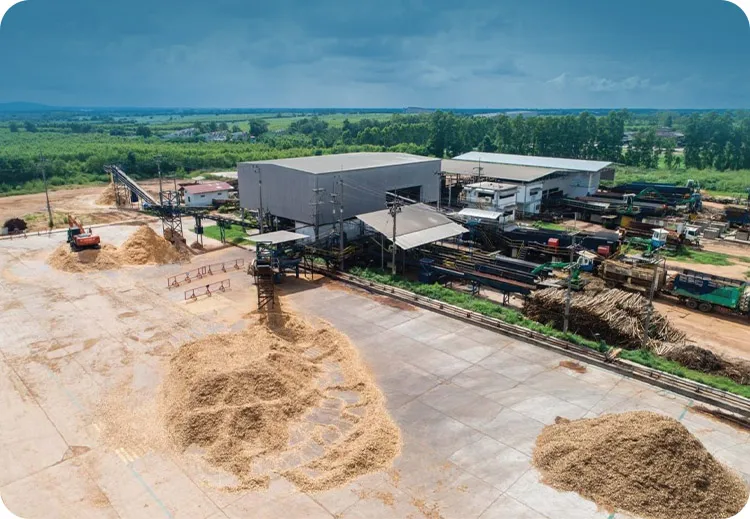
The production facility is strategically located in an industrial zone of southern Vietnam, near critical transportation arteries to facilitate both raw material supply and finished product distribution. Covering an area of 21,533 m² (approximately 5.3 acres), the facility comprises two main production workshops, auxiliary utility buildings, storage areas, and administrative offices. Each production line has been meticulously designed to maximize efficiency while ensuring compliance with environmental and safety regulations.
The facility operates two shifts per day, 10 hours per shift, 300 working days per year, employing a total workforce of 20 employees. The work schedule balances labor efficiency with operational continuity, ensuring the plant meets its production targets.
30-35T/H
capacity
$1.2 million USD
investment
Vietnam
location
Biofuel
project type
RICHI MACHINERY
Project Background
Vietnam is a leading exporter of rice globally, generating abundant quantities of rice husks, a key byproduct suitable for biomass pellet production. Additionally, the country has a rapidly growing wood-processing industry, producing substantial amounts of sawdust and wood residues. These materials, if left unused, often contribute to environmental pollution through open burning or landfill disposal.
Recognizing the opportunity to capitalize on these abundant raw materials, the client—a domestic biomass enterprise—initiated this wood sawdust rice husk pellet production line in Vietnam project. The main goal is to convert these residues into high-quality biomass pellets for industrial and residential energy applications. By doing so, the company not only addresses environmental challenges but also taps into the growing demand for renewable fuels in Vietnam and neighboring Southeast Asian countries.
The selected project site is well-connected, providing easy access to rice processing factories, sawmills, and wood-processing plants. This ensures a consistent supply of raw materials throughout the year, allowing the wood rice husk pellet plant to operate continuously at its designed annual output of 200,000 tons.
RICHI MACHINERY
Project Components
The wood sawdust rice husk pellet production line in Vietnam consists of several integral components, covering production, utilities, storage, and environmental protection. Key elements include:
Production Facilities
| Facility | Building Area | Location | Function |
|---|---|---|---|
| 1# Production Workshop | 3,000 m² | Southeast side of the plant | Biomass pellet processing line |
| 2# Production Workshop | 3,000 m² | Southwest side of the plant | Biomass pellet processing line |
Each workshop houses a complete wood pellet line capable of handling 15-18 tons per hour, ensuring full utilization of raw materials and meeting the total production target.
Utilities
| Utility | Capacity | Notes |
|---|---|---|
| Water Supply | 600 t/year | Supplied from municipal water grid |
| Wastewater Treatment | 480 t/year | Connected to local municipal treatment plant |
| Electricity | 4 million kWh/year | Supplied via national grid |
Storage and Logistics
| Storage Facility | Building Area | Location | Function |
|---|---|---|---|
| Raw Material Warehouse | 2,900 m² | Northeast side | Storage of sawdust, rice husk, wood residues |
| Finished Product Warehouse | 3,800 m² | Northwest side | Storage and dispatch of pellets |
The complete wood pellet plant also operates a fleet of forklifts and loaders to manage raw material handling and internal logistics efficiently.
Environmental Facilities
| Pollutant | Treatment Equipment | Notes |
|---|---|---|
| Air Emissions | Baghouse dust collectors + 15m exhaust stack | Two units, dust collection efficiency 90%, processing efficiency 92% |
| Wastewater | Onsite septic tank (3 t/h) | Treated water discharged to municipal system |
| Solid Waste | Temporary storage area 100 m² | Residuals returned to production or disposed via approved channels |
RICHI MACHINERY
Raw Materials
Vietnam’s wood sawdust rice husk pellet production line utilizes abundant local agricultural and forestry byproducts. These include sawdust, wood residues, and rice husks, each contributing specific energy and binding properties to the pellets. The project design emphasizes raw material pre-treatment, mixing, and continuous supply to ensure stable production.
The table below outlines the annual supply and characteristics of each raw material:
| Material | Annual Supply (t) | Max Storage (t) | Form | Source & Transport |
|---|---|---|---|---|
| Wood Logs | 100,000 | 10,000 | Solid | Truck transport from local sawmills |
| Rice Husks | 30,000 | 3,000 | Solid | Supplied by nearby rice mills |
| Sawdust | 30,000 | 3,000 | Solid | Byproduct from furniture and timber plants |
| Wood Residues | 40,000 | 4,000 | Solid | Collected from processing facilities |
The biomass pellet plant is designed to accommodate fluctuations in moisture content, ensuring high pellet quality year-round.
RICHI MACHINERY
Key Equipment
To support the high-capacity wood sawdust rice husk pellet production line in Vietnam, the facility employs advanced machinery covering all production stages:
| Equipment | Quantity | Model/Specification | Function |
|---|---|---|---|
| Wood Chipper Machine | 4 | TC-1300 | Reduces raw logs to smaller chips for further processing |
| Wood Pellet Hammer Mill | 4 | GXP80*120 | Pulverizes materials to fine particles (<3mm) |
| Wood Rice Husk Pellet Machine | 8 | SZLH858 | Forms biomass pellets under high pressure and temperature |
| Conveyor Belt | 100 m | PDJ100/1300/80/65 | Transfers materials between production stages |
| Rotary Screener | 8 | GS1230 | Removes oversized or fine particles |
| Storage Silo | 6 | / | Ensures continuous material flow |
| Forklift | 4 | / | Material handling |
| Loader | 4 | / | Loading and unloading materials |
| Cyclone Separator | 12 | / | Removes residual dust and moisture |
| Wood Chip Dryer | 4 | / | Reduces material moisture content |
| Packing Machine | 4 | / | Automates bagging of finished pellets |
The selected biomass rice husk wood pellet manufacturing equipment ensures high reliability, ease of maintenance, and energy efficiency, while allowing the plant to operate at maximum capacity.
RICHI MACHINERY
Production Process
The wood sawdust rice husk pellet production line in Vietnam adopts a combination of mechanical and thermal processing steps to convert raw materials into high-quality pellets. The main stages are:
- Chipping: Large wood logs and oversized residues are cut into smaller chips for ease of pulverization. This stage generates minimal dust and noise.
- Crushing: Chipped materials are fed into hammer mills, reducing particle size to below 3 mm. Dust and noise are generated, mitigated by enclosed systems.
- Screening: Crushed material is screened using rotary sieves. Oversized or undersized particles are recycled back to crushing.
- Drying: Material is conveyed to electric-powered hot-air dryers to achieve optimal moisture content for pellet formation. Moisture typically reduced to 10–12%.
- Cyclone Separation: Residual moisture and dust are removed post-drying using cyclones.
- Pelletizing: Dried material enters SZLH858 wood pellet mills. High-pressure rollers compress the powder through molds, forming dense cylindrical pellets. Electric heating raises the internal temperature to 75–100°C to ensure binding.
- Cooling: Pellets exit the press at 80–90°C and pass through cooling units to reach ambient temperature without structural damage.
- Final Screening: Cooled pellets are sieved to remove fines and ensure consistent size.
- Bagging: Finished pellets are automatically bagged and stored.
The entire process is designed for continuous 30–35t/h production, with high yield and minimal waste.
RICHI MACHINERY
Environmental Management
1. Air Quality
The plant is equipped with baghouse dust collectors connected to 15-meter exhaust stacks. Dust collection efficiency reaches 90%, significantly reducing particulate emissions.
2. Wastewater Management
Domestic wastewater generated by staff and minor process water is treated via onsite septic systems and discharged to municipal facilities. No untreated water is released directly into the environment.
3. Noise Control
Equipment is installed with vibration-reducing mounts, and workshops are enclosed to limit noise propagation. Typical operational noise levels range from 75–105 dB(A).
4. Solid Waste Handling
- Rejected pellets from screening and dust collected from baghouses are recycled into the crushing process.
- Daily domestic waste is collected and disposed of according to local municipal guidelines.
5. Construction Phase Measures
During the construction phase, dust suppression and proper disposal of construction debris were implemented. Temporary sedimentation ponds were used to manage runoff from minor site excavation activities.
RICHI MACHINERY
Workforce and Operational Management
The wood sawdust rice husk pellet production line in Vietnam employs 20 skilled workers, operating two 10-hour shifts daily. Staff are responsible for machinery operation, material handling, quality control, and packaging. Automation in pelletizing and bagging reduces labor intensity and ensures high throughput. Workers are trained in safety procedures, dust control, and routine equipment maintenance.
RICHI MACHINERY
Project Investment and Economics
The total investment for the wood sawdust rice husk pellet production line in Vietnam is estimated at $1.2 million USD, including:
- Equipment procurement and installation: $670,000 USD
- Civil construction: $400,000 USD
- Utilities and environmental systems: $80,000 USD
- Miscellaneous costs (training, commissioning, permits): $50,000 USD
Operating costs are optimized due to the local availability of raw materials and electricity from the national grid. The investment is competitive, ensuring a reasonable payback period within 4–5 years under full-capacity operation.
RICHI MACHINERY
Projected Market and Outlook in Vietnam
Vietnam’s biomass energy market is expanding rapidly due to government incentives promoting renewable energy and the abundance of agricultural residues. The wood sawdust rice husk pellet production line in Vietnam directly addresses energy shortages in rural and industrial sectors, providing a clean, renewable alternative to coal and wood fuel.
Key advantages include:
- Utilization of locally abundant raw materials (rice husks, sawdust, wood residues)
- Reduction of environmental pollution from open burning
- Production of high-energy, uniform pellets suitable for industrial boilers and residential heating
- Alignment with government sustainability goals
RICHI Machinery’s expertise in high-capacity pellet lines ensures that investors receive not only quality equipment but also comprehensive engineering support, including installation supervision, commissioning, and operational training. This enhances operational efficiency and maximizes return on investment.
RICHI MACHINERY
Summary
The wood sawdust rice husk pellet production line in Vietnam represents a strategic investment in sustainable energy, leveraging locally available raw materials to produce high-quality biomass pellets. With a designed capacity of 30–35 tons per hour, an annual output of 200,000 tons, and a fully integrated environmental management system, the project is both economically viable and environmentally responsible. Supported by RICHI Machinery’s advanced equipment and engineering services, this husk wood pellet production line is positioned to meet Vietnam’s growing renewable energy demand while offering investors a reliable and profitable business model.
Vietnam’s biomass market presents a promising landscape for similar projects, with abundant raw materials, supportive policies, and increasing energy needs. Establishing such production lines can help diversify energy supply, reduce carbon emissions, and strengthen the local economy.
● RICHI MACHINERY
RICHI Service

● Consulting
Customer Consultation
We want to have a deep understanding of your industrial process, to know your exact needs of feed, wood, biomass, fertilizer or other pellet processing.

● Design
biomass Pellet Plant Design
Based on your unique situation and industrial process, we will tailor complete pellet plant you need, and inform you of every additional detail that could facilitate operation, minimize total cost.
● Manufacturing
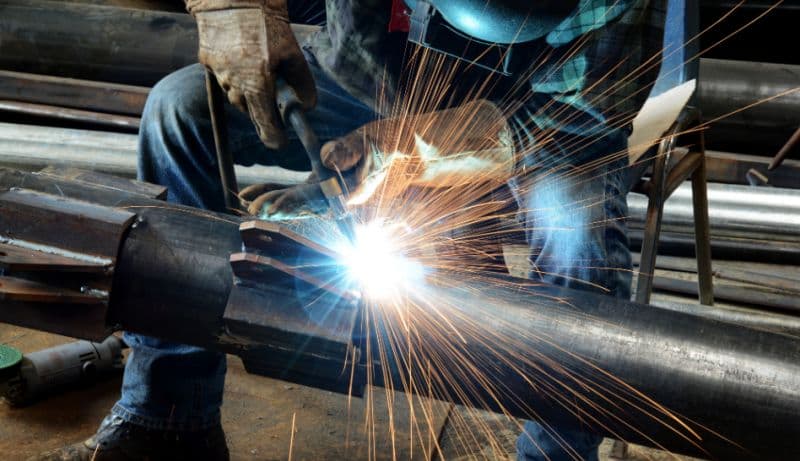
Equipment Manufacturing
The critical components of the of the complete pellet production line equipment are built in our own workshops in Asia. Additional equipment is manufactured by our worldwide network of reliable partners.
● Testing
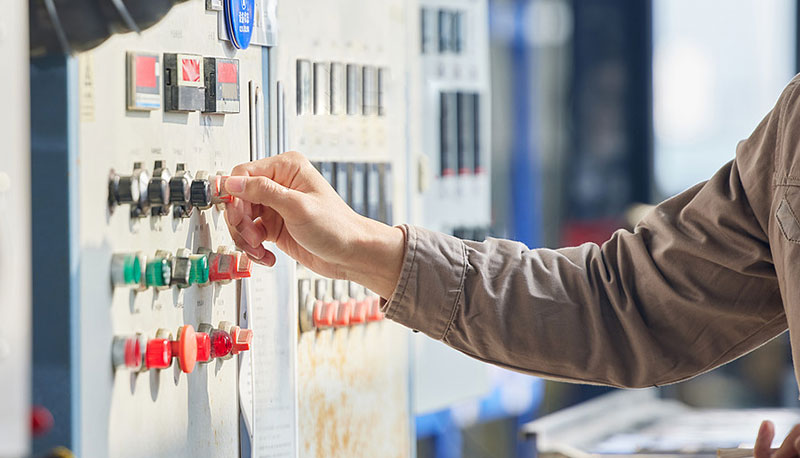
Quality Inspection & Testing
Before leaving the factory, all equipment will be inspected by the quality inspection department. We can also provide customers with testing services from a single machine to a complete pellet plant system, and provide you with real actual data for “worry-free use.”

● Delivery
Equipment Delivery
In equipment boxing and packaging, we adopt professional packaging and modular solutions to ensure the safe and non-destructive delivery of pellet plant equipment.
● Installation
Installation & Commissioning
Whether you choose your own subcontractor for the erection phase or you want to install everything together with us, a Richi supervisor will be around to make sure everything is mounted in a safe and thorough way.

● Training
Staff Training
We provide comprehensive training for the technicians of each project. We can also continue to provide support for the technicians during latter project operation.
● After-sales
Project Follow-Up
When everything is up and running our Richiers will help you further whenever needed. We are ready to answer your call 24/7.We’ll also visit you regularly to learn about your needs.
Who we are
RICHI Machinery is one of the world’s leading suppliers of technology and services for the animal feed, aqua feed and pet food industries, also the largest pellet production line manufacturer in China.
Since 1995, RICHI’s vision to build a first-class enterprise, to foster first-class employees, and to make first-class contributions to society has never wavered.
In the past three decades, we have expanded our business to a wide range of areas, including animal feed mill equipment, aqua feed equipment, pet feed equipment, biomass pellet equipment, fertilizer equipment, cat litter equipment, municipal solid waste pellets equipment, etc.

1995
RICHI Established

2000+
Serving More Than 2000 Customers

120+
RICHI Employees

140+
Exported To 140 Countries