 0086-138 3838 9622
Tofu Cat Litter Plant Setup in South Korea
RICHI MACHINERY
overview
This project represents a fully engineered and operational tofu cat litter plant setup in South Korea, designed to produce 8,000 tons per year of high-quality biodegradable tofu cat litter using domestically sourced plant-based raw materials.
The facility integrates advanced granulation, drying, screening, and packaging systems into a continuous and efficient industrial production line tailored specifically for the client’s business scale, market orientation, and factory infrastructure.
The project was initiated in response to structural changes in the South Korean pet care industry. Over the past decade, South Korea has experienced rapid growth in companion animal ownership due to urbanization, demographic shifts, and evolving social lifestyles.
Increasing numbers of single-person households and smaller family units have contributed significantly to the rise in cat ownership. As a result, demand for hygienic, low-dust, and environmentally sustainable cat litter products has increased dramatically.
Historically, the majority of tofu cat litter products sold in South Korea were imported from overseas manufacturers, resulting in several structural disadvantages for local distributors:
- High procurement costs due to international shipping and tariffs
- Long supply cycles resulting in inventory pressure
- Limited customization options for domestic brand positioning
- Exchange rate fluctuations affecting profitability
- Limited supply chain flexibility
To overcome these limitations, the client decided to invest in a local tofu cat litter plant setup in South Korea. This strategic decision enabled the client to vertically integrate production, improve supply reliability, reduce procurement costs, and enhance brand competitiveness.
The cat litter production line was designed as a medium-scale industrial facility with optimized capital investment, efficient labor utilization, and scalable production capacity to meet both domestic demand and future export expansion.
3T/H
capacity
210,000USD
investment
South Korea
location
Cat Litter
project type
RICHI MACHINERY
Facility Location and Infrastructure Overview
The tofu cat litter plant setup in South Korea was installed in an existing industrial facility owned by the client, significantly reducing capital expenditures related to land acquisition and structural construction. The factory is located in a designated industrial zone with access to stable utilities, developed transportation infrastructure, and proximity to key logistics routes.
Total Facility Area Allocation
| Functional Area | Size | Purpose |
|---|---|---|
| Production workshop | 1,500 m² | Main production line and equipment installation |
| Raw material warehouse | 200 m² | Storage of tofu fiber, starch, corn flour, guar gum |
| Finished product warehouse | 200 m² | Storage of packaged products |
| Office and control area | 100 m² | Administrative and operational management |
| Auxiliary areas | 100 m² | Maintenance and utility support |
Total factory area: 2,000 m²
The workshop was designed to support linear production flow, allowing raw materials to enter from one side and finished products to exit from the opposite side, minimizing material handling distance and improving operational efficiency.
Floor load capacity, ventilation, electrical infrastructure, and fire safety systems were upgraded to support the tofu cat litter plant setup in South Korea.
RICHI MACHINERY
Production Capacity and Operational Schedule
The production capacity and operating schedule were carefully calculated based on market demand, equipment capability, and labor efficiency.
Production Capacity Parameters
| Parameter | Value |
|---|---|
| Annual production capacity | 8,000 tons |
| Working days per year | 330 days |
| Working hours per day | 8 hours |
| Hourly production capacity | 3.03 tons/hour |
| Daily production capacity | 24.24 tons/day |
The tofu cat litter plant setup in South Korea operates on a single-shift schedule, allowing sufficient time for maintenance, cleaning, and equipment inspection.
RICHI MACHINERY
Raw Material System and Consumption Analysis
Raw materials represent the foundation of product performance, production stability, and operational cost efficiency. The tofu cat litter plant setup in South Korea uses a carefully balanced formulation optimized for granulation performance, clumping strength, and absorption efficiency.
Raw Material Consumption Table
| No. | Raw Material | Annual Consumption | Moisture Content |
|---|---|---|---|
| 1 | Tofu fiber | 2,800 tons | 10% |
| 2 | Starch | 3,600 tons | 12% |
| 3 | Corn flour | 1,200 tons | 11% |
| 4 | Guar gum | 400 tons | 8% |
Total annual raw material consumption: 8,000 tons
RICHI MACHINERY
Functional Analysis of Each Raw Material
Tofu Fiber
Tofu fiber is the primary structural material used in the tofu cat litter plant setup in South Korea. It is a by-product of soybean processing and provides excellent absorption capacity due to its porous structure.
Advantages:
- High water absorption capacity
- Lightweight structure
- Biodegradable
- Sustainable and renewable
The tofu fiber is sourced from domestic soybean processing facilities, ensuring stable supply and cost control.
Starch
Starch serves as the primary binding agent in the granulation process. When mixed with water, starch becomes adhesive and allows particles to bond during pellet formation.
Functions:
- Improves pellet durability
- Enhances clumping strength
- Improves granulation efficiency
Corn Flour
Corn flour enhances the structural uniformity and mechanical strength of pellets. It also improves pellet surface smoothness.
Functions:
- Enhances pellet formation
- Improves mechanical stability
- Improves product consistency
Guar Gum
Guar gum is a natural polymer widely used as a binder due to its strong water-absorbing and adhesive properties.
Functions:
- Improves clumping performance
- Enhances pellet integrity
- Reduces breakage during transport
RICHI MACHINERY
Utility Consumption and Infrastructure Requirements
Utility systems were designed to support continuous operation of the tofu cat litter plant setup in South Korea.
Electricity Consumption
Total electricity consumption: 400,000 kWh/year
Electricity is distributed among the following equipment:
| Equipment | Consumption Percentage |
|---|---|
| Dryer systems | 45% |
| Granulator | 20% |
| Mixing system | 10% |
| Conveying system | 10% |
| Packaging system | 15% |
Water Consumption
Water is used primarily during mixing and for domestic purposes.
| Category | Consumption |
|---|---|
| Production water | 640 m³/year |
| Domestic water | 264 m³/year |
| Total water consumption | 904 m³/year |
RICHI MACHINERY
Equipment Configuration and Technical Description
The tofu cat litter plant setup in South Korea includes industrial-grade cat litter making machines designed for long-term continuous operation.
Equipment Configuration Table
| No. | Equipment Name | Quantity | Function |
|---|---|---|---|
| 1 | Feeding machine | 1 | Raw material feeding |
| 2 | Horizontal mixer | 1 | Material mixing |
| 3 | Cat litter granulator | 1 | Pellet formation |
| 4 | Cat litter dryer | 1 | Pellet drying |
| 5 | Screening machine | 1 | Pellet classification |
| 6 | Automatic packaging machine | 1 | Final packaging |
Equipment Functional Description
Feeding Machines
The feeding machines transport raw materials into the mixer at controlled flow rates, ensuring consistent production quality.
Horizontal Mixer
The mixer ensures homogeneous distribution of raw materials and moisture.
Mixing time: 3–5 minutes per batch
Cat Litter Granulator
The cat litter pellet machine compresses mixed material into cylindrical pellets using mechanical extrusion force.
Output capacity: 3–4 tons/hour
Belt Dryer
The cat litter dryers reduce pellet moisture from approximately 20% to below 10%, ensuring storage stability.
Drying temperature: 80–100°C
Screening Machine
The screening system separates qualified pellets from oversized or undersized particles.
Rejected particles are recycled.
Automatic Packaging Machine
The packaging system performs automatic weighing, filling, sealing, and labeling.
Packaging sizes:
- 2.5 kg
- 5 kg
- 10 kg
RICHI MACHINERY
Detailed Ordered Production Process Workflow
The tofu cat litter plant setup in South Korea operates using a sequential and controlled industrial process.
Step-by-Step Production Process
Step 1: Raw Material Receiving
Raw materials are delivered in bulk bags and inspected for moisture content, purity, and quality before storage.
Step 2: Raw Material Feeding
Feeding machines transport raw materials from storage areas into the mixing system at controlled rates.
Step 3: Material Mixing
Raw materials are blended uniformly, and controlled water addition activates binding agents.
Step 4: Granulation
The granulator compresses mixed material into cylindrical pellets.
Pellet diameter: 2–4 mm
Step 5: Drying
Wet pellets are dried by mesh belt dryer to reduce moisture content to safe storage levels.
Final moisture content: 7–10%
Step 6: Cooling
Pellets are cooled to ambient temperature to stabilize their structure.
Step 7: Screening
Qualified pellets are separated from defective pellets.
Rejected pellets are recycled.
Step 8: Packaging
Qualified pellets are automatically weighed, packaged, and sealed.
RICHI MACHINERY
Logistics and Equipment Transportation
Equipment was transported via sea freight.
Shipping route:
From: Qingdao Port
To: Port of Busan
Transit time: approximately 8 days
RICHI MACHINERY
Installation and Commissioning
Installation was completed in 15 days.
Commissioning included:
- Equipment testing
- Production trial runs
- Operator training
RICHI MACHINERY
Labor Organization and Staffing
Total staff: 16
| Position | Number |
|---|---|
| Operators | 10 |
| Maintenance staff | 2 |
| Quality control staff | 2 |
| Management | 2 |
RICHI MACHINERY
Project Summary and Engineering Significance
The tofu cat litter plant setup in South Korea was designed with scalability in mind. Future capacity expansion can be achieved by adding additional granulators and dryers.
This tofu cat litter plant setup in South Korea demonstrates the successful implementation of modern biodegradable cat litter manufacturing technology using locally available raw materials and efficient industrial equipment.
The project achieved the following objectives:
- Localized production
- Reduced operational cost
- Improved supply chain stability
- Enhanced market competitiveness
This facility provides a reliable and profitable solution for tofu cat litter production and serves as a model project for future industrial expansion.
● RICHI MACHINERY
RICHI Service

● Consulting
Customer Consultation
We want to have a deep understanding of your industrial process, to know your exact needs of feed, wood, biomass, fertilizer or other pellet processing.

● Design
tofu cat litter plant Design
Based on your unique situation and industrial process, we will tailor complete tofu cat litter plant you need, and inform you of every additional detail that could facilitate operation, minimize total cost.
● Manufacturing
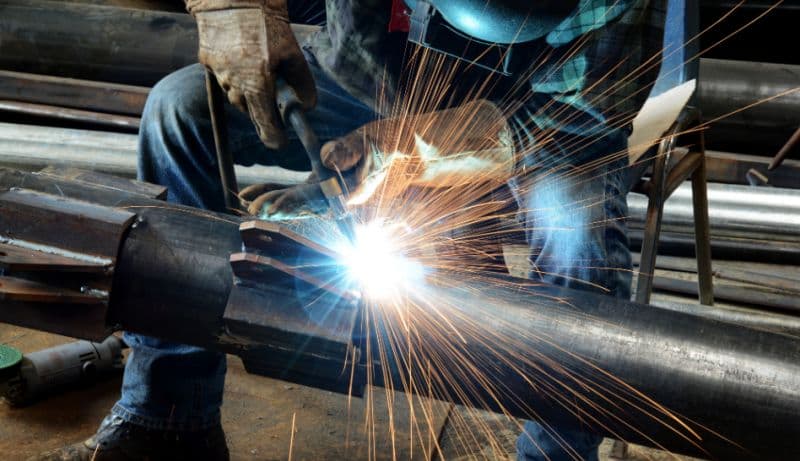
Equipment Manufacturing
The critical components of the of the complete tofu cat litter plant equipment are built in our own workshops in Asia. Additional equipment is manufactured by our worldwide network of reliable partners.
● Testing
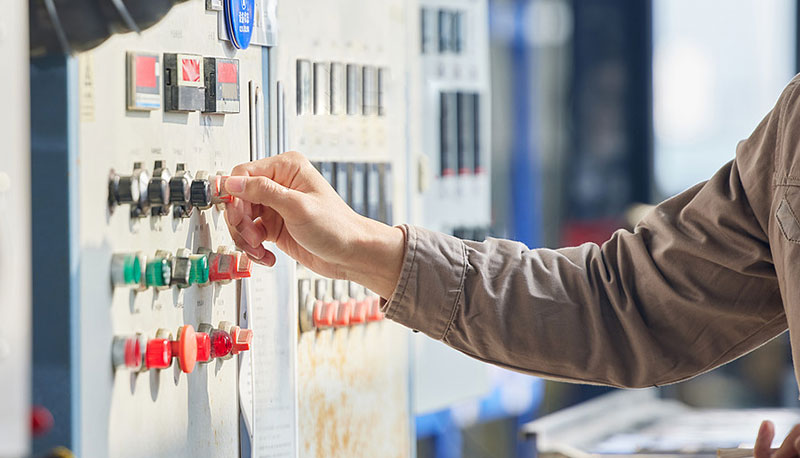
Quality Inspection & Testing
Before leaving the factory, all equipment will be inspected by the quality inspection department. We can also provide customers with testing services from a single machine to a complete tofu cat litter plant, and provide you with real actual data for “worry-free use.”

● Delivery
Equipment Delivery
In equipment boxing and packaging, we adopt professional packaging and modular solutions to ensure the safe and non-destructive delivery of tofu cat litter plant equipment.
● Installation
Installation & Commissioning
Whether you choose your own subcontractor for the erection phase or you want to install everything together with us, a Richi supervisor will be around to make sure everything is mounted in a safe and thorough way.

● Training
Staff Training
We provide comprehensive training for the technicians of each project. We can also continue to provide support for the technicians during latter project operation.
● After-sales
Project Follow-Up
When everything is up and running our Richiers will help you further whenever needed. We are ready to answer your call 24/7.We’ll also visit you regularly to learn about your needs.
Who we are
RICHI Machinery is one of the world’s leading suppliers of technology and services for the animal feed, aqua feed and pet food industries, also the largest pellet production line manufacturer in China.
Since 1995, RICHI’s vision to build a first-class enterprise, to foster first-class employees, and to make first-class contributions to society has never wavered.
In the past three decades, we have expanded our business to a wide range of areas, including animal feed mill equipment, aqua feed equipment, pet feed equipment, biomass pellet equipment, fertilizer equipment, cat litter equipment, municipal solid waste pellets equipment, etc.

1995
RICHI Established

2000+
Serving More Than 2000 Customers

120+
RICHI Employees

140+
Exported To 140 Countries