 0086-138 3838 9622
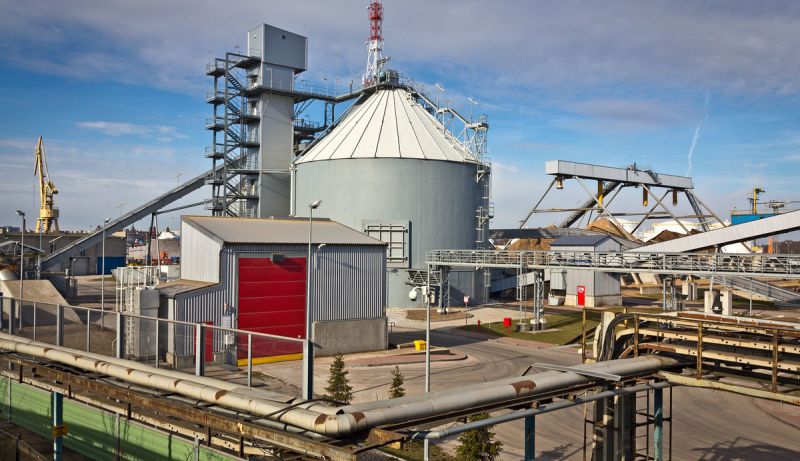
Straw Wood Board Pellet Making Plant in Bulgaria
RICHI MACHINERY
Project Overview
This straw wood board pellet making plant in Bulgaria is designed with a nominal capacity of 3.5–4 tons per hour, operating under a continuous two-shift schedule.
Annual production is expected to reach around 30,000 tons of biomass pellets, mainly used for local heating, small industrial boilers, and regional fuel distribution.
The entire system was configured as a compact, semi-integrated biomass pellet production line installed within an existing industrial building. The client preferred to avoid heavy civil construction, so the layout was adjusted to fit the available workshop space, while still maintaining proper material flow and dust control.
One thing that came up repeatedly during discussions was variability. Straw behaves differently from wood board residues—moisture, fiber structure, and density all fluctuate. So instead of forcing uniformity at the raw material level, the process was designed to absorb that variability through preprocessing and controlled feeding.
3.5-4T/H
capacity
USD 180,000
investment
Bulgaria
location
Fuel
project type
RICHI MACHINERY
Project Concept Seen from the First Conversation
This 3.5–4t/h straw wood board pellet making plant in Bulgaria didn’t start with a fixed design. The first inquiry was actually quite open-ended. The client sent a few photos of stacked straw bales and leftover wood boards from a dismantling operation, and asked a very direct question: “Can these be processed together without building two separate lines?”
That question already told us a lot.
In regions like Bulgaria, raw materials are often fragmented—straw from agriculture, and wood residues from small-scale board processing or demolition. Transporting these materials long distances doesn’t make economic sense, so combining them into one flexible pelletizing system becomes the practical approach.
The final idea was not just a machine purchase. It became a small-scale biomass fuel plant with a stable output target, designed around mixed feedstock behavior rather than a single uniform material.
RICHI MACHINERY
Raw Materials
During the early technical review, raw material characteristics were discussed in detail. The moisture content difference between straw and wood board residues was one of the key design considerations.
Below is a simplified breakdown of the main raw materials used in this straw wood board pellet making plant in Bulgaria:
| Raw Material | Annual Usage (t/a) | Moisture Content | Source Type | Notes |
|---|---|---|---|---|
| Straw | ~18,000 | 15–22% | Agricultural farms | Seasonal, requires storage |
| Wood boards / residues | ~12,000 | 10–18% | Wood workshops / dismantling | More stable supply |
| Minor impurities | ~300 | — | Mixed | Includes plastics, metals (removed manually) |
In practice, the material is not always perfectly clean. During unloading, workers manually remove visible impurities such as metal wires or plastic fragments. This step may look simple, but it helps protect downstream equipment significantly.
RICHI MACHINERY
Equipment Configuration
Instead of listing everything as isolated machines, the system is better understood as interconnected functional sections.
1. Raw Material Handling & Pre-treatment
- Manual unloading and initial sorting
- Belt conveyors for continuous transfer
- Feeding bins for temporary storage
- Preliminary impurity removal
This stage is less about automation and more about stabilizing feedstock before mechanical processing.
2. Size Reduction Section
- Straw and wood board materials are first processed through a hammer-type crusher system
- Oversized pieces are reduced to manageable particle sizes
- Material is then directed into fine grinding if needed
Dust generation at this stage is noticeable. In practice, the airflow design and suction points make a big difference in keeping the workshop environment acceptable.
3. Fine Grinding Section
- Secondary grinding ensures uniform particle size
- Material is prepared for pelletizing
- Pneumatic or enclosed conveying reduces dust leakage
This stage directly impacts pellet quality. If particle size is inconsistent, pellet density and durability will fluctuate.
4. Pelletizing Section
- Multiple wood pellet mills operate in parallel
- Continuous feeding system ensures stable input
- Ring die extrusion compresses biomass into dense pellets
Operators usually spend time adjusting:
- Feed rate
- Moisture balance
- Die temperature
Small adjustments here often show immediate effects on pellet hardness.
5. Cooling and Screening
- Fresh pellets exit at elevated temperature
- Natural or forced cooling reduces temperature before storage
- Vibrating screen removes fines and reintroduces them into the system
This closed-loop approach helps reduce material waste.
6. Packaging and Storage
- Finished pellets are transported to storage area
- Bagging system used depending on customer requirements
- Warehouse designed to avoid moisture exposure
RICHI MACHINERY
Main Equipment List
| Equipment Section | Main Equipment | Function |
|---|---|---|
| Raw material handling | Conveyor system, feeding bins | Material transport and buffering |
| Crushing | Hammer crusher | Size reduction of straw and wood |
| Grinding | Fine pulverizer | Uniform particle preparation |
| Pelletizing | Biomass pellet mill | Core forming process |
| Cooling | Pellet cooler | Temperature reduction |
| Screening | Vibrating screen | Quality control |
| Auxiliary | Fans, dust collectors | Airflow and environmental control |
RICHI MACHINERY
Production Workflow
The actual operation sequence of this straw wood board pellet making plant in Bulgaria can be summarized as:
- Raw materials are unloaded and roughly sorted
- Straw and wood residues are conveyed into the crushing system
- Materials are reduced in size through primary and secondary grinding
- Fine particles are temporarily stored and buffered
- Controlled feeding sends material into pellet mills
- Pellets are formed through mechanical compression
- Hot pellets are cooled to stable condition
- Screening removes fines and recycles them
- Final pellets are packaged or stored in bulk
During trial runs, operators often adjust the balance between straw and wood input. Too much straw can reduce pellet durability; too much wood board material may increase density but affect flowability. Finding the right ratio is part of normal operation tuning.
RICHI MACHINERY
Installed Capacity and Operating Conditions
- Designed capacity: 3.5–4 t/h
- Annual production: ~30,000 tons
- Working days: ~330 days/year
- Operation mode: 2 shifts per day
- Total workforce: 8 personnel
RICHI MACHINERY
Utilities and Consumption
| Item | Consumption |
|---|---|
| Fresh water | ~198 m³/year |
| Electricity | ~500,000 kWh/year |
Water usage remains low and is mainly for domestic purposes. No significant process wastewater is generated.
RICHI MACHINERY
Site Layout Considerations
The biomass pellet project was installed within an existing facility, so layout planning focused heavily on material flow efficiency rather than new construction.
A practical observation during design was airflow direction. Pellet production generates fine dust, especially during crushing and screening. Positioning the office area on the side opposite to prevailing airflow helps reduce dust exposure for staff.
The general layout follows:
- Raw material zone → processing zone → pelletizing zone → finished product warehouse
- Straight-line flow to minimize material handling distance
- Separation between dusty areas and administrative areas
RICHI MACHINERY
Environmental Handling
Instead of complex systems, the project uses straightforward but effective measures:
- Bag filter systems at key dust generation points
- Enclosed conveyors to limit dust escape
- Local exhaust ventilation near crushers and grinders
- Proper collection and reuse of captured dust back into the process
Solid residues such as impurities and rejected particles are collected and handled separately.
RICHI MACHINERY
Equipment Investment Reference
For this straw wood board pellet making plant in Bulgaria, the equipment investment was approximately:
- USD 180,000 (equipment only)
This includes crushing, grinding, pelletizing, cooling, conveying, and dust control systems. The final cost varies depending on automation level and configuration details.
RICHI MACHINERY
Shipping Arrangement
All main equipment for this biomass pellet plant project was shipped from China via sea freight.
- Departure port: Qingdao Port
- Destination port: Port of Varna (Bulgaria)
Varna is commonly used for industrial imports entering Bulgaria due to its access to inland transport routes.
RICHI MACHINERY
Practical Notes from Installation and Commissioning
During commissioning, the first few batches of pellets required adjustment. Straw content was slightly higher than expected at the beginning, which resulted in pellets that were lighter and less compact.
After adjusting:
- Raw material mixing ratio
- Moisture conditioning
- Feed consistency into pellet mills
The system stabilized and reached continuous output within a short period.
One small but important lesson from this straw wood board pellet making plant in Bulgaria project: mixed raw material systems require operators to “feel” the process rather than rely only on fixed parameters.
RICHI MACHINERY
Market Potential in Bulgaria
Biomass pellet demand in Bulgaria is supported by:
- Growing interest in renewable heating
- Availability of agricultural residues
- Small-scale industrial energy users
- Cost pressure from traditional fuels
Projects like this straw wood board pellet making plant in Bulgaria fit well into the local energy structure because they rely on readily available materials and relatively low operating complexity.
For investors, the advantage lies in:
- Stable raw material supply
- Moderate equipment investment
- Localized demand without heavy export dependency
RICHI MACHINERY
A Note from the Engineering Side
Projects of this scale tend to succeed not because of any single machine, but because the system matches the raw material reality. Straw behaves differently from wood, and wood board residues can vary depending on their origin.
When both are combined thoughtfully, the production line becomes more resilient. That’s usually the point where clients start to see consistent output rather than intermittent operation.
RICHI Machinery’s role in such projects typically goes beyond supplying equipment—we often stay involved in layout planning, process matching, installation guidance, and operator training. In mixed-material pellet projects especially, this kind of support tends to make a noticeable difference during startup and stabilization phases.
● RICHI MACHINERY
RICHI Service

● Consulting
Customer Consultation
We want to have a deep understanding of your industrial process, to know your exact needs of feed, wood, biomass, fertilizer or other pellet processing.

● Design
biomass Pellet Plant Design
Based on your unique situation and industrial process, we will tailor complete pellet plant you need, and inform you of every additional detail that could facilitate operation, minimize total cost.
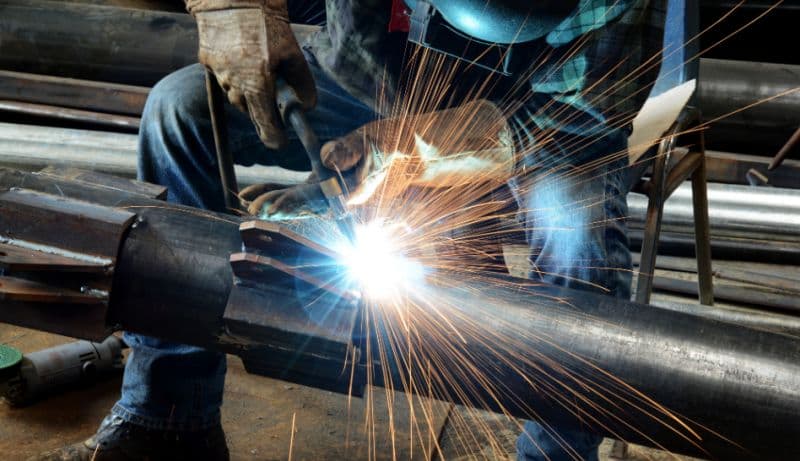
● Manufacturing
Equipment Manufacturing
The critical components of the of the complete pellet production line equipment are built in our own workshops in Asia. Additional equipment is manufactured by our worldwide network of reliable partners.

● Testing
Quality Inspection & Testing
Before leaving the factory, all equipment will be inspected by the quality inspection department. We can also provide customers with testing services from a single machine to a complete pellet plant system, and provide you with real actual data for “worry-free use.”

● Delivery
Equipment Delivery
In equipment boxing and packaging, we adopt professional packaging and modular solutions to ensure the safe and non-destructive delivery of pellet plant equipment.
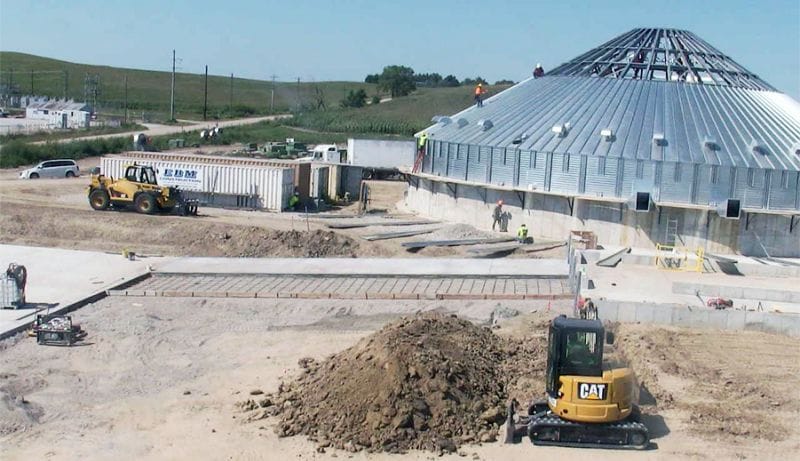
● Installation
Installation & Commissioning
Whether you choose your own subcontractor for the erection phase or you want to install everything together with us, a Richi supervisor will be around to make sure everything is mounted in a safe and thorough way.

● Training
Staff Training
We provide comprehensive training for the technicians of each project. We can also continue to provide support for the technicians during latter project operation.
● After-sales
Project Follow-Up
When everything is up and running our Richiers will help you further whenever needed. We are ready to answer your call 24/7.We’ll also visit you regularly to learn about your needs.
Who we are
RICHI Machinery is one of the world’s leading suppliers of technology and services for the animal feed, aqua feed and pet food industries, also the largest pellet production line manufacturer in China.
Since 1995, RICHI’s vision to build a first-class enterprise, to foster first-class employees, and to make first-class contributions to society has never wavered.
In the past three decades, we have expanded our business to a wide range of areas, including animal feed mill equipment, aqua feed equipment, pet feed equipment, biomass pellet equipment, fertilizer equipment, cat litter equipment, municipal solid waste pellets equipment, etc.

1995
RICHI Established

2000+
Serving More Than 2000 Customers

120+
RICHI Employees

140+
Exported To 140 Countries