

 0086-138 3838 9622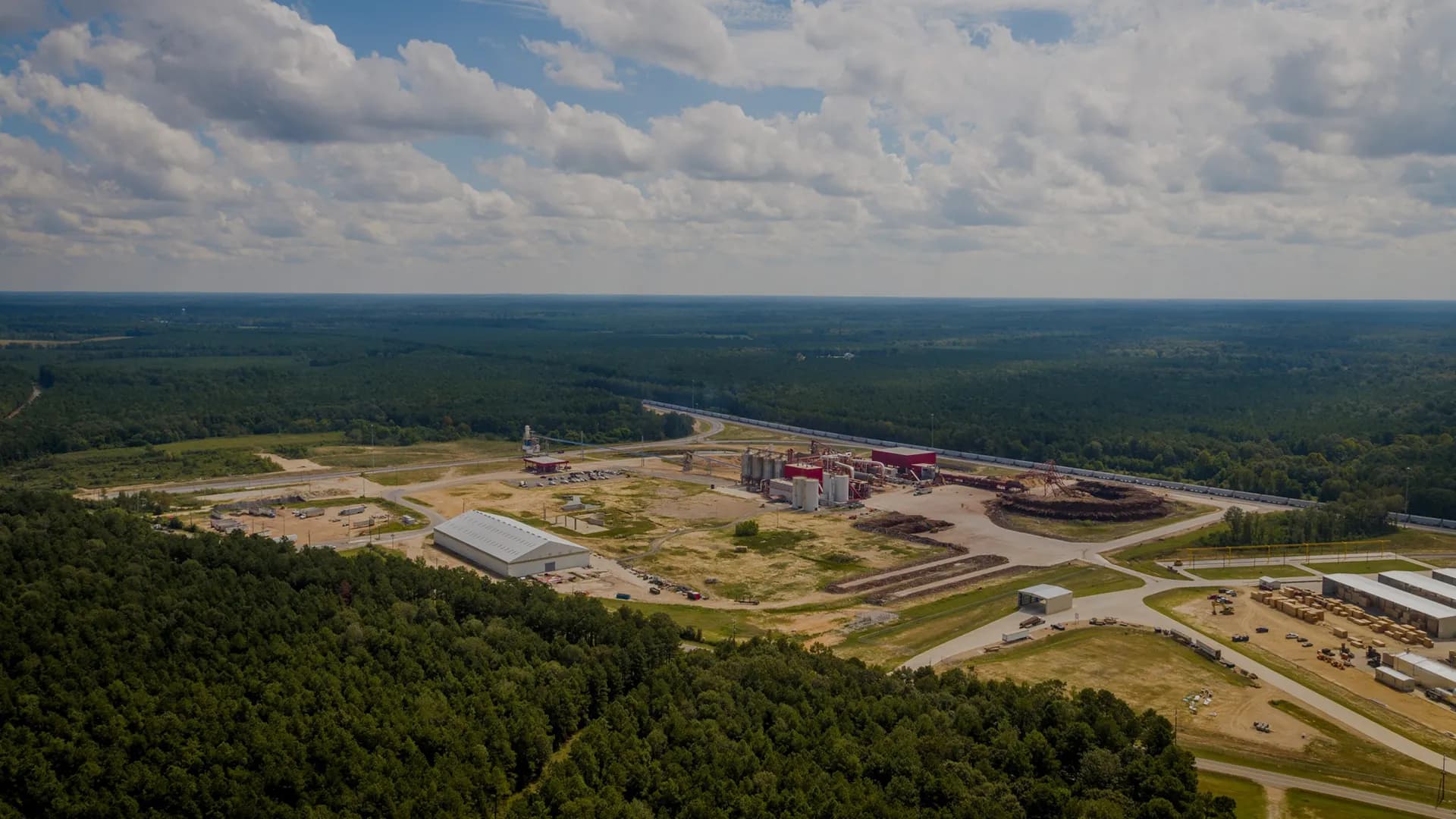

Pellet Making Machine in Indonesia
When it comes to pellet making machine in Indonesia, we’ve pretty much seen it all over the years. Wood, biomass, animal feed, organic fertilizer, even pest poison pellets—you name it, we’ve supplied the equipment for it. And not just single machines. Most of the time, it’s complete lines: hammer mills, dryers, coolers, conveyors, the whole setup.


100+
Ring Die Pellet Mills Shipped
That’s how many ring die pellet mills have left our factory for Indonesia since 2016. Everything from small units for farmers to 15-20 t/h machines for major feed mills and export-oriented wood pellet producers. We track every serial number — helps when customers call for spares years later.
55+
Complete Plants Installed
Full-system installations across Indonesia: shredders, dryers, hammer mills, coolers, screens, bagging lines. Feed mills in Java, biomass plants in Kalimantan, fertilizer lines in Sumatra — all running today.
20+
Different Material Types Processed
Wood, feed, palm shells, distillers grains, carbonized rice hulls, rat poison, tofu waste (cat litter), oil palm sludge, RDF. If you can make it flow and compress, we can cut a die for it. Poultry feed, wood pellets, palm shells, rice husk, organic fertilizer — all going through our equipment.
Featured Projects Across the United States
Some of these installations we’ve visited multiple times — for commissioning, for training, sometimes just because we were in the area and stopped by to see how things were holding up. Others we’ve walked through remotely via video calls when the client needed advice on die changes or maintenance schedules.
One client this year needed a system to turn empty fruit bunches into fuel pellets; another wanted to process chicken manure into organic fertilizer. We handle both. And since every site is different—some have space constraints, others have specific power setups—we do free layout design and process planning to make sure everything fits and flows right before it even leaves the factory.Here’s a look at a few that stand out, for different reasons.
Central Java

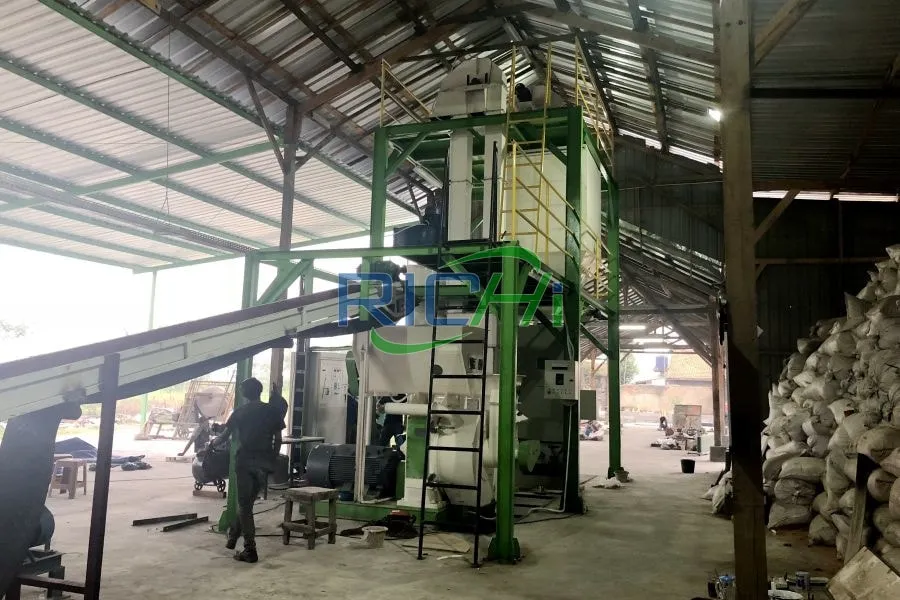
1-2 t/h wood pellet making machine in Indonesia
A furniture manufacturer in Jepara. They had piles of waste — teak offcuts, mahogany sawdust, some mixed sengon wood from local suppliers. Burning it wasn’t practical anymore.
- The machine: One MZLH520 ring die pellet mill. We matched it with a hammer mill and a simple drum dryer because their sawdust was running 18-22% moisture depending on the season. Fresh cut wood waste was wetter — had to go through the dryer first.
- Raw material details: Mixed tropical hardwoods and softwoods. Particle size after grinding: 3-5mm. Incoming moisture on sawdust was okay, but the chunkier waste needed drying.
- Other equipment: Drum dryer (1.2x8m), hammer mill, flatbed cooler, automatic bagging scale.
- Finished product: 8mm wood pellets for local industrial use.

2 t/h shrimp feed pellet making machine in Indonesia
An aquaculture feed producer with a growing customer base among shrimp farmers near the coast. They’d been buying feed from Java but wanted to control quality and formula themselves.
- The machine: SZLH420 pellet mill with a three-layer conditioner. That triple-layer setup made a difference — longer conditioning meant better gelatinization, which meant less fines in the water.
- Raw material details: Multiple ingredients — fishmeal, soybean meal, tapioca, wheat flour, some local additives. Fine powder form, mixed before conditioning.
- Other equipment: Premix system, vertical cooler, crumbler (for making crumbles from pellets), control panel with basic automation.
- Finished product: 1.5mm and 2.0mm shrimp feed pellets.

South Sulawesi
Riau, Sumatra
10 t/h Empty Fruit Bunch (EFB) pellet making machine in Indonesia
A palm oil plantation group. They had thousands of tons of empty fruit bunches piling up around their mills. Previously they let them rot or spread them back on fields — but transport costs were eating them up.
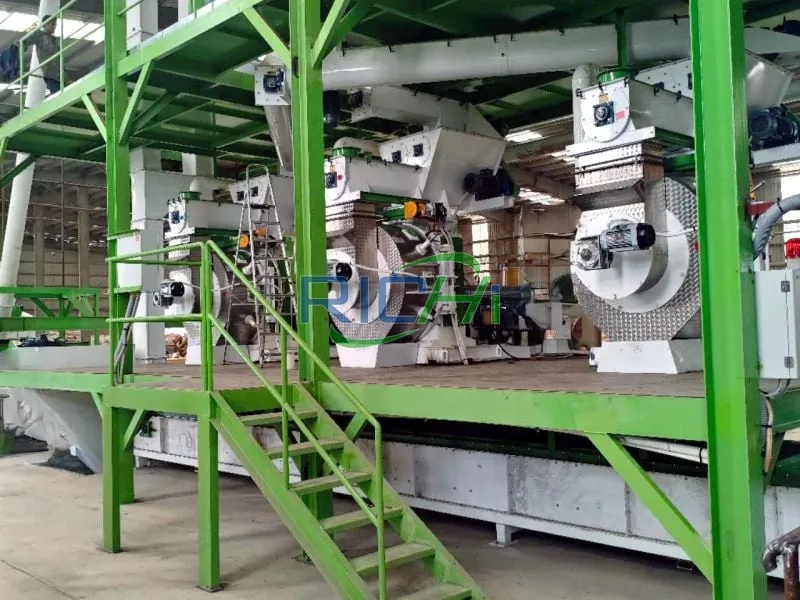
- The machines: Four MZLH520 EFB pellet mills running in parallel. EFB is fibrous and abrasive — these mills have special wear-resistant alloys on the rollers and dies.
- Raw material details: Shredded EFB fiber, dried down to 15-18% moisture. Fiber length controlled to under 10mm before pressing.
- Other equipment: Hammer mills (for second shredding), rotary dryer (18m long, runs on biomass burner using shells), conveyor system with magnetic separators, pellet coolers, dust collection throughout.
- Finished product: 8mm EFB pellets for industrial biomass boilers.

1 t/h tofu cat litter pellet making machine in Indonesia
A tofu producer who was dumping okara (tofu pulp) and soybean hulls into local waterways. Environmental office started asking questions.
- The machine: MSZLH250 pellet mill. Small but tough enough for soybean fiber. We added a steam setup to condition the material — okara alone doesn’t bind well.
- Raw material details: Wet okara (80% moisture) and dried soybean hulls. Had to press the okara first, then mix with hulls to bring moisture down to 30% before drying.
- Other equipment: pellet press (for okara dewatering), rotary dryer, hammer mill for hulls, mixer, cooler, packing station.
- Finished product: 4mm cat litter pellets, slightly rough texture for clumping.
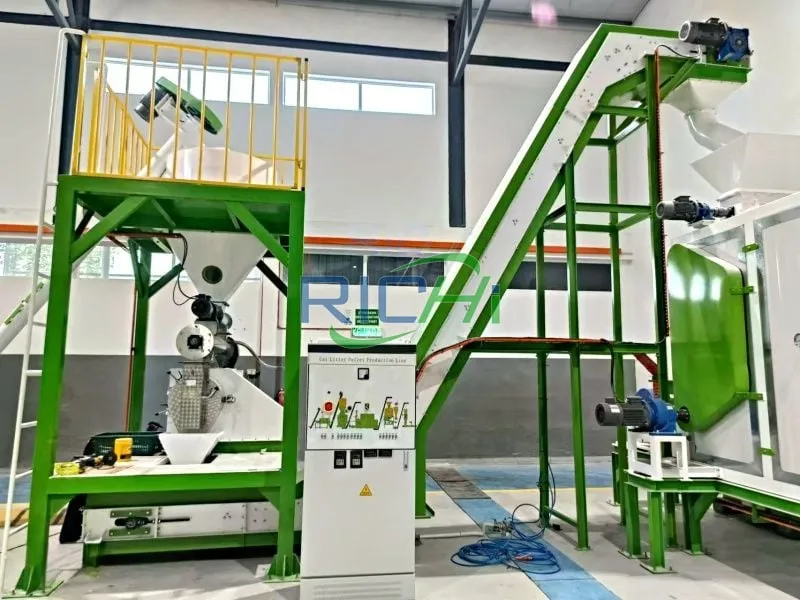
Bandung, West Java
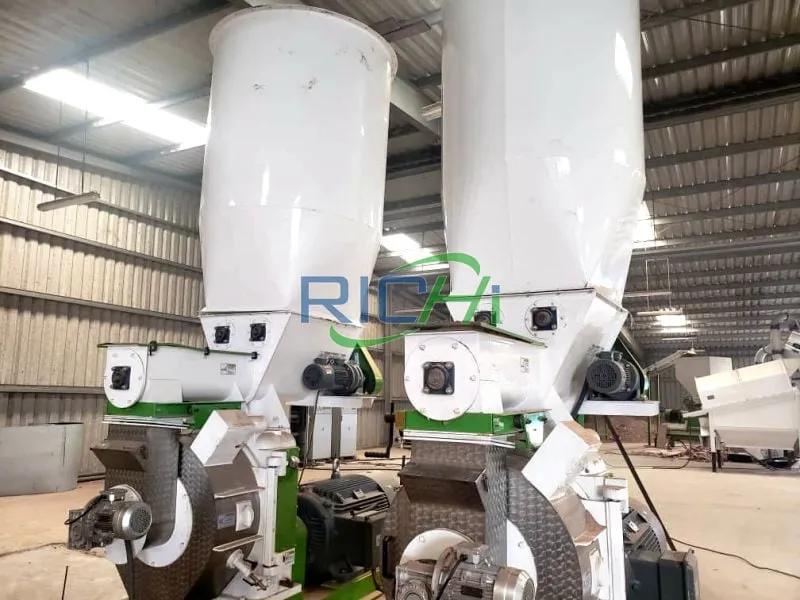
Kalimantan Timur
5 t/h turnkey wood pellet making machine in Indonesia
A timber concession holder. They had logging residues, sawmill offcuts, and some plantation wood. Wanted to move into exports.
- The machines: Two MZLH678 wood pellet mills. High capacity, designed for continuous operation.
- Raw material details: Mixed hardwood and softwood. Logging residues had bark — we added a debarker and chipper at the front end.
- Other equipment: Drum chipper, hammer mill, 20m rotary dryer, pellet coolers, screening tower, automated bagging line, PLC control system.
- Finished product: 6mm and 8mm wood pellets, ENplus standard (they aimed for certification).
8 t/h grass-based cattle feed mill plant project in Indonesia
A dairy cooperative. Their members were growing napier grass and king grass, but fresh grass spoils fast. They wanted a way to store and transport feed.
- The machine: CZLH768 grass pellet mill. Big die, designed for fibrous materials.
- Raw material details: Chopped fresh grass (60-70% moisture) and dried grass from surplus. They also add some molasses and minerals during mixing.
- Finished product: 10mm grass pellets for dairy cattle.
- Other equipment: Grass choppers, rotary dryer (runs on rice husk burner), hammer mill, molasses mixer, counterflow cooler, packing line.
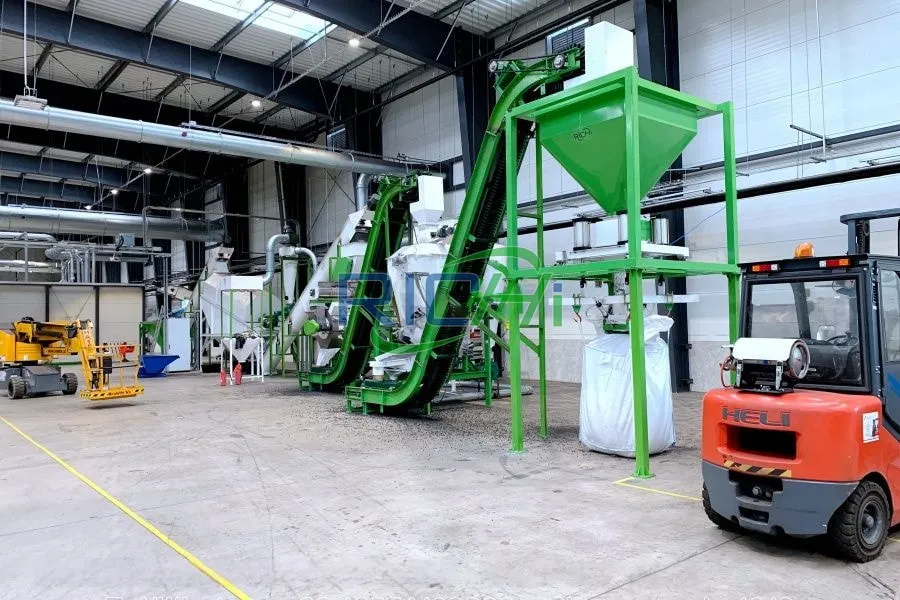
East Java

Lampung, Sumatra
10 t/h chicken manure pellet machine in Indonesia
A large layer farm operation. They had tons of manure accumulating, neighbors were complaining about smell, and fertilizer prices were going up.
- The machine: FZLH520 organic fertilizer pellet mill. Stainless steel contact parts — important because manure is corrosive.
- Raw material details: Fresh layer manure (70%+ moisture). Had to be dried and composted first. They do a 2-week turn in windrows, then dry to 25% before pelleting.
- Finished product: 4mm organic fertilizer pellets.
- Other equipment: Composting turner, dryer, crusher, mixer, cooler, coating drum (for anti-caking treatment), automatic packer.
2 tph poultry feed pellet line in Indonesia
A family-owned feed mill serving local broiler farmers. They’d been using a small local machine but wanted better output and consistency. Their old machine kept breaking down, and farmers were complaining about inconsistent pellet size.
- The machine: SZLH250 chicken feed pellet machine. Standard model, but they asked for blue paint — their company color. We matched it.
- Raw material details: Corn, soybean meal, rice bran, fishmeal, premixes. Ground to 2-3mm before pelleting.
- Finished product: 3.5mm pellets for broilers.
- Other equipment: Hammer mill, horizontal mixer, counterflow cooler, crumbler, control panel.
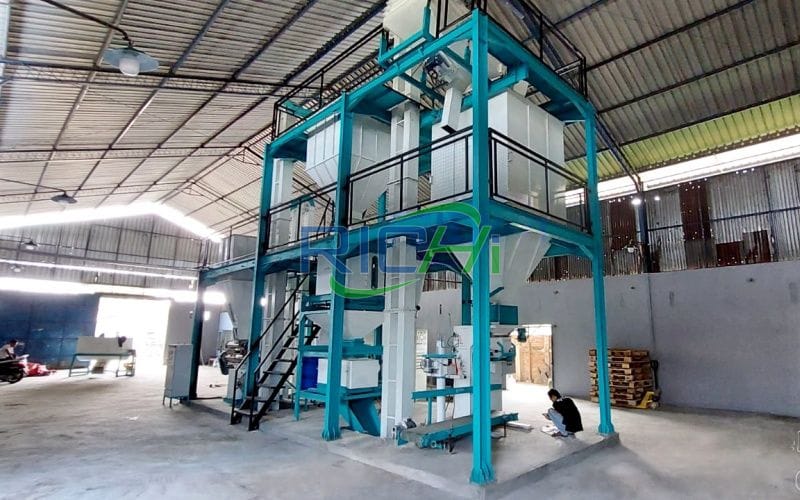
North Sumatra
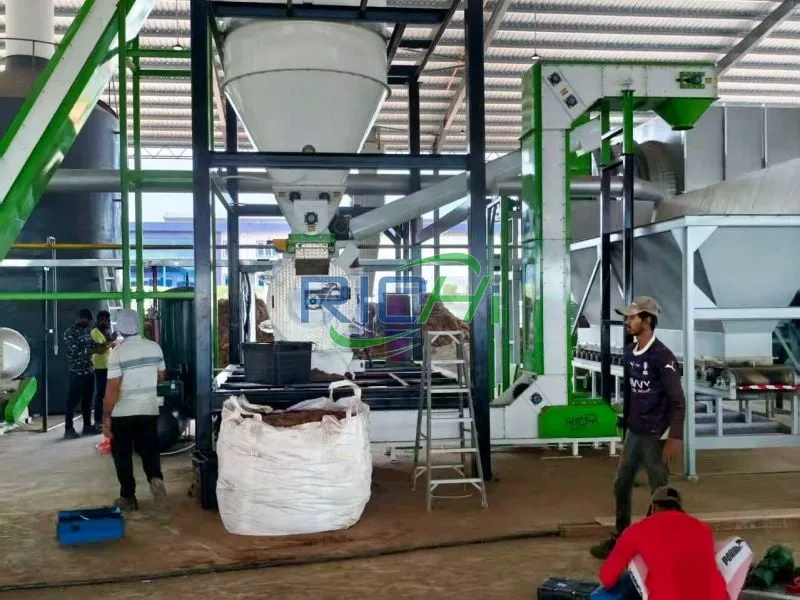
Riau, Sumatra
3 tph biomass pellet plant in Indonesia
A biomass supplier collecting agricultural waste from local farms and mills. They had access to multiple materials — rice husks, palm fiber, palm shells, coconut shells — but no way to process them uniformly.
- The machine: MZLH768 biomass pellet mill. Heavy-duty version for mixed, abrasive inputs.
- Raw material details: Seasonal mix. Rice husks (dry, 10-12% moisture), palm fiber (needs drying), palm shells (crushed), coconut shells (crushed). They blend based on what’s available.
- Finished product: 8mm biomass pellets for industrial boilers.
- Other equipment: Hammer mills (separate for shells vs fiber), dryer, coolers, dust collection, bagging system.
3-4T/H floating fish feed machine for sale Indonesia
An established aquaculture feed company. They wanted to expand into floating fish feed for carp and tilapia farmers in the region. Demand for floating feed was growing — farmers said sinking feed led to more waste and water quality issues.
- The machine: SPHS120*2 twin-screw extruder. This thing cooks and expands the starch so pellets float.
- Raw material details: Fishmeal, soybean meal, wheat flour, rice bran, fish oil. Ground fine before extrusion.
- Finished product: 2-4mm floating pellets for fish.
- Other equipment: Fine grinder, mixer, conditioner, belt dryer, pellet cooler, oil coater, control system, feed bagging machine, etc.
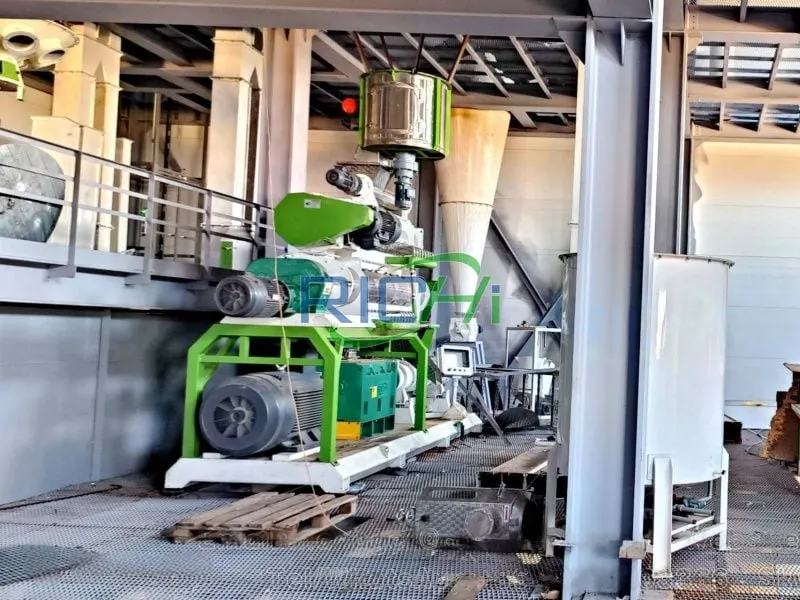
North Carolina
Other Installations We’ve Done Around Indonesia
Not every project gets a case study write-up. Some are straightforward — client knows what they want, we supply, they run it. Others are interesting for different reasons: unusual raw materials, tricky site conditions, or just a machine that’s been running for years without issues. Here’s a mixed list of pellet making machine in Indonesia installations and related equipment we’ve supplied across the islands.
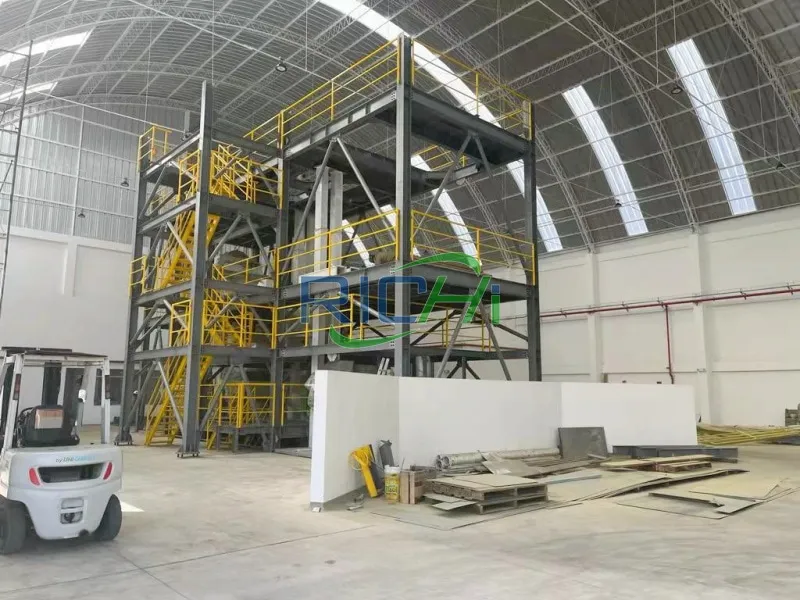
10 t/h poultry feed pellet mill for sale Indonesia
A feed distributor in Lampung needed a workhorse for their central milling operation. They collect corn and soybean from local farmers, grind it, and supply feed to poultry farms across southern Sumatra. The pellet mill in Indonesia runs two shifts most days, producing grower and finisher feeds. They told us last month they’re hitting 9.5 tons on average — close enough to nameplate.
Model
SZLH420
Pellet Size
3.5mm, 4.5mm

2 t/h sawdust pellet machine for sale Indonesia
A small furniture workshop in Jepara had sawdust piling up faster than they could give it away. They bought this pellet press in Indonesia to compress the mixed teak and mahogany dust into heating pellets, which they now sell to local households and small warungs for cooking. Simple operation, low maintenance.
Model
MZLH320
Pellet Size
8mm
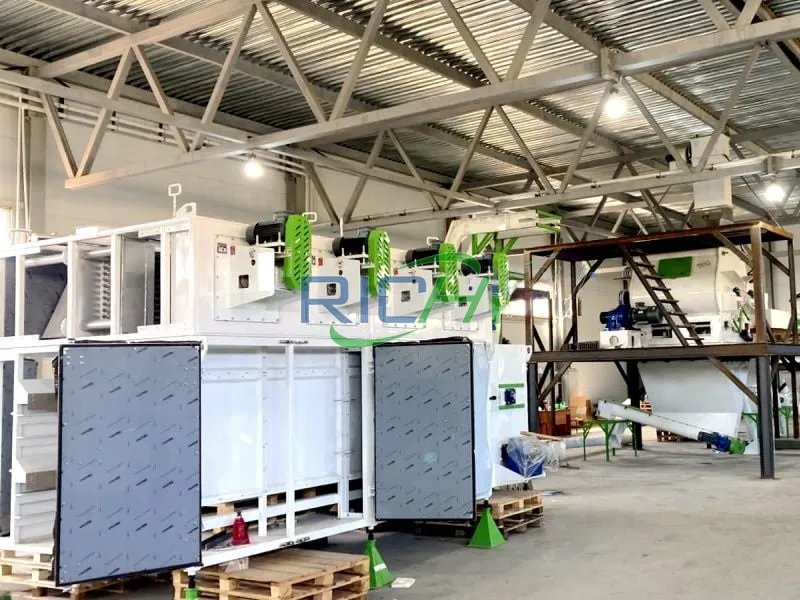
3 t/h fish feed dryer machine in Indonesia
An aquaculture feed producer in East Java was struggling with moisture after extrusion. Their floating pellets were too wet to store. We supplied this counterflow dryer as a standalone unit to fit into their existing feed production line in Indonesia. Now they’re running at 12% moisture consistently.
Model
GHL series dryer
Application
Drying 2-4mm fish feed
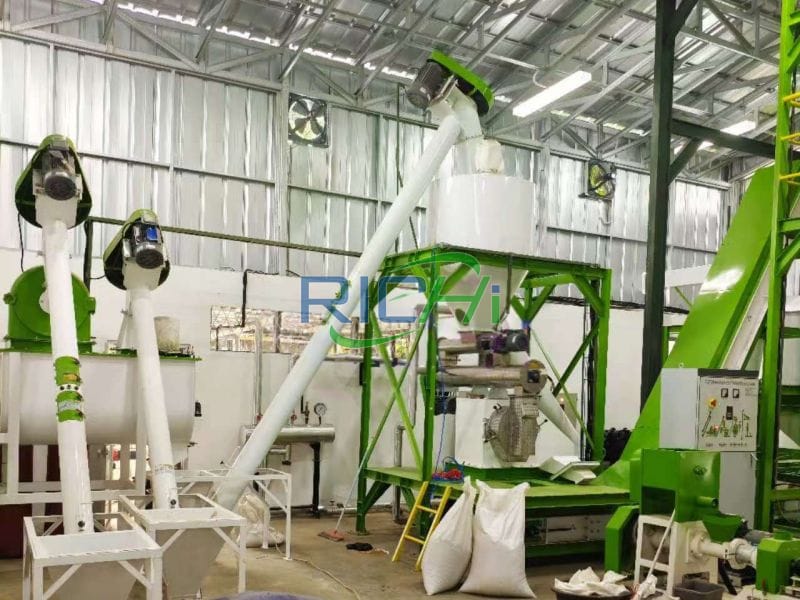
0.5 t/h small fish feed extruder in Indonesia
A family operation in Central Java wanted to diversify. They produce 500kg of floating fish feed for their own ponds and contract neighbors, plus they run chicken feed through the same feed mill machine in Indonesia when demand shifts. The extruder handles both with simple die changes.
Model
SPHS60
Pellet Size
2mm (fish), 3.5mm (chicken)
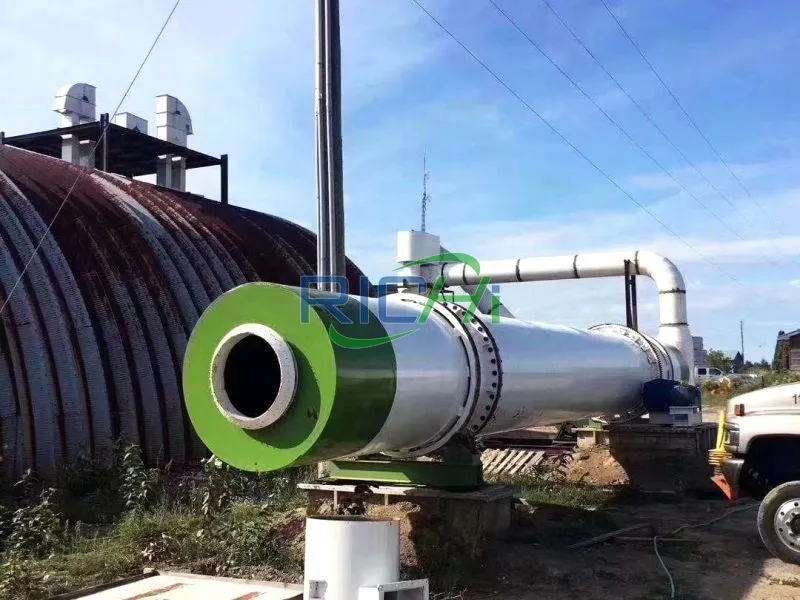
5 t/h drum dryer for wood chips in Indonesia
A biomass collector in Riau was buying wet sawdust and wood chips cheap, but couldn’t sell them until moisture dropped below 15%. This rotary drum dryer now runs parallel to their pellet plant in Indonesia, feeding dried material to their pellet mills and also selling dried chips directly to a local board manufacturer.
Model
HG1210 dryer
Material
Mixed hardwood chips, sawdust
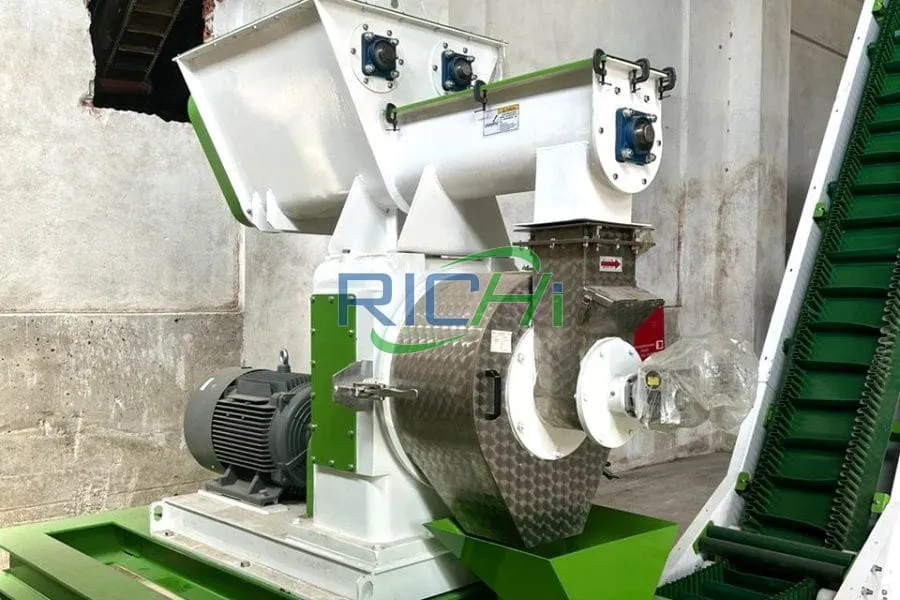
4 t/h rice husk pellet machine in Indonesia
A rice mill in Indramayu had mountains of husk with nowhere to go. Burning it caused complaints. This pellet machine in Indonesia turns the husks into industrial boiler fuel, which they now sell back to other mills in the region. The silica content is tough on dies, but we hardened this one specifically.
Model
MZLH520
Pellet Size
8mmlets
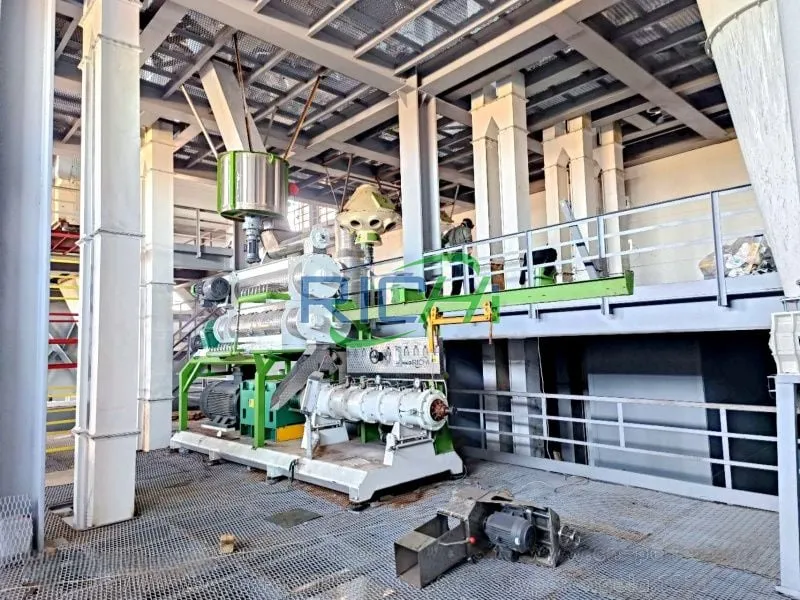
5 t/h twin screw fish feed extruder for sale Indonesia
A commercial feed company in West Java upgraded from a single-screw to this twin-screw for better control over expansion and density. Their customers wanted floating pellets that stayed intact longer. The new feed plant in Indonesia setup gives them that consistency.
Model
SPHS120
Pellet Size
2.5mm, 4mm
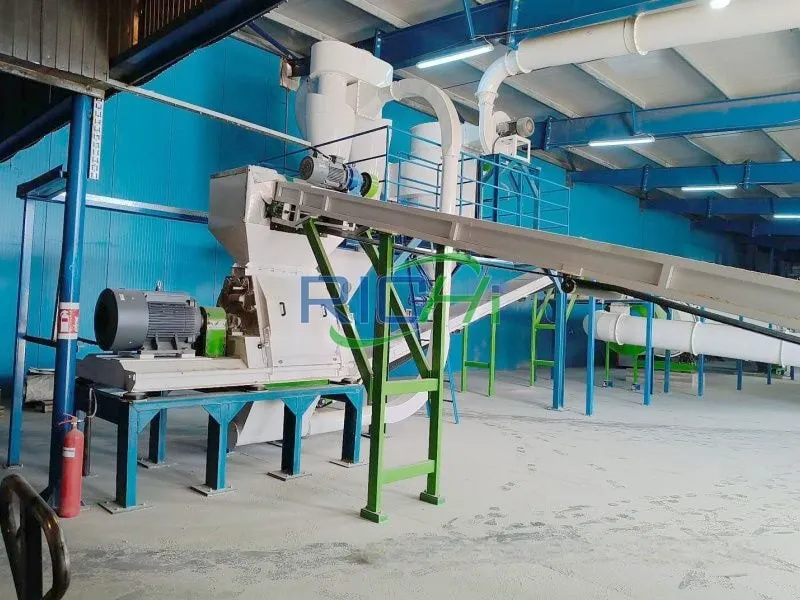
8 t/h wood hammer mill in Indonesia
A medium-sized pellet producer in Kalimantan was bottlenecked at grinding. Their old mill couldn’t keep up with two pellet lines. This hammer mill now feeds their entire pellet production line in Indonesia with uniform 3mm particle size, and they’ve got spare capacity for expansion.
Model
SFSP112×50
Application
Grinding mixed tropical hardwoods
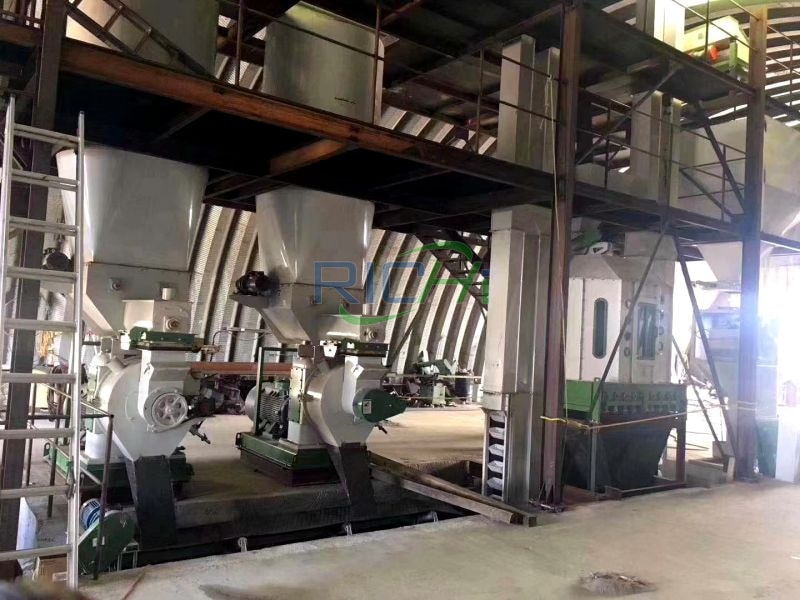
5 t/h PKS pellet making machine in Indonesia
A palm oil mill in North Sumatra wanted to move beyond selling raw kernel shells. They installed this pellet press in Indonesia to process shells into uniform pellets, which command a better price from Japanese biomass buyers. The shells are naturally dry — minimal preprocessing needed.
Model
MZLH678
Pellet Size
8 mm
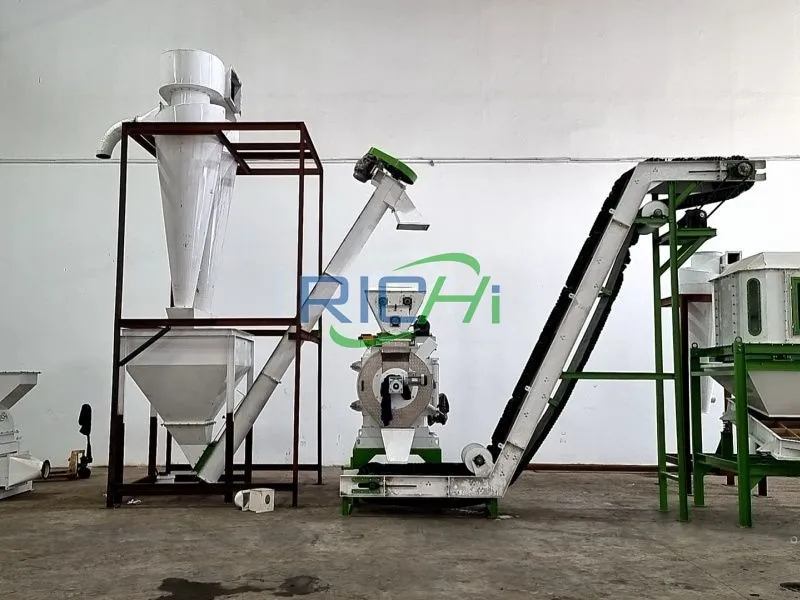
1 tph wood pellet machine for sale Indonesia
A community cooperative in Flores pooled resources to buy this line. They collect logging waste and invasive species wood from local farmers, process it into pellets, and sell to hotels and schools switching from LPG. The pellet mill in Indonesia runs when material is available — sometimes 3 days a week, sometimes 5.
Model
MZLH350
Pellet Size
8mm
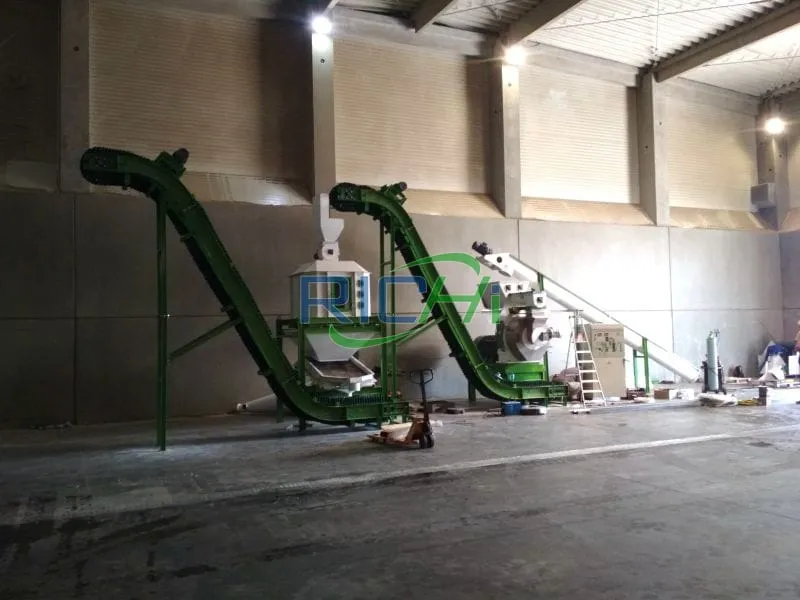
10 t/h organic fertilizer pellet machine for sale Indonesia
A large plantation group in Sumatra centralizes manure from their own cattle operation and surrounding smallholders. This pellet making machine in Indonesia processes composted manure into 4mm fertilizer pellets, which they distribute through their own agricultural supply chain.
Model
FZLH520
Pellet Size
4mm
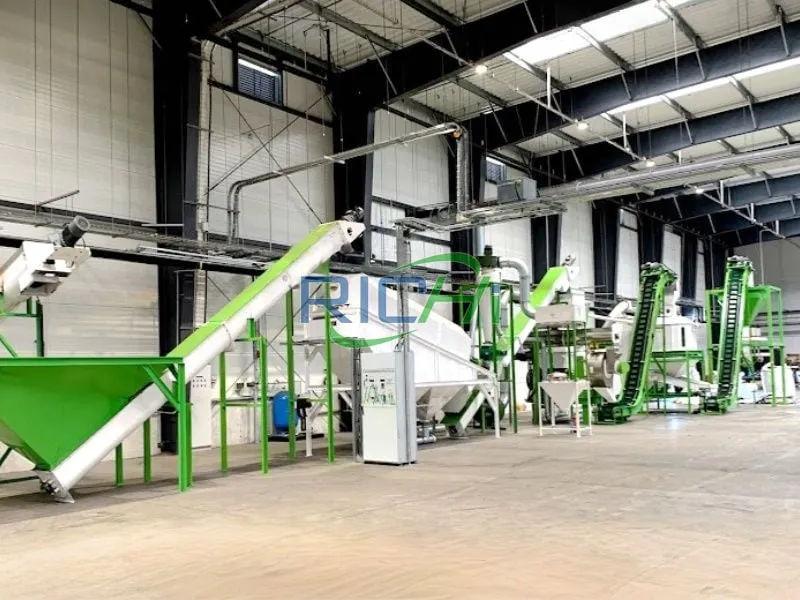
4 t/h agricultural waste pellet machine Indonesia
A social enterprise in Yogyakarta works with farmers to collect corn cobs, cassava stems, and peanut shells — stuff that normally gets burned. This pellet plant in Indonesia turns the mix into cooking fuel for local communities, reducing both waste and firewood use.
Model
MZLH420
Pellet Size
8mm
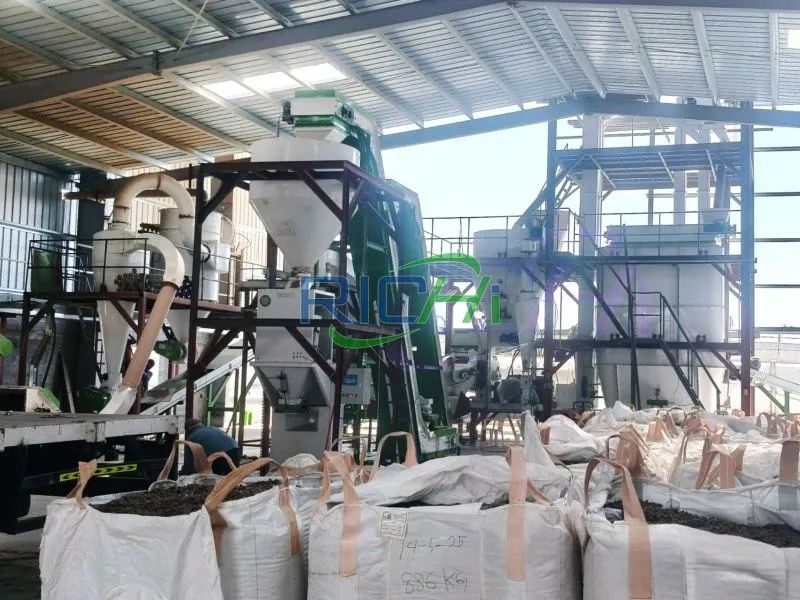
5 t/h cow dung pellet machine for sale Indonesia
A dairy cooperative in East Java had manure management issues — the wet season made storage difficult. This pellet machine in Indonesia processes dried and composted manure into organic fertilizer, which members use on their own fields or sell to vegetable farmers.
Model
FZLH420
Pellet Size
4mm
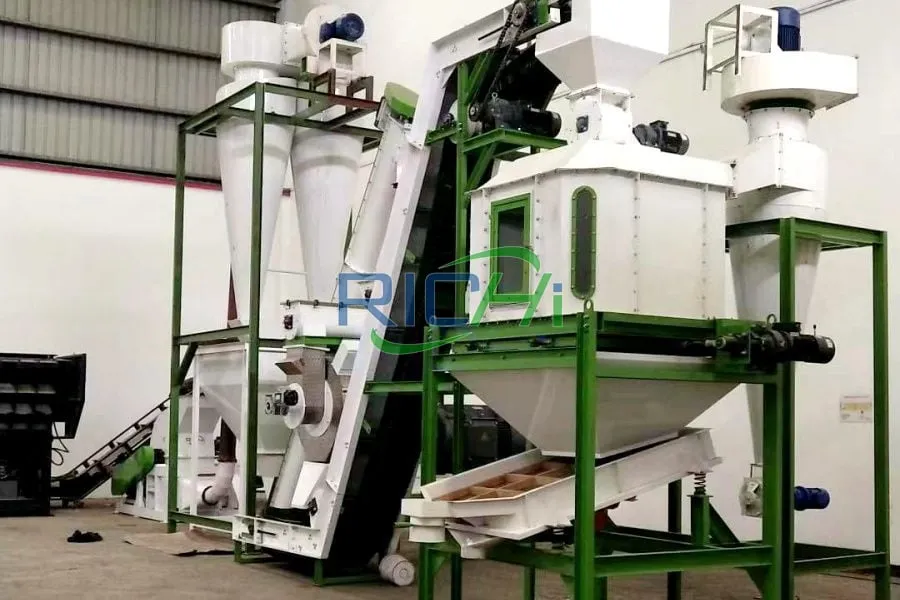
1 t/h wood cat litter pellet machine in Indonesia
A small startup in Bandung saw the market for natural cat litter growing. They source sawdust from local furniture makers, dry it, and run it through this pellet press in Indonesia to make absorbent, clumping litter pellets. Their product is now in several pet stores in Jakarta.
Model
MSZLH250
Pellet Size
4mm
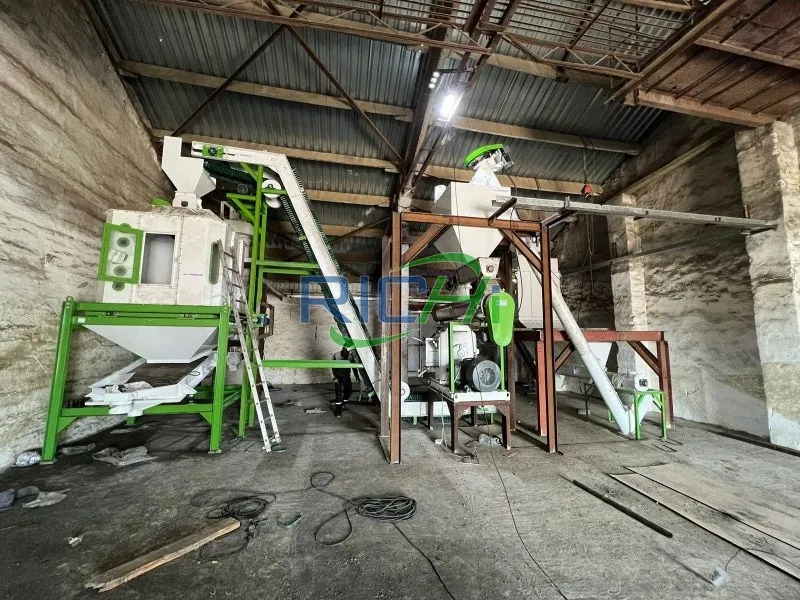
2 t/h Rice straw pellet making machine in Indonesia
After harvest, a farmers group in West Java used to burn straw in the fields. Now they bale it, chop it, and run it through this animal feed pellet making machine in Indonesia to produce roughage feed for beef cattle during dry season when grass is scarce.
Model
CZLH420
Pellet Size
8mm (for cattle)
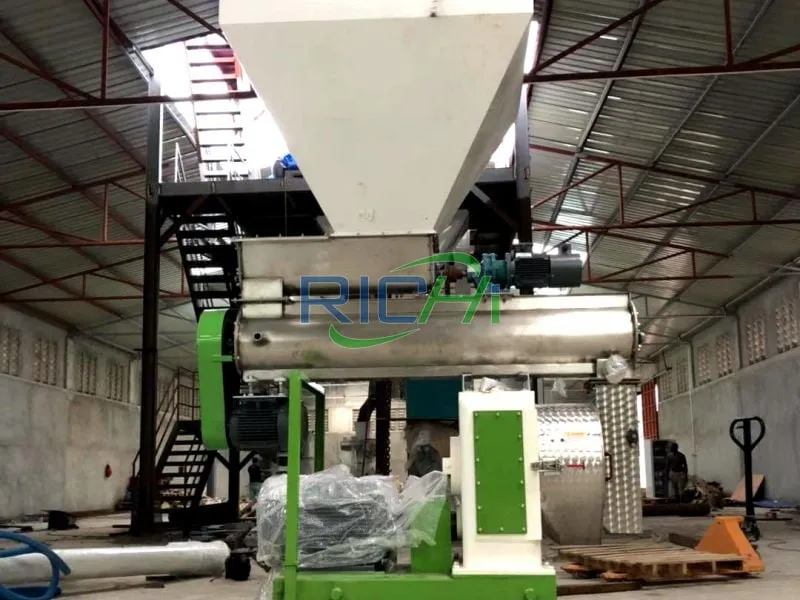
3 t/h Corn cob pellet making machine in Indonesia
A feed mill in Central Java needed a fiber source for ruminant feed. Corn cobs were available cheap from local shelling operations. This pellet mill in Indonesia grinds and compresses the cobs into 8mm pellets, which they blend with other ingredients for complete cattle feed.
Model
CZLH520
Pellet Size
8mm
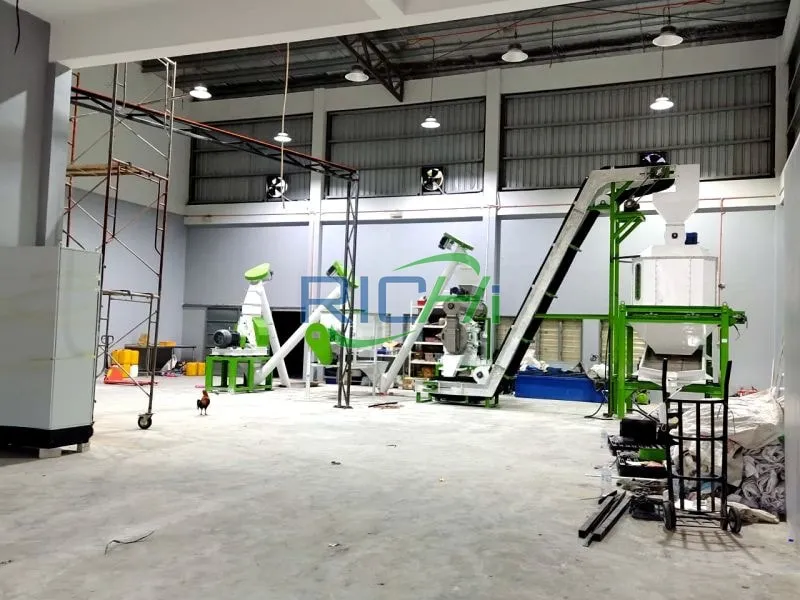
2 t/h Cassava residue pellet making machine in Indonesia
A tapioca starch factory in Lampung had wet pulp (onggok) piling up. Neighbors used to take it for free, but transport costs limited how far it could go. Now they dry and pelletize it using this pellet plant in Indonesia setup, selling the dried pellets as a low-cost cattle feed ingredient across Sumatra.
Model
SZLH250
Pellet Size
8mm
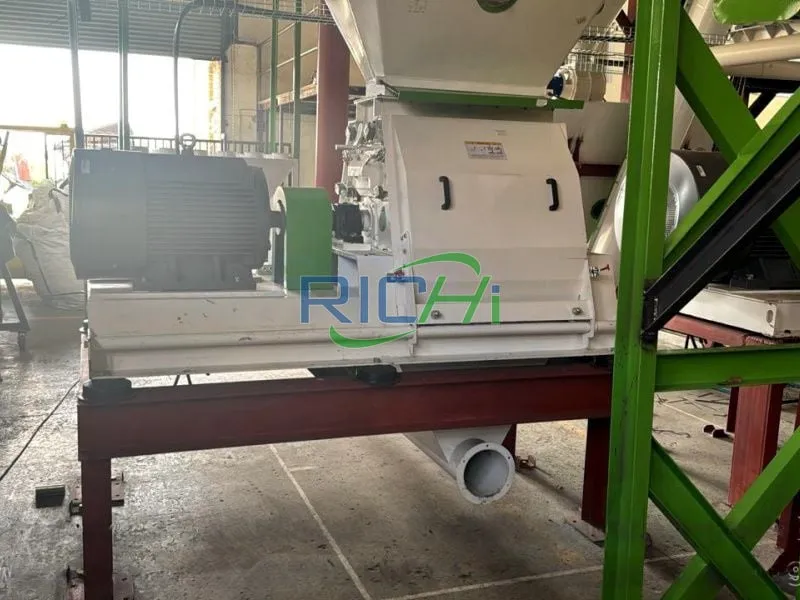
10 t/h feed hammer mill for sale Indonesia
A large poultry integrator in Jawa Timur needed to centralize grinding for multiple feed lines. This hammer mill feeds their entire feed production line in Indonesia, processing corn and soybean through 2mm screens with consistent output. They’ve had it running 16 hours daily for two years now.
Model
SFSP138×75
Application
Grinding corn, soybean

3-5 t/h poultry feed grinder in Indonesia
A medium-scale feed mill in North Sumatra upgraded their grinding section. Their old mill couldn’t handle the volume as they expanded into broiler feed. This grinder now feeds directly into their feed mill in Indonesia, running corn and rice bran through 2.5mm screens.
Model
SFSP56×401.8*20
Application
Grinding grains and bran
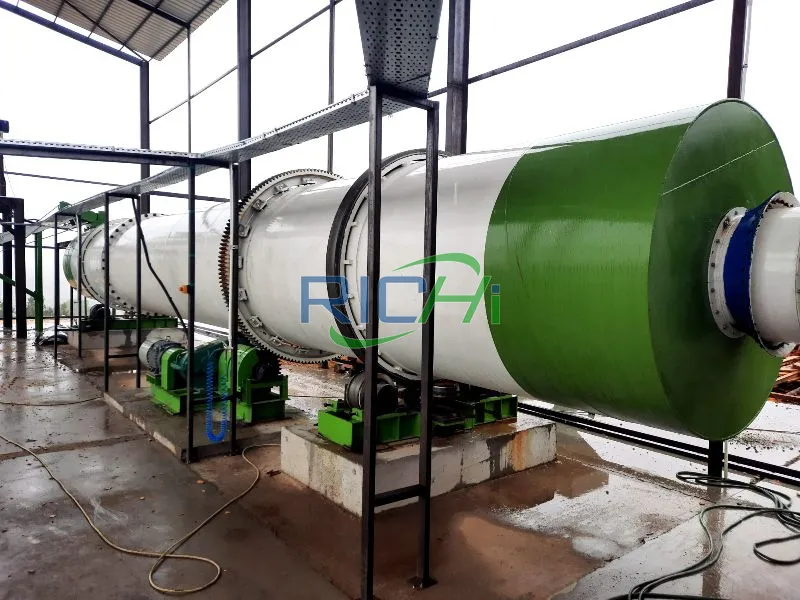
sawdust drying machine for sale Indonesia
A wood processing center in Kalimantan had stacks of wet sawdust with no market. This drum dryer drops moisture from 45% to 12%, making the material suitable for their own pellet making machine in Indonesia and also for sale to local briquette makers.
Model
HG0806 dryer
Material
Mixed hardwood sawdust
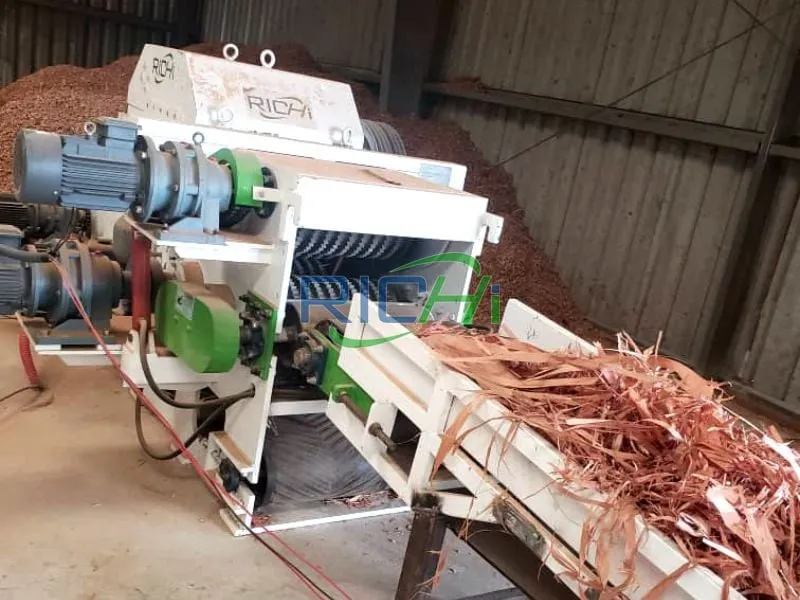
wood chipper machine for sale Indonesia
A community forestry group in Sulawesi manages smallholder teak and mahogany plots. They needed to turn branch wood and small logs into uniform chips for their pellet production line in Indonesia. This disc chipper handles up to 150mm diameter material, feeding directly to their dryer and hammer mill.
Model
XD-800 chipper
Output size
10-30mm chips%
Video Clips from the Field
We’ve collected quite a few videos over the years — some during commissioning, some sent by customers months later showing things running smoothly, a few where we’re troubleshooting something on site. Not polished production stuff, just real footage of equipment doing what it’s supposed to do. Here’s a look at some of the pellet making machine in Indonesia installations we’ve captured on video.
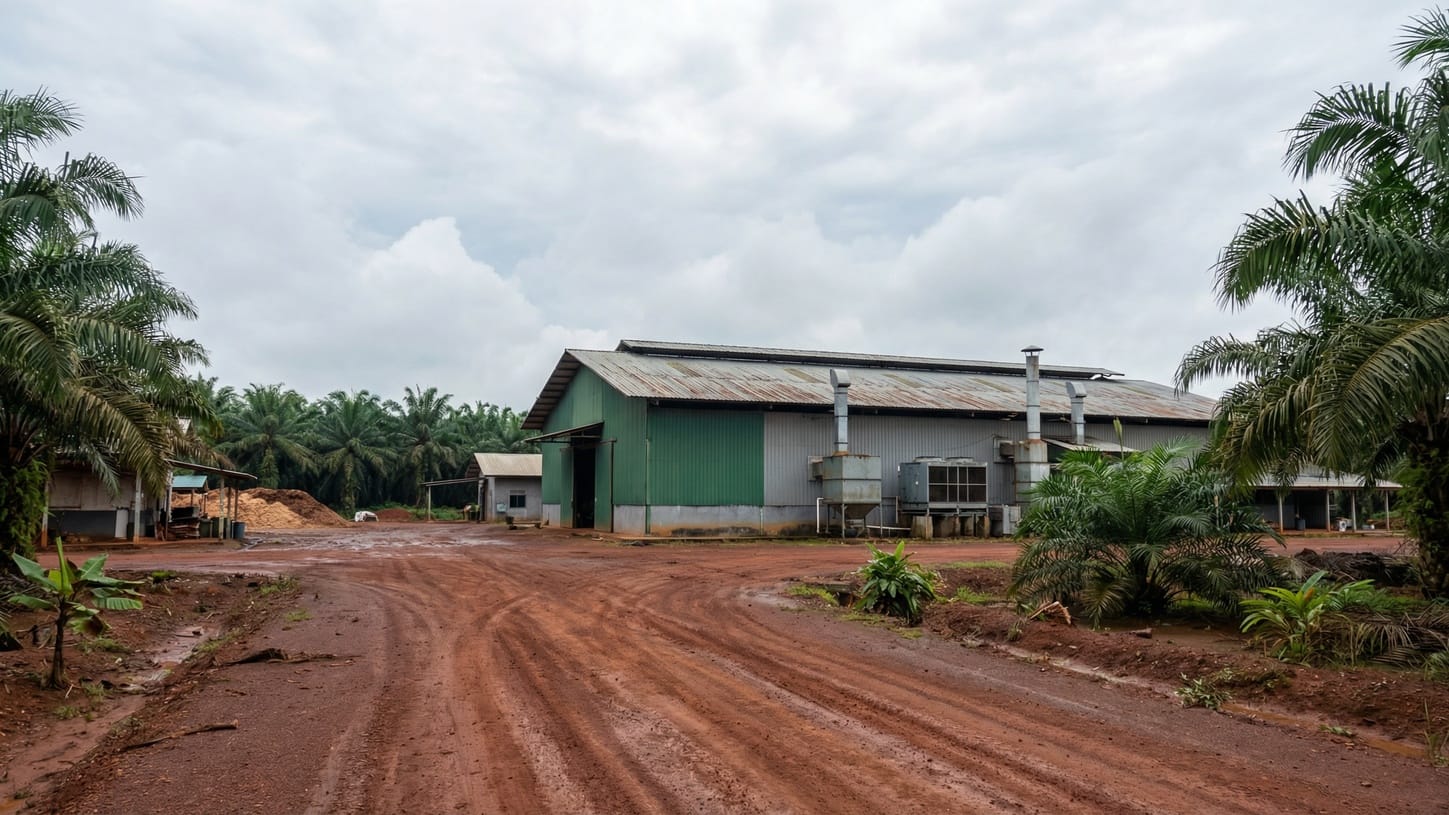
2 t/h EFB pellet production line in Indonesia
The clip starts with shredded empty fruit bunches coming off a conveyor into the rotary dryer. You can see steam rising — material’s coming in around 50% moisture, leaving at 18%. Then it cuts to the pellet making machine in Indonesia, an MZLH520 running EFB fiber.
The operator points at the ammeter, showing steady load. Pellets drop into the cooler, dark brown, 8mm diameter. Behind the line, there’s a pile of palm kernel shell waiting to be blended in next week.
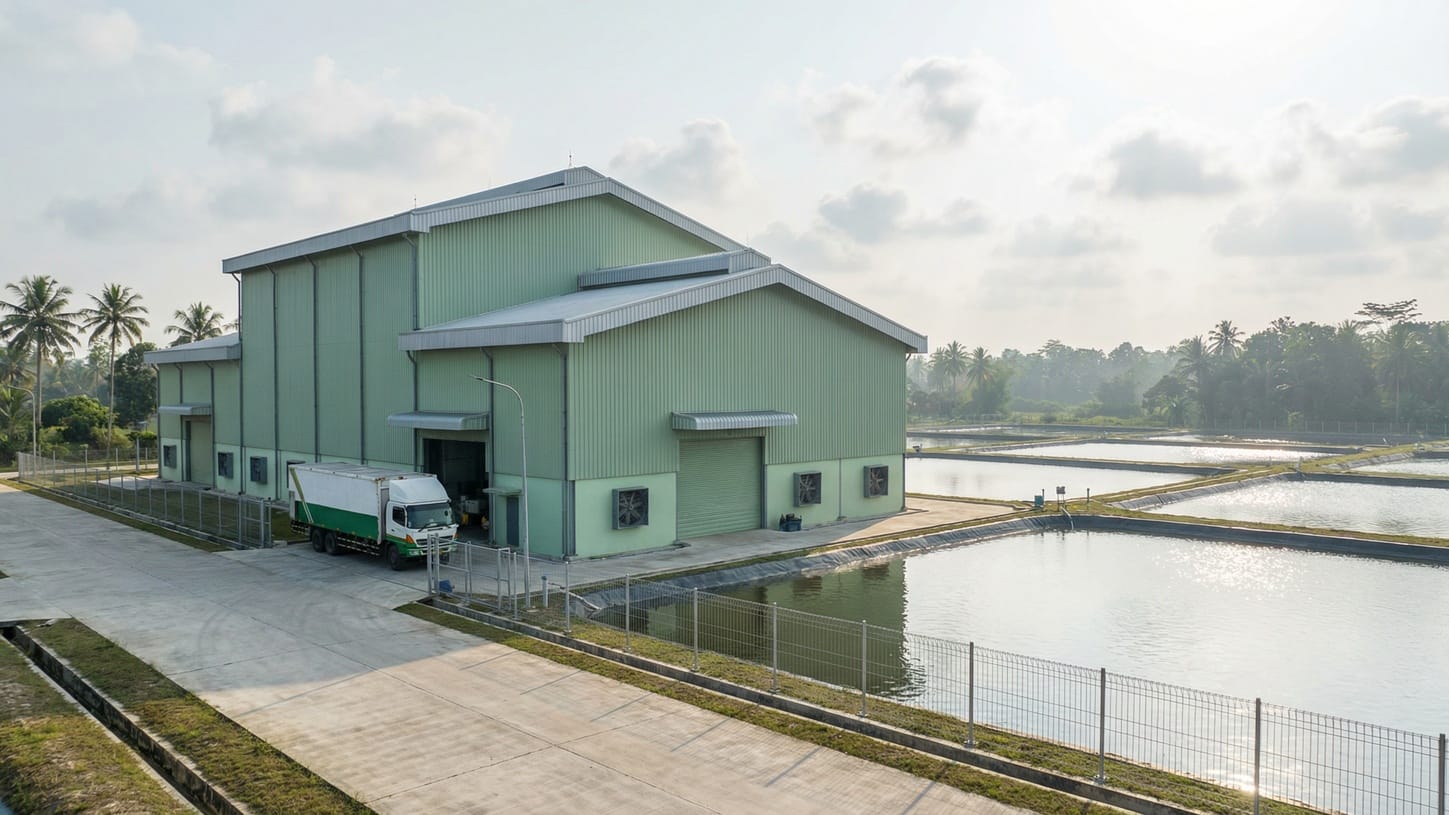
2 t/h shrimp feed pellet machine for sale Indonesia
This video was shot about four months after commissioning. The pellet making machine in Indonesia — an SZLH420 ring die pellet machine with three-layer conditioner — is running steadily. You can see the operator checking pellet samples on a tray, looking for uniform length and minimal fines.
The shrimp feed is dark, 2mm diameter, formulated with local fishmeal and tapioca. Behind the mill, bags are stacked with the customer’s own branding. They’re producing for 30 small shrimp farms in the district now.
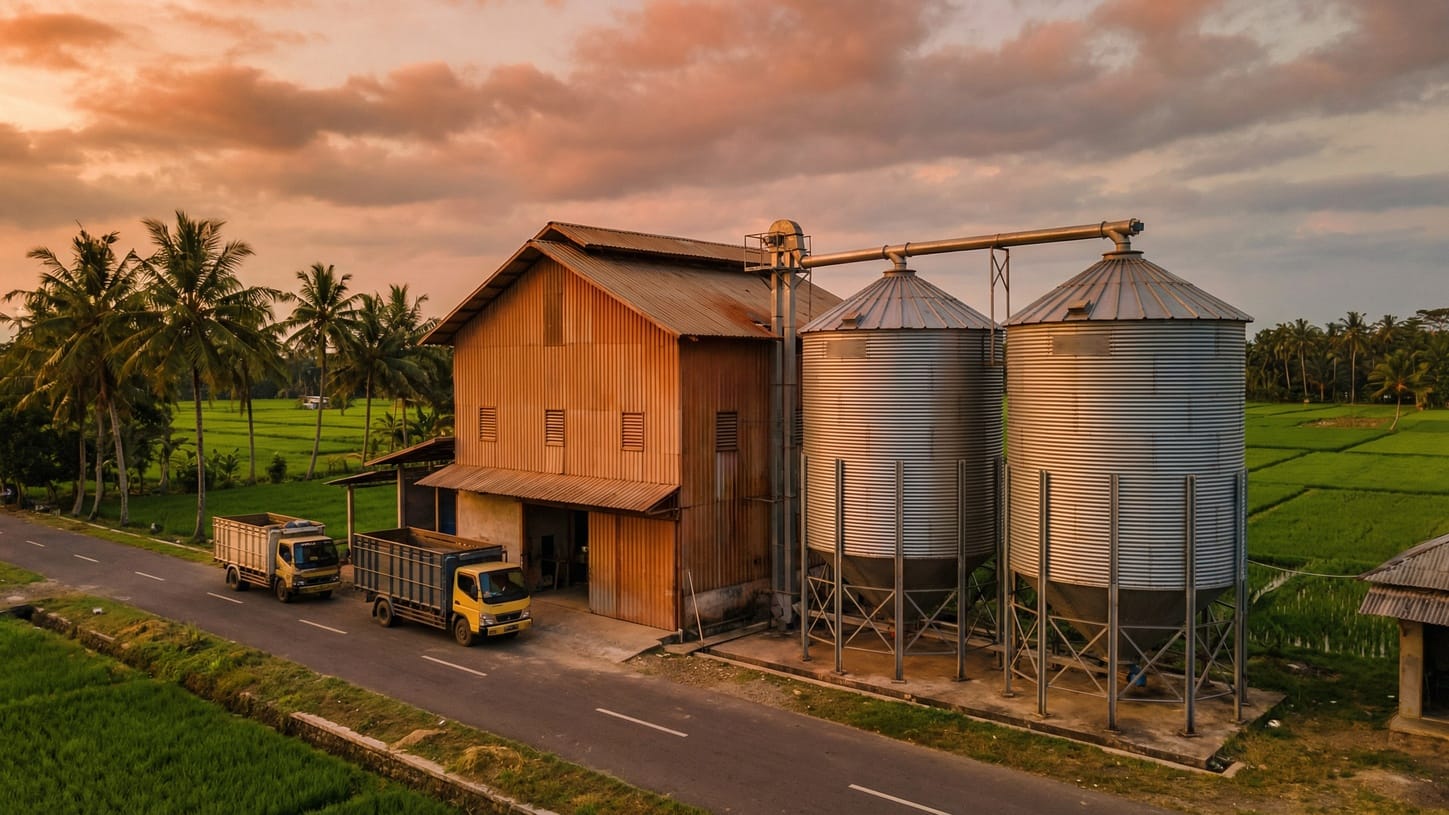
10 t/h chicken feed pellet plant in Indonesia
This project also uses the SZLH420 model animal feed pellet mill, but unlike the 2-ton/hour shrimp feed production line in the previous video, this project uses a single-layer conditioner. First, you can see the hammer mill section—they are grinding corn and soybeans.
Then there’s the mixer, followed by the pellet mill (SZLH420) located in Indonesia, equipped with a long conditioning chamber. The video camera then pans to the packaging line, where 50-kilogram bags of broiler feed are being packed into pouches. The factory manager mentioned that they operate for 14 hours a day most of the time, supplying feed to their own farms and contract farmers.
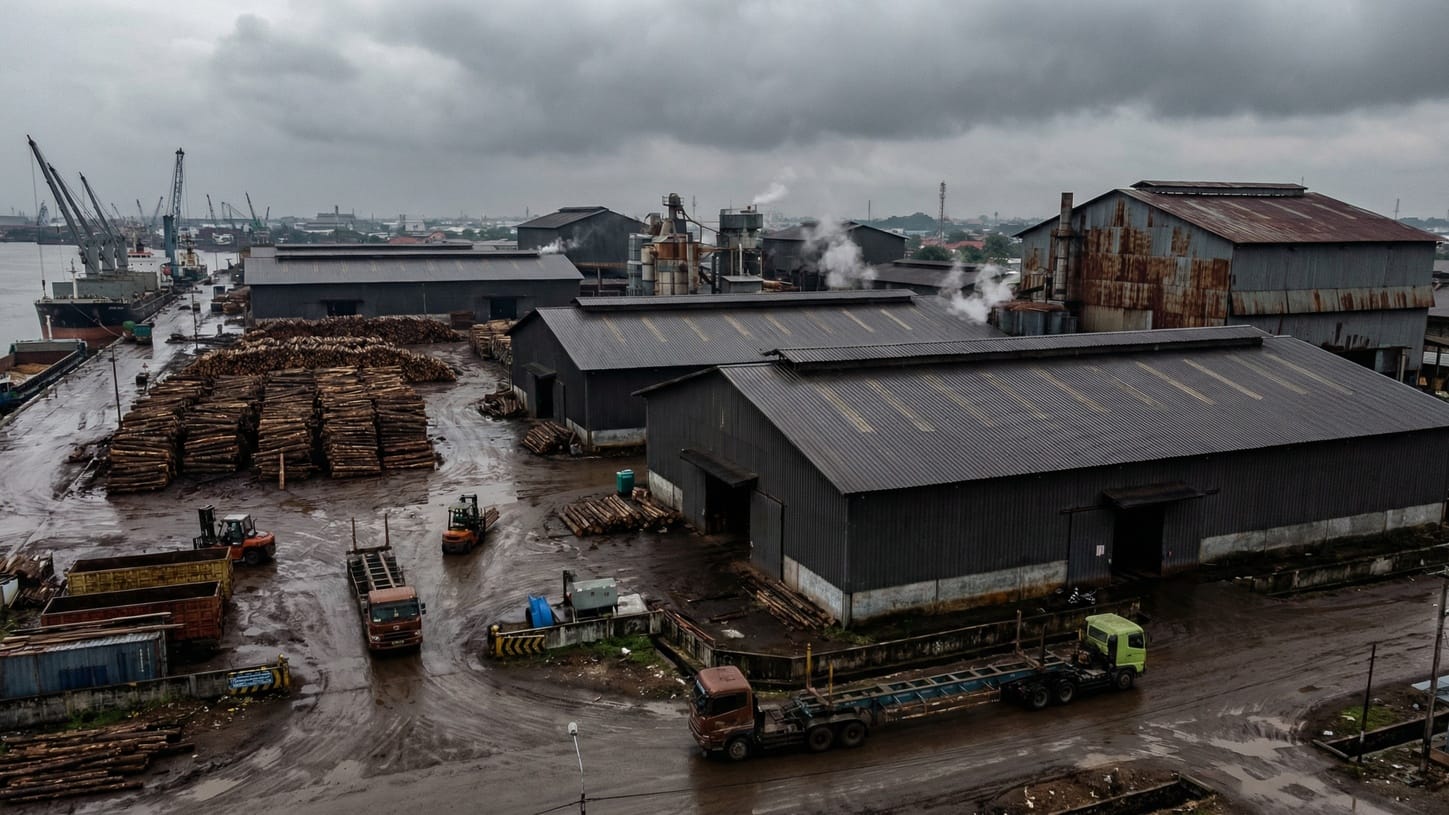
20 t/h wood pellet factory equipment for sale Indonesia
This is a wider shot — drone footage, actually, from a customer who wanted to document their expansion. You see the entire site: chipper area, dryer building, four pellet making machine in Indonesia units lined up (MZLH678s), coolers, and the bagging station under a covered shed.
The video zooms in on one pellet mill; you can see wood pellets flowing into the bucket elevator, 8mm, uniform color. The client processes mixed hardwood from their own concession. They’re exporting mostly now.
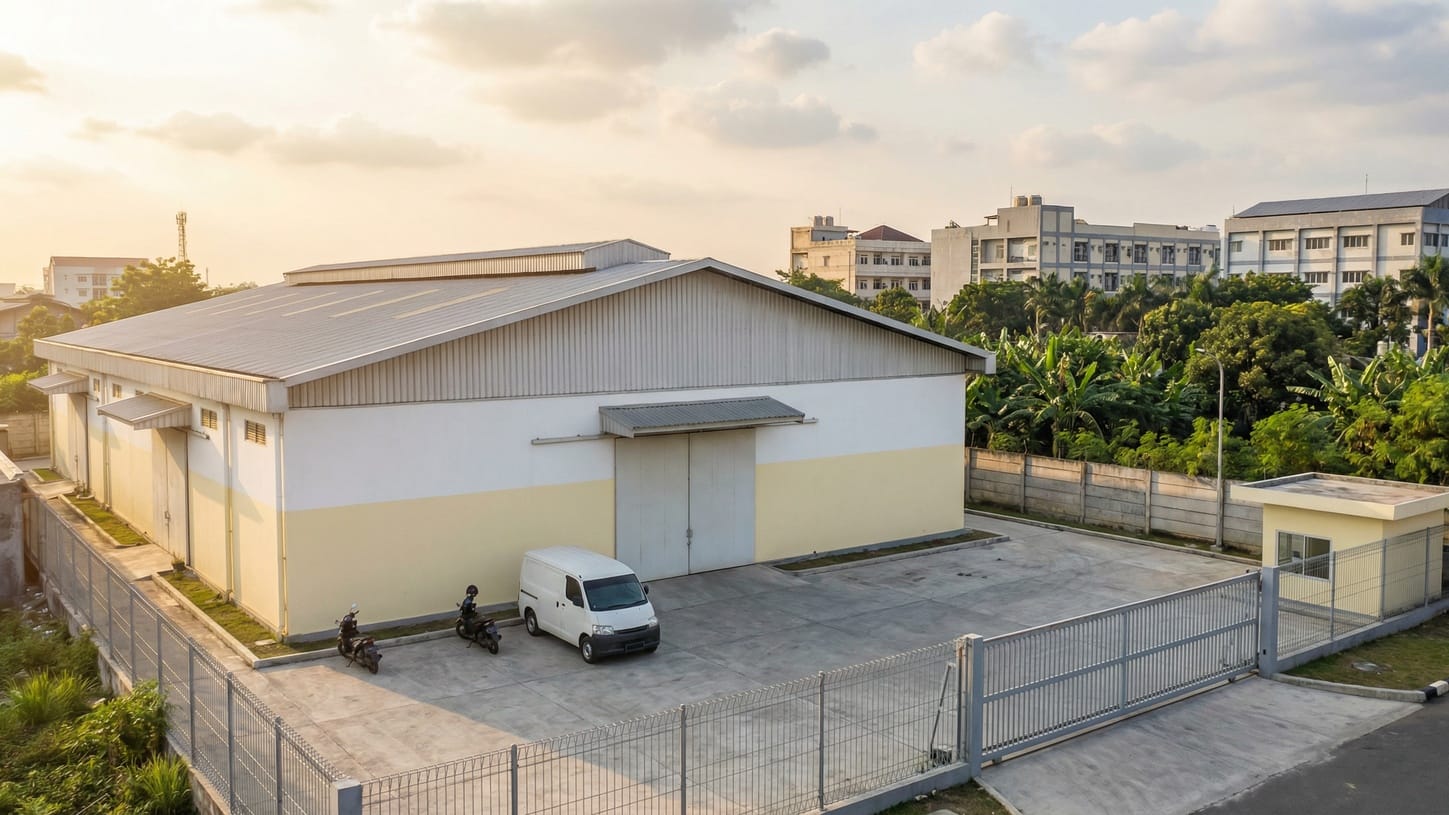
1-2T/H tofu cat litter pellet making machine in Indonesia
This footage is interesting — it shows the wet side of the operation first. Tofu pulp (okara) coming out of a screw press, moisture dropping from 80% to around 50%. Then the dried soybean hulls being mixed in.
The pellet making machine in Indonesia here is an MSZLH250, smaller but built for fibrous material. The video shows pellets emerging — 4mm, light tan, slightly rough texture for clumping. They’re bagging in 7kg sacks for pet stores in Jakarta.
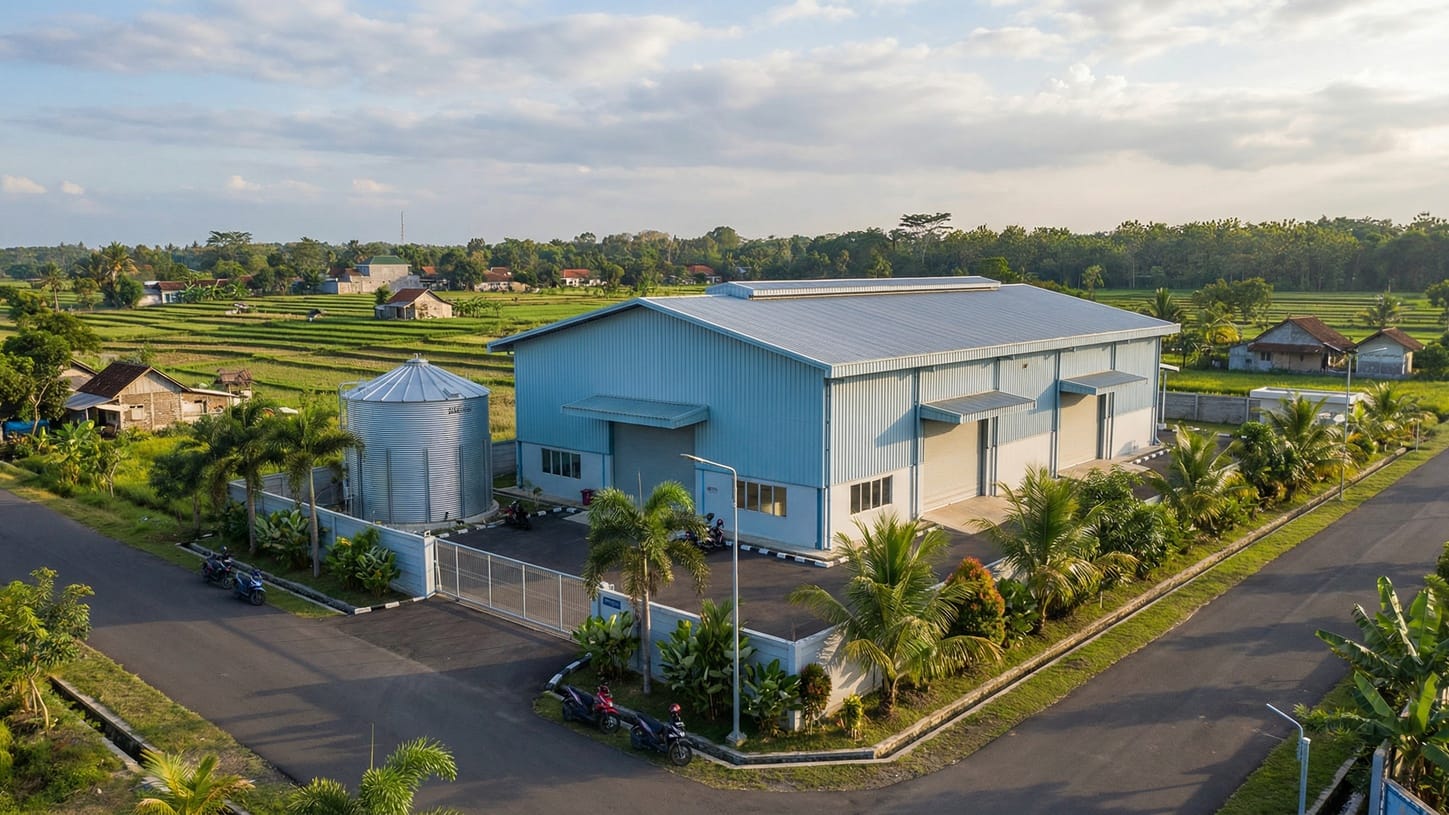
1.5-2.5T/H small feed pellet production line in Indonesia
This clip shows a flexible line running fish feed in the morning. The extruder — an SPHS60 — is producing 2mm floating pellets for tilapia. The camera pans to the control panel: steam pressure, temperature, die speed.
Later in the video, they’ve switched dies and running chicken feed through a different pellet making machine in Indonesia (an SZLH250). The small scale feed mill shares a common dryer and cooler, which is why they can switch between products without duplicating equipment.
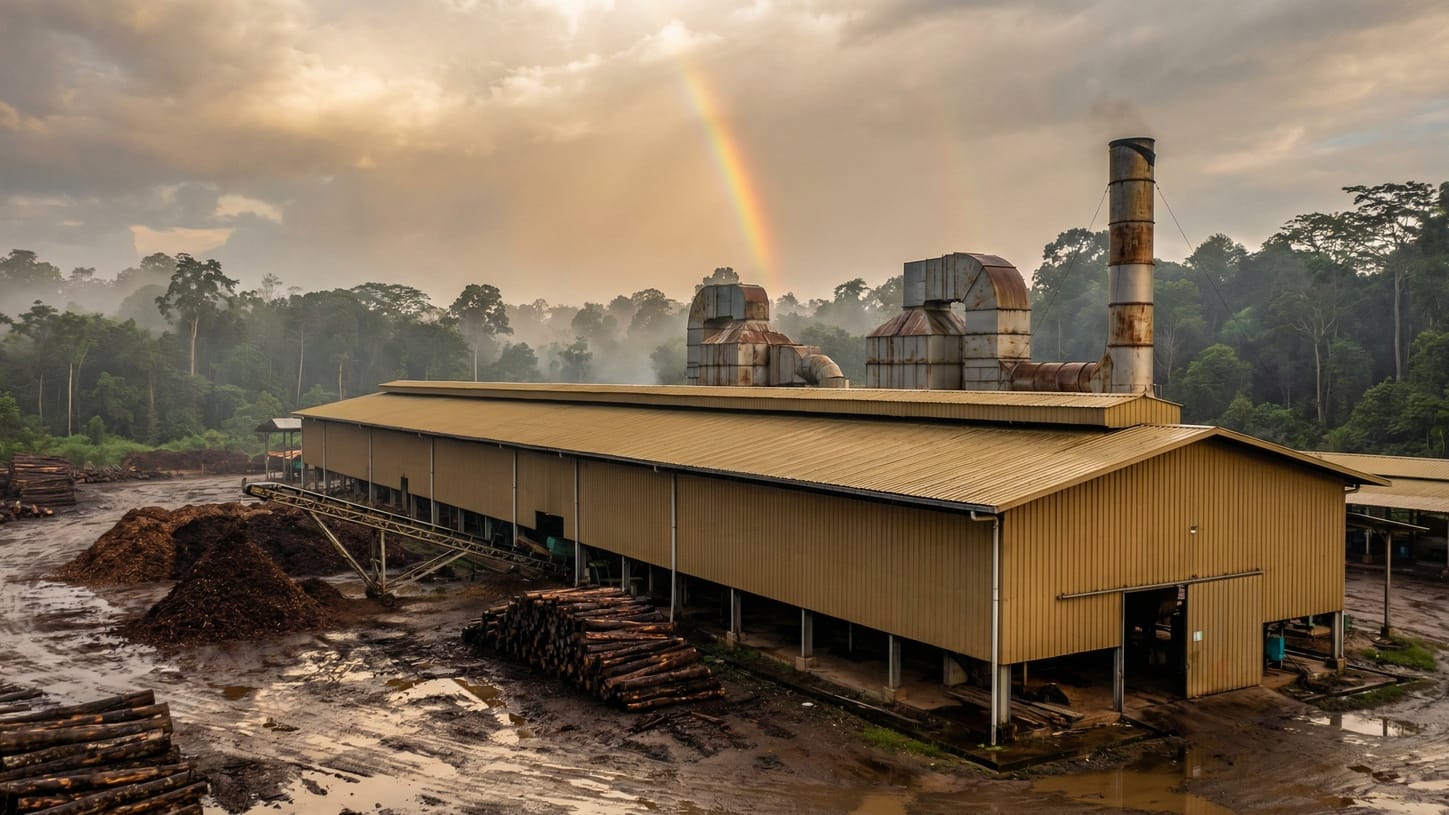
10 t/h biomass rotary dryer for sale Indonesia
The video opens on a pile of mixed wood chips — some sawmill offcuts, some logging residue, some branches. Material is scooped into the infeed conveyor of a rotary dryer, 1.8m diameter, 18m long. The burner underneath is fired on palm kernel shell.
You see the dried chips exiting at the other end, steam gone, color darkened. These chips feed into a pellet making machine in Indonesia next door, but the customer also sells dried material directly to a local plywood plant.
What Our Clients Say

We started three years ago with a used machine from a local supplier. Broke down every two months. Bearings, dies, rollers — always something. My guys spent more time fixing than producing. When we decided to expand, I told them: find someone who actually knows what they’re doing.
Your team came out, looked at our feedstock — mixed hardwood, some sengon, sometimes rubberwood if we can get it — and said we needed better drying before the mill. Honestly, I thought they were just trying to sell me more equipment. But they were right. We added the drum dryer, and suddenly the MZLH520 we bought from you ran steady. No blockages. No sudden amp spikes.
It’s been eighteen months now. That machine runs twelve hours a day, five, sometimes six days a week. We’re doing 8mm industrial pellets, about 900kg per hour on average — depends on the wood mix. Your guy still calls every few months to check in, ask if we need die recommendations. That’s why we came back to you for the second line.”
Bambang Sutrisno
Production Manager, Biomass Fuel Division

Pellet Processing Opportunities in Indonesia
We’ve been sending pellet making machine in Indonesia for over a decade now. In that time, we’ve watched certain sectors grow, others shift, and a few new ones appear that nobody talked about ten years ago. What follows isn’t market research from a consulting firm — it’s what we’ve picked up from customers calling us, visiting our booth at Indo Livestock, and sending us samples to test. If you’re considering equipment, these are the areas where we’re seeing real activity.
WOOD PELLET PRODUCTION
WOOD PELLET SOLUTION
The export channel to Japan and Korea is established now. Buyers want consistent quality — 8mm diameter, low ash, good durability. The plants doing well are the ones with access to sawmill waste or plantation thinnings. Kalimantan and Sumatra have the volume. The challenge is drying; tropical hardwoods come in wet. But if you’ve got fuel for the dryer (shells, husks), it works.

GRASS PELLET PRODUCTION
GRASS PELLET SOLUTION
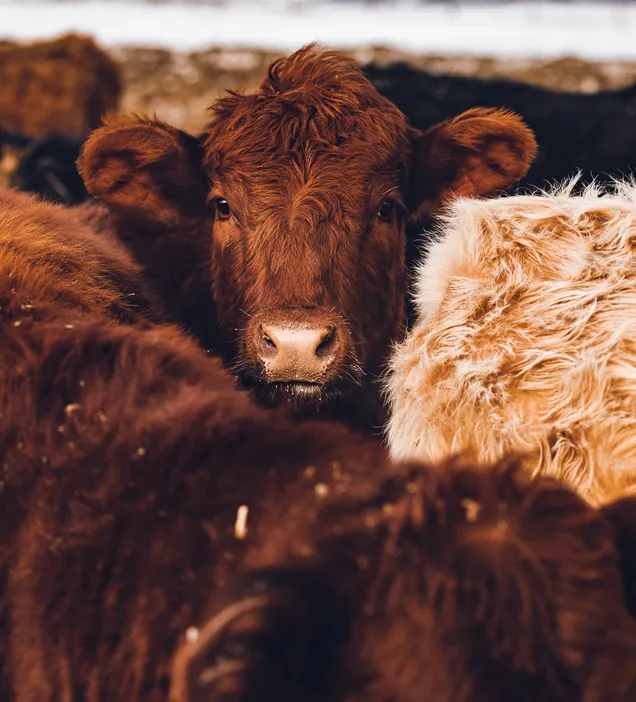
Dairy farmers in East Java and around Bandung are looking at grass pellets as a way to store feed through dry season. Napier and king grass grow fast here — cutting every 40 days. The issue is moisture at harvest (65%+). Anyone serious about this needs a dryer and a pellet making machine in Indonesia that handles fibrous material without glazing the die.


STRAW PELLET PRODUCTION
STRAW PELLET SOLUTION
Rice straw is everywhere after harvest. Most of it gets burned. A few cooperatives in West Java are now baling it, chopping it, and pelleting for cattle feed. It’s not high nutrition — more of a roughage extender. But the price is right (almost free), and farmers are interested.


RUMINANT FEED PELLET PRODUCTION
CATTLE FEED PELLET SOLUTION
The feedlot sector in Lampung and Sumatra is growing. They’re looking for total mixed rations in pellet form — easier to transport, less waste. Ingredients vary: corn gluten, rice bran, palm kernel expeller, cassava waste. We’re supplying more conditioners and longer coolers for these lines because fat content can be tricky.

POULTRY FEED PELLET PRODUCTION
POULTRY FEED PELLET SOLUTION
This is the biggest domestic feed sector by volume. Independent mills in Java and North Sumatra are upgrading from single machines to full feed production line in Indonesia setups. They want consistency across multiple formulas — starter, grower, layer. The trend is toward larger dies (SZLH420 and up) running 16-hour days.

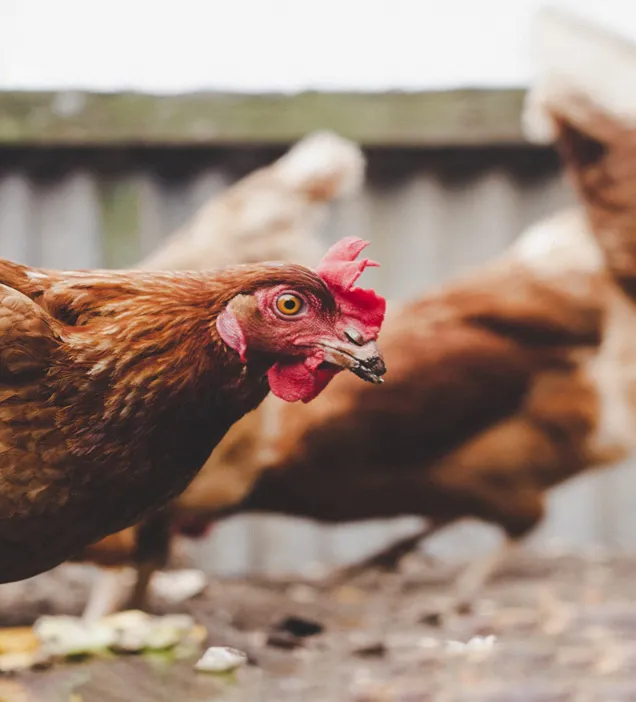
LIVESTOCK FEED PELLET PRODUCTION
LIVESTOCK FEED PELLET SOLUTION
Bali and North Sumatra have pig farming concentrations. The feed is similar to poultry but coarser grind. Some customers are adding liquid addition systems for molasses or fat post-pelleting.


FERTILIZER PELLET PRODUCTION
FERTILIZER PELLET SOLUTION
Manure is a problem on every large farm in Indonesia. Layer operations, broiler farms, cattle feedlots — they’re all sitting on waste. The ones processing it into fertilizer pellets are solving two problems at once: waste disposal and a new revenue stream. Chicken manure is the most common, but cow dung and goat manure also work. Composting first is critical; fresh manure won’t pellet well.


FISH FEED PELLET PRODUCTION
FISH FEED PELLET SOLUTION
Aquaculture is big in West Java, South Sulawesi, and Lampung. Floating feed demand is rising because farmers see better FCR and water quality. Twin-screw extruders are the standard here — they give you control over expansion and buoyancy. We’re seeing more interest in smaller lines (500kg to 2t/h) for regional producers.

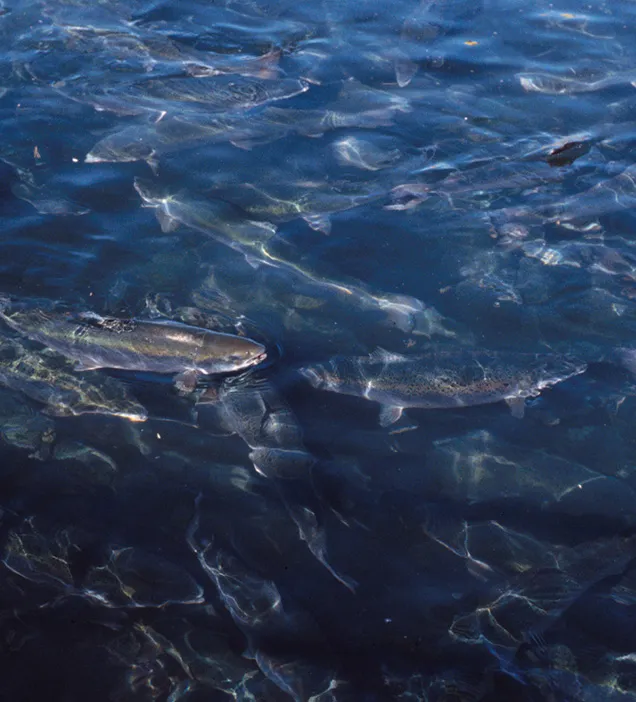
PET FOOD PELLET PRODUCTION
PET FOOD PELLET SOLUTION
Dry dog and cat food production is still small but growing in urban areas around Jakarta and Surabaya. Most is extruded, not pelleted. We’ve supplied a few small extrusion lines for local brands.

cat litter PELLET PRODUCTION
cat litter PELLET SOLUTION
This is an interesting niche. Furniture waste in Jepara and other woodworking centers is plentiful. Drying and pelleting sawdust into cat litter is straightforward with a pellet making machine in Indonesia set up for light, absorbent pellets. A few startups are selling into Jakarta pet stores. Bandung has tofu producers with waste disposal issues. Turning okara into cat litter is newer but gaining traction. Requires dewatering, drying, and careful die selection — the fiber is different from wood.


paper PELLET PRODUCTION
paper PELLET SOLUTION
Recycled paper is available in cities, but collection is fragmented. A few operations in Java are shredding office waste and cardboard, then pelleting for industrial boilers. Burns cleaner than coal, they say.

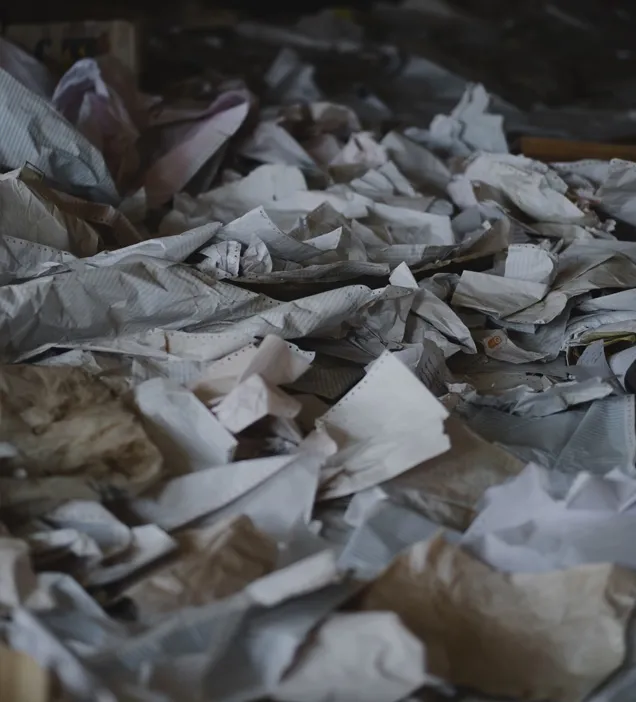
ANIMAL BEDDING PELLET PRODUCTION
ANIMAL BEDDING PELLET SOLUTION
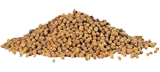
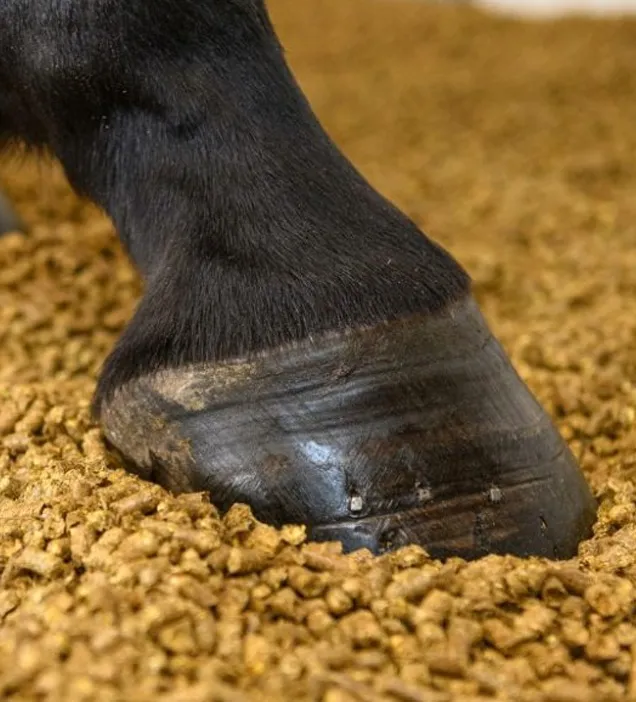
Horse owners and some poultry farms use wood shavings for bedding. This isn’t pelletizing — it’s processing shavings to consistent size. We supply hammer mills and screeners for this. A few customers in Sumatra are supplying riding stables. In Europe, some use pelleted paper or wood for bedding because it’s more absorbent and less dusty. We’ve had inquiries from Indonesia but no installations yet. Might be ahead of the curve.
RDF PELLET PRODUCTION
RDF PELLET SOLUTION
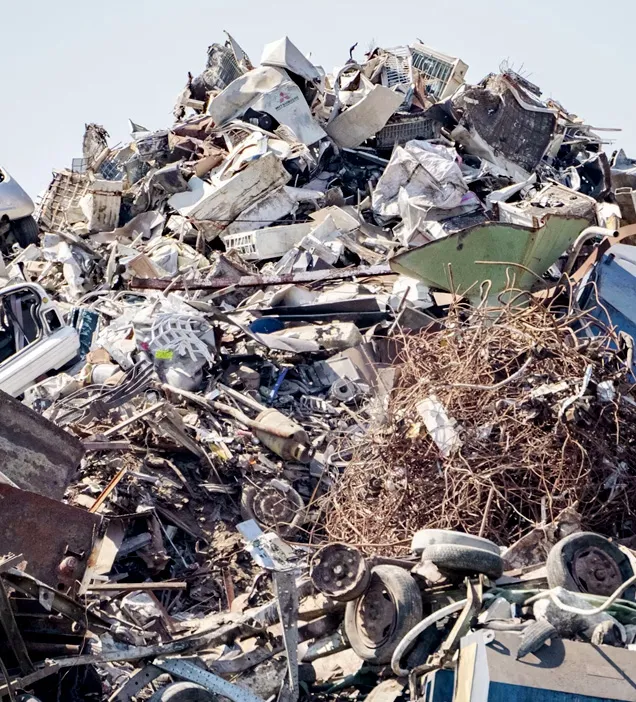
Municipal waste is a problem in every Indonesian city. A few private companies are looking at processing combustible fractions (plastics, paper, textiles) into RDF pellets for cement kilns. The challenge is sorting and contaminant removal. We’ve supplied size reduction equipment for pilot lines.

Raw grain puffing PRODUCTION
Raw grain puffing SOLUTION
Snack food production — expanded corn, rice, etc. — uses extruders similar to feed machines. We’ve put a few lines in Java for local snack manufacturers. They’re running puffed corn and rice-based products.


Pyrolytic carbon PELLET PRODUCTION
Pyrolytic carbon PELLET SOLUTION
Charcoal from biomass pyrolysis can be pelleted with a binder for BBQ fuel or industrial use. We’ve tested samples from coconut shell char and rice husk biochar. Pelleting improves handling and burn characteristics. A few projects in development.


Rat poison PELLET PRODUCTION
Rat poison PELLET SOLUTION
Palm oil plantations need rodent control. Poison baits in pellet form are common. We’ve supplied small pellet making machine in Indonesia units specifically for this — stainless steel contact parts because the active ingredients can be corrosive. The pellets are usually small (3-4mm) and dyed for identification.


solid waste PELLET PRODUCTION
solid waste PELLET SOLUTION
This is the hardest category. Heterogeneous material, high contamination. We’ve consulted on projects but rarely supply full lines because the preprocessing required is extensive. For clients with clean industrial waste streams (factory offcuts, packaging), it can work.


Equipment We Keep Shipping to Indonesia
Over the years, certain machines have become regulars in our shipments to Indonesia. Not just the pellet making machine in Indonesia orders — though those are steady — but all the stuff around it. Grinders, dryers, mixers, conveyors. Customers start with one piece, then come back for another when they expand. Here’s what moves consistently and why.
biomass pellet mill for sale
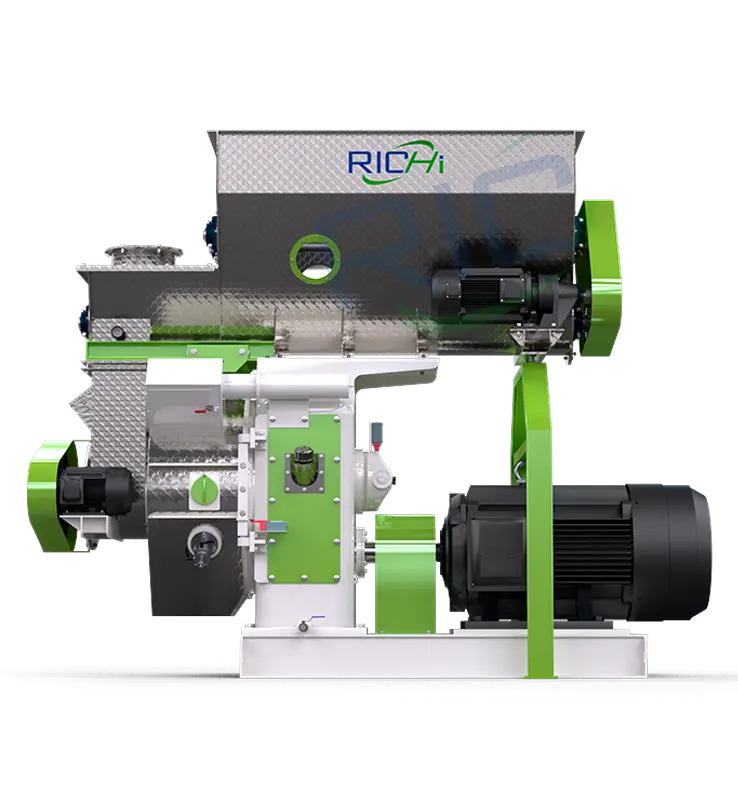
Our MZLH series units — 320, 420, 520, 678 — are in probably every province with forestry or ag waste. Mixed hardwood in Kalimantan, palm fiber in Riau, rice husk in Java. The 520 is the most popular: big enough for decent output (1.5-2t/h on wood), not so big that it needs heavy foundation work. Customers like that they can run it 16 hours without baby-sitting.

grass pellet machine for sale
Napier grass and king grass are the main materials here. Dairy operations in East Java and around Bandung use these to preserve feed. The challenge with grass is the fiber — it wraps around standard rollers. Our CZLH models have wider rollers and reinforced dies. A cooperative in Malang has been running one since 2019, still on original bearings.

feed mill pellet machine
For poultry and livestock feed, this is the standard. SZLH series. In Indonesia, they’re making broiler finish, layer mash (pelleted), and some swine feed. The 420 model is common for medium mills doing 8-10t/h. We’ve put quite a few in Java and North Sumatra. The multi-layer conditioner option is popular here because local formulations often need extra steam for good gelatinization.
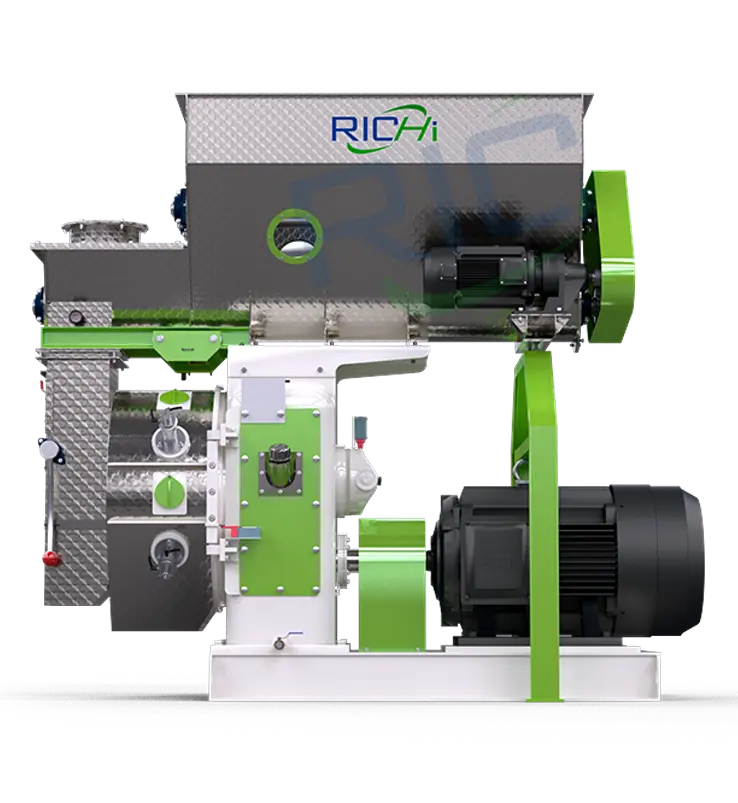
fertilizer granulator equipment
Different from feed mills — stainless contact parts, bigger gaps between roller and die. Chicken manure is the main feedstock, but we’ve also done cow dung and goat manure. A plantation group in Lampung runs four of these, processing waste from their own layer operations into 4mm organic fertilizer pellets. They sell back to local smallholders.

twin screw extruder
Floating fish feed is the big application. South Sulawesi and West Java have the most activity. The twin-screw gives you control over density — important when farmers want pellets that stay on the surface for 30 minutes. We’ve shipped SPHS series units from 200kg/h lab size up to 5t/h production lines.
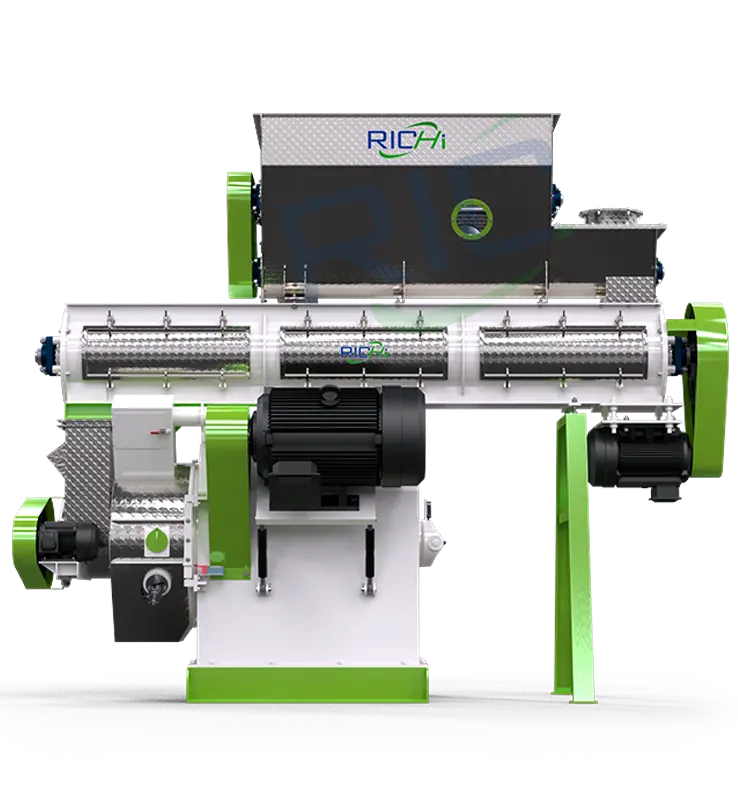
straw pellet machine for sale
Rice straw is the obvious material. After harvest, it’s usually burned. A few cooperatives in West Java are now baling, chopping, and pelleting. The pellets are roughage for cattle during dry season. The machine needs to handle some soil contamination — rice straw always has a bit. Hardened dies help.

shrimp feed pellet machine
Shrimp feed is smaller diameter (1.5-2mm) and needs good water stability. The SZLH series with fine dies works, but some customers add a crumbler to break down larger pellets. South Sulawesi is the main region. One exporter there runs two lines, supplying farms across the province.

cat litter pellet machine
Two types here: wood-based from furniture waste (Jepara area) and tofu-based from okara (Bandung). The wood version is straightforward — dry sawdust, die with 4mm holes, done. The tofu version needs dewatering and drying first, then conditioning. The MSZLH250 is small enough for startups, tough enough for the fiber.
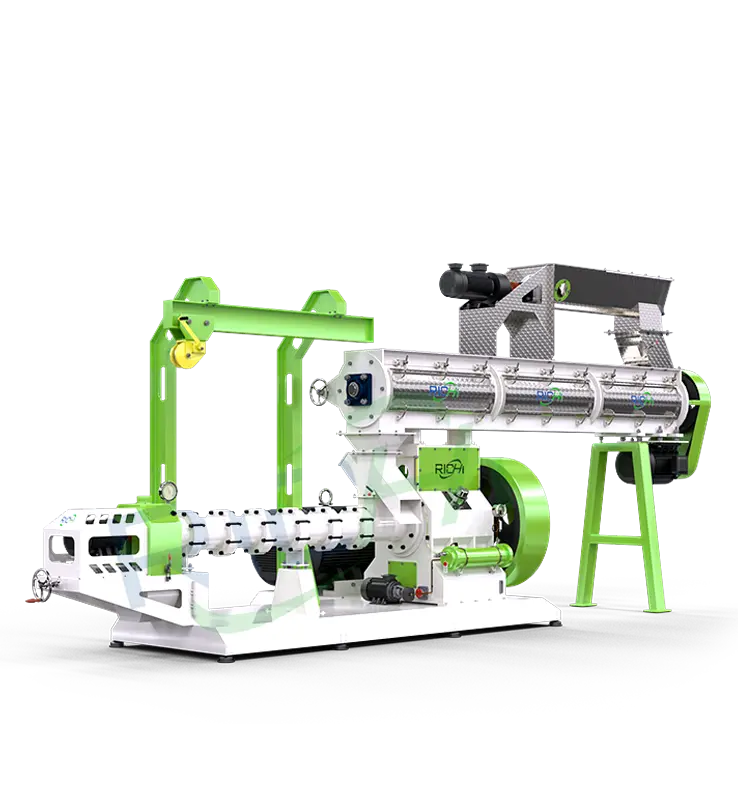
single screw extruder machine
Simpler than twin-screw, used for pet food, some floating fish feed where expansion requirements aren’t critical. Also used for snack foods — expanded corn snacks. A few small operations in Jakarta use these for local snack production.

Grain extruder machine
For human food — puffed rice, expanded corn, breakfast cereals. We’ve supplied a few lines to snack manufacturers in Java. Different screw configurations than feed extruders; shorter barrels, higher temperatures.
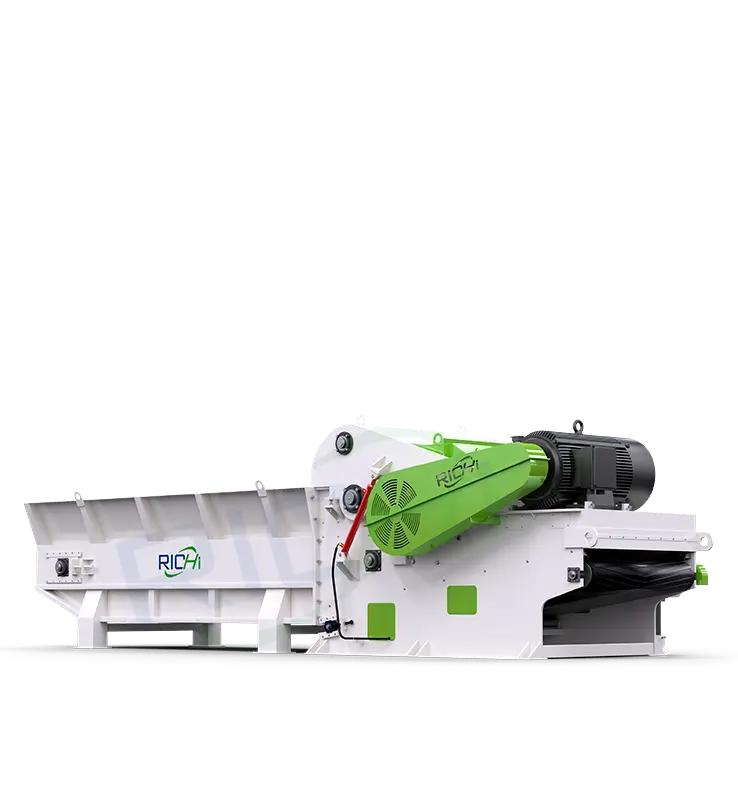
wood chipper machine
Any wood pellet line starts here. Disc chippers for clean wood, drum chippers for dirty material (logs with soil, roots). In Kalimantan, they’re chipping logging residues. In Java, they’re processing plantation thinnings. The XD series handles up to 200mm diameter.

shredder machine
For difficult materials: EFB, municipal waste, palm fronds, coconut husks. Low speed, high torque. A client in Riau shreds EFB before drying — makes the dryer work more efficiently. Another in Jakarta processes industrial waste for RDF trials.

Rotary Drum Dryer
The bottleneck in most biomass lines is drying. Tropical wood comes in at 40-50% moisture. Palm fiber is wetter. Our HG series dryers — 1.2m to 2.2m diameter — are in every major biomass operation we’ve supplied. The key is the burner: most customers fire them on palm kernel shell or rice husk, which they have cheap.

bale crusher
For straw and grass bales. Square bales, round bales — the machine tears them apart before grinding. A dairy cooperative in East Java uses one to process napier grass bales. Saves labor compared to manual breaking.

Water Drop Hammer Mill
For grinding wood chips, corn, whatever. The SFSP series is our standard. In feed mills, they’re running corn and soybean through 2-3mm screens. In biomass plants, they’re grinding dried chips to 3-5mm for pelleting. Reliable, easy to change screens.

mesh belt dryer
For materials that can’t take tumbling — some feeds, certain chemicals, finished pellets needing gentle handling. A fish feed producer in West Java uses one after their extruder. Lower temperature than rotary, longer retention time.

Feed mixer machine
Horizontal ribbon mixers for mash feeds. Before pelleting, ingredients need to be uniform. In Indonesia, they’re mixing corn, rice bran, fishmeal, premixes. Sizes from 0.5吨 to 2吨 per batch. We also supply drop-bottom mixers for faster discharge.

fertilizer crusher machine
For lumpy materials — dried manure, compost, cake fertilizers. Chain mill design, breaks without over-grinding. An organic fertilizer line in Lampung uses one after their dryer, before pelleting. Cuts the lumps down to 2-3mm.

grass straw crusher machine
Different from wood hammer mills — wider opening, different hammers. For chopped grass, rice straw, corn stalks. A customer in Central Java grinds dried corn stover for cattle feed. The mill handles the fibrous material without wrapping.

vibrating screening machine
For classifying pellets after cooling, or cleaning raw material before processing. Rotary screens for high capacity, vibrating screens for finer separation. In feed mills, they’re removing fines before bagging. In biomass plants, they’re screening out overs and returning to the mill.

storage silos
Small bins for day storage, large bolted silos for bulk raw materials or finished pellets. A wood pellet exporter in Kalimantan has four 500-ton silos for storing pellets before shipping. Keeps quality consistent, allows them to load vessels efficiently.
Frequently Asked Questions
Over the years, we’ve answered a lot of questions from customers across Indonesia. Some are technical, some are about pricing, some are just people trying to figure out if their material will even work in a pellet making machine in Indonesia. Here are the ones that come up most often, grouped by who’s asking.
I’m looking at different pellet mills for a project in East Java. Can you tell me the specifications for your various models — power, die size, expected output? We’re considering both feed and biomass applications, so I need to compare
+
Good question. We get this a lot from customers planning a pellet making machine in Indonesia purchase. The specs vary quite a bit depending on what you’re running — feed is different from wood, which is different from fertilizer. Below are the standard configurations for the main machine types we ship. Keep in mind these are typical numbers; actual output depends on material density, moisture, screen size, and a bunch of other factors.
Feed Pellet Mills (Ring Die)
These are our SZLH series ring die feed pellet machine— what most people think of when they picture a pellet making machine in Indonesia for poultry or livestock feed. They run corn, soybean, rice bran, fishmeal — standard feed ingredients. The conditioner adds steam before the die, which helps with starch gelatinization and pellet quality.
| Model | Main Motor (kW) | Feeder (kW) | Conditioner (kW) | Die Inner Dia (mm) | Pellet Size (mm) | Output (T/H) |
|---|---|---|---|---|---|---|
| SZLH250 | 22 | 1.1 | 1.5 | 250 | 2-12 | 1.0-1.5 |
| SZLH320 | 37 | 1.5 | 4 | 320 | 2-12 | 3-4 |
| SZLH350 | 55 | 1.5 | 4 | 350 | 2-12 | 5-6 |
| SZLH420 | 110 | 1.5 | 7.5 | 420 | 2-12 | 10-12 |
| SZLH508 | 160 | 1.5 | 7.5 | 508 | 2-12 | 15-16 |
| SZLH558 | 185 | 1.5 | 11 | 558 | 2-12 | 20-22 |
| SZLH678 | 250 | 1.5 | 11 | 673 | 2-12 | 30-33 |
| SZLH768 | 315 | 2.2 | 11 | 762 | 2-12 | 38-40 |
The 420 is probably our most common export to Indonesia for medium feed mills. The 250 and 320 are popular for smaller operations or startups.
Wood Pellet Mills
MZLH series. Different from feed mills — heavier construction, different roller geometry, and they usually include a forced feeder because wood fiber doesn’t flow like mash feed. These are what you see in Kalimantan and Sumatra processing sawdust, wood shavings, and sometimes palm fiber.
| Model | Main Motor (kW) | Anti-Bridge Feeder (kW) | Forced Feeder (kW) | Die Inner Dia (mm) | Pellet Size (mm) | Output (T/H) |
|---|---|---|---|---|---|---|
| MZLH320 | 22 | 2.2 | 0.75 | 320 | 4-12 | 0.2-0.3 |
| MZLH350 | 37 | 2.2 | 0.75 | 350 | 4-12 | 0.3-0.5 |
| MZLH420 | 90 | 3 | 1.5 | 420 | 4-12 | 1.0-1.2 |
| MZLH520 | 132 | 3 | 1.5 | 520 | 4-12 | 1.5-2.0 |
| MZLH678 | 185 | 3 | 1.5 | 673 | 4-12 | 2.5-3.0 |
| MZLH768 | 250 | 4 | 1.5 | 762 | 4-12 | 3.0-4.0 |
Output on wood is lower than feed because the material is harder to press. The 520 is a sweet spot for mid-sized operations — enough capacity to be commercial, not so big that power becomes an issue.
Straw/Grass Pellet Mills
CZLH series. Similar to the wood mills but with different die relief and roller configuration. Grass and straw are fibrous but also slippery — needs good grip. These are used in East Java for napier grass, in West Java for rice straw.
| Model | Main Motor (kW) | Anti-Bridge Feeder (kW) | Forced Feeder (kW) | Die Inner Dia (mm) | Pellet Size (mm) | Output (T/H) |
|---|---|---|---|---|---|---|
| CZLH320 | 22 | 2.2 | 0.75 | 320 | 4-12 | 0.5-0.6 |
| CZLH350 | 37 | 2.2 | 0.75 | 350 | 4-12 | 1.0-1.2 |
| CZLH420 | 90 | 3 | 1.5 | 420 | 4-12 | 1.8-2.0 |
| CZLH520 | 132 | 3 | 1.5 | 520 | 4-12 | 2.8-3.0 |
| CZLH678 | 185 | 3 | 1.5 | 673 | 4-12 | 4-5 |
| CZLH768 | 250 | 4 | 1.5 | 762 | 4-12 | 6-8 |
Notice the output is higher than wood on same motor size — grass compresses easier.
Cat Litter Pellet Mills
MSZLH series. These look similar to feed mills but often have stainless contact parts because some litter formulations are corrosive (tofu-based litter, for example). Used in Bandung for okara litter and in Jepara for wood-based litter.
| Model | Main Motor (kW) | Feeder (kW) | Conditioner (kW) | Die Inner Dia (mm) | Pellet Size (mm) | Output (T/H) |
|---|---|---|---|---|---|---|
| MSZLH250 | 22 | 1.1 | 1.5 | 250 | 2-12 | 1.0-1.5 |
| MSZLH320 | 37 | 1.5 | 4 | 320 | 2-12 | 3-4 |
| MSZLH350 | 55 | 1.5 | 4 | 350 | 2-12 | 5-6 |
| MSZLH420 | 110 | 1.5 | 7.5 | 420 | 2-12 | 10-12 |
| MSZLH508 | 160 | 1.5 | 7.5 | 508 | 2-12 | 15-16 |
| MSZLH558 | 185 | 1.5 | 11 | 558 | 2-12 | 20-22 |
| MSZLH678 | 250 | 1.5 | 11 | 673 | 2-12 | 30-33 |
| MSZLH768 | 315 | 2.2 | 11 | 762 | 2-12 | 38-40 |
Same frame sizes as feed mills, just configured for litter-specific requirements.
Fertilizer Pellet Mills
FZLH series. Stainless steel contact parts standard. Used for organic fertilizer (chicken manure, cow dung) and sometimes NPK. In Lampung and East Java, these are common in livestock operations turning waste into product.
| Model | Main Motor (kW) | Anti-Bridge Feeder (kW) | Forced Feeder (kW) | Die Inner Dia (mm) | Pellet Size (mm) | Output (T/H) |
|---|---|---|---|---|---|---|
| FZLH250 | 22 | 2.2 | 0.75 | 250 | 4-12 | 1-1.5 |
| FZLH320 | 22 | 2.2 | 0.75 | 320 | 4-12 | 2-3 |
| FZLH350 | 37 | 2.2 | 0.75 | 350 | 4-12 | 3-5 |
| FZLH420 | 90 | 3 | 1.5 | 420 | 4-12 | 6-8 |
| FZLH520 | 132 | 3 | 1.5 | 520 | 4-12 | 9-12 |
| FZLH678 | 185 | 3 | 1.5 | 673 | 4-12 | 18-22 |
| FZLH768 | 250 | 4 | 1.5 | 762 | 4-12 | 22-26 |
Fertilizer generally pellets easier than biomass, so output per kW is higher.
These cover the main types of pellet making machine in Indonesia we supply, but it’s not the full list. We also do small lab-scale units, stainless steel machines for food/pharma applications, and custom configurations for unusual materials. If you don’t see what you need here, send us details on your raw material and target output. We’ll recommend something that fits.
What’s the Cost of Pellet Making Machine in Indonesia?
+
We get this question almost daily. Someone’s been looking online, seen prices all over the place, and wants a straight answer. So here it is — rough ranges for different types of pellet making machine in Indonesia, based on what we’ve actually shipped there over the years. Keep in mind these are FOB Qingdao prices for the main machine with standard components. Shipping, import duty, and installation are separate.
First, the Small Machines
If you’re just starting out or testing a market, you’re probably looking at the smaller end. The small pellet machine price in Indonesia for a basic setup varies by what you’re processing:
- Small feed pellet machine price in Indonesia for an SZLH250 (1-1.5t/h on feed) usually runs around $6,500 to $8,500. That’s with a feeder, conditioner, and basic control panel.
- Small wood pellet machine price in Indonesia for an MZLH320 (0.2-0.3t/h on wood) is higher — $13,500 to $16,500 typically. Wood machines need forced feeders and heavier construction, so they cost more even at small sizes.
- Small grass pellet machine like the CZLH250 runs $7,000 to $9,000. Good for napier grass or rice straw trials.
These are complete single machines — you add a motor, wire it up, and you’re running. Most small buyers in Java start here.
Feed Pellet Machine Prices
For standard commercial feed pellet mill price in Indonesia questions, here’s the breakdown on our SZLH ring die series. These are what most poultry and livestock feed producers use.
| Model | Power | Output (Feed) | Price Range (USD) |
|---|---|---|---|
| SZLH250 | 22kW | 1-1.5 t/h | $6,500 – $8,500 |
| SZLH320 | 37kW | 3-4 t/h | $15,000 – $18,000 |
| SZLH350 | 55kW | 5-6 t/h | $26,000 – $32,000 |
| SZLH420 | 110kW | 10-12 t/h | $28,000 – $33,000 |
| SZLH508 | 160kW | 15-16 t/h | $38,000 – $45,000 |
| SZLH558 | 185kW | 20-22 t/h | $45,000 – $55,000 |
| SZLH678 | 250kW | 30-33 t/h | $60,000 – $72,000 |
| SZLH768 | 315kW | 38-40 t/h | $72,000 – $85,000 |
The 420 is our best seller for medium feed mills in Indonesia — good balance of capacity and cost.
Wood Pellet Machine Prices
For biomass, the price of pellet making machine in Indonesia goes up because the machines are built heavier. These MZLH models include anti-bridging feeder and forced feeder standard — necessary for wood fiber.
| Model | Power | Output (Wood) | Price Range (USD) |
|---|---|---|---|
| MZLH320 | 22kW | 0.2-0.3 t/h | $13,500 – $16,500 |
| MZLH350 | 37kW | 0.3-0.5 t/h | $18,500 – $22,000 |
| MZLH420 | 90kW | 1.0-1.2 t/h | $26,000 – $32,000 |
| MZLH520 | 132kW | 1.5-2.0 t/h | $40,000 – $48,000 |
| MZLH678 | 200kW | 2.5-3.0 t/h | $60,000 – $72,000 |
| MZLH768 | 315kW | 3.0-4.0 t/h | $72,000 – $85,000 |
The MZLH520 is common in Kalimantan and Sumatra for mid-sized wood pellet operations. Enough output for export without needing a huge power supply.
Grass Pellet Machine Prices
For grass, straw, and forage. CZLH series — similar to wood mills but with different roller geometry.
| Model | Power | Output (Grass) | Price Range (USD) |
|---|---|---|---|
| CZLH250 | 22kW | 0.3-2 t/h | $7,000 – $9,000 |
| CZLH320 | 22kW | 0.5-4 t/h | $17,500 – $21,000 |
| CZLH350 | 37kW | 1-6 t/h | $22,000 – $27,000 |
| CZLH420 | 90kW | 2-10 t/h | $28,000 – $33,000 |
| CZLH520 | 132kW | 3-12 t/h | $46,000 – $55,000 |
| CZLH678 | 200kW | 4-20 t/h | $68,000 – $78,000 |
| CZLH768 | 315kW | 6-30 t/h | $80,000 – $92,000 |
Dairy cooperatives in East Java often start with the CZLH420 for napier grass. Good capacity, reasonable price.
Cat Litter Pellet Machine Prices
MSZLH series. Similar frames to feed mills but often with stainless options for corrosive materials (tofu-based litter).
| Model | Power | Output (Litter) | Price Range (USD) |
|---|---|---|---|
| MSZLH250 | 22kW | 1-1.5 t/h | $7,000 – $9,000 |
| MSZLH320 | 37kW | 3-4 t/h | $15,000 – $18,000 |
| MSZLH350 | 55kW | 5-6 t/h | $26,000 – $32,000 |
| MSZLH420 | 110kW | 10-12 t/h | $28,000 – $33,000 |
| MSZLH508 | 160kW | 15-16 t/h | $38,000 – $45,000 |
| MSZLH558 | 185kW | 20-22 t/h | $45,000 – $55,000 |
| MSZLH678 | 250kW | 30-33 t/h | $60,000 – $72,000 |
| MSZLH768 | 315kW | 38-40 t/h | $72,000 – $85,000 |
The MSZLH250 is popular for startups in Bandung making tofu-based cat litter.
Fertilizer Pellet Machine Prices
FZLH series. Stainless contact parts standard for corrosion resistance.
| Model | Power | Output (Fertilizer) | Price Range (USD) |
|---|---|---|---|
| FZLH250 | 22kW | 1-1.5 t/h | $8,000 – $10,000 |
| FZLH320 | 22kW | 2-3 t/h | $14,000 – $17,000 |
| FZLH350 | 37kW | 3-5 t/h | $22,000 – $26,000 |
| FZLH420 | 90kW | 6-8 t/h | $28,000 – $33,000 |
| FZLH520 | 132kW | 9-12 t/h | $42,000 – $48,000 |
| FZLH678 | 185kW | 18-22 t/h | $58,000 – $65,000 |
| FZLH768 | 250kW | 22-26 t/h | $68,000 – $78,000 |
Layer farms in Lampung use these to turn chicken manure into organic fertilizer pellets.
A Few Notes on Pricing
These are starting points. The cost of pellet making machine in Indonesia for your specific project might be different because:
- Custom configurations — stainless steel, special dies, different motors
- Complete lines — adding dryers, hammer mills, coolers, conveyors changes the total
- Installation scope — some clients want turnkey, others handle their own setup
- Die and roller packages — we often recommend spares with the initial order
The ranges above cover the main types of pellet machine in Indonesia we supply, but it’s not everything. We also do small lab units, high-moisture machines for special applications, and custom builds for unusual materials.
If you want a quote for your specific situation — raw material, target output, site conditions — send us the details. We’ll come back with numbers that actually fit your project.
What’s the Fish Feed Pelleting Machine Price in Indonesia?
+
This comes up a lot, especially from customers in South Sulawesi, West Java, and Lampung where aquaculture is big. The answer depends on what kind of fish feed you’re making — sinking or floating — because they use different machines. Let’s break it down.
First, the Two Main Types
There’s confusion sometimes between fish feed pellet making machine in Indonesia searches. Some people want the standard ring die pellet mill for sinking feed. Others need an extruder for floating feed. They’re different machines, different processes, different price ranges.
1.Sinking Fish Feed Pellet Machines
For sinking pellets — the kind that go straight to the bottom — a standard ring die pellet making machine in Indonesia works fine. These are our SZLH feed mills, same as what poultry producers use. The pellets are dense, sink quickly, and work well for many freshwater fish and some shrimp applications.
The fish feed pellet making machine in Indonesia for sinking feed ranges from about $6,500 for a small unit up to $85,000 for a large production machine. Here’s the breakdown by size:
- Small sinking feed lines (SZLH250, 1-1.5 t/h): $6,500 – $8,500
- Medium commercial lines (SZLH320 to SZLH420, 3-12 t/h): $15,000 – $33,000
- Large industrial lines (SZLH508 to SZLH768, 15-40 t/h): $38,000 – $85,000
A customer in South Sulawesi running a medium shrimp feed operation would typically look at the SZLH420 range — good capacity, reliable, and not overkill for their scale.
2.Floating Fish Feed Extruder Machines
Floating feed needs an extruder. The process cooks the starch, expands it, and creates pellets that float for minutes or hours. This is what tilapia, carp, and many shrimp farmers prefer because they can see the fish feeding and reduce waste.
The floating fish feed extruder machine prices in Indonesia vary widely because you’ve got single-screw and twin-screw options, different capacities, and different levels of automation. General range: $5,000 to $300,000 USD.
Twin-Screw Extruders (Large Scale)
Twin-screw gives you better control over density and expansion — important for high-quality floating feed. These are what larger commercial operations use.
| Model | Main Motor | Output (T/H) | Typical Application | Price Range (USD) |
|---|---|---|---|---|
| SPHS75x2 | 55kW | 0.5-1.0 | Small commercial fish feed | $35,000 – $45,000 |
| SPHS120*2 | 90kW | 1.5-2.0 | Mid-size fish/shrimp feed | $55,000 – $70,000 |
| SPHS120*2 (110kW) | 110kW | 3.0-4.0 | Commercial fish feed | $75,000 – $95,000 |
| SPHS150*2 | 200kW | 5.0-6.0 | Large fish/pet food | $120,000 – $160,000 |
| SPHS185*2 | 355kW | 10-12 | Industrial aquatic feed | $220,000 – $300,000 |
The SPHS120 models are popular in Indonesia for medium to large fish feed operations. Good balance of output and cost.
Single-Screw Extruders (Small to Medium)
Single-screw is simpler, cheaper, and works well for many floating feed applications. Two types: dry extruder (no steam preconditioner) and wet extruder (with steam conditioning).
Dry Single-Screw Extruders
Simpler setup, lower cost. Good for smaller operations.
| Model | Main Motor | Output (T/H) | Price Range (USD) |
|---|---|---|---|
| DGP-90B | 37kW | 0.2-0.4 | $8,000 – $12,000 |
| DGP-120B | 55kW | 0.5-0.6 | $14,000 – $18,000 |
| DGP-160B | 90kW | 0.8-1.0 | $22,000 – $28,000 |
Wet Single-Screw Extruders
Includes a conditioner for steam addition — better gelatinization, better pellet quality.
| Model | Main Motor | Output (T/H) | Price Range (USD) |
|---|---|---|---|
| DSP-90B | 37kW | 0.5-0.6 | $18,000 – $24,000 |
| DSP-135B | 75kW | 0.8-1.0 | $28,000 – $35,000 |
The price of fish feed extruder machine in Indonesia for a small startup might be the DGP-90B — under $12,000, can produce 200-400kg per hour of floating pellets. Enough for a small cooperative or family operation.
Complete Lines vs Single Machines
The ranges above are for the extruder or pellet mill alone. Many customers searching for fish feed pellet machine in Indonesia actually need a whole line: grinder, mixer, extruder/pellet mill, dryer, cooler, oil coater. A complete small floating feed line (200-400kg/h) might run $25,000-$40,000 all in. A medium commercial line (1-2t/h) $80,000-$150,000. Large industrial lines $200,000+.
A Few Practical Notes
- Sinking feed is simpler equipment, lower cost per ton. Good for catfish, some freshwater species.
- Floating feed needs extruder, dryer, often oil coater — more equipment, higher investment. But farmers pay more for floating feed.
- Shrimp feed often needs very small pellets (1.5-2mm) and good water stability. Twin-screw extruders handle this better.
- Pet food (dog, cat) uses similar extruders but different formulations.
The cost of fish feed pellet making machine in Indonesia for your specific project depends on your target output, whether you need floating or sinking, and how much of the line you want us to supply. The models above cover the main extruders and pellet mills we ship to Indonesia, but we also do custom configurations — stainless steel for shrimp feed, different screw profiles for high-fiber ingredients, etc.
If you want a quote for your specific setup — what fish, what output, what budget — send us the details. We’ll recommend something that fits.
We have a small palm oil mill in Riau and generate about 2 tons per day of palm fiber and some shells. What size pellet making machine in Indonesia would we need, and can the same machine handle both materials?
+
I’ve visited several mills in Riau with exactly this situation. Palm shells and fiber are completely different animals. Shells are dry at 12-15% moisture and just need crushing before they’ll run through any standard biomass pellet mill. Fiber comes out of the press at 50-60% moisture and needs serious drying plus finer grinding.
For 2 tons per day total output, you’re looking at something like our MZLH350. That’s a 37kW unit that does 0.3-0.5 tons per hour on palm materials. The same pellet making machine in Indonesia can handle both if you process them separately, but you’ll need two different preparation lines. The shells go through a crusher then straight to the mill. The fiber needs a shredder, dryer, and hammer mill first.
One client in North Sumatra runs this exact setup — they process shells in the morning, fiber in the afternoon. The key is having quick-change dies and keeping the fiber dry enough. We hardened the dies for them because palm fiber has silica that wears standard steel quickly.
Price for just the MZLH350 pellet mill runs $20,000-$28,000 FOB. The full system with dryer and shredder is a different conversation — more like $150,000-$200,000 for a complete 0.5 t/h fiber line.
I run a medium poultry operation in Lampung with 100,000 layers. We’re spending too much on feed. What’s a good poultry feed pellet mill for sale in Indonesia that can make 3-4 tons per hour of layer feed?
+
With 100,000 layers, you’re probably going through 5-6 tons of feed daily. Making your own absolutely saves money — we’ve seen customers cut feed costs by 15-20% after installing their own line.
For 3-4 tons per hour of layer feed (4-4.5mm pellets), our SZLH350 is the right fit. That’s a 55kW ring die mill that runs 5-6 t/h on standard feed formulations, so you’ll have some room to grow. The pellet mill itself runs $24,000-$32,000 FOB.
But you mentioned you’re buying feed now, which means you don’t have grinding or mixing equipment yet. A complete feed production line for sale in Indonesia at this capacity includes a hammer mill (SFSP series), horizontal mixer (SLHJ2A or similar), the SZLH350 pellet mill, a counterflow cooler, and a screening system. That package runs $80,000-$250,000 depending on automation.
I’d recommend coming to see one of our installations in Java — there’s a layer operation near Malang running this exact setup. They’re producing 4 t/h consistently and told us their payback was under 18 months.
We’re shrimp farmers in South Sulawesi and want to make our own feed. What’s the difference between a shrimp feed pellet machine for sale in Indonesia and a regular fish feed machine??
+
Good question, and it matters. Shrimp feed needs smaller pellets — 1.5 to 2mm typically — and they have to hold together in salt water for at least 30 minutes without disintegrating. Regular floating fish feed machines often can’t achieve that water stability.
You have two paths here. For sinking shrimp feed, a standard ring die feed pellet granulator like our SZLH320 can work if you use fine dies (2mm) and add a longer conditioner for better gelatinization. Many shrimp farms in South Sulawesi use this approach. The SZLH320 runs $15,000-$18,000 for just the mill.
For floating shrimp feed, you need an extruder. Our twin-screw SPHS series gives you the control over density and expansion that shrimp feed requires. A complete 1-2 t/h shrimp feed production line for sale in Indonesia with twin-screw extruder, dryer, cooler, and oil coater runs $150,000-$250,000.
We’ve supplied several of these to clients in South Sulawesi. One operation near Makassar started with a sinking feed line and later added a twin-screw extruder when they wanted to produce floating feed for higher-value species.
How does a biomass hammer mill perform with corn stalks, and what die size options are available for pelletizing?
+
Absolutely, and we’ve done this for several plywood and furniture operations. The mix of materials is actually ideal — sawdust (already fine), offcuts (need chipping), sanding dust (very fine). You’ll get consistent pellets with good density.
For 4 tons per hour output, you’re looking at our MZLH678 or possibly two MZLH520 units running parallel. The MZLH678 is a 185kW biomass pellet mill that does 2.5-3 t/h on wood, so one might be slightly undersized for 4 t/h continuous. Many clients in your situation install two MZLH520s (132kW each, 1.5-2 t/h per unit) so they have redundancy — if one needs maintenance, they still produce.
The pellet mills themselves run $42,000-$55,000 each for the MZLH520, or $60,000-$75,000 for the MZLH678. But you’ll also need a chipper for the offcuts (XPJ series, $35,000-$50,000), possibly a hammer mill for any oversize material, a cooler, and a screen. Complete wood pellet factory equipment for sale in Indonesia at 4 t/h runs $300,000-$500,000 depending on whether you need drying (your sawdust might be dry enough, but offcuts could be wet).
One thing I’ll mention — sanding dust is very fine and can bridge in bins. We add anti-bridging feeders on the pellet mill inlet for clients with significant sanding dust. Worth considering.
We have a goat farm in Central Java with about 500 animals. The manure is piling up. What would a 4t/h Goat manure pellet making machine in Indonesia cost, and is that too big for us?
+
With 500 goats, you’re probably not generating 4 tons per hour of manure — more like 1-2 tons per day total. A 4 t/h line would be massive overkill. Let’s scale this appropriately.
Goat manure needs composting first (30-45 days) to kill weed seeds and stabilize nitrogen, then drying to 25-30% moisture, then pelleting. For your volume, a small organic fertilizer line makes more sense.
Look at our FZLH250 fertilizer pellet mill. It’s 22kW, does 1-1.5 t/h on composted manure, and runs $8,000-$10,000 for just the mill. A complete 1 tph organic fertilizer pellet plant for sale in Indonesia with composting turner, dryer, crusher, mixer, and pellet mill would run $45,000-$70,000.
We’ve done several of these for goat and sheep farms in Java. The pellets sell well to vegetable farmers as organic fertilizer. One client near Yogyakarta told us they recovered their investment in 14 months just from manure sales.
I have a furniture workshop in Jepara with tons of teak and mahogany sawdust. Moisture is around 15-20% depending on season. What size pellet making machine in Indonesia do I need to turn this into fuel pellets, and what’s the investment?
+
For sawdust at that moisture, you’re in good shape — 15-20% is right in the sweet spot for wood pelleting.
You don’t need a dryer, which saves a lot on upfront cost. A small to medium pellet mill in Indonesia like our MZLH320 (22kW) would give you 200-300kg per hour, enough to process what a typical furniture shop generates.
Complete with forced feeder and control panel, that machine runs around $13,500-$16,500 FOB. If you have more volume, the MZLH420 (90kW) at $26,000-$32,000 would give you 1-1.2 tons per hour.
We’re a palm oil plantation in Riau with EFB and shells. Can a single pellet making machine in Indonesia handle both, or do we need separate lines?
+
Different materials, different approaches. Shells are dry, hard, and grind easily — they’ll run through a standard biomass pellet press in Indonesia like our MZLH520.
EFB is wet, fibrous, and needs serious preprocessing — shredding, drying, fine grinding. You can run both through the same pellet mill if you process them separately, but you’ll need different die configurations and probably different grinding setups ahead of the mill.
Most plantations set up parallel lines: one for shells (simpler, cheaper), one for EFB (more equipment, higher investment). A complete EFB pellet plant in Indonesia with dryer and shredder starts around $450,000 for 2-3t/h output.
What’s the cost to start feed production line in Indonesia?
+
Sometimes customers ask about pellet making machine in Indonesia prices but actually need a whole feed line. Here are rough ranges for complete setups:
Livestock Feed Lines (Ring Die)
- 1-2t/h: $30,000 – $60,000
- 3-4t/h: $60,000 – $200,000
- 5-6t/h: $80,000 – $250,000
- 10t/h: $170,000 – $320,000
- 15t/h: $240,000 – $400,000
- 20t/h: $440,000 – $600,000
- 30t/h: $600,000 – $700,000
- 40t/h: $700,000 – $800,000
- 60t/h and above: $1,100,000+
Small Flat Die Lines (mash + pellets)
- 1t/h mash + 0.2-0.3t/h pellets: $12,000 – $15,000
- 1t/h mash + 0.5-0.6t/h pellets: $13,500 – $16,000
- 1t/h mash + 0.8-1.0t/h pellets: $15,000 – $17,500
Alfalfa/Grass/Straw Lines
- 0.3-2t/h: $37,000 – $62,000
- 0.5-4t/h: $80,000 – $200,000
- 1-6t/h: $99,000 – $220,000
- 2-10t/h: $190,000 – $400,000
- 3-12t/h: $220,000 – $450,000
- 4-20t/h: $300,000 – $620,000
These cover the main feed production line in Indonesia configurations we supply, but every project is different. Raw material type, moisture content, site conditions, automation preferences — all affect final pricing. If you don’t see your specific situation here, send us the details. We’ll come back with numbers that match what you’re actually planning to build.
We’re looking at setting up a biomass pellet plant in Indonesia using palm kernel shells and some EFB. I’ve seen pellet making machine in Indonesia prices online but they seem all over the place. What’s the real cost for a complete plant — not just the pellet mill, but everything needed to actually produce? We’re thinking maybe 2-3 tons per hour to start.
+
Good question — and you’re right to ask about complete plant cost, not just the pellet making machine in Indonesia price. The machine itself is one part. The whole plant includes material reception, size reduction, drying (critical for tropical biomass), pelletizing, cooling, screening, bagging, and usually dust control. That’s where the wide price ranges come from.
Let’s break it down by capacity, with realistic ranges based on what we’ve actually supplied in Sumatra, Kalimantan, and Java.
Complete Biomass Pellet Plant Price Ranges
These are for complete operating lines — from raw material infeed to bagged pellets. The low end of each range assumes simpler automation, minimal site prep, and maybe some equipment sourced locally for conveyors and structural steel. The high end includes full PLC control, European-standard safety systems, more robust dust collection, and often a larger dryer relative to pellet mill capacity.
| Capacity (T/H) | Complete Plant Price Range (USD) | Typical Applications in Indonesia |
|---|---|---|
| 0.2-0.3 | $20,000 – $140,000 | Small furniture waste operations, farm-scale |
| 0.3-0.5 | $28,000 – $160,000 | Sawmill cooperatives, small plantations |
| 1.0-1.2 | $39,000 – $220,000 | Mid-size wood processors, rice husk projects |
| 1.5-2.0 | $56,000 – $270,000 | Commercial biomass startups |
| 2.5-3.0 | $78,000 – $350,000 | Plantation-based operations (your range) |
| 3.0-4.0 | $95,000 – $430,000 | Larger sawmills, palm kernel shell exporters |
| 5.0-6.0 | $160,000 – $570,000 | Regional biomass producers |
| 6.0-8.0 | $190,000 – $690,000 | Export-oriented plants |
| 10-12 | $280,000 – $1,100,000 | Industrial-scale operations |
| 12-15 | $470,000 – $1,430,000 | Large dedicated biomass plants |
| 20-24 | $570,000 – $2,100,000 | Major export facilities |
| Higher | Contact for quote | Custom engineered |
Why Such Wide Ranges?
You’ll notice the 2.5-3.0 T/H range you’re asking about goes from $78,000 to $350,000. That’s not us being vague — it’s because a biomass pellet plant in Indonesia can be configured very differently depending on:
1. Raw Material
- Palm kernel shells: Already dry (12-15% moisture), need only grinding and pelleting. Cheaper plant.
- EFB: Wet (60%+), needs shredding, drying, fine grinding. Much more equipment, higher cost.
- Mixed wood: Depends on whether it’s sawmill waste (drier) or logs (need chipping, drying).
2. Drying Requirements
- No dryer: If your material is already under 18% moisture, you save $50,000-$200,000.
- Small drum dryer: $30,000-$80,000 added
- Large dryer with burner system: $100,000-$400,000 added
3. Automation Level
- Basic manual control: Lower cost, more labor
- PLC with remote monitoring: Higher cost, consistent quality, fewer operators
4. Site Conditions
- Flat land with existing power: Lower civil cost
- Remote location needing power plant and site prep: Adds significantly
5. Output Specifications
- Industrial pellets for export: Need cooling, screening, sometimes polishing
- Local boiler fuel: Can get away with simpler system
What’s Included in a Complete Plant?
A typical pellet production line in Indonesia for biomass includes:
- Reception system — receiving pit, conveyor, magnet to remove metal
- Size reduction — hammer mill or chipper depending on feedstock
- Drying system — rotary drum dryer with burner (if needed)
- Pellet mill — the core pellet making machine in Indonesia (MZLH series for biomass)
- Cooling system — counterflow cooler to bring pellets to ambient temp
- Screening — remove fines, return to process
- Bagging system — manual or automatic
- Dust collection — cyclones and filters throughout
- Control system — from basic panel to full PLC
Real Examples from Indonesia
- Small operation in Jepara (furniture waste, 0.5t/h, no dryer): ~$45,000 complete
- Medium palm shell plant in Riau (2t/h, shells only, basic automation): ~$120,000
- EFB plant in Sumatra (3t/h, with dryer, full line): ~$320,000
- Export wood pellet plant in Kalimantan (6t/h, complete with storage): ~$550,000
For Your 2.5-3.0 T/H Plant
With palm shells as primary feedstock (dry), you’re on the lower end of the range — probably $80,000-$150,000 for a good basic plant. If you want to process EFB alongside shells, add $100,000-$200,000 for the drying and shredding equipment.
The biomass pellet plant Indonesia price for your specific setup depends on exactly what materials you’ll run, how much automation you want, and whether you have existing infrastructure (power, buildings, scales).
These ranges cover the main configurations we supply, but every pellet plant in Indonesia we build is customized to the client’s raw material and site. If you want a firmer number for your situation — send us details on your feedstock mix, moisture content, target capacity, and site conditions. We’ll work up a budget quote that reflects what you’ll actually need.
I currently buy mash feed for my 50,000 broilers, but I’m thinking about making my own pellets. I already have a hammer mill and mixer from when I tried making mash a few years ago. What would a pellet making machine in Indonesia cost to add pelleting? And if I wanted to help some neighbors and go bigger, what’s a complete line run?
+
Good timing — we’re seeing more poultry operations in Lampung and Java make this move. Feed is your biggest cost, and pelleting improves FCR enough that it often pays for itself within a year or two. Let’s break it down both ways: just the pellet mill if you already have grinding and mixing, and complete lines if you’re starting fresh.
Single Pellet Machine Prices (Add-On to Existing Setup)
If you already have grinding and mixing capacity, you just need the chicken feed machine in Indonesia that does the pelleting. Our SZLH series ring die pellet mills are what most poultry operations use. They take conditioned mash from your mixer and compress it into durable pellets.
| Capacity (T/H) | Single Machine Price Range (USD) | Typical Model |
|---|---|---|
| 1-2 | $6,500 – $9,000 | SZLH250 |
| 3-4 | $14,000 – $18,000 | SZLH320 |
| 5-6 | $24,000 – $32,000 | SZLH350 |
| 10-12 | $28,000 – $35,000 | SZLH420 |
| 15-16 | $38,000 – $45,000 | SZLH508 |
| 20-22 | $45,000 – $55,000 | SZLH558 |
| 30-33 | $60,000 – $72,000 | SZLH678 |
| 38-40 | $72,000 – $85,000 | SZLH768 |
For your 50,000 birds, you’re probably looking at 2-3 tons per day of feed. The SZLH250 (1-2t/h) at $6,500-$9,000 would be plenty — you’d run it a few hours a day and be done. That’s a pretty low entry cost for a poultry feed making machine price in Indonesia.
Complete Feed Production Line Prices
If you’re starting from zero — or want to produce for neighbors and build a business — you need the whole system: grinding, mixing, pelleting, cooling, bagging. These are complete animal feed making machine price Indonesia ranges for turnkey lines.
| Capacity (T/H) | Complete Line Price Range (USD) | What’s Typically Included |
|---|---|---|
| 1-2 | $30,000 – $60,000 | Hammer mill, mixer, pellet mill, cooler, basic control |
| 3-4 | $60,000 – $200,000 | Larger grinder, batching system, conditioner, cooler |
| 5-6 | $80,000 – $250,000 | Full batching, PLC option, dust control |
| 10 | $170,000 – $320,000 | Industrial scale, automation, storage |
| 15 | $240,000 – $400,000 | High-capacity, multiple mixers |
| 20 | $440,000 – $600,000 | Continuous production, full automation |
| 30 | $600,000 – $700,000 | Large commercial mill |
| 40 | $700,000 – $800,000 | Regional production hub |
| 60 | From $1,100,000 | Major feed mill |
| Higher | Contact for quote | Custom engineered |
The wide range at each capacity comes down to:
- Automation — manual controls vs PLC with recipe management
- Batching accuracy — simple volumetric vs precise weighing
- Conditioning — basic vs long retention for better gelatinization
- Post-pelleting — crumbler for starter feed, coating for specialty
- Building and steel — some clients have structures, some need us to supply
What’s the Right Choice for You?
With your existing grinder and mixer, adding a pellet making machine in Indonesia makes sense. You’re looking at $7,000-$9,000 for a machine that will pellet your current mash. You’ll also need a small cooler — maybe $3,000-$5,000 extra — because pellets come out hot and need to cool before bagging.
If you eventually want to supply other farms, a complete 1-2t/h line at $30,000-$60,000 would let you start fresh with everything matched properly. Several customers in Java have done exactly that — started with a single pellet mill, then upgraded to a full line when they saw the demand.
A Note on Feed Types
The same poultry feed making machine in Indonesia handles broiler feed (3-3.5mm pellets), layer feed (4-4.5mm), and even starter crumbles if you add a crumbler after the cooler. Die changes are straightforward — 15-20 minutes for an experienced operator.
For your 50,000 broilers, you’d run a typical formulation: corn, soybean meal, fishmeal, premix. The SZLH250 will handle that easily.
Other Options
If you’re also thinking about fish or shrimp feed down the road, the same basic feed mill machine in Indonesia can work with die changes, though floating feed needs an extruder (different equipment entirely). Something to consider if you’re in an area with aquaculture potential.
These ranges cover the main animal feed making machine price Indonesia configurations we supply. If you want a firmer number for your specific situation — existing equipment details, target output, species — send us the information. We’ll work up a quote that fits.
We’re looking at pig manure management for our farm in North Sumatra. What’s involved in a 3t/h Pig manure pellet making machine in Indonesia setup?
+
Pig manure is wetter than goat or chicken manure — fresh stuff can be 80%+ moisture. You’ll need solid-liquid separation first, then composting the solids, then drying, then pelleting.
For 3 tons per hour output of finished fertilizer pellets, you’re looking at a substantial investment. The pellet mill itself would be our FZLH420 or FZLH520. The FZLH420 (90kW) does 6-8 t/h on fertilizer, so it’s oversized for 3 t/h but runs easily. That mill runs $28,000-$33,000.
The real cost is in preprocessing. You’ll need:
- Screw press separator ($15,000-$25,000)
- Composting system (turners, pads — $20,000-$50,000)
- Dryer (manure needs drying to 25-30% — $40,000-$80,000)
- Crusher for clumps ($8,000-$15,000)
- Cooler and screen ($15,000-$25,000)
A complete 3 tph manure pellet production line in Indonesia runs $180,000-$280,000 depending on automation. Several large pig operations in North Sumatra have done this — they treat manure as a revenue stream, not a waste problem.
We produce animal bedding from rice straw for horse stables near Jakarta. Currently we just bale and sell it, but customers ask for pelleted bedding. What’s a 3t/h Animal bedding pellet making machine in Indonesia setup look like?
+
Pelleted animal bedding is growing in Indonesia — horse owners like that it’s more absorbent and less dusty than loose straw. Rice straw works well for this.
For 3 tons per hour, you’ll need our CZLH520 grass/straw pellet mill. That’s a 132kW unit that does 2.8-3 t/h on straw. Price $46,000-$55,000 for the mill.
But straw prep is critical. Rice straw comes in bales at 15-20% moisture if stored properly. You’ll need:
- Bale breaker ($8,000-$15,000)
- Hammer mill with 6-8mm screen for coarse grind ($15,000-$25,000)
- Conditioner (optional, but helps with binding — $5,000-$10,000)
- Cooler and screen ($15,000-$25,000)
Complete line around $90,000-$130,000. The pellets should be 6-8mm diameter — big enough to provide bedding volume, small enough to handle easily.
We’ve supplied similar lines for clients in East Java using corn stalks and rice straw. One operation sells their bedding pellets to riding stables in Jakarta and Bandung.
We dry chilies and other vegetables for sale to restaurants. Currently using sun drying but quality varies. What vegetable dryer machine in Indonesia options do you have for 500kg per day?
+
Sun drying works until it rains — then you lose product. A proper dryer gives you consistent quality and lets you dry year-round.
For 500kg per day of fresh vegetables (which might yield 50-100kg dried depending on moisture content), our DHG-400 belt dryer is a good fit. That’s a 5-layer electric-heated unit with 13m² drying area, running $13,000-$22,000.
The DHG-400 has temperature control so you can set different zones — lower at entry to avoid case hardening, higher in the middle. For chilies, you’ll dry at 60-70°C typically.
If you’re also doing fruits like mango or banana for snacks, the same food drying equipment in Indonesia works — just adjust temperature and dwell time. We’ve supplied these to small food processors in Java and Bali.
For larger volumes, look at the DHG-500 ($18,000-$30,000) or QHG series steam-heated models if you have boiler capacity.
We want to start a floating fish feed business in West Java targeting tilapia farmers. What’s a good 0.5t/h Floating fish feed pellet making machine in Indonesia setup for a startup?
+
Starting at 0.5 t/h is smart — enough to be commercial without huge risk. For floating tilapia feed (2-3mm pellets), you’ll need an extruder, not just a feed granulator machine.
Our DSP-90B single-screw wet extruder is designed for this scale. It’s 37kW, does 0.5-0.6 t/h, and runs $18,000-$24,000 for the extruder alone.
But floating feed needs more than an extruder. Complete line includes:
- Hammer mill (SFSP56*40, $5,500-$8,500)
- Mixer (SLHJ1A, $4,500-$6,500)
- Extruder (DSP-90B, $18,000-$24,000)
- Belt dryer (DHG-400, $13,000-$22,000)
- Oil coater (optional, $8,000-$12,000)
- Cooler and screen ($10,000-$15,000)
Total investment $60,000-$90,000 for a complete floating fish feed line. Several startups in West Java have done exactly this and grown to 2-3 t/h within a few years.
One tip — start with a simple formulation (fishmeal, soybean, rice bran) and perfect your process before adding complexity. We can help with recipes based on local ingredients.
We’re a waste management company in Jakarta looking at RDF production from municipal waste. What’s a 4t/h RDF fuel pellet making machine in Indonesia cost?
+
RDF (refuse-derived fuel) from municipal waste is challenging — the material is heterogeneous and contains plastics, paper, textiles, and contaminants. But it’s doable with the right preprocessing.
For 4 t/h RDF pellets, you’re looking at:
- Primary shredder (industrial shredder, $40,000-$80,000)
- Magnetic separator ($5,000-$10,000)
- Secondary shredder/hammermill ($25,000-$40,000)
- Dryer (waste can be wet — $60,000-$120,000)
- Pellet mill with wear-resistant dies (MZLH678 or two MZLH520s, $60,000-$150,000)
- Cooler and screen ($20,000-$30,000)
- Dust collection ($15,000-$30,000)
Total investment $250,000-$450,000 depending on automation and whether you need extensive sorting equipment.
The pellet mill itself needs hardened components — waste materials are abrasive. Our MZLH series for RDF uses chrome-nickel alloys and larger die relief.
We’ve consulted on several RDF projects in Indonesia but only supplied full lines when the client had consistent, relatively clean industrial waste. Municipal waste with high contamination is harder — the preprocessing becomes the main investment.
Our printing company in Surabaya has tons of waste paper — offcuts, misprints, shredded documents. Can a 2t/h Waste paper pellet making machine in Indonesia turn this into fuel pellets?
+
Yes, waste paper pellets well. Paper is dry (8-10% moisture), consistent, and compresses easily. The pellets burn well in industrial boilers.
For 2 t/h, our MZLH520 biomass pellet mill is perfect. 132kW, does 1.5-2 t/h on paper, runs $42,000-$55,000.
You’ll need:
- Shredder or hammer mill to reduce paper to 3-5mm particles ($15,000-$25,000)
- The pellet mill
- Cooler ($8,000-$12,000)
- Screen ($3,000-$5,000)
Total around $70,000-$100,000. No dryer needed — paper is already dry.
One client in Jakarta uses waste cardboard and office paper to produce pellets for a local textile factory’s boiler. They charge less than coal, the factory saves money, and everyone wins.
For cardboard specifically, same equipment works. Cardboard is slightly tougher to grind but pellets well. A 2t/h Cardboard pellet making machine in Indonesia setup is essentially identical.
We have a tile factory in Java and want to produce our own industrial fuel from wood waste and perhaps other biomass. What’s a 2t/h Industrial fuel pellet making machine in Indonesia cost?
+
For industrial fuel pellets, consistency matters more than premium quality. Your customers (or your own boiler) just want consistent heat value and low ash.
For 2 t/h from mixed wood waste, our MZLH520 at $42,000-$55,000 is the core. Complete line with chipper, hammer mill, cooler, screen runs $120,000-$180,000.
If you’re blending different materials (wood, husk, maybe some paper), we’ll add a mixer before the pellet mill to ensure uniformity. The SLHJ2A mixer ($6,800-$9,500) does 1000kg batches.
One advantage of producing your own fuel — you control the cost. Several factories in Java now run their boilers on self-produced pellets from their own waste streams.
We’re considering tire-derived fuel from waste tires. Is a 2t/h Waste tire TDF fuel pellet making machine in Indonesia feasible?
+
Tire-derived fuel is usually shredded tire pieces, not pellets. Tires don’t pellet well — they’re too elastic and have steel belting. The standard approach is shredding to 25-50mm chips, not pelleting.
If you’re asking about pellets from rubber, that’s a different process (devulcanization, compounding) that’s beyond standard biomass pelleting. We don’t typically recommend pellet mills for pure rubber.
However, some operations mix shredded tire rubber with biomass (sawdust, etc.) at low percentages to create a blended fuel. That can work through a pellet mill if the rubber content is under 10-15%. The pellet mill needs hardened dies, and output will be lower than pure biomass.
For a 2 t/h blended line, budget $150,000-$250,000 including shredder, mixer, and pellet mill with special dies.
We’re looking at producing activated carbon pellets from coconut shell charcoal. What’s a 2t/h Activated carbon pellet making machine in Indonesia setup cost?
+
Activated carbon pellets are a specialty product — you’re starting with charcoal (already carbonized) and pelleting with a binder before activation.
For 2 t/h, our FZLH520 fertilizer mill works well because it’s designed for materials with binders. Stainless steel contact parts recommended. Price $42,000-$48,000 for the mill.
You’ll need:
- Charcoal grinder (hammer mill with fine screen, $15,000-$25,000)
- Binder mixer (ribbon or paddle mixer, $8,000-$15,000)
- Pellet mill
- Dryer (for green pellets before activation, $30,000-$50,000)
- Screening ($5,000-$8,000)
Complete line $120,000-$180,000. Activation kiln is separate — we don’t supply those.
We’ve done several of these in Southeast Asia for coconut shell charcoal producers. The pellets are used in water filtration and air purification.
We’re horse stable operators near Bogor and want to produce our own bedding from wood shavings. What’s a 2t/h Animal bedding pellet making machine in Indonesia look like?
+
For wood-based animal bedding, you want absorbent pellets that break down somewhat when wet. Not too hard — they should crumble slightly to create a soft surface.
Our MSZLH250 or MSZLH320 cat litter pellet mills work well for this. They’re designed for absorbent materials. The MSZLH320 (37kW) does 3-4 t/h, so it’s plenty for 2 t/h. Price $15,000-$18,000.
You’ll need:
- Hammer mill to reduce shavings to 3-4mm ($10,000-$15,000)
- Conditioner (optional, but helps binding — $5,000)
- Pellet mill
- Cooler ($8,000-$12,000)
- Screen ($3,000-$5,000)
Total $45,000-$65,000. Pellets should be 6-8mm diameter.
One stable near Jakarta installed this and now sells bedding to other stables — turned a cost center into a small business.
We’re setting up a new aquaculture feed plant in South Sulawesi for shrimp and fish. What should we budget for a complete shrimp feed production line for sale in Indonesia at 5 t/h?
+
For 5 t/h of aquafeed, you need different lines for shrimp (small pellets, high water stability) and fish (floating or sinking). Many clients run parallel lines.
For shrimp feed (1.5-2mm sinking pellets):
- Fine grinder (SFSP series with 0.8mm screen, $25,000-$35,000)
- Mixer (SLHSJ4.0, $10,000-$14,000)
- Conditioner (long retention, $15,000-$20,000)
- Pellet mill with fine dies (SZLH420 or SZLH508, $28,000-$45,000)
- Crumpler (to break pellets to size, $12,000-$18,000)
- Dryer/cooler (belt dryer, $40,000-$70,000)
- Screening and bagging ($15,000-$25,000)
For floating fish feed (2-4mm):
- Similar front end
- Twin-screw extruder (SPHS120, $55,000-$70,000)
- Belt dryer (larger, $50,000-$80,000)
- Oil coater ($15,000-$25,000)
Complete 5 tph aqua feed production line for sale in Indonesia with both capabilities runs $400,000-$700,000 depending on automation and whether you include storage, dust control, etc.
We’ve done several of these in South Sulawesi. The key is getting the conditioning and drying right — tropical humidity makes drying critical.
What fish feed cooling equipment in Indonesia do you recommend after extrusion?
+
For extruded floating feed, a counterflow cooler is standard. Our GFZL series runs 2-15 t/h, prices $15,000-$40,000 depending on capacity.
The counterflow design gently cools pellets without cracking them. Ambient air is pulled up through the pellet column — most efficient cooling with least breakage.
For smaller lines (under 2 t/h), a vertical cooler works. For larger, we recommend the counterflow.
We also supply fish feed bagging machine for sale in Indonesia — DCS series automatic weighers from $7,500-$20,000 depending on speed.
We want a simple line for sinking fish feed for our catfish farm. What’s a sinking fish feed pellet machine in Indonesia setup cost for 2 t/h?
+
For sinking feed, you don’t need an extruder — a standard ring die pellet mill works fine. The SZLH420 (110kW) does 10-12 t/h on feed, so it’s oversized but will run easily at 2 t/h. Price $28,000-$33,000.
Complete 2 tph fish feed manufacturing plant in Indonesia:
- Hammer mill (SFSP66*60, $8,500-$14,000)
- Mixer (SLHJ2A, $6,800-$9,500)
- Pellet mill (SZLH420, $28,000-$33,000)
- Cooler (GFZL series, $15,000-$20,000)
- Screen ($3,000-$5,000)
- Bagging system ($7,500-$12,000)
Total $70,000-$100,000. Several catfish operations in Java run this exact setup.
What about 2t/h Biochar pellet making machine in Indonesia for soil amendment?
+
Biochar pellets are easier than activated carbon because you don’t need the activation step. Biochar (from pyrolysis of biomass) is porous and benefits from pelleting for easier handling and application.
Same equipment as activated carbon without the activation requirement. Our FZLH520 at $42,000-$48,000 with stainless steel contact parts.
Biochar needs binder usually — bentonite clay or starch works. Mix at 5-10% before pelleting. The pellets improve soil water retention and carbon content.
Complete line $100,000-$150,000. Several clients in Sumatra are doing this with rice husk biochar.
We want to make both broiler feed and layer feed. Do we need two different pellet making machine in Indonesia setups?
+
No, same machine — just different die sizes and maybe different conditioning. Broiler feed is usually 3-3.5mm pellets, layer feed can be 4-4.5mm. With an SZLH series pellet mill in Indonesia, you change dies to switch sizes. The bigger consideration is mash vs pellets — some layer operations prefer mash.
If you want to produce both mash and pellets, your line needs a bypass so you can divert some material around the pellet mill. That adds to the feed plant in Indonesia cost but gives flexibility.
We’re a dairy cooperative in East Java with napier grass. Can we make cattle feed pellets with just a pellet making machine in Indonesia, or do we need other equipment?
+
Napier grass at harvest is 65-70% moisture — you can’t pellet that. You need to wilt it in the field, then chop, then dry to under 18% before pelleting. So you’re looking at a chopper, a dryer (belt or drum), then the feed mill machine in Indonesia.
The CZLH420 grass based cattle feed pellet machine (90kW) does 2-10t/h on dry grass. A complete line with chopper, dryer, mill, cooler, and bagging runs $190,000-$400,000 for the 2-10t/h range. Several cooperatives in Malang have gone this route to preserve feed through dry season.
We run a medium poultry feed operation in Java, currently buying pellets from Surabaya. Thinking of making our own. What’s a good starter feed production line in Indonesia for 3-5t/h?
+
That’s a common move — vertical integration saves money once you have enough birds. For 3-5t/h of poultry feed, you’re looking at an SZLH350 or SZLH420 as the core feed pellet making machine in Indonesia. The 350 (55kW) runs 5-6t/h on feed, the 420 (110kW) does 10-12t/h.
A complete line with hammer mill, mixer, pellet mill, cooler, and control panel runs $80,000-$250,000 depending on automation level and whether you want batching scales or just continuous mixing. The 3-4t/h range is usually $60,000-$200,000.
I’m looking at rice husk pellets for industrial boilers. What’s the catch with husk in a pellet making machine in Indonesia?
+
Rice husk is tough on equipment — high silica content wears out dies faster than wood. You need hardened dies and regular rotation of spares. That said, plenty of rice mills in Indramayu and other regions run husk through our MZLH520 rice husk pellet machines.
Output is lower than wood, maybe 1.2-1.5t/h instead of 2t/h, because husk doesn’t compress as easily. The pellet production line in Indonesia for husk usually includes a hammer mill with wear-resistant hammers and a good dust collection system — husk makes fine dust.
What’s the Complete Floating Fish Feed Machine Price in Indonesia?
+
We get this question a lot, and it’s important to clarify what “machine” means. If you’re searching for floating fish feed machine in Indonesia, sometimes you’ll see prices for just the extruder. But to actually make floating feed — consistently, with good quality — you need more than an extruder. You need a system.
A complete fish feed making machine in Indonesia for floating pellets includes:
- Grinder (hammer mill) to reduce raw materials to uniform size
- Mixer to blend ingredients
- Extruder (single or twin screw) to cook and shape the pellets
- Dryer to remove moisture after extrusion (critical for shelf life)
- Cooler to bring pellets to ambient temperature
- Oil coater (optional, for adding fats after drying)
- Control panel and conveyors between stages
The fish feed machine price in Indonesia for a complete line varies by capacity and whether you go with single-screw or twin-screw extrusion. Here’s the breakdown.
Complete Lines with Single-Screw Extruder
Single-screw lines are simpler, lower cost, and work well for many freshwater fish applications — tilapia, carp, catfish. They’re what smaller to medium producers in West Java and Sumatra often start with.
| Capacity | What’s Included | Price Range (USD) |
|---|---|---|
| 200-400 kg/h | Hammer mill, mixer, single-screw extruder, dryer, cooler, basic controls | $60,000 – $80,000 |
| 500-600 kg/h | Larger grinder, mixer, extruder, dryer, cooler, oil coater, better automation | $70,000 – $100,000 |
| 800-1000 kg/h | Industrial single-screw, full drying/cooling system, PLC controls | $130,000 – $170,000 |
The fish feed production machine in Indonesia in the 500-600kg/h range is popular for regional producers supplying multiple districts. Good balance of investment and output.
Complete Lines with Twin-Screw Extruder
Twin-screw gives you more control over pellet density, better expansion, and handles higher fat formulations. This is what you need for shrimp feed, high-end floating fish feed, or if you want to produce both fish and pet food on the same line.
| Capacity | What’s Included | Price Range (USD) |
|---|---|---|
| 0.5-1.0 T/H | Twin-screw extruder, full preconditioning, dryer, cooler, oil coater, automation | $150,000 – $200,000 |
| 1.5-2.0 T/H | Larger extruder, industrial dryer, full control system | $440,000 – $560,000 |
| 3.0-4.0 T/H | High-capacity twin-screw, multi-stage drying, advanced PLC | $530,000 – $650,000 |
| 5.0-6.0 T/H | Production-scale line for major feed mills | $670,000 – $840,000 |
| 8.0-10.0 T/H | Large industrial line for export-oriented producers | $880,000 – $1,200,000 |
| Above 10 T/H | Custom-engineered for very large operations | Contact for quote |
A double screw floating fish feed machine in Indonesia in the 1.5-2.0 T/H range is what we’ve supplied to several commercial feed mills in South Sulawesi. Enough capacity to supply hundreds of fish farmers, and the twin-screw gives them flexibility to make shrimp feed when demand shifts.
What Affects the Price?
The ranges above are for complete, functioning lines — everything you need to go from raw material to bagged floating feed. But several factors can move the price up or down:
- Raw material type — If you’re using mostly rice bran and local fishmeal vs imported ingredients, the grinding requirements differ
- Automation level — Basic manual controls vs full PLC with recipe management
- Dryer type — Belt dryers (gentler) vs vertical dryers (faster, cheaper)
- Building requirements — Some clients want us to include silos, dust collection, steel structures
- Installation scope — Supervised installation vs turnkey where we handle everything
The floating fish feed machine price in Indonesia for a specific project might also include spare parts, training, and dies for different pellet sizes.
Single Machine vs Complete Line
If you’re just starting very small — say 100-200 kg/h for your own farm — you might look at a single extruder and dry the pellets in the sun. That’s a much lower investment, maybe $15,000-$25,000 for the extruder alone. But the quality won’t be consistent, and you can’t scale.
Most commercial producers looking for fish feed machine in Indonesia want the complete line. They want consistent pellets, long shelf life, and the ability to sell to other farmers. That’s where the ranges above come in.
A Note on Smaller Capacities
For someone just entering the market, a 200-400 kg/h single-screw line in the $60,000-$80,000 range is often the sweet spot. Enough output to be commercial, not so big that the investment feels risky. We’ve put several of these into Java and Sumatra over the last few years.
The cost of floating fish feed machine in Indonesia for your project depends on your target capacity, the species you’re feeding (shrimp requires twin-screw), and how much of the system you want us to supply. The lines above cover the main configurations we ship to Indonesia, but we also do custom designs — different die configurations, stainless steel for corrosive ingredients, special preconditioning for high-starch formulas.
If you want a quote for your specific situation — target output, species, budget — send us the details. We’ll come back with numbers that match what you’re actually planning to build.
We’re planning a 1t/h chicken feed pellet production line in Indonesia for our broiler farm. What equipment do we need and what’s the investment?
+
For 1 t/h broiler feed (3-3.5mm pellets), our SZLH250 (22kW) is perfect. Does 1-1.5 t/h, runs $6,500-$8,500.
Complete chicken feed mill plant:
- Hammer mill (SFSP56*40, $5,500-$8,500)
- Mixer (SLHJ1A, $4,500-$6,500)
- Pellet mill (SZLH250, $6,500-$8,500)
- Cooler (small vertical, $5,000-$8,000)
- Screen ($2,000-$3,500)
- Bagging (manual or semi-auto, $2,000-$5,000)
Total $25,000-$40,000. This is a common entry-level setup for farms wanting to control feed quality and cost.
I’m setting up a small feed mill and also thinking about maybe grinding some wood waste later for biomass pellets. I see a lot of different hammer mill Indonesia options. What do your SFSP models cost, and which one would work for both grain and occasional wood? I need something reliable that won’t break changing materials.
+
Good question — and you’re smart to think about flexibility. Many customers in Indonesia start with one material and add others later. Our SFSP series water drop hammer mills are designed for exactly that: they handle grain, corn, soybean, rice husk, wood chips, even grass and straw, just by changing screens and making sure the material is dry enough.
Let me break down the models by size and give you realistic hammer mill price in Indonesia ranges based on what we’ve shipped there.
SFSP Series Hammer Mill Specifications and Prices
These are our heavy-duty water drop hammer mills. The name comes from the shape of the grinding chamber — helps eliminate recirculation and gives more uniform particle size. They take input material up to about 5cm (smaller for some models) and can grind down to anywhere from 0.5mm to 20mm depending on the screen you install.
| Model | Rotor Dia. (mm) | Chamber Width (mm) | Power Options (kW) | Grain Output (T/H) | Straw/Grass Output (T/H) | Wood Output (T/H) | Price Range (USD) |
|---|---|---|---|---|---|---|---|
| SFSP56*40 | 560 | 400 | 37 | 3-5 | 0.8-1.0 | 0.5-0.6 | $5,500 – $8,500 |
| SFSP66*60 | 660 | 600 | 55, 75 | 5-7 | 1.0-1.5 | 1.0-1.2 | $8,500 – $14,000 |
| SFSP66*80 | 660 | 800 | 75, 90 | 8-10 | 2.0-2.5 | 2.0-2.5 | $12,000 – $18,000 |
| SFSP66*100 | 660 | 1000 | 110, 132 | 10-12 | 3.0-4.0 | 3.0-4.0 | $18,000 – $25,000 |
| SFSP66*120 | 660 | 1200 | 160, 185 | 15-17 (160kW) / 20-22 (185kW) | 5.0-6.0 | 4.0-5.0 (160kW) / 5.0-6.0 (185kW) | $25,000 – $35,000 |
| SFSP66*150 | 660 | 1500 | 220 | 40-50 | 7.0-8.0 | 7.0-8.0 | $38,000 – $48,000 |
Which Model for Your Mixed Application?
For a feed hammer mill Indonesia that can also handle wood occasionally, the SFSP66*60 or SFSP66*80 is a good sweet spot. Here’s why:
- SFSP66*60 (55-75kW): Does 5-7t/h on grain, 1-1.2t/h on wood. Enough for a medium feed mill, and the wood capacity lets you experiment with biomass without a huge investment. Price range: $8,500-$14,000.
- SFSP66*80 (75-90kW): 8-10t/h on grain, 2-2.5t/h on wood. More headroom if you plan to grow. Price range: $12,000-$18,000.
Both will handle corn, soybean, rice, and dried wood chips up to 5cm. The key is making sure wood is dry — below 15% moisture for best results. Wet wood gums up screens.
Why Prices Vary at Each Model
You’ll notice ranges at each size. That’s because:
- Motor choice — same frame can take different kW ratings
- Automation — basic starter vs soft start/VFD
- Screen packages — some customers want multiple screen sizes included
- Wear parts — extra hammers, screens, bearings for spares
- Special features — stainless steel for corrosive materials, explosion-proof motors for risky dust
Heavy Duty Options
If you’re mainly doing industrial hammer mill Indonesia work — continuous operation, tough materials — the SFSP66*120 and up are built for that. They’re what large feed mills and biomass plants in Kalimantan use. The SFSP66*120 (160-185kW) at $25,000-$35,000 runs 15-22t/h on grain, 4-6t/h on wood. Solid, reliable, runs 16-hour days without issues.
Grain Crusher Applications
For pure grain crusher machine Indonesia work — corn, soybean, wheat — even the smaller models work great. The SFSP56*40 at $5,500-$8,500 does 3-5t/h, perfect for a small farm or cooperative. Many chicken farms in Java start with this size.
A Few Practical Notes
- Screen changes take about 10-15 minutes. Going from grain (3mm screen) to wood (6mm screen) is straightforward.
- Hammer wear — wood wears hammers faster than grain. Keep spares. Our hammers are reversible; you flip them once one side wears.
- Dust collection — these mills create suction. You need a cyclone or filter on the outlet, especially for wood.
- Moisture matters — grain at 14% grinds fine. Wood over 18% starts to plug screens. If your wood is wet, you need a dryer first.
The hammer mill price in Indonesia for your specific setup depends on what materials you’ll run most, your target output, and whether you want extras like VFD control or stainless contact parts. The SFSP66*60 or *80 would handle your mixed grain+wood plan well.
If you want a quote for your exact needs — let us know primary materials, hours per day, and desired output size. We’ll recommend the right model and get you a firm price.
We’ve got a sawmill operation with a lot of offcuts, branches, and smaller logs that aren’t worth milling. Right now we’re just letting them pile up. I want to start chipping them — maybe for our own biomass line eventually, or to sell to a local board plant. What’s a good wood chipper Indonesia that can handle mixed hardwood, and what should I expect to pay?
+
You’re sitting on material that should be revenue, not waste. A good drum chipper turns those offcuts and branches into consistent chips — 20-40mm typically — that can go straight to a board plant or feed a hammer mill for pellet production. The key is getting a machine tough enough for tropical hardwoods (they’re dense) and with a hydraulic feed system that pulls material in without you pushing it.
Our XPJ series drum chippers are what we send to Indonesia for exactly this application. Heavy-duty steel construction, hydraulic assist on the feed rollers, and knives made from 6GrW2Si tool steel that hold an edge on hardwoods.
XPJ Series Drum Chipper Specifications
These machines take logs, branches, slabs — anything up to the inlet size — and produce uniform chips. The hydraulic feed rollers grab the material and force it against the drum, where the knives slice it into chips. Screen size determines final chip dimension; we can customize from 20mm up to 40mm or larger.
| Model | Inlet Size (mm) | Max Log Dia (mm) | Feed Motor Power (kW) | Main Motor Power (kW) | Hydraulic Pump (kW) | Discharge Belt (kW) | Knives (Flying/Stationary) | Price Range (USD) |
|---|---|---|---|---|---|---|---|---|
| XPJ500x230 | 500×230 | 230 | 4+3 | 75 | 0.75 | 1.5 | 2 / 1 | $16,000 – $25,000 |
| XPJ680x300 | 680×300 | 300 | 4+3 | 90 | 1.1 | 1.5 | 2 / 1 | $22,000 – $32,000 |
| XPJ500x500 | 500×500 | 500 | 4+3 | 110 | 1.5 | 2.2 | 6 / 2 | $28,000 – $40,000 |
| XPJ850x500 | 850×500 | 500 | 4+3 | 132 | 1.5 | 2.2 | 10 / 3 | $35,000 – $50,000 |
| XPJ1200x500 | 1200×500 | 500 | 5.5+4 | 200 | 1.5 | 2.2 | 14 / 3 | $48,000 – $70,000 |
| XPJ850x600 | 850×600 | 600 | 7.5+7.5 | 200 | 3 | 2.2 | 14 / 3 | $55,000 – $100,000 |
Which Model for Your Operation?
For a sawmill in Kalimantan with mixed hardwood offcuts and branches, here’s how I’d think about it:
- Small to medium volume — If you’re processing maybe 5-10 tons per day of scrap, the XPJ680x300 at $22,000-$32,000 is a good entry. Takes logs up to 300mm diameter, 90kW motor, hydraulic feed. You’ll get consistent chips without babysitting it.
- Medium to high volume — If you’ve got a steady stream of material and maybe want to sell chips, the XPJ850x500 at $35,000-$50,000 handles 500mm logs, 132kW motor, 10 flying knives. That’s a serious industrial wood chipper Indonesia machine.
- High volume or large logs — The XPJ1200x500 or XPJ850x600 are for bigger operations. The 1200 inlet is wide — you can feed slabs and wide pieces without precutting. $48,000-$100,000 range depending on configuration.
Why Hydraulic Feed Matters for Tropical Hardwood
Hardwoods like mahogany, teak, and rubberwood are dense and can be slippery. Without hydraulic assist, they tend to bounce or stall in the feed chute. Our XPJ series uses variable-speed hydraulic rollers that sense the material and adjust grip. You don’t get the “push-push-stop” frustration that happens with manual feed chippers.
The knife configuration also matters. More knives mean more cuts per revolution, which gives you more uniform chips and higher throughput. The XPJ850x500 with 10 knives will out-produce a 2-knife machine of similar power by a lot on hard material.
What Affects the Price Range?
You’ll notice ranges at each model. That’s because:
- Motor voltage — 380V standard, but we can do 415V or 690V for Indonesia
- Control panel — basic starter vs soft start/VFD
- Screen size — custom screen openings for your target chip size
- Knife package — extra knives included with the machine
- Discharge configuration — height and direction of discharge belt
A Few Practical Notes from Installations
- Knife life — on clean hardwood, expect 20-40 hours between sharpening. Rotate knives, sharpen in sets. We stock spares.
- Maintenance — check hydraulic oil monthly. These machines run hard; keep it clean.
- Infeed — a short chain or slat conveyor feeding the chipper doubles your throughput. One person can feed continuously instead of stopping to lift.
- Output use — 20-40mm chips from this machine are perfect for board plants or as feed for a hammer mill if you’re making pellets.
The wood chipper price in Indonesia for your specific setup depends on your daily volume, max log size, and whether you want extras like conveyors or a bigger motor. The XPJ680x300 or XPJ850x500 are the sweet spots for most sawmills — enough capacity to make a difference, not so big that you’re over-invested.
If you want to talk through your material flow — how many tons per day, what sizes, end use — send us the details. We’ll recommend the right model and get you a firm price.
We’re putting together a small feed mill for broilers and layers. I’ve been focusing on the pellet machine, but someone told me the mixer is actually more important — if the mix isn’t uniform, the pellets won’t be consistent either. What feed mixer machine Indonesia options do you have, and what should I expect to pay for something that will give me good uniformity batch after batch?
+
They’re right — the mixer is where quality starts. You can have the best pellet making machine in Indonesia in the world, but if your ingredients aren’t uniformly distributed before they hit the conditioner, your pellets will have inconsistent nutrition and some birds will get too much of one thing, not enough of another. Bad mixing shows up as fines, soft pellets, and variation in color.
We offer several mixer types because different applications need different mixing actions. Let me walk you through them with realistic feed mixer prices in Indonesia based on what we’ve shipped there.
SLHJ Series Single-Shaft Paddle Mixers
These are our workhorses for general feed production. Paddle mixers give you fast, gentle mixing — typically 60-90 seconds per batch — and handle a wide range of particle sizes without segregation. The SLHJ series has a two-layer paddle arrangement that moves material both radially and axially.
| Model | Material | Power (kW) | Batch Size (kg) | Effective Volume (m³) | Price Range (USD) |
|---|---|---|---|---|---|
| SLHJ1A | Carbon Steel | 11 | 500 | 1 | $4,500 – $6,500 |
| SLHJ1B | Stainless Steel | 11 | 500 | 1 | $6,500 – $9,000 |
| SLHJ2A | Carbon Steel | 22 | 1000 | 2 | $6,800 – $9,500 |
| SLHJ2B | Stainless Steel | 22 | 1000 | 2 | $9,500 – $13,000 |
| SLHJ3A | Carbon Steel | 30 | 1500 | 3 | $8,500 – $12,000 |
| SLHJ4A | Carbon Steel | 37 | 2000 | 4 | $11,000 – $15,000 |
| SLHJ6A | Carbon Steel | 55 | 3000 | 6 | $14,000 – $19,000 |
For a broiler operation starting out, the SLHJ2A (1000kg batch) at $6,800-$9,500 is a solid choice. That’s 1 ton per batch — enough for a medium farm. If you’re doing any premix or minerals that might corrode carbon steel, spring for the stainless version (SLHJ2B).
SLHSJ Series Dual-Shaft Paddle Mixers
These are faster and more aggressive — two shafts with paddles that overlap, creating a fluidized mixing zone. They’re what larger feed mills use when they need 30-60 second batch times and near-perfect uniformity (CV < 5%). Also good for sticky materials.
| Model | Material | Power (kW) | Batch Size (kg) | Effective Volume (m³) | Price Range (USD) |
|---|---|---|---|---|---|
| SLHSJ0.5A | Carbon Steel | 5.5 | 250 | 0.5 | $3,200 – $4,800 |
| SLHSJ0.5B | Stainless Steel | 5.5 | 250 | 0.5 | $4,800 – $6,500 |
| SLHSJ1.0A | Carbon Steel | 7.5 | 500 | 1 | $4,200 – $6,000 |
| SLHSJ1.0B | Stainless Steel | 7.5 | 500 | 1 | $6,000 – $8,500 |
| SLHSJ2.0A | Carbon Steel | 18.5 | 1000 | 2 | $6,500 – $9,000 |
| SLHSJ4.0A | Carbon Steel | 30 | 2000 | 4 | $10,000 – $14,000 |
The chain drive on these (vs direct on SLHJ) gives you some flexibility in motor placement. Good if you’re tight on space.
SLHY Series Single-Shaft Ribbon Mixers
Ribbon mixers are simpler and cheaper, but slower and gentler. They work well for dry powders and grains where you don’t need intense shear. Common in smaller feed mills and for mixing grain-based rations.
| Model | Power (kW) | Batch Size (kg) | Discharge Type | Effective Volume (m³) | Price Range (USD) |
|---|---|---|---|---|---|
| SLHY0.5A | 4 | 250 | Manual | 0.5 | $2,800 – $3,800 |
| SLHY1.0A | 7.5 | 500 | Manual | 1 | $3,800 – $5,000 |
| SLHY1.0A | 7.5 | 500 | Pneumatic | 1 | $4,200 – $5,500 |
| SLHY2.5L | 18.5 | 1000 | Pneumatic | 2.5 | $5,500 – $7,500 |
| SLHY3.5L | 30 | 1500 | Pneumatic | 3.5 | $7,500 – $10,000 |
| SLHY5.0L | 37 | 2000 | Pneumatic | 5 | $9,500 – $12,500 |
| SLHY7.5L | 45 | 3000 | Pneumatic | 7.5 | $12,000 – $16,000 |
Manual discharge is fine for small operations where you’re bagging directly. Pneumatic is better if you’re feeding into a bucket elevator or conveyor to a pellet mill.
STHJ Series High-Speed Molasses Mixers
If you’re doing ruminant feed with molasses, this is what you need. Regular mixers struggle with molasses — it’s sticky, heavy, and doesn’t distribute well. The STHJ runs at higher RPM and has a special paddle configuration to break up molasses and coat particles evenly.
| Model | Material Options | Power (kW) | Capacity (T/H) | Price Range (USD) |
|---|---|---|---|---|
| STHJ35x200 | Carbon/Stainless | 30 | 15-20 | $18,000 – $24,000 |
| STHJ40x250 | Carbon/Stainless | 37 | 20-25 | $22,000 – $28,000 |
| STHJ50x275 | Carbon/Stainless | 45 | 25-30 | $26,000 – $36,500 |
These are continuous mixers, not batch — they sit above the pellet mill and feed conditioned material continuously. Stainless is worth it for molasses; cleaning is easier.
ZGH Series Rotary Drum Mixers
For small-batch premix or custom formulations — minerals, vitamins, additives — these drum mixers are simple and effective. Low cost, easy to clean, good for small volumes.
| Model | Power (kW) | Batch Size (kg) | Price Range (USD) |
|---|---|---|---|
| ZGH-100 | 2.2 | 100 | $2,800 – $3,500 |
| ZGH-200 | 2.2 | 200 | $3,200 – $4,000 |
| ZGH-300 | 3 | 300 | $3,800 – $4,800 |
| ZGH-500 | 3+4 | 500 | $4,500 – $5,800 |
These are popular with chicken feed mixer machine Indonesia buyers who are doing small batches of specialty feed or mixing their own premix to save money.
Which Mixer for Your Operation?
For a startup broiler/layer mill in Central Java doing maybe 2-3 tons per hour, here’s what I’d suggest:
- Main mixer: SLHJ2A (1000kg batch, carbon steel) at $6,800-$9,500. Gives you fast mixing, good uniformity, and enough capacity.
- Premix mixer: ZGH-100 or ZGH-200 at $2,800-$4,000 for your small-batch vitamins and minerals.
- If adding molasses later: STHJ series, but you can start without it.
The SLHJ will handle corn, soybean, rice bran, fishmeal — your standard poultry ingredients — with CV under 5% in 90 seconds.
A Few Practical Notes
- Liquid addition — if you want to add oils or molasses in the main mixer, we can add spray nozzles. Tell us when you order.
- Wear — paddles eventually wear, especially with minerals. We stock spares.
- Cleaning — carbon steel is fine for dry feed. If you ever do high-moisture or corrosive ingredients, stainless is worth the upgrade.
- Scale integration — we can integrate the mixer with your batching system so it loads automatically.
The horizontal feed mixer Indonesia price for your specific setup depends on batch size, material (carbon vs stainless), and whether you want extras like liquid addition or automated discharge. The SLHJ series is where most medium feed mills start — good balance of cost and performance.
If you want to talk through your formulation — what ingredients, target batch size, how many batches per day — send us the details. We’ll recommend the right paddle mixer Indonesia and get you a firm price.
We just installed a floating fish feed extruder and the pellets are coming out at 20-22% moisture. Right now we’re spreading them on tarps in the sun, but it’s not consistent — some batches get too dry, some stay wet, and when it rains we can’t dry at all. I know we need a proper belt dryer machine Indonesia setup. What do you have that can handle 500-800kg per hour of extruded pellets, and what’s the investment?
+
You’ve hit the exact reason most commercial fish feed operations move to mechanical drying. Sun drying works in theory, but in practice — especially in West Java with humidity and unpredictable rain — you end up with inconsistent moisture, mold risk, and a lot of labor. A continuous belt dryer Indonesia gives you control: set the temperature, set the dwell time, and every batch comes out at the same moisture.
Our belt dryers are used for fish feed, shrimp feed, pet food, fruits, vegetables, and even industrial materials. They’re gentle (no tumbling), energy-efficient (hot air recirculation), and fully adjustable.
DHG Series Electric Belt Dryers
These are our standard electric-heated models. Good for smaller to medium operations, or where steam isn’t available. Multi-layer design — 5 layers typically — so material drops from one belt to the next, turning over for even drying.
| Model | Heating Type | Power (kW) | Belt Width (m) | Drying Area (m²) | Typical Applications | Price Range (USD) |
|---|---|---|---|---|---|---|
| DHG-400 | Electric | 40 + 0.55×4 + 0.55 | 0.8 | 13 | Small fish feed, herbs, spices | $13,000 – $22,000 |
| DHG-500 | Electric | 50 + 2.2×2 + 0.75 | 1.0 | 21 | Medium fish feed, vegetables | $18,000 – $30,000 |
| DHG-1000 | Electric | 70 + 2.2×3 + 1.5 | 1.2 | 43 | Commercial fish feed, fruits | $28,000 – $45,000 |
| DHG-2000 | Electric | 132 + 2.2×3 + 1.5 | 1.6 | 58 | Large fish feed, pet food | $45,000 – $70,000 |
For your 500-800kg/h of extruded fish feed, the DHG-1000 is probably the right fit. 43m² drying area, adjustable temperature, 5-layer design. You’ll take pellets from 20% down to 8-10% consistently. Price range: $28,000-$45,000 depending on control options and extras.
QHG Series Steam Belt Dryers
If you have steam available from a boiler (common in larger feed mills), these are more efficient for high-volume drying. Same multi-layer design, but heated by steam coils instead of electric elements. Lower operating cost once installed.
| Model | Heating Type | Power (kW) | Belt Width (m) | Drying Area (m²) | Typical Applications | Price Range (USD) |
|---|---|---|---|---|---|---|
| QHG-500 | Steam | 2.2×2 + 0.75 | 1.0 | 21 | Medium fish feed, vegetables | $22,000 – $38,000 |
| QHG-1000 | Steam | 2.2×3 + 1.5 | 1.2 | 43 | Commercial fish feed, fruits | $35,000 – $55,000 |
| QHG-2000 | Steam | 2.2×3 + 1.5 | 1.6 | 58 | Large fish feed, pet food | $52,000 – $85,000 |
The power numbers on steam models are just for the fans and drives — the heat comes from your steam system. Operating cost is usually lower than electric, but you need a boiler.
Beyond Fish Feed: Other Applications
The same food drying equipment in Indonesia works for many products. We’ve supplied belt dryers for:
- Fruits: Mango, banana, pineapple for snacks. Gentle drying, low temperature. A fruit dryer for sale in Indonesia in the DHG-500 range ($18,000-$30,000) handles 200-300kg fresh fruit per hour.
- Vegetables: Carrots, cabbage, onions for dehydration. The vegetable dryer machine Indonesia market is growing — exporters need consistent quality.
- Herbs and spices: Low-temperature drying preserves color and volatile oils.
- Pet food: Similar to fish feed — extruded kibble needs drying before coating.
- Cassava and other starches: For flour or chip production.
A food dehydrator industrial Indonesia operation doing multiple products might choose a mid-size steam model so they can adjust temperature range widely.
Key Features That Matter in Practice
Our belt dryers have a few design points that make a real difference in daily operation:
1. Multi-layer design
Five layers means material drops and turns three times during drying. No “hot side” — pellets dry evenly on all surfaces.
2. Zoned temperature control
You set different temperatures in different sections. Typically: lower at entry (to avoid case hardening), higher in middle, lower again at exit. This prevents wet centers and surface cracking.
3. Hot air recirculation
We recirculate air until it reaches humidity setpoint, then exhaust part and bring in fresh. Saves 30%+ energy compared to once-through systems.
4. PET mesh belts
Imported mesh belts — high airflow, easy to clean, long life. Important for food-grade applications.
5. Variable dwell time
Adjust belt speed based on moisture content and pellet size. Thick layer = slower speed.
6. Stainless steel construction
Full 304 stainless on product contact surfaces. No rust, easy washdown, meets food safety requirements.
What Affects the Price Range?
You’ll notice ranges at each model. That’s because:
- Control system — basic thermostat vs PLC with touchscreen and data logging
- Belt material — standard vs food-grade with special coatings
- Insulation — thicker insulation for higher efficiency (worth it in the long run)
- Cleaning features — CIP (clean-in-place) options for frequent product changes
- Exhaust treatment — cyclones or scrubbers if you need to control emissions
For Your Fish Feed Operation
With 500-800kg/h of extruded pellets, here’s what I’d recommend:
- DHG-1000 electric if you don’t have steam: $28,000-$45,000
- QHG-1000 steam if you have boiler capacity: $35,000-$55,000
Both will take your pellets from 20% moisture down to 8-10% consistently. You’ll eliminate mold risk, reduce fines, and be able to coat with oil immediately (oil sticks better to warm, dry pellets).
The fish feed dryer Indonesia market has moved almost entirely to belt dryers for floating feed — sun drying is just too unreliable for commercial quality.
A Note on Capacity
The numbers above are for fish feed. If you’re drying fruits or vegetables, capacity will be different because:
- Fruits start at much higher moisture (80-90%)
- You dry to lower final moisture (10-15% for shelf stability)
- Temperature is lower to avoid cooking
A fruit drying machine Indonesia operation might get 100-200kg/h output from the same dryer that does 500kg/h of fish feed.
The belt dryer machine in Indonesia price for your specific project depends on heating type, capacity, and automation level. The DHG-1000 or QHG-1000 are proven for fish feed in your output range.
If you want to talk through your specific product — moisture in/out, hours per day, available utilities — send us the details. We’ll recommend the right configuration and get you a firm price.
We’re doing about 3 tons per hour of wood pellets now, and bagging is killing us. We have four guys on each shift just filling bags, weighing, and sewing. The weights are never exactly the same, and when we get a big order, we can’t keep up. I need an automatic weighing packing machine Indonesia setup that can handle 25kg or 50kg bags. What do you have, and what’s it going to cost me to get out of the manual bagging business?
+
I hear this from almost every producer once they hit 2-3 tons per hour. Manual bagging seems fine at small scale, but at your volume, you’re losing money three ways: labor cost, inconsistent weights (giving away product), and the bottleneck when orders spike. A good pellet packing machine for sale in Indonesia pays for itself pretty fast.
Our DCS series automatic weighing and packing machines are what we send to Indonesia for wood pellets, feed, fertilizer — any granular or powder material. They weigh accurately (±0.2% dynamic), fill fast, and integrate with your existing conveyor system.
DCS Series Automatic Weighing Packers
These are single-station machines that automatically weigh and fill bags from 10kg to 50kg. You choose the feeding mechanism based on your material:
| Model | Application | Feeding Method | Speed (bags/min) | Power (kW) | Key Features | Price Range (USD) |
|---|---|---|---|---|---|---|
| DCS-50W | Pellets, granules | Gravity | 2-3 | 0.55+0.37 | Simple, low cost, for free-flowing materials | $5,000 – $8,500 |
| DCS-50K | Pellets, granules | Gravity | 5-6 | 0.55+0.37 | Faster cycle, same gravity feed | $7,500 – $11,000 |
| DCS-50F | Powders | Screw (auger) | 6-8 | 1.5+0.55+0.37 | Handles flour, meal, fine powders | $9,000 – $14,000 |
| DCS-50P | Pellets, powders | Belt | 6-8 | 1.5+0.55+0.37 | Gentle on fragile pellets | $10,000 – $15,000 |
| DCS-50P*2 | Pellets, powders | Belt (dual) | 10-12 | 1.5×2+0.55+0.37 | Twin stations, high output | $15,000 – $20,000 |
| DCS-50FB | Premix, additives | Screw | 6-8 | 1.5+0.55+0.37 | Stainless steel, food-grade | $12,000 – $18,000 |
Which One for Wood Pellets?
For your 3t/h wood pellet operation, here’s how I’d think about it:
DCS-50K at $7,500-$11,000 does 5-6 bags per minute. At 25kg/bag, that’s 125-150kg/min, or 7.5-9t/h — plenty for your current output. Gravity feed works because wood pellets flow freely. One operator can hang bags and manage the sealer.
DCS-50P at $10,000-$15,000 uses a belt feeder, which is gentler on pellets if they’re fragile or have fines. Same speed range (6-8 bags/min). Belt feeders also handle materials that might bridge in a gravity chute.
DCS-50P*2 twin-station at $15,000-$20,000 gives you 10-12 bags/min — that’s 15-18t/h at 25kg/bag. More than you need now, but if you’re planning to grow, it’s future-proof.
Why Material Matters in Feeder Choice
The feeding mechanism is the key difference between models:
- Gravity (DCS-50W, DCS-50K) — Material drops straight into the bag. Simple, fast, low maintenance. Works for pellets, grains, anything that flows freely. Not for powders.
- Screw (DCS-50F, DCS-50FB) — An auger feeds material. For powders like flour, feed meal, or fine organic fertilizer. Prevents dust blowback.
- Belt (DCS-50P, DCS-50P*2) — A short belt conveyor meters material into the bag. Gentlest option — good for fragile pellets, coated products, or materials that might crush.
For your wood pellets, gravity or belt both work. If your pellets are standard density and hold together well, save money with the DCS-50K. If they’re a bit fragile or you have quality concerns, step up to the DCS-50P.
Accuracy That Saves Money
The DCS series uses load cells and PLC control to hit ±0.2% dynamic accuracy. What that means in real terms:
- At 25kg target, your bags will be within 50 grams either way
- Compare to manual filling, where you might be off by 200-300 grams to avoid underweight complaints
- On 100 tons, that’s 800kg of product you’re not giving away
The anti-shock mounting system isolates the scale from vibration — important when your packing line is near the pellet mill or cooler.
Complete System or Standalone?
These machines are standalone — you provide the infeed conveyor and outfeed (to a sealer/stitcher). We can supply the whole system if you need:
- Infeed hopper and conveyor — to buffer material from your silo
- Bag holder/clamp — manual or automatic
- Sealing — heat sealer for plastic, sewing machine for woven poly, or both
- Checkweigher — to verify weights before palletizing
- Palletizing — manual or robotic
Many customers start with just the weigher and add automation later. The DCS series integrates easily.
For Other Materials
The same feed packaging machine Indonesia works for:
- Poultry feed — DCS-50K or DCS-50P depending on mash vs pellets
- Fertilizer pellets — DCS-50K (organic fertilizer flows well)
- Powdered feeds — DCS-50F with screw feeder
- Premix — DCS-50FB stainless for hygiene
A wood pellet bagging machine Indonesia for 25kg bags is almost identical to a feed bagging machine in Indonesia — just different settings in the PLC.
What Affects the Price?
You’ll notice ranges at each model:
- Control system — basic PLC vs touchscreen with recipe storage
- Material contact — carbon steel vs stainless (stainless adds 20-30%)
- Bag clamp — manual vs automatic
- Spare parts — extra load cells, belts, seals included
- Voltage — 380V standard, but we can do 415V for Indonesia
For Your Operation
With 3t/h of wood pellets, the DCS-50K at $7,500-$11,000 is the sweet spot. You’ll:
- Replace 2-3 baggers per shift
- Get consistent 25kg bags every time
- Eliminate under/overweight giveaways
- Handle peak orders without overtime
One person can run the weigher and a sewing station. Your labor cost drops, accuracy improves, and you stop being the bottleneck.
The automatic weighing packing machine Indonesia price for your specific setup depends on whether you need stainless, what bag type you use (plastic woven needs heat sealer, paper needs sewing), and whether you want a complete system or just the weigher.
If you want to talk through your bagging line — current output, bag type, available space — send us the details. We’ll recommend the right pellet packing system for sale in Indonesia and get you a firm price.
We’ve been getting complaints from farmers about too many fines in our poultry feed bags. I know we lose some pellets to breakage in handling, but I think our main issue is we’re not screening well enough after cooling. Right now we just have a simple manual screen that shakes, and it’s not doing the job. What’s a good pellet grading screen Indonesia setup that will actually remove fines before bagging? And what should I expect to pay?
+
You’ve identified exactly where many pellet producers lose quality. Fines in the bag mean farmers are paying for pellets but getting dust — and they notice. A proper vibrating screen for pellets in Indonesia after the cooler is standard practice in any professional operation. It removes the fines (which can go back to the pellet mill) and gives you clean, consistent pellets for your customers.
We offer two main types: SFJZ vibrating screens (simpler, lower cost) and SFJH rotary screens (gentler, multiple fractions). Let me break them down with realistic pellet screening machine for sale in Indonesia prices.
SFJZ Series Vibrating Screens
These are our basic vibrating screens. They use a self-balancing vibration mechanism — simple, reliable, low maintenance. Material moves across the screen surface at a 19° angle, with fines dropping through and good pellets carried over. Single or double deck options.
| Model | Decks | Power (kW) | Capacity (t/h) | Typical Application | Price Range (USD) |
|---|---|---|---|---|---|
| SFJZ63*1C/2C | 1 or 2 | 0.18 | 2-3 | Small feed mills, starter operations | $2,000 – $3,500 |
| SFJZ80*1C/2C | 1 or 2 | 0.18 | 5-10 | Medium feed mills, wood pellets | $2,800 – $4,500 |
| SFJZ100*1C/2C | 1 or 2 | 0.25 | 10-20 | Commercial feed, biomass | $3,500 – $5,500 |
| SFJZ125*1C/2C | 1 or 2 | 0.55×2 | 20-30 | Large feed mills, industrial | $4,500 – $7,000 |
| SFJZ150*2C | 2 | 0.55×2 | 40-50 | Very large operations | $6,500 – $10,000 |
For your poultry feed operation, the SFJZ100*2C (double deck) at $3,500-$5,500 would be a good fit. 10-20t/h capacity, two decks let you separate both fines and oversize in one pass.
SFJH Series Rotary Screens
These are gentler — material moves in a horizontal circular motion rather than vibrating aggressively. Better for fragile pellets that might break with vibration. Also gives you better separation into multiple fractions (fines, good pellets, oversize).
| Model | Decks | Power (kW) | Capacity (t/h) | Rotary Radius (mm) | Price Range (USD) |
|---|---|---|---|---|---|
| SFJH80*2C | 2 | 1.5 | 3-6 | 25-35 | $3,500 – $5,500 |
| SFJH100*2C/3C | 2 or 3 | 2.2 | 4-8 | 25-35 | $4,500 – $7,000 |
| SFJH125*2C/3C | 2 or 3 | 4 | 8-15 | 25-35 | $6,000 – $9,000 |
| SFJH150*2C/3C | 2 or 3 | 5.5 | 15-20 | 25-35 | $7,500 – $12,000 |
| SFJH185*2C/3C | 2 or 3 | 5.5 | 30-40 | 25-35 | $9,000 – $15,000 |
The rotary motion is better if:
- Your pellets are fragile (some organic fertilizers, high-fat feeds)
- You need three fractions (fines, product, oversize for recrushing)
- You want quieter operation
Which One for Poultry Feed?
For standard poultry feed pellets (3-4mm diameter, moderate durability), either type works. Here’s how I’d decide:
Choose SFJZ vibrating screen if:
- You want lowest cost
- You only need to remove fines (single fraction)
- You have space for a slightly taller unit
- Your pellets are reasonably durable
Choose SFJH rotary screen if:
- You want to separate fines, product, and oversize
- You’re concerned about pellet breakage
- You prefer the quieter operation
- You might process different products (some fragile)
For your situation — poultry feed, 10-20t/h, fines complaints — the SFJZ100*2C at $3,500-$5,500 would solve the problem. Double deck means you catch both dust (bottom deck) and any broken pieces (middle deck), with good pellets coming off the top.
Why Screening Matters More Than You Think
The fines in your bags aren’t just a quality issue — they’re lost revenue. If 2% of your production is fines that you’re shipping as pellets, on 100 tons that’s 2 tons you sold at pellet price that cost you less to make (no pelleting cost). But farmers won’t pay pellet price for dust forever.
A good vibrating screen Indonesia gives you:
- Clean product — no dust in bags
- Fines recovery — send fines back to the pellet mill (they pellet better than raw material)
- Oversize separation — catch any fused pellets or clusters for recrushing
- Customer confidence — consistent quality builds reputation
Key Features That Matter
SFJZ Series:
- Self-balancing drive — no heavy foundations needed
- Quick-change screen frames — 10 minutes to swap screens
- No oil lubrication — cleaner operation
- Streamlined outlets — no material buildup
SFJH Series:
- Triangular belt drive with eccentric weights — smooth motion
- Elastic rear support — reduces vibration transfer
- Multi-deck options — up to three fractions
- Customizable — two decks, three decks, or two-inlet configurations
What Affects the Price?
You’ll notice ranges at each model:
- Number of decks — two decks cost more than one
- Screen material — stainless steel screen vs carbon steel
- Inlet configuration — standard vs custom (two inlets for dual lines)
- Motor voltage — 380V standard, 415V for Indonesia available
- Support structure — with or without stand
For Your Operation
With 10-20t/h of poultry feed, here’s what I’d suggest:
- SFJZ100*2C vibrating screen: $3,500-$5,500
- Place it after your cooler, before the bucket elevator to the bagging bin
- Use 2-3mm bottom screen for fines, 4-5mm top screen for oversize
- Route fines back to your mixer or directly to the pellet mill
You’ll immediately see cleaner pellets going into bags. Farmers will notice, and your complaints will drop.
The pellet grading screen Indonesia price for your specific setup depends on capacity, number of decks, and whether you need stainless steel for corrosive materials (like some organic fertilizers).
If you want to talk through your layout — what’s after the cooler, how you handle returns, target capacity — send us the details. We’ll recommend the right screen and get you a firm price.
We’ve got palm oil mills on our plantation, so we have empty fruit bunches and palm fiber piling up. I know these can be turned into pellets for biomass export, but I’ve heard EFB is tricky — too wet and fibrous for standard pellet making machine in Indonesia. What do you have specifically for palm fiber and EFB, and what’s a realistic palm fiber pellet machine in Indonesia price for something that will actually work long-term?
+
You’ve heard right — EFB and palm fiber are nothing like wood or feed. They come in at 60-70% moisture, they’re fibrous and stringy, and they have abrasive silica content that chews up standard dies. A regular pellet mill in Indonesia will struggle with jamming, low output, and rapid wear.
Our MZLH series for biomass includes special configurations for palm materials: heavier construction, forced feeders (because fiber doesn’t flow), wear-resistant alloys on dies and rollers, and bigger roller gaps to handle the fiber length. We’ve been supplying these to plantations in Sumatra and Kalimantan for years.
MZLH Series Palm Fiber & EFB Pellet Mills
These are modified from our standard wood pellet mills with:
- Larger die relief (fiber expands after compression)
- Hardened chrome-nickel alloy dies (not standard steel)
- Reinforced roller assemblies
- High-torque forced feeders to pull material in
- Stainless steel contact areas where corrosion might occur
| Model | Main Motor (kW) | Anti-Bridge Feeder (kW) | Forced Feeder (kW) | Die Diameter (mm) | Output (EFB/Fiber) (T/H) | Price Range (USD) |
|---|---|---|---|---|---|---|
| MZLH320 | 22 | 2.2 | 0.75 | 320 | 0.2-0.3 | $15,000 – $22,000 |
| MZLH350 | 37 | 2.2 | 0.75 | 350 | 0.3-0.5 | $20,000 – $28,000 |
| MZLH420 | 90 | 3 | 1.5 | 420 | 1.0-1.2 | $28,000 – $38,000 |
| MZLH520 | 132 | 3 | 1.5 | 520 | 1.5-2.0 | $42,000 – $55,000 |
| MZLH678 | 185 | 3 | 1.5 | 673 | 2.5-3.0 | $60,000 – $75,000 |
| MZLH768 | 250 | 4 | 1.5 | 762 | 3.0-4.0 | $72,000 – $85,000 |
For a typical plantation starting with EFB, the MZLH520 at 1.5-2.0 t/h ($42,000-$55,000) is a common choice. Enough capacity to make a dent in your waste stream without requiring massive preprocessing investment.
The Reality: It’s Not Just the Pellet Mill
Here’s what many buyers miss when they search for palm shell pellet mill for sale in Indonesia — the pellet mill is the last step. For EFB and fiber, you need a whole system before it:
1. Shredding — Fresh EFB comes as large, wet clumps. You need a shredder to break it down to 50-100mm pieces. Our twin-shaft shredders run $30,000-$80,000 depending on capacity.
2. Drying — EFB at 60-70% moisture must be dried to 15-18% before pelleting. A rotary drum dryer (18m long, 2m diameter) with a biomass burner (using shells or fiber as fuel) runs $80,000-$200,000.
3. Fine grinding — After drying, you need a hammer mill to get fiber to 3-5mm particle size. Our SFSP series hammer mills for biomass run $15,000-$40,000.
4. Pelleting — Then the MZLH series pellet mill.
5. Cooling and screening — Another $20,000-$50,000.
So a complete palm fiber pellet machine in Indonesia line — meaning a whole plant — is a much bigger investment. The pellet mill itself is $42,000-$55,000 for the MZLH520, but the full system for 1.5-2 t/h of EFB pellets is more like $300,000-$500,000 depending on automation and whether you already have some infrastructure.
Why Palm Fiber Is Different
Moisture — You can’t pellet wet fiber. It compresses but then expands (springs back) and the pellets crumble. Drying is non-negotiable.
Fiber length — Long fibers wrap around rollers and block the die. You need consistent grinding to 3-5mm before the pellet mill.
Abrasion — Palm materials have silica. Standard dies wear out in weeks. Our hardened alloys last 6-12 months with proper operation.
Flowability — Dried fiber doesn’t flow like grain. It bridges in bins. You need anti-bridging feeders and forced in-feed.
What About Palm Kernel Shells?
Palm shells are different — they’re hard, dry (12-15% moisture), and pellet well. A palm shell pellet mill for sale in Indonesia is closer to a standard wood pellet mill. Shells need crushing first (to 3-5mm), then they run through the same MZLH series but with different die configuration.
Many plantations run both: shells (easier, lower investment) and EFB (more complex, higher investment). The shells alone can justify the equipment; EFB is the volume play.
Price Ranges Explained
You’ll notice ranges at each model:
- Die material — standard vs hardened alloy (adds 20-30%)
- Roller configuration — standard vs reinforced
- Control panel — basic vs PLC with touchscreen
- Spare parts package — extra dies, rollers, bearings
- Motor voltage — 380V standard, 415V for Indonesia
The MZLH520 at $42,000-$55,000 is for the pellet mill complete with forced feeder, anti-bridging hopper, and control panel. FOB Qingdao.
For Your Plantation
If you’re serious about EFB pellets, here’s the realistic path:
- Start with shells — They’re easier, lower investment. An MZLH520 for shells ($42,000-$55,000) plus crusher, cooler, screen gets you producing quickly.
- Add EFB capability later — Once you have revenue from shells, invest in the shredder, dryer, and hammer mill for EFB.
- Full EFB line — For 2 t/h EFB pellets, budget $400,000-$500,000 for the complete system including dryer.
Several plantations in Riau have done exactly this — started with shells, then added EFB when they proved the market.
The palm fiber pellet machine in Indonesia price for just the pellet mill is $15,000-$85,000 depending on size. But the complete system is a bigger conversation.
If you want to talk through your specific situation — how much EFB you generate, what shells you have, target capacity — send us the details. We’ll recommend the right equipment and give you a realistic budget for the whole line.
We’re looking at a 3 tph biomass pellet plant in Indonesia using rice husks and some wood waste. What’s the investment?
+
Rice husk is challenging — high silica wears equipment. But many plants run it successfully with proper dies.
For 3 t/h mixed biomass:
- Hammer mill with wear-resistant hammers (SFSP66*100, $18,000-$25,000)
- Dryer if wood is wet (rice husk is dry, wood may need drying — $40,000-$80,000)
- Pellet mill with hardened dies (MZLH678, $60,000-$75,000)
- Cooler ($15,000-$25,000)
- Screen ($5,000-$8,000)
- Bagging ($10,000-$15,000)
Total $150,000-$250,000 depending on drying needs and automation.
Several clients in Java run rice husk through our MZLH520s. Die life is shorter than wood — typically 6-8 months vs 12+ for wood — but the fuel is nearly free.
What’s a 5 tph wood pellet production line for sale in Indonesia cost for export-quality pellets?
+
For export, you need consistency — uniform size, low ash, high durability. That means good drying, fine grinding, and proper cooling.
Equipment list:
- Chipper (XPJ850*500, $35,000-$50,000)
- Hammer mill (SFSP66*120, $25,000-$35,000)
- Dryer (rotary drum, 18m, $80,000-$150,000)
- Pellet mills (two MZLH520 or one MZLH678, $80,000-$150,000)
- Cooler (counterflow, $20,000-$30,000)
- Screen ($5,000-$8,000)
- Bagging system ($15,000-$25,000)
- Dust collection ($15,000-$30,000)
- Control system ($15,000-$40,000)
Total $350,000-$550,000 depending on automation and whether you need storage silos.
We’ve supplied several of these in Kalimantan. The key is matching dryer capacity to pellet mill capacity — undersized dryer is the most common bottleneck.
We have access to corn stalks, rice straw, and some coconut shells. What agricultural waste pellet machine in Indonesia can handle this mix?
+
You need flexibility. Our CZLH series for biomass handles fibrous materials (stalks, straw) well, and the same machine with die change can do shells.
For 2-3 t/h, the CZLH520 (132kW) at $46,000-$55,000 is a good choice. It’s designed for high-fiber materials with forced feeder to prevent bridging.
Complete forestry waste pellet plant for sale in Indonesia with this capacity runs $150,000-$250,000 including grinder, dryer (for wet stalks), mixer if blending, and cooler.
The shells will need crushing first — they’re too hard for the hammer mill set up for stalks. So you might run two shifts: one for stalks/straw, one for shells, with screen changes between.
I have a small farm in Central Java with 2,000 chickens. I want to make my own feed. What’s the smallest pellet making machine in Indonesia that makes sense?
+
For 2,000 birds, you’re not making tons of feed — maybe 200-300kg per day depending on age. You could look at a flat die system, which is simpler and cheaper. Our small flat die lines start at around $13,600 for a setup that makes 1t/h of mash feed and 0.2-0.3t/h of pellets.
That’s hammer mill, mixer, flat die pellet machine. Enough for your own birds and maybe some neighbors. The small pellet machine price in Indonesia in this range is practical for farm-level production.
We grow corn and soybeans in Lampung. Can we just grind them and run through a pellet making machine in Indonesia to make pig feed?
+
Yes, that’s exactly what many do. Corn and soybean meal need grinding first — 2-3mm screen — then mixing, then pelleting. The pelleting itself improves digestibility for pigs and reduces waste.
For a family farm operation, the SZLH250 (1-1.5t/h) at $6,500-$8,500 would be plenty. That’s a feed pellet machine price in Indonesia that pays back pretty fast if you’re currently buying feed.
We’re a tofu manufacturer in Bandung with wet okara waste. Can a pellet making machine in Indonesia turn this into something useful?
+
Yes, we’ve done this. Okara (tofu pulp) is wet — 80% moisture — so you need to press it first, then dry it, then mix with something fibrous like dried soybean hulls to get it to pellet. The pellets can be sold as cat litter (absorbent, natural) or as low-grade cattle feed.
The pellet machine in Indonesia for this is an MSZLH250 or MSZLH320 with stainless steel contact parts (okara can be acidic). A complete line with press, dryer, mixer, pellet mill, cooler runs $45,000-$80,000 for 1-2t/h. There’s a working installation in Bandung we can show you.
We’re looking at making rodenticide pellets for palm oil plantations. What’s special about a pellet making machine in Indonesia for this application?
+
Two things: corrosion resistance and safety. The active ingredients in rodenticides can be corrosive, so we recommend stainless steel contact parts. Also, these pellets are toxic — the line needs to be easy to clean thoroughly between batches if you switch products.
We’ve supplied FZLH series fertilizer mills (stainless standard) for this application, running at 1-2t/h. The pellet press in Indonesia for poison baits is usually a smaller machine because volumes aren’t huge. Complete line with mixer, mill, cooler: $30,000-$60,000.
We want to produce organic fertilizer from chicken manure. What’s a 1 tph organic fertilizer pellet plant for sale in Indonesia cost?
+
Chicken manure is the most common organic fertilizer feedstock in Indonesia. Fresh manure needs composting first (30-45 days), then drying, then pelleting.
For 1 t/h finished pellets:
- Composting turner ($8,000-$15,000)
- Dryer (manure at 30-40% after composting needs drying to 25% — $30,000-$50,000)
- Crusher for lumps ($8,000-$12,000)
- Mixer if adding other ingredients ($6,000-$10,000)
- Organic fertilizer pellet mill (FZLH320 or FZLH350, $14,000-$26,000)
- Cooler and screen ($12,000-$18,000)
- Bagging ($5,000-$10,000)
Total $90,000-$150,000. The FZLH series has stainless steel contact parts standard — important because manure can be corrosive.
Several layer farms in Lampung run this exact setup. They sell pellets to vegetable farmers and recover their investment in 12-18 months.
What’s the difference between a fertilizer granulator machine in Indonesia and a pellet mill for fertilizer?
+
Granulators use agitation to form balls or granules — often with moisture and binders. Pellet mills extrude material through dies.
For organic fertilizer from manure, pellet mills produce harder, more uniform particles. For NPK compound fertilizer, both are used — granulators for certain formulations, pellet mills for others.
Our FZLH series are pellet mills, not granulators. They work best for materials that compress well — composted manure, biochar, some mineral blends. For round granules, you’d look at different equipment.
We need a feed hammer mill for sale in Indonesia that can grind corn and also handle some dried cassava. What do you recommend?
+
Corn and cassava both grind well, but cassava can be sticky if moist. Keep it under 14% moisture.
For 3-5 t/h, our SFSP56*40 at $5,500-$8,500 works. For 8-10 t/h, the SFSP66*80 at $12,000-$18,000.
The water drop design handles both materials efficiently. Key is screen size — 2-3mm for corn, 3-4mm for cassava. Change screens between materials.
We also supply corn crusher machine for sale in Indonesia — same SFSP series, just different terminology.
What biomass crusher machine for sale in Indonesia do you have for palm kernel shells?
+
Palm shells are hard — they need impact crushing, not just hammer milling. Our XPJ series chippers can do primary size reduction on shells, then a hammer mill for final grind.
For 2-3 t/h shell crushing, the XPJ850*500 at $35,000-$50,000 does initial size reduction to 20-30mm. Then an SFSP66*80 hammer mill at $12,000-$18,000 grinds to 3-5mm for pelleting.
Some clients use just a heavy-duty hammer mill with special hammers for shells. The SFSP series can handle shells if you use chrome hammers and keep material size under 30mm entering.
We need an industrial wood shredder in Indonesia for logs up to 300mm diameter. What do you have?
+
For 300mm logs, our XPJ680x300 drum chipper is perfect. 90kW, takes logs up to 300mm, produces 20-40mm chips. Price $22,000-$32,000.
If you need finer material (for pellets), you’ll follow the chipper with a hammer mill. The chipper does primary size reduction efficiently; the hammer mill does final grind.
Complete industrial wood shredding system for 3-5 t/h output runs $50,000-$80,000 including chipper, hammer mill, and conveyors.
What feed grinding machine in Indonesia do you recommend for a small feed mill making 2 t/h?
+
For 2 t/h feed grinding (corn, soybean, etc.), our SFSP56*40 at $5,500-$8,500 is sufficient. 37kW, does 3-5 t/h on grain.
Match it with a SLHJ1A mixer ($4,500-$6,500) for 500kg batches, and you have a solid grinding/mixing station.
Many small feed mills in Java use this combination. Add a pellet mill later when you’re ready.
We dry cassava chips for flour. What belt dryer machine in Indonesia works for 500kg per hour output?
+
Fresh cassava is 60-70% moisture. For 500kg/h dried chips (to 12-14%), you need significant drying capacity.
Our DHG-500 belt dryer at $18,000-$30,000 has 21m² drying area, 5 layers, electric heat. Will handle 500kg/h input of cassava chips with proper temperature zoning (70-80°C).
For larger volumes, the QHG series steam-heated models are more economical to operate if you have boiler capacity.
We also supply industrial drying system in Indonesia for cassava, grains, and other crops. Complete lines with feeders, dryers, and discharge run $40,000-$150,000 depending on capacity.
We want a complete feed pellet production line for sale in Indonesia for 10 t/h poultry feed. What’s the investment?
+
For 10 t/h poultry feed (broiler or layer), our SZLH420 is the core animal feed pellet press. 110kW, does 10-12 t/h, runs $28,000-$33,000.
Complete line:
- Receiving pit and conveyors ($15,000-$25,000)
- Hammer mill (SFSP66*120, $25,000-$35,000)
- Mixer with batching scales (SLHSJ4.0, $10,000-$14,000)
- Conditioner (long retention for better gelatinization, $15,000-$20,000)
- Pellet mill (SZLH420, $28,000-$33,000)
- Counterflow cooler ($20,000-$30,000)
- Crumpler (if making starter feed, $15,000-$20,000)
- Screen ($5,000-$8,000)
- Bagging system ($15,000-$25,000)
- Control system (PLC with recipe management, $20,000-$40,000)
- Dust collection ($15,000-$30,000)
Total $200,000-$350,000 depending on automation and whether you include storage bins, load-out systems, etc.
Several commercial feed mills in Java run at this capacity. The key is matching each component so there are no bottlenecks — undersized mixer is a common mistake.
What’s involved in a biomass pellet factory setup for sale in Indonesia at 6-8 t/h?
+
At this scale, you’re looking at a serious industrial operation. Equipment list:
- Wood yard with receiving hopper and conveyor ($30,000-$50,000)
- Drum chipper (XPJ1200*500, $48,000-$70,000)
- Hammer mill (SFSP66*150, $38,000-$48,000)
- Rotary dryer (2.2m x 20m, $120,000-$200,000)
- Biomass pellet press (two MZLH678 or three MZLH520, $120,000-$225,000)
- Counterflow coolers ($30,000-$50,000)
- Screens and conveyors ($30,000-$50,000)
- Bagging system with palletizing ($40,000-$80,000)
- Dust collection throughout ($40,000-$80,000)
- Control system with PLC ($30,000-$60,000)
- Storage silos for raw material and finished pellets ($50,000-$150,000)
Total $700,000-$1,200,000 depending on site conditions, automation, and whether you include buildings and infrastructure.
We’ve done several of these in Kalimantan and Sumatra. The critical factors are reliable feedstock supply and consistent drying — tropical wood is wet.
We’re looking at a commercial pellet manufacturing plant in Indonesia for export to Japan/Korea. What quality standards matter?
+
Japan and Korea have strict requirements:
- Diameter: 6mm or 8mm typically
- Moisture: <10%
- Ash content: <2% for premium, <3% for standard
- Durability: >97.5%
- Calorific value: >4000 kcal/kg
To achieve this, you need:
- Clean feedstock (no bark, low dirt)
- Fine grinding (3-4mm)
- Proper conditioning (steam at 70-80°C)
- Dense pellets (adjust die compression ratio)
- Efficient cooling (no thermal shock cracking)
- Screening to remove fines
Our MZLH series with appropriate dies and conditioner settings produces ENplus-compatible pellets. Several clients in Kalimantan export regularly.
What industrial pellet production system for sale in Indonesia do you recommend for a client wanting to process multiple materials (wood, husk, shell)?
+
Flexibility requires modular design. We recommend:
- Separate preprocessing lines for each material (different grinders/dryers)
- Common pellet mill(s) with quick-change dies
- Blend system before pellet mill to mix materials consistently
For 3-5 t/h mixed, two MZLH520s with quick-change die carts work well. Change from wood to shell in 30 minutes.
Complete system $400,000-$700,000 depending on how many feedstocks and whether you need dryers for all.
We’re planning a feed mill plant project in Indonesia for 20 t/h. What’s the timeline and investment?
+
20 t/h is a major feed mill. Timeline typically 12-18 months from order to production.
Investment $2.5M-$4.5M depending on:
- Site preparation (some clients have buildings, some start from dirt)
- Automation level (manual vs fully automated)
- Storage capacity (grain bins, finished feed silos)
- Ingredient receiving system (truck dump, rail?)
- Extrusion capability (if including floating feed)
Main equipment:
- Receiving system
- Pre-cleaning
- Hammer mills (multiple for flexibility)
- Batching system (micro and macro ingredients)
- Mixers (dual for efficiency)
- Animal feed granulators (multiple SZLH768 or SZLH678)
- Coolers and crumblers
- Screening and coating
- Bagging and bulk load-out
- Control system
- Dust control
We’ve done several of these in Java and Sumatra. The key is proper planning — material flow, future expansion, and local utility reliability.
What wood pellet factory equipment for sale in Indonesia do you recommend for a client starting with 2 t/h but planning to expand to 5 t/h?
+
Design for expansion from day one. Start with:
- Chipper sized for 5 t/h (XPJ850*500, $35,000-$50,000)
- Hammer mill sized for 5 t/h (SFSP66*120, $25,000-$35,000)
- Dryer sized for 5 t/h ($80,000-$120,000)
- One wood pellet extruder machine for 2 t/h (MZLH520, $42,000-$55,000)
- Add second MZLH520 later
- Cooler and screen sized for 5 t/h ($30,000-$50,000)
- Bagging for 5 t/h ($20,000-$30,000)
Initial investment $250,000-$350,000. Add second pellet mill and possibly more dryer capacity when expanding.
This approach avoids buying undersized equipment now and replacing later.
We need an organic fertilizer plant setup in Indonesia for 5 t/h from chicken manure. What’s the investment?
+
5 t/h organic fertilizer from manure is substantial. Process:
- Composting (large area with turners, 3-4 weeks)
- Drying (manure at 30-40% after composting needs drying to 20-25%)
- Crushing (lumps broken)
- Mixing (if adding other nutrients)
- Pelleting (FZLH520 or FZLH678)
- Cooling and screening
- Bagging
Investment $600,000-$1,000,000 depending on composting method (windrow vs. in-vessel) and automation.
Several large layer operations in Java are at this scale. They treat manure as a primary revenue stream, not a byproduct.
What aquafeed factory equipment for sale in Indonesia do you recommend for a 2 tph floating fish feed line?
+
For 2 tph floating feed:
- Fine grinder (SFSP with 0.8mm screen, $25,000-$35,000)
- Mixer (SLHSJ2.0, $6,500-$9,000)
- Twin-screw floating fish feed extruder machine (SPHS120, $55,000-$70,000)
- Belt dryer (QHG-1000 or DHG-1000, $35,000-$55,000)
- Oil coater ($15,000-$20,000)
- Cooler ($15,000-$20,000)
- Screen ($5,000-$8,000)
- Bagging ($10,000-$15,000)
- Control system ($15,000-$25,000)
Total $200,000-$300,000. Several clients in South Sulawesi run this capacity.
What feed mixer machine for sale in Indonesia do you recommend for a 5 t/h feed line?
+
For 5 t/h, you need 1000-1500kg batches. Our SLHJ2A (1000kg, $6,800-$9,500) or SLHJ3A (1500kg, $8,500-$12,000) work well.
The SLHJ series are paddle mixers — fast (60-90 seconds), gentle, good uniformity. For higher intensity, the SLHSJ dual-shaft paddle mixers ($6,500-$14,000) give even faster mixing.
If you need ribbon mixer machine in Indonesia for simpler applications, our SLHY series ($3,800-$16,000) works well for dry powders.
For large plants, double shaft paddle mixer for sale in Indonesia in the SLHSJ series handles up to 2000kg batches efficiently.
What feed conditioning system in Indonesia do you recommend for poultry feed?
+
Conditioning is critical for pellet quality. Our standard conditioner adds steam at 80-90°C for 30-45 seconds.
For higher gelatinization (improves digestibility), our long-retention conditioners (2-3 minutes) make a noticeable difference. Add $10,000-$20,000 to the line cost.
Several clients in Java use our triple-layer conditioners on SZLH420 mills — they report better pellet durability and fewer fines.
What’s a complete industrial feed mixing plant for sale in Indonesia for 10 t/h cost?
+
For 10 t/h, you need:
- Ingredient bins (4-6) with screw feeders ($30,000-$60,000)
- Weighing system (load cells, PLC, $15,000-$30,000)
- Mixer (SLHSJ4.0, $10,000-$14,000)
- Surge bin under mixer ($5,000-$10,000)
- Control system ($15,000-$30,000)
Total $75,000-$150,000 for mixing plant alone, excluding grinding and pelleting.
What pellet cooling machine for sale in Indonesia do you recommend for 5 t/h?
+
For 5 t/h, our GFZL series counterflow cooler is standard. Counterflow design — air moves opposite pellet flow — is most efficient.
GFZL-4 at $20,000-$30,000 handles 5-8 t/h. Stainless steel construction, rotary discharge, level sensor control.
We also supply vertical coolers for smaller lines ($8,000-$15,000) but counterflow is better for larger capacities.
What counter flow cooler in Indonesia do you have for 10 t/h?
+
For 10 t/h, GFZL-8 at $30,000-$45,000. Handles 8-12 t/h, 2.5m diameter, 2.5m height.
Key features:
- Stainless steel construction
- Uniform air distribution
- Gentle handling (no pellet breakage)
- Automatic discharge control
What pellet screening machine for sale in Indonesia do you recommend after cooling?
+
For removing fines, our SFJZ vibrating screens work well. For 5-10 t/h, SFJZ100*2C at $3,500-$5,500.
For finer separation (multiple fractions), SFJH rotary screens at $4,500-$12,000 depending on capacity.
The vibrating screen for pellets in Indonesia is simple and reliable — most clients start here.
What pellet packing machine for sale in Indonesia do you have for 25kg bags at 5 t/h?
+
For 5 t/h at 25kg/bag, you need 200 bags/hour — about 3-4 bags/minute. Our DCS-50K at $7,500-$11,000 does 5-6 bags/min, plenty of capacity.
Complete feed bagging machine in Indonesia system with weigher, bag holder, and conveyor runs $10,000-$18,000.
For wood pellets, same equipment works — wood pellet packing system for sale in Indonesia is essentially identical.
What bucket elevator for pellet plant in Indonesia do you recommend?
+
Our TDTG series bucket elevators are standard. For 5-10 t/h, 6-8m height, $5,000-$10,000 depending on height and belt type.
Key is gentle handling — pellets break if dropped too far. We use low-speed buckets and cushioning.
What screw conveyor for sale in Indonesia do you have for moving pellets?
+
Our LS series screw conveyors — $3,000-$8,000 depending on length and diameter.
For pellets, use full-pitch screws at low speed (60-100 rpm) to minimize breakage.
What dust collection system for pellet plant in Indonesia do you recommend?
+
Dust control is essential — for safety, cleanliness, and product recovery.
For a 5 t/h plant, budget $20,000-$40,000 for cyclones and bag filters at key points: hammer mill outlet, dryer exhaust, cooler exhaust, pellet mill inlet, bagging area.
We design systems to meet local environmental requirements. Several clients in Java have passed government inspections with our designs.
We’re looking at a 3 tph biomass pellet plant in Indonesia using palm kernel shells and EFB. What’s realistic?
+
Palm shells (dry, easy) and EFB (wet, fibrous) are completely different. A combined plant is possible but complex.
For 3 t/h total, you might run shells at 2 t/h and EFB at 1 t/h. Equipment:
- Shell crusher (hammer mill with special hammers, $20,000-$30,000)
- EFB shredder ($30,000-$50,000)
- EFB dryer ($80,000-$120,000)
- EFB hammer mill ($15,000-$25,000)
- EFB Pellet machines (two MZLH520 or one MZLH678, $80,000-$150,000)
- Common cooler and screen ($25,000-$40,000)
- Control system ($20,000-$40,000)
Total $300,000-$500,000. Several plantations in Riau and North Sumatra run similar setups.
The key is scheduling — run shells when EFB pellet plant is down for maintenance, or vice versa.
What industrial wood pellet mill in Indonesia do you recommend for 1 tph from sawdust?
+
For 1 tph sawdust (dry, fine), our MZLH420 at $26,000-$32,000 is perfect. 90kW, does 1-1.2 t/h on wood.
Complete 1 tph wood pellet machine for sale in Indonesia line with hammer mill, pellet mill, cooler, screen runs $60,000-$90,000.
Many furniture workshops in Jepara use this setup to monetize their waste.
We demolish old buildings and renovate offices, so we end up with tons of waste — building templates, wooden pallets, veneer scraps, all sorts of construction wood. Right now we pay to have it hauled away. I’ve heard that in other countries they turn this kind of waste into wood pellets for boilers and power plants. Is there a pellet making machine in Indonesia that can handle mixed construction wood with nails and paint? What would a 4-5 ton per hour plant cost, and have you done anything like this before?
+
You’re sitting on a valuable resource. Construction wood waste — even with nails, paint, and some contamination — can be turned into high-quality biomass pellets. We’ve done exactly this for several clients, including a 4-5 t/h plant in Indonesia that processes building templates and construction debris.
Let me walk you through a real project we completed in 2021 that sounds very similar to what you’re describing.
Case Study: 4-5 T/H Indonesia Wood Pellet Plant for Building Template
Project Date: September 2021
Location: Java, Indonesia
Raw Materials: Building templates, wooden pallets, waste veneer, construction scrap wood
Output: 4-5 tons per hour of biomass wood pellets
End Use: Industrial boilers, biomass power plants, drying furnaces
This customer came to us with exactly your situation — they were renovating commercial buildings and had containers full of used formwork and pallets. They wanted to stop paying for disposal and start selling fuel.
The Challenge: Construction wood is dirty. Nails, concrete residue, paint, varying moisture content. A standard wood pellet line would jam or get damaged.
Our Solution: We designed a preprocessing line specifically for contaminated wood:
- Primary Shredding — A heavy-duty industrial shredder (XPJ series) breaks down pallets and thick templates into 20-30mm chips. This step also knocks loose some nails and debris.
- Magnetic Separation — A powerful overhead magnet pulls out nails and ferrous metal before they reach the hammer mill. This protects downstream equipment.
- Cleaning Screen — Removes sand, concrete dust, and fines. What goes to the pellet mill is relatively clean wood.
- Hammer Mill — Reduces chips to 3-5mm particles suitable for pelleting.
- Pellet Mill — Two MZLH520 units running in parallel, each 132kW, producing 2-2.5 t/h. Total 4-5 t/h capacity.
- Cooling and Screening — Counterflow coolers bring pellet temperature down, then a vibrating screen removes fines (which go back to the pellet mill).
- Bagging System — Automatic weighers pack 25kg or 50kg bags for sale.
Key Design Features:
- The raw material moisture was low (construction wood is often dry), so we skipped the dryer — major cost savings.
- The workshop covers 1800 square meters including raw material storage and finished product warehouse.
- Total installed power: approximately 825kW.
- Finished pellet size adjustable from 6-10mm diameter.
The Result: The client now processes waste that used to cost them money and sells pellets to local factories. They’ve told us the payback period was under 18 months.
Can Your Material Work?
Building templates and construction wood are actually excellent feedstocks because:
- They’re already dry (usually under 15% moisture)
- The wood is dense (formwork is often hardwood)
- Volume is consistent if you have ongoing demolition work
The key is proper preprocessing to remove contaminants. Our XPJ series shredders with hydraulic feed handle nailed wood without jamming. The magnets catch 99% of ferrous metal.
What Would a 4-5 T/H Plant Cost?
For a complete wood pellet plant for sale in Indonesia at this capacity, including all preprocessing, you’re looking at:
- Shredder: XPJ850*500 or XPJ1200*500 — $35,000-$70,000
- Magnetic separators: $8,000-$15,000
- Cleaning screen: $5,000-$10,000
- Hammer mill: SFSP66*120 or similar — $25,000-$35,000
- Pellet mills: Two MZLH520 units — $84,000-$110,000
- Cooler: GFZL series counterflow — $25,000-$35,000
- Screen: SFJZ series vibrating — $5,000-$8,000
- Bagging system: DCS-50K automatic — $8,000-$12,000
- Conveyors, ducts, control panel: $30,000-$50,000
- Dust collection: $20,000-$40,000
Total wood pellet processing equipment investment: $250,000-$400,000 depending on automation level and whether you need building structures.
This is for a complete industrial pellet production system for sale in Indonesia — everything from shredder to bagging.
Why This Works for Construction Waste
The 4-5 t/h wood pellet plant in Indonesia we built for this application has been running steadily since 2021. The pellets test at:
- Moisture: <10%
- Ash content: 1.5-2.5% (higher than clean wood due to residual contaminants, but acceptable for industrial use)
- Calorific value: 4,200-4,500 kcal/kg
- Durability: >97%
They sell to:
- Biomass power plants in Java
- Industrial steam boiler operators
- Drying furnaces for agricultural products
- A few household fireplace customers (premium bags)
Other Wood Pellet Plants We’ve Done in Indonesia
2-3 T/H Biomass Wood Pellet Plant
For a furniture manufacturer in Jepara using sawdust and offcuts. MZLH520 single line, no dryer needed. Investment $150,000-$220,000.
1-1.5 T/H Wood Pellet Plant
For a small sawmill in Kalimantan processing their own waste. MZLH420 based line, $80,000-$120,000.
MZLH320 Sawdust Pellet Mill in Indonesia
For a farmer cooperative making fuel pellets from rice husk and sawdust. Single machine at $15,000-$22,000, plus support equipment.
A Few Practical Considerations
Nails and Metal: Our magnetic separation catches most, but some non-ferrous (aluminum, brass) gets through. The pellets still burn fine — ash content increases slightly but not enough to worry industrial boilers.
Paint and Coatings: Construction wood often has paint or sealants. In combustion, these burn off. European standards limit certain chemicals, but for Indonesian industrial use, it’s generally acceptable.
Moisture: If your material is stored outside and gets wet, you’ll need a dryer. Add $80,000-$150,000 to the budget. Test your typical moisture before committing.
Space: Our client’s 1800m² workshop includes storage for 2-3 weeks of raw material and 1-2 weeks of finished product. Plan accordingly.
Why Work With Us
We’re not a trading company with an office in Jakarta — we’re the manufacturer. Every pellet mill in Indonesia we’ve supplied came directly from our factory in China, designed for that client’s specific material.
We’ve done:
- Construction waste plants
- Sawmill residue lines
- Palm EFB operations
- Rice husk projects
- Feed mills for poultry, fish, shrimp
- Fertilizer plants from manure
Our engineers have visited Indonesian sites, tested local materials, and trained local operators. We know what works in tropical conditions and what doesn’t.
If you want to explore this for your construction waste, send us:
- Photos of your typical material
- Estimated tons per month
- Whether it’s stored covered or exposed
- Your power availability (voltage, phase)
We’ll work up a preliminary layout and budget. And if you want to see the 4-5 t/h plant in action, we can arrange a visit — the client has been happy to show other potential customers how it runs.
We run a medium-sized furniture operation, and the sawdust and offcuts are piling up faster than we can give them away. I’ve got neighbors with wood shops who have the same problem. Someone mentioned we could pool our waste and set up a shared pellet making machine in Indonesia to turn it into fuel pellets. What would a 2-3 ton per hour plant cost for processing furniture factory leftovers? And have you done this before with this type of material?
+
You’re describing exactly the situation we helped several furniture clusters in Jepara solve a few years ago. Furniture waste is actually ideal for pellets — it’s already dry, mostly clean, and the volume is predictable. A shared facility makes a lot of sense when multiple small shops each generate too little individually.
Let me walk you through a 2-3 t/h biomass wood pellet plant we completed in Indonesia in 2018 for a group of furniture manufacturers.
Case Study: 2-3 T/H Biomass Wood Pellet Plant in Indonesia
Project Date: April 2018
Location: Jepara, Central Java, Indonesia
Raw Materials: Forestry waste, furniture factory leftovers, sawmill offcuts, wood processing residues
Output: 2-3 tons per hour of biomass wood pellets
End Use: Industrial boilers, drying furnaces, and local households
This project came about when several furniture manufacturers realized they were all paying to haul away waste that had value. They formed a cooperative, pooled their waste streams, and approached us for a solution.
The Material: The leftover material from furniture production was already small — typically 20-30mm chips and pieces, about 5-10mm thick. No large logs or branches to deal with. This simplified the preprocessing significantly.
Our Solution: Because the incoming material was already sized, we could skip the primary shredder and go straight to fine grinding:
- Hammer Mill — The material went directly into our SFSP series hammer mill, where it was ground to 3-4mm particle size. This is the ideal size for biomass pelleting.
- Pellet Mill — A single MZLH520 ring die pellet mill (132kW) rated for 1.5-2.5 t/h on wood. This particular model has been a workhorse in Indonesia — enough capacity for medium production, not so large that it requires heavy foundation work.
- Counterflow Cooler — Pellets exit the mill at 70-80°C and need cooling to ambient temperature before bagging. Our GFZL series cooler handles this gently, preventing thermal cracking.
- Vibrating Screen — Removes fines (which get returned to the pellet mill) before bagging.
- Bagging System — A DCS-50K automatic weighing and bagging machine packs the finished pellets into 20-50kg bags. The cooperative sells both bulk to industrial customers and bagged to households.
Key Design Features:
- No shredder or chipper needed — the incoming material was already sized correctly
- Total installed power: approximately 475kW
- Workshop area: 1000 square meters, including raw material storage and finished product warehouse
- Finished pellet diameter: adjustable from 6-10mm depending on customer preference
The Result: The cooperative now processes 2-3 tons per hour of what used to be waste. They sell to:
- Local textile factories with steam boilers
- Drying operations for agricultural products (coffee, cocoa, rice)
- Households in nearby towns who use pellet stoves for cooking and heating
One of the members told us during a follow-up visit that their waste disposal costs disappeared completely, and the pellet sales now contribute meaningful revenue to the cooperative.
What Makes Furniture Waste Ideal for Pellets?
Furniture factory leftovers have several advantages:
Low Moisture — Kiln-dried wood used in furniture is typically below 10-12% moisture. No drying required, which saves $80,000-$150,000 in equipment cost compared to processing green wood.
Small Particle Size — Offcuts and sawdust are already small. You can go straight to the hammer mill without investing in a primary shredder.
Clean Material — No bark, no dirt, minimal contamination. This means lower ash content in the final pellets — premium product.
Consistent Supply — Furniture production runs year-round, so waste generation is predictable.
What Would a 2-3 T/H Plant Cost?
For a complete wood pellet production line for sale in Indonesia at this capacity, based on our 2018 Jepara installation (adjusted for current pricing):
- Hammer Mill: SFSP66*100 or SFSP66*120 — $18,000-$30,000
- Wood pellet press: MZLH520 (132kW) — $42,000-$55,000
- Cooler: GFZL counterflow series — $15,000-$25,000
- Screen: SFJZ vibrating screen — $3,500-$6,000
- Bagging System: DCS-50K automatic weigher — $7,500-$11,000
- Conveyors, Elevators, Ducting: $15,000-$25,000
- Control Panel: $8,000-$15,000
- Dust Collection: $10,000-$20,000
Total equipment investment: $120,000-$180,000 for a complete industrial pellet production system for sale in Indonesia.
This is significantly lower than a plant processing green logs because you’re skipping the chipper and dryer — two of the most expensive components.
Why This Plant Has Been Successful
The 2-3 t/h wood pellet factory in Indonesia we built for this furniture cooperative has been running continuously since 2018. Here’s what they’ve learned:
Quality Matters: Because their raw material is clean furniture-grade wood, their pellets are premium — low ash, high BTU. They command better prices than plants using mixed waste.
Flexibility Pays: They can adjust pellet size from 6mm to 10mm depending on customer needs. 6mm for household stoves, 8-10mm for industrial boilers.
Fines Recycling: The vibrating screen returns fines to the pellet mill, so nothing is wasted. They estimate this recovers an additional 3-5% of production.
Seasonal Demand: Industrial customers buy year-round. Household demand peaks before the rainy season when people stock up. They manage inventory accordingly.
Other Biomass Wood Pellet Plants We’ve Done in Indonesia
1-1.5 T/H Wood Pellet Plant
For a sawmill in Kalimantan using their own waste. MZLH420 based line, investment $80,000-$120,000.
MZLH320 Sawdust Pellet Mill in Indonesia
For a small furniture shop making pellets for their own boiler. Single machine at $15,000-$22,000 plus support equipment.
4-5 T/H Construction Waste Plant
For a Jakarta demolition company processing building templates and pallets. Includes shredder and magnetic separation. Investment $250,000-$400,000.
A Few Practical Considerations for Your Situation
Cooperative Structure: If multiple shops are pooling waste, you need agreement on:
- Who delivers what (quality standards)
- How proceeds are distributed
- Who operates the plant
Waste Collection: Furniture waste is often mixed — sawdust, chips, offcuts. As long as it’s wood, it all works. But keep out MDF/particle board (glue causes emissions) and treated wood (chemicals).
Power Supply: 475kW total load means you need adequate grid connection or generator backup. Most industrial zones in Jepara can handle this.
Space: 1000 square meters worked for our client, but they keep raw material moving — only 2-3 weeks storage. Plan your site accordingly.
Why Work With Us
We’re not just selling equipment — we’re providing solutions based on real experience. The 2-3 t/h plant in Jepara wasn’t our first pellet mill in Indonesia, and it wasn’t our last. We’ve learned what works in tropical conditions:
- Corrosion protection for electrical components in humid environments
- Heavy-duty bearings that handle 24/7 operation
- Local spare parts strategies so clients aren’t waiting weeks for shipments
- Operator training that sticks — we write manuals in Indonesian and spend extra days on site if needed
When you buy a pellet plant for sale Indonesia from us, you’re getting the cumulative knowledge of dozens of previous installations.
If you’re ready to explore this for your furniture waste situation, send us:
- Estimated monthly volume from your shop and neighboring shops
- Typical material mix (sawdust vs chips vs offcuts)
- Your power availability
- Whether you have a site in mind
We’ll work up a preliminary layout and budget. And if you want to visit the Jepara plant, we can arrange it — the cooperative has been generous about showing others how it works.
We’ve got a sawmill with plenty of our own waste — sawdust, wood chips, and sometimes smaller logs that aren’t worth milling. The problem is most of our material is wet, straight from the log. I see people making pellets from dry sawdust, but ours is 30% moisture or more. Can a pellet making machine in Indonesia handle wet wood, or do we need to dry it first? What would a 1-1.5 ton per hour plant cost for someone starting out?sed operation?The above is an introduction to the general principles and ?
+
You’re asking the right question. Many people don’t realize that you absolutely cannot pellet wet wood — it compresses but then expands like a spring, and the pellets crumble. For wet material, drying isn’t optional; it’s the most important step. But the good news is that once you have the dryer, the rest of the line is straightforward, and you can use your own waste as fuel to run the dryer.
Let me walk you through a 1-1.5 t/h wood pellet processing plant we completed in Indonesia in 2018 for a sawmill operator who started with exactly your situation — wet logs and sawdust, and a desire to turn waste into revenue.
Case Study: 1-1.5 T/H Wood Pellet Plant in Indonesia
Project Date: January 2018
Location: Kalimantan, Indonesia
Raw Materials: Wood logs, wet sawdust, green wood chips (30%+ moisture)
Output: 1-1.5 tons per hour of biomass wood pellets
End Use: Industrial boilers, local factories
This client had a sawmill operation generating plenty of waste, but it was all wet — fresh from the log. They knew pellets had value but weren’t sure how to handle the moisture.
The Challenge: Incoming material at 30-40% moisture. Cannot pellet above 18% typically. Needed an efficient way to dry without spending money on purchased fuel.
Our Solution: A complete line with a dryer that uses the material itself as fuel:
- Drum Chipper — Larger logs and slab wood first go through an XPJ series drum chipper to reduce them to 20-40mm chips. This material is uniform and dries evenly.
- Cleaning Screen — A drum cleaning screen with 20x20mm square holes removes large impurities — rocks, metal, oversize pieces. This protects the dryer and hammer mill.
- Rotary Drum Dryer — The key component. A three-layer drum dryer takes material from 30% moisture down to 13-18% in about 30-40 minutes. The dryer is fired using a biomass burner that burns some of the waste material — sawdust, fines, or even some of the chips. This means the drying fuel is essentially free.
- Hammer Mill — Once dry, the material goes through an SFSP series hammer mill to reduce it to 3-4mm particle size, ideal for pelleting.
- Pellet Mill — An MZLH420 ring die pellet mill (90kW) rated for 1-1.2 t/h on wood. This was the right size for their starting capacity.
- Counterflow Cooler — Pellets exit hot and need cooling to ambient temperature before bagging.
- Bagging System — A DCS-50K automatic weigher packs 50kg bags for sale.
Key Design Features:
- The three-layer drum dryer is more efficient than single-pass designs — better heat utilization, smaller footprint.
- The burner uses waste material, so operating cost is minimal.
- Total installed power: approximately 210kW
- Workshop size: 30m x 20m (600 square meters)
- Finished pellet diameter: adjustable from 6-10mm
The Result: The client started producing 1-1.5 tons per hour in early 2018. They sold to local factories and gradually built a customer base.
The Sequel: Expansion in 2022
Here’s the part I really like about this story. After running successfully for four years, the client came back to us in February 2022 and ordered an additional MZLH520 wood pellet machine (132kW) plus accessories.
With the second pellet mill, their production capacity has now reached 3-3.5 tons per hour — more than double their original output. They kept the same dryer and upstream equipment (which were sized with expansion in mind) and simply added pelleting capacity.
This is exactly why we encourage clients to think ahead when sizing dryers and hammer mills — if you oversize them slightly at the beginning, adding a second pellet mill later is relatively inexpensive compared to replacing the whole line.
What Would a 1-1.5 T/H Plant Cost?
For a complete wood pellet production plant for sale in Indonesia at this capacity, including drying for wet material:
- Drum Chipper: XPJ680x300 or similar — $22,000-$32,000
- Cleaning Screen: $5,000-$8,000
- Rotary Drum Dryer: Three-layer, with biomass burner — $50,000-$80,000
- Hammer Mill: SFSP66*80 or SFSP66*100 — $12,000-$22,000
- Pellet Mill: MZLH420 (90kW) — $26,000-$32,000
- Cooler: GFZL counterflow — $12,000-$18,000
- Screen: SFJZ vibrating — $3,000-$5,000
- Bagging System: DCS-50K — $7,500-$11,000
- Conveyors, Elevators, Ducting: $15,000-$25,000
- Control Panel: $8,000-$12,000
- Dust Collection: $8,000-$15,000
Total equipment investment: $170,000-$250,000 for a complete industrial pellet production system for sale in Indonesia that can handle wet wood.
This is higher than a line processing dry waste because of the dryer cost, but it opens up your raw material options significantly.
Why the Dryer Makes Sense for Your Situation
You mentioned your material is wet — 30% or more. Here’s what that means in practice:
- Without drying: You can’t make quality pellets. They’ll be soft, crumbly, and won’t meet customer expectations.
- With drying: You can use any wood — logs, branches, wet sawdust — as long as it’s clean.
The three-layer drum dryer we installed for this client uses about 10-15% of the incoming material as fuel. So if you process 100kg of wet wood, you’ll use 10-15kg to fire the dryer and get 85-90kg of dry material for pelleting. That’s an efficient trade-off.
Pellet Quality and Applications
The pellets from this plant test at:
- Calorific value: 3,500-4,800 kcal/kg depending on wood type
- Moisture: <10%
- Ash content: 1-2% (low, because the wood is clean)
- Diameter: 6-10mm as requested by customers
Biomass pellet fuel is an ideal replacement for coal and oil in:
- Industrial steam boilers
- Drying furnaces for agriculture (coffee, cocoa, rice)
- Biomass power plants
- Hotel and restaurant heating
Because these pellets contain no sulfur or phosphorus, they don’t produce acid rain-causing emissions. They’re a low-carbon, environmentally friendly energy source that meets sustainable development goals.
What We Learned From This Installation
Size Matters: The client started with 1-1.5 t/h and grew to 3-3.5 t/h. If they’d undersized the dryer initially, expansion would have been much harder. We always recommend sizing key components for future growth.
Fuel for the Dryer: Using waste material as dryer fuel is the key to economic operation. This client burns sawdust and fines that would otherwise be waste.
Cleaning is Critical: The drum screen before the dryer removed rocks and metal that could damage the hammer mill. Several times they’ve found scrap metal in their waste pile — the screen caught it.
Training Pays Off: We spent extra time training their operators on dryer controls. Proper temperature management extends equipment life and pellet quality.
Other Wood Pellet Plants We’ve Done in Indonesia
2-3 T/H Furniture Waste Plant
For a furniture cooperative in Jepara processing dry offcuts and sawdust. No dryer needed. Investment $120,000-$180,000.
4-5 T/H Construction Waste Plant
For a Jakarta demolition company processing building templates and pallets. Includes shredder and magnetic separation. Investment $250,000-$400,000.
MZLH320 Sawdust Pellet Mill in Indonesia
For small workshops making pellets for their own use. Single machine at $15,000-$22,000.
A Few Practical Considerations
Moisture Variation: If your material moisture varies (some logs wetter than others), you need a dryer with enough capacity to handle peak moisture. We size dryers for the worst case, not the average.
Power Supply: 210kW total load means you need adequate grid connection. Most industrial areas in Kalimantan can handle this, but check before committing.
Space: 30m x 20m (600m²) worked for our client with room for raw material and finished product storage.
Expansion Path: If you think you might grow, consider sizing the dryer and hammer mill for 2-3 t/h even if you start with one pellet mill at 1-1.5 t/h. The incremental cost is worth it.
Why Work With Us
This client came back to us four years later for additional equipment. That tells you something about how the first installation performed. We’re not just selling machines — we’re providing solutions that work for the long term.
When you buy a pellet plant for sale Indonesia from us, you get:
- Support when you need it — we answer emails and calls, and we can visit if necessary
- Equipment designed for tropical conditions (humidity, voltage fluctuations)
- A dryer that can use your own waste as fuel
- Training that your operators will actually understand
I’m new to wood pellets. I have access to plenty of sawdust from local sawmills — it’s dry and clean. I want to start small, maybe 200-300kg per hour, just to test the market and learn the business. I don’t want to invest in dryers or hammer mills yet since my sawdust is already the right size and moisture. What’s a good entry-level pellet making machine in Indonesia for someone starting with sawdust, and have you worked with first-time buyers like me before?
+
You’re in an ideal starting position. Sawdust that’s already dry and fine is the easiest material to pelletize — no dryer needed, no hammer mill needed. You can start producing with just a pellet mill and a cooler, which keeps your initial investment low while you learn the market.
We work with first-time buyers all the time. In fact, one of our favorite projects was a September 2021 installation for a customer in Indonesia who was exactly where you are now — first time exploring wood pellets, starting with sawdust, wanting to keep it simple.
Let me tell you about that project.
Case Study: MZLH320 Sawdust Pellet Mill in Indonesia
Project Date: September 6, 2021
Location: Indonesia (customer requested location privacy)
Raw Materials: Clean, dry sawdust from local sawmills
Output: 200-300 kg per hour of biomass wood pellets
Machine: MZLH320 ring die sawdust pellet machine
This customer had been watching the biomass market for a while. They saw neighbors struggling with waste disposal and realized there might be an opportunity. But they didn’t want to jump in with a huge investment before proving the concept.
The Situation: Their raw material was perfect — sawdust from furniture and sawmill operations, already at 10-12% moisture, particle size under 5mm. No preprocessing needed.
Our Recommendation: The MZLH320 is our entry-level biomass pellet mill for exactly this scenario. It’s a 22kW machine rated for 200-300kg per hour on sawdust. Small enough to be affordable, but built with the same heavy-duty construction as our larger mills.
What We Supplied:
- MZLH320 pellet mill complete with motor and control panel
- Anti-bridging feeder (sawdust can bridge in the hopper)
- Basic startup package including dies and rollers
- Installation supervision and operator training
Why This Machine Was Right for Them:
- No Preprocessing Needed — Their sawdust went straight into the pellet mill. No dryer, no hammer mill. This kept their investment minimal.
- Gear Drive Efficiency — Unlike cheaper belt-driven machines, the MZLH320 uses high-precision gear rotation. This improves efficiency by about 15% compared to belt drives, which means lower electricity cost per ton.
- Automatic Grease Lubrication — The machine came with an automatic lubrication system. This was their first pellet mill, so they didn’t have experience with daily maintenance. The auto-lube means they don’t have to stop production to grease bearings — the system does it while they run.
- Future Flexibility — Even though they started with sawdust, this same machine can process other materials: wood chips (if ground), straw, rice husk, even some agricultural wastes. If they decide to expand into different raw materials later, the same equipment will work.
The Result: The customer started producing within weeks of receiving the machine. They sold their first pellets to:
- Local coffee drying operations (used in furnaces)
- Small factories with steam boilers
- Households experimenting with pellet stoves
They’ve since told us that the machine runs 6-8 hours a day, several days a week, and they’re recovering their investment faster than expected.
What Would an MZLH320 Setup Cost?
For a complete entry-level sawdust pellet line in Indonesia:
- Pellet Mill: MZLH320 (22kW) with anti-bridging feeder — $13,500-$16,500
- Small Cooler: Basic vertical cooler — $3,000-$5,000
- Screw Conveyor: To move pellets to cooler — $2,000-$3,000
- Control Panel: Included with mill
- Installation and Training: $2,000-$4,000 depending on travel
Total investment: $20,000-$28,000 for a complete small-scale pellet production system for sale in Indonesia.
This is the lowest-cost entry point into commercial pellet production. You’re producing, learning, and generating revenue with minimal risk.
Why the MZLH320 Is Popular for Startups
We’ve sold many MZLH320 units to first-time buyers in Indonesia. Here’s why they choose this model:
Low Entry Cost — Under $30,000 for a complete setup means you can test the market without betting the farm.
Simple Operation — One person can run it. Load sawdust, monitor the controls, change bags.
Reliable — Gear drive construction means fewer breakdowns than belt-driven machines. Our customers report years of trouble-free operation.
Versatile — When you’re ready to try other materials, this same machine will handle them. We’ve seen customers move from sawdust to rice husk to palm fiber on the same MZLH320.
Room to Grow — Many customers start with one MZLH320, prove the market, then add a second unit or upgrade to a larger model later.
What the MZLH320 Can Process
The customer in our case study started with sawdust, but this same pellet mill in Indonesia can handle:
- Sawdust — Ideal, no preprocessing
- Wood chips — If first run through a hammer mill
- Logs and branches — Need chipping and grinding first
- Straw and wheat straw — Needs chopping and possibly drying
- Rice husk — Can pellet, but wears dies faster (we recommend hardened dies)
- Agricultural residues — Corn stalks, peanut shells, coconut coir
The key is that the machine itself is versatile — you just need the right preprocessing equipment for different materials.
A Few Practical Tips for Starting Out
Test Your Material First: Even though sawdust seems uniform, send us a sample. We’ll test it in our lab to confirm moisture content and recommend the right die specification.
Start with One Die Size: 6mm or 8mm are the most common. See what your local market wants before ordering multiple dies.
Plan for Fines: You’ll always have some fines (dust) coming off the cooler. Plan to recycle them — either mix back into fresh sawdust or sell separately as boiler fuel.
Learn the Market: Our customer started by giving away small samples to potential buyers. Within months, they had regular customers. Don’t expect huge orders immediately — build relationships.
Think About Expansion: If your business grows, the MZLH320 can become your backup machine when you add a larger one. Many customers keep their first machine running for years.
Other Small-Scale Installations We’ve Done
MZLH320 for Rice Husk Pellets
A client in Java processes rice husk through the same model with hardened dies. Output is lower (150-200kg/h) due to husk density, but they sell to local drying operations.
MZLH320 for Coffee Waste
A coffee processor in Sumatra uses their machine to pelletize coffee husks (parchment) for use as boiler fuel. They run the line when they have excess material.
MZLH320 for Furniture Waste
Several small furniture shops in Jepara share a single machine — they pool their sawdust and take turns running it. The pellets offset their own electricity costs.
I’ve been reading about Indonesia’s biomass potential and see huge numbers — 146 million tons of biomass per year, 470 GJ/year of energy equivalent. But I’m trying to understand what this means practically for someone wanting to invest in pellet making machine in Indonesia. Where is all this biomass located? What are the main feedstocks available? And more importantly, which ones actually work well for pellet production? I don’t want to invest in equipment for materials that won’t pellet properly.
+
You’ve stumbled onto one of Indonesia’s best-kept secrets. The country is literally sitting on a mountain of biomass that’s currently burned in fields or left to rot. The numbers you’ve seen are real — and if anything, they might be conservative.
Let me break down what’s actually available, where it is, and how it performs in a pellet mill in Indonesia. This isn’t theoretical — this is based on materials we’ve tested and processed in actual installations across the archipelago.
Indonesia’s Biomass Potential: The Real Numbers
Indonesia produces approximately 146.7 million tons of biomass annually, equivalent to about 470 GJ/year of energy. That’s enough to power a significant portion of the country’s industrial energy needs if properly utilized.
But here’s what matters for someone investing in equipment: this biomass isn’t concentrated in one place. It’s scattered across the country, which means your choice of location should be driven by where the feedstock is.
The breakdown by source is eye-opening:
| Biomass Source | Energy Potential (GJ/year) | Primary Regions |
|---|---|---|
| Rice waste | 150 | Java, Sulawesi, Sumatra |
| Rubber wood residues | 120 | Sumatra, Kalimantan |
| Sugar mill waste (bagasse) | 78 | Java, Sumatra |
| Palm oil residues (EFB, shells, fiber) | 67 | Sumatra, Kalimantan, Riau |
| Plywood/veneer residues | ~10 | Kalimantan, Java |
| Logging residues | ~5 | Kalimantan, Papua |
| Sawn timber residues | ~3 | Java, Kalimantan |
| Coconut waste | ~2 | Sulawesi, Java, Sumatra |
| Other agricultural waste | ~20 | Nationwide |
What this tells you is that rice waste alone — husks and straw — represents nearly one-third of the country’s biomass energy potential. If you’re looking for a consistent, year-round feedstock, rice-growing regions like Central Java, East Java, and South Sulawesi are hard to beat.
Feedstocks That Actually Work in Pellet Mills
Not all biomass pellets equally. Here’s what we’ve learned from actual installations and material testing:
1.Palm Oil Residues (67 GJ/year potential)
Empty Fruit Bunches (EFB) — High moisture (60-70%), fibrous, needs significant preprocessing. Requires shredding, drying, and fine grinding before it will run through any pellet making machine in Indonesia. But the pellets are excellent — high calorific value, burns clean. Several plantations in Riau and North Sumatra now run EFB lines.
Palm Kernel Shells (PKS) — The star of the show. Already dry (12-15% moisture), high calorific value (4,000-4,500 kcal/kg), low ash. PKS runs beautifully through standard biomass pellet mills with hardened dies. Many of our clients in Sumatra start with PKS because it’s the easiest path to production.
Palm Oil Mill Sludge — Wet, sticky, challenging. Requires mixing with drier materials. Not a beginner’s feedstock.
2.Rice Waste (150 GJ/year potential)
Rice Husk — Abundant, dry (8-12% moisture from mills), but high silica content wears dies faster than wood. With hardened dies and proper maintenance, it’s absolutely viable. Our 6 t/h rice husk plant in Central Java proves this daily — they produce 15,000 tons annually with consistent quality.
Rice Straw — Harvested wet (20-25% moisture), requires drying and chopping. More challenging than husk but still workable. The cooperative project in Central Java blends rice straw with wood residues to improve pellet quality.
3.Rubber Wood Residues (120 GJ/year potential)
When rubber trees reach the end of their productive life (typically 25-30 years), they’re harvested for timber. The residues — branches, offcuts, sawdust — are excellent pellet feedstock. Rubber wood has good lignin content for binding and reasonable calorific value. Sumatra has significant concentrations of this resource.4.
4.Sugar Mill Waste (78 GJ/year potential)
Bagasse — The fibrous residue after sugarcane crushing. Already used as boiler fuel in sugar mills, but excess bagasse can be pelleted. Moderate calorific value, available in Java and parts of Sumatra. Requires drying typically.
Sugarcane Tops and Leaves — Left in fields after harvest, often burned. Huge untapped potential, but collection logistics are challenging.
5.Coconut Waste (~20 GJ/year total)
Coconut Shells — Excellent feedstock. High calorific value (4,000-4,500 kcal/kg), low ash, already dry. Shells need crushing before pelleting, but they run beautifully through biomass pellet mills. Abundant in Sulawesi, North Sumatra, and Java.
Coconut Husk (Coir) — More challenging — fibrous, can be wet. But cocopeat (the fine material from husk processing) pellets well. Several clients in Sulawesi run coconut-based lines.
Coconut Fronds and Trunks — Available when plantations are replanted. Woody, needs chipping and grinding, but viable.
6.Forestry and Wood Processing Waste
Sawdust — The ideal feedstock. Already fine, typically dry (10-15% moisture), excellent binding. Furniture centers like Jepara generate massive quantities. Our MZLH320 installations for sawdust are among our simplest and most profitable for clients.
Veneer and Plywood Residues — Clean, dry, consistent. Excellent for pellets.
Logging Residues — Branches, tops, low-grade logs left in forest. Available in Kalimantan and Papua, but collection is expensive. Usually feasible only for large operations.
Regional Opportunities
Based on where these feedstocks concentrate:
Sumatra — Palm oil residues dominate (shells, EFB, fiber). Also rubber wood and some forestry waste. Ideal for biomass pellet plants serving export markets.
Java — Rice waste (husk, straw), sugar cane bagasse, furniture industry sawdust. Dense population means easier access to labor and ports, but land costs higher. The 1.5 t/h straw-wood blend plant in Central Java demonstrates what’s possible here.
Kalimantan — Forestry waste (sawmill residues, plywood factory waste), some palm oil in the south. Logging residues available but remote. Good for wood pellet production.
Sulawesi — Coconut waste (shells, husk), some rice husk. Growing aquaculture industry also creates demand for feed pellets.
Which Feedstocks Make the Best Pellets?
From our testing and field experience, here’s how they rank:
| Feedstock | Pellet Quality | Ease of Processing | Notes |
|---|---|---|---|
| Palm Kernel Shells | Excellent | Easy | High calorific value, low ash |
| Sawdust | Excellent | Easy | Ideal beginner feedstock |
| Coconut Shells | Excellent | Moderate | Needs crushing first |
| Rubber Wood | Very Good | Easy | Good lignin content |
| Rice Husk | Good | Moderate | Wears dies faster |
| Wood Chips | Very Good | Moderate | Needs drying if green |
| Bagasse | Good | Moderate | Requires drying |
| EFB | Good | Difficult | Needs full preprocessing line |
| Rice Straw | Moderate | Difficult | Best blended with wood |
What This Means for Your Equipment Choice
The beauty of a well-designed pellet production line for sale Indonesia is that it can handle multiple feedstocks with the right configuration. Our MZLH series biomass pellet mills are built to process everything from sawdust to palm shells to rice husk — you just need the right dies and possibly different preprocessing.
For example:
- Palm shells need crushing first (XPJ chipper or heavy hammer mill)
- Rice husk can go straight to the pellet mill if clean, but needs hardened dies
- Sawdust often needs no preprocessing at all
- EFB requires a full line with shredder, dryer, and hammer mill
The client in our 1.5 t/h straw-wood plant blends 40% rice straw, 25% corn stalks, 15% cassava stems, and 20% wood residues — all in the same MZLH420 pellet mill. The key is consistent particle size and moisture before the material hits the die.
Policy Support You Should Know
The Indonesian government has set a target of 23% renewable energy in the national mix by 2025. This is enforced through:
- Law No. 30/2007 on Energy
- Presidential Regulation No. 22/2017 on the National Energy Plan
Incentives include feed-in tariffs, tax exemptions for renewable energy projects, and simplified licensing. Co-firing programs in coal plants are creating guaranteed demand for biomass pellets.
The Bottom Line
Indonesia’s biomass potential is real and underutilized. With 146 million tons annually and a government push for renewable energy, the conditions for investing in pellet plant in Indonesia are better than they’ve ever been.
The key is matching your equipment to your available feedstock. If you’re near palm oil mills in Sumatra, focus on shells and possibly EFB. If you’re in Java, rice husk and agricultural residues make sense. If you’re in Jepara, sawdust is your friend.
We’ve installed equipment for all these feedstocks across the archipelago. The 6 t/h rice husk plant in Central Java, the 4-5 t/h construction waste plant in Jakarta, the 2-3 t/h furniture waste plant in Jepara, the MZLH320 sawdust installations for first-time buyers — each one was configured for the local material.
If you want to explore what makes sense for your specific location and feedstock, send us:
- Your region (or where you plan to locate)
- What materials you have reliable access to
- Estimated monthly volume
- Your power availability
We’ll recommend the right pellet making machine in Indonesia configuration and give you a realistic budget. And if you want to visit any of the installations mentioned, we can try to arrange it — our clients have been generous about showing others what’s possible.
I’ve been looking at your website and see a lot of focus on wood pellet plants. That’s interesting, but my business is more diverse — I have poultry, I’m thinking about shrimp feed, and I’ve also got some waste materials that could become cat litter or organic fertilizer. Can RICHI Machinery handle all of these different applications? I don’t want to work with multiple suppliers if I can find one company that understands the full range of pellet making machine in Indonesia options.
+
You’ve asked exactly the right question — and you’ve identified one of our core strengths. While many people know us for wood pellet plants, our business scope is actually much broader. We design, manufacture, and install equipment for biomass pellets, animal feed, organic fertilizer, cat litter, and much more.
The reason this matters for someone like you is simple: different materials require different engineering approaches. A feed mill needs precise conditioning and mash uniformity. A cat litter line needs gentle handling and often stainless steel for corrosive materials. A wood pellet plant needs heavy-duty construction and forced feeders. One-size-fits-all doesn’t work.
Let me show you the range of projects we’ve completed in Indonesia — not just wood pellets, but the full spectrum of pellet machine in Indonesia applications.
RICHI Pellet Plant Projects in Indonesia: Beyond Wood
Our Indonesia project list reads like a catalog of what’s possible with the right equipment and engineering. Here are some recent installations that demonstrate our versatility:
| Project | Date | Key Details |
|---|---|---|
| 500 KG/H Cat Litter Production Line | 2022.06.02 | Complete line for tofu-based cat litter in Bandung. Includes dewatering press, dryer, MSZLH250 pellet mill, cooler, and bagging. Stainless steel contact parts for corrosion resistance. |
| 2 T/H Shrimp Feed Mill | 2022.06.02 | Full aquafeed line in South Sulawesi. Includes fine grinder, mixer, SZLH420 pellet mill with fine dies, crumbler for 1.5-2mm pellets, and post-pelleting oil coater. |
| 500-700 KG/H Small Animal Feed Mill Plant | 2021.10.24 | Compact line for a poultry farm in Java. SFSP hammer mill, SLHJ mixer, SZLH250 pellet mill, and small vertical cooler. Perfect for farm-level production. |
| 2 Sets of 160kW Wood Crushing System + Accessories | 2021.12.24 | Heavy-duty hammer mills for a biomass plant in Kalimantan processing mixed hardwood. SFSP series with wear-resistant hammers. |
| SZLH250 Feed Granulator | 2019.12.05 | Single feed pellet mill for a small feed operation in Sumatra. Still running today, they tell us. |
| 2 Sets of SZLH250 Animal Feed Pellet Mills | 2019.11.04 | Dual mills for a cooperative in Central Java — one runs poultry feed, the other runs cattle feed with different die sizes. |
| 37KW Animal Feed Hammer Mill | 2020.12.25 | Standalone grinding unit for a feed miller in Lampung who already had mixing and pelleting capacity. |
| Wood Shredders, Grass Crushers, Floating Fish Feed Extruder Machines | 2018.07.30 | Mixed equipment order for a diversified operation in East Java. They process wood waste, chop grass for cattle feed, and make floating fish feed on the same site. |
| FDF360 Animal Feed Pellet Making Machine | 2021.08.24 | Small flat die unit for a farmer cooperative in Sumatra making their own poultry feed. |
What This Range Tells You
When you work with RICHI, you’re not getting a specialist in just one area — you’re getting a company that has engineered solutions for the full spectrum of pellet production line for sale in Indonesia applications.
Cat Litter (500 kg/h, 2022)
This client in Bandung had tofu waste (okara) piling up. They wanted to turn it into cat litter. We designed a line with dewatering press, dryer, and MSZLH250 pellet mill with stainless steel contact parts. The pellets are absorbent, natural, and now sold in Jakarta pet stores.
Shrimp Feed (2 t/h, 2022)
South Sulawesi is shrimp country. This client needed a line that could produce 1.5-2mm sinking pellets with excellent water stability. Our SZLH420 with fine dies and long conditioner delivers that. They’re now supplying 30+ shrimp farms in the region.
Small Animal Feed Machine(500-700 kg/h, 2021)
A Java poultry farm wanted to stop buying commercial feed. We gave them a complete feed mill plant in Indonesia sized for their 50,000 birds. Hammer mill, mixer, pellet mill, cooler — everything they needed. They tell us feed costs dropped 18% in the first year.
Wood Crushing Systems (2021)
A Kalimantan biomass operator needed heavy-duty hammer mills for mixed tropical hardwoods. We supplied two 160kW SFSP units with wear-resistant hammers. They process 8-10 tons per hour, feeding two pellet lines.
Multiple SZLH250 Feed Mills (2019)
This Central Java cooperative runs two identical mills — one for poultry feed (3.5mm pellets), one for cattle (8mm). Same machine, different dies, different formulations. That’s the flexibility of our SZLH series.
Fish Feed Extruder (2018)
This East Java operation does it all — wood shredding, grass crushing for cattle, and floating fish feed. Our DSP series extruder produces 500-600 kg/h of floating pellets for their own ponds and neighbors.
FDF360 Flat Die Mill (2021)
Sometimes the simplest solution is best. This Sumatra cooperative bought a small flat die mill for their own feed. Low cost, easy operation, perfect for their scale.
Why This Matters for Your Diverse Operation
If you’re running a diversified business — poultry, maybe aquaculture, maybe waste processing — you need equipment that matches each application. But you also want the efficiency of working with one supplier who understands your entire operation.
That’s where RICHI excels. We can supply:
- Feed mills for poultry, cattle, swine (SZLH series)
- Aquafeed lines for fish and shrimp (extruders and pellet mills)
- Fertilizer plants for manure management (FZLH series with stainless steel)
- Cat litter lines from wood or agricultural waste (MSZLH series)
- Biomass plants from any cellulosic material (MZLH series)
- Support equipment — hammer mills, mixers, dryers, coolers, screens, baggers — all matched to your capacity
And because we manufacture everything ourselves, we can customize each component for your specific material. Need stainless steel for corrosive cat litter? Done. Need hardened dies for rice husk? Standard option. Need a longer conditioner for better shrimp feed gelatinization? We’ll build it.
How We Work with Diversified Clients
A typical conversation with someone like you goes like this:
- You tell us about your operation — what you’re doing now, what you want to add, what waste materials you have.
- We discuss priorities — which application makes the most business sense to tackle first.
- We design a phased approach — maybe start with a feed mill for your poultry, add a cat litter line next year from your waste, then consider shrimp feed when you’re ready.
- We engineer each piece to work together — same control philosophy, same quality standards, so your operators don’t have to learn completely different systems.
The client in East Java who bought the wood shredder, grass crusher, and fish feed extruder in 2018 is a perfect example. They started with one piece of equipment, added another, and now have a fully integrated operation. All from RICHI, all supported by the same team.
Recent Projects You Should Know About
Beyond the list above, we’ve also recently completed:
- 6 t/h Rice Husk Pellet Plant in Central Java (2023) — complete with hardened dies and dust collection
- 3 t/h EFB Pellet Line in Riau (2022) — shredder, dryer, hammer mill, MZLH520 pellet mills
- 10 t/h Poultry Feed Mill in Lampung (2023) — full batching system with PLC control
- 1 t/h Organic Fertilizer Line in East Java (2022) — from chicken manure to 4mm fertilizer pellets
- 2 t/h Floating Fish Feed Line in West Java (2023) — twin-screw extruder, belt dryer, oil coater
Each of these projects required different engineering, different materials of construction, different process flows. That’s what we do.
The Bottom Line
When you search for pellet making machine in Indonesia, you’ll find plenty of options. But if you want a partner who understands the full range of applications — from feed to fuel, from fertilizer to cat litter — RICHI is your company.
We’ve been supplying pellet mill in Indonesia for over a decade, and our project list shows the breadth of what’s possible. Whether you need a single machine or a complete plant, whether your material is wood or waste, feed or fiber — we’ve engineered it before.
If you’re ready to discuss your diversified operation, send us:
- A description of your current and planned activities
- What materials you have available (and their approximate moisture)
- Your target capacities for each application
- Your power availability
We’ll work up a phased plan that makes sense for your business. And if you want to visit any of the installations mentioned, we can try to arrange it — our clients are proud of what they’ve built and often happy to show others.
I’m seriously considering investing in a wood pellet plant, but this is my first time building this kind of facility. I have the raw material access and the land, but I don’t have experience with equipment selection, plant layout, installation, or training operators. I’m worried about making expensive mistakes. What kind of support does RICHI Machinery provide beyond just selling the equipment? If I buy a pellet making machine in Indonesia from you, what am I actually getting in terms of service, engineering, and after-sales support?
+
You’re asking the most important question any first-time investor can ask. The equipment itself is just the beginning. What determines success or failure is everything that happens around it — the design, the installation, the training, the support when something goes wrong at 2 AM.
With over 25 years of experience building biomass wood pellet plants worldwide, we’ve developed a service philosophy that covers every phase of your project. When you invest in a pellet plant in Indonesia from RICHI, you’re not just buying machines. You’re buying a partnership that starts with your first inquiry and continues for the life of the equipment.
Let me walk you through exactly what that means in practice.
Phase 1: Personalized Customization & 3D Visualization
Every successful project starts with understanding your specific situation. Not just “I want to make wood pellets,” but:
- What raw materials do you actually have access to? (Sawdust? Logs? Palm waste?)
- What’s their moisture content? (Seasonal variation matters.)
- Where is your site? (Space constraints? Power availability? Access for trucks?)
- What’s your target output? (1 ton/hour? 5 tons/hour?)
- Who are your customers? (Industrial boilers? Export? Local households?)
We don’t guess. We work with you to accurately sort out your needs, then design a process flow that’s scientifically sound and practical for your conditions.
Then we show you, not just tell you. We provide detailed 3D renderings of the complete plant layout — equipment placement, material flow, access for maintenance. You’ll see exactly what your facility will look like before we build anything.
This isn’t just a nice visual. It’s a working tool. We scrutinize every aspect of the process with you, looking for ways to optimize. If something doesn’t make sense, we change it. Our philosophy is simple: we’ll meet your reasonable personalized needs at all costs, because a plant that works for you is a plant that succeeds for both of us.
Phase 2: On-Site Investigation & Local Adaptation
No two sites are identical. A design that works perfectly in a flat industrial park in Java might fail in a hillside location in Sumatra with different soil conditions and prevailing winds.
That’s why our professionals go deep into your construction site before finalizing anything. We do thorough on-the-ground surveys to understand:
- Topography and drainage
- Wind patterns (important for dust control and dryer placement)
- Neighboring properties (setbacks, noise considerations)
- Power supply reliability
- Access for construction equipment and delivery trucks
- Local building practices and available materials
This on-site investigation lets us truly adapt measures to local conditions. We might adjust foundation designs based on soil tests. We might reposition the dryer based on prevailing winds to minimize dust in work areas. We might simplify certain structures if local fabrication is available, saving you money.
The goal is a plant that’s not just theoretically correct, but practically optimal for your specific location — scientific, economical, and environmentally sound.
Phase 3: Professional Installation & Commissioning
This is where experience separates the professionals from the amateurs. Our technical team averages over a decade of field experience — many have been with us for 15-20 years. They’ve installed pellet mill in Indonesia projects from Aceh to Papua, in every conceivable condition.
What does that mean for you?
Unified management. Every installation is led by a RICHI supervisor who coordinates the entire process. No finger-pointing between different subcontractors. One team, one standard, one point of accountability.
Rigorous training. Our installers aren’t just mechanics. They’re teachers. They work alongside your local team, explaining not just what to do, but why it’s done that way. This knowledge transfer is invaluable when problems arise later.
Strict quality control. Every connection, every weld, every alignment is checked against our standards. We’ve seen too many plants that “sort of work” but never run right because of sloppy installation. That’s not our way.
Speed with quality. We know that every day your plant isn’t producing is a day you’re not making money. Our teams are efficient because they’ve done it before — many times. We help you seize market opportunities by getting you into production faster.
Phase 4: Operator Training & Knowledge Transfer
A perfect plant run by untrained operators will fail. We’ve seen it happen with other suppliers’ projects. That’s why we take training seriously.
After installation and commissioning, we provide one-to-one technical guidance tailored to your actual situation. Your operators learn:
- Daily startup and shutdown procedures
- Normal operating parameters (what to watch for)
- How to recognize developing problems
- Basic maintenance (die changes, hammer flipping, bearing lubrication)
- Safety procedures
We stay until your team can fully operate the pellet production line in Indonesia on their own — confidently, safely, efficiently. Not just “we showed them once and left.” We’re responsible for their competence.
This “customer-centric” approach means we don’t consider the project complete when the machines run. We consider it complete when your team runs them.
Phase 5: Ongoing Technical Support & Rapid Response
Plants break. Things go wrong. Materials change. Operators make mistakes. That’s reality.
What matters is how quickly you can get back up and running.
Our technical support is available 24 hours a day, 7 days a week. When you have a problem, you reach a real person who understands your equipment. Not a call center reading from a script — an engineer who can diagnose and guide.
Telephone consultation handles most issues quickly. We talk you through troubleshooting, identify the problem, and get you running again — often in minutes.
Door-to-door service happens when the problem requires eyes on site. If telephone support isn’t enough, we dispatch a technician to your location. How fast? That depends on your location and visa requirements, but we prioritize emergencies and have a track record of rapid response.
We also track every service request. When we see patterns — a particular issue recurring — we don’t just fix it once. We improve the equipment design to prevent it from happening again. This continuous improvement means your next pellet machine in Indonesia will be better than your first.
Phase 6: Lifetime Maintenance & Continuous Improvement
Here’s a promise most equipment suppliers won’t make: we provide service for the life of your equipment. Not just during warranty. Not just for the first year. For as long as you operate the machines.
What does that mean practically?
Spare parts availability. We maintain inventory of common wear parts — dies, rollers, hammers, screens, bearings. When you need something, you don’t wait months for manufacturing. We ship from stock.
Technical updates. As we improve our designs, we make those improvements available to existing customers. Sometimes it’s a better roller configuration. Sometimes it’s an upgraded control feature. You benefit from our ongoing R&D.
Regular check-ins. We don’t wait for you to call with problems. Our sales and service teams maintain contact, checking in periodically to see how things are running. This proactive approach catches small issues before they become big ones.
Product dynamic improvement system. When we solve a problem for one customer, we don’t just file it away. We immediately review whether the design can be improved to prevent that problem in future machines. And we look at whether existing customers could benefit from retrofits.
What This Means for Your Project
When you choose RICHI for your wood pellet manufacturing equipment for sale in Indonesia, you’re getting:
| Phase | What We Deliver |
|---|---|
| Design | Personalized 3D renderings, process optimization |
| Site Work | On-ground investigation, adaptation to local conditions |
| Installation | Professional team, unified management, quality control |
| Training | One-on-one guidance until your team is competent |
| Support | 24/7 availability, rapid response, continuous improvement |
| Lifetime | Service for as long as you own the equipment |
This isn’t marketing language. It’s how we’ve operated for 25 years. It’s why customers who bought their first pellet press in Indonesia from us in the early 2000s still call us when they need advice or parts. It’s why so many of our projects come from repeat customers or referrals.
Real Examples from Indonesia
The 4-5 t/h construction waste plant in Jakarta? We spent two weeks on site during installation, then returned twice for follow-up training. The operators there now train new hires themselves.
The 2-3 t/h furniture waste plant in Jepara? When they had a bearing failure at 2 AM, our engineer walked them through the replacement by phone. The machine was running again by breakfast.
The 1-1.5 t/h sawmill plant in Kalimantan that expanded to 3-3.5 t/h? They ordered their second pellet mill in Indonesia from us because they knew the support would be there when they needed it.
The cat litter line in Bandung? The customer had never made cat litter before. We helped them formulate the right mix, adjust the dryer settings, and dial in the pellet mill. Today they’re selling to pet stores in Jakarta.
The Bottom Line
A pellet making machine in Indonesia is a significant investment. But the machine itself is only part of what you’re buying. The real value is in the partnership that ensures that machine runs reliably, year after year, producing quality product that builds your business.
That’s what 25 years of experience gives you. That’s what RICHI delivers.
If you’re ready to move forward with your pellet plant project, here’s what happens next:
- You contact us with basic information about your raw materials, target capacity, and site.
- We discuss your needs in detail, asking the questions that help us understand your situation.
- We prepare a preliminary design and 3D visualization for your review.
- We visit your site (if the project scale warrants it) to verify conditions.
- We provide a firm proposal with equipment list, layout, timeline, and price.
- You approve, we build — and the partnership begins.
And it doesn’t end when the machine ships. That’s just the start.
60000 +
Backed by a 60,000 m² advanced production complex
140 +
Global footprint extends across 140+ international markets
2000 +
Over 2,000 successful pellet production system installations
2013
RICHI MANUFACTURE
Established in 1995, RICHI MACHINERY has grown from a medium-sized enterprise to become China’s largest pellet production line manufacturer. With two major manufacturing bases spanning hundreds of thousands of square meters, we specialize in custom pellet machines and complete plant solutions, handling every production stage in-house—from R&D to delivery.
Our vertically integrated facilities (including dedicated sections for production, testing, and logistics) ensure premium quality, environmental responsibility, and operational reliability for feed, biomass, and fertilizer industries worldwide. For nearly three decades, we’ve partnered with clients to enhance productivity, minimize risks, and achieve sustainable outcomes through innovative engineering.
Zhengzhou Headquarters
R&D, global operations and strategic management converge

Jiaozuo New Production Base (2025)
Featuring automated production lines and Industry 4.0 technologies

Kaifeng Original Complex (Since 1995)
Our manufacturing legacy began and quality traditions endure
Certifications & Patents
As a world-leading pellet equipment manufacturer, RICHI Machinery demonstrates its engineering prowess through internationally recognized certifications and proprietary innovations.
Our ISO quality management system, CE compliance, BV-certified production processes, GOST-R for Russian compliance, ATEX explosion-proof certification for EU safety standards, FDA registration for U.S. market access, and EHEDG hygienic design certification validate our commitment to global standards, while 50+ patented technologies in pellet mills, extruders and automation systems deliver unmatched performance.

When you choose RICHI, you’re selecting globally validated, future-proof pelletizing solutions backed by the industry’s most comprehensive certification portfolio.

01
Consultation
Our experts provide professional advice to understand your specific feed production requirements.

02
Design
We develop customized solutions with optimized layouts and equipment configurations for your project.

03
Manufacturing
All pelletizing equipment is precision-built using quality materials in our ISO-certified factories.
04
Shipping
We handle secure packaging and global logistics with reliable delivery timelines.

05
Installation
Our engineers supervise on-site assembly and commissioning for smooth operation.
06
Training
Comprehensive operator instruction ensures proper use and maintenance of equipment.

07
After-sales
Dedicated support team provides troubleshooting and technical assistance.
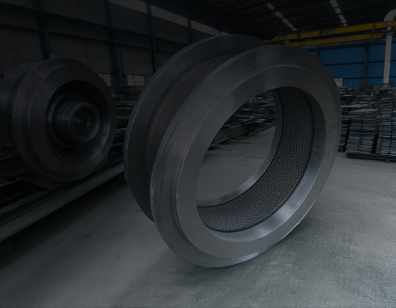
08
Spare Parts
Genuine components are available worldwide with fast delivery service.
