

 0086-138 3838 9622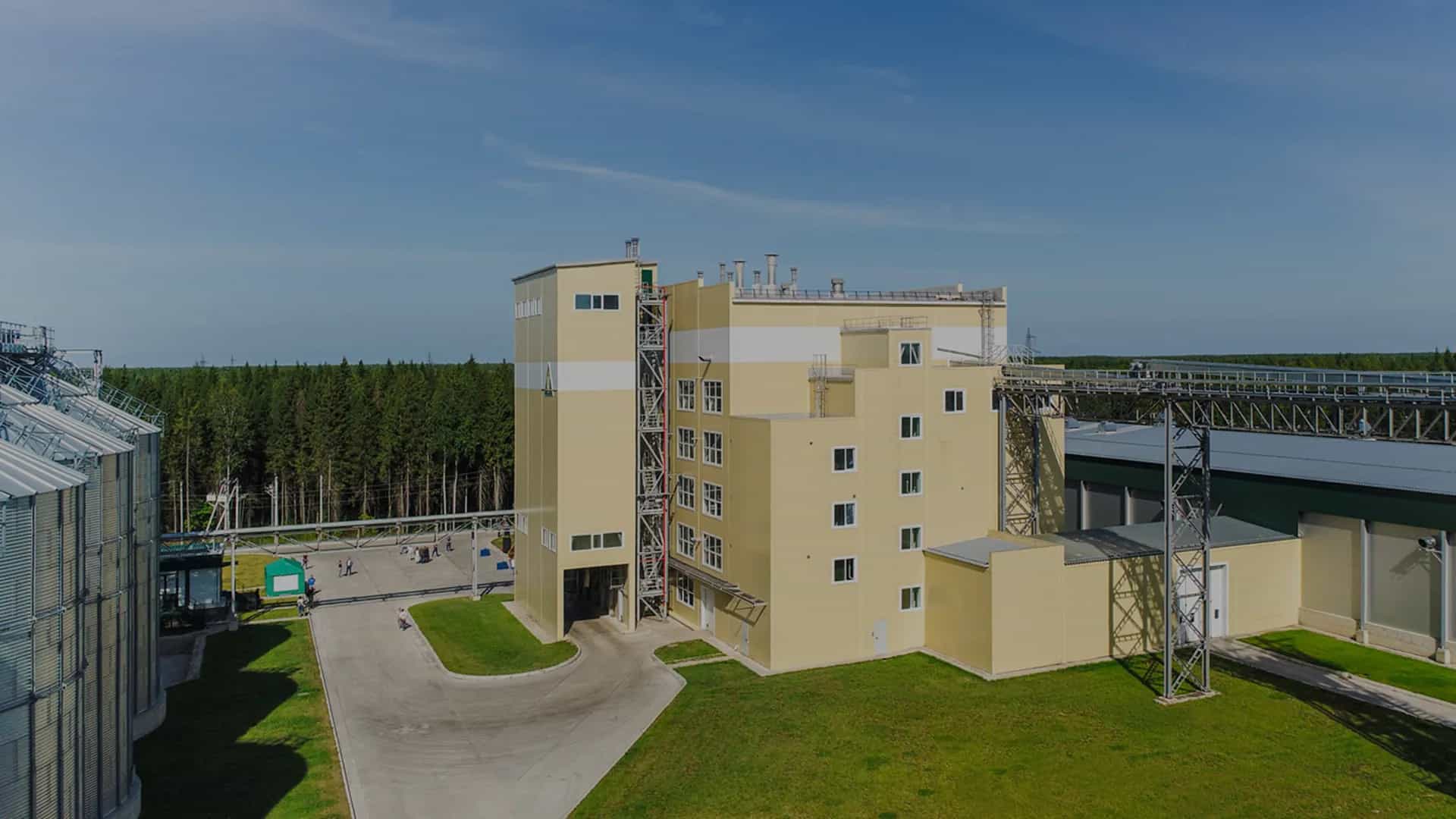

Pellet Machine in Tanzania
Over the years, we’ve learned that no two pellet operations in Tanzania are quite the same. What started as supplying individual pellet machine in Tanzania setups has grown into something much broader—whole production lines built around ring-die pellet mills, handling everything from wood and forage to organic fertilizers, animal feeds, recycled materials, even pest control pellets.
We’ve installed systems processing agricultural residues, municipal solids, and specialty products like biochar for filtration or baits for rodent control. It’s not just about the machine itself; it’s about matching the right equipment to whatever raw material a client brings in.


60+ Units
Ring Die Pellet Machines Delivered
Ring-die pellet machines shipped to Tanzania since our first installation. Each one configured for a specific material—no two have been identical.
35+ Projects
Complete Pellet Plant Projects Built
Complete production lines we’ve designed, supplied, and helped commission across the country. Many started as small inquiries that grew into full-scale operations.
24+ Customized
For Different Applications
From feed or wood processing to specialty pellets like heat-treated carbon or toxic bait formulations. The variety keeps our engineering team on their toes.
Projects Across Tanzania
From commercial feed operations to agricultural waste processing, we’ve built complete pellet production lines across Tanzania. Each project below represents a full system—not just a single machine—tailored to local materials and production goals.
Morogoro Region
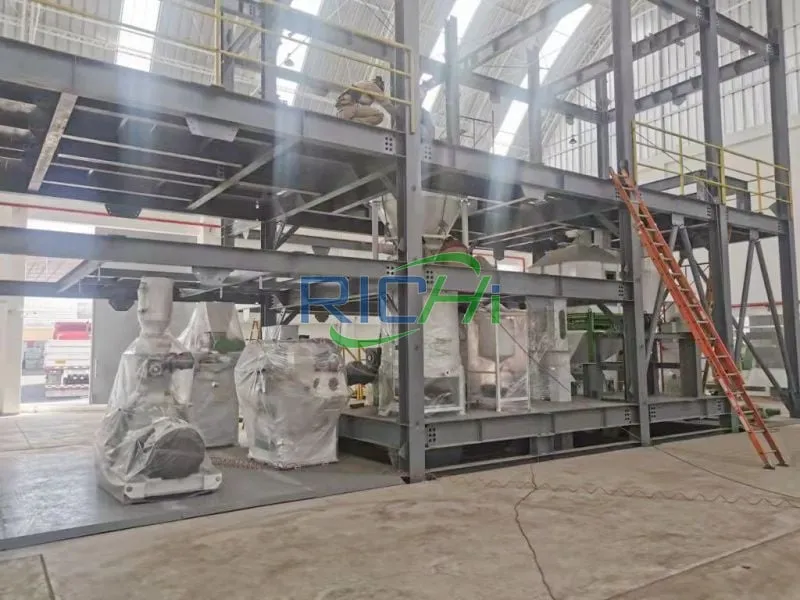
5-6 t/h chicken feed pellet machine in Tanzania
A commercial poultry operation near Morogoro was expanding fast. They had around 40,000 layers and were tired of buying mash from suppliers who couldn’t guarantee quality. Their goal was simple: control their own feed costs and improve bird performance.
- The raw material mix was maize (65%), soybean meal (25%), plus premix and minerals. Moisture sat around 12.5% after grinding.
- We supplied an SZLH350 industrial chicken feed pellet machine in Tanzania as the heart of their feed plant in Tanzania, but the full system included a hammer mill with cyclone, a double-shaft paddle mixer for even premix distribution, and a counterflow cooler to bring pellet temperatures down before bagging.
- Final pellets were 3mm for chicks and 4.5mm for layers.
- Total investment was roughly $92,000.

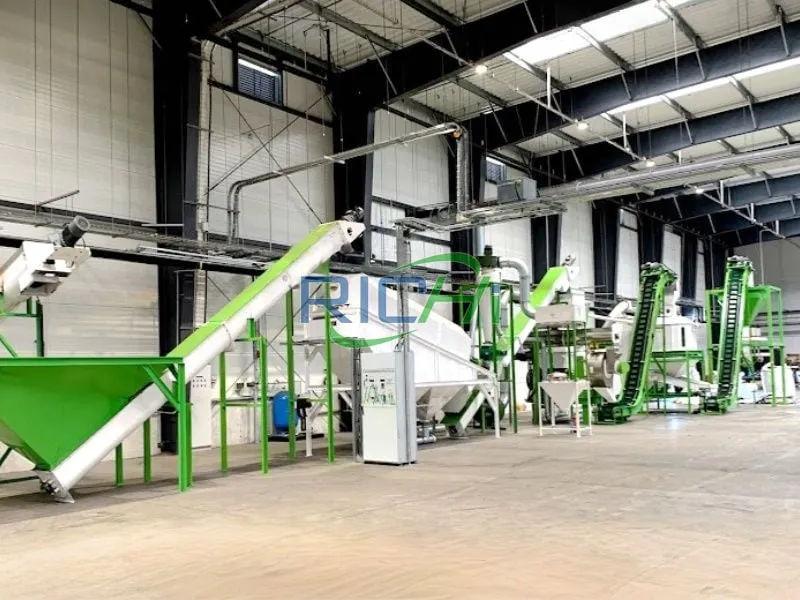
4 t/h grass pellet machine in Tanzania
This one started with a phone call from a livestock cooperative in the Iringa highlands. They had natural pasture grass—nothing fancy—but the rainy season left them with more than they could store, and the dry season always meant shortages. They wanted pellets they could stockpile and sell to smaller herders.
- The grass was cut and baled at around 15% moisture, but it varied because not everyone in the co-op followed the same schedule.
- We recommended a CZLH678 ring die pellet mill in Tanzania because the larger die surface handles fibrous material better without pre-grinding. The pellet line in Tanzania included a tub grinder for bales, a rotary dryer to stabilize moisture below 12%, and a bagging scale.
- Final pellets were 10mm, used as maintenance feed for cattle during dry months.
- Investment came to about $78,000.
Iringa Region

Dar es Salaam
3-4 t/h Sawdust & Wood Shaving Combined Pelletizer in Tanzania
A furniture manufacturer near Dar es Salaam had a mess on their hands. They produced both fine sawdust from sanding and coarse shavings from planing, but the two materials piled up separately. They wanted one system that could handle both streams and turn them into bedding pellets for horse farms and export.
- The sawdust was around 8-10% moisture; the shavings were drier, about 6%. We used an MZLH768 sawdust pellet machine in Tanzania with a custom feed chute design that could switch between the two material bins.
- The pellet manufacturing equipment in Tanzania also included a hammer mill to reduce the shavings before pelleting, a drum dryer for consistency, and a screener to remove fines. Final pellets were 6mm for animal bedding.
- The customer spent roughly $115,000 on the full setup.
1 t/h fish feed extrusion machine in Tanzania
This was a small but interesting project near Mwanza, right by Lake Victoria. A fish farmer was tired of importing floating feed from Kenya—it was expensive and supply was unreliable. He wanted to make his own for his tilapia operation. The raw material mix was fishmeal, soybean flour, wheat flour, and oil. The tricky part? Getting the expansion right for floating pellets.
- We supplied an SPHS75x2 twin-screw floating fish feed extruder as the core pelletizer for sale Tanzania, but the full pellet system in Tanzania included a fine-grind hammer mill, a ribbon mixer for even oil distribution, a dryer to bring moisture down after extrusion, and a coating drum for oil spray.
- Final pellets were 2mm and 3mm floating, with stability tested at 24 hours on water.
- Investment was around $380,000.

Mwanza Region
Northern Highlands
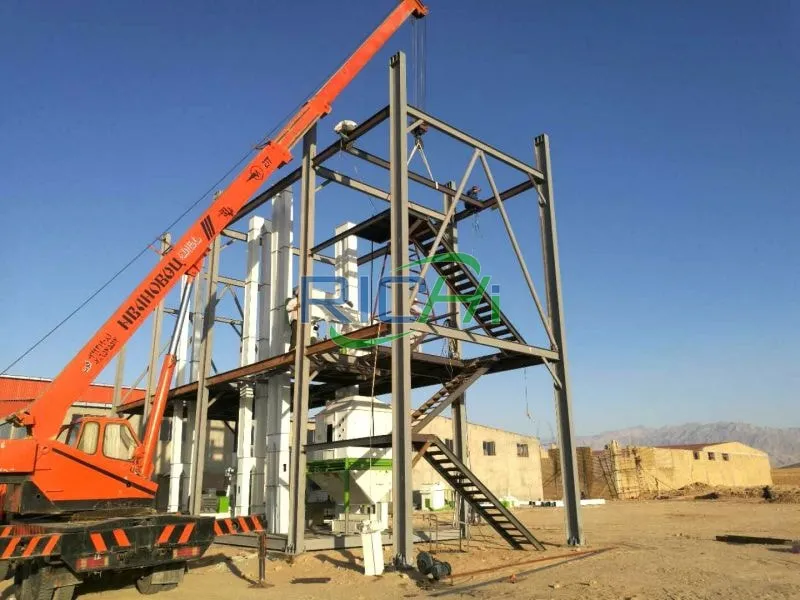
10 t/h cattle feed pellet machine in Tanzania
This cattle feed plant project came from a large-scale dairy operation in the northern highlands, near the Kenyan border. They had their own land and grew most of their grain, but they were feeding everything as whole grains and chopped hay. Feed conversion was poor. They wanted a pellet that would give them better weight gain.
- Their mix was heavy on grain—about 90% maize and sorghum, with 10% grass hay for fiber. Grain moisture was 13%; hay was drier at 10%.
- We designed a feed factory in Tanzania around an SZLH420 ring die cattle feed pellet machine in Tanzania because the volume justified the larger die.
- The pellet plant equipment in Tanzania included a hammermill with a 2mm screen for the grain, a separate tub grinder for hay, a horizontal mixer with liquid addition for molasses, and a pellet cooler with a fines return system.
- Final pellets were 6mm for adult cattle. The total project landed around $210,000.
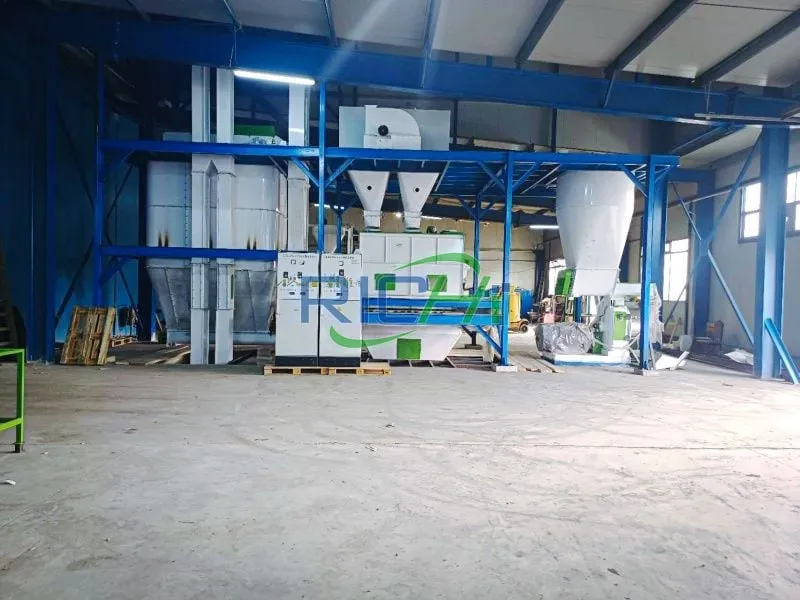
6-8 t/h crop residue pellet machine in Tanzania
A group of farmers in the Tabora region had maize stalks everywhere after harvest. They’d been burning them—which we saw at the site visit, thick smoke for miles. They wanted a better use.
- The stalks were chopped roughly, moisture around 11-13% depending how long they’d been stacked.
- We supplied a CZLH768 biomass pellet mill in Tanzania because the material was fibrous and needed the ring die compression.
- The full pellet machine line in Tanzania included a heavy-duty chipper to break stalks, a hammer mill to get uniform particle size, a dryer to pull moisture down to 12% consistently, and a pellet cooler before bagging.
- Final pellets were 8mm, sold locally as livestock feed during dry months.
- Investment was about $95,000.
Tabora Region
Shinyanga Region
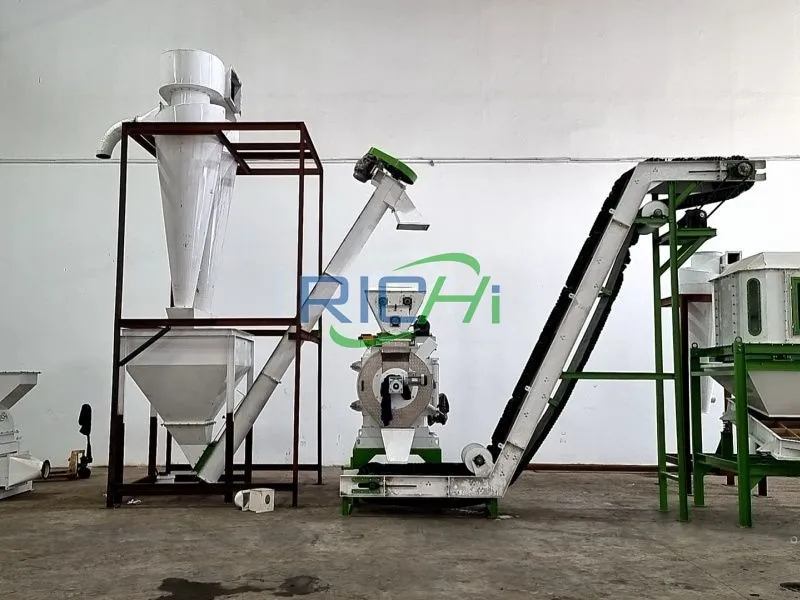
1 t/h rice husk pellet machine in Tanzania
A rice miller in the Shinyanga region had a classic problem: husks piling up, no good way to get rid of them. He was paying to have them hauled away. We tested the husks on-site—they were abrasive, around 10% moisture, and didn’t bind well on their own. That’s a common headache with rice husks.
- We used an MZLH420 pellet press machine in Tanzania with extra-hardened die and roller shells to handle the silica content.
- The rice husk pellet plant in Tanzania included a hammer mill to break the husks slightly, a disc screener to remove oversized material, and a cooler.
- Final pellets were 6mm, used as boiler fuel in local mills.
- The client spent roughly $52,000.
- What we provided: Hardened wear parts, spare die recommendation, installation guidance.
3-4 t/h maize bran pellet machine in Tanzania
A small feed miller in Dodoma was selling maize bran as mash, but the market was competitive and margins were thin. He knew pellets would give him better density and shipping efficiency.
- The bran was fine—too fine, actually—and moisture ran about 11%. Without some binder, it wouldn’t hold together.
- We configured an SZLH320 ring die pellet machine in Tanzania with a conditioning system to add steam and a small amount of molasses as binder.
- The feed plant in Tanzania also included a ribbon mixer, a pellet cooler, and a bagging conveyor.
- Final pellets were 4.5mm for chicken feed.
- Investment was around $45,000.
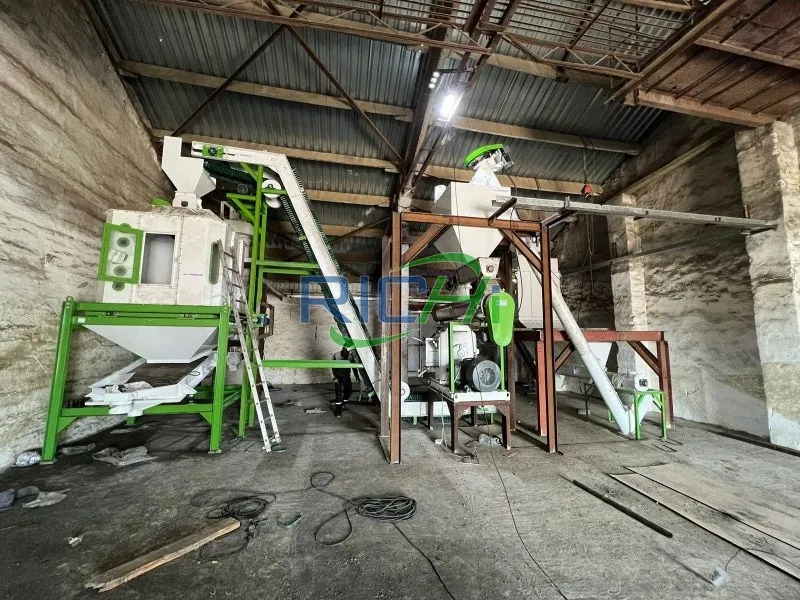
Dodoma Region
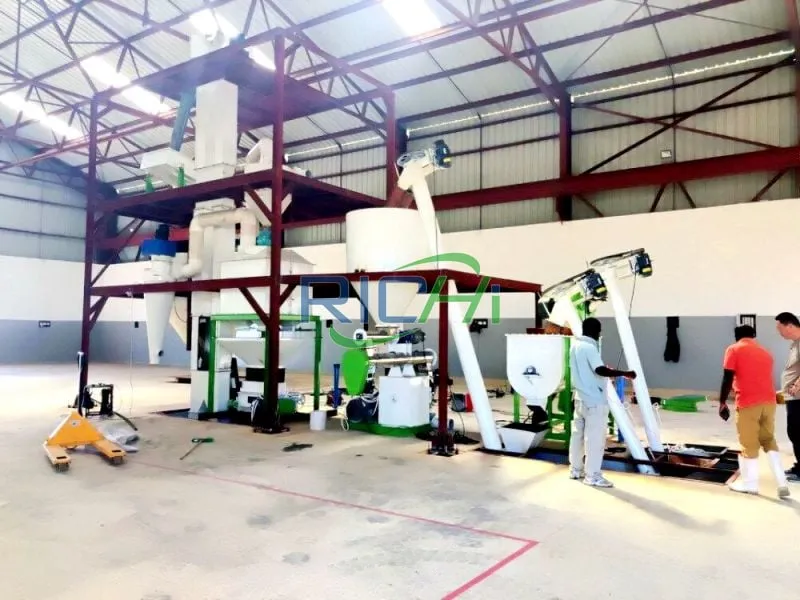
Moshi Region
2 t/h bagasse pellet machine in Tanzania
A sugar mill near Moshi had bagasse going into piles that grew faster than they could use for boiler fuel. They wanted a way to densify it for easier handling and storage.
- The bagasse came out of the rollers at about 48% moisture—way too wet for direct pelleting.
- We set up an MZLH520 ring die bagasse pellet machine in Tanzania as the core, but the real work was in drying. The pellet system in Tanzania included a rotary dryer to bring moisture from 48% down to 14%, a hammer mill to break fiber bundles, and a pellet cooler.
- Final pellets were 8mm, used as boiler fuel and sold to nearby industries.
- Investment was around $135,000, with most of the budget going to drying equipment.
More Projects Across Tanzania
Beyond our larger installations, we’ve completed dozens of additional pellet production projects across the country. Each system was configured around specific raw materials and production goals—from agricultural residues to specialty applications.
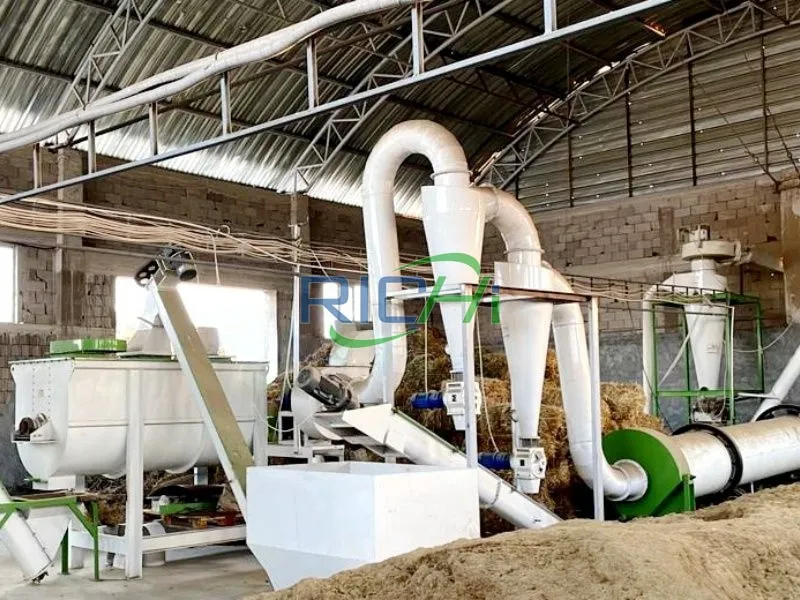
2 t/h straw pellet machine in Tanzania
A farmers’ cooperative in Mbeya wanted to monetize the straw left after maize harvest instead of burning it. They needed a reliable pellet machine in Tanzania that could handle fibrous material without constant jams. The CZLH420 ring die pellet mill in Tanzania processes chopped straw into 8mm fuel pellets used by local bakeries and small industries.
Model
CZLH420
Pellet Size
8mm
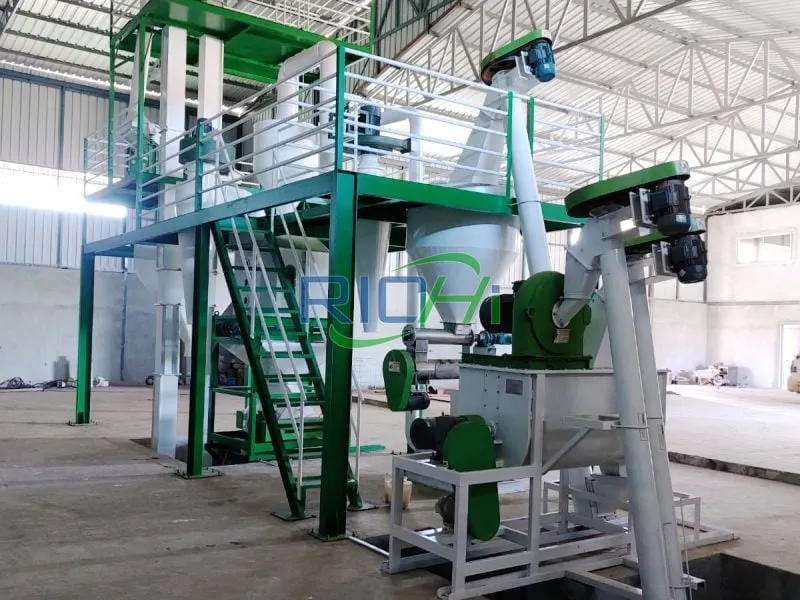
1-1.5 t/h sunflower cake pellet machine in Tanzania
An oilseed processor near Arusha was discarding sunflower cake after pressing, not realizing its value as protein-rich feed. They installed an SZLH250 feed mill in Tanzania to convert the 10% moisture cake into durable feed pellets. The final 6mm pellets now supply dairy farmers across the region.
Model
SZLH250
Pellet Size
6mm
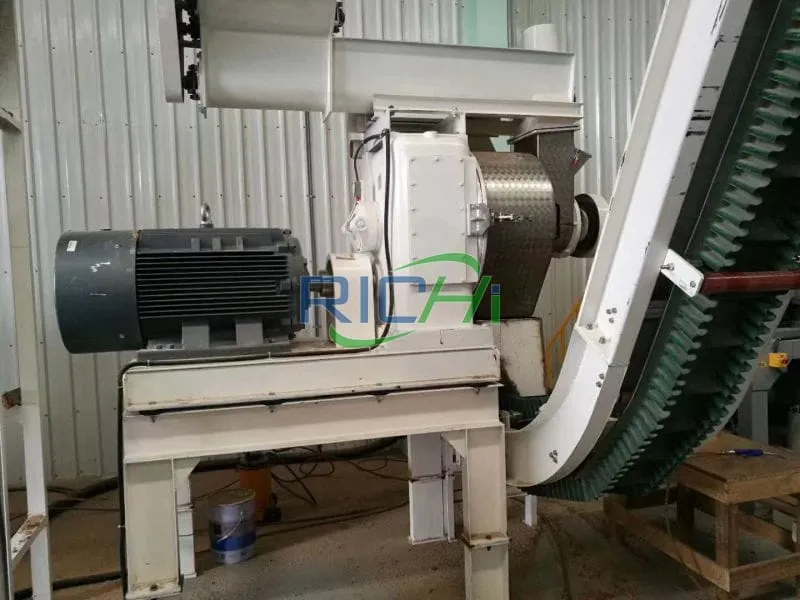
6-8 t/h poultry litter pellet machine in Tanzania
A large egg producer outside Dar es Salaam faced mounting waste disposal costs from 50,000 layers. They chose an FZLH420 organic fertilizer pellet mill in Tanzania to transform chicken manure into bagged fertilizer. The system produces 6mm fertilizer pellets sold to vegetable growers in the surrounding areas.
Model
FZLH420
Pellet Size
6mm
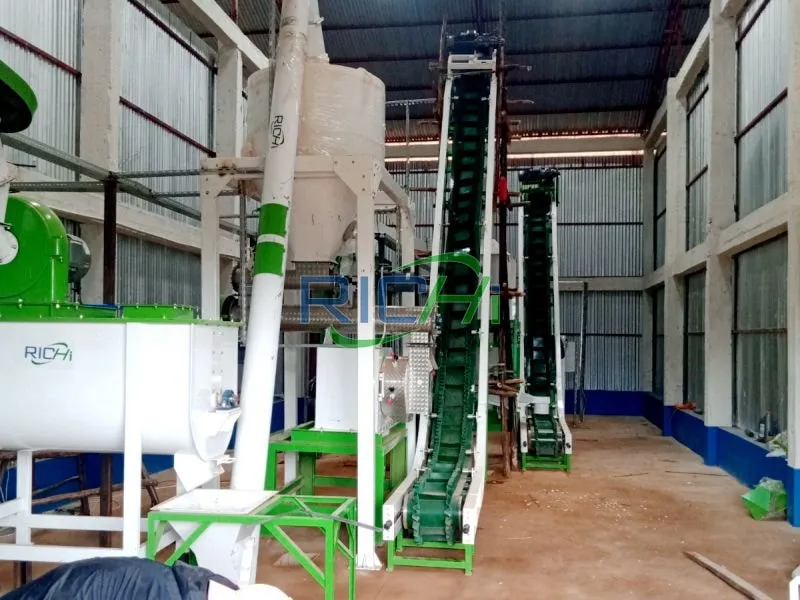
1-2 t/h animal feed pellet machine in Tanzania
A small-scale feed miller in Dodoma wanted to expand from selling mash to higher-value broiler pellets. The SZLH250 pellet press machine in Tanzania allowed him to produce 3.5mm starter pellets that local farmers prefer. His pellet production line in Tanzania now runs six days a week to meet growing demand.
Model
SZLH250
Pellet Size
3.5mm
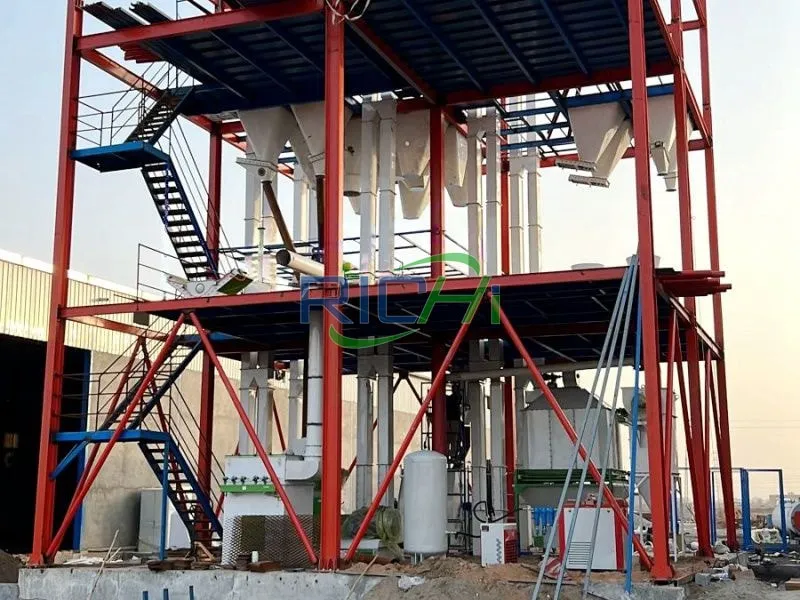
8 t/h alfalfa hay pellet machine in Tanzania
A dairy cooperative in the northern highlands needed consistent winter feed for their herds. The CZLH768 biomass pellet mill in Tanzania processes alfalfa hay into 8mm maintenance pellets. Their pellet plant in Tanzania runs throughout harvest season, storing enough feed to last the dry months.
Model
CZLH768
Pellet Size
8 mm
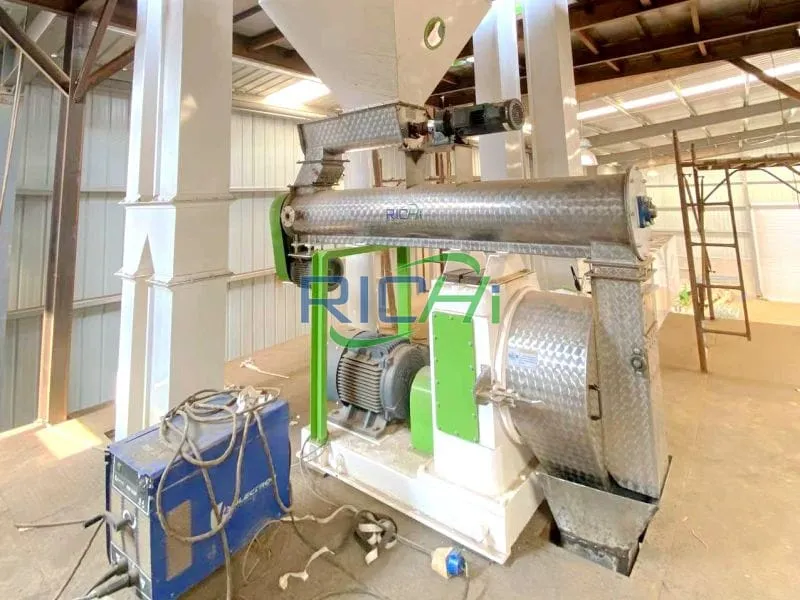
6 t/h livestock feed pellet machine in Tanzania
A commercial pig operation in Morogoro wanted to reduce feed costs by producing their own grower rations. The SZLH350 livestock feed pellet machine in Tanzania handles a corn-soy blend at 5mm diameter. Their feed factory in Tanzania now supplies not only their own pigs but neighboring smallholders as well.
Model
SZLH350
Pellet Size
5mm
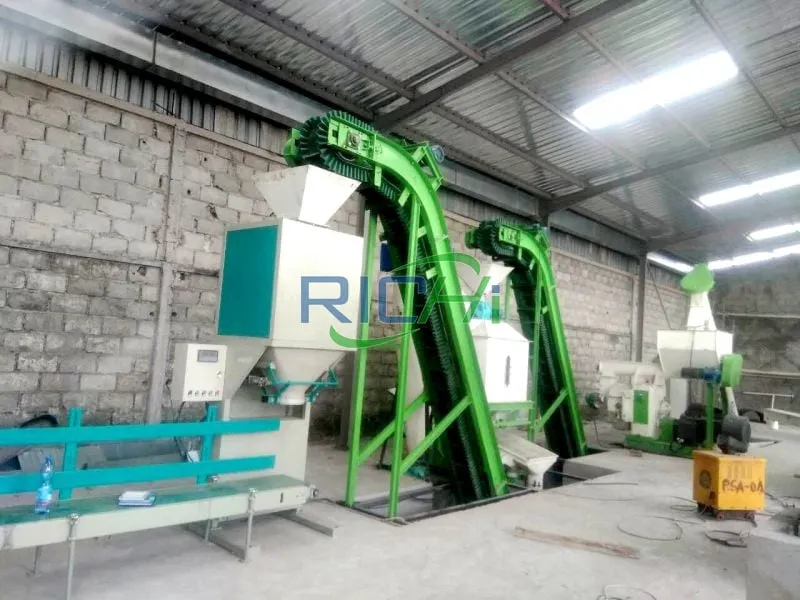
0.5 t/h Wood Shavings Pellet Machine in Tanzania
A carpentry workshop in Arusha had piles of planer shavings going to waste each month. They installed an MZLH350 pellet manufacturing equipment in Tanzania to produce animal bedding pellets. The 6mm pellets now sell to horse owners and small livestock keepers in the region.
Model
MZLH350
Pellet Size
6mm
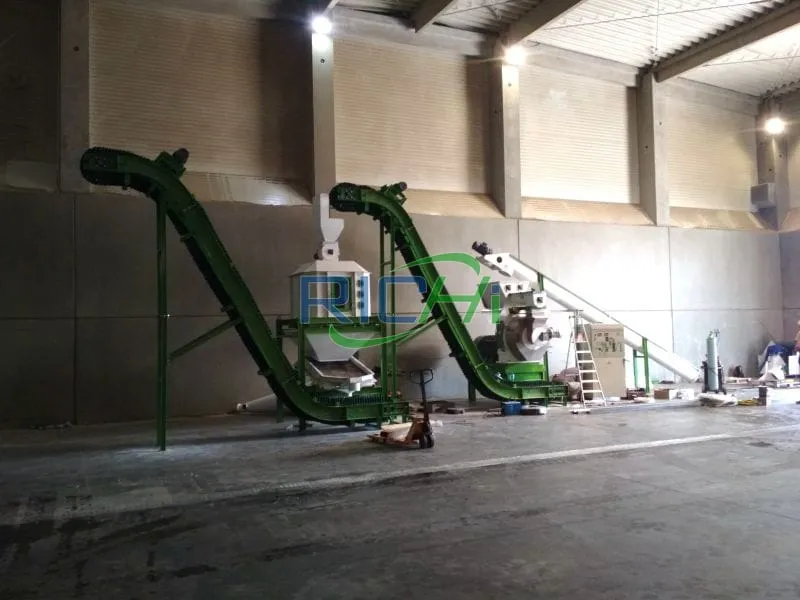
1 t/h sawdust bedding pellet machine in Tanzania
A furniture manufacturer near Moshi wanted consistent bedding pellets for the equestrian market. The MZLH420 pelletizing machine in Tanzania processes fine sawdust at 8% moisture into 6mm bedding pellets. Their pellet system in Tanzania runs alongside furniture production, turning waste into revenue.
Model
MZLH420
Pellet Size
6mm
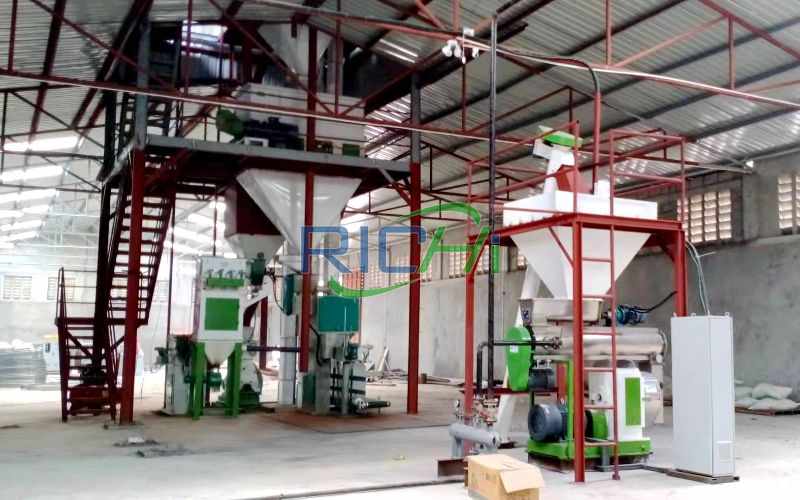
3-4 t/h silage pellet machine in Tanzania
A livestock farmer in Iringa wanted to preserve excess silage without the spoilage that happens in pits. The SZLH320 feed plant in Tanzania compresses silage into 8mm pellets that store for months. His pellet production machine in Tanzania now runs during peak harvest to capture surplus forage.
Model
SZLH320
Pellet Size
8mm
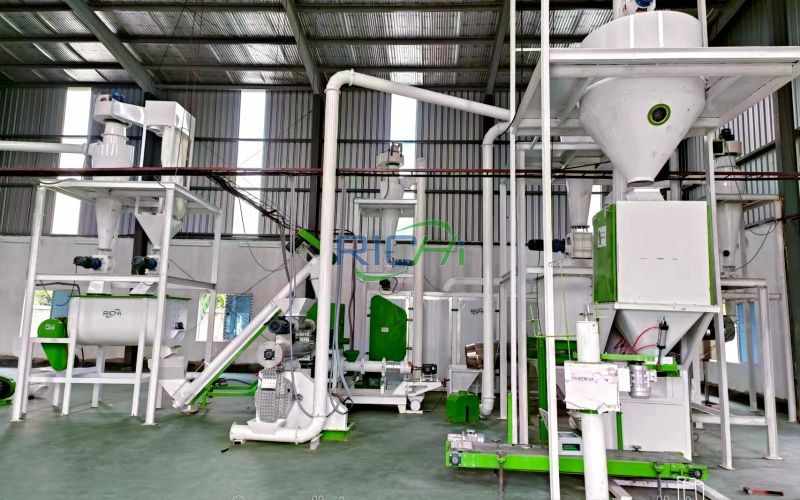
0.5 t/h floating fish feed machine in Tanzania
A tilapia farmer on Lake Victoria was tired of expensive imported floating feed with unreliable supply. The DGP-120B single-screw extruder produces 2mm floating pellets that stay stable for 12 hours in water. His feed production line in Tanzania now supplies not only his own ponds but neighboring fish farmers too.
Model
DGP-120B
Pellet Size
2mm

1 t/h charcoal pellet machine in Tanzania
An entrepreneur in Tanga wanted to offer an alternative to traditional charcoal for urban households. The MZLH420 biomass pellet mill in Tanzania compresses carbonized sawdust into 8mm fuel pellets. His pellet factory in Tanzania now supplies clean-burning fuel to Dar es Salaam households.
Model
MZLH420
Pellet Size
8mm
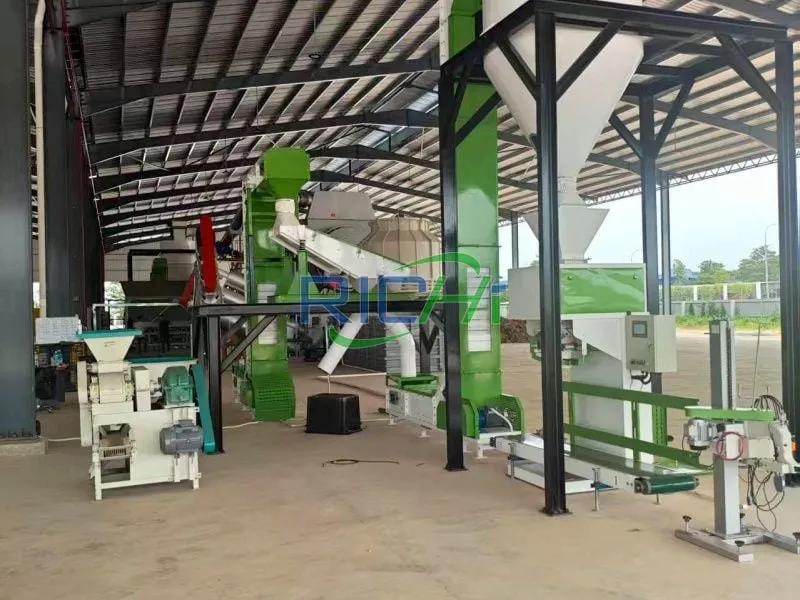
3 t/h fertilizer compost pellet machine in Tanzania
A composting operation near Mwanza was selling loose compost with low margins due to transport costs. They added an FZLH320 compost granulating machine in Tanzania to densify their product into 5mm fertilizer pellets. Their pellet plant equipment in Tanzania includes mixing, drying, and cooling sections for consistent quality.
Model
FZLH320
Pellet Size
5 mm
See Our Installations in Tanzania
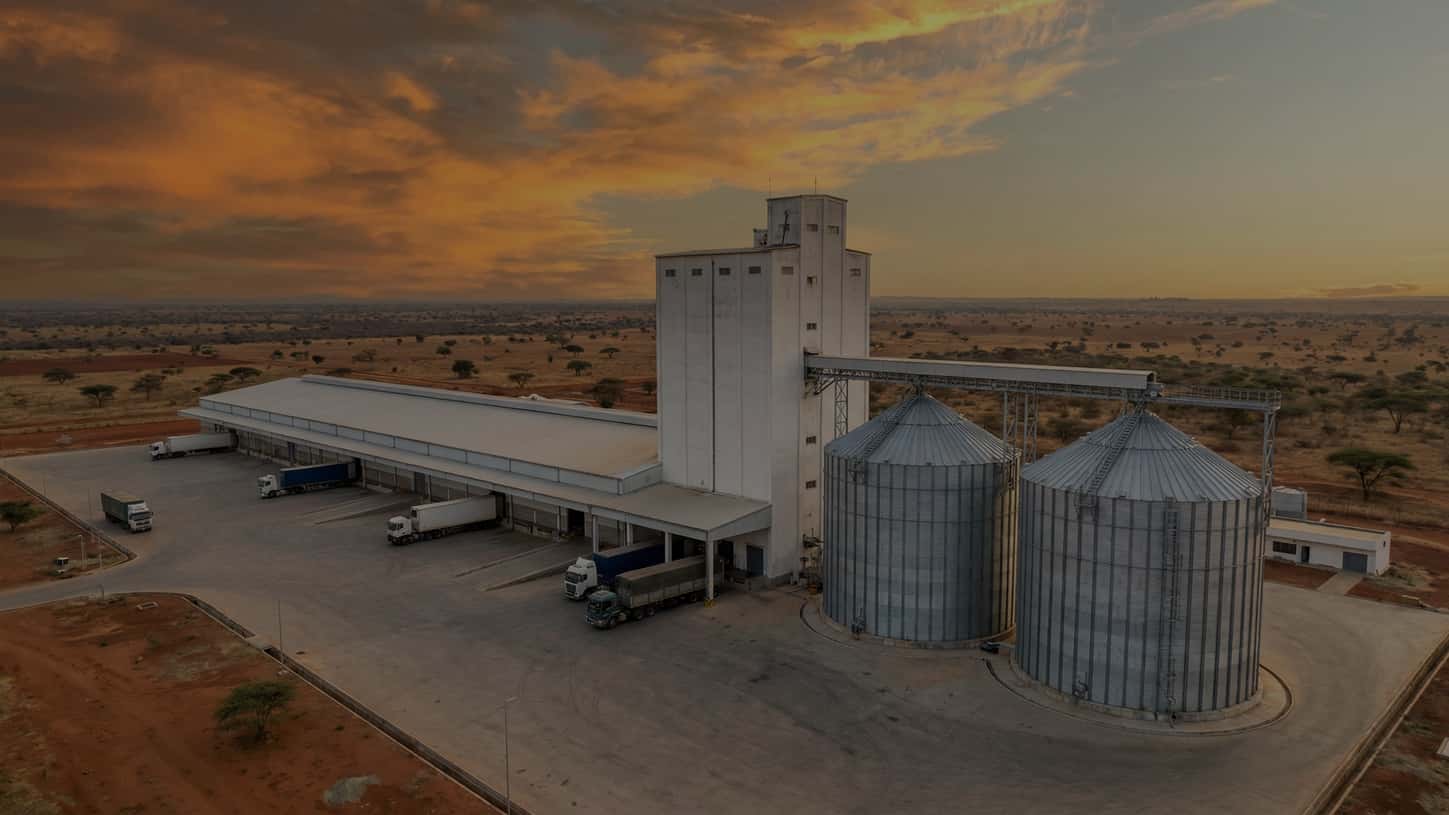
15 t/h broiler Layer Chicken Feed Pellet Plant in Tanzania
This video shows a commercial feed operation running their SZLH508 ring die pellet mill in Tanzania. The plant produces both 3mm crumbles for chicks and 4.5mm pellets for layers, plus mash feed for growers who prefer unpelleted rations. You’ll see the hammer mill, mixer, and cooler working together—the whole feed production line in Tanzania handling 15 tons per hour at steady state.
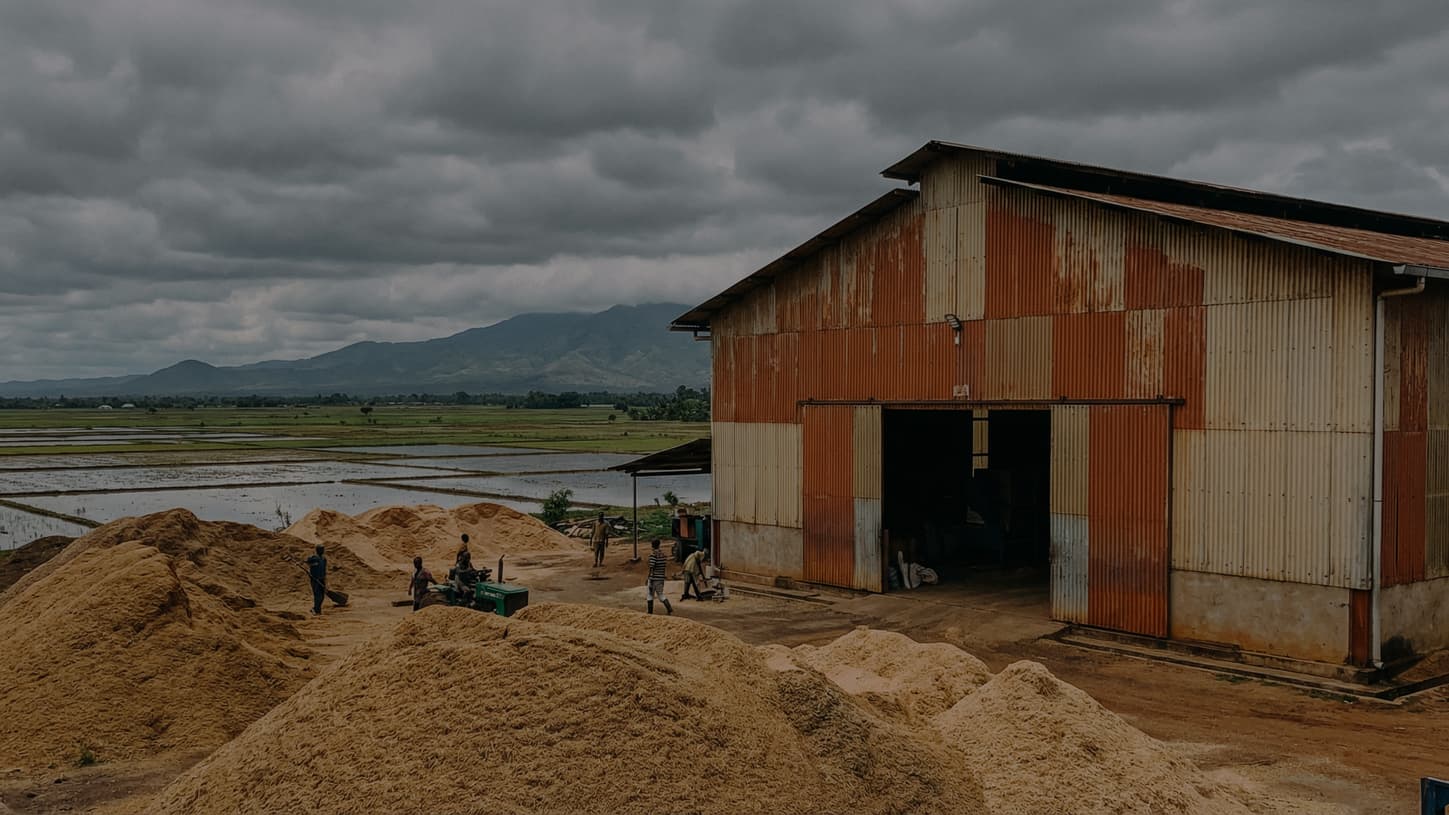
2 t/h wood & rice husk pellet production line in Tanzania
This customer processes two very different materials on the same MZLH520 pellet mill in Tanzania. The video shows the changeover from sawdust (8% moisture) to rice husks (10% moisture) on their pellet production machine in Tanzania. Final products are 6mm fuel pellets and 6mm livestock bedding pellets—proof that a well-designed pellet line in Tanzania can handle multiple raw materials.
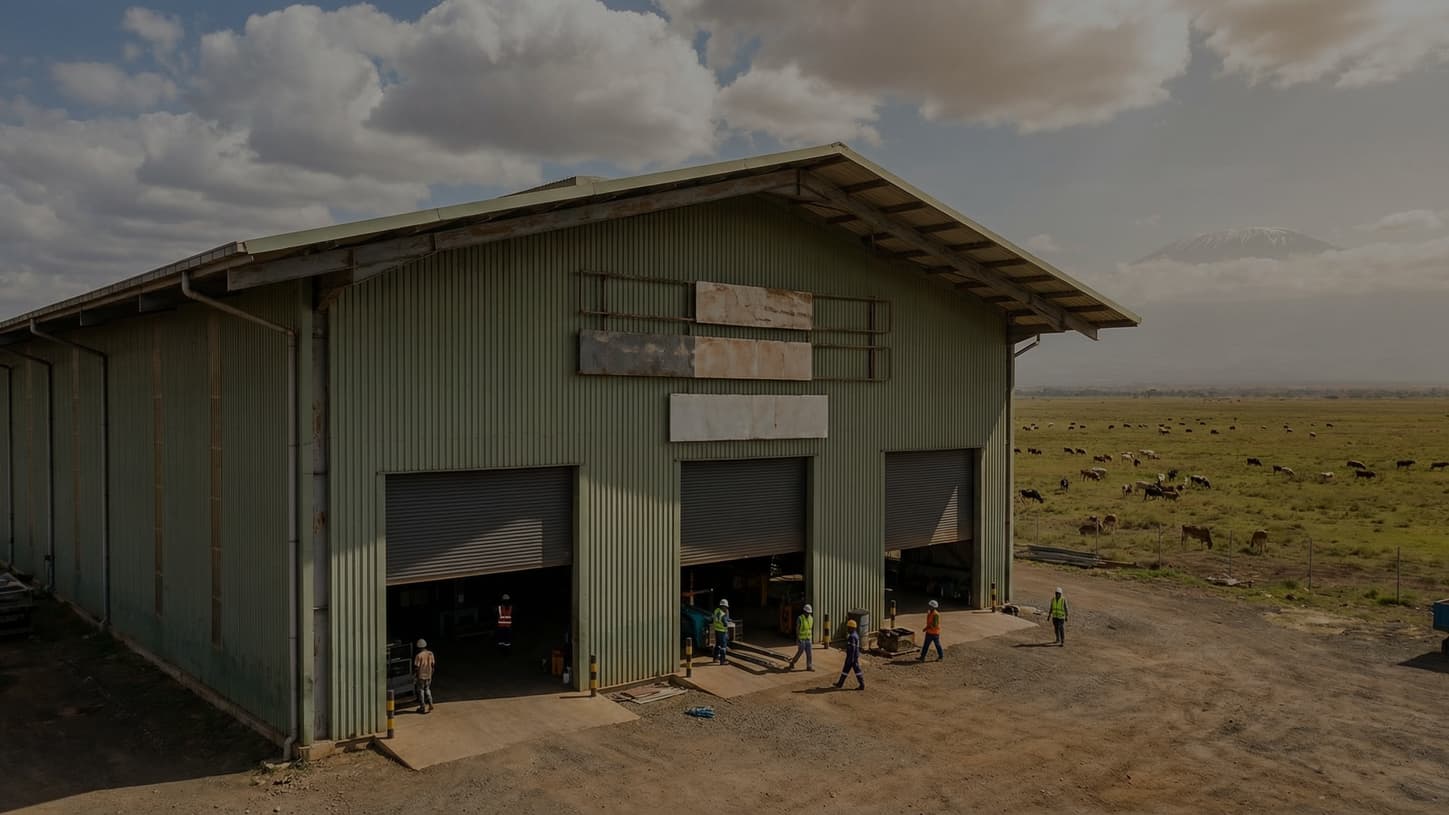
5-6 t/h Ruminant Feed Pellet Production Line in Tanzania
Filmed at a dairy feed operation in the northern highlands, this video shows an SZLH350 feed mill for sale Tanzania in full production. The system processes maize, sorghum, and hay into 6mm pellets with molasses added at the mixer. Watch how the conditioner steam softens the mash before it hits the die—that’s what gives the pellets their durability.
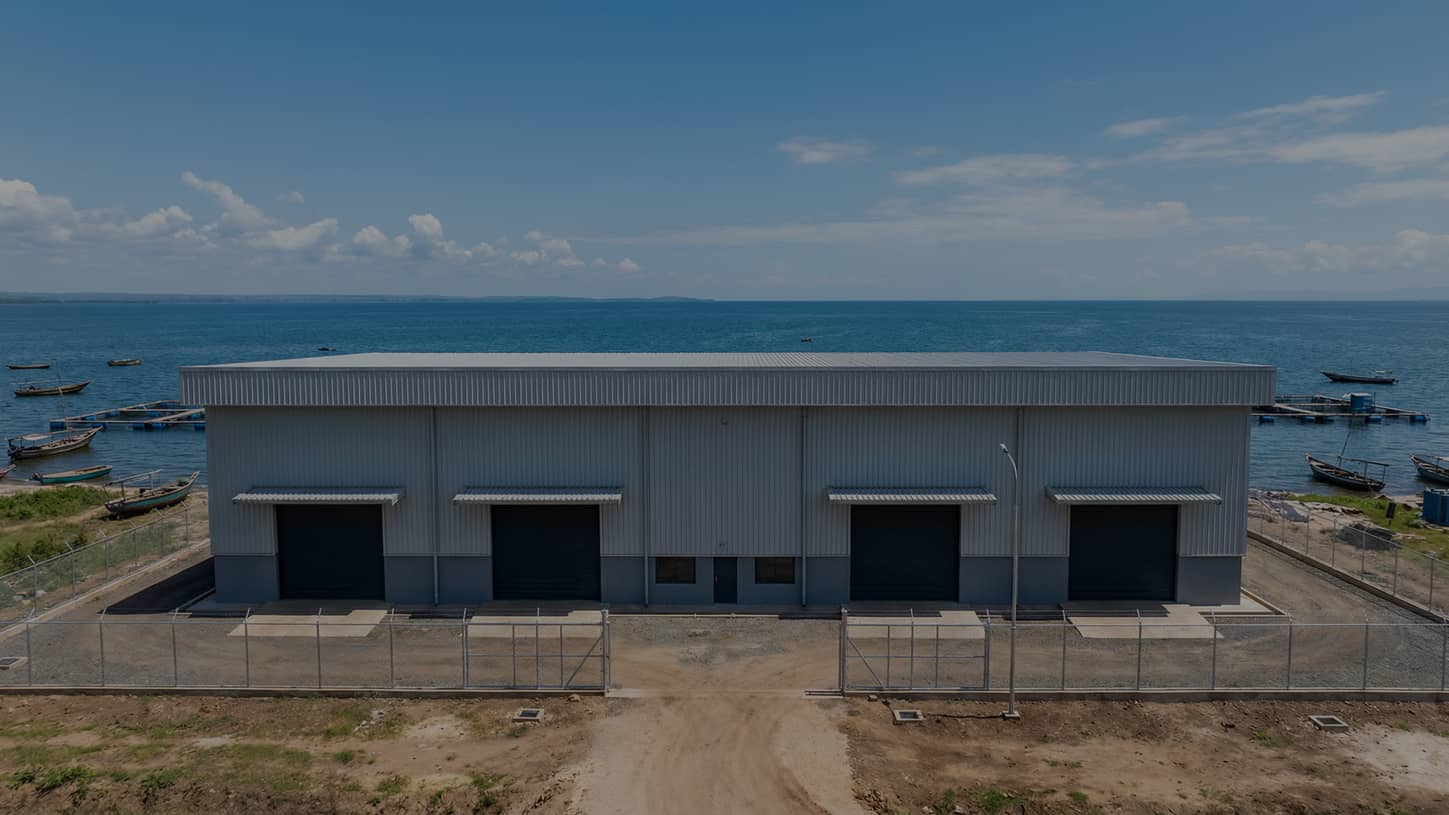
1-2 t/h Tilapia Feed Pellet Production Line in Tanzania
This extrusion line near Lake Victoria runs an SPHS120×2 twin-screw extruder—a different approach than a standard pellet machine in Tanzania. The video shows the expansion process as the dough exits the die and puffs up into 2mm floating pellets. Their feed production line in Tanzania includes a dryer and oil coater to lock in nutrition.
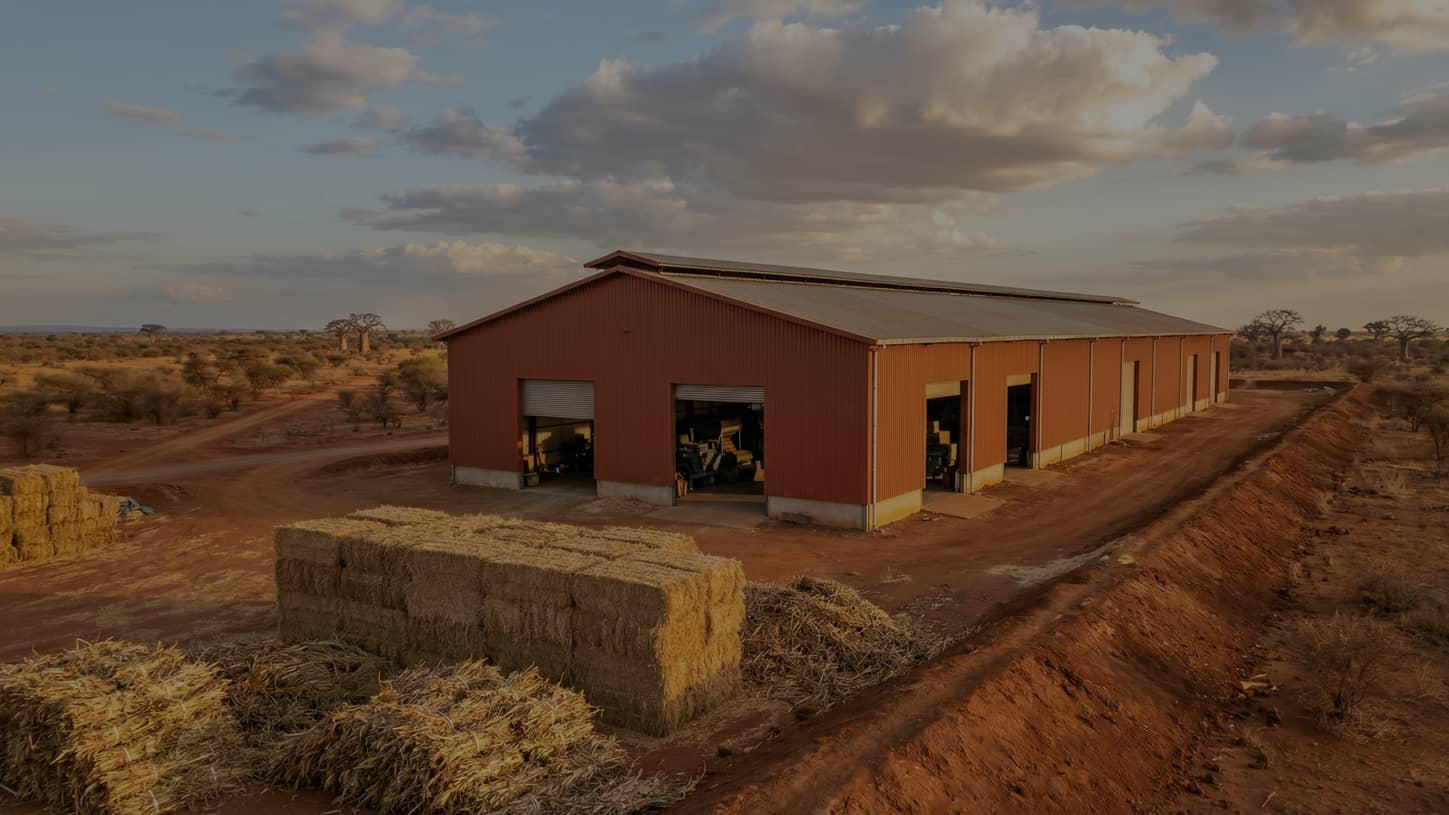
5 t/h agricultural waste pellet plant in Tanzania
You’ll see a CZLH678 agri pellet machinery in Tanzania processing mixed crop residues in this video. The customer runs a pellet plant in Tanzania that takes maize stalks, rice straw, and groundnut shells—whatever the local farmers bring in. Final products are 8mm livestock feed and 6mm animal bedding. Watch how the line handles the variation in raw material.
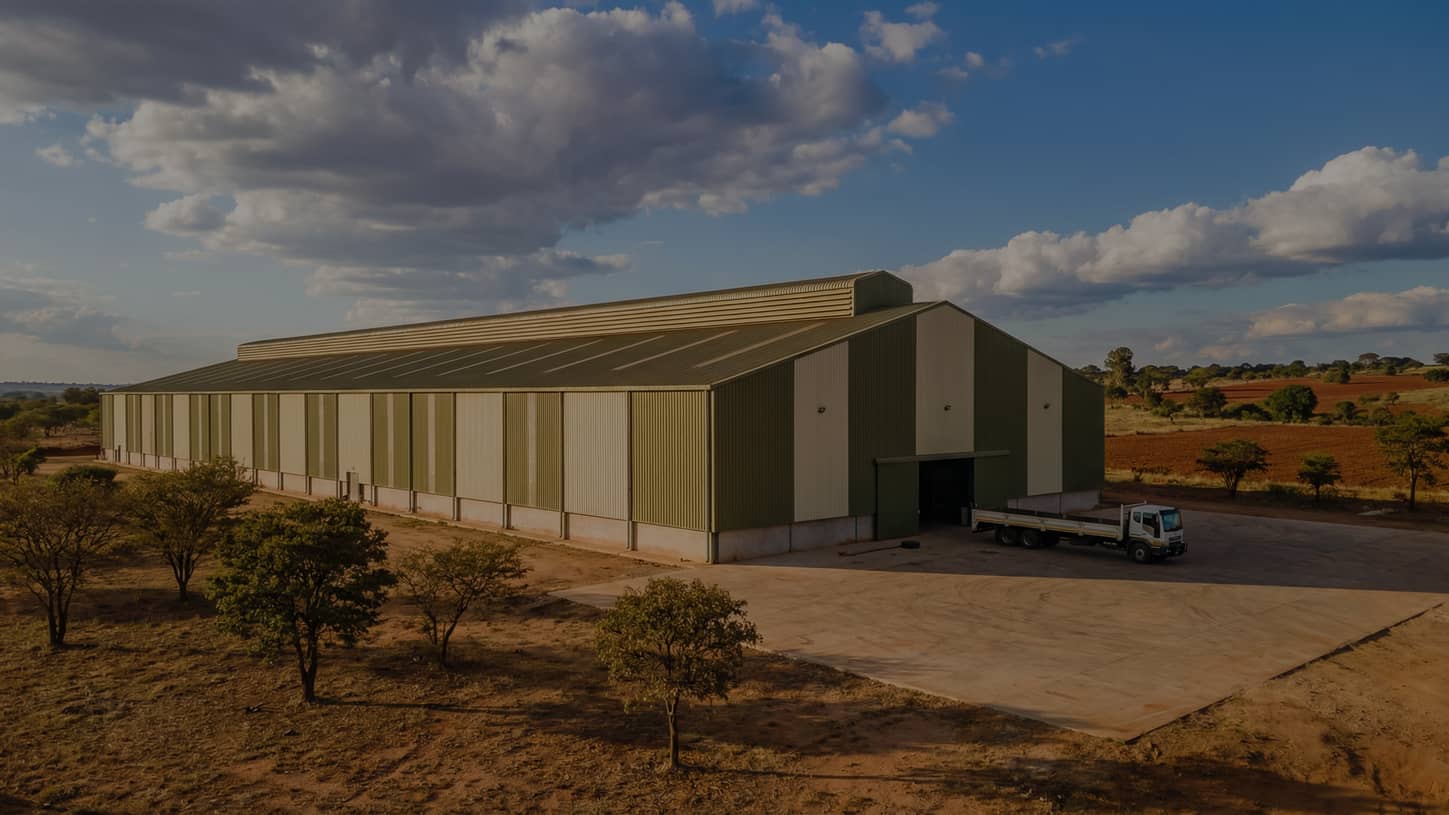
3-4 t/h Swine Feed Pellet Production Line in Tanzania
This video shows an SZLH320 feed plant in Tanzania producing 5mm grower pellets for pig operations. The customer chose a ring die pig feed pellet machine in Tanzania because of the consistent pellet quality it delivers for high-fat swine rations. You’ll see the pelleting section, cooler, and bagging station running continuously.
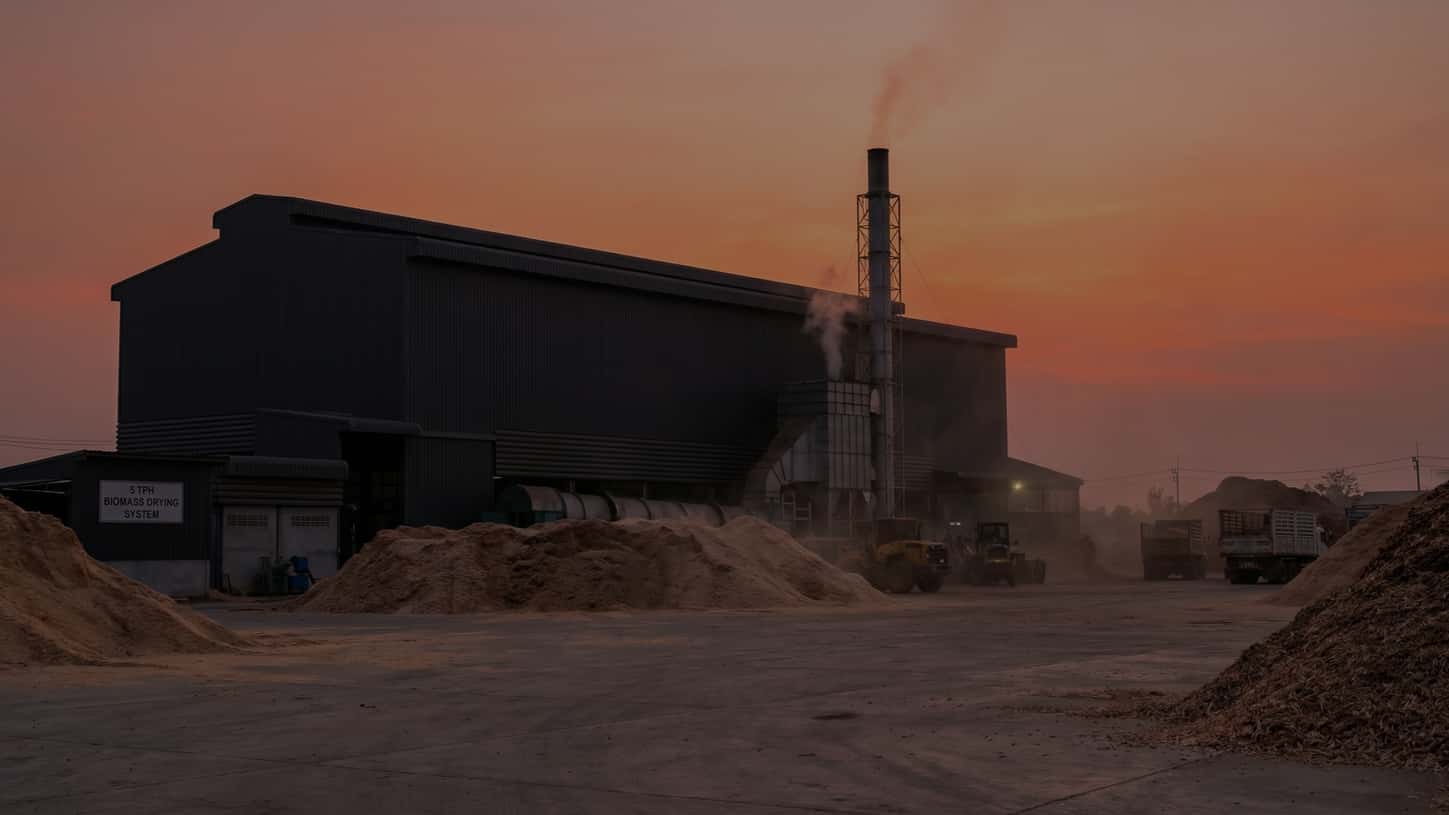
10 t/h biomass drying equipment in Tanzania
This isn’t a pellet line—it’s what feeds one. The video shows a rotary dryer system installed ahead of a pellet manufacturing equipment in Tanzania setup. Raw material enters at 35-40% moisture and comes out at 12-14%, ready for the pellet press machine in Tanzania. Without this stage, high-moisture biomass wouldn’t pellet at all.

What Our Customers Say

We started with a small hammer mill and mixer, but we were buying pellets from elsewhere and the quality was never consistent. When we decided to produce our own, we looked for a pellet machine in Tanzania that could handle the maize bran and sunflower cake we get from local mills—sometimes the moisture varies, sometimes the grind size isn’t perfect. Your team didn’t just sell us an SZLH320; they came to our site, looked at what we were working with, and laid out the whole feed production line including the conditioner and cooler.
Now we run 4 tons per hour of 4.5mm broiler pellets, and our customers in Dodoma and Morogoro say the birds do better on our feed than on the imported stuff. The machine runs six days a week, and when we had a question about die clearance last month, your engineer walked us through it on a video call within hours.
Juma Mwinyi
Feed Mill Operations Manager, Dodoma Region

Pellet Processing Opportunities in Tanzania
Tanzania’s agricultural and industrial sectors generate massive amounts of raw material that currently go underutilized. From crop residues to processing byproducts, the potential for value-added pellet production is significant. At Richi Machinery, we’ve spent years matching the right pellet machine in Tanzania to specific local materials—and we’ve seen which sectors have real growth potential. Below is our perspective on where the opportunities are.
WOOD PELLET PRODUCTION
WOOD PELLET SOLUTION
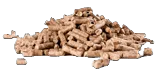
Tanzania has substantial forestry and wood processing activity, particularly in the southern highlands and around Dar es Salaam. Sawmills, furniture workshops, and timber operations generate sawdust and shavings that often go to waste or are burned inefficiently. A biomass pellet mill in Tanzania can convert this material into cooking fuel for urban households or industrial boiler fuel for factories. The growing demand for cleaner alternatives to charcoal makes this sector worth watching.

GRASS PELLET PRODUCTION
GRASS PELLET SOLUTION
Natural pasture grasses are abundant across Iringa, Mbeya, and the northern highlands. Farmers traditionally rely on hay, but storage losses are high. A ring die pellet mill in Tanzania can compress dried grass into dense pellets that store for months without spoilage. For livestock keepers, this means reliable dry-season feed. For entrepreneurs, it’s a business selling to herders who lose animals to feed shortages every year.


STRAW PELLET PRODUCTION
STRAW PELLET SOLUTION
Maize stalks, rice straw, and sorghum residues are everywhere after harvest. Most are burned. A pellet production machine in Tanzania turns this material into livestock feed or fuel. The feed application is particularly interesting—straw pellets can replace expensive concentrates during dry months. We’ve seen cooperative models work well where farmers pool their straw and share output.


RUMINANT FEED PELLET PRODUCTION
CATTLE FEED PELLET SOLUTION
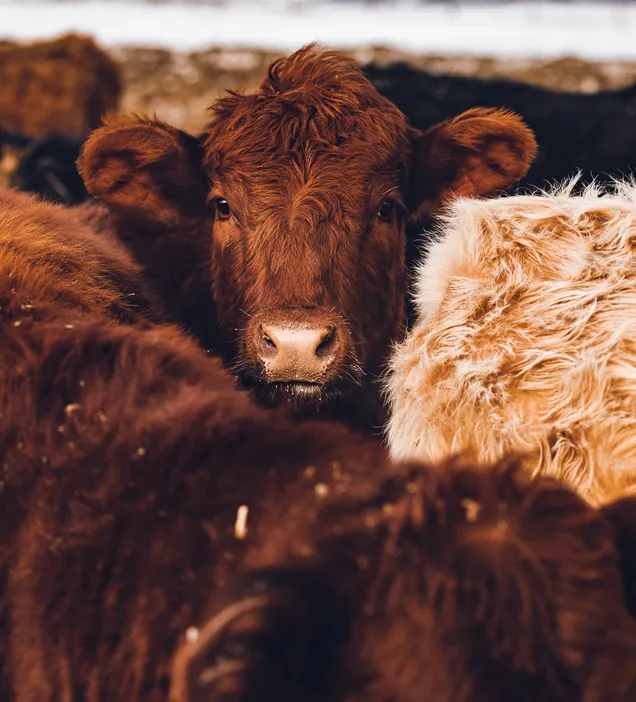
Dairy and beef operations in the northern highlands and around Morogoro are expanding. Many still feed whole grains and chopped forage, which leads to waste. A feed mill in Tanzania producing textured or pelleted rations can improve feed conversion significantly. The market is there—large farms are starting to look for consistent quality they can’t get from mash suppliers.

POULTRY FEED PELLET PRODUCTION
POULTRY FEED PELLET SOLUTION
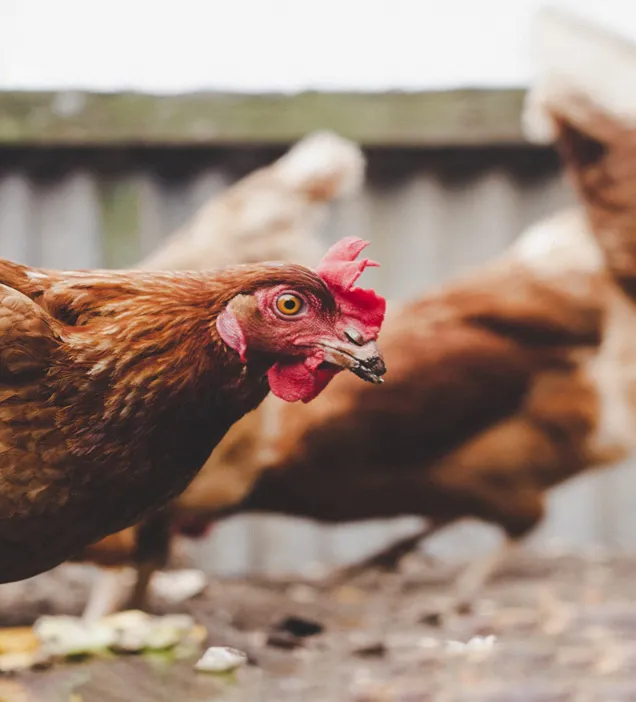
Dairy and beef operations in the northern highlands and around Morogoro are expanding. Many still feed whole grains and chopped forage, which leads to waste. A feed mill in Tanzania producing textured or pelleted rations can improve feed conversion significantly. The market is there—large farms are starting to look for consistent quality they can’t get from mash suppliers.

LIVESTOCK FEED PELLET PRODUCTION
LIVESTOCK FEED PELLET SOLUTION
Pig farming is concentrated around Morogoro and the lake zone, while small ruminants are everywhere. Pelleted grower rations improve weight gain and reduce feed waste. A feed plant in Tanzania can serve multiple species with one line by adjusting die size and formulation. We see more producers wanting to control their own feed costs rather than buying from middlemen.


FERTILIZER PELLET PRODUCTION
FERTILIZER PELLET SOLUTION
Poultry litter, cattle manure, and composting operations produce organic material that sells for far less as loose product. A pelletizing machine in Tanzania densifies this into 5-6mm fertilizer pellets that are easier to transport, store, and apply. Vegetable growers around Arusha and Moshi are willing to pay more for pelletized organic fertilizer. There’s also potential for NPK blending lines.

FISH FEED PELLET PRODUCTION
FISH FEED PELLET SOLUTION
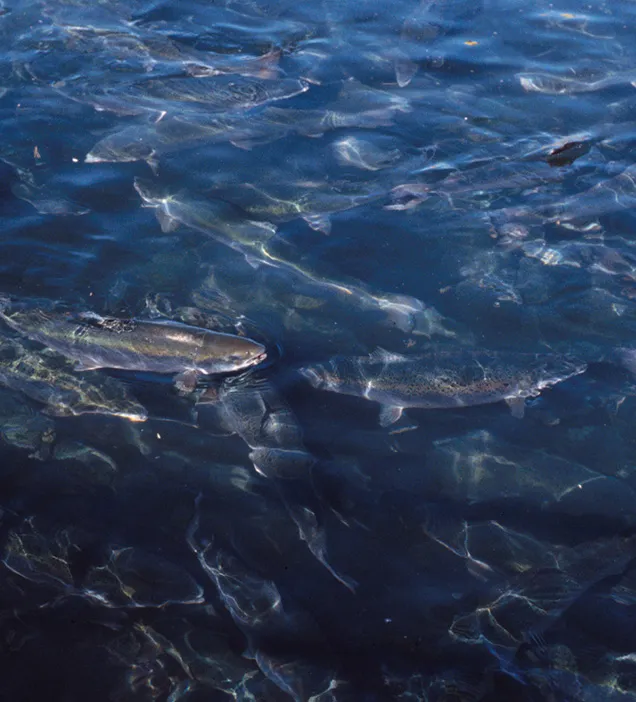
Lake Victoria, Lake Tanganyika, and the growing number of tilapia ponds create demand for floating and sinking feeds. Most farmers rely on imported feed or homemade mash. A feed production line in Tanzania with an extruder can produce 2mm floating pellets locally. The margin is good, and supply reliability is a major selling point.

PET FOOD PELLET PRODUCTION
PET FOOD PELLET SOLUTION
Urban centers like Dar es Salaam, Arusha, and Mwanza have growing pet ownership. Imported pet food is expensive. A feed factory in Tanzania producing dry kibble or extruded pet food can capture this market. The equipment is similar to fish feed lines—extruders with coating systems for palatability.

cat litter PELLET PRODUCTION
cat litter PELLET SOLUTION
Wood shavings and sawdust are ideal for clumping cat litter. A pellet mill in Tanzania processing softwood or hardwood residuals into absorbent pellets is a niche but growing market. Urban pet owners are becoming more aware of imported litter prices. Local production has a clear cost advantage.


paper PELLET PRODUCTION
paper PELLET SOLUTION
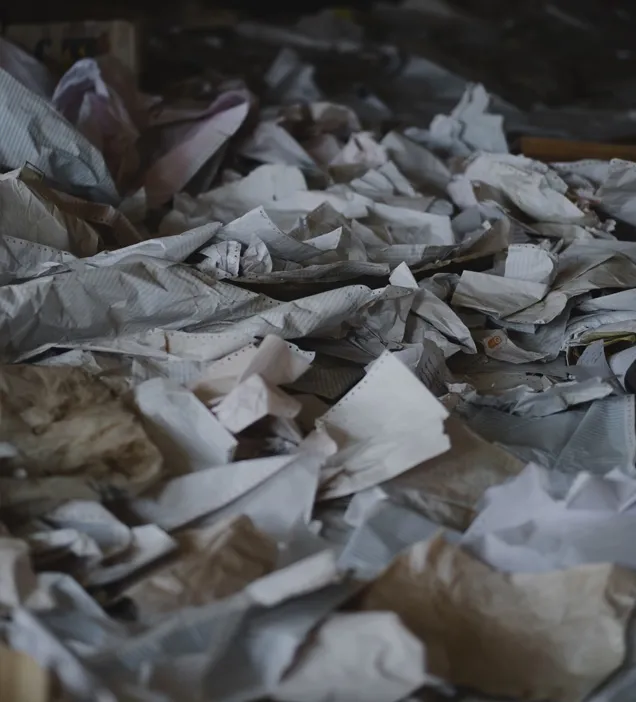
Office waste, cardboard, and recycled paper are available in cities. A pellet press machine in Tanzania can turn this into fuel pellets or absorbent bedding. The fuel application is straightforward—paper pellets burn hot. The bedding application works because paper absorbs moisture well. Both are low-cost entry points.

ANIMAL BEDDING PELLET PRODUCTION
ANIMAL BEDDING PELLET SOLUTION
Horse owners, poultry farms, and small livestock keepers need absorbent bedding. Sawdust and shavings work, but pellets are easier to store and spread. A biomass pellet mill in Tanzania producing 6mm bedding pellets has a steady market. We’ve seen furniture manufacturers add this as a side business using their waste.
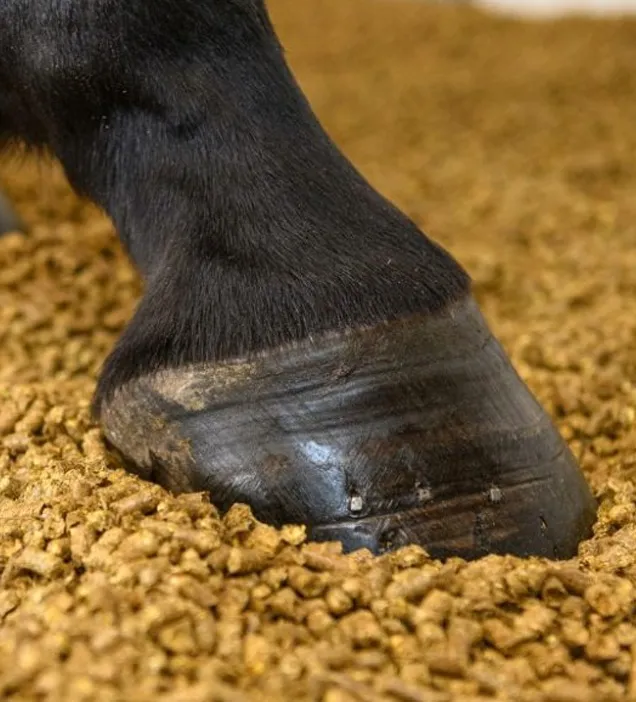
RDF PELLET PRODUCTION
RDF PELLET SOLUTION
Urban waste management is a growing challenge in Dar es Salaam, Mwanza, and Arusha. A pellet plant in Tanzania processing municipal solid waste into RDF for cement kilns or industrial boilers is still emerging, but early movers are establishing contracts. The technical challenge is sorting and drying, but the fuel market is there.

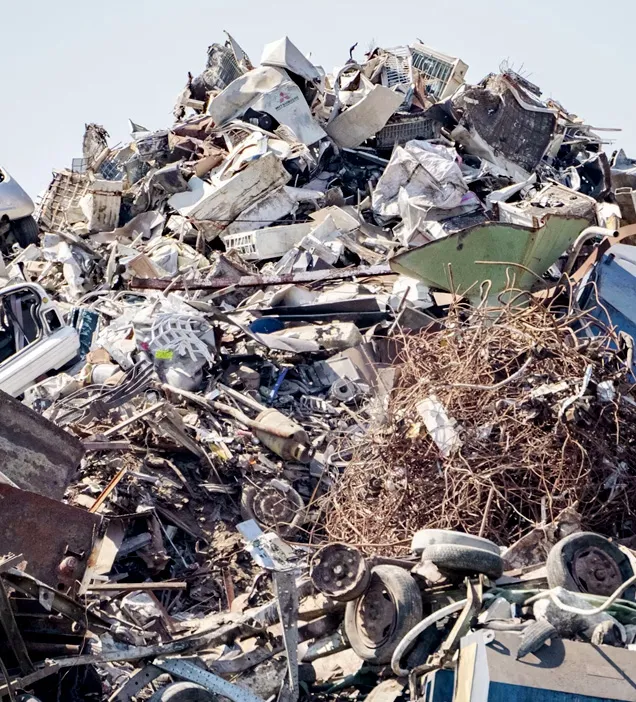
Raw grain puffing PRODUCTION
Raw grain puffing SOLUTION
Maize, sorghum, and soybean can be expanded for human food, animal feed, or brewing applications. A pelletizing machine in Tanzania configured for extrusion expands grain for better digestibility. This is a value-add opportunity for grain traders who want to move beyond commodity sales.


Pyrolytic carbon PELLET PRODUCTION
Biochar PELLET SOLUTION
Charcoal producers and agricultural waste processors are looking at biochar for soil amendment and filtration. A pellet mill in Tanzania can densify carbonized material into uniform pellets. The market is developing—carbon credit programs and specialty agriculture applications are driving interest.


Rat poison PELLET PRODUCTION
Rat poison PELLET SOLUTION
Rodent damage affects grain storage across Tanzania. Poison bait pellets are used by farmers and storage facilities. A pellet production machine in Tanzania producing consistent 3-5mm bait pellets with active ingredients has a specialized but reliable market. The equipment is standard—the formulation is the difference.


solid waste PELLET PRODUCTION
solid waste PELLET SOLUTION
Factories, markets, and processing plants generate organic and mixed waste. A pellet plant in Tanzania converting this into fuel or raw material for other processes is a circular economy play. The industrial sector is starting to pay attention because landfill costs are rising and energy costs are high.


Our Best-Selling Equipment in Tanzania
A complete pellet production line requires more than just a pellet mill. Over the years, we’ve supplied hundreds of pieces of supporting equipment to customers across Tanzania—each selected for specific materials and production goals. Below are the machines our clients come back for most often, along with how they’re being used on the ground.
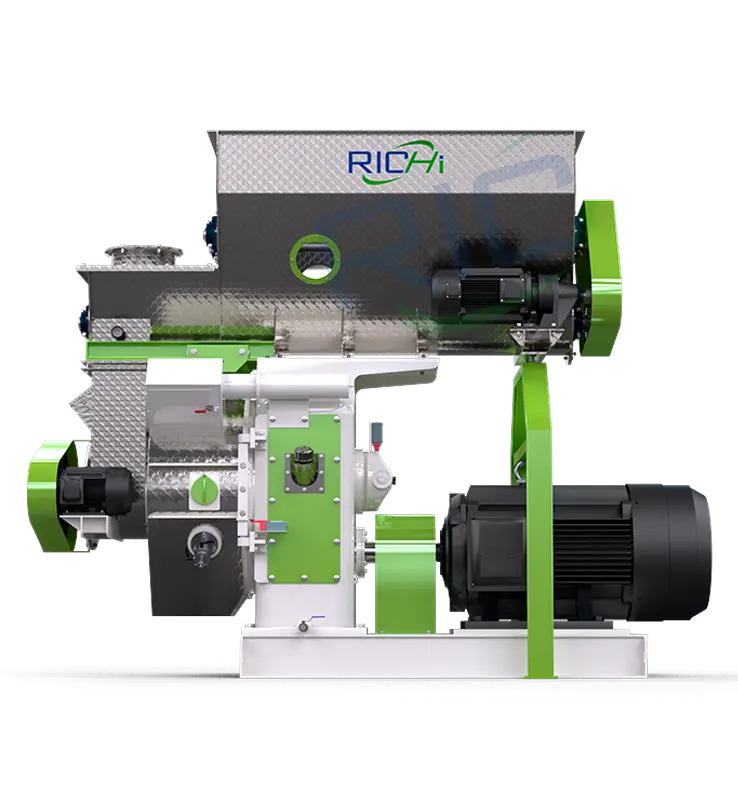
biomass pellet mill for sale
Our ring die biomass pellet mills are the backbone of many operations in Tanzania. Customers use them to process maize stalks, rice husks, sawdust, and groundnut shells into 6-8mm fuel pellets for cooking and industrial boilers. A reliable biomass pellet mill in Tanzania means farmers can turn waste that used to be burned into something they can sell. The heavy-duty construction handles the abrasive nature of rice husks better than standard machines.

grass pellet machine for sale
Natural pasture grass grows abundantly in Iringa, Mbeya, and the northern highlands. A grass pellet machine in Tanzania compresses dried hay into dense 8-10mm pellets that store for months without mold. Livestock cooperatives use these to feed cattle during the dry season when fresh grass is scarce. The machine allows them to capture surplus forage during the wet season and stretch feed supplies through the hardest months.

feed mill pellet machine
This is the workhorse for feed operations across the country. From broiler starter crumbles to layer pellets and pig grower rations, a ring die feed mill in Tanzania handles high-volume production with consistent pellet durability. We’ve installed these in Morogoro, Arusha, and Dodoma—each configured for the local grain mix. The dies are available in 3mm, 4.5mm, 6mm, and custom sizes depending on the animal.
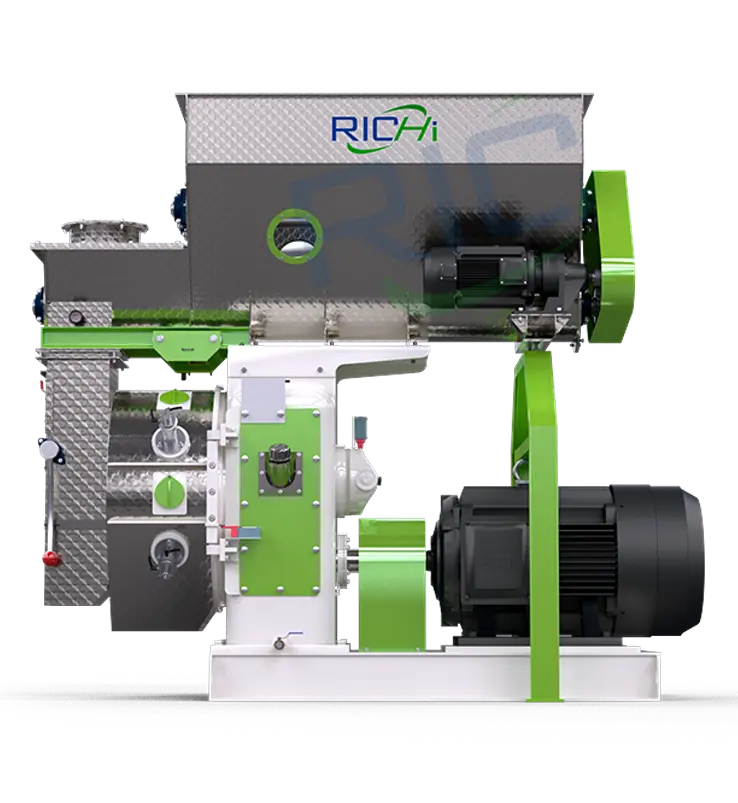
fertilizer granulator equipment
Poultry litter, cattle manure, and composted agricultural waste are abundant. A fertilizer pellet mill in Tanzania turns these into uniform 5-6mm organic fertilizer pellets that are easier to transport and apply than loose material. Vegetable growers around Arusha and Moshi prefer pelletized fertilizer because it spreads evenly and releases nutrients slowly. The machine runs with hardened dies to handle the abrasive nature of manure.

twin screw extruder for sale
Floating fish feed is in high demand around Lake Victoria, Lake Tanganyika, and the growing tilapia ponds. A twin-screw extruder in Tanzania produces 2-3mm floating pellets with 12-hour water stability. The machine cooks the material at high temperature, improving digestibility. Customers tell us the biggest advantage is consistent supply—they no longer wait weeks for imported feed that may or may not arrive.
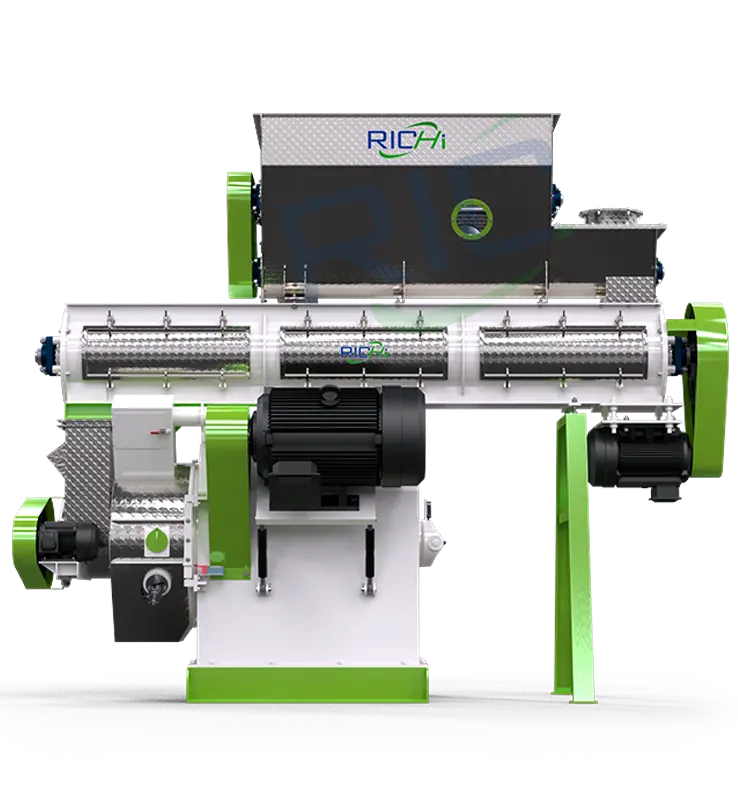
straw pellet machine for sale
Maize and rice straw are everywhere after harvest. A straw pellet machine in Tanzania compresses these fibrous materials into 8mm livestock feed or fuel pellets. Farmers’ cooperatives in Tabora and Mbeya use these to turn waste into winter feed. The machine includes a heavy-duty feeder because straw doesn’t flow like grain—it needs to be forced into the die.

shrimp feed pellet machine
The aquaculture sector is growing, including shrimp operations in coastal areas. A shrimp feed mill in Tanzania produces micro-pellets and sinking granules with the right water stability. The dies are smaller—typically 1.5mm to 2.5mm—and the formulation includes marine proteins. This is a specialized market, but the margins are good and competition is still limited.

cat litter pellet machine
Wood shavings and sawdust from furniture makers in Dar es Salaam and Arusha are ideal for absorbent cat litter. A cat litter pellet mill in Tanzania produces 4-6mm pellets that clump and absorb moisture. Urban pet owners are willing to pay for local litter instead of expensive imported brands. Several furniture workshops have added this as a sideline business using their own waste.
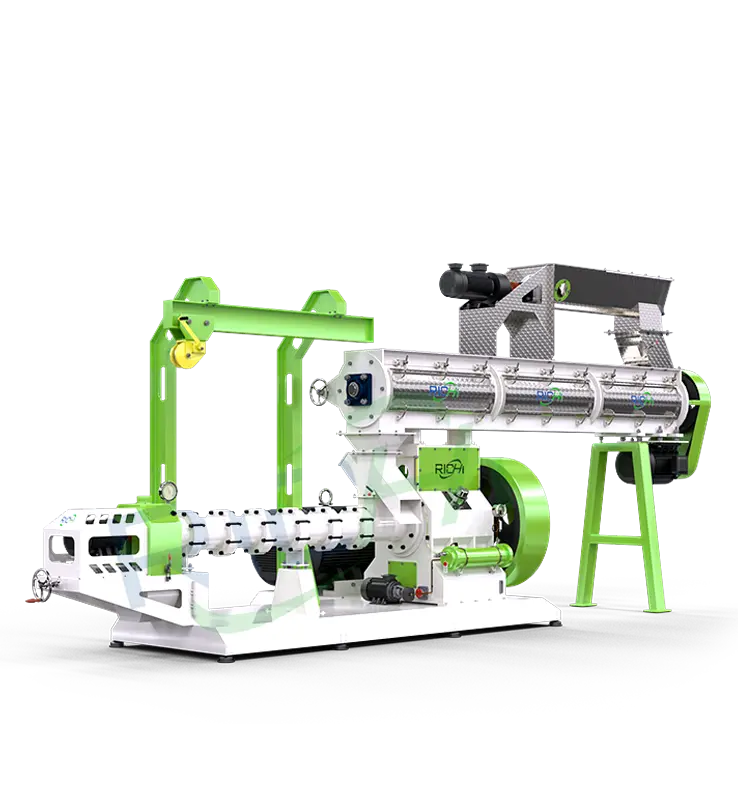
single screw extruder machine
For smaller fish feed operations or floating feed startups, a single-screw extruder in Tanzania offers a lower entry point. It produces 2-3mm floating pellets with good expansion. The machine is simpler to operate than twin-screw models, making it a common choice for first-time producers. We’ve installed several around Mwanza and the lake zone.

Grain extruder machine
Maize, sorghum, and soybeans can be expanded for better digestibility in animal feed. A grain expander in Tanzania processes raw grain into expanded flakes or pellets that are easier for pigs and poultry to utilize. Feed millers use this to add value to commodity grain before blending into rations. The expansion process also improves palatability.
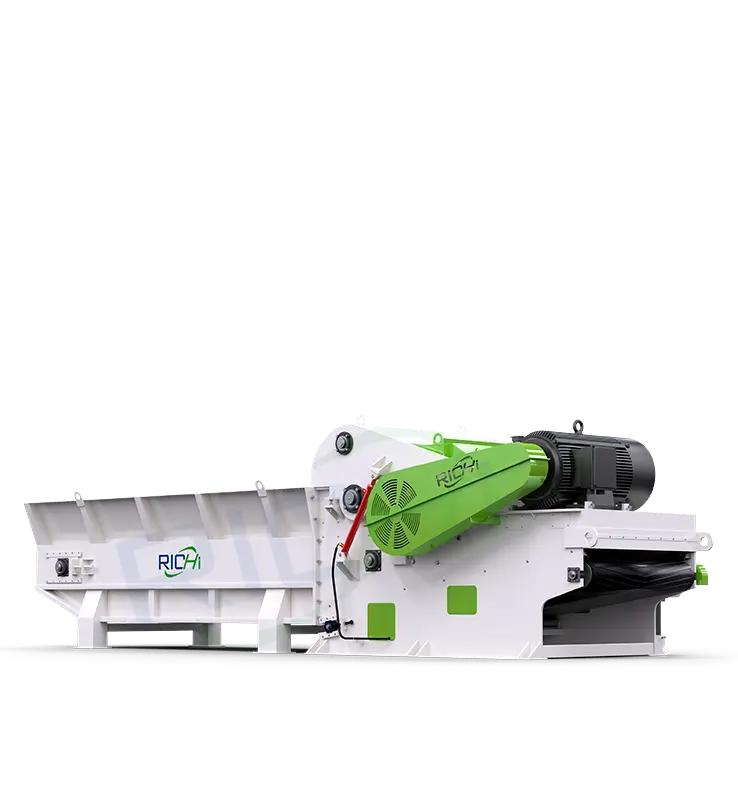
wood chipper machine
Furniture makers and sawmills generate slabs, edgings, and offcuts that are too large for direct grinding. A wood chipper in Tanzania reduces these to 20-30mm chips that can go into a hammer mill. Operations in the southern highlands use these to process eucalyptus and pine waste into chips for fuel pellet lines. The machine saves wear on downstream equipment by removing oversized material first.

shredder machine
For mixed materials—like urban waste, pallets, or construction wood—a universal shredder in Tanzania handles what chippers can’t. It processes bulky, irregular material into consistent pieces. We’ve supplied these to waste management operations in Dar es Salaam that are moving into RDF pellet production. The shredder runs slower than a chipper but handles nails and hardware without damage.

Wood Chip Dryer
High-moisture biomass won’t pellet. A rotary dryer in Tanzania reduces moisture from 35-40% down to 12-14% for materials like bagasse, wet sawdust, or fresh grass. Sugar mills near Moshi use these to dry bagasse before pelleting. The system includes a cyclone and airlock to capture fines and control emissions. Without drying, pelleting isn’t possible for many materials.

bale crusher
Grass and straw come in round or square bales that won’t feed into a hammer mill directly. A bale breaker in Tanzania tears apart compacted bales into loose material. Farmers’ cooperatives use these before grinding hay or straw for feed pellets. The machine saves labor—breaking bales by hand is slow work that adds cost.

hammer mill
For grinding grain, maize, and soybean meal, a water drop hammer mill in Tanzania delivers fine particle size for feed pellets. The design pulls material through the screen efficiently, reducing energy consumption. Feed millers in Dodoma and Morogoro use these to get the right grind size for different pellet dies. A 2mm screen produces fine meal for small pellets; 4mm works for larger dies.

mesh belt dryer
For heat-sensitive materials like fish feed or extruded pet food, a belt dryer in Tanzania provides gentle, even drying. The material moves slowly on perforated belts with controlled airflow. Fish feed producers use these to bring extruded pellets down to 8-10% moisture without cracking. The belt design prevents damage that happens in rotary dryers with sensitive products.

Feed mixer machine
Consistent pellets start with consistent mixing. A feed mixer in Tanzania blends grain, protein, minerals, and liquids like molasses before pelleting. The double-shaft paddle design handles fat and molasses better than ribbon mixers. Feed operations use these to ensure every pellet has the same nutritional profile—critical for commercial feed sales.

fertilizer crusher machine
Lumps in organic fertilizer need size reduction before pelleting. A vertical crusher in Tanzania breaks down composted manure, poultry litter, and aged biomass into fine powder. The machine runs at lower speed than hammer mills to avoid overheating organic material. Fertilizer producers use this before their pelletizing line to ensure uniform particle size.

grass straw crusher machine
For fresh or dried forage, a grass crusher in Tanzania reduces length before drying or pelleting. The machine handles wet grass and chopped silage without clogging. Dairy operations use these to process harvested pasture into uniform pieces that dry faster and pellet better. The design includes a forced feed mechanism that pulls material in.

vibrating screening machine
After pelleting, fines need removal before bagging. A grading screen in Tanzania separates dust and broken pellets from finished product. The vibratory design handles high throughput. Some customers use a second screen before pelleting to remove oversized material from raw ingredients. Clean pellets mean fewer complaints and better prices.

storage silos
Storage matters. A silo in Tanzania holds raw materials or finished pellets in weather-protected conditions. We supply small 10-ton hopper bins for feed mills and larger 50-100 ton silos for bulk operations. Pellets stored in bags absorb moisture over time; silos keep them dry. Several customers have added silos after expanding their production lines.
Frequently Asked Questions
Over the years, we’ve received thousands of questions from customers across Tanzania—farmers, feed millers, wood processors, and entrepreneurs. Some are just starting to explore pellet production. Others are expanding existing operations. Below are the questions we hear most often, organized by topic. If you don’t see your question here, just ask.
What Are the Specifications and Prices of Your Different Pellet Mills for Tanzania?
+
This is probably the question we get asked most often. Customers want to know what a pellet machine in Tanzania will actually cost them, and what kind of output they can expect. The honest answer? It depends entirely on what you’re processing and how much you plan to run.
Below is a breakdown of our main pellet mill lines with realistic output ranges and FOB price estimates. Keep in mind these are base configurations—adding conditioners, custom dies, or automation will adjust the numbers.
Feed Pellet Mills
For poultry, livestock, and fish feed production, our SZLH series ring die feed mills are what most Tanzanian customers choose. These machines handle grain-based formulations with consistent durability.
| Model | Power (kW) | Output (T/H) | Price Range (FOB USD) |
|---|---|---|---|
| SZLH250 | 22 | 1.0-1.5 | $6,500 – $8,500 |
| SZLH320 | 37 | 3-4 | $15,000 – $18,500 |
| SZLH350 | 55 | 5-6 | $26,000 – $32,000 |
| SZLH420 | 110 | 10-12 | $28,000 – $34,000 |
| SZLH508 | 160 | 15-16 | $38,000 – $46,000 |
| SZLH558 | 185 | 20-22 | $45,000 – $55,000 |
| SZLH678 | 250 | 30-33 | $60,000 – $74,000 |
| SZLH768 | 315 | 38-40 | $72,000 – $88,000 |
If you’re just starting out, the small feed pellet machine price in Tanzania for an SZLH250 usually lands around $7,500. That gets you a complete feed mill in Tanzania capable of supplying a small to medium farm operation.
Wood / Biomass Pellet Mills
Sawdust, wood shavings, and forestry residues require heavier construction. Our MZLH series includes anti-arching feeders and forced feeders to handle fibrous materials.
| Model | Power (kW) | Output (T/H) | Price Range (FOB USD) |
|---|---|---|---|
| MZLH320 | 22 | 0.2-0.3 | $13,500 – $16,500 |
| MZLH350 | 37 | 0.3-0.5 | $18,500 – $22,500 |
| MZLH420 | 90 | 1.0-1.2 | $26,500 – $32,500 |
| MZLH520 | 132 | 1.5-2.0 | $40,000 – $48,000 |
| MZLH678 | 185/200 | 2.5-3.0 | $60,000 – $74,000 |
| MZLH768 | 250/315 | 3.0-4.0 | $72,000 – $88,000 |
For furniture makers or small sawmills looking to start, the small wood pellet machine price in Tanzania for an MZLH320 typically falls around $15,000. That’s a complete biomass pellet mill in Tanzania setup ready to turn your waste into sellable bedding or fuel pellets.
Straw / Grass Pellet Mills
Pasture grass, maize stalks, and crop residues need a different approach. Our CZLH series uses larger dies and slower speeds to handle fibrous, sometimes uneven material.
| Model | Power (kW) | Output (T/H) | Price Range (FOB USD) |
|---|---|---|---|
| CZLH250 | 22 | 0.3-0.6 | $7,000 – $9,000 |
| CZLH320 | 22/37 | 0.5-1.2 | $17,500 – $21,500 |
| CZLH350 | 37 | 1.0-1.5 | $22,000 – $27,000 |
| CZLH420 | 90 | 1.8-2.5 | $27,500 – $33,500 |
| CZLH520 | 132 | 2.8-3.5 | $46,000 – $56,000 |
| CZLH678 | 185/200 | 4.0-5.5 | $66,000 – $82,000 |
| CZLH768 | 250/315 | 6.0-8.0 | $78,000 – $96,000 |
If you’re a farmers’ cooperative looking to process hay or straw, the small pellet machine price in Tanzania for a CZLH250 is around $7,900. That gets you a pelletizing machine in Tanzania capable of turning your surplus forage into storable feed.
Cat Litter Pellet Mills
Pet care is growing in urban centers. Our MSZLH series uses similar specs to our feed mills but with die configurations optimized for absorbent wood-based litter.
| Model | Power (kW) | Output (T/H) | Price Range (FOB USD) |
|---|---|---|---|
| MSZLH250 | 22 | 1.0-1.5 | $6,500 – $8,500 |
| MSZLH320 | 37 | 3-4 | $15,000 – $18,500 |
| MSZLH350 | 55 | 5-6 | $26,000 – $32,000 |
| MSZLH420 | 110 | 10-12 | $28,000 – $34,000 |
| MSZLH508 | 160 | 15-16 | $38,000 – $46,000 |
| MSZLH558 | 185 | 20-22 | $45,000 – $55,000 |
| MSZLH678 | 250 | 30-33 | $60,000 – $74,000 |
| MSZLH768 | 315 | 38-40 | $72,000 – $88,000 |
Fertilizer Pellet Mills
Organic and compound fertilizer production requires dies that resist corrosion and wear. Our FZLH series includes forced feeders for materials that don’t flow easily.
| Model | Power (kW) | Output (T/H) | Price Range (FOB USD) |
|---|---|---|---|
| FZLH250 | 22 | 1.0-1.5 | $6,500 – $8,500 |
| FZLH320 | 22 | 2-3 | $15,000 – $18,500 |
| FZLH350 | 37 | 3-5 | $22,000 – $27,000 |
| FZLH420 | 90 | 6-8 | $28,000 – $34,000 |
| FZLH520 | 132 | 9-12 | $44,000 – $54,000 |
| FZLH678 | 185 | 18-22 | $66,000 – $82,000 |
| FZLH768 | 250 | 22-26 | $78,000 – $96,000 |
What About Pricing Factors?
The cost of pellet machine in Tanzania varies based on several things. A basic feed pellet mill without conditioning costs less than one with steam injection. A wood pellet line with a screw feeder costs more than a gravity-fed setup. We’ve also found that customers often search for pellet machine price in Tanzania expecting a single number, but the reality is that configuration matters.
For livestock producers, the https://www.richipelletmachine.com/small-animal-feed-pellet-machine/small animal feed pellet machine price in Tanzania for an SZLH250 starter unit is around $7,500. For larger operations, the price of pellet machine in Tanzania for a full SZLH420 line runs higher—but the output per ton of feed is lower.
Not Everything Is Listed Here
The tables above cover our most common models, but they’re not the full range. We build pellet mills for specific applications—shrimp feed, floating fish feed, RDF pellets, biochar, and more. If your raw material doesn’t fit neatly into one of these categories, we can still build something that works. We also supply complete pellet production lines with hammer mills, dryers, mixers, and coolers.
The prices here are FOB Qingdao and represent base configurations. Adding spare dies, custom feeders, or automation will change the final number. If you want an accurate quote, tell us:
- What raw material you’re using (and its moisture content)
- How many tons per hour you need
- Whether you want just the pellet mill or a complete line
That’s the only way to get a real pelletizer for sale Tanzania price that matches your project. Contact us with your requirements, and we’ll send over a detailed proposal.
What Is the Price of a Complete Floating Fish Feed Production Line in Tanzania?
+
This comes up a lot—customers see floating feed prices in local shops and start wondering if they can produce it themselves. The question isn’t just about an extruder. It’s about the whole setup: grinding, mixing, extrusion, drying, coating, and packaging.
We’ve supplied several complete lines to fish farms around Lake Victoria and the growing pond operations near Morogoro. Here’s what the investment typically looks like.
Single-Screw Floating Fish Feed Lines
Single-screw extruders are simpler, more affordable, and work well for tilapia feed and lower-volume producers. The complete line includes a hammer mill, ribbon mixer, single-screw extruder, belt dryer, oil coating drum, and packaging system.
| Capacity | Complete Line Price (FOB USD) | Typical Application |
|---|---|---|
| 200-400 kg/h | $60,000 – $80,000 | Small farms, cooperative starter lines |
| 500-600 kg/h | $70,000 – $100,000 | Medium-scale commercial production |
| 800-1000 kg/h | $130,000 – $170,000 | Large farms, regional feed suppliers |
A single-screw fish feed extruder in Tanzania at this scale gives you floating pellets that hold together for 8-12 hours in water. The smaller lines are popular with farmers who currently buy imported feed and want to cut costs. The payback period is usually faster than people expect.
Twin-Screw Floating Fish Feed Lines
Twin-screw extruders offer more flexibility. You can switch between floating and sinking formulations without changing screws. They handle higher oil content and produce more durable pellets. The complete line includes the same supporting equipment but with a more powerful extrusion section.
| Capacity | Complete Line Price (FOB USD) | Typical Application |
|---|---|---|
| 0.5-1.0 T/H | $150,000 – $200,000 | Commercial feed plants, multiple species |
| 1.5-2.0 T/H | $440,000 – $560,000 | Regional feed factories |
| 3.0-4.0 T/H | $530,000 – $650,000 | Large-scale commercial production |
| 5.0-6.0 T/H | $670,000 – $840,000 | Industrial feed manufacturing |
| 8.0-10.0 T/H | $880,000 – $1,200,000 | Major feed mills, export production |
For customers looking at the larger end, we often see inquiries about aquaculture feed pellet mill in Tanzania that can handle both floating and sinking products. Twin-screw systems give you that versatility. The higher upfront cost makes sense if you’re serving multiple farms or planning to expand species later.
What’s Actually Included in These Prices?
When we quote a complete fish feed line, we’re not just dropping off an extruder at the port. A full floating & sinking feed pelletizer in Tanzania setup includes:
- Grinding section: Hammer mill with cyclone for raw materials like maize, soybean meal, fishmeal
- Mixing section: Ribbon or paddle mixer with liquid addition for oil and water
- Extrusion section: Single or twin-screw extruder with die plates for different pellet sizes
- Drying section: Belt dryer (for floating) or vertical dryer (for sinking) to bring moisture down to safe levels
- Coating section: Drum coater for applying oil and attractants
- Packaging section: Weighing scale and bagging conveyor
- Control system: Centralized electrical cabinet with operational controls
The fish feed pellet making machine in Tanzania market has plenty of options, but the complete line is what determines whether you can actually produce consistent quality day after day. We’ve seen customers buy just an extruder and struggle because they didn’t have proper drying or grinding capacity.
Why the Price Range?
You’ll notice the ranges are wide. That’s because every project is different. Some customers already have hammer mills and mixers from existing feed operations—they just need the extruder and dryer section. Others are starting from scratch and need everything. Raw material also matters: if you’re processing fresh fish waste versus dry fishmeal, the grinding and mixing sections change.
We’ve also noticed that when people search for floating fish feed pellet machine in Tanzania, they’re often surprised by the total investment. The extruder itself might be $30,000-$50,000 for a small line, but the dryer often costs just as much. Pellets coming out of an extruder are too wet to store—they’ll mold within days without proper drying.
What About Sinking Feed?
Some customers ask about sinking fish feed pellet mill in Tanzania for catfish or other bottom feeders. The equipment is largely the same, but the extruder configuration changes (less expansion) and the drying requirements are slightly different. We can configure twin-screw lines to produce both floating and sinking from the same machine by adjusting screw design and die plate.
What’s Not Listed Here
The tables above cover our most common complete line configurations, but they’re not exhaustive. We’ve built smaller pilot lines for research stations and larger custom systems for commercial operations. If you need something in between—say 1.2 T/H with specific pellet durability requirements—we can spec that out.
The floating fish feed machine price in Tanzania always comes back to your specific needs. Production volume, target pellet size, water stability requirements, and existing infrastructure all affect the final number.
How to Get an Accurate Quote
If you’re serious about setting up a fish feed line, here’s what we need to know to give you a real price:
- What capacity do you need (kg/h or T/H)?
- What species are you feeding (tilapia, catfish, shrimp)?
- Floating, sinking, or both?
- What raw materials do you have access to?
- Do you already have grinding, mixing, or drying equipment?
Send us those details and we’ll put together a line that matches your budget and production goals. No generic quotes—just a system designed for what you actually need to produce.
What Does a Complete Feed or Pellet Production Line Cost in Tanzania?
+
We get this question daily. Someone has raw material—maybe maize bran, maybe sawdust, maybe crop residue—and they want to know what it takes to turn it into pellets. The honest answer? It depends entirely on scale and automation level. Below is a breakdown of complete production line costs based on what we’ve actually delivered to customers across Tanzania. Every line includes the full system: grinding, mixing, pelleting, cooling, and packaging.
Small Starter Lines (Flat Die Systems)
For someone testing the market or starting with limited capital, flat die lines make sense. These are compact, simpler to operate, and can run both mash feed and pellets from the same setup. The complete line includes a hammer mill for grinding, a horizontal mixer for blending ingredients, and a flat die pellet machine. You can switch between mash and pellet production depending on what your customers want.
| Configuration | Mash Feed Capacity | Pellet Capacity | FOB Price Range |
|---|---|---|---|
| Basic starter | 1 t/h mash | 0.2-0.3 t/h pellets | $12,000 – $15,000 |
| Mid-range | 1 t/h mash | 0.5-0.6 t/h pellets | $13,500 – $16,500 |
| Enhanced | 1 t/h mash | 0.8-1.0 t/h pellets | $14,500 – $17,500 |
These small lines are popular with farmers’ cooperatives in regions like Morogoro and Dodoma who want to produce their own chicken feed. The investment is manageable, and the equipment can pay for itself within a year if you’re replacing purchased feed.
Commercial Ring Die Feed Lines
Once you’re past the starter phase and need consistent, high-volume production, ring die systems are the next step. These include weighing systems, larger hammer mills, ribbon or paddle mixers, ring die pellet mills with conditioners, counterflow coolers, and automatic bagging scales. The price range is wide because automation levels vary significantly—a manual line costs less than a fully automated PLC-controlled system.
| Capacity | FOB Price Range | Typical Application |
|---|---|---|
| 1-2 t/h | $30,000 – $60,000 | Small feed mill, cooperative feed plant |
| 3-4 t/h | $60,000 – $200,000 | Commercial feed operation |
| 5-6 t/h | $80,000 – $250,000 | Regional feed factory |
| 10 t/h | $170,000 – $320,000 | Large-scale commercial feed mill |
| 15 t/h | $240,000 – $400,000 | Industrial feed manufacturing |
| 20 t/h | $440,000 – $600,000 | Major feed production facility |
| 30 t/h | $600,000 – $700,000 | Large industrial plant |
| 40 t/h | $700,000 – $800,000 | High-capacity feed factory |
| 60 t/h | $1,000,000+ | Mega-scale production (custom design) |
The 1-2 t/h range is where many Tanzanian feed businesses start. A chicken feed pellet production line in Tanzania at this scale can supply a network of small farms while leaving room to grow. We’ve seen customers begin with a 3 t/h line and expand to 10 t/h within three years as their customer base grew.
What Determines the Price Range?
You’ll notice the ranges are wide. That’s because no two lines are identical. Here’s what moves the price:
Automation level: A manual line with local control panels costs less than a fully automated system with centralized PLC, remote monitoring, and recipe storage.
Material handling: Pneumatic conveying versus bucket elevators. Stainless steel contact parts versus carbon steel. Liquid addition systems for molasses or fat.
Building layout: A line designed for an existing building with height constraints costs differently than one planned for a new facility with optimal flow.
Dust control: Baghouse filters, cyclones, and aspiration systems add cost but are essential for worker safety and regulatory compliance.
Brand of components: Some customers prefer European motors and bearings. Others are fine with high-quality Chinese components. Both work—the price difference is significant.
Beyond Feed Lines
The same equipment configurations apply to biomass and other pellet applications. A 3 ton per hour pellet production line in Tanzania for wood or crop residues follows similar cost structures to feed lines. The main difference is in the front-end equipment—heavier hammer mills for fibrous material, rotary dryers for high-moisture biomass.
For customers looking at larger scale, a 5 tph animal feed production plant in Tanzania typically lands in the $80,000-$250,000 range depending on automation and whether drying is required. A 10 tph pellet factory in Tanzania with full automation, drying, and dust collection will be in the $170,000-$320,000 bracket.
We’ve also configured horse feed pellet plant in Tanzania setups—these often require slightly different die specifications and sometimes additional conditioning for fiber content, but the underlying line costs are similar to poultry feed lines.
What About Custom Requirements?
The tables above represent our standard configurations, but we regularly build lines outside these ranges. A commercial pellet production line in Tanzania for a specialized product—like high-fat pet food or organic fertilizer—might require different material handling or drying equipment that shifts the price.
We’ve delivered lines as small as 0.5 t/h for specialty applications and as large as 60 t/h for major industrial clients. Every project starts with a conversation about raw materials, target output, and available space.
How to Get a Real Quote
If you’re considering a feed or pellet line, here’s what helps us give you an accurate number:
- What capacity do you need (tons per hour)?
- What raw materials will you process?
- Do you need a complete line or just sections?
- What level of automation do you prefer?
- Do you have an existing building or need a new layout?
Send us those details. We’ll put together a line that matches your budget and production goals—not a generic quote, but something designed for what you actually need to produce.
What Is the Price of a Hammer Mill in Tanzania?
+
This is one of those questions where the answer really depends on what you’re grinding. A feed hammer mill in Tanzania processing maize bran for chicken feed costs differently than an industrial hammer mill in Tanzania handling wood chips for a biomass pellet line.
Below is our SFSP series water-drop hammer mill line—the same machines we’ve supplied to feed mills, pellet plants, and agricultural operations across the country. Prices are FOB Qingdao and vary based on configuration.
SFSP56 Series – Small to Medium Scale
The SFSP56*40 is where many operations start. It’s compact enough for small feed mills but still has the rotor diameter to handle consistent work.
| Model | Power (kW) | Grain Output (T/H) | Wood Output (T/H) | Price Range (FOB USD) |
|---|---|---|---|---|
| SFSP56*40 | 37 | 3-5 | 0.5-0.6 | $5,500 – $8,500 |
For a maize grinding machine in Tanzania at this scale, the SFSP56*40 does the job. It takes material up to 5cm and reduces it to powder. Screen size is customizable—swap the screen and you go from coarse meal for cattle to fine flour for poultry feed.
SFSP66 Series – Medium to Large Scale
The 660mm rotor diameter series gives you more grinding width and higher throughput. These are common in commercial feed operations and biomass processing plants.
| Model | Power (kW) | Grain Output (T/H) | Wood Output (T/H) | Price Range (FOB USD) |
|---|---|---|---|---|
| SFSP66*60 | 55-75 | 5-7 | 1.0-1.2 | $9,500 – $14,500 |
| SFSP66*80 | 75-90 | 6-10 | 2.0-2.5 | $13,500 – $19,500 |
| SFSP66*100 | 110-132 | 10-17 | 3.0-4.0 | $18,500 – $26,000 |
| SFSP66*120 | 160-185 | 20-27 | 4.0-5.0 | $26,000 – $35,000 |
| SFSP66*150 | 185-220 | 30-50 | 5.0-8.0 | $35,000 – $48,000 |
The SFSP66*60 is a popular grain hammer mill in Tanzania for medium feed mills. At 55-75 kW, it can handle 5-7 tons per hour of maize or sorghum. The wider grinding chamber means you get more throughput without increasing rotor speed.
Grain vs. Wood – Why the Output Difference?
You’ll notice the grain output is significantly higher than wood output at the same power. That’s not a machine limitation—it’s physics. Grain is brittle and shatters easily. Wood fiber is tough and requires more energy to break down.
A wood hammer mill in Tanzania processing sawdust or wood chips will always have lower throughput than a grain mill of the same size. The SFSP66*80, for example, does 6-10 t/h on grain but only 2.0-2.5 t/h on wood chips. That’s why we always ask what material you’re grinding before recommending a model.
What About Final Particle Size?
All these mills are designed to take material up to 5cm and reduce it to powder. The final size depends entirely on the screen you install. Standard screens range from 0.8mm to 20mm.
For fish feed production, customers usually run a 0.8mm or 1.0mm screen to get fine flour that extrudes well. For poultry feed, 2.0mm to 3.0mm is common. For cattle feed or wood pellets, 4.0mm to 6.0mm works fine. You can swap screens in about 10 minutes—most customers keep two or three sizes on hand.
A sawdust grinding machine in Tanzania for bedding pellets might run a 6mm screen. The same machine for boiler fuel pellets might run a 4mm screen. It’s the same machine, just different screens and maybe different hammer configuration.
What Are These Machines Used For?
We’ve installed these hammer mills across Tanzania in all sorts of settings:
- Feed mills: SFSP series as a feed grinding machine in Tanzania for maize, sorghum, soybean meal, and sunflower cake
- Wood pellet plants: SFSP models as a biomass crusher machine in Tanzania processing sawdust, wood shavings, and chips
- Fertilizer operations: Grinding composted manure and agricultural waste before pelleting
- Grain processing: As an industrial grinding mill in Tanzania for flour production or feed base
The water-drop design—that’s the shape of the grinding chamber—creates better airflow than traditional round chambers. Material moves through faster, screens last longer, and you get more consistent particle size.
What’s Not Listed Here
The tables above cover our most common models, but we build hammer mills outside these ranges too. Smaller units for pilot plants or specialty applications. Larger lines for industrial feed factories. We’ve also done custom configurations with stainless steel contact parts for wet materials or abrasive-resistant hammers for high-silica content like rice husks.
If you need a biomass grinding machine in Tanzania for a specific application—maybe rice husks, maybe palm kernel meal, maybe dried cassava—tell us what you’re grinding. The price changes based on wear parts and screen configuration.
How to Get an Accurate Quote
The price ranges above are starting points. To give you a real number, we need to know:
- What material are you grinding? (maize, wood chips, rice husks, etc.)
- What moisture content does it have?
- What final particle size do you need? (screen hole diameter)
- What capacity do you need in tons per hour?
Send us those details. We’ll recommend the right model, tell you what screens and hammers to keep in stock, and give you a firm price.
What Is the Price of a Straw and Grass Hammer Mill in Tanzania?
+
If you’re working with crop residues or forage, you already know that grinding straw and grass is different from grinding grain. Fibrous materials don’t shatter like maize—they need a machine designed to cut and tear rather than just impact.
Our SFSP series water-drop hammer mills handle both, but the throughput numbers tell a different story when you switch from grain to straw. Below are the models we’ve supplied to farmers’ cooperatives, feed operations, and pellet plants across Tanzania.
Why Straw and Grass Require More Power
Before looking at prices, it helps to understand why a straw hammer mill in Tanzania doesn’t produce the same tonnage as a grain mill with the same motor. Straw and hay are fibrous. They wrap around hammers if the screen is too fine. They require more energy to break down. The numbers below reflect real-world output with chopped straw or grass at 10-15% moisture, using a 6-10mm screen.
SFSP56 Series – Small Scale
For smaller operations or farms processing their own forage, the SFSP56*40 is a common starting point. It handles bales that have been pre-chopped or run through a bale breaker first.
| Model | Power (kW) | Straw/Grass Output (T/H) | Price Range (FOB USD) |
|---|---|---|---|
| SFSP56*40 | 37 | 0.8-1.0 | $5,500 – $8,500 |
This size works well for a grass chopper machine for sale Tanzania targeted at small dairy operations. One cooperative in Iringa uses theirs to process Napier grass for their zero-grazing dairy unit. They run it about four hours a day during the wet season, storing enough ground material to mix with concentrates for dry season feeding.
SFSP66 Series – Medium to Large Scale
The 660mm rotor diameter series gives you more grinding width, which matters with fibrous materials. Wider chamber means material doesn’t pack as easily.
| Model | Power (kW) | Straw/Grass Output (T/H) | Price Range (FOB USD) |
|---|---|---|---|
| SFSP66*60 | 55-75 | 1.0-1.5 | $9,500 – $14,500 |
| SFSP66*80 | 75-90 | 2.0-2.5 | $13,500 – $19,500 |
| SFSP66*100 | 110-132 | 3.0-4.0 | $18,500 – $26,000 |
| SFSP66*120 | 160-185 | 5.0-6.0 | $26,000 – $35,000 |
| SFSP66*150 | 185-220 | 7.0-8.0 | $35,000 – $48,000 |
The SFSP66*80 is a popular straw crusher machine in Tanzania for medium-scale pellet operations. It processes maize stalks, rice straw, and sorghum residue into material that feeds directly into a pellet mill. Output around 2.0-2.5 t/h is enough to support a 3-4 t/h pellet line running continuously.
What About Pre-Chopping?
One thing we always tell customers: straw and grass need to be pre-chopped before they hit the hammer mill. A straw chipping machine in Tanzania ahead of the hammer mill makes a massive difference. Whole bales will clog the feed hopper. Material longer than 5-10cm will wrap around the hammers. Customers who run a bale breaker or tub grinder first get much better throughput and longer screen life.
For hay, the same applies. A hay grinding mill in Tanzania running dry, pre-chopped hay at 12% moisture can hit the numbers above. Running whole bales? Cut those numbers by half.
Screen Size Matters
The output numbers above assume a 6-10mm screen. If you need finer material—say 3mm for fish feed or 4mm for poultry rations—the throughput drops. If you’re grinding coarser for cattle feed, say 12-15mm, throughput goes up.
We always recommend customers buy two or three screen sizes with their machine. A coarse screen for bulk grinding, a fine screen for specialty products. Swapping screens takes about ten minutes and doesn’t require tools on the SFSP series—the screen frame slides out.
Where Are These Machines Used?
We’ve installed these straw and grass hammer mills across Tanzania in several applications:
- Feed mills: As a straw hammer mill in Tanzania processing maize stalks and rice straw for cattle feed pellets
- Dairy operations: Farmers using them as a grass chopper machine for sale Tanzania to process Napier grass and natural pasture
- Pellet plants: Combined with CZLH series pellet mills to produce livestock feed pellets from crop residues
- Compost operations: Grinding dry crop residues to mix with manure for fertilizer pelleting
What’s Not Listed Here
The tables above focus on our standard SFSP series. We also offer specialized forage grinders with wider feed openings for customers who don’t want to pre-chop. Those machines cost more—typically 15-20% above the SFSP equivalents—but they save labor on the front end.
We’ve also done custom configurations for specific materials. Rice straw, for example, is more abrasive than wheat straw. We recommend hardened hammers and screens for customers processing a lot of rice residue.
How to Get an Accurate Quote
The price ranges above are starting points based on standard configurations. To give you a real number, we need to know:
- What material are you grinding? (maize stalks, rice straw, natural grass, etc.)
- Is it dry or wet? (moisture content matters for output)
- What screen size do you need for your final product?
- What capacity do you need in tons per hour?
- Do you have a pre-chopper or bale breaker already?
Send us those details. We’ll recommend the right model, tell you what hammers and screens to keep in stock, and give you a firm price based on your specific material and application.
What Does a Complete Biomass Wood Pellet Production Line Cost in Tanzania?
+
This is one of the most common questions we get. Someone has access to wood waste, rice husks, or crop residues—and they want to know what it takes to turn that material into pellets. The challenge is that no two biomass lines are the same.
A wood waste pellet plant in Tanzania processing dry sawdust costs very differently than a rice husk pellet production line in Tanzania that needs drying and specialized wear parts. Below are real-world price ranges based on complete lines we’ve delivered across the country. These include grinding, drying (if needed), pelleting, cooling, and bagging.
Why Such Wide Price Ranges?
Before looking at the numbers, it helps to understand what moves the price. A biomass pellet plant in Tanzania can range from a basic setup with manual controls to a fully automated pellet line in Tanzania with PLC systems, remote monitoring, and multi-stage drying. The same capacity line can vary by 2-3x depending on:
- Raw material: Dry sawdust needs no dryer. Rice husks or wet wood chips need a rotary dryer, which adds $30,000-$100,000.
- Automation: Manual lines cost less. Automated lines with touchscreen controls, recipe storage, and remote support cost more.
- Dust control: Cyclones and baghouse filters add cost but are essential for worker safety and meeting local regulations.
- Material handling: Screw conveyors versus belt conveyors. Stainless steel versus carbon steel for corrosive materials.
Complete Biomass Pellet Line Price Ranges
These are complete pellet mill lines—not just a pellet machine in Tanzania. Each line includes raw material preprocessing, grinding, drying (if applicable), pelleting, cooling, screening, and bagging.
| Capacity | Complete Line Price Range (FOB USD) | Typical Application |
|---|---|---|
| 0.2-0.3 T/H | $20,000 – $140,000 | Small farm-scale, bedding pellets, test lines |
| 0.3-0.5 T/H | $28,000 – $160,000 | Small commercial, furniture waste, local fuel |
| 1.0-1.2 T/H | $39,000 – $220,000 | Small to medium commercial operation |
| 1.5-2.0 T/H | $56,000 – $270,000 | Medium-scale production, regional distribution |
| 2.5-3.0 T/H | $78,000 – $350,000 | Commercial wood pellet plant |
| 3.0-4.0 T/H | $95,000 – $430,000 | Large-scale commercial operation |
| 5.0-6.0 T/H | $160,000 – $570,000 | Industrial pellet manufacturing |
| 6.0-8.0 T/H | $190,000 – $690,000 | Large industrial plant |
| 10-12 T/H | $280,000 – $1,100,000 | Major pellet production facility |
| 12-15 T/H | $470,000 – $1,430,000 | High-capacity industrial line |
| 20-24 T/H | $570,000 – $2,100,000 | Mega-scale production |
| Higher capacity | Custom quote | Large industrial/commercial export operations |
What’s Included in These Lines?
A complete wood pellet processing plant in Tanzania typically includes:
- Grinding section: Hammer mill with cyclone to reduce raw material to uniform particle size
- Drying section: Rotary dryer with burner (if raw material moisture exceeds 15%)
- Pelleting section: Ring die pellet mill with forced feeder and conditioner
- Cooling section: Counterflow cooler to bring pellet temperature down
- Screening section: Vibrating screen to remove fines before bagging
- Bagging section: Weighing scale and bagging conveyor
- Dust collection: Cyclones and aspiration points throughout
For a forestry residue pellet plant in Tanzania processing sawmill waste, the drying section might be minimal. For a millet stalk pellet plant in Tanzania or rice husk line, drying becomes a major cost component.
Special Considerations for Different Materials
Wood waste: A wood waste pellet plant in Tanzania processing clean, dry sawdust is the simplest configuration. Lower upfront cost, less maintenance, faster payback.
Rice husks: A rice husk pellet production line in Tanzania needs hardened wear parts. The silica in rice husks wears out standard dies and hammers faster. We recommend MZLH series mills with hardened rings and custom hammers.
Crop residues: A millet stalk pellet plant in Tanzania or maize stalk line requires a heavier hammer mill and often a bale breaker upfront. Fibrous materials don’t flow like wood dust, so forced feeders are standard.
Mixed materials: A biomass pellet plant in Tanzania handling multiple raw materials needs flexibility. Variable-speed feeders, adjustable die gap, and the ability to change screens quickly.
Automated vs. Manual
The lower end of each range represents a manual line with local controls and basic electrical cabinets. The higher end represents a complete automated pellet line in Tanzania with:
- PLC central control with touchscreen interface
- Automated start/stop sequences
- Remote monitoring capability
- Recipe storage for different raw materials
- Automated bagging and palletizing
For customers looking for a complete pellet plant for sale Tanzania that can run with minimal operator intervention, we usually recommend moving toward the mid to high end of the range.
What’s Not Listed Here
The tables above cover our most common configurations, but we build lines outside these ranges too. Smaller pilot lines for testing and research. Larger custom systems for industrial clients. We’ve also built lines specifically for animal bedding, organic fertilizer, and boiler fuel—all using the same core equipment but with different configuration priorities.
If you’re looking at a specific application—maybe bedding pellets from sawdust, or fuel pellets from coffee husks—the price will vary based on what you need.
How to Get an Accurate Quote
To give you a realistic price for a biomass pellet plant in Tanzania, we need to know:
- What raw material are you processing? (sawdust, rice husks, crop stalks, etc.)
- What is the moisture content?
- Do you need drying equipment?
- What capacity do you need in tons per hour?
- What level of automation do you prefer?
- What is the final product? (fuel, bedding, feed, fertilizer)
Send us those details. We’ll design a line that matches your material and production goals—not a generic quote, but something built for what you actually have available.
What Does a Straw & Grass Cattle Feed Pellet Plant Cost in Tanzania?
+
This is a question we get often from dairy cooperatives, livestock farmers, and feed millers. You have access to forage—maybe natural pasture grass, maybe alfalfa, maybe maize stalks—and you want to turn it into consistent feed pellets for cattle, goats, sheep, or rabbits.
The challenge is that grass and straw behave very differently than grain. They need different preprocessing, different handling, and often more robust equipment. Below are real-world price ranges for complete lines we’ve delivered across Tanzania.
Why Grass and Straw Lines Cost Differently
A cattle feed pellet plant in Tanzania processing forage has some unique requirements. Hay and straw don’t flow like grain. They need:
- Bale handling: Round or square bales need breaking before grinding
- Heavier hammer mills: Fibrous materials need more power per ton than grain
- Conditioning: Steam or molasses often helps bind fibrous pellets
- Forced feeding: Gravity-fed pellet mills choke on straw; forced feeders are essential
The numbers below reflect complete production lines including bale processing, grinding, mixing, pelleting, cooling, and bagging.
Complete Grass & Straw Feed Pellet Line Prices
These are full grass-based feed production lines—not just a pellet machine in Tanzania. Each line is configured to handle forage materials from bale form to finished pellets.
| Capacity Range | Complete Line Price Range (FOB USD) | Typical Application |
|---|---|---|
| 0.3-2 t/h | $37,000 – $62,000 | Small dairy cooperative, farm-scale production |
| 0.5-4 t/h | $80,000 – $200,000 | Medium-scale feed operation, regional supply |
| 1-6 t/h | $99,000 – $220,000 | Commercial feed mill, multiple cooperatives |
| 2-10 t/h | $190,000 – $400,000 | Large-scale commercial feed factory |
| 3-12 t/h | $220,000 – $450,000 | Industrial feed manufacturing |
| 4-20 t/h | $300,000 – $620,000 | Major feed production facility |
| Higher capacity | Custom quote | Large industrial/commercial operations |
What’s Included in These Lines?
A complete grass-based feed plant in Tanzania typically includes:
- Bale breaker or tub grinder: For processing round or square hay bales
- Forage hammer mill: Heavy-duty grinding for fibrous materials
- Mixer: Ribbon or paddle mixer with liquid addition for molasses
- Conditioner: Steam conditioning to soften fiber and improve pellet binding
- Ring die pellet mill: With forced feeder to handle fibrous mash
- Counterflow cooler: To cool pellets without cracking
- Screening and bagging: Fines removal and packaging
Different Forage Materials, Different Approaches
Alfalfa: An alfalfa-based line needs a good conditioner. Alfalfa pellets bind well with steam, and the protein content makes them valuable for dairy. We’ve installed several alfalfa pellet production lines in the northern highlands where irrigated alfalfa is common.
Natural pasture grass: Grass from the Iringa and Mbeya regions varies by season. A line processing native grasses needs flexibility in the grinding section. Screens can be swapped between coarse (for maintenance feed) and fine (for calf starters).
Clover and mixed legumes: These materials are more tender than grass but higher in protein. They grind easier but need careful moisture control in the conditioner.
Crop residues: Maize stalks, rice straw, and millet stalks are lower in nutritional value but make good roughage pellets. They’re also more abrasive. We recommend hardened wear parts for customers processing a lot of crop residue.
Bale Types Matter
The way your hay or straw arrives at the plant affects equipment choices:
- Round bales: Need a tub grinder or bale breaker with aggressive teeth
- Square bales: Can feed through a slower-speed bale processor
- Loose or chopped material: Can go directly into the hammer mill
If you’re starting with round bales of hay, factor in the bale breaker cost. If you’re buying pre-chopped forage, you might skip that section.
Hay vs. Straw vs. Silage
Dry hay (12-15% moisture) is the easiest to pellet. It grinds clean and stores well.
Straw (10-12% moisture) is more fibrous. It needs a larger die hole—usually 8-10mm—to prevent die jamming.
Silage (30-60% moisture) needs drying before pelleting. That adds cost. Most customers prefer to dry silage in the field before baling rather than installing a dryer.
What’s Not Listed Here
The tables above represent our most common forage feed line configurations, but we build outside these ranges too. Smaller lines for individual farmers who want to produce their own feed. Larger custom systems for major feed manufacturers.
We’ve also built lines specifically for rabbit feed (which needs finer grinding) and horse feed (which often requires added fiber). The same core equipment works—just different screens, dies, and formulations.
How to Get an Accurate Quote
To give you a realistic price for a forage-based feed plant in Tanzania, we need to know:
- What forage materials will you process? (alfalfa, natural grass, maize stalks, etc.)
- What form will they arrive in? (round bales, square bales, loose)
- What moisture content do your materials have?
- What capacity do you need in tons per hour?
- What species are you feeding? (cattle, goats, rabbits, horses)
Send us those details. We’ll design a line that works with your specific forage and your production goals. Every plant is different—yours will be too.
What Is the Price of a Wood Chipper Machine in Tanzania?
+
If you’re processing logs, branches, or sawmill waste for a biomass pellet line or wood products operation, you need a reliable machine to turn bulky material into uniform chips. The question we hear most often is about pricing—but the real question is what size chipper fits your raw material. Below are our XPJ series rotary drum chippers, the same machines we’ve supplied to sawmills, furniture manufacturers, and pellet plants across Tanzania.
XPJ Series Rotary Drum Chipper Price Ranges
These are complete drum chipper units including feed mechanism, main motor, hydraulic system, and discharge belt. Prices are FOB Qingdao and vary based on configuration.
| Model | Feed Opening | Max Feed Size | Main Motor (kW) | Price Range (FOB USD) |
|---|---|---|---|---|
| XPJ500x230 | 500×230 mm | φ230 mm | 75 | $16,000 – $28,000 |
| XPJ680x300 | 680×300 mm | φ300 mm | 90 | $22,000 – $38,000 |
| XPJ500x500 | 500×500 mm | φ500 mm | 110 | $28,000 – $48,000 |
| XPJ850x500 | 850×500 mm | φ500 mm | 132 | $38,000 – $65,000 |
| XPJ1200x500 | 1200×500 mm | φ500 mm | 200 | $55,000 – $85,000 |
| XPJ850x600 | 850×600 mm | φ600 mm | 200 | $65,000 – $100,000 |
What Do These Chippers Do?
A wood chipper machine in Tanzania from our XPJ series takes logs, branches, slabs, and edgings and reduces them to 20-40mm wood chips. The chip size is controlled by screens—you can customize the screen holes to get the chip size you need for your downstream process. For a biomass pellet line, 20-30mm chips are ideal before the hammer mill. For a wood crusher machine for sale Tanzania application, these chippers handle the first stage of size reduction.
Matching Machine to Material
The key specification to look at is the feed opening and maximum feed size. If you’re processing large logs from sawmill operations, the XPJ850x500 or XPJ1200x500 with a 500mm feed capacity is what you need. If you’re mainly processing branches and small-diameter wood, the XPJ500x230 or XPJ680x300 works fine.
We’ve installed a rotary drum chipper for sale Tanzania at several furniture factories in Dar es Salaam. They feed edgings and offcuts from their milling operations into the XPJ680x300, producing chips that go to their pellet line. The machine runs a few hours a day and handles everything from 50mm square offcuts to 200mm rounds.
Why Drum Chippers?
Customers often ask about the difference between drum and disc chippers. A drum chipper in Tanzania handles crooked branches and mixed wood waste better than a disc chipper. The drum design pulls material in regardless of shape. For sawmill waste, furniture offcuts, and forestry residue, drum chippers are more forgiving.
An industrial shredder for biomass in Tanzania with drum design also produces more consistent chip size than disc designs. That matters when the chips are going into a hammer mill for further reduction.
Where Are These Used?
We’ve supplied XPJ series chippers across Tanzania for various applications:
- Pellet plants: As a wood chipper for biomass in Tanzania, reducing logs and slabs to chips before the hammer mill
- Sawmills: A drum chipper for sawmill waste in Tanzania turning edgings and trimmings into saleable wood chips
- Furniture manufacturers: A wood waste grinder in Tanzania processing offcuts and reject pieces
- Biomass operations: A biomass shredder for forestry residue in Tanzania handling plantation thinnings and harvest leftovers
What’s Not Listed Here
The XPJ series are our standard rotary drum chippers. We also offer smaller units for farm-scale operations and larger custom systems for industrial clients. If you need a specific chip size, we can adjust the screen configuration. If you’re processing very hard woods like teak or eucalyptus, we can recommend hardened knives that hold their edge longer.
How to Get an Accurate Quote
To recommend the right chipper and give you a firm price, we need to know:
- What material are you chipping? (logs, branches, slabs, offcuts)
- What is the maximum diameter or cross-section?
- What capacity do you need in tons per hour?
- What chip size do you need for your next process?
Send us those details. We’ll match you with the right model and let you know what screens and knives to keep in stock.
What Is the Price of a Mixer Machine in Tanzania?
+
Mixers are one of those pieces of equipment where one size definitely does not fit all. The mixer you need for a small feed operation in Dodoma is different from what a commercial feed mill in Morogoro requires. And if you’re adding molasses or fat, you need something completely different again.
Below are our main mixer lines—the same machines we’ve supplied to feed mills, fertilizer plants, and industrial operations across Tanzania. Prices are FOB Qingdao and vary based on material, batch size, and configuration.
SLHJ Series – Single Shaft Paddle Mixers
These are our workhorse mixers for feed mills and general powder mixing. The single-shaft paddle design provides good mixing uniformity for dry materials and works well with liquid additions up to a point. They’re available in carbon steel for standard applications or stainless steel for corrosive materials like fertilizers or high-moisture ingredients.
| Model | Batch Size (kg) | Power (kW) | Material | Price Range (FOB USD) |
|---|---|---|---|---|
| SLHJ1A | 500 | 11 | Carbon steel | $2,800 – $4,500 |
| SLHJ1B | 500 | 11 | Stainless steel | $4,000 – $6,500 |
| SLHJ2A | 1000 | 22 | Carbon steel | $5,500 – $8,500 |
| SLHJ2B | 1000 | 22 | Stainless steel | $7,500 – $11,000 |
| SLHJ3A | 1500 | 30 | Carbon steel | $8,500 – $13,000 |
| SLHJ4A | 2000 | 37 | Carbon steel | $11,000 – $17,000 |
| SLHJ6A | 3000 | 55 | Carbon steel | $15,000 – $23,000 |
For a standard feed mixer in Tanzania handling dry ingredients like maize, soybean meal, and premix, the SLHJ series is what most customers choose. The paddle design gives you good mixing in 3-5 minutes per batch.
SLHSJ Series – Twin Shaft Paddle Mixers
When you need faster mixing or are handling materials that tend to clump, twin shafts are the answer. Two counter-rotating shafts create a fluidized mixing zone that achieves uniformity in 60-90 seconds. These are common in larger feed operations and industrial mixing lines.
| Model | Batch Size (kg) | Power (kW) | Material | Price Range (FOB USD) |
|---|---|---|---|---|
| SLHSJ0.5A | 250 | 5.5 | Carbon steel | $4,000 – $6,500 |
| SLHSJ0.5B | 250 | 5.5 | Stainless steel | $5,500 – $8,500 |
| SLHSJ1.0A | 500 | 7.5 | Carbon steel | $6,500 – $10,000 |
| SLHSJ1.0B | 500 | 7.5 | Stainless steel | $8,500 – $13,000 |
| SLHSJ2.0A | 1000 | 18.5 | Carbon steel | $11,000 – $17,000 |
| SLHSJ4.0A | 2000 | 30 | Carbon steel | $16,000 – $24,000 |
The twin-shaft design is popular for customers looking for a feed mixing system in Tanzania that can handle higher throughput. The shorter mixing time means you can run more batches per hour.
SLHY Series – Single Shaft Ribbon Mixers
Ribbon mixers are simpler and more affordable. They work well for dry powders and light-duty applications. The ribbon design moves material in two directions simultaneously, creating good mixing for standard feed formulations.
| Model | Batch Size (kg) | Power (kW) | Discharge | Price Range (FOB USD) |
|---|---|---|---|---|
| SLHY0.5A | 250 | 4 | Manual | $2,800 – $4,200 |
| SLHY1.0A | 500 | 7.5 | Manual | $3,800 – $5,800 |
| SLHY1.0A (pneumatic) | 500 | 7.5 | Pneumatic | $4,500 – $7,000 |
| SLHY2.5L | 1000 | 18.5 | Pneumatic | $7,500 – $11,500 |
| SLHY3.5L | 1500 | 30 | Pneumatic | $10,000 – $15,000 |
| SLHY5.0L | 2000 | 37 | Pneumatic | $13,000 – $19,000 |
| SLHY7.5L | 3000 | 45 | Pneumatic | $17,000 – $25,000 |
For smaller operations or farms producing their own feed, a ribbon mixer is often the entry point. The manual discharge models are simple and affordable. Pneumatic discharge adds convenience and speed.
STHJ Series – High-Speed Molasses Mixer
Molasses is common in cattle and dairy feed, but it’s tricky to mix. Standard mixers struggle with the sticky, heavy liquid. The STHJ series runs at higher speed and is designed specifically for continuous mixing of molasses into dry feed. These are typically installed right before the pellet mill.
| Model | Capacity (T/H) | Power (kW) | Material | Price Range (FOB USD) |
|---|---|---|---|---|
| STHJ35x200 | 15-20 | 30 | Carbon/Stainless | $14,000 – $22,000 |
| STHJ40x250 | 20-25 | 37 | Carbon/Stainless | $18,000 – $28,000 |
| STHJ50x275 | 25-30 | 45 | Carbon/Stainless | $22,000 – $34,000 |
If you’re producing feed for dairy cattle, a dedicated molasses mixer is worth the investment. It prevents the clumping and uneven coating that happens with standard paddle or ribbon mixers.
ZGH Series – Rotary Drum Mixer
For small batches—especially premixes, additives, and specialty products—a rotary drum mixer is the most practical choice. It’s simple, easy to clean, and works well for low-volume applications.
| Model | Batch Size (kg) | Power (kW) | Price Range (FOB USD) |
|---|---|---|---|
| ZGH-100 | 100 | 2.2 | $2,800 – $4,200 |
| ZGH-200 | 200 | 2.2 | $3,500 – $5,500 |
| ZGH-300 | 300 | 3 | $4,500 – $7,000 |
| ZGH-500 | 500 | 7 | $6,500 – $10,000 |
These are common for feed mills making their own premixes or for operations that need to blend small batches of specialty products.
What’s Not Listed Here
The mixers above cover the most common applications we see in Tanzania—feed mills, fertilizer blending, and general powder mixing. But we also build custom mixers for specific needs. Stainless steel for corrosive materials. Heavy-duty paddles for abrasive ingredients. Custom batch sizes for unique applications.
If you’re looking for an animal feed mixer machine in Tanzania, the right choice depends on your batch size, ingredients, and whether you’re adding liquids like oil or molasses.
How to Get an Accurate Quote
To recommend the right mixer and give you a firm price, we need to know:
- What materials are you mixing? (dry powders, wet ingredients, liquids)
- What batch size do you need in kg per batch?
- How many batches per hour do you plan to run?
- Do you need carbon steel or stainless steel?
- Do you need liquid addition capability?
Send us those details. We’ll match you with the right model and let you know what configuration works best for your application.
What Is the Price of a Rotary Drum Dryer in Tanzania?
+
If you’re setting up a biomass pellet line, the dryer is often the biggest decision you’ll make—and sometimes the biggest expense. Raw material moisture is the number one factor that determines whether you can make good pellets. Too wet, and the pellet mill jams or produces low-quality pellets that fall apart. Too dry, and you lose binding ability. Below are our rotary drum dryers, the same machines we’ve supplied to pellet plants, feed operations, and biomass processors across Tanzania.
Why Drying Matters for Tanzanian Operations
The question we hear most often is about pellet mill pricing, but the reality is that many raw materials in Tanzania come with moisture levels that make direct pelleting impossible. Fresh wood chips run 35-45% moisture. Rice husks after milling are around 12-14%—actually workable. But bagasse from sugar mills can be 48-50% moisture. A rotary dryer in Tanzania is what makes those wet materials usable.
Rotary Drum Dryer Price Ranges
These are complete dryer systems including the rotating drum, burner, cyclone, airlock, and control panel. Prices are FOB Qingdao and vary based on diameter, length, and whether it’s a single-pass or triple-pass design.
| Model | Diameter (m) | Length (m) | Type | Price Range (FOB USD) |
|---|---|---|---|---|
| φ0.6×6 | 0.6 | 6 | Single-pass | $15,000 – $25,000 |
| φ0.8×8 | 0.8 | 8 | Single-pass | $20,000 – $35,000 |
| φ1.2×12 | 1.2 | 12 | Single-pass | $28,000 – $45,000 |
| φ1.5×15 | 1.5 | 15 | Single-pass | $38,000 – $60,000 |
| φ1.8×18 | 1.8 | 18 | Single-pass | $48,000 – $75,000 |
| φ1.8×20 | 1.8 | 20 | Single-pass | $52,000 – $82,000 |
| φ1.8×36 | 1.8 | 36 | Single-pass | $85,000 – $135,000 |
| φ1.8x12x3C | 1.8 | 12 | Triple-pass | $65,000 – $105,000 |
| φ1.8x24x3C | 1.8 | 24 | Triple-pass | $110,000 – $180,000 |
What’s the Difference Between Single-Pass and Triple-Pass?
A single-pass dryer has one rotating drum. Material enters one end and exits the other. Simple, reliable, and easier to maintain.
A triple-pass dryer (the models ending with 3C) has three concentric drums nested inside each other. Material travels through the inner drum, then back through the middle, then through the outer. This gives you more drying time in a smaller footprint. For the same diameter, a triple-pass dryer can handle higher throughput or reduce moisture further.
For a wood chip rotary dryer in Tanzania processing sawmill waste at 35% moisture down to 12%, a single-pass drum of appropriate length works fine. For bagasse or other high-moisture materials, the triple-pass design is often the better choice.
Matching Dryer Size to Material
The right dryer depends on three things: material type, starting moisture, and target throughput.
Sawdust: A sawdust dryer in Tanzania for wood pellet production typically needs to bring moisture from 35-40% down to 12-15%. A φ1.5×15 or φ1.8×18 single-pass handles 1-2 t/h of dried output.
Wood chips: A wood chip dryer in Tanzania processing larger particles needs longer residence time. The φ1.8×20 or φ1.8×36 single-pass models are common.
Crop residues: An agricultural residue rotary dryer in Tanzania for maize stalks or rice straw needs good airflow to prevent scorching. The triple-pass design handles these fibrous materials well.
Straw: A rotary dryer for straw in Tanzania needs to handle fluffy, lightweight material without blowing it out the exhaust. We recommend lower airflow settings and sometimes add internal lifters designed for fibrous materials.
What’s Included in the Price?
When we quote a biomass rotary dryer in Tanzania, we’re not just sending the drum. The complete system includes:
- Rotating drum with internal lifters and flights
- Burner system (diesel, gas, or biomass-fired)
- Cyclone separator to capture dried material
- Airlock feeder to control material flow
- Exhaust fan and ductwork
- Control panel with temperature monitoring
A biomass drying equipment in Tanzania setup without these components won’t work properly. The burner provides heat. The cyclone captures the product. The airlock keeps air from leaking back.
Where Are These Dryers Used?
We’ve supplied rotary dryers across Tanzania for various applications:
- Pellet plants: As a biomass rotary dryer in Tanzania preparing raw material before pelleting
- Sugar mills: Drying bagasse for boiler fuel or pellet production
- Sawmills: A wood chip rotary dryer in Tanzania for processing wet sawmill waste
- Feed operations: An industrial drying system in Tanzania for high-moisture grains or silage
- Fertilizer plants: Drying organic materials before pelleting
What’s Not Listed Here
The dryers above are our standard rotary drum designs. We also offer smaller units for farm-scale operations and larger custom systems for industrial clients. If you need a specific throughput or have unusual material characteristics, we can adjust the drum design, flight configuration, and burner type.
We’ve also built dryers with stainless steel contact parts for corrosive materials like certain fertilizers or salt-laden wood waste.
How to Get an Accurate Quote
To recommend the right dryer and give you a firm price, we need to know:
- What material are you drying? (sawdust, wood chips, bagasse, crop residues, etc.)
- What is the starting moisture content?
- What is your target moisture content after drying?
- How many tons per hour do you need to dry?
Send us those details. Drying is the most critical part of many biomass operations, and the wrong dryer can shut down an entire production line. We’ll help you get it right the first time.
What Is the Price of a Belt Dryer Machine in Tanzania?
+
When you’re drying products that can’t handle high heat or rough tumbling, a belt dryer is often the right choice. Unlike rotary dryers that tumble material, belt dryers move product gently on perforated belts while warm air passes through. This makes them ideal for fish feed, fruits, vegetables, and other heat-sensitive materials.
Below are our belt dryer models—the same machines we’ve supplied to fish feed producers, food processors, and forage operations across Tanzania.
Why Choose a Belt Dryer?
The question of belt dryer versus rotary dryer comes down to your product. A belt dryer in Tanzania is the better choice when:
- Your product is delicate (floating fish feed pellets, extruded snacks)
- You need even drying without mechanical tumbling
- Your product is sticky or prone to breaking
- You’re drying thin layers of material like sliced fruit or vegetables
For fish feed producers around Lake Victoria and Mwanza, belt dryers are standard equipment. A fish feed dryer in Tanzania needs to bring extruded pellets from 25-30% moisture down to 8-10% without cracking the pellets or damaging the expansion. Rotary dryers are too aggressive for this application.
DHG Series – Electric Heating Belt Dryers
These models use electric heating elements, which makes them simpler to install where fuel sources are limited. They’re common for smaller operations and for products where temperature control is critical.
| Model | Drying Area (m²) | Belt Width (m) | Layers | Power (kW) | Price Range (FOB USD) |
|---|---|---|---|---|---|
| DHG-400 | 13 | 0.8 | 5 | 42-45 | $13,000 – $22,000 |
| DHG-500 | 21 | 1.0 | 5 | 55-60 | $20,000 – $35,000 |
| DHG-1000 | 43 | 1.2 | 5 | 78-85 | $35,000 – $58,000 |
| DHG-2000 | 58 | 1.6 | 5 | 142-150 | $55,000 – $85,000 |
Electric belt dryers are popular for smaller fish feed operations and food drying businesses. A fish feed drying machine in Tanzania in the DHG series gives you precise temperature control, which matters when you’re trying to maintain pellet expansion and nutritional value.
QHG Series – Steam Heating Belt Dryers
For larger operations or facilities that already have steam boilers, steam-heated belt dryers are more economical to run. Steam is generally cheaper than electricity for heating, and these units can handle higher throughput.
| Model | Drying Area (m²) | Belt Width (m) | Layers | Power (kW) | Price Range (FOB USD) |
|---|---|---|---|---|---|
| QHG-500 | 21 | 1.0 | 5 | 5-6 | $28,000 – $48,000 |
| QHG-1000 | 43 | 1.2 | 5 | 8-9 | $48,000 – $78,000 |
| QHG-2000 | 58 | 1.6 | 5 | 8-9 | $70,000 – $110,000 |
Steam-heated models have much lower electrical consumption because the heating comes from steam rather than resistance elements. For a commercial feed drying machine in Tanzania running 8-10 hours a day, the operating cost difference between electric and steam is significant.
What Products Are Dried on Belt Dryers?
We’ve installed belt dryers across Tanzania for various applications:
Fish feed: A fish feed dryer in Tanzania is the most common application. Floating pellets come out of the extruder at 25-30% moisture and need gentle drying to 8-10% without cracking. The belt dryer’s stationary belts prevent the mechanical damage that happens in rotary dryers.
Fruits and vegetables: A fruit drying equipment in Tanzania for mangoes, bananas, or vegetables needs even airflow and adjustable temperature zones. Belt dryers allow different sections to run at different temperatures—higher at the front to remove surface moisture, lower toward the end to prevent scorching.
Grains: A grain dryer machine in Tanzania for specialty grains or seeds that need gentle handling. The belt design prevents cracking that can happen in continuous flow dryers.
Forage and hay: A forage belt dryer for sale Tanzania processes chopped alfalfa, grass, or other forages. The belt system allows thin-layer drying that preserves color and nutritional value better than sun drying.
Vegetables: A vegetable drying machine in Tanzania for onions, carrots, or leafy greens. The belts can be configured with different mesh sizes depending on the product.
General food products: A food drying machine in Tanzania for snacks, pet treats, or extruded human foods. The gentle handling and precise temperature control make belt dryers the standard in food processing.
How Belt Dryers Work
The principle is simple. Material spreads evenly on the top belt. As it moves through the dryer, warm air passes through the belt from below or above. After completing one belt, material drops to the next belt below, turning over automatically. By the time it reaches the bottom, moisture is reduced to the target level.
The dehumidification system removes saturated air and brings in fresh, dry air. This continuous air exchange is what allows the dryer to run efficiently.
What’s Not Listed Here
The DHG and QHG series are our standard belt dryers. We also offer:
- Custom belt widths: For larger or smaller production volumes
- Additional layers: Up to 7 layers for longer drying time
- Gas heating: For operations without steam or where electricity is expensive
- Stainless steel construction: For food-grade applications or corrosive materials
- Cooling sections: Integrated cooling zones at the discharge end
For a belt dryer for hay in Tanzania or forage applications, we can adjust belt speed and airflow to handle lightweight, fluffy materials that might otherwise blow off the belts.
How to Get an Accurate Quote
To recommend the right belt dryer and give you a firm price, we need to know:
- What product are you drying? (fish feed, fruits, vegetables, forage, etc.)
- What is the starting moisture content?
- What is your target moisture content?
- What capacity do you need in kg per hour or tons per hour?
- Do you have steam available, or do you need electric heating?
Send us those details. Belt dryers are a significant investment, but for heat-sensitive products, they’re often the only option that works. We’ll help you get the right configuration for your specific product and production goals.
What Is the Price of an Automatic Weighing Packing Machine in Tanzania?
+
Once you’ve made your pellets or feed, you need to get them into bags efficiently and accurately. Hand-weighing and manual bagging is slow, inconsistent, and adds labor cost. An automatic packing machine pays for itself quickly in labor savings and consistent bag weights.
Below are our DCS series automatic bagging systems—the same machines we’ve supplied to complete feed mill plants, pellet plants, and agricultural processors across Tanzania.
Why Automatic Bagging Matters
The last step of your production line is often the one that gets overlooked, but it’s where your product meets the customer. A pellet packing machine in Tanzania that delivers consistent bag weights builds trust with buyers. Underweight bags lead to complaints. Overweight bags eat into your margins. Automatic systems eliminate both problems.
DCS Series Automatic Packing Machine Price Ranges
These are complete bagging systems including the weighing hopper, feeding mechanism, bag clamp, and control panel. Prices are FOB Qingdao and vary based on feeding method, speed, and material construction.
| Model | Application | Feed Type | Speed (bags/min) | Price Range (FOB USD) |
|---|---|---|---|---|
| DCS-50W | Granules (pellets, grain) | Gravity | 2-3 | $5,000 – $8,500 |
| DCS-50K | Granules (pellets, grain) | Gravity | 5-6 | $7,500 – $12,000 |
| DCS-50F | Powders (flour, mash feed) | Screw (auger) | 6-8 | $9,500 – $15,000 |
| DCS-50P | Granules & powders | Belt feed | 6-8 | $10,000 – $16,000 |
| DCS-50P×2 | Granules & powders | Dual belt feed | 10-12 | $15,000 – $22,000 |
| DCS-50FB | Premix, specialty powders | Screw (stainless) | 6-8 | $12,000 – $19,000 |
Choosing the Right Feeding Method
The feeding mechanism is the most important difference between these models. It determines what materials the machine can handle and how fast it runs.
Gravity feed (DCS-50W, DCS-50K): Simple and reliable for free-flowing materials. If you’re bagging wood pellets, feed pellets, or grains, gravity feed works well. The material flows from a hopper directly into the weighing bucket. Speed is determined by how fast you can change bags.
Screw feed (DCS-50F, DCS-50FB): For powders and materials that don’t flow easily. Mash feed, flour, and fine powders need an auger to push material into the weighing system. The DCS-50FB adds stainless steel construction for premixes and corrosive materials.
Belt feed (DCS-50P, DCS-50P×2): The most versatile option. A belt feeder handles both granules and powders without changing parts. The twin-belt version (×2) gives you double the speed—ideal for larger operations.
What Are These Machines Used For?
We’ve installed DCS series bagging systems across Tanzania for various applications:
Animal feed processing plants: A feed bagging machine in Tanzania for poultry and livestock feed. The DCS-50P handles both pelleted feed and mash feed on the same machine.
Pellet plants: A pellet bagging machine in Tanzania for wood pellets, grass pellets, or biomass fuel. The DCS-50K with gravity feed is fast enough for most pellet operations.
Grain processing: For bagging maize, beans, or other grains after cleaning or drying. The gravity feed models handle free-flowing grains efficiently.
Fertilizer production: For bagging organic or compound fertilizer pellets. The DCS-50P handles the slightly sticky nature of some fertilizer pellets better than gravity-only models.
Premix and additives: A pellet packaging machine in Tanzania for high-value premixes needs accuracy and cleanliness. The stainless steel DCS-50FB is the right choice here.
Accuracy Matters
All DCS models offer the same precision: ±0.1% static accuracy and ±0.2% dynamic accuracy. What does that mean in real terms? For a 50kg bag, you’re looking at ±50-100 grams. That’s tighter than most manual bagging operations can achieve consistently.
The machine achieves this through a two-stage feeding process. Fast feed gets most of the material into the hopper quickly. Then a slow feed trickles in the last bit until the target weight is reached. This combination of speed and accuracy is what makes these machines so effective.
Bag Closing Options
The packing machine fills the bag, but you still need to close it. We offer three closure options that integrate with the system:
- Thermoplastic sealing: Heat seals plastic bags. Common for smaller consumer-sized packages.
- Sewing (seam sealing): Stitches the top of woven poly or paper bags. This is what most feed and pellet operations use for 25kg and 50kg bags.
- Mixed sealing: Combines both options for different bag types.
Tell us what kind of bags you use, and we’ll configure the discharge section accordingly.
What’s Not Listed Here
The DCS series Automatic Bagging Machine covers our most common bagging systems, but we also offer:
- Smaller units: For 5kg, 10kg, or 20kg consumer-sized bags
- Larger units: For bulk bags (super sacks) up to 1000kg
- Complete bagging lines: Including bag conveyors, sewing heads, and palletizers
- Stainless steel construction: For food-grade or corrosive applications beyond the DCS-50FB
For customers looking for a pellet packing machine in Tanzania that can run all day with minimal operator attention, the DCS series delivers.
How to Get an Accurate Quote
To recommend the right bagging system and give you a firm price, we need to know:
- What material are you bagging? (pellets, mash feed, grain, powder)
- What bag size (weight) do you need?
- How many bags per minute do you need to fill?
- What type of bags do you use? (plastic, woven poly, paper)
- What closure method do you prefer? (sewing, heat seal)
Send us those details. A good bagging system is the final piece of a reliable production line, and we’ll help you get it right.
What Is the Price of a Pellet Cooler Machine in Tanzania?
+
One piece of equipment that new pellet producers sometimes overlook is the cooler. Pellets coming out of a ring die mill are hot—usually 70-90°C—and they contain residual moisture that hasn’t fully evaporated. If you bag them immediately, that heat and moisture turn into condensation inside the bag. Within days, you get mold, broken pellets, and unhappy customers.
A pellet cooler machine in Tanzania solves this by bringing pellets down to near ambient temperature before bagging. Below are our SKLF and SKLY counterflow coolers—the same machines we’ve supplied to feed mills and pellet plants across the country.
Why Counterflow Cooling?
The question we get is often “why a counterflow design?” The answer is efficiency. In a counterflow cooler, cold air moves upward through the pellet bed while hot pellets move downward. The hottest pellets meet the coolest air at the bottom, and the coolest pellets meet the warmest air at the top.
This temperature gradient gives you the most efficient heat exchange. A counterflow cooler in Tanzania can bring pellets from 80°C down to room temperature plus 3-5°C in 6-15 minutes, depending on pellet size and airflow.
SKLF Series – Flap Discharge Cooler
The SKLF series uses a flap-type discharge mechanism. Multiple flaps open in sequence at the bottom of the cooling chamber, allowing pellets to drop out in layers. This design gives you very even cooling and works well for most pellet applications.
| Model | Capacity (T/H) | Power (kW) | Price Range (FOB USD) |
|---|---|---|---|
| SKLF11x11 | 1-3 | 1.5 | $4,000 – $7,000 |
| SKLF14x14 | 3-5 | 1.5 | $5,500 – $9,000 |
| SKLF17x17 | 6-8 | 1.5 | $7,000 – $11,000 |
| SKLF20x20 | 8-13 | 1.5 | $9,000 – $14,000 |
| SKLF24x24 | 13-20 | 2.2 | $12,000 – $18,000 |
| SKLF28x28 | 25-30 | 2.2 | $15,000 – $22,000 |
| SKLF32x32 | 30-40 | 2.2 | $18,000 – $26,000 |
The flap discharge is what most feed mills in Tanzania prefer. It’s reliable, handles a wide range of pellet sizes, and doesn’t require compressed air to operate.
SKLY Series – Rotary Discharge Cooler
The SKLY series uses a rotary (impeller) discharge mechanism at the bottom. Instead of flaps, a rotating wheel with pockets scoops pellets out of the cooling chamber. This design gives you very consistent flow and is often used in larger automated lines.
| Model | Capacity (T/H) | Power (kW) | Price Range (FOB USD) |
|---|---|---|---|
| SKLY11x11 | 1-3 | 1.5 | $4,500 – $7,500 |
| SKLY14x14 | 3-5 | 1.5 | $6,000 – $9,500 |
| SKLY17x17 | 6-8 | 1.5 | $7,500 – $11,500 |
| SKLY20x20 | 8-13 | 1.5 | $9,500 – $14,500 |
| SKLY24x24 | 13-20 | 2.2 | $12,500 – $18,500 |
| SKLY28x28 | 25-30 | 2.2 | $15,500 – $22,500 |
| SKLY32x32 | 30-40 | 2.2 | $18,500 – $27,000 |
The rotary discharge gives you more precise control over flow rate, which matters if your cooler feeds directly into a bagging scale or if you’re running a fully automated pellet cooling system in Tanzania.
What’s the Difference?
Both designs achieve the same cooling result: pellets come out at room temperature plus 3-5°C. The difference is in how they discharge.
Flap discharge (SKLF): Simpler mechanism. Fewer moving parts. Works well for most feed and biomass pellets. The flaps open in sequence, so pellets from different areas of the cooling chamber mix as they discharge. This is the more common choice for medium-sized operations.
Rotary discharge (SKLY): More precise flow control. Better for larger automated lines where you need to match discharge rate to downstream equipment. The rotating impeller gives you a consistent flow rate regardless of pellet level in the chamber.
What Are These Coolers Used For?
We’ve installed pellet cooling systems across Tanzania for various applications:
Feed mills: A pellet cooler in Tanzania for poultry, cattle, and pig feed. Pellets come out of the SZLH series mill at 70-80°C and need to cool before bagging. The SKLF series is common here.
Biomass pellet plants: For wood pellets, grass pellets, and crop residue pellets. Biomass pellets often need slightly longer cooling times because they’re denser than feed pellets. Both SKLF and SKLY work well.
Fish feed operations: For extruded floating pellets. The gentler cooling in a counterflow design helps prevent cracking that can happen if pellets are cooled too fast.
What’s Not Listed Here
The SKLF and SKLY series cover our standard cooler sizes, but we also offer:
- Smaller coolers: For pilot plants or very small operations
- Larger coolers: For industrial-scale production beyond 40 T/H
- Stainless steel construction: For corrosive materials or food-grade applications
- Integrated fines removal: Some models include a screening section at the discharge to remove broken pellets
For customers looking for a pellet cooling machine in Tanzania that integrates with their existing line, we can match the cooler size to your pellet mill capacity.
How to Get an Accurate Quote
To recommend the right cooler and give you a firm price, we need to know:
- What capacity do you need in tons per hour?
- What type of pellets are you cooling? (feed, wood, grass, etc.)
- What is your current pellet temperature coming out of the mill?
- Do you prefer flap or rotary discharge?
Send us those details. A good cooling system is what makes your pellets shelf-stable and saleable. We’ll help you get the right one for your operation.
We have maize stalks and rice husks from our farm in Mbeya. What size pellet machine in Tanzania would handle 2-3 tons per hour of mixed agricultural waste?
+
For that capacity with mixed agricultural residues, we typically recommend our CZLH420 ring die pellet mill. It’s rated for 1.8-2.5 t/h on straw and crop residues, which puts you right in your target range. The CZLH series handles fibrous materials better than standard feed mills because of the larger die diameter and forced feeder design.
With mixed materials like maize stalks and rice husks, you’ll want a hammer mill ahead of the pellet mill—our SFSP66*60 works well for this scale. The complete line including grinding, pelleting, and cooling would run roughly $45,000-$85,000 depending on automation level. We’ve supplied similar setups to cooperatives in Iringa and Tabora
I run a dairy operation near Arusha and want to make my own cattle feed. What’s the difference between a dairy cattle feed pellet machine in Tanzania and a standard feed mill?
+
The main difference is in the conditioning and die specifications. A dairy cattle feed pellet machine needs to handle higher fiber content—think hay, silage, or crop residues mixed with grain. Our SZLH320 or SZLH350 ring die animal feed granulators work well for dairy rations, but we add a steam conditioner to soften the fiber and often specify a larger die hole (6mm or 8mm) compared to poultry feed.
For a 3-5 t/h dairy operation, the SZLH350 with a 6mm die gives you good pellet durability without over-processing. We’ve installed several of these for dairy cooperatives in the northern highlands. A complete feed plant with mixer, conditioner, and cooler typically runs $60,000-$130,000 for that capacity.
Looking at a 5 tph pellet machine in Tanzania for wood processing. We have sawmill waste—mostly pine and eucalyptus. Do we need a different die for each wood type?
+
You can run both pine and eucalyptus through the same MZLH520 or MZLH678 ring die wood pellet extruder machine, but you’ll want to dial in the settings for each. Pine is softer and compresses easily—a 6mm die with standard compression ratio works fine. Eucalyptus is denser and may require a slightly higher compression ratio to get good pellet density.
We usually recommend starting with a 1:6 compression ratio and keeping extra dies on hand so you can swap when switching wood types. For 5 t/h, our MZLH678 with 250kW main motor is the right fit.
The complete wood pellet line with chipper, hammer mill, dryer, and cooler typically runs $150,000-$350,000 depending on whether you need drying equipment. We’ve supplied this setup to several sawmills in the southern highlands.
We’re a farmers’ cooperative in Iringa with access to wheat straw and sorghum stalks. Can a single straw pellet machine in Tanzania handle both materials without changing parts?
+
Yes, our CZLH420 or CZLH520 ring die mills handle both wheat straw and sorghum stalks without changing mechanical parts. You will want to adjust the die selection based on the material. Wheat straw is slightly softer and compresses well with a standard die.
Sorghum stalks are more fibrous and may need a die with slightly larger holes (8mm vs 6mm) to prevent binding. The forced feeder on the CZLH series is essential for both materials—without it, fluffy straw won’t feed into the die properly.
For 3-4 t/h capacity, the CZLH520 wheat straw pellet machine with 132kW motor is a good choice. Complete lines we’ve delivered to cooperatives in Iringa run around $40,000-$150,000 depending on whether you need drying.
What’s the smallest commercial-scale industrial pellet machine in Tanzania you recommend for someone starting a feed business? We’re thinking 3 tons per hour.
+
For a 3 t/h start-up feed operation, our SZLH320 ring die animal feed pellet press is what we recommend most often. It’s rated for 3-4 t/h on standard poultry or pig feed formulations, which gives you room to grow. The 37kW main motor is efficient, and the machine includes a conditioner for steam or molasses addition.
You’ll also need a hammer mill—the SFSP66*60 is a good match—and a mixer like our SLHJ2A for 1000kg batches.
A complete 3 t/h animal feed pellet plant with cooler and bagging scale typically runs $35,000-$95,000 depending on automation level. We’ve helped several customers in Morogoro and Dodoma start with this setup and expand to 6-8 t/h later by adding a second line.
We want to produce both floating fish feed and sinking shrimp feed. Is there one fish feed extruder in Tanzania that can do both?
+
Yes, our twin-screw extruder SPHS series can produce both floating and sinking feeds from the same machine. The difference is in the die plate and screw configuration. For floating feed, you use a higher expansion die and run the screws at settings that create more internal steam. For sinking feed, you reduce expansion and may adjust the moisture content.
The SPHS75x2 with 75kW main motor handles 1-1.5 t/h of floating feed or slightly higher for sinking. For larger production, the SPHS120x2 with 132kW handles 2-3 t/h. The complete extrusion line including grinder, mixer, dryer, and coater runs $130,000-$280,000 depending on capacity. We’ve installed these for tilapia farms around Lake Victoria and catfish operations in Morogoro.
Looking at a 10 tph pellet machine in Tanzania for a commercial feed operation. We’ll be making layer feed, broiler feed, and pig feed. Can one machine handle all three with just die changes?
+
Absolutely. Our SZLH508 or SZLH558 ring die feed mills are designed for exactly this scenario. With die changes, you can switch between 3mm crumbles for broilers, 4.5mm pellets for layers, and 5-6mm pellets for pigs. The SZLH508 with 160kW motor handles 15 t/h on standard formulations, so you have capacity buffer. We recommend keeping separate dies for each product and labeling them clearly—die swaps take about 30 minutes once your operators are trained. The complete 10-15 t/h feed plant with weighing system, hammer mill (SFSP66*100 or larger), mixer (SLHJ4A or SLHSJ4.0A), cooler, and bagging scale typically runs $170,000-$320,000. We’ve built several of these for commercial feed manufacturers in Arusha and Dar es Salaam.
We have sugarcane bagasse from our mill near Moshi. Does a sugarcane bagasse pellet mill in Tanzania need special wear parts because of the silica content?
+
Yes, bagasse is abrasive—the silica content wears standard dies and rollers faster than wood or grain. For our MZLH series biomass pellet mills, we offer hardened dies with extra surface treatment and stainless steel roller shells that resist wear. The MZLH520 or MZLH678 with 132-185kW is what we typically recommend for bagasse.
The bigger issue is moisture—fresh bagasse runs 45-50% moisture, so you’ll need a rotary dryer before the pellet mill. Our φ1.8×20 or φ1.8×24 single-pass dryers work well for bagasse. A complete line including dryer, hammer mill, pellet mill, and cooler runs $140,000-$280,000. We’ve supplied this setup to two sugar mills in the Moshi area.
What capacity range do your organic fertilizer pellet machines cover? We’re starting with 2 tons per hour but may expand to 8-10 tons later.
+
Our FZLH series fertilizer pellet mills cover from 1 t/h up to 25 t/h. For 2 t/h start-up, the FZLH320 with 22kW motor is a good fit—it’s rated for 2-3 t/h on composted manure. For future expansion to 8-10 t/h, you could either add a second FZLH320 line or upgrade to a single FZLH520 with 132kW motor.
We usually recommend starting with the larger single line if budget allows—the FZLH520 handles 9-12 t/h and gives you room to grow without adding complexity. You’ll also need a vertical crusher for lumps and a dryer if your raw material moisture exceeds 25%.
Complete fertilizer pellet lines run $40,000-$150,000 depending on capacity and whether you need drying. We’ve installed these for compost operations in Arusha and Mwanza.
We need a chicken feed pellet production line in Tanzania that can do 15 tons per hour. Do you build lines that size, or do we need to combine multiple machines?
+
We build single lines up to 40 t/h. For 15 t/h, our SZLH508 with 160kW motor handles 15-16 t/h on standard chicken feed. You don’t need multiple pellet mills for that capacity—one properly sized mill with the right die and conditioner does the job efficiently.
The complete line includes a SFSP66*120 hammer mill for grinding, a SLHSJ4.0A twin-shaft mixer for fast batch mixing, the SZLH508 pellet mill with steam conditioner, a SKLF24x24 cooler, and an automatic bagging scale.
Total investment for a fully automated 15 t/h feed mill factory typically runs $240,000-$400,000. We’ve built several of these for commercial feed manufacturers serving the layer and broiler markets.
Our poultry farm produces about 5 tons of chicken litter per week. What’s the best poultry manure pellet mill in Tanzania for turning this into fertilizer?
+
For 5 tons per week, that’s roughly 0.2-0.3 t/h if you run 2-3 days a week. Our FZLH250 fertilizer pellet mill is a good fit for that scale—22kW motor, handles 1-1.5 t/h, so you can process your weekly litter in a few hours. The bigger consideration is moisture. Fresh chicken litter runs 40-50% moisture, which is too wet for direct pelleting.
You’ll need either a rotary dryer or a composting period to bring moisture below 25%. We recommend composting for 3-4 weeks first—it reduces moisture and stabilizes the material. The FZLH250 small fertilizer pellet machine alone runs $5,000-$8,500. With a dryer, add $15,000-$25,000 depending on size.
We have access to both corn stalks and corn cobs. Which is better for a corn stalk pellet machine in Tanzania? Does the cob need different processing?
+
Both work, but corn cobs are actually easier to pellet than stalks. Cobs have higher lignin content, which acts as a natural binder, and they’re more consistent in texture. Stalks are more fibrous and need more power to grind and pellet. For a corn cob pellet machine setup, our MZLH420 handles both materials—but you’ll want a different hammer mill screen.
For cobs, a 6mm screen gives you good particle size for pelleting.
For stalks, you may want a 4mm screen to get finer material that binds better.
If you have both materials, we recommend grinding them separately and mixing to balance fiber and binding properties. A complete line for 2-3 t/h runs $35,000-$110,000 depending on drying needs.
We want to make horse bedding from sawdust. What’s the difference between a sawdust pellet machine in Tanzania and a wood bedding pellet machine?
+
Technically, it’s the same MZLH series ring die pellet mill—the difference is in the die size and how you run the machine. For horse bedding, you want 8mm or 10mm pellets that are less dense than fuel pellets. You use a die with lower compression ratio and run the mill at lower speeds to get a softer pellet that absorbs moisture well.
For sawdust bedding, the MZLH350 or MZLH420 with 37-90kW is common for 1-2 t/h. For larger bedding operations, the MZLH520 with 132kW handles 2-3 t/h. The complete wood bedding pellet plant with chipper, hammer mill, cooler, and bagging scale runs $35,000-$150,000.
We’ve supplied these to furniture manufacturers in Dar es Salaam who now sell bedding pellets to equestrian operations.
We’re a sawmill in Tanga with mostly hardwood offcuts. Is there a hardwood pellet machine for sale Tanzania that can handle dense tropical species like teak and mahogany?
+
Yes, but you need more power per ton than softwoods. Our MZLH520 or MZLH678 with 132-185kW are designed for dense hardwoods. The key is in the die selection—hardwoods need a die with compression ratio around 1:5 or 1:5.5, compared to 1:6 for softwoods.
You’ll also want a heavier hammer mill ahead of the hardwood pellet mill. Our SFSP66*100 with 110-132kW handles teak and mahogany offcuts well. The complete line for 2-3 t/h runs $120,000-$250,000 depending on whether you need drying. We’ve installed this setup for sawmills in the southern highlands where eucalyptus and pine are common.
We grow alfalfa and want to produce pellets for export. What capacity forage pellet machine in Tanzania would handle 20 tons per day?
+
20 tons per day assuming an 8-hour shift means you need about 2.5 t/h. Our CZLH420 ring die alfalfa pellet machine with 90kW motor handles 1.8-2.5 t/h on alfalfa, which puts you right in range. For consistent quality on alfalfa, you’ll want a conditioner with steam to soften the leaves and stems.
The complete alfalfa pellet line includes a bale breaker, hammer mill with 3-4mm screen, conditioner, CZLH420 pellet mill, cooler, and bagging system. Investment for a 2.5 t/h alfalfa line runs $85,000-$150,000. We’ve supplied similar setups to dairy cooperatives in the northern highlands that export alfalfa pellets to Kenya.
We have a mix of cow manure and chicken litter from our farm. Do we need a separate cow manure pellet plant in Tanzania, or can we process them together?
+
You can process them together, and the mix actually works well. Cow manure adds bulk and fiber; chicken litter adds nitrogen and binding properties. We recommend composting the mix for 3-4 weeks first—this stabilizes the material and reduces moisture.
Our FZLH320 chicken manure pellet machine handles mixed manures at 2-3 t/h. You’ll also want a vertical crusher to break down lumps before pelleting. The complete mixed manure pellet line with crusher, mixer, pellet mill, and cooler runs $45,000-$95,000 depending on capacity. We’ve installed these for mixed farming operations in Morogoro and Iringa.
We’re a sugar mill with bagasse piles everywhere. What capacity sugarcane bagasse pellet mill in Tanzania would handle 3-4 tons per hour of dried material?
+
For 3-4 t/h of dried bagasse (12-15% moisture), our MZLH678 with 185-250kW motor is the right fit. But the bigger challenge is drying. Fresh bagasse at 48-50% moisture needs a rotary dryer to get down to pelleting range. Our φ1.8×20 or φ1.8×24 single-pass dryer handles 3-4 t/h of dried output.
The complete line includes a hammer mill, rotary dryer, MZLH678 pellet mill, and cooler. Total investment runs $180,000-$350,000 depending on automation. We’re currently working with a sugar mill near Moshi on exactly this setup.
We want to make compost pellets from mixed organic waste. Does a compost pellet production line in Tanzania require different pretreatment than manure pellets?
+
Compost pellets are actually easier in some ways—the material is already stabilized and more uniform. The key difference is that compost often contains larger particles like twigs or undigested fiber that need better screening before pelleting.
We recommend a grading screen after the crusher to remove oversize material. Our FZLH series works well for compost at 1-12 t/h depending on model. For 2-3 t/h, the FZLH320 or FZLH350 with 22-37kW is common. A complete compost pellet line runs $50,000-$120,000. We’ve installed these for municipal composting operations and organic waste processors.
We have access to sorghum stalks after harvest. Is there a sorghum stalk pellet machine in Tanzania that can process them without pre-chopping?
+
You’ll still need size reduction before pelleting. Our CZLH series includes a forced feeder that handles chopped stalks up to 5cm, but you’ll want a bale breaker or tub grinder ahead of the hammer mill. The CZLH420 or CZLH520 with 90-132kW handles sorghum stalks at 2-4 t/h. We recommend a 6-8mm screen on the hammer mill to get uniform particle size. Complete lines for sorghum stalk pellets run $70,000-$150,000 depending on whether you need drying. We’ve supplied these to farmers’ cooperatives in the Tabora and Singida regions.
We’re a fish farm on Lake Victoria with tilapia and catfish. What’s the best aquaculture feed pellet mill in Tanzania for making both floating and sinking feed?
+
You’ll want a twin-screw extruder for the flexibility. Our SPHS75x2 or SPHS120x2 extruders produce both floating and sinking feed from the same machine. For 1-2 t/h, the SPHS75x2 with 75kW motor works well.
The complete line includes a fine-grind hammer mill (SFSP56*40 with 0.8mm screen), ribbon mixer, extruder, belt dryer (QHG-500 or larger), and oil coater. Total investment for a 1-2 t/h floating feed line runs $150,000-$280,000. We’ve installed these for tilapia farms around Lake Victoria and catfish operations in Morogoro.
What’s the price range for a 2 tph pellet machine in Tanzania? We’re looking at a starter system for our cooperative.
+
For 2 t/h on crop residues or grass, our CZLH320 ring die pellet mill with 22-37kW runs $15,000-$25,000 for the pellet mill alone. But for a starter system, you’ll need the complete line: hammer mill (SFSP56*40, $5,500-$8,500), mixer (SLHJ1A, $2,800-$4,500), cooler (SKLF11x11, $4,000-$7,000), and bagging scale (DCS-50W, $5,000-$8,500).
Total for a basic 2 t/h starter pellet line runs $22,000-$55,000. We can do simpler configurations with fewer components to fit tighter budgets.
We need a complete feed mill in Mbeya for 8 tons per hour. Can you give us a ballpark figure for an industrial fish feed pellet plant in Tanzania?
+
For 8 t/h fish feed (assuming floating feed), you’d be looking at a twin-screw extrusion line. Our SPHS120x2 with 132kW handles 2-3 t/h per line, so you’d need 3-4 lines for 8 t/h.
A complete industrial floating fish feed plant with multiple extruders, dryers, grinders, mixers, and bagging runs $400,000-$1,200,000 depending on automation. For a single 2-3 t/h line, the range is $180,000-$350,000. We recommend starting with one or two lines and expanding as your market grows.
How much does a 5 tph wood pellet machine in Tanzania cost? We need the complete line with hammer mill and dryer.
+
For 5 t/h wood pellets, our MZLH678 with 185-250kW is the core wood pellet press ($60,000-$85,000 for the mill alone).
Complete line with chipper ($35,000-$65,000), hammer mill ($18,000-$26,000), rotary dryer ($85,000-$135,000), cooler ($12,000-$18,000), and bagging scale ($12,000-$18,000) runs $120,000-$380,000 depending on automation and whether you need the chipper. We can adjust the configuration if you already have some equipment.
What’s the price difference between a manual feed mill and an automatic pelletizing machine in Tanzania? We’re trying to decide which way to go.
+
A manual line (individual control panels, manual bagging) for 3 t/h runs about $35,000-$75,000. A fully automatic pelletizing machine in Tanzania with PLC control, automated start/stop, and recipe storage for the same capacity runs $60,000-$150,000.
The automatic system pays for itself in labor savings within 1-2 years for a 3 t/h operation. We usually recommend starting with semi-automatic (PLC control with manual bagging) as a middle ground—around $65,000-$95,000.
We’re looking at a 3 tph pellet machine in Tanzania for making animal bedding. What does the complete wood bedding pellet plant cost?
+
For 3 t/h of wood bedding pellets from sawdust or shavings, our MZLH520 with 132kW is a good fit. Complete line includes hammer mill ($13,500-$19,500), MZLH520 pellet mill ($40,000-$48,000), cooler ($7,000-$11,500), and bagging scale ($7,500-$12,000).
If you need a chipper for larger wood waste, add $22,000-$38,000. Total for a 3 t/h bedding pellet plant runs $70,000-$130,000. We’ve supplied these to furniture manufacturers in Dar es Salaam and Arusha.
What’s the investment for a 12 t/h industrial pellet production equipment in Tanzania setup? We need to plan our budget.
+
For 12 t/h on biomass like wood or crop residues, you’re looking at a MZLH768 or CZLH768 with 250-315kW as the main pellet mill ($70,000-$95,000). Complete line includes heavy-duty chipper ($55,000-$85,000), large hammer mill ($35,000-$48,000), rotary dryer ($110,000-$180,000), cooler ($15,000-$22,000), and automated bagging ($15,000-$22,000). Total investment for a 12 t/h industrial pellet plant runs $300,000-$550,000. We’ve built several of these for commercial pellet producers in Tanzania.
We want a shrimp feed plant in Tanzania that can do 2 tons per hour. How much would a complete shrimp feed pellet machine line cost?
+
Shrimp feed requires micro-pellets (1.5-2.5mm) with high water stability. Our twin-screw SPHS series works well. For 2 t/h, the SPHS120x2 with 132kW is the core extruder.
Complete aqua feed production line includes fine-grind hammer mill ($8,500-$13,000), mixer ($11,000-$17,000), extruder ($80,000-$120,000), belt dryer ($48,000-$78,000), and coating system ($15,000-$25,000). Total runs $180,000-$280,000. We’ve supplied similar lines to shrimp operations in coastal areas.
What’s the price of a floating & sinking feed pelletizer in Tanzania that can handle 1.5 tons per hour? We’re a mid-sized tilapia operation.
+
Our SPHS75x2 twin-screw extruder with 75kW handles 1-1.5 t/h of floating feed. Complete line with fine-grind hammer mill ($5,500-$8,500), mixer ($6,500-$10,000), extruder ($65,000-$95,000), belt dryer ($35,000-$58,000), and coater ($8,000-$12,000) runs $60,000-$190,000. This is what we’ve installed for several tilapia operations around Lake Victoria.
We’re budgeting for a 20 t/h pellet plant in Dodoma Tanzania. What’s the typical investment range for that capacity?
+
For 20 t/h on feed or biomass, you’re looking at two lines or one very large line. Our SZLH768 ring die feed pellet machine handles 38-40 t/h, so one line works for feed. For biomass, the MZLH768 handles 3-4 t/h, so you’d need 5-6 lines. A 20 t/h feed plant runs $160,000-$600,000.
A 20 t/h biomass pellet plant runs $400,000-$1,200,000 depending on raw material and automation. We recommend site visits for projects this size to get accurate layout and cost estimates.
How much does a 4 t/h poultry feed pellet mill in Tanzania cost? We’re expanding from our current 1.5 t/h operation.
+
For 4 t/h on poultry feed, our SZLH350 with 55kW motor is a good upgrade. The poultry feed pellet making machine alone runs $22,000-$32,000. But expanding capacity usually means upgrading the whole line.
A complete 4 t/h poultry feed plant with hammer mill (SFSP66*60, $9,500-$14,500), mixer (SLHJ2A, $5,500-$8,500), SZLH350 pellet mill ($22,000-$32,000), cooler (SKLF14x14, $5,500-$9,000), and bagging scale (DCS-50K, $7,500-$12,000) runs $50,000-$85,000. You may be able to reuse some existing equipment to reduce cost.
What voltage do your machines run on? We’re in Mwanza and have 415V three-phase power. Will that work with your equipment?
+
415V three-phase is standard for industrial power in Tanzania, and it matches our equipment perfectly. We export to Tanzania with motors configured for 380V/415V, 50Hz.
We’ve supplied hundreds of machines to customers across the country, and voltage compatibility has never been an issue. We also include control panels with appropriate circuit breakers and protection devices for local electrical conditions.
We’re in Dar es Salaam and concerned about humidity affecting storage. How long can we store pellets before they absorb moisture from the air?
+
In Dar’s coastal humidity, storage is a real concern. Properly cooled and dried pellets (below 10% moisture, cooled to room temperature) stored in sealed bags will last 4-6 months. For bulk storage, we recommend silos with moisture barriers or storing in a climate-controlled warehouse.
We’ve seen customers in coastal areas install dehumidifiers in storage areas for longer-term storage. The key is making sure your cooler brings pellets down to ambient temperature before bagging—our SKLF series counterflow coolers achieve that.
We need a feed mixing system before our pellet mill. Do you supply ribbon mixers that can handle 500kg batches?
+
Yes, our SLHY1.0A ribbon mixer handles 500kg batches with 7.5kW motor. It’s available with manual or pneumatic discharge. For larger batches, the SLHY2.5L handles 1000kg with 18.5kW motor. Both are common in feed operations across Tanzania.
The ribbon design works well for dry powders and small amounts of liquid. If you’re adding molasses or oil, consider our paddle mixers (SLHJ series) which handle liquid addition better. Mixer prices run $3,800-$11,500 depending on size and discharge type.
We’re planning a biomass pellet operation in Morogoro. What environmental permits do we need for a biomass pellet machine in Morogoro Tanzania?
+
From our experience with customers in Morogoro and other regions, you’ll need to check with NEMC (National Environment Management Council) for environmental impact assessment requirements. For a biomass pellet operation, the main concerns are dust emissions and noise.
We supply dust collection systems (cyclones and baghouse filters) that help meet emission standards. We also provide documentation on equipment specifications to assist with permit applications. Most of our customers operate with standard industrial permits for their zone.
We already have a hammer mill. Can we just buy a pellet machine separately, or do we need a whole new system?
+
You can absolutely add a pellet machine to your existing setup—many customers do this. The key is making sure your hammer mill has sufficient capacity and produces the right particle size. For feed pellets, you want 2-3mm screen for poultry, 4-6mm for cattle. For biomass pellets, 4-6mm screen for wood, 6-8mm for straw.
You’ll also need a mixer if you don’t have one, and a cooler is essential after pelleting. We can supply just the pellet mill with feeder and conditioner, and help you integrate it with your existing equipment. Give us your current hammer mill specs and we’ll recommend the right pellet mill match.
What’s the typical die life for a wood pellet machine in Tanzania processing eucalyptus? We want to budget for consumables.
+
With eucalyptus, die life runs 800-1200 hours depending on bark content and how clean your material is. We recommend buying a spare die with your initial order—a standard die runs $1,500-$4,000 depending on size.
Roller shells last similar hours. We stock dies for all our models and can ship replacements quickly. Customers running 8 hours/day typically replace dies every 4-6 months.
We’re concerned about dust in our feed mill. Do your pellet mills come with integrated dust collection, or do we need separate equipment?
+
Our pellet mills include dust collection points at key areas—the feeder inlet, die area, and discharge chute. For a complete feed mill, we recommend adding a centralized dust collection system with cyclones at the hammer mill, mixer, and cooler. The SKLF coolers have integrated aspiration to remove fines.
For smaller operations, a portable dust collector may suffice. We can design the full system with dust control included—tell us your capacity and we’ll include appropriate collection equipment in the quote.
What’s the power consumption per ton for a 5 tph pellet machine in Tanzania? We’re calculating our operating costs.
+
For a 5 t/h wood pellet line, total connected power runs about 400-500kW, but actual consumption is lower since not all motors run at full load simultaneously. Typical power consumption for the pellet mill itself is 30-40 kWh per ton.
The whole line (chipper, hammer mill, dryer, pellet mill, cooler) runs 80-100 kWh per ton. At Tanzanian industrial power rates, that’s roughly $8-12 per ton in electricity. We can provide detailed consumption estimates for your specific configuration.
We need a pellet cooler after our mill. Do you supply counterflow coolers that match the capacity of a 10 t/h feed mill?
+
Yes, our SKLF24x24 or SKLF28x28 counterflow coolers handle 13-30 t/h depending on model. The SKLF24x24 with 2.2kW fan motor handles up to 20 t/h on feed pellets. We also offer the SKLY series with rotary discharge for more precise flow control.
Both bring pellet temperature down to room temperature plus 3-5°C in 6-15 minutes. We’ll match the cooler size to your pellet mill capacity as part of the complete line design.
We’re a furniture manufacturer and want to make bedding pellets from our sawdust and shavings. Do we need a separate wood waste grinder before the pellet mill, or can the machine handle shavings directly?
+
You’ll want a hammer mill before the pellet mill. Sawdust can go directly to the pellet mill if it’s fine enough—we recommend 90% passing a 4mm screen. Shavings are too large for direct pelleting; they’ll bridge in the feeder and cause jams.
Our MZLH series includes a forced feeder, but even that works best with material under 5cm. For shavings, add a hammer mill with 6-8mm screen. A complete wood bedding pellet plant with hammer mill, MZLH350 or MZLH420 pellet mill, cooler, and bagging scale runs $55,000-$120,000 depending on capacity.
60000 +
Backed by a 60,000 m² advanced production complex
140 +
Global footprint extends across 140+ international markets
2000 +
Over 2,000 successful pellet production system installations
2013
RICHI MANUFACTURE
Established in 1995, RICHI MACHINERY has grown from a medium-sized enterprise to become China’s largest pellet production line manufacturer. With two major manufacturing bases spanning hundreds of thousands of square meters, we specialize in custom pellet machines and complete plant solutions, handling every production stage in-house—from R&D to delivery.
Our vertically integrated facilities (including dedicated sections for production, testing, and logistics) ensure premium quality, environmental responsibility, and operational reliability for feed, biomass, and fertilizer industries worldwide. For nearly three decades, we’ve partnered with clients to enhance productivity, minimize risks, and achieve sustainable outcomes through innovative engineering.
Zhengzhou Headquarters
R&D, global operations and strategic management converge

Jiaozuo New Production Base (2025)
Featuring automated production lines and Industry 4.0 technologies

Kaifeng Original Complex (Since 1995)
Our manufacturing legacy began and quality traditions endure
Certifications & Patents
As a world-leading pellet equipment manufacturer, RICHI Machinery demonstrates its engineering prowess through internationally recognized certifications and proprietary innovations.
Our ISO quality management system, CE compliance, BV-certified production processes, GOST-R for Russian compliance, ATEX explosion-proof certification for EU safety standards, FDA registration for U.S. market access, and EHEDG hygienic design certification validate our commitment to global standards, while 50+ patented technologies in pellet mills, extruders and automation systems deliver unmatched performance.

When you choose RICHI, you’re selecting globally validated, future-proof pelletizing solutions backed by the industry’s most comprehensive certification portfolio.

01
Consultation
Our experts provide professional advice to understand your specific feed production requirements.

02
Design
We develop customized solutions with optimized layouts and equipment configurations for your project.

03
Manufacturing
All pelletizing equipment is precision-built using quality materials in our ISO-certified factories.
04
Shipping
We handle secure packaging and global logistics with reliable delivery timelines.

05
Installation
Our engineers supervise on-site assembly and commissioning for smooth operation.

06
Training
Comprehensive operator instruction ensures proper use and maintenance of equipment.

07
After-sales
Dedicated support team provides troubleshooting and technical assistance.
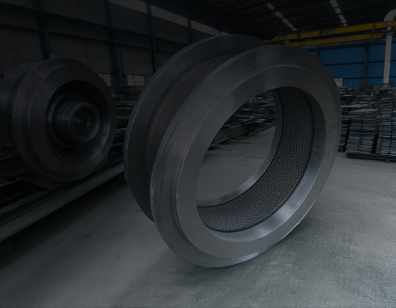
08
Spare Parts
Genuine components are available worldwide with fast delivery service.
