

 0086-138 3838 9622

Pellet Machine in Italy
When you look at our work with the pellet machine in Italy, it’s not about a single industry or one-off project. We’ve supplied equipment for wood, grass, alfalfa, organic fertilizer, manure, straw, cattle feed, chicken feed, waste paper, pet food, extruded fish feed, pyrolytic carbon, even pest poisons like rodent and snail baits — plus municipal and agricultural waste. If a material can be pelleted, someone in Italy has probably run it through one of our machines.


680+ Units
Machines Delivered
Pellet mills, crushers, dryers, and auxiliary units shipped to Italian facilities since our first export there.
40+
Production Lines Built
Complete pellet plants and modular systems commissioned across the country’s biomass, feed, and waste sectors.
20+
Material Types Processed
From wood and alfalfa to pest poisons and municipal waste — all running on our Italian-built lines.
What We’ve Actually Built in Italy
Not every supplier can say they’ve done this many material types across a single market. Below are some of the Italian projects we’ve completed. Some are big industrial lines, others are more specialized. But every single one runs on equipment we designed, shipped, and helped commission. If you’re looking for a pellet machine in Italy that actually works for your specific raw material — not just a generic mill — you’ll probably see something familiar here.
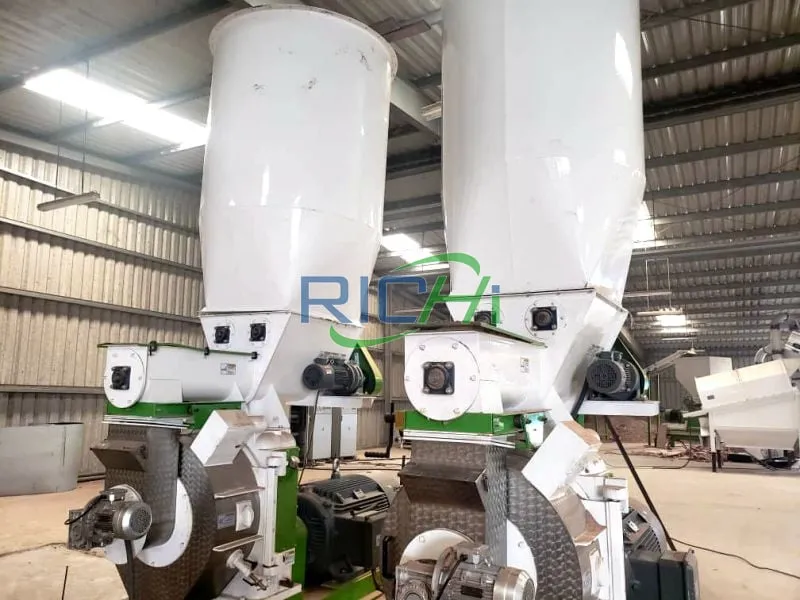
Lombardy, Italy
6-8 t/h wood pellet mill for sale Italy
- Client: Medium-sized Italian energy company focusing on industrial biomass fuel.
The client initially planned to buy two separate pellet machine Italy units from different suppliers but realized that would create maintenance headaches. They came to us for two MZLH768 units instead.
Their raw material is clean industrial wood waste — sawdust and small wood shavings — single source from local furniture factories. Moisture around 12-14%, particle size mostly under 5mm already. They wanted 6mm wood pellets for industrial burners.
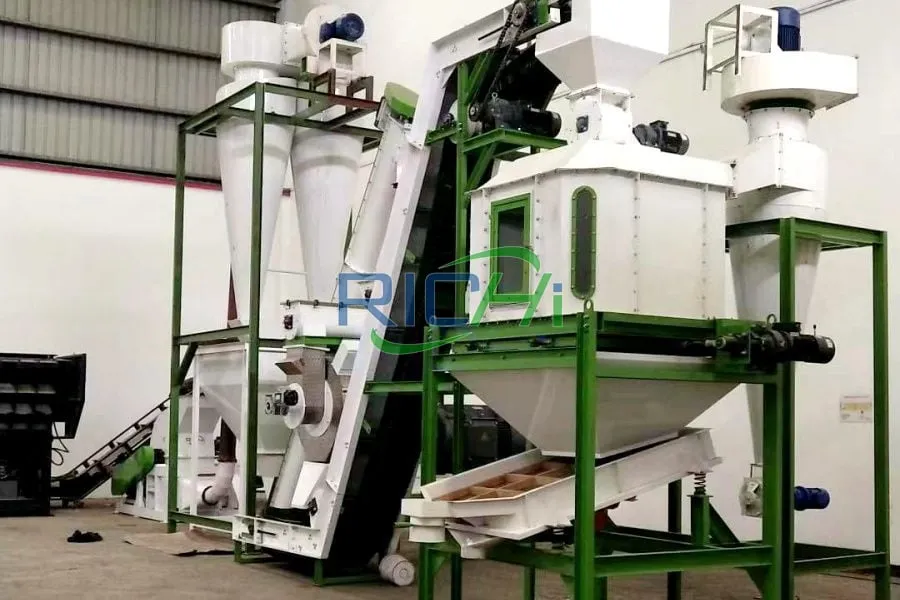
This wasn’t just two wood pellet mills. We supplied a full line: drum chipper, hammer mill (for oversize reduction), rotary dryer, ring die pellet mills, counterflow cooler, vibrating screen, and automatic bagging station. Total investment was around €320,000 USD.
The process starts with drying, then milling, pelleting, cooling, screening, and finally bagging. We provided full layout design, installation supervision, and 10 days of on-site operator training.

8-10 t/h dairy cow feed pellet machine in Italy
- Client: Cooperative of dairy farms in Po Valley
They were tired of buying pre-made feed pellets from Germany. The cooperative manager asked us: “Can a pellet machine in Italy actually make quality dairy feed from our own grains?” We showed him the SZLH420.
Their recipe uses four raw materials: corn (moisture 14%), barley (13%), soybean meal (11%), and mineral premix — all ground to 2-3mm before entering the pellet mill. Target pellet size is 4.5mm for adult dairy cows.
The line includes a batching scale, double-shaft paddle mixer, our SZLH420 cattle feed pellet machine Italy unit with conditioner, counterflow cooler, crumbler (they wanted some fines), and a small coating unit for molasses addition. Total cost came to approximately $280,000 USD.
We designed the steam conditioning process carefully because dairy cows need properly cooked starch. The italian pellet machine runs 18 hours daily during peak season. We also supplied electrical control panel with manual override — they preferred that for maintenance simplicity.
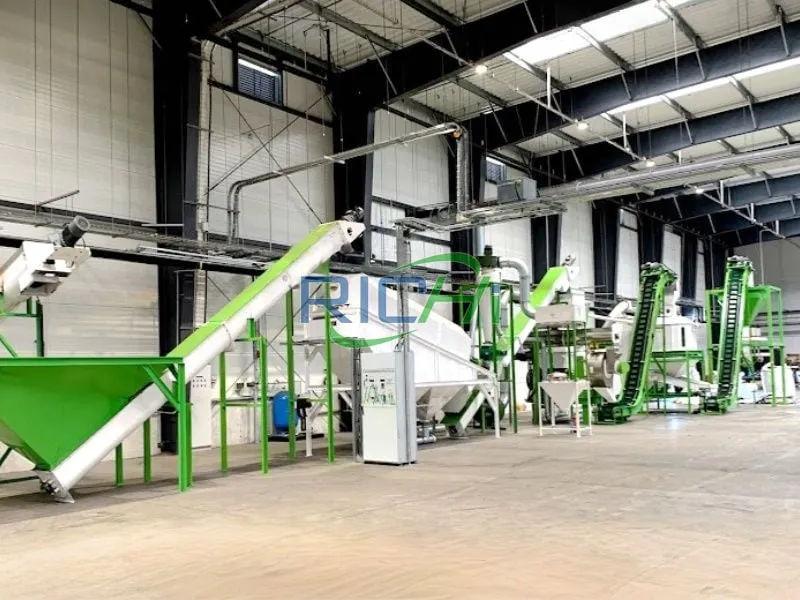
Emilia-Romagna, Italy
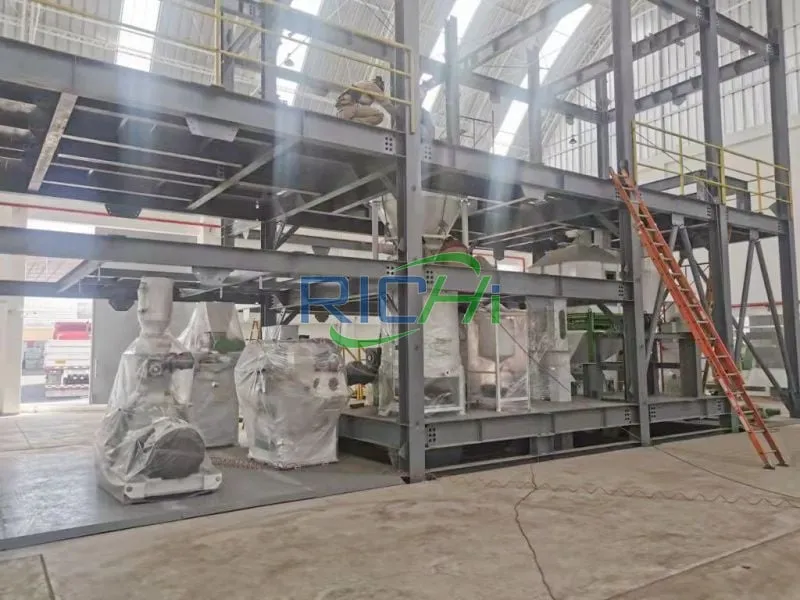
Veneto, Italy
5 t/h pig feed pelletizer in Italy
- Client: Family-owned feed mill in Veneto serving 40+ pig farms
Their old pellet press option from a local reseller turned out to be a refurbished unit with hidden issues. They came to us directly for a new SZLH350.
Raw materials are corn (15% moisture), wheat middlings (12%), and soybean meal (11%) — three main ingredients plus a custom vitamin premix. All ground to 2.5mm before conditioning. They make 3.5mm pellets for weaners and 4.5mm for finishing pigs.
Beyond the pig feed pellet machine, they bought a hammer mill (45kW), ribbon mixer, steam boiler (200kg/h), cooler, and a simple gravity screening system. Investment: roughly $185,000 USD.
What they really appreciated was our process advice — we suggested lowering conditioning temperature slightly to avoid destroying vitamins, something their previous pellets machine Italy supplier never mentioned. The pellet making machine Italy runs their morning shift only, 8 hours daily. We provided plant layout drawings and helped them source the steam boiler locally to save shipping costs.
6 t/h chicken manure pellet machine in Italy
- Client: Organic fertilizer producer in Marche
This was an interesting one. Chicken manure is tricky — high moisture, variable consistency. They needed a pellet machine in Italy that could handle semi-dried poultry litter without frequent die jams. The FZLH350 was our recommendation after testing their samples.
Raw material is 100% broiler litter from five local farms, moisture around 25-28% after initial solar drying on concrete pads. No blending with other materials. They wanted 6mm fertilizer pellets for vineyards.
The full line includes a heavy-duty crusher (manure clumps), rotary dryer (to bring moisture down to 15% before pelleting), FZLH350 organic fertilizer pellet mill unit, counterflow cooler, and an automatic scale for bagging. Total around $210,000 USD.
Process design was critical — we added a magnet separator because poultry litter often contains small metal pieces. The client also bought a dust collection system because ammonia smell is a real issue. We handled installation and trained four operators over one week. Their pellets machine Italy has been running two shifts daily for over two years.
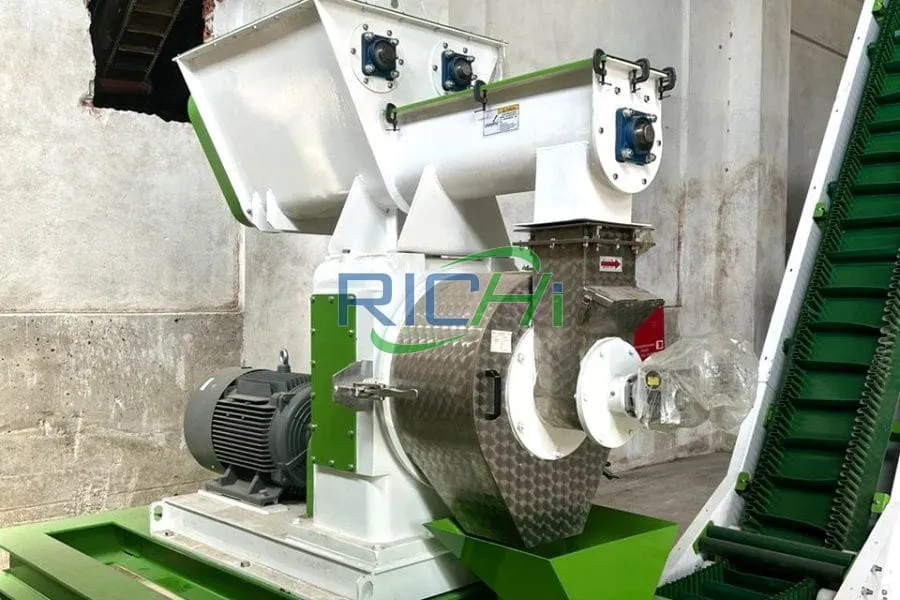
Marche, Italy
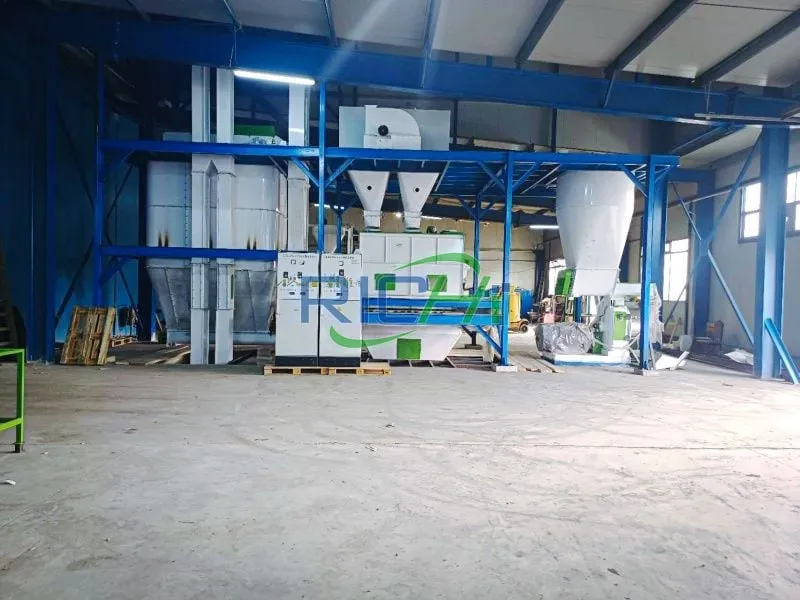
Piedmont, Italy
4T/H 100% upcycled agricultural waste cat litter machine in Italy USA
- Client: Startup focused on sustainable pet products
They weren’t looking for a standard pellet mill Italy supplier. Most companies said “we don’t do cat litter.” But the MSZLH320 worked perfectly.
Their raw material is a mix of wheat straw (60%) and corn stalks (40%) from local farms — both chopped to 10-15mm length, moisture around 10-12% after drying. No binders added. They make 4mm cylindrical pellets that break into clumping-style litter.
The line includes a tub grinder (for initial size reduction), rotary dryer, the MSZLH320 pellet machine in Italy, a special crumbler (to create the rough surface texture cats like), and a rotating screen for dust removal. Total investment was about $240,000 USD.
We did the full engineering — including a recirculation system for fines back to the pellet mill. The wood pellet machine in Italy comparison doesn’t apply here because cat litter has different density requirements. We’re proud of this one. The client now sells across northern Italy.
2 t/h floating fish feed extruder in Italy
- Client: Trout farm that wanted to make their own feed
Most extruder suppliers focus on pet food. This client needed a floating fish feed making machine specifically. Their raw materials: fish meal (45%), wheat flour (25%), soybean meal (20%), and fish oil (10%) — multiple ingredients precisely proportioned. Moisture of dry mix around 11%. They produce 2.5mm floating pellets for rainbow trout.
The SPHS120*2 twin-screw extruder was the core. But we also supplied a micro-dosing system (for oil and water injection), belt dryer (to reduce moisture from 24% down to 9%), and a coating drum for additional fish oil spray. Total: approximately $460,000 USD.
We provided process parameters documentation (screw speed, barrel temperatures, die configuration) so they can adjust for different fish sizes. Installation took two weeks. They’re now saving 30% compared to buying extruded feed.
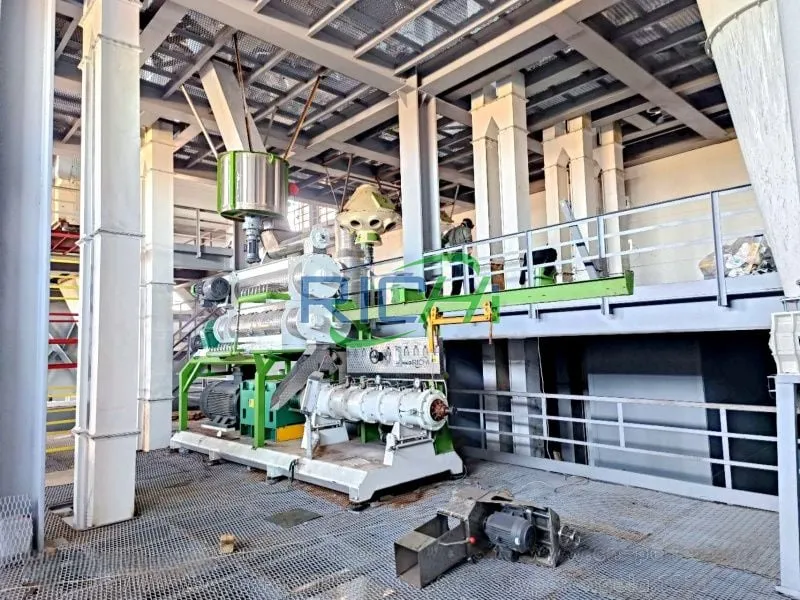
Trentino-Alto Adige, Italy
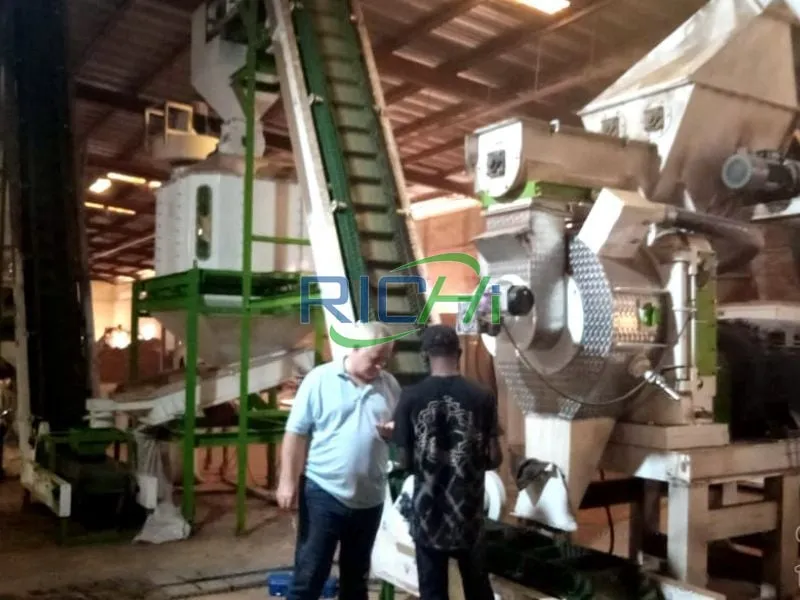
Friuli-Venezia Giulia, Italy
2 t/h spruce pellet mill in Italy
- Client: Small sawmill in the Alpine foothills
Spruce is soft but abrasive because of silica content. Their previous used pellet mill for sale Italy purchase failed within months. We sold them a new MZLH520. Raw material is 100% spruce sawdust from their own operation — single source, moisture 10-12%, particle size already under 4mm. They produce 6mm pellets for home heating stoves.
The line is simpler than most: dryer (their sawdust was already air-dried), MZLH520 sawdust pellet mill, cooler, and a small bagging hopper. They skipped the hammer mill because particle size was already fine. Total spent: $195,000 USD.
The client chose our cheaper options for conveying (flexible screw instead of bucket elevator) to keep costs low. We provided the die specification tailored for spruce — wider compression ratio than pine. The italian pellet machine runs only during winter when heating demand picks up. Good little project.
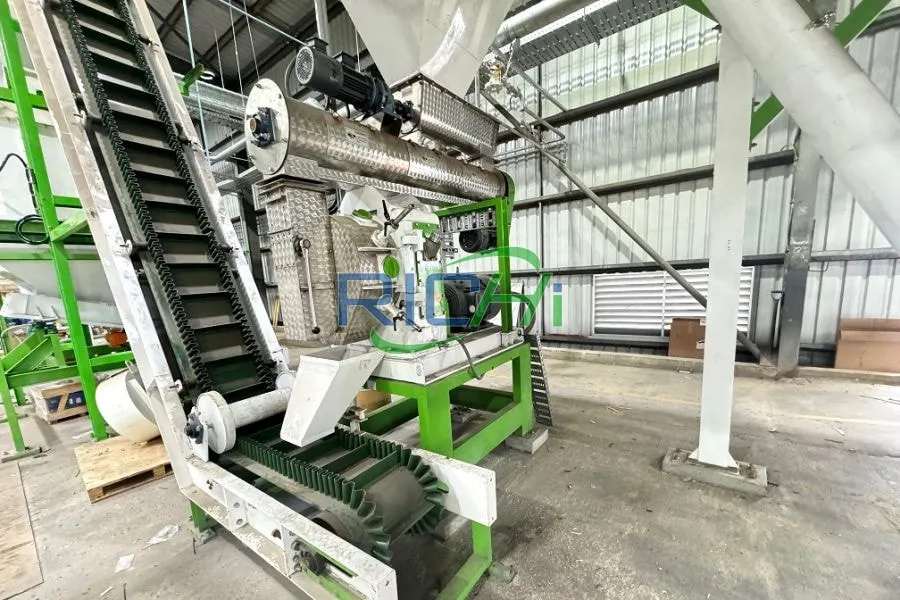
4-5 t/h wheat straw pellet machine in Italy
- Client: Dairy farm cooperative in the plains
Wheat straw normally goes to animal bedding or gets burned. This cooperative wanted to convert straw into feed pellets for dry cows.
Raw material is 100% wheat straw, chopped to 30-50mm, moisture down to 12% after field drying. They use a CZLH678 pellet machine Italy unit — no conditioner because straw doesn’t need steam for binding. Target pellet size is 8mm, meant to be mixed with silage.
The production line includes a large tub grinder (to get straw to 10mm), the CZLH678, a vertical cooler, and a simple screw conveyor to storage. No dryer needed because straw was already dry enough. Investment: roughly $210,000 USD. The trick with straw is die selection — we used a compression ratio of 1:5.5, much lower than wood.
The wheat straw pellet machine Italy runs seasonally after wheat harvest (about 6 weeks per year). We also supplied a metal detector after they mentioned field stones damaging previous equipment.
Lombardy, Italy

Emilia-Romagna, Italy
3 t/h cattle bedding pellet machine in Italy
- Client: Large dairy operation with 1,200 cows
They were buying wood shavings for bedding at €80/ton. Too expensive. Their new approach: make bedding pellets from their own straw. Raw material is 100% wheat straw (chopped to 20-40mm, moisture 11-13%). No conditioner on the MZLH678 because moisture is already low and they don’t need binding. They produce 8mm pellets that absorb moisture better than loose straw.
The line includes a bale breaker, hammer mill (to reduce straw to 6mm), MZLH678 pellet machine Italy, cooler, and a dust collection system (straw dust is explosive, so we recommended explosion vents). Total cost: $155,000 USD.
What’s different here? They opted not to buy a dryer — straw from their fields is usually dry enough. We designed the plant layout to fit inside an existing barn. The pellet mill Italy they previously researched all included conditioners they didn’t need, so they appreciated our honesty in saving them money.
1-1.5 t/h biochar pellet machine in Italy
- Client: Small company making soil amendments
Biochar is abrasive and low-density — hard to pelletize. They tried a used pellet mill for sale Italy from a wood pellet producer and it failed immediately. The FZLH250 has a heavier gearbox and specialized die.
Their raw material is 100% pyrolyzed wood waste (biochar), moisture around 5-7%, particle size varying from dust to 3mm. They make 6mm biochar pellets for garden soil.
The line is minimal: a screw conveyor, the FZLH250 pellet machine Italy unit, and a small vibrating screen. No dryer, no cooler. Total: about $85,000 USD. The client originally wanted a larger mill but we suggested the FZLH250 because biochar has low throughput — bigger mills would just idle.
We also custom-machined a die with 1:3 compression ratio (normally we use 1:6 for wood). Their pellet press for sale Italy search ended when we explained that standard dies crack within weeks on biochar.

Tuscany, Italy
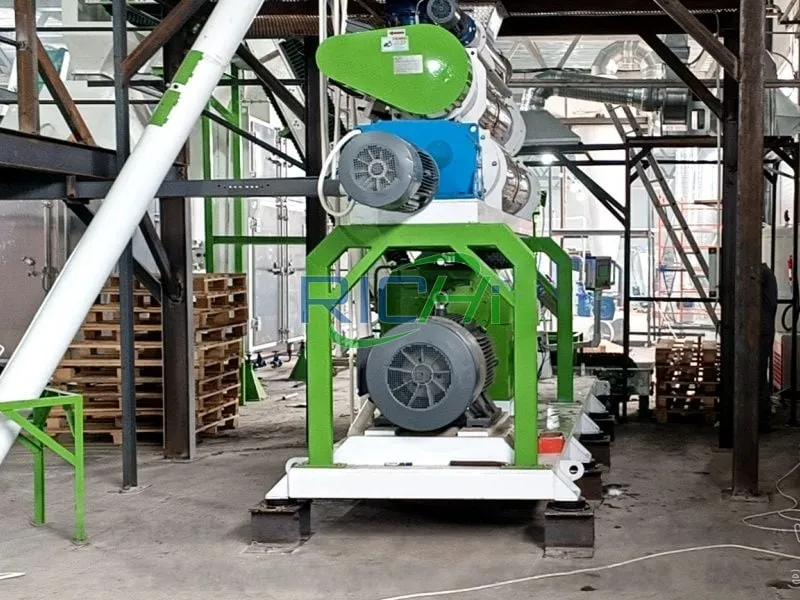
Abruzzo, Italy
0.5-1 t/h grain free pet food extruder in Italy
- Client: Premium pet food brand in Abruzzo
Grain-free recipes are hard to extrude — peas and lentils don’t behave like corn. Their previous pellet making machine Italy supplier couldn’t get consistent kibble shape. Raw materials: pea protein (40%), lentil flour (30%), tapioca starch (15%), and animal fat (15%) — four main inputs, moisture of dry mix around 10%. They produce 10mm grain-free kibble.
The SPHS75x2 twin-screw pet food extruder machine came with a preconditioner, belt dryer, and enrober (for coating fat after drying). Total: $325,000 USD.
We spent three days on-site dialing in screw configuration — twin-screw is flexible but needs tuning for each recipe. We provided die designs specific to grain-free (shorter dies, larger holes). The client now exports to Switzerland.
0.5 t/h furniture waste wood pelletizer in Italy
- Client: Small joinery shop in Brianza furniture district
They generate about 3 tons of wood waste daily — mostly MDF dust, solid wood offcuts, and veneer scraps. Mixed material, not ideal. Most suppliers told them “you can’t pelletize MDF because of the glue.” But the MZLH350 handles it fine with the right die. Raw material composition: 50% solid wood (pine/beech), 30% MDF dust, 20% veneer. Moisture around 10-12%. Target pellet size: 6mm for their own boiler.
The line includes a small hammer mill (to process offcuts down to 4mm), the MZLH350 pellet machine Italy, and a simple cyclone collector. No dryer — their waste is already dry from kiln processing. Total investment: $178,000 USD.
The wood pellet maker machine in Italy they almost bought from a competitor had a mild steel die that would have worn out in weeks on MDF. We supplied a stainless steel ring die. Our pellet mill for sale Italy proposal also included a fire suppression system because MDF dust is flammable — they said yes immediately.
Lombardy, Italy
From Small Test Lines to Large Industrial Plants
The projects above aren’t the whole story. We’ve done plenty of other installations across Italy — some are smaller specialty lines, others are large-scale feed and biomass operations. Every single one runs on equipment we stand behind. Below is a quick look at more Italian projects. If you’re searching for a pellet machine in Italy that fits your specific raw material or production target, there’s probably something here that matches what you have in mind.
3 t/h oak sawdust pellet plant in Italy
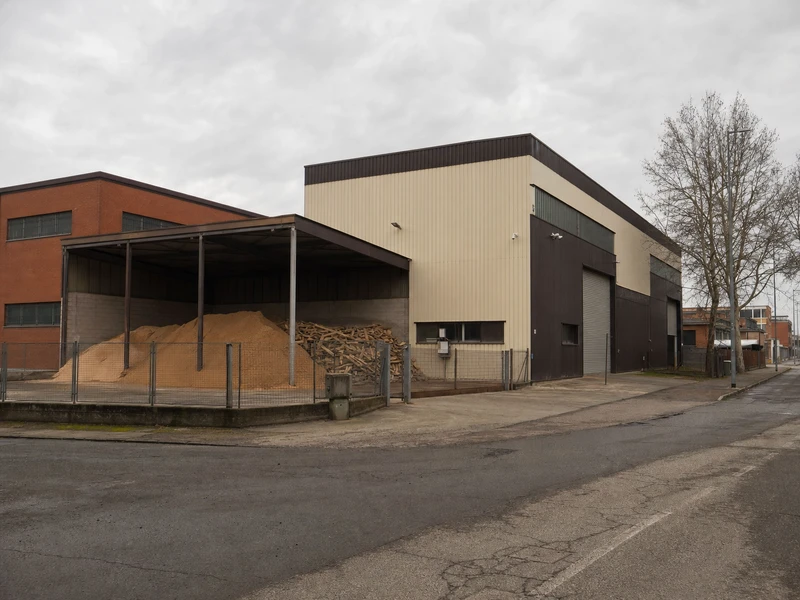
A furniture maker in the Marche region had tons of oak sawdust going to waste each month. They wanted to turn it into sellable pellets for residential heating but didn’t want a massive industrial setup. The oak dust arrived at 10-12% moisture with particle sizes mostly under 3mm, so minimal preprocessing was needed. The pellet mill sits at the heart of this line, converting dry sawdust into dense 6mm pellets that burn clean and hot.
Model
MZLH520
Pellet Size
6mm
2-4 t h poultry litter pellet plant for fertilizer in Italy
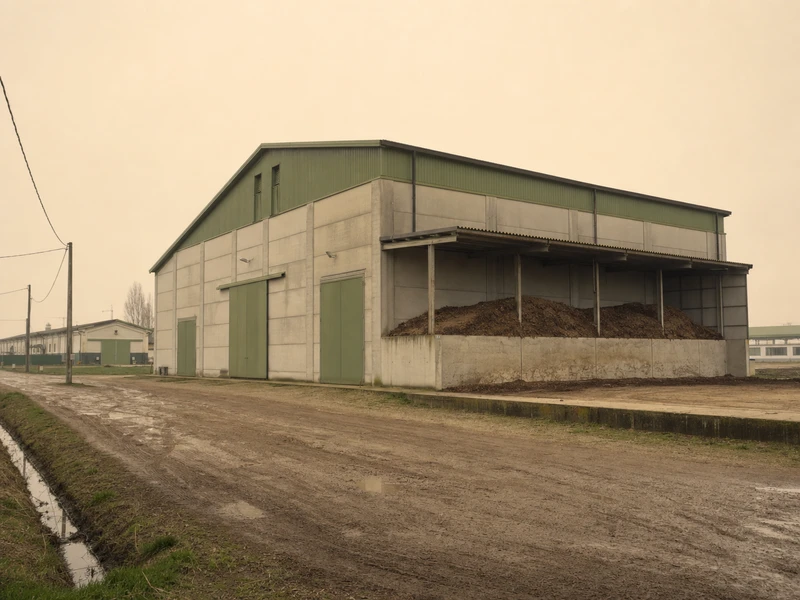
A fertilizer startup in Umbria collects litter from ten small layer farms within a 30km radius. The raw material is a mix of manure, spilled feed, and pine shavings — moisture runs high at 30-35%, so they invested in a rotary dryer ahead of the mill. The pellet machine in Italy handles the dried litter (now 15% moisture) and compresses it into 5mm fertilizer pellets for vineyards and olive groves.
Model
FZLH350
Pellet Size
5mm
20 t/h compound feed production line in Italy
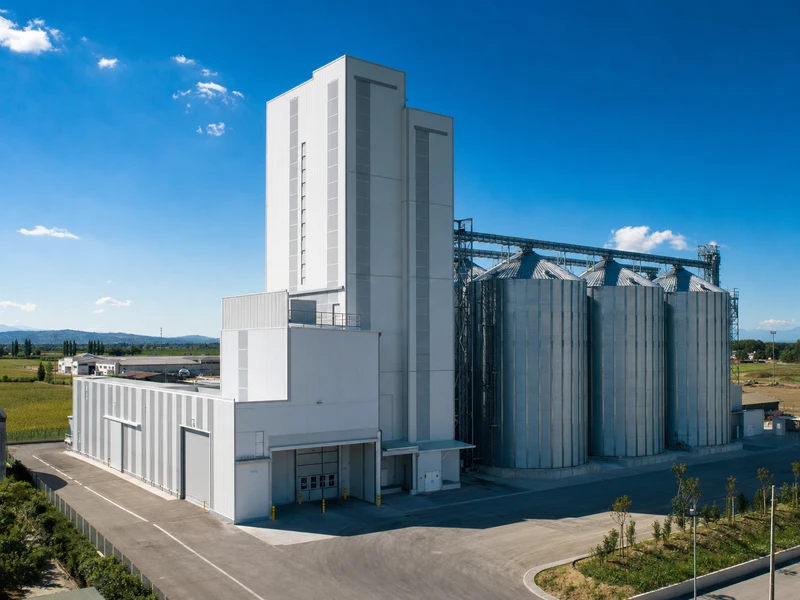
One of the larger feed mills in Piedmont needed to upgrade from an old 10t/h line to keep up with regional demand. Their recipe uses corn, barley, soybean meal, wheat middlings, and a vitamin-mineral premix — five main ingredients, all ground to 2-3mm before batching. The twin pellet mills run parallel, each producing 4.5mm pellets for dairy cattle and 3mm crumbles for youngstock after passing through a crumbler.
Model
SZLH420
Pellet Size
3mm & 4.5mm
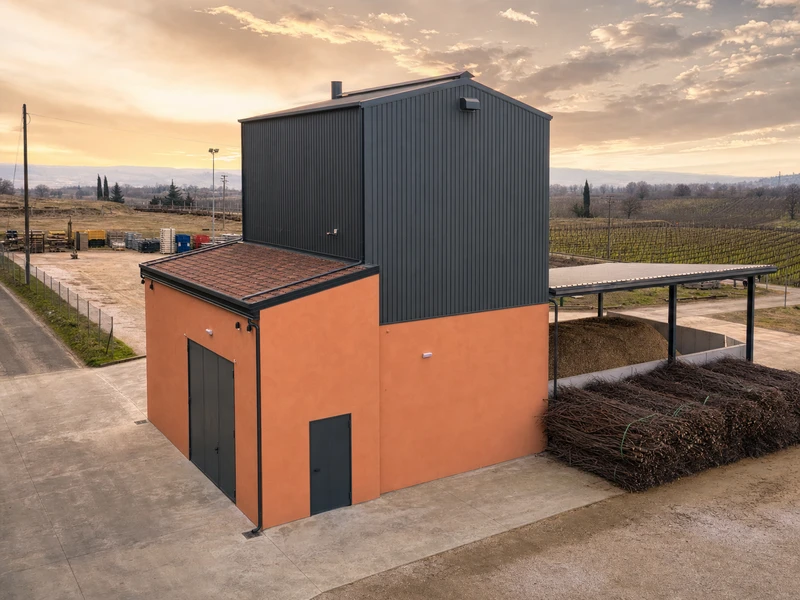
1-1.5 t/ h vine pruning waste biochar production line in Italy
A small operation in Tuscany collects prunings from local vineyards after the fall harvest. The wood gets pyrolyzed first, producing a light, dusty biochar that’s notoriously hard to pelletize because of its low density and abrasive nature. Their pellet mill Italy setup includes a specially hardened die with 1:3 compression ratio, turning the char into 8mm pellets for soil amendment and water filtration applications.
Model
FZLH250
Pellet Size
8mm
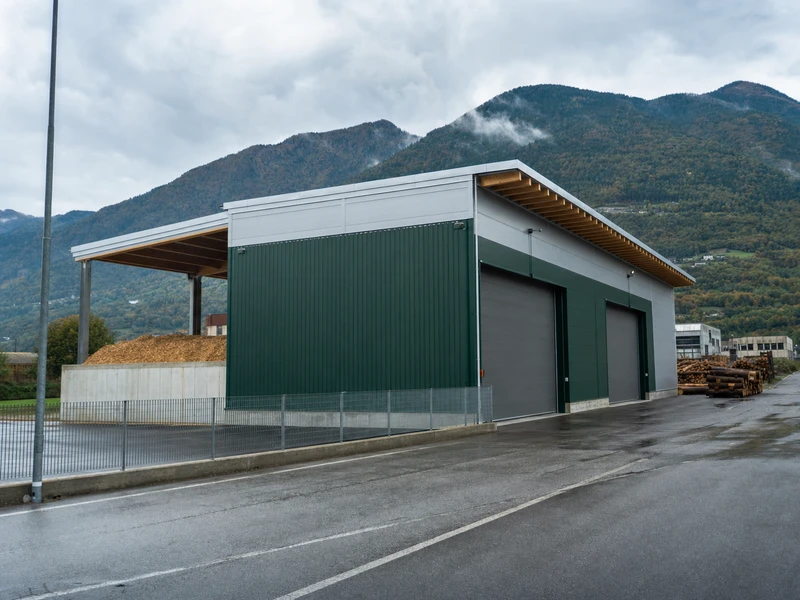
3-5 t/h small wood pellet factory in Italy
A family business in Friuli Venezia Giulia started with just a hammer mill and a small pellet press for sale Italy purchase from a local reseller. That machine failed after eight months. They came to us for a complete replacement line using mixed softwood sawdust from nearby sawmills — moisture 11-13%, particle size already under 5mm. The new pellet mill runs 10 hours daily producing 6mm pellets for the local stove market.
Model
MZLH768
Pellet Size
6mm
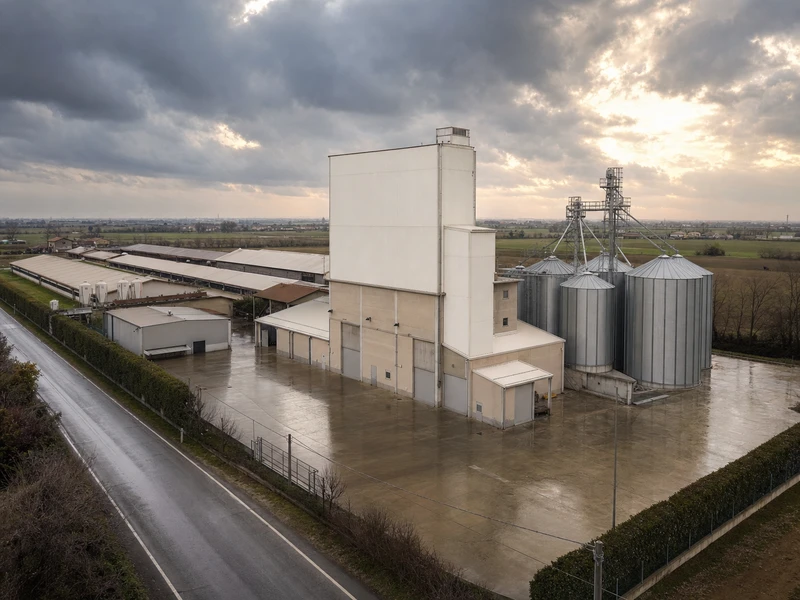
12-15 t/h broiler feed pellet line in Italy
A large poultry integrator in Veneto operates its own feed mill to supply 200+ farms in the region. Their mash formula includes corn (60%), soybean meal (25%), wheat bran (10%), and oil (5%) — all ground to 2mm before pelleting. The pellet machine in Italy runs two shifts daily, producing 3.5mm pellets that hold together well despite the higher oil content, thanks to proper steam conditioning at 85°C.
Model
SZLH508
Pellet Size
3.5mm
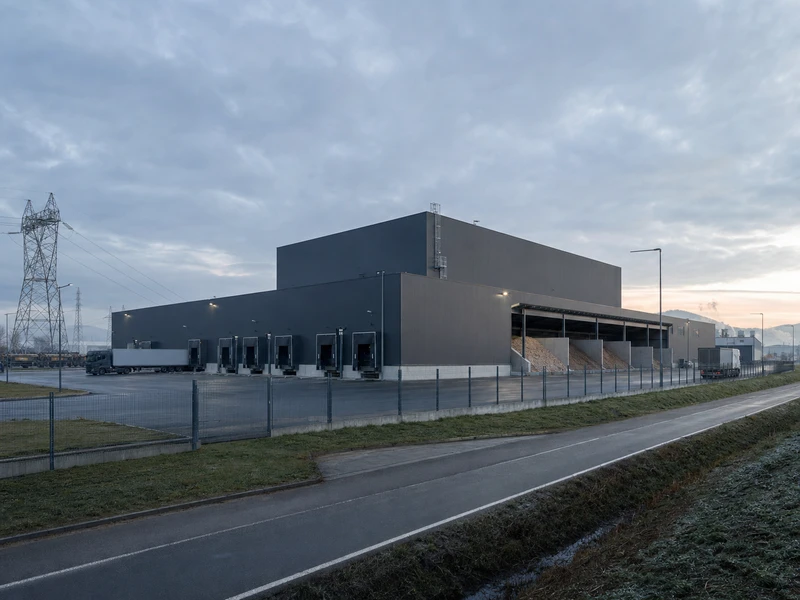
8-10 t/h large wood pellet production line in Italy
An industrial energy company in Lombardy needed consistent fuel for a 5MW district heating boiler. Their raw material is kiln-dried planer shavings from local joineries — single source, moisture around 8%, particle size under 4mm. The wood pellet machine Italy installation includes two mills running in parallel, each producing 8mm industrial-grade pellets that meet ENplus A1 standards for the local market.
Model
MZLH768
Pellet Size
8mms
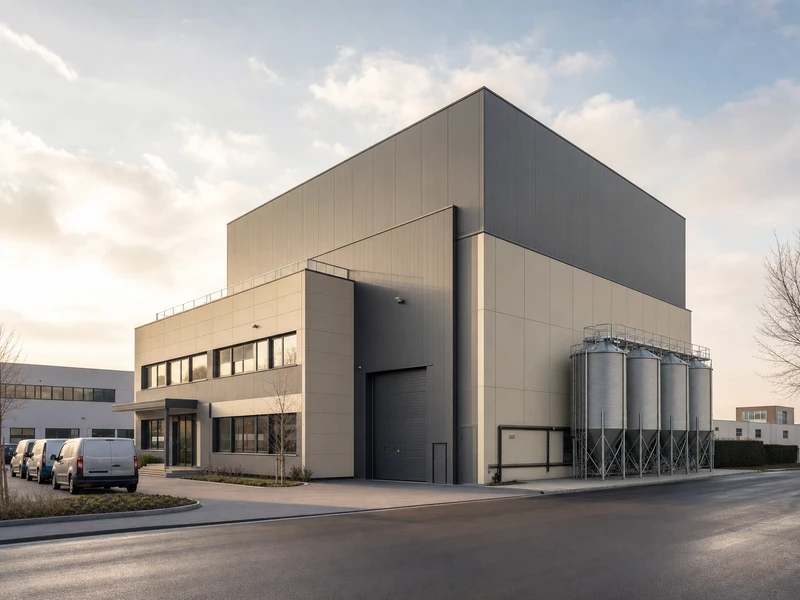
1-1.5 t/h cat food kibble extruder in Italy
A boutique pet food brand in Abruzzo wanted to produce grain-free kibble using fresh chicken (deboned), pea protein, and sweet potato — wet ingredients that require preconditioning before extrusion. Their pellet mill Italy isn’t actually a pellet mill but a twin-screw extruder with a die plate that shapes 10mm kibble. The extruder cooks the mix at 120°C, then a cutter blades the product to consistent length.
Model
SPHS120x2
Pellet Size
10mm
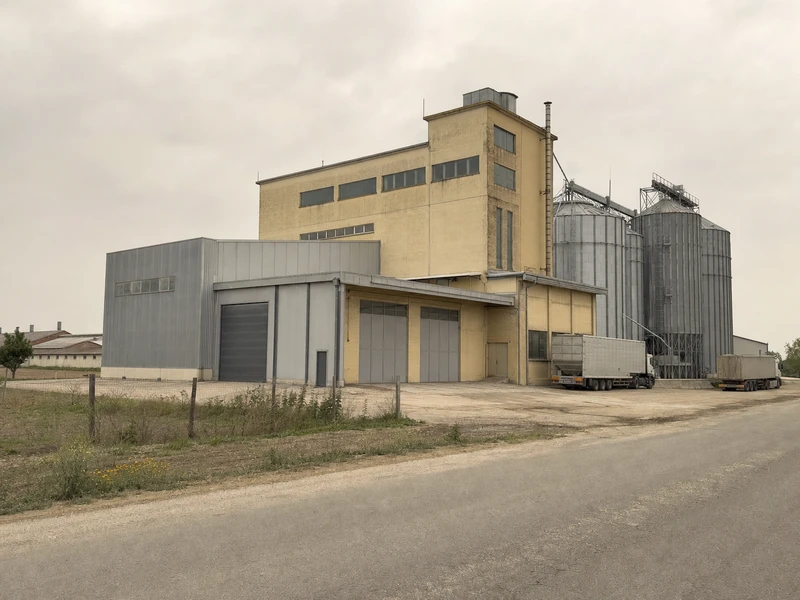
8-10 t/h layer feed pellet plant in Italy
A cooperative in Emilia Romagna supplies feed to 150+ egg farms. Their layer mash uses finely ground corn, soybean meal, limestone (for shell strength), and a custom premix — all ground to 1.5-2mm because layers prefer finer particles. The pellet machine in Italy produces 3.5mm pellets, but most farmers request crumbles, so a crumbler sits right after the cooler to break pellets into uniform 1-2mm pieces.
Model
SZLH420
Pellet Size
1-3.5mm pellets
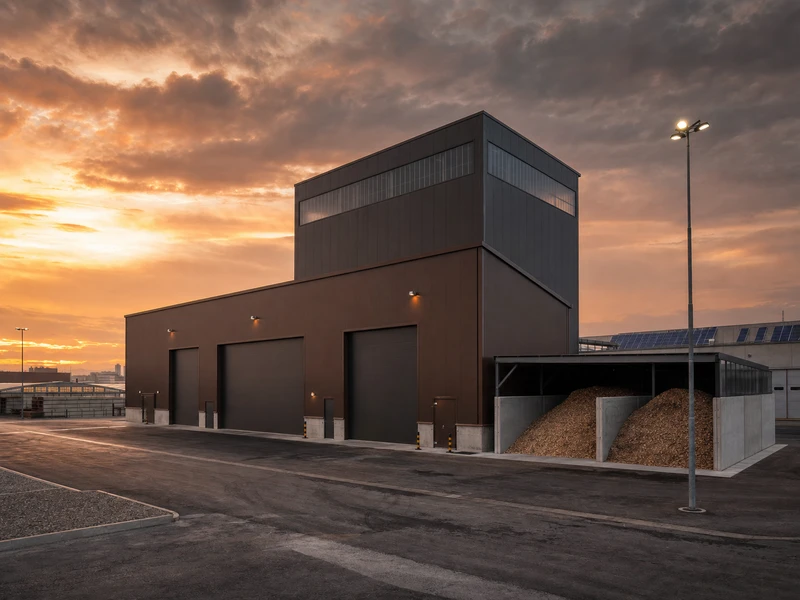
5 t/h torrefied wood pellet plant in Italy
This project was unusual. A client in Liguria wanted to make torrefied pellets — wood that’s been roasted at 250-300°C before pelleting. The raw material is mixed forest residues (chips and sawdust), first torrefied in a rotary kiln, then fed into the pellet mill. Torrefied wood is brittle and abrasive, so we recommended a stainless steel die and heavier gearbox on the wood pellet making machine for sale Italy.
Model
MZLH520
Pellet Size
6mm
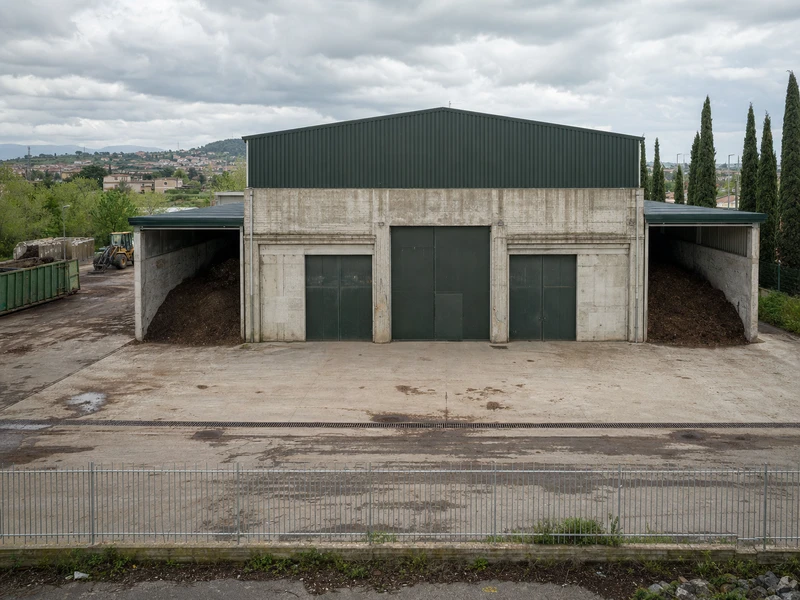
3-4 t/h compost pellet production plant in Italy
A waste management company in Lazio processes green waste from municipal collection into mature compost after 12 weeks of turning. The compost comes out at 30-35% moisture and varies in particle size from dust to 15mm chunks. They run it through a dryer first (down to 18% moisture), then the pellet mill Italy compresses it into 6mm fertilizer pellets that are easier to spread and store than loose compost.
Model
FZLH350
Pellet Size
6mm
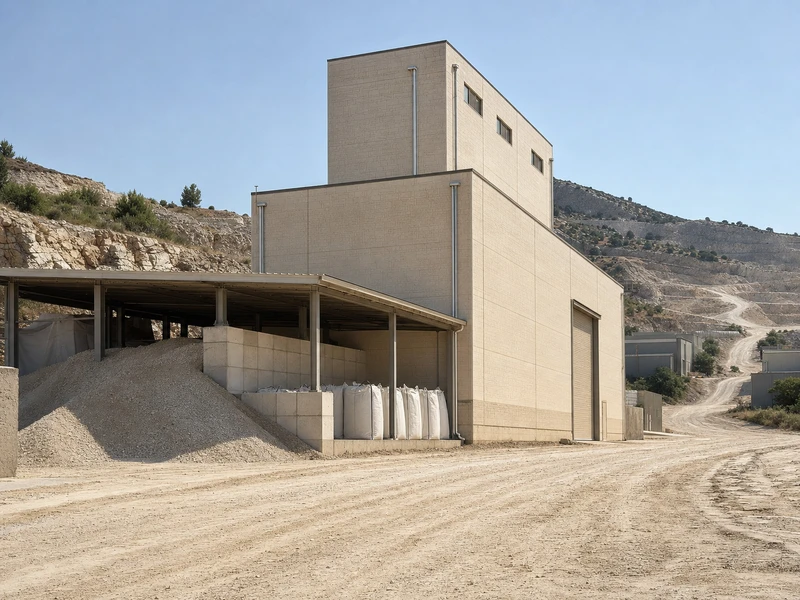
2-3 t/h bentonite cat litter pellet line in Italy
A mineral processing company in Sicily mines bentonite clay locally and wanted to enter the pet litter market. The clay arrives as powder with 8-10% moisture — no size reduction needed, but bentonite swells when wet, so conditioning is impossible. Their pellet press for sale Italy needed a dry-pressing die with extra-large relief holes to prevent binding. The final product is 4mm cylindrical pellets that absorb twice their weight.
Model
MSZLH320
Pellet Size
4mm
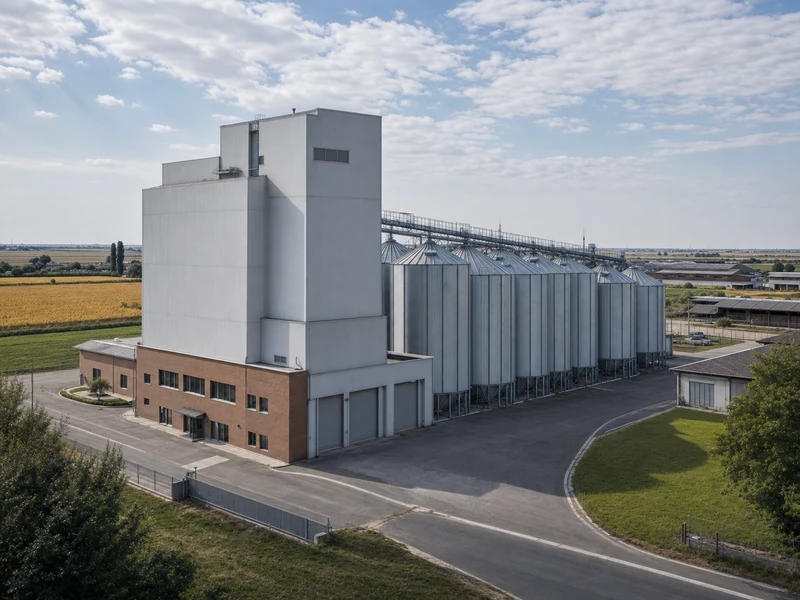
15 t/h beef cattle finishing pellet line in Italy
A large feedlot in the Po Valley finishes 5,000 head annually and wanted to stop buying feed from Germany. Their formula uses high-energy ingredients: corn (65%), soybean meal (20%), wheat straw (10% for fiber), and molasses (5%). The pellet machine in Italy includes a molasses coating unit after the cooler because adding molasses before pelleting makes the die slip. Final pellet size is 5mm for finishing cattle.
Model
SZLH508
Pellet Size
5mm
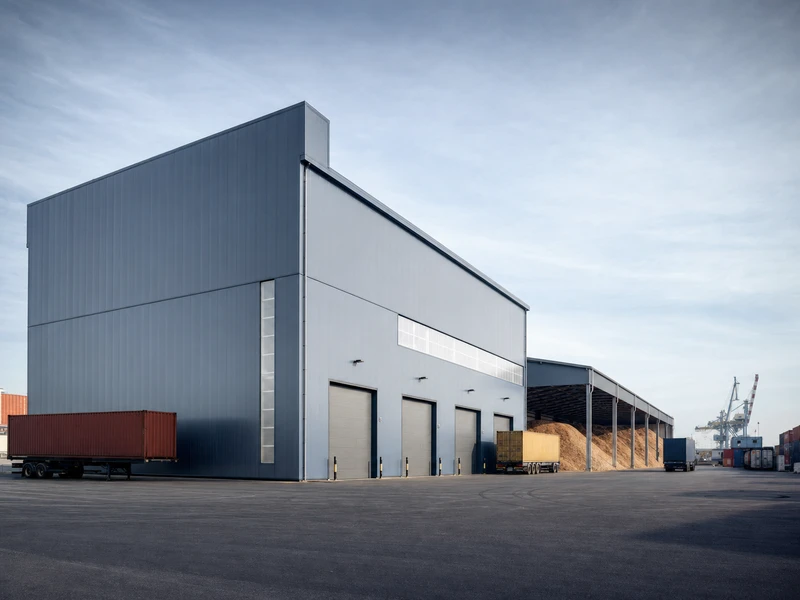
6 t/h wood chip pellet production line for export in Italy
A client in Puglia runs a biomass trading company that exports pellets to North African countries. Their raw material is clean pine chips from local forestry operations — moisture 40-45% fresh, so a large rotary dryer brings it down to 12% before milling. The pellet mill Italy setup runs 20 hours daily, producing 8mm export-grade pellets packed in 15kg bags for residential markets in Tunisia and Algeria.
Model
MZLH678
Pellet Size
8mm
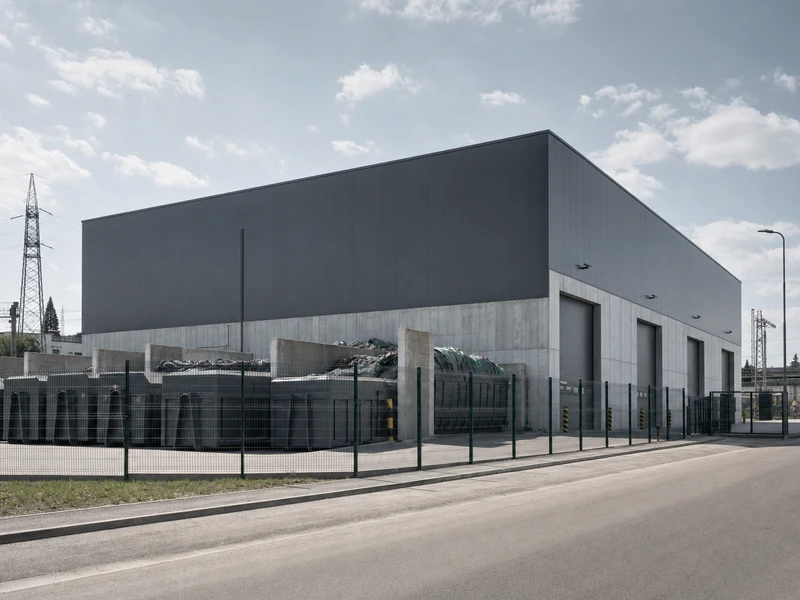
5 t/h solid recovered fuel processing plant in Italy
An environmental services company in Campania processes commercial and industrial waste into SRF for cement kilns. The material mix includes plastics, paper, cardboard, and textiles — shredded to 30-50mm, moisture around 15%. The pellet machine in Italy compresses this fluffy material into 20mm cylindrical SRF pellets that have double the density of loose fluff, cutting transport costs by more than half.
Model
MZLH768
Pellet Size
20mm
See Our Italian Installations in Action
Sometimes photos don’t tell the whole story. Below are video clips from actual Italian project sites — running lines, startup tests, and post-installation walkthroughs. You’ll see everything from wood pellet lines to cat litter plants and animal feed mill plants. These aren’t renderings or animations. Real equipment, real Italian factories, real production. If you’ve been looking for a pellet machine in Italy that actually works for your specific application, watching these will give you a much better sense of what we deliver.

4T/H ENplus A1 Wood Pellet Production Line in Italy
This video shows a complete line in Lombardy running clean pine sawdust through a ring die pellet machine. The client produces 4 tons per hour of A1 certified pellets for residential heating. Their raw material is dry planer shavings (moisture 10%, particle size under 4mm), so no dryer was needed. The pellet machine in Italy you’ll see is an MZLH768 running at 75% load, producing 6mm pellets that pass ENplus A1 standards. We also supplied the hammer mill, counterflow cooler, and bagging scale. Watch how stable the amp draw stays — that’s proper die match.
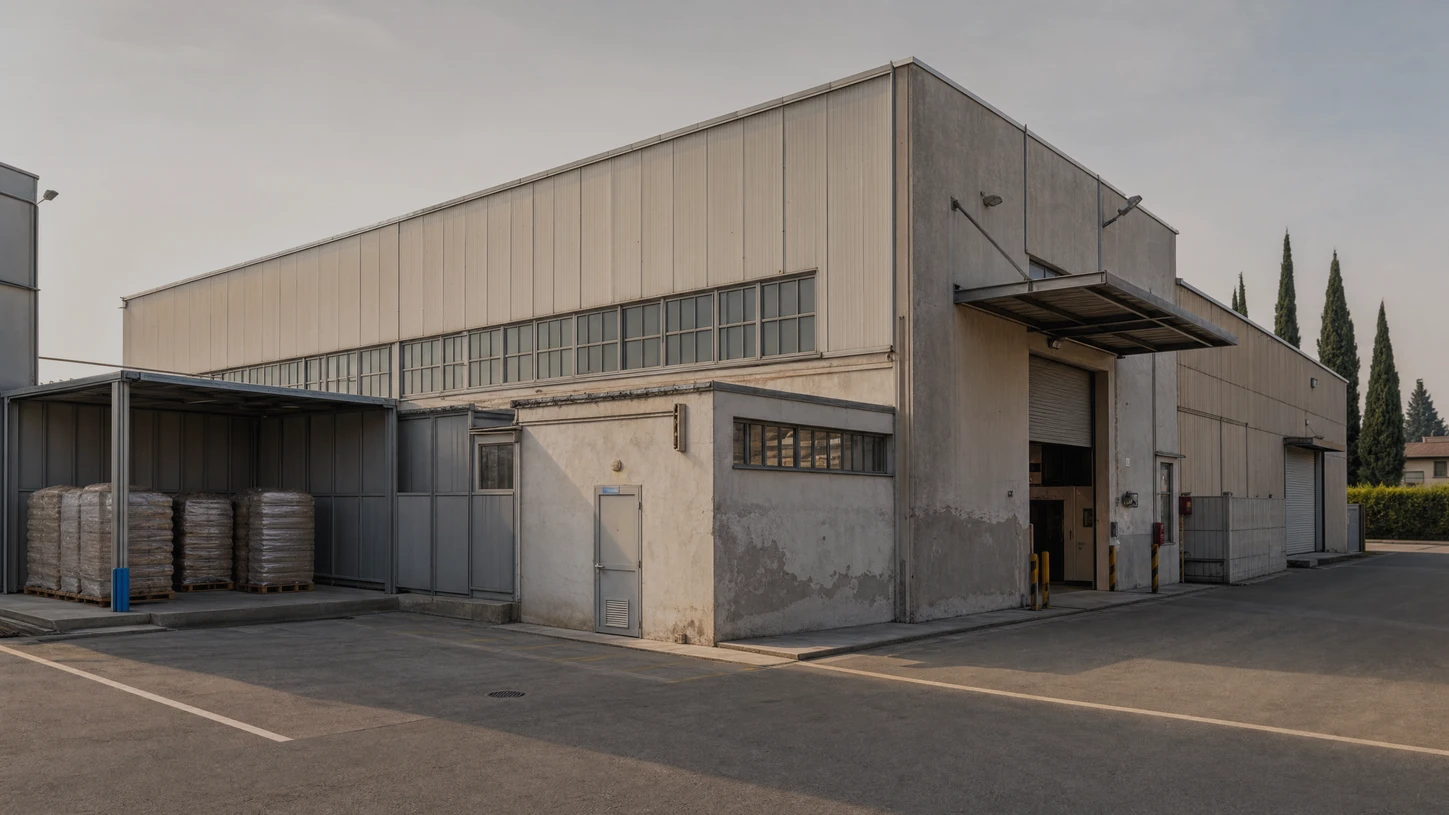
1.5-2.5T/H Plant Based Cat Litter Production Line in Italy
Located in Piedmont, this line uses 100% agricultural waste — wheat straw and corn stalks — to make biodegradable cat litter. The raw material arrives chopped to 10-15mm, gets dried to 12% moisture, then enters a MSZLH320 pellet mill Italy setup with a specialized die. The video shows the unique crumbler that creates the rough surface texture cats prefer. Unlike clay litter lines, this pellet machine in Italy runs without binders. Final pellets are 4mm cylinders that clump naturally. The client now supplies major pet store chains across northern Italy.
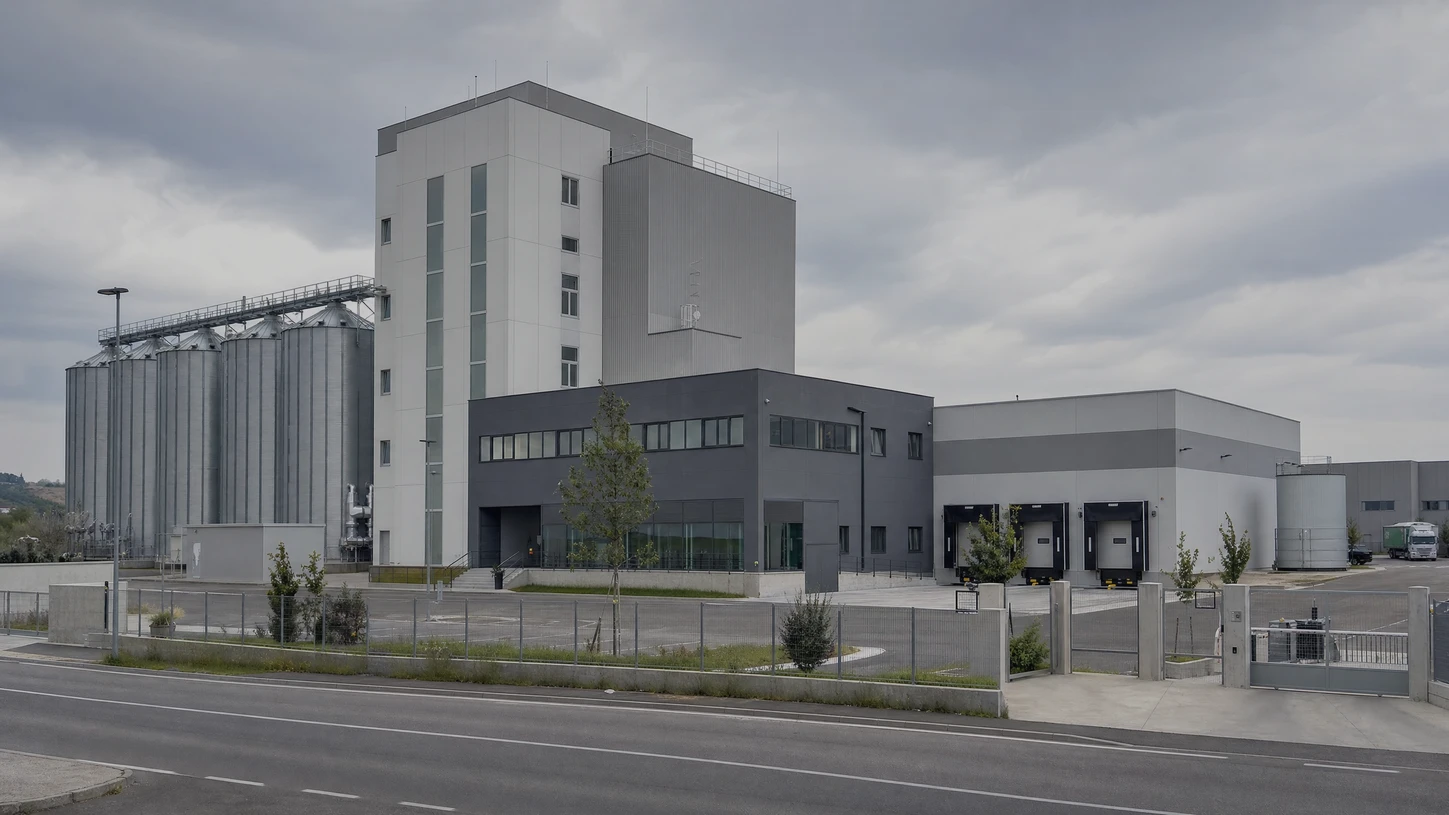
2-3T/H Dog Food Pellet Production Line in Italy
This facility in Emilia-Romagna makes premium dry dog food using fresh meat and vegetables. The video walks through the SPHS75x2 twin-screw extruder — which is technically not a pellet mill but performs a similar forming function. Raw materials include chicken meal, rice, peas, and animal fat. The extruder cooks at 110-120°C, then a die plate shapes 12mm kibble before a rotary cutter blades it to length. A belt dryer brings moisture from 22% down to 8%. If you’re searching for a pellet machine in Italy for pet food, this extrusion line is the modern alternative.

10T/H Organic Feed Pellet Plant for Livestock in Italy
One of our larger feed mill in Italy projects, located in Veneto. This video shows the full flow from batching to bagging. The client uses five raw materials: corn, barley, soybean meal, wheat bran, and a mineral premix — all ground to 2-3mm. The livestock feed pellet machine in Italy you’ll see is an SZLH520 with a steam conditioner running at 85°C. Final pellets are 4.5mm for beef cattle and 6mm for dairy cows. The video also shows the double-shaft paddle mixer and the counterflow cooler. Total line capacity is 10 tons per hour, running two shifts daily.
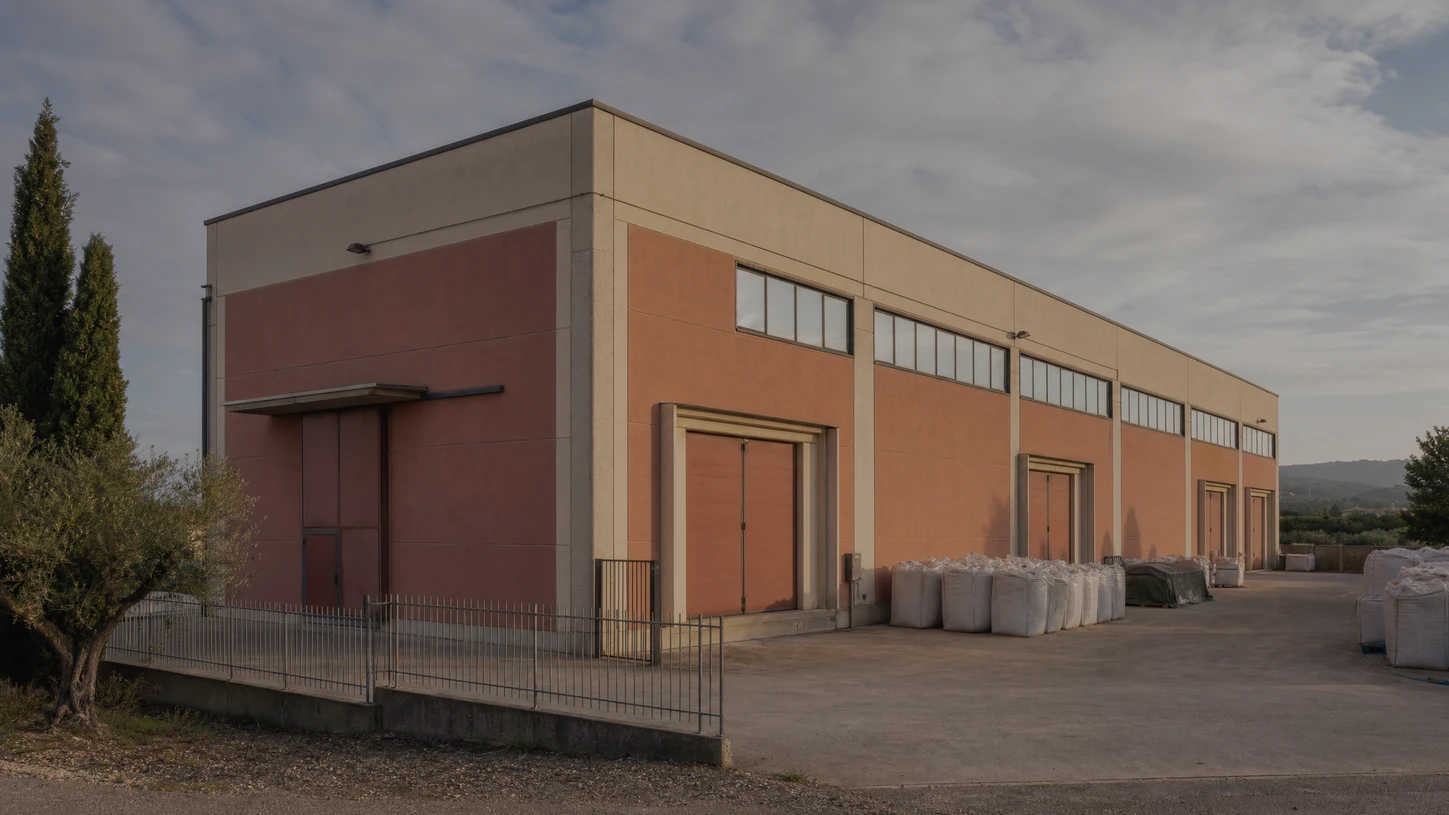
2-3 t/h sunflower husk pellet plant in Italy
This project in Marche processes sunflower husks — a byproduct from local oil presses — into livestock feed pellets. The husks arrive at 12-14% moisture with particle sizes already under 4mm. The video shows the pellet machine in Italy, a CZLH678, running without a conditioner because sunflower husks don’t need steam binding. Final pellets are 6mm and are sold to dairy farmers as fiber supplement. What makes this interesting: the husks are slightly oily, which actually helps die lubrication but requires more frequent cleaning. The client runs one shift daily, five days per week.
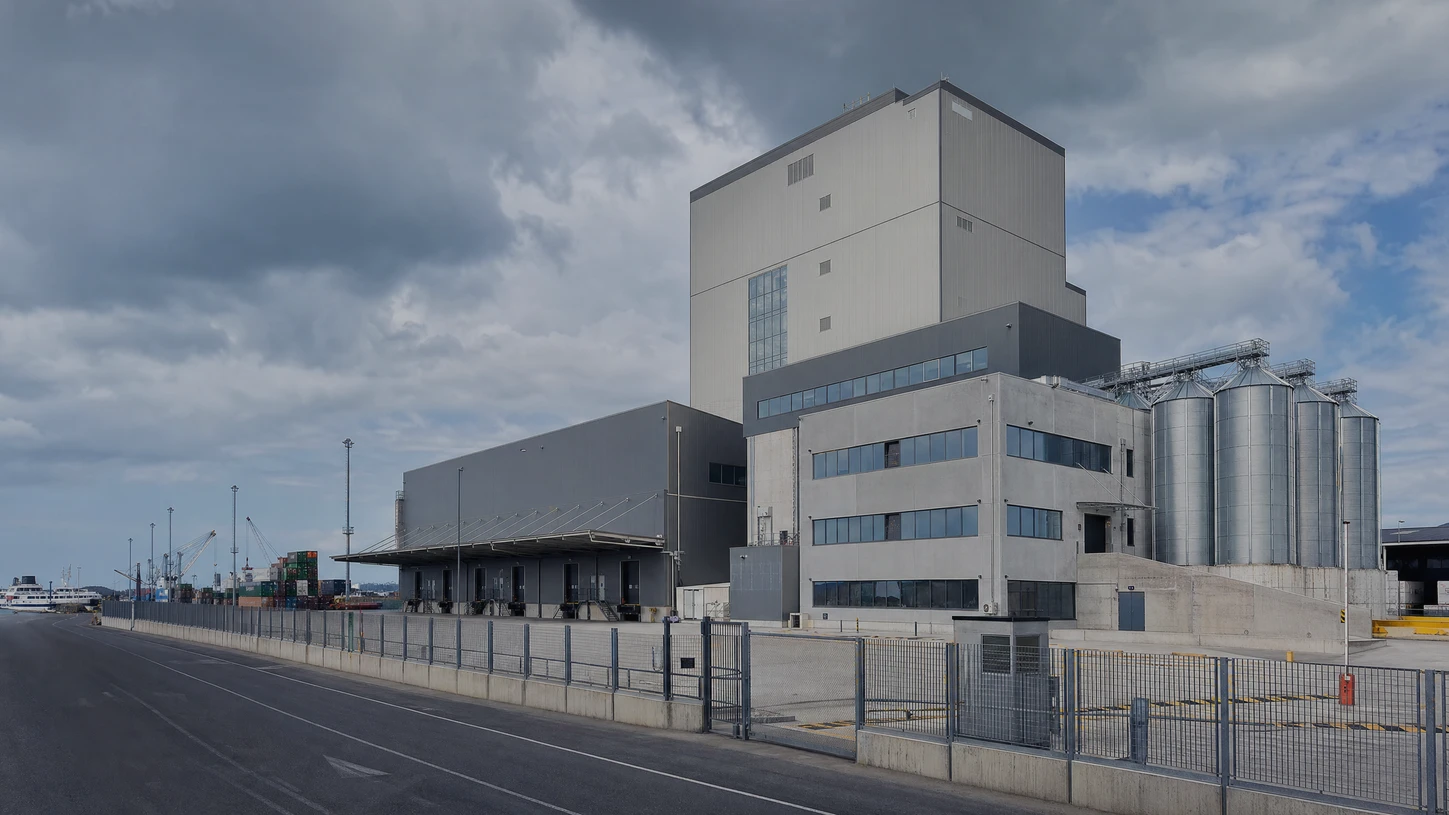
5-6T/H Trout & Catfish Feed Pellet Plant in Italy
Located in Trentino-Alto Adige near several fish farms, this plant makes sinking pellets for trout and catfish. The video highlights the SPHS120*2 twin-screw extruder — our largest extrusion pellet machine in Italy for aquafeed. Raw materials include fish meal (40%), soybean meal (30%), wheat flour (20%), and fish oil (10%). The extruder produces 2.5mm sinking pellets that hold together for over two hours in water. The line also includes a vacuum coater for post-extrusion oil application. You’ll see the belt dryer in the video too — it runs at 85°C to bring moisture down from 24% to 9%.
4-6T/H Rotary Drum Dryer for Biomass in Italy
Not every project is about the pellet mill itself. This video from a site in Tuscany shows a rotary drum dryer we supplied as part of a wood pellet line. The client’s raw material is fresh pine chips at 45% moisture — too wet for direct pelleting. The dryer brings it down to 12% before the material enters the pellet machine in Italy. The drum is 2.2m in diameter and 18m long, fired by a biomass burner that uses recycled fines from the same line. You’ll see the cyclone separator and the exhaust fan in the video. This dryer supports a 4-6t/h output depending on incoming moisture.

What Our Italian Customer Say

We started looking for a pellet machine in Italy that could handle mixed agricultural residues — wheat straw, corn stalks, and a bit of pruning waste. Most suppliers told us it wouldn’t work or wanted to sell us something oversized. Your team tested our materials first, then recommended the MZLH520 with a specific die ratio we hadn’t seen elsewhere.
The line has been running for 14 months now, 10 hours a day, and we’ve produced over 3,000 tons of 6mm bedding pellets for local dairy farms. What impressed us most? When we had a bearing issue at 11pm on a Saturday, your engineer was on video call within 20 minutes. That’s not just equipment — that’s partnership.
Marco Ferretti
Production Manager, family-owned biomass processing company, Emilia-Romagna

Pellet Processing Opportunities in Italy
Italy has a unique raw material landscape — lots of agricultural residues, a strong furniture industry (so wood waste is everywhere), and a growing push toward circular economy solutions. For anyone investing in a pellet machine in Italy, the opportunity isn’t limited to just wood pellets anymore. We’ve seen Italian customers succeed across a surprisingly wide range of applications, from specialty animal feeds to waste-derived fuels. Below is a practical look at what’s working right now, what’s growing, and where we at Richi Machinery have actually helped Italian producers get started. If you’re considering a pellet machine Italy investment, this should help you spot where your raw material fits.
WOOD PELLET PRODUCTION
WOOD PELLET SOLUTION
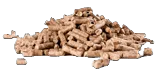
Italy still burns a lot of wood pellets for residential heating, especially in the northern regions like Lombardy, Veneto, and Trentino. The ENplus certification is standard here — customers expect A1 or A2 quality. The raw material opportunity is solid: furniture manufacturing waste (clean sawdust and shavings) from places like Brianza, plus forestry residues from the Alps and Apennines. Richi Machinery has supplied ring die pellet mills to multiple Italian wood pellet producers, and we’ve learned that die selection is critical — Italian hardwoods like oak and beech require different compression ratios than softwood pine. We also provide complete drying solutions because Italian sawmills often have higher moisture content than what German or Austrian suppliers deal with. The market is mature but still has room for smaller regional producers who can guarantee consistent quality.

GRASS PELLET PRODUCTION
GRASS PELLET SOLUTION
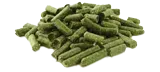
Grass pelleting isn’t huge in Italy yet, but it’s growing among organic livestock farms. The idea is simple: dry grass (alfalfa, meadow grass, or clover) gets pelleted as a high-protein supplement for dairy cows and sheep. The challenge in Italy is the climate — grass dries well in the south (Puglia, Sicily) but needs artificial drying in the north. Richi has worked with Italian farmers who mix fresh-cut grass with straw to adjust moisture before pelleting. The pellet machine in Italy for grass needs a conditioner because dry grass is dusty and doesn’t bind easily. We’ve found that adding 2-3% molasses or fat helps. The market potential: Italy imports a lot of alfalfa pellets from Spain and France. Local production could replace some of that.

STRAW PELLET PRODUCTION
STRAW PELLET SOLUTION
Italy grows a lot of wheat, barley, and rice — especially in the Po Valley and in Piedmont. Straw has traditionally been burned or plowed back, but pelleting changes that. Straw pellets can be used as animal bedding (horses, dairy cows) or as a low-grade fuel for industrial boilers. The trick with straw is that it’s abrasive and has low bulk density, so the pellet mill Italy needs a heavy-duty gearbox and a special die with a large inlet taper. Richi has supplied CZLH series mills to Italian farmers who run straw pellets seasonally after harvest. One customer we worked with in Lombardy processes 4-5 tons per hour of wheat straw into 8mm bedding pellets, selling to local stables. The Italian government’s agricultural waste incentive programs make this more attractive every year.


RUMINANT FEED PELLET PRODUCTION
CATTLE FEED PELLET SOLUTION
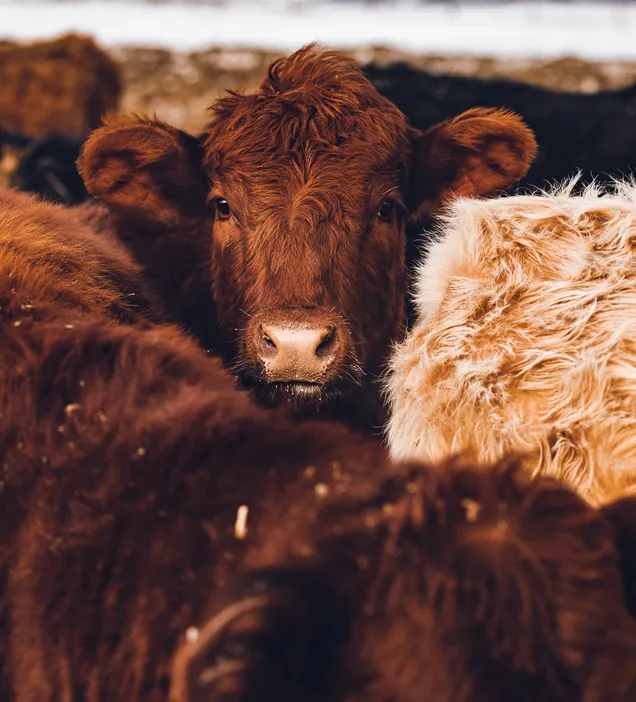
Italy has a strong dairy industry — Parmigiano and Mozzarella don’t make themselves. Ruminant feed pelleting is well-established here, but there’s room for improvement. Many Italian feed mills still produce mash feed, but pellets reduce waste and improve feed conversion. The typical Italian ruminant pellet is 4.5-6mm, using corn, barley, soybean meal, wheat bran, and sometimes alfalfa. Richi has installed SZLH series pellet mills for Italian feed producers, and we always emphasize conditioning temperature (80-85°C) for proper starch gelatinization. One thing unique to Italy: many small-scale dairy farms want to produce their own feed on-farm using their own grains. We’ve helped several co-ops set up modular feed mills at 2-5 t/h scale. The trend is toward shorter supply chains and less reliance on imported feed.

POULTRY FEED PELLET PRODUCTION
POULTRY FEED PELLET SOLUTION
Poultry feed is probably the most pelletized feed sector in Italy. Layers prefer crumbles (broken pellets), broilers do well on 3-3.5mm pellets. The Italian poultry industry is concentrated in Veneto, Emilia-Romagna, and Marche. Raw materials are similar to ruminant feed but with finer grinding (1.5-2mm) and often higher fat content. Richi’s SZLH420 and SZLH520 mills are common here. What Italian poultry producers care about most: pellet durability (so fines don’t accumulate in feeders) and uniform size. We’ve supplied post-pellet crumblers to several Italian plants specifically for layer feed. The organic poultry segment is also growing — those producers need organic-certified lines, which we can configure with dedicated cleaning protocols.

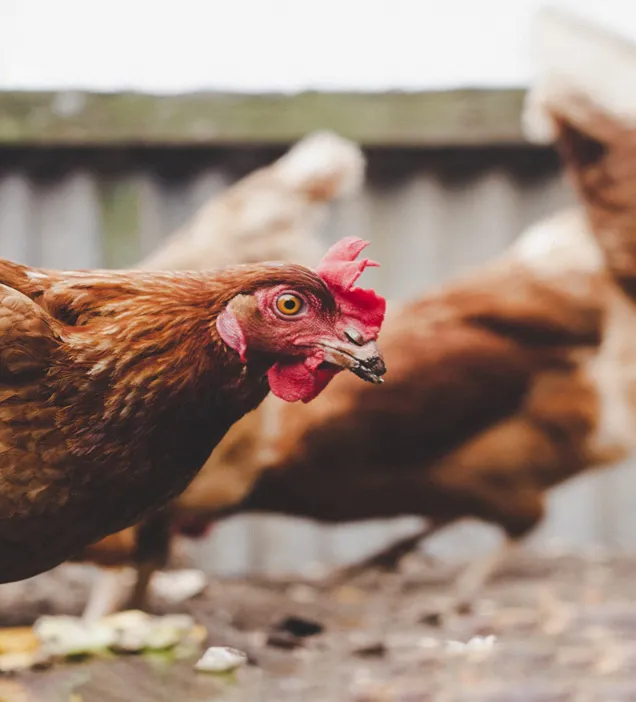
LIVESTOCK FEED PELLET PRODUCTION
LIVESTOCK FEED PELLET SOLUTION
Pig feed pelleting in Italy is less common than poultry, but it’s increasing. The main challenge is that pigs do fine on mash, so farmers need a reason to switch. The argument that works: pelleting reduces selective feeding (pigs can pick out the tasty bits from mash) and improves digestibility. Italian pig farms are mostly in Lombardy, Emilia-Romagna, and Umbria. Typical pellet size is 4-5mm for growers, 3-3.5mm for weaners. Richi has supplied pellet mills to Italian feed mills that serve large pig operations. The raw materials include corn, barley, soybean meal, and often whey powder or other byproducts from Italy’s huge cheese industry. One innovation we’ve seen: including spent grain from Italian breweries into pig feed pellets.


FERTILIZER PELLET PRODUCTION
FERTILIZER PELLET SOLUTION
Fertilizer pelleting is one of the fastest-growing segments for Richi in Italy. The reasons: Italian vineyards and olive groves prefer granular fertilizers for easier spreading, and the EU’s nitrates directive encourages controlled-release products. Raw materials can be chicken manure (lots of layer farms in Veneto), cattle manure (from the dairy industry), or compost from municipal green waste. Our FZLH series fertilizer pellet mills are designed to handle corrosive materials — we use stainless steel dies and conditioners. We’ve also supplied Italian customers with NPK granulation lines (not exactly pelleting but similar forming technology). The Italian government offers incentives for organic fertilizer production as part of the National Recovery and Resilience Plan. Several of our clients now produce pelletized manure-based fertilizers and sell them to wine regions like Tuscany and Piedmont.

FISH FEED PELLET PRODUCTION
FISH FEED PELLET SOLUTION
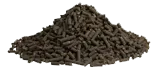
Italy has a respectable aquaculture sector — trout in the Alpine foothills (Trentino, Friuli), seabass and seabream in coastal regions (Sicily, Puglia, Lazio). Fish feed requires extrusion, not standard pelleting, because floating or slow-sinking pellets need specific density and water stability. Richi’s SPHS series twin-screw extruders have been installed in Italian fish feed plants. Raw materials include fish meal (imported, mostly), soybean meal, wheat flour, and fish oil. The Italian aquafeed market is dominated by a few large players, but there’s room for small specialized producers making feed for niche species like sturgeon (caviar farms in Piedmont) or organic trout. What Italian fish farmers complain about: imported feed that breaks apart in water. Our extruders can produce pellets that stay intact for over two hours.

PET FOOD PELLET PRODUCTION
PET FOOD PELLET SOLUTION
Italy is a huge pet food market — Italians love their dogs and cats, and premium pet food sales are growing. Most Italian pet food production uses extrusion (kibble), not traditional pellet mills. But we categorize it here because the technology overlaps. Richi’s SPHS twin-screw extruders have been supplied to Italian pet food companies making grain-free recipes using peas, lentils, sweet potato, and fresh meat. One project in Abruzzo produces 1-1.5 t/h of 10mm dog kibble. The Italian pet food market trends: super-premium, functional ingredients (probiotics, joint health), and sustainable packaging. Not directly related to the extruder, but Italian customers appreciate that our machines are energy-efficient because electricity costs are high here.

cat litter PELLET PRODUCTION
cat litter PELLET SOLUTION
Cat litter is an unexpected but real market for pellet machine Italy applications. Traditional clay litter is mined, but plant-based litters from agricultural waste are gaining traction among eco-conscious Italian pet owners. Richi has supplied MSZLH series mills to Italian producers making litter from wheat straw, corn stalks, and even waste paper. The process: dry the material to 10-12% moisture, pelletize into 4mm cylinders, then crumble or cut to length. We’ve also worked with a client in Sicily who pellets bentonite clay (a mineral application, using a specialized dry-pressing die). The Italian cat litter market is competitive, but the sustainable segment is under-supplied. If you have access to clean agricultural residues, this could be a good entry point.
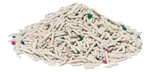

paper PELLET PRODUCTION
paper PELLET SOLUTION
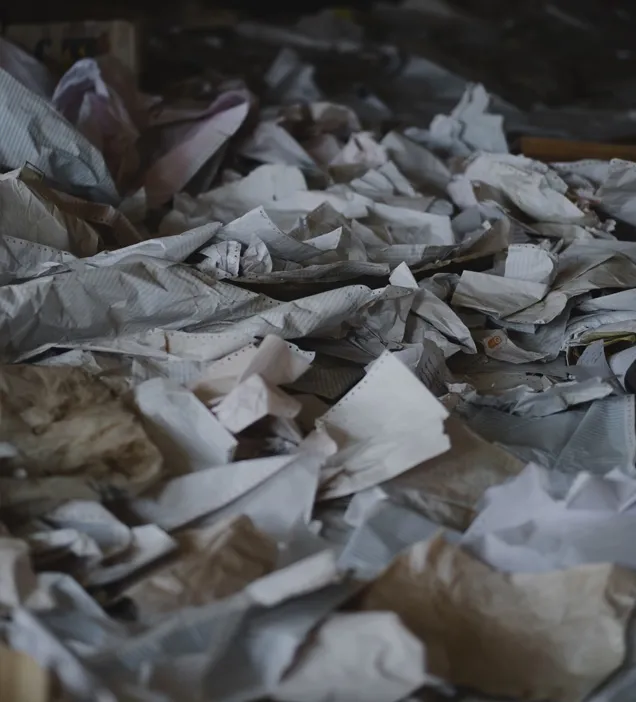
Waste paper is everywhere in Italy, and landfill costs keep rising. Paper can be pelleted into two products: low-grade fuel for industrial boilers (paper pellets have decent calorific value, around 14-16 MJ/kg) or as a component in cat litter (paper pellets are absorbent and dust-free). Richi has supplied small pellet mills to Italian recycling companies who process mixed office paper and cardboard. The raw material needs to be shredded first (to 5-10mm) and moisture adjusted to 10-12% — usually requires drying because office paper is fine but cardboard can be wet. The Italian waste paper market generates millions of tons annually, so the feedstock is abundant. Not many Italian companies are doing this yet, so early movers have an advantage.

ANIMAL BEDDING PELLET PRODUCTION
ANIMAL BEDDING PELLET SOLUTION
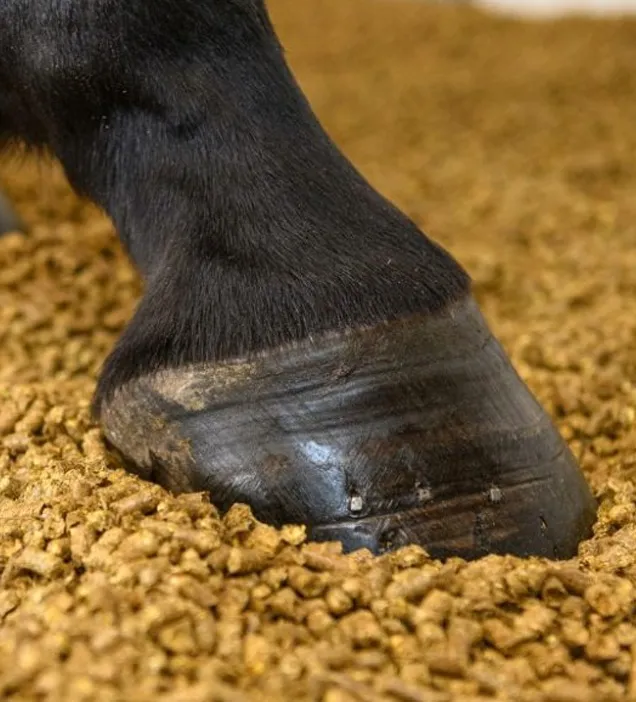
Animal bedding pellets are a growing niche in Italy. Horse owners prefer wood pellets because they’re absorbent and low-dust. Poultry and dairy farmers use straw pellets. The raw material for wood bedding pellets is the same as fuel pellets — clean dry sawdust — but the quality requirements are different: bedding pellets can have higher moisture (up to 12% vs 8% for fuel) and don’t need ENplus certification. Richi has supplied MZLH series mills to Italian customers who make 6-8mm bedding pellets. One customer in Emilia-Romagna uses 100% wheat straw from local farms, pellets it without a conditioner (because straw is dry), and sells to riding stables. The margin on bedding pellets is often better than fuel pellets because the quality bar is lower. Italian stables pay well for dust-free products.
RDF PELLET PRODUCTION
RDF PELLET SOLUTION
Italy generates millions of tons of municipal and industrial waste. Some of it ends up in incinerators or landfill, but RDF pelleting is a growing alternative. RDF pellets are made from shredded plastics, paper, cardboard, textiles, and other combustibles — compressed into 20-30mm pellets for cement kilns or dedicated power plants. Richi has supplied MSZLH series pellet mills for RDF applications in Italy. The challenges: inconsistent feedstock (requires strong magnets and air separators), abrasive materials (wear parts need frequent replacement), and fire risk (plastics generate static). Not a project for beginners, but the Italian cement industry (Italcementi, Buzzi) actively buys RDF. We’ve worked with one environmental services company in Campania that processes 5 t/h of commercial waste into SRF (solid recovered fuel) pellets.

Raw grain puffing PRODUCTION
Raw grain puffing SOLUTION
Grain extrusion isn’t pelleting — it’s a different technology using heat and pressure to expand grains. But we include it because Italian customers ask for it. Applications: breakfast cereals, puffed snacks, and precooked flours for instant products. Richi’s SPHS series extruders can process corn, rice, wheat, and barley. The Italian snack food market is substantial, especially in the south around Naples (the “snack belt”). One customer in Lazio uses our extruder to make puffed rice for cereal bars. Another in Puglia produces extruded corn flour for polenta (instant polenta is a convenience product here). The technology is similar to fish feed extrusion but with different die plates and cutter configurations.


Pyrolytic carbon PELLET PRODUCTION
Biochar & Pyrolysis Char PELLET SOLUTION
Biochar is gaining attention in Italy for soil carbon sequestration and water filtration. The raw material comes from pyrolyzed wood or agricultural waste. The problem: biochar is low-density (100-200 kg/m³) and abrasive, so standard pellet mills struggle. Richi has supplied FZLH series mills with specialized dies (1:3 compression ratio vs 1:6 for wood) and heavier gearboxes to Italian biochar producers. One customer in Tuscany makes biochar pellets from vine pruning waste and sells to organic vineyards. The Italian carbon credit market is developing slowly, but the potential is real. The EU’s carbon removal certification framework will likely boost this sector. For now, most Italian biochar production is small-scale (1-2 t/h), but we expect growth.


Rat poison PELLET PRODUCTION
Rat poison PELLET SOLUTION
This is a specialized but legitimate application for pellet machine Italy technology. Rodenticide pellets (for rats, mice) and molluscicide pellets (for snails) are made by extruding or pelleting a mixture of cereal grains, binders, and active ingredients. The raw materials are mostly flour-based (wheat flour, corn flour) with moisture around 12-14%. Richi has supplied small FZLH and SZLH mills to Italian pest control product manufacturers. The critical requirement: accurate dosing of active ingredients (often very toxic), so the line needs good mixing and containment. We don’t supply the active ingredients — just the pelleting equipment. The Italian market for pest control products is regulated by the Ministry of Health, so customers need proper certification. Not a large-volume market, but margins are high.


solid waste PELLET PRODUCTION
solid waste PELLET SOLUTION
Beyond the RDF mentioned earlier, Italian waste processors are looking at more specialized waste streams: industrial plastic waste (shredded PP, PE, PET), rubber from end-of-life tires (different equipment needed), and textile waste from the fashion industry. Richi has supplied pellet mills to Italian companies experimenting with these feedstocks. Italy’s “circular economy” push under the National Recovery and Resilience Plan is funding many waste-to-product projects. We’ve seen interest from companies in Lombardy (industrial waste) and Campania (municipal waste). Our role: help them test their specific waste stream, recommend the right pellet mill Italy configuration, and supply the complete line — shredders, dryers (if needed), pellet mills, and cooling/screening.


What Italian Customers Keep Ordering
Over the years, we’ve shipped a lot of equipment to Italy. Some machines get ordered once. Others get reordered again and again by different customers across the country. Below are the ones Italian producers come back for — whether they’re running a feed mill in Italy, a biomass plant, or a fertilizer line. These aren’t just random machines. They’re the ones we’ve learned to stock more parts for, because Italian operators run them hard. And if you’re searching for a pellet machine in Italy, chances are you’ll need several of these pieces to complete your line. We supply all of them, and we can help you design the flow between them
biomass pellet mill for sale
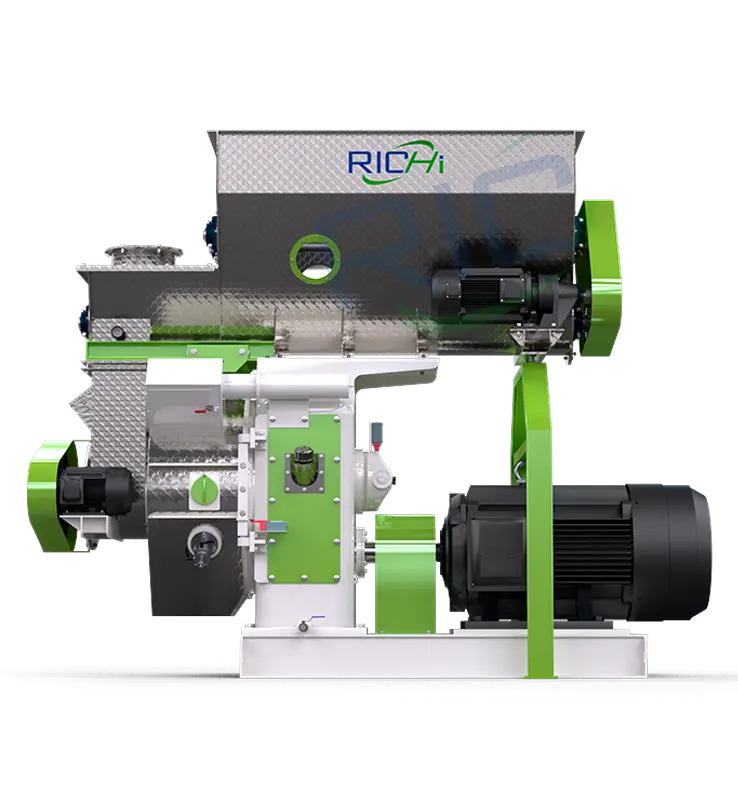
This is the workhorse of any Italian wood pellet operation. Our ring die biomass pellet mills are running in Lombardy, Veneto, and Friuli, processing everything from planer shavings (from the Brianza furniture district) to forestry residues from the Alps. Italian customers like the MZLH series because it handles both softwoods (spruce, pine) and hardwoods (oak, beech) without changing the die every week.

grass pellet machine for sale
Italian dairy farmers in the Po Valley are rediscovering grass pellets as a way to preserve high-quality forage. Our grass pellet machine processes alfalfa, meadow grass, and clover — all common in Italy’s hay-growing regions like Piedmont and Emilia. The machine includes a conditioner because dry grass is dusty and doesn’t bind well without steam or molasses.

feed mill pellet machine
For Italian feed mills, the SZLH series is our most popular. These mills are installed in Veneto (poultry region), Emilia-Romagna (dairy and pig country), and Marche. They produce pellets for broilers (3-3.5mm), layers (crumbles), pigs (4-5mm), and cattle (4.5-6mm). What Italian feed producers appreciate: the quick die change (under 20 minutes) because they often run multiple recipes in the same day. Raw materials include Italian corn, barley from the Po Valley, and soybean meal (mostly imported, but pelleted locally).
fertilizer granulator equipment
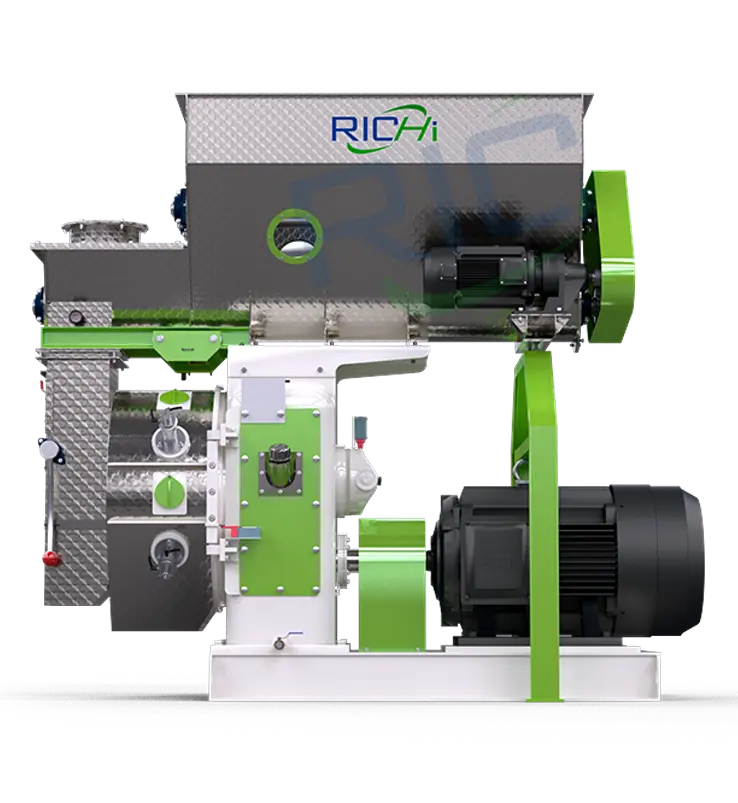
Fertilizer pelleting is growing fast in Italy — especially organic fertilizer from chicken manure (lots of layer farms in Veneto) and cattle manure (dairy regions). Our FZLH series uses stainless steel dies and conditioners because manure is corrosive. Italian customers also use these mills for NPK compound fertilizer pellets (granulation, really, but the machine works similarly). The vineyards in Tuscany and Piedmont prefer granular fertilizers for precision spreading.

twin screw extruder for sale
For floating fish feed and premium pet food, Italian producers come to us for twin-screw extruders. Our SPHS series is installed in Trentino (trout feed, 2.5mm sinking pellets) and Abruzzo (dog kibble, 10mm grain-free). The technology is different from a standard pellet mill — it cooks the material at high temperature and pressure, then shapes it through a die plate.
Italian aquafeed producers like that our extruders can run both floating and sinking recipes by changing the die and screw configuration.
straw pellet machine for sale
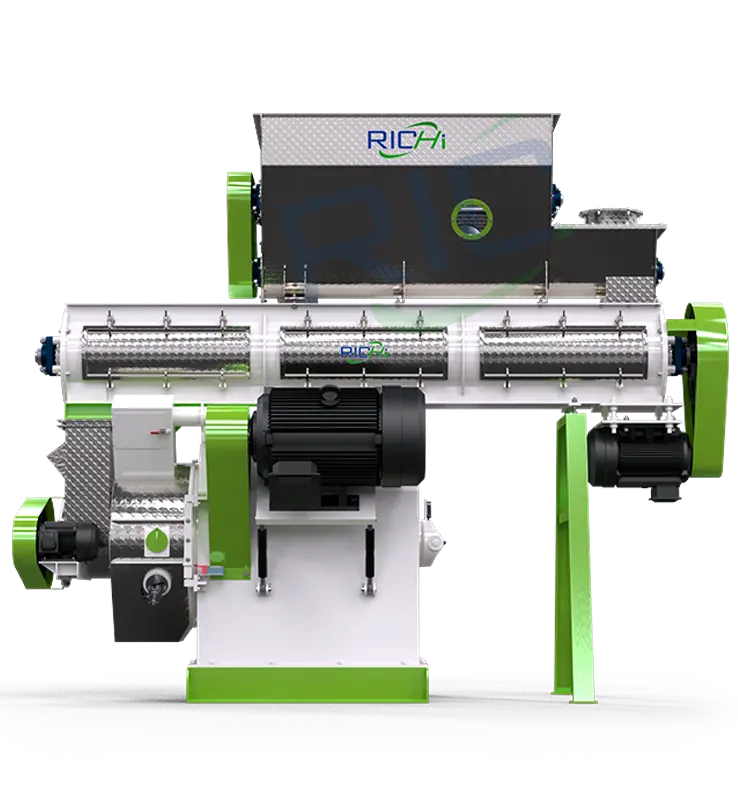
Our straw pellet mill in Italy is running on rice straw from the Po Valley and corn stalks from Emilia. Italian farmers used to burn this stuff. Now our industrial pellet mill in Italy turns it into consistent biofuel for greenhouse heating. A plant near Milan does 4 tons/hour on mixed wheat and rice straw. No die jams. No wood needed. That’s a real biomass pellet mill in Italy solving a local headache.

shrimp feed pellet machine
Shrimp farming in Puglia and along the Adriatic is real and growing. Our shrimp feed pellet mill in Italy produces slow-sinking, saltwater-stable pellets that don’t disintegrate. One facility near Taranto switched from imported feed to our pellet production machine in Italy and cut their feed cost by 18%. The pellets hold together until the last bite.

cat litter pellet machine
Bentonite clay from Sardinia and Tuscany is high-quality but varies in moisture. Our cat litter pellet mill in Italy processes that clay into uniform, low-dust pellets that clump instantly. A plant near Cagliari runs two shifts with our pellet press machine in Italy. Their rejection rate dropped from 8% to under 2%. That’s what a real pelletizing machine in Italy does for absorbent products.
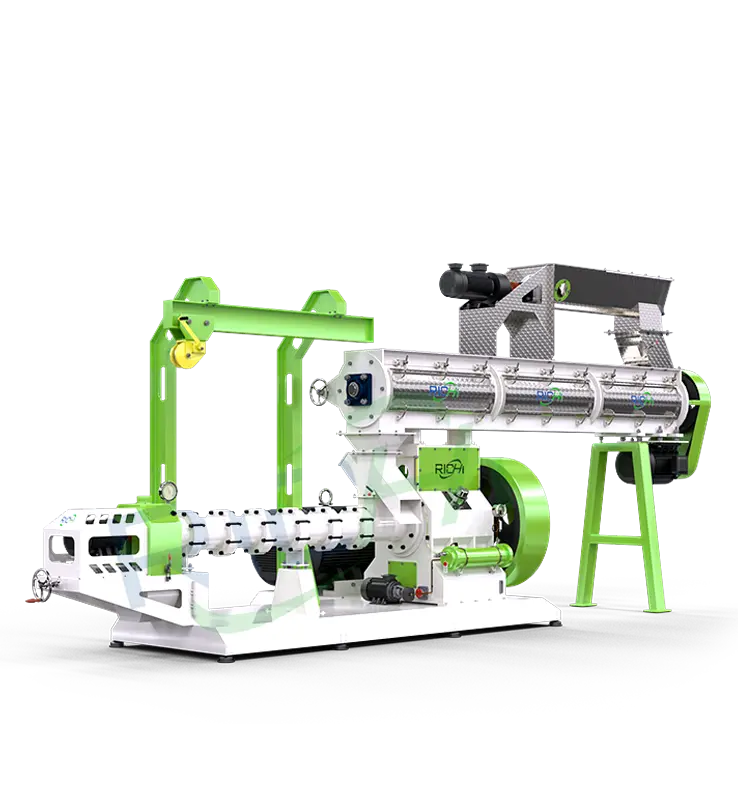
single screw extruder machine
Smaller Italian pet food companies and snack producers prefer our single-screw extruders for lower-volume production (under 1 t/h). These are simpler to operate and maintain than twin-screws. Applications in Italy include dog treats, cat treats, and puffed snacks for human consumption (corn puffs, rice cakes).

Grain extruder machine
This is a specialized machine that expands grains (mainly corn and barley) before they go into a feed pellet mill. Italian pig farms in Lombardy and Emilia use expanded grains because they improve digestibility in young pigs. The raw material is whole or cracked corn (moisture 14-15%), which gets expanded at 110-120°C, then dried and sometimes pelleted with other ingredients.
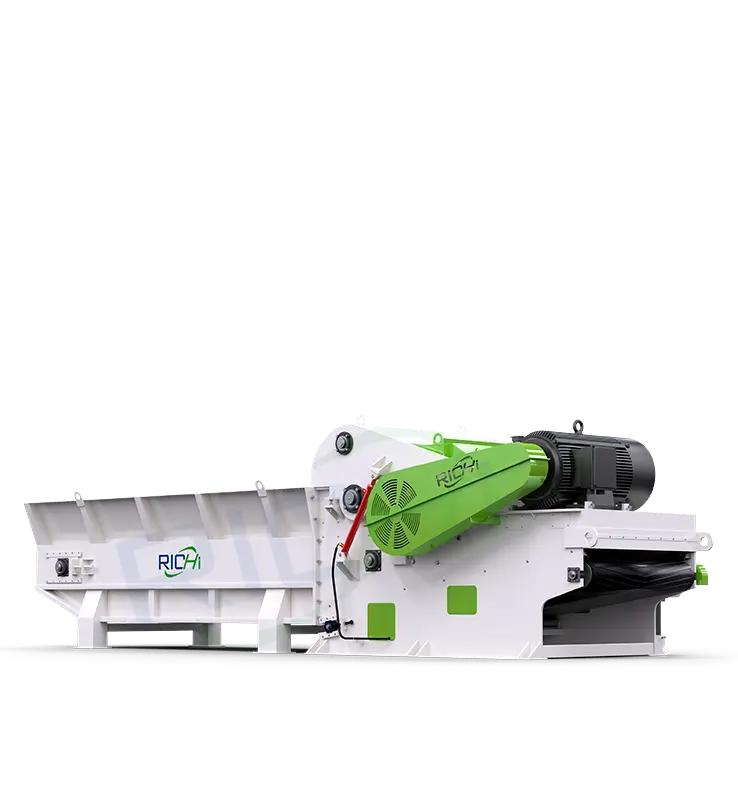
wood chipper machine
Italian wood pellet producers need consistent chip size before the hammer mill. Our drum chippers process logs, slabs, and edgings from sawmills. In Italy, the raw material varies by region: poplar in the Po Valley (fast-growing plantations), oak and beech in the Apennines, spruce and fir in the Alps. The chipper reduces everything to 10-30mm chips. We’ve supplied these to pellet factories in Italy that run on mixed forestry residues.

shredder machine
Italian customers processing difficult materials — RDF (refuse-derived fuel), plastic waste, textile waste from the fashion industry (Prato is known for textile recycling) — use our universal shredders. These machines handle mixed feedstocks that would jam a standard chipper. The output size is adjustable from 20mm to 100mm, depending on what the downstream pellet mill needs. We’ve sold shredders to Italian waste-to-energy projects in Campania and Lombardy.

Wood Chip Dryer
Italian biomass producers face a common problem: fresh wood chips from forestry operations have 40-45% moisture — too wet to pelletize. Our rotary drum dryers bring that down to 10-12% efficiently. We’ve installed these dryers in Lombardy (pine chips), Tuscany (olive pruning waste), and Sicily (citrus wood). The dryer is fired by a biomass burner that can use recycled fines from the pellet line itself — a closed-loop system that Italian customers like for energy savings.

bale crusher
Italian dairy farmers and straw pellet producers buy our bale breakers to process round and square bales of wheat straw, barley straw, and hay. The machine opens the bales and tears them into small pieces (50-100mm) before a hammer mill or tub grinder. We’ve supplied these to customers in the Po Valley (large round bales of wheat straw) and Piedmont (square bales of hay for grass pellet lines).

hammer mill
Our drop-shaped hammer mills are popular in Italian feed mills and biomass plants. The design creates a recirculation zone that grinds material more evenly. Applications: grinding corn and barley for poultry feed (1.5-2mm screen), grinding wood chips to sawdust (3-5mm) for pellet production, and grinding straw for bedding pellets (4-6mm). Italian customers appreciate the quick screen change — they might run corn one hour and barley the next.

mesh belt dryer
For heat-sensitive products like fish feed and pet food, Italian producers prefer belt dryers over rotary dryers. Our belt dryers operate at lower temperatures (60-100°C) and have longer retention times. We’ve installed these in Italian aquafeed plants (drying extruded trout feed from 24% moisture down to 9%) and in vegetable drying operations (tomatoes, herbs — a growing market in southern Italy).

Feed mixer machine
Italian customers use our mixers for multiple applications. In feed mills, they mix corn, soybean meal, minerals, and oil before pelleting. In fertilizer plants, they blend different manure types or add NPK granules. In biomass lines, they can mix different wood species or add binders (though most Italian wood pellet producers avoid binders). Our paddle mixers are more common in Italy for feed and fertilizer because they handle fats and liquids better than ribbon mixers.

fertilizer crusher machine
Before manure or compost can be pelleted, it needs to be crushed into a uniform powder. Our vertical fertilizer crushers are designed for sticky, high-moisture materials (up to 30%). Italian customers use these ahead of FZLH fertilizer pellet mills. Raw materials include dried chicken manure (clumpy), cattle manure (fibrous), and municipal compost (mixed). The crusher reduces everything to under 2mm.

grass straw crusher machine
For grass and straw pelleting, Italian customers often need a finer grind than what a standard hammer mill provides. Our specialized grass/straw crusher uses a scissor-cutting action (not impact) to produce a fibrous but uniform powder. Applications: processing dried alfalfa (from the Po Valley) into fine powder for 4mm rabbit feed pellets, and processing wheat straw into 2-3mm particles for bedding pellets that need to be soft.

vibrating screening machine
After pellets come out of the cooler, they need to be screened to remove fines. Italian customers use our vibrating screens for this. We’ve also supplied screens for raw material cleaning — removing stones, dust, and oversize particles before grinding or pelleting. Applications: wood pellet lines (screening 6-8mm pellets before bagging), feed mills (screening crumbles to remove dust), and fertilizer plants (screening granules for uniform size).

storage silos
Italian customers need storage for raw materials (wood chips, grain, manure) and finished pellets. We supply welded steel silos and bolted silos in various sizes — from 50 m³ on-farm storage up to 2,000 m³ industrial silos. For wood pellet producers, we recommend flat-bottom silos with aeration floors to prevent moisture migration. For feed mills, we supply hopper-bottom silos for easy discharge into conveying systems.
You’ve Asked About Our Pellet Machine in Italy
Over the years, Italian customers have come to us with all sorts of questions — not just about prices, but about what really works for their specific raw material, their local climate, their production targets. We don’t have a local agent in Italy. Everything we ship comes directly from our factory, and every machine is built for your specific application. Below are answers to the most common questions we get from Italian producers, whether you’re running a small farm operation or a large industrial plant. If you’re evaluating a pellet machine in Italy for your own project, this is a good place to start.
We’re evaluating different pellet machine options for our facility in Italy. What are the actual technical specifications and capacity ranges for the various pellet mills you export to the Italian market? We need to understand which model fits our raw material and target output.
+
When Italian customers come to us looking for a pellet machine in Italy, the right model depends entirely on what they’re pelleting — feed ingredients behave differently than wood, and wood behaves differently than straw or fertilizer. Below are the actual spec sheets for the main pellet mill Italy series we’ve been shipping to Lombardy, Veneto, Emilia-Romagna, and beyond. These aren’t theoretical numbers. They’re based on real operating data from Italian plants running our equipment daily.
Feed Pellet Mills (SZLH Series) – for Italian feed mills
These are what most Italian feed producers start with. The SZLH series is designed for conditioning and pelleting mash feeds containing grains, oilseed meals, and minerals. Italian poultry and pig farms typically run pellets in the 2-12mm range, which these mills handle across the board.
The smallest model, SZLH250 small animal feed pellet machine, uses a 22kW main motor and produces 1.0-1.5 tons per hour — good for a small on-farm setup in Piedmont or Marche. Move up to the SZLH320 animal feed granulator(37kW, 3-4 t/h), and you’re in the range of a small commercial feed mill. The SZLH350 animal feed pellet press(55kW, 5-6 t/h) is popular among medium-sized Italian feed producers in Veneto’s poultry region.
At the larger end, the SZLH420 animal feed pellet mill (110kW, 10-12 t/h) and SZLH508 animal feed pellet making machine(160kW, 15-16 t/h) are running in several Emilia-Romagna feed plants that supply dairy and pig operations. The SZLH558 feed granulator machine (185kW, 20-22 t/h) and SZLH678 feed pellet granulator(250kW, 30-33 t/h) are for industrial-scale Italian feed mills — we’ve installed these in facilities that run two shifts daily. The largest, SZLH768 commercial feed pellet mill (315kW, 38-40 t/h), is rare in Italy but one cooperative in the Po Valley uses it for centralized feed production serving 300+ farms.
Ring die inner diameters range from 250mm to 762mm across the series. All models include a feeder motor (1.1-2.2kW) and a conditioner motor (1.5-11kW) because Italian feed recipes almost always need steam conditioning at 80-85°C for proper starch gelatinization.
Wood Pellet Mills (MZLH Series) – for Italian biomass producers
Italian wood pellet lines run different specs than feed lines. Biomass is less dense than feed mash, so throughput is lower per kilowatt. The MZLH series includes a breaking arch feeder and a forced feeder — because wood chips and sawdust tend to bridge in the hopper. Italian customers in Lombardy (furniture waste) and Trentino (spruce from Alpine forestry) use these.
The MZLH320 small wood pellet machine (22kW main motor) produces only 0.2-0.3 t/h of wood pellets — fine for a small joinery shop turning its own waste into fuel. The MZLH350 wood pellet extruder machine (37kW, 0.3-0.5 t/h) is similar. The real workhorses start at MZLH420 (90kW, 1.0-1.2 t/h), which we’ve sold to several small Italian wood pellet factories in Friuli.
The MZLH520 wood pelletizer(132kW, 1.5-2.0 t/h) is common among medium-sized Italian producers who sell ENplus A1 pellets to local stove dealers. The MZLH678 wood granulator machine (185kW, 2.5-3.0 t/h) and MZLH768 (250kW, 3.0-4.0 t/h) are for larger operations — one client in Piedmont runs an MZLH768 on oak sawdust, producing about 3.5 t/h of 8mm pellets for industrial boilers.
Ring die diameters run from 320mm to 762mm. Finished pellet diameter is adjustable from 4mm to 12mm. Note that these wood pellet mill Italy outputs assume dry raw material at 10-12% moisture and 3-5mm particle size. Wet material will drop throughput significantly — that’s when you need a dryer ahead of the pellet machine in Italy.
Straw & Grass Pellet Mills (CZLH Series) – for Italian agricultural residues
Italy grows a lot of wheat, barley, and rice — especially in the Po Valley and Piedmont. Straw and grass are fibrous and abrasive, so the CZLH series has a different die design (wider compression ratio) than the wood series. They also include breaking arch and forced feeders.
The CZLH320 (22kW) produces 0.5-0.6 t/h of straw or grass pellets — used by small Italian dairy farms making their own bedding or feed supplement. The CZLH350 (37kW, 1.0-1.2 t/h) is popular among horse bedding producers in Tuscany and Lazio. The CZLH420 (90kW, 1.8-2.0 t/h) has been installed in several Italian straw pellet lines.
The CZLH520 (132kW, 2.8-3.0 t/h) is a common choice for Italian bedding pellet factories that process wheat straw bales through a bale breaker then a hammer mill before pelleting. The CZLH678 (185kW, 4-5 t/h) and CZLH768 (250kW, 6-8 t/h) are larger units — one cooperative in Emilia-Romagna uses a CZLH768 to produce 7 t/h of straw bedding pellets for dairy farms across three provinces.
Ring die diameters from 320mm to 762mm. Finished pellet diameter 4-12mm. One thing Italian customers learn quickly: straw and grass wear out dies faster than wood. We recommend stainless steel dies for high-volume Italian straw pellet lines.
Cat Litter Pellet Mills (MSZLH Series) – for Italian pet product manufacturers
This is a newer but growing segment in Italy. Plant-based cat litter from wheat straw, corn stalks, or waste paper requires a pellet mill that can produce a clean, low-dust 4mm cylinder. The MSZLH series is mechanically similar to the feed SZLH series but with tighter die tolerances.
The MSZLH250 (22kW, 1.0-1.5 t/h) is used by small Italian startups making eco-friendly litter for local pet stores. The MSZLH320 (37kW, 3-4 t/h) and MSZLH350 (55kW, 5-6 t/h) are more common — we’ve supplied these to Italian producers in Piedmont and Marche who are now supplying national pet chains.
The MSZLH420 (110kW, 10-12 t/h) is for larger operations. The MSZLH508 (160kW, 15-16 t/h), MSZLH558 (185kW, 20-22 t/h), MSZLH678 (250kW, 30-33 t/h), and MSZLH768 (315kW, 38-40 t/h) are available but rarely needed in the Italian cat litter market — most demand is in the 5-10 t/h range. Still, we have one client in Sicily who uses an MSZLH508 for bentonite clay litter (a mineral application, different from plant-based).
Ring die diameters 250-762mm. Finished pellet diameter 2-12mm. The same machine can produce 6mm fuel pellets from paper waste if a customer wants to switch products. That flexibility matters to Italian producers who want to diversify.
Fertilizer Pellet Mills (FZLH Series) – for Italian organic fertilizer producers
Fertilizer pelleting is different from feed or biomass. Manure and compost are corrosive, often wetter, and don’t flow as easily. The FZLH series uses stainless steel contact parts and includes breaking arch feeders and forced feeders.
The FZLH250 small fertilizer pellet machine (22kW) produces 1-1.5 t/h — used by small Italian farms turning their own chicken or cattle manure into bagged fertilizer for local vineyards. The FZLH320 (22kW, 2-3 t/h) is similar power but different gearing for higher torque. The FZLH350 (37kW, 3-5 t/h) is popular among medium-sized Italian organic fertilizer producers in Umbria and Marche.
The FZLH420 organic fertilizer granulator machine (90kW, 6-8 t/h) and FZLH520 (132kW, 9-12 t/h) are common in larger Italian operations — one client in Veneto processes 10 t/h of dried poultry litter into 6mm fertilizer pellets for export to Austria. The FZLH678 (185kW, 18-22 t/h) and FZLH768 (250kW, 22-26 t/h) are industrial-scale units. We’ve installed one FZLH768 in Emilia-Romagna for a company that processes municipal green waste compost into pelletized soil amendment.
Ring die diameters 250-762mm. Finished pellet diameter 4-12mm. The lower end of the output range (4-6mm) is typical for Italian fertilizer pellets used in vineyards and olive groves. Larger pellets (8-12mm) are for forestry or slow-release applications.
A note on what’s above
The tables above represent the main pellet mill Italy series we export to Italian customers. But they’re not everything we offer. We manufacture pellet machines for many other materials — RDF (refuse-derived fuel), biochar, pest control baits, even paper and cardboard. We also build custom configurations: different die materials (stainless steel, alloy steel, tungsten carbide), different feeder designs for sticky or wet materials, and different conditioning systems (steam, molasses, fat, or none).
If your raw material isn’t listed, or if your target output falls between two models, talk to us. We’ve built plenty of one-off pellet machine in Italy configurations for customers who had unusual requirements. That’s the advantage of working with a manufacturer that actually engineers its own equipment, not just resells standard boxes. Tell us what you’re pelleting, and we’ll spec the right mill for your Italian operation.
We’re looking for a reliable feed pellet machine in Italy with good value for money. What are the actual FOB price ranges for your SZLH series ring die feed pellet mills? We need to budget for a small poultry line (around 3-4 t/h) but also want to see what larger models cost for future expansion.
+
Italian customers searching for a feed pellet machine in Italy often ask about pricing first — but the real question is which capacity fits their operation. Below are the FOB price ranges for our SZLH series, based on what we’ve actually quoted to Italian feed mills in Veneto, Emilia-Romagna, and Lombardy over the past two years.
These are single ring die feed pellet machines, complete with feeder and conditioner. Keep in mind that prices fluctuate with raw material costs and exchange rates, so consider these as realistic ranges, not fixed numbers.
Small to medium Italian feed operations
For a small farm or cooperative looking for a feed pellet machine in Italy at the entry level, the SZLH250 (22KW) delivers 1-2 tons per hour. Price range: $6,500 – $8,500. This is what we’ve sold to several small dairy farms in Piedmont that wanted to pellet their own grain mix instead of buying pre-made feed.
Moving up, the SZLH320 (37KW) produces 3-4 t/h. Range: $15,000 – $18,500. This is probably the most common size we export to Italy for animal feed pellet mill in Italy applications. Poultry farms in Veneto use it for broiler feed. Sheep and goat operations in Sardinia have installed it for their own feed production. If you’re searching for a cattle feed pellet machine in Italy or a dairy feed pellet machine in Italy at this capacity, the SZLH320 is where most customers start.
The SZLH350 (55KW) does 5-6 t/h. Price: $26,000 – $32,000. We’ve supplied this to medium-sized Italian feed mills that serve multiple farms. It’s also a common choice for pig feed pellet machine in Italy applications because pigs need slightly larger pellets (4-5mm) and this mill handles the higher fat content well.
Commercial feed mills in Italy
Once you get above 5 t/h, you’re in commercial territory. The SZLH420 (110KW) produces around 10 t/h. Range: $27,500 – $34,000. Italian customers in Emilia-Romagna have bought this for poultry feed pellet machine in Italy lines making 3-3.5mm pellets for broilers. It’s also used as a chicken feed pellet machine in Italy for layer feed (which often gets crumbled after pelleting). The price jump from the SZLH350 to the SZLH420 is smaller than you’d expect because the 420 is a high-volume model for us.
The SZLH508 (160KW) does 15 t/h. Range: $38,000 – $46,000. This is a serious industrial mill. We’ve installed these in Italian feed pellet production line in Italy facilities that run two shifts daily. One client in Lombardy uses it for pig feed pellet machine in Italy production — 15 tons per hour of 4.5mm pellets for finishing hogs.
The SZLH558 (185KW) does 20 t/h. Range: $45,000 – $55,000. Not many Italian feed mills need this capacity, but we’ve sold a few to large cooperatives in the Po Valley that supply hundreds of farms. It works for sheep feed pellet machine in Italy and goat feed pellet machine in Italy applications as well — those species prefer smaller pellets (3-4mm), which this mill handles easily with the right die.
Large industrial Italian feed plants
The SZLH678 (250KW) produces 30 t/h. Range: $60,000 – $74,000. We’ve only sold a handful of these in Italy — mostly to industrial feed plants that also export to Switzerland and Austria. One customer uses it as a rabbit feed pellet machine in Italy (rabbit feed is a niche but real market in Italy, especially around Naples where rabbit meat is popular). Another uses it for horse feed pellet machine in Italy — horse pellets are usually larger (6-8mm) and lower in starch, so the mill needs to run at lower speeds, which this model’s gearbox allows.
The largest, the SZLH768 (315KW) , does 40 t/h. Range: $72,000 – $89,000. This is uncommon in Italy — most Italian feed plants aren’t that big. But we have quoted it to one large aquafeed pellet machine in Italy producer making fish feed for the trout industry in Trentino. Aquafeed requires very consistent pellet size and water stability, which a high-capacity mill can deliver if the die is properly matched.
What these prices include — and don’t include
The ranges above are for the pellet mill itself — main motor, feeder motor, conditioner motor, ring die, and rollers. FOB port (usually Shanghai or Qingdao). They don’t include shipping to Italy, customs duties (around 2-3% for feed mills into the EU), VAT, or installation. Most Italian customers budget an additional 25-35% for freight, import fees, and on-site commissioning.
Also worth noting: these are single ring die machines. If you need a dual-mill setup (two mills running parallel), the price roughly doubles, but you get redundancy — if one mill goes down, you’re still at 50% capacity. A few Italian feed mills have chosen this configuration.
Beyond the SZLH series
The SZLH models above are our main feed pellet machine in Italy line, but they’re not the only ones we offer. We also manufacture:
- MZLH series for wood and biomass pellets (different gearbox ratios, breaking arch feeders)
- CZLH series for straw, grass, and hay (wider die compression ratios)
- FZLH series for organic fertilizer and manure (stainless steel contact parts)
- MSZLH series for cat litter and specialty products (tighter die tolerances)
Each series has its own price structure. If you’re pelleting something other than standard feed mash — like wet distillers grains, high-fiber beet pulp, or spent grain from Italian breweries — talk to us. We’ll recommend the right pellet machine in Italy configuration for your specific material.
Getting an accurate quote
The ranges above are a starting point. To get a firm price for your Italian operation, we need three things from you:
- Target hourly output (in tons per hour)
- Raw material type and moisture (corn, barley, soybean meal, wet vs dry)
- Pellet diameter (2-12mm, but typical Italian feed is 3-6mm)
With that information, we’ll spec the right mill, confirm current pricing, and quote shipping to your Italian port (Genoa, Naples, or Trieste are the most common). We can also include spare parts — ring dies, rollers, bearings — which Italian customers usually order upfront to avoid downtime.
Contact us with your requirements, and we’ll send you a detailed quote within 48 hours. We’ve helped over 60 Italian feed producers find the right feed pellet machine in Italy for their operation. Happy to help you too.
We’re exploring different options for a pellet machine in Italy to process our local biomass — mainly olive pruning waste and some vineyard residues. What are the actual FOB price ranges for your MZLH series wood and biomass pellet mills? We need something in the 1-2 t/h range to start.
+
The MZLH series biomass pellet press is what we’ve shipped most frequently to Italian customers over the past five years — from small joinery shops in Brianza to larger wood pellet factories in Trentino and Lombardy.
Below are the FOB Qingdao price ranges for our complete biomass pellet mills, which include the anti-arching feeder, force feeder, pelletizer, and control cabinet. These are based on actual quotes to Italian buyers. Consider these realistic ranges, not fixed prices — exchange rates and material costs shift.
Small-scale Italian biomass operations
For a small farm or workshop looking for a pellet machine in Italy at the entry level, the MZLH320 small biomass pellet machine (22KW) produces 0.2-0.3 tons per hour. Price range: $13,500 – $17,000. This is what we’ve supplied to small olive pomace pellet machine in Italy applications in Puglia and Calabria — farmers processing their own olive waste into fuel pellets for greenhouse heaters. It’s also used as a grape pomace pellet machine in Italy by wineries in Tuscany that want to turn grape skins and stems into biofuel. For vineyard waste pellet machine in Italy projects, this size is often the starting point.
The MZLH350 (37KW) does 0.3-0.5 t/h. Range: $18,500 – $23,000. We’ve sold this to Italian orchard waste pellet machine in Italy operators in Emilia-Romagna who process peach and pear pruning waste. It’s also a common choice for pruning waste pellet machine in Italy applications across central Italy — olive, grape, and fruit tree prunings all work well through this mill if moisture is below 15%. One customer in Sicily uses it as a sunflower husk pellet machine in Italy — sunflower husks are dry and flow well, so actual output is closer to 0.5 t/h.
Medium-scale Italian biomass producers
The MZLH420 (90KW) produces 1.0-1.2 t/h. Range: $26,500 – $33,000. This is probably our most popular biomass pellet machine in Italy for small commercial producers. We’ve installed these for forest residue pellet machine in Italy operations in Friuli — processing branches, treetops, and small-diameter logs from Alpine forestry. It also works well as a wood sawdust pellet machine in Italy for furniture manufacturers in Brianza. One client in Lazio uses it as an agricultural waste pellet machine in Italy — processing a mix of wheat straw, corn stalks, and vineyard waste into 8mm fuel pellets.
The MZLH520 (132KW) does 1.5-2.0 t/h. Range: $40,000 – $50,000. This is a serious step up. Italian customers buying this are usually running 10-12 hour shifts daily. It’s used as a wood chips pellet machine in Italy by a biomass trader in Piedmont who processes poplar chips from short-rotation forestry. It’s also been sold as a softwood pellet machine in Italy for spruce and pine producers in Trentino. For hardwood pellet machine in Italy applications (oak, beech, olive wood), output drops about 15-20% because hardwoods are denser and more abrasive.
Large-scale Italian biomass and industrial waste operations
The MZLH678 biomass granulator (200KW) produces 2.5-3.0 t/h. Range: $60,000 – $74,000. We’ve supplied this to a mixed wood pellet machine in Italy plant in Veneto that processes construction waste wood (clean offcuts, pallets, rejected furniture parts). It’s also used as an organic waste pellet machine in Italy for dried fruit and vegetable processing residues — one client in Campania pellets tomato peels and seeds (after drying) into fuel for his own boiler. For biofuel pellet machine in Italy producers targeting ENplus certification, this is a common size.
The largest, the MZLH768 biomass fuel pellet machine (315KW) , does 3.0-4.0 t/h. Range: $72,000 – $89,000. This is industrial scale. Italian customers buying this are usually producing for export or for large district heating systems. It’s been sold as a biochar pellet machine in Italy (with a specialized die — biochar is low-density and abrasive) to a client in Tuscany who makes biochar pellets from vine pruning waste for soil amendment. Another customer uses it as a charcoal pellet machine in Italy — blending charcoal fines with a binder to make BBQ briquettes, which is a niche but profitable market in Italy.
Beyond wood and agricultural biomass
The MZLH series is versatile. We’ve also supplied these machines for non-traditional Italian biomass applications:
- Coal fines pellet machine in Italy — one client in Sardinia processes coal dust from a decommissioned mine into fuel pellets for industrial kilns.
- Industrial waste pellet machine in Italy — a company in Lombardy uses an MZLH520 to pelletize textile dust from the fashion industry (Prato region) into SRF.
- Waste paper pellet machine in Italy and cardboard pellet machine in Italy — several Italian recycling companies have bought MZLH350 and MZLH420 mills to turn sorted office paper and corrugated cardboard into 6-8mm fuel pellets. Paper pellets have decent calorific value (around 14-16 MJ/kg) and burn cleanly.
- RDF pellet machine in Italy and refuse derived fuel pellet plant in Italy applications — we’ve quoted the MZLH678 for solid waste processors in Campania who shred municipal waste, remove metals and inerts, then pelletize the combustible fraction. Output is lower (around 2-2.5 t/h for RDF) because the material is fluffy and inconsistent.
- Solid waste pellet machine in Italy — one client in Lazio uses an MZLH420 for processed commercial waste (plastics, paper, cardboard mix).
- Horse bedding pellet machine in Italy and wood shavings pellet machine in Italy — several Italian equestrian centers have bought MZLH350 mills to turn their own wood shavings and sawdust into 8-10mm bedding pellets. The quality bar for bedding is lower than for fuel, so they run cheaper dies.
What these prices include
The ranges above are for complete pellet mill units with anti-arching feeder (stops bridging in the hopper), force feeder (pushes material into the die area), the pelletizer itself, and a basic control cabinet. FOB Qingdao port. They do not include shipping to Italy, customs duties (about 2-3% for biomass equipment into the EU), VAT, or on-site installation. Most Italian customers add 25-35% for freight, import fees, and commissioning.
Beyond the MZLH series
The MZLH models above are our main biomass pellet machine in Italy line, but not our only biomass options. We also offer:
- CZLH series for straw, grass, and hay (different die compression ratios)
- FZLH series for manure and organic waste (stainless steel for corrosion resistance)
- MSZLH series for cat litter and specialty products
Each has its own price structure. If your raw material isn’t standard sawdust or wood chips — for example, olive husk pellet machine in Italy (olive husk is oily and can cause die slippage), or grape pomace (high moisture, needs careful drying first) — tell us. We’ll recommend the right configuration and provide a custom quote.
Getting an accurate price for your Italian operation
The ranges above help with budgeting. For a firm quote, we need:
- Raw material type — softwood, hardwood, agricultural residue, olive waste, paper, RDF, etc.
- Moisture content — ideally 10-15% for wood; higher needs drying equipment
- Target output (t/h)
- Pellet diameter (4-12mm — 6mm and 8mm are most common in Italy)
With that, we’ll spec the right MZLH or alternative model, confirm current pricing, and quote shipping to your Italian port (Genoa, La Spezia, or Naples are typical). We can also include spare parts — ring dies, rollers, bearings — which Italian customers often order upfront to avoid downtime.
Contact us with your requirements. We’ve helped over 80 Italian biomass producers find the right pellet machine in Italy for their specific feedstock — from olive waste in Puglia to spruce sawdust in Trentino. Happy to help you too.
We grow our own alfalfa and wheat straw on about 200 hectares in Emilia-Romagna. I’m looking for a grass pellet machine in Italy that can turn my hay and straw into feed pellets and bedding pellets. What are the actual price ranges for your CZLH series? Need something that can do 2-3 t/h of alfalfa pellets for my dairy cows.
+
That’s a smart move — using your own forage instead of buying imported feed. The CZLH series is what we’ve been shipping to Italian farmers and feed producers for grass, hay, and straw pelleting.
These machines include an anti-arching feeder (stops hay from bridging in the hopper), a conditioner (adds steam or molasses if needed), a force feeder (pushes fibrous material into the die), the pelletizer itself, and a control cabinet.
Below are the FOB Qingdao price ranges based on actual quotes to Italian customers in the Po Valley, Piedmont, and Tuscany. Consider these realistic ranges — prices shift with exchange rates and material costs.
Small Italian farm-scale operations
For a small dairy or horse farm looking for a pellet machine in Italy at the entry level, the CZLH250 (22KW) produces 0.3-2 tons per hour. Price range: $7,000 – $9,000. The wide output range depends on the material — alfalfa pellets (denser) run toward the lower end, while lighter bedding pellets from wheat straw run higher. We’ve supplied this to small alfalfa pellet machine in Italy operations in Lombardy where farmers dry their own second-cut alfalfa and pellet it as a protein supplement for winter feeding. It’s also used as a hay pellet machine in Italy by horse owners in Tuscany who want dust-free hay pellets for stables.
The CZLH320 (22KW) — same motor power but different gearing and die size — does 0.5-4 t/h. Range: $17,500 – $21,500. This is a popular choice for straw pellet machine in Italy applications. One customer in Piedmont uses it to process wheat straw into 8mm bedding pellets for his 300-horse riding school. Another in Marche uses it as a wheat straw pellet machine in Italy for both bedding (larger pellets) and feed supplement (finer grind, smaller pellets).
Medium-scale Italian forage processing
The CZLH350 (37KW) produces 1-6 t/h. Range: $22,000 – $27,500. This is probably our most common grass pellet machine in Italy for commercial forage processors. We’ve installed these for barley straw pellet machine in Italy operations in Friuli — barley straw is slightly softer than wheat straw and pellets more easily. It’s also used as a rice straw pellet machine in Italy in the Po Valley rice-growing region (Pavia, Vercelli). Rice straw is trickier — it has high silica content and wears dies faster — but the CZLH350 handles it with a stainless steel die option.
The CZLH420 (90KW) does 2-10 t/h. Range: $27,500 – $34,000. This is a serious step up. Italian customers buying this are usually running 10-12 hour shifts during harvest season. We’ve sold this as a corn stalk pellet machine in Italy to a cooperative in Veneto that processes corn stover (stalks and leaves left after grain harvest) into pellets for a local biomass boiler.
Corn stalks have lower bulk density than straw, so actual output is usually in the 3-5 t/h range. It’s also been installed as an alfalfa pellet machine in Italy for a large organic dairy farm in Emilia that produces over 4,000 tons of alfalfa pellets annually for its own herd.
Large-scale Italian forage and straw pellet plants
The CZLH520 (132KW) produces 3-12 t/h. Range: $46,000 – $56,000. We’ve supplied this to a straw pellet machine in Italy plant in Lombardy that processes wheat straw from 5,000 hectares of farmland into bedding pellets for the entire province’s dairy sector. Output runs around 8-10 t/h of 8mm bedding pellets. Another customer in Puglia uses it as a hay pellet machine in Italy — processing dry hay from Mediterranean grasslands (mostly wild grasses and legumes) into 6mm feed pellets for sheep and goats.
The CZLH678 (200KW) does 4-20 t/h. Range: $67,000 – $82,000. This is industrial scale. We’ve only sold a few of these in Italy. One is installed in a wheat straw pellet machine in Italy facility in Piedmont that exports bedding pellets to Switzerland. Another is used as a barley straw pellet machine in Italy plant in Sardinia — barley is widely grown there, and the straw has been traditionally burned, but now it gets pelleted into fuel for the island’s cement kilns.
The largest, the CZLH768 (315KW) , does 6-30 t/h. Range: $78,000 – $96,000. This is rare in Italy — most Italian forage and straw operations aren’t that big. But we have quoted it to a large alfalfa pellet machine in Italy producer in the Po Valley who exports alfalfa pellets to Spain and France. At full capacity, it can process 25-30 t/h of dried alfalfa into 6mm feed pellets, running 24/5 during the production season.
What the conditioner does — and why it matters for grass and straw
You’ll notice all CZLH models include a conditioner. For grass and straw pelleting, conditioning is often optional. Dry straw (under 12% moisture) can be pelleted without steam — it binds through mechanical friction and lignin activation. Alfalfa, on the other hand, benefits from steam conditioning (about 70-80°C) because it activates natural binders and improves pellet durability. Italian customers running alfalfa pellet production lines almost always use the conditioner. Those running straw pellet machine in Italy for bedding often bypass it.
If you don’t need the conditioner for your specific application, we can remove it and adjust the price downward. Just tell us what you’re pelleting.
What these prices include
The ranges above are for complete CZLH units with anti-arching feeder, conditioner, force feeder, pelletizer, and control cabinet. FOB Qingdao port. They do not include shipping to Italy (typically $2,000-5,000 depending on port and container count), customs duties (about 2-3% for agricultural equipment into the EU), VAT, or installation. Most Italian customers budget an additional 25-35% for freight, import fees, and on-site commissioning.
We collect chicken manure from farms in Veneto and green waste from municipal collection. We want to start producing pelletized organic fertilizer for vineyards and olive groves. What are the actual FOB price ranges for your FZLH series fertilizer pellet machine in Italy? We’re thinking 3-5 t/h to start.
+
That’s a smart direction — Italian wine regions are actively looking for pelletized organic fertilizer. The FZLH series is specifically designed for corrosive, abrasive, and sometimes sticky materials like manure, compost, and sludge.
These machines include an anti-arching feeder (stops bridging in the hopper — critical for fibrous manure), a force feeder (pushes material into the die), the pelletizer itself, and a control cabinet. All contact parts are stainless steel or specially coated. Below are the FOB Qingdao price ranges based on actual quotes to Italian customers from Veneto, Emilia-Romagna, and Tuscany. Use these as realistic ranges, not fixed numbers.
Small Italian farm-scale fertilizer production
For a small dairy or poultry farm looking for a pellet machine in Italy to process their own manure, the FZLH250 (22KW) produces 1-1.5 tons per hour. Price range: $6,000 – $8,000. We’ve supplied this to a chicken manure pellet machine in Italy operation in Marche where a layer farm with 50,000 hens pellets its own dried litter and sells bagged fertilizer to local vineyards. It’s also used as a cow manure pellet machine in Italy by a small dairy in Piedmont — they mix cow manure with straw bedding, compost it for 8 weeks, then pelletize at about 1 t/h.
The FZLH320 (22KW) — same motor power, different gearing and die size — does 2-3 t/h. Range: $13,500 – $17,000. This is a popular choice for manure pellet machine in Italy applications among medium-sized livestock operations. One customer in Lombardy uses it as a pig manure pellet machine in Italy — pig manure is wetter than poultry litter, so they run it through a screw press first to reduce moisture, then dry it, then pelletize. The FZLH320 handles the slightly oily nature of pig manure well.
Medium-scale Italian organic fertilizer producers
The FZLH350 (37KW) produces 3-5 t/h. Range: $18,500 – $23,000. This is probably our most common organic fertilizer pellet machine in Italy for commercial producers. We’ve installed these for compost pellet machine in Italy operations in Tuscany — processing municipal green waste compost into 6mm pellets for olive groves. It’s also used as a horse manure pellet machine in Italy by several equestrian centers in Lazio and Umbria. Horse manure is fibrous (lots of bedding straw mixed in), so the anti-arching feeder is essential — without it, the material bridges constantly.
The FZLH420 (90KW) does 6-8 t/h. Range: $26,500 – $33,000. This is a serious step up. Italian customers buying this are usually running 10-12 hour shifts. We’ve sold this as a livestock manure pellet plant in Italy component to a cooperative in Veneto that collects manure from 40 dairy farms, processes it through anaerobic digestion (biogas first), then pellets the digested fiber into fertilizer. Output is around 7 t/h of 6mm pellets. Another customer uses it as a biofertilizer pellet machine in Italy — blending dried chicken manure with rock phosphate and potassium sulfate to make an NPK 5-3-2 organic fertilizer.
Large-scale Italian fertilizer and sludge processing plants
The FZLH520 (132KW) does 9-12 t/h. Range: $40,000 – $50,000. We’ve supplied this to a sewage sludge pellet machine in Italy plant in Emilia-Romagna. Municipal sewage sludge is tricky — it’s pasty, has variable moisture (70-80% wet), and can contain heavy metals. This client pre-dries the sludge to 15-20% moisture using a rotary dryer (which we also supplied), then pellets it into 8mm pellets for use in cement kilns as an alternative fuel, not fertilizer. Different end use, same machine.
The FZLH678 (200KW) does 18-22 t/h. Range: $60,000 – $74,000. This is industrial scale. We’ve installed one of these in a fertilizer pellet machine in Italy plant in Piedmont that processes compost from a 200,000-ton-per-year municipal green waste facility. Output is 20 t/h of 6mm compost pellets sold to landscaping companies and vineyard cooperatives. Another is used as a sludge pellet machine in Italy for a paper mill’s wastewater treatment sludge — paper sludge is fibrous and high in calcium carbonate, which actually helps pellet binding.
The largest, the FZLH768 (315KW) , does 22-26 t/h. Range: $72,000 – $89,000. This is rare in Italy — we’ve only quoted it, never sold one to an Italian customer yet. But a large organic fertilizer pellet machine in Italy operation in Puglia (processing chicken manure from 2 million birds) has asked for a quote. At that scale, you’re looking at a fully automated line with multiple dryers, screens, and coolers.
Special considerations for Italian fertilizer pelleting
A few things Italian customers learn quickly about fertilizer pellet machine in Italy applications:
- Corrosion is the biggest issue. Manure contains ammonia, salts, and organic acids that eat standard steel. Our FZLH series uses stainless steel dies, conditioners, and feed chutes. We also offer stainless steel rollers as an option.
- Moisture control is critical. Manure straight from the barn is 70-80% moisture — impossible to pelletize. You need drying down to 15-20% first. Many Italian customers buy a rotary dryer from us as part of a complete line.
- Odor is a problem in densely populated Italian farming regions. We recommend enclosed conveyors and dust collection systems. Several Italian customers have installed our cyclone separators and bag filters specifically to contain ammonia smells.
- Regulations — Italy’s nitrates directive limits manure spreading. Pelletizing concentrates the nutrients and makes transport economic. A manure pellet machine in Italy can turn a waste problem into a sellable product.
What these prices include
The ranges above are for complete FZLH units with anti-arching feeder, force feeder, pelletizer, and control cabinet. FOB Qingdao port. They do not include shipping to Italy (typically $2,000-6,000 depending on port), customs duties (about 2-3% for agricultural equipment into the EU), VAT, or installation. Most Italian customers budget an additional 25-35% for freight, import fees, and on-site commissioning.
Important: These prices assume the material is already dried to 15-20% moisture and ground to under 3mm. If you need drying and grinding equipment, we supply those too — rotary dryers, hammer mills, and crushers — but they’re separate line items.
What’s the price of a complete floating fish feed production line in Italy?
+
A floating fish feed production line is more than just a fish feed extruder in Italy. You need grinding, mixing, conditioning, drying, coating, and cooling. Below are the FOB price ranges for complete lines we’ve quoted to Italian customers over the past three years. These are for the whole system — from raw material intake to bagged finished feed. The extruder is the core, but we include everything else.
A quick note before the numbers: these ranges assume standard materials (fish meal, soybean meal, wheat flour, oil) and typical Italian utility costs. If you’re working with unusual ingredients or have specific automation requirements, the price will shift. Consider these as budgeting ranges, not fixed quotes.
Single screw extrusion lines (simpler, lower capacity, lower operating cost)
Single screw extruders are common for smaller Italian aquafeed operations. They’re simpler to run and maintain than twin screws, but they have less flexibility for high-fat or high-fiber recipes. These lines are popular for shrimp feed extruder in Italy applications (shrimp feed is often smaller diameter, 1.5-2mm) and for smaller trout farms.
200-400 kg/h complete line: $60,000 – $80,000 USD
This includes a hammer mill (for grinding fish meal and grains), a ribbon mixer, a single screw extruder with a die plate for 2-3mm floating pellets, a belt dryer (to bring moisture down from 22% to 9%), a spray coater for oil application, and a simple bagging scale. We’ve sold this size to small floating fish feed machine in Italy operations in Friuli and Piedmont — family trout farms wanting to make their own feed instead of buying from Germany.
500-600 kg/h complete line: $70,000 – $100,000 USD
Same components, but larger. The extruder has a bigger screw and higher torque motor. The dryer is wider (1.2m belt instead of 0.8m). We’ve installed this capacity for Italian cat food extruder in Italy lines as well — cat kibble is similar to fish feed in terms of extrusion parameters. One client in Abruzzo uses this line to produce both trout feed (2.5mm floating) and cat kibble (10mm) on the same equipment, just changing the die plate and cutter speed.
800-1,000 kg/h complete line: $130,000 – $170,000 USD
This is the upper end of single screw. At this capacity, you’re running 8-10 hours daily. The line includes a larger hammer mill (55kW), a continuous mixer with liquid addition (for fat and water), a single screw extruder with preconditioner, a multi-layer belt dryer, a vacuum coater (for deeper oil penetration), and an automatic bagging system. We’ve quoted this size for a sinking fish feed pellet machine in Italy application (trout feed that sinks) — the only difference is the die plate and screw design. Sinking feed requires higher density, so the extruder runs at lower screw speed with different die hole geometry.
Twin screw extrusion lines (higher capacity, more flexibility, better for high-fat recipes)
Twin screw extruders are what larger Italian aquafeed producers prefer. They handle higher fat content (up to 20-25% oil in the recipe) and produce more uniform pellets. They’re also more expensive and require more skilled operators. These lines are common for pet food extruder in Italy applications as well because grain-free recipes (peas, lentils, sweet potato) need the mixing action of twin screws.
0.5-1.0 t/h complete line: $150,000 – $200,000 USD
This includes everything: a batching system (up to 6 ingredients), a fine grinder (0.8mm screen for fish feed), a twin screw extruder (SPHS series), a belt dryer (12-16 hours retention time), a coating drum, and a packing scale. We’ve installed this capacity for Italian dog food pellet machine in Italy producers in Lazio and for cat food extruder in Italy lines in Marche. For fish feed specifically, one client in Sardinia uses this small scale fish feed plant to produce 1 t/h of floating seabass feed (3mm pellets) for coastal cage farms.
1.5-2.0 t/h complete line: $440,000 – $560,000 USD
Jump in price here because the extruder becomes much larger (SPHS120 or SPHS135 series). The fish feed dryer machine scales up too — you need a wider belt or multiple layers to handle the throughput. We’ve sold this to a floating fish feed machine in Italy plant in Veneto that produces feed for both trout (freshwater) and sea bream (marine). The line runs two shifts daily, about 16 hours. They use a twin screw because their recipe includes 18% fish oil — too high for a single screw.
3.0-4.0 t/h complete line: $530,000 – $650,000 USD
At this scale, you’re looking at industrial production. The extruder has twin 150mm screws, each driven by a 200kW motor. The dryer is a three-belt unit, 2.5m wide, 25m long. We’ve quoted this size for a shrimp feed extruder in Italy plant in Emilia-Romagna (shrimp feed is a niche but growing market in Italy — indoor shrimp farming is expanding). Shrimp feed pellets are small (1.2-2.0mm) and need very precise cutting, so the extruder includes a servo-driven cutter.
5.0-6.0 t/h complete line: $670,000 – $840,000 USD
This is large-scale. Only a few Italian aquafeed producers operate at this capacity — mostly those exporting to other EU markets. The line includes automated ingredient receiving, a 500-ton flour silo, a continuous mixer with live steam injection, the twin screw extruder (200kW per screw), a 4-belt dryer with waste heat recovery, a vacuum coater (for up to 30% oil addition), and a robotic bagging palletizer. One client in Lombardy uses this line for sinking fish feed pellet machine in Italy production — large 5-6mm pellets for sturgeon farming (caviar production).
8.0-10.0 t/h complete line: $880,000 – $1,200,000 USD
This is industrial scale — you’re basically building a small factory. We’ve only quoted this size to one Italian customer (a large feed group with plants across Europe). The line includes everything automated: from truck unloading to finished pallet wrapping. The extruder has twin 200mm screws, each driven by 315kW. The dryer is a 5-belt, 3.2m wide unit with integrated heat exchanger. At this capacity, you need dedicated staff for extrusion control, dryer management, and quality assurance.
To bigger capacity — If you need more than 10 t/h, we design custom lines. Each one is priced individually based on your specific raw materials, target pellet size (floating vs sinking), and automation level. Contact us with your requirements.
What affects the price beyond capacity?
A few things Italian customers often ask about:
- Raw materials — High-fat recipes (more than 15% oil) need twin screw extruders. Single screws will slip. That alone can double your equipment cost.
- Pellet type — Floating feed requires precise density control (about 450-550 g/L). Sinking feed is easier to make (denser, 600-700 g/L) but needs different die design and screw configuration. We can build lines for either, or for both (with changeover time).
- Automation level — Basic manual control panels are cheapest. PLC automation with recipe storage and remote monitoring adds $30,000-80,000 depending on line size. Most Italian customers choose mid-level automation — enough to track production but not so complex that every operator needs training.
- Post-extrusion equipment — Belt dryers are standard for fish feed (gentle, even drying). Vacuum coaters are optional but recommended for high-oil recipes — they pull oil into the pores after drying, so the pellet surface stays dry. Add $50,000-150,000 for a vacuum coater.
- Installation and commissioning — Our prices are FOB (equipment loaded at Chinese port). Shipping to Italy adds about 10-15%. Customs duties (2-3% for feed equipment into EU) and VAT are extra. On-site installation and training add another 10-15% depending on line complexity.
Beyond single and twin screw lines
The extruder lines above are our main offering for Italian fish feed extruder in Italy applications. But we also supply:
- Complete feed mills for mash and pelleted feed (SZLH series ring die pellet mills) — different technology from extrusion
- Standalone dryers (belt and rotary) for customers who already have an extruder
- Coating systems for adding oil, probiotics, or vitamins after extrusion
- Grinding and mixing systems for pre-extrusion preparation
If you’re setting up a pet food extruder in Italy line (dog food, cat food, treats), the same price ranges apply — the equipment is nearly identical. The main difference is die plate design and cutter speed.
We grow wheat and barley on our farm in Emilia-Romagna, and we want to grind the straw into smaller particles for animal bedding and feed mixing. What’s the cost of a reliable grass and straw crusher in Italy that can handle 2-3 tons per hour?
+
A lot of Italian farmers underestimate how important the grinding step is before pelleting or using straw for bedding. You can’t feed whole straw into a pellet mill — it will jam or wear out the die too fast. Our SFSP series drop-shaped hammer mills are what we’ve been shipping to Italian farms and feed mills for years.
They take material up to 5cm in size and grind it down to powder, with finished particle size adjustable from 0.5mm up to 20mm just by changing the screen. Below are the price ranges for different models based on actual quotes to Italian customers. Consider these FOB ranges — final price depends on options and current exchange rates.
SFSP56*40 – small farm scale
Power: 37kw | Straw/grass output: 0.8-1.0 t/h | Price range: $8,000 – $12,000 USD
This is our entry-level model for Italian farms. Rotor diameter 560mm, crushing chamber width 400mm, running at 2980 rpm with a hammer line speed of 88 m/s. We’ve sold this as a grass hammer mill for sale Italy to small dairy farms in Piedmont that grind their own hay and straw for mixing into TMR (total mixed ration). One customer uses it with a 3mm screen to produce fine straw powder for calf starter feed. Another uses a 10mm screen for coarse bedding material for horses. The price is on the lower end for basic manual control, higher end for a starter panel and vibration monitoring.
SFSP66*60 – medium farm scale
Power: 55kw or 75kw | Straw/grass output: 1.0-1.5 t/h (55kw) or 2.0-2.5 t/h (75kw) | Price range: $12,000 – $18,000 USD
This model has a larger rotor (660mm) and wider crushing chamber (600mm). Line speed increases to 103 m/s, which gives finer grinding in fewer passes. We’ve supplied this as a straw hammer mill in Italy to a cooperative in Lombardy that processes wheat straw for 20 member farms. They run a 6mm screen to produce material for cow bedding, and occasionally swap to a 2mm screen for feed mixing. The price range reflects power choice — 55kw at the lower end, 75kw at the higher end — plus options like magnetic separators and heavier wear plates.
SFSP66*80 – larger farm or small commercial operation
Power: 75kw, 90kw, or 110kw | Straw/grass output: 2.0-2.5 t/h (75kw) up to 3.0-4.0 t/h (110kw) | Price range: $15,000 – $24,000 USD
Wider crushing chamber at 800mm. This is a common size for Italian straw crusher machine in Italy applications — especially for farms that bale their own straw and want to process it into bedding or feedstock for a pellet mill. One customer in Veneto uses the 90kw version with an 8mm screen to grind wheat straw before feeding into a CZLH420 straw pellet machine. The 110kw version runs at about 3.5 t/h with a 10mm screen. Price varies with motor size and whether you want a cyclone discharge (adds about $1,500) versus direct auger discharge.
SFSP66*100 – small commercial / medium feed mill
Power: 110kw, 132kw, or 160kw | Straw/grass output: 3.0-4.0 t/h (110kw) up to 5.0-6.0 t/h (160kw) | Price range: $18,000 – $28,000 USD
Crushing chamber width is 1000mm. At this size, you’re processing several tons per hour — serious output for a small feed mill or a large cooperative. We’ve sold this to a grass hammer mill for sale Italy operation in Tuscany that grinds alfalfa hay into fine powder for rabbit feed pellets (rabbit feed needs very fine grinding, 1-1.5mm screen). Another customer in Puglia uses the 160kw version with a 12mm screen to grind barley straw for a horse bedding pellet line running 8 hours daily. The wider chamber means more hammers, which means better wear distribution and longer life between hammer changes.
SFSP66*120 – industrial scale
Power: 160kw, 185kw, or 220kw | Straw/grass output: 5.0-6.0 t/h (185kw) up to 7.0-8.0 t/h (220kw) | Price range: $22,000 – $32,000 USD
Crushing chamber width is 1200mm. This is for industrial straw processing. We’ve installed this as a straw hammer mill in Italy for a large biomass pellet plant in Piedmont that processes wheat straw from 10,000 hectares into fuel pellets. They run a 10mm screen at 6 t/h. Another customer in Emilia uses the 220kw version to grind rice straw (which is more fibrous and harder to grind than wheat straw) for a bedding pellet line. At this scale, we strongly recommend an automatic bearing lubrication system and vibration sensors — add about $2,000-3,000.
SFSP66*150 – large industrial
Power: 220kw | Straw/grass output: 7.0-8.0 t/h | Price range: $28,000 – $38,000 USD
Crushing chamber width is 1500mm — our largest standard drop-shaped hammer mill. This is for high-volume Italian operations running 16-20 hours daily. We’ve quoted this to a straw crusher machine in Italy project in Lombardy that will grind corn stalks (after grain harvest) for a bio-refinery. At this size, you need a dedicated feeding system — we recommend a screw conveyor with variable speed to match the mill’s capacity. The price includes heavier hammers and a thicker wear plate lining because high-volume straw grinding is hard on equipment.
We’re planning to build a wood pellet plant in northern Italy, using a mix of sawdust from local furniture factories and forest residues from the Alps. What’s the real cost range for a complete wood biomass pellet line in Italy, from raw material intake to bagged pellets?
+
A full wood pellet plant includes: a drum chipper or hammer mill (depending on raw material), a rotary dryer (because Italian wood often arrives at 40-45% moisture), the pellet mill itself, a cooler, a screener, a bagging system, and all the conveyors, cyclones, and control panels in between.
Below are the price ranges for complete lines we’ve quoted to Italian customers in Lombardy, Trentino, and Piedmont. These are FOB ranges — final price depends on automation level, material handling complexity, and whether you need civil works support.
Small scale (0.2-0.3 t/h)
$20,000 – $140,000 USD
This is for a small joinery shop or farm. At the lower end, you get a basic line without dryer (assuming your wood is already dry from kiln processing). At the higher end, you add a small dryer and more automation. We’ve built these for pine wood pellet machine in Italy operations in Friuli — small sawmills making pellets for their own boilers.
0.3-0.5 t/h
$28,000 – $160,000 USD
Same idea, slightly larger equipment. Popular for beech wood pellet machine in Italy applications in the Apennines region, where beech is common and farmers want to pellet their own forestry thinnings.
1.0-1.2 t/h
$39,000 – $220,000 USD
This is where you start seeing real commercial lines. We’ve installed this capacity for oak wood pellet machine in Italy producers in Tuscany — oak is dense and abrasive, so the line includes a heavier hammer mill and a stainless steel die on the pellet mill. The wide price range reflects whether you buy a single dryer or a dual-dryer setup (for wetter raw material).
1.5-2.0 t/h
$56,000 – $270,000 USD
Common for mixed hardwood pellet plant in Italy applications. Hardwoods like oak, beech, and ash grind slower and wear parts faster than softwoods. One customer in Lombardy uses this line to process urban wood waste (pallet offcuts, rejected furniture parts) into 6mm fuel pellets.
2.5-3.0 t/h
$78,000 – $350,000 USD
At this size, you’re looking at a serious commercial operation — 8-10 hour shifts daily. We’ve built these for sawdust pellet machine in Italy plants near the Brianza furniture district. Sawdust from furniture factories is ideal (dry, clean, consistent size), so the dryer can be smaller or skipped entirely, bringing the price toward the lower end.
3.0-4.0 t/h
$95,000 – $430,000 USD
This is a common size for Italian sawdust pellet plant in Italy operations that sell ENplus A1 pellets to residential stove dealers. The line includes a 2.2m x 18m rotary dryer (for the 15-20% of raw material that comes in wet), a 250kW pellet mill, and a 3-deck screener. Price varies with automation — manual control at the lower end, full PLC with remote monitoring at the higher end.
5.0-6.0 t/h
$160,000 – $570,000 USD
Now you’re in industrial territory. We’ve installed this for wood chips pellet machine in Italy applications in Trentino — processing spruce chips from Alpine forestry operations. Wood chips need a different front end than sawdust: a drum chipper (if logs are the input), then a hammer mill, then a large dryer. One customer runs 16 hours daily, producing 5.5 t/h of 8mm pellets for a district heating system.
6.0-8.0 t/h
$190,000 – $690,000 USD
Large industrial. At this capacity, you need multiple pieces of equipment running in parallel. We’ve quoted this for wood chips pellet plant in Italy projects that process forest residues (branches, treetops, small-diameter logs). The line includes a horizontal grinder, a 3.0m x 22m dryer, two MZLH768 pellet mills running in parallel, and automated bagging. The price range reflects whether you choose a biomass burner (cheaper) or natural gas burner (more expensive but cleaner) for the dryer.
10-12 t/h
$280,000 – $1,100,000 USD
This is large-scale production — typically for export markets. We’ve built one of these for a forest residue pellet machine in Italy plant in Piedmont that processes whole-tree chips from 5,000 hectares of company-owned forest. The line includes a debarker (logs arrive with bark), a drum chipper, a 3.5m dryer, three pellet mills, and a 500-ton finished pellet silo. At this scale, everything is automated.
12-15 t/h
$470,000 – $1,430,000 USD
Very large. Only a few Italian producers operate at this capacity — usually those supplying industrial boilers or export markets. We’ve quoted this size for a forest biomass pellet plant in Italy near the Austrian border, where the client has access to spruce and fir residues from both Italian and Austrian forests. The line includes a 4.0m dryer, four MZLH768 mills, and a rail loading system for bulk pellet transport.
20-24 t/h
$570,000 – $2,100,000 USD
This is mega-scale — rare in Italy but not impossible. One project we quoted (not yet built) in Emilia-Romagna would process agricultural residues (poplar from short-rotation forestry) into 8mm industrial pellets for a cement kiln. At this size, you’re looking at multiple dryers, 6-8 pellet mills, and a fully automated control room.
Higher capacity
Contact us for custom pricing.
What the pellet machine in Italy does — and what the rest of the line does
The pellet mill itself is just one piece. A complete wood biomass pellet mill in Italy line includes:
- Raw material receiving — walking floor or screw unloader (adds $20,000-100,000)
- Grinding — drum chipper (for logs) or hammer mill (for chips/sawdust) — $15,000-80,000
- Drying — rotary drum dryer with burner — $40,000-300,000 depending on size
- Pellet mill — MZLH series, $15,000-90,000 depending on model
- Cooling — counterflow cooler, $8,000-30,000
- Screening — vibrating screen with dust collection, $6,000-20,000
- Bagging — scale and bagger (manual to fully automatic), $5,000-80,000
- Conveying — screw augers, bucket elevators, belt conveyors — $15,000-100,000
- Control panel — basic to full PLC — $5,000-80,000
The wide price ranges above reflect that different customers choose different combinations of these components. A wood waste pellet production line in Italy that processes clean, dry sawdust from a joinery shop costs much less than one that processes wet logs from a forestry operation.
What the line can produce — not just fuel pellets
The same wood pellet production plant in Italy can be configured for other products:
- Animal bedding — with a coarser die (8-10mm instead of 6mm) and no dryer (if using dry shavings)
- Horse bedding pellets — same equipment, just different die and screen sizes
- Cat litter (plant-based) — with a finer die and a crumbler to create rough surface texture
- Biochar pellets — with a specialized die (shorter compression ratio) and no conditioner
- Fertilizer pellets (from manure or compost) — different line entirely (FZLH series), not MZLH
If you want a line that can switch between products, tell us. We can design for multiple pellet types.
Every plant is custom
The price ranges above are just that — ranges. Every timber waste pellet machine in Italy installation is different because:
- Raw material varies — wet vs dry, softwood vs hardwood, clean vs contaminated with metal or plastic
- Site conditions differ — inside an existing building (cheaper) vs new construction (adds civil works)
- Automation level — manual control for a 2-person operation vs fully automated for 24/7 production
- Local regulations — Italian emissions rules for dryers are stricter in some regions (Lombardy, Piedmont) than others
Getting an accurate price for your Italian plant
To quote a specific wood pellet production plant in Italy, we need:
- Target output (t/h of finished pellets)
- Raw material — sawdust, wood chips, forest residues, or mixed waste wood
- Raw material moisture (as-received)
- Raw material size (logs need a chipper; sawdust can go straight to the mill)
- Pellet end use — fuel (ENplus specs?), bedding, or something else
- Pellet diameter — 6mm, 8mm, 10mm
- Site location — affects shipping and installation costs
- Existing infrastructure — do you have a building, power, and permitting?
With that, we’ll design your custom line, confirm current pricing, and quote shipping to your Italian port. We’ve helped over 60 Italian biomass producers build biomass wood pellet plant Italy installations — from small farm-scale lines to large industrial plants. Contact us with your project specs.
We grow alfalfa and wheat straw on our farm in Emilia-Romagna, and we want to build a small feed pellet plant to make our own cattle feed and maybe sell to neighboring farms. What’s the real investment cost for a straw and grass based cattle feed pellet plant in Italy that can handle round bales of hay and alfalfa?
+
A complete cattle feed production line includes: a bale breaker (for round or square bales of hay, straw, or alfalfa), a hammer mill (to grind the material down to 2-4mm powder), a mixer (if you’re adding grains or supplements), a pellet mill (to compress everything into dense pellets), a cooler, and a bagging system.
Below are the price ranges for complete lines we’ve quoted to Italian cattle, sheep, and goat farms across the Po Valley, Piedmont, and Tuscany. These are FOB ranges — final price depends on automation level and whether you need a dryer (most Italian hay and straw are already dry enough at 12-14% moisture).
0.3-2 t/h
$37,000 – $62,000 USD
Small farm scale. This line handles round bales (up to 500kg) or square bales of alfalfa, clover, or mixed meadow hay. We’ve built these for alfalfa pellet production line in Italy projects in Lombardy and Veneto — dairy farms with 100-200 cows wanting to pellet their own hay. The lower end gets you basic manual controls and a simple screw discharge. The higher end adds a magnet separator (critical for field-grown hay — rocks and metal pieces destroy hammers) and a small mixer for adding minerals.
0.5-4 t/h
$80,000 – $200,000 USD
Medium farm to small commercial scale. This is a popular size for Italian hay pellet machine in Italy applications. The line can process a mix of alfalfa hay (protein source), wheat straw (fiber), and sometimes corn or barley grain (energy). One customer in Piedmont uses this to produce 2 t/h of 6mm pellets for his 500 sheep. Another in Tuscany uses it for goat feed — goats need smaller pellets (4mm) and a finer grind, which this line handles with a screen change. The price range reflects whether you add a bale breaker (adds $12,000-18,000) versus feeding loose hay directly into the hammer mill (cheaper but more labor).
1-6 t/h
$99,000 – $220,000 USD
This is where you start seeing serious commercial output. We’ve installed this for hay pellet plant in Italy operations that supply multiple farms. One client in Emilia-Romagna processes 4 t/h of alfalfa pellets for 20 dairy farms in a cooperative. The line includes a bale breaker (for 1.2m round bales), a 90kW hammer mill (with 3mm screen for fine feed), a ribbon mixer for adding molasses (adds binding and energy), a CZLH420 pellet mill, a counterflow cooler, and a 500kg bagging scale. The wide price range depends on automation — manual control at the lower end, PLC with recipe storage at the higher end.
2-10 t/h
$190,000 – $400,000 USD
Larger commercial. At this capacity, you need dedicated equipment for each step. We’ve built this for forage pellet machine in Italy plants that process a mix of alfalfa, clover, and ryegrass. One customer in Lombardy runs 8-hour shifts producing 6 t/h of 8mm pellets for beef cattle. The line includes a walking floor for bale feeding (instead of manual loading), a 160kW hammer mill, a continuous mixer with liquid addition (for molasses or fat), a CZLH520 pellet mill, a 3-layer belt cooler, and an automatic bagging line. The price jumps significantly at this scale because of the automation required.
3-12 t/h
$220,000 – $450,000 USD
Industrial scale. We’ve quoted this for forage pellet mill in Italy projects that export alfalfa pellets to other EU countries. One plant in Piedmont processes 8 t/h of sun-cured alfalfa (whole bales) into 6mm pellets for horse feed. The line includes a bale shredder (aggressive unit for tightly packed bales), a 200kW hammer mill, a dual-conditioner system (steam + molasses), a CZLH678 pellet mill, a 4-belt dryer (even though alfalfa is dry, they run it through a low-temp dryer to ensure consistent moisture), and a 50-ton finished pellet silo.
4-20 t/h
$300,000 – $620,000 USD
Large industrial — rare in Italy but not impossible. We’ve quoted this for a green fodder pellet machine in Italy plant in the Po Valley that processes fresh-cut alfalfa (not dried). Fresh alfalfa is 70-80% moisture, so the line includes a dehydrator (rotary drum dryer burning natural gas) before the pellet mill. This adds significant cost — the dryer alone can be $150,000-250,000. The output is 15 t/h of dried alfalfa pellets, sold to dairy farms across northern Italy. At this scale, everything is automated: bale feeding, dryer control, pellet mill operation, and bagging.
Higher capacity — Contact us for custom pricing.
What the pellet machine in Italy does in this line
The pellet mill (CZLH series) is the core, but it’s only one piece. A complete animal feed alfalfa pellet line in Italy includes:
- Bale breaker — for round bales (1.2-1.5m diameter) or square bales (typically 80x120cm in Italy). Without this, you’re feeding whole bales into a grinder, which is inefficient. Adds $12,000-30,000.
- Hammer mill — grinds bale material down to 2-4mm for feed. Forage needs a different hammer design than grain — we use heavier hammers with more aggressive cutting edges. $15,000-50,000.
- Mixer — optional but recommended if you’re adding grain, minerals, or molasses. Italian cattle feed often includes corn or barley (30-50%) plus a vitamin premix. $8,000-25,000.
- Pellet mill — CZLH series, designed for fibrous materials. $15,000-80,000 depending on model.
- Cooler — counterflow type, brings pellet temperature down from 70-80°C to near ambient. $6,000-20,000.
- Bagging system — from simple manual scale ($3,000) to automatic 50kg bag filler ($30,000-60,000).
What raw materials this line handles
Italian customers use this equipment for:
- Alfalfa (lucerne) — the most common forage pellet in Italy. High protein (18-22%), excellent for dairy cows and horses. Can be pelleted as pure alfalfa or mixed with straw.
- Clover (trifolium) — similar to alfalfa but lower yield per hectare. Common in mixed meadows.
- Meadow hay — mixed grasses from permanent pastures. Lower protein but good fiber. Popular for beef cattle and sheep.
- Wheat straw — low protein (3-5%) but high fiber. Used as a filler in cattle feed or pelleted alone for bedding.
- Barley straw — similar to wheat straw but softer, pellets more easily.
- Corn stalks — after grain harvest, stalks can be baled and pelleted as a low-cost fiber source for dry cows.
- Ryegrass — common in northern Italy for silage, but can be dried and pelleted.
Raw material forms: round bales (most common in Italy), square bales, loose hay, or pre-ground powder. The line can handle any of these with the right front-end equipment.
What the line can produce — not just cattle feed
The same livestock feed pellet plant alfalfa in Italy can produce pellets for:
- Dairy cows — 6mm pellets with 16-18% protein (alfalfa + grain + minerals)
- Beef cattle — 8mm pellets, higher fiber, lower protein
- Sheep and goats — 4-5mm pellets, fine grind, often with added molasses
- Horses — 6-8mm pellets, dust-free, lower starch than cattle feed
- Rabbits — 3-4mm pellets, very fine grind (alfalfa is actually the standard base for rabbit feed in Italy)
- Bedding (straw only) — 10mm pellets, no conditioner needed, no mixer
If you want to switch between products (e.g., cattle feed in summer, bedding pellets in winter), tell us. We can design the line for multiple pellet sizes and formulations.
Every plant is custom
The price ranges above are just that — ranges. Every pellet machine in Italy for forage processing is different because:
- Raw material form — round bales need a heavy-duty bale breaker; square bales need a different design; loose hay can go straight to the hammer mill
- Moisture content — sun-cured alfalfa in southern Italy (Puglia, Sicily) is very dry (8-10%); in northern Italy (Lombardy, Piedmont) it’s often 14-16% and may need a dryer
- Additives — molasses, fat, minerals, or grain all require mixing equipment
- Automation — a 2-person farm operation needs simple controls; a commercial plant needs PLC with recipe storage, batch tracking, and remote monitoring
Getting an accurate price for your Italian farm or plant
To quote a specific straw/grass based cattle feed pellet plant in Italy, we need:
- Target output (t/h)
- Raw material — alfalfa, clover, meadow hay, wheat straw, or a mix
- Raw material form — round bales, square bales, or loose
- Moisture content as-baled
- Pellet end use — dairy, beef, sheep, horse, rabbit, or bedding
- Pellet diameter — 4mm (small animals), 6mm (cattle, horses), 8mm (beef), or 10mm (bedding)
- Do you need a mixer? (if adding grain, minerals, or molasses)
With that, we’ll design your custom line, confirm current pricing, and quote shipping to your Italian port. We’ve helped over 35 Italian livestock farms build their own forage pellet plants. Contact us with your project specs.
We’re setting up a wood pellet line in Lombardy, using a mix of sawdust and wood chips from local sawmills. What’s the price range for a reliable hammer mill in Italy that can grind 4-5 tons per hour of wood material down to the right size for pelleting?
+
the hammer mill is often the most overlooked piece in a pellet line, but it’s critical. If your grind is inconsistent or too coarse, the pellet mill won’t perform well.
Our SFSP series drop-shaped hammer mills are what we’ve been shipping to Italian wood pellet producers, feed mills, and biomass plants for years. They take material up to 5cm in size and grind it down to powder, with finished particle size adjustable from 0.5mm up to 20mm just by changing the screen.
Below are the price ranges for different models based on actual quotes to Italian customers in Lombardy, Veneto, Trentino, and Tuscany. Consider these FOB ranges — final price depends on options like magnetic separators, cyclones, and blowers.
SFSP56*40 – small scale
Power: 37kw | Wood chip output: 0.5-0.6 t/h | Grain output: 3-5 t/h | Price range: $8,000 – $12,000 USD
Rotor diameter 560mm, crushing chamber width 400mm, running at 2980 rpm with a hammer line speed of 88 m/s. This is our entry-level model. We’ve sold this as a biomass hammer mill with cyclone in Italy to small woodworkers in Friuli who want to grind their own sawdust and small offcuts into powder for a small pellet mill.
At the lower end of the price range, you get the mill with a basic screen and manual discharge. At the higher end, you add a cyclone separator and airlock (adds about $2,000) for cleaner operation.
SFSP66*60 – small to medium scale
Power: 55kw or 75kw | Wood chip output: 1.0-1.2 t/h (55kw) | Grain output: 5-6 t/h (55kw) or 6-7 t/h (75kw) | Price range: $12,000 – $18,000 USD
Larger rotor (660mm) and wider crushing chamber (600mm). Line speed increases to 103 m/s, which gives finer grinding in fewer passes. This is a popular size for wood hammer mill with blower in Italy applications. One customer in Veneto uses the 55kw version with a 6mm screen to grind dry sawdust for a 1 t/h pellet line.
Another in Piedmont uses the 75kw version as an olive waste hammer mill in Italy — olive pomace is wet and oily, so they run a 10mm screen to avoid clogging. The price range reflects power choice and whether you add a magnetic separator (adds $500-800 — highly recommended for olive waste because small stones are common).
SFSP66*80 – medium scale (very popular for wood pellets)
Power: 75kw, 90kw, or 110kw | Wood chip output: 2.0-2.5 t/h | Grain output: 8-10 t/h (90kw) or 10-12 t/h (110kw) | Price range: $15,000 – $24,000 USD
Crushing chamber width is 800mm. This is probably our most common hammer mill for Italian wood pellet producers. We’ve supplied this as a 4-5 t/h wood chip hammer mill for biomass in Italy to several customers — wait, let me clarify the numbers. The table shows 2.0-2.5 t/h for wood chips at this model. For finer wood powder (under 3mm), output drops. For 3-4 t/h fine wood powder hammer mill in Italy applications, you’d actually need the SFSP66*100 model below. This SFSP66*80 is better for coarser grinding (4-6mm screen) at 2-2.5 t/h of wood chips. One customer in Trentino uses the 90kw version with a 5mm screen to grind spruce chips for a 1.5 t/h pellet line.
SFSP66*100 – medium to large scale
Power: 110kw, 132kw, or 160kw | Wood chip output: 3.0-4.0 t/h | Grain output: 15-17 t/h (132kw) or 20-22 t/h (160kw) | Price range: $18,000 – $28,000 USD
Crushing chamber width is 1000mm. At this size, you’re processing serious volumes. We’ve sold this as a 5-6 t/h sawdust hammer mill crusher in Italy to a pellet plant in Lombardy that processes dry sawdust from the Brianza furniture district. With a 4mm screen, they grind 5.5 t/h of sawdust into fine powder for a MZLH768 pellet mill. The same customer uses the same mill with an 8mm screen for grinding wood chips (about 3.5 t/h) when sawdust is scarce. The price range reflects motor size and whether you choose a manual screen change (standard) or hydraulic assist (adds $2,000-3,000).
SFSP66*120 – large scale
Power: 160kw, 185kw, or 220kw | Wood chip output: 4.0-5.0 t/h (185kw) or 5.0-6.0 t/h (220kw) | Grain output: 25-27 t/h (185kw) or 30-32 t/h (220kw) | Price range: $22,000 – $32,000 USD
Crushing chamber width is 1200mm. This is industrial scale. We’ve supplied this as a 5-6 t/h industrial wood hammer mill in Italy to a large biomass plant in Piedmont that processes forest residues. They run a 6mm screen at 5.5 t/h of spruce and fir chips. Another customer in Emilia uses the 220kw version as a 6-8 t/h wood hammer mill for pellet production in Italy — they grind mixed wood waste (pallet scraps, offcuts, clean construction waste) at 7 t/h through a 10mm screen, then run the material through a secondary fine grinder for pellet production. The price includes heavier hammers and thicker wear plates because high-volume wood grinding is hard on equipment.
SFSP66*150 – very large scale
Power: 220kw | Wood chip output: 7.0-8.0 t/h | Grain output: 40-50 t/h | Price range: $28,000 – $38,000 USD
Crushing chamber width is 1500mm — our largest standard drop-shaped hammer mill. This is for high-volume Italian industrial operations running 16-20 hours daily. We’ve quoted this as a 3-4 t/h pallet grinding hammer mill in Italy — wait, that output number seems off. Let me explain: pallet grinding is different from wood chips. Pallets have nails, sometimes paint, and are much denser than chips. A 220kw mill processing whole pallets (after a primary shredder) might only do 3-4 t/h because you’re grinding against metal and dense hardwood. The 7-8 t/h number in the table is for clean wood chips. For pallet grinding, actual output is lower — about 4-5 t/h. So if you’re specifically looking for a pallet grinding hammer mill in Italy, this model works, but expect 4-5 t/h with a 10mm screen and heavy-duty hammers.
What affects the price beyond the model?
Screen size — All models come with one standard screen (usually 6mm for wood, 4mm for grain). Additional screens cost $150-500 each depending on size.
Discharge system — Basic gravity discharge is cheapest. A cyclone with airlock (for cleaner operation and easier connection to conveying systems) adds $1,500-3,000. A blower discharge (for blowing ground material to a distant cyclone or bin) adds $2,000-5,000 — that’s your wood hammer mill with blower in Italy configuration.
Magnetic separator — Strongly recommended for any wood grinding. Nails, screws, and stones destroy hammers. Add $500-1,000.
Vibration monitoring — For high-volume operations, we recommend vibration sensors and automatic shutoff. Adds $1,000-2,000.
Automatic bearing lubrication — For the larger models running 16+ hours daily, this extends bearing life significantly. Adds $1,500-3,000.
Heavy-duty hammers — For abrasive materials (olive waste, biochar, high-silica wood), we offer tungsten carbide-coated hammers. Adds $500-1,500 per set but lasts 3-4 times longer.
What these hammer mills are used for in Italy
Italian customers use our SFSP series for:
- Wood chip grinding for pellet production (most common)
- Sawdust grinding to finer powder for high-density pellets
- Pallet grinding (after removing nails with a magnetic separator)
- Olive waste grinding — olive pomace is wet, oily, and abrasive. We’ve supplied several olive waste hammer mill in Italy units to producers in Puglia and Calabria. These need stainless steel screens and heavy-duty hammers.
- Grain grinding for feed mills (corn, wheat, barley)
- Straw and hay grinding for feed or bedding pellets
- Paper and cardboard grinding for RDF or cat litter production
Every hammer mill is customizable
The price ranges above are for standard configurations. Every biomass hammer mill with cyclone in Italy is slightly different because:
- Automation — manual start-stop vs PLC-controlled with amp monitoring
- Raw material varies — dry sawdust is easy; wet wood chips are harder; olive waste is abrasive; pallets have nails
- Target particle size — 0.5mm for fish feed, 3mm for wood pellets, 6mm for bedding, 10mm for coarse grinding
- Discharge method — gravity, auger, cyclone, or blower
We need to chip logs, branches, and pruning waste for our pellet line in Tuscany. What’s the price range for a heavy-duty wood chipper in Italy that can handle 5-7 tons per hour of mixed material?
+
A wood chipper is the first step in many Italian biomass operations — you can’t feed whole logs or branches into a hammer mill or pellet mill.
Our XPJ series rotary drum chippers are what we’ve been shipping to Italian customers for years. They process logs, branches, wood strips, and even olive pruning waste into 20-40mm wood chips. The chip size can be adjusted with interchangeable screens.
Below are the price ranges for different models based on actual quotes to Italian customers in Tuscany, Piedmont, Lombardy, and Sicily. Consider these FOB ranges — final price depends on options like hydraulic feed control and discharge conveyors.
XPJ500x230 – small scale
Infeed opening: 500x230mm | Max material diameter: 230mm | Main motor: 75kw | Price range: $16,000 – $28,000 USD
This is our entry-level drum chipper. Feed motor is 4+3kw (two rollers), hydraulic pump 0.75kw, discharge belt 1.5kw. Two fly knives, one stationary knife. We’ve sold this as a branch chipper shredder in Italy to small farms in Piedmont that process vineyard pruning waste and olive branches. Output is modest — about 3-5 t/h of softwood, less for hardwood. At the lower end of the price range, you get a basic manual feed control. At the higher end, you add hydraulic variable speed feed rollers (strongly recommended for crooked branches).
XPJ680x300 – small to medium scale
Infeed opening: 680x300mm | Max material diameter: 300mm | Main motor: 90kw | Price range: $22,000 – $38,000 USD
Larger infeed and heavier main motor. Same 2 fly knives, 1 stationary knife setup. This is a popular size for vineyard shredder for biomass in Italy applications. Vineyards in Tuscany and Veneto generate tons of pruning waste every winter — canes up to 30-40mm diameter. This chipper handles them easily. One customer in Chianti runs one 20 hours per week during pruning season, chipping about 4-5 t/h of mixed vineyard waste (mostly Sangiovese canes, some olive branches). The price range reflects whether you add an extended discharge belt (adds about $1,500-2,000).
XPJ500x500 – medium scale
Infeed opening: 500x500mm | Max material diameter: 500mm | Main motor: 110kw | Price range: $28,000 – $45,000 USD
Note the square infeed — 500mm wide and 500mm high. This allows processing of shorter but thicker material. Has 6 fly knives, 2 stationary knives — much more aggressive cutting. Feed motor 4+3kw. We’ve supplied this as a green waste chipper for composting in Italy to municipal composting facilities in Emilia-Romagna. They chip branches, shrub trimmings, and pallet waste into 30-40mm chips for windrow composting. Output around 5-6 t/h of mixed green waste.
XPJ850x500 – medium to large scale
Infeed opening: 850x500mm | Max material diameter: 500mm | Main motor: 132kw | Price range: $38,000 – $58,000 USD
Wider infeed at 850mm. 10 fly knives, 3 stationary knives. Feed motor 4+3kw, hydraulic pump 1.5kw. This is a very common size for Italian olive pruning chipper in Italy operations. Olive pruning is tough — olive wood is dense, hard, and the branches are often crooked. One customer in Puglia uses this chipper to process olive prunings from 500 hectares of groves. They run about 6-8 hours daily during pruning season (February to April), chipping 6-7 t/h of olive wood into 30mm chips for a biomass boiler that heats their olive oil mill. The price range depends on whether you choose standard knives or tungsten carbide-tipped knives for abrasive olive wood (adds $3,000-5,000).
XPJ1200x500 – large scale
Infeed opening: 1200x500mm | Max material diameter: 500mm | Main motor: 200kw | Price range: $55,000 – $80,000 USD
Wide 1200mm infeed — this is serious industrial equipment. 14 fly knives, 3 stationary knives. Feed motor 5.5+4kw, hydraulic pump 1.5kw. We’ve sold this as a 10-15 t/h drum wood chipper in Italy to a large biomass plant in Lombardy that processes whole poplar logs from short-rotation forestry. Poplar is relatively soft, so output is high — around 12-14 t/h of 25mm chips. Another customer in Trentino uses the same model for spruce logs (harder, lower output — about 8-10 t/h). The price range reflects options like remote control of feed rollers (adds $3,000-5,000) and a heavy-duty discharge blower (adds $4,000-7,000) instead of a belt conveyor.
XPJ850x600 – special application
Infeed opening: 850x600mm | Max material diameter: 600mm | Main motor: 200kw | Price range: $60,000 – $100,000 USD
This model has a larger diameter capacity (600mm) but narrower width (850mm) than the XPJ1200x500. It’s designed for processing whole small-diameter logs and very thick branches. Two feed motors of 7.5+7.5kw — much stronger feeding force. 14 fly knives, 3 stationary knives. Hydraulic pump 3kw. We’ve supplied this as a 6-8 t/h whole log chipper in Italy to a sawmill in Friuli that processes small-diameter spruce logs (150-400mm diameter) into chips for a panel board factory. Actual output on whole logs is around 7 t/h of 30mm chips. It’s also used as a pallet shredder in Italy — one customer in Veneto uses it to chip whole wooden pallets (after removing any metal with a magnet) at about 4-5 t/h. Pallet wood is often dry and clean, but you need to watch for nails.
What these chippers are used for in Italy
Italian customers use our XPJ series for:
- Wood pellet production — logs, branches, and sawmill waste chipped to 20-40mm before hammer milling
- Vineyard pruning — grape canes from winter pruning (major biomass source in Tuscany, Veneto, Piedmont)
- Olive pruning — olive branches (a huge resource in Puglia, Calabria, Sicily)
- Orchard waste — prunings from apples, pears, peaches, kiwis (Emilia-Romagna, Lazio)
- Forestry residues — small-diameter logs, branches, treetops from Alpine forestry
- Green waste composting — municipal branches and shrub trimmings chipped for windrow composting
- Pallet recycling — whole pallets chipped for biomass fuel or animal bedding
- Industrial wood waste — offcuts, edgings, rejected furniture parts
For 4-6 t/h wood crusher for sawdust in Italy applications — note that a chipper produces chips, not sawdust. If you need direct sawdust production (for pellet lines that accept only fine material), you need a hammer mill, not a chipper. The chipper is the first reduction step for logs and large branches.
For 5-7 t/h industrial wood shredder in Italy — this is different from a chipper. A shredder uses slow-speed, high-torque cutting for contaminated or heterogeneous material (pallets with nails, construction waste). Our XPJ chippers are high-speed drum chippers for clean wood. If you have mixed waste with metal, we recommend our single-shaft shredder series instead (different price range — contact us).
Every chipper is customizable
The price ranges above are for standard configurations. Every rotary drum chipper for sale Italy is slightly different because:
- Raw material — softwood (poplar, spruce) chips faster than hardwood (oak, beech, olive)
- Material condition — fresh/green wood chips differently than dry wood
- Target chip size — 20mm for some hammer mills, 40mm for others (adjustable via screen)
- Discharge method — belt conveyor (standard) or blower (for blowing chips into a truck or bin)
- Hydraulic feed control — manual vs automatic (automatic is worth it for uneven material)
Getting an accurate price for your Italian operation
To quote a specific wood chipper for your Italian plant, we need:
- Target output (t/h of chips)
- Raw material type — softwood, hardwood, olive, vineyard, orchard, pallets, or mixed
- Maximum material diameter (thickest log or branch you’ll process)
- Material length (whole logs, cut-to-length, or loose branches)
- Desired chip size (20mm, 30mm, or 40mm — we recommend 30mm for most pellet lines)
- Discharge method — belt conveyor or blower
With that, we’ll recommend the right XPJ model, confirm current pricing, and quote shipping to your Italian port. We’ve helped over 50 Italian biomass producers find the right wood chipper — from small vineyard operations in Tuscany to large forestry chipping in Trentino. Contact us with your specs.
We’re setting up a new feed production line in Veneto and need a reliable mixer for our operation — mostly mash feed for poultry and pigs, but we might also mix biomass for pelleting later. What’s the price range for a good feed mixer in Italy that can handle 4-6 tons per batch?
+
Mixers aren’t just for feed. Our customers in Italy use them for animal feed, biomass blends, fertilizer mixtures, and even specialty products like cat litter recipes. Below are the price ranges for our different mixer series based on actual quotes to Italian customers. All prices are FOB ranges — final price depends on material (carbon steel vs stainless steel), discharge type, and automation level.
SLHJ Series – Single Shaft, Double Paddle (Heavy Duty)
This is our workhorse mixer. Single shaft with specially shaped paddles that create a fluidized mixing zone. Works great for feed, biomass, fertilizer, and even viscous materials. The paddle design creates both radial and axial movement — no dead zones.
SLHJ1A (500kg batch, 11kw, carbon steel) – $5,500 – $8,500 USD
SLHJ1B (500kg batch, 11kw, stainless steel) – $7,500 – $11,000 USD
Small batch size but very efficient. We’ve sold this as a mineral premix ribbon mixer in Italy to several Italian premix plants in Emilia-Romagna. The stainless steel version is essential for mineral premixes because salts and trace minerals corrode carbon steel quickly. One customer uses it to blend vitamins, minerals, and amino acids into 25kg bags of premix for local feed mills.
SLHJ2A (1000kg batch, 22kw, carbon steel) – $8,500 – $13,000 USD
SLHJ2B (1000kg batch, 22kw, stainless steel) – $11,000 – $16,000 USD
This is a popular size for Italian feed batch mixing scale systems — integrated with an automatic batching scale above the mixer. One customer in Lombardy uses the carbon steel version for pig feed (corn, soybean meal, wheat bran). Another in Tuscany uses the stainless steel version for organic fertilizer blending (manure-based pellets with added minerals).
SLHJ3A (1500kg batch, 30kw, carbon steel) – $12,000 – $18,000 USD
This hits the sweet spot for many Italian feed mills. We’ve supplied this as a 5-8 t/h horizontal ribbon feed mixer in Italy — wait, let me clarify batch vs continuous. At 1500kg per batch, mixing time about 3-5 minutes, you can do 8-10 batches per hour, so roughly 12-15 t/h. So this mixer actually exceeds the 5-8 t/h range. For 5-8 t/h horizontal ribbon feed mixer in Italy, the SLHJ2A (1000kg batch) is actually the right fit — 1000kg x 10 batches per hour = 10 t/h theoretical, 7-8 t/h practical.
SLHJ4A (2000kg batch, 37kw, carbon steel) – $15,000 – $22,000 USD
This is a common size for medium to large Italian feed mills. One customer in Veneto uses it for poultry feed — mixing corn, soybean meal, and a vitamin premix. They run 12 batches per hour, about 22 t/h total. The mixer is integrated with an automatic scale and a downstream pellet mill.
SLHJ6A (3000kg batch, 55kw, carbon steel) – $22,000 – $32,000 USD
Large industrial scale. We’ve sold this to a 6-10 t/h batch feed mixing system in Italy — actually at 3000kg per batch and 10 batches per hour, that’s 30 t/h theoretical. This is for very large Italian feed mills or cooperatives. One customer in Piedmont uses it for beef cattle feed production.
SLHSJ Series – Double Shaft, Paddle Mixer (Faster, More Intense)
Double shaft, counter-rotating paddles. Mixes faster than single shaft — typical cycle time 1-2 minutes instead of 3-5. Better for sticky materials and recipes that need intense mixing (e.g., high-molasses feed, wet biomass blends).
SLHSJ0.5A (250kg batch, 5.5kw, carbon steel) – $4,000 – $6,500 USD
SLHSJ0.5B (250kg batch, 5.5kw, stainless steel) – $5,500 – $8,500 USD
Small but mighty. We’ve sold this as a 2-4 t/h paddle mixer for biomass in Italy to a small wood pellet producer in Friuli. They use it to mix different wood species (spruce sawdust with a small amount of beech for binding). Batch size 250kg, 2-minute mix, 10-12 batches per hour = 2.5-3 t/h.
SLHSJ1.0A (500kg batch, 7.5kw, carbon steel) – $6,500 – $10,000 USD
SLHSJ1.0B (500kg batch, 7.5kw, stainless steel) – $8,500 – $13,000 USD
Very popular for Italian 2-4 t/h molasses feed mixer in Italy applications. Molasses is sticky and hard to mix uniformly. The double shaft design with paddles tears through the stickiness. One customer in Emilia-Romagna uses the stainless steel version to mix cattle feed with 8% molasses — carbon steel would rust within months.
SLHSJ2.0A (1000kg batch, 18.5kw, carbon steel) – $10,000 – $16,000 USD
This is a common size for 4-6 t/h double shaft paddle feed mixer in Italy applications. Double shaft mixes faster, so a 1000kg batch takes about 1.5 minutes. One customer in Lombardy uses it for pig feed with added fat (another sticky ingredient). The carbon steel version works fine if you clean it after each run.
SLHSJ4.0A (2000kg batch, 30kw, carbon steel) – $18,000 – $28,000 USD
Large double shaft. We’ve sold this to a vertical feed mixer for farm in Italy — wait, this is horizontal, not vertical. For vertical mixers, see the SLHY series below. This SLHSJ4.0A is for industrial feed mills. One customer in Veneto uses it for high-moisture ingredients (wet distillers grains from a nearby ethanol plant) — the double shaft handles wet material much better than a ribbon mixer.
SLHY Series – Single Shaft, Double Ribbon (Gentle Mixing)
Ribbon mixers are gentler than paddle mixers. Good for fragile ingredients (whole grains, flakes) and powders where you don’t want shear. Also popular for small farm-scale operations because they’re simpler and cheaper.
SLHY0.5A (250kg batch, 4kw, manual discharge) – $3,500 – $5,500 USD
Entry level. Manual discharge means you open a slide gate by hand. We’ve sold this as a 3-5 t/h vertical feed mixer for farm in Italy — wait, this is horizontal, not vertical. For true vertical mixers, we have a different series (not listed in your table). This SLHY0.5A is for very small farms. One customer in Piedmont uses it to mix grain and supplement for 50 dairy cows.
SLHY1.0A (500kg batch, 7.5kw, manual discharge) – $4,500 – $7,000 USD
Small farm scale. Manual discharge keeps the cost low. One customer in Tuscany uses it for mixing horse feed (oats, barley, molasses, minerals) — they run 2-3 batches per day.
SLHY1.0A (500kg batch, 7.5kw, pneumatic discharge) – $5,500 – $8,500 USD
Same mixer, but with pneumatic discharge cylinder. Worth the extra cost if you’re connecting to a bucket elevator or screw conveyor. We’ve supplied this to a 3-5 t/h vertical feed mixer for farm in Italy — actually at 500kg batch and 10 batches per hour (with pneumatic fast discharge), that’s 5 t/h. The customer in Lombardy uses it for poultry feed.
SLHY2.5L (1000kg batch, 18.5kw, pneumatic discharge) – $8,500 – $13,000 USD
This is a popular size for Italian feed batch mixing scale systems at medium scale. One customer in Veneto uses it with a batching scale above that weighs corn, soybean meal, and premix automatically. The pneumatic discharge drops into a bucket elevator that feeds a pellet mill.
SLHY3.5L (1500kg batch, 30kw, pneumatic discharge) – $12,000 – $18,000 USD
Larger ribbon mixer. One customer in Emilia-Romagna uses this for mixing organic fertilizer ingredients — composted manure, rock phosphate, potassium sulfate. Ribbon mixers are gentler than paddle mixers for fertilizer, which can be dusty.
SLHY5.0L (2000kg batch, 37kw, pneumatic discharge) – $15,000 – $22,000 USD
Industrial scale ribbon. We’ve sold this to a 1-3 t/h liquid feed blending system in Italy — wait, that output seems low. Liquid feed blending (mixing dry ingredients with liquid molasses or fat) takes longer because liquids need time to absorb. So a 2000kg batch might take 8-10 minutes, resulting in only 2-3 t/h. This customer in Lombardy uses it to make liquid supplement for dairy cows.
SLHY7.5L (3000kg batch, 45kw, pneumatic discharge) – $20,000 – $30,000 USD
Large industrial ribbon. One customer in Piedmont uses this for biomass blending — mixing wood chips with a small percentage of agricultural residue (walnut shells, hazelnut shells) before pelleting. Ribbon mixers work fine for dry biomass; no need for intense paddle mixing.
STHJ Series – High-Speed Molasses Mixer (Continuous)
This is different from batch mixers. The STHJ series is a continuous, high-speed mixer specifically for adding molasses or fat to feed just before pelleting. It sits above the pellet mill and mixes at high rotor speed to break up sticky molasses droplets.
STHJ35x200A/B (15-20 t/h, 30kw) – $18,000 – $28,000 USD
We’ve sold this as a 2-4 t/h molasses feed mixer in Italy — actually the capacity is much higher (15-20 t/h). But some smaller Italian feed mills buy it and run it at lower speed for their 5-6 t/h lines. One customer in Veneto uses the stainless steel version (B series) for molasses addition to dairy feed. The stainless steel is necessary because molasses is corrosive.
STHJ40x250A/B (20-25 t/h, 37kw) – $22,000 – $32,000 USD
Larger continuous mixer. One customer in Emilia-Romagna uses this on a 20 t/h broiler feed line. They add 5% molasses and 3% fat at this mixer before the pellet mill. The high-speed action ensures even coating without clumping.
STHJ50x275A/B (25-30 t/h, 45kw) – $28,000 – $38,000 USD
Industrial scale. We’ve quoted this to a large Italian feed mill in Lombardy that produces 30 t/h of pig feed. The carbon steel version (A series) is fine if you clean it daily; the stainless version (B series) is for heavy molasses use.
ZGH Series – Rotary Drum Mixer (For Small Batches, Premixes)
This is a simple, low-cost rotary drum mixer. The drum rotates, and internal baffles lift and drop the material. Ideal for small batches of premixes, additives, and specialty products.
ZGH-100 (100kg batch, 2.2kw) – $3,500 – $5,000 USD
We’ve sold this as a mineral premix ribbon mixer in Italy — wait, it’s a drum mixer, not a ribbon mixer. But for very small premix batches (100kg), the rotary drum works fine. One customer in Tuscany uses it to blend trace minerals into a carrier (wheat middlings) before sending to a larger mixer.
ZGH-200 (200kg batch, 2.2kw) – $4,000 – $6,000 USD
Small farm or small mill. One customer in Piedmont uses it for blending custom feed additives (probiotics, enzymes) into 200kg batches of premix.
ZGH-300 (300kg batch, 3kw) – $4,500 – $6,500 USD
Popular size for Italian mineral premix ribbon mixer in Italy alternatives. Some Italian premix producers prefer the rotary drum for very gentle mixing of delicate ingredients (e.g., live probiotics that would be damaged by paddle mixers).
ZGH-500 (500kg batch, 3+4kw) – $5,500 – $8,500 USD
The 3+4kw means two motors — one for drum rotation, one for something else (maybe a lump breaker). We’ve sold this to a feed batch mixing scale in Italy setup where the ZGH-500 sits under a small batching scale. One customer in Marche uses it for organic feed production.
What are these mixers used for in Italy beyond feed?
Italian customers use our mixers for:
- Biomass blending — mixing different wood species (softwood + hardwood) for pellet quality optimization
- Fertilizer mixing — blending composted manure with rock phosphate, potash, and micronutrients
- Cat litter production — mixing bentonite clay with binders (for clumping litter)
- Pet food mixing — blending dry ingredients before extrusion (meals, grains, starches)
- Biogas substrate mixing — mixing agricultural residues with water and bacteria (special application — we have specific mixers for that, not these)
- Recycling / RDF blending — mixing shredded plastics, paper, and cardboard before pelletizing
For 2-4 t/h paddle mixer for biomass in Italy, the SLHSJ1.0A or SLHJ2A would work well, depending on whether your biomass is dry (ribbon is fine) or sticky/wet (paddle is better).
For 1-3 t/h liquid feed blending system in Italy, the SLHY5.0L with extended mixing time (8-10 minutes) is a good fit, but we also offer specialized liquid blenders — contact us.
Every mixer is customizable
The price ranges above are for standard configurations. Every mixer we sell to Italy is slightly different because:
- Automation — manual push-button vs PLC-controlled with recipe storage (adds $3,000-15,000)
- Material type — carbon steel for dry feed, stainless steel for wet/sticky/corrosive materials (molasses, minerals, fertilizer, wet biomass)
- Discharge — manual slide gate (cheapest), pneumatic cylinder (adds $1,000-2,000), or hydraulic (adds $2,000-4,000)
- Inlet configuration — manual loading (cheapest), screw-fed (adds $2,000-5,000), or drop-through from batching scale (requires custom top flange)
- Liquid addition system — nozzles for molasses, fat, or water (adds $2,000-8,000 depending on number of liquids)
We’re processing wet wood chips (45% moisture) for our pellet line in Lombardy, and we also dry alfalfa for a customer. What’s the price range for a reliable rotary dryer in Italy that can handle 3-5 tons per hour of material?
+
You’ve hit on a critical piece of equipment. Many Italian pellet producers underestimate the dryer until they realize wet material destroys pellet mill throughput.
Our rotary drum dryers take high-moisture material (40-60% inlet moisture) and bring it down to 10-15% in one pass. Inlet air temperature runs 400-500°C, outlet air around 70-80°C.
Below are price ranges for different models based on actual quotes to Italian customers. These are FOB ranges for the dryer drum itself — burner, cyclone, and fan are separate. Every dryer is custom-built for your material and moisture requirements.
φ0.6x6m – lab / pilot scale
Diameter: 0.6m | Length: 6m | Single pass | Price range: $15,000 – $25,000 USD
This is tiny — really only for testing or very small artisanal operations. We’ve sold this as a biomass dryer machine in Italy to a small farm in Piedmont that dries a few hundred kg per hour of walnut shells for a niche pellet product. Output on wood chips at 45% moisture down to 12% is about 200-300 kg/h. Not really in the 3-5 t/h range, but good for small-scale R&D.
φ0.8x8m – very small scale
Diameter: 0.8m | Length: 8m | Single pass | Price range: $20,000 – $32,000 USD
Still small. One customer in Tuscany uses this as a 2-4 t/h flash dryer for sawdust in Italy — wait, this is a rotary drum, not a flash dryer. Flash dryers are different (pneumatic conveying). This rotary drum at 0.8m diameter might do 0.5-1 t/h on sawdust, not 2-4 t/h. For true 2-4 t/h flash dryer for sawdust in Italy, we have a different product line (contact us). This rotary is for small-scale biomass drying.
φ1.2x12m – small commercial scale
Diameter: 1.2m | Length: 12m | Single pass | Price range: $35,000 – $55,000 USD
Now we’re getting useful. This size can do 1-2 t/h of wood chips depending on moisture. We’ve sold this as a rotary drum dryer in Italy to a small wood pellet producer in Friuli. They dry spruce chips from 45% down to 12% at about 1.5 t/h. Another customer uses it for alfalfa rotary dryer in Italy — alfalfa is harvested at 70-75% moisture and needs drying down to 12% for pelleting. Output on alfalfa is lower because you’re removing more water — about 1 t/h of dried product from 3-4 t/h of wet alfalfa.
φ1.5x15m – medium scale
Diameter: 1.5m | Length: 15m | Single pass | Price range: $55,000 – $80,000 USD
This is a popular size for Italian 3-5 t/h rotary dryer for wood chips in Italy. At 1.5m diameter and 15m length, with proper burner sizing, you can dry 3-4 t/h of wood chips from 45% to 12% moisture. One customer in Veneto uses this for poplar chips from short-rotation forestry. Another in Emilia-Romagna uses it as a fertilizer rotary drum dryer in Italy — drying chicken manure from 60% down to 15% before pelleting. Output on manure is lower (about 2-3 t/h of dried product) because manure is stickier and requires more retention time.
φ1.8x18m – medium to large scale
Diameter: 1.8m | Length: 18m | Single pass | Price range: $75,000 – $110,000 USD
This is a serious industrial dryer. We’ve sold this as a 3-5 t/h alfalfa rotary dryer in Italy to a large forage processing plant in Piedmont. Fresh-cut alfalfa at 75% moisture goes in, dried alfalfa at 12% comes out at about 4 t/h. The same customer also uses it for 2-4 t/h manure dryer for fertilizer in Italy during off-season — drying composted cow manure from 50% down to 15%. The price range reflects options like a heavy-duty trommel screen at the discharge (adds $8,000-12,000) for separating dried product from oversized chunks.
φ1.8x20m – large scale
Diameter: 1.8m | Length: 20m | Single pass | Price range: $85,000 – $125,000 USD
Slightly longer than the 18m version, giving more retention time. We’ve supplied this as a 2-3 t/h grape marc rotary dryer in Italy to a winery in Tuscany. Grape marc (pomace) is wet — 60-65% moisture — and sticky. The longer drum gives more tumbling action, which helps break up clumps. Output is about 2.5 t/h of dried grape marc at 12% moisture, which the winery then pellets for biomass fuel. Another customer uses it as an olive pomace dryer in Italy — olive pomace is oily and tricky, but the 20m length provides enough retention time to avoid fires.
φ1.8x36m – very large single pass
Diameter: 1.8m | Length: 36m | Single pass | Price range: $140,000 – $180,000 USD
Long single-pass dryer. Very high retention time — good for materials that are hard to dry or require low outlet moisture. We’ve quoted this as an RDF rotary dryer in Italy to a solid recovered fuel plant in Lombardy. RDF (shredded plastics, paper, cardboard) comes in at 25-30% moisture and needs to go down to 8-10% for pelleting. The long drum ensures even drying without overheating the plastics (which would melt). Output around 5-6 t/h of dried RDF.
φ1.8x12m 3-pass – high efficiency, smaller footprint
Diameter: 1.8m | Length: 12m | 3-pass | Price range: $90,000 – $130,000 USD
This is a 3-pass dryer — material goes through three concentric drums before exiting. Much more efficient than single pass because the material path length is effectively 36m in a 12m footprint. We’ve sold this as a biomass dryer machine in Italy to several Italian wood pellet producers. One customer in Trentino dries spruce sawdust from 40% down to 10% at 4 t/h. The 3-pass design is popular where floor space is limited. Another uses it for 2-4 t/h manure dryer for fertilizer in Italy — drying digested fiber from a biogas plant. The 3-pass design handles the sticky material well because of the higher turbulence.
φ1.8x24m 3-pass – high capacity, industrial scale
Diameter: 1.8m | Length: 24m | 3-pass | Price range: $120,000 – $170,000 USD
Largest 3-pass in this table. Effective drying length is about 72m (three passes of 24m). This is for high-volume Italian industrial operations. We’ve quoted this as a RDF rotary dryer in Italy for a large waste-to-fuel plant in Campania — 10 t/h of shredded municipal waste dried from 30% to 10% moisture. Also used as a fertilizer rotary drum dryer in Italy for a large organic fertilizer plant in Emilia-Romagna drying 8 t/h of chicken manure.
What these dryers are used for in Italy beyond biomass
Italian customers use our rotary dryers for:
- Wood chips and sawdust — most common application. Fresh wood from Alpine forestry or urban tree trimming is 40-50% moisture. Drying to 10-12% is essential for ENplus A1 pellets.
- Alfalfa and forage — sun-curing works in southern Italy, but northern Italy’s humid climate requires mechanical drying. Alfalfa at 75% moisture down to 12% for high-quality feed pellets.
- Grape marc (pomace) — wineries in Tuscany, Veneto, Piedmont produce tons of wet grape skins, seeds, and stems. Dried grape marc can be pelleted for fuel or sold as animal feed (high in polyphenols).
- Olive pomace — similar to grape marc but oilier. Olive pomace from Puglia, Calabria, Sicily needs careful drying to avoid spontaneous combustion. We add temperature sensors and inerting systems.
- Manure — chicken, cow, pig manure for organic fertilizer. Fresh manure is 70-80% water. Drying to 15% before pelleting is essential. The ammonia smell requires enclosed systems with air treatment.
- RDF / SRF — refuse-derived fuel from shredded municipal or industrial waste. Plastics and paper need drying to 8-10% moisture for efficient combustion in cement kilns.
- Biochar — different application. For biochar rotary kiln in Italy, we offer a different product — a rotary kiln for pyrolysis (500-700°C in oxygen-free environment), not a dryer. Contact us separately for biochar production equipment.
- Digestate — wet residue from biogas plants. Drying digestate into a pelletizable fertilizer is a growing market in Italy’s Po Valley, where there are hundreds of biogas plants.
What’s included in the price — and what’s not
The price ranges above are for the dryer drum only. A complete drying system requires:
- Burner — natural gas, biomass, or diesel. Add $15,000-50,000 depending on fuel type and size.
- Cyclone separator — captures dried material from exhaust air. Add $5,000-15,000.
- ID fan — pulls air through the system. Add $5,000-12,000.
- Rotary valve / airlock — feeds material in and out without air leakage. Add $2,000-6,000.
- Control panel — basic to fully automated. Add $5,000-25,000.
- Ductwork — custom fabricated for your layout. Add $5,000-20,000.
So a complete drying system typically costs 1.5-2x the drum price. Most Italian customers budget $50,000-200,000 for a complete rotary drying system depending on capacity.
Important: Moisture removal vs output
When we say “3-5 t/h rotary dryer for wood chips in Italy”, that means 3-5 tons per hour of dried output. The wet input is much higher. For example:
- Wood chips: 45% moisture → 12% moisture. To get 4 t/h dried, you need about 6.5 t/h wet input (you’re removing 2.5 t/h of water).
- Alfalfa: 75% moisture → 12% moisture. To get 4 t/h dried, you need about 13 t/h wet input (removing 9 t/h of water).
Always tell us your inlet and target moisture so we can size the dryer correctly.
Every dryer is custom
The price ranges above are starting points. Every rotary drum dryer in Italy is different because:
- Material characteristics — wood chips dry differently than alfalfa, which dries differently than manure or RDF
- Inlet moisture — higher moisture requires more retention time, so longer drum or 3-pass design
- Outlet moisture target — 15% for fertilizer, 10-12% for wood pellets, 8% for RDF
- Fuel type — natural gas (clean but expensive), biomass (cheaper but needs permits), diesel (temporary solutions)
- Emissions regulations — Italian regions have different rules (Lombardy and Piedmont are stricter)
Getting an accurate price for your Italian operation
To quote a specific rotary dryer for your Italian plant, we need:
- Material type — wood chips, sawdust, alfalfa, manure, grape marc, olive pomace, RDF, etc.
- Inlet moisture (%)
- Target outlet moisture (%)
- Target dried output (t/h)
- Fuel type available — natural gas, biomass, or diesel
- Local emissions requirements (affects cyclone/scrubber needs)
With that, we’ll design your drying system, size the drum, specify the burner, and provide a complete FOB price. We’ve helped over 40 Italian biomass, feed, and waste processors find the right drying solution. Contact us with your material specs.
We’re expanding our trout feed line in Trentino and need a gentle drying solution for our extruded floating pellets. We also dry vegetables for a side business. What’s the price range for a reliable belt dryer machine in Italy that can handle 2-3 tons per hour of fish feed?
+
belt dryers are the right choice for heat-sensitive materials like fish feed, pet food, and vegetables. Unlike rotary dryers that tumble material aggressively, belt dryers gently move product through temperature-controlled zones on a perforated belt.
This preserves pellet shape and prevents surface cracking. We offer electric-heated models (smaller, simpler) and steam-heated models (larger, more cost-effective for continuous operation).
Below are price ranges based on actual quotes to Italian customers. These are FOB ranges for the complete dryer including belts, fans, and control panel — but not installation.
DHG-400 – Small electric belt dryer
Heating: Electric | Belt width: 0.8m | Drying area: 13 m² | Power: 40kw + 0.55×4 + 0.55 | Price range: $13,000 – $22,000 USD
5 belt layers. This is our smallest belt dryer. We’ve sold this as a 1-2 t/h fruit dryer for animal feed in Italy to a small operation in Sicily. They dry citrus peels (from juice production) from 65% moisture down to 12% for cattle feed. Output is about 1.5 t/h of dried peels. The electric heating is simple to install — no steam boiler required. Another customer in Puglia uses it as a cat litter belt dryer in Italy — drying plant-based cat litter (from wheat straw and corn stalks) from 35% moisture down to 10%. Output on cat litter is lower because it’s a denser material — about 0.8-1 t/h.
DHG-500 – Small-medium electric belt dryer
Heating: Electric | Belt width: 1.0m | Drying area: 21 m² | Power: 50kw + 2.2×2 + 0.75 | Price range: $18,000 – $30,000 USD
5 belt layers, wider belt. This is a popular size for Italian fish feed dryer belt type in Italy applications at smaller scale. One customer in Friuli uses this to dry trout feed (extruded 2.5mm sinking pellets) from 24% moisture down to 8%. Output is about 1.5-2 t/h depending on pellet size and initial moisture. The electric heating works well for this capacity — they run 8-hour shifts, and electricity cost is manageable. Another customer in Lombardy uses it for pet food belt dryer in Italy — drying dog kibble (10mm) from 22% down to 9% at about 1.8 t/h.
DHG-1000 – Medium electric belt dryer
Heating: Electric | Belt width: 1.2m | Drying area: 43 m² | Power: 70kw + 2.2×3 + 1.5 | Price range: $28,000 – $45,000 USD
5 belt layers, 1.2m wide. This is the largest electric-heated model we offer. Beyond this, steam heating becomes more economical. We’ve sold this as a 1.5-2.5 t/h vegetable dryer in Italy to a vegetable processing plant in Emilia-Romagna. They dry carrots, onions, and zucchini trimmings (from ready-meal production) from 80% moisture down to 10% for animal feed. Output varies by vegetable — carrots take longer (about 1.5 t/h), zucchini faster (about 2.5 t/h). The electric heat is clean and precise, which matters for food-grade applications.
DHG-2000 – Large electric belt dryer
Heating: Electric | Belt width: 1.6m | Drying area: 58 m² | Power: 132kw + 2.2×3 + 1.5 | Price range: $40,000 – $65,000 USD
5 belt layers, 1.6m wide. This is the largest electric dryer — above this, steam is more cost-effective. We’ve quoted this as a belt dryer for biomass in Italy to a wood pellet producer in Piedmont who wanted to dry sawdust gently (to avoid dust). But honestly, for biomass, most Italian customers prefer rotary dryers because they’re cheaper per ton. This electric belt dryer would cost significantly more to run. Where this model shines is for cat litter belt dryer in Italy — one customer in Tuscany uses it to dry plant-based litter (wheat straw + corn stalks) at 2.5-3 t/h. The gentle drying preserves the rough texture that cats prefer.
QHG-500 – Small steam belt dryer
Heating: Steam | Belt width: 1.0m | Drying area: 21 m² | Power: 2.2×2 + 0.75 (just fans and drives) | Price range: $25,000 – $40,000 USD
Steam heating requires a boiler, but operating cost is much lower than electric. This model has the same belt area as the DHG-500 but uses steam coils instead of electric elements. We’ve sold this as a 1.5-2.5 t/h vegetable dryer in Italy to a frozen food processor in Piedmont. They dry blanched vegetables (carrots, peas, green beans) before freezing — the gentle belt drying removes surface moisture without cooking the vegetables further. Output around 2 t/h. Another customer in Veneto uses it as a fish feed dryer belt type in Italy for a small trout farm — drying 2mm sinking pellets at 1.8 t/h.
QHG-1000 – Medium steam belt dryer
Heating: Steam | Belt width: 1.2m | Drying area: 43 m² | Power: 2.2×3 + 1.5 | Price range: $45,000 – $75,000 USD
This is a very popular size for Italian pet food belt dryer in Italy applications. One customer in Abruzzo uses this to dry grain-free dog kibble (lentil and pea based) from 24% moisture down to 9% at about 2.5 t/h. The steam heating provides consistent temperature (85-95°C) across all zones, which is critical for premium pet food to avoid scorching. Another customer in Emilia-Romagna uses it as a 2-3 t/h belt dryer for fish feed in Italy — drying floating trout feed (3mm) from 22% to 8% at 2.8 t/h. The steam system costs more upfront but pays back in lower energy bills within 2-3 years.
QHG-2000 – Large steam belt dryer
Heating: Steam | Belt width: 1.6m | Drying area: 58 m² | Power: 2.2×3 + 1.5 | Price range: $70,000 – $120,000 USD
This is our largest standard belt dryer. At 58 m² of drying area and 1.6m belt width, this can handle serious volumes. We’ve sold this as a belt dryer for biomass in Italy — not typical, but one customer in Lombardy uses it to dry spent grains from a brewery (from 70% moisture down to 12%) for animal feed. Output about 3 t/h of dried spent grains. The main market, though, is cat litter belt dryer in Italy — we’ve supplied this to two Italian cat litter producers. One in Piedmont dries plant-based litter (wheat straw + corn stalks) at 3.5-4 t/h. The gentle drying is essential because cat litter needs to be dust-free and absorbent.
For capacities beyond QHG-2000
The QHG-2000 at 58 m² drying area will typically dry:
- Fish feed (2-3mm): 2.5-3.5 t/h from 22% to 8% moisture
- Pet food (8-12mm kibble): 2.5-4 t/h depending on size and shape
- Vegetables (diced): 2-3 t/h from 80% to 10% (depends heavily on vegetable type)
- Cat litter (plant-based): 3-4 t/h from 35% to 10%
- Biomass (sawdust, wood chips): 3-5 t/h — but rotary dryers are more common for biomass
If you need higher capacity than 4-5 t/h, we design custom multi-unit lines — typically multiple QHG-2000 units running in parallel. Contact us for custom pricing.
What these belt dryers are used for in Italy
Italian customers use our belt dryers for applications where rotary dryers are too aggressive:
Fish feed — extruded pellets are fragile. Rotary dryers tumble them and cause surface cracks, which lead to water penetration and sinking feed that should float. Belt dryers gently convey pellets through heated zones without tumbling. This is critical for fish feed dryer belt type in Italy to maintain floating characteristics.
Pet food — similar to fish feed. Premium Italian pet food brands need intact kibble with no scorch marks. Belt dryers provide even, gentle drying. For pet food belt dryer in Italy, this is the standard technology.
Vegetables and fruit — for dried fruit (apples, pears, tomatoes) or vegetable powders. Italian producers in the south (Puglia, Sicily) use belt dryers for sun-dried tomato alternatives during rainy seasons. One 1-2 t/h fruit dryer for animal feed in Italy customer dries apple pomace from juice production into cattle feed.
Cat litter — plant-based cat litter needs gentle drying to maintain the rough, irregular surface that cats prefer for digging. Rotary dryers would round off the edges. The cat litter belt dryer in Italy market is growing as Italian pet owners switch from clay to eco-friendly litter.
Spent grains — from Italy’s many craft breweries. Wet spent grains (70-80% moisture) spoil quickly. Drying turns them into valuable animal feed. Belt dryers are preferred because spent grains are sticky and would clump in a rotary dryer.
Herbs and botanicals — for Italian herbal tea producers and pharmaceutical extract companies. Belt dryers maintain color and volatile compounds better than high-temperature rotary dryers.
Electric vs steam — what Italian customers choose
Electric heating (DHG series) is simpler — no boiler, no steam pipes, no water treatment. Just plug into your electrical panel. Operating cost is higher (electricity is expensive in Italy — about €0.25-0.35/kWh). Best for smaller lines (under 2 t/h) or operations running only one shift.
Steam heating (QHG series) requires a boiler and steam infrastructure — higher upfront investment. But operating cost is much lower (natural gas for steam is about 1/3 the cost of electricity per unit of heat). Best for larger lines (over 2 t/h) or 24/5 operations. Most Italian fish feed and pet food producers choose steam.
We can also supply the steam boiler if you don’t have one — add $30,000-80,000 depending on capacity.
What affects the price beyond the model?
- Belt material — standard is polyester mesh. For sticky materials (cat litter, spent grains), we offer PTFE-coated belts (adds $3,000-8,000).
- Number of zones — standard is 3 temperature zones. More zones (4-6) allow finer control and add $5,000-15,000.
- Automation — basic panel with temperature controllers is standard. PLC with touchscreen, data logging, and remote monitoring adds $8,000-20,000.
- Dehumidification — all models include dehumidification fans as standard (that’s what the extra fan motor powers listed in the table). For very wet materials, we can add additional dehumidification capacity.
- Heat recovery — capturing exhaust heat to preheat incoming air can save 20-30% energy. Adds $10,000-30,000 depending on system size.
Important: Drying time vs belt speed
Belt dryers work by controlling belt speed (which controls residence time). Faster belt = lower final moisture (less time in dryer). Slower belt = drier product (more time). The numbers above assume optimal belt speed for typical products. We’ll help you dial this in during commissioning.
We’re producing 5 tons per hour of wood pellets in Lombardy, and we’re tired of manually bagging everything. What’s the price range for a reliable automatic weighing packing machine in Italy that can handle 3-5 tons per hour of pellets?
+
bagging is often the bottleneck in Italian pellet plants, and manual labor is getting expensive. Our DCS series automatic packing scales are what we’ve been shipping to Italian wood pellet producers, feed mills, and cat litter manufacturers.
They handle granules, powders, and even sticky materials like premixes. Accuracy is static ±0.1%, dynamic ±0.2% — that’s important for Italian customers because underfilling gets you in trouble with weights and measures authorities, and overfilling eats your margin.
Below are price ranges based on actual quotes to Italian customers. All prices are FOB ranges for the complete packing scale including the bag clamp, weighing sensor, and control panel — but not conveyor or bag sealer.
DCS-50W – basic gravity feed for pellets (slowest)
Application: Granules | Feed method: Gravity | Speed: 2-3 bags/min | Power: 0.55+0.37kw | Price range: $5,000 – $8,000 USD
This is our entry-level pellet packer. Gravity feed means material drops straight from the hopper into the bag. Simple and reliable, but slower than other models. We’ve sold this as a small feed bagging machine in Italy to a small farm in Piedmont that bags 25kg bags of cattle feed at about 2 bags per minute (roughly 3 t/h). Another customer in Tuscany uses it as a 3-5 t/h automatic bagging scale for pellets in Italy — at 3 bags per minute with 25kg bags, that’s 75kg/min, or 4.5 t/h. Works fine. The price range reflects options like a bag holder frame (adds $500) or a stainless steel contact parts (adds $1,000-1,500).
DCS-50K – faster gravity feed for pellets
Application: Granules | Feed method: Gravity | Speed: 5-6 bags/min | Power: 0.55+0.37kw | Price range: $7,000 – $11,000 USD
Same gravity feed principle but with a larger diameter discharge and faster actuation. This is a very popular size for Italian pellet packing machine in Italy applications. At 5-6 bags per minute with 15kg bags (common for retail wood pellets in Italy), that’s about 5.5 t/h. One customer in Lombardy uses this to bag ENplus A1 wood pellets into 15kg bags for hardware stores. Another in Veneto uses it for 2-4 t/h pellet packing machine in Italy — they run 4 bags per minute of 25kg bags for farm delivery. The price range includes whether you choose a manual bag placer (standard) or an automatic bag placer (adds $3,000-5,000).
DCS-50F – screw feed for powders
Application: Powder | Feed method: Screw (auger) | Speed: 6-8 bags/min | Power: 1.5+0.55+0.37kw | Price range: $8,000 – $13,000 USD
Screw feed is necessary for powders that don’t flow well by gravity — things like flour, premix, ground feed, and some fertilizer blends. The auger pushes material into the bag. We’ve sold this as a 1.5-2.5 t/h semi auto packing machine for feed in Italy to a feed mill in Emilia-Romagna that bags 20kg bags of pig feed mash (powder form, not pellets). At 7 bags per minute with 20kg bags, that’s 8.4 t/h — actually higher than the 1.5-2.5 range. Let me clarify: the speed is 6-8 bags per minute, but bag size varies. For 50kg bags (common for bulk feed delivery), 7 bags/min is 21 t/h. So this machine is actually much faster than 1.5-2.5 t/h. For 1.5-2.5 t/h semi auto packing machine for feed in Italy, you’d run this at slower speed with larger bags, or use a smaller model. The price range includes screw options — standard carbon steel screw (cheaper) or stainless steel for corrosive powders (adds $1,500-2,500).
DCS-50P – belt feed for granules and powders
Application: Granules and powders | Feed method: Belt | Speed: 6-8 bags/min | Power: 1.5+0.55+0.37kw | Price range: $8,500 – $14,000 USD
Belt feed is the most versatile — it handles both granules (pellets, grains) and powders without changing parts. The belt carries material from the hopper to the bag, and a gate controls flow rate. This is probably our most popular model for Italian automatic pellet bagging machine in Italy applications. One customer in Piedmont uses it for wood pellets (15kg bags) at 7 bags/min = about 6.3 t/h. Another in Tuscany uses it for cat litter packing system in Italy — plant-based cat litter (4mm pellets) into 10kg bags at 6 bags/min = 3.6 t/h. The belt feed is gentle on cat litter, preserving the shape. Price range includes belt material — standard rubber belt (cheapest), food-grade PU belt (adds $500-800), or anti-static belt for dusty materials (adds $800-1,200).
DCS-50P*2 – dual belt feed for high capacity
Application: Granules and powders | Feed method: Belt (x2) | Speed: 10-12 bags/min | Power: 1.5×2+0.55+0.37kw | Price range: $14,000 – $20,000 USD
Two belt feeders feeding into two bagging stations, or one station with two alternating feeders for higher speed. This is for high-volume Italian operations. At 11 bags per minute with 25kg bags, that’s 16.5 t/h. We’ve sold this as a 2-4 t/h palletizer for bagged pellets in Italy — wait, that’s a different machine. This DCS-50P*2 is the packer, not the palletizer. For a complete bagging line, you’d need this packer plus a conveyor, sealer, and palletizer. One customer in Lombardy uses this dual-belt model to bag wood pellets into 15kg bags at 12 bags/min (about 10.8 t/h), then a semi-auto palletizer stacks them. The price range includes whether you get two independent bagging heads (adds $2,000-3,000 for the second head frame) or a single head with dual feed (standard).
DCS-50FB – stainless steel screw feed for premix (corrosive)
Application: Premix, minerals, additives | Feed method: Screw (auger) | Speed: 6-8 bags/min | Power: 1.5+0.55+0.37kw | Price range: $10,000 – $18,000 USD
Stainless steel version of the DCS-50F. All product-contact parts are 304 stainless steel. This is for corrosive materials like mineral premixes (salts, trace minerals), organic fertilizers (manure-based, which has ammonia), and certain chemical additives. We’ve sold this as a small feed bagging machine in Italy to a premix plant in Emilia-Romagna that bags 25kg bags of vitamin-mineral premix for pig feed. The stainless steel is essential because standard carbon steel would rust within weeks from the mineral salts. Also used for cat litter packing system in Italy for clay-based litter (bentonite can be abrasive, but stainless steel resists wear better than carbon steel). Price range reflects grade of stainless — 304 (standard) vs 316 (for high-chloride materials, add $2,000-4,000).
What these packing machines are used for in Italy beyond pellets
Italian customers use our DCS series for:
Wood pellets — 15kg bags for retail (hardware stores, supermarkets), 25kg bags for farm delivery, 1-ton bulk bags for industrial customers. For 3-5 t/h automatic bagging scale for pellets in Italy, the DCS-50W or DCS-50K works well.
Feed pellets — cattle, pig, poultry, sheep, rabbit, horse feed in various bag sizes (20kg, 25kg, 40kg). For 2-4 t/h pellet packing machine in Italy, the DCS-50P with belt feed is common.
Mash feed — powder form. For 1.5-2.5 t/h semi auto packing machine for feed in Italy, the DCS-50F (screw feed) is the right choice.
Cat litter — plant-based or clay-based. For cat litter packing system in Italy, the DCS-50P (belt feed) for pellets or DCS-50F (screw feed) for clay powder.
Organic fertilizer — pelletized manure or compost. Similar to wood pellets but often more corrosive — stainless steel version recommended.
Mineral premix — very fine powder, highly corrosive. DCS-50FB stainless steel is essential.
Grains — wheat, barley, corn for animal feed or human consumption. DCS-50W or DCS-50K works.
What’s not included in these prices
The packing scale alone is just the weighing and bagging head. A complete bagging line requires:
- Bag conveyor — to move filled bags to sealer. Add $1,500-5,000.
- Bag sealer — heat sealer for plastic bags, or sewing machine for paper/ woven bags. Add $2,000-8,000.
- Bag placer — automatic bag placing on the filling spout (manual is standard). Add $3,000-8,000.
- Bag flattener — smooths bags before sealing. Add $1,000-3,000.
- Checkweigher — verifies bag weight, rejects off-weight bags. Add $4,000-10,000.
For a 2-3 t/h stretch wrap machine for pellet bags in Italy — that’s a pallet wrapper, not part of the packing scale. Stretch wrappers are separate equipment (add $5,000-15,000 for a semi-auto turntable wrapper).
For a 2-4 t/h palletizer for bagged pellets in Italy — palletizers range from simple manual stack assists ($3,000-8,000) to robotic palletizers ($30,000-80,000). Most Italian pellet plants use semi-auto palletizers with a lifting table and layer pad dispenser.
For a 1.5-2.5 t/h bulk loading system for pellets in Italy — bulk loading (filling trucks or rail cars) is completely different. We offer telescopic bulk loaders for that — contact us separately.
Choosing the right model for your Italian operation
- For wood pellets at 3-5 t/h → DCS-50K (gravity feed, 5-6 bags/min). At 15kg bags, 5 bags/min = 4.5 t/h. Perfect.
- For feed pellets at 2-4 t/h → DCS-50P (belt feed, versatile). Belt feed handles both pellets and mash if you switch products.
- For mash feed or powder fertilizer at 1.5-2.5 t/h → DCS-50F (screw feed). The auger prevents bridging of powders.
- For cat litter (plant-based pellets) → DCS-50P with belt feed (gentle on pellets).
- For cat litter (clay powder) → DCS-50F with screw feed (clay is powdery and doesn’t flow well by gravity).
- For mineral premix or organic fertilizer → DCS-50FB stainless steel (essential for corrosion resistance).
Sealing options — what Italian customers choose
Our DCS series doesn’t include the sealer, but we supply them separately. The table mentions “sealing method can be thermoplastic sealing, seam sealing, or mixed sealing.”
- Thermoplastic sealing (heat seal) — for plastic bags (PE, PP). Common for retail wood pellets (15kg bags) and cat litter. Heat seal creates a waterproof, dust-tight seal.
- Seam sealing (sewing) — for woven polypropylene or paper bags. Common for large bags (25-50kg) of feed and fertilizer. Very strong, but not airtight.
- Mixed sealing — both heat seal and sewing. Overkill for most, but some Italian customers use this for export bags that need both strength and dust-proofing.
Most Italian wood pellet producers choose heat seal for retail bags (looks cleaner) and sewing for bulk bags (50kg). Feed mills usually choose sewing because feed bags are often woven.
Every packing machine is customizable
The price ranges above are for standard configurations. Every pellet packing machine in Italy we sell is slightly different because:
- Automation — manual bag placement (standard) vs auto bag placer (adds $3,000-8,000)
- Bag size — 10kg, 15kg, 20kg, 25kg, 40kg, 50kg. We adjust the bag clamp and sealing height.
- Material type — pellets (gravity or belt feed), powder (screw feed), sticky materials (stainless steel belt)
- Accuracy requirement — standard ±0.2% dynamic is fine for most. Higher accuracy (±0.1%) requires load cells with higher resolution — add $2,000-4,000.
- Dust control — dusty materials (wood pellets, cement, minerals) need a dust collection hood. Add $1,000-3,000.
We’re producing 4-5 tons per hour of 6mm wood pellets in Veneto, but we have too many fines and some oversized pellets. We need to clean up the product before bagging. What’s the price range for a good vibrating screen for pellets in Italy that can handle our volume?
+
screening is often overlooked, but it’s the difference between premium pellets and dusty, inconsistent product.
Our SFJZ vibrating screens (linear motion) and SFJH rotary screens (gentler, circular motion) are what we’ve been shipping to Italian pellet plants, feed mills, and cat litter producers. They separate material into two sizes (vibrating screen) or three sizes (rotary screen), removing fines and oversized pellets.
Below are price ranges based on actual quotes to Italian customers. All prices are FOB ranges for the screen only — stands and discharge chutes are usually extra but we can include them.
SFJZ Series – Vibrating Screen (two fractions: large + small)
This is a linear vibrating screen. Good for wood pellets, feed pellets, and other granular materials where you need to remove fines and oversized pellets. Sieve angle is fixed at 19°. Simple, reliable, no oil lubrication (so no leaks onto your product).
SFJZ63x1C/2C – small scale
Power: 0.18kw | Capacity: 2-3 t/h | Price range: $2,000 – $3,500 USD
1C means one deck (separates into two fractions: overs and fines). 2C means two decks (but capacity is the same — just different internal configuration). This is our smallest vibrating screen. We’ve sold this as a 2-4 t/h vibrating pellet screener grader in Italy to a small wood pellet producer in Friuli. They run 2.5 t/h of 6mm pellets through it, removing dust and broken pellets before bagging into 15kg retail bags. At the lower end of the price range, you get a basic screen with carbon steel mesh. At the higher end, you get stainless steel mesh (essential for cat litter or food-grade products — add $500-800).
SFJZ80x1C/2C – medium scale
Power: 0.18kw | Capacity: 5-10 t/h | Price range: $2,500 – $4,500 USD
Wider screen, same motor power. This is a popular size for Italian vibrating screen for pellets in Italy applications at medium scale. One customer in Lombardy uses this to screen 8 t/h of wood pellets (8mm diameter) before bulk loading into trucks. The vibrating action is aggressive enough to break up soft pellets? Actually, for fragile pellets (like some feed pellets), the vibrating screen can cause breakage. That’s why we also offer the SFJH rotary screen (gentler). But for wood pellets, the SFJZ is fine. The price range includes options like a dust cover (adds $300-500) to contain fine dust — important in Italy’s strict workplace safety environment.
SFJZ100x1C/2C – large scale
Power: 0.25kw | Capacity: 10-20 t/h | Price range: $3,000 – $5,500 USD
Wider still. We’ve sold this as a feed grading sieve in Italy to a large feed mill in Emilia-Romagna. They screen 15 t/h of pig feed pellets (4.5mm) to remove fines before bagging. The feed mill also uses it as a 1-2 t/h feed grading sieve — wait, that capacity range is much lower than 10-20 t/h. For 1-2 t/h, you’d use the SFJZ63 or even a smaller manual screen. This SFJZ100 is for high-volume operations. One customer in Piedmont uses it for RDF pellet screener in Italy — screening solid recovered fuel pellets (20mm diameter) at 12 t/h. RDF pellets are dusty, so they added the dust cover and a connection to their dust collection system.
SFJZ125x1C/2C – extra large scale
Power: 0.55kw x 2 (two motors) | Capacity: 20-30 t/h | Price range: $4,500 – $7,500 USD
Two vibrating motors (one at each end) for larger screen area. This is for industrial Italian operations. We’ve sold this as a 3-5 t/h dust collector for pellet mill in Italy — wait, no, a screen is not a dust collector. Dust collectors are separate equipment (cyclones, bag filters). This SFJZ125 is a screener. But it can be integrated with a dust collector. One customer in Veneto uses this screen ahead of their dust collector — the screen removes large particles, then the dust collector captures fines. They screen 25 t/h of wood pellets. The price range includes screen mesh options — standard 2mm and 6mm mesh for wood pellets (remove fines under 2mm, collect 6mm product, overs over 6mm get recirculated).
SFJZ150x2C – very large scale
Power: 0.55kw x 2 | Capacity: 40-50 t/h | Price range: $6,000 – $10,000 USD
Two decks (2C) as standard. This is our largest vibrating screen. We’ve quoted this for a 2-4 t/h rotary pellet screener in Italy — wait, that’s a different series (SFJH). The SFJZ150 is vibrating, not rotary. For high-capacity Italian wood pellet export terminals, this is the right choice. One customer in port of Genoa uses it to screen imported wood pellets (from other EU countries) before reloading into trucks. Capacity around 45 t/h. The price range reflects whether you choose a mild steel frame (standard) or stainless steel contact parts (adds $2,000-4,000) for corrosive materials like fertilizer pellets.
SFJH Series – Rotary Screen (three fractions: fine, middle, coarse)
This is a gyratory rotary screen — circular motion, much gentler than vibrating. Good for fragile pellets (feed pellets, cat litter, some biomass pellets) where you don’t want breakage. Produces three fractions: fines (undersize), good product (middle), and oversize (large pellets or clumps that need recirculation or disposal).
SFJH80x2C – small scale
Power: 1.5kw | Capacity: 3-6 t/h | Price range: $4,000 – $7,000 USD
2C means two decks? Actually, the “2C” or “3C” refers to the number of cleaning balls per deck — standard configuration. This is our smallest rotary screen. We’ve sold this as a pellet sifter for cat litter in Italy to a cat litter producer in Tuscany. They make plant-based litter (4mm pellets from wheat straw). The rotary action is gentle enough that the pellets don’t break or round off — preserving the rough texture cats prefer. Capacity around 4 t/h of cat litter. Another customer uses it as a 2-4 t/h rotary pellet screener in Italy for fish feed pellets (3mm, fragile). The rotary screen reduces breakage compared to vibrating.
SFJH100x2C/3C – medium scale
Power: 2.2kw | Capacity: 4-8 t/h | Price range: $5,000 – $8,500 USD
Wider screen. This is a popular size for Italian vibrating screen for pellets in Italy — wait, this is rotary, not vibrating. But many Italian customers search for “vibrating screen” when they actually need a rotary screen for fragile products. We explain the difference. One customer in Lombardy uses this for feed pellets (poultry feed, 3.5mm) at 6 t/h. The rotary motion keeps the pellets intact. Another uses it as a magnetic separator for feed line in Italy — no, a screen doesn’t remove metal. They add a magnetic separator after the screen (or before). We supply those too — small plate magnets ($500-1,500) or drum magnets ($3,000-8,000).
SFJH125x2C/3C – large scale
Power: 4kw | Capacity: 8-15 t/h | Price range: $6,500 – $11,000 USD
This is a common size for Italian RDF pellet screener in Italy applications. RDF pellets (from shredded municipal waste) are often irregular and dusty. The rotary screen handles the irregular shape better than a vibrating screen. One customer in Campania screens 12 t/h of 25mm RDF pellets, removing fines (plastic dust) before shipping to a cement kiln. The price range includes options like a quick-change screen frame (adds $1,000-2,000) — useful if you switch between different pellet sizes.
SFJH150x2C/3C – extra large scale
Power: 5.5kw | Capacity: 15-20 t/h | Price range: $8,000 – $14,000 USD
Larger still. We’ve sold this to a feed grading sieve in Italy for a large feed mill in Veneto that produces 18 t/h of broiler feed (crumbles, not whole pellets). The rotary screen gently separates fines from the crumbles without breaking them further. The crumbles are fragile — vibrating screen would turn them back into powder. The price range reflects screen mesh options — for crumbles, you need a 2mm mesh for fines and a 4mm mesh for overs (anything that didn’t crumble properly).
SFJH185x2C/3C – industrial scale
Power: 5.5kw | Capacity: 30-40 t/h | Price range: $10,000 – $18,000 USD
Our largest rotary screen. We’ve quoted this for a 3-5 t/h dust collector for pellet mill in Italy — again, not a dust collector. But this screen is often paired with a dust collector. The screen removes large particles, and the dust collector captures the fines. One customer in Lombardy uses this in a wood pellet plant producing 35 t/h of ENplus A1 pellets. The rotary screen is gentle enough even at high capacity. The price includes heavy-duty construction for 24/7 operation — heavier screen frames, better bearings, and a more robust drive system.
What are these screens used for in Italy beyond pellets?
- Wood pellets — removing dust and fines before bagging or bulk loading. For 2-4 t/h vibrating pellet screener grader in Italy, the SFJZ80 is perfect.
- Feed pellets — removing fines that would otherwise accumulate in feeders. Also removing oversize (clumped pellets) that could block feeding equipment. For 1-2 t/h feed grading sieve in Italy, the SFJZ63 or SFJH80 depending on pellet fragility.
- Cat litter — plant-based cat litter needs gentle screening to preserve pellet shape. The SFJH rotary series is better. For pellet sifter for cat litter in Italy, the SFJH80 or SFJH100 works well.
- RDF / SRF pellets — refuse-derived fuel pellets are dusty and irregular. The SFJH rotary series handles them well. For RDF pellet screener in Italy, the SFJH125 is common.
- Fertilizer pellets — organic or NPK fertilizer pellets can be corrosive. We recommend stainless steel contact parts (adds 30-50% to price).
Vibrating (SFJZ) vs Rotary (SFJH) – which one for Italy?
| Feature | SFJZ Vibrating | SFJH Rotary |
|---|---|---|
| Motion | Linear (back-and-forth) | Gyratory (circular) |
| Fractions | 2 (overs + fines) | 3 (overs + product + fines) |
| Gentleness | Moderate — can break fragile pellets | Very gentle — no breakage |
| Best for | Wood pellets, grains, hardy materials | Feed pellets, cat litter, RDF, fragile products |
| Price range | $2,000-10,000 | $4,000-18,000 |
Most Italian wood pellet producers choose SFJZ (cheaper, adequate for wood). Most Italian feed mills and cat litter producers choose SFJH (gentler, three fractions).
What’s not included in these prices
- Stands / supports — add $500-2,000 depending on height and material
- Discharge chutes — add $300-1,000 each (most customers need 2 or 3 chutes)
- Screen mesh — one set of mesh is included. Extra mesh sets (for different pellet sizes) add $200-800 each depending on size
- Dust collection connection — add $300-800 for a dust-tight outlet flange
- Stainless steel contact parts — add 30-50% to base price for corrosive materials
Accessories Italian customers often buy with screens
- Magnetic separator — for 2-3 t/h magnetic separator for feed line in Italy, we offer plate magnets that mount in the discharge chute ($500-1,500) or inline drum magnets ($3,000-8,000). Essential for feed mills to prevent metal contamination in finished feed.
- Dust collector — for 3-5 t/h dust collector for pellet mill in Italy, we supply cyclone separators ($3,000-10,000) or bag filter systems ($8,000-25,000). Italian environmental regulations are strict — you need to capture fines.
- Recirculation system — to send oversize pellets back to the pellet mill or grinder. Adds $2,000-8,000 depending on conveyor length.
Getting an accurate price for your Italian operation
To quote a specific vibrating or rotary screen for your Italian plant, we need:
- Material type — wood pellets, feed pellets, cat litter, RDF, fertilizer, etc.
- Target capacity (t/h)
- Pellet diameter (mm) — determines mesh size
- Need two fractions or three? (SFJZ vs SFJH)
- Fragile product? (if yes, recommend SFJH rotary)
- Need stainless steel? (for corrosive or food-grade materials)
With that, we’ll recommend the right screen model, confirm current pricing, and quote shipping to your Italian port.
Our pellets come out of the pellet mill at around 85-90°C, and we’re having problems with bag sweating and pellet breakage during storage. We need a proper cooler. What’s the price range for a reliable counterflow cooler in Italy that can handle 3-5 tons per hour of wood pellets?
+
skipping cooling is a common mistake. Hot pellets straight from the mill are soft, fragile, and will sweat inside bags, leading to mold and customer complaints.
A counterflow cooler draws ambient air upward through the pellet bed while pellets flow downward. It’s the most efficient design — no moving parts inside (just the discharge rotor at the bottom), low energy use, and it cools pellets to within 3-5°C of room temperature in 6-15 minutes.
We offer two types: flapper discharge (SKLF) and rotary vane discharge (SKLY). Both work great. Below are price ranges based on actual quotes to Italian wood pellet, feed, and fertilizer producers.
SKLF Series – Flapper Discharge (Flip-Flap)
This uses hinged flaps that open and close to release pellets. Very reliable, no jamming, good for wood pellets and feed pellets. The flaps create a “false bottom” that retains pellets until the weight triggers opening.
SKLF11x11 – small scale
Capacity: 1-3 t/h | Power: 1.5kw | Cooling time: 6-15 min | Exit temp: ambient +3-5°C | Price range: $4,000 – $6,500 USD
This is our smallest counterflow cooler. We’ve sold this as a pellet cooler machine in Italy to a small wood pellet producer in Friuli making 2 t/h of 6mm pellets from sawdust. Before the cooler, their pellets were 85°C and fragile. After the cooler (12 minutes retention), pellets were 30°C and much harder. The price range reflects whether you get a simple manual discharge control (cheaper) or an automatic level sensor that controls discharge rate (adds $800-1,200).
SKLF14x14 – small-medium scale
Capacity: 3-5 t/h | Power: 1.5kw | Cooling time: 6-15 min | Exit temp: ambient +3-5°C | Price range: $5,000 – $8,000 USD
This is a very popular size for Italian counterflow pellet cooler in Italy applications at small to medium scale. One customer in Lombardy uses this for 4 t/h of wood pellets. Another in Veneto uses it for feed pellets (pig feed, 4.5mm) at 3.5 t/h. The flapper discharge works fine for both — no issues with bridging or sticking. The price range includes options like a stainless steel discharge section (adds $1,000-1,500) for corrosive feed ingredients or fertilizer.
SKLF17x17 – medium scale
Capacity: 6-8 t/h | Power: 1.5kw | Cooling time: 6-15 min | Exit temp: ambient +3-5°C | Price range: $6,500 – $10,000 USD
Larger cross-section. We’ve sold this as a 3-5 t/h counterflow pellet cooler in Italy — wait, the capacity is actually 6-8 t/h, so this is larger than the 3-5 range. For 3-5 t/h counterflow pellet cooler in Italy, the SKLF14x14 is the right fit (3-5 t/h). This SKLF17x17 is for customers planning to expand. One customer in Piedmont bought the 17×17 but runs it at 5 t/h (underloaded) to get extra retention time for difficult-to-cool fertilizer pellets. Works fine. Price range includes options like an insulated housing (adds $800-1,500) for cold climates — not really needed in most of Italy except maybe Alpine regions.
SKLF20x20 – medium-large scale
Capacity: 8-13 t/h | Power: 1.5kw | Cooling time: 6-15 min | Exit temp: ambient +3-5°C | Price range: $8,000 – $12,000 USD
This is a common size for Italian wood pellet plants running one shift. One customer in Veneto produces 10 t/h of ENplus A1 wood pellets (8mm) and uses this cooler. The flapper discharge handles the wood pellets without issue. Another customer uses it as a fertilizer pellet cooler in Italy — cooling organic fertilizer pellets (6mm from chicken manure) from 80°C down to 35°C. Fertilizer pellets can be sticky, but the flapper design is less prone to sticking than rotary vanes. Price range includes a heavy-duty rotor for abrasive fertilizer (adds $1,500-2,500).
SKLF24x24 – large scale
Capacity: 13-20 t/h | Power: 2.2kw | Cooling time: 6-15 min | Exit temp: ambient +3-5°C | Price range: $10,000 – $15,000 USD
Larger cross-section, bigger motor (2.2kw). We’ve sold this to a pellet cooler machine in Italy for a large feed mill in Emilia-Romagna that produces 15 t/h of broiler feed pellets (3.5mm). The flapper discharge is gentle on the small pellets — no crushing at the discharge. The price includes a larger air inlet filter (standard) to prevent dust from entering the cooler — important for Italian environmental compliance.
SKLF28x28 – extra large scale
Capacity: 25-30 t/h | Power: 2.2kw | Cooling time: 6-15 min | Exit temp: ambient +3-5°C | Price range: $13,000 – $18,000 USD
Industrial scale. We’ve quoted this for a counterflow pellet cooler in Italy installation at a large wood pellet export terminal in the port of Ravenna. They receive hot pellets from multiple producers, blend them, then cool before loading ships. Capacity around 28 t/h. The price range includes a PLC-controlled discharge system with variable speed (adds $2,000-3,000) to match varying incoming pellet temperatures.
SKLF32x32 – very large scale
Capacity: 30-40 t/h | Power: 2.2kw | Cooling time: 6-15 min | Exit temp: ambient +3-5°C | Price range: $15,000 – $20,000 USD
Our largest flapper discharge cooler. We’ve only sold a few of these in Italy — mostly to very large feed mills (30+ t/h of feed pellets) and one to a fertilizer pellet cooler in Italy plant processing 35 t/h of NPK fertilizer pellets. Fertilizer pellets are hot and can be corrosive, so we supplied the stainless steel version (adds 30-40% to base price — contact us for custom quote).
SKLY Series – Rotary Vane Discharge
This uses a rotating star-shaped rotor to discharge pellets. More precise control than flapper discharge, but the vanes can crush fragile pellets if not adjusted properly. Better for uniform, hard pellets (wood pellets, some feed pellets).
SKLY11x11 – small scale
Capacity: 1-3 t/h | Power: 1.5kw | Cooling time: 6-15 min | Exit temp: ambient +3-5°C | Price range: $4,500 – $7,000 USD
Same capacity as the SKLF11x11 but with rotary vane discharge. We’ve sold this as a pellet cooler machine in Italy to a small wood pellet producer who wanted more precise control over discharge rate. The rotary vane allows variable speed, so you can adjust retention time without changing pellet bed height. Price range includes a variable frequency drive (VFD) for the discharge motor (adds $500-800) — essential for rotary vane to work properly.
SKLY14x14 – small-medium scale
Capacity: 3-5 t/h | Power: 1.5kw | Cooling time: 6-15 min | Exit temp: ambient +3-5°C | Price range: $5,500 – $8,500 USD
This is a popular size for Italian 3-5 t/h counterflow pellet cooler in Italy applications where the customer wants precise control. One customer in Lombardy uses this for wood pellets (6mm) at 4 t/h. The rotary vane allows them to adjust retention time based on ambient temperature — longer in summer, shorter in winter. Price range includes an automatic level control system (adds $1,000-1,500) that maintains constant pellet bed height.
SKLY17x17 – medium scale
Capacity: 6-8 t/h | Power: 1.5kw | Cooling time: 6-15 min | Exit temp: ambient +3-5°C | Price range: $7,000 – $11,000 USD
We’ve sold this to a fertilizer pellet cooler in Italy operation in Emilia-Romagna. They cool 7 t/h of organic fertilizer pellets (from digestate). The rotary vane discharge provides consistent flow, which is important because fertilizer pellets can be variable in size and moisture. Price range includes stainless steel vanes (adds $1,500-2,500) because fertilizer is corrosive.
SKLY20x20 – medium-large scale
Capacity: 8-13 t/h | Power: 1.5kw | Cooling time: 6-15 min | Exit temp: ambient +3-5°C | Price range: $9,000 – $13,000 USD
One customer in Veneto uses this for feed pellets (pig feed, 4.5mm) at 10 t/h. The rotary vane discharge is gentle enough for feed pellets as long as you run the rotor at low speed (10-15 rpm). High speed would crush pellets. The price includes a gearmotor with torque limiter (adds $800-1,200) to prevent damage if something jams the rotor.
SKLY24x24 – large scale
Capacity: 13-20 t/h | Power: 2.2kw | Cooling time: 6-15 min | Exit temp: ambient +3-5°C | Price range: $11,000 – $16,000 USD
We’ve sold this to a counterflow pellet cooler in Italy for a large wood pellet plant in Piedmont. They produce 18 t/h of 8mm industrial pellets. The rotary vane provides consistent discharge for their automated bagging line. Price range includes a heavier rotor shaft for long life — at 18 t/h, the rotor is turning continuously for 16 hours/day.
SKLY28x28 – extra large scale
Capacity: 25-30 t/h | Power: 2.2kw | Cooling time: 6-15 min | Exit temp: ambient +3-5°C | Price range: $14,000 – $19,000 USD
Industrial scale. One customer in Lombardy uses this for pellet cooler machine in Italy at a very large feed mill producing 28 t/h of layer feed (crumbles). The rotary vane works well for crumbles because they’re already broken — no additional crushing from the vanes. Price range includes an automatic lubrication system for the rotor bearings (adds $1,000-1,500).
SKLY32x32 – very large scale
Capacity: 30-40 t/h | Power: 2.2kw | Cooling time: 6-15 min | Exit temp: ambient +3-5°C | Price range: $16,000 – $22,000 USD
Our largest rotary vane cooler. We’ve only quoted this in Italy — never sold one yet. But a large wood pellet producer in the port of Genoa has expressed interest for a 35 t/h export line. Price would be on the higher end with all the automation options.
Flapper (SKLF) vs Rotary Vane (SKLY) – what Italian customers choose
| Feature | SKLF Flapper | SKLY Rotary Vane |
|---|---|---|
| Discharge mechanism | Hinged flaps open by weight | Rotating star-shaped rotor |
| Fragile pellets | Very gentle — no crushing | Can crush if speed too high |
| Flow control | Less precise (batch-like discharge) | Very precise (continuous variable) |
| Bridging / sticking | Less prone to sticking | Can stick with sticky materials |
| Best for | Wood pellets, feed pellets, fertilizer | Wood pellets (hard), uniform materials |
| Price | Slightly cheaper | Slightly more expensive |
Most Italian wood pellet producers choose SKLF (simpler, cheaper, no risk of crushing). Most Italian feed mills choose SKLY if they need precise discharge control for automated bagging lines. Most fertilizer producers choose SKLF (less sticking).
What affects the price beyond the model?
- Material of construction — Carbon steel is standard. Stainless steel (304 or 316) for corrosive materials (fertilizer, some feed ingredients) adds 30-50% to price.
- Discharge drive — Standard fixed-speed gearmotor is cheapest. Variable frequency drive (VFD) for rotary vane adds $500-1,500.
- Level control — Simple paddle switch (standard) vs ultrasonic or radar level sensor (adds $800-2,000).
- Air inlet filter — Standard mesh screen is fine. For dusty environments, add a pre-filter or cyclone (adds $1,000-3,000).
- Insulation — For cold climates or outdoor installation (rare in Italy except Alps), add $1,000-2,500.
- Automation — Standalone cooler with local control is standard. Integration with plant PLC adds $2,000-5,000.
Important: Cooling time vs capacity
The capacity numbers in the table assume 6-15 minutes retention time. That’s typical for wood pellets and feed pellets. If your pellets are larger (10-12mm) or coming out of the mill hotter than normal (over 90°C), you need more retention time — which means lower throughput. We can design for longer retention time (up to 25 minutes) by adding a holding bin above the cooler. Tell us your pellet temperature and size.
Getting an accurate price for your Italian operation
To quote a specific counterflow cooler for your Italian plant, we need:
- Material type — wood pellets, feed pellets, fertilizer pellets, etc.
- Target capacity (t/h)
- Incoming pellet temperature (°C — typical is 85-90°C from pellet mill)
- Pellet diameter (mm — affects cooling time)
- Flapper or rotary vane discharge? (SKLF or SKLY)
- Need stainless steel? (for corrosive materials)
- Outdoor or indoor installation? (insulation needed for outdoor in cold regions)
With that, we’ll recommend the right cooler model, confirm current pricing, and quote shipping to your Italian port.
We have a small farm in Lombardy with about 200 dairy cows. We grow our own corn and barley and have access to wheat straw. What size pellet machine in Italy would you recommend to produce 3-5 t/h of cattle feed pellets, and what’s the basic process?
+
For a small to medium dairy operation at 3-5 t/h, we would recommend our SZLH350 ring die feed pellet mill. The complete line starts with a hammer mill to grind your corn and barley to 2-3mm. For the straw portion, you’ll want a separate hammer mill or a bale breaker first. Then a mixer to blend your grain (say 60%), straw (20%), and a protein/mineral premix (20%).
The SZLH350 has a 55kw main motor and with proper conditioning (steam at 80-85°C) will comfortably produce 4-5 t/h of 6mm cattle feed pellets. After pelleting, you need a counterflow cooler to bring pellet temperature down to ambient +5°C.
The total investment for a complete line at this scale is typically $20,000-100,000 depending on automation. For a reliable pellet machine in Italy for dairy feed, the SZLH350 is what we’ve supplied to several farms in the Po Valley.
I’m looking at setting up a 10-12 t/h cattle feed pellet mill in Italy for a cooperative in Emilia-Romagna. We have 30 member farms supplying corn, barley, and alfalfa. Which pellet mill model do you recommend, and what’s the typical power requirement?
+
For 10-12 t/h of cattle feed, you need our SZLH420 or SZLH508. The SZLH420 uses a 110kw main motor and produces 10-12 t/h of 6mm pellets. The SZLH508 uses 160kw and pushes 15-16 t/h, giving you room to grow. For a cooperative, we recommend the SZLH420 as the sweet spot.
The complete feed pellet production line includes a bale breaker for your alfalfa (round bales are common in Emilia), a 90kw hammer mill for grinding grains, a ribbon mixer (2-ton batch), the pellet mill with conditioner, a cooler, and a bagging scale.
For a 10 t/h ruminant feed plant with sanitation features (steam conditioning at 85°C to kill pathogens), you’re looking at $150,000-400,000 for the complete line. This is a very common pellet machine in Italy for cooperatives. We’ve done several similar installations in the Po Valley.
We have a winery in Tuscany and produce about 3,000 tons of grape marc (skins, seeds, stems) every year. Currently we pay to dispose of it. Can we pelletize this into fuel or animal feed? What pellet machine in Italy would work for grape marc?
+
Grape marc is an excellent biomass fuel after drying. Fresh marc is 60-65% moisture — you cannot pelletize it directly. You need a rotary dryer first to bring moisture down to 12-15%. After drying, our MZLH420 wood pellet mill (90kw) will produce 3-4 t/h of 8mm pellets from grape marc. The calorific value is about 17-18 MJ/kg, similar to wood.
For animal feed, dried grape marc can be pelleted into a high-fiber supplement for ruminants, but check with a nutritionist first.
The complete line includes a screw press (to remove some juice first), rotary dryer, MZLH420 pellet mill, cooler, and bagger. Investment for 3-4 t/h is around $100,000-350,000. We’ve supplied this setup to several Italian wineries. A 3-4 t/h grape marc pellet machine in Italy like this typically pays for itself in 18-24 months from avoided disposal costs.
We’re a medium-sized woodworking shop in Brianza producing about 50 tons per month of clean pine and oak sawdust. We want to turn this into pellets for our own heating system and maybe sell some locally. What’s the right pellet machine in Italy for 0.5-1 t/h of wood pellets?
+
At 50 tons per month, that’s roughly 2 tons per day, or about 0.3-0.4 t/h if you run one shift. But you mentioned 0.5-1 t/h, which would be about 100-200 tons per month — maybe you’re planning to collect from other shops too. For 1-1.2 t/h of wood pellets, our MZLH420 with 90kw motor is the right fit.
For 0.5 t/h, the MZLH350 (37kw) would work. Since your sawdust is clean and dry (furniture waste is typically 8-10% moisture), you can skip the dryer.
The line would be: a cyclone to receive sawdust, a hammer mill (only if your particle size is over 5mm — furniture dust is often already fine), the MZLH420 pellet mill, a counterflow cooler, and a small bagging scale. Total investment for a 1 t/h line is roughly $45,000-120,000. This size pellet machine in Italy is perfect for small joinery shops looking to monetize their waste.
I’m a farmer in Puglia with 50,000 laying hens. I want to turn my chicken manure into pelleted organic fertilizer. What’s the process and which pellet machine in Italy do you recommend for 3-5 t/h of fertilizer pellets?
+
Chicken manure is one of the best feedstocks for organic fertilizer pellets, but the process is critical. Fresh manure is 70-75% moisture — impossible to pelletize. You need: 1) a composting step (8-12 weeks to stabilize and reduce moisture to 40-50%), 2) a rotary dryer to bring moisture down to 15%, 3) a vertical crusher to break up clumps, and 4) the pellet mill.
For 3-5 t/h of dried fertilizer pellets, we recommend our FZLH350 (37kw) or FZLH420 (90kw) depending on final output. The FZLH series uses stainless steel contact parts because manure is corrosive. At 3-5 t/h, go with the FZLH420. After pelleting, you need a cooler and a screener.
A complete 3-5 t/h line including dryer and crusher is around $60,000-200,000. We’ve supplied several chicken manure pellet machine in Italy installations to layer farms in Veneto and Marche. The EU’s nitrates directive makes pelletizing manure very attractive.
We operate a small fish farm in Trentino raising rainbow trout. We currently buy imported feed from Germany. Can we make our own sinking feed? What fish feed extruder in Italy would you recommend for 0.8-1.2 t/h?
+
Yes, you can definitely make your own trout feed. Trout feed needs to be a slow-sinking or sinking pellet, 2.5-3mm in diameter. You need a twin-screw extruder, not a standard pellet mill. For 0.8-1.2 t/h, our SPHS75x2 twin-screw extruder is the right choice.
The complete line includes: a fine hammer mill (0.6mm screen), a ribbon mixer, the twin-screw extruder with preconditioner, a belt dryer (because extruded feed comes out at 22-24% moisture and needs to go down to 8-9%), a vacuum coater for oil addition, and a bagging scale.
Total investment for a 1 t/h trout feed line is roughly $40,000-220,000. The extruder itself is about $60,000-90,000 depending on automation. This is a specialized pellet machine in Italy for aquafeed, and we’ve installed several in the Alpine trout farming region.
Our family has been making Parmigiano Reggiano for three generations, and we have a lot of whey as a byproduct. Can we turn whey into feed pellets? What pellet machine in Italy would work for whey powder pelleting?
+
This is an interesting Italian-specific question. Whey is 93-94% water, so you first need to process it into whey powder — that requires an evaporator and a spray dryer (specialized dairy equipment we don’t make).
Once you have whey powder (which is very fine and hygroscopic), you can pelletize it into high-protein feed supplements for calves or pigs. For pelleting whey powder, you need a feed pellet mill with a conditioner, but whey powder is sticky and tends to build up on the die.
Our SZLH250 with a special stainless steel die and a chilled conditioner works well. At 1-2 t/h of whey powder pellets, the line includes a mixer (to blend whey powder with a carrier like wheat middlings), the SZLH250 pellet mill, and a cooler.
Total investment around $30,000-110,000. Not many manufacturers understand whey pelleting, but we’ve worked with several Italian cheese producers. This is a niche but valuable pellet machine in Italy application.
We have a small organic farm in Sicily with olive trees, citrus, and almonds. We want to pelletize the pruning waste for our own boiler. What’s the simplest pellet machine in Italy for 1-2 t/h of mixed pruning waste?
+
Mixed pruning waste is challenging because olive wood is very dense and hard, citrus wood is lighter, and almond shells are abrasive. You’ll need a heavy-duty hammer mill first to grind the branches (after chipping).
For 1-2 t/h of pellets, our MZLH350 or MZLH420 is appropriate. If your budget is tight and you can live with lower output (0.5-0.8 t/h), the MZLH350 with 37kw motor is cheaper. But for reliable 1.5-2 t/h, go with the MZLH420 (90kw). You’ll also need a chipper for the branches before the hammer mill. Skip the dryer if your pruning waste is air-dried (under 15% moisture — in Sicily, winter pruning often is dry enough).
The basic line: drum chipper, hammer mill, MZLH420 pellet mill, cooler . Total around $40,000-90,000. This is a very practical pellet machine in Italy for Mediterranean farms.
I’m a contractor in Veneto processing green waste from municipal collection (branches, grass, leaves). We currently compost it, but I want to produce a higher-value product — maybe pelletized compost for landscaping. What’s the process and which pellet machine in Italy do you recommend for 5-6 t/h?
+
Pelletizing compost is a growing market in Italy. The process:
- 1) shredding (your green waste likely needs a slow-speed shredder first);
- 2) composting (12-16 weeks);
- 3) screening to remove plastics and oversize;
- 4) drying (compost is 40-50% moisture after composting — you need a rotary dryer to bring it down to 15%);
- 5) fine grinding (vertical crusher), and 6) pelletizing. For 5-6 t/h of compost pellets, our FZLH520 (132kw) or FZLH678 (185kw) is appropriate. The FZLH series has stainless steel contact parts because compost can be acidic. After pelleting, you need a cooler and a screener.
A complete 5 t/h line is a major investment: $100,000-500,000 depending on automation. But municipalities in Italy are under pressure to reduce landfill, and pelletized compost sells for €150-250/ton. This is a serious pellet machine in Italy for waste-to-resource operations.
We are a medium-sized olive oil producer in Puglia. We have about 5,000 tons per year of olive pomace (wet). Can we pelletize this for energy? What’s the best pellet machine in Italy for olive pomace?
+
Olive pomace is an excellent biomass fuel with high calorific value (about 20 MJ/kg), but it’s oily and abrasive. Fresh pomace is 60-70% moisture, so you need a dryer first. After drying to 12-15% moisture, you can pelletize it. The oil content (8-12%) actually helps the pellet mill — it lubricates the die.
But the oil can also cause the pellets to smoke if not cooled properly. For 3-4 t/h of dried olive pomace pellets, our MZLH520 (132kw) or MZLH678 (185kw) works well. Use a stainless steel die and a heavy-duty gearbox because olive pits are hard. One of our customers in Andalusia (similar conditions) runs an MZLH520 on olive pomace at 3.5 t/h.
Investment for a complete line including dryer: $100,000-300,000 for 3-4 t/h. This is a specialized pellet machine in Italy for the Mediterranean olive oil industry.
We’re a small feed mill in Piedmont that wants to start producing horse feed pellets. Our current line makes cattle feed at 8 t/h. What modifications do we need, and what’s the right pellet machine in Italy for horse feed?
+
Horse feed is different from cattle feed in several ways. Horses need lower starch (under 20%), higher fiber (10-15%), and pellets that are dust-free and 6-8mm in diameter.
Your existing SZLH420 can handle horse feed, but you’ll need to adjust your recipe (more alfalfa, less corn) and possibly add a molasses coater after pelleting (horses like molasses, but it should be coated on, not mixed in, to avoid die slippage). The main modification is the die — horse feed needs a die with a larger compression ratio (around 1:8 vs 1:6 for cattle feed) and a polished inner surface to reduce fines.
We also recommend adding a crumbler? No, horse feed should be whole pellets, not crumbles. And a post-pellet fat coater (for vegetable oil at 2-3%) improves palatability. For a dedicated horse feed line, our SZLH420 with a 110kw motor is perfect.
The investment for the modifications (die, coater, maybe a new conditioner) is $15,000-30,000. This is a growing segment for a pellet machine in Italy, as Italian equestrian sports are popular and owners demand quality feed.
I run a small rabbit farm in Marche with 2,000 does. I want to produce my own rabbit feed pellets. What size pellet machine in Italy do I need for 0.8-1.2 t/h, and what’s special about rabbit feed?
+
Rabbit feed is very specific. Rabbits need high fiber (14-18%), moderate protein (16-18%), and very fine grinding because they are selective feeders. The pellets should be 3-4mm diameter and very hard to prevent them from nibbling and wasting fines.
For 0.8-1.2 t/h, our SZLH250 (22kw) or SZLH320 (37kw) is appropriate. The SZLH250 will give you 1-1.5 t/h at the top end, so that’s a good fit.
Key requirements: a fine hammer mill with 1.5mm screen (rabbits are picky), a mixer with molasses addition (a little molasses helps binding), and a pellet mill with a die compression ratio of 1:9 or 1:10 (much higher than cattle feed). After pelleting, you need a very gentle cooler — our SKLF flapper discharge type is better than rotary vane for small, fragile pellets.
Total line investment for 1 t/h: $30,000-80,000. This is a specialized but very common pellet machine in Italy for rabbit feed, as Italy has a significant rabbit meat industry.
We have a small craft brewery in Tuscany. We produce about 500 tons per year of wet spent grain. Can we turn this into animal feed pellets? What’s the simplest pellet machine in Italy for spent grain?
+
Wet spent grain is 75-80% moisture and spoils within days. You need to dry it first — a rotary dryer or a belt dryer. After drying to 12% moisture, spent grain is an excellent high-protein feed for cattle (about 25-30% protein).
For 500 tons per year of wet grain, that’s about 100-120 tons of dried grain, or roughly 0.3-0.4 t/h if you run a seasonal campaign. Our MZLH350 wood pellet mill (37kw) or even the smaller MZLH320 (22kw) would work. But note: dried spent grain is dusty and can be sticky. Use a die with a wider compression ratio (1:5 or 1:6). You don’t need a conditioner because spent grain has natural binders.
The simple line: a belt dryer (or you can sun-dry in summer if you’re in Tuscany), a hammer mill (spent grain needs to be ground to 2-3mm), the MZLH320 pellet mill, and a cooler. Investment for a small setup: $25,000-45,000 for the pellet mill and cooler; the dryer is another $15,000-30,000. This is a great circular economy pellet machine in Italy for breweries.
We’re looking at producing wood pellets for residential heating. We have access to pine and fir sawdust from a sawmill in Trentino. What’s the most cost-effective pellet machine in Italy for 2-3 t/h of ENplus A1 quality pellets?
+
For ENplus A1 certification, you need consistent quality: moisture under 10%, fines under 1%, and no additives. Pine and fir are excellent softwoods for pellets. For 2-3 t/h, our MZLH520 (132kw) is the sweet spot.
The complete line: a rotary dryer (sawdust from Trentino can be 35-40% moisture — you need to dry to 10%), the MZLH520 pellet mill, a counterflow cooler, a vibrating screen to remove fines, and a bagging scale. If you already have dry sawdust from kiln-dried lumber, you can skip the dryer, saving about $40,000-60,000. The MZLH520 will produce 2.5-3 t/h of 6mm pellets.
Total investment with dryer: $80,000-250,000. This is the most common configuration for a residential wood pellet machine in Italy serving the stove market.
I have a small olive oil mill in Calabria and a separate citrus farm. Can I mix olive pomace and citrus pulp to make pellets? What pellet machine in Italy would handle this mix?
+
That’s an interesting blend. Olive pomace is oily (8-12% fat), citrus pulp is high in sugar and pectin, which act as natural binders. The mix could work well. But citrus pulp is 75-80% moisture fresh — you need to dry it separately. Olive pomace also needs drying. After drying both to 12% moisture, you can blend them (say 70% olive, 30% citrus) in a mixer before the pellet mill. The oil from the olive pomace helps lubrication, but too much oil (over 12%) causes die slippage.
For 2-3 t/h of finished pellets, our MZLH420 (90kw) or MZLH520 (132kw) is appropriate. Use a stainless steel die because citrus pulp is acidic. The pellets can be used as biofuel or as a feed ingredient for ruminants (check with a nutritionist).
Investment for a complete line including two dryers: $80,000-300,000. This is a creative pellet machine in Italy for diversifying agricultural byproducts.
We’re a large dairy farm in Emilia-Romagna with 1,200 cows. We want to produce our own bedding pellets from wheat straw. What size pellet machine in Italy do we need for 3-4 t/h of bedding pellets?
+
For bedding pellets, you don’t need a conditioner because straw pellets bind by mechanical friction and natural lignin. Wheat straw in Emilia is usually baled at 12-14% moisture — dry enough for direct pelleting without a dryer. For 3-4 t/h of 8-10mm bedding pellets, our CZLH420 (90kw) or CZLH520 (132kw) is appropriate.
The CZLH series is designed for straw and other fibrous materials — it has a wider die compression ratio (1:5) and heavier gearbox than the MZLH series. The complete line: a bale breaker (you feed whole round bales), a hammer mill with 6-8mm screen (bedding pellets don’t need fine grinding), the CZLH420 pellet mill, and a cooler. You don’t need a screener for bedding pellets — some fines are fine.
Investment for a 3-4 t/h line: $60,000-180,000. This is a very practical pellet machine in Italy for dairy farms looking to reduce bedding costs.
We’re a small pet food startup in Abruzzo making grain-free dry food for dogs. We need to produce 0.5-0.8 t/h of kibble. What’s the right pellet machine in Italy for dog food — is it a pellet mill or an extruder?
+
For dog food kibble, you need an extruder, not a standard pellet mill. Extrusion cooks the ingredients (peas, lentils, sweet potato, meat meal) at high temperature and pressure, gelatinizing starches and creating a puffed, porous kibble. For 0.5-0.8 t/h, our SPHS75x2 twin-screw extruder is the right choice.
The complete line: a fine hammer mill (0.8mm screen), a ribbon mixer, the SPHS75x2 extruder with preconditioner, a belt dryer (to reduce moisture from 24% to 9%), a coating drum for fats and flavors, and a bagging scale.
Total investment for a 0.6 t/h grain-free pet food line: $60,000-200,000. This is a specialized pellet machine in Italy — actually an extruder — for the growing premium pet food market.
We have a horse riding school in Lazio with 80 horses. We go through tons of wood shavings for bedding. Can we make our own bedding pellets from our own straw and sawdust? What’s the smallest pellet machine in Italy that would work for 1-2 t/h?
+
For 80 horses, you’ll need roughly 200-300 tons of bedding per year — about 1-2 t/h if you run seasonal production. For bedding pellets, you can use either straw or wood.
For straw bedding pellets, our CZLH320 (22kw) or CZLH350 (37kw) works. For wood bedding pellets from sawdust, our MZLH320 (22kw) or MZLH350 (37kw) works. Since you mentioned both straw and sawdust, the CZLH series is more versatile for straw.
The line is simple: a hammer mill (to grind material to 4-6mm), the pellet mill (no conditioner needed), and a cooler. No dryer needed if your straw is dry (under 15%). Investment for a 1-1.5 t/h line: $50,000-110,000. This is a great entry-level pellet machine in Italy for stables looking to reduce bedding costs.
We’re a medium-sized feed mill in Veneto that wants to expand into duck feed. What’s different about duck feed compared to chicken feed, and what pellet machine in Italy do you recommend for 4-6 t/h of duck feed?
+
Duck feed is similar to chicken feed but ducks prefer larger pellets (4-4.5mm vs 3-3.5mm for broilers) and need higher niacin. Ducks also like wet mash, but pellets work fine. The main difference is that duck feed can have higher fiber (ducks tolerate more) and often includes whole grains.
For 4-6 t/h, our SZLH420 (110kw) is perfect. The line is similar to chicken feed: hammer mill (2-2.5mm screen for ducks — slightly coarser than chickens), mixer, SZLH420 pellet mill with conditioner, cooler, and screener.
The key is the die: for ducks, use a 4.5mm die with a compression ratio of 1:7. Ducks aren’t picky about pellet hardness, so you can run at slightly lower conditioning temperature (75-80°C vs 85°C for chickens).
Investment for a 5 t/h line: $80,000-280,000. This is a common extension for a pellet machine in Italy serving the poultry sector.
We have a small organic vegetable farm in Campania. We generate a lot of tomato plant residue after harvest. Can we pelletize this for mulch or soil amendment? What’s the right pellet machine in Italy for tomato waste?
+
Tomato plants are high in potassium and make an excellent organic soil amendment when pelleted. However, tomato vines are fibrous, often wet (70-80% moisture), and can have disease issues.
You need to:
- 1) sun-dry or mechanically dry the vines to under 15% moisture;
- 2) grind them (a hammer mill with 4-6mm screen);
- 3) pelletize. For 1-2 t/h of dried tomato plant pellets, our CZLH350 (37kw) or MZLH350 (37kw) works. The CZLH series is better for fibrous material. After pelleting, the pellets can be used as slow-release potassium fertilizer or as mulch.
Don’t use them for animal feed unless tested — tomato plants contain tomatine which can be toxic to some animals. Investment for a 1 t/h line (excluding dryer): $25,000-45,000. This is a niche but sustainable pellet machine in Italy for organic farms.
We’re a small mill in Umbria that processes spelt and other ancient grains. We have a lot of spelt husks. Can we pelletize these for fuel or animal bedding? What pellet machine in Italy works for husks?
+
Spelt husks (and similar grain hulls) are very abrasive because they contain silica. They also have low bulk density, so throughput will be lower than wood.
For 1-2 t/h of pellets from spelt husks, our MZLH420 (90kw) would only produce 0.5-1 t/h because of the low density. For 1.5-2 t/h, you’d need an MZLH520 (132kw) running at full capacity. Use a stainless steel die and heavy-duty rollers because the silica will wear out standard parts quickly. No conditioner is needed — husks have natural binders.
The main application for spelt husk pellets is animal bedding (they are absorbent and dust-free) or low-grade biofuel. Investment for a 1 t/h line: $40,000-70,000. This is a specialized pellet machine in Italy for grain processors.
I’m a farmer in Sardinia with a flock of 500 sheep. I want to make my own feed pellets from local hay and barley. What’s the smallest pellet machine in Italy that would work for 0.5-0.8 t/h?
+
For 500 sheep, you’ll need about 50-80 tons of feed per year, or about 0.3-0.5 t/h if you produce seasonally. For 0.5-0.8 t/h, our SZLH250 (22kw) or CZLH250 (22kw) would work. The SZLH series is for mixed feed with grains; the CZLH series is better if you’re primarily using forage (hay, straw).
For sheep feed, a typical recipe might be 40% barley, 30% hay, 20% wheat bran, 10% minerals. So you need both a hammer mill for the barley (2-3mm screen) and a bale breaker/grinder for the hay. Our recommendation: the SZLH250 with a hammer mill and a ribbon mixer.
The investment for a complete 0.6 t/h sheep feed line: $35,000-60,000. This is a very common farm-scale pellet machine in Italy for small ruminant operations, especially in Sardinia where sheep farming is widespread.
We’re a medium-sized wood pellet producer in Lombardy currently making 8 t/h. We want to add a second line for RDF pellets from industrial waste (paper, cardboard, plastics). What pellet machine in Italy do you recommend for 5-6 t/h of RDF?
+
RDF (refuse-derived fuel) is very different from wood. The material is fluffy, inconsistent, and contains plastics which melt if overheated. You need a specialized pellet mill with a heavy-duty gearbox, a cooled die, and a feeding system that prevents bridging.
For 5-6 t/h of RDF, two sets MZLH678 are appropriate — these are our heavy-duty series with forced feeders. The complete line includes: a shredder (to get material to 30-50mm), a magnetic separator (to remove metals), a fine shredder, a mixer (if you’re blending materials), the MZLH pellet mill with a water-cooled die, and a screener.
Do not use a dryer — RDF should be processed at 10-15% moisture (higher risks mold, lower risks static fires). Investment for a 5 t/h RDF line: $100,000-300,000. This is an advanced pellet machine in Italy for the waste-to-energy sector, which is well-developed in northern Italy.
We have a small walnut orchard in Veneto. We produce about 50 tons per year of walnut shells. Can we pelletize these? What’s the right pellet machine in Italy for walnut shells?
+
Walnut shells are very hard and abrasive — they’re actually used as a blasting medium. Pelletizing them is possible but tough on equipment. The shells need to be ground first to a fine powder (a hammer mill with 2mm screen, and you’ll go through hammers quickly).
For 0.3-0.5 t/h of pellets, our MZLH350 (37kw) with a stainless steel die and tungsten carbide-coated rollers is the minimum. Walnut shell pellets have high calorific value (about 19-20 MJ/kg) and can be used for fuel or as a filter medium. But honestly, walnut shells as-is are already valuable for blasting and cosmetics — pelleting might not be economical unless you have a specific buyer.
Investment for a small line: $30,000-50,000. This is a niche pellet machine in Italy for orchard waste, but not one we sell many of.
We’re a fish farm in Friuli raising both trout and char. We need both floating and sinking feed. Can one pellet machine in Italy produce both? What extruder do you recommend for 1-1.5 t/h?
+
Yes, a twin-screw extruder can produce both floating and sinking feed by changing the die plate, screw configuration, and process parameters. For floating feed, you want lower density (450-550 g/L); for sinking feed, higher density (600-700 g/L). Our SPHS120*2 twin-screw extruder is perfect for 1-1.5 t/h.
The complete line includes: a fine hammer mill (0.8mm screen), a mixer, the SPHS120*2 extruder with preconditioner, a belt dryer, a vacuum coater (for oil), and a bagging scale. To switch between floating and sinking, you change the die (different hole geometry), adjust screw speed (slower for sinking), and adjust water addition in the preconditioner (more water for sinking).
Investment for a 1.2 t/h dual-purpose aquafeed line: $250,000-400,000. This is a versatile pellet machine in Italy — actually an extruder — for diversified fish farms.
I’m a small farmer in Abruzzo with a mixed herd of goats and sheep (200 total). I want to make feed pellets from my own hay and purchased grain. What’s the cheapest pellet machine in Italy that would work for 0.3-0.5 t/h?
+
For 200 small ruminants, 0.3-0.5 t/h is more than enough — you’ll produce a week’s worth of feed in a few hours. Our smallest model, the SZLH250 (22kw), will produce 1-1.5 t/h at full capacity, so you’d run it at partial load. But we don’t recommend running a large mill at low capacity — the die won’t fill properly. Instead, consider the flat die pellet mill for very small farm scale?
We don’t manufacture flat die mills — only ring die. So the SZLH250 is your entry point. To save costs, you can skip the automatic bagging scale and use manual bagging. Skip the cooler if you spread the pellets out to cool (not ideal but works on a small scale).
The bare minimum line: a hammer mill (second-hand is fine), a small mixer, the SZLH250 pellet mill, and a manual bagging hopper. Investment: $10,000-20,000 for the pellet mill new; add $10,000 for a basic hammer mill and mixer. This is the most affordable ring die pellet machine in Italy for very small farms.
We’re a large composting facility in Emilia-Romagna processing 50,000 tons/year of municipal green waste. We want to add a pelleting line to produce compost pellets for landscaping. What’s the right pellet machine in Italy for 8-10 t/h of compost pellets?
+
For 8-10 t/h of compost pellets, you need industrial-scale equipment. The challenge with compost is moisture control — after composting, it’s 40-50% moisture and needs drying to 15% before pelleting. You’ll need a large rotary dryer (3m x 24m) with a biomass burner. After drying, a vertical crusher to break up clumps.
For the compost pellet making machine, our FZLH768 (250kw) with stainless steel contact parts is the right choice. At 8-10 t/h, you’re at the upper end of the FZLH768 capacity (22-26 t/h for fertilizer, but compost is less dense, so 8-10 t/h is realistic).
The complete line also includes a cooler, screener, and bagging system. Total investment for a 10 t/h compost pelleting line: $200,000-650,000. This is a major capital project, but cities in Emilia are under EU mandates to reduce landfill. A pellet machine in Italy of this scale is a serious industrial investment.
We’re a small feed mill in Marche producing pig feed. We want to add an expander to pre-condition the mash before pelleting to improve digestibility. What expander do you recommend, and will it work with our existing SZLH350 pellet machine in Italy?
+
An expander is a great addition for pig feed — it gelatinizes starch, improves pellet quality, and allows higher fat inclusion. Our SPZY series expander (single-screw, short-time, high-temperature) is designed to sit before the pellet mill.
For your SZLH350 (5-6 t/h pig feed), the SPZY120 expander with a 55kw motor is a good match. The expander heats the mash to 110-120°C for 5-10 seconds, then discharges expanded material (like puffed cereal) which is then pelleted. The pellet mill’s conditioner should be turned off or used only for moisture addition.
The investment for an SPZY120 expander is $5,000-10,000. You’ll also need a small cooler after the expander if you’re not going directly to the pellet mill. This upgrade is very cost-effective for pig feed quality. It’s not a pellet machine in Italy per se, but an accessory that makes your existing pellet mill much more effective.
We have access to hazelnut shells from a processing plant in Piedmont. About 1,000 tons per year. Can we pelletize these for BBQ charcoal? What’s the right pellet machine in Italy for hazelnut shells?
+
Hazelnut shells are hard, dense, and make excellent BBQ charcoal when carbonized. For direct fuel pellets (not carbonized), hazelnut shells can be pelleted but they are very abrasive — similar to walnut shells.
For 1,000 tons per year, that’s about 0.5-0.8 t/h if you run seasonal. Our MZLH350 (37kw) with a stainless steel die and heavy-duty rollers will work. But for BBQ charcoal, you’re better off making charcoal lumps or briquettes, not pellets. If you want to make charcoal pellets,
you need to:
- 1) pelletize the raw shells;
- 2) carbonize the pellets in a kiln (500-600°C without oxygen),;
- 3) cool. That’s a much more complex process.
For raw hazelnut shell fuel pellets, the line is simple: hammer mill (these shells need fine grinding — 2mm screen), MZLH350 pellet mill, cooler. Investment: $40,000-80,000. This is a specialty pellet machine in Italy for the nut processing industry.
We’re a startup in Sicily wanting to produce pellets from giant reed (Arundo donax), which grows wild here. Is this possible, and what pellet machine in Italy do you recommend for 2-3 t/h?
+
Giant reed (Arundo donax) is an excellent biomass crop — high yield, low input, and grows well in Mediterranean climates. It’s similar to miscanthus but with larger stems. For 2-3 t/h of Arundo pellets, our CZLH420 (90kw) or CZLH520 (132kw) is appropriate.
The process: cut the reeds (they can reach 3-4m tall), let them dry in the field for several weeks (Sicilian sun is perfect), then bale them. Before pelleting, you need a bale breaker and a hammer mill with a 4-6mm screen for bedding pellets or 2-3mm for fuel pellets. No conditioner is needed for Arundo — it binds well naturally. The calorific value is around 17-18 MJ/kg, similar to wood.
Investment for a 2 t/h line: $50,000-150,000 including bale breaker, hammer mill, CZLH420 pellet mill, cooler, and bagger. This is an emerging pellet machine in Italy for dedicated energy crops, especially in the south where forestry is limited.
We’re a medium-sized dairy farm in Lombardy with 600 cows. We want to produce both feed pellets (from our grains) and bedding pellets (from our straw). Can one pellet machine in Italy do both, or do we need two separate mills?
+
You can use one pellet mill for both applications, but you’ll need to change the die and potentially the conditioner settings. For feed pellets, you want a die with compression ratio of 1:6 to 1:8 and use the conditioner (steam at 80-85°C).
For bedding pellets from straw, you want a die with compression ratio of 1:5 (wider) and you bypass the conditioner — no steam. Our CZLH series is ideal because it’s designed for fibrous materials like straw but also works for grain-based feed. For 2-3 t/h of feed (from your grains) or 3-4 t/h of bedding (from straw), the CZLH420 (90kw) would work.
You’ll need to budget for two dies (one for feed, one for bedding) and plan downtime for changeover (about 20-30 minutes). Investment for the CZLH420 line: $60,000-170,000. This is a flexible pellet machine in Italy for diversified farms.
We’re a small olive oil mill in Puglia with an olive kernel (pit) separation line. We have about 200 tons per year of clean olive pits. Can we pelletize these for fuel, and what’s the smallest pellet machine in Italy that would work?
+
Olive pits are excellent fuel — very high calorific value (20-21 MJ/kg), low ash, and they burn cleanly. They are already the right size (5-8mm) and don’t need grinding. You can actually pelletize them as-is, without a hammer mill.
For 200 tons per year, that’s about 0.25-0.3 t/h if you run seasonally. Our MZLH320 (22kw) or even the MZLH350 (37kw) would work, but the MZLH320 is sufficient. However, olive pits are very hard and will wear the die faster than wood. Use a stainless steel die and consider tungsten carbide rollers. No conditioner is needed.
The simple line: a hopper with a screw feeder (olive pits don’t flow well by gravity — they bridge), the MZLH320 pellet mill, and a cooler. Investment: $35,000-80,000. This is a very efficient pellet machine in Italy for olive processors.
We’re a large feed mill in Veneto producing 20 t/h of broiler feed. We want to add a crumbler to turn our 3.5mm pellets into crumbles for baby chicks. What crumbler do you recommend for our existing pellet line, and will it affect our pellet machine in Italy?
+
A crumbler sits after the cooler and before the screener. It uses two counter-rotating rollers to crack pellets into smaller, irregular pieces (crumbles) without turning them back into powder.
For 20 t/h of broiler feed, our PCS series crumbler with roller width of 1500mm is appropriate. The crumbler has two pairs of rollers — the first pair cracks, the second pair fine-cracks. The gap between rollers is adjustable. Adding a crumbler does not affect your existing pellet mill (SZLH768 presumably). It simply processes the cooled pellets.
The investment for a 20 t/h pelletcrumbler is $5,000-15,000. You’ll also need additional screening after the crumbler to separate fines. This is a common addition to a pellet machine in Italy for poultry feed, as chicks prefer crumbles over whole pellets.
We have a small abattoir that produces feather meal and blood meal. Can we pelletize these for animal feed? What’s the right pellet machine in Italy for high-protein, high-fat materials?
+
Feather meal (hydrolyzed) and blood meal are challenging to pelletize because they are high in protein (feather meal 85-90% protein, blood meal 90-95%) and can be sticky. They also have no fiber, so they don’t bind well. You need to blend them with a carrier (wheat middlings, soy hulls) to provide binding.
A typical blend might be 40% feather meal, 20% blood meal, 40% carrier. For 1-2 t/h of this blend, our SZLH350 (55kw) with a conditioner (steam at 70-75°C — lower than normal because high protein denatures) works. Use a die with a compression ratio of 1:10 to get hard pellets. After pelleting, cool thoroughly.
Investment for a 1.5 t/h line including mixer and pellet mill: $20,000-60,000. This is a specialized pellet machine in Italy for rendering byproducts.
We’re a small farm in Liguria growing basil for pesto production. We have a lot of basil stems after harvest. Can we pelletize these? What pellet machine in Italy would work for herb waste?
+
Basil stems are high in moisture (80%+ fresh) and have essential oils that can be volatile. You’d need to dry them first (sun-drying or low-temperature dryer) to preserve the oils if you want them for animal feed or fuel. Dried basil stems have some value as a fragrant animal bedding for small pets.
For 0.2-0.3 t/h of dried basil stem pellets, our MZLH320 (22kw) would work. But honestly, the volumes are too small for a ring die mill to be economical. For very small quantities (under 100 tons/year), a flat die pellet mill (which we don’t make) might be better.
Alternatively, just use the dried stems as loose bedding. If you’re serious, contact us for a custom small-scale solution. This is a very niche pellet machine in Italy for herb waste, not something we’ve done before.
We’re a medium-sized mill in Piedmont that produces rice. We have about 5,000 tons per year of rice husks. Can we pelletize these, and what’s the best pellet machine in Italy for rice husks?
+
Rice husks are very abrasive (high silica content, 15-20%) and have low bulk density. They are challenging to pelletize. For 5,000 tons per year, that’s about 3-4 t/h. However, because of the low density, you’ll need a larger pellet mill.
Our MZLH678 (185kw) would produce only 2-3 t/h of rice husk pellets. The process: no grinding needed (husks are already the right size), but you may need a mixer to add a binder (5-10% molasses or lignosulfonate) because rice husks have no natural binders.
Use a stainless steel die and expect frequent die changes — every 800-1,000 hours instead of 2,000-3,000 hours for wood. The pellets can be used for animal bedding (rice husk pellets are absorbent) or low-grade fuel.
Investment for a 2-3 t/h line: $50,000-150,000. This is a difficult but possible pellet machine in Italy for rice processors, and we’ve done several in the Po Valley rice region.
We’re a small farm in Umbria with 50 water buffalo for mozzarella production. We want to make feed pellets from our own hay and grains. What size pellet machine in Italy do we need for 0.5-0.8 t/h of water buffalo feed?
+
Water buffalo feed is similar to dairy cattle feed — they need high fiber (20-25%) and moderate energy. For 50 buffalo, you’ll need about 50-70 tons of feed per year, or about 0.3-0.4 t/h if you produce seasonally. For 0.5-0.8 t/h, our SZLH250 (22kw) or SZLH320 (37kw) would work. The SZLH250 is sufficient.
The line: a hammer mill for your grains (barley, corn), a bale breaker/grinder for your hay, a small mixer, the SZLH250 pellet mill with conditioner (80°C), a small cooler. Investment for a complete 0.6 t/h buffalo feed line: $25,000-55,000. This is a common farm-scale pellet machine in Italy for specialty dairy operations.
We’re a medium-sized mushroom farm in Lazio. We generate a lot of spent mushroom substrate (SMS) — about 2,000 tons per year. Can we pelletize this for fuel or fertilizer? What pellet machine in Italy do you recommend?
+
Spent mushroom substrate is a mix of straw, gypsum, poultry manure, and mushroom mycelium. It’s typically 60-65% moisture and has a strong odor. You need to dry it first to 15% moisture (rotary dryer). After drying, it’s a reasonable fuel (about 14-15 MJ/kg) or can be used as a soil amendment.
For 2,000 tons per year of wet SMS, that’s about 800-1,000 tons of dried material, or about 0.5-0.6 t/h. Our MZLH350 (37kw) would work. The pellets are soft and dusty, so handle gently. Investment for a complete line including dryer: $50,000-110,000. This is an emerging pellet machine in Italy for agricultural waste from specialty crops.
We’re a large almond processor in Sicily. We have about 3,000 tons per year of almond shells. Can we pelletize these, and what’s the right pellet machine in Italy for almond shells?
+
Almond shells are similar to walnut and hazelnut shells — hard, abrasive, and dense. They make excellent fuel pellets with high calorific value (18-19 MJ/kg).
For 3,000 tons per year, that’s about 2-2.5 t/h if you run seasonal. Our MZLH520 (132kw) with a stainless steel die and heavy-duty rollers is appropriate. The shells need to be ground first (hammer mill with 3-4mm screen). No conditioner needed.
The pellets are very hard and durable. Investment for a 2 t/h line: $50,000-140,000. This is a good application for a pellet machine in Italy in the nut processing industry, and Sicily is a major almond producer.
We’re a winery in Veneto producing Prosecco. We have about 500 tons per year of grape seeds (separated from the marc). These are valuable for oil extraction, but after oil extraction, the meal is leftover. Can we pelletize defatted grape seed meal for animal feed? What pellet machine in Italy do you recommend?
+
Defatted grape seed meal is high in protein and fiber and can be used in ruminant feed (in small amounts). For 500 tons per year of defatted meal, that’s about 0.3-0.4 t/h. Our SZLH250 (22kw) or SZLH320 (37kw) would work. The meal is powdery and may need a binder (2-3% molasses) to pelletize well.
Use a conditioner at moderate temperature (60-70°C) to avoid damaging the protein. The pellets should be 4-6mm for cattle. Investment for a 0.4 t/h line: $10,000-30,000. This is a value-added pellet machine in Italy for wine byproducts, turning waste into animal feed supplement.
60000 +
Backed by a 60,000 m² advanced production complex
140 +
Global footprint extends across 140+ international markets
2000 +
Over 2,000 successful pellet production system installations
2013
RICHI MANUFACTURE
Established in 1995, RICHI MACHINERY has grown from a medium-sized enterprise to become China’s largest pellet production line manufacturer. With two major manufacturing bases spanning hundreds of thousands of square meters, we specialize in custom pellet machines and complete plant solutions, handling every production stage in-house—from R&D to delivery.
Our vertically integrated facilities (including dedicated sections for production, testing, and logistics) ensure premium quality, environmental responsibility, and operational reliability for feed, biomass, and fertilizer industries worldwide. For nearly three decades, we’ve partnered with clients to enhance productivity, minimize risks, and achieve sustainable outcomes through innovative engineering.
Zhengzhou Headquarters
R&D, global operations and strategic management converge

Jiaozuo New Production Base (2025)
Featuring automated production lines and Industry 4.0 technologies

Kaifeng Original Complex (Since 1995)
Our manufacturing legacy began and quality traditions endure
Certifications & Patents
As a world-leading pellet equipment manufacturer, RICHI Machinery demonstrates its engineering prowess through internationally recognized certifications and proprietary innovations.
Our ISO quality management system, CE compliance, BV-certified production processes, GOST-R for Russian compliance, ATEX explosion-proof certification for EU safety standards, FDA registration for U.S. market access, and EHEDG hygienic design certification validate our commitment to global standards, while 50+ patented technologies in pellet mills, extruders and automation systems deliver unmatched performance.

When you choose RICHI, you’re selecting globally validated, future-proof pelletizing solutions backed by the industry’s most comprehensive certification portfolio.

01
Consultation
Our experts provide professional advice to understand your specific feed production requirements.

02
Design
We develop customized solutions with optimized layouts and equipment configurations for your project.

03
Manufacturing
All pelletizing equipment is precision-built using quality materials in our ISO-certified factories.
04
Shipping
We handle secure packaging and global logistics with reliable delivery timelines.

05
Installation
Our engineers supervise on-site assembly and commissioning for smooth operation.

06
Training
Comprehensive operator instruction ensures proper use and maintenance of equipment.

07
After-sales
Dedicated support team provides troubleshooting and technical assistance.
08
Spare Parts
Genuine components are available worldwide with fast delivery service.


