 0086-138 3838 9622
Peanut Shell Pellet Plant in Nigeria
RICHI MACHINERY
overview
In many parts of Nigeria’s agricultural belt, peanut (groundnut) cultivation dominates in the post‑rainy season months. After shelling, the hard outer shells accumulate in large piles around farmyards and processing centers. These shells are woody, fibrous, and don’t rot quickly. Historically, they were burned in the open or left unused, creating heat, odor, and disposal challenges.
That unwieldy pile of shells sparked a question among local agribusiness investors over coffee: “Why are we letting this all go to waste when it can become fuel?” And that line of inquiry became the driving idea behind the 2 t/h peanut shell pellet plant in Nigeria — a project aimed at turning peanut waste into a sellable, clean‑burning pellet fuel with real markets in boilers, furnaces, and biomass power applications.
This pellet mill line project was designed for an annual output of 5,000 tons of biomass pellet fuel, using peanut shells as the core feedstock. What makes it realistic is the match between local raw material availability and ongoing demand for cleaner solid fuels in industrial and commercial heating. The plant uses existing warehouse structures with minimal new buildings and a modest capital investment, while delivering a practical and replicable production model.
2T/H
capacity
US $65,000
investment
Nigeria
location
Fuel
project type
RICHI MACHINERY
Project Overview
The 2 t/h peanut shell pellet plant in Nigeria is a medium‑capacity biomass pellet facility. Its main purpose is to convert locally collected peanut shells into uniform pellets — 10 mm in diameter and in lengths of 60 mm, 90 mm, or 120 mm — suitable for combustion in industrial boilers, masonry heaters, and medium‑scale power systems.
From initial concept to production readiness, the project prioritized:
- Simple, robust workflow that handles peanut shells directly (no drying needed due to low initial moisture)
- Environmental compliance with Nigerian regulations for particulate emissions and dust control
- Low operating cost, with minimal water requirement and small labor force
- Efficient use of existing infrastructure, reducing civil work cost
The client selected this configuration after a series of consultations that started in early 2024. They wanted a self‑contained biomass pellet production line that could be expanded later if demand increases.
RICHI MACHINERY
Why Nigeria? Project Background
When we first visited the client’s site near Kano State, it was obvious why a pellet project made sense. The landscape was dotted with small peanut processing units. During harvest months, shell piles exceeded what farmers could easily dispose of. Local industries — bakeries, small factories, textile workshops — were buying diesel and kerosene at high prices for boilers. Yet, biomass from peanut shells sat idle.
The investor’s real concerns were simple:
- “Can we build a plant that runs reliably night shifts with a small crew?”
- “How do we control dust from shell handling?”
- “What sort of market are pellets going to have around here?”
Our team walked through raw material sampling, moisture tests, and pellet quality trials. The peanut shells came in with ~8–15 % moisture and sizes that didn’t require initial drying — a major cost advantage. After technical evaluations, we proposed a 2 t/h peanut shell pellet plant in Nigeria, designed to match the estimated raw material flow from local suppliers.
RICHI MACHINERY
Site Selection and Layout
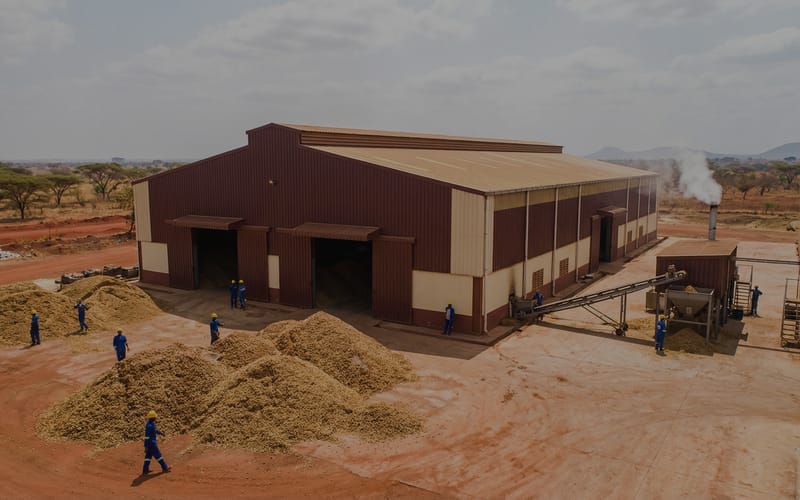
The peanut shell pellet plant in Nigeria stands on about 1,560 m² of industrial land near a secondary road used for agricultural trucks. The site already had a basic warehouse structure, which the client adapted as the production workshop to keep costs low.
The layout optimizes material flow: trucks deliver peanut shells to the raw material storage, then a series of conveyors and pellet equipment move material through production and finally to the finished product warehouse.
Building and Space Summary
| Building/Space | Size (m²) | Purpose |
|---|---|---|
| Production Workshop | 300 | Incoming material staging and pellet production |
| Finished Product Warehouse | 560 | Storage of bagged pellets |
| Raw Material Storage | 500 | Covered storage for peanut shells |
| Remaining Flexible Area | 200 | Visitor parking, equipment access |
Most structures were already in place or lightly upgraded. The production workshop and raw material warehouse remain separate to reduce dust crossover and improve ventilation.
RICHI MACHINERY
Raw Materials
In Nigeria’s northern farming districts, peanut shells are abundant post‑harvest (October–January). They are collected, sometimes baled, then brought to the site. Peanut shells require minimal pretreatment because their moisture content at harvest is low.
Annual Raw Material Usage
| Raw Material Type | Annual Quantity (t) | Typical Moisture | Remarks |
|---|---|---|---|
| Peanut shells | 5,000 | 8–15% | Primary feedstock |
| Packaging bags | 5,000 units | — | 1 t bulk bags |
| Lubricating oil | 50 kg | — | Machinery maintenance |
The client does not supplement with straw or sawdust; peanut shells alone provide a consistent feed with good binding in the biomass pellet press.
RICHI MACHINERY
Production Line Equipment
The pallet line was sized to handle 2 t/h throughput. The equipment list is practical and cost‑conscious — suitable for a medium enterprise.
| Item | Purpose |
|---|---|
| peanut shell pellet machine | Mechanical compression and forming of pellets |
| Screening Machine | Remove oversize/unformed particles |
| Belt Conveyor | Material transport |
| Dust Collector (Bag Filter) | Collect particulate from pellet presses |
| Feeding Hopper | Feeding material into press |
| Loader (Wheel Loader) | Raw material handling |
This configuration reflects the essence of the environmental report you provided, preserving real equipment counts and production steps.
Estimated equipment cost: US $65,000
The machinery is assembled into a single production line that feeds material from storage, compresses it into pellets, then screens and dispatches finished products.
RICHI MACHINERY
Water and Utilities
This peanut shell pellet plant in Nigeria relies on very little water. Peanut shells have low moisture, and the process does not include drying. Water is needed for occasional moisture adjustment (based on shell consistency) and for staff use.
- Production water use: ~0.05 m³ per ton of product
- Daily water for plant: ~1.0–1.5 m³ (mixing, cleaning)
- Source: On‑site borehole or municipal connection (depending on site)
Electricity is supplied via local grid connections. For pelletizing and dust systems, power needs are moderate — typical for small industrial plants.
RICHI MACHINERY
Production Process and Insights
The 2 t/h peanut shell pellet plant in Nigeria follows a straightforward process:
- Material Delivery & Inspection
Peanut shells arrive and are inspected. Large debris is manually removed. Trucks are covered where possible to prevent dust escape. - Feeding & Conveying
Shells are fed via a closed conveyor to the pellet feeding hopper. A light mixer ensures any minor moisture adjustment is uniform. - Pelletizing (Mechanical Compression)
The core of the plant — three pellet presses compress material into 10 mm diameter pellets. This step squeezes out air and increases density. - Cooling & Screening
Hot pellets come off the presses and are naturally cooled as they travel to the screening station. Oversized bits are returned to presses. - Packaging & Storage
Packaged into 1‑ton bulk bags, ready for shipment or storage.
Field observation: The first few batches required slight adjustment in feed moisture and press settings — common when switching from straw or mixed biomass to peanut shells. Over time, operators learned the nuances: shells pack differently from wood, and the press settings had to be tweaked to reduce fines.
RICHI MACHINERY
Environmental Measures
Air quality and dust control were key concerns. Peanut shells produce fine dust when conveyed and compressed, so proper controls were critical.
- Raw Material Storage: Covered and partly enclosed to reduce windblown dust
- Dust Collection: A baghouse with ducting captures dust from pelletizing and screening
- Exhaust Stack: A 15 m high outlet disperses filtered air away from ground level
- Noise Control: Machines mounted with vibration pads; enclosures around noisy presses
- Waste Management: Dust collected by filters is reused in production; municipal services handle staff waste
These measures align with Nigeria’s industrial environmental norms and avoid nuisance complaints from nearby communities.
RICHI MACHINERY
Labor and Work Schedule
- Staff: 5 full‑time operators
- Work Regime: One shift, 8 hours per day
- Working Days: 300 days/year
The peanut shell pellet plant in Nigeria often runs at night since peak electricity tariffs are lower then. Night operation practices were developed early in commissioning and have become standard.
RICHI MACHINERY
Timeline & Implementation
- Initial consultation & feasibility: March 2024
- Design & equipment selection: April–June 2024
- Manufacturing & delivery: July–October 2024
- Installation & commissioning: November–December 2024
- Operational start: January 2025
Equipment was shipped from Qingdao Port, China, and arrived at Lagos Port, Nigeria by sea. Local trucking brought it to the plant site.
RICHI MACHINERY
Cost & Investment Snapshot
- Equipment supply: $65,000
- Installation & commissioning: $40,000
- Environmental controls: $15,000
- Total investment: ~$120,000
These figures match typical pellet plant investments in similar contexts — modest and tailored for smaller producers.
RICHI MACHINERY
Market Outlook in Nigeria
Nigeria’s biomass pellet demand is emerging. Industries with boilers are seeking alternatives to diesel and kerosene. Peanut shell pellets offer:
- Lower cost per energy unit compared to fossil fuels
- High calorific value (~16–18 MJ/kg)
- Reduced particulate emissions vs. open biomass burning
Local industries such as bakeries, rice mills, and textiles show interest in switching to biomass pellets. With government interest in renewable energy and rural employment, this pellet line stands as a viable model for small enterprise growth.
The 2 t/h peanut shell pellet plant in Nigeria is not just a processing unit — it’s a bridge between traditional agricultural waste and a growing clean energy economy.
As the engineers working on this biomass pellet project would tell you in person: “You don’t just buy machines. You learn the raw material.” The first few tons of pellets taught us how Nigerian peanut shells behave — and that’s why the line runs smoothly now. This case shows that with proper planning and realistic expectations, even modest biomass resources can fuel real production and local energy solutions.
● RICHI MACHINERY
RICHI Service

● Consulting
Customer Consultation
We want to have a deep understanding of your industrial process, to know your exact needs of feed, wood, biomass, fertilizer or other pellet processing.

● Design
biomass Pellet Plant Design
Based on your unique situation and industrial process, we will tailor complete pellet plant you need, and inform you of every additional detail that could facilitate operation, minimize total cost.
● Manufacturing
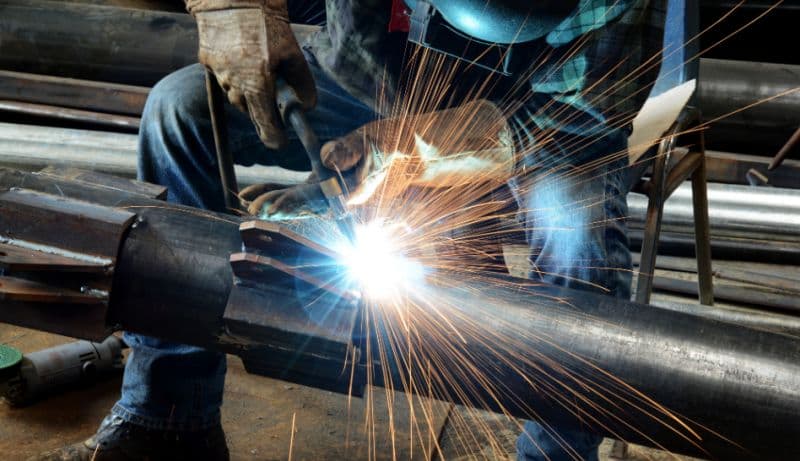
Equipment Manufacturing
The critical components of the of the complete pellet production line equipment are built in our own workshops in Asia. Additional equipment is manufactured by our worldwide network of reliable partners.
● Testing
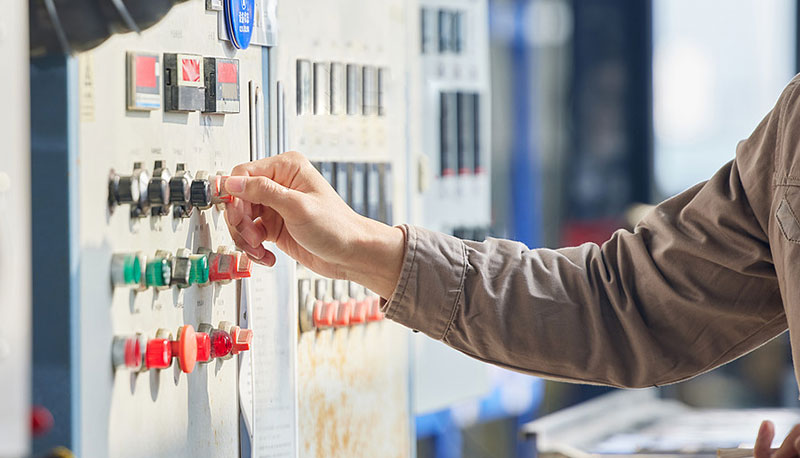
Quality Inspection & Testing
Before leaving the factory, all equipment will be inspected by the quality inspection department. We can also provide customers with testing services from a single machine to a complete pellet plant system, and provide you with real actual data for “worry-free use.”

● Delivery
Equipment Delivery
In equipment boxing and packaging, we adopt professional packaging and modular solutions to ensure the safe and non-destructive delivery of pellet plant equipment.
● Installation
Installation & Commissioning
Whether you choose your own subcontractor for the erection phase or you want to install everything together with us, a Richi supervisor will be around to make sure everything is mounted in a safe and thorough way.

● Training
Staff Training
We provide comprehensive training for the technicians of each project. We can also continue to provide support for the technicians during latter project operation.
● After-sales
Project Follow-Up
When everything is up and running our Richiers will help you further whenever needed. We are ready to answer your call 24/7.We’ll also visit you regularly to learn about your needs.
Who we are
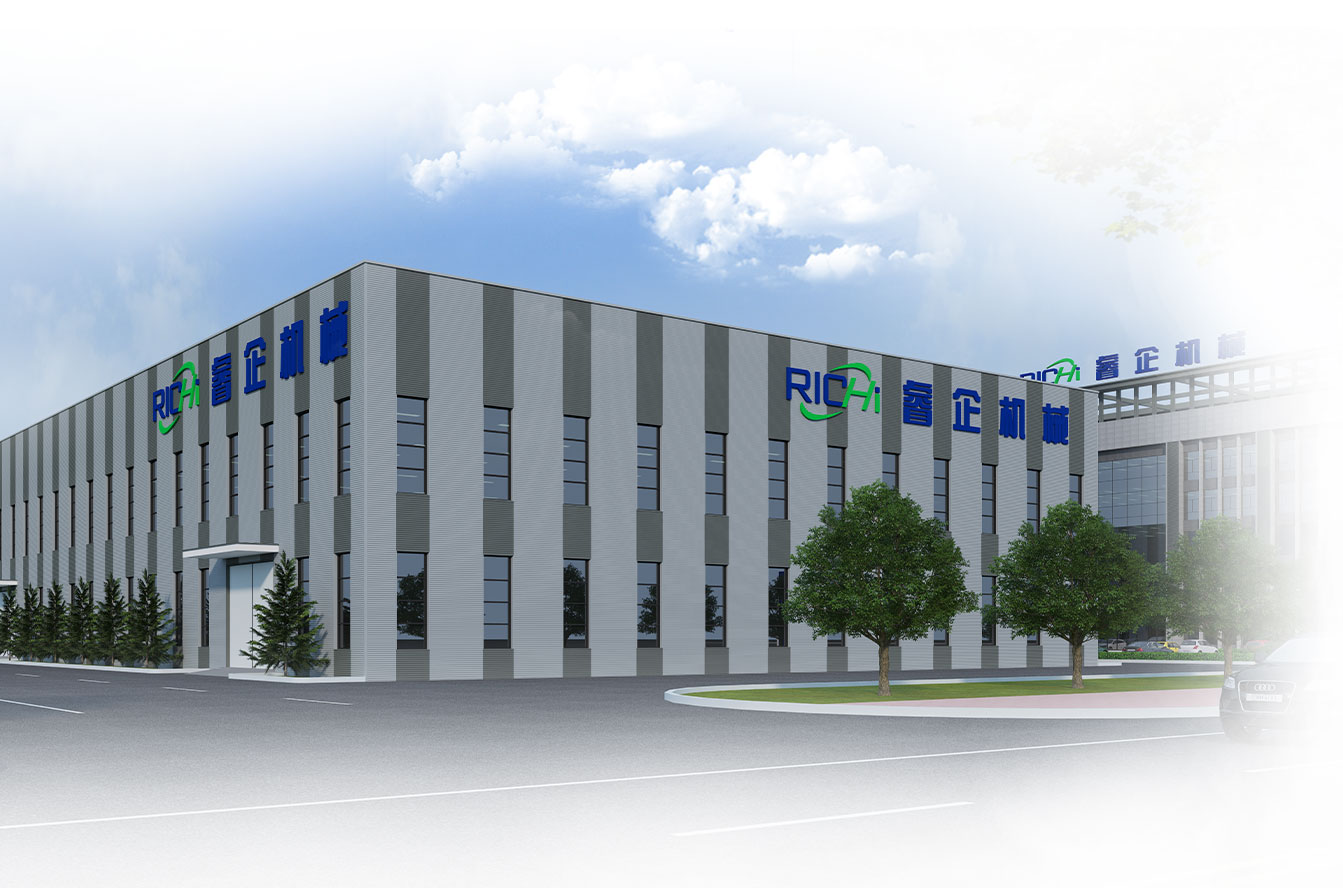
RICHI Machinery is one of the world’s leading suppliers of technology and services for the animal feed, aqua feed and pet food industries, also the largest pellet production line manufacturer in China.
Since 1995, RICHI’s vision to build a first-class enterprise, to foster first-class employees, and to make first-class contributions to society has never wavered.
In the past three decades, we have expanded our business to a wide range of areas, including animal feed mill equipment, aqua feed equipment, pet feed equipment, biomass pellet equipment, fertilizer equipment, cat litter equipment, municipal solid waste pellets equipment, etc.

1995
RICHI Established

2000+
Serving More Than 2000 Customers

120+
RICHI Employees

140+
Exported To 140 Countries