 0086-138 3838 9622
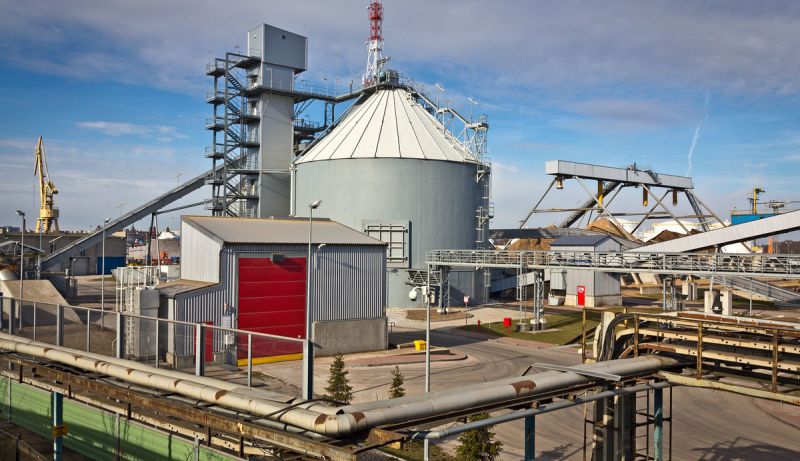
Organic Waste Pellet Production Line in Poland
RICHI MACHINERY
Project Overview
In recent years, Poland has been under growing pressure to diversify its energy sources, reduce dependence on coal, and align with the European Union’s carbon neutrality commitments. Biomass energy, particularly pelletized agricultural residues, has become one of the most feasible and sustainable options. This case describes the development of a straw pellet production line in Poland, with a designed capacity of 2,500 tons per year, equivalent to approximately 1.2–1.3 tons per hour under a one-shift system of 180 production days.
The project was conceived in 2019 and completed in April 2020, when the line began operations. The total investment was approximately USD 185,000, with about USD 10,000 allocated specifically to environmental protection measures such as dust collection and noise reduction systems. The facility was built on a 3,700 m² site, utilizing part of an existing industrial building that had previously been idle. The new installation includes a modern production workshop, raw material storage yard, warehouse, office, and the necessary utilities.
This case illustrates not only the technical setup of the line but also the motivations of the client, the specific production process, the equipment configuration, and the broader opportunities for biomass pellets in Poland’s energy and agricultural markets.
1.2–1.3T/H
capacity
USD 185,000
investment
Poland
location
Biofuel
project type
RICHI MACHINERY
Project Background
The client in this case is a medium-sized agricultural cooperative located in Mazovia Province, one of Poland’s major grain-growing regions. The cooperative manages more than 4,000 hectares of farmland, producing cereals, maize, and rapeseed. Every year, large amounts of straw remain after harvest. Traditionally, these residues were either left to rot in the fields, used in limited quantities as animal bedding, or even openly burned—practices that are increasingly discouraged under EU agricultural and environmental policies.
The cooperative had long been seeking alternative ways to utilize its agricultural residues to both increase revenue and improve environmental sustainability. In 2018, when the EU tightened restrictions on open-field burning and simultaneously offered incentives for renewable energy production, the cooperative decided to invest in a pellet production line.
By converting straw into standardized pellets, the cooperative aimed to:
- Create a new revenue stream by selling biomass pellets to local heating plants, farms, and residential users.
- Reduce waste and environmental risks associated with straw burning and uncontrolled decomposition.
- Support Poland’s energy transition by replacing coal with renewable, carbon-neutral fuels.
- Enhance circular agriculture by reusing production by-products (e.g., pellet ash) as soil conditioner.
This background clearly demonstrates the economic and environmental rationale behind the project, while aligning with Poland’s national goals to expand renewable energy capacity.
RICHI MACHINERY
Project Location and Site Layout
The facility was established on the southeastern edge of a small rural village in Mazovia. The location was selected for three main reasons:
- Proximity to raw materials – The cooperative’s own fields, as well as neighboring farms, can provide a stable annual supply of over 3,000 tons of straw.
- Distance from residential areas – The plant was placed on land where the nearest residential house is 25 meters north, while the east, west, and south sides are surrounded by farmland. This ensures compliance with Poland’s environmental safety distance standards.
- Use of idle assets – The cooperative already owned an unused industrial shed on the site, which reduced construction costs and sped up project implementation.
The overall plant covers 3,700 m², of which:
- 350 m² is the production workshop,
- 800 m² is the open raw material yard,
- 200 m² is the warehouse, and
- 40 m² is the office.
The layout follows the principles of safety, compactness, and smooth logistics. Raw materials are unloaded in the west yard, processed in the southern workshop, and stored in the northern warehouse, with the office near the entrance for easy management. Internal roads are designed wide enough for trucks and emergency vehicles, ensuring efficient transport and safety.
RICHI MACHINERY
Construction and Engineering Analysis
The facility is built to accommodate full-scale pellet production, including raw material storage, crushing, grinding, pelletizing, packaging, and warehouse systems.
| Engineering Category | Component | Description & Scale |
| Main Workshop | Production & Processing Hall | 300 m² steel-structured hall; includes crushing, grinding, and pelletizing sections. Equipped with conveyors and dust control systems. |
| Storage Facilities | Raw Material Warehouse | 280 m² semi-open steel structure for storing straw, sawdust, husks, and branches. |
| Finished Product Warehouse | 250 m² facility for bagged and bulk pellet storage. | |
| Auxiliary Facilities | Office & Control Building | 180 m² brick-concrete structure with administrative offices, control room, and staff amenities. |
| Utility & Water Storage | 20 m³ water tank and pump system for fire protection and dust suppression. | |
| Public Works | Power Supply | 10 kV high-voltage connection from municipal grid, with on-site transformer and distribution room. |
| Drainage | Rainwater collection system with stormwater channel; industrial wastewater treated on-site. | |
| Environmental Protection | Dust & Noise Control | Bag filters, soundproof enclosures, and greenbelt buffers. Solid residues recycled. |
The facility layout ensures a linear production flow from raw material intake to finished product packaging, minimizing cross-contamination and maximizing efficiency.
RICHI MACHINERY
Scale and Investment &Product Scheme
The total investment of this straw pellet production line was USD 185,000, which covered construction, equipment procurement, utilities, and environmental measures. Out of this, approximately USD 10,000 was invested in environmental protection systems, mainly dust collectors and noise control devices.
The investment level corresponds with typical costs in Poland for small to medium-scale biomass projects. Labor costs and material prices are higher than in Asia but still competitive compared to Western Europe. At this scale, the project remains affordable for a cooperative and attractive in terms of return on investment, with an estimated payback period of 3–4 years.
The main product of the project is biomass pellets, standardized according to ENplus-A1 European pellet quality certification.
| Product Name | Bulk Density | Unit | Annual Output | Application |
|---|---|---|---|---|
| Biomass Fuel Pellets | ~700 kg/m³ | tons/year | 9,000 | Household heating, industrial boilers, power generation |
RICHI MACHINERY
Raw Materials and Energy Balance
The biomass pellet plant processes a diverse mix of agricultural and forestry residues. The feedstock is sourced from within 50 km of the plant, ensuring cost-effective logistics.
Poland is one of the largest grain producers in the EU, generating vast amounts of straw each year. In this project, the primary raw material is cereal straw, sourced mainly from wheat and barley fields. The cooperative estimated an annual supply of around 3,125 tons of straw, with an average moisture content of 20–30% after harvest.
Raw Material Characteristics:
- Energy potential: Straw pellets have a calorific value of 14–16 MJ/kg, making them suitable for residential and small-scale industrial heating.
- Abundance: Straw supply is stable and exceeds local demand for bedding and compost.
- Moisture variability: Depending on harvest time and weather, moisture can fluctuate significantly, requiring storage and natural drying before processing.
- Low cost: As a by-product, straw has very low acquisition cost, usually under USD 25 per ton in Poland.
| Category | Material | Unit | Quantity | Source |
| Agricultural Residues | Wheat/rye/barley straw | tons/year | 6,000 | Local farmers |
| Rice husks | tons/year | 1,200 | Regional grain processors | |
| Forestry & Wood Waste | Sawdust | tons/year | 1,500 | Sawmills |
| Wood chips & branches | tons/year | 1,200 | Forestry operations | |
| Food Processing Residues | Organic fruit/vegetable waste (blended fraction) | tons/year | 900 | Food industry |
| Total Input | – | tons/year | ~10,800 | – |
With a conversion efficiency of ~85%, this raw material mix yields approximately 9,000 tons of finished pellets annually.
RICHI MACHINERY
Process Technology
The production process integrates mechanical size reduction, thermal conditioning, pelletizing, and packaging, optimized for organic residues with varying moisture and fiber content.
Step-by-Step Process
- Feeding & Pre-Sorting
- Raw materials are delivered by tractor and truck.
- Large impurities are removed manually or using a pre-screen.
- Primary Crushing
- Large straw bales and branches are broken down using a heavy-duty crusher.
- Reduces material to 20–50 mm chips.
- Fine Grinding
- Hammer mill reduces material to <5 mm particle size.
- Bag filters capture dust and recycle it into the feedstock stream.
- Drying (if required)
- Moisture content adjusted to 10–12%.
- Waste heat recovery system improves efficiency.
- Pelletizing
- Ring-die biomass pellet mills compress material under high pressure.
- Natural lignin and organic binders provide durability; no chemical additives used.
- Cooling & Sieving
- Pellets cooled to ambient temperature.
- Dust screened and recycled.
- Packaging & Storage
- Pellets packed in 20–25 kg bags for households and 1-ton jumbo bags for industry.
- Stored in finished product warehouse for dispatch.
This process ensures high-quality, durable pellets that meet EU standards.
RICHI MACHINERY
Main Equipment
| No. | Equipment Name | Model | Unit | Quantity | Purpose |
|---|---|---|---|---|---|
| 1 | Straw Crusher | HL1250-500 | pcs | 1 | Breaking straw bales |
| 2 | Hammer Mill | HL650-1300 | pcs | 1 | Fine grinding |
| 3 | Ring Die Straw Pellet Machine | MZLH420 | pcs | 2 | Pelletizing |
| 4 | Conveyors | Belt/Inclined | sets | 4 | Material handling |
| 5 | Transformer | 500 kVA | pcs | 1 | Power supply |
| 6 | Control Cabinet | – | pcs | 1 | Electrical control |
| 7 | Packaging Platform | Semi-auto | pcs | 1 | Bagging & palletizing |
| 8 | Dust Collector | Bag filter | pcs | 2 | Air pollution control |
RICHI MACHINERY
Utilities, Workforce, and Operation
The biomass straw pellet plant consumes approximately 370,000 kWh of electricity per year, supplied reliably by the regional grid. Electricity powers the crushers, pellet mill, conveyors, dust collectors, and cooling fans. No process water is required, as the line operates dry.
For heating, the plant uses electric boilers to provide space heating in winter, which is consistent with Poland’s emphasis on clean energy solutions. Employee domestic water use is sourced from the municipal supply system, and sewage is discharged into the local wastewater treatment system, ensuring compliance with environmental regulations.
- Water Supply: Municipal connection, supplemented with rainwater collection.
- Power Demand: ~1.5 million kWh/year.
- Labor Force: 8 workers (production, logistics, quality control, administration).
- Work System: 1 shift/day, 8 hours/shift, 300 days/year.
RICHI MACHINERY
Environmental Protection
The project complies with Polish and EU environmental regulations:
- Air Pollution: Bag filters reduce dust emissions below EU thresholds.
- Noise: Soundproof enclosures and plant layout reduce noise impact.
- Wastewater: Limited; mainly sanitary wastewater directed to municipal treatment plant.
- Solid Waste: Dust and rejects recycled into production; negligible external disposal.
| Category | Description | Amount (USD ‘000) | Notes |
|---|---|---|---|
| Dust Control | Bag filters & ducting | 30 | Integrated with mills |
| Noise Control | Soundproof enclosures | 40 | For crushers & pelletizers |
| Wastewater | Connection to municipal system | 50 | Includes treatment fees |
| Solid Waste | Internal recycling system | 20 | – |
| Greenbelt | Buffer landscaping | 10 | Aesthetic & noise buffer |
| Total | – | 150 | ≈ 2.5% of total investment |
RICHI MACHINERY
Products and Applications
The facility produces 2,500 tons of biomass pellets per year, with the following product features:
- Diameter: 6–8 mm
- Bulk density: > 1,100 kg/m³
- Moisture: < 10%
- Durability: > 97.5%
Main applications:
- Residential heating – Rural households in Poland increasingly use pellet stoves instead of coal furnaces.
- District heating plants – Small towns often operate biomass boilers for public buildings.
- Farm energy supply – Farms can use pellets for greenhouse heating, grain drying, or livestock housing.
This diversification ensures steady market demand and helps mitigate risks.
RICHI MACHINERY
Market Outlook in Poland
Poland is undergoing a rapid energy transition. With coal still accounting for around 70% of its electricity, the government has set ambitious goals to increase renewable energy to 32% of final consumption by 2030. Biomass is expected to play a crucial role in this shift.
Specific opportunities for straw pellets in Poland include:
- Rural heating demand – Many households are replacing coal stoves with pellet boilers, supported by government subsidies.
- District heating systems – Small municipalities are switching from coal to biomass to meet EU emissions directives.
- Export markets – Poland’s proximity to Germany and Scandinavia creates opportunities for cross-border pellet trade.
Given these trends, straw pellet production in Poland is not only sustainable but also profitable.
RICHI MACHINERY
Conclusion and RICHI Machinery’s Role
This biomass pellet project demonstrates how agricultural cooperatives and waste managers in Poland can turn organic waste into economic and environmental value. By installing a modern, efficient pellet production line, the client not only solves waste disposal challenges but also contributes to renewable energy development.
RICHI Machinery provided the complete engineering solution:
- Customized design based on raw material composition.
- High-performance crushing, grinding, and pelletizing equipment.
- Turnkey service including installation, training, and after-sales support.
With decades of expertise and a global footprint, RICHI Machinery stands out as a trusted partner for biomass pellet production line projects worldwide, particularly in regions with strong agricultural bases like Poland.
● RICHI MACHINERY
RICHI Service

● Consulting
Customer Consultation
We want to have a deep understanding of your industrial process, to know your exact needs of feed, wood, biomass, fertilizer or other pellet processing.

● Design
biomass Pellet Plant Design
Based on your unique situation and industrial process, we will tailor complete pellet plant you need, and inform you of every additional detail that could facilitate operation, minimize total cost.
● Manufacturing
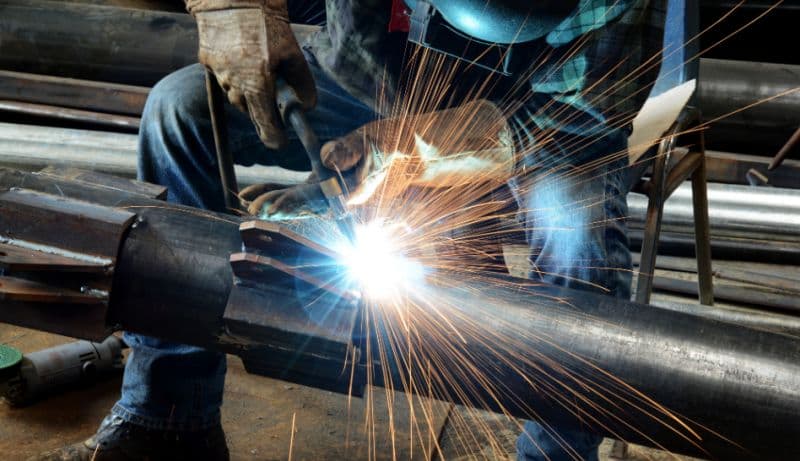
Equipment Manufacturing
The critical components of the of the complete pellet production line equipment are built in our own workshops in Asia. Additional equipment is manufactured by our worldwide network of reliable partners.

● Testing
Quality Inspection & Testing
Before leaving the factory, all equipment will be inspected by the quality inspection department. We can also provide customers with testing services from a single machine to a complete pellet plant system, and provide you with real actual data for “worry-free use.”

● Delivery
Equipment Delivery
In equipment boxing and packaging, we adopt professional packaging and modular solutions to ensure the safe and non-destructive delivery of pellet plant equipment.
● Installation
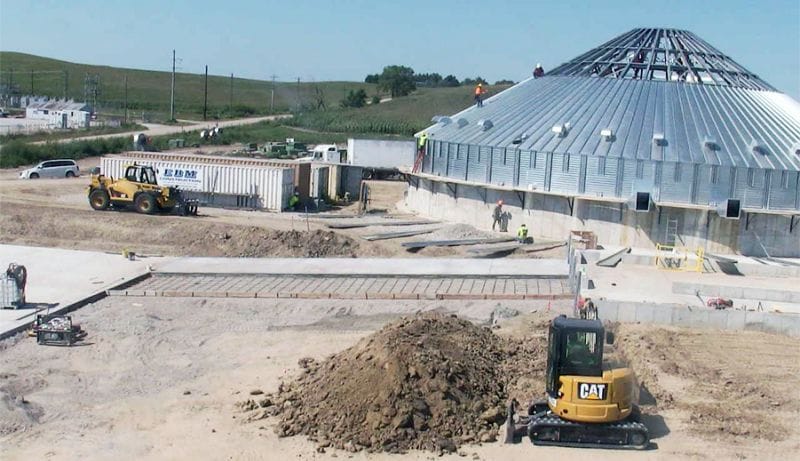
Installation & Commissioning
Whether you choose your own subcontractor for the erection phase or you want to install everything together with us, a Richi supervisor will be around to make sure everything is mounted in a safe and thorough way.

● Training
Staff Training
We provide comprehensive training for the technicians of each project. We can also continue to provide support for the technicians during latter project operation.
● After-sales
Project Follow-Up
When everything is up and running our Richiers will help you further whenever needed. We are ready to answer your call 24/7.We’ll also visit you regularly to learn about your needs.
Who we are
RICHI Machinery is one of the world’s leading suppliers of technology and services for the animal feed, aqua feed and pet food industries, also the largest pellet production line manufacturer in China.
Since 1995, RICHI’s vision to build a first-class enterprise, to foster first-class employees, and to make first-class contributions to society has never wavered.
In the past three decades, we have expanded our business to a wide range of areas, including animal feed mill equipment, aqua feed equipment, pet feed equipment, biomass pellet equipment, fertilizer equipment, cat litter equipment, municipal solid waste pellets equipment, etc.

1995
RICHI Established

2000+
Serving More Than 2000 Customers

120+
RICHI Employees

140+
Exported To 140 Countries