 0086-138 3838 9622
New 10000 Tons Per Year Organic Fertilizer Production Project in Argentina
RICHI MACHINERY
Overview
With the rapid development of sustainable agriculture practices worldwide, Argentina has placed significant emphasis on the efficient utilization of agricultural residues and animal manure. The over-reliance on synthetic fertilizers has raised concerns regarding soil degradation, water pollution, and environmental sustainability.
In response, local agricultural enterprises are increasingly investing in advanced organic fertilizer production technologies that leverage locally available raw materials, including crop residues, livestock manure, and agro-industrial by-products.
The New 10,000 Tons Per Year Organic Fertilizer Project, implemented by Argentine EcoAgri Solutions S.A., represents a major initiative to promote environmentally responsible agriculture and circular resource utilization. Located in the rural municipality of Rincón del Este, the project is designed to process crop straw, poultry manure, soybean meal, and specialized microbial inoculants into high-quality organic fertilizer. Upon completion, the facility will have an annual production capacity of 10,000 tons, contributing significantly to regional sustainable agriculture goals.
The project aligns with Argentina’s national policies on sustainable agriculture, manure management, and organic fertilizer production, promoting environmental protection and enhancing soil fertility.
The total investment for the project is 300,000 USD. The project is expected to begin operation in July 2026, with full production achieved shortly thereafter. The environmental protection strategy has been designed to comply with both national and provincial regulations, ensuring the project operates sustainably from the outset.
4T/H
capacity
300,000 USD
investment
Argentina
location
Fertilizer
project type
RICHI MACHINERY
Project Site and Land Use
The facility occupies a total area of 1,334.4 m². The site has been carefully selected for its accessibility, favorable topography, and proximity to local suppliers of raw materials. The layout is optimized for logistics efficiency, environmental compliance, and worker safety.
The surrounding environment is primarily agricultural land, with no sensitive receptors such as schools or hospitals within a 1 km radius. Transportation access is facilitated by the main provincial road running to the north of the site.
RICHI MACHINERY
Project Components and Scale
Main Facilities
The organic fertilizer production project in Argentina includes the construction of three primary buildings:
- Production Workshop:
- One-story building covering 1,000 m²
- Houses key equipment including shredders, fertilizer mixers, and turners
- Capable of processing raw materials into 10,000 tons of organic fertilizer annually
- Office Building:
- Two-story building covering 200 m²
- Accommodates administrative and technical staff, meeting rooms, and monitoring stations
- Warehouse:
- Covers 800 m²
- Used for storage of raw materials and finished products, designed with proper ventilation and environmental controls
Utilities
- Water Supply: Municipal water system, total requirement of 1.82 m³/day, including staff usage, process water, and irrigation for green areas.
- Electricity: Supplied by the local grid, estimated annual consumption of 60,000 kWh.
- Wastewater: Primarily domestic wastewater treated via septic tanks and reused for fertilization; fermentation leachate collected in a 20 m³ tank for use in composting.
- Waste Gas:
- Straw crushing dust controlled using hoods and bag filters, released through a 15-meter stack
- Odors from poultry manure storage and fermentation controlled via negative-pressure collection and bio-oxidation units
- Packaging dust similarly controlled via bag filters and localized ventilation
- Solid Waste: Life and packaging waste managed through municipal collection and temporary storage with hazardous waste segregated.
Raw Materials and Consumption
The facility primarily utilizes locally sourced agricultural residues and livestock manure:
| Material | Annual Usage (t) | Maximum Storage (t) | Storage Method | Transport Method |
|---|---|---|---|---|
| Crop Straw | 3,992.57 | 2,000 | Bagged, stored in raw materials warehouse | Truck |
| Poultry Manure (50–70% moisture) | 7,500 | 3,000 | Delivered by manure trucks to fermentation area | – |
| Multi-functional Microbial Inoculants | 15 | 15 | Stored in fermentation area | – |
| Water | 545 m³ | – | – | Pipeline/Truck |
| Electricity | 60,000 kWh | – | – | Grid |
Production Equipment
The organic fertilizer production project in Argentina is equipped with advanced machinery to ensure efficient production:
| No. | Equipment | Specification | Quantity | Remarks |
|---|---|---|---|---|
| 1 | Fertilizer Mixer | ZF-3 | 1 | Purchased externally |
| 2 | Turner | – | 1 | Purchased externally |
| 3 | Shredder | – | 2 | Purchased externally |
| 4 | Forklift | – | 1 | Purchased externally |
| 5 | Dumper Truck | – | 1 | Purchased externally |
| 6 | … | … | … | … |
Product Plan
The organic fertilizer production project in Argentina will produce 10,000 tons of organic fertilizer annually, packaged in 20–50 kg bags. The fertilizer meets the Argentine Ministry of Agriculture standards for biological organic fertilizers:
| Parameter | Value |
|---|---|
| Effective Microbial Count (billion/g) | ≥0.2 |
| Organic Matter (%) | ≥40 |
| Moisture (%) | ≤30.0 |
| pH | 5.5–8.5 |
| E. coli (CFU/g) | ≤100 |
RICHI MACHINERY
Production Process
The production process of this organic fertilizer production line consists of five main stages: shredding, mixing & fermentation, granulation & screening, drying, cooling, and packaging.
1. Shredding and Mixing
Crop straw is shredded and combined with poultry manure in a 1:2 ratio. Microbial inoculants are added to the mixture and subjected to high-temperature aerobic fermentation (55–70°C) for 15–20 days. This process ensures pathogen elimination, reduces odor, and enhances beneficial microbial activity.
2. Fermentation
The mixture is aerated and turned regularly, optimizing temperature, moisture, oxygen levels, and pH to promote microbial growth. The first fermentation cycle includes inoculant addition, while subsequent cycles rely on microbes already present. Post-fermentation, secondary composting ensures material stabilization and complete decomposition.
3. Granulation and Screening
Fermented material is fed into a fertilizer granulator equipment, producing 3–7 mm pellets. Granules are screened to separate under- and over-sized particles, which are recycled for reprocessing.
4. Drying
Pellets are dried in a rotary dryer with electrical heating, reducing moisture content below 30%. The rotary motion ensures uniform drying and prevents clumping.
5. Cooling and Packaging
Dried pellets are cooled naturally in cylindrical coolers, then bagged in 20–50 kg woven bags for storage and distribution.
RICHI MACHINERY
Environmental Protection Measures
Wastewater Management
- Domestic wastewater treated via septic tanks and reused in fertilization
- Leachate collected and recirculated into the fermentation process
- Minimal external discharge ensures compliance with local environmental regulations
Dust and Odor Control
- All dust-generating equipment fitted with hoods and bag filters
- Fermentation odors captured via negative-pressure systems and bio-oxidation
- Packaging and screening dust controlled via localized filtration
Noise Reduction
- Main equipment noise levels range from 75–85 dB(A)
- Noise mitigation includes building insulation and equipment vibration dampening
- Facility layout optimized to minimize impact on neighboring areas
Solid Waste
- Construction waste managed during the project phase
- Operational phase waste, including packaging materials, collected and sold or disposed according to regulations
RICHI MACHINERY
Project Benefits and Prospects
Environmental Benefits: Reduces burning of crop residues, lowers chemical fertilizer use, improves soil fertility, and mitigates water and air pollution
Economic Benefits: Provides local employment, generates revenue through organic fertilizer sales, and creates a market for agricultural residues
Technological Advantages: Advanced fermentation technology ensures high-quality output, pathogen-free products, and uniform granulation
Sustainability: Promotes circular economy by turning waste into valuable products
Market Outlook: The demand for organic fertilizers in Argentina and neighboring countries is steadily growing, driven by the expansion of organic farming and the adoption of sustainable agricultural practices
RICHI MACHINERY
Services Provided by Project Consultant
Argentine EcoAgri Solutions S.A., in collaboration with RICHI Machinery, provided comprehensive project support:
- Feasibility studies and technical planning
- Customized equipment selection and installation supervision
- Staff training and operational guidance
- Environmental management strategy development
- Continuous technical support during commissioning and production
RICHI MACHINERY
Project Summary and Conclusion
The 10,000-ton per year organic fertilizer production project in Argentina exemplifies the integration of sustainable agriculture, waste management, and modern production technology.
The project transforms poultry manure and crop residues into high-value organic fertilizer, aligning with national sustainable development policies. Through meticulous planning, advanced equipment selection, and robust environmental protection measures, the plant achieves efficient production while minimizing environmental impact.
This organic fertilizer production project in Argentina sets a benchmark for similar future projects in South America, demonstrating the feasibility and profitability of eco-friendly fertilizer production. By converting waste into resources, it supports local agriculture, contributes to environmental preservation, and enhances the overall sustainability of the agricultural sector.
The facility is expected to operate at full capacity by mid-2026, with significant potential for expansion as market demand for organic fertilizers continues to grow. Its successful implementation underscores the vital role of modern organic fertilizer production in promoting sustainable agricultural practices, reducing environmental pollution, and providing high-quality nutrients for crops.
● RICHI MACHINERY
RICHI Service

● Consulting
Customer Consultation
We want to have a deep understanding of your industrial process, to know your exact needs of feed, wood, biomass, fertilizer or other pellet processing.

● Design
fertilizer Pellet Plant Design
Based on your unique situation and industrial process, we will tailor complete pellet plant you need, and inform you of every additional detail that could facilitate operation, minimize total cost.
● Manufacturing
Equipment Manufacturing
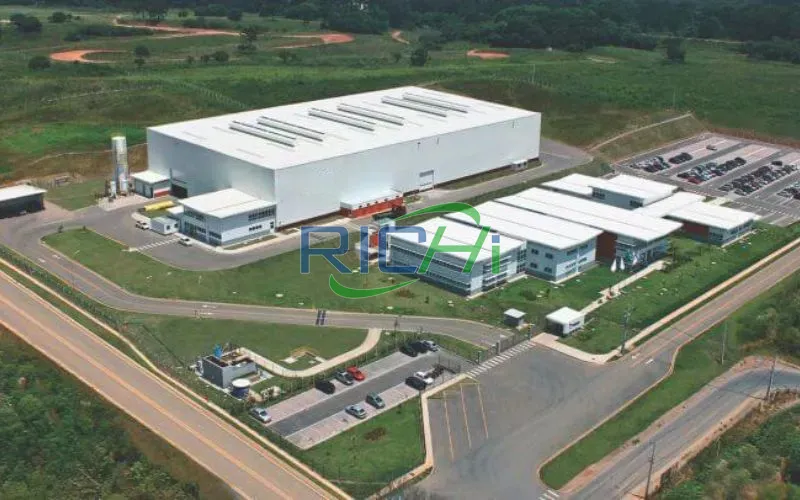
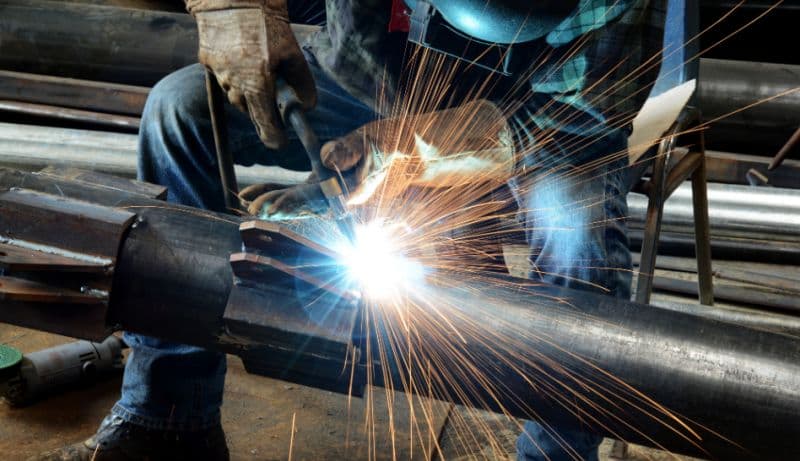
The critical components of the of the complete pellet production line equipment are built in our own workshops in Asia. Additional equipment is manufactured by our worldwide network of reliable partners.

● Testing
Quality Inspection & Testing
Before leaving the factory, all equipment will be inspected by the quality inspection department. We can also provide customers with testing services from a single machine to a complete pellet plant system, and provide you with real actual data for “worry-free use.”

● Delivery
Equipment Delivery
In equipment boxing and packaging, we adopt professional packaging and modular solutions to ensure the safe and non-destructive delivery of pellet plant equipment.
● Installation
Installation & Commissioning
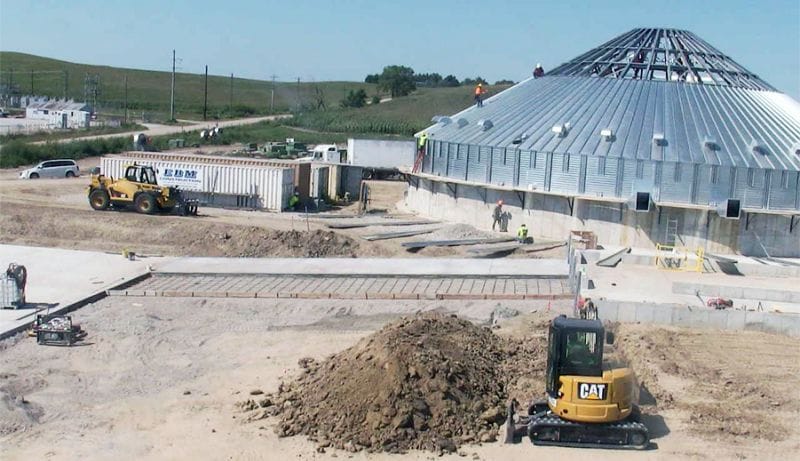
Whether you choose your own subcontractor for the erection phase or you want to install everything together with us, a Richi supervisor will be around to make sure everything is mounted in a safe and thorough way.

● Training
Staff Training
We provide comprehensive training for the technicians of each project. We can also continue to provide support for the technicians during latter project operation.
● After-sales
Project Follow-Up
When everything is up and running our Richiers will help you further whenever needed. We are ready to answer your call 24/7.We’ll also visit you regularly to learn about your needs.
Who we are
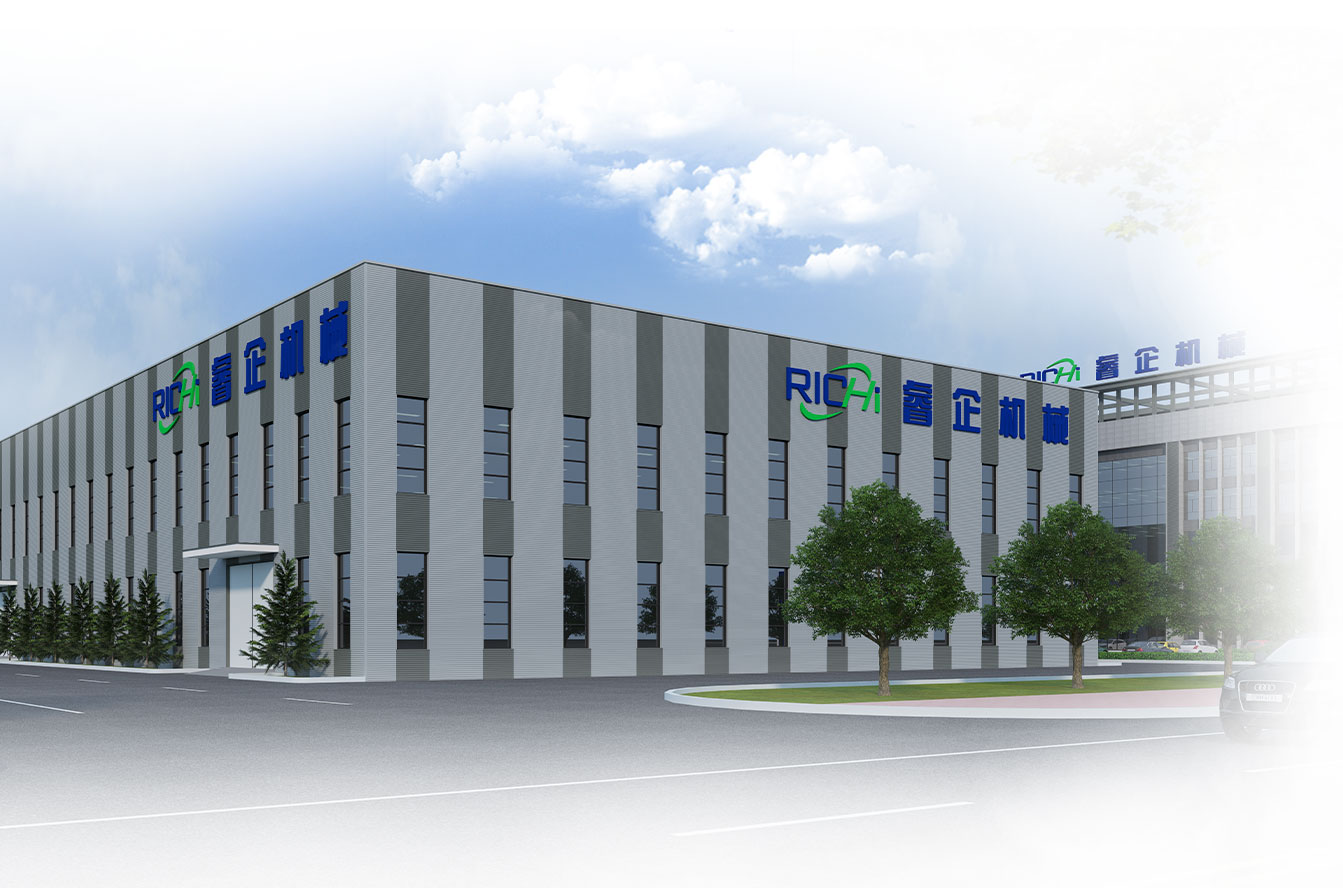
RICHI Machinery is one of the world’s leading suppliers of technology and services for the animal feed, aqua feed and pet food industries, also the largest pellet production line manufacturer in China.
Since 1995, RICHI’s vision to build a first-class enterprise, to foster first-class employees, and to make first-class contributions to society has never wavered.
In the past three decades, we have expanded our business to a wide range of areas, including animal feed mill equipment, aqua feed equipment, pet feed equipment, biomass pellet equipment, fertilizer equipment, cat litter equipment, municipal solid waste pellets equipment, etc.

1995
RICHI Established

2000+
Serving More Than 2000 Customers

120+
RICHI Employees

140+
Exported To 140 Countries