0086-138 3838 9622
3.5 T/H multifunctional integrated wood pellet plant in Colombia
This multifunctional integrated wood pellet plant in Colombia was developed to recover clean residues from wood-processing businesses. It combines selective size reduction, moisture control and pellet finishing for a 6,000-tonne annual programme. The reference product is fuel pellets made from untreated wood, rather than an unrestricted mixture of forestry waste and ash.

RICHI MACHINERY
Project overview
The supplied project record dates the customer’s investment to November 2023 and assigns four employees to the plant. The total project investment is stated once in the overview card. The original eight-hour shift over 200 days gives only 1,600 scheduled hours. The corrected engineering reference below uses one ten-hour shift over the same 200 days, giving 2,000 hours; this schedule adjustment is not presented as verified operating history.
Here, multifunctional means that the front end can accept different clean wood-residue forms and direct each through the necessary equipment. Coarse offcuts need primary reduction; chips need fine grinding; already suitable sawdust can bypass both. Wood chips or ground wood could be sold separately only under a separate product order and mass allocation. No extra coproduct tonnage is added to the 6,000-tonne pellet programme.
3.5 T/H
capacity
US$280,000
investment
Colombia
location
Biofuel
project type
RICHI MACHINERY
Existing buildings and site limits
The wood pellet processing plant reuses a reported 2,000 m² site with 1,840 m² of buildings. The 1,800 m² workshop already includes the 420 m² finished-product storage zone; the warehouse must not be added to building area a second time. The 40 m² office is additional to the workshop.
The listed 160 m² raw-material yard would use the entire numerical difference between site area and building area. That leaves no separately demonstrated space for access, firewater, loading, drains or setbacks. The source also places raw materials across a township road, so the boundary and ownership of that yard remain unresolved.
| Facility | Recorded area | Boundary |
|---|---|---|
| Workshop | 1,800 m²; one floor | Includes processing and finished stock |
| Office | 40 m² | Additional building area |
| Total building area | 1,840 m² | Not 2,260 m² |
| Finished-product zone | 420 m² | Included in workshop |
| Raw-material yard | 160 m² | Across-road location and plot boundary to verify |
| Reported site | 2,000 m² | Buildings + yard consume all stated area |
| Fire and dust systems | Area and design not supplied | Actual access, water storage and protection require review |
| Services | Water, power and sanitary handling | No blanket approval claim |
RICHI MACHINERY
Pellet specification and annual programme
The agreed reference is 6 or 8 mm diameter wood pellets, with length and fines limits specified in the buyer contract. Pellets are a combustible fuel; they are not described as emission-free or automatically compliant with a premium grade. Covered handling and dry storage are necessary to preserve product quality.
Use a preliminary finished-moisture ceiling of 10% by wet weight, with representative batch testing. The original dry-basis moisture wording is corrected: 10% wet basis equals about 11.1% dry basis. Ash, net calorific value, mechanical durability, fines, nitrogen, sulfur and chlorine require sample analysis; no untested chemical limits or certification are claimed.
Cool pellets to a preliminary release temperature within 5°C above ambient and confirm final moisture before packing. A 2% internal-fines allowance is used for sizing, not as an acceptance-test result. Mechanical durability, product fines after handling and broken pellets are distinct tests and must not be replaced by the source’s undefined “crushing rate”.
The annual product programme is 6,000 tonnes of accepted pellets, excluding internal fines. At 3.5 T/H net output, productive running is about 1,714 hours within the revised 2,000-hour schedule, leaving about 286 hours for maintenance, die work, cleaning and interruptions. The original 1,600-hour schedule would produce only 5,600 tonnes at this net rate.
| Product / schedule | Reference | Interpretation |
|---|---|---|
| Accepted fuel pellets | 6,000 tonnes/year | Not chips plus pellets added together |
| Net pellet output | 3.5 T/H | Excludes fines circulating internally |
| Pellet size | 6 or 8 mm diameter | Length and quality by buyer specification |
| Scheduled operation | 2,000 hours/year | 200 days × one ten-hour shift |
| Productive operation | About 1,714 hours/year | About 86% scheduled use |
| Original schedule | 1,600 hours/year | 5,600 tonnes at the selected net rate |
| Storage release | Moisture ≤10% wet basis; cooled | Preliminary target; test actual product |
RICHI MACHINERY
Equipment duties and process routes
The wood pellet processing equipment schedule is a corrected engineering reference, not a certified as-built equipment list. One MZLH768 with a specified 315 kW main drive is assessed against a 3–4 T/H catalogue range. At the mass-balance reference it must handle about 3.65 T/H of gross press feed to deliver 3.5 T/H of accepted product; wood species, moisture, die and trial results determine whether that target is achieved.
| Process duty | Minimum reference configuration | Required performance |
|---|---|---|
| Debris removal and magnetic protection | Receiving inspection plus separator | Reject contaminants before rotating machines |
| Primary reduction | One 37 kW shredder/chipper position | ≥4 T/H on specified offcuts; sawdust bypass |
| Fine grinding | One 110 kW wood hammer mill | ≥4 T/H on actual prepared wood; initial 1–3 mm target |
| Moisture trim | One optional electric trim-dryer route | ≥4 T/H wet feed; ≥200 kg/hour evaporation |
| Electric heater | 250 kW electrical input allowance | At 95% transfer, about 237.5 kW useful heat |
| Dryer fans / drives | 15 kW additional connected allowance | Bypassed when material meets press moisture specification |
| Pellet press | One Wood Pellet Mill; MZLH768, 315 kW | About 3.65 T/H gross duty; verify selected version |
| Press feeder | 7.5 kW allowance | Stable feed and anti-bridging function |
| Cooling | One counterflow package; 29.5 kW | ≥4 T/H at actual bulk density |
| Final grading | One screen; 7.5 kW | ≥4 T/H; controlled compatible-fines return |
| Conveying | Five source positions; 27.5 kW combined allowance | Lengths retained as route references, not capacity proof |
| Dust separation | Source two cyclones and three filters as reference | 30 kW fan allowance; circuit design to verify |
| Bagging | One completed-bag route; 7.5 kW | ≥180 ×25 kg bags/hour; 140/hour required |
| Compressed air / controls | 11 kW / 5 kW | 587.5 kW routine connected total |
The single press is the smallest selected arrangement for the corrected 3.5 T/H net target and ten-hour shift. It replaces the source’s unexplained two-press requirement. A sustained 4 T/H accepted output is not claimed because moisture removal and recycled fines can make gross press duty exceed a 4 T/H catalogue ceiling. If the actual material trial falls short, revise the programme or selection before guaranteeing annual output.
Choose the primary reducer for the actual offcut shape; do not feed long boards, bulky slabs or metal-bearing timber into a fine-grinding mill. Wood chips bypass the primary reducer when already acceptable, while fine sawdust bypasses grinding if its particle distribution is suitable. Shavings can require anti-bridging feed and densification control. Separate chips sold to customers reduce feed available for pellets and must be subtracted from the annual balance.
RICHI MACHINERY
Wood procurement and material balance
Accept clean untreated offcuts and sawdust with traceable origin and agreed moisture. Exclude painted, preservative-treated or laminated wood, plastics, stones and metal. The original phrase “sawdust ash” cannot be treated as a fuel ingredient description: this reference requires clean unburned sawdust. If the supplier means combustion ash, reject it from this wood-pellet blend and reassess the procurement plan.
The wood pellet factory purchasing record lists 5,505 tonnes of wood scraps and 500 tonnes of the ambiguously named sawdust stream, totalling 6,005 tonnes. The following reference recalculates procurement at 12% incoming moisture, 10% final moisture and 1% external receiving reject. It is a planning balance, not measured factory yield.
| Material / utility | Source entry | Corrected engineering reference |
|---|---|---|
| Wood offcuts | 5,505 tonnes/year | Clean untreated timber; moisture measured |
| Sawdust stream | 500 tonnes/year; ambiguous “ash” wording | Must be clean unburned sawdust |
| Total wood supply | 6,005 tonnes/year | About 6,198.35 tonnes needed at 12% moisture and 1% reject |
| Domestic water | 112 m³/year | Four people; 200 working days |
| Electricity | 400 kWh/year | Invalid as an annual whole-line allowance; recalculated below |
| Annual mass account | Tonnes | Reference boundary |
|---|---|---|
| Incoming wood | 6,198.35 | 12% wet-basis moisture |
| External receiving reject | 61.98 | 1% of incoming mass at the same moisture |
| Fresh accepted wood to process | 6,136.36 | 5,400 dry matter +736.36 water |
| Internal fines return | 120 | 2% of net product at 10% moisture |
| Gross press feed | 6,256.36 | About 3.65 T/H over productive hours |
| Gross cooled stream | 6,120 | Final pellets plus fines |
| Net sold pellets | 6,000 | 5,400 dry matter +600 water |
| Cooling / forming moisture removal | 136.36 | No main dryer evaporation in this dry-feed reference |
At unchanged 12% input moisture and the same 1% reject, the original 6,005 tonnes would yield only about 5,813 tonnes at 10% final moisture. It is short of the sales target by about 187 tonnes. Keeping the original offcut-to-sawdust purchasing ratio, the revised incoming requirement is approximately 5,682.25 tonnes of offcuts and 516.10 tonnes of clean sawdust; these are calculated procurement allowances, not measured deliveries.
The raw-material statement “less than 15% moisture” is not a complete operating specification. The routine balance uses 12% incoming moisture. A separate 15% example is evaluated below for modest trim drying; freshly cut wet timber or 40–50% moisture sawdust requires a substantially different drying and heat-supply design, not the small electric trim package.
RICHI MACHINERY
Public works

Water supply
Municipal water serves personnel and separately specified services. The routine 12% incoming-moisture reference uses no process steam or liquid addition. An electric trim dryer, where required by an accepted wetter lot, does not imply process-water consumption.
Four local employees do not eat or stay on site according to the supplied record. Retaining its 140 litres per person per working day allowance gives 0.56 m³/day and 112 m³/year over 200 days. This is a planning allowance rather than a meter record. Cleaning and initial firewater filling must be added if needed.
Drainage
Keep clean roof runoff separate from sanitary water and residue-contaminated yard runoff. The original statement that rainfall can simply flow to ponds or canals is not treated as an approved discharge arrangement. Identify the actual drainage outlet and provide the necessary solids control for wood-handling surfaces.
At the supplied 85% sanitary return factor, domestic wastewater is 95.2 m³/year, or 0.476 m³ per working day. A septic tank is preliminary treatment and does not by itself establish suitability for landscape irrigation or forest fertilization. Confirm the local treatment, discharge or collection arrangement; do not use sanitary effluent for product moisture adjustment.
Power supply system
Colombia electric trim-dryer load boundary: routine connected load is about 587.5 kW before the optional dryer package. It comprises the 315 kW pellet drive, 37 kW primary reducer, 110 kW fine grinder, 7.5 kW press feeding, 29.5 kW cooling, 7.5 kW grading, 27.5 kW conveyors, 30 kW extraction, 7.5 kW packing, 11 kW compressor and 5 kW controls/lighting. These are selection allowances, not verified nameplate readings.
At a preliminary productive average of 390–470 kW for about 1,714 hours, routine process electricity is approximately 669,000–806,000 kWh/year before non-production services. The source 400 kWh cannot represent an annual operating plant: even the selected main drive would use that amount in about 1.3 hours at rated power.
| 15% incoming-moisture example | Reference quantity | Calculation boundary |
|---|---|---|
| Incoming wood with 1% reject | About 6,417.11 tonnes/year | Still produces 5,400 tonnes of dry matter |
| Accepted wood before dryer | About 6,352.94 tonnes/year | 15% moisture |
| Dryer outlet fresh wood | About 6,136.36 tonnes/year | 12% moisture before press |
| Trim evaporation | About 216.58 tonnes/year | About 126 kg/hour during productive operation |
| Useful dryer heat | About 866.31 GJ/year | Assumed 4 MJ/kg evaporated water |
| Electric heating | About 253,000 kWh/year | 95% electricity-to-useful-heat assumption |
| Dryer auxiliaries | Up to about 26,000 kWh/year | 15 kW over productive hours |
| Total with trim drying | About 0.95–1.09 million kWh/year | Routine process plus reference trim package; other services additional |
At the rated 200 kg/hour evaporation and the same 4 MJ/kg useful duty, the dryer needs about 222 kW of useful heat, within a 250 kW electric input at 95% heat transfer. Full connected load with heater and 15 kW dryer auxiliaries is about 852.5 kW. A preliminary 1,250 kVA supply gives about 1,062.5 kW at 0.85 power factor; large-motor starting, harmonics and spare demand still require an electrical study. No biomass furnace fuel or self-consumed pellet tonnage is included in this electric-heating reference.
RICHI MACHINERY
General layout
The source places the workshop north of an east–west township road and raw-material storage south of it, with western access. If receipts cross a public road, loading permits, vehicle movement and property boundaries need confirmation. The yard cannot be silently included in the 2,000 m² parcel while also treating it as separate land.
Arrange receiving and selective primary reduction before fine grinding, then moisture checking, press feeding, pelleting, cooling, grading and packing. Allow a bypass around the trim dryer for correctly prepared dry material. The 420 m² finished-product zone is internal to the workshop; maintenance, ducting, electrical rooms and fire separation still need allocated space.
Colombia wood-residue yard stock turnover: at an illustrative 0.25 tonnes/m³ loose density, two-metre average pile height and 60% floor use, the 160 m² yard holds only 48 tonnes. Reference receipts average about 31 tonnes per working day, so that is roughly 1.5 days of raw stock. Covered just-in-time receipts or additional approved storage are needed if delivery reliability requires more buffer; neither is assumed already available.
The 420 m² finished zone requires a real stacking plan. At an illustrative 0.65 tonnes/m³ pellet bulk density, two-metre average storage height and 60% floor use, its geometric capacity is about 328 tonnes, or about eleven average dispatch days at 30 tonnes/day. This is not a certified bag-stack or floor-load rating; quarantine space, aisles and packaging can lower usable capacity.
Provide local extraction at reduction, transfer and bag filling, and assess ignition sources, dust explosion protection and isolation between equipment. Drying exhaust must be coordinated with dust capture and temperature protection. Pellets can release carbon monoxide in storage; ventilation and controlled entry are necessary for enclosed storage spaces. The source’s blanket claim that the layout already meets fire, safety and hygiene rules is not retained.
RICHI MACHINERY
Commercial checks for the Colombian project
The commercial case depends on contracted clean-residue supply, a suitable electricity connection and identified fuel buyers. The practical checks below replace generic claims about abundant forests, cheap production, export proximity or inevitable demand growth.
Supply and buyer conditions
- Confirm traceable clean residues from actual sawmills and processors rather than inferring availability from forest area.
- Contract against moisture, contamination, wood species and monthly delivery volumes.
- Compare delivered costs for local buyers and any named export destination using current freight quotations.
- Check the actual grid connection and land-use conditions before relying on the stated site.
- Qualify buyers against tested pellet quality and realistic payment terms.
Infrastructure and operating constraints
- Confirm supply capacity for the main 315 kW drive and the additional electric heater if used.
- Resolve the across-road yard and site-access constraints before freezing the layout.
- Test wood quality, reject rates and actual drying demand before pricing the product.
- Provide maintenance access, safe stock separation and an approved dust-control design.
Material routes and output allocation
- Use a separate route for coarse wood, chips and already fine sawdust.
- Coordinate press, cooling, grading and packing at the agreed net rate.
- Allocate an annual wood balance to every saleable coproduct instead of double-counting it.
A customer buying pellets needs consistent moisture, ash, durability and delivery quantities. Compare local industrial sales with any proposed export contract using actual truck haulage, port handling, freight, testing and payment terms. The unnamed inland location does not support a claim that Colombia is close to European buyers.
Information to confirm before equipment release
- Confirm buyer specifications and monthly dispatch commitments.
- Sample incoming wood and verify supplier identity and moisture.
- Trial the selected press and matched upstream/downstream equipment.
- Agree packaging, transport, stock limits and product-release tests.
- Resolve site boundaries and service requirements with the relevant local parties.
Calculate margin per accepted tonne after purchasing the necessary wood, rejecting contaminants, preparing the material, consuming electricity, replacing dies and rollers, bagging and delivering the pellets. No tax incentive, guaranteed export volume, premium certification or payback period is assumed.
For a multifunctional integrated wood pellet plant in Colombia, send RICHI MACHINERY your wood forms, representative moisture results, accepted product specification, annual programme, site boundary and electricity capacity. These inputs support a matched machine selection and layout. Qingdao can serve as the equipment origin port; the Colombian destination port should follow the confirmed inland site and freight route.
● RICHI MACHINERY
RICHI Service

● Consulting
Customer Consultation
We want to have a deep understanding of your industrial process, to know your exact needs of feed, wood, biomass, fertilizer or other pellet processing.
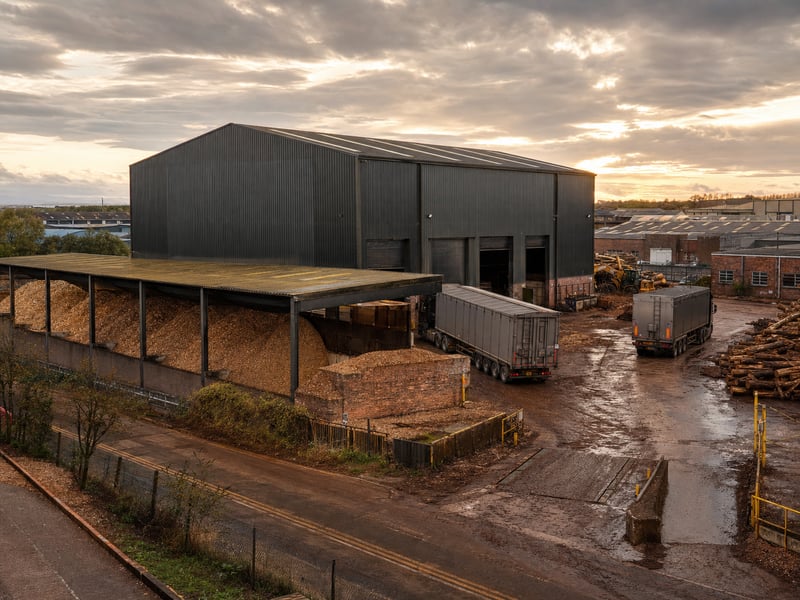
● Design
wood Pellet Plant Design
Based on your unique situation and industrial process, we will tailor complete pellet plant you need, and inform you of every additional detail that could facilitate operation, minimize total cost.
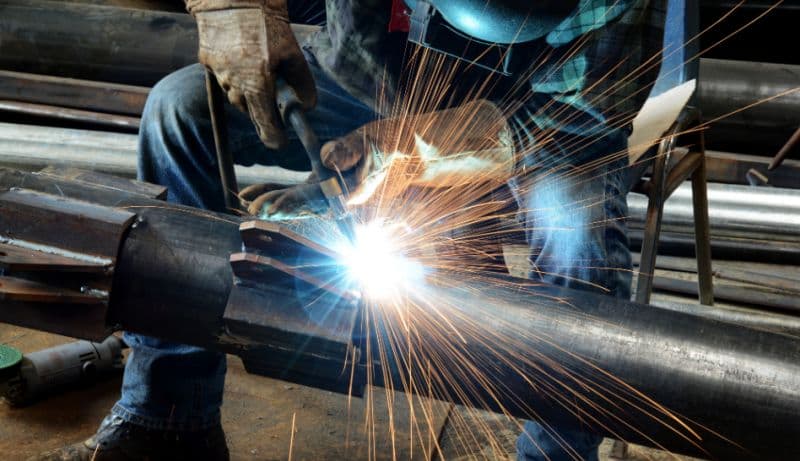
● Manufacturing
Equipment Manufacturing
The critical components of the of the complete wood pellet production line equipment are built in our own workshops in Asia. Additional equipment is manufactured by our worldwide network of reliable partners.

● Testing
Quality Inspection & Testing
Before leaving the factory, all equipment will be inspected by the quality inspection department. We can also provide customers with testing services from a single machine to a complete pellet plant system, and provide you with real actual data for “worry-free use.”

● Delivery
Equipment Delivery
In equipment boxing and packaging, we adopt professional packaging and modular solutions to ensure the safe and non-destructive delivery of wood pellet plant equipment.
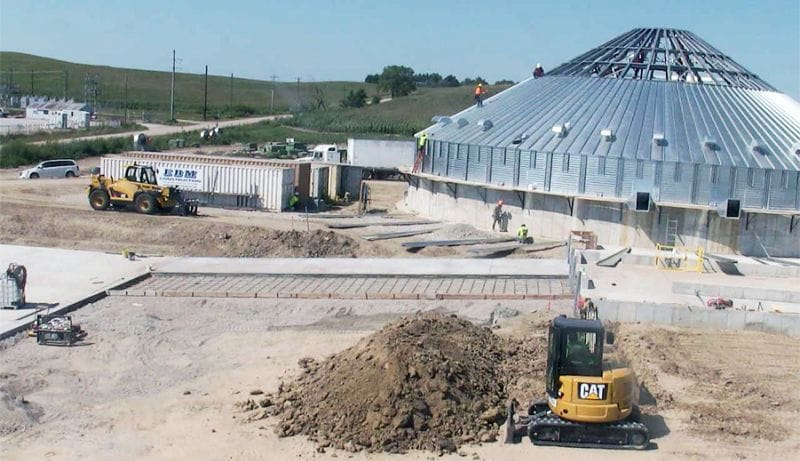
● Installation
Installation & Commissioning
Whether you choose your own subcontractor for the erection phase or you want to install everything together with us, a Richi supervisor will be around to make sure everything is mounted in a safe and thorough way.

● Training
Staff Training
We provide comprehensive training for the technicians of each multifunctional integrated wood pellet plant in Colombia project. We can also continue to provide support for the technicians during latter project operation.
● After-sales
Project Follow-Up
When everything is up and running our Richiers will help you further whenever needed. We are ready to answer your call 24/7.We’ll also visit you regularly to learn about your needs.
Who we are
RICHI Machinery is one of the world’s leading suppliers of technology and services for the animal feed, aqua feed and pet food industries, also the largest pellet production line manufacturer in China.
Since 1995, RICHI’s vision to build a first-class enterprise, to foster first-class employees, and to make first-class contributions to society has never wavered.
In the past three decades, we have expanded our business to a wide range of areas, including animal feed mill equipment, aqua feed equipment, pet feed equipment, biomass pellet equipment, fertilizer equipment, cat litter equipment, municipal solid waste pellets equipment, etc.

1995
RICHI Established

2000+
Serving More Than 2000 Customers

120+
RICHI Employees

140+
Exported To 140 Countries