 0086-138 3838 9622
Crop Straw Wood Pelletizing Plant in Chile
RICHI MACHINERY
overview
The 8t/h crop straw wood pellet processing line in Chile was not originally planned as a large-scale investment. It started with a simple issue: too much agricultural residue and not enough efficient ways to use it.
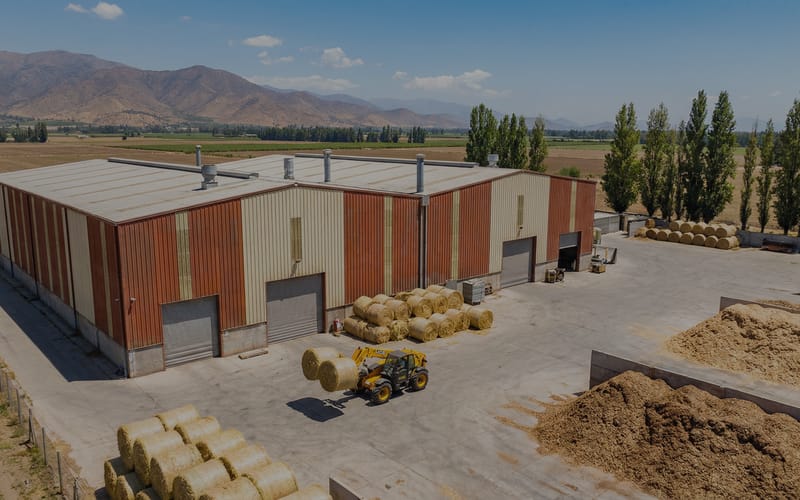
The client already had a yard with an old 800 m² workshop. Over time, piles of straw and sawdust kept growing. Burning them was no longer acceptable due to local environmental pressure, and transporting them out wasn’t economical either. That’s when they started looking into a pellet production line.
After several rounds of discussion, the idea shifted from “waste handling” to “fuel production.” The final setup became a complete biomass pellet plant with 20,000 tons annual output, designed to process mixed agricultural and wood residues into marketable fuel pellets.
8T/H
capacity
USD320,000
investment
Chile
location
Fuel
project type
RICHI MACHINERY
A Quick Look at the Project
This 8t/h crop straw wood pellet production line in Chile operates with two parallel pelletizing lines installed inside a newly extended steel structure workshop. The total plant area is around 2,600 m², arranged in a long north-south layout.
The line combines drying, crushing, mixing, and pelletizing into a relatively compact configuration. Not everything was perfect at the beginning. The first few trial runs had issues—material either came out too wet or too dusty—but that’s pretty typical when dealing with mixed raw materials like straw and sawdust.
Another key detail: about 20% of the raw material can go directly into pelletizing, while the remaining 80% needs drying. This ratio influenced almost every equipment decision we made.
RICHI MACHINERY
Project Background
The client is a mid-sized agricultural operator in southern Chile, working across grain farming and small-scale forestry. The region produces large amounts of:
- Wheat straw
- Corn stalks
- Sawdust from nearby sawmills
Previously, these materials were either burned in the field or left unused.
Around March 2024, the client reached out with a very direct question:
“Can we turn all this into something we can actually sell?”
By May 2024, after evaluating raw materials and local fuel demand, we signed the contract for a biomass pelletizing plant.
The main goals were clear:
- Handle agricultural waste efficiently
- Reduce open burning
- Produce biomass fuel for local heating markets
- Keep investment controlled and practical
RICHI MACHINERY
Raw Materials
In Chile, especially in agricultural regions, raw materials are not uniform. That’s something many new investors underestimate.
This biomass pellet project mainly uses a mix of crop residues and wood waste:
| Raw Material | Annual Consumption (t) | Source |
|---|---|---|
| Crop straw | 6,800 | Local farms |
| Sawdust / wood dust | 14,200 | Nearby sawmills |
Moisture varies a lot. Straw can be relatively dry, while sawdust—especially fresh—can go above 40%. That’s why drying becomes a critical part of this biomass pellet plant design.
RICHI MACHINERY
Equipment Configuration (Two Lines, Practical Setup)
The equipment selection was not overly complicated, but it had to match the raw material condition and budget.
Here’s the core equipment list:
| Equipment Name | Quantity |
|---|---|
| Crusher | 2 |
| Hot air furnace | 1 |
| Rotary dryer | 1 |
| Cyclone separator | 1 |
| Belt conveyors | Multiple |
| Mixer | 1 |
| Biomass pellet mill | 2 |
| Loader | 1 |
We used two biomass fuel pellet machines to reach the 8 t/h capacity. This also gives flexibility—one line can run while the other is under maintenance.
RICHI MACHINERY
How the Process Was Adjusted
Initial Situation (What Was Wrong)
When we first reviewed the site, several issues were obvious:
- Open material handling → heavy dust
- Only cyclone dust collection → insufficient emission control
- Manual transfer points everywhere
- Wood-fired furnace → unstable heat supply
- Dust accumulation in crushing area
Honestly, it looked like a typical early-stage setup—functional, but not sustainable.
Final Process Design
After optimization, the pellet processing line follows this flow:
- Raw Material Storage
- Straw and sawdust stored in covered pit
- Dust suppression with net cover and misting
- Feeding & Drying
- Screw feeder instead of manual feeding
- Biomass fuel replaces wood for heating
- Rotary dryer reduces moisture
- Air Separation + Dust Control
- Cyclone + bag filter combination
- 20m exhaust stack for clean emission
- Crushing Section
- Fully enclosed crusher area
- Negative pressure dust extraction
- Buffer Storage (Silo instead of open piles)
- Eliminates secondary dust
- Improves feeding consistency
- Pelletizing
- Dual biomass wood pellet machines (MZLH768 type)
- Stable compression ratio for mixed material
- Packaging
- Manual bagging (cost-effective choice)
RICHI MACHINERY
Production Performance (After Adjustment)
After commissioning, the plant stabilized at:
- Capacity: 8 t/h
- Annual output: 20,000 tons
- Moisture (final): ≤10%
- Bulk density: ≥600 kg/m³
At the beginning, operators struggled with moisture control. One operator joked:
“If it rains, the pellets feel it before we do.”
We later adjusted feeding speed and drying temperature, which solved most of the inconsistency.
RICHI MACHINERY
Utilities and Operation Details
| Item | Data |
|---|---|
| Power consumption | ~450,000 kWh/year |
| Water usage | ~120 m³/year |
| Workers | 8 people |
| Working hours | 8h/day, 300 days/year |
No process wastewater is generated. Only domestic sewage, which is treated locally.
RICHI MACHINERY
Environmental Upgrade
The environmental upgrade was actually one of the key reasons the project succeeded.
Instead of just adding equipment, we redesigned the dust control logic:
- All transfer points enclosed
- Centralized bag filter system
- Negative pressure in critical zones
- Pellet fuel used in furnace
Dust collected from filters is reused directly in production—nothing wasted.
RICHI MACHINERY
Investment & Timeline
- Inquiry received: March 2024
- Solution finalized: April 2024
- Contract signed: May 2024
- Installation completed: August 2024
- Trial production: September 2024
Equipment cost: around USD320,000
The client kept the budget tight, so we avoided unnecessary automation.
RICHI MACHINERY
Shipping & Logistics
All equipment was shipped from Qingdao Port, China to Port of San Antonio, Chile.
Delivery time was roughly 35–40 days by sea.
RICHI MACHINERY
A Few Things We Learned From This Project
- Straw + sawdust is workable, but drying must be carefully controlled
- Open transfer systems always become a dust problem later
- Small layout adjustments can save a lot of labor
- Pellet fuel for furnace is more stable than raw wood
And one practical thing:
If operators rely too much on manual feeding, production consistency will always fluctuate.
RICHI MACHINERY
Market Outlook in Chile
Chile has been pushing for cleaner heating solutions, especially in southern regions where wood burning is common.
Biomass pellets are gradually replacing traditional firewood because:
- More stable combustion
- Lower emissions
- Easier transport and storage
For a plant like this:
- Local demand is steady
- Raw materials are abundant
- Entry barrier is not too high
This 8t/h crop straw wood pellet production line in Chile is not the biggest project we’ve done, but it’s one of the more “real” ones.
It started with a messy yard and turned into a functioning biomass pellet plant that generates value from waste.
We didn’t just supply machines here. From layout planning, process adjustment, to on-site troubleshooting—we stayed involved the whole way.
If you’re sitting on agricultural waste and wondering whether it can be turned into fuel, the short answer is: yes, but the details matter.
And that’s usually where biomass pellet making plant projects succeed or fail.
● RICHI MACHINERY
RICHI Service

● Consulting
Customer Consultation
We want to have a deep understanding of your industrial process, to know your exact needs of feed, wood, biomass, fertilizer or other pellet processing.

● Design
biomass Pellet Plant Design
Based on your unique situation and industrial process, we will tailor complete pellet plant you need, and inform you of every additional detail that could facilitate operation, minimize total cost.
● Manufacturing
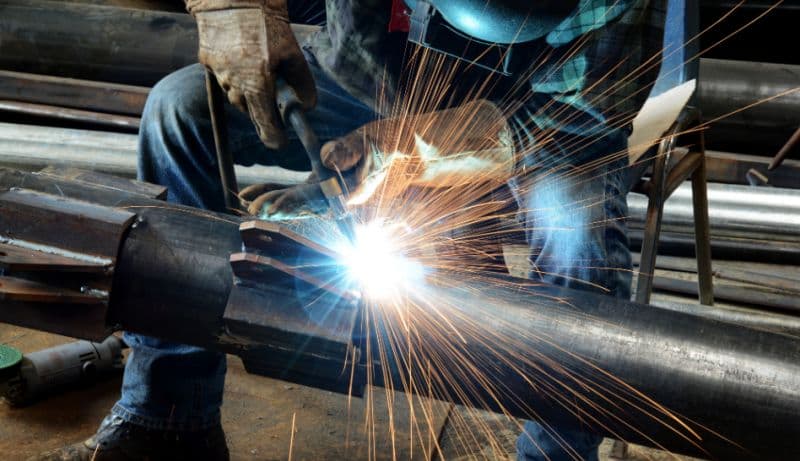
Equipment Manufacturing
The critical components of the of the complete pellet production line equipment are built in our own workshops in Asia. Additional equipment is manufactured by our worldwide network of reliable partners.
● Testing
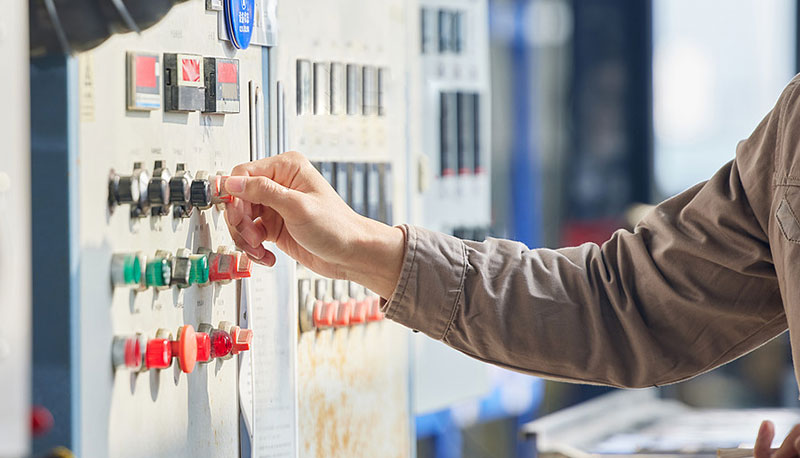
Quality Inspection & Testing
Before leaving the factory, all equipment will be inspected by the quality inspection department. We can also provide customers with testing services from a single machine to a complete pellet plant system, and provide you with real actual data for “worry-free use.”

● Delivery
Equipment Delivery
In equipment boxing and packaging, we adopt professional packaging and modular solutions to ensure the safe and non-destructive delivery of pellet plant equipment.
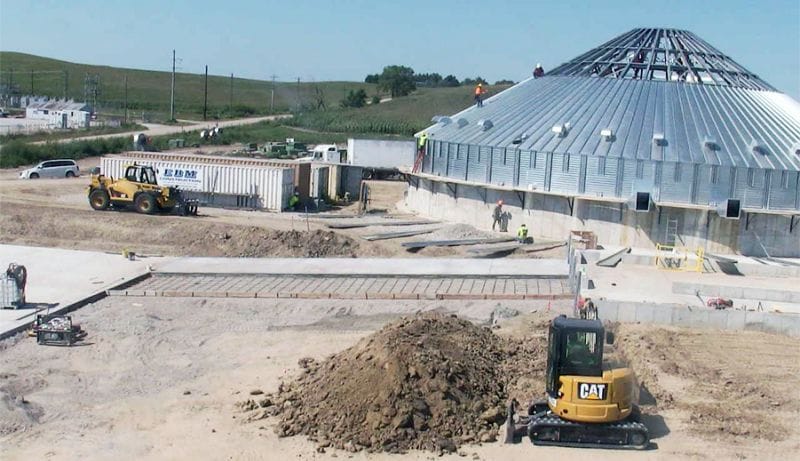
● Installation
Installation & Commissioning
Whether you choose your own subcontractor for the erection phase or you want to install everything together with us, a Richi supervisor will be around to make sure everything is mounted in a safe and thorough way.

● Training
Staff Training
We provide comprehensive training for the technicians of each project. We can also continue to provide support for the technicians during latter project operation.
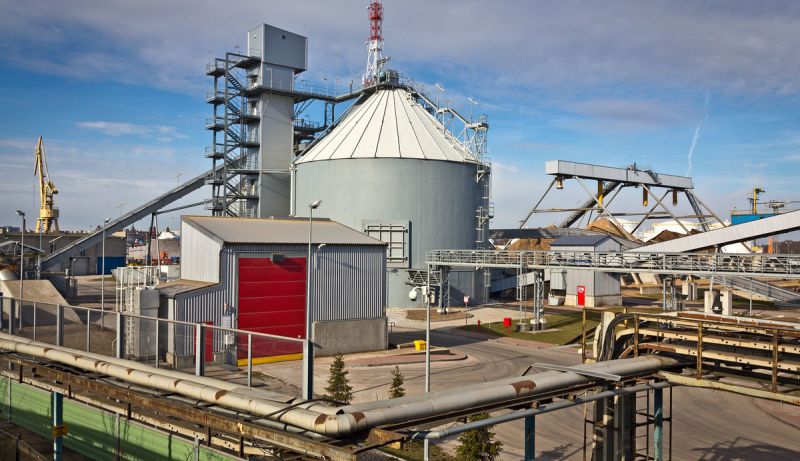
● After-sales
Project Follow-Up
When everything is up and running our Richiers will help you further whenever needed. We are ready to answer your call 24/7.We’ll also visit you regularly to learn about your needs.
Who we are
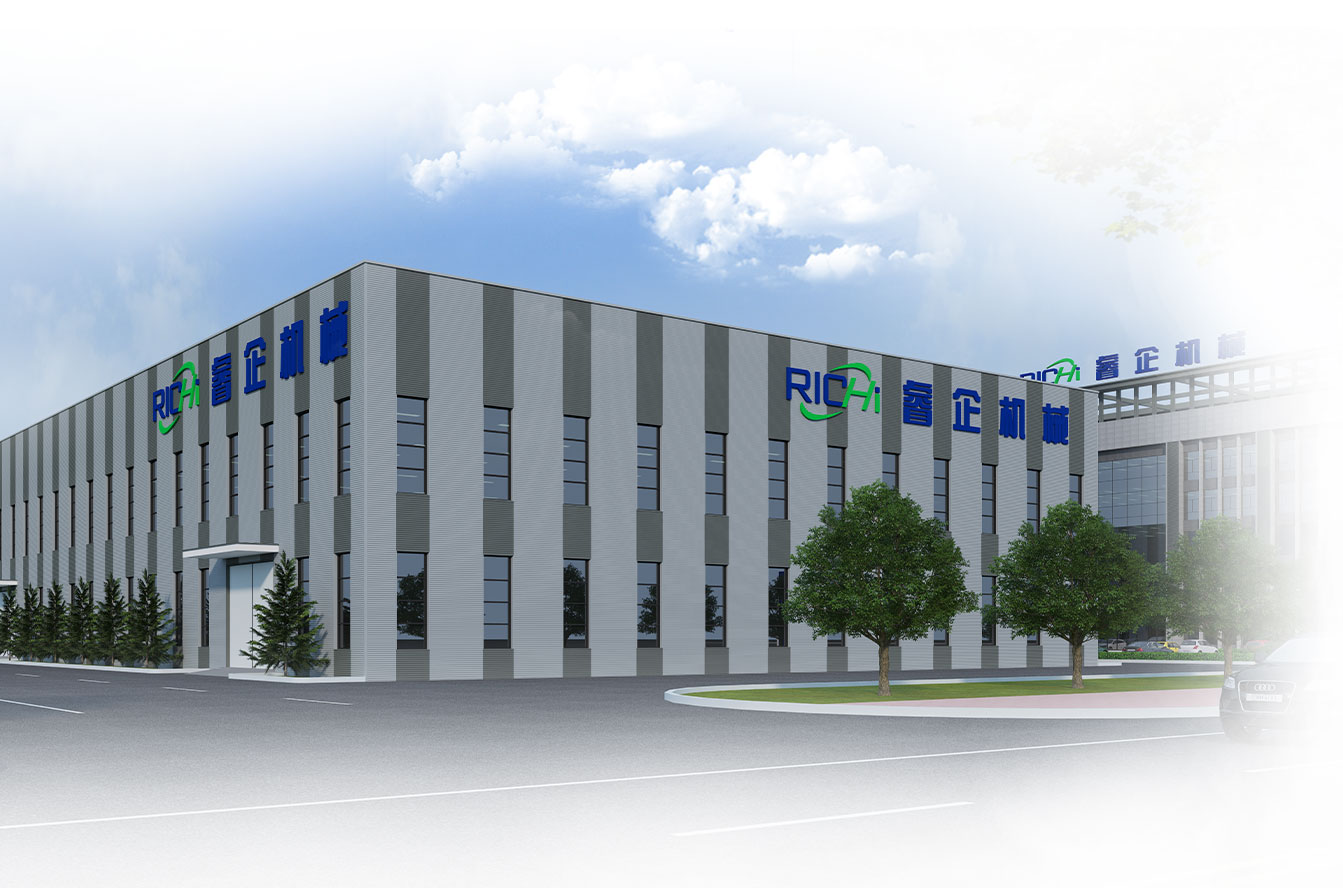
RICHI Machinery is one of the world’s leading suppliers of technology and services for the animal feed, aqua feed and pet food industries, also the largest pellet production line manufacturer in China.
Since 1995, RICHI’s vision to build a first-class enterprise, to foster first-class employees, and to make first-class contributions to society has never wavered.
In the past three decades, we have expanded our business to a wide range of areas, including animal feed mill equipment, aqua feed equipment, pet feed equipment, biomass pellet equipment, fertilizer equipment, cat litter equipment, municipal solid waste pellets equipment, etc.

1995
RICHI Established

2000+
Serving More Than 2000 Customers

120+
RICHI Employees

140+
Exported To 140 Countries