 0086-138 3838 9622
Rice Straw Wood Pellet Production Line in Thailand
RICHI MACHINERY
Project Overview
In 2019, a rice straw wood pellet production line in Thailand was successfully established in the Chonburi Industrial Zone. The project was initiated by a local renewable energy entrepreneur who had previously engaged in wood processing and agricultural by-products trading. With Thailand’s abundant agricultural residues—especially rice straw, sugarcane leaves, and sawdust—the investor identified a profitable opportunity to turn low-value waste into high-quality biomass fuel.
The project was designed with a total annual capacity of 20,000 tons of biomass pellets, equivalent to around 4.2 tons per hour under continuous two-shift operation (4,800 hours/year). The pellets are mainly targeted for use in industrial boilers, household heating systems, and co-firing power plants.
The total investment for the biomass pellet project reached THB 35 million (approximately USD 800,000), of which about 3% was allocated to environmental protection measures. The production base covers 3,000 m², including a 2,000 m² workshop for slicing, crushing, pelletizing, cooling, and packaging, as well as raw material storage and office space. The factory site was strategically selected near raw material sources and close to Laem Chabang Port, ensuring both convenient supply and export logistics.
4.2T/H
capacity
USD 800,000
investment
Thailand
location
Biofuel
project type
RICHI MACHINERY
Project Background and Client Profile
Thailand is one of Southeast Asia’s largest producers of agricultural residues. Every year, the country generates over 20 million tons of rice straw and large amounts of sawdust and waste wood from the furniture and construction sectors. Traditionally, rice straw has been burned in open fields, causing severe air pollution, while sawdust and waste wood were often discarded or underutilized.
The investor behind this rice straw wood pellet production line in Thailand project comes from a family engaged in the timber industry. Over the years, he realized that the rising domestic demand for clean fuels, combined with Thailand’s national renewable energy roadmap, offered a new direction: to convert straw and wood waste into densified biomass pellets. These pellets not only meet the energy needs of local factories but also hold strong export potential to Japan, South Korea, and the EU.
Given the increasing electricity demand and the Thai government’s ambition to substitute fossil fuels with renewables, the entrepreneur decided to establish a wood straw pellet production line in Thailand. This project not only reduces open-field straw burning but also contributes to the circular economy by giving new value to agricultural residues.
RICHI MACHINERY
Engineering Content and Layout
The factory layout of rice straw wood pellet production line in Thailand was designed for maximum efficiency and safety.
- North side: factory entrance and access to the main highway.
- West side: raw material storage yard for straw bales and sawdust piles.
- East side: office and staff facilities.
- South side: main production workshop, divided into slicing, crushing, pelletizing, cooling, and packaging areas.
The production capacity is 20,000 tons per year, achieved through a biomass pellet production line operating 4,800 hours annually.
RICHI MACHINERY
Raw Materials
The rice straw wood pellet production line in Thailand project relies on a mix of local resources:
- Rice straw – 3,000 tons/year (collected from nearby farming regions)
- Sawdust and sawdust ash – 9,000 tons/year (from local sawmills and furniture factories)
- Waste wood boards – 8,000 tons/year (from construction and carpentry sectors)
- Water – 120 tons/year
- Electricity – 1.87 million kWh/year from the municipal grid
This combination allows flexibility in pellet production and reduces reliance on a single raw material.
RICHI MACHINERY
Main Equipment
| No. | Equipment | Specification | Quantity | Note |
|---|---|---|---|---|
| 1 | Chipper | 1400 hammer type | 1 set | For large wood and straw bales |
| 2 | Crusher | Water-drop type | 1 set | For fine grinding to 3–8 mm |
| 3 | Pelletizing line | Horizontal wood straw pellet machine, 4 units per line | 1 line | Core production equipment |
| 4 | Conveyor belts | Custom design | 4 sets | For continuous material transfer |
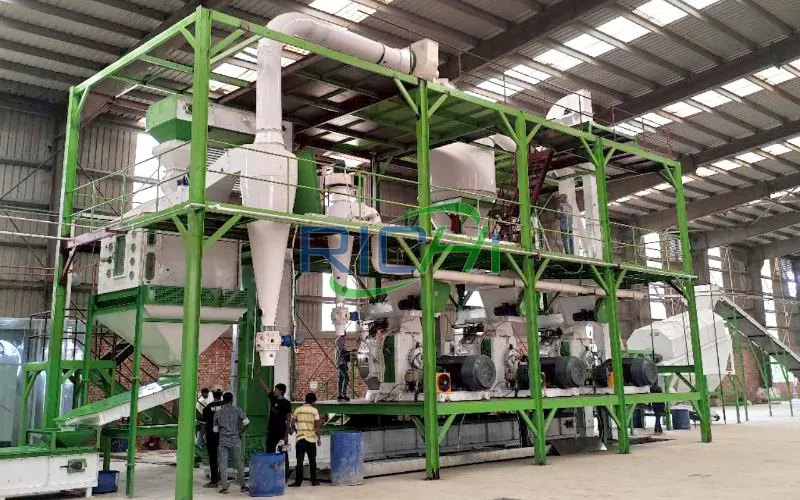
This setup ensures stable output, with each straw wood pellet mill capable of producing around 1.5 t/h, supporting the total line capacity.
RICHI MACHINERY
Utility and Environmental Engineering
- Water supply: 120 t/year, mainly for domestic use.
- Power supply: 1.87 million kWh/year from local grid, with a backup transformer system.
- Drainage: rainwater and sewage separated; wastewater treated via septic tank and later discharged into municipal treatment facilities.
- Fire safety: equipped with hydrants, extinguishers, and fire-resistant construction.
- Air emissions: dust from chipping, crushing, and pelletizing controlled by a combination of bag filters and cyclones, achieving over 99% efficiency.
- Noise: machinery noise (70–85 dB(A)) controlled through soundproof workshops and vibration reduction bases.
- Solid waste: collected dust reused in production; domestic waste (1.2 t/year) collected and transported by the municipal sanitation department.
Total environmental investment: THB 1.05 million (USD 24,000).
RICHI MACHINERY
Production Process
- Chipping – Large straw bales and waste wood are chipped into smaller pieces.
- Crushing – Material is ground to 3–8 mm particles using a hammer mill.
- Pelletizing – Raw material is pressed through biomass pellet mill ring dies at 80–130°C, forming dense biomass pellets.
- Cooling – Pellets are naturally cooled in storage silos.
- Packaging & Storage – Finished pellets are weighed, bagged, and stored for delivery.
Pollution control is integrated into each stage, with dust collection and noise management measures applied.
RICHI MACHINERY
Economic Feasibility
Total investment: THB 35 million (USD 800,000)
Environmental protection: THB 1.05 million (USD 24,000)
Workforce: 8 employees, operating on a two-shift system
Expected payback period: 3–4 years, depending on domestic and export pellet prices
RICHI MACHINERY
Market Outlook in Thailand
The establishment of this rice straw wood pellet production line in Thailand comes at the right time. Thailand’s Alternative Energy Development Plan (AEDP) aims to increase renewable energy share to 30% by 2037. Biomass, particularly pellets, plays a crucial role in this transition.
Currently, domestic demand for pellets is growing, particularly from:
- Industrial boilers replacing coal and heavy oil
- Biomass power plants co-firing with pellets
- Export markets in Japan and South Korea
Moreover, the wood rice straw pellet plant in Thailandproject reduces straw burning, directly contributing to Thailand’s fight against seasonal smog problems in agricultural areas.
RICHI MACHINERY
Conclusion & Future Prospects
The rice straw wood pellet production line in Thailand demonstrates how agricultural residues and wood waste can be transformed into a profitable and sustainable business. With government policy support, growing domestic demand, and export opportunities, this project is well-positioned for long-term success.
For investors, Thailand remains an attractive destination for biomass projects due to its abundant raw materials, rising clean energy demand, and strategic export location.
As a professional supplier of biomass pellet equipment, we can provide customized solutions for projects like this, including design, installation, training, and after-sales service. If you are considering investing in a biomass pellet line in Southeast Asia, this Thai case shows the potential and profitability of such ventures.
● RICHI MACHINERY
RICHI Service

● Consulting
Customer Consultation
We want to have a deep understanding of your industrial process, to know your exact needs of feed, wood, biomass, fertilizer or other pellet processing.

● Design
biomass Pellet Plant Design
Based on your unique situation and industrial process, we will tailor complete pellet plant you need, and inform you of every additional detail that could facilitate operation, minimize total cost.
● Manufacturing
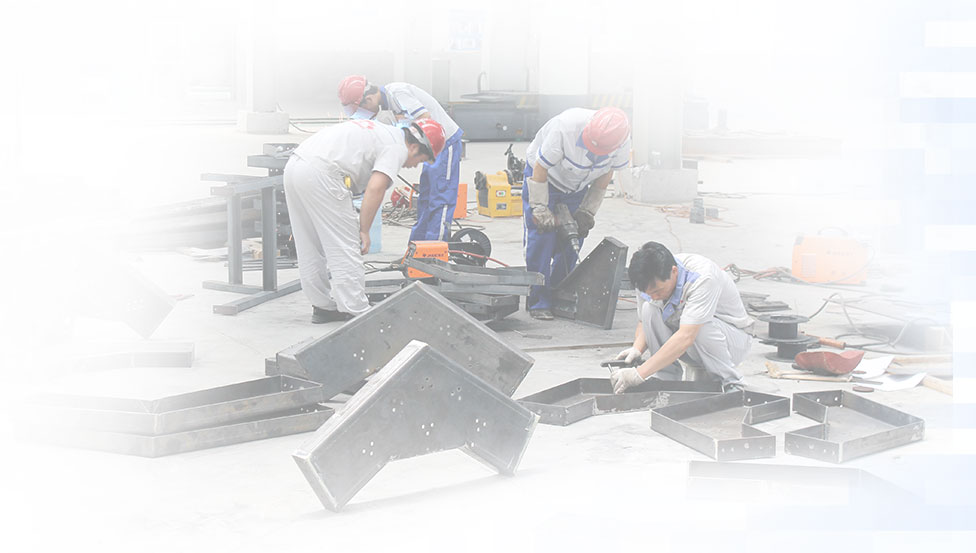
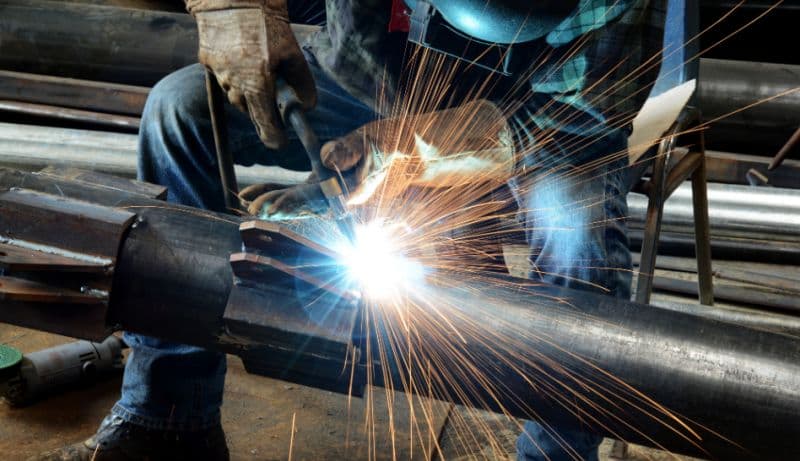
Equipment Manufacturing
The critical components of the of the complete pellet production line equipment are built in our own workshops in Asia. Additional equipment is manufactured by our worldwide network of reliable partners.
● Testing
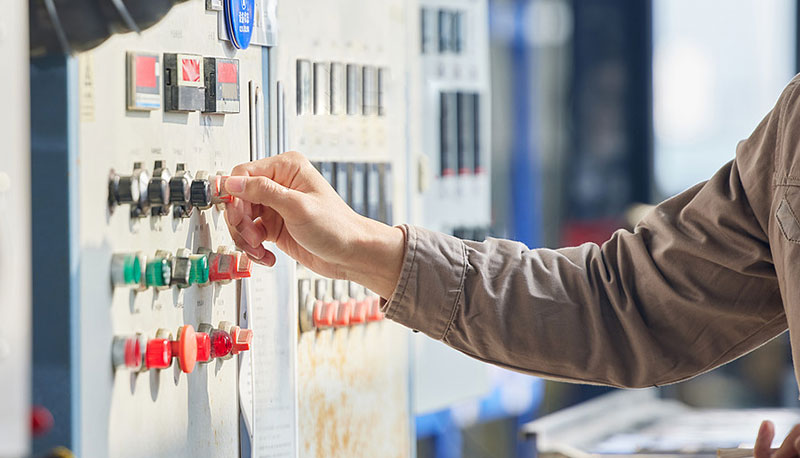
Quality Inspection & Testing
Before leaving the factory, all equipment will be inspected by the quality inspection department. We can also provide customers with testing services from a single machine to a complete pellet plant system, and provide you with real actual data for “worry-free use.”

● Delivery
Equipment Delivery
In equipment boxing and packaging, we adopt professional packaging and modular solutions to ensure the safe and non-destructive delivery of pellet plant equipment.
● Installation
Installation & Commissioning
Whether you choose your own subcontractor for the erection phase or you want to install everything together with us, a Richi supervisor will be around to make sure everything is mounted in a safe and thorough way.

● Training
Staff Training
We provide comprehensive training for the technicians of each project. We can also continue to provide support for the technicians during latter project operation.
● After-sales
Project Follow-Up
When everything is up and running our Richiers will help you further whenever needed. We are ready to answer your call 24/7.We’ll also visit you regularly to learn about your needs.
Who we are
RICHI Machinery is one of the world’s leading suppliers of technology and services for the animal feed, aqua feed and pet food industries, also the largest pellet production line manufacturer in China.
Since 1995, RICHI’s vision to build a first-class enterprise, to foster first-class employees, and to make first-class contributions to society has never wavered.
In the past three decades, we have expanded our business to a wide range of areas, including animal feed mill equipment, aqua feed equipment, pet feed equipment, biomass pellet equipment, fertilizer equipment, cat litter equipment, municipal solid waste pellets equipment, etc.

1995
RICHI Established

2000+
Serving More Than 2000 Customers

120+
RICHI Employees

140+
Exported To 140 Countries