 0086-138 3838 9622
Rice Husk Pellet Production Plant for Fuel Pellets in Bangladesh
RICHI MACHINERY
Project Overview
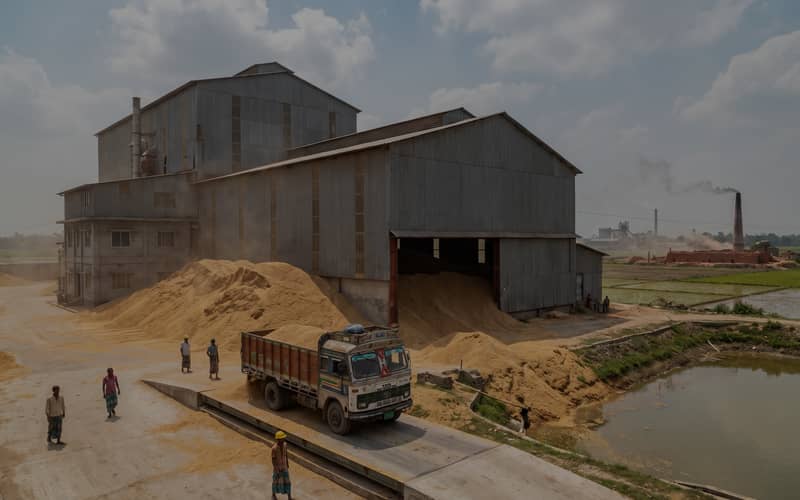
A biomass energy company reached out to RICHI Machinery about building a 6t/h rice husk pellet production plant for fuel pellets in Bangladesh with an annual capacity of 30,000 tons of rice husk pellets (running 16 hours per day, 2 shifts, 300 days per year). The facility produces high-calorific fuel pellets from rice husks for industrial boilers, brick kilns, and heating systems across Bangladesh.
The client is located in the Cumilla District of eastern Bangladesh, about 100km southeast of Dhaka. This region is part of the country’s “rice bowl” – vast paddy fields produce millions of tons of rice and rice husks annually. Rice mills in Cumilla alone generate an estimated 200,000-300,000 tons of rice husks per year, most of which is currently burned in inefficient furnaces or dumped.
The client saw an opportunity to collect that husk and convert it into a higher-value fuel pellet. The rice husk pellet plant is set on an 8,300m² site (about 2 acres) with a leased 2,000m² production building (steel frame, enclosed). The site also includes a 1,500m² raw material preparation area, a 1,500m² finished goods warehouse, a 200m² office, and employee facilities (toilet, canteen).
Total investment was about $165,000 USD.
Why rice husk pellets? Rice husk is abundant in Bangladesh (about 5-7 million tons annually). Raw rice husk has a calorific value of about 12-14 MJ/kg and high ash content (15-20%). But pelleted rice husk achieves 15-16 MJ/kg with improved combustion efficiency. Pellets also have 4-5x higher bulk density than loose husk, reducing transport and storage costs.
The client’s operation runs two shifts (16 hours/day) with 18 staff (including management, technicians, and production workers). The facility provides meals (canteen) but staff live off-site.
6T/H
capacity
$165,000
investment
Bangladesh
location
Biofuel
project type
RICHI MACHINERY
Why Bangladesh? (And Why Rice Husk Pellets)
Bangladesh is the world’s third-largest rice producer (about 35-40 million tons annually). Rice husk generation is estimated at 7-8 million tons per year. Current utilization:
| Disposal method | Percentage | Problem |
|---|---|---|
| Boiler fuel (raw, inefficient) | 40% | Low efficiency, high emissions |
| Dumped/landfilled | 30% | Environmental hazard, takes decades to decompose |
| Sold to brick kilns | 15% | Low value (500-800 taka/ton ≈ $4-7) |
| Other (animal bedding, composting) | 10% | Limited scale |
| Unused | 5% | / |
The opportunity: Pelletized rice husk has:
- Higher calorific value (15-16 MJ/kg vs 12-14 MJ/kg raw)
- Higher bulk density (600-650 kg/m³ vs 100-150 kg/m³ loose)
- Consistent combustion (pelletized material burns more uniformly)
- Reduced transport cost (more energy per truckload)
Target customers:
| Customer segment | Location | Annual pellet demand | Current fuel |
|---|---|---|---|
| Rice mills (parboiling) | Cumilla, Brahmanbaria | 100,000 tons | Raw husk |
| Brick kilns (industrial) | Throughout country | 200,000 tons | Coal/diesel |
| Textile factories | Dhaka, Gazipur | 80,000 tons | Diesel/LPG |
| Food processors | Nationwide | 30,000 tons | Firewood/natural gas |
The client’s initial focus is rice mills in Cumilla District. A typical rice mill needs 10-15 tons of steam per day for parboiling. Switching from raw husk to pellets improves combustion efficiency by 20-30% and reduces maintenance costs.
RICHI MACHINERY
The Abundant Feedstock: Rice Husk
The client’s raw material used in this rice husk pellet production plant for fuel pellets in Bangladesh is 100% rice husk from local rice mills.
Rice husk characteristics:
| Parameter | Value | Notes |
|---|---|---|
| Moisture (as received) | 8-12% | Already dry (no dryer needed) |
| Bulk density (loose) | 100-120 kg/m³ | Very fluffy |
| Ash content | 15-20% | High (silica) |
| Silica content | 18-22% | Abrasive (wears dies faster) |
| Lignin content | 20-25% | Natural binder when heated |
| Cellulose | 30-35% | |
| Calorific value (raw) | 12-14 MJ/kg | |
| Calorific value (pellet) | 15-16 MJ/kg |
Why the client doesn’t need a dryer: Rice husks from modern rice mills are already dry (8-12% moisture). The parboiling process involves steaming the paddy, but the husk is separated and dried before storage. By the time the client receives it, moisture is already in the ideal range for pelletizing (10-14%). This saved the client about $80,000-100,000 in dryer equipment and eliminates fuel cost for drying.
Raw material supply:
| Source | Distance | Annual volume (tons) | Cost (BDT/ton) | Cost (USD/ton at 120 BDT/USD) |
|---|---|---|---|---|
| Rice mill A | 15 km | 10,000 | 600 | $5.00 |
| Rice mill B | 25 km | 10,000 | 600 | $5.00 |
| Rice mill C | 40 km | 8,000 | 650 | $5.42 |
| Rice mill D | 50 km | 5,000 | 700 | $5.83 |
| Total | — | 33,000 | — | — |
Wait, 33,000 tons input for 30,000 tons output? Yes. The difference (about 3,000 tons) is:
- Water evaporated during processing (about 1-2% moisture loss)
- Dust captured in filters (about 10-15 tons/year, recycled)
- Impurities (stones, metal removed by magnets)
Raw material quality control:
The client only accepts rice husk that is:
- Dry (moisture <14% – tested with handheld meter)
- Free from stones and metal (visual inspection + magnetic separation)
- Free from mold (reject any load with visible mold)
- Free from excessive dust (some dust is fine, but too much reduces pellet quality)
The client built a 1,500m² covered storage area (raw material preparation area) for incoming rice husk. Since the husk is already dry, no drying yard is needed – just covered storage to keep rain off.
RICHI MACHINERY
The Site and Building
The site previously belonged to a fertilizer company but had been vacant. The client renovated the existing buildings.
Building layout:
| Building | Size (m²) | Construction | Use |
|---|---|---|---|
| Production building | 2,000 | Steel frame, enclosed | Chipping (none – rice husk doesn’t need chipping), grinding, pelletizing |
| Raw material preparation | 1,500 | Steel frame | Storage for incoming rice husk |
| Finished goods warehouse | 1,500 | Steel frame | Bagged pellets (25kg, 50kg) |
| Office | 200 | 2-story, frame | Admin, control room, canteen |
| Toilet | 20 | Concrete | Staff facilities |
| Weighboridge | 20 | Concrete | At entrance |
| Fire pond | — | Converted fish pond | Fire protection |
Production building layout (2,000m²):
The client chose a linear layout from north to south:
| Position | Area | Equipment |
|---|---|---|
| North end (raw material intake) | ~400m² | Screener, magnetic separator |
| North-central | ~400m² | Hammer mill |
| Central | ~300m² | Buffer bin |
| South-central | ~500m² | Pellet mills (4 units) |
| South end | ~400m² | Packaging, finished goods staging |
The building is fully enclosed with steel cladding. All processing equipment is indoors to contain dust and noise.
RICHI MACHINERY
Equipment Configuration
The client chose RICHI’s equipment specifically configured for rice husk pelleting:
| Equipment | Model | Quantity | Power (each) | Notes |
|---|---|---|---|---|
| Rotary screener | — | 1 | 5.5 kW | Removes stones and oversized particles |
| Magnetic separator (drum type) | — | 1 | — | Integrated into screener |
| Hammer mill | — | 1 | 90 kW | Grinds husk to <6mm particles |
| Storage bin | — | 1 | — | 10-ton buffer |
| Pellet mill | MZLH420 | 4 | 110 kW each | Ring die type |
| Automatic lubrication pump | — | 1 | 850 W | For pellet mills |
| Control panel | — | 1 | — | Centralized control |
| Baghouse dust collector | DMC | 1 | — | For grinding and pelletizing dust |
| Conveyors | — | 5 | 3-5 kW | Material transport |
| Bucket elevator | — | 1 | 5.5 kW | Lifting to pellet mills |
| Pallet wrapper | — | 1 | 1.5 kW | For finished pallets |
| Forklift | CPCD35E | 1 | — | Handling |
| Front-end loaders | multiple | 4 | — | Raw material handling |
Equipment cost (FOB Qingdao): $165,000 USD
Why this configuration for rice husk:
1. No chipper needed. The client’s raw material is rice husk, not large wood pieces. Rice husk particles are already 2-5mm. Skipping the chipper saved about $15,000 in equipment cost and eliminated a maintenance point.
2. Magnetic separator before grinding. Rice husk often contains small metal pieces (from milling equipment). The magnetic drum removes ferrous metal before it reaches the hammer mill, protecting the screens (500 replacement) and the pellet mill dies (2,500+ replacement).
3. Four pellet mills. Each mill produces 1.5-2 t/h of rice husk pellets (lower throughput than wood pellets because rice husk is abrasive). Four mills give 6-8 t/h total. Redundancy is critical – rice husk is tough on dies and rollers. If one mill is down for maintenance, production continues at 4.5-6 t/h.
4. No dryer. The client’s rice husk arrives at 8-12% moisture – perfect for pelletizing (target 10-14%). No dryer needed. This was a key decision that saved significant capital and operating costs.
5. Automatic lubrication pump. Rice husk is abrasive and wears out bearings faster than wood. The automatic lubrication system ensures consistent greasing of pellet mill bearings, extending bearing life by 30-50%.
RICHI MACHINERY
Process Flow
Step 1: Raw Material Receiving
Rice mills deliver rice husk in bulk (loose, not baled) using dump trucks. The truck crosses the weighbridge (gross weight). The driver unloads into the raw material preparation area (1,500m² covered storage).
Storage management: The client uses front-end loaders to move husk from the storage area to the production building intake. The storage area holds about 200-300 tons (about 5-7 days of production). The client needs more storage – they’re adding an adjacent outdoor covered area for another 500 tons.
Step 2: Screening and Metal Removal
Don’t skip this step. Rice husk from mills often contains stones and metal fragments.
Raw rice husk is fed (by front-end loader) into a hopper that feeds a rotary screener (the client has a screener integrated with a magnetic drum).
Screener parameters:
- Type: Rotary drum
- Screen mesh: 10mm (removes stones >1cm)
- Rotation speed: 18 RPM
The screener removes stones, soil clods, and oversized material (about 20-30 tons/year, landfilled).
Magnetic separation: The screener has an integrated magnetic drum. As material passes over the drum, ferrous metal particles (nails, screws, mill wear debris) are captured.
Why this is critical for rice husk: Rice milling equipment sheds small metal particles. Those particles in the pellet mill will:
- Damage the die ($2,500-3,500 replacement)
- Damage the rollers ($500-800 replacement)
- Cause sparking (fire risk)
The client’s magnetic drum is cleaned daily. They recover about 50-100 kg of metal per month – mostly small screws and grinding media from rice mills.
Step 3: Grinding (Hammer Milling)
Screened, demagnetized rice husk is conveyed to the hammer mill (90 kW).
Hammer mill parameters:
| Parameter | Value | Notes |
|---|---|---|
| Rotor diameter | 1,000 mm | |
| Screen size | 5 mm | For rice husk (wood uses 6-8mm) |
| Rotor speed | 3,000 RPM | Standard speed |
| Throughput | 6-8 t/h |
Why 5mm screen (finer than wood): Rice husk particles are already small (2-5mm). But for consistent pelletizing, the client grinds to 100% passing 5mm, with 50-60% passing 2mm. This ensures uniform density in the final pellet.
Step 4: Buffer Storage
Ground rice husk drops into a 10-ton buffer bin (steel). The bin holds about 1.5 hours of production at 6 t/h.
Why a buffer bin: The hammer mill and pellet mills run continuously. The bin smooths out flow fluctuations. A low-level sensor triggers an alarm when the bin is 20% full, alerting the operator to start the hammer mill.
Step 5: Pelletizing
Rice husk is abrasive. Dies wear out faster than with wood. The client chose 4 pellet mills so they can rotate maintenance.
Ground rice husk is lifted by a bucket elevator and distributed to four pellet mills.
Pellet mill parameters (each):
| Parameter | Value | Notes |
|---|---|---|
| Die diameter | 560 mm | |
| Die hole diameter | 6 mm | Produces 6.5-7mm pellets |
| Compression ratio | 5:1 | Standard for agricultural residues |
| Die thickness | 90 mm | |
| Die speed | 180-220 RPM | |
| Operating temperature | 80-100°C | From friction |
| Throughput per mill | 1.5-2 t/h | Combined 6-8 t/h |
Pellet specifications (rice husk):
| Parameter | Target | Actual |
|---|---|---|
| Diameter | 6-8 mm | 6.5-7 mm |
| Length | 20-30 mm | 25-30 mm |
| Moisture | 8-10% | 8-10% (raw husk was already dry) |
| Density (pellet) | >1,000 kg/m³ | 1,050-1,100 kg/m³ |
| Bulk density | 600-650 kg/m³ | 620 kg/m³ |
| Durability (PDI) | >95% | 95-96% |
| Ash content | 15-18% | 15-18% (inherent to rice husk) |
| Silica content | 18-22% | 18-22% |
| Calorific value | >15 MJ/kg | 15.3-15.8 MJ/kg |
Why lower durability (95-96% vs 97-98% for wood): Rice husk has less lignin than wood. It doesn’t bind as tightly. The client’s pellets are slightly softer than wood pellets, but still acceptable for industrial boilers.
Pellet mill maintenance for rice husk:
| Component | Life (rice husk) | Life (wood) | Notes |
|---|---|---|---|
| Die | 1,000-1,500 hours | 2,000-3,000 hours | Replace every 2-3 months |
| Roller shells | 500-800 hours | 1,000-1,500 hours | Replace every 4-6 weeks |
| Bearings | 3,000-4,000 hours | 5,000-6,000 hours |
The client keeps a full set of spare dies and roller shells on site. They budget $15,000-20,000 per year for die and roller replacement.
Dust control at pellet mills: Each pellet mill has a dust extraction hood. Dust is captured by the baghouse system.
Step 6: Screening (Finished Product)
Pellets from all four mills drop onto a common conveyor that feeds a rotating screener (滚动筛) to separate fines.
Screener parameters:
- Type: Rotating drum
- Screen mesh: 3mm (bottom), 12mm (top – but oversize is rare)
- Acceptable pellets: 6-30mm length
- Fines (<3mm): Returned to hammer mill
The client uses a single screener for all four mills. The screener has a capacity of 8-10 t/h – plenty for the line.
Step 7: Cooling
No mechanical cooler needed. Rice husk pellets are 2-3% lower moisture than wood pellets exiting the mill, and they cool faster.
Hot pellets (80-90°C) drop onto a belt conveyor that carries them to the finished goods warehouse. The client spreads pellets on the warehouse floor in a shallow layer (20-30cm deep). Cooling time: 2-3 hours (rice husk pellets cool faster than wood due to lower moisture).
Why no cooler: The client’s warehouse is large (1,500m²), well-ventilated, and shaded. Bangladesh’s ambient temperature is 25-35°C. The temperature difference (80°C to 35°C = 45°C delta) is sufficient for natural cooling.
Step 8: Packaging
Cooled pellets are shoveled into the packaging system (manual bagging).
Packaging process:
The client uses hand-held high-speed bag sealers (6 units) at multiple packaging stations.
Bagging steps:
- Operator hangs a 25kg woven poly bag (with inner PE liner) on a filling spout
- Presses button, scale fills (accuracy ±100g)
- Operator removes bag and seals it (hand-held sealer)
- Bags are stacked on pallets (40 bags × 25kg = 1,000kg per pallet)
- Pallet wrapped with stretch film
The client also sells bulk (20-30 ton truckloads) to large customers (rice mills, brick kilns). Bulk price is about 5-10% lower than bagged.
RICHI MACHINERY
Utilities and Consumption
| Utility | Annual consumption | Source | Cost (BDT) | Cost (USD at 120 BDT/USD) |
|---|---|---|---|---|
| Electricity | 600,000 kWh | Grid | 4.8 million | $40,000 |
| Water | 1,500 m³ | Municipal | 30,000 | $250 |
| Diesel (loader, forklift) | 6,000 liters | Local | 600,000 | $5,000 |
Electricity breakdown (annual, 300 days, 16 hours/day = 4,800 hours):
| Equipment | kW average | Hours/day | kWh/day | kWh/year |
|---|---|---|---|---|
| Rotary screener | 4 | 16 | 64 | 19,200 |
| Magnet | 1 | 16 | 16 | 4,800 |
| Hammer mill | 65 | 16 | 1,040 | 312,000 |
| Pellet mills (4) | 500 (125 each avg) | 16 | 8,000 | 2,400,000 |
| Baghouse fan | 15 | 16 | 240 | 72,000 |
| Conveyors, bucket elevator | 15 | 16 | 240 | 72,000 |
| Lighting, office, controls | 10 | 16 | 160 | 48,000 |
| Total | ~610 | — | 9,760 | 2,928,000 kWh |
Electricity cost per ton: 2,928,000 kWh ÷ 30,000 tons = 97.6 kWh/ton × 8 BDT/kWh = 781 BDT/ton ($6.50). Very efficient for a pellet plant (no dryer).
RICHI MACHINERY
How RICHI Customized This Line for Rice Husk
The client had specific requirements that shaped the equipment design:
Requirement 1: Raw material is dry rice husk (8-12% moisture). No dryer needed. This was the client’s key insight – rice mills already dry the husk.
RICHI solution: Designed the line with no dryer. This saved the client about 80,000−100,000inequipmentcostand15,000-20,000/year in fuel cost (if using biomass) or $30,000-40,000/year in electricity (if using electric dryer). The client’s payback period is significantly shorter because of this decision.
Requirement 2: Rice husk is abrasive (high silica content, 18-22%). Standard pellet mill dies wear out quickly.
RICHI solution:
- Recommended 4 pellet mills (instead of 1-2 large mills) so the client can rotate maintenance
- Supplied dies made of specialized alloy steel (higher hardness, longer life)
- Supplied roller shells with tungsten carbide coating (3x longer life than standard)
- Automatic lubrication pump to protect bearings (bearing failure is more common with abrasive materials)
Requirement 3: Rice husk contains metal fragments from milling equipment. Standard magnetic separators catch some, but the client wanted higher protection.
RICHI solution:
- Magnetic drum separator at the screener discharge (removes ferrous metal)
- Additional magnetic grid at the rice husk pellet machine infeed (redundant protection)
- Weekly cleaning protocol for both magnets
Requirement 4: The client has limited technical staff (18 employees total, 15 production workers). The client’s workers were general laborers, not technicians.
RICHI solution: Provided a 3-week on-site training program:
- Week 1: Basic safety, machine startup/shutdown, daily checks (magnets, screens, lubrication)
- Week 2: Adjusting the pellet mill die gap, changing screens, changing dies and rollers
- Week 3: Troubleshooting common problems (die plugging from overfeeding, low pellet quality from worn dies, mill vibration from misalignment)
The client’s lead operator (a former mechanic at a rice mill) became proficient within 4 weeks.
Requirement 5: The client needs dust control to meet DoE standards. Rice husk dust is fine and can be a respiratory hazard.
RICHI solution:
- Baghouse dust collector (DMC series with screw conveyor) for all dust points
- Dust collection at hammer mill, husk biomass pellet mills, and transfer points
- Negative pressure in the production building (fans exhausting through baghouse)
- Fog cannon for the unloading area (large particles settle quickly)
- Electric sweeper for daily floor cleanup
The client’s workplace dust levels are consistently below 10 mg/m³ (DoE limit).
RICHI MACHINERY
Product Specifications
The client’s rice husk pellets meet Bangladesh’s proposed biomass pellet standard (based on international norms):
| Parameter | Value | Method |
|---|---|---|
| Diameter | 6.5-7 mm | Caliper |
| Length | 25-30 mm | Caliper |
| Moisture | 8-10% | Drying oven (105°C, 24h) |
| Density (pellet) | 1,050-1,100 kg/m³ | Water displacement |
| Bulk density | 600-650 kg/m³ | 1L cylinder |
| Durability (PDI) | 95-96% | Tumbler test (500 rpm) |
| Fines (<3.15mm) | <2% | Sieve test |
| Ash content (550°C) | 15-18% | Muffle furnace |
| Silica content | 18-22% | Gravimetric |
| Lower heating value | 15.3-15.8 MJ/kg | Bomb calorimeter |
| Sulfur | <0.05% | Combustion |
| Chlorine | <0.1% | Ion chromatography |
Comparison with raw rice husk:
| Parameter | Raw rice husk | Rice husk pellets |
|---|---|---|
| Bulk density | 100-120 kg/m³ | 600-650 kg/m³ (5-6x denser) |
| Moisture | 8-12% | 8-10% (similar) |
| Calorific value | 12-14 MJ/kg | 15-16 MJ/kg (better) |
| Combustion efficiency | 50-60% (raw) | 70-80% (pelletized) |
| Transport cost per MJ | High | 75-80% lower |
Pricing (as of September 2025):
| Format | Price (BDT/ton) | Price (USD/ton at 120 BDT/USD) |
|---|---|---|
| Bulk (20-30 ton truckload) | 8,000 | $66.70 |
| 25kg bags | 9,500 | $79.20 |
Comparison with other fuels in Bangladesh:
| Fuel | Price (BDT/ton equivalent) | Calorific value (MJ/kg) | Cost per MJ (BDT) |
|---|---|---|---|
| Rice husk pellets (client) | 8,000 | 15.5 | 516 |
| Raw rice husk | 600 | 13 | 46 (but 5-6x less dense, higher transport cost) |
| Natural gas | 8,500 (per ton coal equivalent) | — | ~500 |
| Diesel | 80,000 | 42 | 1,905 |
Rice husk pellets are price-competitive with natural gas and significantly cheaper than diesel. For rice mills that already handle husk, switching to pellets is a small step with big benefits.
RICHI MACHINERY
Market Outlook for Rice Husk Pellets in Bangladesh
Bangladesh’s biomass pellet market is small but growing. Rice husk pellets have unique advantages:
Key drivers:
1. Abundant, low-cost feedstock. Bangladesh has 7-8 million tons of rice husk annually. Most is currently underutilized. The client pays 600-700 BDT/ton ($5-6) – a fraction of the cost of imported wood pellets.
2. No drying needed. Rice husk from modern mills is already dry (8-12% moisture). This gives rice husk pellets a 20-30% cost advantage over wood pellets (which often need drying).
3. Government support for renewable energy. The Sustainable and Renewable Energy Development Authority (SREDA) has targets for biomass co-firing. Industrial boilers converting from diesel to biomass qualify for tax incentives.
4. Industrial growth. Bangladesh’s garment industry (80% of exports) needs steam. Many factories are switching from diesel to biomass to reduce costs and carbon footprint.
Competition: There are 10-15 pellet producers in Bangladesh, most using wood waste or straw. Only 2-3 use rice husk. The client is one of the largest.
Challenges the client is managing:
| Challenge | Mitigation |
|---|---|
| Rice husk has high ash (15-18%) | Target industrial customers with boilers that can handle ash; offer price discount vs wood pellets |
| Silica is abrasive (die wear) | Budget for die replacement (1,000-1,500 hours); use 4 mills to rotate maintenance |
| Seasonal availability | Build inventory during peak rice harvest (November-January, May-July) |
| Low bulk density (raw) increases transport cost | Locate plant near rice mills (the client is within 50km of 4 mills) |
RICHI MACHINERY
Why Rice Husk Pellets Make Sense
Rice husk is one of the most underutilized biomass resources in rice-producing countries. Here’s why you should consider it:
The economics work. Raw rice husk is cheap (often 5−10/ton).Pelletized,itsellsfor65-80/ton. The value-add is significant.
No drying required. Rice mills already dry the husk. This is a huge advantage over wet feedstocks like green wood chips or fresh straw.
The pellets work. Yes, ash content is high (15-18%). But industrial boilers (the target market) can handle it. The silica in the ash actually prevents slagging (unlike wood ash, which can melt and form clinkers).
The market is growing. As countries phase out coal and diesel, demand for biomass pellets will increase. Rice husk pellets are a drop-in replacement for coal in many boilers.
If you’re considering a rice husk fuel pellet plant, RICHI can help. We’ve designed lines for rice husk in Bangladesh, India, Indonesia, Vietnam, Thailand, and other rice-producing countries. We understand the unique challenges: abrasion, high silica, metal contamination, and the need for redundancy.
Contact us to discuss your biomass pellet project. Tell us about your raw material (moisture, volume, source), site conditions, target capacity, and budget. We’ll prepare a customized process flow, equipment list, and budget estimate – no obligation.
RICHI Machinery – Rice husk pellet lines from 0.2 t/h to 40 t/h. Shipping from Qingdao to Chattogram port (Bangladesh): 14-18 days. Installation support available in Bangladesh within 1 week.
● RICHI MACHINERY
RICHI Service

● Consulting
Customer Consultation
We want to have a deep understanding of your industrial process, to know your exact needs of feed, wood, biomass, fertilizer or other pellet processing.
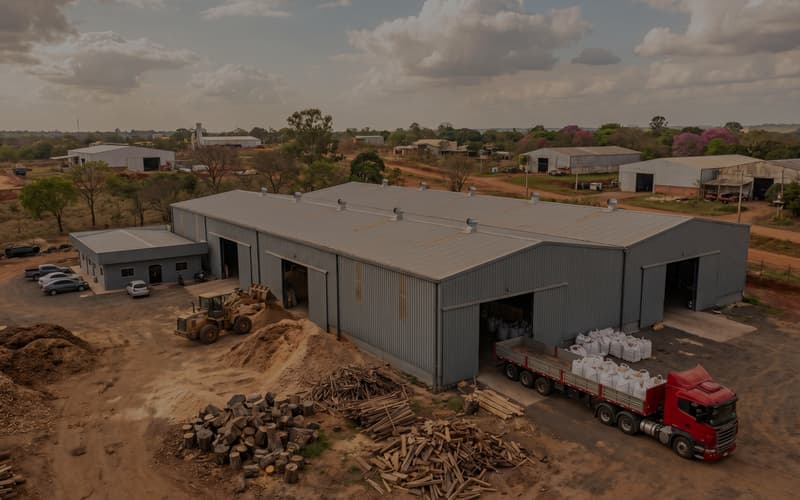
● Design
biomass Pellet Plant Design
Based on your unique situation and industrial process, we will tailor complete pellet plant you need, and inform you of every additional detail that could facilitate operation, minimize total cost.
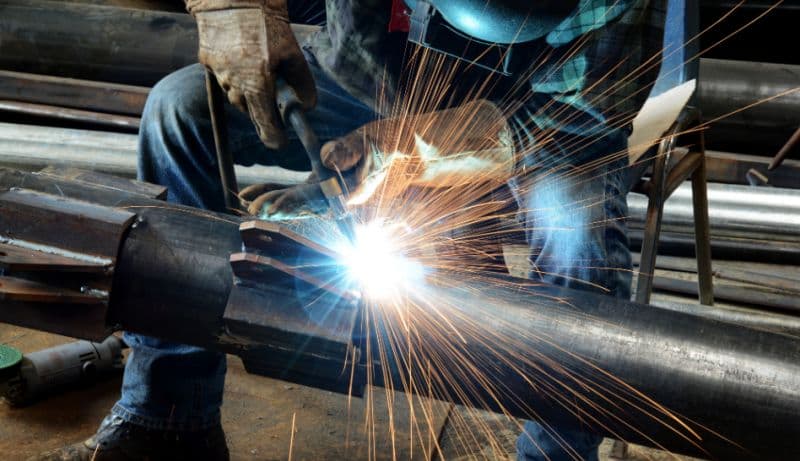
● Manufacturing
Equipment Manufacturing
The critical components of the of the complete pellet production line equipment are built in our own workshops in Asia. Additional equipment is manufactured by our worldwide network of reliable partners.

● Testing
Quality Inspection & Testing
Before leaving the factory, all equipment will be inspected by the quality inspection department. We can also provide customers with testing services from a single machine to a complete pellet plant system, and provide you with real actual data for “worry-free use.”

● Delivery
Equipment Delivery
In equipment boxing and packaging, we adopt professional packaging and modular solutions to ensure the safe and non-destructive delivery of pellet plant equipment.
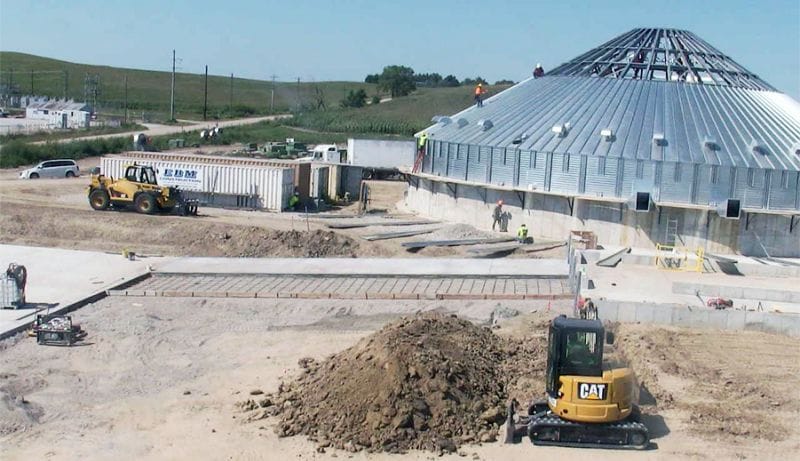
● Installation
Installation & Commissioning
Whether you choose your own subcontractor for the erection phase or you want to install everything together with us, a Richi supervisor will be around to make sure everything is mounted in a safe and thorough way.

● Training
Staff Training
We provide comprehensive training for the technicians of each project. We can also continue to provide support for the technicians during latter project operation.
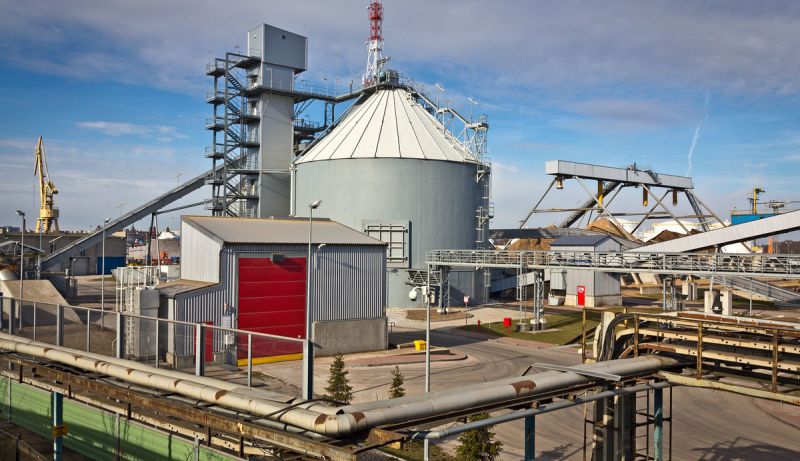
● After-sales
Project Follow-Up
When everything is up and running our Richiers will help you further whenever needed. We are ready to answer your call 24/7.We’ll also visit you regularly to learn about your needs.
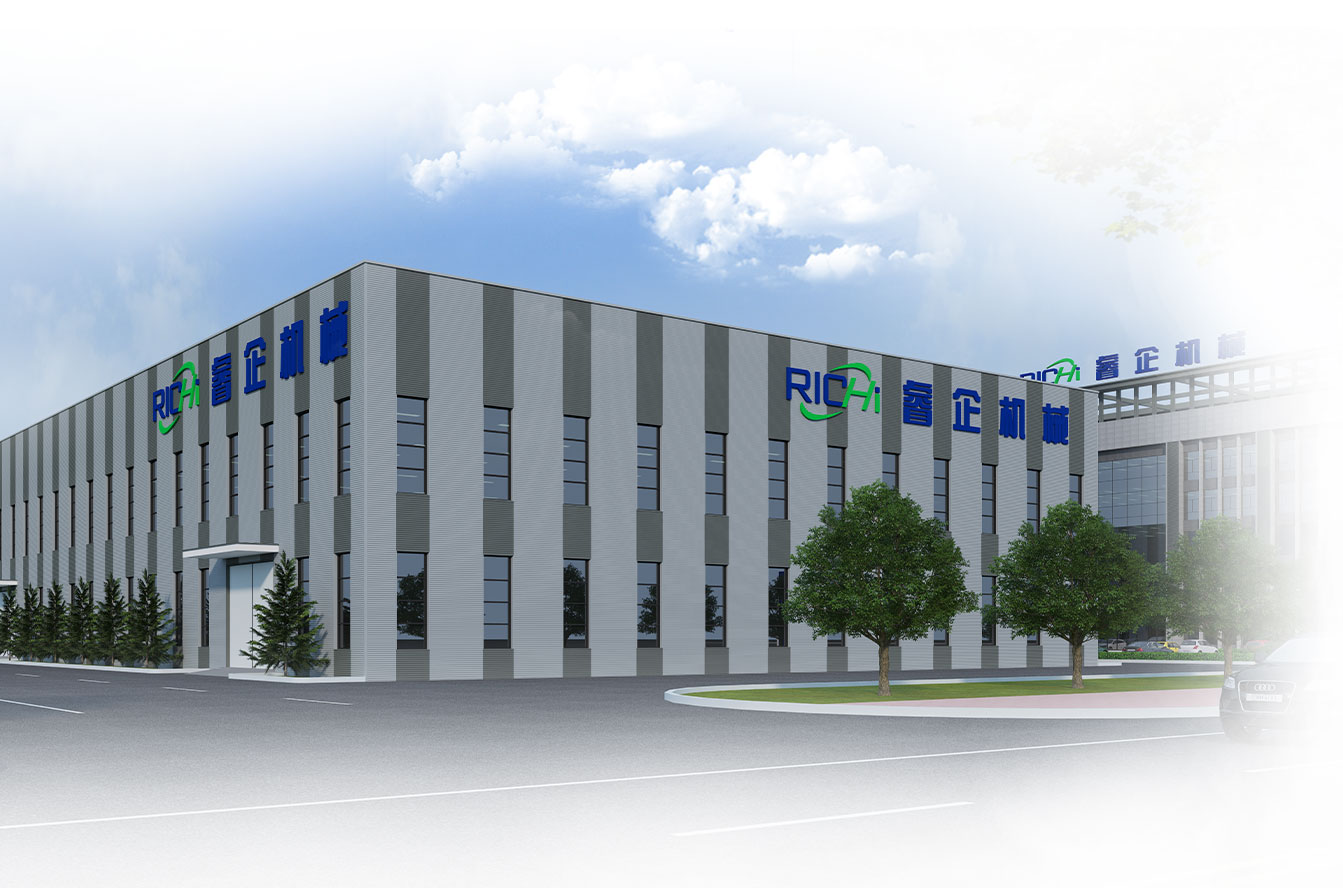
Who we are
RICHI Machinery is one of the world’s leading suppliers of technology and services for the animal feed, aqua feed and pet food industries, also the largest pellet production line manufacturer in China.
Since 1995, RICHI’s vision to build a first-class enterprise, to foster first-class employees, and to make first-class contributions to society has never wavered.
In the past three decades, we have expanded our business to a wide range of areas, including animal feed mill equipment, aqua feed equipment, pet feed equipment, biomass pellet equipment, fertilizer equipment, cat litter equipment, municipal solid waste pellets equipment, etc.

1995
RICHI Established

2000+
Serving More Than 2000 Customers

120+
RICHI Employees

140+
Exported To 140 Countries