 0086-138 3838 9622
Extruded Soybean Plant in South Africa
The extruded soybean plant in South Africa was developed by an established agricultural trading house that identified a critical gap in the local protein ingredient market.
RICHI MACHINERY
overview
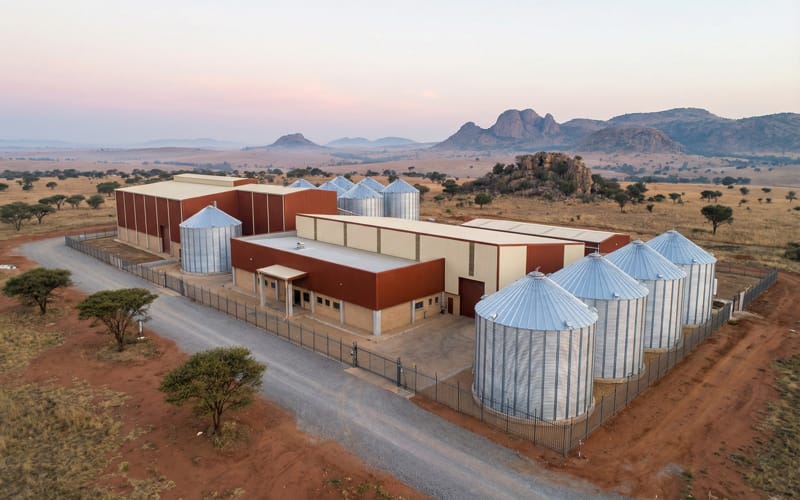
In mid-2025, RICHI Machinery completed the engineering design, equipment manufacturing, and technical supervision for a strategic extruded soybean plant in South Africa’s Mpumalanga province. This project represents a significant investment in the country’s growing oilseed processing sector, designed to produce 142,500 tons annually of high-quality full-fat soybean powder for the domestic animal feed industry.
The extruded soybean plant in South Africa was developed by an established agricultural trading house that identified a critical gap in the local protein ingredient market. While South Africa’s soybean production has grown substantially over the past decade—from approximately 300,000 tons in 2005 to record crops exceeding 2.8 million tons in recent years—the majority of local crushing capacity has historically focused on solvent extraction for the export market. This leaves domestic feed manufacturers dependent on imported soybean meal or long-distance transport from coastal crushing facilities.
Located strategically within an existing industrial complex that already houses grain storage and handling infrastructure, this extruded soybean plant in South Africa processes 144,000 tons of whole soybeans annually, supplemented with 5,755 tons of soybean hulls to optimize final product specifications. The facility operates 24 hours per day, 330 days per year, producing approximately 432 tons of finished full-fat soybean powder daily.
The total equipment investment for this extruded soybean plant in South Africa reached USD 3.85 million, representing a complete processing solution from raw material intake to automated packaging. The client’s total project investment, including civil works, installation, and integration with existing infrastructure, amounted to approximately USD 5.65 million. Financial modeling indicates a projected payback period of 4.2 years based on conservative margin assumptions, with internal rates of return exceeding 18% over a ten-year operating horizon.
20T/H
capacity
USD 3.85 million
investment
South Africa
location
Extrusion
project type
RICHI MACHINERY
Project Background
The Investor Profile
The client behind this extruded soybean plant in South Africa is a major agricultural processing company with established operations in the country’s grain handling and oilseed crushing sectors. The company already operates significant infrastructure, including soybean storage facilities, a 65 t/h coal-fired steam boiler providing utility steam, and existing product handling systems that could be leveraged for the new processing line.
With a workforce of 190 experienced employees operating on a four-shift rotation system, the company possesses the operational expertise to integrate new processing technology without the overhead of additional staffing. This existing human capital base represents a significant competitive advantage, allowing the new extruded soybean plant in South Africa to achieve rapid ramp-up to full production capacity.
The company’s strategic position within the South African agricultural landscape includes access to reliable raw material supply through established grower networks and forward contracting programs. South Africa’s soybean industry has experienced remarkable growth since 2010, with local soybean production surging by 76% between 2010 and 2020, and crushing volumes rising an astonishing 202% during the same period.
Why Extruded Full-Fat Soybean Processing?
The decision to invest in extrusion technology rather than traditional solvent extraction reflects careful analysis of the domestic feed ingredient market. South Africa’s poultry industry has emerged as the second most competitive poultry producer globally, outperforming European producers and surpassing the United States in technical efficiency. This competitiveness drives demand for high-quality, consistent feed ingredients that optimize animal performance.
Traditional solvent-extracted soybean meal, while high in protein, lacks the natural oil content that provides concentrated energy in animal rations. Feed manufacturers must therefore supplement with added fats, increasing both ingredient costs and handling complexity. Extrusion technology addresses this by preserving the soybean oil within the meal matrix, creating a product with:
- Protein Content: 34-36%, comparable to high-quality soybean meal
- Fat Content: 18-20%, eliminating the need for supplemental oil addition
- Urease Activity: <0.10 pH rise, indicating complete deactivation of anti-nutritional factors
- Protein Solubility: >75%, ensuring optimal digestibility
For South African livestock producers, the resulting full-fat soybean powder simplifies feed formulation while potentially improving animal performance through better nutrient utilization.
Market Context and Strategic Timing
The timing of this extruded soybean plant in South Africa investment proved exceptionally strategic. Several market factors supported the decision:
- Growing Domestic Soybean Production: South Africa’s soybean production has evolved from a minor crop to a major agricultural commodity, with plantings expanding into new areas including the irrigated lands of the Northern Cape.
- Import Substitution Opportunity: Despite increased local production, South Africa still imports significant quantities of soybean meal, particularly from Argentina and Brazil. Local processing captures value that would otherwise flow to international suppliers.
- Regional Demand Growth: Beyond South Africa, growing protein demand across sub-Saharan Africa creates export opportunities to neighboring countries.
- Infrastructure Integration: The client’s existing steam generation capacity (65 t/h boiler with surplus capacity) and grain storage infrastructure significantly reduced capital requirements for the new processing line.
Facility Scale and Throughput
This extruded soybean plant in South Africa operates at a scale that positions it as a significant regional supplier of full-fat soybean products. The 142,500-ton annual capacity represents approximately 5% of South Africa’s total soybean crush, making it a meaningful contributor to domestic protein supply.
Key Operational Parameters
| Parameter | Value |
|---|---|
| Operating Days per Year | 330 |
| Operating Hours per Day | 24 (Four Shifts) |
| Processing Rate (Design) | 18 Tons/Hour |
| Raw Soybean Intake | 144,000 Tons/Year |
| Soybean Hull Addition | 5,755 Tons/Year |
| Finished Product Output | 142,500 Tons/Year |
| Steam Consumption | 15,450 Tons/Year |
| Power Consumption | 9,138,600 kWh/Year |
| Staffing | 190 (Existing, No New Hires) |
RICHI MACHINERY
Plant Layout and Infrastructure Integration
Site Selection and Layout Philosophy
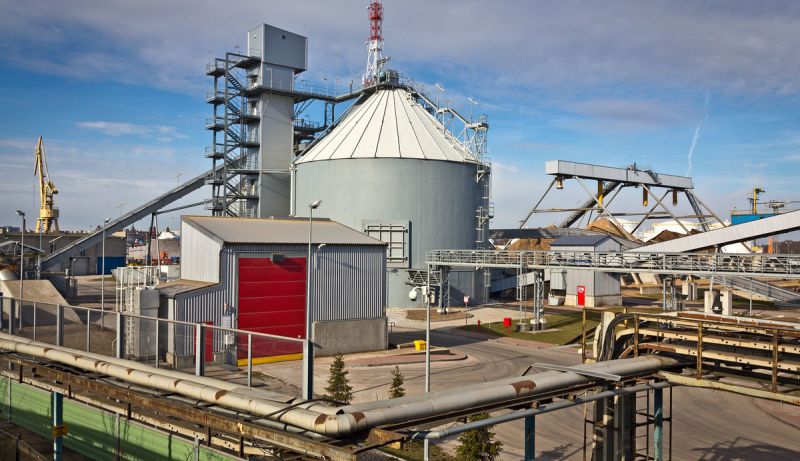
The extruded soybean plant in South Africa occupies a 276 m² footprint within the client’s existing industrial complex, representing efficient use of available space. The location was selected specifically for its proximity to existing infrastructure, including:
- North: Existing pretreatment building (Phase I)
- South: Existing pretreatment building (Phase II)
- East: Associated port facilities
- West: Open area adjacent to the existing solvent extraction building
This central location minimizes material transfer distances between the new extrusion line and existing storage, utilities, and finished product handling systems. The compact layout required careful equipment arrangement to achieve the 142,500-ton annual capacity within the available space—a challenge that RICHI’s engineering team addressed through vertical integration and efficient material flow design.
Storage Infrastructure Integration
One of the key advantages of this extruded soybean plant in South Africa is its integration with existing grain storage infrastructure. Rather than constructing new storage facilities, the project leverages:
- Soybean Storage: The client’s existing soybean bins provide ample capacity for raw material inventory. New conveying equipment connects these bins to the extrusion line.
- Hull Storage: Existing soybean hull storage infrastructure was utilized, with new transfer conveyors allowing precise metering of hulls into the process stream.
- Finished Product Surge: The project utilizes existing product surge bins located in the packaging building (third floor). These bins, originally designed for soybean meal storage, were adapted for full-fat soybean powder through process isolation features that prevent cross-contamination between products.
This infrastructure integration significantly reduced the capital requirements for the extruded soybean plant in South Africa, allowing investment to focus on core processing technology rather than auxiliary storage.
Utility Connections
The project connected to existing utility infrastructure, minimizing new construction requirements:
- Power Supply: Electrical connection to the existing 35 kV transformer (No. 3), which had adequate capacity for the additional 9.14 million kWh annual load.
- Steam Supply: Steam is supplied from the facility’s existing 65 t/h coal-fired circulating fluidized bed boiler, which generates approximately 514,800 tons of steam annually. After supplying Phase I (421,080 t/a) and Phase II (22,176 t/a) requirements, surplus capacity of 71,544 t/a remains—ample for the new extrusion line’s requirement of 15,450 t/a.
- Future Steam Integration: The facility has provisions to connect to the regional industrial steam network planned by the local utility, providing supply redundancy when available.
RICHI MACHINERY
Raw Materials and Consumption Analysis
Soybean Supply in the South African Context
For this extruded soybean plant in South Africa, raw material sourcing reflects the reality of the local agricultural economy. South African soybean production has transformed dramatically over the past decade, with farmers responding to favorable economics and improving agronomic practices.
Soybean Supply Characteristics in South Africa
| Characteristic | Details |
|---|---|
| Primary Growing Regions | Mpumalanga, Free State, KwaZulu-Natal |
| Harvest Season | April to June |
| Typical Protein Content | 34-36% (as-is basis) |
| Typical Oil Content | 18-20% |
| Moisture at Harvest | 12-14% |
| Local Crush Capacity | Approximately 1.5 Million Tons/Year |
The client sources soybeans through multiple channels:
- Direct Contracts: Long-term agreements with growers in Mpumalanga and Free State provinces ensure consistent supply throughout the operating year.
- Commercial Purchases: Spot market purchases during harvest supplement contracted volumes.
- Import Substitution: Some imported soybeans from South America may be processed when local prices become uncompetitive, though the facility is designed primarily for local raw materials.
Raw Material Consumption
Raw Materials and Energy Consumption
| Category | Item | Unit | Annual Consumption | Notes |
| Raw Materials | Whole Soybeans | t/a | 144,000 | Sourced primarily from Mpumalanga and Free State |
| Soybean Hulls | t/a | 5,755 | From existing oilseed crushing operations | |
| Utilities | Steam | t/a | 15,449.95 | From existing 65 t/h coal-fired boiler |
| Electricity | 10,000 kWh/a | 913.86 | From 35 kV transformer (existing) |
Soybean Hull Utilization
An interesting feature of this extruded soybean plant in South Africa is the incorporation of soybean hulls into the process. Soybean hulls, a co-product of traditional oilseed crushing, are typically sold as a low-value roughage ingredient. By blending hulls into the extrusion process, the facility achieves:
- Fiber Optimization: Adjusting crude fiber content to meet specific customer requirements
- Cost Efficiency: Capturing additional value from existing co-product streams
- Production Flexibility: Ability to adjust final product specifications based on market demand
The hull addition rate of approximately 4% of soybean input was determined through formulation optimization to achieve target product specifications while maintaining extrusion efficiency.
RICHI MACHINERY
Processing Equipment and Technology
Complete Equipment Inventory
The extruded soybean plant in South Africa incorporates 61 pieces of major processing equipment, representing RICHI’s latest technology for full-fat soybean extrusion. The equipment list reflects the comprehensive nature of the processing line, from raw material cleaning through finished product packaging.
Major Equipment Summary by Process Section
| Section | Equipment Type | Model | Quantity | Function |
| Raw Material Cleaning | Drag Conveyor | TMSS20 | 2 | Soybean transfer from storage |
| Drag Conveyor (Incline) | TMCF32 | 1 | Elevating transfer | |
| Surge Bin | 10t Capacity | 1 | Flow regulation | |
| Electric Gate | 300×300 | 1 | Flow control | |
| Bucket Elevator | TDTG40/23 | 1 | Vertical transport | |
| Rotary Screen | TQLM1400 | 1 | Coarse impurity removal | |
| Electric Gate | 250×250 | 1 | Flow control | |
| Weigh Scale | NCS-50 | 1 | Accurate metering | |
| Electric Gate | 250×250 | 1 | Flow control | |
| Permanent Magnet | TCXT25 | 1 | Ferrous metal removal | |
| Vertical Aspirator | YFXL20 | 1 | Light particle separation | |
| Cyclone | Φ1600 | 1 | Dust collection | |
| Rotary Airlock | GFDWZB-16 | 1 | Dust discharge | |
| Fan | DHF-Z 560C | 1 | Air movement | |
| Grinding Section | Bucket Elevator | TDTG40/23 | 1 | Material elevation |
| Drag Conveyor | TMSS20 | 1 | Horizontal transfer | |
| Electric Gate | 300×300 | 1 | Flow control | |
| Surge Hopper | 5 m³ | 1 | Grinding feed | |
| Electric Gate | 300×300 | 1 | Flow control | |
| Hammer Mill Feeder | — | 2 | Controlled feeding | |
| Hammer Mill | SFSP132*102 | 2 | Particle size reduction | |
| Pulse Bag Filter | TBLMF64 | 2 | Dust collection | |
| Fan | PHF-Z 1120C | 1 | Air movement | |
| Screw Conveyor | TLSY32 | 2 | Material transfer | |
| Permanent Magnet | TCXT40 | 2 | Final metal removal | |
| Extrusion & Cooling | Extruder | EXT225S | 2 | Thermal-mechanical processing |
| Fan | PHF-TH 280A | 1 | Cooling air | |
| Extrusion Cooler/Dryer | TLNF42×42 | 1 | Product cooling | |
| Double Cyclone | Φ1800 Twin | 1 | Dust recovery | |
| Rotary Airlock | GFDWZB-30 | 1 | Material discharge | |
| Fan | DHF 1250C | 1 | Air movement | |
| Rotary Valve | YLW35X180 | 1 | Flow control | |
| Coarse Grinding | Coarse Grinder | MPSG40-210 | 1 | Final particle sizing |
| Drag Conveyor (Incline) | TMCF32 | 1 | Material elevation | |
| Steam Distributor | — | 1 | Utility distribution | |
| Air Receiver | — | 1 | Compressed air storage | |
| Pneumatic Conveying | Roots Blower | SRD-100 | 1 | Air supply |
| Positive Pressure Airlock | BFCP5.5 | 1 | Material feeding | |
| Cyclone | Φ400 Downward | 1 | Product recovery | |
| Rotary Airlock | GFDWZB-10 | 1 | Material discharge | |
| Pulse Bag Filter | TBLMy10 | 1 | Fine dust recovery | |
| Fan | F9-19 450A | 1 | Air movement | |
| Screw Conveyor | TLSY16 | 2 | Material transfer | |
| Surge Hopper | 1.5 m³ | 1 | Flow regulation | |
| Packaging | Finished Product Bin | — | 3 | Product storage (existing) |
| Automated Packaging Line | 15 kW | 2 | Bag filling and sealing | |
| Utilities & Auxiliary | Fire & Environmental Protection | — | 1 | Safety systems |
| Piping Systems | — | 1 | Utility distribution | |
| Other Auxiliary Facilities | — | 1 | Support systems | |
| Laboratory Equipment | — | 1 | Quality control | |
| Total Major Equipment | 61 |
RICHI MACHINERY
Extrusion Technology Selection
The heart of this extruded soybean plant in South Africa is the EXT225S extruder, a machine specifically designed for full-fat soybean processing. This equipment selection reflects RICHI’s understanding of the unique requirements of soybean extrusion:
- Mechanical Shear: The extruder configuration generates sufficient mechanical shear to rupture oil cells while maintaining controlled temperature profiles
- Thermal Control: Precise temperature management prevents protein damage while ensuring complete anti-nutritional factor deactivation
- Throughput Capacity: Dual extruders provide 18 tons/hour combined capacity with built-in redundancy
- Energy Efficiency: Direct drive systems and optimized screw configurations minimize specific energy consumption
Dust Collection System
Given the South African regulatory environment’s increasing focus on occupational health and environmental compliance, the extruded soybean plant in South Africa incorporates comprehensive dust collection:
| Emission Point | Control Equipment | Discharge Point |
|---|---|---|
| Soybean Conveying, Weighing, Screening | Cyclone + Bag Filter | 30m Stack (DA001) |
| Hull Conveying | Cyclone + Bag Filter | 30m Stack (DA001) |
| Grinding | Bag Filter | 30m Stack (DA001) |
| Cooling | Twin Cyclones | 30m Stack (DA001) |
| Pneumatic Conveying + Packaging | Cyclone + Bag Filter | 21m Stack (DA002) |
All collected dust is returned to the process stream, achieving zero particulate waste discharge while recovering valuable protein material.
RICHI MACHINERY
Production Process and Quality Control
Process Flow Description
The extruded soybean plant in South Africa employs a comprehensive processing sequence designed to transform raw soybeans into consistent, high-quality full-fat soybean powder. Each process stage is carefully controlled to achieve target product specifications while maximizing throughput and efficiency.
Process Flow Summary
Raw Soybean Intake → Cleaning → Weighing → Magnetic Separation → Aspiration → Grinding → Extrusion → Cooling → Coarse Grinding → Pneumatic Conveying → Packaging
Detailed Process Steps
Step 1: Soybean Conveying
Soybeans are transferred from existing storage bins to the processing line using enclosed drag conveyors and bucket elevators. The conveying system operates under negative pressure, with dust collection at all transfer points to contain particulate emissions. The enclosed design prevents cross-contamination and maintains workplace air quality standards.
Step 2: Weighing
Accurate material accounting begins with the NCS-50 weighing system, which precisely measures soybean input to the process. This data integrates with the facility’s inventory management system, providing real-time visibility into raw material consumption and production efficiency.
Step 3: Magnetic Separation
TCXT25 permanent magnets remove ferrous contaminants that could damage downstream processing equipment. This protection is essential for maintaining equipment reliability and preventing foreign material in finished products.
Step 4: Screening and Aspiration
The TQLM1400 rotary screen removes coarse impurities including:
- Oversize Materials: Stems, pods, stones, and other field debris
- Undersize Materials: Fine particles, broken beans, and weed seeds
Following screening, the YFXL20 vertical aspirator separates lightweight materials (hulls, chaff, dust) using controlled air currents. This two-stage cleaning ensures that only clean, whole soybeans proceed to grinding.
Step 5: Hull Addition
Soybean hulls from existing storage are metered into the process stream at a controlled rate (approximately 4% of soybean input). The hulls blend with cleaned soybeans before grinding, ensuring uniform distribution throughout the final product.
Step 6: Grinding
Cleaned soybeans and hulls enter the SFSP132*102 hammer mills through precision feeders controlling flow rate. The 132 kW hammer mills operate with screen configurations optimized for extrusion feed:
- Screen Perforation: 6-8 mm depending on soybean characteristics
- Rotor Speed: 1,480 RPM
- Grinding Mode: Under-sieve discharge with pneumatic assistance
The grinding system operates under negative pressure, drawing air through the mill to increase capacity while controlling temperature. TCXT40 permanent magnets at mill discharges provide final ferrous protection before extrusion.
Step 7: Extrusion
Ground material feeds continuously into the EXT225S extruders, where mechanical shear and friction rapidly increase temperature to 130-140°C. During extrusion:
- Oil Cell Rupture: Mechanical shear releases soybean oil, which immediately absorbs into the porous meal structure
- Anti-Nutritional Factor Deactivation: Trypsin inhibitors and urease enzyme are denatured (>90% reduction)
- Starch Gelatinization: Improved digestibility through thermal modification
- Protein Quality Preservation: Careful temperature control prevents heat damage
Step 8: Cooling
Extruded material exits at 130-140°C and must cool rapidly to prevent quality degradation. The TLNF42×42 counterflow cooler draws ambient air upward through the product bed, reducing temperature to within 8°C of ambient while removing 4-6% moisture. Cooling air passes through twin Φ1800 cyclones to recover fines, which return to the process stream.
Step 9: Coarse Grinding
Cooled extrudate passes through the MPSG40-210 coarse grinder, producing final particle size of 1-2 mm. The roller mill configuration:
- Roll Arrangement: Differential speed rolls with corrugated surfaces
- Gap Adjustment: Precise control for particle size optimization
- Magnetic Protection: Integrated magnets protect rolls from ferrous material
The resulting product has uniform particle distribution with minimal fines, ideal for direct inclusion in mash feeds or further processing into pellets.
Step 10: Pneumatic Conveying to Packaging
Finished product transfers to packaging through a positive pressure pneumatic conveying system:
- Roots Blower: SRD-100 provides conveying air
- Material Feeding: BFCP5.5 positive pressure airlock meters product into air stream
- Product Recovery: Φ400 cyclone separates product from conveying air
- Fine Recovery: TBLMy10 bag filter captures any remaining dust
Step 11: Packaging
Product enters existing finished product bins (third floor, packaging building) before discharge to two automated packaging lines. Each line produces 50 kg polypropylene bags at rates up to 12 tons per hour. Bags are palletized and transferred to warehouse for loadout.
Quality Control Program
The extruded soybean plant in South Africa operates a comprehensive quality control program aligned with international feed safety standards:
Incoming Material Testing
- Soybeans: Moisture, protein, oil, foreign material, damaged kernels
- Hulls: Moisture, fiber content, contamination check
In-Process Testing (2-hour frequency)
- Ground Material: Particle size distribution
- Extruder Discharge: Temperature, moisture, visual inspection
- Cooler Discharge: Moisture, temperature
Finished Product Specifications
| Parameter | Specification | Test Method | Frequency |
|---|---|---|---|
| Moisture | ≤12.0% | NIRS / Oven Drying | Every Batch |
| Crude Protein | ≥34.0% | NIRS / Kjeldahl | Every 4 Hours |
| Crude Fat | ≥18.0% | NIRS / Solvent Extraction | Every 4 Hours |
| Urease Activity | ≤0.10 pH Rise | pH Differential | Daily |
| Protein Solubility | ≥75.0% | KOH Solubility | Daily |
| Particle Size (1-2mm) | ≥80% | Screen Analysis | Every Shift |
RICHI MACHINERY
Implementation and Commissioning
Project Timeline
The extruded soybean plant in South Africa project proceeded according to a carefully managed schedule:
| Phase | Duration | Key Activities |
|---|---|---|
| Feasibility & Planning | 3 Months | Market analysis, technical evaluation, financial modeling |
| Contract Negotiation | 1 Month | Equipment selection, pricing, terms finalization |
| Engineering Design | 3 Months | Layout optimization, structural design, electrical planning |
| Equipment Manufacturing | 5 Months | Fabrication at RICHI Qingdao facility, quality testing |
| Shipping | 6 Weeks | Ocean freight to Durban, customs clearance |
| Civil Works | 3 Months | Site preparation, foundations, utility connections |
| Installation | 3 Months | Equipment setting, mechanical installation, electrical wiring |
| Commissioning | 3 Weeks | Testing, tuning, operator training |
| Commercial Production | Ongoing | Ramp-up to full capacity |
Logistics and Shipping
All equipment for this extruded soybean plant in South Africa was manufactured at RICHI’s Qingdao facility and shipped via containerized freight:
- Port of Loading: Qingdao Port, China
- Destination Port: Durban Port, South Africa
- Shipping Duration: Approximately 25-30 days
- Customs Clearance: Durban (3-5 days typical)
- Inland Transport: Durban to Mpumalanga site (2 days by truck)
The equipment was containerized for efficient handling, with major components disassembled to fit standard 40-foot high-cube containers where necessary. Detailed packing lists and shipping documentation ensured smooth customs clearance.
Installation and Commissioning Support
RICHI provided on-site technical supervision during the critical installation and commissioning phases:
- Installation Supervision: 8 weeks on-site during mechanical installation
- Electrical & Control Commissioning: 3 weeks on-site during system startup
- Operator Training: Comprehensive training program for shift supervisors and operators
- Process Optimization: 2 weeks post-commissioning support to optimize settings for South African soybeans
The client’s existing workforce, already experienced in grain processing operations, adapted quickly to the new technology, achieving design capacity within 4 weeks of commissioning.
RICHI MACHINERY
Investment Outlook for Extruded Soybean Processing in South Africa
Market Fundamentals
The South African animal feed industry represents one of Africa’s most sophisticated agricultural sectors, with annual feed production exceeding 12 million tons. Poultry production alone consumes approximately 60% of all compound feed, creating substantial demand for high-quality protein ingredients.
South African Soybean Market Indicators
| Indicator | Value | Trend |
|---|---|---|
| Annual Soybean Production | 2.2-2.8 Million Tons | Increasing |
| Local Crush Capacity | ~1.5 Million Tons | Expanding |
| Soybean Meal Imports | 300,000-400,000 Tons | Variable |
| Feed Industry Growth | 3-4% Annually | Stable |
Despite growing local production, South Africa continues to import significant quantities of soybean meal, primarily from Argentina and Brazil. This import dependence creates opportunity for local processors who can offer:
- Fresher Product: Reduced transportation time from weeks to days
- Consistent Quality: Direct control over processing parameters
- Supply Security: Reduced exposure to international logistics disruptions
- Sustainability Benefits: Lower carbon footprint from reduced transport
Competitive Advantages of Extrusion Technology
For investors considering entry into soybean processing, extrusion technology offers compelling advantages over traditional solvent extraction:
Capital Efficiency: Solvent extraction plants require substantial investment in explosion-proof construction, solvent recovery systems, and specialized safety equipment. Extrusion facilities achieve similar protein quality with significantly lower capital intensity, making smaller-scale projects economically viable.
Operational Simplicity: Without hexane or other chemical solvents, extrusion eliminates explosion risks, specialized permitting requirements, and complex solvent management systems. This allows operation with conventional industrial workforce skills.
Product Differentiation: Full-fat soybean powder offers nutritional advantages for monogastric diets compared to solvent-extracted meal plus added fat. The natural emulsification of oil within the protein matrix improves digestibility and handling characteristics.
Environmental Profile: Chemical-free processing appeals to environmentally conscious consumers and potentially commands sustainability premiums in premium markets.
Regional Processing Opportunities
The success of this extruded soybean plant in South Africa suggests opportunities for similar facilities in other production regions:
- Free State Province: South Africa’s largest soybean producing region with growing livestock sectors
- KwaZulu-Natal: Access to both local production and import capabilities
- North West Province: Expanding poultry production creates local demand
- Limpopo Province: Emerging soybean production area with livestock integration potential
Each region presents unique characteristics, but the fundamental economics of converting local soybeans into regional feed ingredients remain attractive.
RICHI’s Commitment to South African Agriculture
RICHI Machinery brings decades of extrusion technology experience to the South African market. Our equipment is specifically engineered for the demands of full-fat soybean processing, with:
- Heavy-duty construction suitable for 24/7 industrial operation
- Energy-efficient designs reducing operating costs
- Precise control systems ensuring consistent product quality
- Comprehensive after-sales support including spare parts inventory
- Process expertise developed through hundreds of installations worldwide
For investors considering entry into soybean processing, RICHI offers:
- Complete feasibility analysis and project planning
- Customized equipment solutions matched to specific requirements
- Installation supervision and commissioning support
- Operator training and ongoing technical assistance
- Process optimization services for maximum profitability
The South African livestock sector continues to modernize and expand, with domestic protein demand growing faster than traditional processing capacity can supply. Modern extrusion technology offers a proven pathway to capture value from local soybean production while serving the expanding needs of South African farmers and food producers.
RICHI MACHINERY
start your extruded soybean plant in South Africa
This extruded soybean plant in South Africa represents a model for efficient, sustainable oilseed processing in emerging agricultural economies. By leveraging existing infrastructure, utilizing local raw materials, and employing advanced extrusion technology, the facility achieves compelling economics while serving the growing needs of the domestic feed industry.
Key success factors include:
- Strategic Site Selection: Integration with existing storage and utilities reduced capital requirements
- Appropriate Technology Selection: Extrusion technology matches local market requirements
- Experienced Operations Team: Utilizing existing workforce accelerated commissioning
- Quality Focus: Comprehensive quality control ensures consistent product specifications
- Environmental Responsibility: Zero-process-waste design minimizes environmental impact
For feed manufacturers, poultry integrators, and agricultural investors seeking to participate in South Africa’s growing protein market, extrusion technology offers an accessible entry point with attractive returns and manageable operational complexity.
For more information about RICHI extrusion systems or to discuss your specific project requirements, contact our international sales team. We welcome inquiries from investors, feed manufacturers, and agricultural cooperatives seeking to evaluate the potential of full-fat soybean processing in their markets.
● RICHI MACHINERY
RICHI Service

● Consulting
Customer Consultation
We want to have a deep understanding of your industrial process, to know your exact needs of feed, wood, biomass, fertilizer or other pellet processing.

● Design
biomass Pellet Plant Design
Based on your unique situation and industrial process, we will tailor complete extruded soybean plant you need, and inform you of every additional detail that could facilitate operation, minimize total cost.
● Manufacturing
Equipment Manufacturing
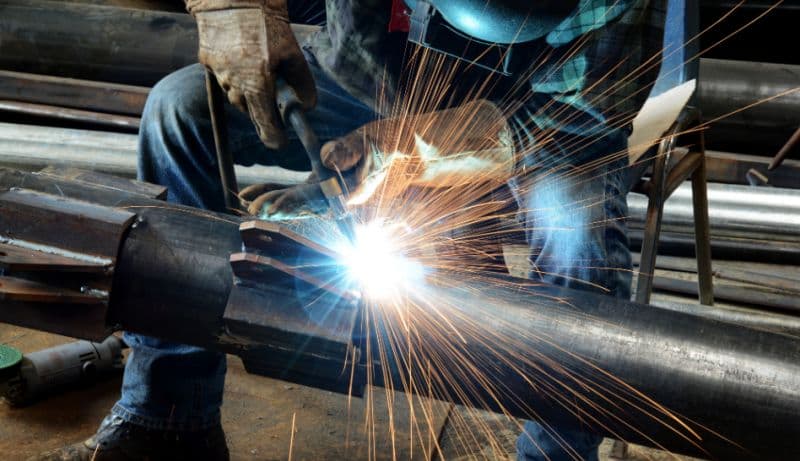
The critical components of the of the complete extruded soybean plant equipment are built in our own workshops in Asia. Additional equipment is manufactured by our worldwide network of reliable partners.

● Testing
Quality Inspection & Testing
Before leaving the factory, all equipment will be inspected by the quality inspection department. We can also provide customers with testing services from a single machine to a complete extruded soybean plant, and provide you with real actual data for “worry-free use.”

● Delivery
Equipment Delivery
In equipment boxing and packaging, we adopt professional packaging and modular solutions to ensure the safe and non-destructive delivery of pellet plant equipment.
● Installation
Installation & Commissioning
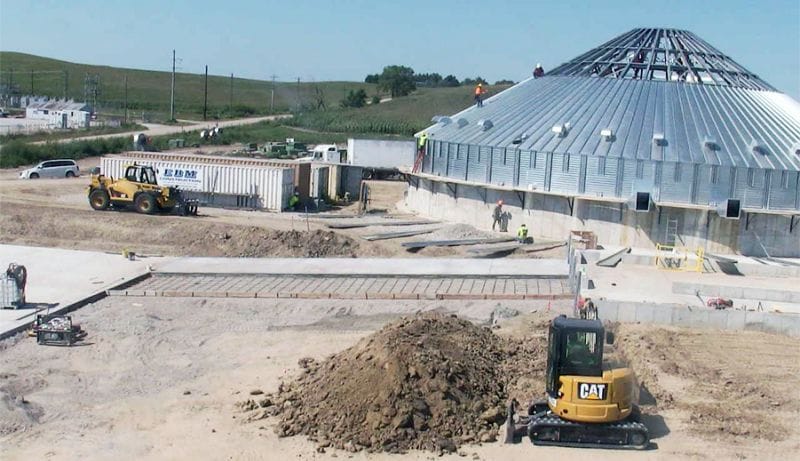
Whether you choose your own subcontractor for the erection phase or you want to install everything together with us, a Richi supervisor will be around to make sure everything is mounted in a safe and thorough way.

● Training
Staff Training
We provide comprehensive training for the technicians of each project. We can also continue to provide support for the technicians during latter project operation.
● After-sales
Project Follow-Up
When everything is up and running our Richiers will help you further whenever needed. We are ready to answer your call 24/7.We’ll also visit you regularly to learn about your needs.
Who we are
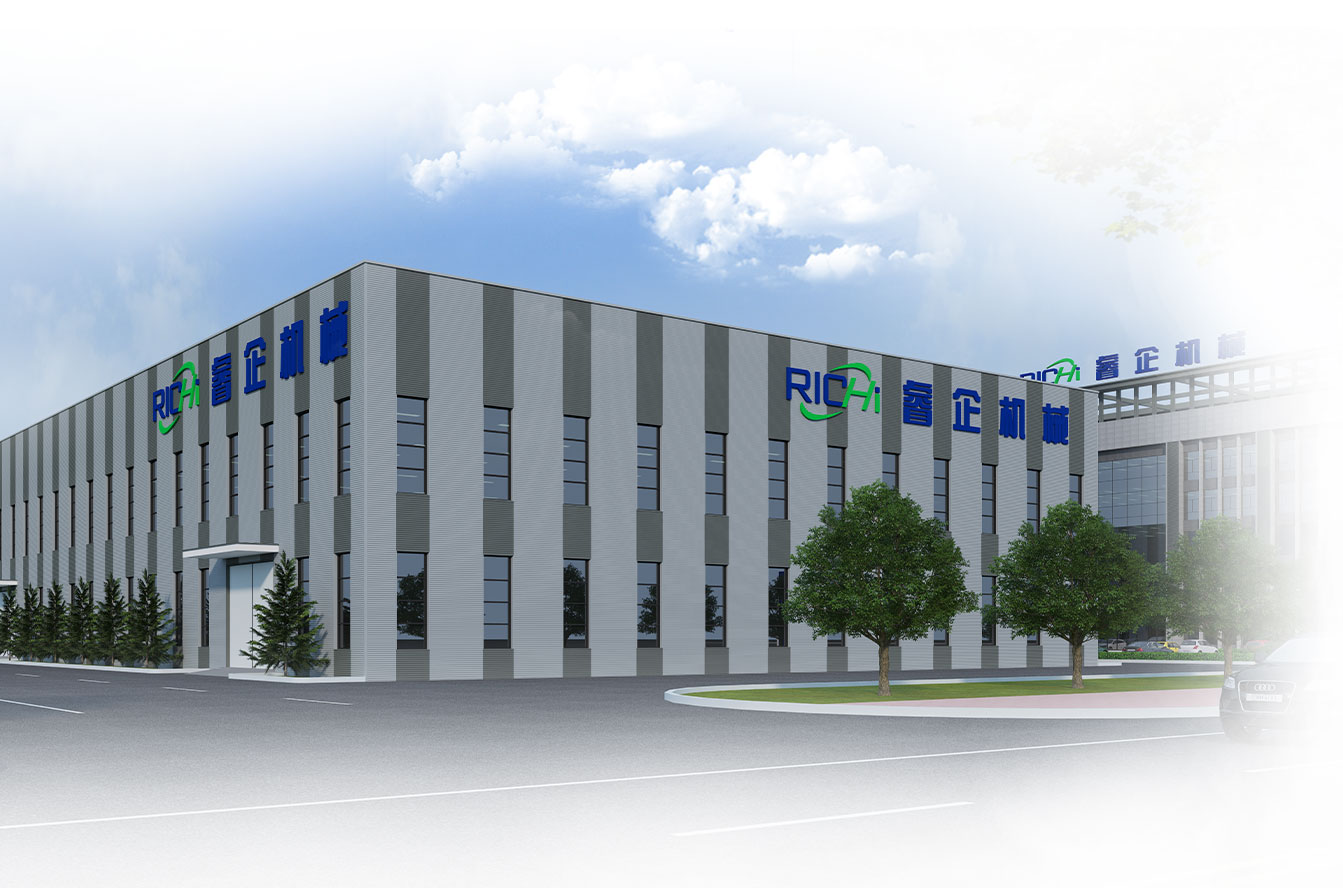
RICHI Machinery is one of the world’s leading suppliers of technology and services for the animal feed, aqua feed and pet food industries, also the largest pellet production line manufacturer in China.
Since 1995, RICHI’s vision to build a first-class enterprise, to foster first-class employees, and to make first-class contributions to society has never wavered.
In the past three decades, we have expanded our business to a wide range of areas, including animal feed mill equipment, aqua feed equipment, pet feed equipment, biomass pellet equipment, fertilizer equipment, cat litter equipment, municipal solid waste pellets equipment, etc.

1995
RICHI Established

2000+
Serving More Than 2000 Customers

120+
RICHI Employees

140+
Exported To 140 Countries