0086-138 3838 9622
4–4.5 T/H dog food factory in Spain
This dog food factory in Spain was introduced in the project record as RICHI’s first Spanish pet-food project. The client was a food company developing dry extruded food on an existing landholding. The selected engineering case focuses on dog kibble, with the extrusion stream, dried core and retained coating counted separately.
RICHI MACHINERY
A new dog-kibble route across a multi-building site
The buyer’s practical task was to establish a repeatable product specification and a reliable production route. The project record does not include a confirmed retail contract, subsidy agreement or market-share result. National turnover figures and forecasts are therefore not used to prove this factory’s sales or return on investment.
The planned pet food production line occupied a listed 17,589 m² site with 20,321.72 m² of gross building floor area. Multiple building levels explain why floor area exceeds land area. The investment figure shown below is the source total-project provision; the equipment subtotal is not added again as a second project investment.
The dog food factory in Spain uses a dry-ingredient route with measured conditioning, one pet food extruder machine, one pet food dryer, post-drying fat and palatant application, active cooling and retail packing. Its 20,000-tonne annual target is final accepted food, not the wet mass passing through the extruder.
The source headcount was 42 people, with a canteen and no dormitory. Two eight-hour equipment shifts on 300 days provide 4,800 scheduled hours. At 4 T/H even uninterrupted production yields only 19,200 tonnes, so the engineering reference uses 4.5 T/H accepted output and approximately 4,444 net hours, leaving about 356 hours for interruptions.
4–4.5 T/H
capacity
US$1.1 million
total project investment
Spain
location
Dry extruded dog food
project type
RICHI MACHINERY
Accepted output within two daily shifts
The dog food factory in Spain is sized around one product stream and a demanding annual operating calendar. The selected mass account uses 8% final moisture, powder ingredients at 10% water and explicitly defined post-dry coatings. These conditions require product and recipe trials rather than a simple conversion of the original equipment list into guaranteed output.
| Product and operating basis | Reference quantity | Boundary |
|---|---|---|
| Accepted dry dog food | 20,000 tonnes/year | After retained coating |
| Selected final running output | 4.5 T/H | Not wet extruder feed |
| Scheduled equipment hours | 4,800 | 300 days × 16 hours |
| Net productive requirement | About 4,444 hours | 20,000 ÷ 4.5 |
| Interruption allowance | About 356 hours | About 93% utilisation required |
| Final water | 8% wet basis | Not a shelf-life result |
| Kibble size | 4–12 mm design enquiry range | Each shape and recipe needs a capacity trial |
RICHI MACHINERY
Ingredient identity and the post-coating water account
The original annual ingredient schedule totals 20,000 tonnes, including 1,000 tonnes labelled mould inhibitor and 400 tonnes antioxidant. Those entries would equal 5% and 2% of final food respectively and cannot be used as generic additive doses. The reference below uses an approved powder blend as a mass category instead of treating those figures as a validated recipe.
| Material category | Source annual entry | Engineering reference |
|---|---|---|
| Corn wheat and protein ingredients | 14,000 tonnes combined | Within approved powder blend |
| Dicalcium-phosphate entry | 600 tonnes | Inclusion requires nutritional validation |
| Mould-inhibitor entry | 1,000 tonnes | Not accepted as a generic dose |
| Antioxidant entry | 400 tonnes | Not accepted as a generic dose |
| Total powder blend | 16,000 tonnes including those entries | 18,000 tonnes at 10% water for sizing |
| Retained chicken fat | 2,000 tonnes | 2,000 tonnes; nominally water-free |
| Palatant paste | 2,000 tonnes | 400 tonnes at assumed 50% solids |
| Total food ingredients | 20,000 tonnes | 20,400 tonnes in reference account |
The 18,000-tonne powder category includes the actual formula’s approved ingredients and accurately dosed additions; it is not a replacement nutritional recipe. The source meat-and-bone-meal and 600-tonne phosphate entries do not establish an acceptable calcium, phosphorus or ash specification. Actual doses must follow the approved formulation and product strengths.
The reference changes the unverified palatant provision to a 400-tonne sizing case rather than certifying a 2,000-tonne paste dose. At 50% water, this adds 200 tonnes of retained water after drying. A different paste moisture, fat moisture, retention loss or rejected product requires an updated mass and dryer account.
| Annual external food-process account | Tonnes | Reference condition |
|---|---|---|
| Powder ingredients | 18,000 | 16,200 tonnes dry matter |
| Retained fat | 2,000 | Nominally water-free |
| Retained palatant | 400 | 200 tonnes water and 200 tonnes dry matter |
| Direct process steam | 600 | Enters conditioning water |
| Liquid conditioning water | 3,377.73 | External process addition |
| Total external input | 24,377.73 | Before rounding |
| Accepted coated dog food | 20,000 | 18,400 tonnes dry matter; 8% water |
| Assumed die-flash water | 400 | Calculation allowance |
| Main-dryer water removal | 3,977.73 | External evaporation |
| Total external output | 24,377.73 | Rounding closes |
The account assumes no stock change, no net dry-matter loss and full retention of the stated coating quantities. Dried net core is 17,600 tonnes containing 16,200 tonnes of dry matter and 1,400 tonnes water, about 7.95% core moisture. Adding fat and paste then gives 20,000 tonnes with 1,600 tonnes water, or 8%.
Eligible uncoated-core return is assumed at 2% of net core: 352 tonnes, containing 324 tonnes dry matter and 28 tonnes water. At 26% gross wet-feed moisture, annual extruder feed is about 22,329.73 tonnes, or 5.02 T/H over the net calendar. Return is internal, not extra procurement or extra accepted output.
RICHI MACHINERY
One extrusion route with matched heat and finishing
One twin-screw main machine covers the corrected wet-feed duty. A higher-power SPHS150×2 configuration with a 200 kW main drive and reference 5–6 T/H range is selected for approximately 5.02 T/H wet feed. This is an engineering selection rather than a checked delivery nameplate. Exact screw, die and power variants require the agreed equipment data sheet and material trial.
Drying heat and conditioning steam are separate services
| Annual utility reference | Quantity | Calculation boundary |
|---|---|---|
| Main-dryer water removal | About 3,977.73 tonnes | Core drying only |
| Dryer fuel input | About 15,910.92 GJ | 4 MJ/kg evaporation assumption |
| Direct conditioning steam | 600 tonnes | 30 kg per tonne final food |
| Steam generation with 10% allowance | 660 tonnes | Direct process plus service provision |
| Steam-generator raw make-up | About 715.58 m³ | 3% blowdown; 95% treatment recovery |
| Liquid process water | About 3,377.73 m³ | Separate from steam make-up |
| Personnel/canteen water | 945 m³ | 42 people × 75 litres × 300 days |
| Reference fresh water total | About 5,038.31 m³ | Cleaning and other demands additional |
The reference dryer uses indirect gas-heated air, while a separate small gas steam generator serves conditioning. At 1,100 kg/hour evaporation and 4 MJ/kg fuel input, the dryer needs about 1.22 MW, within the 1.3 MW allowance. Process steam generation at the selected running rate is about 0.149 T/H; confirm stable operation and start-up demand for the 0.3 T/H planning generator.
At 2.5 GJ useful steam duty per tonne and 90% overall generator efficiency, steam fuel adds about 1,833 GJ/year. Combined dryer and steam fuel input is about 17,744 GJ/year, or approximately 496,000 Nm³ of gas at an assumed 35.8 MJ/Nm³. The normal-volume basis is 0°C and 101.325 kPa; actual gas quality and billing conditions need confirmation.
The source 900 m³ water allowance cannot cover the reference process addition alone. The 945 m³ personnel/canteen amount is a non-residential planning assumption, not measured use. Sanitary water, cleaning drainage, boiler blowdown and treatment rejects need identified handling; no automatic reuse or zero-discharge result is claimed.
Electrical load and energy budget
| Connected-load allowance | kW | Planning function |
|---|---|---|
| Twin-screw main drive | 200 | One selected configuration |
| Fine grinding | 160 | One main position |
| Main mixer | 22 | One working-batch machine |
| Conditioning drives | 22.5 | Matched train |
| Extruder thermal allowance | 40 | Barrel-heating provision |
| Dryer fans and drives | 75 | Gas heat separate |
| Coating package | 37 | One retained-liquid route |
| Active cooling | 22 | Product finishing |
| Grading | 7.5 | Defined screen duties |
| Conveying | 45 | Including protected building transfer |
| Dry extraction | 30 | Matched circuits |
| Packing | 11 | One completed-bag route |
| Compressed air | 15 | Service allowance |
| Steam-generator auxiliaries | 5.5 | Separate direct-steam service |
| Controls and lighting | 15 | Production allowance |
| Total connected load | 707.5 | Engineering schedule |
At an assumed 520–620 kW average productive demand over about 4,444 hours, process electricity is approximately 2.31–2.76 million kWh/year before non-production and separately added building services. The source 3.6 million kWh is treated as a budget allowance, not an operating meter record.
A preliminary 1,000 kVA connection provides about 850 kW at 0.85 power factor. Existing connection capacity was not supplied. Large-motor starting, simultaneous loads, transfer equipment and separately added building services require an electrical study before adopting the supply allowance.
| Selected engineering equipment | Quantity | Duty or drive basis |
|---|---|---|
| Fine-grinding position | 1 | ≥5 T/H agreed powder; 160 kW allowance |
| Main dry mixer | 1 | 1,000 kg working batch; 22 kW |
| Twin screw extruder | 1 | SPHS150×2 200 kW configuration; ≥5.5 T/H wet duty |
| Conditioning train | 1 | Measured water and steam; 22.5 kW allowance |
| mesh belt dryer | 1 | ≥6 T/H wet feed; ≥1,100 kg/hour evaporation |
| Indirect gas hot-air system | 1 | 1.3 MW fuel-input allowance |
| Coating package | 1 | ≥6 T/H complete-cycle duty; 37 kW allowance |
| Active cooler and grading | 1 matched route | ≥6 T/H product handling |
| Conditioning steam generator | 1 | 0.3 T/H steam planning rating |
| Retail packing | 1 line | ≥600 completed 10 kg bags/hour |
Prepare a measured dry blend
One fine-grinding position prepares the agreed ingredients, with compliant powders bypassing it. Use a preliminary 0.4–0.6 mm particle trial target and check fibre and mineral distribution. One 1,000 kg working batch every five minutes gives 12 T/H including filling and discharge, above the approximate 4.13 T/H powder-plus-core-return load. Two serial grinding sections and multiple main mixers are not retained without a demonstrated need.
Extrude wet feed then dry the core
Condition with metered liquid water and process steam. The selected single extruder must demonstrate approximately 5.02 T/H wet feed while producing the agreed final shape and density. A smaller 3–4 T/H wet-feed configuration cannot meet that reference. Motor load, barrel conditions and residence behaviour require trials; no universal microbial-kill result is inferred from extrusion.
After the assumed die flash, the dryer receives about 4.93 T/H and removes approximately 895 kg/hour water. The 1,100 kg/hour selection also leaves capacity if the assumed flash is lower. Drying air, heat-transfer temperature and product temperature are separate measurements; establish actual settings from water removal and food-quality tests.
Apply retained liquids and cool before transfer
Grade uncoated cores before the controlled fat-and-palatant application. A 1,000 kg coating batch every ten minutes gives 6 T/H including transfer, covering the 4.5 T/H finished stream. Verify retained fat, paste distribution and uptake rather than assuming a scale dose all remains on the kibble. Coated rejects have their own disposition and are not automatically returned through extrusion.
Cool and grade through gentle transfers, then convey protected cooled product toward Factory 4 for packing. A preliminary cooling release within 5°C above ambient needs confirmation at actual air conditions. Final moisture and water activity include the paste water; no uncounted post-coating drying stage is assumed.
RICHI MACHINERY
Floor area footprint and protected product transfer
Factory 1 contains the main processing route, while Factory 4 is assigned to packaging and finished stock. Factories 2 and 3 are reserved in the source arrangement. Their areas are not described as installed production capacity or automatically available raw-material storage. The south entrance needs a receiving and dispatch plan against the actual building layout.
The building schedule distinguishes total floor area from footprint. Factory 1’s figures correspond to four equal floor plates and Factory 4’s to two; that arithmetic is not proof that platforms, bin reactions or upper-level equipment loads are structurally acceptable.
| Building or land item | Gross floor area m² | Footprint m² |
|---|---|---|
| Factory 1: main process | 2,932.08 | 733.02 |
| Factory 2: reserved | 2,052.64 | 1,026.32 |
| Factory 3: reserved | 6,167.20 | 3,083.60 |
| Factory 4: packing and stock | 6,776.80 | 3,388.40 |
| Communication room | 29 | 29 |
| Corridor | 75 | 75 |
| Office building | 2,289 | 572.25 |
| Total listed buildings | 20,321.72 | 8,907.59 |
| Site area | 17,589 | Land boundary; not another building |
| Landscape area | 1,760 | Separate site allocation |
The listed areas sum correctly. Floor area ratio is about 1.16 times, not 1.16%; building coverage is about 50.64% and landscaping about 10%. After building footprint and landscape, the arithmetic site balance is 6,921.41 m², before dividing it among roads, loading, setbacks and services. This is not all available storage or truck waiting space.
Factory 1’s multi-level arrangement needs verified machine reactions, bin point loads, lifting access and duct penetrations. Factory 4 needs suitable finished-food zoning and a protected connection. No detailed building height, platform load rating or transfer distance was provided, so neither structure nor route is presented as already validated.
Average finished dispatch is approximately 67 tonnes per working day, or about three loaded trips at an illustrative 25-tonne payload. Ingredient receipts average 68 tonnes per day before separate fuel and service deliveries. The southern access and reserved buildings must be coordinated against the actual traffic and product-release plan.
RICHI MACHINERY
Operating and product decisions before market commitments
Commercial planning for this dog food factory in Spain starts with the actual dog-food specification, approved ingredient system, buyer format and available hours. The following checks concern measurable factory duties rather than national sales forecasts or an assumed share of global exports.
Annual hours and the limiting recipe
The annual target requires 4,444 productive hours at 4.5 T/H. At 90% utilisation of the original calendar, output is only 19,440 tonnes. To reach 20,000 tonnes at that utilisation requires approximately 4,938 scheduled hours, above the source 4,800 hours.
Verify the limiting recipe and kibble size through the full route, including drying, coating and packing. A wet extruder trial alone does not establish the final accepted rate, and nominal capacity does not create additional annual working time.
Nutrition and claims need product evidence
The ingredient schedule does not demonstrate a complete and balanced dog diet or justify the mineral inclusion. Nutrient composition, the intended life stage and actual additive product strengths require a competent formulation and supporting analyses. No natural, additive-free or functional-health claim is assigned simply from the plant design.
Bag formats and completed packing rate
A 10 kg planning bag needs 450 completed bags/hour at 4.5 T/H and two million bags for the annual programme. Select one route for at least 600 bags/hour through weighing, filling and sealing, and verify pallet handling. Different formats or extended product holds can change the finishing and storage duty.
Registration and investment boundaries
Animal-feed establishment and animal-by-product requirements in Spain are separate from machine purchase. Confirm the actual regional registration or approval route and supplier eligibility through the relevant authority. A generic EU-compliance statement does not prove that this factory, its materials or its products have been approved.
No confirmed subsidy or tax incentive was supplied for this project, so none is included in the investment case. The source total-project figure is a planning provision, not an audited final construction account or evidence that every later engineering change is already funded.
Supplier specifications and retained liquid
Secure ingredients by measured specification and usable dry matter. The source animal meal, phosphate and protein-powder descriptions require identity, nutrient and contaminant checks; a broad raw-material name is not a purchasing specification. The Spain dog-kibble palatant water allowance is especially important because the post-dry liquid becomes part of final food moisture.
The reference palatant dose and solids content are equipment-sizing assumptions, not a feeding recommendation or a claimed optimum flavour system. A wetter paste or larger dose can require lower core moisture or a separately designed finishing-drying step; it cannot be substituted without revising the account.
Product release needs measured moisture and water activity, relevant physical properties and the required food-safety evidence. Eight percent final moisture alone does not validate shelf life. Coating-liquid quality and clean post-heat handling are part of that release system.
The Spain multi-building kibble transfer plan must keep cooled product protected between processing and Factory 4. Use controlled transfers, traceable holding and achievable loading cycles. Reserved buildings and a large gross floor area do not establish hygienic routes, structural capacity or dispatch efficiency by themselves.
For a comparable dog food factory in Spain, provide the approved powder formula, ingredient moisture, retained coating dose, kibble size, bag format and operating calendar. These inputs allow the wet extrusion, core drying, post-coating water and factory-transfer duties to be matched before the final equipment and utility scope is agreed.
● RICHI MACHINERY
RICHI Service

● Consulting
Customer Consultation
We want to have a deep understanding of your industrial process, to know your exact needs of feed, wood, biomass, fertilizer or other pellet processing.

● Design
dog food factory Design
Based on your unique situation and industrial process, we will tailor complete pellet plant you need, and inform you of every additional detail that could facilitate operation, minimize total cost.
● Manufacturing
Equipment Manufacturing
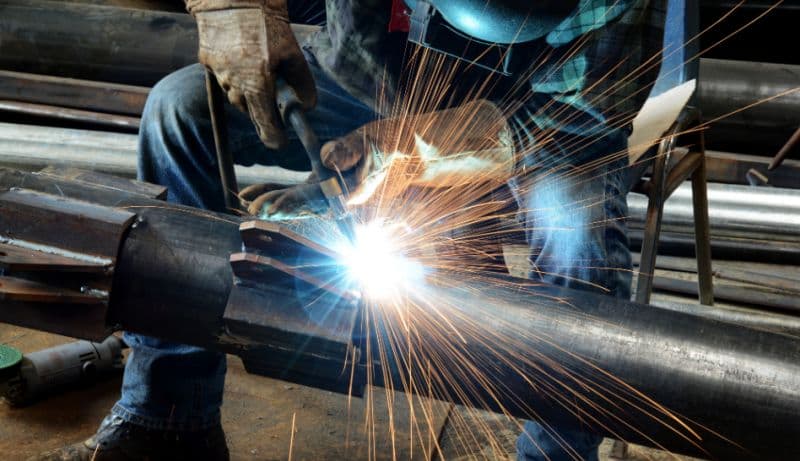
The critical components of the of the complete dog food manufacturing equipment are built in our own workshops in Asia. Additional equipment is manufactured by our worldwide network of reliable partners.
● Testing
Quality Inspection & Testing
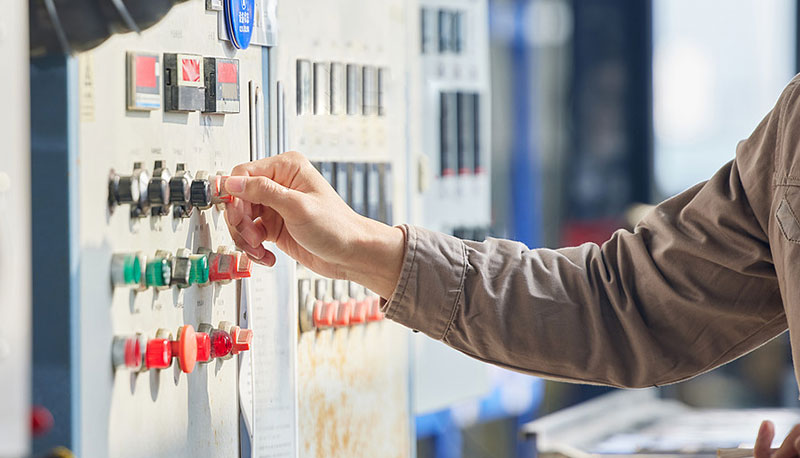
Before leaving the factory, all equipment will be inspected by the quality inspection department. We can also provide customers with testing services from a single machine to a complete pellet plant system, and provide you with real actual data for “worry-free use.”

● Delivery
Equipment Delivery
In equipment boxing and packaging, we adopt professional packaging and modular solutions to ensure the safe and non-destructive delivery of dog feed plant equipment.
● Installation
Installation & Commissioning
Whether you choose your own subcontractor for the erection phase or you want to install everything together with us, a Richi supervisor will be around to make sure everything is mounted in a safe and thorough way.

● Training
Staff Training
We provide comprehensive training for the technicians of each dog food factory in Spain project. We can also continue to provide support for the technicians during latter project operation.
● After-sales
Project Follow-Up
When everything is up and running our Richiers will help you further whenever needed. We are ready to answer your call 24/7.We’ll also visit you regularly to learn about your needs.
Who we are
RICHI Machinery is one of the world’s leading suppliers of technology and services for the animal feed, aqua feed and pet food industries, also the largest pellet production line manufacturer in China.
Since 1995, RICHI’s vision to build a first-class enterprise, to foster first-class employees, and to make first-class contributions to society has never wavered.
In the past three decades, we have expanded our business to a wide range of areas, including animal feed mill equipment, aqua feed equipment, pet feed equipment, biomass pellet equipment, fertilizer equipment, cat litter equipment, municipal solid waste pellets equipment, etc.

1995
RICHI Established

2000+
Serving More Than 2000 Customers

120+
RICHI Employees

140+
Exported To 140 Countries