0086-138 3838 9622
Turkey Feed Mill


A turkey feed mill can serve an independent turkey farm, an integrated turkey producer, a contract-growing network, a regional poultry feed company or an existing feed factory adding turkey products to its portfolio. Smaller projects may focus on feed for the customer’s own poults, growers and finishing birds, while commercial plants usually need several formulas, different finished sizes and enough storage and batching flexibility to support a broader production schedule.
RICHI designs each turkey feed production line around the required feed stages, daily output, ingredient system, workshop conditions, automation level and future expansion plan. Turkey feed production often changes more noticeably from early poult feed to grower and finisher products, so grinding, batching, pelleting, crumbling, screening and finished-feed routing need to work as one coordinated system.
For commercial customers, the same factory can also be configured to produce chicken or other poultry feeds where this improves equipment utilization and expands the product range.
Discuss My Turkey Feed Mill Plan
Turkey Feed Products Our Equipment Can Process
RICHI designs turkey feed mill equipment for different finished-feed forms, not just pellets. Mash, pellets, crumbles, concentrates and premixes require different downstream modules, so the production line can be configured around the products the customer actually plans to manufacture.

Turkey Pellet Feed
Turkey pellets pass through conditioning, pelleting, cooling and screening to form dense, uniform finished feed. RICHI selects the pellet mill, conditioner and ring-die specification around the required diameter and capacity rather than using one fixed pellet setup.
About 3–5mm

Turkey Mash Feed
Mash feed is discharged after grinding, batching and mixing, without conditioning or pelleting. A turkey mash feed plant can run independently or use a bypass in a pellet line, giving customers a lower-processing route for non-pelleted products.
About 0.6–1.0mm

Turkey Crumble Feed
Crumble feed is made by breaking cooled pellets into smaller, more uniform particles and removing excessive fines through screening. Adding a crumbler allows one turkey feed pellet production line to make both full-size pellets and smaller crumble products.
About 1–3mm

Turkey Concentrate Feed
Turkey concentrate can leave the system as mash or continue through the pelletizing section, depending on the customer’s finished-product plan. The line therefore needs flexible routing rather than a fixed pellet-only process.
About 0.6–5mm
Turkey Premix Feed
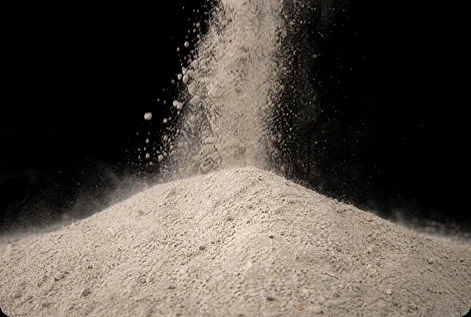
Premix production focuses on fine-powder handling, accurate micro-dosing and high-uniformity mixing rather than pelleting. RICHI can configure the premix section separately or integrate it with a larger turkey feed manufacturing plant where process segregation is required.
About 0.2–0.5mm
A complete turkey feed production line can therefore be configured for one finished form or several products through shared upstream systems and separate downstream routes, helping feed mills expand their product range without duplicating the whole plant.
Configure My Turkey Feed Mill
Turkey Feed Mill Videos
Turkey feed plants need to accommodate a clear change from smaller starter products to larger grower and finisher feed, but plant economics also change sharply as capacity increases. These three videos show the difference between a turkey-focused line and larger facilities that use the same production infrastructure for several animal-feed markets.
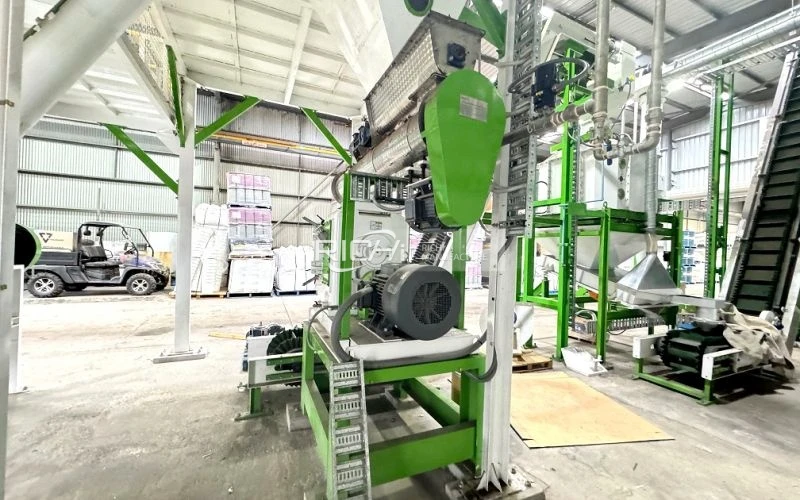

【3–4 T/H Turkey Feed Mill in Poland】The Polish customer is an integrated turkey producer that wanted greater control over feed supply for its own growing operation. The 3–4 T/H capacity is large enough to cover several turkey feed stages while remaining focused on one main species. The line can move from smaller starter crumble to grower and finisher pellets, giving the farm more control over production scheduling without building a commercial multi-species feed factory.

【1–2 T/H Turkey Feed Mill in Germany】The German customer needed a small but complete turkey-feed system rather than a high-output commercial mill. Germany still has a substantial professional turkey sector, so this capacity fits a specialist farm or regional producer that wants tighter control over starter, grower and finisher feed instead of relying entirely on purchased products. The line is arranged around accurate batching, uniform mixing and the ability to move from smaller crumble feed to larger pellets as product specifications change.
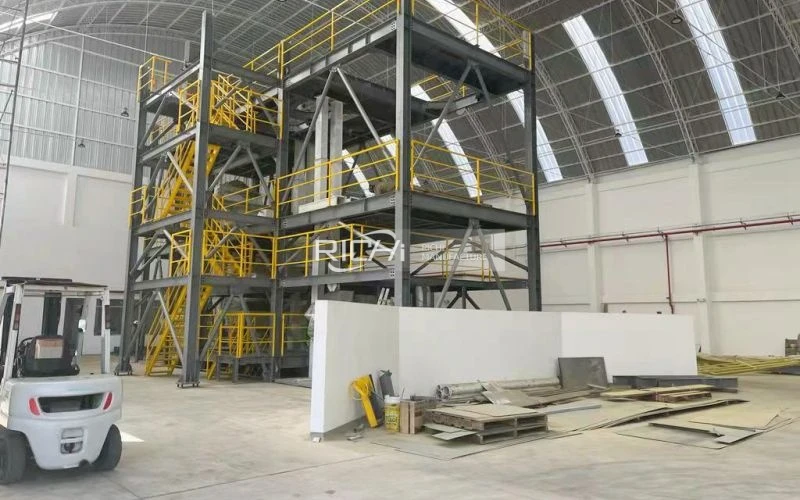
【5 T/H Turkey Feed Mill in USA】The U.S. project serves a regional poultry-feed business rather than one turkey farm. At 5 T/H, the customer uses the plant for turkey, broiler and layer feed, with different formulas and finished-feed sizes scheduled through the same main processing system. Turkey starter and grower products require different handling from layer or broiler feed, so the value of the project lies in flexible production planning rather than simply increasing pellet-mill output.
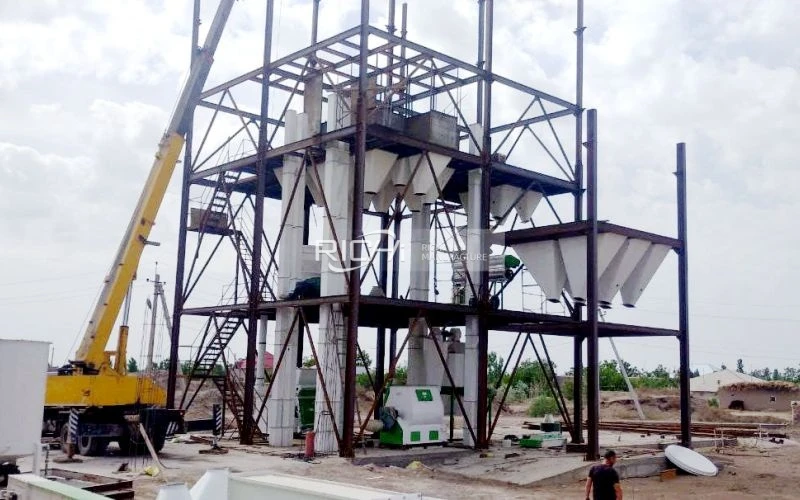
【10 T/H Turkey Feed Mill in Brazil】This 10 T/H Brazilian project is a true multi-species commercial feed plant. The customer produces turkey and broiler feed alongside pig feed, taking advantage of Brazil’s large poultry and swine industries to keep the line highly utilized throughout the year. Separate formulas, batch control and product changeover allow the same factory to serve different animal sectors while avoiding the weak economics of dedicating a 10 T/H plant to turkey feed alone.
Custom Turkey Feed Mill solution
A turkey feed mill should be designed around the complete production program rather than one machine or one raw material. RICHI develops each turkey feed mill design according to poult, starter, grower, finisher and breeder products; mash, crumble or pellet form; hourly capacity; ingredient structure; formula complexity; workshop dimensions; building height; automation level; packing method; existing equipment; investment budget and future expansion plan. These factors determine the final turkey feed manufacturing system and which process modules need to be included.
A typical turkey feed processing system can include raw-material receiving and storage, cleaning, grinding, batching, micro-dosing, mixing, liquid addition, conditioning, pelleting, cooling, crumbling, screening, finished-feed storage and packing. Starter products may continue through the crumbler and screen, while grower and finisher feeds can leave as intact pellets; mash formulas can bypass pelleting entirely. Automatic batching, silos, bulk loading, dust collection and PLC control can be added according to project scale.
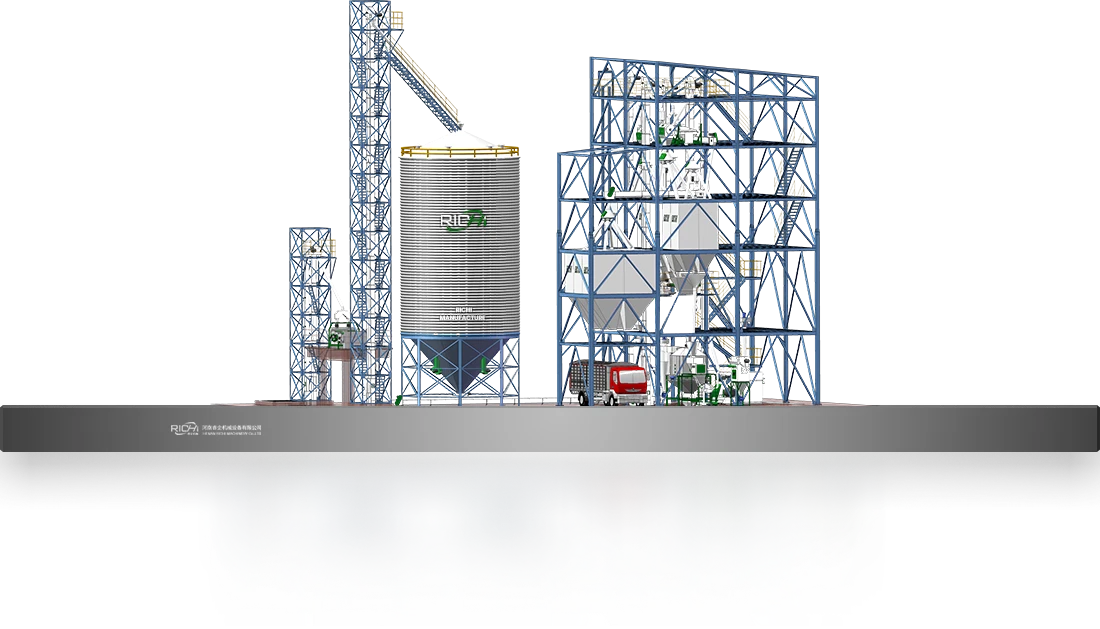
RICHI also adapts the process to the actual raw-material condition. Whole grains require cleaning and grinding, already-powdered ingredients can bypass unnecessary crushing, and higher-fiber or difficult-to-pellet materials may need different grinding screens, conditioning or die selection. A dryer is not a standard section in a normal turkey feed production line; it is only added when a special wet raw material genuinely requires pre-drying before entering the dry-feed process.
For a new turnkey turkey feed mill, we can develop the process flow, turkey feed plant layout, equipment arrangement, steel structure and supporting civil requirements from the beginning. For an existing feed factory, usable grinders, mixers, silos or packing equipment can be retained while new batching, pelleting, crumbling or automation modules are integrated around them.
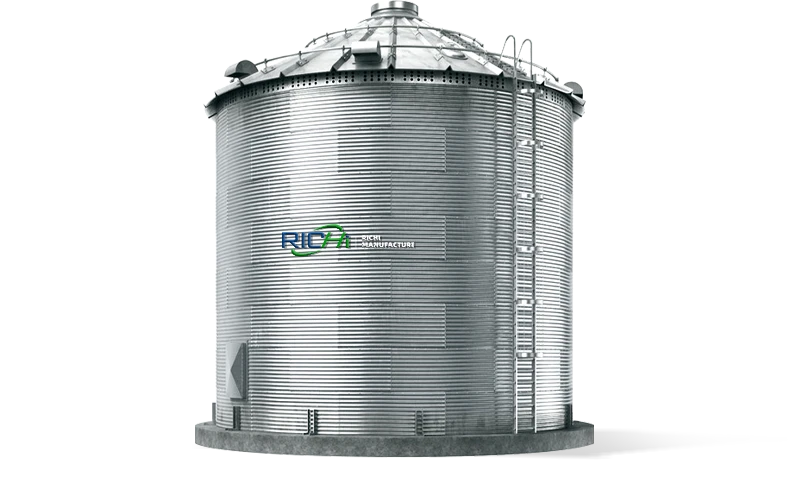
Silo system
01
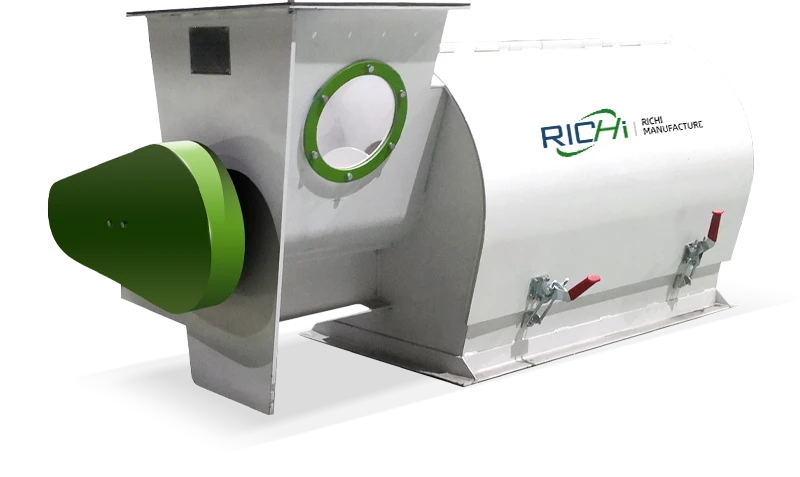
Cleaning system
02
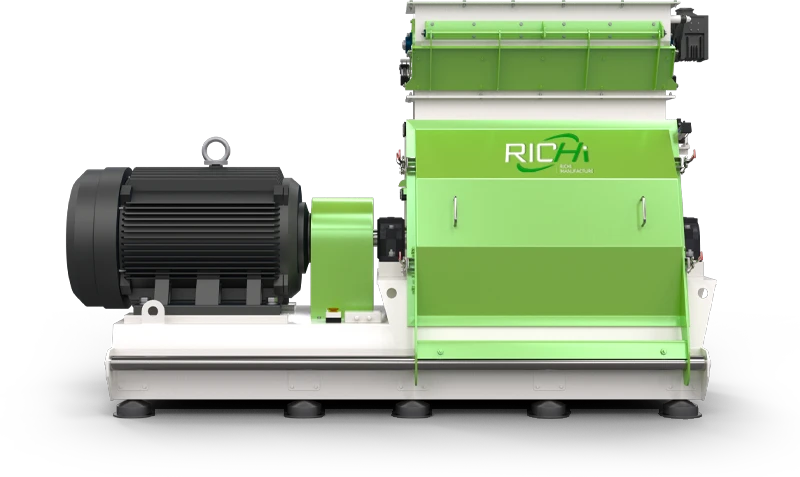
Grinding system
03
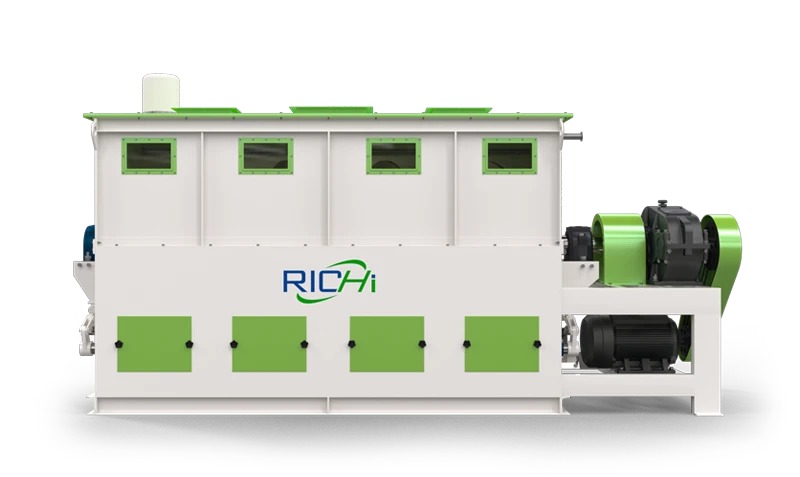
Mixing system
04
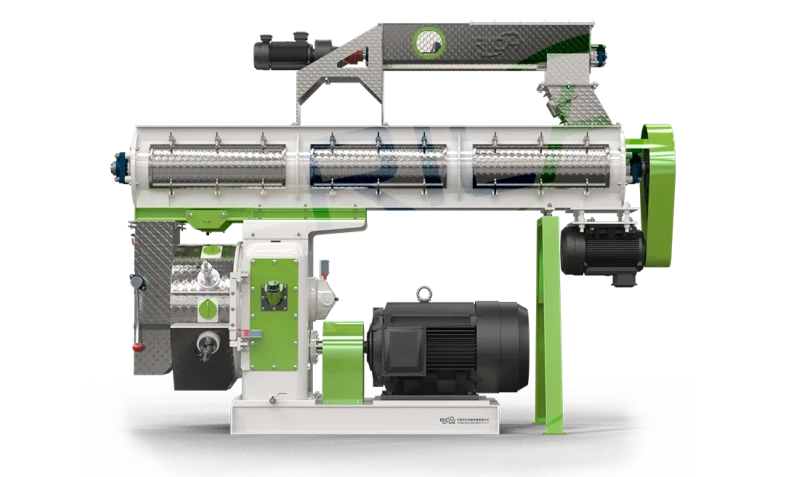
Pelleting system
05
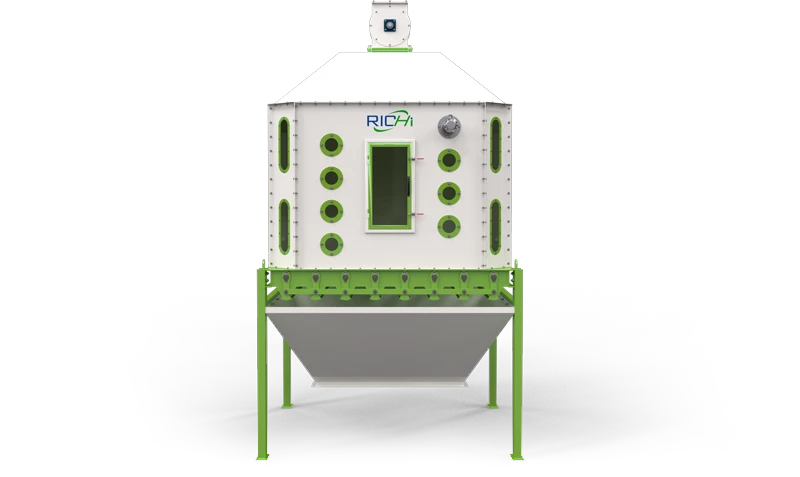
Cooling system
06
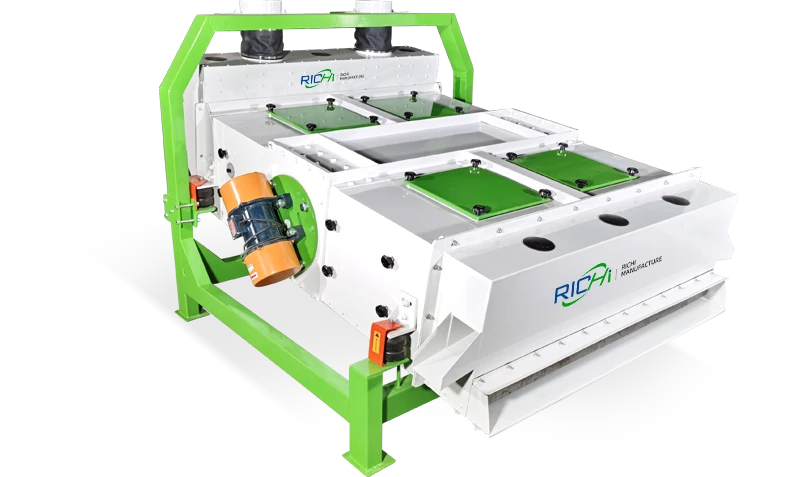
Screening system
07
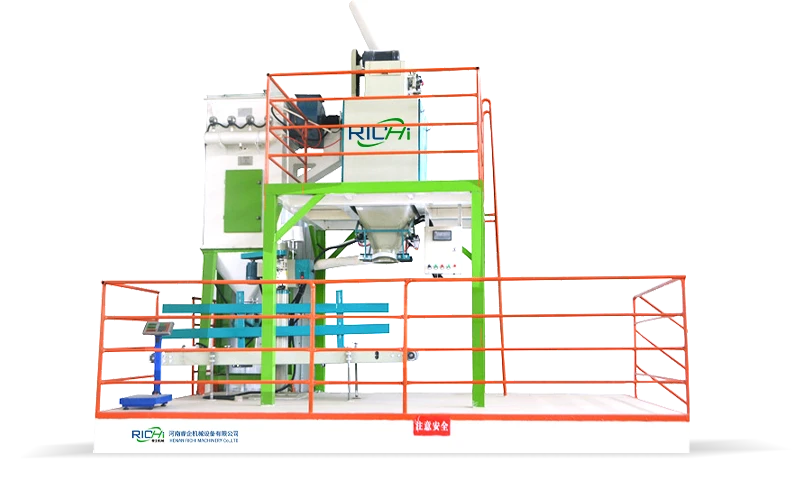
Packaging system
08
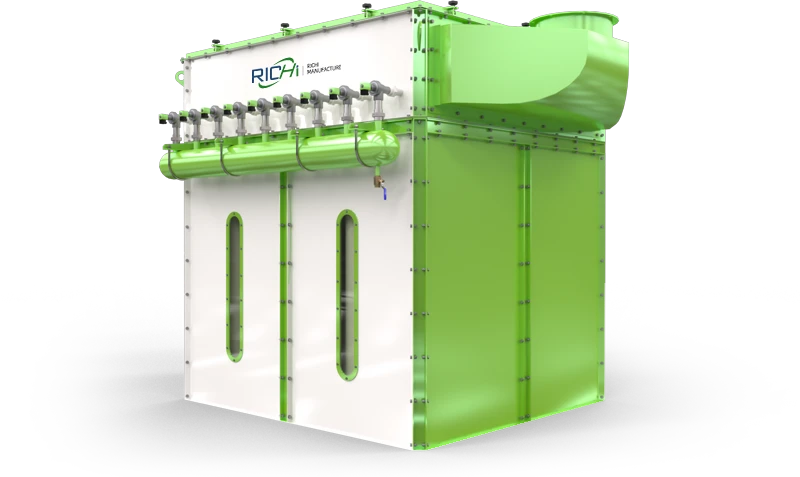
Dust removal system
09
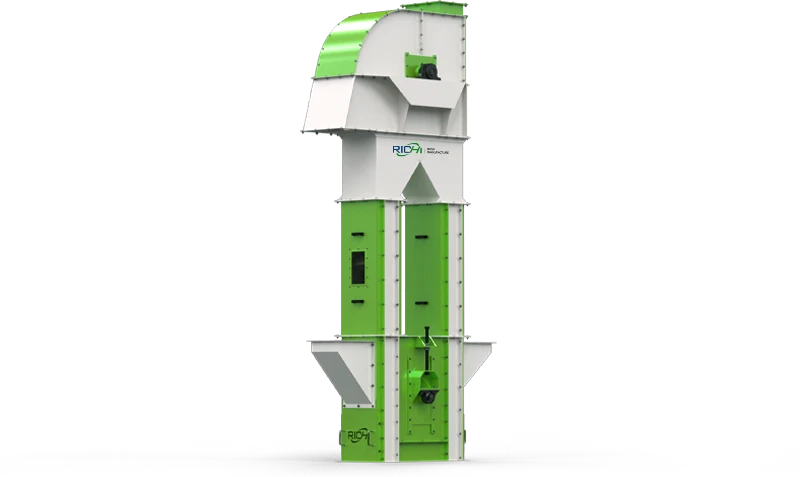
Conveying system
10
8 Turkey Feed Mill Designs for Different Production Conditions
Turkey feed projects vary greatly between integrated turkey producers, regional feed suppliers and existing poultry mills adding a turkey-feed portfolio. The eight configurations below keep the same proven processing routes while changing storage, automation, product form and operating model around the customer’s real production conditions.

5 T/H Turkey Feed Pellet Plant Design
This design proposal originates from one of our projects in Morocco; the client is an integrated turkey grower and feed producer. The process flow for this project is as follows: Feeding → Grinding → Mixing + Manual Micro-Ingredient Addition → Pelleting → Cooling → Crumbling → Screening → Automatic Packing
Most ingredients arrive as clean meal materials, so the receiving section remains simple. The computerized batching system manages the main formula ingredients, while vitamins, minerals and other low-inclusion materials are manually added at the mixer. Bucket elevators handle the main vertical transfer points. This capacity can realistically support a turkey-focused operation in Morocco, where commercial turkey production is substantial. The line is arranged around starter crumble and grower/finisher pellet production rather than being unnecessarily expanded into a multi-species factory.

10–12 T/H Automatic Turkey Feed Plant Design
This design proposal originates from one of our projects in the United Kingdom; the client is an integrated turkey producer supplying multiple grow-out farms. The design of this flowchart is as follows: Manual Feeding (2 Inlets) → Grinding → Computerized Batching → Mixing → Pelleting → Cooling → Crumbling → Screening → Fully Automatic Packing
Two 500-ton silos provide the bulk storage base, while two manual feeding points allow secondary ingredients to enter separately. The plant produces pellets, mash and crumbles, giving the customer several physical feed forms from one automatic turkey feed production line. Because the customer supplies several turkey production stages, the three-form arrangement has a clear purpose: crumble for younger birds, pellet feed for growing and finishing flocks, and mash where a particular feeding program requires it. The UK has a sufficiently established commercial turkey sector for this scale to remain primarily turkey-oriented.

3 T/H Turkey Feed Processing Plant Design
This design proposal comes from one of our projects in Austria; the client is a regional turkey farming group. The design of this flowchart is as follows: Feeding (2 Conveyors) → Grinding → Mixing → Pelleting → Cooling → Crumbling → Screening → Manual Packing
The constraint here is the building rather than the formula. The customer’s available workshop has limited headroom, so screw conveyors and Z-type bucket elevators replace a taller gravity-flow arrangement. The highest point of the system remains about 5.7 m. One conveyor sends whole or coarse ingredients toward grinding, while the second carries meal ingredients directly toward mixing. This layout suits a medium turkey-feed operation that needs starter crumble and grower pellets without constructing a new high-rise feed tower.

6 T/H Turkey Feed Making Plant Design
This design proposal originates from a project of ours in Canada; the client is a turkey grower cooperative and local feed supplier. The design of this flow chart is as follows: Grinding → Mixing → Pelleting → Cooling → Crumbling → Screening → Automatic Packing / Bulk Dispatch
Raw materials arrive by bulk truck and are transferred through a bucket elevator into two 50-ton silos. A PLC-controlled batching and weighing system handles the formula before the fixed processing route begins. The important difference in this design is finished-feed logistics. Bagged turkey feed is supplied to smaller customers, while bulk feed can move directly to larger contract farms. For a cooperative serving several turkey growers, this avoids forcing all customers into the same delivery format.

10 T/H Turkey Pellet & Mash Feed Plant Design
This design proposal comes from a project of ours in Chile; the client is an integrated turkey meat producer. The design of this flow chart is as follows: Grinding → Batching → Mixing → Pelleting → Cooling → Screening → Fully Automatic Packing
The customer originally planned only mash production. Most ingredients already arrive in meal form, with only a small proportion requiring grinding, so the grinding section remains relatively light compared with a grain-heavy feed factory. The later addition of pelleting gives the plant two commercial routes without changing the upstream batching and mixing system. Turkey grower and finisher pellets can be produced alongside mash feeds, while both product streams enter automatic packing. A crumbling section is intentionally absent because it is not part of this fixed process.

1–2 T/H Turkey & Fish Feed Combined Plant Design
This design proposal originates from one of our projects in Nigeria for a client operating a diversified turkey and aquaculture farm. The design of this flowchart is as follows: Grinding → Mixing → Pelleting / Extrusion → Drying → Coating → Cooling → Automatic Packing
This project combines 1–2 T/H poultry-feed production with approximately 500–600 kg/h floating fish feed. Turkey feed follows the pelleting route, while fish feed is sent through the added single-screw extruder, belt dryer and coating machine. The combined system fits a diversified Nigerian farm that operates both turkey and aquaculture units. Shared grinding and mixing reduce duplication, while the two products separate at pelleting/extrusion because floating fish feed requires a fundamentally different finishing route.

15 T/H Turkey Feed Pelletizing Plant Design
This design proposal originates from a project of ours in Romania for a client that is a commercial poultry feed manufacturer. The design of this flow chart is as follows: Grinding → Fully Automatic Computerized Batching → Mixing → Pelleting → Cooling → Crumbling → Screening → Automatic Packing
Two 1,000-ton silos support the higher raw-material turnover required at this scale. The standard pellet route is retained, but computerized batching allows the factory to manage multiple turkey starter, grower and finisher formulas without manual weighing becoming a production bottleneck. A 15 T/H plant is large for a turkey-only regional supplier, so this customer also uses the line for selected other poultry feeds when production scheduling requires it. Turkey feed remains a major product family, rather than being treated as a token SKU.

20 T/H Turkey Feed Production Plant Design
This design proposal originates from one of our projects in the Czech Republic, where the production line was installed within an existing commercial feed mill. The process flow design for this feed line is as follows: Mixing → Pelleting → Crumbling → Screening
This is a brownfield upgrade. The customer already has usable grinding and packing sections, so replacing them would add cost without improving the real bottleneck. The new scope is limited to modular mixing, pelleting, crumbling and screening. Available floor space is tight, so the engineering work centers on connecting the new modules to the existing plant rather than rebuilding the factory. The upgraded mill can add turkey starter, grower and finisher products while retaining the customer’s existing poultry-feed business.
Turkey Feed Mill Projects
RICHI turkey feed mill projects can serve independent farms, integrated turkey producers and commercial poultry feed companies. Capacity, feed stage, automation and product form are matched to the customer’s actual flock demand or sales program rather than using one standard factory configuration.

1–2 T/H Farm Starter Line Project
United Kingdom
Built for a turkey farm producing poult starter and early grower feed for its own flocks. Wheat-based formulas are processed into screened crumble and small pellets, with a compact layout and simple packing system suited to seasonal farm production.
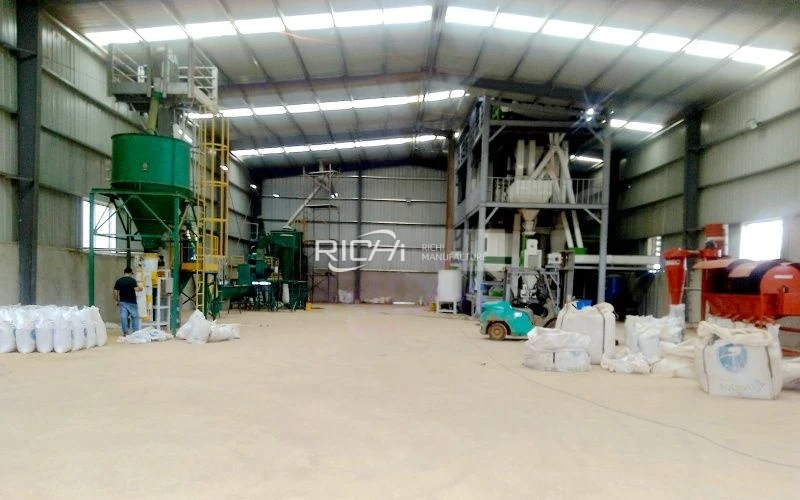
5 T/H Turkey Broiler Plant Project
Brazil
A poultry producer uses this 5 T/H system for turkey and broiler feeds based mainly on maize and soybean meal. Separate formulas share grinding, batching and pelleting equipment, while starter crumble and larger grower pellets are routed according to product type.
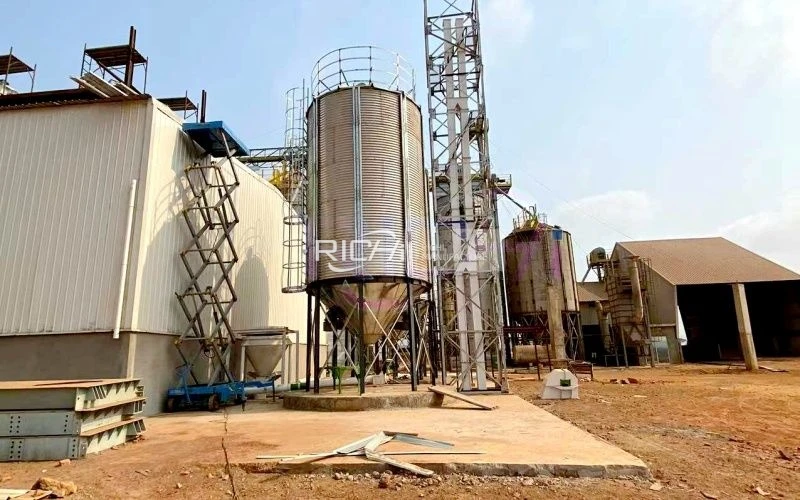
10 T/H High-Volume Turkey Mill Project
Canada
A commercial turkey producer required a high-throughput line for several grow-out and breeder formulas. Corn, wheat, soybean meal and canola-based ingredients are handled through automatic batching, while durable grower and finisher pellets form the main production volume.

1–2 T/H Compact Poult Plant Project
Morocco
This small turkey feed plant produces starter crumble and grower pellets from maize, wheat and protein meals. The customer required a simple turkey poult feed production line with controlled crumbling and screening rather than a larger commercial multi-SKU factory.
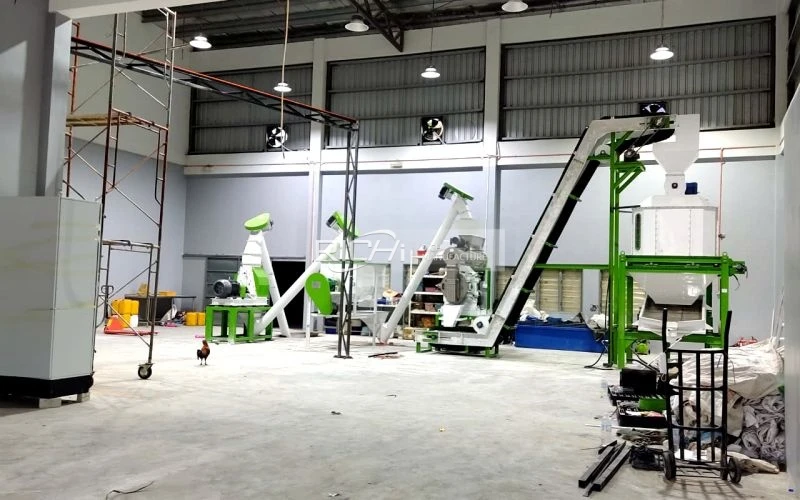
4 T/H Multi-Stage Feed Mill Project
Spain
This plant produces poult starter, grower, finisher and breeder turkey feeds for a commercial producer. Automatic batching, micro-dosing and finished-feed bins help separate different formulas, while crumble and pellet routes allow several feed stages to share one production system.
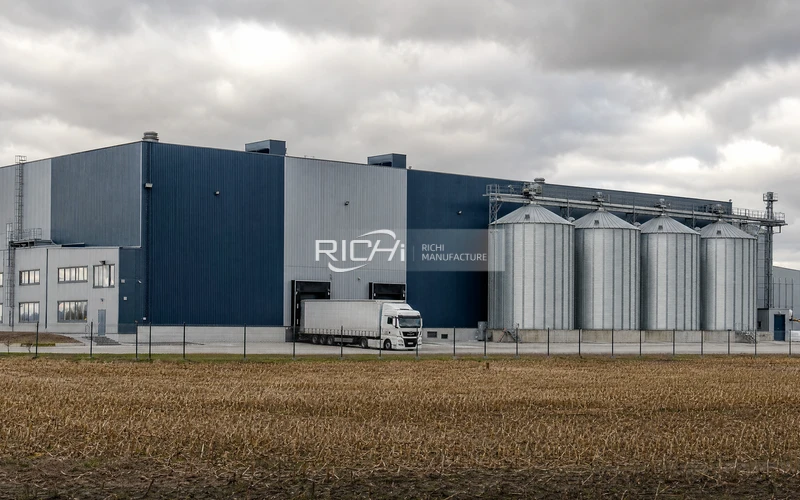
12 T/H Integrated Feed Factory Project
Poland
This turkey feed manufacturing plant serves a large integrated production system rather than one individual farm. Starter crumble, grower pellets, finisher pellets and breeder feed move through shared upstream equipment, with multiple bins and automatic controls supporting continuous production.
1-2 T/H Farm Pellet System Project
Chile
An integrated farm uses this line for turkey starter, grower and finisher feed. The system combines automatic batching with crumble and pellet routes, allowing the customer to move from small starter feed to larger grow-out pellets without separate production lines.
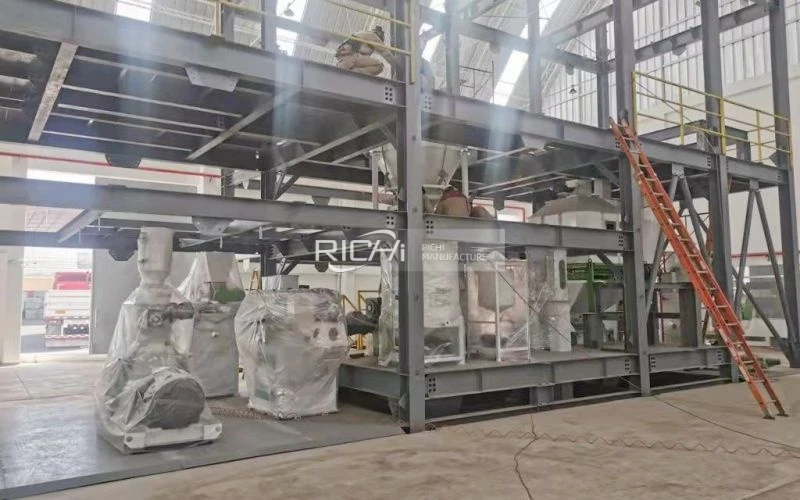
3T/H Integrated Turkey Plant Project
France
Designed for an integrated turkey company, this automatic turkey feed plant produces starter, grower, finisher and breeder feeds. Wheat, maize and protein meals are handled through centralized batching, with multiple finished bins supporting frequent formula and pellet-size changes.
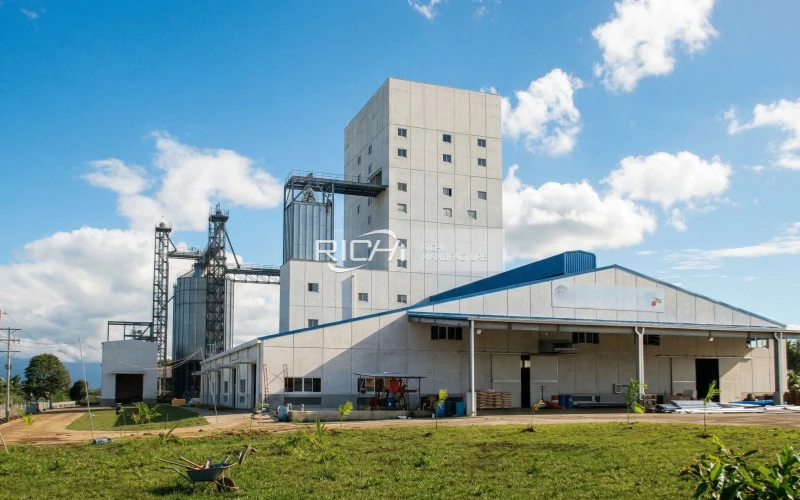
15 T/H Large Turkey Complex Project
Germany
A large turkey operation uses this line for high-volume grower and finisher feed with separate starter and breeder campaigns. Multiple storage bins, automatic batching and high-capacity pelleting reduce product changeover pressure while maintaining several turkey feed specifications.

1-2 T/H Flexible Grow-Out Mill Project
Hungary
This turkey feed mill focuses on grower and finisher products for a regional turkey operation. Wheat, maize and protein meals pass through one batching and pelleting system, with approximately 3–4 mm finished pellets and enough recipe flexibility for several grow-out stages.
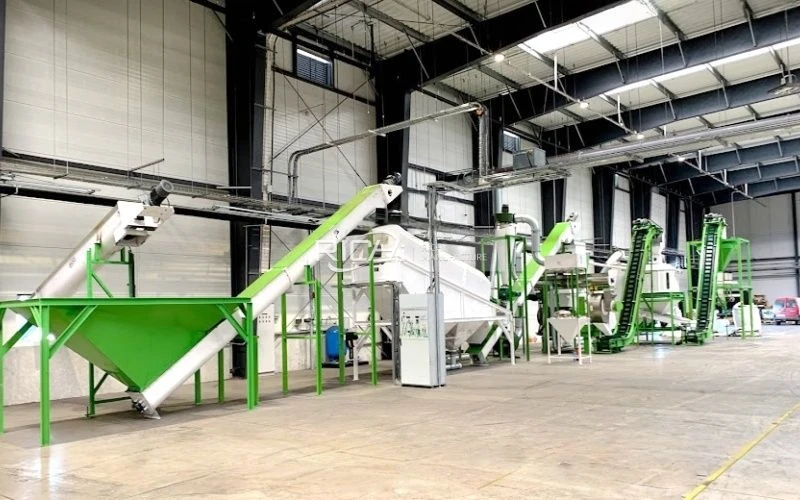
5-6 T/H Commercial Poultry Mill Project
Italy
This commercial turkey feed mill also manufactures selected chicken feeds to improve factory utilization. The line combines automatic batching, pelleting, crumbling and finished-feed storage, allowing turkey starter crumble and larger grower or finisher pellets to run in separate campaigns.
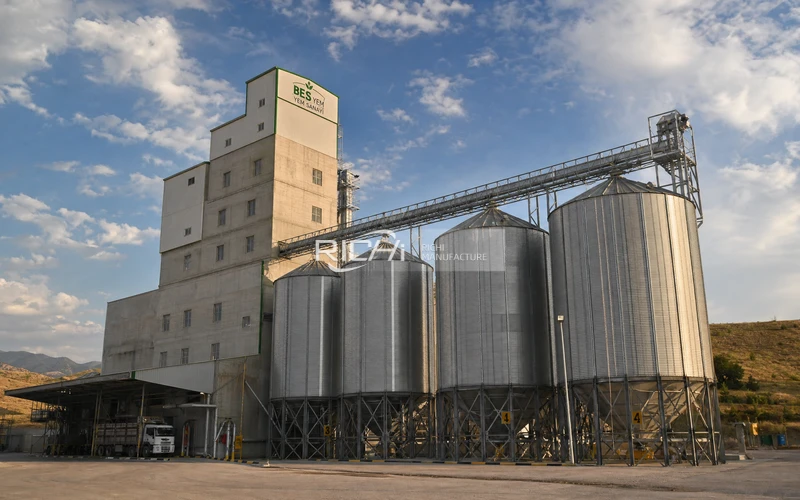
20 T/H Commercial Feed Complex Project
United States
This 20 T/H turkey feed production line serves a large integrated poultry business producing turkey and selected chicken feeds. Bulk corn and soybean meal storage, automatic batching, multiple pellet routes and bulk dispatch support continuous commercial production and a wide feed portfolio.
Customers usually judge a turkey feed mill by how well the line handles different feed stages, how easily operators can change products, and whether the final system actually fits the farm or factory they planned to run.


Turkey Feed plant Project
Hungary
“We needed stable grower and finisher pellets without making the plant too complicated. The equipment layout is clear, product changeovers are manageable, and our operators learned the production routine quickly.”

Turkey Feed mill Project
Spain
“Our main concern was producing suitable feed for ducklings and laying ducks from the same small plant. The crumbler and screening arrangement made the product sizes much easier to control, and the line fits our farm workload well.”

Turkey poultry Feed Project
Canada
“We wanted higher output but still needed good control over pellet quality. The automatic batching, conditioning and pelleting sections were matched well, and the line handles our main grow-out feed volumes without excessive manual work.”

Turkey & Chicken Feed Project
United States
“We did not want separate factories for turkey and chicken feed. RICHI helped us share the main production systems while keeping the formulas and finished-feed specifications separate, which made the overall investment more practical.”

Turkey Feed Mill Solutions from 1 to 120 T/H
Turkey feed mill capacity should match flock demand, feed stages, operating hours, product range and sales model. Smaller lines suit farms and regional producers, while higher capacities are better suited to integrated turkey companies, commercial feed manufacturers and multi-line poultry feed factories.
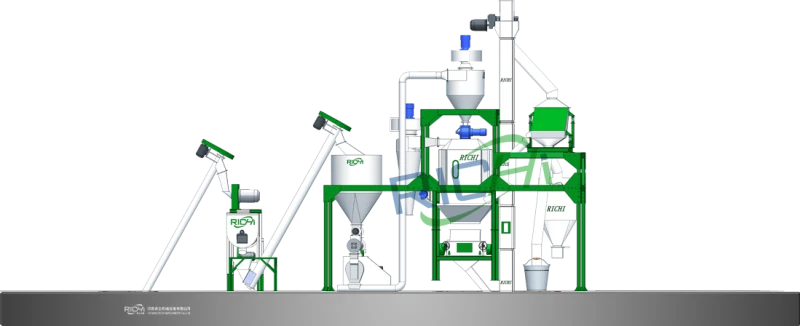
Suitable for turkey farms and small feed businesses producing poult starter, grower or finisher feed mainly for their own use. A small turkey feed mill can combine mash, crumble and pellet production in a compact layout.
Equipment Cost: $10,000-50,000
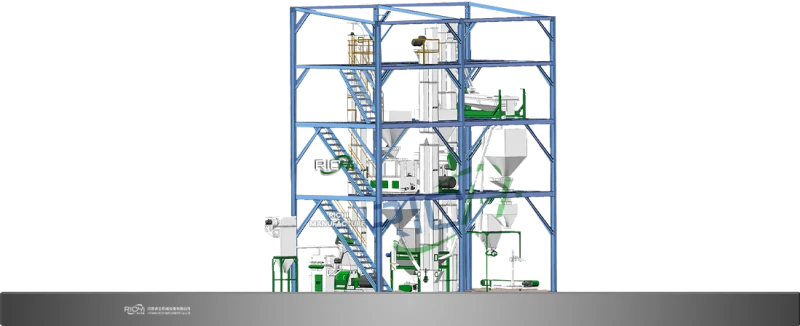
3-4 t/h animal feed production plant
Suitable for larger farms, breeder operations and regional feed suppliers. This scale can support several turkey feed stages while remaining practical for customers who do not need a large commercial factory.
Equipment Cost: $50,000-120,000
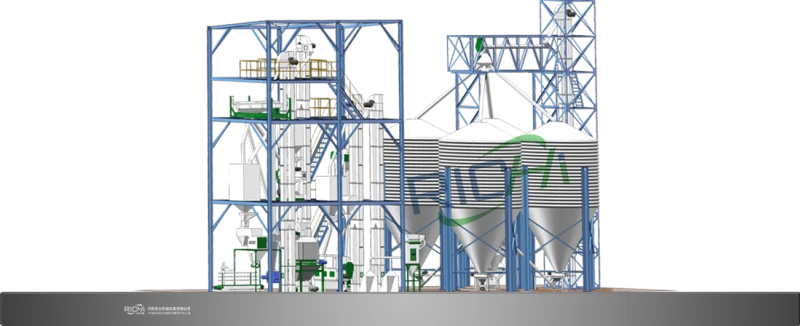
5-7 t/h animal feed pellet plant
Designed for integrated turkey producers or expanding feed businesses with higher daily demand. Automatic batching, pelleting and crumbling help manage starter, grower, finisher and breeder products with less manual handling.
Equipment Cost: $70,000-250,000
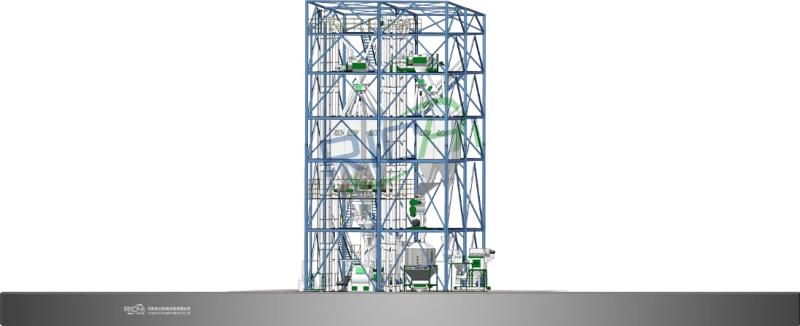
8-10 t/h animal feed processing plant
Suitable for integrated turkey companies and commercial poultry feed producers. The plant can focus on turkey feed or combine turkey and chicken products where a broader market justifies a multi-poultry production schedule.
Equipment Cost: $150,000-300,000
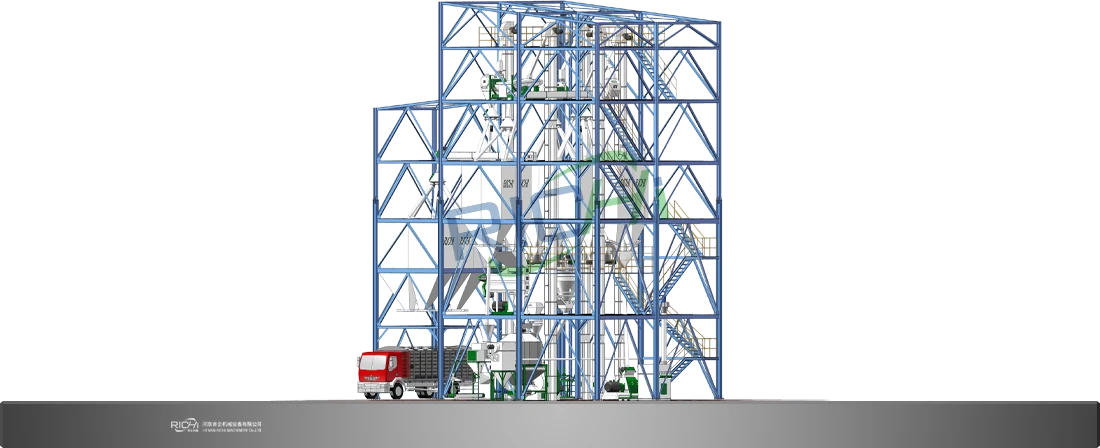
12-20 t/h feed preparation plant
This capacity suits large turkey production groups, contract-growing networks and regional feed manufacturers. Multiple bins, automatic recipe control and high-capacity pelleting support continuous grower and finisher production alongside starter and breeder campaigns.
Equipment Cost: $250,000-580,000
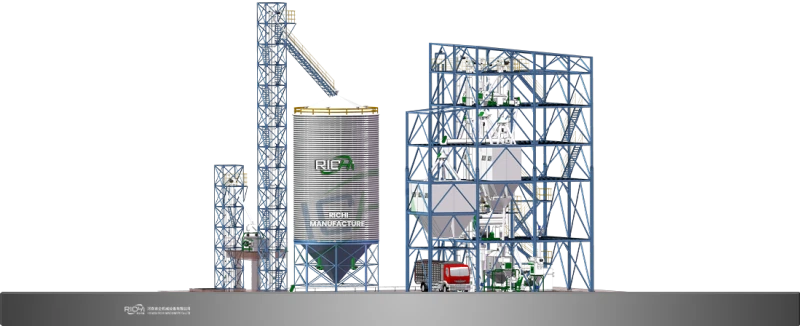
25-40 t/h feed pellet production line
A plant in this range normally serves a large integrated business or commercial poultry market rather than one farm. Parallel pelleting, packing or finished-feed handling modules may be required to prevent one section from restricting total output.
Equipment Cost: $450,000-850,00
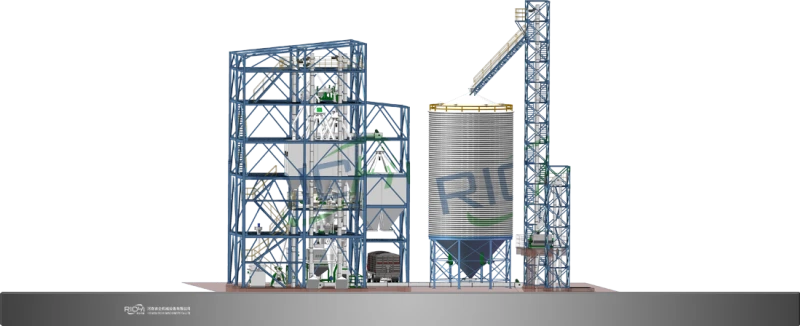
50-60 t/h commercial feed mill
Suitable for major feed companies producing turkey feed together with chicken or other poultry products. Large silo systems, automatic batching and multiple production routes support high annual output and a broader SKU portfolio.
Equipment Cost: $900,000-1,400,000
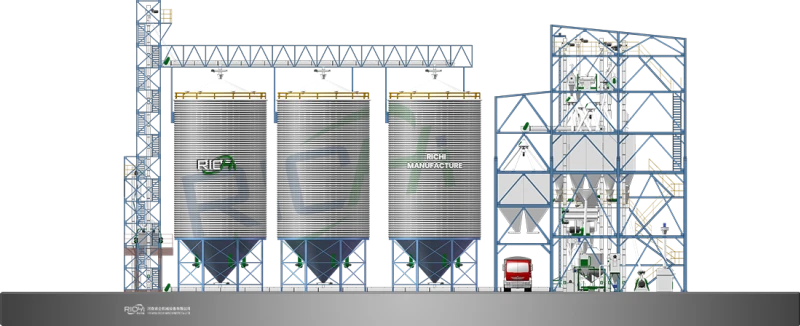
60-80t/h complete feed mill plant
At this scale, the project is better treated as a multi-line commercial factory. Turkey feed becomes one major product group within a larger poultry feed system using parallel grinding, mixing, pelleting and packing modules.
Equipment Cost: $1,450,000-1,800,000
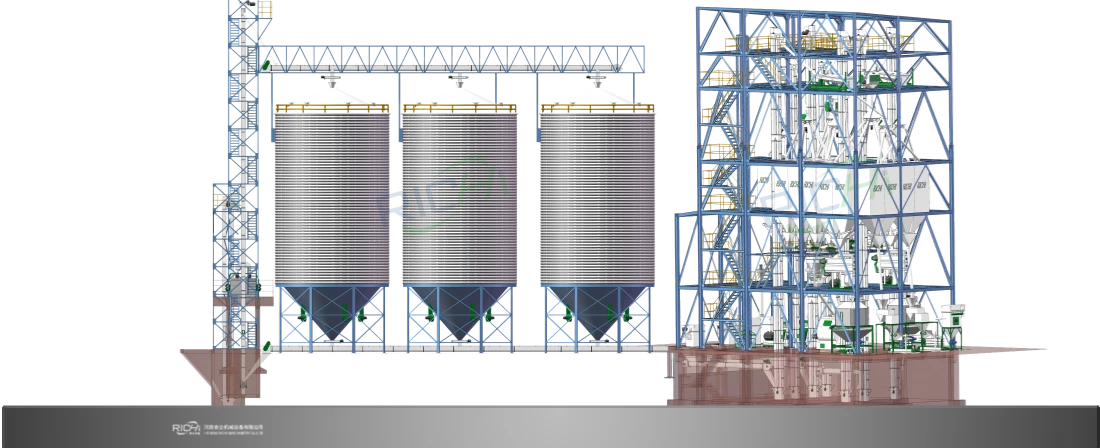
Designed for large feed manufacturers and vertically integrated poultry groups serving several farms or regions. The factory normally uses multiple production trains, centralized storage and automatic control to manage many formulas and high dispatch volume.
Equipment Cost: $2,000,000-3,000,000
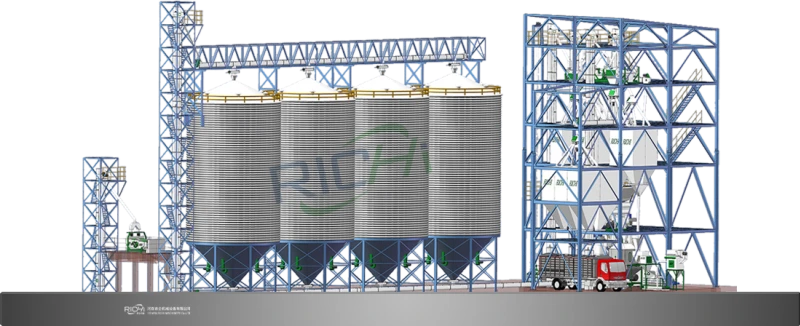
100-120 t/h feed mill engineering
This is a large industrial feed complex rather than one oversized turkey feed production line. Multiple lines can produce turkey, chicken and other poultry feeds simultaneously while sharing centralized receiving, storage and dispatch systems.
Equipment Cost: Over $2,500,000
How Much Does a Turkey Feed Mill Cost?
Turkey feed mill cost depends on more than hourly output. Poult crumble, grower and finisher pellets, breeder feed, automatic batching, silo capacity, finished-feed bins, packing method and the number of formulas all affect the final equipment scope. A farm-scale line can remain relatively simple, while an integrated turkey feed plant may require more storage, automation and product-routing flexibility.
Whole turkey feed plant set up investment : $50,000 – $40,000,000
Main Turkey Feed Equipment Cost :
Turkey Feed Receiving & Cleaning :
$2,000–80,000
Turkey Feed Grinding System :
$2,000–120,000
Turkey Feed Batching System :
$5,000–180,000
Turkey Feed Mixing System :
$2,000–100,000
Turkey Feed Liquid Addition :
$2,000–50,000
Turkey Feed Pelleting System :
$10,000–100,000+
Turkey Feed Cooling System :
$4,000–90,000
Turkey Feed Crumbling & Screening :
$4,000–80,000
Turkey Feed Packing System :
$2,000–180,000
Turkey Feed Conveying System :
$5,000–250,000+
Silo & Bin System :
$10,000–800,000+
Dust Collection :
$3,000–120,000
Automation & Electrical :
$5,000–300,000+
Steam & Boiler System :
$5,000–150,000+
Turkey feed factory setup cost therefore includes much more than machinery. For a commercial turkey feed mill project, buildings, utilities, ingredient inventory and working capital may represent a major share of total investment. The best way to obtain an accurate turkey feed mill quotation is to provide target capacity, feed stages, raw materials, workshop information, automation level and packing requirements. RICHI can then prepare the process, equipment list and investment recommendation around the actual project rather than a generic price table.

Complete Support for Your Turkey Feed Mill Project
RICHI supports a turkey feed mill from early planning to long-term operation. The service can cover process design, equipment configuration, manufacturing, installation guidance, commissioning, operator training, spare parts and later capacity expansion, whether the project is a new turkey feed plant or an upgrade to an existing poultry feed factory.
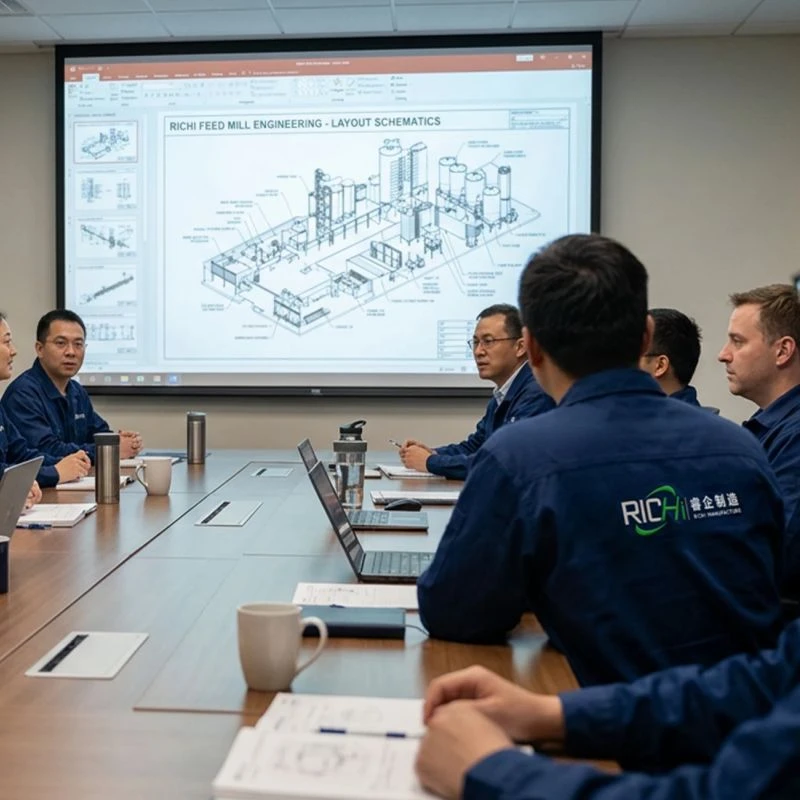
Process & Factory Design
Our engineers develop the turkey feed factory design around capacity, feed stages, raw materials, building dimensions, automation and future expansion. The scope can include process flow, equipment layout, civil requirements, steel structure and reserved space for additional storage or production modules.
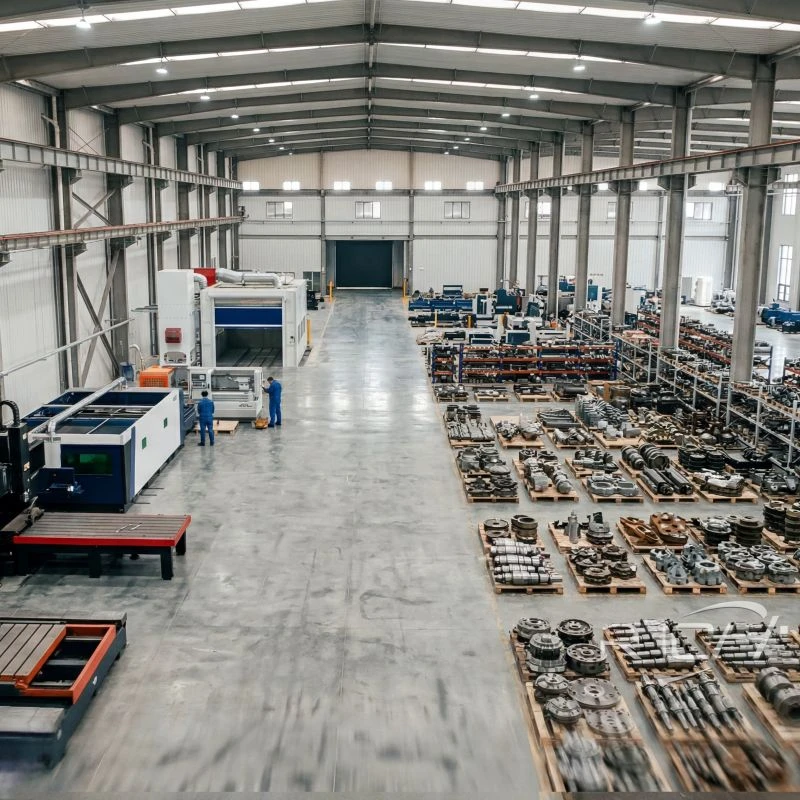
Equipment Manufacturing
RICHI manufactures and integrates the main turkey feed production equipment required for grinding, batching, mixing, conditioning, pelleting, cooling, crumbling, screening and packing. The equipment package is coordinated as one production system rather than a collection of unrelated machines.
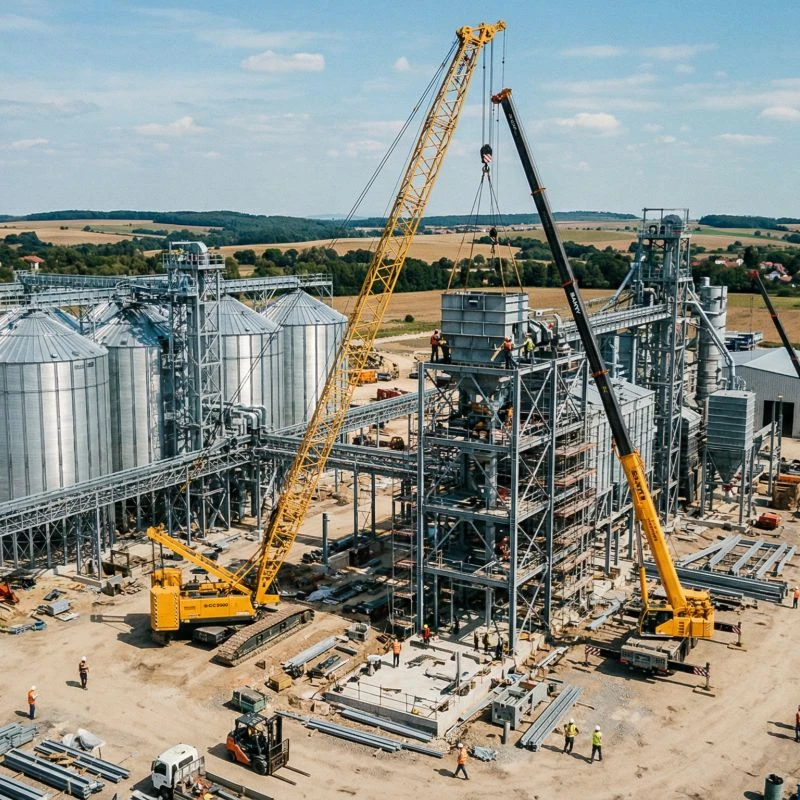
Installation & Commissioning
We provide installation guidance, commissioning and operator training for the complete turkey feed mill. The work covers equipment positioning, process connections, trial production, parameter adjustment and product changeover so operators understand how to run starter crumble, grower pellets and other turkey feeds correctly.
Lifetime Project Support
After startup, RICHI continues to provide technical assistance, spare-parts support, operating guidance and troubleshooting. If the customer later adds new formulas, increases output or expands into chicken or other poultry feed, the existing turkey feed processing system can also be evaluated for modification.
Free Planning Support
Before a turkey feed mill project moves into equipment selection and manufacturing, RICHI can provide free planning support to help clarify the process, factory arrangement, investment and implementation requirements.

Free Project Cost Estimate
Free Factory Area Planning
Free Civil & Steel Structure Drawings
Free Electrical & Circuit Design
Free Turkey Feed Process Flow Design
Free 3D Factory Layout & Rendering
Free Equipment Operation & Training Support
Free Production Testing & Remote Guidance
Complete Turkey Feed Mill Equipment
A complete turkey feed mill can include raw-material receiving, cleaning, grinding, batching, micro-dosing, mixing, liquid addition, conditioning, pelleting, cooling, crumbling, screening, conveying, storage, packing, dust collection and electrical control systems. RICHI matches the turkey feed mill equipment package to capacity, feed stage, ingredient form, automation level and workshop conditions rather than supplying the same machine list to every project.
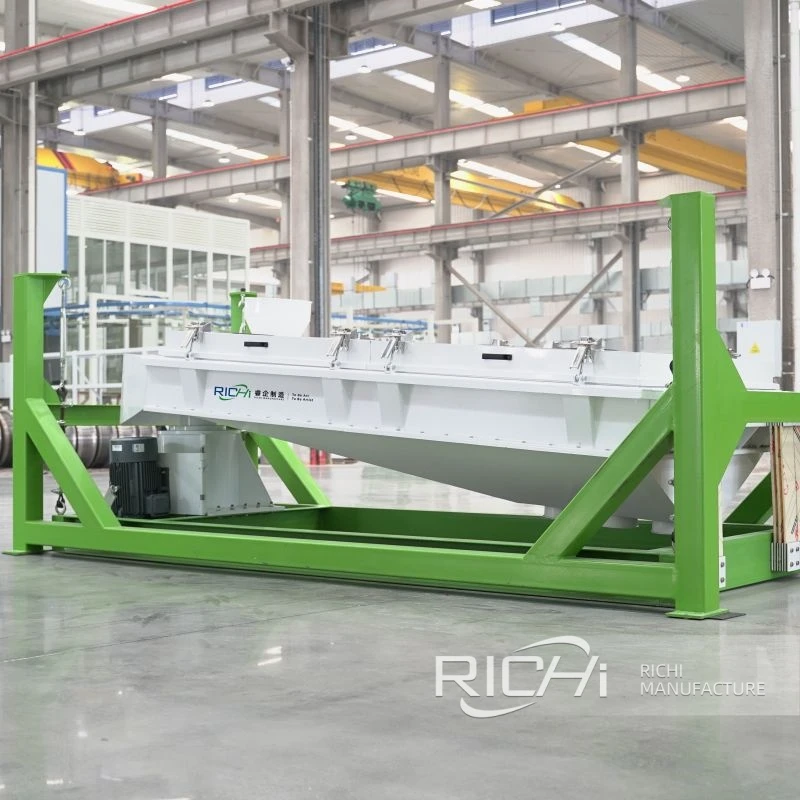
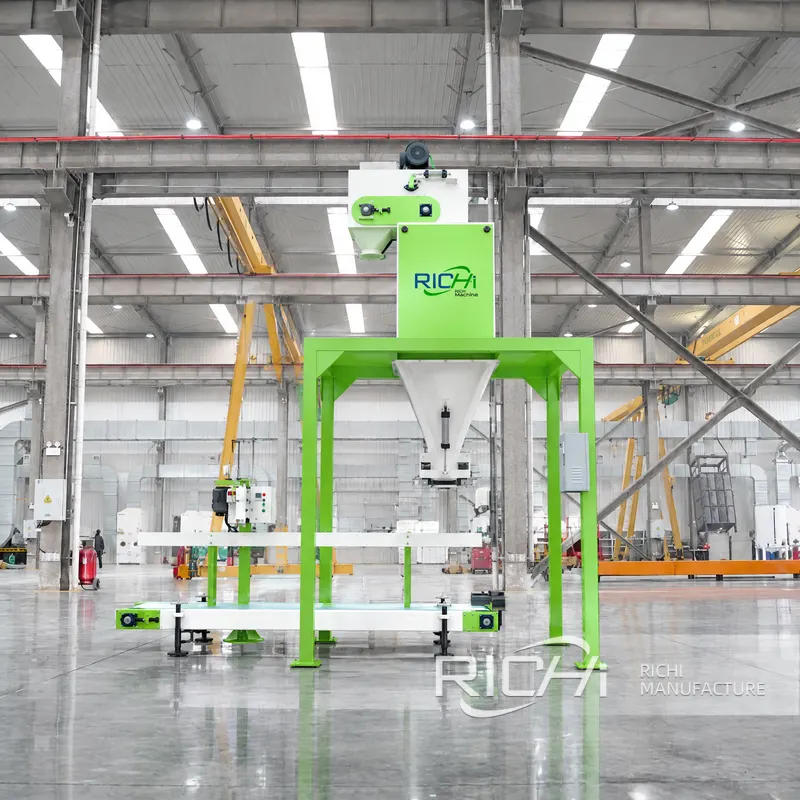
Typical turkey feed production equipment includes cleaners, magnetic separators, hammer mills, batching scales, micro-dosing systems, mixers, liquid addition units, conditioners, turkey feed pellet mills, coolers, crumblers, rotary screens, bagging machines, bucket elevators, screw conveyors, raw-material silos, finished-feed bins, dust collectors and PLC controls. Poult and starter products may require crumbling and finer screening, while grower and finisher production places greater emphasis on stable pelleting, cooling and low-fines handling.
For an existing poultry factory, RICHI can also supply individual turkey feed processing equipment or integrate new modules with usable grinders, mixers, silos and packing systems already on site. New projects can be supplied as complete turkey feed plant equipment packages so capacities remain balanced from feeding through final packing.
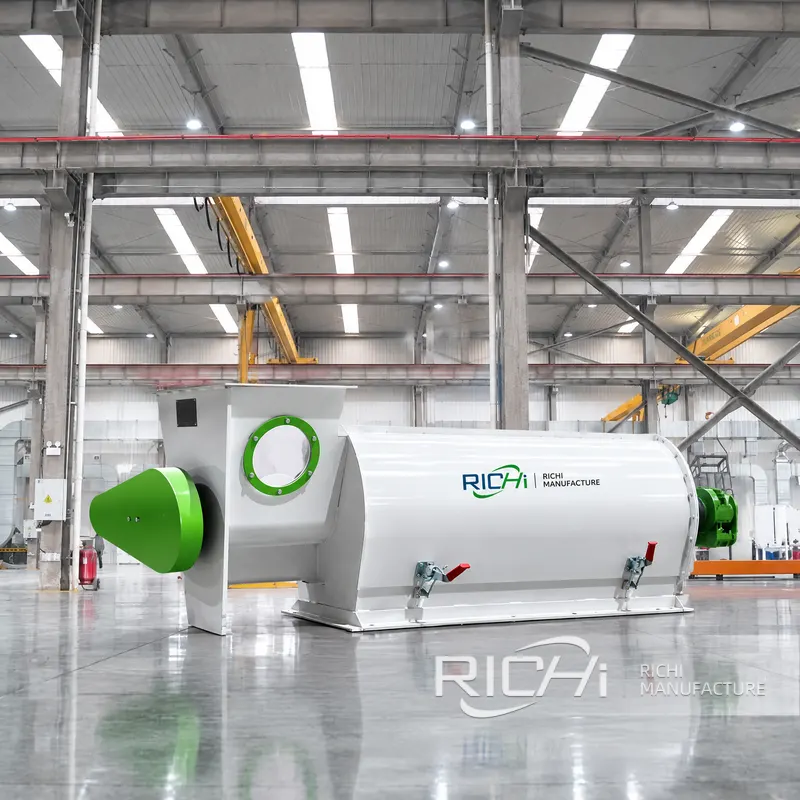
cleaning equipment
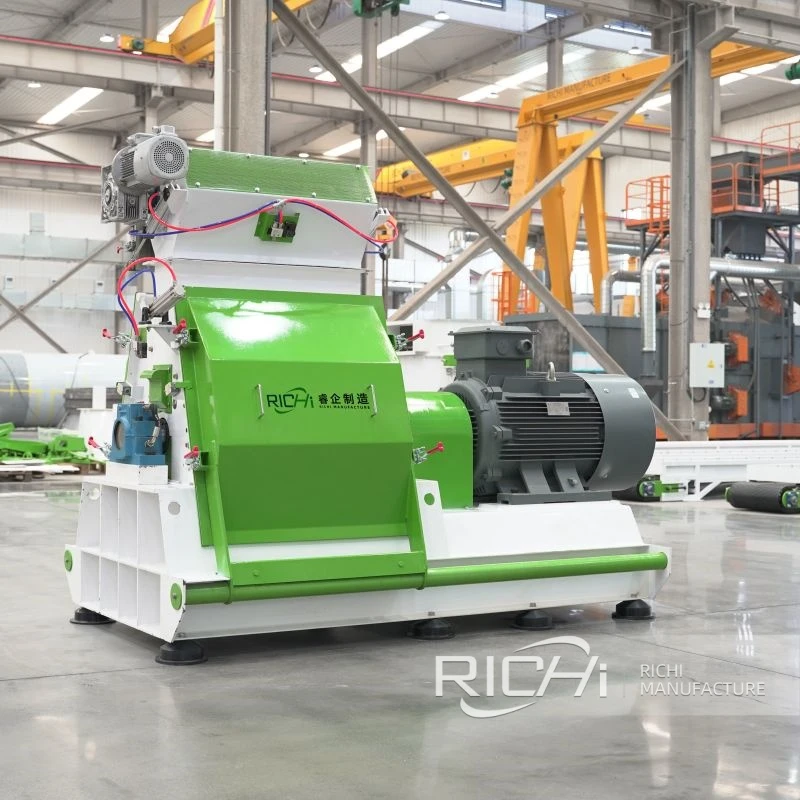
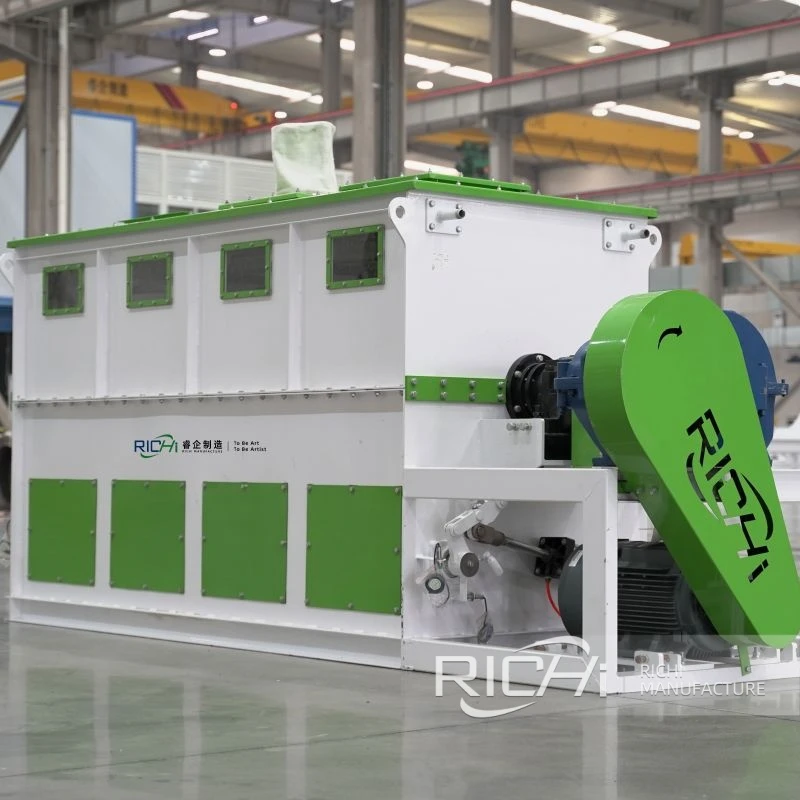
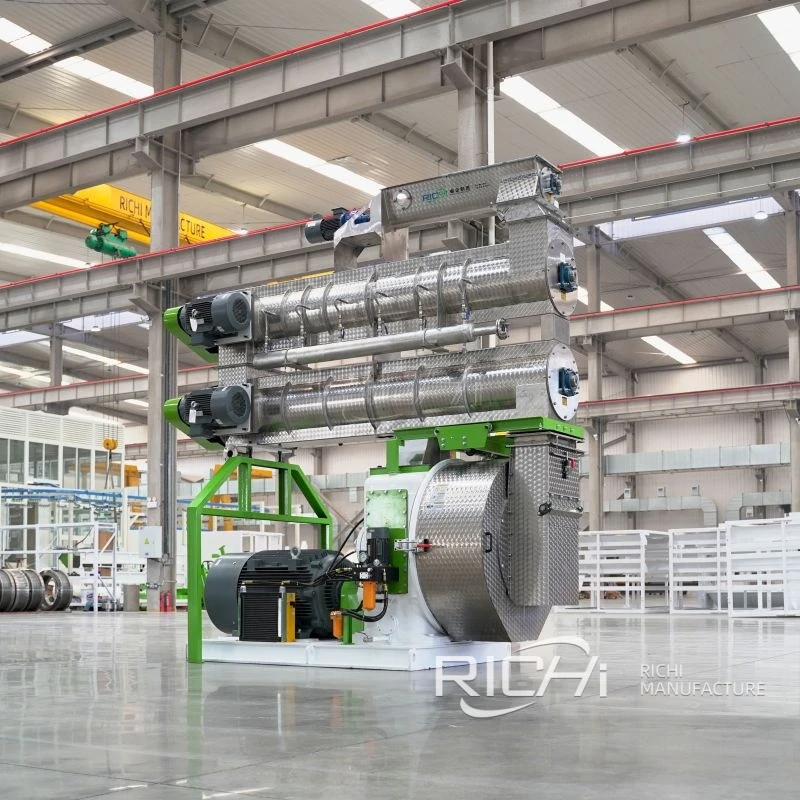
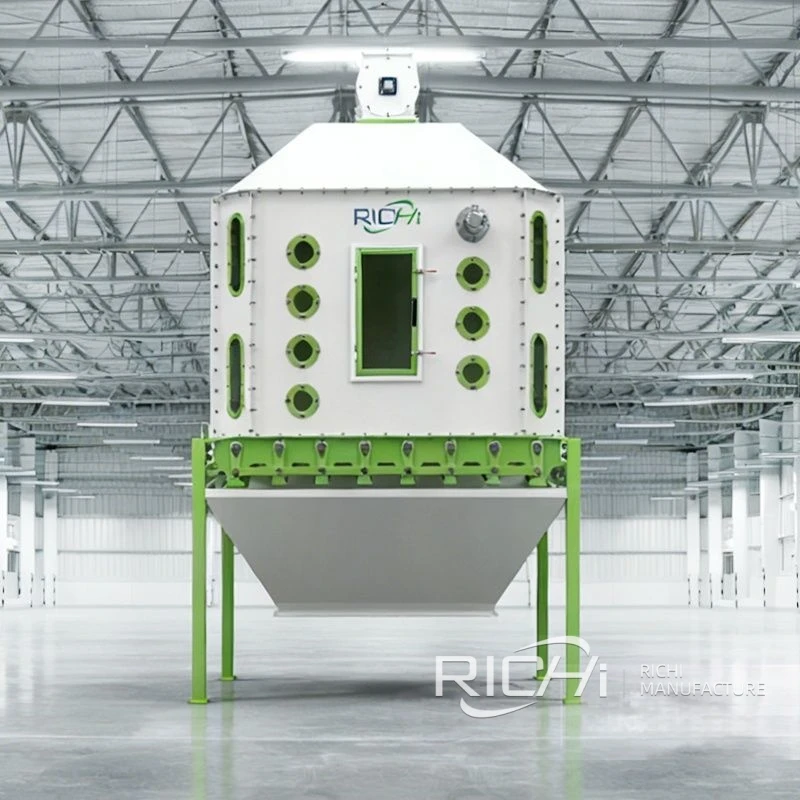
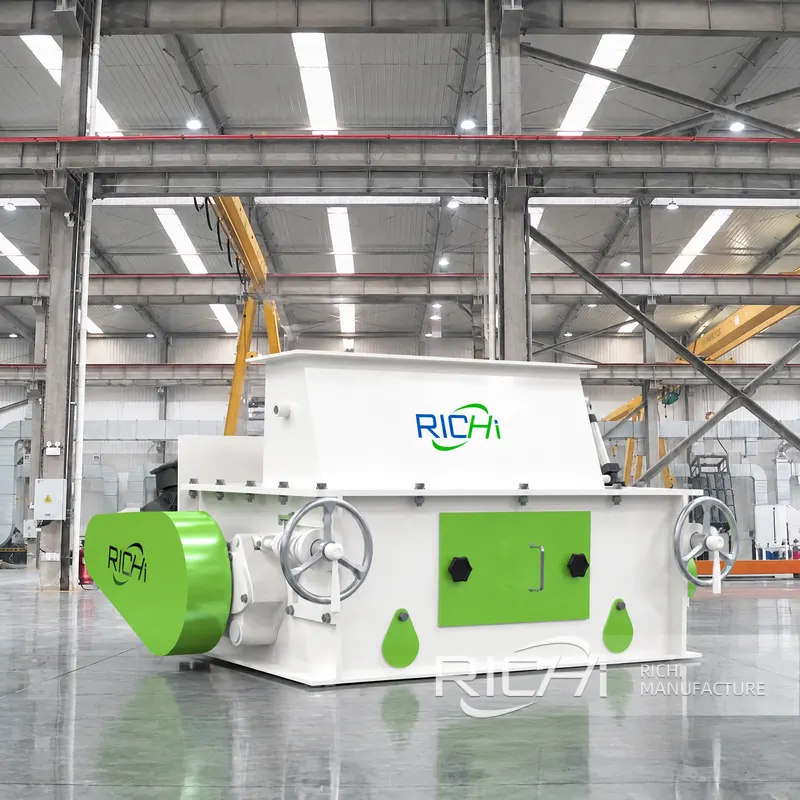
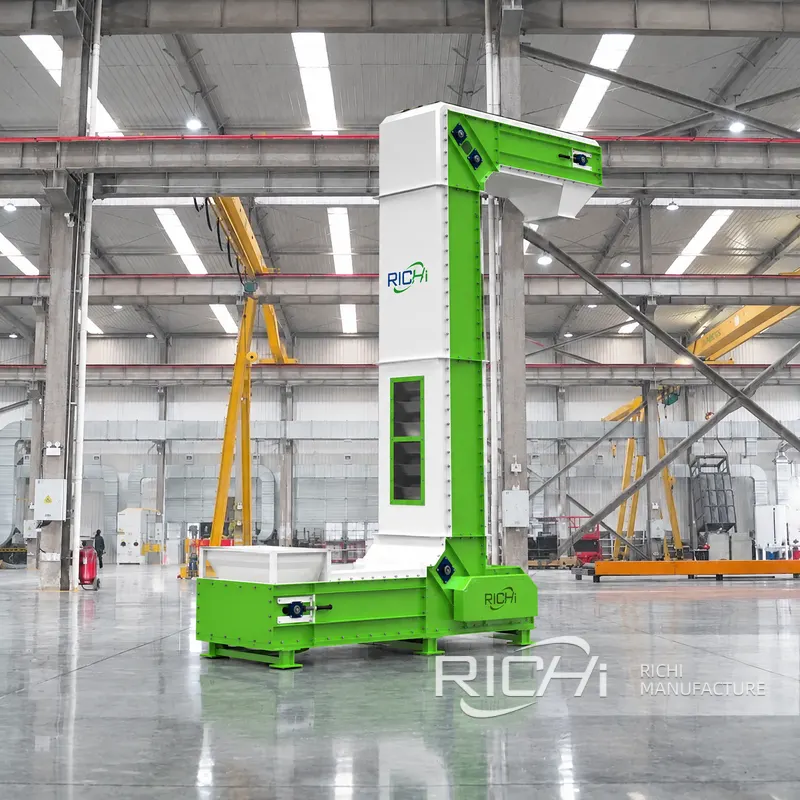
conveyor Machine
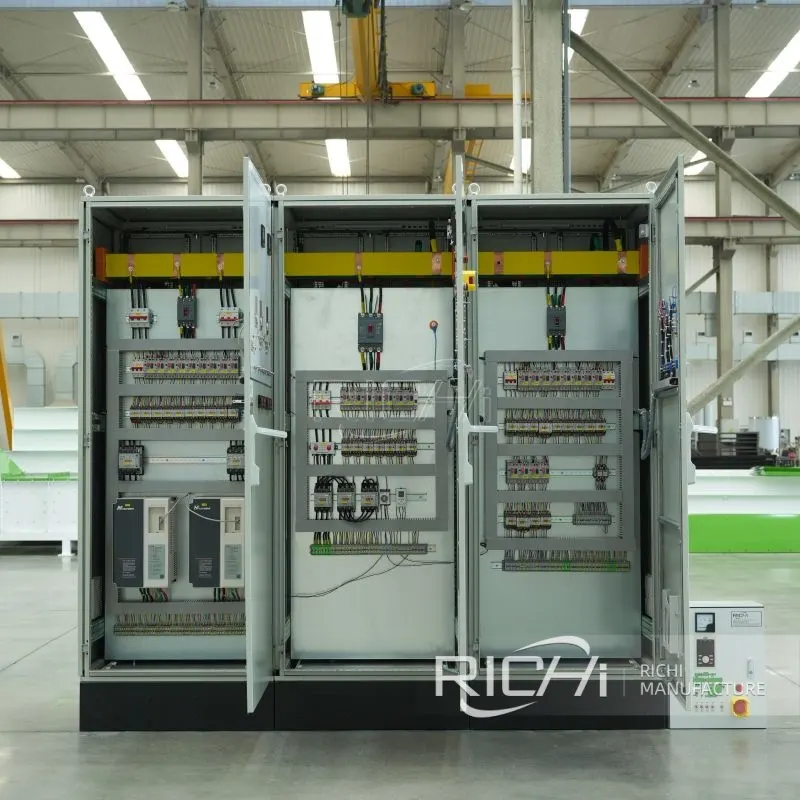
Electrical control cabinet
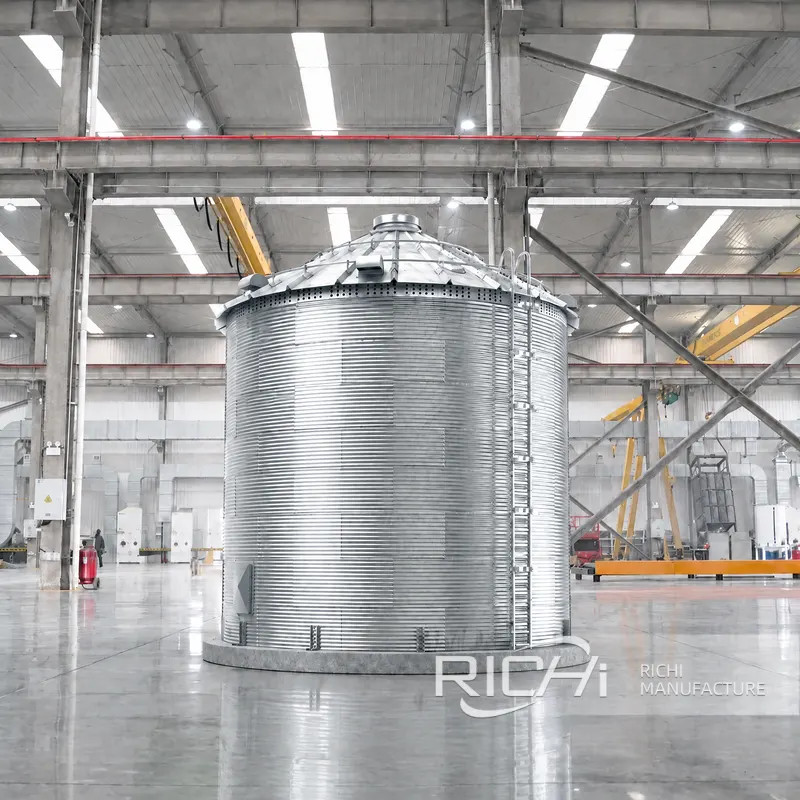
After reviewing the equipment shown here, you can explore the full range of turkey feed machinery for new plants, expansions and retrofit projects.
Where the Opportunity Is in Duck Feed Production
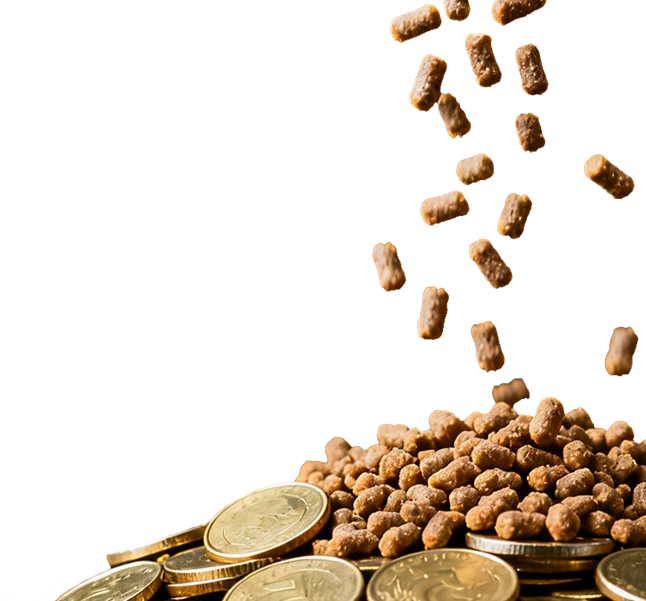
A turkey feed mill creates value where farms or feed companies need tighter control over feed cost, formula changes, pellet quality and supply schedules. Integrated turkey producers can manufacture poult, starter, grower, finisher and breeder feeds around their own flock program, while independent manufacturers can use a commercial turkey feed production line to supply several farms with different feed stages and finished specifications.
For investors entering the market, the stronger model is often flexibility rather than a single-product turkey feed factory. A turkey feed plant can begin with core turkey products and later add chicken or other poultry feeds through shared grinding, batching, mixing and pelleting systems. This broadens the customer base, increases annual equipment utilization and gives a turkey feed plant project more room to respond when feed demand, flock numbers or product mix changes.
RICHI can develop a turkey farm feed plant, commercial turkey feed mill or turnkey turkey feed plant around the customer’s market position instead of forcing every investor into the same scale or process.
Plan My Turkey Feed Business
Turkey Feed Raw Materials and Formula Systems
A turkey feed mill may process maize, wheat, barley, sorghum, soybean meal, rapeseed or canola meal, sunflower meal, DDGS, wheat middlings, vegetable oil, minerals, premix and other locally available feed ingredients. Ingredient systems vary significantly between countries and feed stages, so RICHI configures grinding, batching, micro-dosing, mixing and pelleting around the customer’s actual formula rather than a fixed machine package.
Whole grains require cleaning and grinding, while meals and fine ingredients can often bypass the hammer mill. Higher-fiber ingredients such as DDGS or sunflower meal may change grinding and pelleting behavior, and formulas with more oil or micro-ingredients require more accurate liquid addition and dosing. This is why a turkey feed manufacturing plant should be engineered from both the product program and raw-material structure.

Corn

Wheat
Barley

Oil
DDGS
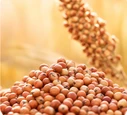
Sorghum

Premix

Turkey Poult & Starter Feed
Poult and early starter diets use highly concentrated nutrient programs and require very uniform feed presentation. A turkey starter feed plant therefore needs accurate micro-dosing, fine and consistent grinding, reliable mixing and a stable pelleting-crumbling-screening route.
Configure My Starter Feed System

Turkey Grower Feed
Grower feed accounts for a substantial part of total feed consumption in commercial turkey production. As birds grow, formula density and ingredient ratios change, while feed moves toward durable pellets with low fines.
Design My Grower Feed Line

Turkey Finisher Feed
Finisher formulas are generally produced in the largest batches and may contain a broader range of economical grain and protein ingredients while still meeting the nutritionist’s target specification. A turkey finisher feed plant therefore needs reliable high-volume pelleting, cooling and screening rather than excessive process complexity.
Plan My Finisher Feed Production

Turkey Breeder Feed
Breeder feed requires tighter control of ingredient dosing and formula separation because parent-stock programs differ from commercial meat-turkey feeding. Male and female breeder programs may also require different nutritional management.
Customize My Breeder Feed Plant
Example Turkey Feed Formula Structures
Poult Starter Formula
Maize / Wheat
40–50%
Soybean Meal
28–36%
Vegetable Oil
3–6%
Mineral Sources
2–5%
Premix + Amino Acids
1–3%
…
Finalized by nutritionist
Turkey Grower Formula
Maize / Wheat
45–55%
Soybean Meal
20–28%
DDGS / Canola Meal
5–12%
Vegetable Oil
2–5%
Minerals + Premix
2–5%
…
Adjusted by growth phase
Turkey Finisher Formula
Maize / Wheat / Sorghum
50–60%
Soybean Meal
15–24%
DDGS / Rapeseed / Sunflower Meal
8–15%
Vegetable Oil
1–4%
Minerals + Premix
2–5%
…
Adjusted to final market weight
Breeder Duck Formula
Maize / Wheat
45–55%
Soybean / Rapeseed Meal
15–22%
Wheat Middlings / Other By-Products
8–15%
Vegetable Oil
1–4%
Minerals + Premix
3–7%
…
Adjusted to breeder program
The examples are intended for production-line planning, not as ready-to-feed nutritional formulas. Final ingredient percentages should be determined by a qualified nutritionist according to turkey genetics, age, ingredient analysis, local regulations and target performance. RICHI uses the confirmed formula to determine storage, grinding, dosing, mixing and pelleting requirements.
Practical Turkey Feed Mill Questions
Should We Size the Turkey Feed Mill for Starter Feed or Finisher Feed?
+
Size the turkey feed mill around the highest sustained production demand, but check every major section against the most difficult product it must handle. For an integrated turkey operation, grower and finisher feeds usually account for much more total throughput, while poult and starter products place stricter demands on crumbling, screening and fines control. One nameplate capacity therefore should not be applied blindly to every section.
| Production Area | Main Design Priority |
|---|---|
| Poult / Starter | Crumble quality, small particle control, low fines |
| Grower Feed | Stable pellet quality and increasing throughput |
| Finisher Feed | High continuous pelleting, cooling and dispatch capacity |
| Breeder Feed | Formula accuracy, micro-dosing and product separation |
| Mash Products | Bypass capacity from mixing to storage / packing |
A practical turkey feed mill design normally keeps the core grinding, batching and mixing systems flexible enough for every formula, then sizes the downstream modules according to their real workload. The turkey feed crumbling system may only handle starter campaigns, while the turkey feed pelleting line, cooler and finished-feed handling system may process much larger grower and finisher volumes.
This is also why bottleneck checking matters. If the pellet mill can make 10 T/H but the cooler, screen or packing section only handles 6 T/H reliably, the factory is not a practical 10 T/H plant. For a higher-output project, RICHI checks the complete route—from automatic turkey feed batching system through pelleting, cooling, screening and dispatch—before finalizing the equipment list.
For customers producing several turkey stages, additional finished bins can reduce interruptions between production and packing. Where turkey and chicken feeds share the same factory, production sequencing and formula separation also need to be planned from the beginning rather than added after installation.
We raise about 25,000 turkeys. Is a 1–2 T/H line large enough?
+
For most farm-use projects at this scale, 1–2 T/H is a practical starting range. It gives enough daily output without forcing the farm to operate an oversized turkey feed mill at very low utilization.
Our birds are spread across several contract farms. Should we size the mill from flock count or daily feed demand?
+
Use peak daily feed demand and operating hours, not bird count alone. Grower and finisher turkeys consume far more feed than poults, so the later production stages normally determine required throughput.
We already make broiler feed. What must change before we add turkey feed?
+
Usually the existing grinding, batching, mixing and pelleting equipment can be reused if capacity is sufficient. The main additions may be new formulas, suitable dies, starter crumbling, extra finished bins and production sequencing for turkey products.
Our farm only needs poult and starter feed. Do we need a full pellet line?
+
You still need pelleting if the target product is crumble. The practical route is conditioning → pelleting → cooling → crumbling → screening, rather than trying to manufacture uniform crumble directly from mash.
We buy starter feed but want to make grower and finisher feed ourselves. Is that a sensible first project?
+
Yes. Grower and finisher feeds account for a large share of total turkey feed consumption, so producing these stages internally can justify a compact turkey farm feed mill even if starter feed remains purchased.
We only raise turkeys seasonally. Will the feed mill sit idle for too long?
+
It may if the plant is designed only around a short turkey cycle. Farms with seasonal production often benefit from adding chicken or other poultry feeds so the same equipment can operate during lower turkey-demand periods.
Our starter crumble has too many fines. Which equipment should we check first?
+
Check parent-pellet quality, crumbler adjustment and screening efficiency. A turkey feed crumbling system cannot create good crumble if the pellets entering it are already weak.
Can the same turkey feed pellet mill make 2 mm and 4 mm products?
+
Yes, by changing the ring die and process settings. If both sizes must be produced continuously at high volume, separate pellet mills may eventually reduce changeover downtime.
We want mash for breeders and pellets for meat turkeys. Do we need separate lines?
+
No. One turkey feed manufacturing line can use a mash bypass after mixing while meat-turkey formulas continue through conditioning, pelleting, cooling and screening.
Our breeder farm uses many micro-ingredients. Is manual weighing still acceptable?
+
For low batch numbers, controlled manual pre-weighing may be acceptable. For frequent breeder formulas, a micro-dosing system provides more repeatable addition and reduces operator-dependent errors.
We are planning 3–4 T/H but may double production later. Should we buy a larger pellet mill now?
+
Not automatically. It is usually better to design the turkey feed mill setup with expansion space, spare electrical capacity and future conveyor connections rather than oversizing every machine from the beginning.
Is 5–7 T/H reasonable for an integrated turkey operation?
+
Yes, where internal feed demand supports it. This range can suit a sizeable integrated producer manufacturing starter, grower, finisher and breeder feeds on a regular production schedule.
We need around 10 T/H. Does that have to be a multi-poultry plant?
+
No. A genuinely large integrated turkey business can justify a 10 T/H commercial turkey feed mill, although adding chicken feed may still improve utilization if the customer also serves an external market.
Would you recommend one 20 T/H pellet line or two smaller lines?
+
For a large factory, two production modules can provide better flexibility and maintenance redundancy than one oversized route. The final choice depends on SKU count, operating hours and expected simultaneous production.
Our building is only 6.5 meters high. Can a turkey feed plant fit?
+
Yes, but the turkey feed plant layout should use a low-profile arrangement with more horizontal conveying and compact elevators instead of a tall gravity-flow tower.
We cannot excavate because the site has a high water table. Can raw materials be received above ground?
+
Yes. Use an above-ground intake hopper, conveyors and elevators. A deep receiving pit is optional, not a requirement for a turkey feed production line.
Our existing workshop has very little floor space. Which equipment should be stacked vertically?
+
Bins, mixer, pellet mill and cooler can often use gravity where height permits, while bulky storage and packing equipment stay at ground level. The final arrangement should follow the actual column grid and access routes.
We only have two or three operators available per shift. Is that enough?
+
It can be enough for a compact automatic turkey feed production line. Automatic batching, conveying and packing reduce labor demand much more effectively than simply adding larger machines.
Labor costs are high here. Which automation gives the fastest operational benefit?
+
Start with ingredient batching, conveying and packing. These are the most repetitive labor-intensive sections in a commercial turkey feed plant.
Our power supply is limited. Which section consumes the most electricity?
+
Grinding and pelleting usually account for a large share of process power. Avoid grinding ingredients that are already sufficiently fine and size the pellet mill around real formulas rather than nominal maximum output.
Whole wheat is our main grain. Does that change the grinding system?
+
Yes. Screen size, hammer configuration and mill capacity should be selected for the required particle distribution. A wheat-heavy formula should not automatically use the same grinding settings as a maize-heavy one.
Our formulas use maize and soybean meal. Can soybean meal bypass the hammer mill?
+
Usually yes if its delivered particle size already meets the formula requirement. This saves power and avoids producing unnecessary fines.
We want to use DDGS in grower and finisher feed. Will pellet capacity fall?
+
It can. Higher-fiber formulations may reduce practical pelleting output, so the turkey feed pellet production machine should be selected against the most difficult planned formula rather than the easiest one.
Can canola meal be handled in the same plant as soybean meal?
+
Yes. Both can enter the batching and mixing system, but storage allocation and formula settings should reflect their different physical and nutritional characteristics.
Some ingredients arrive in bulk and others in bags. Can both feed the same batching system?
+
Yes. Bulk grain can enter through silos while bagged meals and minor ingredients enter through separate bag-dumping stations before converging at batching.
We do not want large silos initially. Can the plant run mainly from bagged ingredients?
+
Yes. A small turkey feed plant can operate with bagged receiving and day bins. Large silos are justified when purchase volume and raw-material turnover make bulk storage economical.
Our raw-material prices change every few months. Can the plant handle frequent formula changes?
+
Yes. The turkey feed batching system is designed around ingredient combinations, not one permanent formula. Recipe changes normally require software and process adjustments rather than new machinery.
We use vegetable oil in several formulas. Should operators add it manually?
+
For commercial production, controlled liquid dosing is preferable. It improves batch consistency and avoids differences caused by manual pouring.
We need around 15 different turkey formulas. Do we need 15 formula bins?
+
No. Raw-material bins hold ingredients, not complete formulas. The control system combines those ingredients according to stored recipes.
We want separate male and female breeder diets. Can one plant manage both?
+
Yes. Separate recipes and production batches can run through the same turkey breeder feed plant, provided dosing accuracy and product sequencing are properly controlled.
Our poults reject coarse particles. Should we grind everything extremely fine?
+
No. The goal is a controlled particle distribution and good crumble quality, not maximum fineness. Excessive fine grinding increases energy use and may create too many fines in the finished product.
The feed looks good at the pellet mill but breaks during conveying. How do we reduce fines?
+
Check pellet durability, conveyor drop heights and the number of transfer points. Gentle downstream handling is as important as pelleting when protecting finished feed.
Our pellet mill reaches target output but the factory does not. Where should we look?
+
Check cooler, screen, elevators, bins and packing. A complete turkey feed processing line is only as fast as its slowest continuous section.
We need to pack 25 kg and 40 kg bags. Is one bagging machine enough?
+
Yes, if the selected packer covers both weight ranges. A second machine is only necessary when both bag sizes must be filled simultaneously at high volume.
Most of our feed goes directly to company farms. Should we use bulk delivery?
+
If farm silos and bulk trucks are available, bulk dispatch can reduce bagging labor and packaging use. Keep a bagging route only if smaller farms or distributors also need sacks.
Our current packing section is the bottleneck. Should we increase pellet capacity too?
+
No. Upgrade the packing section first. Increasing the turkey feed pellet line will not raise factory output if finished feed still cannot leave the plant fast enough.
We produce turkey and chicken feed in the same factory. How should we schedule production?
+
Group similar formulas where practical and use a defined production sequence and cleaning procedure. The goal is to reduce unnecessary changeovers without mixing products that require stronger separation.
Can a turkey and chicken feed mill share the same finished bins?
+
It can, but dedicated or clearly allocated bins are better when products change frequently. Shared bins increase cleaning and scheduling complexity.
We may add broiler feed later. What should we reserve now?
+
Reserve control-system recipe capacity, extra finished bins, conveyor interfaces and suitable packing capacity. A turkey and chicken feed production line is easier to expand when those connections are planned before construction.
We operate an older poultry plant. Which machines are worth keeping?
+
Keep equipment that still meets required output, condition and product quality. Existing grinders, mixers, silos and packers can often remain while outdated batching, pelleting or control systems are replaced.
Our mixer is only five years old. Can you design the new line around it?
+
Yes, if its batch capacity and discharge cycle match the target throughput. RICHI does not need to replace serviceable equipment simply to supply a complete turkey feed plant.
Can we purchase only turkey feed pelletizing equipment from you?
+
Yes. Individual conditioners, turkey feed pellet mills, coolers, crumblers and screens can be supplied for an existing factory, but upstream and downstream capacities should be checked before the new section is installed.
We are comparing a turkey feed pellet mill for sale from several suppliers. What should we compare besides motor power?
+
Compare practical output on your formula, conditioner design, die range, transmission, wear parts, cooling requirements and how the machine integrates into the complete line. Motor power alone does not define usable pellet output.
One quotation for a turkey feed production line is much cheaper than another. What is usually missing?
+
Common differences include silos, batching automation, micro-dosing, dust collection, crumbling, packing, electrical controls and conveying equipment. Compare supply scope line by line rather than only the headline turkey feed production line price.
Our budget is about US$80,000. What scale should we evaluate first?
+
A compact 2–4 T/H configuration is the most realistic starting point if storage, civil works and automation remain moderate. A larger fully automatic factory would normally require a higher equipment budget.
Does the turkey feed mill price include buildings and installation?
+
Normally the equipment quotation and total project investment are separate. Civil construction, local installation labor, power connection, boiler, freight, customs, raw-material inventory and working capital should be budgeted independently.
We are a turkey farm in the Netherlands. Would a small on-farm mill still make sense?
+
Yes, if internal feed consumption and ingredient purchasing justify it. The Netherlands still reports commercial turkey inventories, so farm-scale turkey feed production remains a legitimate scenario, but the line should be sized from the farm’s own feed demand rather than national industry scale.
We produce turkeys in Mexico and mainly use local maize. Can the plant be built around maize-based formulas?
+
Yes. The grinding, storage and batching system can be configured around a maize-dominant ingredient program with soybean meal and other formula components. Mexico continues to report commercial turkey production, so the scenario is commercially realistic.
What should we send you before asking for a turkey feed mill quotation?
+
Send target capacity, feed stages, formulas or main ingredients, required product forms, operating hours, workshop dimensions, available power and preferred packing method. Those details are enough to prepare a much more accurate turkey feed mill quotation.
We are still deciding whether to build a farm mill or commercial factory. Which information should we calculate first?
+
Start with your own annual feed demand, expected outside sales, working days and daily operating hours. That determines whether you need an on-farm turkey feed mill, a commercial turkey feed plant or a larger multi-poultry project.